
Imvexxy estradiol 10 ug Insert, 2-count — NDC 68308-748-00 (Billing 68308-0748-00)
This is a package of 2 inserts of Imvexxy estradiol 10 ug Insert from Mayne Pharma, no longer marketed (first marketed Dec 2023), no longer in the FDA NDC Directory.
NDC database record
One package, one record: these facts belong to NDC 68308-748-00 alone.
- Record
- FDA NDC Directory package listing · Human prescription drug
- Code segments
- 68308 labeler · 748 product · 00 package
- Package marketed since
- May 31, 2024
- Sample package
- No — commercial package
- Listing certified through
- Dec 31, 2026
- Barcode (UPC-A, from the NDC)
- 3 6830874800 1
- FDA record last changed
- Jul 24, 2026
Other active recalls for Estradiol (different manufacturers) — 4 · tap to view
Identity & classification
Regulatory identifiers FDA, NLM and CMS codes for this package
Drug-database identifiers Medi-Span GPI and First Databank GCN / HICL / AHFS classification
- GSN (GCN sequence number): 078816
- GCN: 45211
- HICL (First Databank): 001421
- AHFS class code: 68:16.04.00
- RxCUI (RxNorm): 884707
Where does this data come from?
- FDA openFDA NDC Directory · synced Oct 8, 2026
- FDA label on DailyMed · label index refreshed Oct 8, 2026
- RxNorm (NLM RxNav) · catalog refreshed Oct 1, 2026
- Medi-Span GPI (licensed)
- First Databank (licensed) · refreshed Oct 8, 2026
RxNorm drug class
This medicine belongs to the Radioactive Diagnostic Agent class.
Where does this data come from?
- RxClass (NLM) · catalog refreshed Oct 1, 2026
Clinical
- It's an estrogen used mainly for menopause symptoms like hot flashes and vaginal dryness. Some patches are also used for low estrogen from ovarian problems or to prevent osteoporos...
- That depends on the form. Patches go on the skin once or twice a week depending on the brand, and the injection goes into a muscle. Use the lowest dose that works for the shortest...
- Headache, breast tenderness, spotting or irregular bleeding, cold-like symptoms and skin irritation where a patch sits are the most common. Tell your doctor if they bother you or d...
- Get urgent help for chest pain, sudden weakness or trouble speaking, a swollen painful leg, sudden shortness of breath or sudden vision changes. These could be a stroke or blood cl...
Patient education
Supplement & herbal interactions
Some supplements/herbs that may interact with Estradiol — tap one for details:
Estradiol may be associated with lower levels of 5 nutrients — worth a chat with your pharmacist, not a cause for alarm.
Where does this data come from?
- MedlinePlus (NLM) · refreshed Oct 8, 2026
- FDA label on DailyMed · label index refreshed Oct 8, 2026
Ask a licensed pharmacist directly — free, answered by our team.
Pricing
A drug doesn't have one price. Each row is a different public payment system, and none is what you'd pay at the counter — that depends on your insurance. The ⓘ on each row explains what it measures.
| Price system | Per each | Per package |
|---|---|---|
| Retail pharmacies payNADAC · weekly | Not in the retail survey — common for institutional, discontinued, or low-volume packs. | |
| Medicaid paysCMS SDUD · 12 mo | No recent Medicaid claims on file for this NDC — rare and low-volume NDCs are suppressed in the public data. | |
| Medicare drug plans payPart D · Q2 2026 | $25.58 | $51.15 / 2 inserts |
Where does this data come from?
- CMS NADAC weekly file
- CMS ASP pricing files · refreshed Sep 20, 2026
- CMS Medicaid State Drug Utilization Data · refreshed Oct 8, 2026
- CMS Part D plan pricing files · refreshed Sep 24, 2026
- VA National Acquisition Center price file
Packaging — all sizes for this product
| Package NDC | Description | Per unit | Per pack | Marketing start | Marketing end | Status |
|---|---|---|---|---|---|---|
| 68308-0748-00 You're viewing this | 1 BLISTER PACK in 1 CARTON / 2 INSERT in 1 BLISTER PACK | — | — | 2024-05-31 | — | Inactivated by FDA |
| 68308-0748-08 68308-748-08 Main listing | 1 BLISTER PACK in 1 CARTON / 8 INSERT in 1 BLISTER PACK | $27.09 / ea | $216.72 | 2025-01-10 | — | Inactivated by FDA |
| 68308-0748-18 68308-748-18 | 1 BLISTER PACK in 1 CARTON / 18 INSERT in 1 BLISTER PACK | $27.06 / ea | $487.00 | 2025-01-10 | — | Inactivated by FDA |
This pack shows little to no recent Medicaid volume — a different pack size carries most fills. See all packs ↓
Pack size FAQ
What quantity is in this package?
How does this package differ from NDC 68308-0748-08?
What NDC number is used to bill for this package of Imvexxy estradiol 10 ug Insert?
Prices are the latest CMS NADAC pharmacy acquisition cost per NDC; per-pack figures are per-unit × pack quantity, shown only when the pack is denominated in the same measure NADAC prices.
Therapeutic equivalents
| Product | Labeler | Pack | NADAC/unit | TE | Status | Price vs. this |
|---|---|---|---|---|---|---|
| Estradiol 10 ug 00093-3223-08 | Teva | 8 inserts | $5.518 | AB | Availability likely | — |
| Estradiol Vaginal Inserts 10 ug 59651-0439-08 | Aurobindo | 1 tablet | $5.518 | AB | Availability likely | — |
| Yuvafem 10 ug 65162-0226-21 | Amneal | 8 tablets | $5.518 | AB | Availability likely | — |
| Estradiol Vaginal Inserts 10 ug 68462-0711-71 | Glenmark | 1 tablet | $5.518 | AB | Availability likely | — |
| Estradiol Vaginal Inserts 10 ug 72603-0874-08 | NorthStar | 1 tablet | $5.518 | AB | Availability likely | — |
| Vagifem 10 ug 00169-5176-03 | Novo | 8 inserts | $20.325 | AB | Availability likely | — |
| Yuvafem 10 ug 42291-0962-08 | AvKARE | 8 tablets | — | AB | FDA listed | — |
| Estradiol 10 ug 53746-0226-21 | Amneal | 8 inserts | — | AB | FDA listed | — |
| Estradiol 10 ug 63629-8803-01 | Bryant | 8 inserts | — | AB | FDA listed | — |
| Estradiol 10 ug 63629-8804-01 | Bryant | 18 inserts | — | AB | FDA listed | — |
| Imvexxy 10 ugthis 68308-0748-00 | Mayne | 2 inserts | — | AB | Discontinued | — |
| Imvexxy 10 ug 50261-0110-02 | Mayne | 2 inserts | — | AB | Discontinued | — |
Where does this data come from?
- FDA openFDA NDC Directory · synced Oct 8, 2026
- FDA Orange Book · refreshed Oct 3, 2026
- CMS NADAC weekly file
Availability & generic status
FDA-approved generic versions are listed, and recent pricing/market data suggests they may be available — see Therapeutic equivalents.
Why the date isn’t exact: Generic timing can change because patents may be challenged, settled, licensed, added, removed, or worked around with a narrower label — and FDA approval does not always mean a pharmacy can get the generic today.
🛈 What do these terms mean?
- Patent
- Legal protection listed in the Orange Book that may delay generic approval or launch. Issued by the U.S. Patent & Trademark Office.
- Substance patent
- Covers the active drug molecule itself — the hardest to design around. A generic generally can’t launch until it expires.
- Formulation (product) patent
- Covers a specific formulation or dosage form. A generic can sometimes work around it with a different formulation.
- Method-of-use patent
- A patent covering one specific approved use of the drug — not necessarily the whole molecule. A generic can sometimes launch with a “skinny label” that carves out the protected use and keeps the others.
- Skinny label
- A generic label that omits a still-patented use when the FDA allows it — letting a generic reach the market for the unprotected uses.
- Exclusivity
- FDA-granted marketing protection, separate from patents — e.g. 5-yr new chemical entity, 7-yr orphan drug, or a +6-month pediatric extension.
- Paragraph IV
- A generic applicant’s formal challenge to a listed patent. It can potentially lead to earlier generic entry, but often involves litigation or a settlement.
- RLD / RS
- Reference Listed Drug — the brand product the FDA uses as the reference for generic applications. Reference Standard — the product the FDA expects generics to compare against in bioequivalence testing.
- TE / AB rating
- FDA therapeutic-equivalence rating. An AB rating generally means the FDA considers a generic therapeutically equivalent to — and substitutable for — the brand.
- LOE (loss of exclusivity)
- The latest patent or exclusivity currently listed — the loss-of-exclusivity / latest-listed-protection date shown on this page. Paragraph-IV challenges and settlements can move the real date earlier; FDA approval and a manufacturer’s decision to market can move it later.
Built from the FDA Orange Book. The bars above are scaled to each protection’s expiry; the red LOE marker is the last one to lapse.
| Patent | Type | Use code | Expires |
|---|---|---|---|
| US 10258630 ↗ | Method of use | U-2316 | Nov 21, 2032 |
| US 10258630 ↗ | Method of use | U-2316 | Nov 21, 2032 |
| US 10258630 ↗ | Method of use | U-2317 | Nov 21, 2032 |
| US 10398708 ↗ | Method of use | U-2317 | Nov 21, 2032 |
| US 10398708 ↗ | Method of use | U-2317 | Nov 21, 2032 |
| US 10471072 ↗ | Method of use | U-2317 | Nov 21, 2032 |
| US 10471072 ↗ | Method of use | U-2316 | Nov 21, 2032 |
| US 10471072 ↗ | Method of use | U-2317 | Nov 21, 2032 |
| US 10471072 ↗ | Method of use | U-2316 | Nov 21, 2032 |
| US 10398708 ↗ | Method of use | U-2614 | Nov 21, 2032 |
| US 10398708 ↗ | Method of use | U-2614 | Nov 21, 2032 |
| US 10537581 ↗ | Method of use | U-2316 | Nov 21, 2032 |
| US 10537581 ↗ | Method of use | U-2317 | Nov 21, 2032 |
| US 10537581 ↗ | Method of use | U-2317 | Nov 21, 2032 |
| US 10537581 ↗ | Method of use | U-2316 | Nov 21, 2032 |
| US 11246875 ↗ | Method of use | U-2316 | Nov 21, 2032 |
| US 11246875 ↗ | Method of use | U-2317 | Nov 21, 2032 |
| US 11246875 ↗ | Method of use | U-2317 | Nov 21, 2032 |
| US 11246875 ↗ | Method of use | U-2316 | Nov 21, 2032 |
| US 11241445 ↗ | Method of use | U-2316 | Nov 21, 2032 |
| US 11241445 ↗ | Method of use | U-2317 | Nov 21, 2032 |
| US 11241445 ↗ | Method of use | U-2317 | Nov 21, 2032 |
| US 11241445 ↗ | Method of use | U-2316 | Nov 21, 2032 |
| US 11266661 ↗ | Method of use | U-2316 | Feb 2, 2034 |
| US 11266661 ↗ | Method of use | U-2316 | Feb 2, 2034 |
| US 11266661 ↗ | Method of use | U-2317 | Feb 2, 2034 |
| US 11266661 ↗ | Method of use | U-2317 | Feb 2, 2034 |
| US 10668082 ↗ | Method of use | U-2317 | Nov 21, 2032 |
| US 10668082 ↗ | Method of use | U-2316 | Nov 21, 2032 |
| US 10668082 ↗ | Method of use | U-2316 | Nov 21, 2032 |
| US 10668082 ↗ | Method of use | U-2317 | Nov 21, 2032 |
| US 10568891 ↗ | Method of use | U-2316 | Nov 21, 2032 |
| US 10568891 ↗ | Method of use | U-2317 | Nov 21, 2032 |
| US 10568891 ↗ | Method of use | U-2317 | Nov 21, 2032 |
| US 10568891 ↗ | Method of use | U-2316 | Nov 21, 2032 |
| US 9180091 ↗ | Method of use | U-2317 | Nov 21, 2032 |
| US 9180091 ↗ | Method of use | U-2317 | Nov 21, 2032 |
| US 11497709 ↗ | Method of use | U-2316 | Nov 21, 2032 |
| US 11497709 ↗ | Method of use | U-2317 | Nov 21, 2032 |
| US 9180091 ↗ | Method of use | U-2316 | Nov 21, 2032 |
| US 10835487 ↗ | Method of use | U-2316 | Nov 21, 2032 |
| US 10835487 ↗ | Method of use | U-2317 | Nov 21, 2032 |
| US 10835487 ↗ | Method of use | U-2317 | Nov 21, 2032 |
| US 10835487 ↗ | Method of use | U-2316 | Nov 21, 2032 |
| US 10258630 ↗ | Method of use | U-2317 | Nov 21, 2032 |
| US 9180091 ↗ | Method of use | U-2316 | Nov 21, 2032 |
| US 10888516 ↗ | Method of use | U-2316 | Nov 21, 2032 |
| US 10888516 ↗ | Method of use | U-2317 | Nov 21, 2032 |
| US 10888516 ↗ | Method of use | U-2316 | Nov 21, 2032 |
| US 10888516 ↗ | Method of use | U-2317 | Nov 21, 2032 |
| US 11351182 ↗ | Method of use | U-2316 | Nov 21, 2032 |
| US 11351182 ↗ | Method of use | U-2316 | Nov 21, 2032 |
| US 11351182 ↗ | Method of use | U-2317 | Nov 21, 2032 |
| US 11351182 ↗ | Method of use | U-2317 | Nov 21, 2032 |
| US 11116717 ↗ | Drug product | — | Nov 21, 2032 |
| US 11065197 ↗ | Drug product | — | Nov 21, 2032 |
| US 11123283 ↗ | Drug product | — | Nov 21, 2032 |
| US 11065197 ↗ | Drug product | — | Nov 21, 2032 |
| US 9289382 ↗ | Drug product | — | Nov 21, 2032 |
| US 10806697 ↗ | Drug product | — | Nov 21, 2032 |
| US 11123283 ↗ | Drug product | — | Nov 21, 2032 |
| US 11304959 ↗ | Drug product | — | Nov 21, 2032 |
| US 10806697 ↗ | Drug product | — | Nov 21, 2032 |
| US 11116717 ↗ | Drug product | — | Nov 21, 2032 |
| US 9289382 ↗ | Drug product | — | Nov 21, 2032 |
| US 11304959 ↗ | Drug product | — | Nov 21, 2032 |
Is there a generic version of IMVEXXY 10 MCG STARTER PACK?
The FDA approved a generic — why can’t I get it at my pharmacy yet?
Why do different websites show different generic release dates?
What does “FDA listed” mean?
What does a patent or protection date mean here?
What does “current Orange Book estimate” mean?
Can a generic come out before the last patent expires?
Can a generic come out after the listed dates?
What is the difference between patents and exclusivity?
Why are there multiple patent dates?
Where does this data come from?
- FDA Orange Book · refreshed Oct 3, 2026
What it looks like
Where does this data come from?
- FDA label on DailyMed · label index refreshed Oct 8, 2026
Inactive Ingredients / Excipients
Inactive ingredients, also called excipients, are components of the drug product other than the active ingredient. They may include fillers, dyes, coatings, preservatives, flavors, or other formulation ingredients.
🧪 Avoiding an ingredient? See Estradiol inactive ingredients by manufacturer: every current product's list side by side, so you can ask your pharmacy for the version that does not list it.
💡 Tap an ingredient (hover on desktop) to see what it is and why it’s used.
-
UNII 3K9958V90M
A liquid solvent derived from fermentation or chemical synthesis. In medicines, alcohol dissolves active ingredients, helps preserve the product, and improves how the body absorbs certain drugs.
-
UNII 5138Q19F1X
Ammonia is a colorless gas made from nitrogen and hydrogen. It's used in medicines as a pH buffer to maintain the correct acidity level and help keep the product stable.
-
UNII 76845O8NMZ
Ethyl acetate is a clear, colorless liquid solvent derived from acetic acid and ethanol. In medicines, it dissolves active ingredients, carries them into the product formulation, and helps control how quickly the drug releases and works in your body.
-
UNII WZB9127XOA
A synthetic red dye used to color medications and make them easier to identify. It serves as a colorant in tablets, capsules, and liquid formulations.
-
UNII 2G86QN327L
Gelatin is a protein derived from animal collagen, commonly used in medicines as a gelling agent and capsule material. It helps create soft or hard capsule shells that hold and release medication, and can also thicken liquid formulations.
-
UNII PDC6A3C0OX
Glycerin is a clear, thick liquid derived from plant oils or fats. It acts as a humectant to retain moisture, a sweetener, and a solvent in medications.
-
UNII 0324G66D0E
Glycol stearate is a waxy compound made by combining stearic acid with ethylene glycol. It acts as an emulsifier and thickener, helping keep oil and water mixed together smoothly in liquid or semi-solid medicines.
-
UNII ND2M416302
Isopropyl alcohol is a clear liquid solvent derived from petroleum. In medicines, it dissolves active ingredients and other components, helps the product flow smoothly, and aids in sterilization during manufacturing.
-
UNII 3OWL53L36A
A natural sugar alcohol derived from seaweed or synthesized in the lab. It's used as a filler to add bulk, a sweetener in sugar-free formulas, and a disintegrant to help tablets break apart in the stomach.
-
UNII C9H2L21V7U
A fat derived from coconut or palm oil containing shorter fatty acid chains. It serves as a solvent and carrier to help dissolve or suspend active ingredients, improving absorption and stability in liquid formulations.
-
UNII 33GX5WQC0M
PEG-32 stearate is a synthetic compound made by combining polyethylene glycol (PEG) with stearic acid. It acts as an emulsifier and surfactant to help mix oil and water-based ingredients, and may also serve as a solubilizer to improve how the active drug dissolves in the formulation.
-
UNII 8LQC57C6B0
A synthetic compound made by combining polyethylene glycol with stearic acid. It acts as an emulsifier and surfactant to help mix oil and water-based ingredients together, and also serves as a thickener in creams and lotions.
-
UNII 3WJQ0SDW1A
Polyethylene glycol is a synthetic liquid or solid polymer used in medicines as a solvent, lubricant, and humectant. It helps dissolve active ingredients, reduces friction during manufacturing, and retains moisture in the final product.
-
UNII 58QVG85GW3
A synthetic polymer made from vinyl acetate and phthalic acid. It coats tablets and capsules to control when and where the medicine dissolves in the digestive system, protecting the contents from stomach acid.
-
UNII 6DC9Q167V3
Propylene glycol is a clear liquid derived from petroleum or vegetable sources. It acts as a solvent, humectant, and preservative in medicines, helping dissolve active ingredients and maintain product stability.
-
UNII 6O92ICV9RU
A waxy substance derived from sorbitol that helps mix oil and water together in medicines. It's used as an emulsifier to keep ingredients evenly blended and stable.
-
UNII 506T60A25R
Sorbitol is a natural sugar alcohol derived from glucose. It serves as a sweetener, humectant, and bulking agent in medications to improve taste and help maintain moisture in the product.
-
UNII 1DI56QDM62
A natural fatty substance from soybeans that helps mix oil and water-based ingredients together. It acts as an emulsifier and lubricant in medicines to improve texture and help the product break down properly in your body.
-
UNII 15FIX9V2JP
Titanium dioxide is a bright white mineral powder commonly used as a colorant and opacifying agent. It makes pills and tablets white or lighter in color and helps make coatings non-transparent.
-
UNII 059QF0KO0R
Water is a liquid solvent that dissolves and mixes ingredients together in liquid medicines, syrups, and injections. It helps distribute the active drug evenly throughout the product.
20 inactive ingredients listed in the exact product block matched to this NDC.
Where does this data come from?
ingredient classCode="IACT" elements from the exact product block matched by this NDC. Label-section narrative from DailyMed / the openFDA label index is shown separately when available.- FDA label on DailyMed · label index refreshed Oct 8, 2026
- FDA openFDA NDC Directory · synced Oct 8, 2026
Inactive ingredient FAQ
Are inactive ingredients the same for every manufacturer?
Why might an inactive ingredient be missing?
Can inactive ingredients matter?
Manufacturer & labeler
More NDCs from Mayne Pharma labeler code 68308
- Ivermectin 10 mg/g Cream NDC 68308-701-45
- Metronidazole 7.5 mg/g Cream NDC 68308-711-45
- metronidazole 7.5 mg/g Lotion NDC 68308-712-59
- Doxycycline Hyclate 200 mg Tablet, Delayed Release NDC 68308-716-30
- Tazarotene 1 mg/g Cream NDC 68308-745-30
- Imvexxy estradiol 4 ug Insert NDC 68308-747-00
- Bijuva estradiol and progesterone 1 mg; 100 mg Capsule NDC 68308-750-00
- Bijuva estradiol and progesterone .5 mg; 100 mg Capsule NDC 68308-751-00
- Annovera segesterone acetate and ethinyl estradiol 103 mg; 17.4 mg Ring NDC 68308-752-01
- Rhofade oxymetazoline hydrochloride 10 mg/g Cream NDC 68308-766-30
- Halobetasol propionate .5 mg/g Aerosol, Foam NDC 68308-769-50
- Tretinoin (Microsphere) .8 mg/g Gel NDC 68308-777-50
Where does this data come from?
- FDA openFDA NDC Directory · synced Oct 8, 2026
- Drugs@FDA
Full prescribing information FDA SPL
🚨 Boxed Warning ▾
WARNING: ENDOMETRIAL CANCER, CARDIOVASCULAR DISORDERS, PROBABLE DEMENTIA, AND BREAST CANCER Estrogen-Alone Therapy Endometrial Cancer There is an increased risk of endometrial cancer in a woman with a uterus who uses unopposed estrogens. Adding a progestogen to estrogen therapy has been shown to reduce the risk of endometrial hyperplasia, which may be a precursor to endometrial cancer. Perform adequate diagnostic measures, including directed or random endometrial sampling when indicated, to rule out malignancy in postmenopausal women with undiagnosed persistent or recurring abnormal genital bleeding [see Warnings and Precautions (5.3) ].
Cardiovascular Disorders and Probable Dementia The Women's Health Initiative (WHI) estrogen-alone substudy reported increased risks of stroke and deep vein thrombosis (DVT) in postmenopausal women (50 to 79 years of age) during 7.1 years of treatment with daily oral conjugated estrogens (CE) [0.625 mg]-alone, relative to placebo [see Warnings and Precautions (5.2) , and Clinical Studies (14.2) ]. The WHI Memory Study (WHIMS) estrogen-alone ancillary study of WHI reported an increased risk of developing probable dementia in postmenopausal women 65 years of age and older during 5.2 years of treatment with daily CE (0.625 mg)-alone, relative to placebo.
It is unknown whether this finding applies to younger postmenopausal women [see Warnings and Precautions (5.4) , Use in Specific Populations (8.5) , and Clinical Studies (14.3) ]. Do not use estrogen-alone therapy for the prevention of cardiovascular disease or dementia [see Warnings and Precautions (5.2 , 5.4) , and Clinical Studies (14.2 , 14.3) ]. Only daily oral 0.625 mg CE was studied in the estrogen-alone substudy of the WHI.
Therefore, the relevance of the WHI findings regarding adverse cardiovascular events and dementia to lower CE doses, other routes of administration, or other estrogen-alone products is not known. Without such data, it is not possible to definitively exclude these risks or determine the extent of these risks for other products. Discuss with your patient the benefits and risks of estrogen-alone therapy, taking into account her individual risk profile.
Prescribe estrogens with or without progestogens at the lowest effective doses and for the shortest duration consistent with treatment goals and risks for the individual woman. Estrogen Plus Progestin Therapy Cardiovascular Disorders and Probable Dementia The WHI estrogen plus progestin substudy reported increased risks of DVT, pulmonary embolism (PE), stroke and myocardial infarction (MI) in postmenopausal women (50 to 79 years of age) during 5.6 years of treatment with daily oral CE (0.625 mg) combined with medroxyprogesterone acetate (MPA) [2.5 mg], relative to placebo [see Warnings and Precautions (5.2) , and Clinical Studies (14.2) ].
The WHIMS estrogen plus progestin ancillary study of the WHI, reported an increased risk of developing probable dementia in postmenopausal women 65 years of age and older during 4 years of treatment with daily CE (0.625 mg) combined with MPA (2.5 mg), relative to placebo. It is unknown whether this finding applies to younger postmenopausal women [see Warnings and Precautions (5.4) , Use in Specific Populations (8.5) , and Clinical Studies (14.3) ]. Do not use estrogen plus progestogen therapy for the prevention of cardiovascular disease or dementia [see Warnings and Precautions (5.2 , 5.4) , and Clinical Studies (14.2 , 14.3) ].
Breast Cancer The WHI estrogen plus progestin substudy demonstrated an increased risk of invasive breast cancer [see Warnings and Precautions (5.3) , and Clinical Studies (14.2) ]. Only daily oral 0.625 mg CE and 2.5 mg MPA were studied in the estrogen plus progestin substudy of the WHI. Therefore, the relevance of the WHI findings regarding adverse cardiovascular events, dementia and breast cancer to lower CE plus other MPA doses, other routes of administration, or other estrogen plus progestogen products is not k… [Excerpted — this section continues on DailyMed.]
🎯 Indications and Usage ▾
1 INDICATIONS AND USAGE IMVEXXY is an estrogen indicated for the treatment of moderate to severe dyspareunia, a symptom of vulvar and vaginal atrophy, due to menopause. ( 1 ):
1.1Treatment of Moderate to Severe Dyspareunia, a Symptom of Vulvar and Vaginal Atrophy, Due to Menopause
⏱️ Dosage and Administration ▾
2 DOSAGE AND ADMINISTRATION Generally, when estrogen is prescribed for a postmenopausal woman with a uterus, consider addition of a progestogen to reduce the risk of endometrial cancer. Generally, a woman without a uterus does not need to use a progestogen in addition to her estrogen therapy. In some cases, however, hysterectomized women with a history of endometriosis may need a progestogen [see Warnings and Precautions (5.3 , 5.15) ].
Use estrogen-alone, or in combination with a progestogen, at the lowest effective dose and for the shortest duration consistent with treatment goals and risks for the individual woman. Re-evaluate postmenopausal women periodically as clinically appropriate to determine if treatment is still necessary. Administer IMVEXXY intravaginally: 1 vaginal insert daily for 2 weeks, followed by 1 insert twice weekly (for example, Monday and Thursday).
( 2.1 )
2.1Treatment of Moderate to Severe Dyspareunia, a Symptom of Vulvar and Vaginal Atrophy, Due to Menopause Generally, start therapy with the IMVEXXY 4 mcg dosage strength administered intravaginally; insert with the smaller end up for a depth of about two inches into the vaginal canal. Administer 1 insert daily at approximately the same time for 2 weeks, followed by 1 insert twice weekly, every three to four days (for example, Monday and Thursday). Make dosage adjustment based on the clinical response.
💊 Dosage Forms and Strengths ▾
3 DOSAGE FORMS AND STRENGTHS IMVEXXY are small, light pink, tear-shaped, vaginal inserts for manual placement into the vagina. IMVEXXY inserts contain 4 mcg or 10 mcg of estradiol. Each insert is imprinted in white ink on one side with "04" or "10" corresponding to the insert's dosage strength. Vaginal inserts: 4 mcg or 10 mcg estradiol. ( 3 )
⛔ Contraindications ▾
4 CONTRAINDICATIONS IMVEXXY is contraindicated in women with any of the following conditions: Undiagnosed abnormal genital bleeding [see Warning and Precautions (5.3) ]. Breast cancer or a history of breast cancer [see Warnings and Precautions (5.3) ]. Estrogen-dependent neoplasia [see Warnings and Precautions (5.3) ].
Active DVT, PE, or history of these conditions [see Warnings and Precautions (5.2) ]. Active arterial thromboembolic disease (for example, stroke or MI), or a history of these conditions [see Warnings and Precautions (5.2) ]. Known anaphylactic reaction, angioedema, or hypersensitivity to IMVEXXY.
Hepatic impairment or disease. Protein C, protein S, or antithrombin deficiency, or other known thrombophilic disorders. Undiagnosed abnormal genital bleeding ( 4 , 5.3 ) Breast cancer or a history of breast cancer ( 4 , 5.3 ) Estrogen-dependent neoplasia ( 4 , 5.3 ) Active DVT, PE, or history of these conditions ( 4 , 5.2 ) Active arterial thromboembolic disease (for example, stroke or MI), or a history of these conditions ( 4 , 5.2 ) Known anaphylactic reaction, angioedema, or hypersensitivity to IMVEXXY ( 4 ) Hepatic impairment or disease ( 4 , 5.11 ) Protein C, protein S, or antithrombin deficiency, or other known thrombophilic disorders ( 4 )
⚠️ Warnings and Cautions ▾
5 WARNINGS AND PRECAUTIONS Estrogens increase the risk of gallbladder disease ( 5.5 ) Discontinue estrogen if severe hypercalcemia, loss of vision, severe hypertriglyceridemia, or cholestatic jaundice occurs. ( 5.6 , 5.7 , 5.10 , 5.11 ) Monitor thyroid function in women on thyroid replacement hormone therapy ( 5.12 , 5.19 )
5.1Risks from Systemic Absorption IMVEXXY is intended only for vaginal administration. Systemic absorption may occur with the use of IMVEXXY [see Pharmacokinetics (12.3) ]. The warnings, precautions, and adverse reactions associated with the use of systemic estrogen-alone therapy should be taken into account.
5.2Cardiovascular Disorders Increased risks of stroke and DVT are reported with estrogen-alone therapy. Increased risks of PE, DVT, stroke, and MI are reported with estrogen plus progestin therapy. Immediately discontinue estrogen with or without progestogen therapy if any of these occur or are suspected.
Manage appropriately any risk factors for arterial vascular disease (for example, hypertension, diabetes mellitus, tobacco use, hypercholesterolemia, and obesity) and/or venous thromboembolism (VTE) (for example, personal history or family history of VTE, obesity, and systemic lupus erythematosus). Stroke The WHI estrogen-alone substudy reported a statistically significant increased risk of stroke in women 50 to 79 years of age receiving daily CE (0.625 mg)-alone compared to women in the same age group receiving placebo (45 versus 33 per 10,000 women-years, respectively).
The increase in risk was demonstrated in year 1 and persisted [see Clinical Studies (14.2) ]. Immediately discontinue estrogen-alone therapy if a stroke occurs or is suspected. Subgroup analyses of women 50 to 59 years of age suggest no increased risk of stroke for those women receiving CE (0.625 mg)-alone versus those receiving placebo (18 versus 21 per 10,000 women-years).
1 The WHI estrogen plus progestin substudy reported a statistically significant increased risk of stroke in women 50 to 79 years of age receiving daily CE (0.625 mg) plus MPA (2.5 mg) compared to women in the same age group receiving placebo (33 versus 25 per 10,000 women-years, respectively) [see Clinical Studies (14.2) ]. The increase in risk was demonstrated after the first year and persisted. 1 Immediately discontinue estrogen with or without progestogen therapy if a stroke occurs or is suspected.
Coronary Heart Disease The WHI estrogen-alone substudy reported no overall effect on coronary heart disease (CHD) events (defined as nonfatal MI, silent MI, or CHD death) in women receiving estrogen-alone compared to placebo 2 [see Clinical Studies (14.2) ]. Subgroup analysis of women 50 to 59 years of age, who were less than 10 years since menopause, suggests a reduction (not statistically significant) of CHD events in those women receiving daily CE (0.625 mg)-alone compared to placebo (8 versus 16 per 10,000 women-years).
1 The WHI estrogen plus progestin substudy reported an increased risk (not statistically significant) of CHD events in women receiving daily CE (0.625 mg) plus MPA (2.5 mg) compared to women receiving placebo (41 versus 34 per 10,000 women-years). 1 An increase in relative risk was demonstrated in year 1, and a trend toward decreasing relative risk was reported in years 2 through 5 [see Clinical Studies (14.2) ]. In postmenopausal women with documented heart disease (N = 2,763), average 66.7 years of age, in a controlled clinical trial of secondary prevention of cardiovascular disease (Heart and Estrogen/Progestin Replacement Study, HERS), treatment with daily CE (0.625 mg) plus MPA (2.5 mg) demonstrated no cardiovascular benefit.
During an average follow-up of 4.1 years, treatment with CE plus MPA did not reduce the overall rate of CHD events in postmenopausal women with established CHD. There were more CHD events in the CE plus MPA-treated group than in the placebo group in year 1, but not during the subsequent years. Two thousand, three hund… [Excerpted — this section continues on DailyMed.]
🤒 Adverse Reactions ▾
6 ADVERSE REACTIONS The following serious adverse reactions are discussed elsewhere in the labeling: Cardiovascular Disorders [see Boxed Warning , Warnings and Precautions (5.2) ]. Malignant Neoplasms [see Boxed Warning , Warnings and Precautions (5.3) ]. The most common adverse reaction with IMVEXXY (incidence ≥ 3% and greater than placebo) is headache.
( 6.1 ) To report SUSPECTED ADVERSE REACTIONS, contact Mayne Pharma at 1-844-825-8500 or FDA at 1-800-FDA-1088 or www.fda.gov/medwatch .
6.1Clinical Trials Experience Because clinical trials are conducted under widely varying conditions, adverse reaction rates observed in the clinical trials of a drug cannot be directly compared to rates in the clinical trials of another drug and may not reflect the rates observed in practice. The safety of IMVEXXY 4 mcg and 10 mcg was assessed in a single, double-blind, parallel-group, placebo-controlled trial (N = 382). The duration of treatment in this trial was 12 weeks (dosing occurred every day for 14 days and then twice weekly thereafter for maintenance).
Adverse reactions with an incidence of ≥ 3% in any IMVEXXY group and numerically greater than those reported in the placebo group are listed in Table 1. Table 1: Treatment-Emergent Adverse Reactions Reported at a Frequency of ≥ 3% and Numerically More Common in Women Receiving IMVEXXY Preferred Term IMVEXXY 4 mcg (N=191) IMVEXXY 10 mcg (N=191) Placebo (N=192) Nervous system disorders, n (%) Headache 7 (3.7) 5 (2.6) 6 (3.1)
6.2Postmarketing Experience The following adverse reactions have been identified during post-approval use of IMVEXXY 4 and 10 mcg. Because these reactions are reported voluntarily from a population of uncertain size, it is not always possible to reliably estimate their frequency or establish a causal relationship to drug exposure. Genitourinary system Vaginal discharge.
🔄 Drug Interactions ▾
7 DRUG INTERACTIONS In vitro and in vivo studies have shown that estrogens are metabolized partially by cytochrome P450 3A4 (CYP3A4). Therefore, inducers or inhibitors of CYP3A4 may affect estrogen drug metabolism. Inducers of CYP3A4, such as St.
John's wort (Hypericum perforatum) preparations, phenobarbital, carbamazepine, and rifampin, may reduce plasma concentrations of estrogens, possibly resulting in a decrease in therapeutic effects and/or changes in the uterine bleeding profile. Inhibitors of CYP3A4 such as erythromycin, clarithromycin, ketoconazole, itraconazole, ritonavir and grapefruit juice may increase plasma concentrations of estrogens and may result in side effects. Inducers and inhibitors of CYP3A4 may affect estrogen drug metabolism and decrease or increase the estrogen plasma concentration.
( 7 )
👥 Use in Specific Populations ▾
8 USE IN SPECIFIC POPULATIONS
8.1Pregnancy Risk Summary IMVEXXY is not indicated for use in pregnancy. There are no data with the use of IMVEXXY in pregnant women; however, epidemiologic studies and meta-analyses have not found an increased risk of genital or nongenital birth defects (including cardiac anomalies and limb-reduction defects) following exposure to combined hormonal contraceptives (estrogens and progestins) before conception or during early pregnancy. In the U.S. general population, the estimated background risk of major birth defects and miscarriage in clinically recognized pregnancies is 2% to 4% and 15% to 20%, respectively.
8.2Lactation Risk Summary Estrogens are present in human milk and can reduce milk production in breast-feeding females. This reduction can occur at any time but is less likely to occur once breastfeeding is well-established. The developmental and health benefits of breastfeeding should be considered along with the mother's clinical need for IMVEXXY and any potential adverse effects on the breastfed child from IMVEXXY or from the underlying maternal condition.
8.4Pediatric Use IMVEXXY is not indicated for use in pediatric patients. Clinical studies have not been conducted in the pediatric population.
8.5Geriatric Use There have not been sufficient numbers of geriatric women involved in clinical studies utilizing IMVEXXY to determine whether those over 65 years of age differ from younger subjects in their response to IMVEXXY. The Women's Health Initiative Studies In the WHI estrogen-alone substudy (daily CE [0.625 mg]-alone versus placebo), there was a higher relative risk of stroke in women greater than 65 years of age [see Clinical Studies (14.2) ]. In the WHI estrogen plus progestin substudy (daily CE [0.625 mg] plus MPA [2.5 mg] versus placebo), there was a higher relative risk of nonfatal stroke and invasive breast cancer in women greater than 65 years of age [see Clinical Studies (14.2) ].
The Women's Health Initiative Memory Study In the WHIMS ancillary studies of postmenopausal women 65 to 79 years of age, there was an increased risk of developing probable dementia in women receiving estrogen-alone or estrogen plus progestin when compared to placebo [see Warnings and Precautions (5.4) , and Clinical Studies (14.3) ]. Since both ancillary studies were conducted in women 65 to 79 years of age, it is unknown whether these findings apply to younger postmenopausal women 8 [see Warnings and Precautions (5.4) , and Clinical Studies (14.3) ].
🤰 Pregnancy ▾
8.1Pregnancy Risk Summary IMVEXXY is not indicated for use in pregnancy. There are no data with the use of IMVEXXY in pregnant women; however, epidemiologic studies and meta-analyses have not found an increased risk of genital or nongenital birth defects (including cardiac anomalies and limb-reduction defects) following exposure to combined hormonal contraceptives (estrogens and progestins) before conception or during early pregnancy. In the U.S. general population, the estimated background risk of major birth defects and miscarriage in clinically recognized pregnancies is 2% to 4% and 15% to 20%, respectively.
🧒 Pediatric Use ▾
8.4Pediatric Use IMVEXXY is not indicated for use in pediatric patients. Clinical studies have not been conducted in the pediatric population.
🧓 Geriatric Use ▾
8.5Geriatric Use There have not been sufficient numbers of geriatric women involved in clinical studies utilizing IMVEXXY to determine whether those over 65 years of age differ from younger subjects in their response to IMVEXXY. The Women's Health Initiative Studies In the WHI estrogen-alone substudy (daily CE [0.625 mg]-alone versus placebo), there was a higher relative risk of stroke in women greater than 65 years of age [see Clinical Studies (14.2) ]. In the WHI estrogen plus progestin substudy (daily CE [0.625 mg] plus MPA [2.5 mg] versus placebo), there was a higher relative risk of nonfatal stroke and invasive breast cancer in women greater than 65 years of age [see Clinical Studies (14.2) ].
The Women's Health Initiative Memory Study In the WHIMS ancillary studies of postmenopausal women 65 to 79 years of age, there was an increased risk of developing probable dementia in women receiving estrogen-alone or estrogen plus progestin when compared to placebo [see Warnings and Precautions (5.4) , and Clinical Studies (14.3) ]. Since both ancillary studies were conducted in women 65 to 79 years of age, it is unknown whether these findings apply to younger postmenopausal women 8 [see Warnings and Precautions (5.4) , and Clinical Studies (14.3) ].
🆘 Overdosage ▾
10 OVERDOSAGE Overdosage of estrogen may cause nausea, vomiting, breast tenderness, abdominal pain, drowsiness and fatigue, and withdrawal bleeding may occur in women. Treatment of overdose consists of discontinuation of IMVEXXY therapy with institution of appropriate symptomatic care.
🧬 Clinical Pharmacology ▾
12 CLINICAL PHARMACOLOGY
12.1Mechanism of Action Endogenous estrogens are largely responsible for the development and maintenance of the female reproductive system and secondary sexual characteristics. Although circulating estrogens exist in a dynamic equilibrium of metabolic interconversions, estradiol is the principal intracellular human estrogen and is substantially more potent than its metabolites, estrone and estriol, at the receptor level. The primary source of estrogen in normally cycling adult women is the ovarian follicle, which secretes 70 to 500 mcg of estradiol daily, depending on the phase of the menstrual cycle.
After menopause, most endogenous estrogen is produced by conversion of androstenedione, secreted by the adrenal cortex, to estrone in the peripheral tissues. Thus, estrone and the sulfate conjugated form, estrone sulfate, are the most abundant circulating estrogens in postmenopausal women. Estrogens act through binding to nuclear receptors in estrogen-responsive tissues.
To date, two estrogen receptors have been identified. These vary in proportion from tissue to tissue. Circulating estrogens modulate the pituitary secretion of the gonadotropins, luteinizing hormone (LH), and FSH, through a negative feedback mechanism.
Estrogens act to reduce the elevated levels of these hormones seen in postmenopausal women.
12.2Pharmacodynamics Generally, a serum estrogen concentration does not predict an individual woman's therapeutic response to IMVEXXY nor her risk for adverse outcomes. Likewise, exposure comparisons across different estrogen products to infer efficacy or safety for the individual woman may not be valid.
12.3Pharmacokinetics Absorption Estrogen drug products are well absorbed through the skin, mucous membranes, and the gastrointestinal tract. The vaginal delivery of estrogens circumvents first-pass metabolism. In a multicenter, double-blind placebo-controlled study of 574 postmenopausal women randomized to placebo, or 4 and 10 mcg of IMVEXXY, a subset of 54 women participated in a pharmacokinetics substudy.
Women received 1 vaginal insert daily for the first 2 weeks, followed by 1 insert twice weekly for the following 10 weeks. Mean (±SD) serum estradiol and estrone following 14 days of once daily administration of IMVEXXY are shown in Figure 1. Administration of the 4 mcg and 10 mcg IMVEXXY vaginal inserts and placebo once daily for 14 days resulted in a mean estradiol C avg (0-24) of 3.6, 4.6, and 4.3 pg/mL, respectively, Table 2.
Figure 1: Mean (±SD) Serum Concentration of Estradiol and Estrone on Day 14 Following Daily Administration of IMVEXXY 4 mcg, IMVEXXY 10 mcg, and Placebo Table 2: Arithmetic Mean (SD) of Estradiol and Estrone Pharmacokinetic Parameters Following 14 Daily Doses – Unadjusted for Baseline Estradiol Estrone C max (pg/mL) C avg (0—24) (pg/mL) C max (pg/mL) C avg (0—24) (pg/mL) 4 mcg 4.8 (2.3) 3.6 (1.8) 16.0 (5.5) 13.6 (4.8) 10 mcg 7.3 (2.4) 4.6 (2.3) 23.9 (13.5) 19.3 (10.2) Placebo 5.5 (3.4) 4.3 (2.8) 22.8 (10.9) 17.8 (7.5) At Day 84, estradiol concentrations compared to Baseline concentrations were: 4.3 vs 3.9 pg/mL for 4 mcg; 4.8 vs 5.0 pg/mL for 10 mcg; and 4.4 vs 4.5 pg/mL for placebo.
Figure 1 Distribution The distribution of exogenous estrogens is similar to that of endogenous estrogens. Estrogens are widely distributed in the body and are generally found in higher concentrations in the sex hormone target organs. Estrogens circulate in the blood largely bound to SHBG and albumin.
Metabolism Exogenous estrogens are metabolized in the same manner as endogenous estrogens. Circulating estrogens exist in a dynamic equilibrium of metabolic interconversions. These transformations take place mainly in the liver.
Estradiol is converted reversibly to estrone, and both can be converted to estriol, which is the major urinary metabolite. Estrogens also undergo enterohepatic recirculation via sulfate and glucuronide conjugation in the liver, biliary secretion of conjugates into the… [Excerpted — this section continues on DailyMed.]
🧬 Mechanism of Action ▾
12.1Mechanism of Action Endogenous estrogens are largely responsible for the development and maintenance of the female reproductive system and secondary sexual characteristics. Although circulating estrogens exist in a dynamic equilibrium of metabolic interconversions, estradiol is the principal intracellular human estrogen and is substantially more potent than its metabolites, estrone and estriol, at the receptor level. The primary source of estrogen in normally cycling adult women is the ovarian follicle, which secretes 70 to 500 mcg of estradiol daily, depending on the phase of the menstrual cycle.
After menopause, most endogenous estrogen is produced by conversion of androstenedione, secreted by the adrenal cortex, to estrone in the peripheral tissues. Thus, estrone and the sulfate conjugated form, estrone sulfate, are the most abundant circulating estrogens in postmenopausal women. Estrogens act through binding to nuclear receptors in estrogen-responsive tissues.
To date, two estrogen receptors have been identified. These vary in proportion from tissue to tissue. Circulating estrogens modulate the pituitary secretion of the gonadotropins, luteinizing hormone (LH), and FSH, through a negative feedback mechanism.
Estrogens act to reduce the elevated levels of these hormones seen in postmenopausal women.
📦 How Supplied / Storage and Handling ▾
16 HOW SUPPLIED/STORAGE AND HANDLING
16.1How Supplied IMVEXXY (estradiol vaginal inserts) are small, light pink, tear-shaped inserts for manual placement into the vagina. Inserts contain 4 mcg or 10 mcg of estradiol. Each insert is imprinted in white ink on one side with "04" or "10" corresponding to the insert's dosage strengths.
IMVEXXY (estradiol vaginal inserts), 4 mcg and 10 mcg, are provided in opaque pushthrough blisters and are packaged in cartons containing either 18 inserts for the starter pack or 8 inserts for the maintenance pack. IMVEXXY 4 mcg 8 inserts NDC 68308-747-08 IMVEXXY 4 mcg 18 inserts NDC 68308-747-18 IMVEXXY 10 mcg 8 inserts NDC 68308-748-08 IMVEXXY 10 mcg 18 inserts NDC 68308-748-18 Keep out of reach of children. Packages are not child-resistant.
16.2Storage and Handling Store at 20°C to 25°C (68°F to 77°F), excursions permitted to 15°C to 30°C (59°F to 86°F). [See USP Controlled Room Temperature.]
📦 Storage and Handling ▾
16.2Storage and Handling Store at 20°C to 25°C (68°F to 77°F), excursions permitted to 15°C to 30°C (59°F to 86°F). [See USP Controlled Room Temperature.]
📋 Description ▾
11 DESCRIPTION IMVEXXY (estradiol vaginal inserts) are small, light pink, tear-shaped, vaginal inserts for manual placement into the vagina. Inserts contain 4 mcg or 10 mcg of estradiol, an estrogen. Each insert is imprinted in white ink on one side with "04" or "10" corresponding to the insert's dosage strength.
IMVEXXY vaginal inserts are used intravaginally. When the insert comes in contact with the vaginal mucosa, estradiol is released into the vagina. Estradiol is chemically described as estra-1,3,5 (10)-triene-3,17β-diol.
The chemical formula is C 18 H 24 O 2 with a molecular weight of 272.38. The structural formula is: IMVEXXY (estradiol vaginal inserts) contain the following inactive ingredients: ammonium hydroxide, ethanol, ethyl acetate, ethylene glycol palmitostearate, FD&C Red #40, gelatin, glycerin, isopropyl alcohol, lecithin, medium chain triglycerides, polyethylene glycol, polyethylene glycol stearates, polyvinyl acetate phthalate, propylene glycol, purified water, sorbitol-sorbitan solution, and titanium dioxide. FDA approved acceptance criteria for assay, organic impurities, and dissolution tolerances differ from the USP test.
Chemical Structure
💬 Information for Patients ▾
17 PATIENT COUNSELING INFORMATION Advise women to read the FDA-approved patient labeling (Patient Information and Instructions for Use). Vaginal Bleeding Inform postmenopausal women of the importance of reporting vaginal bleeding to their healthcare provider as soon as possible [see Warnings and Precautions (5.3) ]. Possible Serious Adverse Reactions with Estrogen-Alone Therapy Inform postmenopausal women of possible serious adverse reactions of estrogen-alone therapy including Cardiovascular Disorders, Malignant Neoplasms, and Probable Dementia [see Warnings and Precautions (5.2 , 5.3 , 5.4) ].
Possible Common Adverse Reactions with Estrogen-Alone Therapy Inform postmenopausal women of possible less serious but common adverse reactions of estrogen-alone therapy such as headache, breast pain and tenderness, nausea and vomiting.
🧬 Pharmacokinetics ▾
12.3Pharmacokinetics Absorption Estrogen drug products are well absorbed through the skin, mucous membranes, and the gastrointestinal tract. The vaginal delivery of estrogens circumvents first-pass metabolism. In a multicenter, double-blind placebo-controlled study of 574 postmenopausal women randomized to placebo, or 4 and 10 mcg of IMVEXXY, a subset of 54 women participated in a pharmacokinetics substudy.
Women received 1 vaginal insert daily for the first 2 weeks, followed by 1 insert twice weekly for the following 10 weeks. Mean (±SD) serum estradiol and estrone following 14 days of once daily administration of IMVEXXY are shown in Figure 1. Administration of the 4 mcg and 10 mcg IMVEXXY vaginal inserts and placebo once daily for 14 days resulted in a mean estradiol C avg (0-24) of 3.6, 4.6, and 4.3 pg/mL, respectively, Table 2.
Figure 1: Mean (±SD) Serum Concentration of Estradiol and Estrone on Day 14 Following Daily Administration of IMVEXXY 4 mcg, IMVEXXY 10 mcg, and Placebo Table 2: Arithmetic Mean (SD) of Estradiol and Estrone Pharmacokinetic Parameters Following 14 Daily Doses – Unadjusted for Baseline Estradiol Estrone C max (pg/mL) C avg (0—24) (pg/mL) C max (pg/mL) C avg (0—24) (pg/mL) 4 mcg 4.8 (2.3) 3.6 (1.8) 16.0 (5.5) 13.6 (4.8) 10 mcg 7.3 (2.4) 4.6 (2.3) 23.9 (13.5) 19.3 (10.2) Placebo 5.5 (3.4) 4.3 (2.8) 22.8 (10.9) 17.8 (7.5) At Day 84, estradiol concentrations compared to Baseline concentrations were: 4.3 vs 3.9 pg/mL for 4 mcg; 4.8 vs 5.0 pg/mL for 10 mcg; and 4.4 vs 4.5 pg/mL for placebo.
Figure 1 Distribution The distribution of exogenous estrogens is similar to that of endogenous estrogens. Estrogens are widely distributed in the body and are generally found in higher concentrations in the sex hormone target organs. Estrogens circulate in the blood largely bound to SHBG and albumin.
Metabolism Exogenous estrogens are metabolized in the same manner as endogenous estrogens. Circulating estrogens exist in a dynamic equilibrium of metabolic interconversions. These transformations take place mainly in the liver.
Estradiol is converted reversibly to estrone, and both can be converted to estriol, which is the major urinary metabolite. Estrogens also undergo enterohepatic recirculation via sulfate and glucuronide conjugation in the liver, biliary secretion of conjugates into the intestine, and hydrolysis in the intestine followed by reabsorption. In postmenopausal women, a significant portion of the circulating estrogens exist as sulfate conjugates, especially estrone sulfate, which serves as a circulating reservoir for the formation of more active estrogens.
Excretion Estradiol, estrone, and estriol are excreted in the urine along with glucuronide and sulfate conjugates.
🧬 Pharmacodynamics ▾
12.2Pharmacodynamics Generally, a serum estrogen concentration does not predict an individual woman's therapeutic response to IMVEXXY nor her risk for adverse outcomes. Likewise, exposure comparisons across different estrogen products to infer efficacy or safety for the individual woman may not be valid.
🔬 Clinical Studies ▾
14 CLINICAL STUDIES
14.1Effects on Moderate to Severe Dyspareunia in Postmenopausal Women The effectiveness and safety of IMVEXXY on moderate to severe dyspareunia, a symptom of vulvar and vaginal atrophy due to menopause were examined in one placebo-controlled clinical trial. This 12-week, randomized, double-blind, placebo-controlled, parallel-group trial enrolled 574 generally healthy postmenopausal women between 40 to 75 years of age (mean 59 years of age) who at baseline assessment had ≤ 5% superficial cells on a vaginal smear, a vaginal pH > 5.0, and also identified, at baseline, moderate to severe dyspareunia as the most bothersome symptom to her.
Greater than 90% of women also reported moderate to severe vaginal dryness at baseline. Treatment groups included 4 mcg IMVEXXY (N = 191), 10 mcg IMVEXXY (N = 191), and placebo (N = 192). All women were assessed for improvement in the mean change from Baseline to Week 12 for the co-primary efficacy variables of: most bothersome moderate to severe symptom of dyspareunia, percentage of vaginal superficial and percentage of vaginal parabasal cells on a vaginal smear, and vaginal pH.
IMVEXXY 4 mcg and 10 mcg inserts were statistically superior to placebo in reducing the severity of moderate to severe dyspareunia at Week 12 (see Table 3 ). A statistically significant increase in the percentage of superficial cells and a corresponding statistically significant decrease in the percentage of parabasal cells on a vaginal smear was also demonstrated for IMVEXXY 4 and 10 mcg inserts (p < 0.0001). The mean reduction in vaginal pH between Baseline and Week 12 was also statistically significant for IMVEXXY 4 and 10 mcg inserts (p < 0.0001).
Table 3: Efficacy of Dyspareunia Associated with Postmenopausal Vulvar and Vaginal Atrophy (Least Square Mean Change from Baseline to Week 12 in Severity of Woman's Self-Identified Most Bothersome Moderate to Severe Symptom of Vulvar and Vaginal Atrophy) Most Bothersome Moderate to Severe Symptom at Baseline IMVEXXY 4 mcg (N = 151) IMVEXXY 10 mcg (N = 154) Placebo (N = 163) The modified intent-to-treat population (MITT) included only women in the ITT population who at baseline met the inclusion criteria of ≤ 5% superficial cells on a vaginal smear, a vaginal pH > 5.0, and who identified moderate or severe dyspareunia as her most bothersome vaginal symptom.
Definitions: SD – standard deviation; SE – standard error; LS – least square Dyspareunia Baseline Mean (SD) 2.7 (0.48) 2.6 (0.48) 2.7 (0.46) LS Mean Change from Baseline (SE) -1.52 (0.071) -1.69 (0.071) -1.28 (0.070) p-value vs. placebo 0.0149 <0.0001 -----
14.2Women's Health Initiative Studies The WHI enrolled approximately 27,000 predominantly healthy postmenopausal women in two substudies to assess the risks and benefits of daily oral CE (0.625 mg)-alone or in combination with MPA (2.5 mg) compared to placebo in the prevention of certain chronic diseases. The primary endpoint was the incidence of CHD (defined as nonfatal MI, silent MI and CHD death), with invasive breast cancer as the primary adverse outcome. A "global index" included the earliest occurrence of CHD, invasive breast cancer, stroke, PE, endometrial cancer (only in the CE plus MPA substudy), colorectal cancer, hip fracture, or death due to other causes.
These substudies did not evaluate the effects of CE-alone or CE plus MPA on menopausal symptoms. WHI Estrogen-Alone Substudy The WHI estrogen-alone substudy was stopped early because an increased risk of stroke was observed, and it was deemed that no further information would be obtained regarding the risks and benefits of estrogen-alone in predetermined primary endpoints. Results of the estrogen-alone substudy, which included 10,739 women (average 63 years of age, range 50 to 79; 75.3% White, 15.1% Black, 6.1% Hispanic, 3.6% Other) after an average follow-up of 7.1 years, are presented in Table 4.
Table 4: Relative and Absolute Risk Seen in the Estrogen-Alone Substudy of WHI Adapted f… [Excerpted — this section continues on DailyMed.]
🧪 Nonclinical Toxicology ▾
13 NONCLINICAL TOXICOLOGY
13.1Carcinogenesis, Mutagenesis, Impairment of Fertility Long-term continuous administration of natural and synthetic estrogens in certain animal species increases the frequency of carcinomas of the breast, uterus, cervix, vagina, testis, and liver.
📄 Carcinogenesis, Mutagenesis, Impairment of Fertility ▾
13.1Carcinogenesis, Mutagenesis, Impairment of Fertility Long-term continuous administration of natural and synthetic estrogens in certain animal species increases the frequency of carcinomas of the breast, uterus, cervix, vagina, testis, and liver.
📚 References ▾
15 REFERENCES Rossouw JE, et al. Postmenopausal Hormone Therapy and Risk of Cardiovascular Disease by Age and Years Since Menopause. JAMA.
2007; 297:1465-1477. Hsia J, et al. Conjugated Equine Estrogens and Coronary Heart Disease.
Arch Int Med. 2006; 166:357-365. Curb JD, et al.
Venous Thrombosis and Conjugated Equine Estrogen in Women Without a Uterus. Arch Int Med. 2006; 166:772-780.
Cushman M, et al. Estrogen Plus Progestin and Risk of Venous Thrombosis. JAMA.
2004; 292:1573-1580. Stefanick ML, et al. Effects of Conjugated Equine Estrogens on Breast Cancer and Mammography Screening in Postmenopausal Women with Hysterectomy.
JAMA. 2006; 295:1647-1657. Chlebowski RT, et al.
Influence of Estrogen Plus Progestin on Breast Cancer and Mammography in Healthy Postmenopausal Women. JAMA. 2003; 289:3243-3253.
Anderson GL, et al. Effects of Estrogen Plus Progestin on Gynecologic Cancers and Associated Diagnostic Procedures. JAMA.
2003; 290:1739-1748. Shumaker SA, et al. Conjugated Equine Estrogens and Incidence of Probable Dementia and Mild Cognitive Impairment in Postmenopausal Women.
JAMA. 2004; 291:2947-2958. Jackson RD, et al.
Effects of Conjugated Equine Estrogen on Risk of Fractures and BMD in Postmenopausal Women with Hysterectomy: Results from the Women's Health Initiative Randomized Trial. J Bone Miner Res. 2006; 21:817-828.
Hendrix SL, et al. Effects of Conjugated Equine Estrogen on Stroke in the Women's Health Initiative. Circulation.
2006; 113:2425-2434.
📄 Patient Package Insert ▾
PATIENT INFORMATION IMVEXXY (ĭm vex' ee) (estradiol vaginal inserts) Read this Patient Information before you start using IMVEXXY and each time you get a refill. There may be new information. This information does not take the place of talking to your healthcare provider about your menopausal symptoms or your treatment.
What is the most important information I should know about IMVEXXY (an estrogen hormone)? Using estrogen-alone may increase your chance of getting cancer of the uterus (womb). Report any unusual vaginal bleeding right away while you are using IMVEXXY.
Vaginal bleeding after menopause may be a warning sign of cancer of the uterus (womb). Your healthcare provider should check any unusual vaginal bleeding to find out the cause. Do not use estrogen-alone to prevent heart disease, heart attacks, strokes, or dementia (decline of brain function).
Using estrogen-alone may increase your chances of getting strokes or blood clots. Using estrogen-alone may increase your chance of getting dementia, based on a study of women 65 years of age and older. Do not use estrogens with progestogens to prevent heart disease, heart attacks, strokes or dementia.
Using estrogens with progestogens may increase your chances of getting heart attacks, strokes, breast cancer, or blood clots. Using estrogens with progestogens may increase your chance of getting dementia, based on a study of women 65 years of age and older. Only one estrogen-alone product and dose have been shown to increase your chances of getting strokes, blood clots, and dementia.
Only one estrogen with progestogen product and dose have been shown to increase your chances of getting heart attacks, strokes, breast cancer, blood clots, and dementia. Because other products and doses have not been studied in the same way, it is not known how the use of IMVEXXY will affect your chances of having these conditions. You and your healthcare provider should talk regularly about whether you still need treatment with IMVEXXY.
What is IMVEXXY? IMVEXXY is a prescription medicine that contains an estrogen hormone in a vaginal insert. What is IMVEXXY used for?
IMVEXXY is used after menopause to treat moderate to severe painful intercourse, a symptom of changes in and around your vagina, due to menopause. Who should not use IMVEXXY? Do not start using IMVEXXY if you: have unusual vaginal bleeding.
Vaginal bleeding after menopause may be a warning sign of cancer of the uterus (womb). Your healthcare provider should check any unusual vaginal bleeding to find out the cause. have been diagnosed with a bleeding disorder. currently have or have had certain cancers. Estrogens may increase the chances of getting certain types of cancers, including cancer of the breast or uterus (womb).
If you have or have had cancer, talk with your healthcare provider about whether you should use IMVEXXY. currently have or have had blood clots. had a stroke or heart attack. currently have or have had liver problems. are allergic to IMVEXXY or any of its ingredients. See the list of ingredients in IMVEXXY at the end of this leaflet. Before you use IMVEXXY, tell your healthcare provider about all of your medical conditions, including if you: have any unusual vaginal bleeding.
Vaginal bleeding after menopause may be a warning sign of cancer of the uterus (womb). Your healthcare provider should check any unusual vaginal bleeding or spotting to find out the cause. have any other medical conditions that may become worse while you are using IMVEXXY. Your healthcare provider may need to check you more carefully if you have certain medical conditions, such as asthma (wheezing), epilepsy (seizures), diabetes, migraine, endometriosis, lupus, angioedema (swelling of face and tongue), problems with your heart, liver, thyroid, kidneys, or have high calcium levels in your blood. are going to have surgery or will be on bed rest.
You may need to stop using IMVEXXY. are pregnant or think you may be pregnant. Imvexxy is not for pregna… [Excerpted — this section continues on DailyMed.]
📖 Instructions for Use ▾
Instructions For Use IMVEXXY ® (ĭm vex' ee) (estradiol vaginal inserts) Read this Instructions for Use before you start using IMVEXXY and each time you get a refill. There may be new information. This information does not take the place of talking to your healthcare provider about your menopausal symptoms or your treatment.
How should I use IMVEXXY? IMVEXXY is an insert only for use in the vagina. Do not take by mouth.
Put 1 IMVEXXY insert inside your vagina, 1 time a day at about the same time for the first two weeks, then put 1 IMVEXXY insert into your vagina two times a week, every three to four days (for example, Monday and Thursday), for as long as you use IMVEXXY. Write down the days you will put in your IMVEXXY insert. Wash and dry your hands before handling the IMVEXXY insert.
Step 1: Push 1 IMVEXXY insert through the foil of the blister package. Figure A Step 2: Hold the IMVEXXY insert with the larger end between your fingers. Figure B Step 3: Select the best position for vaginal insertion that is most comfortable for you to put in the IMVEXXY insert.
See Figure C for suggested insertion in the lying down position or Figure D for suggested insertion in the standing position. With the smaller end up, put the insert about two inches into your vagina using your finger. Figure C or Figure D If you have any questions, please ask your healthcare provider or pharmacist.
How should I store IMVEXXY? Store IMVEXXY at room temperature between 68°F to 77°F (20°C to 25°C). IMVEXXY packaging is not child-resistant.
Keep IMVEXXY and all medicines out of the reach of children. For information, call Mayne Pharma at 1-844-825-8500 Distributed by: Mayne Pharma Raleigh, NC 27609 IMVEXXY is a registered trademark of TherapeuticsMD, Inc. used under license. The Patient Information and Instructions for Use have been approved by the U.S.
Food and Drug Administration. Revised: 11/2023 Figure A Figure B Figure C Figure D
📄 Recent Major Changes ▾
Boxed Warning 11/2021 Warnings and Precautions, Malignant Neoplasms 11/2023
📄 Package Label / Principal Display Panel ▾
PRINCIPAL DISPLAY PANEL - 8 Insert Blister Pack Carton - 4 mcg NDC 68308-747-08 Rx only Imvexxy ® 4 mcg (estradiol vaginal inserts) FOR VAGINAL USE ONLY 8 vaginal inserts mayne pharma PRINCIPAL DISPLAY PANEL - 8 Insert Blister Pack Carton - 4 mcg
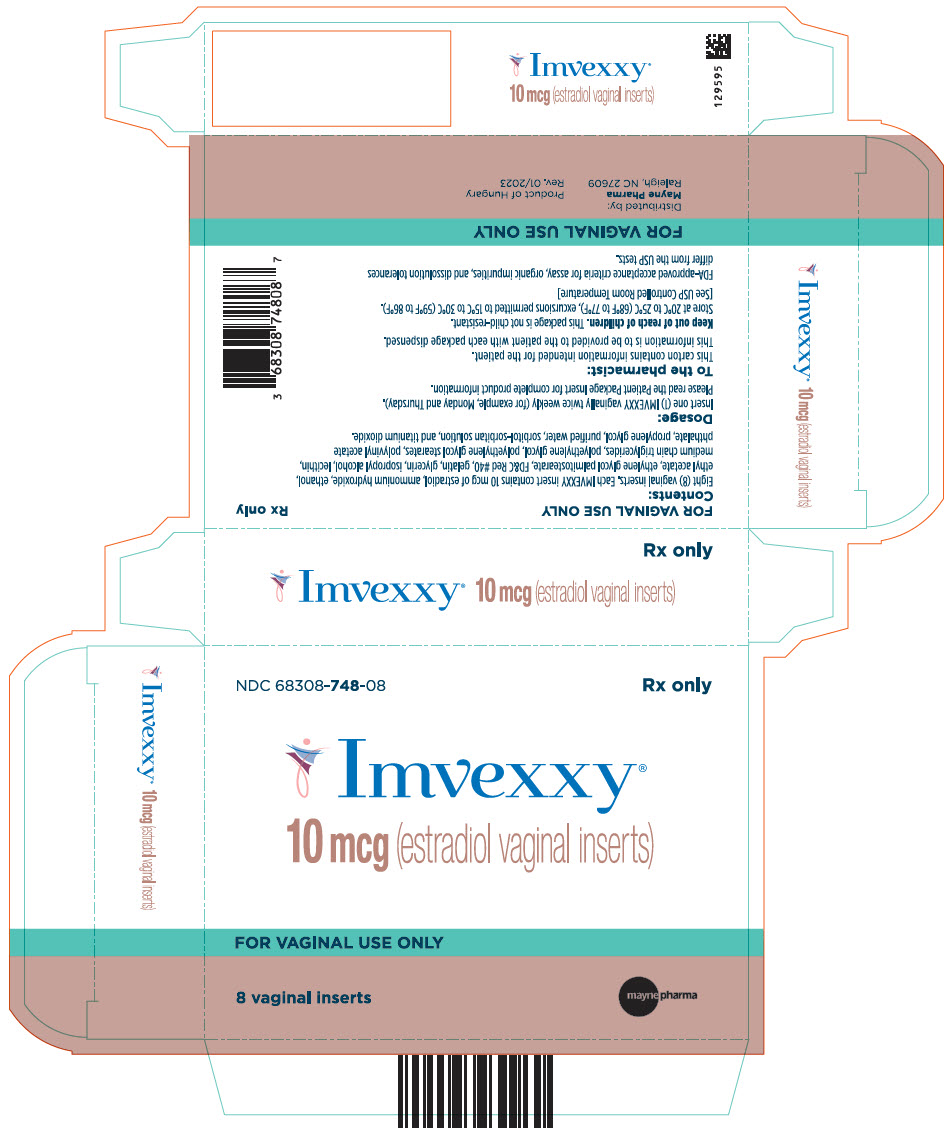
PRINCIPAL DISPLAY PANEL - 8 Insert Blister Pack Carton - 10 mcg NDC 68308-748-08 Rx only Imvexxy ® 10 mcg (estradiol vaginal inserts) FOR VAGINAL USE ONLY 8 vaginal inserts mayne pharma PRINCIPAL DISPLAY PANEL - 8 Insert Blister Pack Carton - 10 mcg
Medicaid utilization by pack size
Medicare Part D spend CMS · PART D · 2026 (Q1)
About this NDC listing & data coverage
What data is (and isn’t) available for this NDC — tap to expand
| NDC identity (package / product / labeler codes) | ✓ Available |
| Labeler | ✓ Available |
| Product & package description | ✓ Available |
| Marketing category & status | ✓ Available |
| Active ingredient / dosage form / route | ✓ Available |
| FDA label (SPL via DailyMed) | ✓ Available |
| Package photos | ✓ Available |
| Inactive ingredients (structured) | ✓ Available |
| NADAC pharmacy acquisition price (CMS) | — Not published for this NDC CMS publishes NADAC only for NDCs reported in its retail-pharmacy survey. |
| Orange Book / therapeutic-equivalence data | ✓ Available |
| HCPCS J-code billing crosswalk | — Not published for this NDC Most self-administered / retail products have no J-code — that is normal. |
| Medicaid utilization (CMS SDUD) | — Not published for this NDC CMS reports utilization only for NDCs with Medicaid claims above its privacy threshold. |