
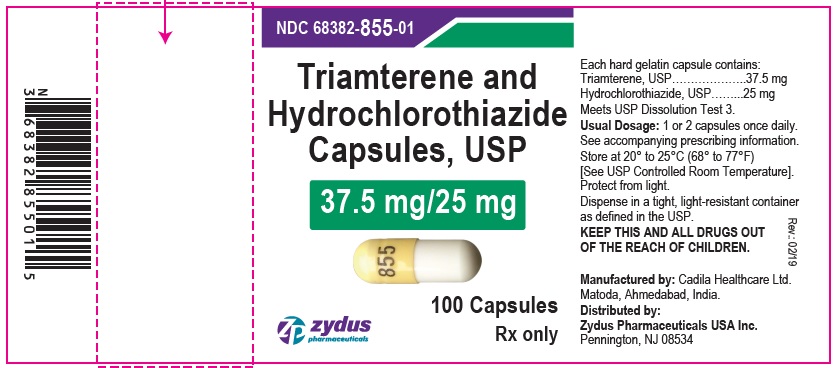
Triamterene and Hydrochlorothiazide 37.5 mg; 25 mg Capsule, 100-count — NDC 68382-855-01 (Billing 68382-0855-01)
This is a package of 100 capsules of Triamterene and Hydrochlorothiazide 37.5 mg; 25 mg Capsule from Zydus Pharmaceuticals (USA) Inc., marketed since Mar 2019 and currently FDA-listed. It is the main listing for this product, which comes in 4 package sizes.
Identity & classification
Regulatory identifiers FDA, NLM and CMS codes for this package
- RxCUI (RxNorm): 198316
Where does this data come from?
- FDA openFDA NDC Directory · synced Oct 1, 2026
- FDA label on DailyMed · label index refreshed Oct 1, 2026
- RxNorm (NLM RxNav) · catalog refreshed Oct 1, 2026
- Medi-Span GPI (licensed)
- First Databank (licensed) · refreshed Oct 1, 2026
RxNorm drug class
This medicine belongs to the Potassium-sparing Diuretic class.
Where does this data come from?
- RxClass (NLM) · catalog refreshed Oct 1, 2026
Clinical
The combination of triamterene and hydrochlorothiazide is used to treat high blood pressure and edema (fluid retention; excess fluid held in body tissues) in patients who have lower amounts of potassium in their bodies or for whom low potassium levels in the body could be dangerous. The combination of triamterene and hydrochlorothiazide is in a class of medications called diuretics ('water pills'). They work by causing the kidneys to get rid of unneeded water and salt from the body into the urine. High blood pressure is a common condition, and when not treated it can cause damage to the brain,...
Read the full MedlinePlus article ↗- It treats high blood pressure or fluid swelling (edema). It is mainly for people who lose too much potassium on hydrochlorothiazide alone, or who need a water pill but can't risk l...
- Take it by mouth, usually once a day, exactly as your prescriber directs. Don't split the daily dose unless told to. You'll need regular blood tests to check your potassium.
- No, not unless your doctor tells you to. Most salt substitutes are full of potassium. With this medicine, they can push your potassium dangerously high.
- Can I use salt substitutes or potassium supplements?
Patient education
Supplement & herbal interactions
Where does this data come from?
- MedlinePlus (NLM) · refreshed Oct 1, 2026
- FDA label on DailyMed · label index refreshed Oct 1, 2026
Ask a licensed pharmacist directly — free, answered by our team.
Pricing
A drug doesn't have one price. Each row is a different public payment system, and none is what you'd pay at the counter — that depends on your insurance. The ⓘ on each row explains what it measures.
| Price system | Per each | Per package |
|---|---|---|
| Retail pharmacies payNADAC · weekly | Not in the retail survey — common for institutional, discontinued, or low-volume packs. | |
| Medicaid paysCMS SDUD · 12 mo | No recent Medicaid claims on file for this NDC — rare and low-volume NDCs are suppressed in the public data. | |
| Medicare drug plans payPart D · quarterly | No Part D plan price is available for this NDC in our data. | |
Where does this data come from?
- CMS NADAC weekly file
- CMS ASP pricing files · refreshed Sep 20, 2026
- CMS Medicaid State Drug Utilization Data · refreshed Oct 3, 2026
- CMS Part D plan pricing files · refreshed Sep 24, 2026
- VA National Acquisition Center price file
Packaging — all sizes for this product
| Package NDC | Description | Marketing start | Marketing end | Status |
|---|---|---|---|---|
| 68382-0855-01 You're viewing this Main listing | 100 CAPSULE in 1 BOTTLE | 2019-03-31 | — | Active |
| 68382-0855-05 68382-855-05 | 500 CAPSULE in 1 BOTTLE | 2019-03-31 | — | Active |
| 68382-0855-10 68382-855-10 | 1000 CAPSULE in 1 BOTTLE | 2019-03-31 | — | Active |
| 68382-0855-77 68382-855-77 | 10 BLISTER PACK in 1 CARTON / 10 CAPSULE in 1 BLISTER PACK | 2019-03-31 | — | Active |
Pack size FAQ
What quantity is in this package?
How does this package differ from NDC 68382-0855-77?
What NDC number is used to bill for this package of Triamterene and Hydrochlorothiazide 37.5 mg; 25 mg Capsule?
Therapeutic equivalents
| Product | Labeler | Pack | NADAC/unit | TE | Status | Price vs. this |
|---|---|---|---|---|---|---|
| Triamterene and Hydrochlorothiazide 37.5 mg/1; 25 mg 00781-2074-01 | Sandoz | 100 capsules | $0.118 | AB | Availability likely | — |
| Triamterene And Hydrochlorothiazide 37.5 mg/1; 25 mg 62135-0529-90 | Chartwell | 90 capsules | $0.118 | AB | Availability likely | — |
| Triamterene and Hydrochlorothiazide 37.5 mg/1; 25 mg 72578-0090-01 | Viona | 100 capsules | $0.118 | AB | Availability likely | — |
| Triamterene and Hydrochlorothiazide 37.5 mg/1; 25 mg 33342-0467-11 | Macleods | 100 capsules | — | — | FDA listed | — |
| Triamterene and Hydrochlorothiazide 37.5 mg/1; 25 mg 50090-2028-00 | A-S | 30 capsules | — | AB | FDA listed | — |
| Triamterene and Hydrochlorothiazide 37.5 mg/1; 25 mg 50090-6944-00 | A-S | 90 capsules | — | AB | FDA listed | — |
| Triamterene and Hydrochlorothiazide 37.5 mg/1; 25 mg 50090-7437-00 | A-S | 30 capsules | — | AB | FDA listed | — |
| Triamterene and Hydrochlorothiazide 37.5 mg/1; 25 mg 50090-7438-00 | A-S | 90 capsules | — | AB | FDA listed | — |
| Triamterene and Hydrochlorothiazide 37.5 mg/1; 25 mg 51655-0722-52 | Northwind | 30 capsules | — | AB | FDA listed | — |
| Triamterene and Hydrochlorothiazide 37.5 mg/1; 25 mg 60760-0783-90 | St. | 90 capsules | — | AB | FDA listed | — |
| Triamterene and Hydrochlorothiazide 37.5 mg/1; 25 mg 63187-0465-30 | Proficient | 30 capsules | — | AB | FDA listed | — |
| Triamterene and Hydrochlorothiazide 37.5 mg/1; 25 mg 63187-0905-30 | Proficient | 30 capsules | — | AB | FDA listed | — |
| Triamterene and Hydrochlorothiazide 37.5 mg/1; 25 mg 63629-8732-01 | Bryant | 100 capsules | — | AB | FDA listed | — |
| Triamterene and Hydrochlorothiazide 37.5 mg/1; 25 mg 68071-2533-09 | NuCare | 90 capsules | — | AB | FDA listed | — |
| Triamterene and Hydrochlorothiazide 37.5 mg/1; 25 mg 68071-3879-09 | NuCare | 90 capsules | — | AB | FDA listed | — |
| Triamterene and Hydrochlorothiazide 37.5 mg/1; 25 mgthis 68382-0855-01 | Zydus | 100 capsules | — | AB | FDA listed | — |
| Triamterene and Hydrochlorothiazide 37.5 mg/1; 25 mg 68788-8700-01 | Preferred | 100 capsules | — | AB | FDA listed | — |
| Triamterene and Hydrochlorothiazide 37.5 mg/1; 25 mg 70518-4270-00 | REMEDYREPACK | 90 capsules | — | AB | FDA listed | — |
| Triamterene and Hydrochlorothiazide 37.5 mg/1; 25 mg 70771-1474-00 | Zydus | 1000 capsules | — | AB | FDA listed | — |
| Triamterene and Hydrochlorothiazide 37.5 mg/1; 25 mg 71335-0504-01 | Bryant | 100 capsules | — | AB | FDA listed | — |
| Triamterene and Hydrochlorothiazide 37.5 mg/1; 25 mg 71335-2034-01 | Bryant | 100 capsules | — | AB | FDA listed | — |
| Triamterene and Hydrochlorothiazide 37.5 mg/1; 25 mg 72162-1084-06 | Bryant | 60 capsules | — | AB | FDA listed | — |
| Triamterene and Hydrochlorothiazide 37.5 mg/1; 25 mg 82868-0022-30 | Northwind | 30 capsules | — | AB | FDA listed | — |
| Triamterene and Hydrochlorothiazide 37.5 mg/1; 25 mg 82804-0308-30 | Proficient | 30 capsules | — | AB | FDA listed | — |
Where does this data come from?
- FDA openFDA NDC Directory · synced Oct 1, 2026
- FDA Orange Book · refreshed Sep 3, 2026
- CMS NADAC weekly file
Availability & generic status
This product is an FDA-approved generic. Other versions of the same drug are listed under Therapeutic equivalents, least expensive first.
Where does this data come from?
- FDA Orange Book · refreshed Sep 3, 2026
What it looks like
Where does this data come from?
- FDA label on DailyMed · label index refreshed Oct 1, 2026
Inactive Ingredients / Excipients
Inactive ingredients, also called excipients, are components of the drug product other than the active ingredient. They may include fillers, dyes, coatings, preservatives, flavors, or other formulation ingredients.
💡 Tap an ingredient (hover on desktop) to see what it is and why it’s used.
-
UNII OP1R32D61U
Microcrystalline cellulose is a purified form of cellulose, a natural fiber from plant sources. It acts as a binder and filler in tablets and capsules, helping hold ingredients together and give the medicine its shape and size.
-
UNII 2968PHW8QP
A weak organic acid derived from citrus fruits or made through fermentation. It works as a buffer to control pH, a preservative to extend shelf life, and a flavoring agent in medications.
-
UNII M28OL1HH48
Croscarmellose sodium is a plant-based substance derived from cellulose. It acts as a disintegrant, helping tablets and capsules break down quickly in the digestive system so the medicine can be absorbed.
-
UNII EX438O2MRT
Ferric oxide yellow is a naturally occurring iron compound used as a colorant in medications. It gives tablets, capsules, and other forms a yellow or golden hue for identification and appearance.
-
UNII XM0M87F357
A dark iron oxide compound that gives medicines their black or dark color. It's used as a colorant in tablets and capsules to help identify the product and make it visually distinctive.
-
UNII 2G86QN327L
Gelatin is a protein derived from animal collagen, commonly used in medicines as a gelling agent and capsule material. It helps create soft or hard capsule shells that hold and release medication, and can also thicken liquid formulations.
-
UNII TE7660XO1C
Glycine is an amino acid used in medicines as a buffer to help stabilize pH and improve taste. It may also serve as a filler or binder to give the product proper form and consistency.
-
UNII 0VUT3PMY82
Hypromellose 2910 is a plant-derived thickening agent made from cellulose. In medicines, it forms protective coatings on tablets or capsules, controls how fast the drug releases, and thickens liquid formulations.
-
UNII 70097M6I30
Magnesium stearate is a salt made from magnesium and stearic acid, a fatty substance. It's used in tablets and capsules as a lubricant and glidant to help ingredients flow smoothly during manufacturing and prevent sticking.
-
UNII WZH3C48M4T
Potassium hydroxide is a strong alkaline chemical used in medicines to adjust and maintain the pH level of liquid formulations, helping keep the product stable and the active ingredients effective.
-
UNII 46N107B71O
Shellac is a natural resin secreted by the lac beetle. It's used as a coating on tablets and capsules to control how quickly the medicine dissolves and to improve appearance and stability.
-
UNII ETJ7Z6XBU4
Silicon dioxide is a naturally occurring mineral used as a glidant and anti-caking agent. It helps powder ingredients flow smoothly and prevents clumping during manufacturing and storage.
-
UNII 368GB5141J
A detergent and foaming agent derived from coconut or palm oil. In medications, it helps break down and mix oil and water-based ingredients, aids in tablet disintegration, and improves how the drug dissolves and spreads in the mouth or digestive system.
-
UNII 15FIX9V2JP
Titanium dioxide is a bright white mineral powder commonly used as a colorant and opacifying agent. It makes pills and tablets white or lighter in color and helps make coatings non-transparent.
14 inactive ingredients listed in the exact product block matched to this NDC.
Where does this data come from?
ingredient classCode="IACT" elements from the exact product block matched by this NDC. Label-section narrative from DailyMed / the openFDA label index is shown separately when available.- FDA label on DailyMed · label index refreshed Oct 1, 2026
- FDA openFDA NDC Directory · synced Oct 1, 2026
Inactive ingredient FAQ
Are inactive ingredients the same for every manufacturer?
Why might an inactive ingredient be missing?
Can inactive ingredients matter?
Manufacturer & labeler
Where does this data come from?
- FDA openFDA NDC Directory · synced Oct 1, 2026
- Drugs@FDA
Full prescribing information FDA SPL
🚨 Boxed Warning ▾
WARNINGS Hyperkalemia Abnormal elevation of serum potassium levels (greater than or equal to 5.5 mEq/liter) can occur with all potassium-sparing diuretic combinations, including triamterene and hydrochlorothiazide capsules. Hyperkalemia is more likely to occur in patients with renal impairment and diabetes (even without evidence of renal impairment), and in the elderly or severely ill. Since uncorrected hyperkalemia may be fatal, serum potassium levels must be monitored at frequent intervals especially in patients first receiving triamterene and hydrochlorothiazide capsules, when dosages are changed or with any illness that may influence renal function.
🎯 Indications and Usage ▾
INDICATIONS AND USAGE This fixed combination drug is not indicated for the initial therapy of edema or hypertension except in individuals in whom the development of hypokalemia cannot be risked. Triamterene and hydrochlorothiazide capsules, USP are indicated for the treatment of hypertension or edema in patients who develop hypokalemia on hydrochlorothiazide alone. Triamterene and hydrochlorothiazide capsules, USP are also indicated for those patients who require a thiazide diuretic and in whom the development of hypokalemia cannot be risked.
Triamterene and hydrochlorothiazide capsules, USP may be used alone or as an adjunct to other antihypertensive drugs, such as beta-blockers. Since triamterene and hydrochlorothiazide capsules, USP may enhance the action of these agents, dosage adjustments may be necessary. Usage in Pregnancy The routine use of diuretics in an otherwise healthy woman is inappropriate and exposes mother and fetus to unnecessary hazard.
Diuretics do not prevent development of toxemia of pregnancy, and there is no satisfactory evidence that they are useful in the treatment of developed toxemia. Edema during pregnancy may arise from pathological causes or from the physiologic and mechanical consequences of pregnancy. Diuretics are indicated in pregnancy when edema is due to pathologic causes, just as they are in the absence of pregnancy.
Dependent edema in pregnancy resulting from restriction of venous return by the expanded uterus is properly treated through elevation of the lower extremities and use of support hose; use of diuretics to lower intravascular volume in this case is illogical and unnecessary. There is hypervolemia during normal pregnancy which is harmful to neither the fetus nor the mother (in the absence of cardiovascular disease), but which is associated with edema, including generalized edema in the majority of pregnant women. If this edema produces discomfort, increased recumbency will often provide relief.
In rare instances this edema may cause extreme discomfort which is not relieved by rest. In these cases a short course of diuretics may provide relief and may be appropriate.
⏱️ Dosage and Administration ▾
DOSAGE AND ADMINISTRATION The usual dose of triamterene and hydrochlorothiazide capsules is one or two capsules given once daily , with appropriate monitoring of serum potassium and of the clinical effect ( see WARNINGS, Hyperkalemia ).
⛔ Contraindications ▾
CONTRAINDICATIONS Antikaliuretic Therapy and Potassium Supplementation Triamterene and hydrochlorothiazide capsules should not be given to patients receiving other potassium-sparing agents such as spironolactone, amiloride, or other formulations containing triamterene. Concomitant potassium-containing salt substitutes should also not be used. Potassium supplementation should not be used with triamterene and hydrochlorothiazide capsules except in severe cases of hypokalemia.
Such concomitant therapy can be associated with rapid increases in serum potassium levels. If potassium supplementation is used, careful monitoring of the serum potassium level is necessary. Impaired Renal Function Triamterene and hydrochlorothiazide capsules are contraindicated in patients with anuria, acute and chronic renal insufficiency or significant renal impairment.
Hypersensitivity Hypersensitivity to either drug in the preparation or to other sulfonamide-derived drugs is a contraindication. Hyperkalemia Triamterene and hydrochlorothiazide capsules should not be used in patients with preexisting elevated serum potassium.
🤒 Adverse Reactions ▾
ADVERSE REACTIONS Adverse effects are listed in decreasing order of severity. Hypersensitivity: Anaphylaxis, rash, urticaria, subacute cutaneous lupus erythematosus-like reactions, photosensitivity. Cardiovascular: Arrhythmia, postural hypotension.
Metabolic: Diabetes mellitus, hyperkalemia, hypokalemia, hyponatremia, acidosis, hypercalcemia, hyperglycemia, glycosuria, hyperuricemia, hypochloremia. Gastrointestinal: Jaundice and/or liver enzyme abnormalities, pancreatitis, nausea and vomiting, diarrhea, constipation, abdominal pain. Renal: Acute renal failure (one case of irreversible renal failure has been reported), interstitial nephritis, renal stones composed primarily of triamterene, elevated BUN, and serum creatinine, abnormal urinary sediment.
Hematologic: Leukopenia, thrombocytopenia and purpura, megaloblastic anemia. Musculoskeletal: Muscle cramps. Central Nervous System: Weakness, fatigue, dizziness, headache, dry mouth.
Miscellaneous: Impotence, sialadenitis. Thiazides alone have been shown to cause the following additional adverse reactions: Central Nervous System: Paresthesias, vertigo. Ophthalmic: Xanthopsia, transient blurred vision.
Respiratory: Allergic pneumonitis, pulmonary edema, respiratory distress. Other: Necrotizing vasculitis, exacerbation of lupus. Hematologic: Aplastic anemia, agranulocytosis, hemolytic anemia.
Neonate and infancy: Thrombocytopenia and pancreatitis–rarely, in newborns whose mothers have received thiazides during pregnancy. Skin: Erythema multiforme including Stevens-Johnson syndrome, exfoliative dermatitis including toxic epidermal necrolysis.
🔄 Drug Interactions ▾
Drug Interactions Angiotensin-converting Enzyme Inhibitors Potassium-sparing agents should be used with caution in conjunction with angiotensin-converting enzyme (ACE) inhibitors due to an increased risk of hyperkalemia. Oral Hypoglycemic Drugs Concurrent use with chlorpropamide may increase the risk of severe hyponatremia. Nonsteroidal Anti-inflammatory Drugs A possible interaction resulting in acute renal failure has been reported in a few patients on triamterene and hydrochlorothiazide capsules when treated with indomethacin, a nonsteroidal anti-inflammatory agent.
Caution is advised in administering nonsteroidal anti-inflammatory agents with triamterene and hydrochlorothiazide capsules. Lithium Lithium generally should not be given with diuretics because they reduce its renal clearance and increase the risk of lithium toxicity. Read circulars for lithium preparations before use of such concomitant therapy with triamterene and hydrochlorothiazide capsules.
Surgical Considerations Thiazides have been shown to decrease arterial responsiveness to norepinephrine (an effect attributed to loss of sodium). This diminution is not sufficient to preclude effectiveness of the pressor agent for therapeutic use. Thiazides have also been shown to increase the paralyzing effect of nondepolarizing muscle relaxants such as tubocurarine (an effect attributed to potassium loss); consequently caution should be observed in patients undergoing surgery Other Considerations Concurrent use of hydrochlorothiazide with amphotericin B or corticosteroids or corticotropin (ACTH) may intensify electrolyte imbalance, particularly hypokalemia, although the presence of triamterene minimizes the hypokalemic effect.
Thiazides may add to or potentiate the action of other antihypertensive drugs. See INDICATIONS AND USAGE for concomitant use with other antihypertensive drugs. The effect of oral anticoagulants may be decreased when used concurrently with hydrochlorothiazide; dosage adjustments may be necessary.
Triamterene and hydrochlorothiazide may raise the level of blood uric acid; dosage adjustments of antigout medication may be necessary to control hyperuricemia and gout. The following agents given together with triamterene may promote serum potassium accumulation and possibly result in hyperkalemia because of the potassium-sparing nature of triamterene, especially in patients with renal insufficiency: blood from blood bank (may contain up to 30 mEq of potassium per liter of plasma or up to 65 mEq per liter of whole blood when stored for more than 10 days); low-salt milk (may contain up to 60 mEq of potassium per liter); potassium-containing medications (such as parenteral penicillin G potassium); salt substitutes (most contain substantial amounts of potassium).
Exchange resins, such as sodium polystyrene sulfonate, whether administered orally or rectally, reduce serum potassium levels by sodium replacement of the potassium; fluid retention may occur in some patients because of the increased sodium intake. Chronic or overuse of laxatives may reduce serum potassium levels by promoting excessive potassium loss from the intestinal tract; laxatives may interfere with the potassium-retaining effects of triamterene. The effectiveness of methenamine may be decreased when used concurrently with hydrochlorothiazide because of alkalinization of the urine.
🤰 Pregnancy ▾
Pregnancy Teratogenic Effects. Pregnancy Category C Triamterene and Hydrochlorothiazide : Animal reproduction studies to determine the potential for fetal harm by triamterene and hydrochlorothiazide have not been conducted. However, a One Generation Study in the rat approximated composition of triamterene and hydrochlorothiazide capsules by using a 1:1 ratio of triamterene to hydrochlorothiazide (30:30 mg/kg/day); there was no evidence of teratogenicity at those doses which were, on a body-weight basis, 15 and 30 times, respectively, the MRHD, and on the basis of body-surface area, 3.1 and 6.2 times, respectively, the MRHD.
The safe use of triamterene and hydrochlorothiazide capsules in pregnancy has not been established since there are no adequate and well-controlled studies with triamterene and hydrochlorothiazide in pregnant women. Triamterene and hydrochlorothiazide capsules should be used during pregnancy only if the potential benefit justifies the risk to the fetus. Triamterene: Reproduction studies have been performed in rats at doses as high as 20 times the MRHD on the basis of body-weight, and 6 times the human dose on the basis of body-surface area without evidence of harm to the fetus due to triamterene.
Because animal reproduction studies are not always predictive of human response, this drug should be used during pregnancy only if clearly needed. Hydrochlorothiazide: Hydrochlorothiazide was orally administered to pregnant mice and rats during respective periods of major organogenesis at doses up to 3,000 and 1,000 mg/kg/day, respectively. At these doses, which are multiples of the MRHD equal to 3,000 for mice and 1,000 for rats, based on body-weight, and equal to 282 for mice and 206 for rats, based on body-surface area, there was no evidence of harm to the fetus.
There are, however, no adequate and well-controlled studies in pregnant women. Because animal reproduction studies are not always predictive of human response, this drug should be used during pregnancy only if clearly needed. Nonteratogenic Effects Thiazides and triamterene have been shown to cross the placental barrier and appear in cord blood.
The use of thiazides and triamterene in pregnant women requires that the anticipated benefit be weighed against possible hazards to the fetus. These hazards include fetal or neonatal jaundice, pancreatitis, thrombocytopenia, and possible other adverse reactions which have occurred in the adult.
🧒 Pediatric Use ▾
Pediatric Use Safety and effectiveness in pediatric patients have not been established.
🆘 Overdosage ▾
OVERDOSAGE Electrolyte imbalance is the major concern ( see WARNINGS section ). Symptoms reported include: polyuria, nausea, vomiting, weakness, lassitude, fever, flushed face, and hyperactive deep tendon reflexes. If hypotension occurs, it may be treated with pressor agents such as levarterenol to maintain blood pressure.
Carefully evaluate the electrolyte pattern and fluid balance. Induce immediate evacuation of the stomach through emesis or gastric lavage. There is no specific antidote.
Reversible acute renal failure following ingestion of 50 tablets of a product containing a combination of 50 mg triamterene and 25 mg hydrochlorothiazide has been reported. Although triamterene is largely protein-bound (approximately 67%), there may be some benefit to dialysis in cases of overdosage.
🧬 Clinical Pharmacology ▾
CLINICAL PHARMACOLOGY Triamterene and hydrochlorothiazide capsule is a diuretic/antihypertensive drug product that combines natriuretic and antikaliuretic effects. Each component complements the action of the other. The hydrochlorothiazide component blocks the reabsorption of sodium and chloride ions, and thereby increases the quantity of sodium traversing the distal tubule and the volume of water excreted.
A portion of the additional sodium presented to the distal tubule is exchanged there for potassium and hydrogen ions. With continued use of hydrochlorothiazide and depletion of sodium, compensatory mechanisms tend to increase this exchange and may produce excessive loss of potassium, hydrogen, and chloride ions. Hydrochlorothiazide also decreases the excretion of calcium and uric acid, may increase the excretion of iodide, and may reduce glomerular filtration rate.
The exact mechanism of the antihypertensive effect of hydrochlorothiazide is not known. The triamterene component of triamterene and hydrochlorothiazide capsules exerts its diuretic effect on the distal renal tubule to inhibit the reabsorption of sodium in exchange for potassium and hydrogen ions. Its natriuretic activity is limited by the amount of sodium reaching its site of action.
Although it blocks the increase in this exchange that is stimulated by mineralocorticoids (chiefly aldosterone), it is not a competitive antagonist of aldosterone and its activity can be demonstrated in adrenalectomized rats and patients with Addison's disease. As a result, the dose of triamterene required is not proportionally related to the level of mineralocorticoid activity, but is dictated by the response of the individual patients, and the kaliuretic effect of concomitantly administered drugs. By inhibiting the distal tubular exchange mechanism, triamterene maintains or increases the sodium excretion and reduces the excess loss of potassium, hydrogen and chloride ions induced by hydrochlorothiazide.
As with hydrochlorothiazide, triamterene may reduce glomerular filtration and renal plasma flow. Via this mechanism it may reduce uric acid excretion although it has no tubular effect on uric acid reabsorption or secretion. Triamterene does not affect calcium excretion.
No predictable antihypertensive effect has been demonstrated for triamterene. Duration of diuretic activity and effective dosage range of the hydrochlorothiazide and triamterene components of triamterene and hydrochlorothiazide capsules are similar. Onset of diuresis with triamterene and hydrochlorothiazide takes place within 1 hour, peaks at 2 to 3 hours and tapers off during the subsequent 7 to 9 hours.
Triamterene and hydrochlorothiazide capsules are well absorbed. Upon administration of a single oral dose to fasted normal male volunteers, the following mean pharmacokinetic parameters were determined. AUC ( 0 - 4 8 ) Ng * hrs / mL (± SD ) C m a x ng / mL (± SD ) Median T m a x Hrs Ae Mg (± SD ) Triamterene 148.7 (87.9) 46.4 (29.4) 1.1 2.7 (1.4) Hydroxytriamterene sulfate 1,865 (471) 720 (364) 1.3 19.7 (6.1) hydrochlorothiazide 834 (177) 135.1 (35.7) 2 14.3 (3.8) where AUC (0-48) , C max , T max and Ae represent area under the plasma concentration versus time plot, maximum plasma concentration, time to reach C max , and amount excreted in urine over 48 hours.
A capsule of triamterene and hydrochlorothiazide is bioequivalent to a single-entity 25 mg hydrochlorothiazide tablet and 37.5 mg triamterene capsule used in the double-blind clinical trial below ( see Clinical Trials ). In a limited study involving 12 subjects, coadministration of triamterene and hydrochlorothiazide capsules with a high-fat meal resulted in: (1) an increase in the mean bioavailability of triamterene by about 67% (90% confidence interval = 0.99, 1.90), p-hydroxytriamterene sulfate by about 50% (90% confidence interval = 1.06, 1.77), hydrochlorothiazide by about 17% (90% confidence interval = 0.90, 1.34); (2) increases in the peak concentratio… [Excerpted — this section continues on DailyMed.]
📦 How Supplied / Storage and Handling ▾
HOW SUPPLIED Triamterene and Hydrochlorothiazide Capsules USP, 37.5 mg/25 mg are light yellow to yellow colored powder filled in size '4' empty hard gelatin capsule having yellow opaque colored cap imprinted with "855" in black ink and white opaque colored body and are supplied as follows: NDC 68382-855-01 in bottles of 100 capsules NDC 68382-855-05 in bottles of 500 capsules NDC 68382-855-10 in bottles of 1000 capsules NDC 68382-855-77 in unit-dose blister cartons of 100 (10 X 10) Unit-dose Capsules Store at 20° to 25°C (68° to 77°F) [See USP Controlled Room Temperature].
Protect from light. Dispense in a tight, light-resistant container as defined in the USP. Call your doctor for medical advice about side effects.
You may report side effects to FDA at 1-800-FDA-1088. Manufactured by: Cadila Healthcare Ltd. Matoda, Ahmedabad, India Distributed by: Zydus Pharmaceuticals USA Inc.
Pennington, NJ 08534 Rev.: 09/15 Revision Date: 07/09/2015
📋 Description ▾
DESCRIPTION Each capsule of triamterene and hydrochlorothiazide for oral use, with opaque yellow cap and opaque white body, contains triamterene 37.5 mg and hydrochlorothiazide 25 mg, and is imprinted with 855. Hydrochlorothiazide is a diuretic/antihypertensive agent and triamterene is an antikaliuretic agent. Hydrochlorothiazide, USP is very slightly soluble in water.
It is freely soluble in sodium hydroxide solution, n-butylamine and dimethyl formamide. It is sparingly soluble in methanol. It is insoluble in ether, chloroform and dilute mineral acids.
Hydrochlorothiazide, USP is 6-chloro-3,4-dihydro-2 H -1, 2, 4-benzothiadiazine-7-sulfonamide 1,1-dioxide, and its structural formula is: Triamterene, USP is soluble in formic acid. It is sparingly soluble in methoxyethanol. It is very slightly soluble in acetic acid, alcohol and dilute mineral acids.
It is practically insoluble in water, benzene, ether, chloroform and dilute alkali hydroxides. Triamterene, USP is 2, 4, 7-triamino-6-phenylpteridine and its structural formula is: Each triamterene and hydrochlorothiazide capsule, USP intended for oral administration contains 37.5 mg triamterene USP with 25 mg hydrochlorothiazide USP. In addition, each capsule contains the following inactive ingredients: citric acid monohydrate, colloidal silicon dioxide, croscarmellose sodium, gelatin, glycine, hypromellose, iron oxide yellow, magnesium stearate, microcrystalline cellulose, sodium lauryl sulfate and titanium dioxide.
Each capsule is printed with black pharmaceutical ink which contains ferric oxide black, potassium hydroxide and shellac. Capsules of triamterene and hydrochlorothiazide meet Drug Release Test 3 as published in the current USP monograph for Triamterene and Hydrochlorothiazide Capsules. image image
⚠️ Precautions ▾
PRECAUTIONS Diabetes Caution should be exercised when administering triamterene and hydrochlorothiazide capsules to patients with diabetes, since thiazides may cause hyperglycemia, glycosuria, and alter insulin requirements in diabetes. Also, diabetes mellitus may become manifest during thiazide administration. Impaired Hepatic Function Thiazides should be used with caution in patients with impaired hepatic function.
They can precipitate hepatic coma in patients with severe liver disease. Potassium depletion induced by the thiazide may be important in this connection. Administer triamterene and hydrochlorothiazide capsules cautiously and be alert for such early signs of impending coma as confusion, drowsiness, and tremor; if mental confusion increases discontinue triamterene and hydrochlorothiazide capsules for a few days.
Attention must be given to other factors that may precipitate hepatic coma, such as blood in the gastrointestinal tract or preexisting potassium depletion. Hypokalemia Hypokalemia is uncommon with triamterene and hydrochlorothiazide capsules; but, should it develop, corrective measures should be taken such as potassium supplementation or increased intake of potassium-rich foods. Institute such measures cautiously with frequent determinations of serum potassium levels, especially in patients receiving digitalis or with a history of cardiac arrhythmias.
If serious hypokalemia (serum potassium less than 3 mEq/L) is demonstrated by repeat serum potassium determinations, triamterene and hydrochlorothiazide capsules should be discontinued and potassium chloride supplementation initiated. Less serious hypokalemia should be evaluated with regard to other coexisting conditions and treated accordingly. Electrolyte Imbalance Electrolyte imbalance, often encountered in such conditions as heart failure, renal disease or cirrhosis of the liver, may also be aggravated by diuretics and should be considered during therapy with triamterene and hydrochlorothiazide when using high doses for prolonged periods or in patients on a salt-restricted diet.
Serum determinations of electrolytes should be performed, and are particularly important if the patient is vomiting excessively or receiving fluids parenterally. Possible fluid and electrolyte imbalance may be indicated by such warning signs as: dry mouth, thirst, weakness, lethargy, drowsiness, restlessness, muscle pain or cramps, muscular fatigue, hypotension, oliguria, tachycardia, and gastrointestinal symptoms. Hypochloremia Although any chloride deficit is generally mild and usually does not require specific treatment except under extraordinary circumstances (as in liver disease or renal disease), chloride replacement may be required in the treatment of metabolic alkalosis.
Dilutional hyponatremia may occur in edematous patients in hot weather; appropriate therapy is water restriction, rather than administration of salt, except in rare instances when the hyponatremia is life threatening. In actual salt depletion, appropriate replacement is the therapy of choice. Renal Stones Triamterene has been found in renal stones in association with the other usual calculus components.
Triamterene and hydrochlorothiazide capsules should be used with caution in patients with a history of renal stones. Laboratory Tests Serum Potassium The normal adult range of serum potassium is 3.5 to 5 mEq per liter with 4.5 mEq often being used for a reference point. If hypokalemia should develop, corrective measures should be taken such as potassium supplementation or increased dietary intake of potassium-rich foods.
Institute such measures cautiously with frequent determinations of serum potassium levels. Potassium levels persistently above 6 mEq per liter require careful observation and treatment. Serum potassium levels do not necessarily indicate true body potassium concentration.
A rise in plasma pH may cause a decrease in plasma potassium concentration and an increase in the intracellular potassium c… [Excerpted — this section continues on DailyMed.]
🍼 Nursing Mothers ▾
Nursing Mothers Thiazides and triamterene in combination have not been studied in nursing mothers. Triamterene appears in animal milk; this may occur in humans. Thiazides are excreted in human breast milk. If use of the combination drug product is deemed essential, the patient should stop nursing.
🔬 Clinical Studies ▾
CLINICAL TRIALS A placebo-controlled, double-blind trial was conducted to evaluate the efficacy of triamterene and hydrochlorothiazide capsules. This trial demonstrated that triamterene and hydrochlorothiazide capsules (37.5 mg triamterene/25 mg hydrochlorothiazide) were effective in controlling blood pressure while reducing the incidence of hydrochlorothiazide-induced hypokalemia. This trial involved 636 patients with mild to moderate hypertension controlled by hydrochlorothiazide 25 mg daily and who had hypokalemia (serum potassium <3.5 mEq/L) secondary to the hydrochlorothiazide.
Patients were randomly assigned to 4 weeks' treatment with once-daily regimens of 25 mg hydrochlorothiazide plus placebo, or 25 mg hydrochlorothiazide combined with one of the following doses of triamterene: 25 mg, 37.5 mg, 50 mg, or 75 mg. Blood pressure and serum potassium were monitored at baseline and throughout the trial. All five treatment groups had similar mean blood pressure and serum potassium concentrations at baseline (mean systolic blood pressure range: 137±14 mmHg to 140±16 mmHg; mean diastolic blood pressure range: ±9 mmHg to ±8 mmHg; mean serum potassium range: 2.3 to 3.4 mEq/L with the majority of patients having values between 3.1 and 3.4 mEq/L).
While all triamterene regimens reversed hypokalemia, at week 4 the 37.5 mg regimen proved optimal compared with the other tested regimens. On this regimen, 81% of the patients had a significant (p<0.05) reversal of hypokalemia vs.59% of patients on the placebo/hydrochlorothiazide regimen. The mean serum potassium concentration on 37.5 mg triamterene went from 3.2±0.2 mEq/L at baseline to 3.7±0.3 mEq/L at week 4, a significantly greater (p<0.05) improvement than that achieved with placebo/hydrochlorothiazide (i.e., 3.2±0.2 mEq/L at baseline and 3.5±0.4 mEq/L at week 4).
Also, 51% of patients in the 37.5 mg triamterene group had an increase in serum potassium of ≥0.5 mEq/L at week 4 vs. 33% in the placebo group. The 37.5 mg triamterene/25 mg hydrochlorothiazide regimen also maintained control of blood pressure; mean supine systolic blood pressure at week 4 was 138±21 mmHg while mean supine diastolic blood pressure was 87±13 mmHg.
📄 Package Label / Principal Display Panel ▾
PACKAGE LABEL.PRINCIPAL DISPLAY PANEL NDC 68382-855-10 in bottles of 1000 capsules Triamterene and Hydrochlorothiazide Capsules, USP 37.5 mg/25 mg Rx only Zydus image
About this NDC listing & data coverage
What data is (and isn’t) available for this NDC — tap to expand
| NDC identity (package / product / labeler codes) | ✓ Available |
| Labeler | ✓ Available |
| Product & package description | ✓ Available |
| Marketing category & status | ✓ Available |
| Active ingredient / dosage form / route | ✓ Available |
| FDA label (SPL via DailyMed) | ✓ Available |
| Package photos | ✓ Available |
| Inactive ingredients (structured) | ✓ Available |
| NADAC pharmacy acquisition price (CMS) | — Not published for this NDC CMS publishes NADAC only for NDCs reported in its retail-pharmacy survey. |
| Orange Book / therapeutic-equivalence data | ✓ Available |
| HCPCS J-code billing crosswalk | — Not published for this NDC Most self-administered / retail products have no J-code — that is normal. |
| Medicaid utilization (CMS SDUD) | — Not published for this NDC CMS reports utilization only for NDCs with Medicaid claims above its privacy threshold. |