
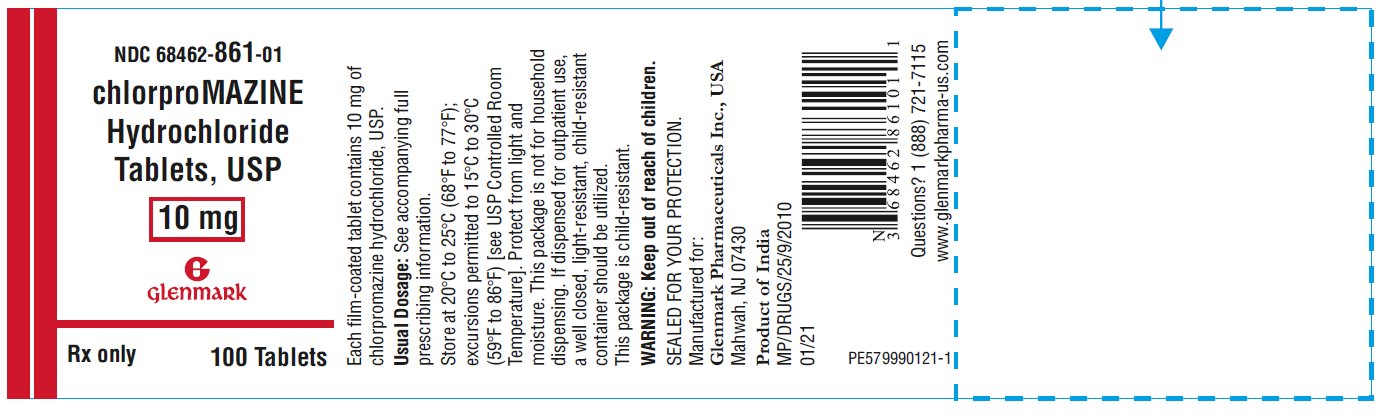
Chlorpromazine Hydrochloride 10 mg Tablet, Film Coated, 1,000-count
Other active recalls for Chlorpromazine Hydrochloride (different manufacturers) — 6 · tap to view
🆔 Identity & classification
Where does this data come from?
🏷️ RxNorm drug class
This medicine belongs to the Phenothiazine class.
Where does this data come from?
🏭 Manufacturer & labeler
Where does this data come from?
🩺 Clinical
Chlorpromazine is used to treat the symptoms of schizophrenia (a mental illness that causes disturbed or unusual thinking, loss of interest in life, and strong or inappropriate emotions) and other psychotic disorders (conditions that cause difficulty telling the difference between things or ideas that are real and things or ideas that are not real) and to treat the symptoms of mania (frenzied, abnormally excited mood) in people who have bipolar disorder (manic depressive disorder; a condition that causes episodes of mania, episodes of depression, and other abnormal moods). Chlorpromazine is al...
Read the full MedlinePlus article ↗- Chlorpromazine treats a range of conditions. Most commonly, it's prescribed for schizophrenia and other psychotic disorders, or to control the manic phase of manic-depressive illne...
- What exactly is chlorpromazine used for?
- It depends on what it's being used for. For psychotic disorders, full improvement can take weeks — or even months — so don't be discouraged if you don't feel a dramatic change righ...
- Drowsiness is the most common early side effect, and it usually gets better after the first week or two. You might also notice dry mouth, nasal congestion, constipation, or lighthe...
Patient education
Supplement & herbal interactions
Chlorpromazine may be associated with lower levels of 1 nutrient — worth a chat with your pharmacist, not a cause for alarm.
Where does this data come from?
Ask a licensed pharmacist directly — free, answered by our team.
💊 What it looks like
Where does this data come from?
🧪 Inactive Ingredients / Excipients
Inactive ingredients, also called excipients, are components of the drug product other than the active ingredient. They may include fillers, dyes, coatings, preservatives, flavors, or other formulation ingredients.
💡 Tap an ingredient (hover on desktop) to see what it is and why it’s used.
-
UNII 35SW5USQ3G
A synthetic yellow dye used to color medicines. It helps make tablets, capsules, and liquids visually distinct so patients can easily identify their medication.
-
UNII UF064M00AF
Diethyl phthalate is a clear, colorless liquid made from phthalic acid. It's used in medicines as a plasticizer to make tablet coatings flexible and as a solvent to help dissolve and distribute active ingredients evenly throughout the product.
-
UNII 3DYK7UYZ62
Ethylcellulose is a plant-fiber derivative used as a binder and film-coating agent in tablets and capsules. It helps hold ingredients together and can create a protective coating that controls how quickly the medicine dissolves.
-
UNII L06K8R7DQK
A synthetic blue dye approved by the FDA for use in medications and foods. It serves as a colorant to make pills and liquids visually distinct and easier to identify.
-
UNII H77VEI93A8
A synthetic yellow dye used to color medications. It helps identify the drug and make it visually distinctive, with no effect on how the medicine works.
-
UNII 1K09F3G675
Ferric oxide red is an inorganic iron compound used as a colorant in medicines. It gives tablets, capsules, or other dosage forms a red or reddish tint for identification and appearance.
-
UNII 36SFW2JZ0W
Hypromellose 2910 is a plant-based thickening agent derived from cellulose. In medicines, it forms a protective coating on tablets or capsules and controls how quickly the drug dissolves and releases into your body.
-
UNII EWQ57Q8I5X
Lactose monohydrate is a natural sugar derived from milk. It serves as a filler and binder in tablets and capsules, helping create the proper size, texture, and consistency of the medicine.
-
UNII 70097M6I30
Magnesium stearate is a salt made from magnesium and stearic acid, a fatty substance. It's used in tablets and capsules as a lubricant and glidant to help ingredients flow smoothly during manufacturing and prevent sticking.
-
UNII 7T9FYH5QMK
A plant-derived powder that serves as a binder and filler in tablets and capsules. It helps hold ingredients together, adds bulk, and aids in smooth tablet disintegration when swallowed.
-
UNII U725QWY32X
Povidone K30 is a synthetic polymer made from petroleum. It acts as a binder to hold tablet ingredients together and as a disintegrant to help the tablet break apart in the stomach so the medicine can be absorbed.
-
UNII ETJ7Z6XBU4
Silicon dioxide is a naturally occurring mineral used as a glidant and anti-caking agent. It helps powder ingredients flow smoothly and prevents clumping during manufacturing and storage.
-
UNII 5856J3G2A2
A starch-based powder made from potatoes and processed with sodium. It acts as a disintegrant, helping the tablet or capsule break apart quickly in the stomach so the medicine can be absorbed.
-
UNII O8232NY3SJ
A plant-based carbohydrate derived from corn kernels. It acts as a filler to add bulk, a binder to hold ingredients together, and a disintegrant to help the tablet break apart in your stomach for absorption.
-
UNII 7SEV7J4R1U
A powder made from a naturally occurring mineral. In medicines, talc works as a glidant and anti-caking agent, helping tablets and capsules flow smoothly during manufacturing and preventing clumping.
-
UNII 15FIX9V2JP
Titanium dioxide is a bright white mineral powder commonly used as a colorant and opacifying agent. It makes pills and tablets white or lighter in color and helps make coatings non-transparent.
16 inactive ingredients listed in the exact product block matched to this NDC.
Where does this data come from?
ingredient classCode="IACT" elements from the exact product block matched by this NDC. Label-section narrative from DailyMed / the openFDA label index is shown separately when available.Inactive ingredient FAQ
Are inactive ingredients the same for every manufacturer?
Why might an inactive ingredient be missing?
Can inactive ingredients matter?
💲 Pricing
A drug doesn't have one price. Each row is a different public payment system, and none is what you'd pay at the counter — that depends on your insurance. The ⓘ on each row explains what it measures.
| Price system | Per each | Per package |
|---|---|---|
| Retail pharmacies payNADAC · weekly | Not in the retail survey — common for institutional, discontinued, or low-volume packs. | |
| Medicaid paysCMS SDUD · 12 mo | No recent Medicaid claims on file for this NDC — rare and low-volume NDCs are suppressed in the public data. | |
| Medicare drug plans payPart D · Q2 2026 | $0.5907 | $590.70 / 1000 tablets |
Where does this data come from?
🔁 Therapeutic equivalents
| Product | Labeler | Pack | NADAC/unit | TE | Status | Price vs. this |
|---|---|---|---|---|---|---|
| ChlorproMAZINE Hydrochloride 10 mg 63304-0185-01 | Sun | 100 tablets | $0.203 | — | FDA listed | — |
| Chlorpromazine Hydrochloride 10 mg 00527-2961-37 | Lannett | 100 tablets | $0.239 | AB | Availability likely | — |
| Chlorpromazine Hydrochloride 10 mg 00832-6017-00 | Upsher-Smith | 100 tablets | $0.239 | AB | Availability likely | — |
| Chlorpromazine hydrochloride 10 mg 16714-0047-01 | Northstar | 100 tablets | $0.239 | AB | Availability likely | — |
| Chlorpromazine Hydrochloride 10 mg 50268-0162-15 | AvPAK | 1 tablet | $0.239 | AB | Availability likely | — |
| Chlorpromazine Hydrochloride 10 mg 60687-0419-01 | American | 1 tablet | $0.239 | AB | Availability likely | — |
| chlorpromazine hydrochloride 10 mg 62135-0420-90 | Chartwell | 90 tablets | $0.239 | AB | Availability likely | — |
| Chlorpromazine Hydrochloride 10 mg 69238-1054-01 | Amneal | 100 tablets | $0.239 | AB | Availability likely | — |
| Chlorpromazine hydrochloride 10 mg 70710-1129-01 | Zydus | 100 tablets | $0.239 | AB | Availability likely | — |
| ChlorproMAZINE Hydrochloride 10 mg 90096-0131-01 | Zameer | 100 tablets | $0.425 | AB | FDA listed | — |
| Chlorpromazine 10 mg 46708-0735-10 | Alembic | 1000 tablets | — | AB | FDA listed | — |
| Chlorpromazine Hydrochloride 10 mg 51407-0434-01 | Golden | 100 tablets | — | AB | FDA listed | — |
| Chlorpromazine Hydrochloride 10 mg 59651-0567-01 | Aurobindo | 100 tablets | — | AB | FDA listed | — |
| Chlorpromazine 10 mg 62332-0735-10 | Alembic | 1000 tablets | — | AB | FDA listed | — |
| Chlorpromazine Hydrochloride 10 mgthis 68462-0861-10 | Glenmark | 1000 tablets | — | AB | FDA listed | — |
| Chlorpromazine hydrochloride 10 mg 70771-1506-01 | Zydus | 100 tablets | — | AB | FDA listed | — |
Where does this data come from?
⏳ Availability & generic status
This product is an FDA-approved generic. Other versions of the same drug are listed under Therapeutic equivalents, least expensive first.
Where does this data come from?
📦 Packaging — all sizes for this product
| Package NDC | Description | Per unit | Per pack | Marketing start | Status |
|---|---|---|---|---|---|
| 68462-0861-01 | 100 TABLET, FILM COATED in 1 BOTTLE (68462-861-01) | $0.2390 / ea | $23.90 | 2021-03-23 | Active |
| 68462-0861-10 You're viewing this | 1000 TABLET, FILM COATED in 1 BOTTLE (68462-861-10) | — | — | 2021-03-23 | Active |
You're viewing the largest of 2 pack sizes for this product.
Pack size FAQ
What quantity is in NDC 68462-0861-10?
What is the difference between NDC 68462-0861-10 and NDC 68462-0861-01?
What NDC number is used to bill for this package of Chlorpromazine Hydrochloride 10 mg Tablet, Film Coated?
Prices are the latest CMS NADAC pharmacy acquisition cost per NDC; per-pack figures are per-unit × pack quantity, shown only when the pack is denominated in the same measure NADAC prices.
🧭 About this NDC listing & data coverage
What data is (and isn’t) available for this NDC — tap to expand
| NDC identity (package / product / labeler codes) | ✓ Available |
| Labeler | ✓ Available |
| Product & package description | ✓ Available |
| Marketing category & status | ✓ Available |
| Active ingredient / dosage form / route | ✓ Available |
| FDA label (SPL via DailyMed) | ✓ Available |
| Package photos | ✓ Available |
| Inactive ingredients (structured) | ✓ Available |
| NADAC pharmacy acquisition price (CMS) | — Not published for this NDC CMS publishes NADAC only for NDCs reported in its retail-pharmacy survey. |
| Orange Book / therapeutic-equivalence data | ✓ Available |
| HCPCS J-code billing crosswalk | — Not published for this NDC Most self-administered / retail products have no J-code — that is normal. |
| Medicaid utilization (CMS SDUD) | — Not published for this NDC CMS reports utilization only for NDCs with Medicaid claims above its privacy threshold. |
Questions about this listing
Why is there no price listed?
Is the NDC printed on the package the same as the 11-digit billing NDC?
What do the three segments of this NDC mean?
Is this package still being marketed?
Does this product come in other package sizes?
Who lists this product with the FDA?
Do I need a prescription for this product?
Where does this data come from?
📄 Full prescribing information FDA SPL
🚨 Boxed Warning ▾
WARNING Increased Mortality in Elderly Patients with Dementia-Related Psychosis Elderly patients with dementia-related psychosis treated with antipsychotic drugs are at an increased risk of death. Analyses of seventeen placebo-controlled trials (modal duration of 10 weeks), largely in patients taking atypical antipsychotic drugs, revealed a risk of death in drug-treated patients of between 1.6 to 1.7 times the risk of death in placebo-treated patients. Over the course of a typical 10-week controlled trial, the rate of death in drug-treated patients was about 4.5%, compared to a rate of about 2.6% in the placebo group.
Although the causes of death were varied, most of the deaths appeared to be either cardiovascular (e.g., heart failure, sudden death) or infectious (e.g., pneumonia) in nature. Observational studies suggest that, similar to atypical antipsychotic drugs, treatment with conventional antipsychotic drugs may increase mortality. The extent to which the findings of increased mortality in observational studies may be attributed to the antipsychotic drug as opposed to some characteristic(s) of the patients is not clear.
Chlorpromazine hydrochloride is not approved for the treatment of patients with dementia-related psychosis (see WARNINGS ).
🎯 Indications and Usage ▾
INDICATIONS AND USAGE For the management of manifestations of psychotic disorders. For the treatment of schizophrenia. To control nausea and vomiting.
For relief of restlessness and apprehension before surgery. For acute intermittent porphyria. As an adjunct in the treatment of tetanus.
To control the manifestations of the manic type of manic-depressive illness. For relief of intractable hiccups. For the treatment of severe behavioral problems in children (1 to 12 years of age) marked by combativeness and/or explosive hyperexcitable behavior (out of proportion to immediate provocations), and in the short-term treatment of hyperactive children who show excessive motor activity with accompanying conduct disorders consisting of some or all of the following symptoms: impulsivity, difficulty sustaining attention, aggressivity, mood lability and poor frustration tolerance.
⛔ Contraindications ▾
CONTRAINDICATIONS Do not use in patients with known hypersensitivity to phenothiazines. Do not use in comatose states or in the presence of large amounts of central nervous system depressants (alcohol, barbiturates, narcotics, etc.).
⚠️ Warnings ▾
WARNINGS Increased Mortality in Elderly Patients with Dementia-Related Psychosis Elderly patients with dementia-related psychosis treated with antipsychotic drugs are at an increased risk of death. Chlorpromazine hydrochloride is not approved for the treatment of patients with dementia-related psychosis (see BOXED WARNING ). The extrapyramidal symptoms which can occur secondary to chlorpromazine may be confused with the central nervous system signs of an undiagnosed primary disease responsible for the vomiting, e.g., Reye's syndrome or other encephalopathy.
The use of chlorpromazine and other potential hepatotoxins should be avoided in children and adolescents whose signs and symptoms suggest Reye's syndrome. Tardive Dyskinesia: Tardive dyskinesia, a syndrome consisting of potentially irreversible, involuntary, dyskinetic movements, may develop in patients treated with antipsychotic drugs. Although the prevalence of the syndrome appears to be highest among the elderly, especially elderly women, it is impossible to rely upon prevalence estimates to predict, at the inception of antipsychotic treatment, which patients are likely to develop the syndrome.
Whether antipsychotic drug products differ in their potential to cause tardive dyskinesia is unknown. Both the risk of developing the syndrome and the likelihood that it will become irreversible are believed to increase as the duration of treatment and the total cumulative dose of antipsychotic drugs administered to the patient increase. However, the syndrome can develop, although much less commonly, after relatively brief treatment periods at low doses.
There is no known treatment for established cases of tardive dyskinesia, although the syndrome may remit, partially or completely, if antipsychotic treatment is withdrawn. Antipsychotic treatment itself, however, may suppress (or partially suppress) the signs and symptoms of the syndrome and therapy may possibly mask the underlying disease process. The effect that symptomatic suppression has upon the long-term course of the syndrome is unknown.
Given these considerations, antipsychotics should be prescribed in a manner that is most likely to minimize the occurrence of tardive dyskinesia. Chronic antipsychotic treatment should generally be reserved for patients who suffer from a chronic illness that, 1) is known to respond to antipsychotic drugs, and, 2) for whom alternative, equally effective, but potentially less harmful treatments are not available or appropriate. In patients who do require chronic treatment, the smallest dose and the shortest duration of treatment producing a satisfactory clinical response should be sought.
The need for continued treatment should be reassessed periodically. If signs and symptoms of tardive dyskinesia appear in a patient on antipsychotics, drug discontinuation should be considered. However, some patients may require treatment despite the presence of the syndrome.
For further information about the description of tardive dyskinesia and its clinical detection, please refer to the sections on PRECAUTIONS and ADVERSE REACTIONS . Neuroleptic Malignant Syndrome (NMS): A potentially fatal symptom complex sometimes referred to as Neuroleptic Malignant Syndrome (NMS) has been reported in association with antipsychotic drugs. Clinical manifestations of NMS are hyperpyrexia, muscle rigidity, altered mental status and evidence of autonomic instability (irregular pulse or blood pressure, tachycardia, diaphoresis, and cardiac dysrhythmias).
The diagnostic evaluation of patients with this syndrome is complicated. In arriving at a diagnosis, it is important to identify cases where the clinical presentation includes both serious medical illness (e.g., pneumonia, systemic infection, etc.) and untreated or inadequately treated extrapyramidal signs and symptoms (EPS). Other important considerations in the differential diagnosis include central anticholinergic toxicity, heat stroke, drug fever and primary central ner…
🤒 Adverse Reactions ▾
ADVERSE REACTIONS Note: Some adverse effects of chlorpromazine may be more likely to occur, or occur with greater intensity, in patients with special medical problems, e.g., patients with mitral insufficiency or pheochromocytoma have experienced severe hypotension following recommended doses. Drowsiness: Usually mild to moderate, may occur, particularly during the first or second week, after which it generally disappears. If troublesome, dosage may be lowered.
Jaundice: Overall incidence has been low, regardless of indication or dosage. Most investigators conclude it is a sensitivity reaction. Most cases occur between the second and fourth weeks of therapy.
The clinical picture resembles infectious hepatitis, with laboratory features of obstructive jaundice, rather than those of parenchymal damage. It is usually promptly reversible on withdrawal of the medication; however, chronic jaundice has been reported. There is no conclusive evidence that preexisting liver disease makes patients more susceptible to jaundice.
Alcoholics with cirrhosis have been successfully treated with chlorpromazine without complications. Nevertheless, the medication should be used cautiously in patients with liver disease. Patients who have experienced jaundice with a phenothiazine should not, if possible, be reexposed to chlorpromazine or other phenothiazines.
If fever with grippe-like symptoms occurs, appropriate liver studies should be conducted. If tests indicate an abnormality, stop treatment. Liver function tests in jaundice induced by the drug may mimic extrahepatic obstruction; withhold exploratory laparotomy until extrahepatic obstruction is confirmed.
Hematological Disorders: including agranulocytosis, eosinophilia, leukopenia, hemolytic anemia, aplastic anemia, thrombocytopenic purpura and pancytopenia have been reported. Agranulocytosis – Warn patients to report the sudden appearance of sore throat or other signs of infection. If white blood cell and differential counts indicate cellular depression, stop treatment and start antibiotic and other suitable therapy.
Most cases have occurred between the fourth and tenth weeks of therapy; patients should be watched closely during that period. Moderate suppression of white blood cells is not an indication for stopping treatment unless accompanied by the symptoms described above. Cardiovascular: Hypotensive Effects – Postural hypotension, simple tachycardia, momentary fainting and dizziness may occur rarely, after the first oral dose.
Usually recovery is spontaneous and symptoms disappear within ½ to 2 hours. Occasionally, these effects may be more severe and prolonged, producing a shock-like condition. To control hypotension, place patient in head–low position with legs raised.
If a vasoconstrictor is required, norepinephrine and phenylephrine are the most suitable. Other pressor agents, including epinephrine, should not be used as they may cause a paradoxical further lowering of blood pressure. EKG Changes – particularly nonspecific, usually reversible Q and T wave distortions - have been observed in some patients receiving phenothiazine tranquilizers, including chlorpromazine.
Note: Sudden death, apparently due to cardiac arrest, has been reported. CNS Reactions: Extrapyramidal Symptoms – Neuromuscular reactions include dystonias, motor restlessness, pseudo-parkinsonism and tardive dyskinesia, and appear to be dose-related. They are discussed in the following paragraphs: Dystonia: Class effect : Symptoms of dystonia, prolonged abnormal contractions of muscle groups, may occur in susceptible individuals during the first few days of treatment.
Dystonic symptoms include: spasm of the neck muscles, sometimes progressing to tightness of the throat, swallowing difficulty, difficulty breathing, and/or protrusion of the tongue. While these symptoms can occur at low doses, they occur more frequently and with greater severity with high potency and at higher doses of first generation antipsychotic drugs. A…
🆘 Overdosage ▾
OVERDOSAGE (See also ADVERSE REACTIONS .) Symptoms Primarily symptoms of central nervous system depression to the point of somnolence or coma. Hypotension and extrapyramidal symptoms. Other possible manifestations include agitation and restlessness, convulsions, fever, autonomic reactions such as dry mouth and ileus.
EKG changes and cardiac arrhythmias. Treatment It is important to determine other medications taken by the patient since multiple drug therapy is common in overdosage situations. Treatment is essentially symptomatic and supportive.
Early gastric lavage is helpful. Keep patient under observation and maintain an open airway, since involvement of the extrapyramidal mechanism may produce dysphagia and respiratory difficulty in severe overdosage. Do not attempt to induce emesis because a dystonic reaction of the head or neck may develop that could result in aspiration of vomitus.
Extrapyramidal symptoms may be treated with anti-parkinsonism drugs, barbiturates, or diphenhydramine hydrochloride. See prescribing information for these products. Care should be taken to avoid increasing respiratory depression.
If administration of a stimulant is desirable, amphetamine, dextroamphetamine, or caffeine with sodium benzoate is recommended. Stimulants that may cause convulsions (e.g., picrotoxin or pentylenetetrazol) should be avoided. If hypotension occurs, the standard measures for managing circulatory shock should be initiated.
If it is desirable to administer a vasoconstrictor, norepinephrine and phenylephrine are most suitable. Other pressor agents, including epinephrine, are not recommended because phenothiazine derivatives may reverse the usual elevating action of these agents and cause a further lowering of blood pressure. Limited experience indicates that phenothiazines are not dialyzable.
📦 How Supplied / Storage and Handling ▾
HOW SUPPLIED Chlorpromazine Hydrochloride Tablets, USP 10 mg are available as light to dark beige colored, round, biconvex film‑coated tablets, debossed with ‘G’ on one side and ‘49’ on the other side. They are available as follows: Bottles of 100’s with child-resistant closures, NDC 68462-861-01 Bottles of 1000’s, NDC 68462-861-10 Chlorpromazine Hydrochloride Tablets, USP 25 mg are available as orange colored, round, biconvex film‑coated tablets, debossed with ‘G’ on one side and ‘150’ on the other side. They are available as follows: Bottles of 100’s with child-resistant closures, NDC 68462-862-01 Bottles of 1000’s, NDC 68462-862-10 Chlorpromazine Hydrochloride Tablets, USP 50 mg are available as light to dark beige colored, round, biconvex film‑coated tablets, debossed with ‘G’ on one side and ‘54’ on the other side.
They are available as follows: Bottles of 100’s with child-resistant closures, NDC 68462-863-01 Bottles of 1000’s, NDC 68462-863-10 THESE TABLET STRENGTHS LISTED BELOW ARE FOR USE ONLY IN SEVERE NEUROPSYCHIATRIC CONDITIONS. Chlorpromazine Hydrochloride Tablets, USP 100 mg are available as light to dark beige colored, round biconvex film‑coated tablets, debossed with ‘G’ on one side and ‘152’ on the other side. They are available as follows: Bottles of 100’s with child-resistant closures, NDC 68462-864-01 Bottles of 1000’s, NDC 68462-864-10 Chlorpromazine Hydrochloride Tablets, USP 200 mg are available as light to dark beige colored, round, biconvex film‑coated tablets, debossed with ‘G’ on one side and ‘116’ on the other side.
They are available as follows: Bottles of 100’s with child-resistant closures, NDC 68462-865-01 Bottles of 1000’s, NDC 68462-865-10 Store at 20°C to 25°C (68°F to 77°F); excursions permitted to 15°C to 30°C (59°F to 86°F) [see USP Controlled Room Temperature.] Protect from light and moisture. This package is not for household dispensing. If dispensed for outpatient use, a well closed, light-resistant, child-resistant container should be utilized.
Keep out of reach of children. Rx only Manufactured by: Glenmark Pharmaceuticals Limited Pithampur, Madhya Pradesh 454775, India Manufactured for: Glenmark Pharmaceuticals Inc., USA Mahwah, NJ 07430 Questions? 1 (888) 721-7115 www.glenmarkpharma-us.com October 2023 logo
📋 Description ▾
DESCRIPTION Chlorpromazine hydrochloride, a dimethylamine derivative of phenothiazine, has a chemical formula of 2-chloro-10-[3-(dimethylamino) propyl] phenothiazine monohydrochloride. It is available in tablets for oral administration. It has the following structural formula: Chemical Name : C 17 H 19 ClN 2 S.HCl Molecular Weight : 355.33 g/mol Chlorpromazine hydrochloride, USP occurs as white or slightly creamy white crystalline powder.
Each tablet for oral administration contains 10 mg, 25 mg, 50 mg, 100 mg, or 200 mg of chlorpromazine hydrochloride, USP. Inactive Ingredients: 10 mg contains: corn starch, colloidal silicon dioxide, lactose monohydrate, magnesium stearate, microcrystalline cellulose, povidone, and sodium starch glycolate. The coating material opadry brown contains diethyl phthalate, D&C yellow no 10, ethylcellulose, FD&C blue no 2, FD&C yellow no 6, hypromellose, red iron oxide, talc, and titanium dioxide.
25 mg contains: corn starch, colloidal silicon dioxide, lactose monohydrate, magnesium stearate, microcrystalline cellulose, povidone, and sodium starch glycolate. The coating material opadry orange contains diethyl phthalate, D&C yellow no 10, ethylcellulose, FD&C yellow no 6, hypromellose, red iron oxide, talc, and titanium dioxide. 50 mg, 100 mg and 200 mg contains: corn starch, colloidal silicon dioxide, lactose monohydrate, anhydrous lactose, microcrystalline cellulose, magnesium stearate, poloxamer 188 micro, pregelatinized starch, povidone, and sodium starch glycolate.
The coating material opadry brown contains diethyl phthalate, D&C yellow no 10, ethylcellulose, FD&C blue no 2, FD&C yellow no 6, hypromellose, red iron oxide, talc, and titanium dioxide. chemical-structure