
Giapreza angiotensin II .5 mg/mL Injection, 1 vial — NDC 68547-005-01 (Billing 68547-0005-01)
This is a package of 1 vial of Giapreza angiotensin II .5 mg/mL Injection from La Jolla Pharmaceutical Company, marketed since Sep 2022 and currently FDA-listed. It is this product's only package size.
Identity & classification
Regulatory identifiers FDA, NLM and CMS codes for this package
Drug-database identifiers Medi-Span GPI and First Databank GCN / HICL / AHFS classification
- GSN (GCN sequence number): 084039
- GCN: 53158
- HICL (First Databank): 044721
- AHFS class code: 68:44.00.00
- RxCUI (RxNorm): 1999007
Where does this data come from?
- FDA openFDA NDC Directory · synced Oct 1, 2026
- FDA label on DailyMed · label index refreshed Oct 1, 2026
- RxNorm (NLM RxNav) · catalog refreshed Oct 1, 2026
- Medi-Span GPI (licensed)
- First Databank (licensed) · refreshed Oct 1, 2026
RxNorm drug class
This medicine belongs to the Vasoconstrictor class.
Where does this data come from?
- RxClass (NLM) · catalog refreshed Oct 1, 2026
Clinical
Patient education
Supplement & herbal interactions
Where does this data come from?
- MedlinePlus (NLM) · refreshed Oct 1, 2026
- FDA label on DailyMed · label index refreshed Oct 1, 2026
Ask a licensed pharmacist directly — free, answered by our team.
Pricing
A drug doesn't have one price. Each row is a different public payment system, and none is what you'd pay at the counter — that depends on your insurance. The ⓘ on each row explains what it measures.
| Price system | Per each | Per package |
|---|---|---|
| Retail pharmacies payNADAC · weekly | Not in the retail survey — common for institutional, discontinued, or low-volume packs. | |
| Medicaid paysCMS SDUD · 12 mo | No recent Medicaid claims on file for this NDC — rare and low-volume NDCs are suppressed in the public data. | |
| Medicare drug plans payPart D · quarterly | No Part D plan price is available for this NDC in our data. | |
Where does this data come from?
- CMS NADAC weekly file
- CMS ASP pricing files · refreshed Sep 20, 2026
- CMS Medicaid State Drug Utilization Data · refreshed Oct 3, 2026
- CMS Part D plan pricing files · refreshed Sep 24, 2026
- VA National Acquisition Center price file
Packaging — all sizes for this product
| Package NDC | Description | Marketing start | Marketing end | Status |
|---|---|---|---|---|
| 68547-0005-01 You're viewing this Main listing | 1 VIAL, SINGLE-DOSE in 1 CARTON / 1 mL in 1 VIAL, SINGLE-DOSE | 2022-09-15 | — | Active |
Therapeutic equivalents
| Product | Labeler | Pack | NADAC/unit | TE | Status | Price vs. this |
|---|---|---|---|---|---|---|
| Giapreza .5 mg/mLthis 68547-0005-01 | La | 1 vial | — | — | FDA listed | — |
Where does this data come from?
- FDA openFDA NDC Directory · synced Oct 1, 2026
- FDA Orange Book · refreshed Oct 3, 2026
- CMS NADAC weekly file
Availability & generic status
The FDA lists approved generic versions of this medicine, but that does not always mean a pharmacy can get one today. Patent rules, launch agreements, supply and pricing can affect when generics actually arrive.
Why the date isn’t exact: Generic timing can change because patents may be challenged, settled, licensed, added, removed, or worked around with a narrower label — and FDA approval does not always mean a pharmacy can get the generic today.
🛈 What do these terms mean?
- Patent
- Legal protection listed in the Orange Book that may delay generic approval or launch. Issued by the U.S. Patent & Trademark Office.
- Substance patent
- Covers the active drug molecule itself — the hardest to design around. A generic generally can’t launch until it expires.
- Formulation (product) patent
- Covers a specific formulation or dosage form. A generic can sometimes work around it with a different formulation.
- Method-of-use patent
- A patent covering one specific approved use of the drug — not necessarily the whole molecule. A generic can sometimes launch with a “skinny label” that carves out the protected use and keeps the others.
- Skinny label
- A generic label that omits a still-patented use when the FDA allows it — letting a generic reach the market for the unprotected uses.
- Exclusivity
- FDA-granted marketing protection, separate from patents — e.g. 5-yr new chemical entity, 7-yr orphan drug, or a +6-month pediatric extension.
- Paragraph IV
- A generic applicant’s formal challenge to a listed patent. It can potentially lead to earlier generic entry, but often involves litigation or a settlement.
- RLD / RS
- Reference Listed Drug — the brand product the FDA uses as the reference for generic applications. Reference Standard — the product the FDA expects generics to compare against in bioequivalence testing.
- TE / AB rating
- FDA therapeutic-equivalence rating. An AB rating generally means the FDA considers a generic therapeutically equivalent to — and substitutable for — the brand.
- LOE (loss of exclusivity)
- The latest patent or exclusivity currently listed — the loss-of-exclusivity / latest-listed-protection date shown on this page. Paragraph-IV challenges and settlements can move the real date earlier; FDA approval and a manufacturer’s decision to market can move it later.
Built from the FDA Orange Book. The bars above are scaled to each protection’s expiry; the red LOE marker is the last one to lapse.
| Patent | Type | Use code | Expires |
|---|---|---|---|
| US 9220745 ↗ | Method of use | U-2218 | Dec 18, 2034 |
| US 9220745 ↗ | Method of use | U-2217 | Dec 18, 2034 |
| US 9220745 ↗ | Method of use | U-2217 | Dec 18, 2034 |
| US 9220745 ↗ | Method of use | U-2218 | Dec 18, 2034 |
| US 9867863 ↗ | Method of use | U-2231 | Dec 16, 2029 |
| US 10028995 ↗ | Method of use | U-2338 | Dec 18, 2034 |
| US 9572856 ↗ | Method of use | U-2221 | Jul 18, 2031 |
| US 10335451 ↗ | Method of use | U-2581 | Dec 16, 2029 |
| US 9867863 ↗ | Method of use | U-2231 | Dec 16, 2029 |
| US 10548943 ↗ | Method of use | U-2740 | Dec 16, 2029 |
| US 10548943 ↗ | Method of use | U-2739 | Dec 16, 2029 |
| US 10548943 ↗ | Method of use | U-2740 | Dec 16, 2029 |
| US 10548943 ↗ | Method of use | U-2739 | Dec 16, 2029 |
| US 10493124 ↗ | Method of use | U-2679 | Dec 18, 2034 |
| US 10500247 ↗ | Method of use | U-2681 | Dec 16, 2029 |
| US 10500247 ↗ | Method of use | U-2680 | Dec 16, 2029 |
| US 10493124 ↗ | Method of use | U-2679 | Dec 18, 2034 |
| US 10500247 ↗ | Method of use | U-2681 | Dec 16, 2029 |
| US 10500247 ↗ | Method of use | U-2680 | Dec 16, 2029 |
| US 10028995 ↗ | Method of use | U-2338 | Dec 18, 2034 |
| US 11559559 ↗ | Method of use | U-3514 | Dec 18, 2034 |
| US 11559559 ↗ | Method of use | U-3514 | Dec 18, 2034 |
| US 11559559 ↗ | Method of use | U-3514 | Dec 18, 2034 |
| US 11219662 ↗ | Method of use | U-3262 | Jan 6, 2037 |
| US 11219662 ↗ | Method of use | U-3262 | Jan 6, 2037 |
| US 11219662 ↗ | Method of use | U-3262 | Jan 6, 2037 |
| US 9572856 ↗ | Method of use | U-2221 | Nov 20, 2030 |
| US 10335451 ↗ | Method of use | U-2581 | Dec 16, 2029 |
| US 11096983 ↗ | Method of use | U-3211 | Dec 18, 2034 |
| US 11096983 ↗ | Method of use | U-3211 | Dec 18, 2034 |
| US 11096983 ↗ | Method of use | U-3212 | Dec 18, 2034 |
| US 11096983 ↗ | Method of use | U-3212 | Dec 18, 2034 |
| US 10500247 ↗ | Method of use | U-2681 | Dec 16, 2029 |
| US 10500247 ↗ | Method of use | U-2680 | Dec 16, 2029 |
| US 10493124 ↗ | Method of use | U-2679 | Dec 18, 2034 |
| US 10548943 ↗ | Method of use | U-2740 | Dec 16, 2029 |
| US 10548943 ↗ | Method of use | U-2739 | Dec 16, 2029 |
| US 11096983 ↗ | Method of use | U-3212 | Dec 18, 2034 |
| US 11096983 ↗ | Method of use | U-3211 | Dec 18, 2034 |
| US 10028995 ↗ | Method of use | U-2338 | Dec 18, 2034 |
| US 10335451 ↗ | Method of use | U-2581 | Dec 16, 2029 |
| US 9572856 ↗ | Method of use | U-2221 | Jul 18, 2031 |
| US 9867863 ↗ | Method of use | U-2231 | Dec 16, 2029 |
| US 9220745 ↗ | Method of use | U-2217 | Dec 18, 2034 |
| US 9220745 ↗ | Method of use | U-2218 | Dec 18, 2034 |
Is there a generic version of GIAPREZA 0.5 MG/ML VIAL?
The FDA approved a generic — why can’t I get it at my pharmacy yet?
Why do different websites show different generic release dates?
What does “FDA listed” mean?
What does a patent or protection date mean here?
What does “current Orange Book estimate” mean?
Can a generic come out before the last patent expires?
Can a generic come out after the listed dates?
What is the difference between patents and exclusivity?
Why are there multiple patent dates?
Where does this data come from?
- FDA Orange Book · refreshed Oct 3, 2026
Inactive Ingredients / Excipients
Inactive ingredients, also called excipients, are components of the drug product other than the active ingredient. They may include fillers, dyes, coatings, preservatives, flavors, or other formulation ingredients.
💡 Tap an ingredient (hover on desktop) to see what it is and why it’s used.
-
UNII QTT17582CB
A strong acid used to adjust and maintain the proper pH level in liquid medicines, ensuring stability and preventing breakdown of active ingredients.
-
25 mg / 1 mL
UNII 3OWL53L36A
A natural sugar alcohol derived from seaweed or synthesized in the lab. It's used as a filler to add bulk, a sweetener in sugar-free formulas, and a disintegrant to help tablets break apart in the stomach.
-
UNII 55X04QC32I
A strong alkaline chemical used to adjust and maintain the pH balance of liquid medicines. It helps keep the medicine stable and ensures it stays effective during storage.
-
UNII 059QF0KO0R
Water is a liquid solvent that dissolves and mixes ingredients together in liquid medicines, syrups, and injections. It helps distribute the active drug evenly throughout the product.
4 inactive ingredients listed in the exact product block matched to this NDC.
Where does this data come from?
ingredient classCode="IACT" elements from the exact product block matched by this NDC. Label-section narrative from DailyMed / the openFDA label index is shown separately when available.- FDA label on DailyMed · label index refreshed Oct 1, 2026
- FDA openFDA NDC Directory · synced Oct 1, 2026
Inactive ingredient FAQ
Are inactive ingredients the same for every manufacturer?
Why might an inactive ingredient be missing?
Can inactive ingredients matter?
Manufacturer & labeler
Where does this data come from?
- FDA openFDA NDC Directory · synced Oct 1, 2026
- Drugs@FDA
Full prescribing information FDA SPL
🎯 Indications and Usage ▾
1. INDICATIONS AND USAGE GIAPREZA increases blood pressure in adults with septic or other distributive shock [see Clinical Studies (14)] . GIAPREZA is a vasoconstrictor to increase blood pressure in adults with septic or other distributive shock. ( 1 )
⏱️ Dosage and Administration ▾
2. DOSAGE AND ADMINISTRATION Dilute GIAPREZA in 0.9% sodium chloride prior to use. See Full Prescribing Information for instructions on preparation and administration of injection.
Diluted solution may be stored at room temperature or under refrigeration and should be discarded after 24 hours. GIAPREZA must be administered as an intravenous infusion. ( 2.1 ) Start GIAPREZA intravenously at 20 nanograms (ng)/kg/min.
Titrate as frequently as every 5 minutes by increments of up to 15 ng/kg/min as needed. During the first 3 hours, the maximum dose should not exceed 80 ng/kg/min. Maintenance dose should not exceed 40 ng/kg/min.
Doses as low as 1.25 ng/kg/min may be used.( 2.2 ) 2.1. Preparation Parenteral drug products should be inspected visually for particulate matter and discoloration prior to administration, whenever solution and container permit. GIAPREZA must be administered as an intravenous infusion.
GIAPREZA must be diluted in 0.9% sodium chloride prior to use. Dilute the appropriate amount of GIAPREZA in a normal saline (0.9% sodium chloride) infusion bag to achieve the desired final concentration of 5,000 ng/mL or 10,000 ng/mL. Discard vial and any unused portion of the drug product after use.
Diluted solution may be stored at room temperature (20°C to 25°C [68°F to 77°F]) or under refrigeration (2°C to 8°C [36°F to 46°F]). Discard prepared solution after 24 hours at room temperature or under refrigeration. 2.2.
Administration The recommended starting dosage of GIAPREZA is 20 nanograms (ng)/kg/min via continuous intravenous infusion. Administration through a central venous line is recommended. Monitor blood pressure response and titrate GIAPREZA as frequently as every 5 minutes by increments of up to 15 ng/kg/min as needed to achieve or maintain target blood pressure.
Do not exceed 80 ng/kg/min during the first 3 hours of treatment. Maintenance dose should not exceed 40 ng/kg/min. Doses as low as 1.25 ng/kg/min may be used.
Once the underlying shock has sufficiently improved, down-titrate every 5 to 15 minutes by increments of up to 15 ng/kg/min based on blood pressure.
💊 Dosage Forms and Strengths ▾
3. DOSAGE FORMS AND STRENGTHS Injection: 0.5 mg/mL angiotensin II and 2.5 mg/mL angiotensin II in a vial. GIAPREZA is a clear, aqueous solution. Injection: 0.5 mg/mL and 2.5 mg/mL in a vial.
⛔ Contraindications ▾
4. CONTRAINDICATIONS None. None (4.1)
⚠️ Warnings and Cautions ▾
5. WARNINGS AND PRECAUTIONS There is a potential for venous and arterial thrombotic and thromboembolic events in patients who receive GIAPREZA. Use concurrent venous thromboembolism (VTE) prophylaxis. ( 5.1 , 6.1 )
5.1Risk for Thrombosis The safety of GIAPREZA was evaluated in 321 adults with septic or other distributive shock in a randomized, double-blind, placebo-controlled study, ATHOS-3. There was a higher incidence of arterial and venous thrombotic and thromboembolic events in patients who received GIAPREZA compared to placebo-treated patients in the ATHOS-3 study (13% vs. 5%).
The major imbalance was in deep venous thromboses. Use concurrent venous thromboembolism (VTE) prophylaxis.
🤒 Adverse Reactions ▾
6. ADVERSE REACTIONS The most common adverse reactions reported in greater than 10% of GIAPREZA treated patients were thromboembolic events. ( 6.1 ) To report SUSPECTED ADVERSE REACTIONS, contact La Jolla Pharmaceutical Company at 1-800-651-3861 or FDA at 1-800-FDA-1088 or www.fda.gov/medwatch .
6.1. Clinical Trials Experience Because clinical trials are conducted under widely varying conditions, adverse reaction rates observed in the clinical trials of a drug cannot be directly compared to rates in the clinical trials of another drug and may not reflect the rates observed in practice. ATHOS-3 The safety of GIAPREZA was evaluated in ATHOS-3 [see Warnings and Precautions(5.1) ] .
Patients in ATHOS-3 were receiving other vasopressors in addition to GIAPREZA or placebo, which were titrated to effect on mean arterial pressure (MAP). Table 1 summarizes adverse reactions with an incidence of at least 4% among patients treated with GIAPREZA and with a rate of at least 1.5% higher with GIAPREZA than with placebo. Table 1: Adverse Reactions Occurring in ≥ 4% of Patients Treated with GIAPREZA and ≥ 1.5% More Often than in Placebo-treated Patients in ATHOS-3 Adverse Event GIAPREZA N=163 Placebo N=158 Thromboembolic events Including arterial and venous thrombotic events 21 (12.9%) 8 (5.1%) Deep vein thrombosis 7 (4.3%) 0 (0.0%) Thrombocytopenia 16 (9.8%) 11 (7.0%) Tachycardia 14 (8.6%) 9 (5.7%) Fungal infection 10 (6.1%) 2 (1.3%) Delirium 9 (5.5%) 1 (0.6%) Acidosis 9 (5.5%) 1 (0.6%) Hyperglycemia 7 (4.3%) 4 (2.5%) Peripheral ischemia 7 (4.3%) 4 (2.5%)
🔄 Drug Interactions ▾
7. DRUG INTERACTIONS Angiotensin converting enzyme (ACE) inhibitors ACE inhibitors may increase response to GIAPREZA. ( 7.1 ) Angiotensin II Receptor Blockers (ARB) ARBs may reduce response to GIAPREZA.
( 7.2 ) 7.1. Angiotensin Converting Enzyme (ACE) Inhibitors Concomitant use of angiotensin converting enzyme (ACE) inhibitors may increase the response to GIAPREZA. 7.2.
Angiotensin II Receptor Blockers (ARB) Concomitant use of angiotensin II receptor blockers (ARBs) may decrease the response to GIAPREZA.
👥 Use in Specific Populations ▾
8. USE IN SPECIFIC POPULATIONS 8.1. Pregnancy Risk Summary The published data on angiotensin II use in pregnant women are not sufficient to determine a drug-associated risk of adverse developmental outcomes.
Animal reproduction studies have not been conducted with GIAPREZA. All pregnancies have a background risk of birth defects, loss, or other adverse outcomes. The estimated background risk of major birth defects and miscarriage for the indicated population is unknown.
In the U.S. general population, the estimated background risk of major birth defects and miscarriage in clinically recognized pregnancies is 2 to 4% and 15 to 20%, respectively. Clinical Considerations Disease-associated maternal and/or embryo/fetal risk Septic or other distributive shock is a medical emergency that can be fatal if left untreated. Delaying treatment in pregnant women with hypotension associated with septic or other distributive shock is likely to increase the risk of maternal and fetal morbidity and mortality.
8.2. Lactation Risk Summary It is not known whether GIAPREZA is present in human milk. No data are available on the effects of angiotensin II on the breastfed child or the effects on milk production.
8.4. Pediatric Use The safety and efficacy of GIAPREZA in pediatric patients have not been established. 8.5.
Geriatric Use In ATHOS-3, 48% of the total patient population was aged 65 years and older. There was no significant difference in safety or efficacy between patients less than 65 and those 65 years or older when treated with GIAPREZA .
🤰 Pregnancy ▾
8.1. Pregnancy Risk Summary The published data on angiotensin II use in pregnant women are not sufficient to determine a drug-associated risk of adverse developmental outcomes. Animal reproduction studies have not been conducted with GIAPREZA.
All pregnancies have a background risk of birth defects, loss, or other adverse outcomes. The estimated background risk of major birth defects and miscarriage for the indicated population is unknown. In the U.S. general population, the estimated background risk of major birth defects and miscarriage in clinically recognized pregnancies is 2 to 4% and 15 to 20%, respectively.
Clinical Considerations Disease-associated maternal and/or embryo/fetal risk Septic or other distributive shock is a medical emergency that can be fatal if left untreated. Delaying treatment in pregnant women with hypotension associated with septic or other distributive shock is likely to increase the risk of maternal and fetal morbidity and mortality.
🧒 Pediatric Use ▾
8.4. Pediatric Use The safety and efficacy of GIAPREZA in pediatric patients have not been established.
🧓 Geriatric Use ▾
8.5. Geriatric Use In ATHOS-3, 48% of the total patient population was aged 65 years and older. There was no significant difference in safety or efficacy between patients less than 65 and those 65 years or older when treated with GIAPREZA .
🆘 Overdosage ▾
10. OVERDOSAGE Overdose of GIAPREZA would be expected to result in hypertension, necessitating close monitoring and supportive care. Effects are expected to be brief because the half-life of angiotensin II is less than one minute.
🧬 Clinical Pharmacology ▾
12. CLINICAL PHARMACOLOGY 12.1. Mechanism of Action Angiotensin II raises blood pressure by vasoconstriction and increased aldosterone release.
Direct action of angiotensin II on the vessel wall is mediated by binding to the G-protein-coupled angiotensin II receptor type 1 on vascular smooth muscle cells, which stimulates Ca 2+ /calmodulin-dependent phosphorylation of myosin and causes smooth muscle contraction. 12.2. Pharmacodynamics For the 114 (70%) patients in the GIAPREZA arm who reached the target MAP at Hour 3, the median time to reach the target MAP endpoint was approximately 5 minutes.
GIAPREZA is titrated to effect for each individual patient. 12.3. Pharmacokinetics Following intravenous infusion of angiotensin II in adults with septic or other distributive shock, serum levels of angiotensin II are similar at Baseline and Hour 3 after intravenous infusion.
After 3 hours of treatment, however, the serum level of angiotensin I (the angiotensin II precursor peptide) is reduced by approximately 40%. Distribution: No specific studies were conducted that examined the distribution of GIAPREZA. Metabolism and Excretion: No specific studies were conducted that examined the metabolism and excretion of GIAPREZA.
The plasma half-life of IV administered angiotensin II is less than one minute. It is metabolized by aminopeptidase A and angiotensin converting enzyme 2 to angiotensin-(2-8) [angiotensin III] and angiotensin-(1-7), respectively in plasma, erythrocytes and many of the major organs (i.e., intestine, kidney, liver and lung). Angiotensin II type 1 receptor (AT1) mediated activity of angiotensin III is approximately 40% of angiotensin II; however, aldosterone synthesis activity is similar to angiotensin II.
Angiotensin-(1-7) exerts the opposite effects of angiotensin II on AT1 receptors and causes vasodilation. Specific Populations No formal pharmacokinetic studies were conducted with GIAPREZA in the following specific populations. Renal Impairment The clearance of angiotensin II is not dependent on renal function.
Therefore, the pharmacokinetics of GIAPREZA are not expected to be influenced by renal impairment. Hepatic Impairment The clearance of angiotensin II is not dependent on hepatic function. Therefore, the pharmacokinetics of GIAPREZA are not expected to be influenced by hepatic impairment.
Age The effect of age was analyzed in the 163 patients receiving GIAPREZA in ATHOS-3. There were no significant differences in pharmacokinetics between age groups (< 65 years / ≥ 65 years). Male and Female Patients The effect of sex was analyzed in the 163 patients receiving GIAPREZA in ATHOS-3.
There were no significant differences in pharmacokinetics between male and female patients.
🧬 Mechanism of Action ▾
12.1. Mechanism of Action Angiotensin II raises blood pressure by vasoconstriction and increased aldosterone release. Direct action of angiotensin II on the vessel wall is mediated by binding to the G-protein-coupled angiotensin II receptor type 1 on vascular smooth muscle cells, which stimulates Ca 2+ /calmodulin-dependent phosphorylation of myosin and causes smooth muscle contraction.
📦 How Supplied / Storage and Handling ▾
16. HOW SUPPLIED/STORAGE AND HANDLING 16.1. How Supplied GIAPREZA (angiotensin II) Injection is a clear, aqueous solution for administration by intravenous infusion supplied as a single-dose vial: 2.5 mg/mL vial: NDC 68547-501-02: A carton of one 1 mL single-dose vial containing 2.5 mg angiotensin II (as a sterile liquid).
0.5mg/mL vial: NDC 68547-005-05: A carton of five 1 mL single-dose vials (NDC 68547-005-01) containing 0.5 mg angiotensin II (as a sterile liquid). 0.5 mg/mL vial: NDC 68547-005-01: A carton of one 1 mL single-dose vial containing 0.5 mg angiotensin II (as a sterile liquid). 16.2.
Storage and Handling GIAPREZA vials should be stored in the refrigerator between 2°C to 8°C (36°F to 46°F). Discard prepared diluted solution after 24 hours at room temperature or under refrigeration.
📦 Storage and Handling ▾
16.2. Storage and Handling GIAPREZA vials should be stored in the refrigerator between 2°C to 8°C (36°F to 46°F). Discard prepared diluted solution after 24 hours at room temperature or under refrigeration.
📋 Description ▾
11. DESCRIPTION Angiotensin II is a naturally occurring peptide hormone of the renin-angiotensin-aldosterone system (RAAS) that causes vasoconstriction and an increase in blood pressure. GIAPREZA is a sterile, aqueous solution of synthetic human angiotensin II for intravenous administration by infusion.
Each 2.5 mg/mL vial of GIAPREZA contains 2.5 mg angiotensin II equivalent to an average of 2.9 mg angiotensin II acetate, 25 mg mannitol, and Water for Injection adjusted with sodium hydroxide and/or hydrochloric acid to pH of 5.5. Each 0.5 mg/mL vial of GIAPREZA contains 0.5 mg angiotensin II equivalent to an average of 0.6 mg angiotensin II acetate, 25 mg mannitol, and Water for Injection adjusted with sodium hydroxide and/or hydrochloric acid to pH of 5.5. The chemical name of the synthetic angiotensin II acetate is L-Aspartyl-L-arginyl-L-valyl-Ltyrosyl-L-isoleucyl-L-histidyl-L-prolyl-L-phenylalanine, acetate salt.
The counter ion acetate is present in a non-stoichiometric ratio. It is a white to off-white powder, soluble in water. The structure of angiotensin II acetate is shown below.
Molecular formula: C 50 H 71 N 13 O 12 ∙ (C 2 H 4 O 2 ) n ; (n= number of acetate molecules; theoretical n = 3) Average molecular weight: 1046.2 (as free base). giapreza-structure
🧬 Pharmacokinetics ▾
12.3. Pharmacokinetics Following intravenous infusion of angiotensin II in adults with septic or other distributive shock, serum levels of angiotensin II are similar at Baseline and Hour 3 after intravenous infusion. After 3 hours of treatment, however, the serum level of angiotensin I (the angiotensin II precursor peptide) is reduced by approximately 40%.
Distribution: No specific studies were conducted that examined the distribution of GIAPREZA. Metabolism and Excretion: No specific studies were conducted that examined the metabolism and excretion of GIAPREZA. The plasma half-life of IV administered angiotensin II is less than one minute.
It is metabolized by aminopeptidase A and angiotensin converting enzyme 2 to angiotensin-(2-8) [angiotensin III] and angiotensin-(1-7), respectively in plasma, erythrocytes and many of the major organs (i.e., intestine, kidney, liver and lung). Angiotensin II type 1 receptor (AT1) mediated activity of angiotensin III is approximately 40% of angiotensin II; however, aldosterone synthesis activity is similar to angiotensin II. Angiotensin-(1-7) exerts the opposite effects of angiotensin II on AT1 receptors and causes vasodilation.
Specific Populations No formal pharmacokinetic studies were conducted with GIAPREZA in the following specific populations. Renal Impairment The clearance of angiotensin II is not dependent on renal function. Therefore, the pharmacokinetics of GIAPREZA are not expected to be influenced by renal impairment.
Hepatic Impairment The clearance of angiotensin II is not dependent on hepatic function. Therefore, the pharmacokinetics of GIAPREZA are not expected to be influenced by hepatic impairment. Age The effect of age was analyzed in the 163 patients receiving GIAPREZA in ATHOS-3.
There were no significant differences in pharmacokinetics between age groups (< 65 years / ≥ 65 years). Male and Female Patients The effect of sex was analyzed in the 163 patients receiving GIAPREZA in ATHOS-3. There were no significant differences in pharmacokinetics between male and female patients.
🧬 Pharmacodynamics ▾
12.2. Pharmacodynamics For the 114 (70%) patients in the GIAPREZA arm who reached the target MAP at Hour 3, the median time to reach the target MAP endpoint was approximately 5 minutes. GIAPREZA is titrated to effect for each individual patient.
🔬 Clinical Studies ▾
14. CLINICAL STUDIES 14.1. ATHOS-3 The Angiotensin II for the Treatment of High-Output Shock (ATHOS-3) trial was a double-blind study in which 321 adults with septic or other distributive shock who remained hypotensive despite fluid and vasopressor therapy were randomized 1:1 and treated with either GIAPREZA or placebo, both in addition to background vasopressor therapy.
Doses of GIAPREZA or placebo were titrated to a target MAP of ≥ 75 mmHg during the first 3 hours of treatment while doses of other vasopressors were maintained. From Hour 3 to Hour 48, GIAPREZA or placebo were titrated to maintain MAP between 65 and 70 mmHg while reducing doses of other vasopressors. The primary endpoint was the percentage of subjects who achieved either a MAP ≥ 75 mmHg or a ≥ 10 mmHg increase in MAP without an increase in baseline vasopressor therapy at 3 hours.
91% of subjects had septic shock; the remaining subjects had other forms of distributive shock such as neurogenic shock. At the time of study drug administration, 97% of subjects were receiving norepinephrine, 67% vasopressin, 15% phenylephrine, 13% epinephrine, and 2% dopamine. 83% of subjects had received two or more vasopressors and 47% three or more vasopressors prior to study drug administration.
61% of subjects were male, 80% were White, 10% were Black, and 10% were other races. The median age of subjects was 64 years (range: 22-89 years). Patients requiring high doses of steroids, patients with a history of asthma or bronchospasm, and patients with Raynaud's syndrome were not included.
The primary endpoint was achieved by 70% of patients randomized to GIAPREZA compared to 23% of placebo patients; p < 0.0001 (a treatment effect of 47%). Figure 1 shows the results in all patients and in selected subgroups. Figure 1: ATHOS-3: Primary Endpoint – Overall Result and Results in Selected Subgroups NE Equiv = norepinephrine equivalent dose: the sum of all vasopressor doses with each vasopressor dose converted to the clinically equivalent norepinephrine dose.
Note: The figure above presents effects in various subgroups, all of which are baseline characteristics. The 95% confidence limits that are shown do not take into account the number of comparisons made and may not reflect the effect of a particular factor after adjustment for all other factors. Apparent homogeneity or heterogeneity among groups should not be over-interpreted.
In the GIAPREZA-treated group, the median time to reach the target MAP endpoint was 5 minutes. The effect on MAP was sustained for at least the first three hours of treatment. The median dose of GIAPREZA was 10 ng/kg/min at 30 minutes.
Of the 114 responders at Hour 3, only 2 (1.8%) received more than 80 ng/kg/min. Patients were not necessarily on maximum doses of other vasopressors at the time of randomization. The effect of GIAPREZA when added to maximum doses of other vasopressors is unknown.
Mortality through Day 28 was 46% on GIAPREZA and 54% on placebo (hazard ratio 0.78; 95% confidence interval 0.57 – 1.07). giapreza-forest-plot
🧪 Nonclinical Toxicology ▾
13. NONCLINICAL TOXICOLOGY 13.1. Carcinogenesis, Mutagenesis, Impairment of Fertility No genetic toxicity studies have been conducted with GIAPREZA.
No carcinogenicity or fertility studies with GIAPREZA have been conducted in animals. 13.2. Animal Toxicology and/or Pharmacology No animal toxicology studies were conducted with GIAPREZA.
13.3. Safety Pharmacology In a cardiovascular safety pharmacology study in normotensive dogs, GIAPREZA doses of 150, 450, and 1,800 ng/kg (5, 15, and 60 ng/kg/min) were infused intravenously for 30 minutes each. At ≥ 450 ng/kg, GIAPREZA caused significantly elevated MAP and systemic vascular resistance, as expected.
The 1,800 ng/kg dose also caused increased heart rate, increased systemic vascular resistance, increased left ventricular systolic and end-diastolic pressures, and PR interval prolongation. GIAPREZA did not significantly alter respiratory rate or cause electrocardiographic changes in QRS duration or QTc.
📄 Carcinogenesis, Mutagenesis, Impairment of Fertility ▾
13.1. Carcinogenesis, Mutagenesis, Impairment of Fertility No genetic toxicity studies have been conducted with GIAPREZA. No carcinogenicity or fertility studies with GIAPREZA have been conducted in animals.
📄 Recent Major Changes ▾
RECENT MAJOR CHANGES Dosage and Administration, Preparation ( 2.1 ) 12/2021
📄 Package Label / Principal Display Panel ▾
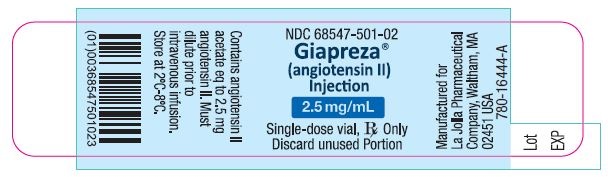
Package Label – 2.5 mg/mL Single-Dose Vial Label 2.5-vial-label
Package Label – 2.5 mg/mL Single Vial Carton Label 2.5-carton-label
Package Label - 0.5 mg/mL Single-Dose Vial Label 0.5-vial-label
Package Label - 0.5 mg/mL Single Vial Carton Label 0.5-vial-carton-label
About this NDC listing & data coverage
What data is (and isn’t) available for this NDC — tap to expand
| NDC identity (package / product / labeler codes) | ✓ Available |
| Labeler | ✓ Available |
| Product & package description | ✓ Available |
| Marketing category & status | ✓ Available |
| Active ingredient / dosage form / route | ✓ Available |
| FDA label (SPL via DailyMed) | ✓ Available |
| Package photos | ✓ Available |
| Inactive ingredients (structured) | ✓ Available |
| NADAC pharmacy acquisition price (CMS) | — Not published for this NDC CMS publishes NADAC only for NDCs reported in its retail-pharmacy survey. |
| Orange Book / therapeutic-equivalence data | ✓ Available |
| HCPCS J-code billing crosswalk | — Not published for this NDC Most self-administered / retail products have no J-code — that is normal. |
| Medicaid utilization (CMS SDUD) | — Not published for this NDC CMS reports utilization only for NDCs with Medicaid claims above its privacy threshold. |