
Benazepril Hydrochloride 10 mg Tablet, Coated, 60-count — NDC 68788-9327-6 (Billing 68788-9327-06)
This is a package of 60 tablets of Benazepril Hydrochloride 10 mg Tablet, Coated from Preferred Pharmaceuticals, Inc., marketed since Mar 2015 and currently FDA-listed.
NDC database record
One package, one record: these facts belong to NDC 68788-9327-6 alone.
- Record
- FDA NDC Directory package listing · Human prescription drug
- Code segments
- 68788 labeler · 9327 product · 6 package
- Package marketed since
- Mar 25, 2015
- Sample package
- No — commercial package
- Listing certified through
- Dec 31, 2027
- Barcode (UPC-A, from the NDC)
- 3 6878893276 1
- FDA record last changed
- Jul 24, 2026
Identity & classification
Regulatory identifiers FDA, NLM and CMS codes for this package
- RxCUI (RxNorm): 898687
Where does this data come from?
- FDA openFDA NDC Directory · synced Oct 1, 2026
- FDA label on DailyMed · label index refreshed Oct 5, 2026
- RxNorm (NLM RxNav) · catalog refreshed Oct 1, 2026
- Medi-Span GPI (licensed)
- First Databank (licensed) · refreshed Oct 1, 2026
RxNorm drug class
This medicine belongs to the Angiotensin Converting Enzyme Inhibitor class.
Where does this data come from?
- RxClass (NLM) · catalog refreshed Oct 1, 2026
Clinical
Benazepril is used alone or in combination with other medications to treat high blood pressure. Benazepril is in a class of medications called angiotensin-converting enzyme (ACE) inhibitors. It works by decreasing certain chemicals that tighten the blood vessels, so blood flows more smoothly. High blood pressure is a common condition, and when not treated it can cause damage to the brain, heart, blood vessels, kidneys, and other parts of the body. Damage to these organs may cause heart disease, a heart attack, heart failure, stroke, kidney failure, loss of vision, and other problems. In additi...
Read the full MedlinePlus article ↗- Benazepril is used to treat high blood pressure (hypertension). By relaxing your blood vessels, it brings your numbers down — and that directly lowers your risk of serious events l...
- Not everyone does, but a dry, persistent cough is one of the most well-known side effects of ACE inhibitors like benazepril. It's not dangerous, but it can be annoying enough that...
- I keep hearing about a cough with this type of medicine. Will I definitely get one?
- No — benazepril is not safe during pregnancy. It carries a serious warning: it can harm or even kill an unborn baby, especially in the second and third trimesters. If you find out...
Patient education
Supplement & herbal interactions
Benazepril may be associated with lower levels of 1 nutrient — worth a chat with your pharmacist, not a cause for alarm.
Where does this data come from?
- MedlinePlus (NLM) · refreshed Oct 1, 2026
- FDA label on DailyMed · label index refreshed Oct 5, 2026
Ask a licensed pharmacist directly — free, answered by our team.
Pricing
A drug doesn't have one price. Each row is a different public payment system, and none is what you'd pay at the counter — that depends on your insurance. The ⓘ on each row explains what it measures.
| Price system | Per each | Per package |
|---|---|---|
| Retail pharmacies payNADAC · weekly | Not in the retail survey — common for institutional, discontinued, or low-volume packs. | |
| Medicaid paysCMS SDUD · 12 mo | No recent Medicaid claims on file for this NDC — rare and low-volume NDCs are suppressed in the public data. | |
| Medicare drug plans payPart D · Q2 2026 | $0.1207 | $7.24 / 60 tablets |
Where does this data come from?
- CMS NADAC weekly file
- CMS ASP pricing files · refreshed Sep 20, 2026
- CMS Medicaid State Drug Utilization Data · refreshed Oct 5, 2026
- CMS Part D plan pricing files · refreshed Sep 24, 2026
- VA National Acquisition Center price file
Packaging — all sizes for this product
| Package NDC | Description | Marketing start | Marketing end | Status |
|---|---|---|---|---|
| 68788-9327-01 68788-9327-1 Main listing | 100 TABLET, COATED in 1 BOTTLE | 2015-03-25 | — | Active |
| 68788-9327-03 68788-9327-3 | 30 TABLET, COATED in 1 BOTTLE | 2015-03-25 | — | Active |
| 68788-9327-06 You're viewing this | 60 TABLET, COATED in 1 BOTTLE | 2015-03-25 | — | Active |
| 68788-9327-09 68788-9327-9 | 90 TABLET, COATED in 1 BOTTLE | 2015-03-25 | — | Active |
You're viewing one of 4 pack sizes for this product.
Pack size FAQ
What quantity is in this package?
How does this package differ from NDC 68788-9327-03?
What NDC number is used to bill for this package of Benazepril Hydrochloride 10 mg Tablet, Coated?
Therapeutic equivalents
| Product | Labeler | Pack | NADAC/unit | TE | Status | Price vs. this |
|---|---|---|---|---|---|---|
| Benazepril Hydrochloride 10 mg 23155-0750-01 | Heritage | 100 tablets | $0.065 | AB | Availability likely | — |
| Benazepril Hydrochloride 10 mg 50268-0110-15 | AvPAK | 50 tablets | $0.065 | AB | Availability likely | — |
| Benazepril Hydrochloride 10 mg 53746-0752-01 | Amneal | 100 tablets | $0.065 | AB | Availability likely | — |
| Benazepril hydrochloride 10 mg 62135-0720-90 | Chartwell | 90 tablets | $0.065 | AB | Availability likely | — |
| Lotensin 10 mg 30698-0448-01 | Validus | 100 tablets | — | AB | FDA listed | — |
| Benazepril Hydrochloride 10 mg 43063-0679-30 | PD-Rx | 30 tablets | — | AB | FDA listed | — |
| Benazepril Hydrochloride 10 mg 43547-0336-03 | Solco | 30 tablets | — | AB | FDA listed | — |
| Benazepril Hydrochloride 10 mg 50090-3775-00 | A-S | 30 tablets | — | AB | FDA listed | — |
| Benazepril Hydrochloride 10 mg 50090-5751-00 | A-S | 30 tablets | — | AB | FDA listed | — |
| Benazepril Hydrochloride 10 mg 51407-0463-01 | Golden | 100 tablets | — | AB | FDA listed | — |
| Benazepril Hydrochloride 10 mg 51655-0065-26 | Northwind | 90 tablets | — | AB | FDA listed | — |
| Benazepril Hydrochloride 10 mg 51655-0202-26 | Northwind | 90 tablets | — | AB | FDA listed | — |
| Benazepril Hydrochloride 10 mg 55154-4343-00 | Cardinal | 10 tablets | — | AB | FDA listed | — |
| Benazepril Hydrochloride 10 mg 63187-0499-30 | Proficient | 30 tablets | — | AB | FDA listed | — |
| Benazepril Hydrochloride 10 mg 65162-0752-03 | Amneal | 30 tablets | — | AB | FDA listed | — |
| Benazepril Hydrochloride 10 mg 68071-3057-02 | NuCare | 120 tablets | — | AB | FDA listed | — |
| Benazepril Hydrochloride 10 mg 68071-5129-01 | NuCare | 100 tablets | — | AB | FDA listed | — |
| Benazepril Hydrochloride 10 mg 68788-8877-01 | Preferred | 100 tablets | — | AB | FDA listed | — |
| Benazepril Hydrochloride 10 mgthis 68788-9327-06 | Preferred | 60 tablets | — | AB | FDA listed | — |
| Benazepril Hydrochloride 10 mg 71335-0457-01 | Bryant | 30 tablets | — | AB | Discontinued | — |
| Benazepril Hydrochloride 10 mg 71335-0854-01 | Bryant | 30 tablets | — | AB | FDA listed | — |
| Benazepril Hydrochloride 10 mg 72162-1816-03 | Bryant | 30 tablets | — | AB | FDA listed | — |
| Benazepril Hydrochloride 10 mg 72189-0110-30 | DIRECT | 30 tablets | — | AB | FDA listed | — |
| Benazepril Hydrochloride 10 mg 84386-0100-01 | Aurobindo | 100 tablets | — | — | FDA listed | — |
| Benazepril Hydrochloride 10 mg 62559-0525-01 | ANI | 100 tablets | — | AB | FDA listed | — |
Where does this data come from?
- FDA openFDA NDC Directory · synced Oct 1, 2026
- FDA Orange Book · refreshed Oct 3, 2026
- CMS NADAC weekly file
Availability & generic status
This product is an FDA-approved generic. Other versions of the same drug are listed under Therapeutic equivalents, least expensive first.
Where does this data come from?
- FDA Orange Book · refreshed Oct 3, 2026
What it looks like
Where does this data come from?
- FDA label on DailyMed · label index refreshed Oct 5, 2026
Inactive Ingredients / Excipients
Inactive ingredients, also called excipients, are components of the drug product other than the active ingredient. They may include fillers, dyes, coatings, preservatives, flavors, or other formulation ingredients.
🧪 Avoiding an ingredient? See Benazepril inactive ingredients by manufacturer: every current product's list side by side, so you can ask your pharmacy for the version that does not list it.
💡 Tap an ingredient (hover on desktop) to see what it is and why it’s used.
-
UNII R12CBM0EIZ
A natural wax derived from a Brazilian palm tree, used as a coating and polish on tablets and capsules. It creates a smooth, shiny finish that protects the medicine and improves appearance.
-
UNII 68401960MK
Crospovidone is a synthetic polymer made from polyvinylpyrrolidone. It acts as a disintegrant, helping tablets break apart quickly in the stomach so the medicine dissolves and absorbs into the body.
-
UNII WZB9127XOA
A synthetic red dye used to color medications and make them easier to identify. It serves as a colorant in tablets, capsules, and liquid formulations.
-
UNII 3NXW29V3WO
Hypromellose is a plant-based thickener made from cellulose. It's used in medicines as a binder to hold ingredients together, a coating for tablets, and a thickener for liquids.
-
UNII EWQ57Q8I5X
Lactose monohydrate is a natural sugar derived from milk. It serves as a filler and binder in tablets and capsules, helping create the proper size, texture, and consistency of the medicine.
-
UNII 70097M6I30
Magnesium stearate is a salt made from magnesium and stearic acid, a fatty substance. It's used in tablets and capsules as a lubricant and glidant to help ingredients flow smoothly during manufacturing and prevent sticking.
-
UNII OP1R32D61U
Microcrystalline cellulose is a purified form of cellulose, a natural fiber from plant sources. It acts as a binder and filler in tablets and capsules, helping hold ingredients together and give the medicine its shape and size.
-
UNII VH2XOU12IE
Polydextrose is a synthetic polymer made from dextrose (sugar) that acts as a bulking agent and filler in medicines. It helps give tablets and capsules proper volume and texture while often adding slight sweetness.
-
UNII 3WJQ0SDW1A
Polyethylene glycol is a synthetic liquid or solid polymer used in medicines as a solvent, lubricant, and humectant. It helps dissolve active ingredients, reduces friction during manufacturing, and retains moisture in the final product.
-
UNII ETJ7Z6XBU4
Silicon dioxide is a naturally occurring mineral used as a glidant and anti-caking agent. It helps powder ingredients flow smoothly and prevents clumping during manufacturing and storage.
-
UNII O8232NY3SJ
A plant-based carbohydrate derived from corn kernels. It acts as a filler to add bulk, a binder to hold ingredients together, and a disintegrant to help the tablet break apart in your stomach for absorption.
-
UNII 15FIX9V2JP
Titanium dioxide is a bright white mineral powder commonly used as a colorant and opacifying agent. It makes pills and tablets white or lighter in color and helps make coatings non-transparent.
-
UNII XHX3C3X673
Triacetin is a clear, oily liquid made from glycerin and acetic acid. It works as a plasticizer and solvent in medicines, helping soften coatings and improve how liquids mix together in formulations.
13 inactive ingredients listed in the exact product block matched to this NDC.
Where does this data come from?
ingredient classCode="IACT" elements from the exact product block matched by this NDC. Label-section narrative from DailyMed / the openFDA label index is shown separately when available.- FDA label on DailyMed · label index refreshed Oct 5, 2026
- FDA openFDA NDC Directory · synced Oct 1, 2026
Inactive ingredient FAQ
Are inactive ingredients the same for every manufacturer?
Why might an inactive ingredient be missing?
Can inactive ingredients matter?
Manufacturer & labeler
More NDCs from Preferred Pharmaceuticals, Inc. labeler code 68788
- Zolpidem Tartrate 10 mg Tablet NDC 68788-9127-2
- Orphenadrine Citrate 100 mg Tablet, Extended Release NDC 68788-9138-1
- Betamethasone Dipropionate .5 mg/g Cream NDC 68788-9219-1
- Baclofen 10 mg Tablet NDC 68788-9246-1
- Carvedilol 25 mg Tablet, Film Coated NDC 68788-9265-1
- Benazepril Hydrochloride 20 mg Tablet, Coated NDC 68788-9313-1
- Erythromycin 5 mg/g Ointment NDC 68788-9328-3
- Amlodipine Besylate 5 mg Tablet NDC 68788-9345-1
- Ondansetron Hydrochloride 4 mg Tablet, Film Coated NDC 68788-9368-1
- Ondansetron Hydrochloride 8 mg Tablet, Film Coated NDC 68788-9402-1
- Isoniazid 300 mg Tablet NDC 68788-9405-1
- Diclofenac Sodium 30 mg/g Gel NDC 68788-9435-1
Where does this data come from?
- FDA openFDA NDC Directory · synced Oct 1, 2026
- Drugs@FDA
Full prescribing information FDA SPL
🚨 Boxed Warning ▾
WARNING: FETAL TOXICITY When pregnancy is detected, discontinue benazepril hydrochloride tablets as soon as possible. Drugs that act directly on the renin-angiotensin system can cause injury and death to the developing fetus [see Warnings and Precautions ( 5.1 )]. WARNING-FETAL TOXICITY See full prescribing information for complete boxed warning.
When pregnancy is detected, discontinue benazepril hydrochloride tablets as soon as possible. ( 5.1 ) Drugs that act directly on the renin-angiotensin system can cause injury and death to the developing fetus. ( 5.1 )
🎯 Indications and Usage ▾
1 INDICATIONS AND USAGE Benazepril hydrochloride tablets are indicated for the treatment of hypertension, to lower blood pressure. Lowering blood pressure reduces the risk of fatal and nonfatal cardiovascular events, primarily strokes and myocardial infarctions. These benefits have been seen in controlled trials of antihypertensive drugs from a wide variety of pharmacologic classes including the class to which this drug principally belongs.
Control of high blood pressure should be part of comprehensive cardiovascular risk management, including, as appropriate, lipid control, diabetes management, antithrombotic therapy, smoking cessation, exercise, and limited sodium intake. Many patients will require more than one drug to achieve blood pressure goals. For specific advice on goals and management, see published guidelines, such as those of the National High Blood Pressure Education Program’s Joint National Committee on Prevention, Detection, Evaluation, and Treatment of High Blood Pressure (JNC).
Numerous antihypertensive drugs, from a variety of pharmacologic classes and with different mechanisms of action, have been shown in randomized controlled trials to reduce cardiovascular morbidity and mortality, and it can be concluded that it is blood pressure reduction, and not some other pharmacologic property of the drugs, that is largely responsible for those benefits. The largest and most consistent cardiovascular outcome benefit has been a reduction in the risk of stroke, but reductions in myocardial infarction and cardiovascular mortality also have been seen regularly.
Elevated systolic or diastolic pressure causes increased cardiovascular risk, and the absolute risk increase per mm Hg is greater at higher blood pressures, so that even modest reductions of severe hypertension can provide substantial benefit. Relative risk reduction from blood pressure reduction is similar across populations with varying absolute risk, so the absolute benefit is greater in patients who are at higher risk independent of their hypertension (for example, patients with diabetes or hyperlipidemia), and such patients would be expected to benefit from more aggressive treatment to a lower blood pressure goal.
Some antihypertensive drugs have smaller blood pressure effects (as monotherapy) in Black patients, and many antihypertensive drugs have additional approved indications and effects (e.g., on angina, heart failure, or diabetic kidney disease). These considerations may guide selection of therapy. It may be used alone or in combination with thiazide diuretics.
Benazepril hydrochloride is an angiotensin-converting enzyme (ACE) inhibitor indicated for the treatment of hypertension, to lower blood pressure. Lowering blood pressure reduces the risk of fatal and nonfatal cardiovascular events, primarily strokes and myocardial infarctions. ()
⏱️ Dosage and Administration ▾
2 DOSAGE AND ADMINISTRATION • Adult Patients: Initiate with 10 mg once daily (or 5 mg if patient is on diuretic). Titrate to 40 mg daily based on blood pressure response. ( 2.1 ) • Pediatric patients age 6 years and above with glomerular filtration rate (GFR) >30 mL/min/1.73 m 2 : Initiate with 0.2 mg/kg once daily.
Maximum dose is 0.6 mg/kg once daily. • Renal Impairment: Initiate with 5 mg once daily in patients with GFR <30 mL/min/1.73 m 2 (serum creatinine >3 mg/dL) ( 2 .2)
2.1Recommended Dosage ADULTS The recommended initial dose for patients not receiving a diuretic is 10 mg once a day. The usual maintenance dosage range is 20 to 40 mg per day administered as a single dose or in two equally divided doses. A dose of 80 mg gives an increased response, but experience with this dose is limited.
The divided regimen was more effective in controlling trough (pre-dosing) blood pressure than the same dose given as a once-daily regimen. Use with diuretics in adults The recommended starting dose of benazepril hydrochloride tablets in a patient on a diuretic is 5 mg once daily. If blood pressure is not controlled with benazepril hydrochloride alone, a low dose of diuretic may be added.
PEDIATRIC PATIENTS 6 YEARS OF AGE AND OLDER The recommended starting dose for pediatric patients is 0.2 mg/kg once per day. Titrate as needed to 0.6 mg/kg once per day. Doses above 0.6 mg/kg (or in excess of 40 mg daily) have not been studied in pediatric patients.
Benazepril hydrochloride tablets are not recommended in pediatric patients less than 6 years of age or in pediatric patients with GFR less than 30 mL/min/1.73 m 2 [see Use in Specific Populations ()].
2.2Dose Adjustment for Renal Impairment For adults with a GFR < 30 mL/min/1.73 m 2 (serum creatinine > 3 mg/dL), the recommended initial dose is 5 mg benazepril hydrochloride tablets once daily. Dosage may be titrated upward until blood pressure is controlled or to a maximum total daily dose of 40 mg. Benazepril hydrochloride tablets can also worsen renal function [see Warnings and Precautions ( 5.3 )].
2.3Preparation of Suspension (for 150 mL of a 2 mg/mL Suspension) Add 75 mL of Ora-Plus ® * oral suspending vehicle to an amber polyethylene terephthalate (PET) bottle containing fifteen benazepril hydrochloride 20 mg tablets, and shake for at least two minutes. Allow the suspension to stand for a minimum of 1 hour. After the standing time, shake the suspension for a minimum of one additional minute.
Add 75 mL of Ora-Sweet ® * oral syrup vehicle to the bottle and shake the suspension to disperse the ingredients. The suspension should be refrigerated at 2° to 8°C (36° to 46°F) and can be stored for up to 30 days in the PET bottle with a child-resistant screw-cap closure. Shake the suspension before each use. *Ora-Plus ® and Ora-Sweet ® are registered trademarks of Paddock Laboratories, Inc.
Ora Plus ® contains carrageenan, citric acid, methylparaben, microcrystalline cellulose, carboxymethylcellulose sodium, potassium sorbate, simethicone, sodium phosphate monobasic, xanthan gum, and water. Ora-Sweet ® contains citric acid, berry citrus flavorant, glycerin, methylparaben, potassium sorbate, sodium phosphate monobasic, sorbitol, sucrose, and water.
💊 Dosage Forms and Strengths ▾
3 DOSAGE FORMS AND STRENGTHS Tablets: 5 mg, 10 mg, 20 mg, and 40 mg • Each 5 mg tablet is white with “S” on one side and “341” on the other • Each 10 mg tablet is red with “S” on one side and “342” on the other • Each 20 mg tablet is grey with “S” on one side and “343” on the other • Each 40 mg tablet is blue with “S” on one side and “344” on the other • Tablets: 5 mg, 10 mg, 20 mg, 40 mg
⛔ Contraindications ▾
4 CONTRAINDICATIONS Benazepril hydrochloride tablets are contraindicated in patients: • who are hypersensitive to benazepril or to any other ACE inhibitor • with a history of angioedema with or without previous ACE inhibitor treatment Benazepril hydrochloride tablets are contraindicated in combination with a neprilysin inhibitor (e.g., sacubitril). Do not administer benazepril hydrochloride tablets within 36 hours of switching to or from sacubitril/valsartan, a neprilysin inhibitor [see Warnings and Precautions (5.2)].
Do not coadminister aliskiren with angiotensin receptor blockers, ACE inhibitors; including benazepril hydrochloride tablets in patients with diabetes [see Drug Interactions ( 7.4 )] . • Angioedema or history of hereditary or idiopathic angioedema ( 4 ) • Hypersensitivity ( 4 ) • Co-administration with aliskiren in patients with diabetes ( 4 )
⚠️ Warnings and Cautions ▾
5 WARNINGS AND PRECAUTIONS • Angioedema: Discontinue benazepril hydrochloride and treat appropriately. ( 5.2 ) • Monitor renal function periodically. ( 5.3 ) • Monitor blood pressure after initiation. ( 5.4 ) • Hyperkalemia: Monitor serum potassium periodically. ( 5.5 ) • Hepatic toxicity: Monitor for jaundice or signs of liver failure. ( 5.6 )
5.1Fetal Toxicity Benazepril hydrochloride tablets can cause fetal harm when administered to a pregnant woman. Use of drugs that act on the renin-angiotensin system during the second and third trimesters of pregnancy reduces fetal renal function and increases fetal and neonatal morbidity and death. Resulting oligohydramnios can be associated with fetal lung hypoplasia and skeletal deformations.
Potential neonatal adverse effects include skull hypoplasia, anuria, hypotension, renal failure, and death. When pregnancy is detected, discontinue benazepril hydrochloride tablets as soon as possible [see Use in Specific Populations ( 8.1 )] .
5.2Angioedema and Anaphylactoid Reactions Angioedema Head and Neck Angioedema Angioedema of the face, extremities, lips, tongue, glottis, and/or larynx including some fatal reactions, have occured in patients treated with benazepril hydrochloride. Patients with involvement of the tongue, glottis or larynx are likely to experience airway obstruction, especially those with a history of airway surgery. Benazepril hydrochloride should be promptly discontinued and appropriate therapy and monitoring should be provided until complete and sustained resolution of signs and symptoms of angioedema has occurred.
Patients with a history of angioedema unrelated to ACE inhibitor therapy may be at increased risk of angioedema while receiving an ACE inhibitor [see Contraindications ( 4 )] . ACE inhibitors have been associated with a higher rate of angioedema in Black than in non-Black patients. Patients receiving coadministration of ACE inhibitor and mTOR (mammalian target of rapamycin) inhibitor (e.g., temsirolimus, sirolimus, everolimus) therapy or a neprilysin inhibitor may be at increased risk for angioedema [see Drug Interactions ()].
Intestinal Angioedema Intestinal angioedema has occurred in patients treated with ACE inhibitors. These patients presented with abdominal pain (with or without nausea or vomiting); in some cases there was no prior history of facial angioedema and C-1 esterase levels were normal. In some cases, the angioedema was diagnosed by procedures including abdominal CT scan or ultrasound, or at surgery, and symptoms resolved after stopping the ACE inhibitor.
Anaphylactoid Reactions Anaphylactoid Reactions During Desensitization Two patients undergoing desensitizing treatment with hymenoptera venom while receiving ACE inhibitors sustained life-threatening anaphylactoid reactions. Anaphylactoid Reactions During Dialysis Sudden and potentially life threatening anaphylactoid reactions have occurred in some patients dialyzed with high-flux membranes and treated concomitantly with an ACE inhibitor. In such patients, dialysis must be stopped immediately, and aggressive therapy for anaphylactoid reactions must be initiated.
Symptoms have not been relieved by antihistamines in these situations. In these patients, consideration should be given to using a different type of dialysis membrane or a different class of antihypertensive agent. Anaphylactoid reactions have also been reported in patients undergoing low-density lipoprotein apheresis with dextran sulfate absorption.
5.3Impaired Renal Function Monitor renal function periodically in patients treated with benazepril hydrochloride. Changes in renal function, including acute renal failure, can be caused by drugs that inhibit the renin-angiotensin system. Patients whose renal function may depend on the activity of the renin-angiotensin system (e.g., patients with renal artery stenosis, chronic kidney disease, severe congestive heart failure, post-myocardial infarction, or volume depletion) may be at parti… [Excerpted — this section continues on DailyMed.]
🤒 Adverse Reactions ▾
6 ADVERSE REACTIONS Because clinical trials are conducted under widely varying conditions, adverse reaction rates observed in the clinical studies of a drug cannot be directly compared to rates in the clinical studies of another drug and may not reflect the rates observed in practice. Benazepril hydrochloride has been evaluated for safety in over 6000 patients with hypertension; over 700 of these patients were treated for at least one year. The overall incidence of reported adverse events was similar in benazepril hydrochloride and placebo patients.
The reported side effects were generally mild and transient, and there was no relation between side effects and age, duration of therapy, or total dosage within the range of 2 to 80 mg. Discontinuation of therapy because of a side effect was required in approximately 5% of U.S. patients treated with benazepril hydrochloride and in 3% of patients treated with placebo. The most common reasons for discontinuation were headache (0.6%) and cough (0.5%).
Adverse reactions seen in at least 1% greater frequency in patients treated with benazepril hydrochloride than placebo were headache (6% vs. 4%), dizziness (4% vs. 2%), somnolence (2% vs.
0%) and postural dizziness (2% vs. 0%). Adverse reactions reported in controlled clinical trials (less than 1% more on benazepril than on placebo), and rarer events seen in post-marketing experience, include the following (in some, a causal relationship to drug use is uncertain): Dermatologic: Stevens-Johnson syndrome, pemphigus, apparent hypersensitivity reactions (manifested by dermatitis, pruritus, or rash), photosensitivity, and flushing.
Gastrointestinal: Nausea, pancreatitis, constipation, gastritis, vomiting, and melena. Hematologic: Thrombocytopenia and hemolytic anemia. Neurologic/Psychiatric: Anxiety, decreased libido, hypertonia, insomnia, nervousness, and paresthesia.
Other: Fatigue, asthma, bronchitis, dyspnea, sinusitis, urinary tract infection, frequent urination, infection, arthritis, impotence, alopecia, arthralgia, myalgia, asthenia, sweating. Laboratory Abnormalities : Elevations of uric acid, blood glucose, serum bilirubin, and liver enzymes [see Warnings and Precautions S ( 5 )] have been reported, as have incidents of hyponatremia, electrocardiographic changes, eosinophilia, and proteinuria. The most common adverse reactions leading to discontinuation were headache (0.6%) and cough (0.5%) () To report SUSPECTED ADVERSE REACTIONS, contact Solco Healthcare US, LLC at 1-866-257-2597 or FDA at 1-800-FDA-1088 or www.fda.gov/medwatch.
🔄 Drug Interactions ▾
7 DRUG INTERACTIONS • Diuretics: Excessive drop in blood pressure ( 7.1 ) • Antidiabetics: Increased risk of hypoglycaemia ( 7.2 ) • NSAIDS: Increased risk of renal impairment and loss of antihypertensive efficacy ( 7.3 ) • Dual inhibition of the renin-angiotensin system: Increased risk of renal impairment, hypotension and hyperkalemia ( 7.4 ) • Lithium: Symptoms of lithium toxicity ( 7.6 ) • Neprilysin Inhibitor: Increased risk of angioedema () • Gold: Nitritoid reactions ( 7.8 )
7.1Diuretics Hypotension Patients on diuretics, especially those in whom diuretic therapy was recently instituted, may occasionally experience an excessive reduction of blood pressure after initiation of therapy with benazepril hydrochloride. The possibility of hypotensive effects with benazepril hydrochloride can be minimized by either discontinuing or decreasing the dose of diuretic prior to initiation of treatment with benazepril hydrochloride [see Dosage and Administration ( 2.1 )]. Hyperkalemia Potassium-sparing diuretics (spironolactone, amiloride, triamterene, and others) can increase the risk of hyperkalemia.
Therefore, if concomitant use of such agents is indicated, monitor the patient’s serum potassium frequently. Benazepril hydrochloride attenuates potassium loss caused by thiazide-type diuretics.
7.2Antidiabetics Concomitant administration of benazepril hydrochloride and antidiabetic medicines (insulins, oral hypoglycemic agents) may increase the risk of hypoglycemia.
7.3Non-Steroidal Anti-Inflammatory Agents including Selective Cyclooxygenase-2 Inhibitors (COX-2 Inhibitors) In patients who are elderly, volume-depleted (including those on diuretic therapy), or with compromised renal function, coadministration of NSAIDs, including selective COX-2 inhibitors, with ACE inhibitors, including benazepril, may result in deterioration of renal function, including possible acute renal failure. These effects are usually reversible. Monitor renal function periodically in patients receiving benazepril and NSAID therapy.
The antihypertensive effect of ACE inhibitors, including benazepril, may be attenuated by NSAIDs.
7.4Dual Blockade of the Renin-Angiotensin System (RAS) Dual Blockade of the RAS with angiotensin receptor blockers, ACE inhibitors, or aliskiren is associated with increased risks of hypotension, hyperkalemia, and changes in renal function (including acute renal failure) compared to monotherapy. Most patients receiving the combination of two RAS inhibitors do not obtain any additional benefit compared to monotherapy. In general, avoid combined use of RAS inhibitors.
Closely monitor blood pressure, renal function and electrolytes in patients on benazepril hydrochloride and other agents that affect the RAS. Do not coadminister aliskiren with benazepril hydrochloride in patients with diabetes. Avoid use of aliskiren with benazepril hydrochloride in patients with renal impairment (GFR < 60 mL/min).
7.5Mammalian Target of Rapamycin (mTOR) Inhibitors Patients receiving coadministration of ACE inhibitor and mTOR inhibitor (e.g., temsirolimus, sirolimus, everolimus) therapy may be at increased risk for angioedema. Monitor for signs of angioedema [see Warnings and Precautions ( 5.2 )] .
7.6Lithium Lithium toxicity has been reported in patients receiving lithium concomitantly with benazepril hydrochloride. Lithium toxicity was usually reversible upon discontinuation of lithium or benazepril hydrochloride. Monitor serum lithium levels during concurrent use.
7.7Neprilysin Inhibitor Patients taking concomitant neprilysin inhibitors may be at increased risk for angioedema [see Warnings and Precautions].
7.8Gold Nitritoid reactions (symptoms include facial flushing, nausea, vomiting and hypotension) have been reported rarely in patients on therapy with injectable gold (sodium aurothiomalate) and concomitant ACE inhibitor therapy.
👥 Use in Specific Populations ▾
8 USE IN SPECIFIC POPULATIONS • Pediatrics: Safety and effectiveness have not been established in patients < 6 years of age or with GFR < 30 mL/min/1.73 m 2 () • Race: Less antihypertensive effect in Blacks as monotherapy ( 8.5 )
8.1Pregnancy Risk Summary Benazepril hydrochloride can cause fetal harm when administered to a pregnant woman. Use of drugs that act on the renin-angiotensin system during the second and third trimesters of pregnancy reduces fetal renal function and increases fetal and neonatal morbidity and death. Most epidemiologic studies examining fetal abnormalities after exposure to antihypertensive use in the first trimester have not distinguished drugs affecting the renin-angiotensin system from other antihypertensive agents.
When pregnancy is detected, discontinue benazepril hydrochloride as soon as possible. The estimated background risk of major birth defects and miscarriage for the indicated population are unknown. All pregnancies have a background risk of birth defect, loss, or other adverse outcomes.
In the general U.S. population, the estimated background risk of major birth defects and miscarriage in clinically recognized pregnancies is 2-4% and 15-20%, respectively. Clinical Considerations Disease-associated maternal and/or embryo/fetal risk Hypertension in pregnancy increases the maternal risk for pre-eclampsia, gestational diabetes, premature delivery, and delivery complications (e.g., need for cesarean section, and post-partum hemorrhage). Hypertension increases the fetal risk for intrauterine growth restriction and intrauterine death.
Pregnant women with hypertension should be carefully monitored and managed accordingly. Fetal/Neonatal Adverse Reactions Oligohydramnios in pregnant women who use drugs affecting the renin-angiotensin system in the second and third trimesters of pregnancy can result in the following: reduced fetal renal function leading to anuria and renal failure, fetal lung hypoplasia and skeletal deformations, including skull hypoplasia, hypotension, and death. In the unusual case that there is no appropriate alternative to therapy with drugs affecting the renin-angiotensin system for a particular patient, apprise the mother of the potential risk to the fetus.
Perform serial ultrasound examinations to assess the intra-amniotic environment. Fetal testing may be appropriate, based on the week of pregnancy. Patients and physicians should be aware, however, that oligohydramnios may not appear until after the fetus has sustained irreversible injury.
Closely observe infants with histories of in utero exposure to benazepril hydrochloride for hypotension, oliguria, and hyperkalemia. If oliguria or hypotension occur in neonates with a history of in utero exposure to benazepril hydrochloride, support blood pressure and renal perfusion. Exchange transfusions or dialysis may be required as a means of reversing hypotension and substituting for disordered renal function.
8.2Lactation Minimal amounts of unchanged benazepril and of benazeprilat are excreted into the breast milk of lactating women treated with benazepril. A newborn child ingesting entirely breast milk would receive less than 0.1% of the mg/kg maternal dose of benazepril and benazeprilat.
8.3Pediatric Use The antihypertensive effects of benazepril hydrochloride have been evaluated in a double-blind study in pediatric patients 7 to 16 years of age [see Clinical Pharmacology ( 12.3 )]. The pharmacokinetics of benazepril hydrochloride have been evaluated in pediatric patients 6 to 16 years of age [see Clinical Pharmacology ( 12.3 )]. Infants below the age of 1 year should not be given benazepril hydrochloride because of the risk of effects on kidney development.
Safety and effectiveness of benazepril hydrochloride have not been established in pediatric patients less than 6 years of age or in children with glomerular filtration rate < 30 mL/min/1.73m² [see Dosage and Administration ( 2.1 ) and Clinical Pharmacology 12.3 )].
8.4Geri… [Excerpted — this section continues on DailyMed.]
🆘 Overdosage ▾
10 OVERDOSAGE Single oral doses of 3 g/kg benazepril were associated with significant lethality in mice. Rats, however, tolerated single oral doses of up to 6 g/kg. Reduced activity was seen at 1 g/kg in mice and at 5 g/kg in rats.
Human overdoses of benazepril have not been reported, but the most common manifestation of human benazepril overdosage is likely to be hypotension, for which the usual treatment would be intravenous infusion of normal saline solution. Hypotension can be associated with electrolyte disturbances and renal failure. Benazepril is only slightly dialyzable, but consider dialysis to support patients with severely impaired renal function [see Warnings and Precautions ( 5.3 )].
If ingestion is recent, consider activated charcoal. Consider gastric decontamination (e.g., vomiting, gastric lavage) in the early period after ingestion. Monitor for blood pressure and clinical symptoms.
Supportive management should be employed to ensure adequate hydration and to maintain systemic blood pressure. In the case of marked hypotension, infuse physiological saline solution; as needed, consider vasopressors (e.g., catecholamines i.v.).
🧬 Clinical Pharmacology ▾
12 CLINICAL PHARMACOLOGY
12.1Mechanism of Action Benazepril and benazeprilat inhibit angiotensin-converting enzyme (ACE) in human subjects and animals. Benazeprilat has much greater ACE inhibitory activity than does benazepril. ACE is a peptidyl dipeptidase that catalyzes the conversion of angiotensin I to the vasoconstrictor substance, angiotensin II.
Angiotensin II also stimulates aldosterone secretion by the adrenal cortex. Inhibition of ACE results in decreased plasma angiotensin II, which leads to decreased vasopressor activity and to decreased aldosterone secretion. The latter decrease may result in a small increase of serum potassium.
Removal of angiotensin II negative feedback on renin secretion leads to increased plasma renin activity. In animal studies, benazepril had no inhibitory effect on the vasopressor response to angiotensin II and did not interfere with the hemodynamic effects of the autonomic neurotransmitters acetylcholine, epinephrine, and norepinephrine. ACE is identical to kininase, an enzyme that degrades bradykinin.
Whether increased levels of bradykinin, a potent vasodepressor peptide, play a role in the therapeutic effects of benazepril hydrochloride remains to be elucidated. While the mechanism through which benazepril lowers blood pressure is believed to be primarily suppression of the renin-angiotensin-aldosterone system, benazepril has an antihypertensive effect even in patients with low-renin hypertension.
12.2Pharmacodynamics Single and multiple doses of 10 mg or more of benazepril hydrochloride cause inhibition of plasma ACE activity by at least 80% to 90% for at least 24 hours after dosing. Pressor responses to exogenous angiotensin I were inhibited by 60% to 90% (up to 4 hours post-dose) at the 10 mg dose. Drug Interactions Benazepril hydrochloride has been used concomitantly with beta-adrenergic-blocking agents, calcium-channel-blocking agents, diuretics, digoxin, and hydralazine, without evidence of clinically important adverse interactions.
Benazepril, like other ACE inhibitors, has had less than additive effects with beta-adrenergic blockers, presumably because both drugs lower blood pressure by inhibiting parts of the renin-angiotensin system.
12.3Pharmacokinetics The pharmacokinetics of benazepril are approximately dose-proportional within the dosage range of 10 to 80 mg. Following oral administration of benazepril hydrochloride, peak plasma concentrations of benazepril, and its active metabolite benazeprilat are reached within 0.5 to 1.0 hour and 1 to 2 hours, respectively. While the bioavailability of benazepril is not affected by food, time to peak plasma concentrations of benazeprilat is delayed to 2 to 4 hours.
The serum protein binding of benazepril is about 96.7% and that of benazeprilat about 95.3%, as measured by equilibrium dialysis; on the basis of in vitro studies, the degree of protein binding should be unaffected by age, hepatic dysfunction, or concentration (over the concentration range of 0.24 to 23.6 μmol/L). Benazepril is almost completely metabolized to benazeprilat by cleavage of the ester group (primarily in liver). Both benazepril and benazeprilat undergo glucuronidation.
Benazepril and benazeprilat are cleared predominantly by renal excretion. About 37% of an orally administered dose was recovered in urine as benazeprilat (20%), benazeprilat glucuronide (8%), benazepril glucuronide (4%) and as trace amounts of benazepril. Nonrenal (i.e., biliary) excretion accounts for approximately 11% to 12% of benazeprilat excretion.
The effective half-life of benazeprilat following once daily repeat oral administration of benazepril hydrochloride is 10 to 11 hours. Thus, steady-state concentrations of benazeprilat should be reached after 2 or 3 doses of benazepril hydrochloride given once daily. Accumulation ratio based on AUC of benazeprilat was 1.19 following once daily administration.
Specific Populations Renal impairment The pharmacokinetics of systemic exposure to bena… [Excerpted — this section continues on DailyMed.]
📦 How Supplied / Storage and Handling ▾
16 HOW SUPPLIED/STORAGE AND HANDLING Benazepril hydrochloride tablets, USP, 10 mg, are round, red, film-coated tablets, debossed “S” on one side and “342” on the other side, packaged as follows: Bottle of 30 - 68788-9327-3 Bottle of 60 - 68788-9327-6 Bottle of 90 - 68788-9327-9 Bottle of 100 - 68788-9327-100 Benazepril hydrochloride tablets, USP, 20 mg, are round, grey, film-coated tablets, debossed “S” on one side and “343” on the other side, packaged as follows: Bottle of 30 - 68788-9313-3 Bottle of 60 - 68788-9313-6 Bottle of 90 - 68788-9313-9 Bottle of 100 - 68788-9313-100
📋 Description ▾
11 DESCRIPTION Benazepril hydrochloride, USP is a white to off-white crystalline powder, soluble (> 100 mg/mL) in water, in ethanol, and in methanol. Its chemical name is benazepril 3-[[1-(ethoxy-carbonyl)-3-phenyl-(1S)-propyl]amino]-2,3,4,5-tetrahydro-2-oxo-1 H -1-(3S)-benzazepine-1-acetic acid monohydrochloride; its structural formula is Its empirical formula is C 24 H 28 N 2 O 5 •HCl and its molecular weight is 460.96. Benazeprilat, the active metabolite of benazepril, is a non-sulfhydryl angiotensin-converting enzyme inhibitor.
Benazepril hydrochloride is supplied as film-coated tablets containing 5 mg, 10 mg, 20 mg, and 40 mg of benazepril hydrochloride for oral administration. The inactive ingredients are carnauba wax, colloidal silicon dioxide, crospovidone, hypromellose, lactose monohydrate, magnesium stearate, microcrystalline cellulose, polydextrose, polyethylene glycol, pregelatinized starch, titanium dioxide, and triacetin. The 10 mg tablet also contains FD&C Red No.
40 aluminum lake. The 20 mg tablet also contains black iron oxide and yellow iron oxide. The 40 mg tablet also contains FD&C Blue No.
2 aluminum lake. Benazepril hydrochloride tablets USP, 5 mg, 10 mg, 20 mg and 40 mg meet USP Dissolution Test 2. Structure
💬 Information for Patients ▾
17 PATIENT COUNSELING INFORMATION Pregnancy : Tell female patients of childbearing age about the consequences of exposure to benazepril hydrochloride during pregnancy. Discuss treatment options with women planning to become pregnant. Instruct patients to report pregnancies to their physicians as soon as possible.
Angioedema : Angioedema, including laryngeal edema, can occur at any time with treatment with ACE inhibitors. Tell patients to report immediately any signs or symptoms suggesting angioedema (swelling of face, eyes, lips, or tongue, or difficulty in breathing) and to take no more drugs until they have consulted with the prescribing physician. Symptomatic Hypotension : Tell patients to report light-headedness especially during the first few days of therapy.
If actual syncope occurs, tell the patients to discontinue the drug until they have consulted with the prescribing physician. Tell patients that excessive perspiration and dehydration may lead to an excessive fall in blood pressure because of a reduction in fluid volume. Other causes of volume depletion such as vomiting or diarrhea may also lead to a fall in blood pressure; advise patients accordingly.
Hyperkalemia : Tell patients not to use potassium supplements or salt substitutes containing potassium without consulting the prescribing physician. Hypoglycemia : Tell diabetic patients treated with oral antidiabetic agents or insulin starting an ACE inhibitor to monitor for hypoglycemia closely, especially during the first month of combined use. Distributed by: Solco Healthcare US, LLC Somerset, NJ 08873, USA Manufactured by: Zhejiang Huahai Pharmaceutical Co., Ltd.
Xunqiao, Linhai, Zhejiang 317024, China Zhejiang Huahai Pharmaceutical Technology Co., Ltd. Jiangnan, Linhai, Zhejiang 317000, China Prinston Laboratories 3241 Woodpark Blvd, Charlotte, NC 28206 Revised: 06/2024 Repackaged By: Preferred Pharmaceuticals Inc.
🔬 Clinical Studies ▾
14 CLINICAL STUDIES Hypertension Adult Patients In single-dose studies, benazepril hydrochloride lowered blood pressure within 1 hour, with peak reductions achieved between 2 and 4 hours after dosing. The antihypertensive effect of a single dose persisted for 24 hours. In multiple-dose studies, once-daily doses of between 20 mg and 80 mg decreased seated pressure 24 hours after dosing by about 6 to 12 mmHg systolic and 4 to 7 mmHg diastolic.
The trough values represent reductions of about 50% of that seen at peak. Four dose-response studies using once-daily dosing were conducted in 470 mild-to-moderate hypertensive patients not using diuretics. The minimal effective once-daily dose of benazepril hydrochloride was 10 mg; but further falls in blood pressure, especially at morning trough, were seen with higher doses in the studied dosing range (10 to 80 mg).
In studies comparing the same daily dose of benazepril hydrochloride given as a single morning dose or as a twice-daily dose, blood pressure reductions at the time of morning trough blood levels were greater with the divided regimen. The antihypertensive effects of benazepril hydrochloride were not appreciably different in patients receiving high-or low-sodium diets. In normal human volunteers, single doses of benazepril caused an increase in renal blood flow but had no effect on glomerular filtration rate.
Use of benazepril hydrochloride in combination with thiazide diuretics gives a blood-pressure-lowering effect greater than that seen with either agent alone. By blocking the renin-angiotensin-aldosterone axis, administration of benazepril hydrochloride tends to reduce the potassium loss associated with the diuretic. Pediatric Patients In a clinical study of 107 pediatric patients, 7 to 16 years of age, with either systolic or diastolic pressure above the 95th percentile, patients were given 0.1 or 0.2 mg/kg then titrated up to 0.3 or 0.6 mg/kg with a maximum dose of 40 mg once daily.
After four weeks of treatment, the 85 patients whose blood pressure was reduced on therapy were then randomized to either placebo or benazepril and were followed up for an additional two weeks. At the end of two weeks, blood pressure (both systolic and diastolic) in children withdrawn to placebo rose by 4 to 6 mm Hg more than in children on benazepril. No dose-response was observed.
🧪 Nonclinical Toxicology ▾
13 NONCLINICAL TOXICOLOGY
13.1Carcinogenesis, Mutagenesis, Impairment of Fertility No evidence of carcinogenicity was found when benazepril was administered to rats and mice for up to two years at doses of up to 150 mg/kg/day. When compared on the basis of body weights, this dose is 110 times the maximum recommended human dose. When compared on the basis of body surface areas, this dose is 18 and 9 times (rats and mice, respectively) the maximum recommended human dose (calculations assume a patient weight of 60 kg).
No mutagenic activity was detected in the Ames test in bacteria (with or without metabolic activation), in an in vitro test for forward mutations in cultured mammalian cells, or in a nucleus anomaly test. In doses of 50 to 500 mg/kg/day (6 to 60 times the maximum recommended human dose based on mg/m 2 comparison and 37 to 375 times the maximum recommended human dose based on a mg/kg comparison), benazepril hydrochloride had no adverse effect on the reproductive performance of male and female rats.
📄 Package Label / Principal Display Panel ▾
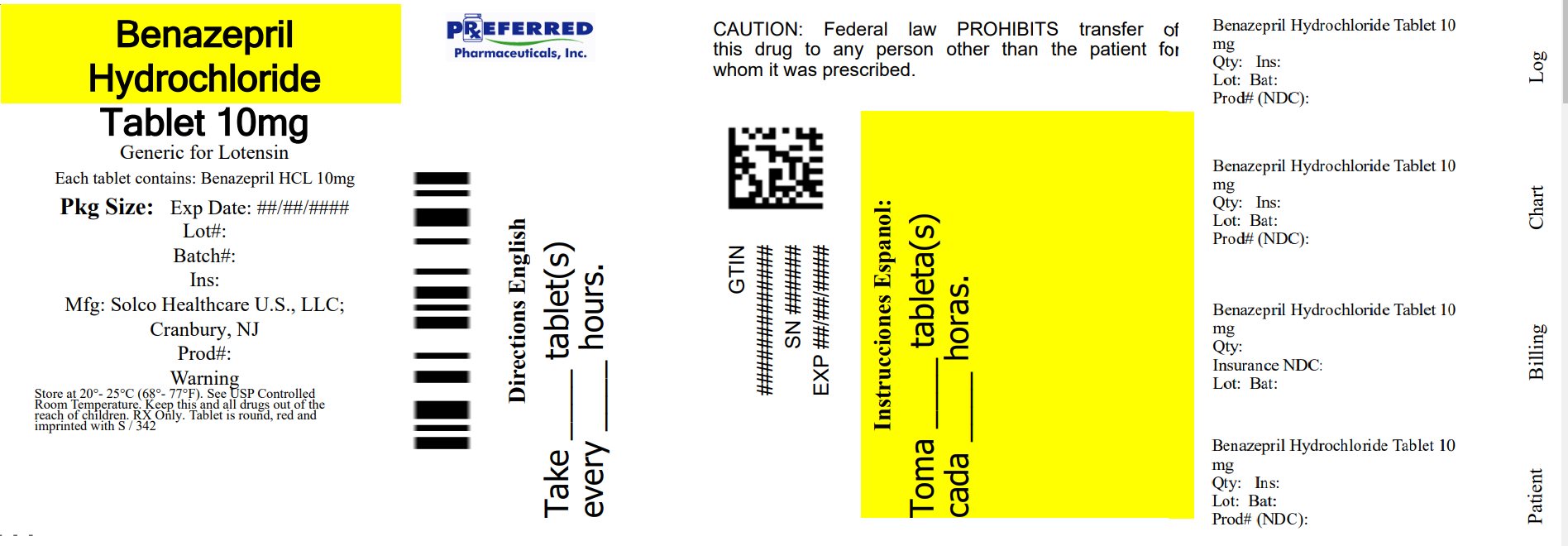
PACKAGE/LABEL PRINCIPAL DISPLAY PANEL NDC 68788-9327 R x only BenazeprilHydrochlorideTablets, USP SolcoHealthcare U.S. Repackaged By: Preferred Pharmaceuticals Inc. Container Label - 10 mg Benazepril Hydrochloride Tablet 10mg
PACKAGE/LABEL PRINCIPAL DISPLAY PANEL NDC 68788-9313 R x only BenazeprilHydrochlorideTablets, USP Solco Healthcare U.S. Repackaged By: Preferred Pharmaceuticals Inc. Container Label - 20 mg Benazepril Hydrochloride Tablet 20mg
About this NDC listing & data coverage
What data is (and isn’t) available for this NDC — tap to expand
| NDC identity (package / product / labeler codes) | ✓ Available |
| Labeler | ✓ Available |
| Product & package description | ✓ Available |
| Marketing category & status | ✓ Available |
| Active ingredient / dosage form / route | ✓ Available |
| FDA label (SPL via DailyMed) | ✓ Available |
| Package photos | ✓ Available |
| Inactive ingredients (structured) | ✓ Available |
| NADAC pharmacy acquisition price (CMS) | — Not published for this NDC CMS publishes NADAC only for NDCs reported in its retail-pharmacy survey. |
| Orange Book / therapeutic-equivalence data | ✓ Available |
| HCPCS J-code billing crosswalk | — Not published for this NDC Most self-administered / retail products have no J-code — that is normal. |
| Medicaid utilization (CMS SDUD) | — Not published for this NDC CMS reports utilization only for NDCs with Medicaid claims above its privacy threshold. |