
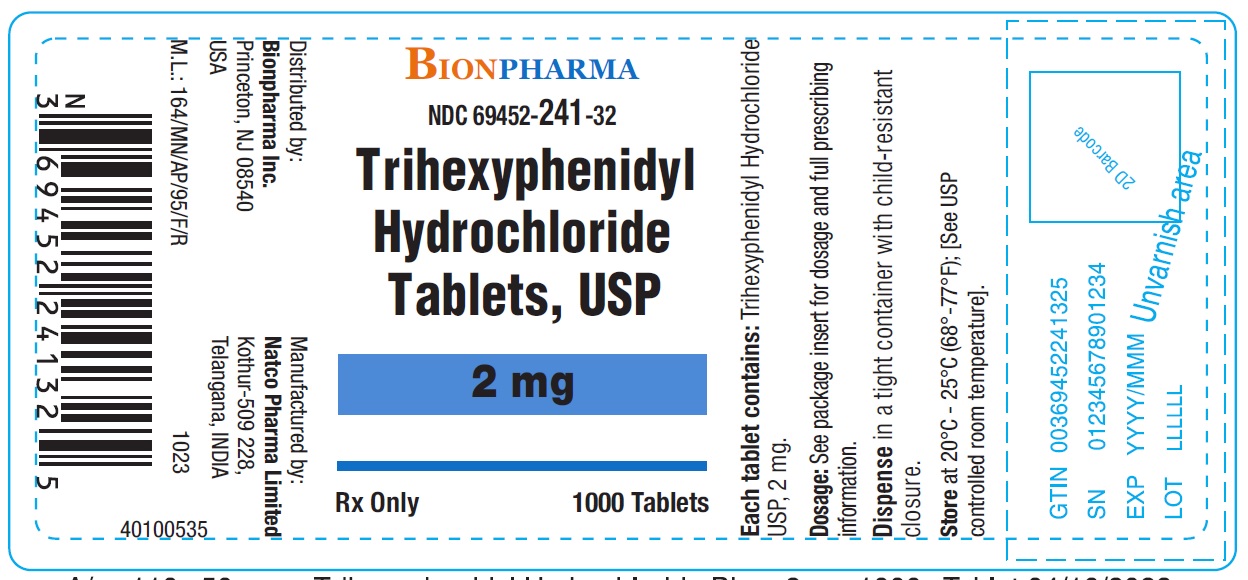
Trihexyphenidyl Hydrochloride 2 mg Tablet, 1,000-count
🆔 Identity & classification
Where does this data come from?
🏷️ RxNorm drug class
This medicine belongs to the Tertiary amines class.
Where does this data come from?
🏭 Manufacturer & labeler
Where does this data come from?
🩺 Clinical
Trihexyphenidyl is used along with other medications to treat the symptoms of Parkinson's disease (PD; a disorder of the nervous system that causes difficulties with movement, muscle control, and balance) and to control extrapyramidal symptoms (tremor, slurred speech) caused by certain medications. Trihexyphenidyl is in a class of medications called antimuscarinics. It works by relaxing muscles and nerve impulses that control the function of muscles.
Read the full MedlinePlus article ↗- Trihexyphenidyl is mainly used to treat parkinsonism — whether it developed on its own, after a brain infection, or from narrowing of blood vessels. It's often added to levodopa wh...
- What is trihexyphenidyl actually used for?
- It depends on how your body reacts. If it makes your mouth very dry, taking it before meals can help. If it causes nausea, take it after meals. If after-meal thirst is a problem, s...
- Should I take it before or after eating?
Patient education
Supplement & herbal interactions
Where does this data come from?
Ask a licensed pharmacist directly — free, answered by our team.
💊 What it looks like
Where does this data come from?
🧪 Inactive Ingredients / Excipients
Inactive ingredients, also called excipients, are components of the drug product other than the active ingredient. They may include fillers, dyes, coatings, preservatives, flavors, or other formulation ingredients.
💡 Tap an ingredient (hover on desktop) to see what it is and why it’s used.
-
UNII OP1R32D61U
Microcrystalline cellulose is a purified form of cellulose, a natural fiber from plant sources. It acts as a binder and filler in tablets and capsules, helping hold ingredients together and give the medicine its shape and size.
-
UNII 70097M6I30
Magnesium stearate is a salt made from magnesium and stearic acid, a fatty substance. It's used in tablets and capsules as a lubricant and glidant to help ingredients flow smoothly during manufacturing and prevent sticking.
-
UNII 5856J3G2A2
A starch-based powder made from potatoes and processed with sodium. It acts as a disintegrant, helping the tablet or capsule break apart quickly in the stomach so the medicine can be absorbed.
3 inactive ingredients listed in the exact product block matched to this NDC.
Where does this data come from?
ingredient classCode="IACT" elements from the exact product block matched by this NDC. Label-section narrative from DailyMed / the openFDA label index is shown separately when available.Inactive ingredient FAQ
Are inactive ingredients the same for every manufacturer?
Why might an inactive ingredient be missing?
Can inactive ingredients matter?
💲 Pricing
A drug doesn't have one price. Each row is a different public payment system, and none is what you'd pay at the counter — that depends on your insurance. The ⓘ on each row explains what it measures.
| Price system | Per ea | Per package |
|---|---|---|
| Retail pharmacies payNADAC · weekly | $0.089 | $89.30 / 1000 tablets |
| Medicaid paysCMS SDUD · 12 mo | No recent Medicaid claims on file for this NDC — rare and low-volume NDCs are suppressed in the public data. | |
| Medicare drug plans payPart D · quarterly | No Part D plan price is available for this NDC in our data. | |
Where does this data come from?
🔁 Therapeutic equivalents
| Product | Labeler | Pack | NADAC/unit | TE | Status | Price vs. this |
|---|---|---|---|---|---|---|
| Trihexyphenidyl Hydrochloride 2 mg 00591-5335-01 | Actavis | 100 tablets | $0.089 | AA | Availability likely | — |
| Trihexyphenidyl Hydrochloride 2 mgthis 69452-0241-32 | Bionpharma | 1000 tablets | $0.089 | AA | Discontinued | — |
| Trihexyphenidyl Hydrochloride 2 mg 70954-0212-10 | Novitium | 100 tablets | $0.089 | AA | Availability likely | — |
| Trihexyphenidyl Hydrochloride 2 mg 51407-0265-01 | Golden | 100 tablets | — | AA | FDA listed | — |
| Trihexyphenidyl Hydrochloride 2 mg 63850-0021-01 | Natco | 100 tablets | — | AA | FDA listed | — |
| Trihexyphenidyl Hydrochloride 2 mg 70518-1612-01 | REMEDYREPACK | 100 tablets | — | AA | FDA listed | — |
| Trihexyphenidyl Hydrochloride 2 mg 70518-2410-02 | REMEDYREPACK | 30 tablets | — | AA | Discontinued | — |
Where does this data come from?
⏳ Availability & generic status
This product is an FDA-approved generic. Other versions of the same drug are listed under Therapeutic equivalents, least expensive first.
Where does this data come from?
💊 Medicaid utilization by pack size
📦 Packaging — all sizes for this product
| Package NDC | Description | Per unit | Per pack | Marketing start | Status |
|---|---|---|---|---|---|
| 69452-0241-20 | 100 TABLET in 1 BOTTLE (69452-241-20) | $0.0893 / ea | $8.93 | 2018-12-15 | Active |
| 69452-0241-32 You're viewing this | 1000 TABLET in 1 BOTTLE (69452-241-32) | $0.0893 / ea | $89.26 | 2018-12-15 | Discontinued by firm |
You're viewing the largest of 2 pack sizes for this product.
This pack effectively ties for the lowest per-ea cost of the 2 priced pack sizes ($0.0893 NADAC).
This pack shows little to no recent Medicaid volume — the 100 tablets pack carries most fills. See all packs ↓
Pack size FAQ
What quantity is in NDC 69452-0241-32?
What is the difference between NDC 69452-0241-32 and NDC 69452-0241-20?
What NDC number is used to bill for this package of Trihexyphenidyl Hydrochloride 2 mg Tablet?
Prices are the latest CMS NADAC pharmacy acquisition cost per NDC; per-pack figures are per-unit × pack quantity, shown only when the pack is denominated in the same measure NADAC prices.
🧭 About this NDC listing & data coverage
What data is (and isn’t) available for this NDC — tap to expand
| NDC identity (package / product / labeler codes) | ✓ Available |
| Labeler | ✓ Available |
| Product & package description | ✓ Available |
| Marketing category & status | ✓ Available |
| Active ingredient / dosage form / route | ✓ Available |
| FDA label (SPL via DailyMed) | ✓ Available |
| Package photos | ✓ Available |
| Inactive ingredients (structured) | ✓ Available |
| NADAC pharmacy acquisition price (CMS) | ✓ Available |
| Orange Book / therapeutic-equivalence data | ✓ Available |
| HCPCS J-code billing crosswalk | — Not published for this NDC Most self-administered / retail products have no J-code — that is normal. |
| Medicaid utilization (CMS SDUD) | — Not published for this NDC CMS reports utilization only for NDCs with Medicaid claims above its privacy threshold. |
Questions about this listing
What does the discontinued status mean for this NDC?
Is the NDC printed on the package the same as the 11-digit billing NDC?
What do the three segments of this NDC mean?
Does this product come in other package sizes?
Who lists this product with the FDA?
Do I need a prescription for this product?
Where does this data come from?
📄 Full prescribing information FDA SPL
🎯 Indications and Usage ▾
INDICATIONS AND USAGE Trihexyphenidyl HCl is indicated as an adjunct in the treatment of all forms of parkinsonism (postencephalitic, arteriosclerotic, and idiopathic). It is often useful as adjuvant therapy when treating these forms of parkinsonism with levodopa. Additionally, it is indicated for the control of extrapyramidal disorders caused by central nervous system drugs such as the dibenzoxazepines, phenothiazines, thioxanthenes, and butyrophenones.
⏱️ Dosage and Administration ▾
DOSAGE AND ADMINISTRATION Dosage should be individualized. The initial dose should be low and then increased gradually, especially in patients over 60 years of age. Whether trihexyphenidyl HCl may best be given before or after meals should be determined by the way the patient reacts.
Postencephalitic patients, who are usually more prone to excessive salivation, may prefer to take it after meals and may, in addition, require small amounts of atropine which, under such circumstances, is sometimes an effective adjuvant. If trihexyphenidyl HCl tends to dry the mouth excessively, it may be better to take it before meals, unless it causes nausea. If taken after meals, the thirst sometimes induced can be allayed by mint candies, chewing gum or water.
Abrupt withdrawal of treatment for parkinsonism may result in acute exacerbation of parkinsonism symptoms; therefore, abrupt withdrawal should be avoided. Abrupt withdrawal of treatment may result in neuroleptic malignant syndrome (NMS) ( see WARNINGS ). Idiopathic Parkinsonism As initial therapy for parkinsonism, 1 mg of trihexyphenidyl HCl in tablet form may be administered the first day.
The dose may then be increased by 2 mg increments at intervals of three to five days, until a total of 6 to 10 mg is given daily. The total daily dose will depend upon what is found to be the optimal level. Many patients derive maximum benefit from this daily total of 6 to 10 mg, but some patients, chiefly those in the postencephalitic group, may require a total daily dose of 12 to 15 mg.
Drug-Induced Parkinsonism The size and frequency of the trihexyphenidyl HCl dose needed to control extrapyramidal reactions to commonly employed tranquilizers, notably the phenothiazines, thioxanthenes, and butyrophenones, must be determined empirically. The total daily dosage usually ranges between 5 and 15 mg although, in some cases, these reactions have been satisfactorily controlled with as little as 1 mg daily. It may be advisable to commence therapy with a single 1 mg dose.
If the extrapyramidal manifestations are not controlled in a few hours, the subsequent doses may be progressively increased until satisfactory control is achieved. Satisfactory control may sometimes be more rapidly achieved by temporarily reducing the dosage of the tranquilizer when instituting trihexyphenidyl HCl therapy and then adjusting the dosage of both drugs until the desired ataractic effect is retained without onset of extrapyramidal reactions. It is sometimes possible to maintain the patient on a reduced trihexyphenidyl HCl dosage after the reactions have remained under control for several days.
Instances have been reported in which these reactions have remained in remission for long periods after trihexyphenidyl HCl therapy was discontinued. Concomitant Use with Levodopa When trihexyphenidyl HCl is used concomitantly with levodopa, the usual dose of each may need to be reduced. Careful adjustment is necessary, depending on side effects and degree of symptom control.
An trihexyphenidyl HCl dosage of 3 to 6 mg daily, in divided doses, is usually adequate. Concomitant Use with Other Parasympathetic Inhibitors Trihexyphenidyl HCl may be substituted, in whole or in part, for other parasympathetic inhibitors. The usual technique is partial substitution initially, with progressive reduction in the other medication as the dose of trihexyphenidyl HCl is increased.
Trihexyphenidyl HCl tablets - The total daily intake of trihexyphenidyl HCl tablets is tolerated best if divided into 3 doses and taken at mealtimes. High doses (>10 mg daily) may be divided into 4 parts, with 3 doses administered at mealtimes and the fourth at bedtime.
⛔ Contraindications ▾
CONTRAINDICATIONS Trihexyphenidyl HCl is contraindicated in patients with hypersensitivity to trihexyphenidyl HCl or to any of the tablet ingredients. Trihexyphenidyl HCl is also contraindicated in patients with narrow angle glaucoma. Blindness after long-term use due to narrow angle glaucoma has been reported.
⚠️ Warnings ▾
WARNINGS Patients to be treated with trihexyphenidyl HCl should have a gonioscope evaluation prior to initiation of therapy and close monitoring of intraocular pressures. The use of anticholinergic drugs may precipitate angle closure with an increase in intraocular pressure. If blurring of vision occurs during therapy, the possibility of narrow angle glaucoma should be considered.
Blindness has been reported due to aggravation of narrow angle glaucoma (see CONTRAINDICATIONS and ADVERSE REACTIONS ). Trihexyphenidyl HCl should be administered with caution in hot weather, especially when given concomitantly with other atropine-like drugs to the chronically ill, alcoholics, those who have central nervous system disease, or those who do manual labor in a hot environment. Anhidrosis may occur more readily when some disturbance of sweating already exists.
If there is evidence of anhidrosis, the possibility of hyperthermia should be considered. Dosage should be decreased so that the ability to maintain body heat equilibrium via perspiration is not impaired. Severe anhidrosis and fatal hyperthermia have occurred with the use of anticholinergics under the conditions described above.
Neuroleptic Malignant Syndrome A potentially fatal symptom complex sometimes referred to as Neuroleptic Malignant Syndrome (NMS) has been reported in association with dose reduction or Discontinuation of trihexyphenidyl. Clinical manifestations of NMS are hyperpyrexia, muscle rigidity, altered mental status and evidence of autonomic instability (irregular pulse or blood pressure, tachycardia, diaphoresis and cardiac dysrhythmias). The diagnostic evaluation of patients with this syndrome is complicated.
In arriving at a diagnosis, it is important to identify cases where the clinical presentation includes both serious medical illness (eg, pneumonia, systemic infection, etc.) and untreated or inadequately treated extrapyramidal signs and symptoms (EPS). Other important considerations in the differential diagnosis include central anticholinergic toxicity, heat stroke, drug fever, and primary central nervous system (CNS) pathology.
🤒 Adverse Reactions ▾
ADVERSE REACTIONS Minor side effects, such as dryness of the mouth, blurred vision, dizziness, mild nausea or nervousness, will be experienced by 30 to 50 percent of all patients. These sensations, however, are much less troublesome with trihexyphenidyl HCl than with belladonna alkaloids and are usually less disturbing than unalleviated parkinsonism.Such reactions tend to become less pronounced, and even to disappear, as treatment continues. Even before these reactions have remitted spontaneously, they may often be controlled by careful adjustment of dosage form, amount of drug, or interval between doses.
Isolated instances of suppurative parotitis secondary to excessive dryness of the mouth, skin rashes, dilatation of the colon, paralytic ileus, and certain psychiatric manifestations such as delusions, hallucinations, and paranoia, all of which may occur with any of the atropine-like drugs, have been reported rarely with trihexyphenidyl HCl. Potential side effects associated with the use of any atropine-like drugs, including trihexyphenidyl HCl, include cognitive dysfunctions, including confusion and memory impairment; constipation, drowsiness, urinary hesitancy or retention, tachycardia, dilation of the pupil, increased intraocular pressure, choreiform movements, weakness, vomiting, and headache.
Exacerbation of parkinsonism with abrupt treatment withdrawal has been reported. Neuroleptic malignant syndrome with abrupt treatment withdrawal has been reported ( see WARNINGS, Neuroleptic Malignant Syndrome ). The occurrence of angle-closure glaucoma in patients receiving trihexyphenidyl HCl has been reported (blindness has been reported in some cases).
Paradoxical sinus bradycardia, dry skin, and cycloplegia have been reported. In addition to adverse events seen in adults, the following adverse events have been reported in the literature in pediatric patients: hyperkinesia, psychosis,forgetfulness, weight loss, restlessness, chorea, and sleep alterations. To report SUSPECTED ADVERSE REACTIONS, contact Bionpharma Inc. at 1-888-235-BION or 1-888-235-2466 or FDA at 1-800-FDA-1088 or www.fda.gov/medwatch
🔄 Drug Interactions ▾
Drug Interactions Cannabinoids, barbiturates, opiates, and alcohol may have additive effects with trihexyphenidyl HCl, and thus, an abuse potential exists. Concurrent use of alcohol or other CNS depressants with trihexyphenidyl HCl may cause increased sedative effects. Monoamine oxidase inhibitors and tricyclic antidepressants possessing significant anticholinergic activity may intensify the anticholinergic effects of antidyskinetic agents because of the secondary anticholinergic activities of these medications.
Prophylactic administration of anticholinergic agents, such as trihexyphenidyl, as a prevention of drug-induced parkinsonism during neuroleptic therapy is not recommended. There may be an increased risk for the development of tardive dyskinesia during concomitant administration of anticholinergics and neuroleptics ( see PRECAUTIONS , General ). The usual dose of either trihexyphenidyl or levodopa may need to be reduced during concomitant therapy, since concomitant administration may increase drug-induced involuntary movements ( see DOSAGE AND ADMINISTRATION ).
🤰 Pregnancy ▾
Pregnancy TERATOGENIC EFFECTS PREGNANCY CATEGORY C Animal reproduction studies to evaluate teratogenic and embryotoxic potential have not been conducted with trihexyphenidyl HCl. It is also not known whether trihexyphenidyl HCl can cause fetal harm when administered to a pregnant woman or can affect reproduction capacity. Trihexyphenidyl HCl should be given to a pregnant woman only if clearly needed.
🧒 Pediatric Use ▾
Pediatric Use Safety and effectiveness in pediatric patients have not been established. ( See also ADVERSE REACTIONS .)
🧓 Geriatric Use ▾
Geriatric Use Sensitivity to the actions of parasympatholytic drugs may increase with age, particularly over the age of 60; therefore, elderly patients generally should be started on low doses of trihexyphenidyl HCl and observed closely. Trihexyphenidyl HCl has been shown to cause some cognitive dysfunctions in the elderly, including confusion and memory impairment. ( See ADVERSE REACTIONS and DOSAGE AND ADMINISTRATION .)
🆘 Overdosage ▾
OVERDOSAGE The mean oral LD 50 of trihexyphenidyl HCl has been reported to be 365 mg/kg (range, 325 to 410 mg/kg) in mice and 1660 mg/kg (1420 to 1940 mg/kg) in rats. At a dose of 40 mg/kg, dogs have exhibited emesis, restlessness followed by drowsiness, equilibrium disturbances, and mydriasis. In humans, doses up to 300 mg (5 mg/kg) have been ingested without fatalities or sequelae.
However, rare cases of death associated with trihexyphenidyl overdosages taken in conjunction with other CNS-depressant agents have been reported or in patients with a compromised respiratory condition. Trihexyphenidyl blood concentrations associated with the fatalities ranged from 0.03 to 0.80 mg/l. Signs and Symptoms Overdosage with trihexyphenidyl HCl produces typical central symptoms of atropine intoxication (the central anticholinergic syndrome).
Correct diagnosis depends upon recognition of the peripheral signs of parasympathetic blockade, including dilated and sluggish pupils; warm, dry skin; facial flushing; decreased secretions of the mouth, pharynx, nose, and bronchi; foul-smelling breath; elevated temperature; tachycardia, cardiac arrhythmias; decreased bowel sounds; and urinary retention. Neuropsychiatric signs such as delirium, disorientation, anxiety, hallucinations, illusions, confusion, incoherence, agitation, hyperactivity, ataxia, lip smacking and tasting movements, loss of memory, paranoia, combativeness, and seizures may be present.
The condition can progress to stupor, coma, paralysis, cardiac and respiratory arrest, and death. Treatment Treatment of acute overdose involves symptomatic and supportive therapy. Gastric lavage or other methods to limit absorption should be instituted.
A small dose of diazepam or a short- acting barbiturate may be administered if CNS excitation is observed. Phenothiazines are contraindicated because the toxicity may be intensified due to their antimuscarinic action, causing coma. Respiratory support, artificial respiration or vasopressor agents may be necessary.
Hyperpyrexia must be reversed, fluid volume replaced and acid-balance maintained. Urinary catheterization may be necessary. It is not known if trihexyphenidyl HCl is dialyzable.
🧬 Clinical Pharmacology ▾
CLINICAL PHARMACOLOGY Trihexyphenidyl HCl exerts a direct inhibitory effect upon the parasympathetic nervous system. It also has a relaxing effect on smooth musculature; exerted both directly upon the muscle tissue itself and indirectly through an inhibitory effect upon the parasympathetic nervous system. Its therapeutic properties are similar to those of atropine although undesirable side effects are ordinarily less frequent and severe than with the latter.
📦 How Supplied / Storage and Handling ▾
HOW SUPPLIED Trihexyphenidyl Hydrochloride Tablets, USP 2 mg are white colored, round debossed with N, T on either side of the score line and ‘2’ on the other side. Trihexyphenidyl Hydrochloride Tablets, USP 2 mg are available in Bottle of 100 tablets (NDC 69452-241-20) Bottle of 1000 tablets (NDC 69452-241-32) Trihexyphenidyl Hydrochloride Tablets, USP 5 mg are white colored, round debossed with N, T on either side of the score line and ‘5’ on other side. Trihexyphenidyl Hydrochloride Tablets, USP 5 mg are available in Bottle of 100 tablets (NDC 69452-242-20) Bottle of 1000 tablets (NDC 69452-242-32) Dispense in a tight container with child-resistant closure.
Store at 20°-25°C (68°- 77°F). [See USP controlled room temperature.] Manufactured by: NATCO PHARMA LIMITED Kothur-509 228, Telangana, India. Distributed by: Bionpharma Inc. Princeton, NJ 08540 USA
📋 Description ▾
DESCRIPTION Trihexyphenidyl HCl is a synthetic antispasmodic drug. It is designated chemically as α-Cyclohexylα-phenyl-1-piperidinepropanol hydrochloride and its structural formula is as follows: Trihexyphenidyl HCl occurs as a white or creamy-white, almost odorless, crystalline powder. It is very slightly soluble in ether and benzene, slightly soluble in water and soluble in methanol.
Trihexyphenidyl Hydrochloride Tablets USP 2 mg and 5 mg contain the following inactive ingredients: magnesium stearate, microcrystalline cellulose and sodium starch glycolate. chemical structure
💬 Information for Patients ▾
Information for Patients Trihexyphenidyl HCl may impair mental and/or physical abilities required for performance of hazardous tasks, such as operating machinery or driving a motor vehicle. Patients should be cautioned about operating machinery, including automobiles, until they are reasonably certain that trihexyphenidyl HCl therapy does not adversely affect their ability to engage in such activities. Because of increased sedative effects, patients should be cautioned to avoid the use of alcohol or other CNS depressants while taking trihexyphenidyl HCl.
Since this medication may increase the susceptibility to heat stroke (gastrointestinal (GI) problems, fever, heat intolerance), use with caution during hot weather. ( See WARNINGS .) Patients should be advised to report the occurrence of Gl problems, fever, or heat intolerance promptly since paralytic ileus, hyperthermia, or heat stroke may occur. If GI upset occurs, trihexyphenidyl HCl may be taken with food.
Patients should have close monitoring of intraocular pressure. ( See WARNINGS .)