
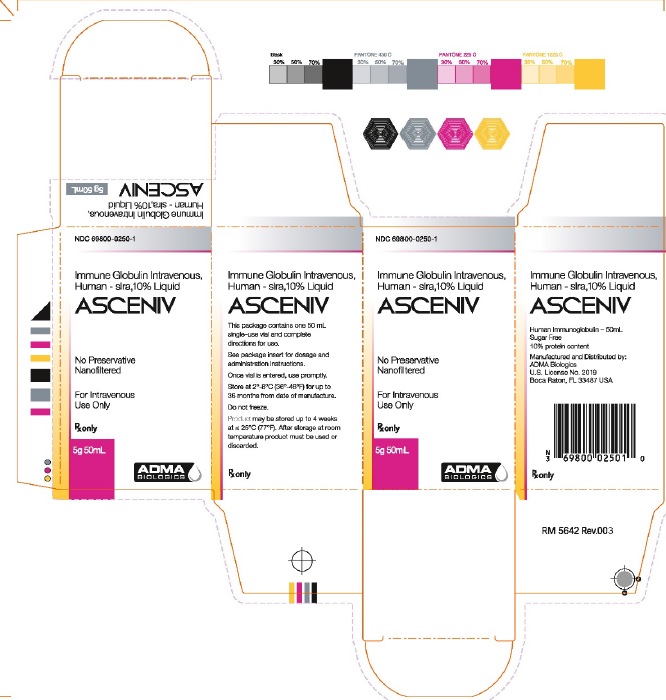
ASCENIV HUMAN IMMUNOGLOBULIN G 5 g/50mL Liquid — NDC 69800-0250-1 (Billing 69800-0250-01)
This is a package of ASCENIV HUMAN IMMUNOGLOBULIN G 5 g/50mL Liquid from ADMA Biologics, Inc., marketed since Apr 2019 and currently FDA-listed. It is this product's only package size.
NDC database record
One package, one record: these facts belong to NDC 69800-0250-1 alone.
- Record
- FDA NDC Directory package listing · Human prescription drug
- Code segments
- 69800 labeler · 0250 product · 1 package
- Package marketed since
- Apr 1, 2019
- Sample package
- No — commercial package
- Listing certified through
- Dec 31, 2027
- Barcode (UPC-A, from the NDC)
- 3 6980002501 0
- Medicaid fills, this package
- 211 prescriptions in the last four reported quarters
- FDA record last changed
- Oct 8, 2026
Identity & classification
Regulatory identifiers FDA, NLM and CMS codes for this package
Drug-database identifiers Medi-Span GPI and First Databank GCN / HICL / AHFS classification
- GSN (GCN sequence number): 080474
- GCN: 47329
- HICL (First Databank): 046208
- AHFS class code: 80:04.00.00
Where does this data come from?
- FDA openFDA NDC Directory · synced Oct 8, 2026
- FDA label on DailyMed · label index refreshed Oct 8, 2026
- RxNorm (NLM RxNav) · catalog refreshed Oct 8, 2026
- Medi-Span GPI (licensed)
- First Databank (licensed) · refreshed Oct 8, 2026
Clinical
- Think of it as a collection of protective proteins — called antibodies — that healthy donors have built up against many different germs. If your immune system can't make enough of...
- What exactly is human immunoglobulin G and why do I need it?
- It depends on the specific product your doctor prescribed. The IV versions — like Privigen, Asceniv, Qivigy, and Gammaplex — are infused into a vein, usually every 3 to 4 weeks. Hi...
- How is it given, and how often will I need infusions?
Patient education
Supplement & herbal interactions
Where does this data come from?
- MedlinePlus (NLM) · refreshed Oct 8, 2026
- FDA label on DailyMed · label index refreshed Oct 8, 2026
Ask a licensed pharmacist directly — free, answered by our team.
Pricing
A drug doesn't have one price. Each row is a different public payment system, and none is what you'd pay at the counter — that depends on your insurance. The ⓘ on each row explains what it measures.
| Price system | Per mL | Per package |
|---|---|---|
| Retail pharmacies payNADAC · weekly | Not in the retail survey — common for institutional, discontinued, or low-volume packs. | |
| Medicaid paysCMS SDUD · 12 mo | $54.52 | $2,725.89 / 50 ml |
| Medicare drug plans payPart D · quarterly | No Part D plan price is available for this NDC in our data. | |
| Medicare Part B allowsASP · J1554 | $509.139 / J1554 unit | — |
Where does this data come from?
- CMS NADAC weekly file
- CMS ASP pricing files · refreshed Sep 20, 2026
- CMS Medicaid State Drug Utilization Data · through Q1 2026
- CMS Part D plan pricing files · refreshed Sep 24, 2026
- VA National Acquisition Center price file
Billing & reimbursement
Where does this data come from?
- CMS ASP NDC-HCPCS crosswalk · refreshed Sep 22, 2026
- DMEPDAC NDC-HCPCS crosswalk
- openFDA NSDE billing units · refreshed Oct 7, 2026
Packaging — all sizes for this product
| Package NDC | Description | Marketing start | Marketing end | Status |
|---|---|---|---|---|
| 69800-0250-01 You're viewing this Main listing | 1 VIAL, SINGLE-USE in 1 CARTON / 50 mL in 1 VIAL, SINGLE-USE | 2019-04-01 | — | Active |
Therapeutic equivalents
| Product | Labeler | Pack | NADAC/unit | TE | Status | Price vs. this |
|---|---|---|---|---|---|---|
| Asceniv 5 g/50mLthis 69800-0250-01 | ADMA | 1 vial | — | — | FDA listed | — |
| Gammaplex 5 g/50mL 64208-8235-05 | Bio | 1 bottle | — | — | FDA listed | — |
| QIVIGY kthm 5 g/50mL 76179-0010-02 | Kedrion | 1 vial | — | — | FDA listed | — |
| Privigen 5 g/50mL 44206-0436-05 | CSL | 1 vial | — | — | FDA listed | — |
Where does this data come from?
- FDA openFDA NDC Directory · synced Oct 8, 2026
- FDA Purple Book · refreshed Oct 5, 2026
- CMS NADAC weekly file
Availability & biosimilar status
Biologics have no small-molecule generics; biosimilar competition is tracked in the FDA Purple Book.
Why the date isn’t exact: Biosimilar timing can change because patents may be challenged, settled, licensed, added or removed, and litigation can move the real date earlier or later.
🛈 What do these terms mean?
- Biologic patent
- A patent the reference product’s maker has publicly listed. A biosimilar generally can’t launch until these expire — unless they’re invalidated or resolved in a settlement.
- Reference-product exclusivity
- A flat 12 years of FDA market protection from the biologic’s first licensure (the BPCIA). No biosimilar can be licensed before it ends, regardless of patents.
- Interchangeable exclusivity
- The first interchangeable biosimilar can earn a period as the only interchangeable version (pharmacists can substitute it without the prescriber).
- Earliest biosimilar (LOE)
- The latest of all the dates above — the soonest a biosimilar can realistically reach the market. Litigation and settlements can move it earlier.
Biologics have no small-molecule “generics” — competition comes from FDA-licensed biosimilars, tracked in the FDA Purple Book.
| Code | What it grants | Expires |
|---|---|---|
| RefProduct | Reference-product exclusivity (12-year, BPCIA) — no biosimilar can be licensed before this date | Apr 1, 2031 |
Is there a biosimilar for ASCENIV 10% VIAL?
Why do different websites show different biosimilar dates?
Can a biosimilar launch before the last patent expires?
What does “current Purple Book estimate” mean?
What does “FDA listed” mean?
What does a patent or protection date mean here?
Where does this data come from?
- FDA Purple Book · refreshed Oct 5, 2026
Inactive Ingredients / Excipients
Inactive ingredients, also called excipients, are components of the drug product other than the active ingredient. They may include fillers, dyes, coatings, preservatives, flavors, or other formulation ingredients.
🧪 Avoiding an ingredient? See Human Immunoglobulin G inactive ingredients by manufacturer: every current product's list side by side, so you can ask your pharmacy for the version that does not list it.
💡 Tap an ingredient (hover on desktop) to see what it is and why it’s used.
-
UNII TE7660XO1C
Glycine is an amino acid used in medicines as a buffer to help stabilize pH and improve taste. It may also serve as a filler or binder to give the product proper form and consistency.
-
UNII 6OZP39ZG8H
Polysorbate 80 is a synthetic emulsifier derived from sorbitol and oleic acid. It helps mix oil and water-based ingredients together in medications and improves how the product disperses in the body.
-
UNII 451W47IQ8X
Sodium chloride is common table salt. It's used in medicines as a buffer to maintain proper pH, as a filler to add bulk, or to adjust the osmotic balance in liquid formulations.
-
UNII 7QV8F8BYNJ
Water with enriched oxygen-18, a heavier isotope of oxygen. It may be used as a tracer or standard in certain diagnostic formulations or as a solvent and vehicle for delivering active ingredients.
4 inactive ingredients listed in the exact product block matched to this NDC.
Where does this data come from?
ingredient classCode="IACT" elements from the exact product block matched by this NDC. Label-section narrative from DailyMed / the openFDA label index is shown separately when available.- FDA label on DailyMed · label index refreshed Oct 8, 2026
- FDA openFDA NDC Directory · synced Oct 8, 2026
Inactive ingredient FAQ
Are inactive ingredients the same for every manufacturer?
Why might an inactive ingredient be missing?
Can inactive ingredients matter?
Manufacturer & labeler
More NDCs from ADMA Biologics, Inc. labeler code 69800
Where does this data come from?
- FDA openFDA NDC Directory · synced Oct 8, 2026
- Drugs@FDA
Full prescribing information FDA SPL
🚨 Boxed Warning ▾
WARNING: THROMBOSIS, RENAL DYSFUNCTION AND ACUTE RENAL FAILURE Thrombosis may occur with immune globulin (IGIV) products, including ASCENIV. Risk factors may include: advanced age, prolonged immobilization, hypercoagulable conditions, history of venous or arterial thrombosis, use of estrogens, indwelling central vascular catheters, hyperviscosity, and cardiovascular risk factors. Thrombosis may occur in the absence of known risk factors (see Warnings and Precautions [5.2] ).
Renal dysfunction, acute renal failure, osmotic nephrosis may occur with the administration of IGIV products in predisposed patients. Such events require immediate medical intervention, if not recognized or managed appropriately, may result in persistent or significant disability or lead to fatal outcome. Patients predisposed to renal dysfunction include those with any degree of pre-existing renal insufficiency, diabetes mellitus, age greater than 65, volume depletion, sepsis, paraproteinemia, or patients receiving known nephrotoxic drugs [see Warnings and Precautions (5.3)].
For patients at risk of thrombosis, renal dysfunction or renal failure, administer ASCENIV at the minimum dose and infusion rate practicable. Ensure adequate hydration in patients before administration. Monitor for signs and symptoms of thrombosis and assess blood viscosity in patients at risk for hyperviscosity ( see Dosage and Administration [2.1, 2.3], Warnings and Precautions [5.3]).
WARNING: THROMBOSIS, RENAL DYSFUNCTION AND ACUTE RENAL FAILURE See full prescribing information for complete boxed warning. Thrombosis may occur with immune globulin intravenous (IGIV) products, including ASCENIV. Risk factors may include: advanced age, prolonged immobilization, hypercoagulable conditions, history of venous or arterial thrombosis, use of estrogens, indwelling vascular catheters, hyperviscosity, and cardiovascular risk factors. [5.2] Renal dysfunction, acute renal failure, osmotic nephrosis, and death may occur with the administration of IGIV products in predisposed patients.
Such events require immediate medical intervention, if not recognized or managed appropriately, may result in persistent or significant disability or lead to fatal outcome. [5.3] For patients at risk of thrombosis, renal dysfunction or renal failure, administer ASCENIV at the minimum dose and infusion rate practicable. Ensure adequate hydration in patients before administration. Monitor for signs and symptoms of thrombosis and assess blood viscosity in patients at risk for hyperviscosity. [5.2, 5.3]
🎯 Indications and Usage ▾
1 INDICATIONS AND USAGE ASCENIV is indicated for the treatment of primary humoral immunodeficiency (PI) in adults and pediatric patients 2 years of age and older. PI includes, but is not limited to, the humoral immune defect in congenital agammaglobulinemia, common variable immunodeficiency (CVID), X-linked agammaglobulinemia, Wiskott-Aldrich syndrome, and severe combined immunodeficiencies (SCID). ASCENIV (immune globulin intravenous, human – slra) is a 10% immune globulin liquid for intravenous injection, indicated for the treatment of primary humoral immunodeficiency (PI) in adults and pediatric patients 2 years of age and older.
⏱️ Dosage and Administration ▾
2 DOSAGE AND ADMINISTRATION For intravenous use only. Dose Initial Infusion Rate Maintenance Infusion Rate (if tolerated) 300-800 mg/kg every 3- 4 weeks 0.5 mg/kg/min (0.005 mL/kg/min) for the first 15 minutes Increase gradually every 15 minutes (if tolerated) up to 8 mg/kg/min (0.08 mL/kg/min)
2.1Dose For intravenous use only. Table 1: Recommended Dosage for ASCENIV Dose Initial Infusion Rate Maintenance Infusion Rate (if tolerated) 300-800 mg/kg every 3-4 weeks 0.5 mg/kg/min (0.005 mL/kg/min) for the first 15 minutes Increase gradually every 15 minutes (if tolerated) up to 8 mg/kg/min (0.08 mL/kg/min) Adjust the dose over time to achieve the desired trough levels and clinical response. Measles pre-/post exposure prophylaxis Post-exposure prophylaxis If a patient has been exposed to measles, a dose of 400 mg/kg of ASCENIV should be administered as soon as possible after exposure.
Pre-exposure prophylaxis If a patient routinely receives a dose of less than 530 mg/kg of ASCENIV every 3 to 4 weeks and is at risk of measles exposure (e.g., traveling to a measles endemic area), administer a dose of at least 530 mg/kg prior to the expected measles exposure.
2.2Preparation and Handling ASCENIV is a clear to opalescent, colorless to pale yellow solution. Inspect visually for particulate matter and discoloration prior to administration. Do not use if the liquid is cloudy or turbid, or if it contains visible particulate matter.
Allow refrigerated product to come to room temperature before use and maintain ASCENIV at room temperature during administration. DO NOT MICROWAVE. DO NOT SHAKE.
DO NOT MIX with other IGIV products or other intravenous medications. DO NOT DILUTE. ASCENIV contains no preservatives.
Each vial is for single use only. Do not reuse or save for future use. If large doses are required, several vials may be pooled using aseptic technique into sterile infusion bags and infused.
2.3Administration Begin with an initial infusion rate of 0.5 mg/kg/min. If there are no adverse reactions, the infusion rate for subsequent infusions can be slowly increased to the maximum rate. Monitor patient vital signs throughout the infusion.
Slow or stop the infusion if adverse reactions occur. If symptoms subside promptly, the infusion may be resumed at a slower rate which is comfortable for the patient. Ensure that patients with pre-existing renal insufficiency are not volume-depleted.
For patients judged to be at risk for renal dysfunction or thrombotic events, administer ASCENIV at the minimum infusion rate practicable, and consider discontinuation of administration if renal function deteriorates ( see Boxed Warning, Warnings and Precautions [5.2, 5.3] ).
💊 Dosage Forms and Strengths ▾
3 DOSAGE FORMS AND STRENGTHS ASCENIV is a liquid solution containing 10% IgG (100 mg/mL) for intravenous infusion. ASCENIV is supplied in 50 mL single-dose vial. ASCENIV is a liquid solution containing 10% IgG (100 mg/mL) for intravenous infusion; (5g in 50 mL solution). [3]
⛔ Contraindications ▾
4 CONTRAINDICATIONS ASCENIV is contraindicated in: patients who have had an anaphylactic or severe systemic reaction to the administration of human immune globulin. IgA-deficiency patients with antibodies to IgA and a history of hypersensitivity. [see Warnings and Precautions (5.1)] History of anaphylactic or severe systemic reactions to human immunoglobulin. [4] IgA-deficient patients with antibodies to IgA and a history of hypersensitivity. [4, 5.1]
⚠️ Warnings and Cautions ▾
5 WARNINGS AND PRECAUTIONS IgA-deficient patients with antibodies against IgA are at greater risk of developing severe hypersensitivity and anaphylactic reactions. Have medications such as epinephrine available to treat any acute severe hypersensitivity reactions. [4, 5.1] Thrombotic events have occurred in patients receiving IGIV treatments. Monitor patients with known risk factors for thrombotic events; consider baseline assessment of blood viscosity for patients at risk of hyperviscosity. [5.2, 5.4] In patients at risk of developing acute renal failure. monitor renal function, including blood urea nitrogen (BUN), serum creatinine, and urine output. [5.3, 5.9] Hyperproteinemia, increased serum viscosity, and hyponatremia or pseudohyponatremia can occur in patients receiving IGIV treatment. [5.4] Aseptic meningitis syndrome (AMS) has been reported with IGIV treatments, especially with high doses or rapid infusion. [5.5] Hemolytic anemia can develop subsequent to IGIV treatment.
Monitor patients for hemolysis and hemolytic anemia. [5.6] Monitor patients for pulmonary adverse reactions (Transfusion-related acute lung injury [TRALI]). If transfusion-related acute lung injury is suspected, test the product and patient for antineutrophil antibodies. [5.7] Because this product is made from human blood, it may carry a risk of transmitting infectious agents, e.g., viruses, and theoretically, the Creutzfeldt-Jakob disease (CJD) agent. [5.8]
5.1Hypersensitivity Severe hypersensitivity reactions may occur with IGIV products, including ASCENIV. In case of hypersensitivity, discontinue ASCENIV infusion immediately and institute appropriate treatment. Medications such as epinephrine should be available for treatment of acute hypersensitivity reactions.
ASCENIV contains IgA ≤ 200 micrograms per milliliter (see Description [11] ). Patients with known antibodies to IgA may have a greater risk of developing severe hypersensitivity and anaphylactic reactions. ASCENIV is contraindicated in IgA-deficient patients with antibodies against IgA and a history of hypersensitivity reaction (see Contraindications [4] ).
5.2Thrombosis Thrombosis may occur following treatment with immune globulin products, including ASCENIV. Risk factors may include: advanced age, prolonged immobilization, hypercoagulable conditions, history of venous or arterial thrombosis, use of estrogens, indwelling central vascular catheters, hyperviscosity and cardiovascular risk factors. Thrombosis may occur in the absence of known risk factors.
Consider baseline assessment of blood viscosity in patients at risk for hyperviscosity, including patients with cryoglobulins, fasting chylomicronemia/markedly high triacylglycerols (triglycerides), or monoclonal gammopathies. For patients at risk of thrombosis, administer ASCENIV at the minimum dose and infusion rate practicable. Ensure adequate hydration in patients before administration.
Monitor for signs and symptoms of thrombosis and assess blood viscosity in patients at risk for hyperviscosity (see Boxed Warning, Dosage and Administration [2] ).
5.3Renal Injury Renal injury including acute renal dysfunction, acute renal failure, acute tubular necrosis, proximal tubular nephropathy and osmotic nephrosis may occur upon use of human IGIV products. Ensure that patients are not volume depleted before administering ASCENIV. In patients who are at risk of developing renal dysfunction, because of pre-existing renal insufficiency or predisposition to acute renal failure (such as diabetes mellitus, hypovolemia, overweight, use of concomitant nephrotoxic medicinal products or age of >65 years), administer ASCENIV at the minimum infusion rate practicable [see Dosage and Administration (2)] .
The risk of renal dysfunction and acute renal failure is greater in products that contain sucrose, though may still occur in products without sucrose. ASCENIV does not contain sucrose. Conduct periodic monitoring of renal function and urine output is partic… [Excerpted — this section continues on DailyMed.]
🤒 Adverse Reactions ▾
6 ADVERSE REACTIONS The most common adverse reactions to ASCENIV (≥5% of study patients) were headache, sinusitis, diarrhea, gastroenteritis viral, nasopharyngitis, upper respiratory tract infection, bronchitis, and nausea. [6] To report SUSPECTED ADVERSE REACTIONS, contact ADMA Biologics at (1-800-458-4244) or FDA at 1-800-FDA-1088 or www.fda.gov/medwatch.
6.1Clinical Trials Experience Because clinical trials are conducted under widely varying conditions, adverse reaction rates observed in clinical trials cannot be directly compared to rates in the clinical trials of another product and may not reflect the rates observed in clinical practice. The safety data described in this section reflects exposure to ASCENIV in two clinical studies (Study 1 and Study 2) as described below. Study 1 In Study 1, 59 patients with PI received a total of 793 infusions of ASCENIV at a median dose of 505 mg/kg (range 284 to 1008 mg/kg) every 3 weeks or 4 weeks for up to 12 months (mean 346 days; range 36 to 385 days).
Of the 793 infusions administered during this trial, 7 (11.9%) patients received premedication prior to 7 (0.9%) infusions [see Clinical Studies (14)] . The most common adverse reactions occurring in ≥5% of patients in Study 1 are presented in Table 2. Table 2: Adverse Reactions in ≥ 5% of Patients in Study 1 Adverse Reactions* Number (%) of Patients (N=59) Number (%) of Infusions (N=793) Headache 14 (24) 21 (2.6) Sinusitis 6 (10) 7 (0.9) Nausea 5 (9) 5 (0.6) Acute sinusitis 4 (7) 4 (0.5) Fatigue 4 (7) 9 (1.1) Muscle spasms 4 (7) 4 (0.5) Bronchitis 3 (5) 3 (0.4) Diarrhea 3 (5) 3 (0.4) Epistaxis 3 (5) 4 (0.5) Muscle Pain 3 (5) 5 (0.6) Oropharyngeal pain 3 (5) 3 (0.4) Pain in extremity 3 (5) 3 (0.4) Itching 3 (5) 3 (0.4) *Adverse reactions were defined as events occurring within 72 hours after the end of an ASCENIV infusion Study 2 (Pediatric Study) In Study 2, 16 pediatric patients with PI aged 2 to 11 years received 91 infusions of ASCENIV at a median dose of 541 mg/kg (range 300-800 mg/kg) every 3 or 4 weeks for approximately 5 months.
The most common adverse reactions in Study 2 are presented in Table 3 below. Table 3: Adverse Reactions in Study 2 Adverse Reactions* Number (%) of Patients (N=16) Number (%) of Infusions (N=91) Chest Pain 1 (6) 1 (1) Epistaxis 1 (6) 1 (1) Fatigue 1 (6) 1 (1) Hypersensitivity 1 (6) 1 (1) Diarrhea 1 (6) 1 (1) Headache** 4 (25) 5 (5) Otitis** 2 (13) 2 (2) Viral Rash 1 (6) 1 (1) Vomiting 1 (6) 1 (1) Nausea 3 (19) 4 (4) *Adverse reactions were defined as events occurring within 72 hours after the end of an ASCENIV infusion **Includes multiple related terms.
6.2Postmarketing Experience Because postmarketing reporting of adverse reactions is voluntary and from a population of uncertain size, it is not always possible to reliably estimate the frequency of these reactions or establish a causal relationship to product exposure. The following adverse reactions have been identified and reported during the post-approval use of IGIV products: Respiratory, thoracic and mediastinal disorders: Apnea, Acute Respiratory Distress Syndrome (ARDS), cyanosis, dyspnea, bronchospasm. Cardiac disorders: Cardiac arrest, vascular collapse, hypotension.
Nervous system disorder: Coma, loss of consciousness, seizures, tremor. Skin and subcutaneous tissue disorders: Stevens-Johnson syndrome, epidermolysis, erythema multiforme, bullous dermatitis. Blood and lymphatic system disorders: Pancytopenia, leukopenia.
General disorders and administration site conditions: Pyrexia, rigors. Gastrointestinal disorders: Hepatic dysfunction, abdominal pain.
🔄 Drug Interactions ▾
7 DRUG INTERACTIONS Immunoglobulin administration may transiently impair the efficacy of live attenuated virus vaccines such as measles, mumps, rubella, and varicella because the continued presence of high levels of passively acquired antibody may interfere with an active antibody response. Inform the immunizing physician of recent therapy with ASCENIV so that appropriate measures may be taken. Passive transfer of antibodies may transiently interfere with the immune response to live virus vaccines, such as measles, mumps, rubella, and varicella. [7] Passive transfer of antibodies may confound the results of serological testing. [5.10]
👥 Use in Specific Populations ▾
8 USE IN SPECIFIC POPULATIONS Geriatric Use: In patients over age 65 or in any patient at risk of developing renal insufficiency, do not exceed the recommended dose, and infuse ASCENIV at the minimum infusion rate practicable. [8.5]
8.1Pregnancy Risk Summary No human data are available to indicate the presence or absence of drug-associated risk. Animal reproduction studies have not been conducted with ASCENIV. It is not known whether ASCENIV can cause fetal harm when administered to a pregnant woman or can affect reproduction capacity.
Immune globulins cross the placenta from maternal circulation. In the U.S. general population, the estimated background risk of major birth defects and miscarriage in clinically recognized pregnancies is 2-4% and 15-20% respectively. ASCENIV should be given to pregnant women only if clearly needed.
8.2Lactation Risk Summary No human data are available to indicate the presence or absence of drug-associated risk. The developmental and health benefits of breast feeding should be considered along with the mother’s clinical need for ASCENIV and any potential adverse effects on the breast-fed infant from ASCENIV or from the underlying maternal condition.
8.4Pediatric Use The safety and effectiveness of ASCENIV have been established in pediatric patients with PI aged 2 years and older. The use of ASCENIV in pediatric patients was supported by evidence from two clinical studies (Study 1 and Study 2) which enrolled a total of 27 pediatric patients 2 to 16 years of age (9 children ages 2-6, 13 children ages 7-11, and 5 adolescents ages 12 – 16) with primary humoral immunodeficiency (PI) [see Adverse Reactions (6) and Clinical Studies (14)] . Safety and effectiveness has not been studied in pediatric patients with PI who are under the age of 2 years.
8.5Geriatric Use There were 11 patients (19%) 65 years of age and older in Study 1. Clinical studies of ASCENIV did not include sufficient numbers of patients aged 65 and over to determine whether they respond differently from younger patients. Other reported clinical experience has not identified differences in responses between the elderly and younger patients.
In general, dose selection for an elderly patient should be cautious, usually starting at the low end of the dosing range, reflecting the greater frequency of decreased hepatic, renal, or cardiac function, and of concomitant disease or other drug therapy.
🤰 Pregnancy ▾
8.1Pregnancy Risk Summary No human data are available to indicate the presence or absence of drug-associated risk. Animal reproduction studies have not been conducted with ASCENIV. It is not known whether ASCENIV can cause fetal harm when administered to a pregnant woman or can affect reproduction capacity.
Immune globulins cross the placenta from maternal circulation. In the U.S. general population, the estimated background risk of major birth defects and miscarriage in clinically recognized pregnancies is 2-4% and 15-20% respectively. ASCENIV should be given to pregnant women only if clearly needed.
🧒 Pediatric Use ▾
8.4Pediatric Use The safety and effectiveness of ASCENIV have been established in pediatric patients with PI aged 2 years and older. The use of ASCENIV in pediatric patients was supported by evidence from two clinical studies (Study 1 and Study 2) which enrolled a total of 27 pediatric patients 2 to 16 years of age (9 children ages 2-6, 13 children ages 7-11, and 5 adolescents ages 12 – 16) with primary humoral immunodeficiency (PI) [see Adverse Reactions (6) and Clinical Studies (14)] . Safety and effectiveness has not been studied in pediatric patients with PI who are under the age of 2 years.
🧓 Geriatric Use ▾
8.5Geriatric Use There were 11 patients (19%) 65 years of age and older in Study 1. Clinical studies of ASCENIV did not include sufficient numbers of patients aged 65 and over to determine whether they respond differently from younger patients. Other reported clinical experience has not identified differences in responses between the elderly and younger patients.
In general, dose selection for an elderly patient should be cautious, usually starting at the low end of the dosing range, reflecting the greater frequency of decreased hepatic, renal, or cardiac function, and of concomitant disease or other drug therapy.
🆘 Overdosage ▾
10 OVERDOSAGE With intravenous administration, overdose may lead to fluid overload and hyperviscosity. Patients at risk of complications of fluid overload and hyperviscosity include elderly patients and those with cardiac or renal impairment.
🧬 Clinical Pharmacology ▾
12 CLINICAL PHARMACOLOGY
12.1Mechanism of Action ASCENIV is a replacement therapy for patients with primary humoral immunodeficiency (PI). ASCENIV provides a broad spectrum of opsonizing and neutralizing IgG antibodies against bacterial and viral pathogens and their toxins. The mechanism of action has not been fully elucidated in PI.
12.2Pharmacodynamics ASCENIV contains mainly immunoglobulin G (IgG) with a broad spectrum of antibodies against various infectious agents, reflecting the IgG activity found in the donor population. ASCENIV which is prepared from pooled plasma from not less than 1,000 donors, has an IgG subclass distribution similar to that of native human plasma. Adequate doses of IGIV can restore an abnormally low IgG level to the normal range.
Standard pharmacodynamics studies were not performed.
12.3Pharmacokinetics Two open-label studies were carried out in patients with Primary Immunodeficiency (PI) to assess the pharmacokinetics, safety, and tolerability of IgG after intravenous (IV) administration of ASCENIV. In Study 1, adults, adolescents, and children patients with PI were evaluated. A total of 26 adult and 4 pediatric patients received ASCENIV every 21 days at doses from 291 mg/kg to 654 mg/kg or every 28 days at doses from 299 mg/kg to 760 mg/kg and were eligible for pharmacokinetic analysis.
In Study 2, 16 pediatric patients received ASCENIV every 21 days at doses from 388 mg/kg to 651 mg/kg or every 28 days at doses from 183 mg/kg to 929 mg/kg and completed either sparse (ages 2-6) or full (ages 7-11) PK sampling based on their age. No specific dose requirements were necessary to achieve the targeted serum IgG levels in the pediatric patients. The pharmacokinetic parameters for IgG from both studies of ASCENIV are summarized by age group in Table 5.
Table 5: Total IgG Pharmacokinetic Parameters of ASCENIV by Age a) PK Parameters: 3 Week Schedule** – Mean (SD) Parameter 6-<12 Years 12-16 Years > 16 years N* 3 1 8 Cmax (mg/dL) 1,767 (342) 2,416 2,522 (416) Cmin (mg/dL) 1,098 (425) 1,542 1,147 (287) AUC(0-tau) (hr×mg/dL) 564,862 (160,789) 881,606 786,380 (163,481) CL (mL/hr/kg) 0.09 (0.004) 0.05 0.07 (0.02) Vz (mL/kg) 99.8 n=1 —† 76.8 (13.5) n=6 t½ (days) 32.6 n=1 —† 28.5 (4.4) n=6 b) PK Parameters: 4 Week Schedule – Mean (SD) Parameter 2-<6 Years 6-<12 Years 12-16 Years > 16 years N* 4 4 1 18 Cmax (mg/dL) 1,593 (160) 2,473 (792) 3,592 2,195 (483) Cmin (mg/dL) 946 (115) 1,558 (480) 1,192 928 (244) AUC(0-tau) (hr×mg/dL) —† 974,136 (135,653) n=3 1,112,453 850,233 (228,781) CL (mL/hr/kg) —† 0.07 (0.02) n=3 0.06 0.06 (0.02) Vz (mL/kg) —† 138 (22.4) n=2 —† 86.9 (25.4) n=12 t½ (days) —† 60.5 (14.3) n=2 —† 37.1 (7.2) n=12 *Divergent number of patients for individual PK parameters are indicated in the applicable cells. †Parameter could not be calculated for any subject.
N = number of patients; AUC(0-tau) = area under the serum concentration-time curve to the last concentration ≥ LLOQ; CL = total body clearance; Cmax = maximum concentration; Cmin = minimum concentration; t½ = terminal half-life; Vz = volume of distribution **Neither study contained evaluable patients aged 2-<6 years on a 3-week dosing regimen.
🧬 Mechanism of Action ▾
12.1Mechanism of Action ASCENIV is a replacement therapy for patients with primary humoral immunodeficiency (PI). ASCENIV provides a broad spectrum of opsonizing and neutralizing IgG antibodies against bacterial and viral pathogens and their toxins. The mechanism of action has not been fully elucidated in PI.
📦 How Supplied / Storage and Handling ▾
16 HOW SUPPLIED/STORAGE AND HANDLING ASCENIV is supplied in a single-use, tamper-evident vial. The components used in the packaging for ASCENIV are not made with natural rubber latex. ASCENIV is supplied in 50 mL size containing 5 grams of protein (NDC 69800-0250-1).
Store at 2 to 8°C (36 to 46°F) for up to 36 months from the date of manufacture. Do not freeze. Product may be stored up to 4 weeks at ≤ 25° C (77° F).
After storage at room temperature product must be used or discarded.
📋 Description ▾
11 DESCRIPTION ASCENIV (immune globulin intravenous, human - slra) is a purified, sterile, ready-to-use preparation of concentrated human immunoglobulin G (IgG) antibodies. The distribution of IgG subclasses is similar to that of normal plasma. The active ingredient is human immunoglobulin purified from source human plasma and processed using a modified classical Cohn Method 6 / Oncley Method 9 fractionation process as well as anion and cation exchange steps for added purification.
ASCENIV contains 100 ± 10 mg/mL protein, of which not less than 96% is human immunoglobulin obtained from source human plasma. It is formulated in water for injection containing 0.100-0.140 M sodium chloride, 0.20-0.29 M glycine, 0.15–0.25% polysorbate 80, and pH 4.0–4.6. ASCENIV contains ≤ 200 µg/mL of IgA.
Each plasma donation used for the manufacture of ASCENIV is collected from FDA-licensed facilities and undergoes rigorous testing. Plasma donations must test negative for hepatitis B virus (HBV) surface antigen (HBsAg), antibodies to human immunodeficiency virus (HIV) strains 1 and 2 (anti-HIV-1/2), and antibodies to the hepatitis C virus (anti-HCV) as determined by enzyme immune assay (EIA). In addition, each plasma unit must test negative and/or non-reactive for HIV RNA, HCV RNA, HBV DNA, Hepatitis A Virus (HAV) RNA, and Parvovirus B19 (B19 virus) DNA as determined by Nucleic Acid Amplification Testing (NAT) of plasma minipools.
NAT is also performed on a sample of the manufacturing pool and must be negative and/or non-reactive for HIV RNA, HCV RNA, HBV DNA, and Hepatatis A Virus (HAV) RNA, and the limit for B19 virus DNA in a manufacturing pool is set not to exceed 10 4 IU/mL. The manufacturing process of ASCENIV employs six steps to remove/inactivate adventitious viruses to minimize the risk of virus transmission. The steps are "Precipitation and removal of fraction III" during cold ethanol fractionation, "Q-membrane filtration", "Solvent/detergent treatment" (TnBP / Triton X-100), "Anion exchange chromatography" and "virus filtration".
In compliance with current guidelines, the steps have been separately validated in a series of in vitro experiments for their capacity to inactivate or remove both enveloped and non-enveloped viruses. Precipitation and removal of fraction III and Q-membrane filtration removes non-enveloped viruses, solvent/detergent treatment represents a virus inactivation step for enveloped viruses, Anion exchange chromatography binds enveloped and non-enveloped viruses, and virus filtration removes both enveloped and non-enveloped viruses by size exclusion.
In addition to the steps above, low pH during several steps of the production process contributes to virus inactivation. The results of virus validation studies for the ASCENIV process are shown in Table 4, expressed as log 10 reduction factors. Table 4: Virus Removal/Inactivation (log 10 ) * without depth filtration HIV , human immunodeficiency virus; BVDV , Bovine viral diarrhea virus, model virus for HCV; SinV , Sindbis virus, model virus for HCV; WNV , West Nile virus; PRV , Pseudorabies virus, model virus for herpes viruses and Hepatitis B virus; MEV , Murine encephalomyelitis virus, model virus for hepatitis A virus; BPV , Bovine parvovirus, model virus for human B19 virus; PPV , Porcine parvovirus, model virus for human B19 virus; SV40 , Simian virus 40, model virus for highly resistant non-enveloped viruses.
EMC , Encephalomyocarditis virus, model virus for hepatitis A virus 1 Q-membrane filtration step is associated with the affinity stream part of the production process. 2 Low pH treatment included in total clearance calculation based on separate mode of inactivation than VRF. 3 EMC total clearance was calculated with the most conservative approach of using the lowest reduction value (>5.70) between the Fraction III precipitation/ filtration and nanofiltration steps.
Step/Virus HIV BVDV SinV WNV PRV MEV EMC BPV PPV SV40 Virus Type Enveloped Enveloped Enveloped… [Excerpted — this section continues on DailyMed.]
💬 Information for Patients ▾
17 PATIENT COUNSELING INFORMATION Instruct patients taking ASCENIV to immediately report symptoms of: Thrombosis which includes pain and/or swelling of an arm or legs/feet with warmth over the affected area, discoloration of an arm or leg, unexplained shortness of breath, acute chest pain or discomfort that worsens on deep breathing, unexplained rapid pulse, numbness or weakness on one side of the body (see Warning and Precaution [5.2] ). Renal Injury which includes decreased urine output, sudden weight gain, fluid retention/edema, and/or shortness of breath.
Such symptoms may suggest kidney damage (see Boxed Warning , Warnings and Precautions [5.3] ). Aseptic Meningitis Syndrome (AMS) which includes severe headache, neck stiffness, drowsiness, fever, sensitivity to light, painful eye movements, nausea and vomiting (see Warnings and Precautions [5.5] ). Hemolysis which includes fatigue, increased heart rate, yellowing of skin or eyes, dark- colored urine (see Warnings and Precautions [5.6] ).
Transfusion-Related Acute Lung Injury (TRALI) which includes trouble breathing, chest pain, blue lips or extremities, fever (see Warnings and Precautions [5.7] ) Inform patients that ASCENIV: Is made from human plasma and may contain infectious agents that can cause disease. While the risk that ASCENIV can transmit an infection has been reduced by screening plasma donors for prior exposure, testing donated plasma, and inactivating or removing certain viruses during manufacturing, patients should report any symptoms that concern them (see Description [11] and Warnings and Precautions [5.8] ).
Can interfere with their immune response to live viral vaccines (e.g., measles, mumps, rubella, and varicella). Instruct patients to notify their healthcare professional of this potential interaction when they are receiving vaccinations (see Drug Interactions [7] ). Manufactured by ADMA Biologics Boca Raton, FL 33487 USA U.S.
License No. 2019 RM-5640 Rev.004
🧬 Pharmacokinetics ▾
12.3Pharmacokinetics Two open-label studies were carried out in patients with Primary Immunodeficiency (PI) to assess the pharmacokinetics, safety, and tolerability of IgG after intravenous (IV) administration of ASCENIV. In Study 1, adults, adolescents, and children patients with PI were evaluated. A total of 26 adult and 4 pediatric patients received ASCENIV every 21 days at doses from 291 mg/kg to 654 mg/kg or every 28 days at doses from 299 mg/kg to 760 mg/kg and were eligible for pharmacokinetic analysis.
In Study 2, 16 pediatric patients received ASCENIV every 21 days at doses from 388 mg/kg to 651 mg/kg or every 28 days at doses from 183 mg/kg to 929 mg/kg and completed either sparse (ages 2-6) or full (ages 7-11) PK sampling based on their age. No specific dose requirements were necessary to achieve the targeted serum IgG levels in the pediatric patients. The pharmacokinetic parameters for IgG from both studies of ASCENIV are summarized by age group in Table 5.
Table 5: Total IgG Pharmacokinetic Parameters of ASCENIV by Age a) PK Parameters: 3 Week Schedule** – Mean (SD) Parameter 6-<12 Years 12-16 Years > 16 years N* 3 1 8 Cmax (mg/dL) 1,767 (342) 2,416 2,522 (416) Cmin (mg/dL) 1,098 (425) 1,542 1,147 (287) AUC(0-tau) (hr×mg/dL) 564,862 (160,789) 881,606 786,380 (163,481) CL (mL/hr/kg) 0.09 (0.004) 0.05 0.07 (0.02) Vz (mL/kg) 99.8 n=1 —† 76.8 (13.5) n=6 t½ (days) 32.6 n=1 —† 28.5 (4.4) n=6 b) PK Parameters: 4 Week Schedule – Mean (SD) Parameter 2-<6 Years 6-<12 Years 12-16 Years > 16 years N* 4 4 1 18 Cmax (mg/dL) 1,593 (160) 2,473 (792) 3,592 2,195 (483) Cmin (mg/dL) 946 (115) 1,558 (480) 1,192 928 (244) AUC(0-tau) (hr×mg/dL) —† 974,136 (135,653) n=3 1,112,453 850,233 (228,781) CL (mL/hr/kg) —† 0.07 (0.02) n=3 0.06 0.06 (0.02) Vz (mL/kg) —† 138 (22.4) n=2 —† 86.9 (25.4) n=12 t½ (days) —† 60.5 (14.3) n=2 —† 37.1 (7.2) n=12 *Divergent number of patients for individual PK parameters are indicated in the applicable cells. †Parameter could not be calculated for any subject.
N = number of patients; AUC(0-tau) = area under the serum concentration-time curve to the last concentration ≥ LLOQ; CL = total body clearance; Cmax = maximum concentration; Cmin = minimum concentration; t½ = terminal half-life; Vz = volume of distribution **Neither study contained evaluable patients aged 2-<6 years on a 3-week dosing regimen.
🧬 Pharmacodynamics ▾
12.2Pharmacodynamics ASCENIV contains mainly immunoglobulin G (IgG) with a broad spectrum of antibodies against various infectious agents, reflecting the IgG activity found in the donor population. ASCENIV which is prepared from pooled plasma from not less than 1,000 donors, has an IgG subclass distribution similar to that of native human plasma. Adequate doses of IGIV can restore an abnormally low IgG level to the normal range.
Standard pharmacodynamics studies were not performed.
🔬 Clinical Studies ▾
14 CLINICAL STUDIES Study 1 A prospective, open-label, single-arm, multicenter trial assessed the efficacy, safety, and pharmacokinetics of ASCENIV in adult and pediatric patients with PI. Study patients were receiving regular IGIV replacement therapy, with a stable dose between 300 and 800 mg/kg for at least 3 months prior to participation in this trial. Patients received an ASCENIV infusion administered every 3 or 4 weeks (both the dose and schedule depending on their prior therapy) for 12 months.
A total of 59 patients were enrolled into the study. The population characteristics were as follows: The mean age was 42 years (range 3 to 74 years) including 11 pediatric patients, 31 patients (53%) were female, 58 patients (98%) were Caucasian, 3 patients (5%) were Hispanic and 1 patient (2%) was African American. There were 19 patients with a 3-week cycle and 40 patients with a 4-week cycle.
There were 45 patients (76%) with common variable immunodeficiency (CVID) as their primary diagnosis, followed by X-linked Agammaglobulinemia (10%), Antibody Deficiencies and ‘Other’ (7% each). The modified intent-to-treat (mITT) population included 59 patients and was used for efficacy analysis. The primary efficacy measure was the rate of serious bacterial infections (SBIs), defined bacterial pneumonia, bacteremia/septicemia, osteomyelitis/septic arthritis, visceral abscess, and bacterial meningitis per person-year.
The predefined success criteria was demonstration of rate of less than one acute SBI per patient per year. Secondary efficacy parameters included time to first SBI and time to first infection of any kind/seriousness, days on antibiotics (excluding prophylaxis), days off school/work due to infections, all confirmed infections of any kind or seriousness, and hospitalizations due to infection. Table 6: Summary of Efficacy Results in Study 1 SBI = serious bacterial infections. a Person-years: Person-time in years with 2 decimals = (the Final Clinical Visit Date - the Day 0 date+1) / 365.25, where the final clinical visit date is defined as the specimen collection date of the final clinical visit for urinalysis, or the specimen collection date for the clinical laboratory tests at the final clinical visit and Day 0 date is the start date of the first ASCENIV infusion. b Defined as bacterial pneumonia, bacterial meningitis, bacteremia/septicemia, osteomyelitis/septic arthritis, and visceral abscess. c The calculation of antibiotic use includes patients who received antibiotics for therapeutic use.
Number of Patients (mITT Population) Total Number of person-years a 59
55.9Infections Number of confirmed serious acute bacterial infections b Rate of SBIs (SBIs/total person-years) Rate of Infections (Infections/total person-years) a 0 0.0
3.4Antibiotic use due to infection c Number of patients (%) Days per patient per year 37 (63%)
32.9Days off school/daycare/work due to infection Number of persons with days off of school, daycare or work due to infections Total days Days per patient per year 23 (39%) 93
1.7Unscheduled Medical Visits due to infection Number of persons with unscheduled medical visits due to infections (%) Total visits Visits per patient per year 24 (41%) 54
0.97Hospitalization due to infection Number of patients(%) Number of Days Hospitalizations per patient per year 1 (1.7%) 5
0.02Study 2 (Pediatric Study) A prospective, open-label, single-arm, multi-center study evaluating the pharmacokinetics, efficacy, and safety of ASCENIV was conducted in 16 pediatric patients with PI. All patients had confirmed and documented clinical diagnosis of PI, including hypogammaglobulinemia or agammaglobulinemia. Patients received an ASCENIV infusion administered every 3 or 4 weeks (based on the dose and schedule of their prior treatment regimen) for approximately 5 months.
The population characteristics was as follows: The median age was 8 years (2 to 11 years), 11 patients (69%) were male, 12 patients (75%) were White, 3 patients (19… [Excerpted — this section continues on DailyMed.]
🧪 Nonclinical Toxicology ▾
13 NONCLINICAL TOXICOLOGY
13.1Carcinogenesis, Mutagenesis, Impairment of Fertility No animal studies were conducted to evaluate the carcinogenic or mutagenic effects of ASCENIV or its effects on fertility.
13.2Animal Toxicology and/or Pharmacology No animal studies were conducted to evaluate possible toxicity of ASCENIV. ASCENIV contains Polysorbate 80; Intravenous administrations of Polysorbate 80 in multiple species have been linked with a decrease in blood pressure. In rats, single doses of Polysorbate 80 that were up to 25 times higher than the amount from 800 mg/kg ASCENIV resulted in an increase of liver enzymes and total bilirubin.
📄 Carcinogenesis, Mutagenesis, Impairment of Fertility ▾
13.1Carcinogenesis, Mutagenesis, Impairment of Fertility No animal studies were conducted to evaluate the carcinogenic or mutagenic effects of ASCENIV or its effects on fertility.
📄 Recent Major Changes ▾
Boxed Warning (5.3) 04/2026 Indications and Usage (1) 04/2026 Dosage and Administration, Dose (2.1) 06/2025
📄 Package Label / Principal Display Panel ▾
NDC: 69800-0250-2 - Vial Label ASCENIV Vial
NDC: 69800-0250-1 - Carton Label ASCENIV Carton
Medicaid utilization & spend
Medicare Part D spend CMS · PART D · 2026 (Q1)
Reported adverse events (FAERS)
Top reported reactions
Age at onset
Reporter sex
Serious outcomes
Where does this data come from?
About this NDC listing & data coverage
What data is (and isn’t) available for this NDC — tap to expand
| NDC identity (package / product / labeler codes) | ✓ Available |
| Labeler | ✓ Available |
| Product & package description | ✓ Available |
| Marketing category & status | ✓ Available |
| Active ingredient / dosage form / route | ✓ Available |
| FDA label (SPL via DailyMed) | ✓ Available |
| Package photos | ✓ Available |
| Inactive ingredients (structured) | ✓ Available |
| NADAC pharmacy acquisition price (CMS) | — Not published for this NDC CMS publishes NADAC only for NDCs reported in its retail-pharmacy survey. |
| Orange Book / therapeutic-equivalence data | ✓ Available |
| HCPCS J-code billing crosswalk | ✓ Available |
| Medicaid utilization (CMS SDUD) | ✓ Available |