
Baclofen 50 ug/mL Injection — NDC 70511-121-83 (Billing 70511-0121-83)
This is a package of Baclofen 50 ug/mL Injection from MAlA Pharmaceuticals, Inc., no longer marketed (first marketed Apr 2021), no longer in the FDA NDC Directory.
NDC database record
One package, one record: these facts belong to NDC 70511-121-83 alone.
- Record
- FDA NDC Directory package listing · Human prescription drug
- Code segments
- 70511 labeler · 121 product · 83 package
- Listing certified through
- Dec 31, 2026
- Barcode (UPC-A, from the NDC)
- 3 7051112183 0
- FDA record last changed
- Jul 24, 2026
Other active recalls for Baclofen (different manufacturers) — 1 · tap to view
Identity & classification
Regulatory identifiers FDA, NLM and CMS codes for this package
- RxCUI (RxNorm): 1047437
Where does this data come from?
- FDA openFDA NDC Directory · synced Oct 1, 2026
- FDA label on DailyMed · label index refreshed Oct 3, 2026
- RxNorm (NLM RxNav) · catalog refreshed Oct 1, 2026
- Medi-Span GPI (licensed)
- First Databank (licensed) · refreshed Oct 1, 2026
RxNorm drug class
This medicine belongs to the gamma-Aminobutyric Acid-ergic Agonist class.
Where does this data come from?
- RxClass (NLM) · catalog refreshed Oct 1, 2026
Clinical
- It eases spasticity, meaning stiff, tight muscles and spasms. Oral forms are used mainly for spasticity from multiple sclerosis and may help with spinal cord injuries. Intrathecal...
- Oral baclofen is usually started low and split into several doses a day, then increased slowly. Follow your prescriber and label. With liquids, double-check both the mg and mL on y...
- Don't stop suddenly. Your dose should be lowered slowly. With an intrathecal pump, missing a refill can cause dangerous withdrawal, so keep every appointment.
- Sleepiness, dizziness, nausea, headache, low blood pressure and muscle weakness are common. Avoid driving until you know how it affects you, and avoid alcohol.
Patient education
Supplement & herbal interactions
Some supplements/herbs that may interact with Baclofen — tap one for details:
Where does this data come from?
- MedlinePlus (NLM) · refreshed Oct 1, 2026
- FDA label on DailyMed · label index refreshed Oct 3, 2026
Ask a licensed pharmacist directly — free, answered by our team.
Pricing
A drug doesn't have one price. Each row is a different public payment system, and none is what you'd pay at the counter — that depends on your insurance. The ⓘ on each row explains what it measures.
| Price system | Per each | Per package |
|---|---|---|
| Retail pharmacies payNADAC · weekly | Not in the retail survey — common for institutional, discontinued, or low-volume packs. | |
| Medicaid paysCMS SDUD · 12 mo | No recent Medicaid claims on file for this NDC — rare and low-volume NDCs are suppressed in the public data. | |
| Medicare drug plans payPart D · quarterly | No Part D plan price is available for this NDC in our data. | |
Where does this data come from?
- CMS NADAC weekly file
- CMS ASP pricing files · refreshed Sep 20, 2026
- CMS Medicaid State Drug Utilization Data · refreshed Oct 4, 2026
- CMS Part D plan pricing files · refreshed Sep 24, 2026
- VA National Acquisition Center price file
Packaging — all sizes for this product
| Package NDC | Description | Marketing start | Marketing end | Status |
|---|---|---|---|---|
| 70511-0121-83 You're viewing this | 5 CARTON in 1 CARTON / 1 SYRINGE, GLASS in 1 CARTON / 1 mL in 1 SYRINGE, GLASS | 2021-04-02 | — | Discontinued by firm |
| 70511-0121-80 70511-121-80 Main listing | 2 SYRINGE, GLASS in 1 CARTON / 1 mL in 1 SYRINGE, GLASS | 2022-06-01 | — | Active |
Pack size FAQ
What quantity is in this package?
What NDC number is used to bill for this package of Baclofen 50 ug/mL Injection?
Therapeutic equivalents
| Product | Labeler | Pack | NADAC/unit | TE | Status | Price vs. this |
|---|---|---|---|---|---|---|
| Baclofen 50 ug/mL 25021-0681-71 | Sagent | 2 syringes | — | AP | FDA listed | — |
| Gablofen 50 ug/mL 66794-0151-01 | Piramal | 1 ml | — | AP | FDA listed | — |
| Baclofen 50 ug/mLthis 70511-0121-83 | MAlA | 1 syringe | — | AP | Discontinued | — |
Where does this data come from?
- FDA openFDA NDC Directory · synced Oct 1, 2026
- FDA Orange Book · refreshed Oct 3, 2026
- CMS NADAC weekly file
Availability & generic status
This product is an FDA-approved generic. Other versions of the same drug are listed under Therapeutic equivalents, least expensive first.
Where does this data come from?
- FDA Orange Book · refreshed Oct 3, 2026
Inactive Ingredients / Excipients
Inactive ingredients, also called excipients, are components of the drug product other than the active ingredient. They may include fillers, dyes, coatings, preservatives, flavors, or other formulation ingredients.
💡 Tap an ingredient (hover on desktop) to see what it is and why it’s used.
-
9 mg / 1 mL
UNII 451W47IQ8X
Sodium chloride is common table salt. It's used in medicines as a buffer to maintain proper pH, as a filler to add bulk, or to adjust the osmotic balance in liquid formulations.
-
UNII 059QF0KO0R
Water is a liquid solvent that dissolves and mixes ingredients together in liquid medicines, syrups, and injections. It helps distribute the active drug evenly throughout the product.
2 inactive ingredients listed in the exact product block matched to this NDC.
Where does this data come from?
ingredient classCode="IACT" elements from the exact product block matched by this NDC. Label-section narrative from DailyMed / the openFDA label index is shown separately when available.- FDA label on DailyMed · label index refreshed Oct 3, 2026
- FDA openFDA NDC Directory · synced Oct 1, 2026
Inactive ingredient FAQ
Are inactive ingredients the same for every manufacturer?
Why might an inactive ingredient be missing?
Can inactive ingredients matter?
Manufacturer & labeler
More NDCs from MAlA Pharmaceuticals, Inc. labeler code 70511
- SODIUM PHENYLACETATE AND SODIUM BENZOATE 100 mg/mL; 100 mg/mL Injection, Solution, Concentrate NDC 70511-101-50
- Sodium Phenylacetate and Sodium Benzoate 100 mg/mL; 100 mg/mL Injection NDC 70511-102-20
- Levothyroxine Sodium 100 ug/5mL Injection, Powder, Lyophilized, For Solution NDC 70511-111-10
- Levothyroxine Sodium 200 ug/5mL Injection, Powder, Lyophilized, For Solution NDC 70511-112-10
- Levothyroxine Sodium 500 ug/5mL Injection, Powder, Lyophilized, For Solution NDC 70511-113-10
- Baclofen (Intrathecal) 500 ug/mL Injection NDC 70511-122-10
- Baclofen 1000 ug/mL Injection NDC 70511-123-20
- Baclofen (Intrathecal) 2000 ug/mL Injection NDC 70511-124-10
- Sincalide 5 ug/5mL Injection, Powder, Lyophilized, For Solution NDC 70511-131-84
- Bivalirudin 250 mg Injection, Solution NDC 70511-142-50
- Bortezomib 1 mg Injection NDC 70511-161-05
Where does this data come from?
- FDA openFDA NDC Directory · synced Oct 1, 2026
- Drugs@FDA
Full prescribing information FDA SPL
🚨 Boxed Warning ▾
BOXED WARNING Abrupt discontinuation of intrathecal baclofen, regardless of the cause, has resulted in sequelae that include high fever, altered mental status, exaggerated rebound spasticity, and muscle rigidity, that in rare cases has advanced to rhabdomyolysis, multiple organ-system failure and death. Prevention of abrupt discontinuation of intrathecal baclofen requires careful attention to programming and monitoring of the infusion system, refill scheduling and procedures, and pump alarms. Patients and caregivers should be advised of the importance of keeping scheduled refill visits and should be educated on the early symptoms of baclofen withdrawal.
Special attention should be given to patients at apparent risk (e.g. spinal cord injuries at T-6 or above, communication difficulties, history of withdrawal symptoms from oral or intrathecal baclofen). Consult the technical manual of the implantable infusion system for additional postimplant clinician and patient information (see WARNINGS ).
🎯 Indications and Usage ▾
INDICATIONS AND USAGE Baclofen Injection is indicated for use in the management of severe spasticity. Patients should first respond to a screening dose of intrathecal baclofen prior to consideration for long term infusion via an implantable pump. For spasticity of spinal cord origin, chronic infusion of Baclofen Injection via an implantable pump should be reserved for patients unresponsive to oral baclofen therapy, or those who experience intolerable CNS side effects at effective doses.
Patients with spasticity due to traumatic brain injury should wait at least one year after the injury before consideration of long term intrathecal baclofen therapy. Baclofen Injection is intended for use by the intrathecal route in single bolus test doses (via spinal catheter or lumbar puncture) and, for chronic use, only in implantable pumps approved by the FDA specifically for the administration of Baclofen Injection into the intrathecal space. Spasticity of Spinal Cord Origin: Evidence supporting the efficacy of Baclofen Injection was obtained in randomized, controlled investigations that compared the effects of either a single intrathecal dose or a three day intrathecal infusion of Baclofen Injection to placebo in patients with severe spasticity and spasms due to either spinal cord trauma or multiple sclerosis.
Baclofen Injection was superior to placebo on both principal outcome measures employed: change from baseline in the Ashworth rating of spasticity and the frequency of spasms. Spasticity of Cerebral Origin: The efficacy of Baclofen Injection was investigated in three controlled clinical trials; two enrolled patients with cerebral palsy and one enrolled patients with spasticity due to previous brain injury. The first study, a randomized controlled cross-over trial of 51 patients with cerebral palsy, provided strong, statistically significant results; Baclofen Injection was superior to placebo in reducing spasticity as measured by the Ashworth Scale.
A second cross-over study was conducted in 11 patients with spasticity arising from brain injury. Despite the small sample size, the study yielded a nearly significant test statistic (p= 0.066) and provided directionally favorable results. The last study, however, did not provide data that could be reliably analyzed.
Baclofen Injection therapy may be considered an alternative to destructive neurosurgical procedures. Prior to implantation of a device for chronic intrathecal infusion of Baclofen Injection, patients must show a response to Baclofen Injection in a screening trial (see Dosage and Administration).
⏱️ Dosage and Administration ▾
DOSAGE AND ADMINISTRATION Refer to the manufacturer’s manual for the implantable pump approved for intrathecal infusion for specific instructions and precautions for programming the pump and/or refilling the reservoir. There are various pumps with varying reservoir volumes and there are various refill kits available. It is important to be familiar with all of these products in order to select the appropriate refill kit for the particular pump in use.
Screening Phase: Prior to pump implantation and initiation of chronic infusion of Baclofen Injection, patients must demonstrate a positive clinical response to a Baclofen Injection bolus dose administered intrathecally in a screening trial. The screening trial employs Baclofen Injection at a concentration of 50 mcg per mL. A 1 mL prefilled syringe (50 mcg per mL) is available for use in the screening trial.
The screening procedure is as follows. An initial bolus containing 50 micrograms in a volume of 1 milliliter is administered into the intrathecal space by barbotage over a period of not less than one minute. The patient is observed over the ensuing 4 to 8 hours.
A positive response consists of a significant decrease in muscle tone and/or frequency and/or severity of spasms. If the initial response is less than desired, a second bolus injection may be administered 24 hours after the first. The second screening bolus dose consists of 75 micrograms in 1.5 milliliters.
Again, the patient should be observed for an interval of 4 to 8 hours. If the response is still inadequate, a final bolus screening dose of 100 micrograms in 2 milliliters may be administered 24 hours later. Pediatric Patients: The starting screening dose for pediatric patients is the same as in adult patients, i.e., 50 mcg.
However, for very small patients, a screening dose of 25 mcg may be tried first. Patients who do not respond to a 100 mcg intrathecal bolus should not be considered candidates for an implanted pump for chronic infusion. Post-Implant Dose Titration Period: To determine the initial total daily dose of Baclofen Injection following implant, the screening dose that gave a positive effect should be doubled and administered over a 24-hour period, unless the efficacy of the bolus dose was maintained for more than 8 hours, in which case the starting daily dose should be the screening dose delivered over a 24-hour period.
No dose increases should be given in the first 24 hours (i.e., until the steady state is achieved). Adult Patients with Spasticity of Spinal Cord Origin: After the first 24 hours, for adult patients, the daily dosage should be increased slowly by 10 to 30% increments and only once every 24 hours, until the desired clinical effect is achieved. Adult Patients with Spasticity of Cerebral Origin: After the first 24 hours, the daily dose should be increased slowly by 5 to 15% only once every 24 hours, until the desired clinical effect is achieved.
Pediatric Patients: After the first 24 hours, the daily dose should be increased slowly by 5 to 15% only once every 24 hours, until the desired clinical effect is achieved. If there is not a substantive clinical response to increases in the daily dose, check for proper pump function and catheter patency. Patients must be monitored closely in a fully equipped and staffed environment during the screening phase and dose-titration period immediately following implant.
Resuscitative equipment should be immediately available for use in case of life-threatening or intolerable side effects. Maintenance Therapy: Spasticity of Spinal Cord Origin Patients: The clinical goal is to maintain muscle tone as close to normal as possible, and to minimize the frequency and severity of spasms to the extent possible, without inducing intolerable side effects. Very often, the maintenance dose needs to be adjusted during the first few months of therapy while patients adjust to changes in life style due to the alleviation of spasticity.
During periodic refills of the pump,… [Excerpted — this section continues on DailyMed.]
⛔ Contraindications ▾
CONTRAINDICATIONS Hypersensitivity to baclofen. Baclofen Injection is not recommended for intravenous, intramuscular, subcutaneous or epidural administration.
⚠️ Warnings ▾
WARNINGS Baclofen Injection is for use in single bolus intrathecal injections (via a catheter placed in the lumbar intrathecal space or injection by lumbar puncture) and in implantable pumps approved by the FDA specifically for the intrathecal administration of baclofen. Because of the possibility of potentially life-threatening CNS depression, cardiovascular collapse, and/or respiratory failure, physicians must be adequately trained and educated in chronic intrathecal infusion therapy. The pump system should not be implanted until the patient’s response to bolus Baclofen Injection is adequately evaluated.
Evaluation (consisting of a screening procedure: see Dosage and Administration) requires that Baclofen Injection be administered into the intrathecal space via a catheter or lumbar puncture. Because of the risks associated with the screening procedure and the adjustment of dosage following pump implantation, these phases must be conducted in a medically supervised and adequately equipped environment following the instructions outlined in the Dosage and Administration section. Resuscitative equipment should be available.
Following surgical implantation of the pump, particularly during the initial phases of pump use, the patient should be monitored closely until it is certain that the patient’s response to the infusion is acceptable and reasonably stable. On each occasion that the dosing rate of the pump and/or the concentration of Baclofen Injection in the reservoir is adjusted, close medical monitoring is required until it is certain that the patient’s response to the infusion is acceptable and reasonably stable. It is mandatory that the patient, all patient caregivers, and the physicians responsible for the patient receive adequate information regarding the risks of this mode of treatment.
All medical personnel and caregivers should be instructed in 1) the signs and symptoms of overdose, 2) procedures to be followed in the event of overdose and 3) proper home care of the pump and insertion site. Potential for Contamination due to Non-sterile External Surface of 50 mcg per mL Prefilled Syringe: Although the drug solution and drug pathway in the Baclofen Injection 50 mcg per mL prefilled syringe are sterile, the external surface of the prefilled syringe is not sterile. This has the potential to lead to contamination and consequent adverse reactions.
The use of Baclofen Injection 50 mcg per mL prefilled syringe to refill an intrathecal baclofen pump, or use in an aseptic setting (e.g., operating room) to fill sterile intrathecal pumps prior to implantation in patients is not recommended. Procedures should be put in place to avoid contamination of sterile surfaces through contact with the non-sterile exterior of the Baclofen Injection 50 mcg per mL prefilled syringe when performing the test dose procedure (See Preparation Instruction: Screening). Overdose: Signs of overdose may appear suddenly or insidiously.
Acute massive overdose may present as coma. Less sudden and/or less severe forms of overdose may present with signs of drowsiness, lightheadedness, dizziness, somnolence, respiratory depression, seizures, rostral progression of hypotonia and loss of consciousness progressing to coma. Should overdose appear likely, the patient should be taken immediately to a hospital for assessment and emptying of the pump reservoir.
In cases reported to date, overdose has generally been related to pump malfunction, inadvertent subcutaneous injection, or dosing error. (See Drug Overdose Symptoms and Treatment.) Extreme caution must be used when filling an FDA approved implantable pump. Such pumps should only be refilled through the reservoir refill septum.
Inadvertent injection into the subcutaneous tissue can occur if the reservoir refill septum is not properly accessed. Some pumps are also equipped with a catheter access port that allows direct access to the intrathecal catheter. Direct injection into this catheter access port or inadver… [Excerpted — this section continues on DailyMed.]
🤒 Adverse Reactions ▾
ADVERSE REACTIONS Spasticity of Spinal Cord Origin – Clinical Studies: Commonly Observed in Patients with Spasticity of Spinal Origin — In pre- and post- marketing clinical trials, the most commonly observed adverse events associated with use of Baclofen Injection which were not seen at an equivalent incidence among placebo-treated patients were: somnolence, dizziness, nausea, hypotension, headache, convulsions and hypotonia. Associated with Discontinuation of Treatment — 8/474 patients with spasticity of spinal cord origin receiving long term infusion of Baclofen Injection in pre- and post- marketing clinical studies in the U.S. discontinued treatment due to adverse events.
These include: pump pocket infections (3), meningitis (2), wound dehiscence (1), gynecological fibroids (1) and pump overpressurization (1) with unknown, if any, sequela. Eleven patients who developed coma secondary to overdose had their treatment temporarily suspended, but all were subsequently re-started and were not, therefore, considered to be true discontinuations. Fatalities — See Warnings .
Incidence in Controlled Trials — Experience with Baclofen Injection obtained in parallel, placebo-controlled, randomized studies provides only a limited basis for estimating the incidence of adverse events because the studies were of very brief duration (up to three days of infusion) and involved only a total of 63 patients. The following events occurred among the 31 patients receiving Baclofen Injection in two randomized, placebo-controlled trials: hypotension (2), dizziness (2), headache (2), dyspnea (1). No adverse events were reported among the 32 patients receiving placebo in these studies.
Events Observed during the Pre- and Post-marketing Evaluation of Baclofen Injection — Adverse events associated with the use of Baclofen Injection reflect experience gained with 576 patients followed prospectively in the United States. They received Baclofen Injection for periods of one day (screening) (N = 576) to over eight years (maintenance) (N = 10). The usual screening bolus dose administered prior to pump implantation in these studies was typically 50 mcg.
The maintenance dose ranged from 12 mcg to 2003 mcg per day. Because of the open, uncontrolled nature of the experience, a causal linkage between events observed and the administration of Baclofen Injection cannot be reliably assessed in many cases and many of the adverse events reported are known to occur in association with the underlying conditions being treated. Nonetheless, many of the more commonly reported reactions— hypotonia, somnolence, dizziness, paresthesia, nausea/vomiting and headache— appear clearly drug-related.
Adverse experiences reported during all U.S. studies (both controlled and uncontrolled) are shown in the following table. Eight of 474 patients who received chronic infusion via implanted pumps had adverse experiences which led to a discontinuation of long term treatment in the pre- and post-marketing studies. In addition to the more common (1% or more) adverse events reported in the prospectively followed 576 domestic patients in pre- and post-marketing studies, experience from an additional 194 patients exposed to Baclofen Injection from foreign studies has been reported.
The following adverse events, not described in the table, and arranged in decreasing order of frequency, and classified by body system, were reported: Nervous System: Abnormal gait, thinking abnormal, tremor, amnesia, twitching, vasodilitation, cerebrovascular accident, nystagmus, personality disorder, psychotic depression, cerebral ischemia, emotional lability, euphoria, hypertonia, ileus, drug dependence, incoordination, paranoid reaction and ptosis. Digestive System: Flatulence, dysphagia, dyspepsia and gastroenteritis.
Cardiovascular: Postural hypotension, bradycardia, palpitations, syncope, arrhythmia ventricular, deep thrombophlebitis, pallor and tachycardia. Respiratory: Respiratory disorder, aspiration pneumonia… [Excerpted — this section continues on DailyMed.]
🔄 Drug Interactions ▾
DRUG INTERACTIONS There is inadequate systematic experience with the use of Baclofen Injection in combination with other medications to predict specific drug-drug interactions. Interactions attributed to the combined use of Baclofen Injection and epidural morphine include hypotension and dyspnea.
🤰 Pregnancy ▾
PREGNANCY There are no adequate and well-controlled studies in pregnant women. In animal studies, baclofen had adverse effects on embryofetal development when administered orally to pregnant rats. Baclofen Injection should be used during pregnancy only if the potential benefit justifies the potential risk to the fetus.
Baclofen given orally increased the incidence of fetal structural abnormalities (omphaloceles) in rats. Reductions in food intake and body weight gain were observed in the dams. Fetal structural abnormalities were not observed in mice or rabbits.
🧒 Pediatric Use ▾
PEDIATRIC USE Children should be of sufficient body mass to accommodate the implantable pump for chronic infusion. Please consult pump manufacturer's manual for specific recommendations. Safety and effectiveness in pediatric patients below the age of 4 have not been established.
Considerations based on experience with oral baclofen (baclofen USP) A dose-related increase in incidence of ovarian cysts was observed in female rats treated chronically with oral baclofen. Ovarian cysts have been found by palpation in about 4% of the multiple sclerosis patients who were treated with oral baclofen for up to one year. In most cases these cysts disappeared spontaneously while patients continued to receive the drug.
Ovarian cysts are estimated to occur spontaneously in approximately 1% to 5% of the normal female population.
🆘 Overdosage ▾
OVERDOSAGE Special attention must be given to recognizing the signs and symptoms of overdosage, especially during the initial screening and dose-titration phase of treatment, but also during re- introduction of Baclofen Injection after a period of interruption in therapy. Symptoms of Baclofen Injection Overdose: Drowsiness, lightheadedness, dizziness, somnolence, respiratory depression, hypothermia, seizures, rostral progression of hypotonia and loss of consciousness progressing to coma of up to 72 hr. duration. In most cases reported, coma was reversible without sequelae after drug was discontinued.
Symptoms of Baclofen Injection overdose were reported in a sensitive adult patient after receiving a 25 mcg intrathecal bolus. Treatment Suggestions for Overdose: There is no specific antidote for treating overdoses of Baclofen Injection; however, the following steps should ordinarily be undertaken: 1) Residual Baclofen Injection solution should be removed from the pump as soon as possible. 2) Patients with respiratory depression should be intubated if necessary, until the drug is eliminated.
If lumbar puncture is not contraindicated, consideration should be given to withdrawing 30 to 40 mL of CSF to reduce CSF baclofen concentration.
🧬 Clinical Pharmacology ▾
CLINICAL PHARMACOLOGY The precise mechanism of action of baclofen as a muscle relaxant and antispasticity agent is not fully understood. Baclofen inhibits both monosynaptic and polysynaptic reflexes at the spinal level, possibly by decreasing excitatory neurotransmitter release from primary afferent terminals, although actions at supraspinal sites may also occur and contribute to its clinical effect. Baclofen is a structural analog of the inhibitory neurotransmitter gamma-aminobutyric acid (GABA B ), and may exert its effects by stimulation of the GABAB receptor subtype.
Baclofen Injection when introduced directly into the intrathecal space permits effective CSF concentrations to be achieved with resultant plasma concentrations 100 times less than those occurring with oral administration. In people, as well as in animals, baclofen has been shown to have general CNS depressant properties as indicated by the production of sedation with tolerance, somnolence, ataxia, and respiratory and cardiovascular depression. Pharmacodynamics of Baclofen Injection: Intrathecal Bolus: Adult Patients: The onset of action is generally one-half hour to one hour after an intrathecal bolus.
Peak spasmolytic effect is seen at approximately four hours after dosing and effects may last four to eight hours. Onset, peak response, and duration of action may vary with individual patients depending on the dose and severity of symptoms. Pediatric Patients: The onset, peak response and duration of action is similar to those seen in adult patients.
Continuous Infusion: Baclofen Injection’s antispastic action is first seen at 6 to 8 hours after initiation of continuous infusion. Maximum activity is observed in 24 to 48 hours. Continuous Infusion: No additional information is available for pediatric patients.
Pharmacokinetics of Baclofen Injection: The pharmacokinetics of CSF clearance of Baclofen Injection calculated from intrathecal bolus or continuous infusion studies approximates CSF turnover, suggesting elimination is by bulk-flow removal of CSF. Intrathecal Bolus: After a bolus lumbar injection of 50 or 100 mcg Baclofen Injection in seven patients, the average CSF elimination half-life was 1.51 hours over the first four hours and the average CSF clearance was approximately 30 mL/hour. Continuous Infusion: The mean CSF clearance for Baclofen Injection was approximately 30 mL/hour in a study involving ten patients on continuous intrathecal infusion.
Concurrent plasma concentrations of baclofen during intrathecal administration are expected to be low (0 to 5 ng/mL). Limited pharmacokinetic data suggest that a lumbar-cisternal concentration gradient of about 4:1 is established along the neuroaxis during baclofen infusion. This is based upon simultaneous CSF sampling via cisternal and lumbar tap in 5 patients receiving continuous baclofen infusion at the lumbar level at doses associated with therapeutic efficacy; the interpatient variability was great.
The gradient was not altered by position. Six pediatric patients (age 8 to 18 years) receiving continuous intrathecal baclofen infusion at doses of 77 to 400 mcg/day had plasma baclofen levels near or below 10 ng/mL.
📦 How Supplied / Storage and Handling ▾
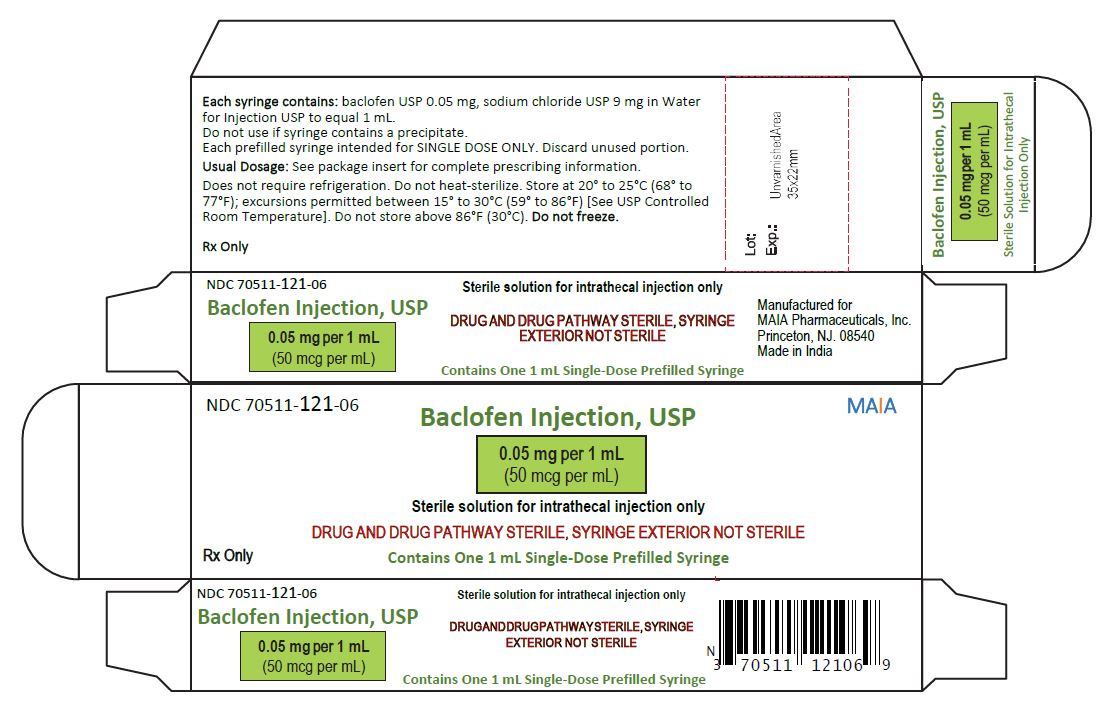
HOW SUPPLIED Baclofen Injection, USP is a clear, colorless, sterile, pyrogen-free, isotonic solution consisting of the active ingredient, Baclofen USP, and the excipients Sodium Chloride USP and Water for Injection USP in single-dose prefilled syringes. Baclofen Injection is packaged in single-dose prefilled syringes containing 0.05 mg/1 mL (50 mcg/mL) supplied as follows: Carton of one 1 mL single-dose prefilled syringe, containing 0.05 mg/1 mL (50 mcg/mL) (NDC 70511-121-06). Carton of two 1 mL single-dose prefilled syringes, each containing 0.05 mg/1 mL (50 mcg/mL) (NDC 70511-121-80).
📦 Storage and Handling ▾
Storage Conditions: Does not require refrigeration. Store at 20° to 25°C (68° to 77°F); excursions permitted between 15° to 30°C (59° to 86°F) [See USP Controlled Room Temperature]. Do not store above 86º F (30º C). Do not freeze. Do not heat sterilize Manufactured for: MAIA Pharmaceuticals, Inc. 707 State Road Suite 104, Princeton, NJ 08540 Made in India Revised: 06/2022
📋 Description ▾
DESCRIPTION Baclofen Injection, USP is a muscle relaxant and antispastic. Its chemical name is 4-amino-3-(4-chlorophenyl) butanoic acid, and its structural formula is: Baclofen is a white to off-white, odorless or practically odorless crystalline powder, with a molecular weight of 213.66. It is slightly soluble in water, very slightly soluble in methanol, and insoluble in chloroform.
Baclofen Injection, USP is a sterile, pyrogen-free, isotonic solution free of antioxidants, preservatives or other potentially neurotoxic additives indicated only for intrathecal administration. The drug is stable in solution at 37° C and compatible with CSF. Each milliliter of Baclofen Injection contains baclofen USP, 50 mcg and sodium chloride 9 mg in Water for Injection; pH range is 5.0 to 7.0.
Each prefilled syringe is intended for SINGLE DOSE ONLY. Discard any unused portion. DO NOT AUTOCLAVE . chemical-structrure
⚠️ Precautions ▾
PRECAUTIONS Children should be of sufficient body mass to accommodate the implantable pump for chronic infusion. Please consult pump manufacturer's manual for specific recommendations. Safety and effectiveness in pediatric patients below the age of 4 have not been established.
Screening Patients should be infection-free prior to the screening trial with Baclofen Injection because the presence of a systemic infection may interfere with an assessment of the patient’s response to bolus Baclofen Injection. Pump Implantation Patients should be infection-free prior to pump implantation because the presence of infection may increase the risk of surgical complications. Moreover, a systemic infection may complicate dosing.
Pump Dose Adjustment and Titration In most patients, it will be necessary to increase the dose gradually over time to maintain effectiveness; a sudden requirement for substantial dose escalation typically indicates a catheter complication (i. e., catheter kink or dislodgement). Reservoir refilling must be performed by fully trained and qualified personnel following the directions provided by the pump manufacturer. Inadvertent injection into the subcutaneous tissue can occur if the reservoir refill septum is not properly accessed.
Subcutaneous injection may result in symptoms of a systemic overdose or early depletion of the reservoir. Refill intervals should be carefully calculated to prevent depletion of the reservoir, as this would result in the return of severe spasticity and possibly symptoms of withdrawal. Strict aseptic technique in filling is required to avoid bacterial contamination and serious infection.
A period of observation appropriate to the clinical situation should follow each refill or manipulation of the drug reservoir. Extreme caution must be used when filling an FDA approved implantable pump equipped with an injection port that allows direct access to the intrathecal catheter. Direct injection into the catheter through the catheter access port may cause a life-threatening overdose.
Additional considerations pertaining to dosage adjustment: It may be important to titrate the dose to maintain some degree of muscle tone and allow occasional spasms to: 1) help support circulatory function, 2) possibly prevent the formation of deep vein thrombosis, 3) optimize activities of daily living and ease of care. Except in overdose related emergencies, the dose of Baclofen Injection should ordinarily be reduced slowly if the drug is discontinued for any reason. An attempt should be made to discontinue concomitant oral antispasticity medication to avoid possible overdose or adverse drug interactions, either prior to screening or following implant and initiation of chronic Baclofen Injection infusion.
Reduction and discontinuation of oral anti-spasmotics should be done slowly and with careful monitoring by the physician. Abrupt reduction or discontinuation of concomitant antispastics should be avoided. Drowsiness: Drowsiness has been reported in patients on Baclofen Injection.
Patients should be cautioned regarding the operation of automobiles or other dangerous machinery, and activities made hazardous by decreased alertness. Patients should also be cautioned that the central nervous system depressant effects of Baclofen Injection may be additive to those of alcohol and other CNS depressants. Intrathecal mass: Cases of intrathecal mass at the tip of the implanted catheter have been reported, most of them involving pharmacy compounded analgesic admixtures.
The most frequent symptoms associated with intrathecal mass are: 1) decreased therapeutic response (worsening spasticity, return of spasticity when previously well controlled, withdrawal symptoms, poor response to escalating doses, or frequent or large dosage increases), 2) pain, 3) neurological deficit/dysfunction. Clinicians should monitor patients on intraspinal therapy carefully for any new neurological signs or symptoms. In patients with new neurological sig… [Excerpted — this section continues on DailyMed.]
🍼 Nursing Mothers ▾
NURSING MOTHERS In mothers treated with oral baclofen (baclofen USP) in therapeutic doses, the active substance passes into the milk. It is not known whether detectable levels of drug are present in milk of nursing mothers receiving Baclofen Injection. As a general rule, nursing should be undertaken while a patient is receiving Baclofen Injection only if the potential benefit justifies the potential risks to the infant.
🧬 Pharmacokinetics ▾
Pharmacokinetics of Baclofen Injection: The pharmacokinetics of CSF clearance of Baclofen Injection calculated from intrathecal bolus or continuous infusion studies approximates CSF turnover, suggesting elimination is by bulk-flow removal of CSF. Intrathecal Bolus: After a bolus lumbar injection of 50 or 100 mcg Baclofen Injection in seven patients, the average CSF elimination half-life was 1.51 hours over the first four hours and the average CSF clearance was approximately 30 mL/hour. Continuous Infusion: The mean CSF clearance for Baclofen Injection was approximately 30 mL/hour in a study involving ten patients on continuous intrathecal infusion.
Concurrent plasma concentrations of baclofen during intrathecal administration are expected to be low (0 to 5 ng/mL). Limited pharmacokinetic data suggest that a lumbar-cisternal concentration gradient of about 4:1 is established along the neuroaxis during baclofen infusion. This is based upon simultaneous CSF sampling via cisternal and lumbar tap in 5 patients receiving continuous baclofen infusion at the lumbar level at doses associated with therapeutic efficacy; the interpatient variability was great.
The gradient was not altered by position. Six pediatric patients (age 8 to 18 years) receiving continuous intrathecal baclofen infusion at doses of 77 to 400 mcg/day had plasma baclofen levels near or below 10 ng/mL.
🧬 Pharmacodynamics ▾
Pharmacodynamics of Baclofen Injection: Intrathecal Bolus: Adult Patients: The onset of action is generally one-half hour to one hour after an intrathecal bolus. Peak spasmolytic effect is seen at approximately four hours after dosing and effects may last four to eight hours. Onset, peak response, and duration of action may vary with individual patients depending on the dose and severity of symptoms.
Pediatric Patients: The onset, peak response and duration of action is similar to those seen in adult patients. Continuous Infusion: Baclofen Injection’s antispastic action is first seen at 6 to 8 hours after initiation of continuous infusion. Maximum activity is observed in 24 to 48 hours.
Continuous Infusion: No additional information is available for pediatric patients.
📄 Carcinogenesis, Mutagenesis, Impairment of Fertility ▾
CARCINOGENESIS, MUTAGENESIS, AND IMPAIRMENT OF FERTILITY No increase in tumors was seen in rats receiving baclofen orally for two years. Adequate genotoxicity assays of baclofen have not been performed.
📄 Package Label / Principal Display Panel ▾
Principal Display Panel Syringe Label Carton Label Carton Label 5 Pack syringe-label carton-label carton label 5 pack
Medicare Part D spend CMS · PART D · 2026 (Q1)
About this NDC listing & data coverage
What data is (and isn’t) available for this NDC — tap to expand
| NDC identity (package / product / labeler codes) | ✓ Available |
| Labeler | ✓ Available |
| Product & package description | ✓ Available |
| Marketing category & status | ✓ Available |
| Active ingredient / dosage form / route | ✓ Available |
| FDA label (SPL via DailyMed) | ✓ Available |
| Package photos | ✓ Available |
| Inactive ingredients (structured) | ✓ Available |
| NADAC pharmacy acquisition price (CMS) | — Not published for this NDC CMS publishes NADAC only for NDCs reported in its retail-pharmacy survey. |
| Orange Book / therapeutic-equivalence data | ✓ Available |
| HCPCS J-code billing crosswalk | — Not published for this NDC Most self-administered / retail products have no J-code — that is normal. |
| Medicaid utilization (CMS SDUD) | — Not published for this NDC CMS reports utilization only for NDCs with Medicaid claims above its privacy threshold. |