
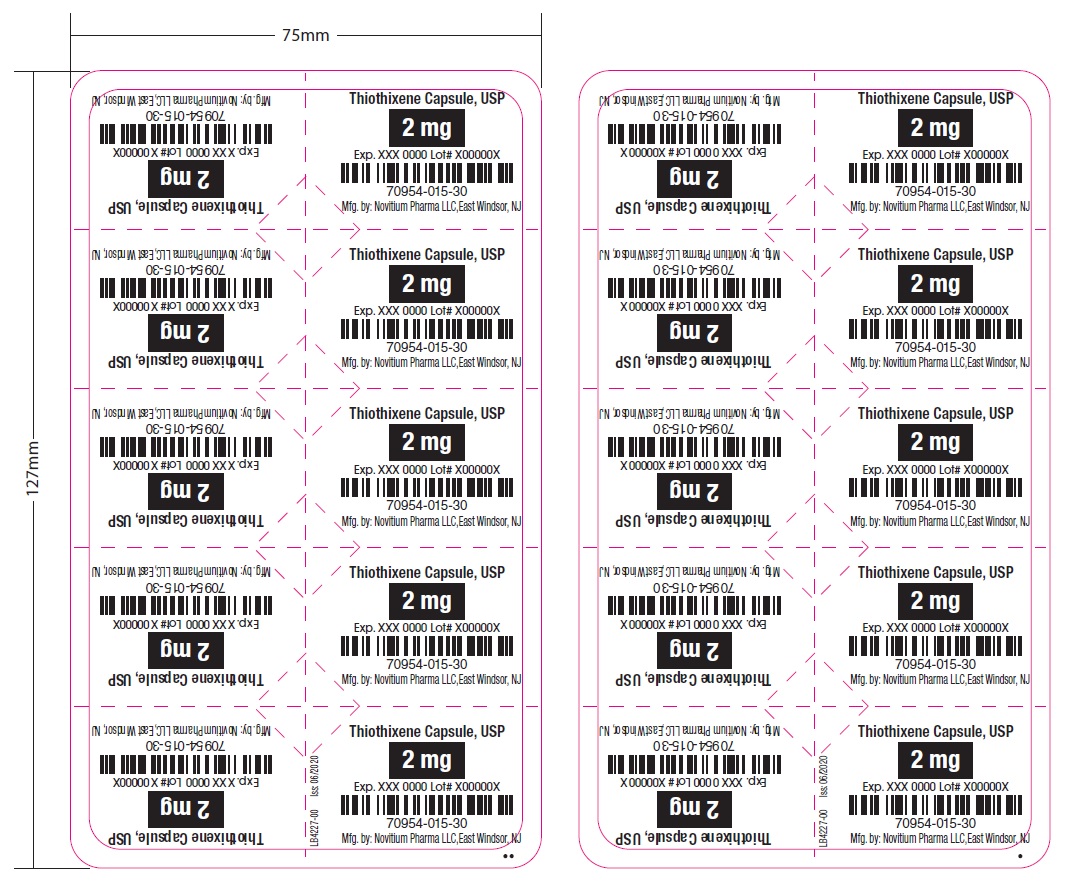
Thiothixene 10 mg Capsule, 100-count — NDC 70954-017-10 (Billing 70954-0017-10)
This is a package of 100 capsules of Thiothixene 10 mg Capsule from ANI Pharmaceuticals, Inc., marketed since Apr 2019 and currently FDA-listed; retail pharmacies pay about $1.72 per capsule (NADAC). It is the main listing for this product, which comes in 3 package sizes.
NDC database record
One package, one record: these facts belong to NDC 70954-017-10 alone.
- Record
- FDA NDC Directory package listing · Human prescription drug
- Code segments
- 70954 labeler · 017 product · 10 package
- Package marketed since
- Apr 5, 2019
- Sample package
- No — commercial package
- Listing certified through
- Dec 31, 2026
- Billing quantity
- 100 EA per package
- Barcode (UPC)
- 0370954015109, 0370954016106, 0370954014102, 0370954017103
- Medicaid fills, this package
- 453 prescriptions in the last four reported quarters
- FDA record last changed
- Jul 24, 2026
Identity & classification
Regulatory identifiers FDA, NLM and CMS codes for this package
Drug-database identifiers Medi-Span GPI and First Databank GCN / HICL / AHFS classification
- GSN (GCN sequence number): 003996
- GCN: 15691
- GPI-14 (Medi-Span): 59300020100120
- HICL (First Databank): 001668
- AHFS class code: 28:16.08.32
- RxCUI (RxNorm): 313361
Where does this data come from?
- FDA openFDA NDC Directory · synced Oct 8, 2026
- FDA label on DailyMed · label index refreshed Oct 8, 2026
- RxNorm (NLM RxNav) · catalog refreshed Oct 8, 2026
- Medi-Span GPI (licensed)
- First Databank (licensed) · refreshed Oct 8, 2026
RxNorm drug class
This medicine belongs to the Typical Antipsychotic class.
Where does this data come from?
- RxClass (NLM) · catalog refreshed Oct 8, 2026
Clinical
- Thiothixene is used to treat schizophrenia. It's an antipsychotic medication that helps manage the symptoms of this condition. Your prescriber will adjust your dose based on how se...
- The label doesn't specify an exact timeframe, but antipsychotic medications like thiothixene are generally started at a low dose and gradually increased. It's important to keep tak...
- How long does it take before I notice it working?
- Some common ones include drowsiness, dry mouth, blurred vision, constipation, and lightheadedness — these often improve as your body adjusts. The ones to call your doctor about rig...
Patient education
Supplement & herbal interactions
Some supplements/herbs that may interact with Thiothixene — tap one for details:
Where does this data come from?
- MedlinePlus (NLM) · refreshed Oct 8, 2026
- FDA label on DailyMed · label index refreshed Oct 8, 2026
Ask a licensed pharmacist directly — free, answered by our team.
Pricing
A drug doesn't have one price. Each row is a different public payment system, and none is what you'd pay at the counter — that depends on your insurance. The ⓘ on each row explains what it measures.
| Price system | Per ea | Per package |
|---|---|---|
| Retail pharmacies payNADAC · weekly | $1.717 | $171.65 / 100 capsules |
| Medicaid paysCMS SDUD · 12 mo | $1.87 | $186.82 / 100 capsules |
| Medicare drug plans payPart D · Q2 2026 | $2.19 | $218.70 / 100 capsules |
Where does this data come from?
- CMS NADAC weekly file · file of Oct 7, 2026
- CMS ASP pricing files · refreshed Sep 20, 2026
- CMS Medicaid State Drug Utilization Data · through Q1 2026
- CMS Part D plan pricing files · refreshed Sep 24, 2026
- VA National Acquisition Center price file
Packaging — all sizes for this product
| Package NDC | Description | Per unit | Per pack | Marketing start | Marketing end | Status |
|---|---|---|---|---|---|---|
| 70954-0017-10 You're viewing this Main listing | 100 CAPSULE in 1 BOTTLE | $1.72 / ea | $171.65 | 2019-04-05 | — | Active |
| 70954-0017-20 70954-017-20 | 1000 CAPSULE in 1 BOTTLE | — | — | 2019-04-05 | — | Active |
| 70954-0017-40 70954-017-40 | 100 BLISTER PACK in 1 CARTON / 1 CAPSULE in 1 BLISTER PACK | — | — | 2019-04-05 | — | Active |
In Medicaid, this is the most-dispensed pack of this product — about 100% of fills over the last four reported quarters. See all packs ↓
Pack size FAQ
What quantity is in this package?
How does this package differ from NDC 70954-0017-40?
What NDC number is used to bill for this package of Thiothixene 10 mg Capsule?
Prices are the latest CMS NADAC pharmacy acquisition cost per NDC; per-pack figures are per-unit × pack quantity, shown only when the pack is denominated in the same measure NADAC prices.
Therapeutic equivalents
| Product | Labeler | Pack | NADAC/unit | TE | Status | Price vs. this |
|---|---|---|---|---|---|---|
| thiothixene 10 mg 60219-1676-01 | Amneal | 100 capsules | $1.717 | AB | Availability likely | — |
| Thiothixene 10 mgthis 70954-0017-10 | ANI | 100 capsules | $1.717 | AB | Availability likely | — |
| Thiothixene 10 mg 51407-0278-01 | Golden | 100 capsules | — | AB | FDA listed | — |
| Thiothixene 10 mg 67046-1542-03 | Coupler | 30 capsules | — | AB | FDA listed | — |
Where does this data come from?
- FDA openFDA NDC Directory · synced Oct 8, 2026
- FDA Orange Book · refreshed Oct 9, 2026
- CMS NADAC weekly file · file of Oct 7, 2026
Availability & generic status
This product is an FDA-approved generic. Other versions of the same drug are listed under Therapeutic equivalents, least expensive first.
Where does this data come from?
- FDA Orange Book · refreshed Oct 9, 2026
What it looks like
Where does this data come from?
- FDA label on DailyMed · label index refreshed Oct 8, 2026
Inactive Ingredients / Excipients
Inactive ingredients, also called excipients, are components of the drug product other than the active ingredient. They may include fillers, dyes, coatings, preservatives, flavors, or other formulation ingredients.
🧪 Avoiding an ingredient? See Thiothixene inactive ingredients by manufacturer: every current product's list side by side, so you can ask your pharmacy for the version that does not list it.
💡 Tap an ingredient (hover on desktop) to see what it is and why it’s used.
-
UNII 5138Q19F1X
Ammonia is a colorless gas made from nitrogen and hydrogen. It's used in medicines as a pH buffer to maintain the correct acidity level and help keep the product stable.
-
UNII OP1R32D61U
Microcrystalline cellulose is a purified form of cellulose, a natural fiber from plant sources. It acts as a binder and filler in tablets and capsules, helping hold ingredients together and give the medicine its shape and size.
-
UNII M28OL1HH48
Croscarmellose sodium is a plant-based substance derived from cellulose. It acts as a disintegrant, helping tablets and capsules break down quickly in the digestive system so the medicine can be absorbed.
-
UNII H3R47K3TBD
FD&C Blue No. 1 is a synthetic blue dye approved for use in foods and medicines. It serves as a colorant to give the medication its distinctive appearance and help with product identification.
-
UNII WZB9127XOA
A synthetic red dye used to color medications and make them easier to identify. It serves as a colorant in tablets, capsules, and liquid formulations.
-
UNII H77VEI93A8
A synthetic yellow dye used to color medications. It helps identify the drug and make it visually distinctive, with no effect on how the medicine works.
-
UNII XM0M87F357
A dark iron oxide compound that gives medicines their black or dark color. It's used as a colorant in tablets and capsules to help identify the product and make it visually distinctive.
-
UNII 2G86QN327L
Gelatin is a protein derived from animal collagen, commonly used in medicines as a gelling agent and capsule material. It helps create soft or hard capsule shells that hold and release medication, and can also thicken liquid formulations.
-
UNII EWQ57Q8I5X
Lactose monohydrate is a natural sugar derived from milk. It serves as a filler and binder in tablets and capsules, helping create the proper size, texture, and consistency of the medicine.
-
UNII 70097M6I30
Magnesium stearate is a salt made from magnesium and stearic acid, a fatty substance. It's used in tablets and capsules as a lubricant and glidant to help ingredients flow smoothly during manufacturing and prevent sticking.
-
UNII WZH3C48M4T
Potassium hydroxide is a strong alkaline chemical used in medicines to adjust and maintain the pH level of liquid formulations, helping keep the product stable and the active ingredients effective.
-
UNII 6DC9Q167V3
Propylene glycol is a clear liquid derived from petroleum or vegetable sources. It acts as a solvent, humectant, and preservative in medicines, helping dissolve active ingredients and maintain product stability.
-
UNII MB5IUD6JUA
Shellac is a natural resin secreted by lac beetles, purified and processed into a coating material. It seals and protects tablets and capsules, controls how quickly the medicine dissolves, and gives pills their glossy finish.
-
UNII ETJ7Z6XBU4
Silicon dioxide is a naturally occurring mineral used as a glidant and anti-caking agent. It helps powder ingredients flow smoothly and prevents clumping during manufacturing and storage.
-
UNII 368GB5141J
A detergent and foaming agent derived from coconut or palm oil. In medications, it helps break down and mix oil and water-based ingredients, aids in tablet disintegration, and improves how the drug dissolves and spreads in the mouth or digestive system.
-
UNII O8232NY3SJ
A plant-based carbohydrate derived from corn kernels. It acts as a filler to add bulk, a binder to hold ingredients together, and a disintegrant to help the tablet break apart in your stomach for absorption.
-
UNII 15FIX9V2JP
Titanium dioxide is a bright white mineral powder commonly used as a colorant and opacifying agent. It makes pills and tablets white or lighter in color and helps make coatings non-transparent.
17 inactive ingredients listed in the exact product block matched to this NDC.
Where does this data come from?
ingredient classCode="IACT" elements from the exact product block matched by this NDC. Label-section narrative from DailyMed / the openFDA label index is shown separately when available.- FDA label on DailyMed · label index refreshed Oct 8, 2026
- FDA openFDA NDC Directory · synced Oct 8, 2026
Inactive ingredient FAQ
Are inactive ingredients the same for every manufacturer?
Why might an inactive ingredient be missing?
Can inactive ingredients matter?
Manufacturer & labeler
More NDCs from ANI Pharmaceuticals, Inc. labeler code 70954
- Oxybutynin Chloride 5 mg Tablet NDC 70954-005-10
- Thiothixene 1 mg Capsule NDC 70954-014-10
- Thiothixene 2 mg Capsule NDC 70954-015-10
- Thiothixene 5 mg Capsule NDC 70954-016-10
- Prazosin Hydrochloride 1 mg Capsule NDC 70954-019-10
- Prazosin Hydrochloride 2 mg Capsule NDC 70954-020-10
- Prazosin Hydrochloride 5 mg Capsule NDC 70954-021-10
- Macitentan 10 mg Tablet, Film Coated NDC 70954-025-10
- Acetazolamide 125 mg Tablet NDC 70954-033-20
- Acetazolamide 250 mg Tablet NDC 70954-034-20
Where does this data come from?
- FDA openFDA NDC Directory · synced Oct 8, 2026
- Drugs@FDA
Full prescribing information FDA SPL
🚨 Boxed Warning ▾
BOXED WARNING WARNING Increased Mortality in Elderly Patients with Dementia-Related Psychosis : Elderly patients with dementia-related psychosis treated with antipsychotic drugs are at an increased risk of death. Analyses of seventeen placebo-controlled trials (modal duration of 10 weeks), largely in patients taking atypical antipsychotic drugs, revealed a risk of death in drug-treated patients of between 1.6 to 1.7 times the risk of death in placebo-treated patients. Over the course of a typical 10-week controlled trial, the rate of death in drug-treated patients was about 4.5%, compared to a rate of about 2.6% in the placebo group.
Although the causes of death were varied, most of the deaths appeared to be either cardiovascular (e.g., heart failure, sudden death) or infectious (e.g., pneumonia) in nature. Observational studies suggest that, similar to atypical antipsychotic drugs, treatment with conventional antipsychotic drugs may increase mortality. The extent to which the findings of increased mortality in observational studies may be attributed to the antipsychotic drug as opposed to some characteristic(s) of the patients is not clear.
Thiothixene is not approved for the treatment of patients with dementia-related psychosis (see WARNINGS ).
🎯 Indications and Usage ▾
INDICATIONS & USAGE Thiothixene capsules are effective in the management of schizophrenia. Thiothixene capsules have not been evaluated in the management of behavioral complications in patients with mental retardation.
⏱️ Dosage and Administration ▾
DOSAGE & ADMINISTRATION Dosage of thiothixene capsules should be individually adjusted depending on the chronicity and severity of the symptoms of schizophrenia. In general, small doses should be used initially and gradually increased to the optimal effective level, based on patient response. Some patients have been successfully maintained on once a day thiothixene capsule therapy.
The use of thiothixene capsules in children under 12 years of age is not recommended because safe conditions for its use have not been established. In milder conditions, an initial dose of 2 mg three times daily is recommended. If indicated, a subsequent increase to 15 mg/day total daily dose is often effective.
In more severe conditions, an initial dose of 5 mg twice daily is recommended. The usual optimal dose is 20 mg to 30 mg daily. If indicated, an increase to 60 mg/day total daily dose is often effective.
Exceeding a total daily dose of 60 mg rarely increases the beneficial response.
⛔ Contraindications ▾
CONTRAINDICATIONS Thiothixene capsules are contraindicated in patients with circulatory collapse, comatose states, central nervous system depression due to any cause, and blood dyscrasias. Thiothixene is contraindicated in individuals who have shown hypersensitivity to the drug. It is not known whether there is a cross sensitivity between the thioxanthenes and the phenothiazine derivatives, but this possibility should be considered.
⚠️ Warnings ▾
WARNINGS Increased Mortality in Elderly Patients with Dementia-Related Psychosis Elderly patients with dementia-related psychosis treated with antipsychotic drugs are at an increased risk of death. Thiothixene is not approved for the treatment of patients with dementia-related psychosis (see BOXED WARNING). Tardive Dyskinesia Tardive dyskinesia, a syndrome consisting of potentially irreversible, involuntary, dyskinetic movements may develop in patients treated with antipsychotic drugs, including thiothixene (1).
Although the prevalence of the syndrome appears to be highest among the elderly, especially elderly women, it is impossible to rely upon prevalence estimates to predict, at the inception of antipsychotic treatment, which patients are likely to develop the syndrome. Whether antipsychotic drug products differ in their potential to cause tardive dyskinesia is unknown. Both the risk of developing the syndrome and the likelihood that it will become irreversible are believed to increase as the duration of treatment and the total cumulative dose of antipsychotic drugs administered to the patient increase.
However, the syndrome can develop, although much less commonly, after relatively brief treatment periods at low doses. There is no known treatment for established cases of tardive dyskinesia, although the syndrome may remit, partially or completely, if antipsychotic treatment is withdrawn. Antipsychotic treatment, itself, however, may suppress (or partially suppress) the signs and symptoms of the syndrome and thereby may possibly mask the underlying disease process.
The effect that symptomatic suppression has upon the long-term course of the syndrome is unknown. Given these considerations, antipsychotics should be prescribed in a manner that is most likely to minimize the occurrence of tardive dyskinesia. Chronic antipsychotic treatment should generally be reserved for patients who suffer from a chronic illness that, 1) is known to respond to antipsychotic drugs, and 2) for whom alternative, equally effective, but potentially less harmful treatments are not available or appropriate.
In patients who do require chronic treatment, the smallest dose and the shortest duration of treatment producing a satisfactory clinical response should be sought. The need for continued treatment should be reassessed periodically. If signs and symptoms of tardive dyskinesia appear in a patient on antipsychotics, drug discontinuation should be considered.
However, some patients may require treatment despite the presence of the syndrome. (For further information about the description of tardive dyskinesia and its clinical detection, please refer to Information for Patients in the PRECAUTIONS section, and to the ADVERSE REACTIONS section.) Neuroleptic Malignant Syndrome (NMS) A potentially fatal symptom complex sometimes referred to as Neuroleptic Malignant Syndrome (NMS) has been reported in association with antipsychotic drugs, including thiothixene 2 . Clinical manifestations of NMS are hyperpyrexia, muscle rigidity, altered mental status and evidence of autonomic instability (irregular pulse or blood pressure, tachycardia, diaphoresis, and cardiac dysrhythmias).
The diagnostic evaluation of patients with this syndrome is complicated. In arriving at a diagnosis, it is important to identify cases where the clinical presentation includes both serious medical illness (e.g., pneumonia, systemic infection, etc.) and untreated or inadequately treated extrapyramidal signs and symptoms (EPS). Other important considerations in the differential diagnosis include central anticholinergic toxicity, heat stroke, drug fever and primary central nervous system (CNS) pathology.
The management of NMS should include 1) immediate discontinuation of antipsychotic drugs and other drugs not essential to concurrent therapy, 2) intensive symptomatic treatment and medical monitoring, and treatment of any concomitant serious medical problems for which specific treatments a… [Excerpted — this section continues on DailyMed.]
🤒 Adverse Reactions ▾
ADVERSE REACTIONS NOTE : Not all of the following adverse reactions have been reported with thiothixene. However, since thiothixene has certain chemical and pharmacologic similarities to the phenothiazines, all of the known side effects and toxicity associated with phenothiazine therapy should be borne in mind when thiothixene is used. Cardiovascular Effects Tachycardia, hypotension, light-headedness, and syncope.
In the event hypotension occurs, epinephrine should not be used as a pressor agent since a paradoxical further lowering of blood pressure may result. Nonspecific EKG changes have been observed in some patients receiving thiothixene. These changes are usually reversible and frequently disappear on continued thiothixene therapy.
The incidence of these changes is lower than that observed with some phenothiazines. The clinical significance of these changes is not known. CNS Effects Drowsiness, usually mild, may occur although it usually subsides with continuation of thiothixene therapy.
The incidence of sedation appears similar to that of the piperazine group of phenothiazines but less than that of certain aliphatic phenothiazines. Restlessness, agitation and insomnia have been noted with thiothixene. Seizures and paradoxical exacerbation of psychotic symptoms have occurred with thiothixene infrequently.
Hyperreflexia has been reported in infants delivered from mothers having received structurally related drugs. In addition, phenothiazine derivatives have been associated with cerebral edema and cerebrospinal fluid abnormalities. Extrapyramidal Symptoms Extrapyramidal symptoms, such as pseudoparkinsonism, akathisia and dystonia have been reported (see Adverse Reactions: Dystonia: Class Effect).
Management of these extrapyramidal symptoms depends upon the type and severity. Rapid relief of acute symptoms may require the use of an injectable antiparkinson agent. More slowly emerging symptoms may be managed by reducing the dosage of thiothixene and/or administering an oral antiparkinson agent.
Dystonia Class Effect Symptoms of dystonia, prolonged abnormal contractions of muscle groups, may occur in susceptible individuals during the first few days of treatment. Dystonic symptoms include: spasm of the neck muscles, sometimes progressing to tightness of the throat, swallowing difficulty, difficulty breathing, and/or protrusion of the tongue. While these symptoms can occur at low doses, they occur more frequently and with greater severity with high potency and at higher doses of first generation antipsychotic drugs.
An elevated risk of acute dystonia is observed in males and younger age groups. Persistent Tardive Dyskinesia As with all antipsychotic agents, tardive dyskinesia may appear in some patients on long-term therapy with thiothixene, or may occur after drug therapy has been discontinued. The syndrome is characterized by rhythmical involuntary movements of the tongue, face, mouth or jaw (e.g., protrusion of tongue, puffing of cheeks, puckering of mouth, chewing movements).
Sometimes these may be accompanied by involuntary movements of extremities. Since early detection of tardive dyskinesia is important, patients should be monitored on an ongoing basis. It has been reported that fine vermicular movement of the tongue may be an early sign of the syndrome.
If this or any other presentation of the syndrome is observed, the clinician should consider possible discontinuation of antipsychotic medication. (See WARNINGS.) Hepatic Effects Elevations of serum transaminase and alkaline phosphatase, usually transient, have been infrequently observed in some patients. No clinically confirmed cases of jaundice attributable to thiothixene have been reported.
Hematologic Effects As is true with certain other psychotropic drugs, leukopenia and leucocytosis, which are usually transient, can occur occasionally with thiothixene. Other antipsychotic drugs have been associated with agranulocytosis, eosinophilia, hemolytic anemia, thrombocytop… [Excerpted — this section continues on DailyMed.]
🔄 Drug Interactions ▾
DRUG INTERACTIONS Hepatic microsomal enzyme inducing agents, such as carbamazepine, were found to significantly increase the clearance of thiothixene. Patients receiving these drugs should be observed for signs of reduced thiothixene effectiveness 4,5 . Due to a possible additive effect with hypotensive agents, patients receiving these drugs should be observed closely for signs of excessive hypotension when thiothixene is added to their drug regimen 6 .
🆘 Overdosage ▾
OVERDOSAGE Manifestations include muscular twitching, drowsiness and dizziness. Symptoms of gross overdosage may include CNS depression, rigidity, weakness, torticollis, tremor, salivation, dysphagia, hypotension, disturbances of gait, or coma. Treatment Essentially symptomatic and supportive.
Early gastric lavage is helpful. Keep patient under careful observation and maintain an open airway, since involvement of the extrapyramidal system may produce dysphagia and respiratory difficulty in severe overdosage. If hypotension occurs, the standard measures for managing circulatory shock should be used (I.V. fluids and/or vasoconstrictors).
If a vasoconstrictor is needed, norepinephrine and phenylephrine are the most suitable drugs. Other pressor agents, including epinephrine, are not recommended, since phenothiazine derivatives may reverse the usual pressor action of these agents and cause further lowering of blood pressure. If CNS depression is marked, symptomatic treatment is indicated.
Extrapyramidal symptoms may be treated with antiparkinson drugs. There are no data on the use of peritoneal or hemodialysis, but they are known to be of little value in phenothiazine intoxication.
📦 How Supplied / Storage and Handling ▾
HOW SUPPLIED Thiothixene Capsules, USP are available containing 1 mg, 2 mg, 5 mg or 10 mg of thiothixene, USP. Thiothixene, USP 1 mg capsule is a size 4 hard gelatin capsule with a caramel opaque cap and a blue opaque body filled with white to off-white powder. The capsule is imprinted “014” on the cap and “novitium” on the body in black ink.
They are available as below: NDC 70954-014-10 Bottle of 100 capsules NDC 70954-014-20 Bottle of 1000 capsules Thiothixene, USP 2 mg capsule is a size 4 hard gelatin capsule with a caramel opaque cap and a yellow opaque body filled with white to off-white powder. The capsule is imprinted “015” on the cap and “novitium” on the body in black ink. They are available as below: NDC 70954-015-10 Bottle of 100 capsules NDC 70954-015-20 Bottle of 1000 capsules NDC 70954-015-40 Unit dose blister packages of 100 (10 cards of 10 capsules each) Thiothixene, USP 5 mg capsule is a size 4 hard gelatin capsule with a caramel opaque cap and a white opaque body filled with white to off-white powder.
The capsule is imprinted “016” on the cap and “novitium” on the body in black ink. They are available as below: NDC 70954-016-10 Bottle of 100 capsules NDC 70954-016-20 Bottle of 1000 capsules NDC 70954-016-40 Unit dose blister packages of 100 (10 cards of 10 capsules each) Thiothixene, USP 10 mg capsule is a size 4 hard gelatin capsule with a caramel opaque cap and a peach opaque body filled with white to off-white powder. The capsule is imprinted “017” on the cap and “novitium” on the body in black ink.
They are available as below: NDC 70954-017-10 Bottle of 100 capsules NDC 70954-017-20 Bottle of 1000 capsules NDC 70954-017-40 Unit dose blister packages of 100 (10 cards of 10 capsules each) Store at 20° to 25°C (68° to 77°F). [See USP Controlled Room Temperature.] Protect from light. Preserve in tight, light-resistant container as defined in the USP.
📋 Description ▾
DESCRIPTION Thiothixene is a thioxanthene derivative. Specifically, it is the cis isomer of N,N-dimethyl-9-[3-(4- methyl-1-piperazinyl)propylidene]thioxanthene-2-sulfonamide. It may be represented by the following structural formula The thioxanthenes differ from the phenothiazines by the replacement of nitrogen in the central ring with a carbon-linked side chain fixed in space in a rigid structural configuration.
An N,N-dimethyl sulfonamide functional group is bonded to the thioxanthene nucleus. Each capsule contains 1 mg, 2 mg, 5 mg or 10 mg of thiothixene, USP and the following inactive ingredients: colloidal silicon dioxide, croscarmellose sodium, lactose monohydrate, magnesium stearate, microcrystalline cellulose, pregelatinized starch and sodium lauryl sulfate. Each of the empty gelatin capsules contains FD&C Blue No.
1, FD&C Red No. 40, FD&C Yellow No. 6, gelatin, sodium lauryl sulfate and titanium dioxide.
In addition, the 1 mg empty gelatin capsules contain D&C Red No. 28 and the 2 mg empty gelatin capsules contain D&C Yellow No. 10.
The imprinting ink contains the following: ammonia solution, black iron oxide, potassium hydroxide, propylene glycol and shellac. Thio-structure
💬 Information for Patients ▾
INFORMATION FOR PATIENTS Given the likelihood that some patients exposed chronically to antipsychotics will develop tardive dyskinesia, it is advised that all patients in whom chronic use is contemplated be given, if possible, full information about this risk. The decision to inform patients and/or their guardians must obviously take into account the clinical circumstances and the competency of the patient to understand the information provided.
⚠️ Precautions ▾
PRECAUTIONS GENERAL PRECAUTIONS An antiemetic effect was observed in animal studies with thiothixene; since this effect may also occur in man, it is possible that thiothixene may mask signs of over-dosage of toxic drugs and may obscure conditions such as intestinal obstruction and brain tumor. In consideration of the known capability of thiothixene and certain other psychotropic drugs to precipitate convulsions, extreme caution should be used in patients with a history of convulsive disorders or those in a state of alcohol withdrawal, since it may lower the convulsive threshold.
Although thiothixene potentiates the actions of the barbiturates, the dosage of the anticonvulsant therapy should not be reduced when thiothixene is administered concurrently. Though exhibiting rather weak anticholinergic properties, thiothixene should be used with caution in patients who might be exposed to extreme heat or who are receiving atropine or related drugs. Use with caution in patients with cardiovascular disease.
Caution as well as careful adjustment of the dosages is indicated when thiothixene is used in conjunction with other CNS depressants. Also, careful observation should be made for pigmentary retinopathy and lenticular pigmentation (fine lenticular pigmentation has been noted in a small number of patients treated with thiothixene for prolonged periods). Blood dyscrasias (agranulocytosis, pancytopenia, thrombocytopenic purpura), and liver damage (jaundice, biliary stasis), have been reported with related drugs.
Antipsychotic drugs, including thiothixene 3 , elevate prolactin levels; the elevation persists during chronic administration. Tissue culture experiments indicate that approximately one-third of human breast cancers are prolactin dependent in vitro , a factor of potential importance if the prescription of these drugs is contemplated in a patient with a previously detected breast cancer. Although disturbances such as galactorrhea, amenorrhea, gynecomastia, and impotence have been reported, the clinical significance of elevated serum prolactin levels is unknown for most patients.
An increase in mammary neoplasms has been found in rodents after chronic administration of antipsychotic drugs. Published epidemiologic studies have shown inconsistent results when exploring the association between hyperprolactinemia and breast cancer. Leukopenia, Neutropenia and Agranulocytosis Class Effect In clinical trial and/or post-marketing experience, events of leukopenia/neutropenia and agranulocytosis have been reported temporally related to antipsychotic agents.
Possible risk factors for leukopenia/neutropenia include preexisting low white blood cell count (WBC) and history of drug induced leukopenia/neutropenia. Patients with a history of a clinically significant low WBC or drug induced leukopenia/neutropenia should have their complete blood count (CBC) monitored frequently during the first few months of therapy and discontinuation of thiothixene should be considered at the first sign of a clinically significant decline in WBC in the absence of other causative factors. Patients with clinically significant neutropenia should be carefully monitored for fever or other symptoms or signs of infection and treated promptly if such symptoms or signs occur.
Patients with severe neutropenia (absolute neutrophil count < 1000/mm 3 ) should discontinue thiothixene and have their WBC followed until recovery. INFORMATION FOR PATIENTS Given the likelihood that some patients exposed chronically to antipsychotics will develop tardive dyskinesia, it is advised that all patients in whom chronic use is contemplated be given, if possible, full information about this risk. The decision to inform patients and/or their guardians must obviously take into account the clinical circumstances and the competency of the patient to understand the information provided.
DRUG INTERACTIONS Hepatic microsomal enzyme inducing agents, such as carbamazepine, were found to significan… [Excerpted — this section continues on DailyMed.]
📚 References ▾
REFERENCES Worldwide Labeling Safety Report: Dyskinesia and Dyskinesia Tardive and Thiothixene, (16Apr02). Worldwide Labeling Safety Report: Neuroleptic Malignant Syndrome and Thiothixene, (16Apr02). Worldwide Labeling Safety Report: Hyperprolactinemia and Thiothixene, (16Apr02).
Ereshefsky L, Saklad SR, Watanabe MD, et al. Thiothixene Pharmacokinetic Interactions: A Study of Hepatic Enzyme Inducers, Clearance Inhibitors, and Demographic Variables. Journal of Clinical Psychopharmacology, 11(5):296–301, (1991).
Worldwide Labeling Safety Report: Drug Interaction and Thiothixene, (09May02). McEvoy GK, Miller JL, Snow EK, et al. AHFS Drug Information.
American Society of Health- System Pharmacists, Inc., p. 2334-2336, (2002). Worldwide Labeling Safety Report: Menstrual Disorder and Thiothixene, (16Apr02).
Manufactured by: Novitium Pharma LLC 70 Lake Drive, East Windsor New Jersey 08520 Issued: 02/2025 LB4118-04
📄 Package Label / Principal Display Panel ▾
PACKAGE LABEL.PRINCIPAL DISPLAY PANEL Thiothixene Capsules, USP 1 mg 100's counts Thiothixene Capsules, USP 1 mg 1000's counts Thiothixene Capsules, USP 2 mg 100's counts Thiothixene Capsules, USP 2 mg 1000's counts Thiothixene Capsules, USP 2 mg Unit dose blister packages of 100 (10 cards of 10 capsules each) Thiothixene Capsules, USP 5 mg 100's counts Thiothixene Capsules, USP 5 mg 1000's counts Thiothixene Capsules, USP 5 mg Unit dose blister packages of 100 (10 cards of 10 capsules each) Thiothixene Capsules, USP 10 mg 100's counts Thiothixene Capsules, USP 10 mg 1000's counts Thiothixene Capsules, USP 10 mg Unit dose blister packages of 100 (10 cards of 10 capsules each) 1mg 1mg1000 2mg100 2mg1000 blister2 carton2 5mg100 5mg1000 blister5 carton5 10mg100 10mg1000 blister10 carton10