
Bicalutamide 50 mg Tablet, 90-count — NDC 71205-577-90 (Billing 71205-0577-90)
This is a package of 90 tablets of Bicalutamide 50 mg Tablet from Proficient Rx LP, marketed since Jul 2009 and currently FDA-listed.
Identity & classification
Regulatory identifiers FDA, NLM and CMS codes for this package
- RxCUI (RxNorm): 199123
Where does this data come from?
- FDA openFDA NDC Directory · synced Oct 1, 2026
- FDA label on DailyMed · label index refreshed Oct 1, 2026
- RxNorm (NLM RxNav) · catalog refreshed Oct 1, 2026
- Medi-Span GPI (licensed)
- First Databank (licensed) · refreshed Oct 1, 2026
RxNorm drug class
This medicine belongs to the Androgen Receptor Inhibitor class.
Where does this data come from?
- RxClass (NLM) · catalog refreshed Oct 1, 2026
Clinical
- It's used along with an LHRH analog, another hormone therapy, to treat prostate cancer that has spread (Stage D2 metastatic). It blocks male hormones from fueling the cancer. It is...
- Take one tablet by mouth once a day, morning or evening, with or without food. Try to take it at the same time each day and start it with your LHRH analog. If you miss a dose, just...
- Hot flashes are the most common. Some people also have pain, tiredness, constipation, nausea, diarrhea, swelling, or blood in the urine. Tell your doctor if any of these bother you...
- Bicalutamide can rarely cause serious liver injury, usually in the first few months. Testing before you start, regularly for four months, and then periodically helps catch problems...
Patient education
Supplement & herbal interactions
Some supplements/herbs that may interact with Bicalutamide — tap one for details:
Where does this data come from?
- MedlinePlus (NLM) · refreshed Oct 1, 2026
- FDA label on DailyMed · label index refreshed Oct 1, 2026
Ask a licensed pharmacist directly — free, answered by our team.
Pricing
A drug doesn't have one price. Each row is a different public payment system, and none is what you'd pay at the counter — that depends on your insurance. The ⓘ on each row explains what it measures.
| Price system | Per each | Per package |
|---|---|---|
| Retail pharmacies payNADAC · weekly | Not in the retail survey — common for institutional, discontinued, or low-volume packs. | |
| Medicaid paysCMS SDUD · 12 mo | No recent Medicaid claims on file for this NDC — rare and low-volume NDCs are suppressed in the public data. | |
| Medicare drug plans payPart D · Q2 2026 | $0.6045 | $54.41 / 90 tablets |
Where does this data come from?
- CMS NADAC weekly file
- CMS ASP pricing files · refreshed Sep 20, 2026
- CMS Medicaid State Drug Utilization Data · refreshed Oct 3, 2026
- CMS Part D plan pricing files · refreshed Sep 24, 2026
- VA National Acquisition Center price file
Packaging — all sizes for this product
| Package NDC | Description | Marketing start | Marketing end | Status |
|---|---|---|---|---|
| 71205-0577-30 71205-577-30 Main listing | 30 TABLET in 1 BOTTLE | 2021-06-09 | — | Active |
| 71205-0577-60 71205-577-60 | 60 TABLET in 1 BOTTLE | 2021-06-09 | — | Active |
| 71205-0577-90 You're viewing this | 90 TABLET in 1 BOTTLE | 2021-06-09 | — | Active |
You're viewing the largest of 3 pack sizes for this product.
Pack size FAQ
What quantity is in this package?
How does this package differ from NDC 71205-0577-30?
What NDC number is used to bill for this package of Bicalutamide 50 mg Tablet?
Therapeutic equivalents
| Product | Labeler | Pack | NADAC/unit | TE | Status | Price vs. this |
|---|---|---|---|---|---|---|
| Bicalutamide 50 mg 62559-0890-30 | ANI | 30 tablets | $0.289 | AB | FDA listed | — |
| Bicalutamide 50 mg 16729-0023-01 | Accord | 100 tablets | $0.404 | AB | Availability likely | — |
| bicalutamide 50 mg 47335-0485-08 | Sun | 100 tablets | — | AB | FDA listed | — |
| Bicalutamide 50 mg 51407-0010-30 | Golden | 30 tablets | — | AB | FDA listed | — |
| Bicalutamide 50 mg 60429-0177-01 | Golden | 100 tablets | — | AB | Discontinued | — |
| Casodex 50 mg 62559-0680-30 | ANI | 30 tablets | — | AB | FDA listed | — |
| Bicalutamide 50 mg 63629-8308-01 | Bryant | 30 tablets | — | AB | FDA listed | — |
| Bicalutamide 50 mgthis 71205-0577-90 | Proficient | 90 tablets | — | AB | FDA listed | — |
| Bicalutamide 50 mg 72578-0215-01 | Viona | 100 tablets | — | AB | FDA listed | — |
| bicalutamide 50 mg 82804-0082-90 | Proficient | 90 tablets | — | AB | FDA listed | — |
| Bicalutamide 50 mg 84508-0001-01 | PINNACLE | 100 tablets | — | AB | FDA listed | — |
Where does this data come from?
- FDA openFDA NDC Directory · synced Oct 1, 2026
- FDA Orange Book · refreshed Sep 3, 2026
- CMS NADAC weekly file
Availability & generic status
This product is an FDA-approved generic. Other versions of the same drug are listed under Therapeutic equivalents, least expensive first.
Where does this data come from?
- FDA Orange Book · refreshed Sep 3, 2026
Inactive Ingredients / Excipients
Inactive ingredients, also called excipients, are components of the drug product other than the active ingredient. They may include fillers, dyes, coatings, preservatives, flavors, or other formulation ingredients.
💡 Tap an ingredient (hover on desktop) to see what it is and why it’s used.
-
UNII R75537T0T4
Hypromellose 2910 is a plant-derived thickening agent made from cellulose. It serves as a binder that holds tablet ingredients together, a film-coating for pills, and a viscosity controller in liquids.
-
UNII EWQ57Q8I5X
Lactose monohydrate is a natural sugar derived from milk. It serves as a filler and binder in tablets and capsules, helping create the proper size, texture, and consistency of the medicine.
-
UNII 70097M6I30
Magnesium stearate is a salt made from magnesium and stearic acid, a fatty substance. It's used in tablets and capsules as a lubricant and glidant to help ingredients flow smoothly during manufacturing and prevent sticking.
-
UNII B697894SGQ
Polyethylene glycol 400 is a clear, thick liquid made from petroleum-derived polymers. It acts as a solvent and humectant in medicines, helping dissolve active ingredients and retain moisture in the formulation.
-
UNII U725QWY32X
Povidone K30 is a synthetic polymer made from petroleum. It acts as a binder to hold tablet ingredients together and as a disintegrant to help the tablet break apart in the stomach so the medicine can be absorbed.
-
UNII 5856J3G2A2
A starch-based powder made from potatoes and processed with sodium. It acts as a disintegrant, helping the tablet or capsule break apart quickly in the stomach so the medicine can be absorbed.
-
UNII 15FIX9V2JP
Titanium dioxide is a bright white mineral powder commonly used as a colorant and opacifying agent. It makes pills and tablets white or lighter in color and helps make coatings non-transparent.
7 inactive ingredients listed in the exact product block matched to this NDC.
Where does this data come from?
ingredient classCode="IACT" elements from the exact product block matched by this NDC. Label-section narrative from DailyMed / the openFDA label index is shown separately when available.- FDA label on DailyMed · label index refreshed Oct 1, 2026
- FDA openFDA NDC Directory · synced Oct 1, 2026
Inactive ingredient FAQ
Are inactive ingredients the same for every manufacturer?
Why might an inactive ingredient be missing?
Can inactive ingredients matter?
Manufacturer & labeler
Where does this data come from?
- FDA openFDA NDC Directory · synced Oct 1, 2026
- Drugs@FDA
Full prescribing information FDA SPL
🎯 Indications and Usage ▾
1. INDICATIONS AND USAGE Bicalutamide tablets 50 mg daily is indicated for use in combination therapy with a luteinizing hormone-releasing hormone (LHRH) analog for the treatment of Stage D 2 metastatic carcinoma of the prostate. Bicalutamide tablets 150 mg daily is not approved for use alone or with other treatments [see Clinical Studies (14.2) ].
Bicalutamide tablets 50 mg is an androgen receptor inhibitor indicated for use in combination therapy with a luteinizing hormone-releasing hormone (LHRH) analog for the treatment of Stage D 2 metastatic carcinoma of the prostate. ( 1 ) Bicalutamide tablets 150 mg daily is not approved for use alone or with other treatments. ( 1 )
⏱️ Dosage and Administration ▾
2. DOSAGE AND ADMINISTRATION The recommended dose for bicalutamide therapy in combination with an LHRH analog is one 50 mg tablet once daily (morning or evening). ( 2 ) 2.1.
Recommended Dose and Schedule The recommended dose for bicalutamide tablets therapy in combination with an LHRH analog is one 50 mg tablet once daily (morning or evening), with or without food. It is recommended that bicalutamide tablets be taken at the same time each day. Treatment with bicalutamide tablets should be started at the same time as treatment with an LHRH analog.
If a dose of bicalutamide is missed, take the next dose at the scheduled time. Do not take the missed dose and do not double the next dose. 2.2.
Dosage Adjustment in Renal Impairment No dosage adjustment is necessary for patients with renal impairment [see Use in Specific Populations (8.7) ] . 2.3. Dosage Adjustment in Hepatic Impairment No dosage adjustment is necessary for patients with mild to moderate hepatic impairment.
In patients with severe liver impairment (n=4), although there was a 76% increase in the half-life (5.9 and 10.4 days for normal and impaired patients, respectively) of the active enantiomer of bicalutamide, no dosage adjustment is necessary [see Use in Specific Populations (8.6) ] .
💊 Dosage Forms and Strengths ▾
3. DOSAGE FORMS AND STRENGTHS Bicalutamide tablets, USP 50 mg for oral administration are white to off-white, round, biconvex, film coated tablets, debossed ‘B 50’ on one side and plain on other side. 50 mg tablets ( 3 )
⛔ Contraindications ▾
4. CONTRAINDICATIONS • Hypersensitivity ( 4 ) • Women ( 4 ) • Pregnancy ( 4, and 8.1 ) Bicalutamide is contraindicated in: • Hypersensitivity Bicalutamide is contraindicated in any patient who has shown a hypersensitivity reaction to the drug or any of the tablet’s components. Hypersensitivity reactions including angioneurotic edema and urticaria have been reported. • Women Bicalutamide has no indication for women, and should not be used in this population. • Pregnancy Bicalutamide can cause fetal harm when administered to a pregnant woman [see Use in Specific Populations (8.1) ].
⚠️ Warnings and Cautions ▾
5. WARNINGS AND PRECAUTIONS • Severe hepatic injury and fatal hepatic failure have been observed. Monitor serum transaminase levels prior to starting treatment with bicalutamide, at regular intervals for the first four months of treatment and periodically thereafter, and for symptoms or signs suggestive of hepatic dysfunction.
Use bicalutamide with caution in patients with hepatic impairment. ( 5.1 ) • Hemorrhage with Concomitant Use of Coumarin Anticoagulant. Closely monitor the Prothrombin Time (PT) and International Normalized Ratio (INR), and adjust the anticoagulant dose as needed.
( 5.2 ) • Gynecomastia and breast pain have been reported during treatment with bicalutamide 150 mg when used as a single agent. ( 5.3 ) • Bicalutamide is used in combination with an LHRH agonist. LHRH agonists have been shown to cause a reduction in glucose tolerance in males.
Consideration should be given to monitoring blood glucose in patients receiving bicalutamide in combination with LHRH agonists. ( 5.4 ) • Monitoring Prostate Specific Antigen (PSA) is recommended. Evaluate for clinical progression if PSA increases.
( 5.5 ) 5.1. Hepatitis Cases of death or hospitalization due to severe liver injury (hepatic failure) have been reported postmarketing in association with the use of bicalutamide. Hepatotoxicity in these reports generally occurred within the first three to four months of treatment.
Hepatitis or marked increases in liver enzymes leading to drug discontinuation occurred in approximately 1% of bicalutamide patients in controlled clinical trials. Serum transaminase levels should be measured prior to starting treatment with bicalutamide, at regular intervals for the first four months of treatment, and periodically thereafter. If clinical symptoms or signs suggestive of liver dysfunction occur (e.g., nausea, vomiting, abdominal pain, fatigue, anorexia, “flu-like” symptoms, dark urine, jaundice, or right upper quadrant tenderness), the serum transaminases, in particular the serum ALT, should be measured immediately.
If at any time a patient has jaundice, or their ALT rises above two times the upper limit of normal, bicalutamide should be immediately discontinued with close follow-up of liver function. 5.2. Hemorrhage with Concomitant Use of Coumarin Anticoagulant In the postmarketing setting, there have been reports of excessive prolongation of the prothrombin time (PT) and International Normalized Ratio (INR) days to weeks after the introduction of bicalutamide in patients who were previously stable on coumarin anticoagulants.
Some patients had serious bleeding including intracranial, retroperitoneal, and gastrointestinal requiring blood transfusion and/or administration of vitamin K. Closely monitor the PT/INR, and adjust the anticoagulant dose as needed [see Drug Interactions (7) and Adverse Reactions (6.2) ]. 5.3.
Gynecomastia and Breast Pain In clinical trials with bicalutamide 150 mg as a single agent for prostate cancer, gynecomastia and breast pain have been reported in up to 38% and 39% of patients, respectively. 5.4. Glucose Tolerance A reduction in glucose tolerance has been observed in males receiving LHRH agonists.
This may manifest as diabetes or loss of glycemic control in those with pre-existing diabetes. Consideration should therefore be given to monitoring blood glucose in patients receiving bicalutamide in combination with LHRH agonists. 5.5.
Laboratory Tests Regular assessments of serum Prostate Specific Antigen (PSA) may be helpful in monitoring the patient’s response. If PSA levels rise during bicalutamide therapy, the patient should be evaluated for clinical progression. For patients who have objective progression of disease together with an elevated PSA, a treatment-free period of antiandrogen, while continuing the LHRH analog, may be considered.
🤒 Adverse Reactions ▾
6. ADVERSE REACTIONS Because clinical trials are conducted under widely varying conditions, adverse reaction rates observed in the clinical trials of a drug cannot be directly compared to rates in the clinical trials of another drug and may not reflect the rates observed in practice. Adverse reactions that occurred in more than 10% of patients receiving bicalutamide plus an LHRH-A were: hot flashes, pain (including general, back, pelvic and abdominal), asthenia, constipation, infection, nausea, peripheral edema, dyspnea, diarrhea, hematuria, nocturia and anemia.
( 6.1 ) To report SUSPECTED ADVERSE REACTIONS, contact Accord Healthcare Inc. at 1-866-941-7875 or www.accordhealthcare.us or FDA at 1-800-FDA-1088 or www.fda.gov/medwatch 6.1. Clinical Trials Experience In patients with advanced prostate cancer treated with bicalutamide in combination with an LHRH analog, the most frequent adverse reaction was hot flashes (53%). In the multi-center, double-blind, controlled clinical trial comparing bicalutamide 50 mg once daily with flutamide 250 mg three times a day, each in combination with an LHRH analog, the following adverse reactions with an incidence of 5% or greater, regardless of causality, have been reported.
Table 1. Incidence of Adverse Reactions (≥ 5% in Either Treatment Group) Regardless of Causality Body System Adverse Reaction Treatment Group Number of Patients (%) Bicalutamide Plus LHRH Analog (n=401) Flutamide Plus LHRH Analog (n=407) Body as a Whole Pain (General) 142 (35) 127 (31) Back Pain 102 (25) 105 (26) Asthenia 89 (22) 87 (21) Pelvic Pain 85 (21) 70 (17) Infection 71(18) 57 (14) Abdominal Pain 46 (11) 46 (11) Chest Pain 34 (8) 34 (8) Headache 29 (7) 27 (7) Flu Syndrome 28 (7) 30 (7) Cardiovascular Hot Flashes 211 (53) 217 (53) Hypertension 34 (8) 29 (7) Digestive Constipation 87 (22) 69 (17) Nausea 62 (15) 58 (14) Diarrhea 49 (12) 107 (26) Increased Liver Enzyme Test 30 (7) 46 (11) Dyspepsia 30 (7) 23 (6) Flatulence 26 (6) 22 (5) Anorexia 25 (6) 29 (7) Vomiting 24 (6) 32 (8) Hemic and Lymphatic Anemia 45 (11) 53 (13) Metabolic and Nutritional Peripheral Edema 53 (13) 42 (10) Weight Loss 30 (7) 39 (10) Hyperglycemia 26 (6) 27 (7) Alkaline Phosphatase Increased 22 (5) 24 (6) Weight Gain 22 (5) 18 (4) Musculoskeletal Bone Pain 37 (9) 43 (11) Myasthenia 27 (7) 19 (5) Arthritis 21 (5) 29 (7) Pathological Fracture 17 (4) 32 (8) Nervous System Dizziness 41 (10) 35 (9) Paresthesia 31 (8) 40 (10) Insomnia 27 (7) 39 (10) Anxiety 20 (5) 9 (2) Depression 16 (4) 33 (8) Respiratory System Dyspnea 51 (13) 32 (8) Cough Increased 33 (8) 24 (6) Pharyngitis 32 (8) 23 (6) Bronchitis 24 (6) 22 (3) Pneumonia 18 (4) 19 (5) Rhinitis 15 (4) 22 (5) Skin and Appendages Rash 35 (9) 30 (7) Sweating 25 (6) 20 (5) Urogenital Nocturia 49 (12) 55 (14) Hematuria 48 (12) 26 (6) Urinary Tract Infection 35 (9) 36 (9) Gynecomastia 36 (9) 30 (7) Impotence 27 (7) 35 (9) Breast Pain 23 (6) 15 (4) Urinary Frequency 23 (6) 29 (7) Urinary Retention 20 (5) 14 (3) Urinary Impaired 19 (5) 15 (4) Urinary Incontinence 15 (4) 32 (8) Other adverse reactions (greater than or equal to 2%, but less than 5%) reported in the bicalutamide-LHRH analog treatment group are listed below by body system and are in order of decreasing frequency within each body system regardless of causality.
Body as a Whole: Neoplasm; Neck Pain; Fever; Chills; Sepsis; Hernia; Cyst Cardiovascular: Angina Pectoris; Congestive Heart Failure; Myocardial Infarct; Heart Arrest; Coronary Artery Disorder; Syncope Digestive: Melena; Rectal Hemorrhage; Dry Mouth; Dysphagia; Gastrointestinal Disorder; Periodontal Abscess; Gastrointestinal Carcinoma Metabolic and Nutritional: Edema; BUN Increased; Creatinine Increased; Dehydration; Gout; Hypercholesteremia Musculoskeletal: Myalgia; Leg Cramps Nervous: Hypertonia; Confusion; Somnolence; Libido Decreased; Neuropathy; Nervousness Respiratory: Lung Disorder; Asthma; Epistaxis; Sinusitis Skin and Appendages: Dry Skin; Alopecia; Pruritus; Herpes Zoster; S… [Excerpted — this section continues on DailyMed.]
🔄 Drug Interactions ▾
7. DRUG INTERACTIONS Clinical studies have not shown any drug interactions between bicalutamide and LHRH analogs (goserelin or leuprolide). There is no evidence that bicalutamide induces hepatic enzymes.
In vitro studies have shown that R-bicalutamide is an inhibitor of CYP 3A4 with lesser inhibitory effects on CYP 2C9, 2C19 and 2D6 activity. Clinical studies have shown that with co-administration of bicalutamide, mean midazolam (a CYP 3A4 substrate) levels may be increased 1.5-fold (for C max ) and 1.9-fold (for AUC). Hence, caution should be exercised when bicalutamide is co-administered with CYP 3A4 substrates.
In vitro protein-binding studies have shown that bicalutamide can displace coumarin anticoagulants from binding sites. PT/INR should be closely monitored in patients concomitantly receiving coumarin anticoagulants and bicalutamide. Adjustment of the anticoagulant dose may be necessary. [see Warnings and Precautions (5.2) and Adverse reaction (6.2) ] • R-bicalutamide is an inhibitor of CYP 3A4; therefore, caution should be used when bicalutamide is co-administered with CYP 3A4 substrates.
( 7 ) • PT/INR should be closely monitored in patients already receiving coumarin anticoagulants who are started on bicalutamide. ( 7 )
👥 Use in Specific Populations ▾
8. USE IN SPECIFIC POPULATIONS • Females and Males of reproductive Potential: Advise males with female partners of reproductive potential to use effective contraception. ( 8.3 ) • Pediatric patients: Efficacy has not been demonstrated for the treatment of familial male-limited precocious puberty (testotoxicosis).
( 8.4 ) 8.1. Pregnancy Risk Summary Bicalutamide is contraindicated for use in pregnant women because it can cause fetal harm. Bicalutamide is not indicated for use in females.
There are no human data on the use of bicalutamide in pregnant women. In animal reproduction studies, oral administration of bicalutamide to pregnant rats during organogenesis caused abnormal development of reproductive organs in male fetuses at exposures approximately 0.7 to 2 times the human exposure at the recommended dose (see Data) . Data Animal Data In an embryo-fetal development study in pregnant rats dosed during the period of organogenesis from gestation days 6 to15, male fetuses had reduced anogenital distance at doses of 10 mg/kg/day and above (approximately 0.7 to 2 times the human exposure at the recommended dose).
In a pre- and post-natal development study, female rats were dosed from gestation day 7 to 16 and allowed to litter and rear their offspring to weaning. Male offspring of rats receiving doses of 10 mg/kg/day (approximately 0.7 times the human exposure at the recommended dose) and above, were observed to have reduced anogenital distance. In a peri- and post-natal development study, female rats were dosed from gestation day 16 to lactation day 22 and allowed to litter and rear their offspring to weaning.
Survival and weights of offspring during lactation were reduced for litters from maternal rats receiving doses of 250 mg/kg/day (approximately 2 times the human exposure at the recommended dose). Male offspring of rats receiving doses of 10 mg/kg/day (approximately 0.7 times the human exposure at the recommended dose) and above, were observed to have reduced anogenital distance, smaller secondary sex organs, cryptorchidism and hypospadias resulting in an inability to mate and impregnate their female partners. Female offspring of rats receiving doses of 10 mg/kg/day (approximately 0.7 times the human exposure at the recommended dose) and above had reduced pregnancy rates.
8.2. Lactation Risk Summary Bicalutamide is not indicated for use in pregnant women. There is no information available on the presence of bicalutamide in human milk, or on the effects on the breastfed infant or on milk production.
Bicalutamide has been detected in rat milk. 8.3. Females and Males of Reproductive Potential Contraception Males Antiandrogen therapy may cause morphological changes in spermatozoa [see Nonclinical Toxicology (13.1) ].
Based on findings in animal reproduction studies and its mechanism of action, advise male patients with female partners of reproductive potential to use effective contraception during treatment and for 130 days after the final dose of bicalutamide [see Use in Specific Populations (8.1) and Clinical Pharmacology (12.1) ]. Infertility Males Based on animal studies, bicalutamide can lead to inhibition of spermatogenesis and may impair fertility in males of reproductive potential. The long-term effects of bicalutamide tablets on male fertility have not been studied. [see Error!
Hyperlink reference not valid. ] . 8.4. Pediatric Use The safety and effectiveness of bicalutamide in pediatric patients have not been established.
Bicalutamide orodispersible tablet was studied in combination with anastrozole orodispersible tablet in an open-label, non-comparative, multi-center study that assessed the efficacy and safety of this combination regimen over 12 months in the treatment of gonadotropin-independent precocious puberty in boys with familial male-limited precocious puberty, also known as testotoxicosis. Patients were enrolled in the study if they had a baseline age ≥ 2 years and a diagnosis of testotoxicosis based on clin… [Excerpted — this section continues on DailyMed.]
🤰 Pregnancy ▾
8.1. Pregnancy Risk Summary Bicalutamide is contraindicated for use in pregnant women because it can cause fetal harm. Bicalutamide is not indicated for use in females.
There are no human data on the use of bicalutamide in pregnant women. In animal reproduction studies, oral administration of bicalutamide to pregnant rats during organogenesis caused abnormal development of reproductive organs in male fetuses at exposures approximately 0.7 to 2 times the human exposure at the recommended dose (see Data) . Data Animal Data In an embryo-fetal development study in pregnant rats dosed during the period of organogenesis from gestation days 6 to15, male fetuses had reduced anogenital distance at doses of 10 mg/kg/day and above (approximately 0.7 to 2 times the human exposure at the recommended dose).
In a pre- and post-natal development study, female rats were dosed from gestation day 7 to 16 and allowed to litter and rear their offspring to weaning. Male offspring of rats receiving doses of 10 mg/kg/day (approximately 0.7 times the human exposure at the recommended dose) and above, were observed to have reduced anogenital distance. In a peri- and post-natal development study, female rats were dosed from gestation day 16 to lactation day 22 and allowed to litter and rear their offspring to weaning.
Survival and weights of offspring during lactation were reduced for litters from maternal rats receiving doses of 250 mg/kg/day (approximately 2 times the human exposure at the recommended dose). Male offspring of rats receiving doses of 10 mg/kg/day (approximately 0.7 times the human exposure at the recommended dose) and above, were observed to have reduced anogenital distance, smaller secondary sex organs, cryptorchidism and hypospadias resulting in an inability to mate and impregnate their female partners. Female offspring of rats receiving doses of 10 mg/kg/day (approximately 0.7 times the human exposure at the recommended dose) and above had reduced pregnancy rates.
🧒 Pediatric Use ▾
8.4. Pediatric Use The safety and effectiveness of bicalutamide in pediatric patients have not been established. Bicalutamide orodispersible tablet was studied in combination with anastrozole orodispersible tablet in an open-label, non-comparative, multi-center study that assessed the efficacy and safety of this combination regimen over 12 months in the treatment of gonadotropin-independent precocious puberty in boys with familial male-limited precocious puberty, also known as testotoxicosis.
Patients were enrolled in the study if they had a baseline age ≥ 2 years and a diagnosis of testotoxicosis based on clinical features of progressive precocious puberty, symmetrical testicular enlargement, advanced bone age, pubertal levels of serum testosterone, prepubertal pattern of gonadotropin secretion following a GnRH stimulation test, and absence of other clinical and biochemical causes of testosterone excess. Thirteen out of the 14 patients enrolled completed 12 months of combination treatment (one patient was lost to follow-up).
If central precocious puberty (CPP) developed, an LHRH analog was to be added. Four patients were diagnosed with CPP during the 12-month study and received LHRH analog treatment and 2 additional patients were diagnosed at the end of the 12 months and received treatment subsequently. Mean ± SD characteristics at baseline were as follows: chronological age: 3.9±1.9 years; bone age 8.8±2.5; bone age/chronological age ratio: 2.06 ± 0.51; growth rate (cm/yr): 10.81 ± 4.22; growth rate standard deviation score (SDS): 0.41 ± 1.36.
The starting bicalutamide dose was 12.5 mg. Bicalutamide was titrated in each patient until steady-state R-bicalutamide (the active isomer of bicalutamide) trough plasma concentration reached 5 to 15 mcg/mL, which is the range of therapeutic concentrations achieved in adults with prostate cancer following the administration of the currently approved bicalutamide dose of 50 mg. The starting daily dose of anastrozole was 0.5 mg.
Anastrozole was independently titrated in each patient until it reached at steady-state a serum estradiol concentration of <10 pmol/L (2.7 pg/mL). The following ascending doses were used for bicalutamide: 12.5 mg, 25 mg, 50 mg, and 100 mg. For anastrozole there were two ascending doses: 0.5 mg and 1 mg.
At the end of the titration phase, 1 patient was on 12.5 mg bicalutamide, 8 patients were on 50 mg bicalutamide, and 4 patients were on 100 mg bicalutamide; 10 patients were on 0.5 mg anastrozole and 3 patients were on 1 mg anastrozole. In the majority of patients, steady-state trough concentrations of R-bicalutamide appeared to be attained by Day 21 with once daily dosing. Steady-state trough plasma anastrozole concentrations appeared to be attained by Day 8.
The primary efficacy analysis of the study was to assess the change in growth rate after 12 months of treatment, relative to the growth rate during the ≥6 months prior to entering the study. Pre-study growth rates were obtained retrospectively. There was no statistical evidence that the growth rate was reduced during treatment.
During bicalutamide /anastrozole treatment the mean growth rate (cm/yr) decreased by 1.6 cm/year, 95% CI (-4.7 to 1.5) p=0.28; the mean growth rate SDS decreased by
0.1SD, 95% CI (–1.2 to 1.0) p=0.88. Table 2 shows descriptive data for growth rates for the overall population and for subgroups defined by history of previous treatment for testotoxicosis with ketoconazole, spironolactone, anastrozole or other aromatase inhibitors. Table 2.
Growth Rates Endpoint Analysis population Pre-study Mean Change from pre-study to 12 months % patients with growth reduction Change compared to pre-study growth rate. Mean Median (Min, Max) Growth rate (cm/yr) All treated (n=13) 10.8 -1.6 -2.8 (-7.4, 8.4) 9/13 (69%) PT PT = Previous treatment for testotoxicosis with ketoconazole, spironolactone, anastrozole or other aromatase inhibitors. (n=6) 10.3 -0.2 -2.6 Median calculated as midpoint of 3rd and 4t… [Excerpted — this section continues on DailyMed.]
🧓 Geriatric Use ▾
8.5. Geriatric Use In two studies in patients given 50 or 150 mg daily, no significant relationship between age and steady-state levels of total bicalutamide or the active R-enantiomer has been shown.
🆘 Overdosage ▾
10. OVERDOSAGE Long-term clinical trials have been conducted with dosages up to 200 mg of bicalutamide daily and these dosages have been well tolerated. A single dose of bicalutamide that results in symptoms of an overdose considered to be life threatening has not been established.
There is no specific antidote; treatment of an overdose should be symptomatic. In the management of an overdose with bicalutamide, vomiting may be induced if the patient is alert. It should be remembered that, in this patient population, multiple drugs may have been taken.
Dialysis is not likely to be helpful since bicalutamide is highly protein bound and is extensively metabolized. General supportive care, including frequent monitoring of vital signs and close observation of the patient, is indicated.
🧬 Clinical Pharmacology ▾
12. CLINICAL PHARMACOLOGY 12.1. Mechanism of Action Bicalutamide is a non-steroidal androgen receptor inhibitor.
It competitively inhibits the action of androgens by binding to cytosol androgen receptors in the target tissue. Prostatic carcinoma is known to be androgen sensitive and responds to treatment that counteracts the effect of androgen and/or removes the source of androgen. When bicalutamide is combined with LHRH analog therapy, the suppression of serum testosterone induced by the LHRH analog is not affected.
However, in clinical trials with bicalutamide as a single agent for prostate cancer, rises in serum testosterone and estradiol have been noted. In a subset of patients who have been treated with bicalutamide and an LHRH agonist, and who discontinue bicalutamide therapy due to progressive advanced prostate cancer, a reduction in Prostate Specific Antigen (PSA) and/or clinical improvement (antiandrogen withdrawal phenomenon) may be observed. 12.3.
Pharmacokinetics Absorption Bicalutamide is well-absorbed following oral administration, although the absolute bioavailability is unknown. Co-administration of bicalutamide with food has no clinically significant effect on rate or extent of absorption. Distribution Bicalutamide is highly protein-bound (96%) [see Drug Interactions (7) ] .
Metabolism/Elimination Bicalutamide undergoes stereospecific metabolism. The S (inactive) isomer is metabolized primarily by glucuronidation. The R (active) isomer also undergoes glucuronidation but is predominantly oxidized to an inactive metabolite followed by glucuronidation.
Both the parent and metabolite glucuronides are eliminated in the urine and feces. The S-enantiomer is rapidly cleared relative to the R-enantiomer, with the R-enantiomer accounting for about 99% of total steady-state plasma levels. Pharmacokinetics of the active enantiomer of bicalutamide in normal males and patients with prostate cancer are presented in Table 3.
Table 3. Pharmacokinetics of Bicalutamide Active Enantiomer Parameter Mean Standard Deviation Normal Males (n=30) Apparent Oral Clearance (L/hr) 0.320 0.103 Single Dose Peak Concentration (µg/mL) 0.768 0.178 Single Dose Time to Peak Concentration (hours) 31.3
14.6Half-life (days) 5.8
2.29Patients with Prostate Cancer (n=40) C ss (µg/mL) 8.939 3.504
🧬 Mechanism of Action ▾
12.1. Mechanism of Action Bicalutamide is a non-steroidal androgen receptor inhibitor. It competitively inhibits the action of androgens by binding to cytosol androgen receptors in the target tissue.
Prostatic carcinoma is known to be androgen sensitive and responds to treatment that counteracts the effect of androgen and/or removes the source of androgen. When bicalutamide is combined with LHRH analog therapy, the suppression of serum testosterone induced by the LHRH analog is not affected. However, in clinical trials with bicalutamide as a single agent for prostate cancer, rises in serum testosterone and estradiol have been noted.
In a subset of patients who have been treated with bicalutamide and an LHRH agonist, and who discontinue bicalutamide therapy due to progressive advanced prostate cancer, a reduction in Prostate Specific Antigen (PSA) and/or clinical improvement (antiandrogen withdrawal phenomenon) may be observed.
📦 How Supplied / Storage and Handling ▾
16. HOW SUPPLIED/STORAGE AND HANDLING Bicalutamide tablets, USP 50 mg are white to off-white, round, biconvex, film-coated tablets debossed "B 50" on one side and plain on other side and supplied in bottles of 30 tablets (NDC 71205-577-30), bottles of 60 tablets (NDC 71205-577-60, and bottles of 90 tablets (NDC 71205-577-90). 16.1. Storage and Handling “Store at 20° to 25°C (68 to 77°F). [See USP Controlled Room Temperature]”
📦 Storage and Handling ▾
16.1. Storage and Handling “Store at 20° to 25°C (68 to 77°F). [See USP Controlled Room Temperature]”
📋 Description ▾
11. DESCRIPTION Bicalutamide tablets, USP contain 50 mg of bicalutamide, a non-steroidal androgen receptor inhibitor with no other known endocrine activity. The chemical name is propanamide, N [4 cyano-3-(trifluoromethyl)phenyl]-3-[(4-fluorophenyl)sulfonyl]-2-hydroxy-2-methyl-,(+-).
The structural and empirical formulas are: Bicalutamide has a molecular weight of 430.37. The pKa is approximately 12. Bicalutamide is a fine white to off-white powder which is practically insoluble in water at 37°C (5 mg per 1000 mL), slightly soluble in chloroform and absolute ethanol, sparingly soluble in methanol, and soluble in acetone and tetrahydrofuran.
Bicalutamide is a racemate with its antiandrogenic activity being almost exclusively exhibited by the R-enantiomer of bicalutamide; the S-enantiomer is essentially inactive. The inactive ingredients of bicalutamide tablets, USP are lactose monohydrate, magnesium stearate, hypromellose E5, polyethylene glycol 400, povidone K 30, sodium starch glycolate, and titanium dioxide. Bicalutamide tablets, USP 50 mg meets USP Dissolution Test 2. chem
💬 Information for Patients ▾
17. PATIENT COUNSELING INFORMATION Advise the patient to read the FDA-approved patient labeling (Patient Information). Dose and Schedule: Inform patients that therapy with bicalutamide and the LHRH analog should be started at the same time and that they should not interrupt or stop taking these medications without consulting their healthcare provider [see Dosage and Administration (2.1)] .
Hepatitis: Inform patients that bicalutamide can cause hepatitis, which may result in hepatic failure and death. Advise patients that liver function tests should be monitored regularly during treatment and to report signs and symptoms of hepatitis [see Warnings and Precautions (5.1)] . Hemorrhage with Concomitant Use of Coumarin Anticoagulant: Inform patients that serious bleeding has occurred with reported increased anticoagulant effects while taking bicalutamide.
Advise patients to notify their healthcare provider of any bleeding or spontaneous bruising while on bicalutamide and taking anticoagulants [see Warnings and Precautions (5.2) and Adverse reaction (6.2) ] . Glucose Tolerance: Inform patients that diabetes or loss of glycemic control in patients with pre-existing diabetes has been reported during treatment with LHRH agonists. Consideration should therefore be given to monitoring blood glucose in patients receiving bicalutamide in combination with LHRH agonists [see Warnings and Precautions (5.4)] .
Somnolence: During treatment with bicalutamide, somnolence has been reported. Advise patients who experience this symptom to observe caution when driving or operating machines [see Adverse Reactions (6.1)] . Photosensitivity: Inform patients that cases of photosensitivity have been reported during treatment with bicalutamide and that they should avoid direct exposure to excessive sunlight or UV-light exposure.
Consideration should be given to the use of sunscreen [see Adverse Reactions (6.2)] . Contraception and fertility: Advise male patients with female partners of reproductive potential to use effective contraception during treatment and for 130 days after the last dose of bicalutamide therapy. Advise male patients that bicalutamide may impair fertility [see Use in Specific Populations (8.3)] .
Manufactured For: Accord Healthcare, Inc., 1009, Slater Road, Suite 210-B, Durham, NC 27703, USA. Manufactured By: Intas Pharmaceuticals Limited, Plot No. : 457, 458, Village - Matoda, Bavla Road, Ta.:Sanand, Dist.: Ahmedabad : 382 210. India.
10 0857 3 691691 Relabeled By: Proficient Rx LP Thousand Oaks, CA 91320 Issued January 2019
🍼 Nursing Mothers ▾
8.2. Lactation Risk Summary Bicalutamide is not indicated for use in pregnant women. There is no information available on the presence of bicalutamide in human milk, or on the effects on the breastfed infant or on milk production. Bicalutamide has been detected in rat milk.
8.3. Females and Males of Reproductive Potential Contraception Males Antiandrogen therapy may cause morphological changes in spermatozoa [see Nonclinical Toxicology (13.1) ]. Based on findings in animal reproduction studies and its mechanism of action, advise male patients with female partners of reproductive potential to use effective contraception during treatment and for 130 days after the final dose of bicalutamide [see Use in Specific Populations (8.1) and Clinical Pharmacology (12.1) ].
Infertility Males Based on animal studies, bicalutamide can lead to inhibition of spermatogenesis and may impair fertility in males of reproductive potential. The long-term effects of bicalutamide tablets on male fertility have not been studied. [see Error! Hyperlink reference not valid. ] .
🧬 Pharmacokinetics ▾
12.3. Pharmacokinetics Absorption Bicalutamide is well-absorbed following oral administration, although the absolute bioavailability is unknown. Co-administration of bicalutamide with food has no clinically significant effect on rate or extent of absorption.
Distribution Bicalutamide is highly protein-bound (96%) [see Drug Interactions (7) ] . Metabolism/Elimination Bicalutamide undergoes stereospecific metabolism. The S (inactive) isomer is metabolized primarily by glucuronidation.
The R (active) isomer also undergoes glucuronidation but is predominantly oxidized to an inactive metabolite followed by glucuronidation. Both the parent and metabolite glucuronides are eliminated in the urine and feces. The S-enantiomer is rapidly cleared relative to the R-enantiomer, with the R-enantiomer accounting for about 99% of total steady-state plasma levels.
Pharmacokinetics of the active enantiomer of bicalutamide in normal males and patients with prostate cancer are presented in Table 3. Table 3. Pharmacokinetics of Bicalutamide Active Enantiomer Parameter Mean Standard Deviation Normal Males (n=30) Apparent Oral Clearance (L/hr) 0.320 0.103 Single Dose Peak Concentration (µg/mL) 0.768 0.178 Single Dose Time to Peak Concentration (hours) 31.3
14.6Half-life (days) 5.8
2.29Patients with Prostate Cancer (n=40) C ss (µg/mL) 8.939 3.504
🔬 Clinical Studies ▾
14. CLINICAL STUDIES 14.1. Bicalutamide Tablets 50 mg Daily in Combination with an LHRH-A In a multi-center, double-blind, controlled clinical trial, 813 patients with previously untreated advanced prostate cancer were randomized to receive bicalutamide 50 mg once daily (404 patients) or flutamide 250 mg (409 patients) three times a day, each in combination with LHRH analogs (either goserelin acetate implant or leuprolide acetate depot).
In an analysis conducted after a median follow-up of 160 weeks was reached, 213 (52.7%) patients treated with bicalutamide-LHRH analog therapy and 235 (57.5%) patients treated with flutamide-LHRH analog therapy had died. There was no significant difference in survival between treatment groups (see Figure 1). The hazard ratio for time to death (survival) was 0.87 (95% confidence interval 0.72 to 1.05).
Figure 1 - The Kaplan-Meier probability of death for both antiandrogen treatment groups. There was no significant difference in time to objective tumor progression between treatment groups (see Figure 2). Objective tumor progression was defined as the appearance of any bone metastases or the worsening of any existing bone metastases on bone scan attributable to metastatic disease, or an increase by 25% or more of any existing measurable extraskeletal metastases.
The hazard ratio for time to progression of bicalutamide plus LHRH analog to that of flutamide plus LHRH analog was 0.93 (95% confidence interval, 0.79 to 1.10). Figure 2 - Kaplan-Meier curve for time to progression for both antiandrogen treatment groups. Quality of life was assessed with self-administered patient questionnaires on pain, social functioning, emotional well-being, vitality, activity limitation, bed disability, overall health, physical capacity, general symptoms, and treatment related symptoms.
Assessment of the Quality of Life questionnaires did not indicate consistent significant differences between the two treatment groups. fig_1 fig_2
14.2Safety Data from Clinical Studies using Bicalutamide Tablets 150 mg Bicalutamide tablet 150 mg is not approved for use either alone or with other treatments. Two identical multi-center, randomized, open-label trials comparing bicalutamide 150 mg daily monotherapy to castration were conducted in patients that had locally advanced (T3-4, NX, M0) or metastatic (M1) prostate cancer. Monotherapy — M1 Group Bicalutamide 150 mg daily is not approved for use in patients with M1 cancer of the prostate.
Based on an interim analysis of the two trials for survival, the Data Safety Monitoring Board recommended that bicalutamide treatment be discontinued in the M1 patients because the risk of death was 25% (HR 1.25, 95% CI 0.87 to 1.81) and 31% (HR 1.31, 95% CI 0.97 to 1.77) higher in the bicalutamide treated group compared to that in the castrated group, respectively. Locally Advanced (T 3-4 , NX, M0) Group Bicalutamide 150 mg daily is not approved for use in patients with locally advanced (T 3-4 , NX, M0) cancer of the prostate.
Following discontinuation of all M1 patients, the trials continued with the T3-4, NX, M0 patients until study completion. In the larger trial (N=352), the risk of death was 25% (HR 1.25, 95% CI 0.92 to 1.71) higher in the bicalutamide group and in the smaller trial (N=140), the risk of death was 36% (HR 0.64, 95% CI, 0.39 to 1.03) lower in the bicalutamide group. In addition to the above two studies, there are three other ongoing clinical studies that provide additional safety information for bicalutamide 150 mg, a dose that is not approved for use.
These are three multi-center, randomized, double-blind, parallel group trials comparing bicalutamide 150 mg daily monotherapy (adjuvant to previous therapy or under watchful waiting) with placebo, for death or time to disease progression, in a population of 8113 patients with localized or locally advanced prostate cancer. Bicalutamide 150 mg daily is not approved for use as therapy for patients with localized prostate cancer wh… [Excerpted — this section continues on DailyMed.]
🧪 Nonclinical Toxicology ▾
13. NONCLINICAL TOXICOLOGY 13.1. Carcinogenesis, Mutagenesis, Impairment of Fertility Two-year oral carcinogenicity studies were conducted in both male and female rats and mice at doses of 5, 15, or 75 mg/kg/day of bicalutamide.
A variety of tumor target organ effects were identified and were attributed to the antiandrogenicity of bicalutamide, namely, testicular benign interstitial (Leydig) cell tumors in male rats at all dose levels (the steady-state plasma concentration with the 5 mg/kg/day dose is approximately 0.7 times the human exposure at the recommended dose) and uterine adenocarcinoma in female rats at 75 mg/kg/day (approximately 1.5 times the human exposure at the recommended dose). There is no evidence of Leydig cell hyperplasia in patients; uterine tumors are not relevant to the indicated patient population A small increase in the incidence of hepatocellular carcinoma in male mice given 75 mg/kg/day of bicalutamide (approximately 4 times the human exposure at the recommended dose) and an increased incidence of benign thyroid follicular cell adenomas in rats given 5 mg/kg/day (approximately 0.7 times the human exposure at the recommended dose) and above were recorded.
These neoplastic changes were progressions of non-neoplastic changes related to hepatic enzyme induction observed in animal toxicity studies. Enzyme induction has not been observed following bicalutamide administration in man. There were no tumorigenic effects suggestive of genotoxic carcinogenesis.
A comprehensive battery of both in vitro and in vivo genotoxicity tests (yeast gene conversion, Ames, E. coli, CHO/HGPRT, human lymphocyte cytogenetic, mouse micronucleus, and rat bone marrow cytogenetic tests) has demonstrated that bicalutamide does not have genotoxic activity. In repeat-dose toxicology studies, atrophy of seminiferous tubules of the testes has been observed for all species examined, which is a predicted class effect with antiandrogens. In the 6- and 12-month rat study, testicular atrophy was seen at approximately 2 times the human exposure at the recommended dose.
In the 12- month dog study, the incidence of testicular atrophy was seen at approximately 7 times the human exposure at the recommended dose. In male rats administered 250 mg/kg/day (approximately 2 times human exposure at the recommended dose), the precoital interval and time to successful mating were increased in the first pairing, but no effects on fertility following successful mating were seen. These effects were reversed by 7 weeks after the end of an 11-week period of dosing.
Female rats dosed at 1, 10 and 250 mg/kg/day (less than to 2 times the human exposure at the recommended dose) had increased estrous cycle irregularity but there was no effect on fertility. In a peri- and post-natal development study, female offspring of rats receiving doses of 10 mg/kg/day (approximately 0.7 times the human exposure at the recommended clinical dose) and above had reduced pregnancy rates. Administration of bicalutamide to pregnant females resulted in feminization of the male offspring leading to hypospadias at doses of 10 mg/kg/day (approximately 0.7 times the human exposure at the recommended dose) and above.
Affected male offspring were also impotent.
📄 Carcinogenesis, Mutagenesis, Impairment of Fertility ▾
13.1. Carcinogenesis, Mutagenesis, Impairment of Fertility Two-year oral carcinogenicity studies were conducted in both male and female rats and mice at doses of 5, 15, or 75 mg/kg/day of bicalutamide. A variety of tumor target organ effects were identified and were attributed to the antiandrogenicity of bicalutamide, namely, testicular benign interstitial (Leydig) cell tumors in male rats at all dose levels (the steady-state plasma concentration with the 5 mg/kg/day dose is approximately 0.7 times the human exposure at the recommended dose) and uterine adenocarcinoma in female rats at 75 mg/kg/day (approximately 1.5 times the human exposure at the recommended dose).
There is no evidence of Leydig cell hyperplasia in patients; uterine tumors are not relevant to the indicated patient population A small increase in the incidence of hepatocellular carcinoma in male mice given 75 mg/kg/day of bicalutamide (approximately 4 times the human exposure at the recommended dose) and an increased incidence of benign thyroid follicular cell adenomas in rats given 5 mg/kg/day (approximately 0.7 times the human exposure at the recommended dose) and above were recorded. These neoplastic changes were progressions of non-neoplastic changes related to hepatic enzyme induction observed in animal toxicity studies.
Enzyme induction has not been observed following bicalutamide administration in man. There were no tumorigenic effects suggestive of genotoxic carcinogenesis. A comprehensive battery of both in vitro and in vivo genotoxicity tests (yeast gene conversion, Ames, E. coli, CHO/HGPRT, human lymphocyte cytogenetic, mouse micronucleus, and rat bone marrow cytogenetic tests) has demonstrated that bicalutamide does not have genotoxic activity.
In repeat-dose toxicology studies, atrophy of seminiferous tubules of the testes has been observed for all species examined, which is a predicted class effect with antiandrogens. In the 6- and 12-month rat study, testicular atrophy was seen at approximately 2 times the human exposure at the recommended dose. In the 12- month dog study, the incidence of testicular atrophy was seen at approximately 7 times the human exposure at the recommended dose.
In male rats administered 250 mg/kg/day (approximately 2 times human exposure at the recommended dose), the precoital interval and time to successful mating were increased in the first pairing, but no effects on fertility following successful mating were seen. These effects were reversed by 7 weeks after the end of an 11-week period of dosing. Female rats dosed at 1, 10 and 250 mg/kg/day (less than to 2 times the human exposure at the recommended dose) had increased estrous cycle irregularity but there was no effect on fertility.
In a peri- and post-natal development study, female offspring of rats receiving doses of 10 mg/kg/day (approximately 0.7 times the human exposure at the recommended clinical dose) and above had reduced pregnancy rates. Administration of bicalutamide to pregnant females resulted in feminization of the male offspring leading to hypospadias at doses of 10 mg/kg/day (approximately 0.7 times the human exposure at the recommended dose) and above. Affected male offspring were also impotent.
📄 Patient Package Insert ▾
PATIENT INFORMATION Bicalutamide Tablets [bye-kah-LEW-tuh-mide] What are bicalutamide tablets? Bicalutamide is a prescription medicine called an androgen receptor inhibitor, used in combination with luteinizing hormone-releasing hormone (LHRH) medicines to treat Stage D 2 metastatic prostate cancer. Bicalutamide tablets 150 mg daily is not approved for use alone or with other treatments.
It is not known if bicalutamide tablets are safe and effective in children. Do not take bicalutamide tablets if you are: • allergic to bicalutamide or any of the ingredients in bicalutamide tablets. See the end of this Patient Information leaflet for a complete list of ingredients in bicalutamide tablets.
Get medical help right away if you develop any of the following symptoms of an allergic reaction: o itching o hives(raised bumps) o swelling of the face, lips or tongue o trouble breathing or swallowing • female. Bicalutamide tablets is not for use by women • pregnant or may become pregnant. Bicalutamide tablets may harm your unborn baby.
Before taking bicalutamide tablets, tell your healthcare provider about all your medical conditions, including if you: • have liver problems. • take a medicine to thin your blood. Ask your healthcare provider or pharmacist if you are not sure if your medicine is a blood thinner. • have diabetes. • have a female partner who can become pregnant. Males who have a female partner who can become pregnant should use effective birth control during treatment with bicalutamide tablets and for 130 days after the final dose.
Talk to your healthcare provider if you have any questions about birth control. Tell your healthcare provider about all the medicines you take, including prescription and over-the-counter medicines, vitamins, and herbal supplements. Bicalutamide tablets may affect the way other medicines work and other medicines may affect how bicalutamide tablets works, causing side effects.
Know the medicines you take. Keep a list of your medicines with you to show your healthcare providers when you get a new medicine. How should I take bicalutamide tablets? • Take bicalutamide tablets exactly as your healthcare provider tells you to take it. • Do not stop taking bicalutamide tablets unless your healthcare provider tells you to. • Bicalutamide tablets can be taken either in the morning or in the evening, but you should take it at the same time every day. • Your treatment with bicalutamide tablets should start at the same time as your treatment with the LHRH medicine. • If you miss a bicalutamide tablets dose do not take the missed dose, take the next dose at your next scheduled time.
Do not take 2 doses at the same time. • Bicalutamide tablets can be taken with or without food. • If you take too much bicalutamide tablets, call your healthcare provider or go to the nearest hospital emergency room right away What should I avoid during treatment with bicalutamide tablets? • Do not drive, operate machinery, or do other dangerous activities until you know how bicalutamide tablets affect you. Bicalutamide tablets can make you sleepy. • Avoid sunlight, sunlamps and tanning beds and consider using sunscreen during treatment with bicalutamide tablets.
Some people have had skin sensitivity to sunlight during treatment with bicalutamide tablets. What are the possible side effects of bicalutamide tablets? Bicalutamide tablets may cause serious side effects, including. • Liver problems.
Severe liver problems including liver failure that may need to be treated in a hospital or that may lead to death have happened in people who take bicalutamide tablets Your healthcare provider should do blood tests to check your liver function before and during treatment with bicalutamide tablets. Tell your healthcare provider right away if you develop any of these symptoms of liver problems during treatment: o yellowing of the skin and eyes (jaundice) o dark urine o right upper stomach pain o nausea o vomiting o tiredness o loss of appetite o… [Excerpted — this section continues on DailyMed.]
📄 Package Label / Principal Display Panel ▾
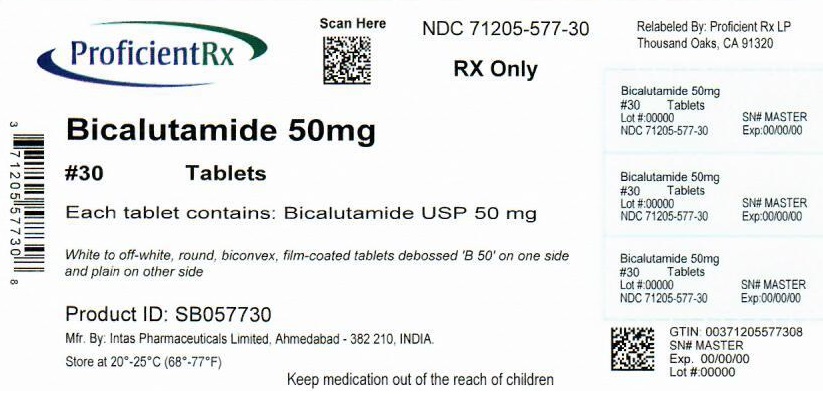
PRINCIPAL DISPLAY PANEL NDC 71205- 577 -30 Bicalutamide Tablets USP 50 mg Rx Only Pharmacist: Dispense with a patient package insert. 30 Tablets 71205-577-30
Medicare Part D spend CMS · PART D · 2026 (Q1)
About this NDC listing & data coverage
What data is (and isn’t) available for this NDC — tap to expand
| NDC identity (package / product / labeler codes) | ✓ Available |
| Labeler | ✓ Available |
| Product & package description | ✓ Available |
| Marketing category & status | ✓ Available |
| Active ingredient / dosage form / route | ✓ Available |
| FDA label (SPL via DailyMed) | ✓ Available |
| Package photos | ✓ Available |
| Inactive ingredients (structured) | ✓ Available |
| NADAC pharmacy acquisition price (CMS) | — Not published for this NDC CMS publishes NADAC only for NDCs reported in its retail-pharmacy survey. |
| Orange Book / therapeutic-equivalence data | ✓ Available |
| HCPCS J-code billing crosswalk | — Not published for this NDC Most self-administered / retail products have no J-code — that is normal. |
| Medicaid utilization (CMS SDUD) | — Not published for this NDC CMS reports utilization only for NDCs with Medicaid claims above its privacy threshold. |