
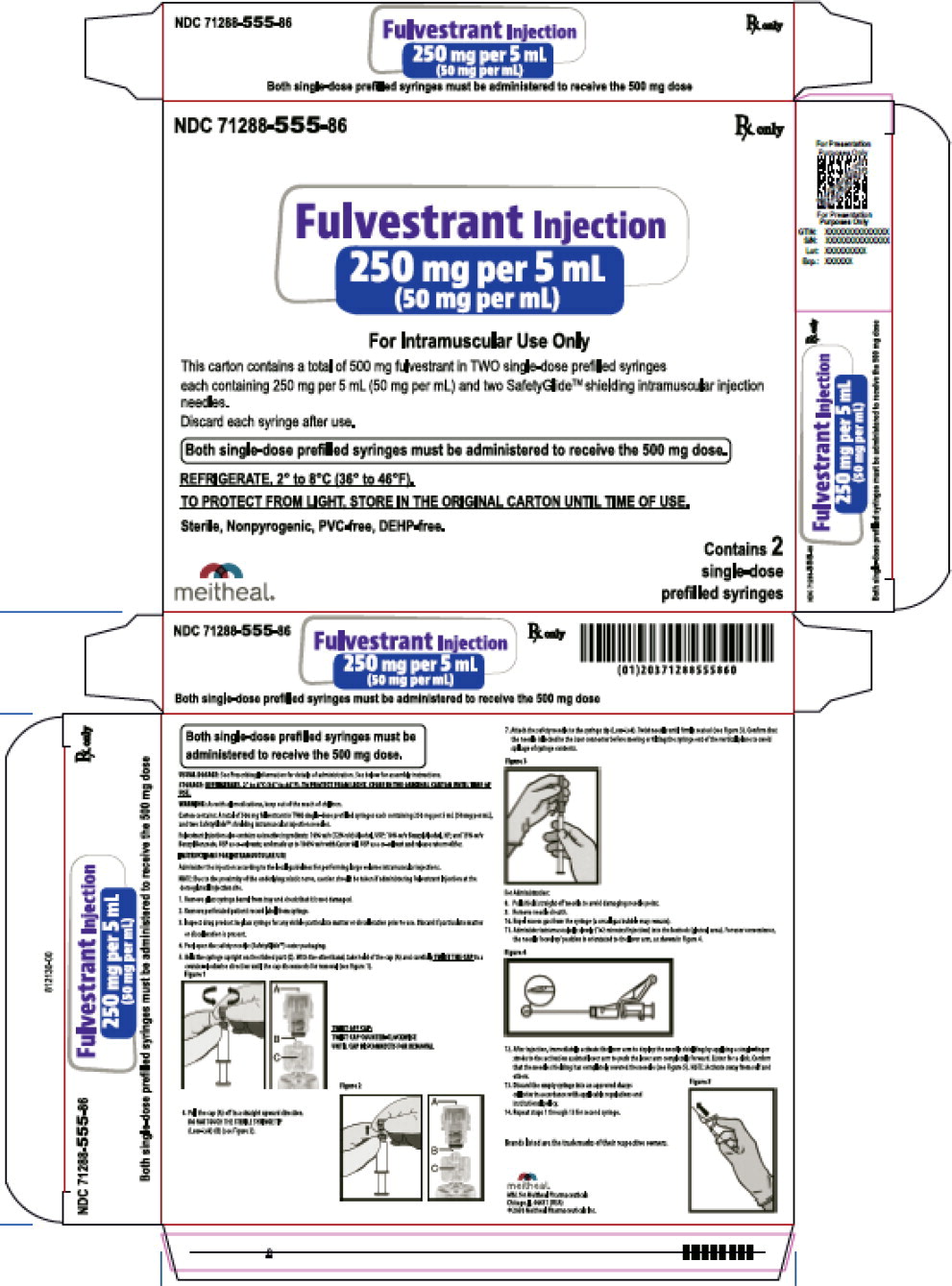
Fulvestrant 50 mg/mL Injection — NDC 71288-555-86 (Billing 71288-0555-86)
This is a package of Fulvestrant 50 mg/mL Injection from Meitheal Pharmaceuticals Inc, marketed since Nov 2019 and currently FDA-listed, this package's marketing is listed to end Jan 2027. It is this product's only package size.
Identity & classification
Regulatory identifiers FDA, NLM and CMS codes for this package
Drug-database identifiers Medi-Span GPI and First Databank GCN / HICL / AHFS classification
- GSN (GCN sequence number): 050307
- GCN: 17307
- GPI-14 (Medi-Span): 21403530002024
- HICL (First Databank): 023523
- AHFS class code: 10:00.00.00
- RxCUI (RxNorm): 727762
Where does this data come from?
- FDA openFDA NDC Directory · synced Oct 1, 2026
- FDA label on DailyMed · label index refreshed Oct 1, 2026
- RxNorm (NLM RxNav) · catalog refreshed Oct 1, 2026
- Medi-Span GPI (licensed)
- First Databank (licensed) · refreshed Oct 1, 2026
RxNorm drug class
This medicine belongs to the Estrogen Receptor Antagonist class.
Where does this data come from?
- RxClass (NLM) · catalog refreshed Oct 1, 2026
Clinical
Fulvestrant injection is used alone or in combination with another chemotherapy medication to treat a certain type of hormone receptor positive, advanced breast cancer (breast cancer that depends on hormones such as estrogen to grow) or breast cancer has spread to other parts of the body in women who have experienced menopause (change of life; end of monthly menstrual periods) and have not previously been treated with an anti-estrogen medication such as tamoxifen (Nolvadex). Fulvestrant injection is also used alone or in combination with certain other chemotherapy medications to treat a certai...
Read the full MedlinePlus article ↗- It treats HR-positive advanced or metastatic breast cancer, mainly in postmenopausal women. It can be used alone or with palbociclib, abemaciclib or ribociclib, depending on your s...
- A healthcare professional injects it into the muscle of your buttocks, slowly over 1 to 2 minutes. You get doses closely spaced in the first month, then about once a month. Your cl...
- The most common are pain where you were injected, nausea, bone or joint pain, headache, tiredness and hot flashes. Most are manageable, but tell your care team if they bother you....
- The label lists no known drug interactions, and common enzyme-affecting drugs did not change its levels. Still, tell us about everything you take, especially blood thinners, becaus...
Patient education
Supplement & herbal interactions
Some supplements/herbs that may interact with Fulvestrant — tap one for details:
Where does this data come from?
- MedlinePlus (NLM) · refreshed Oct 1, 2026
- FDA label on DailyMed · label index refreshed Oct 1, 2026
Ask a licensed pharmacist directly — free, answered by our team.
Pricing
A drug doesn't have one price. Each row is a different public payment system, and none is what you'd pay at the counter — that depends on your insurance. The ⓘ on each row explains what it measures.
| Price system | Per each | Per package |
|---|---|---|
| Retail pharmacies payNADAC · weekly | Not in the retail survey — common for institutional, discontinued, or low-volume packs. | |
| Medicaid paysCMS SDUD · 12 mo | $19.55 | $39.09 / 2 syringes |
| Medicare drug plans payPart D · quarterly | No Part D plan price is available for this NDC in our data. | |
| Medicare Part B allowsASP · J9395 | $5.277 / J9395 unit | — |
Where does this data come from?
- CMS NADAC weekly file
- CMS ASP pricing files · refreshed Sep 20, 2026
- CMS Medicaid State Drug Utilization Data · through Q1 2026
- CMS Part D plan pricing files · refreshed Sep 24, 2026
- VA National Acquisition Center price file
Billing & reimbursement
Where does this data come from?
- CMS ASP NDC-HCPCS crosswalk · refreshed Sep 22, 2026
- DMEPDAC NDC-HCPCS crosswalk
- openFDA NSDE billing units · refreshed Sep 7, 2026
Packaging — all sizes for this product
| Package NDC | Description | Marketing start | Marketing end | Status |
|---|---|---|---|---|
| 71288-0555-86 You're viewing this Main listing | 2 SYRINGE in 1 CARTON / 5 mL in 1 SYRINGE | 2019-11-21 | Jan 31, 2027 | Active |
Therapeutic equivalents
| Product | Labeler | Pack | NADAC/unit | TE | Status | Price vs. this |
|---|---|---|---|---|---|---|
| Fulvestrant 50 mg/mL 00143-9022-02 | Hikma | 2 syringes | — | AO | FDA listed | — |
| Faslodex 50 mg/mL 00310-0720-10 | AstraZeneca | 2 syringes | — | AO | FDA listed | — |
| Fulvestrant 50 mg/mL 00781-3532-12 | Sandoz | 2 syringes | — | AO | FDA listed | — |
| Fulvestrant 50 mg/mL 00781-9055-12 | Sandoz | 2 syringes | — | AO | FDA listed | — |
| Fulvestrant 50 mg/mL 16714-0070-02 | Northstar | 2 syringes | — | AO | FDA listed | — |
| Fulvestrant 250 mg/5mL 16729-0436-30 | Accord | 2 syringes | — | AO | FDA listed | — |
| fulvestrant 50 mg/mL 25021-0471-74 | Sagent | 2 syringes | — | AO | FDA listed | — |
| Fulvestrant 50 mg/mL 43598-0262-02 | Dr.Reddy's | 2 syringes | — | AO | Discontinued | — |
| Fulvestrant 50 mg/mL 55150-0394-02 | Eugia | 2 syringes | — | — | FDA listed | — |
| Fulvestrant 50 mg/mL 62332-0650-05 | Alembic | 2 syringes | — | AO | FDA listed | — |
| Fulvestrant 50 mg/mL 63323-0715-05 | Fresenius | 2 syringes | — | AO | FDA listed | — |
| Fulvestrant 250 mg/5mL 68001-0484-85 | BluePoint | 2 syringes | — | AO | FDA listed | — |
| Fulvestrant 250 mg/5mL 68001-0522-85 | BluePoint | 2 syringes | — | AO | FDA listed | — |
| Fulvestrant 50 mg/mL 68001-0626-85 | BluePoint | 2 syringes | — | AO | FDA listed | — |
| Fulvestrant 50 mg/mL 68462-0317-32 | GLENMARK | 2 syringes | — | AO | FDA listed | — |
| Fulvestrant 250 mg/5mL 70121-1463-02 | Amneal | 2 syringes | — | AO | FDA listed | — |
| Fulvestrant 50 mg/mL 70700-0284-98 | Xiromed, | 2 syringes | — | AO | FDA listed | — |
| Fulvestrant 50 mg/mL 70710-1688-08 | Zydus | 2 syringes | — | AO | FDA listed | — |
| Fulvestrant 50 mg/mL 70771-1626-08 | Zydus | 2 syringes | — | AO | FDA listed | — |
| Fulvestrant 50 mg/mL 70860-0211-74 | Athenex | 2 syringes | — | AO | FDA listed | — |
| Fulvestrant 50 mg/mLthis 71288-0555-86 | Meitheal | 2 syringes | — | AO | FDA listed | — |
| Fulvestrant 50 mg/mL 71731-6121-01 | Chia | 2 syringes | — | AO | FDA listed | — |
| Fulvestrant 50 mg/mL 83634-0203-74 | Avenacy, | 2 syringes | — | AO | FDA listed | — |
| Cligavyx 250 mg/5mL 83831-0159-02 | Avyxa | 2 syringes | — | — | FDA listed | — |
Where does this data come from?
- FDA openFDA NDC Directory · synced Oct 1, 2026
- FDA Orange Book · refreshed Oct 3, 2026
- CMS NADAC weekly file
Availability & generic status
This product is an FDA-approved generic. Other versions of the same drug are listed under Therapeutic equivalents, least expensive first.
Where does this data come from?
- FDA Orange Book · refreshed Oct 3, 2026
Inactive Ingredients / Excipients
Inactive ingredients, also called excipients, are components of the drug product other than the active ingredient. They may include fillers, dyes, coatings, preservatives, flavors, or other formulation ingredients.
💡 Tap an ingredient (hover on desktop) to see what it is and why it’s used.
-
UNII 3K9958V90M
A liquid solvent derived from fermentation or chemical synthesis. In medicines, alcohol dissolves active ingredients, helps preserve the product, and improves how the body absorbs certain drugs.
-
UNII LKG8494WBH
Benzyl alcohol is a clear liquid used as a preservative and solvent in medicines. It helps prevent bacterial and fungal growth and dissolves other ingredients to create uniform liquid formulations.
-
UNII N863NB338G
Benzyl benzoate is a liquid organic compound used as a solvent and preservative in medicines. It helps dissolve active ingredients and can extend shelf life by preventing microbial growth in liquid formulations.
-
UNII D5340Y2I9G
Castor oil is a natural plant-based oil used in medicines as a lubricant, laxative agent, and solvent. It helps medicine ingredients dissolve or flow smoothly and can aid bowel movement in formulations designed for that purpose.
4 inactive ingredients listed in the exact product block matched to this NDC.
Where does this data come from?
ingredient classCode="IACT" elements from the exact product block matched by this NDC. Label-section narrative from DailyMed / the openFDA label index is shown separately when available.- FDA label on DailyMed · label index refreshed Oct 1, 2026
- FDA openFDA NDC Directory · synced Oct 1, 2026
Inactive ingredient FAQ
Are inactive ingredients the same for every manufacturer?
Why might an inactive ingredient be missing?
Can inactive ingredients matter?
Manufacturer & labeler
Where does this data come from?
- FDA openFDA NDC Directory · synced Oct 1, 2026
- Drugs@FDA
Full prescribing information FDA SPL
🎯 Indications and Usage ▾
1 INDICATIONS AND USAGE Fulvestrant Injection is an estrogen receptor antagonist indicated for the treatment of: Hormone receptor (HR)-positive, human epidermal growth factor receptor 2 (HER2)-negative advanced breast cancer in postmenopausal women not previously treated with endocrine therapy. ( 1 ) HR-positive advanced breast cancer in postmenopausal women with disease progression following endocrine therapy. ( 1 ) HR-positive, HER2-negative advanced or metastatic breast cancer in postmenopausal women in combination with ribociclib, as initial endocrine based therapy or following disease progression on endocrine therapy.
( 1 ) HR-positive, HER2-negative advanced or metastatic breast cancer in combination with palbociclib or abemaciclib in women with disease progression after endocrine therapy. ( 1 ) Monotherapy Fulvestrant Injection is indicated for the treatment of: Hormone receptor (HR)-positive, human epidermal growth factor receptor 2 (HER2)-negative advanced breast cancer in postmenopausal women not previously treated with endocrine therapy, or HR-positive advanced breast cancer in postmenopausal women with disease progression following endocrine therapy.
Combination Therapy Fulvestrant Injection is indicated for the treatment of: HR-positive, HER2-negative advanced or metastatic breast cancer in postmenopausal women in combination with ribociclib as initial endocrine based therapy or following disease progression on endocrine therapy. HR-positive, HER2-negative advanced or metastatic breast cancer in combination with palbociclib or abemaciclib in women with disease progression after endocrine therapy.
⏱️ Dosage and Administration ▾
2 DOSAGE AND ADMINISTRATION Fulvestrant Injection 500 mg should be administered intramuscularly into the buttocks (gluteal area) slowly (1 - 2 minutes per injection) as two 5 mL injections, one in each buttock, on Days 1, 15, 29, and once monthly thereafter. ( 2.1 , 14 ) A dose of 250 mg is recommended in patients with moderate hepatic impairment to be administered intramuscularly into the buttock (gluteal area) slowly (1 - 2 minutes) as one 5 mL injection on Days 1, 15, 29, and once monthly thereafter. ( 2.2 , 5.2 , 8.6 )
2.1Recommended Dose Monotherapy The recommended dose of Fulvestrant Injection is 500 mg to be administered intramuscularly into the buttocks (gluteal area) slowly (1 - 2 minutes per injection) as two 5 mL injections, one in each buttock, on Days 1, 15, 29, and once monthly thereafter [see Clinical Studies ( 14 )]. Combination Therapy When Fulvestrant Injection is used in combination with palbociclib, abemaciclib, or ribociclib, the recommended dose of Fulvestrant Injection is 500 mg to be administered intramuscularly into the buttocks (gluteal area) slowly (1 - 2 minutes per injection) as two 5 mL injections, one in each buttock, on Days 1, 15, 29, and once monthly thereafter.
When Fulvestrant Injection is used in combination with palbociclib, the recommended dose of palbociclib is a 125 mg capsule taken orally once daily for 21 consecutive days followed by 7 days off treatment to comprise a complete cycle of 28 days. Palbociclib should be taken with food. Refer to the Full Prescribing Information for palbociclib.
When Fulvestrant Injection is used in combination with abemaciclib, the recommended dose of abemaciclib is 150 mg orally, twice daily. Abemaciclib may be taken with or without food. Refer to the Full Prescribing Information for abemaciclib.
When Fulvestrant Injection is used in combination with ribociclib, the recommended dose of ribociclib is 600 mg taken orally, once daily for 21 consecutive days followed by 7 days off treatment resulting in a complete cycle of 28 days. Ribociclib can be taken with or without food. Refer to the Full Prescribing Information for ribociclib.
Pre/perimenopausal women treated with the combination of Fulvestrant Injection plus palbociclib, abemaciclib, or ribociclib should be treated with luteinizing hormone-releasing hormone (LHRH) agonists according to current clinical practice standards [see Clinical Studies ( 14 )].
2.2Dose Modification Monotherapy Hepatic Impairment A dose of 250 mg is recommended for patients with moderate hepatic impairment (Child-Pugh class B) to be administered intramuscularly into the buttock (gluteal area) slowly (1 - 2 minutes) as one 5 mL injection on Days 1, 15, 29 and once monthly thereafter. Fulvestrant Injection has not been evaluated in patients with severe hepatic impairment (Child-Pugh class C) [see Warnings and Precautions ( 5.2 ) and Use in Specific Populations ( 8.6 )]. Combination Therapy When Fulvestrant Injection is used in combination with palbociclib, abemaciclib, or ribociclib, refer to monotherapy dose modification instructions for Fulvestrant Injection.
Refer to the Full Prescribing Information of co-administered palbociclib, abemaciclib, or ribociclib for dose modification guidelines in the event of toxicities, for use with concomitant medications, and other relevant safety information.
2.3Administration Technique Administer the injection according to the local guidelines for performing large volume intramuscular injections. NOTE: Due to the proximity of the underlying sciatic nerve, caution should be taken if administering Fulvestrant Injection at the dorsogluteal injection site [see Warnings and Precautions ( 5.3 ) and Adverse Reactions ( 6.1 )] . The proper method of administration of Fulvestrant Injection for intramuscular use is described in the following instructions.
For each single-dose prefilled syringe: Remove glass syringe barrel from tray and check that it is not damaged. Remove perforated patient record l… [Excerpted — this section continues on DailyMed.]
💊 Dosage Forms and Strengths ▾
3 DOSAGE FORMS AND STRENGTHS Fulvestrant Injection, an injection for intramuscular administration, is supplied as 5-mL single-dose prefilled syringes containing 250 mg per 5 mL fulvestrant. Fulvestrant Injection, an injection for intramuscular administration, is supplied as 250 mg per 5 mL fulvestrant. ( 3 )
⛔ Contraindications ▾
4 CONTRAINDICATIONS Fulvestrant Injection is contraindicated in patients with a known hypersensitivity to the drug or to any of its components. Hypersensitivity reactions, including urticaria and angioedema, have been reported in association with Fulvestrant Injection [see Adverse Reactions ( 6.2 )]. Hypersensitivity. ( 4 )
⚠️ Warnings and Cautions ▾
5 WARNINGS AND PRECAUTIONS Risk of Bleeding: Use with caution in patients with bleeding diatheses, thrombocytopenia, or anticoagulant use. ( 5.1 ) Increased Exposure in Patients with Hepatic Impairment: Use a 250 mg dose for patients with moderate hepatic impairment. ( 2.2 , 5.2 , 8.6 ) Injection Site Reaction: Use caution while administering Fulvestrant Injection at the dorsogluteal injection site due to the proximity of the underlying sciatic nerve.
( 5.3 ) Embryo-Fetal Toxicity: Can cause fetal harm. Advise females of reproductive potential of the potential risk to a fetus and to use effective contraception. ( 5.4 , 8.1 , 8.3 ) Immunoassay Measurement of Serum Estradiol: Fulvestrant Injection can interfere with estradiol measurement by immunoassay, resulting in falsely elevated estradiol levels.
( 5.5 )
5.1Risk of Bleeding Because Fulvestrant Injection is administered intramuscularly, it should be used with caution in patients with bleeding diatheses, thrombocytopenia, or anticoagulant use.
5.2Increased Exposure in Patients with Hepatic Impairment The safety and pharmacokinetics of Fulvestrant Injection were evaluated in a study in seven subjects with moderate hepatic impairment (Child-Pugh class B) and seven subjects with normal hepatic function. Exposure was increased in patients with moderate hepatic impairment, therefore a dose of 250 mg is recommended [see Dosage and Administration ( 2.2 )]. Fulvestrant Injection has not been studied in patients with severe hepatic impairment (Child-Pugh class C) [see Use in Specific Populations ( 8.6 )].
5.3Injection Site Reaction Injection site related events including sciatica, neuralgia, neuropathic pain, and peripheral neuropathy have been reported with Fulvestrant Injection. Caution should be taken while administering Fulvestrant Injection at the dorsogluteal injection site due to the proximity of the underlying sciatic nerve [see Dosage and Administration ( 2.3 ) and Adverse Reactions ( 6.1 )] .
5.4Embryo-Fetal Toxicity Based on findings from animal studies and its mechanism of action, Fulvestrant Injection can cause fetal harm when administered to a pregnant woman. In animal reproduction studies, administration of fulvestrant to pregnant rats and rabbits during organogenesis resulted in embryo-fetal toxicity at daily doses that are significantly less than the maximum recommended human dose. Advise pregnant women of the potential risk to a fetus.
Advise females of reproductive potential to use effective contraception during treatment with Fulvestrant Injection and for one year after the last dose [see Use in Specific Populations ( 8.1 ), ( 8.3 ) and Clinical Pharmacology ( 12.1 )].
5.5Immunoassay Measurement of Serum Estradiol Due to structural similarity of fulvestrant and estradiol, Fulvestrant Injection can interfere with estradiol measurement by immunoassay, resulting in falsely elevated estradiol levels.
🤒 Adverse Reactions ▾
6 ADVERSE REACTIONS The following adverse reactions are discussed in more detail in other sections of the labeling: Risk of Bleeding [see Warnings and Precautions ( 5.1 )] Increased Exposure in Patients with Hepatic Impairment [see Warnings and Precautions ( 5.2 )] Injection Site Reaction [see Warnings and Precautions ( 5.3 )] Embryo-Fetal Toxicity [see Warnings and Precautions ( 5.4 )] The most common adverse reactions occurring in ≥5% of patients receiving Fulvestrant Injection 500 mg were: injection site pain, nausea, bone pain, arthralgia, headache, back pain, fatigue, pain in extremity, hot flash, vomiting, anorexia, asthenia, musculoskeletal pain, cough, dyspnea, and constipation.
( 6.1 ) Increased hepatic enzymes (ALT, AST, ALP) occurred in >15% of Fulvestrant Injection patients and were not dose-dependent. ( 6.1 ) To report SUSPECTED ADVERSE REACTIONS, contact Meitheal Pharmaceuticals, Inc. at 1-844-824-8426 or FDA at 1-800-FDA-1088 or www.fda.gov/medwatch .
6.1Clinical Trials Experience Because clinical trials are conducted under widely varying conditions, the adverse reaction rates observed cannot be directly compared to rates in other trials and may not reflect the rates observed in clinical practice. Monotherapy Comparison of Fulvestrant Injection 500 mg and Fulvestrant Injection 250 mg (CONFIRM) The following adverse reactions (ARs) were calculated based on the safety analysis of CONFIRM comparing the administration of Fulvestrant Injection 500 mg intramuscularly once a month with Fulvestrant Injection 250 mg intramuscularly once a month.
The most frequently reported adverse reactions in the Fulvestrant Injection 500 mg group were injection site pain (11.6% of patients), nausea (9.7% of patients), and bone pain (9.4% of patients); the most frequently reported adverse reactions in the Fulvestrant Injection 250 mg group were nausea (13.6% of patients), back pain (10.7% of patients), and injection site pain (9.1% of patients). Table 1 lists adverse reactions reported with an incidence of 5% or greater, regardless of assessed causality, from CONFIRM. Table 1: Adverse Reactions in CONFIRM (≥5% in Either Treatment Group) 1 Including more severe injection site related sciatica, neuralgia, neuropathic pain, and peripheral neuropathy.
Adverse Reactions Fulvestrant Injection 500 mg N=361 % Fulvestrant Injection 250 mg N=374 % Body as a Whole Injection Site Pain 1 12 9 Headache 8 7 Back Pain 8 11 Fatigue 8 6 Pain in Extremity 7 7 Asthenia 6 6 Vascular System Hot Flash 7 6 Digestive System Nausea 10 14 Vomiting 6 6 Anorexia 6 4 Constipation 5 4 Musculoskeletal System Bone Pain 9 8 Arthralgia 8 8 Musculoskeletal Pain 6 3 Respiratory System Cough 5 5 Dyspnea 4 5 In the pooled safety population (N=1127) from clinical trials comparing Fulvestrant Injection 500 mg to Fulvestrant Injection 250 mg, post-baseline increases of ≥1 CTC grade in either AST, ALT, or alkaline phosphatase were observed in >15% of patients receiving Fulvestrant Injection.
Grade 3-4 increases were observed in 1-2% of patients. The incidence and severity of increased hepatic enzymes (ALT, AST, ALP) did not differ between the 250 mg and the 500 mg Fulvestrant Injection arms. Comparison of Fulvestrant Injection 500 mg and Anastrozole 1 mg (FALCON) The safety of Fulvestrant Injection 500 mg versus anastrozole 1 mg was evaluated in FALCON.
The data described below reflect exposure to Fulvestrant Injection in 228 out of 460 patients with HR-positive advanced breast cancer in postmenopausal women not previously treated with endocrine therapy who received at least one (1) dose of treatment in FALCON. Permanent discontinuation associated with an adverse reaction occurred in 4 of 228 (1.8%) patients receiving Fulvestrant Injection, and in 3 of 232 (1.3%) patients receiving anastrozole. Adverse reactions leading to discontinuation for those patients receiving Fulvestrant Injection included drug hypersensitivity (0.9%), injection site hypersensitivity (0.4%), and elevat… [Excerpted — this section continues on DailyMed.]
🔄 Drug Interactions ▾
7 DRUG INTERACTIONS There are no known drug-drug interactions. Although, fulvestrant is metabolized by CYP 3A4 in vitro , drug interactions studies with ketoconazole or rifampin did not alter fulvestrant pharmacokinetics. Dose adjustment is not needed in patients co-prescribed CYP 3A4 inhibitors or inducers [see Clinical Pharmacology ( 12.3 )] . There are no known drug-drug interactions. ( 7 )
👥 Use in Specific Populations ▾
8 USE IN SPECIFIC POPULATIONS Lactation: Advise not to breastfeed. ( 8.2 )
8.1Pregnancy Risk Summary Based on findings from animal studies and its mechanism of action, Fulvestrant Injection can cause fetal harm when administered to a pregnant woman [see Clinical Pharmacology ( 12.1 )]. There are no available data in pregnant women to inform the drug-associated risk. In animal reproduction studies, administration of fulvestrant to pregnant rats and rabbits during organogenesis caused embryo-fetal toxicity, including skeletal malformations and fetal loss, at daily doses that were 6% and 30% of the maximum recommended human dose based on mg/m 2 , respectively [see Data ] .
Advise pregnant women of the potential risk to a fetus. The estimated background risk of major birth defects and miscarriage for the indicated population is unknown. In the U.S. general population, the estimated background risk of major birth defects and miscarriage in clinically recognized pregnancies is 2-4% and 15-20%, respectively.
Data Animal Data Administration of fulvestrant to rats prior to and up to implantation caused embryonic loss at daily doses that were 0.6% of the daily maximum recommended human dose based on mg/m 2 . When fulvestrant was administered to pregnant rats during the period of organogenesis, intramuscular doses ≥0.1 mg/kg/day (6% of the human recommended dose based on mg/m 2 ) caused effects on embryo-fetal development consistent with its antiestrogenic activity. Fulvestrant caused an increased incidence of fetal abnormalities in rats (tarsal flexure of the hind paw at 2 mg/kg/day; equivalent to the human dose based on mg/m 2 ) and non-ossification of the odontoid and ventral tubercle of the first cervical vertebra at doses ≥0.1 mg/kg/day.
Fulvestrant administered at 2 mg/kg/day caused fetal loss. When administered to pregnant rabbits during the period of organogenesis, fulvestrant caused pregnancy loss at an intramuscular dose of 1 mg/kg/day (equivalent to the human dose based on mg/m 2 ). Further, at 0.25 mg/kg/day (30% the human dose based on mg/m 2 ), fulvestrant caused increases in placental weight and post-implantation loss in rabbits.
Fulvestrant was associated with an increased incidence of fetal variations in rabbits (backwards displacement of the pelvic girdle, and 27 pre-sacral vertebrae at 0.25 mg/kg/day; 30% the human dose based on mg/m 2 ) when administered during the period of organogenesis.
8.2Lactation Risk Summary There is no information regarding the presence of fulvestrant in human milk, nor of its effects on milk production or breastfed infant. Fulvestrant can be detected in rat milk [see Data ] . Because of the potential for serious adverse reactions in breastfed infants from Fulvestrant Injection, advise a lactating woman not to breastfeed during treatment with Fulvestrant Injection and for one year after the final dose.
Data Levels of fulvestrant were approximately 12-fold higher in milk than in plasma after exposure of lactating rats to a dose of 2 mg/kg. Drug exposure in rodent pups from fulvestrant-treated lactating dams was estimated as 10% of the administered dose. In a study in rats of fulvestrant at 10 mg/kg given twice or 15 mg/kg given once (less than the recommended human dose based on mg/m 2 ) during lactation, offspring survival was slightly reduced.
8.3Females and Males of Reproductive Potential Pregnancy Testing Pregnancy testing is recommended for females of reproductive potential within seven days prior to initiating Fulvestrant Injection. Contraception Females Fulvestrant Injection can cause fetal harm when administered to a pregnant woman [see Use in Specific Populations ( 8.1 )] . Advise females of reproductive potential to use effective contraception during treatment and for one year after the last dose.
Infertility Based on animal studies, Fulvestrant Injection may impair fertility in females and males of reproductive potential. The effects of fulvestrant on fertility were reversible in… [Excerpted — this section continues on DailyMed.]
🤰 Pregnancy ▾
8.1Pregnancy Risk Summary Based on findings from animal studies and its mechanism of action, Fulvestrant Injection can cause fetal harm when administered to a pregnant woman [see Clinical Pharmacology ( 12.1 )]. There are no available data in pregnant women to inform the drug-associated risk. In animal reproduction studies, administration of fulvestrant to pregnant rats and rabbits during organogenesis caused embryo-fetal toxicity, including skeletal malformations and fetal loss, at daily doses that were 6% and 30% of the maximum recommended human dose based on mg/m 2 , respectively [see Data ] .
Advise pregnant women of the potential risk to a fetus. The estimated background risk of major birth defects and miscarriage for the indicated population is unknown. In the U.S. general population, the estimated background risk of major birth defects and miscarriage in clinically recognized pregnancies is 2-4% and 15-20%, respectively.
Data Animal Data Administration of fulvestrant to rats prior to and up to implantation caused embryonic loss at daily doses that were 0.6% of the daily maximum recommended human dose based on mg/m 2 . When fulvestrant was administered to pregnant rats during the period of organogenesis, intramuscular doses ≥0.1 mg/kg/day (6% of the human recommended dose based on mg/m 2 ) caused effects on embryo-fetal development consistent with its antiestrogenic activity. Fulvestrant caused an increased incidence of fetal abnormalities in rats (tarsal flexure of the hind paw at 2 mg/kg/day; equivalent to the human dose based on mg/m 2 ) and non-ossification of the odontoid and ventral tubercle of the first cervical vertebra at doses ≥0.1 mg/kg/day.
Fulvestrant administered at 2 mg/kg/day caused fetal loss. When administered to pregnant rabbits during the period of organogenesis, fulvestrant caused pregnancy loss at an intramuscular dose of 1 mg/kg/day (equivalent to the human dose based on mg/m 2 ). Further, at 0.25 mg/kg/day (30% the human dose based on mg/m 2 ), fulvestrant caused increases in placental weight and post-implantation loss in rabbits.
Fulvestrant was associated with an increased incidence of fetal variations in rabbits (backwards displacement of the pelvic girdle, and 27 pre-sacral vertebrae at 0.25 mg/kg/day; 30% the human dose based on mg/m 2 ) when administered during the period of organogenesis.
🧒 Pediatric Use ▾
8.4Pediatric Use Safety and effectiveness in pediatric patients have not been established. A multi-center, single-arm, open-label, study of fulvestrant was conducted in 30 girls with McCune-Albright Syndrome (MAS) associated with Progressive Precocious Puberty (PPP). The median age at informed consent was 6 years old (range: 1 to 8).
The first 10 patients initially received fulvestrant 2 mg/kg. Based on PK data from the first 6 patients, all 10 patients receiving 2 mg/kg were escalated to a dose of 4 mg/kg and all other patients received 4 mg/kg from study entry. Baseline measurements for vaginal bleeding days, bone age, growth velocity, and Tanner staging for at least 6 months prior to study entry were provided retrospectively by the parent, guardian or local consultant.
All measurements during the study period were collected prospectively. Patients' baseline characteristics included the following: a mean ± SD chronological age of 5.9 ± 1.8 years; a mean rate of bone age advancement (change in bone age in years divided by change in chronological age in years) of 2.0 ± 1.03; and a mean growth velocity z-score of 2.4 ± 3.26. Twenty-nine of 30 patients completed the 12-month study period.
The following results were observed: 35% (95% CI: 16%, 57%) of the 23 patients with baseline vaginal bleeding experienced a complete cessation of vaginal bleeding on-treatment (month 0 to 12); a reduction in the rate of bone age advancement during the 12-month study period compared to baseline (mean change=-0.9 [95% CI: -1.4, -0.4]); and a reduction in mean growth velocity Z-score on-treatment compared to baseline (mean change=-1.1 [95% CI: -2.7, 0.4]). There were no clinically meaningful changes in median Tanner stage (breast or pubic), mean uterine volume, or mean ovarian volume, or predicted adult height (PAH) on-treatment compared to baseline.
The effect of Fulvestrant Injection on bone mineral density in children has not been studied and is not known. Eight patients (27%) experienced adverse reactions that were considered possibly related to Fulvestrant Injection. These included injection site reactions (inflammation, pain, hematoma, pruritus, rash), abdominal pain, contusion, tachycardia, hot flash, extremity pain, and vomiting.
Nine (30%) patients reported an SAE, none of which were considered related to Fulvestrant Injection. No patients discontinued study treatment due to an AE and no patients died. Pharmacokinetics The pharmacokinetics of fulvestrant was characterized using a population pharmacokinetic analysis with sparse samples per patient obtained from 30 female pediatric patients aged 1 to 8 years with PPP associated with MAS.
Pharmacokinetic data from 294 postmenopausal women with breast cancer who received 125 or 250 mg monthly dosing regimen were also included in the analysis. In these pediatric patients receiving 4 mg/kg monthly intramuscular dose of fulvestrant, the geometric mean (SD) CL/F was 444 (165) mL/min which was 32% lower than adults. The geometric mean (SD) steady state trough concentration (C min,ss ) and AUC ss was 4.19 (0.87) ng/mL and 3680 (1020) ng*hr/mL, respectively.
🧓 Geriatric Use ▾
8.5Geriatric Use For Fulvestrant Injection 250 mg, when tumor response was considered by age, objective responses were seen in 22% and 24% of patients under 65 years of age and in 11% and 16% of patients 65 years of age and older, who were treated with Fulvestrant Injection in Study 0021 and Study 0020, respectively.
🆘 Overdosage ▾
10 OVERDOSAGE Human experience of overdose with Fulvestrant Injection is limited. There are isolated reports of overdose with Fulvestrant Injection in humans. No adverse reactions were seen in healthy male and female volunteers who received intravenous fulvestrant, which resulted in peak plasma concentrations at the end of the infusion, that were approximately 10 to 15 times those seen after intramuscular injection.
The potential toxicity of fulvestrant at these or higher concentrations in cancer patients who may have additional comorbidities is unknown. There is no specific treatment in the event of fulvestrant overdose, and symptoms of overdose are not established. In the event of an overdose, healthcare practitioners should follow general supportive measures and should treat symptomatically.
🧬 Clinical Pharmacology ▾
12 CLINICAL PHARMACOLOGY
12.1Mechanism of Action Many breast cancers have estrogen receptors (ER) and the growth of these tumors can be stimulated by estrogen. Fulvestrant is an estrogen receptor antagonist that binds to the estrogen receptor in a competitive manner with affinity comparable to that of estradiol and downregulates the ER protein in human breast cancer cells. In vitro studies demonstrated that fulvestrant is a reversible inhibitor of the growth of tamoxifen-resistant, as well as estrogen-sensitive human breast cancer (MCF-7) cell lines.
In in vivo tumor studies, fulvestrant delayed the establishment of tumors from xenografts of human breast cancer MCF-7 cells in nude mice. Fulvestrant inhibited the growth of established MCF-7 xenografts and of tamoxifen-resistant breast tumor xenografts. Fulvestrant showed no agonist-type effects in in vivo uterotrophic assays in immature or ovariectomized mice and rats.
In in vivo studies in immature rats and ovariectomized monkeys, fulvestrant blocked the uterotrophic action of estradiol. In postmenopausal women, the absence of changes in plasma concentrations of FSH and LH in response to fulvestrant treatment (250 mg monthly) suggests no peripheral steroidal effects.
12.2Pharmacodynamics In a clinical study in postmenopausal women with primary breast cancer treated with single doses of Fulvestrant Injection 15-22 days prior to surgery, there was evidence of increasing down-regulation of ER with increasing dose. This was associated with a dose-related decrease in the expression of the progesterone receptor, an estrogen-regulated protein. These effects on the ER pathway were also associated with a decrease in Ki67 labeling index, a marker of cell proliferation.
12.3Pharmacokinetics Absorption The single dose and multiple dose PK parameters for the 500 mg dosing regimen with an additional dose (AD) at Day 15 are reported in Table 11 . The additional dose of Fulvestrant Injection given two weeks after the initial dose allows for steady state concentrations to be reached within the first month of dosing. Table 11: Summary of Fulvestrant Pharmacokinetic Parameters [gMean (CV%)] in Postmenopausal Advanced Breast Cancer Patients after Intramuscular Administration 500 mg + AD Dosing Regimen 1 Additional 500 mg dose given on Day 15 2 Month 3 C max (ng/mL) C min (ng/mL) AUC (ng.hr/mL) 500 mg + AD 1 Single dose 25.1 (35.3) 16.3 (25.9) 11400 (33.4) Multiple dose steady state 2 28.0 (27.9) 12.2 (21.7) 13100 (23.4) Distribution The apparent volume of distribution at steady state is approximately 3 to 5 L/kg.
This suggests that distribution is largely extravascular. Fulvestrant is highly (99%) bound to plasma proteins; VLDL, LDL and HDL lipoprotein fractions appear to be the major binding components. The role of sex hormone-binding globulin, if any, could not be determined.
Metabolism Biotransformation and disposition of fulvestrant in humans have been determined following intramuscular and intravenous administration of 14 C-labeled fulvestrant. Metabolism of fulvestrant appears to involve combinations of a number of possible biotransformation pathways analogous to those of endogenous steroids, including oxidation, aromatic hydroxylation, conjugation with glucuronic acid and/or sulphate at the 2, 3 and 17 positions of the steroid nucleus, and oxidation of the side chain sulphoxide. Identified metabolites are either less active or exhibit similar activity to fulvestrant in antiestrogen models.
Studies using human liver preparations and recombinant human enzymes indicate that cytochrome P-450 3A4 (CYP 3A4) is the only P-450 isoenzyme involved in the oxidation of fulvestrant; however, the relative contribution of P-450 and non-P-450 routes in vivo is unknown. Excretion Fulvestrant was rapidly cleared by the hepatobiliary route with excretion primarily via the feces (approximately 90%). Renal elimination was negligible (less than 1%).
After an intramuscular injection of 250 mg, the clearance (… [Excerpted — this section continues on DailyMed.]
🧬 Mechanism of Action ▾
12.1Mechanism of Action Many breast cancers have estrogen receptors (ER) and the growth of these tumors can be stimulated by estrogen. Fulvestrant is an estrogen receptor antagonist that binds to the estrogen receptor in a competitive manner with affinity comparable to that of estradiol and downregulates the ER protein in human breast cancer cells. In vitro studies demonstrated that fulvestrant is a reversible inhibitor of the growth of tamoxifen-resistant, as well as estrogen-sensitive human breast cancer (MCF-7) cell lines.
In in vivo tumor studies, fulvestrant delayed the establishment of tumors from xenografts of human breast cancer MCF-7 cells in nude mice. Fulvestrant inhibited the growth of established MCF-7 xenografts and of tamoxifen-resistant breast tumor xenografts. Fulvestrant showed no agonist-type effects in in vivo uterotrophic assays in immature or ovariectomized mice and rats.
In in vivo studies in immature rats and ovariectomized monkeys, fulvestrant blocked the uterotrophic action of estradiol. In postmenopausal women, the absence of changes in plasma concentrations of FSH and LH in response to fulvestrant treatment (250 mg monthly) suggests no peripheral steroidal effects.
📦 How Supplied / Storage and Handling ▾
16 HOW SUPPLIED/STORAGE AND HANDLING Fulvestrant Injection is supplied as two 5 mL clear neutral glass (Type 1) barrels, each containing a sterile, clear, colorless to yellow viscous liquid for intramuscular injection and fitted with a plastic rigid tip cap. It is supplied as follows: NDC Fulvestrant Injection, USP (50 mg per mL) Package Factor 71288- 555 -86 250 mg per 5 mL Single-Dose Prefilled Syringe 2 syringes per carton The 2 x 5 mL single-dose prefilled syringes are presented in a tray with polystyrene plunger rod and 21G x 1-1/2 inch safety needles (SafetyGlide ™ ) for connection to the barrel.
Discard each syringe after use. If a patient dose requires only one syringe, unused syringe should be stored as directed below. Storage REFRIGERATE, 2° to 8°C (36° to 46°F).
TO PROTECT FROM LIGHT, STORE IN THE ORIGINAL CARTON UNTIL TIME OF USE. Sterile, Nonpyrogenic, PVC-free, DEHP-free.
📦 Storage and Handling ▾
Storage REFRIGERATE, 2° to 8°C (36° to 46°F). TO PROTECT FROM LIGHT, STORE IN THE ORIGINAL CARTON UNTIL TIME OF USE. Sterile, Nonpyrogenic, PVC-free, DEHP-free.
📋 Description ▾
11 DESCRIPTION Fulvestrant Injection for intramuscular administration is an estrogen receptor antagonist. The chemical name is 7-alpha-[9-(4,4,5,5,5-penta fluoropentylsulphinyl) nonyl]estra-1,3,5-(10)-triene-3,17-beta-diol. The molecular formula is C 32 H 47 F 5 O 3 S and its structural formula is: Fulvestrant is a white powder with a molecular weight of 606.77.
The solution for injection is a clear, colorless to yellow, viscous liquid. Each injection contains as inactive ingredients: 10% w/v (12% v/v) Alcohol, USP, 10% w/v Benzyl Alcohol, NF, and 15% w/v Benzyl Benzoate, USP, as co-solvents, and made up to 100% w/v with Castor Oil, USP as a co-solvent and release rate modifier. Structural Formula
💬 Information for Patients ▾
17 PATIENT COUNSELING INFORMATION Advise the patient to read the FDA-approved patient labeling (Patient Information). Monotherapy Risk of Bleeding Because Fulvestrant Injection is administered intramuscularly, it should be used with caution in patients with bleeding disorders, decreased platelet count, or in patients receiving anticoagulants (for example, warfarin) [see Warnings and Precautions ( 5.1 )] . Embryo-Fetal Toxicity Advise females of reproductive potential of the potential risk to a fetus and to use effective contraception during treatment with Fulvestrant Injection and for one year after the last dose.
Advise females to inform their healthcare provider of a known or suspected pregnancy [see Warnings and Precautions ( 5.4 ) and Use in Specific Populations ( 8.1 ), ( 8.3 )] . Lactation Advise women not to breastfeed during treatment with Fulvestrant Injection and for one year after the last dose [see Use in Specific Populations ( 8.2 )] . Combination Therapy When Fulvestrant Injection is used in combination with palbociclib, abemaciclib, or ribociclib, refer to the respective Full Prescribing Information for Patient Counseling Information.
Brands listed are the trademarks of their respective owners. Mfd. for Meitheal Pharmaceuticals Chicago, IL 60631 (USA) ©2021 Meitheal Pharmaceuticals Inc. Mfd. by Nanjing King-Friend Biochemical Pharmaceutical Co., Ltd.
Nanjing, China 210061 Revised: February 2021 810038-02 Meitheal Logo
🧬 Pharmacokinetics ▾
12.3Pharmacokinetics Absorption The single dose and multiple dose PK parameters for the 500 mg dosing regimen with an additional dose (AD) at Day 15 are reported in Table 11 . The additional dose of Fulvestrant Injection given two weeks after the initial dose allows for steady state concentrations to be reached within the first month of dosing. Table 11: Summary of Fulvestrant Pharmacokinetic Parameters [gMean (CV%)] in Postmenopausal Advanced Breast Cancer Patients after Intramuscular Administration 500 mg + AD Dosing Regimen 1 Additional 500 mg dose given on Day 15 2 Month 3 C max (ng/mL) C min (ng/mL) AUC (ng.hr/mL) 500 mg + AD 1 Single dose 25.1 (35.3) 16.3 (25.9) 11400 (33.4) Multiple dose steady state 2 28.0 (27.9) 12.2 (21.7) 13100 (23.4) Distribution The apparent volume of distribution at steady state is approximately 3 to 5 L/kg.
This suggests that distribution is largely extravascular. Fulvestrant is highly (99%) bound to plasma proteins; VLDL, LDL and HDL lipoprotein fractions appear to be the major binding components. The role of sex hormone-binding globulin, if any, could not be determined.
Metabolism Biotransformation and disposition of fulvestrant in humans have been determined following intramuscular and intravenous administration of 14 C-labeled fulvestrant. Metabolism of fulvestrant appears to involve combinations of a number of possible biotransformation pathways analogous to those of endogenous steroids, including oxidation, aromatic hydroxylation, conjugation with glucuronic acid and/or sulphate at the 2, 3 and 17 positions of the steroid nucleus, and oxidation of the side chain sulphoxide. Identified metabolites are either less active or exhibit similar activity to fulvestrant in antiestrogen models.
Studies using human liver preparations and recombinant human enzymes indicate that cytochrome P-450 3A4 (CYP 3A4) is the only P-450 isoenzyme involved in the oxidation of fulvestrant; however, the relative contribution of P-450 and non-P-450 routes in vivo is unknown. Excretion Fulvestrant was rapidly cleared by the hepatobiliary route with excretion primarily via the feces (approximately 90%). Renal elimination was negligible (less than 1%).
After an intramuscular injection of 250 mg, the clearance (Mean ± SD) was 690 ± 226 mL/min with an apparent half-life about 40 days. Special Populations Geriatric In patients with breast cancer, there was no difference in fulvestrant pharmacokinetic profile related to age (range 33 to 89 years). Gender Following administration of a single intravenous dose, there were no pharmacokinetic differences between men and women or between premenopausal and postmenopausal women.
Similarly, there were no differences between men and postmenopausal women after intramuscular administration. Race In the advanced breast cancer treatment trials, the potential for pharmacokinetic differences due to race have been evaluated in 294 women including 87.4% Caucasian, 7.8% Black, and 4.4% Hispanic. No differences in fulvestrant plasma pharmacokinetics were observed among these groups.
In a separate trial, pharmacokinetic data from postmenopausal ethnic Japanese women were similar to those obtained in non-Japanese patients. Drug-Drug Interactions There are no known drug-drug interactions. Fulvestrant does not significantly inhibit any of the major CYP isoenzymes, including CYP 1A2, 2C9, 2C19, 2D6, and 3A4 in vitro , and studies of co-administration of fulvestrant with midazolam indicate that therapeutic doses of fulvestrant have no inhibitory effects on CYP 3A4 or alter blood levels of drug metabolized by that enzyme.
Although fulvestrant is partly metabolized by CYP 3A4, a clinical study with rifampin, an inducer of CYP 3A4, showed no effect on the pharmacokinetics of fulvestrant. Also results from a healthy volunteer study with ketoconazole, a potent inhibitor of CYP 3A4, indicated that ketoconazole had no effect on the pharmacokinetics of fulvestrant and dosage adjustment is not necessary in… [Excerpted — this section continues on DailyMed.]
🧬 Pharmacodynamics ▾
12.2Pharmacodynamics In a clinical study in postmenopausal women with primary breast cancer treated with single doses of Fulvestrant Injection 15-22 days prior to surgery, there was evidence of increasing down-regulation of ER with increasing dose. This was associated with a dose-related decrease in the expression of the progesterone receptor, an estrogen-regulated protein. These effects on the ER pathway were also associated with a decrease in Ki67 labeling index, a marker of cell proliferation.
🔬 Clinical Studies ▾
14 CLINICAL STUDIES The efficacy of Fulvestrant Injection 500 mg versus Fulvestrant Injection 250 mg was compared in CONFIRM. The efficacy of Fulvestrant Injection 250 mg was compared to 1 mg anastrozole in Studies 0020 and 0021. The efficacy of Fulvestrant Injection 500 mg was compared to 1 mg anastrozole in FALCON.
The efficacy of Fulvestrant Injection 500 mg in combination with palbociclib 125 mg was compared to Fulvestrant Injection 500 mg plus placebo in PALOMA-3. The efficacy of Fulvestrant Injection 500 mg in combination with abemaciclib 150 mg was compared to Fulvestrant Injection 500 mg plus placebo in MONARCH 2. The efficacy of Fulvestrant Injection 500 mg in combination with ribociclib 600 mg was compared to Fulvestrant Injection 500 mg plus placebo in MONALEESA-3.
Monotherapy Comparison of Fulvestrant Injection 500 mg and Fulvestrant Injection 250 mg (CONFIRM) A randomized, double-blind, controlled clinical trial (CONFIRM, NCT00099437 ) was completed in 736 postmenopausal women with advanced breast cancer who had disease recurrence on or after adjuvant endocrine therapy or progression following endocrine therapy for advanced disease. This trial compared the efficacy and safety of Fulvestrant Injection 500 mg (n=362) with Fulvestrant Injection 250 mg (n=374). Fulvestrant Injection 500 mg was administered as two 5 mL injections each containing Fulvestrant Injection 250 mg per 5 mL, one in each buttock, on Days 1, 15, 29 and every 28 (+/- 3) days thereafter.
Fulvestrant Injection 250 mg was administered as two 5 mL injections (one containing Fulvestrant Injection 250 mg per 5 mL injection plus one placebo injection), one in each buttock, on Days 1, 15 (2 placebo injections only), 29 and every 28 (+/- 3) days thereafter. The median age of study participants was 61 years. All patients had ER+ advanced breast cancer.
Approximately 30% of subjects had no measurable disease. Approximately 55% of patients had visceral disease. Results of CONFIRM are summarized in Table 12 .
The efficacy of Fulvestrant Injection 500 mg was compared to that of Fulvestrant Injection 250 mg. Figure 6 shows a Kaplan-Meier plot of the Progression Free Survival (PFS) data after a minimum follow-up duration of 18 months demonstrating statistically significant superiority of Fulvestrant Injection 500 mg vs. Fulvestrant Injection 250 mg.
In the initial Overall Survival (OS) analysis after a minimum follow-up duration of 18 months, there was no statistically significant difference in OS between the two treatment groups. After a minimum follow-up duration of 50 months, an updated OS analysis was performed. Figure 7 shows a Kaplan-Meier plot of the updated OS data.
Table 12: Efficacy Results in CONFIRM (Intent-To-Treat (ITT) Population) 1 PFS (Progression Free Survival)=the time between randomization and the earliest of progression or death from any cause. Minimum follow-up duration of 18 months. 2 Hazard Ratio <1 favors Fulvestrant Injection 500 mg.
3 CI=Confidence Interval 4 OS=Overall Survival 5 Minimum follow up duration of 50 months. 6 Not statistically significant as no adjustments were made for multiplicity. 7 ORR (Objective Response Rate), as defined as number (%) of patients with complete response or partial response, was analyzed in the evaluable patients with measurable disease at baseline (fulvestrant 500 mg N=240; fulvestrant 250 mg N=261).
Minimum follow-up duration of 18 months. Endpoint Fulvestrant Injection 500 mg (N=362) Fulvestrant Injection 250 mg (N=374) PFS 1 Median (months) 6.5
5.4Hazard Ratio 2 (95% CI 3 ) 0.80 (0.68-0.94) p-value 0.006 OS 4 Updated Analysis 5 (% patients who died) 261 (72.1%) 293 (78.3%) Median OS (months) 26.4
22.3Hazard Ratio 2 (95% CI 3 ) 6 0.81 (0.69-0.96) ORR 7 (95% CI 3 ) 13.8% (9.7%, 18.8%) (33/240) 14.6% (10.5%, 19.4%) (38/261) Figure 6: Kaplan-Meier PFS: CONFIRM ITT Population Figure 7: Kaplan-Meier OS (Minimum Follow-up Duration of 50 Months): CONFIRM ITT Population Figure 6 Figure 7 Comparison of Fu… [Excerpted — this section continues on DailyMed.]
🧪 Nonclinical Toxicology ▾
13 NONCLINICAL TOXICOLOGY
13.1Carcinogenesis, Mutagenesis, Impairment of Fertility Two-year carcinogenesis studies were conducted in rats and mice. Positive findings were observed in both species. Rats were treated at intramuscular doses of 15 mg/kg/30 days, 10 mg/rat/30 days and 10 mg/rat/15 days.
These doses correspond to 0.9-, 1.5-, and 3-fold (in females) and 0.8-, 0.8-, and 2-fold (in males) the systemic exposure [AUC 0-30 days ] achieved in women receiving the recommended dose of 500 mg/month. An increased incidence of benign ovarian granulosa cell tumors and testicular Leydig cell tumors was evident, in females dosed at 10 mg/rat/15 days and males dosed at 15 mg/rat/30 days, respectively. Mice were treated at oral doses of 0, 20, 150 and 500 mg/kg/day.
These doses correspond to 0-, 0.8-, 8.4- and 18-fold (in females) and 0.8-, 7.1- and 11.9-fold (in males), the systemic exposure (AUC 0-30 days ) achieved in women receiving the recommended dose of 500 mg/month. There was an increased incidence of sex cord stromal tumors (both benign and malignant) in the ovary of mice at doses of 150 and 500 mg/kg/day. Induction of such tumors is consistent with the pharmacology-related endocrine feedback alterations in gonadotropin levels caused by an antiestrogen.
Fulvestrant was not mutagenic or clastogenic in multiple in vitro tests with and without the addition of a mammalian liver metabolic activation factor (bacterial mutation assay in strains of Salmonella typhimurium and Escherichia coli , in vitro cytogenetics study in human lymphocytes, mammalian cell mutation assay in mouse lymphoma cells and in vivo micronucleus test in rat). In female rats, fulvestrant administered at doses ≥0.01 mg/kg/day (0.6% the human recommended dose based on body surface area [BSA in mg/m 2 ]), for 2 weeks prior to and for 1 week following mating, caused a reduction in fertility and embryonic survival.
No adverse effects on female fertility and embryonic survival were evident in female animals dosed at 0.001 mg/kg/day (0.06% the human dose based on BSA in mg/m 2 ). Restoration of female fertility to values similar to controls was evident following a 29-day withdrawal period after dosing at 2 mg/kg/day (equivalent to the human dose based on BSA in mg/m 2 ). The effects of fulvestrant on the fertility of female rats appear to be consistent with its antiestrogenic activity.
The potential effects of fulvestrant on the fertility of male animals were not studied, but in a 6-month toxicology study, male rats treated with intramuscular doses of 15 mg/kg/30 days, 10 mg/rat/30 days, or 10 mg/rat/15 days fulvestrant showed a loss of spermatozoa from the seminiferous tubules, seminiferous tubular atrophy, and degenerative changes in the epididymides. Changes in the testes and epididymides had not recovered 20 weeks after cessation of dosing. These fulvestrant doses correspond to 1.3-, 1.2-, and 3.5-fold the systemic exposure [AUC 0-30 days ] achieved in women receiving the recommended dose of 500 mg/month.
📄 Carcinogenesis, Mutagenesis, Impairment of Fertility ▾
13.1Carcinogenesis, Mutagenesis, Impairment of Fertility Two-year carcinogenesis studies were conducted in rats and mice. Positive findings were observed in both species. Rats were treated at intramuscular doses of 15 mg/kg/30 days, 10 mg/rat/30 days and 10 mg/rat/15 days.
These doses correspond to 0.9-, 1.5-, and 3-fold (in females) and 0.8-, 0.8-, and 2-fold (in males) the systemic exposure [AUC 0-30 days ] achieved in women receiving the recommended dose of 500 mg/month. An increased incidence of benign ovarian granulosa cell tumors and testicular Leydig cell tumors was evident, in females dosed at 10 mg/rat/15 days and males dosed at 15 mg/rat/30 days, respectively. Mice were treated at oral doses of 0, 20, 150 and 500 mg/kg/day.
These doses correspond to 0-, 0.8-, 8.4- and 18-fold (in females) and 0.8-, 7.1- and 11.9-fold (in males), the systemic exposure (AUC 0-30 days ) achieved in women receiving the recommended dose of 500 mg/month. There was an increased incidence of sex cord stromal tumors (both benign and malignant) in the ovary of mice at doses of 150 and 500 mg/kg/day. Induction of such tumors is consistent with the pharmacology-related endocrine feedback alterations in gonadotropin levels caused by an antiestrogen.
Fulvestrant was not mutagenic or clastogenic in multiple in vitro tests with and without the addition of a mammalian liver metabolic activation factor (bacterial mutation assay in strains of Salmonella typhimurium and Escherichia coli , in vitro cytogenetics study in human lymphocytes, mammalian cell mutation assay in mouse lymphoma cells and in vivo micronucleus test in rat). In female rats, fulvestrant administered at doses ≥0.01 mg/kg/day (0.6% the human recommended dose based on body surface area [BSA in mg/m 2 ]), for 2 weeks prior to and for 1 week following mating, caused a reduction in fertility and embryonic survival.
No adverse effects on female fertility and embryonic survival were evident in female animals dosed at 0.001 mg/kg/day (0.06% the human dose based on BSA in mg/m 2 ). Restoration of female fertility to values similar to controls was evident following a 29-day withdrawal period after dosing at 2 mg/kg/day (equivalent to the human dose based on BSA in mg/m 2 ). The effects of fulvestrant on the fertility of female rats appear to be consistent with its antiestrogenic activity.
The potential effects of fulvestrant on the fertility of male animals were not studied, but in a 6-month toxicology study, male rats treated with intramuscular doses of 15 mg/kg/30 days, 10 mg/rat/30 days, or 10 mg/rat/15 days fulvestrant showed a loss of spermatozoa from the seminiferous tubules, seminiferous tubular atrophy, and degenerative changes in the epididymides. Changes in the testes and epididymides had not recovered 20 weeks after cessation of dosing. These fulvestrant doses correspond to 1.3-, 1.2-, and 3.5-fold the systemic exposure [AUC 0-30 days ] achieved in women receiving the recommended dose of 500 mg/month.
📄 Patient Package Insert ▾
PATIENT INFORMATION FULVESTRANT (ful VES trant) INJECTION What is Fulvestrant Injection? Fulvestrant Injection is a prescription medicine used to treat advanced breast cancer or breast cancer that has spread to other parts of the body (metastatic). Fulvestrant Injection may be used alone, if you have gone through menopause, and your advanced breast cancer is: hormone receptor (HR)-positive and human epidermal growth factor receptor 2 (HER2)-negative and has not been previously treated with endocrine therapy or HR-positive and has progressed after endocrine therapy.
Fulvestrant Injection may be used in combination with ribociclib, if you have gone through menopause, and your advanced or metastatic breast cancer is HR-positive and HER2-negative, and has not been previously treated with endocrine therapy or has progressed after endocrine therapy. Fulvestrant Injection may be used in combination with palbociclib or abemaciclib if your advanced or metastatic breast cancer is HR-positive and HER2-negative, and has progressed after endocrine therapy. When Fulvestrant Injection is used in combination with palbociclib, abemaciclib, or ribociclib, also read the Patient Information for the prescribed product.
It is not known if Fulvestrant Injection is safe and effective in children. It is not known if Fulvestrant Injection is safe and effective in people with severe liver problems. Who should not receive Fulvestrant Injection?
Do not receive Fulvestrant Injection if you have had an allergic reaction to fulvestrant or any of the ingredients in Fulvestrant Injection. See the end of this leaflet for a list of the ingredients in Fulvestrant Injection. Symptoms of an allergic reaction to Fulvestrant Injection may include: • itching or hives • swelling of your face, lips, tongue or throat • trouble breathing What should I tell my healthcare provider before receiving Fulvestrant Injection?
Before receiving Fulvestrant Injection, tell your healthcare provider about all of your medical conditions, including if you: have a low level of platelets in your blood or bleed easily. have liver problems. are pregnant or plan to become pregnant. Fulvestrant Injection can harm your unborn baby. Females who are able to become pregnant: Your healthcare provider may perform a pregnancy test within 7 days before you start Fulvestrant Injection.
You should use effective birth control during treatment with Fulvestrant Injection and for one year after the last dose of Fulvestrant Injection. Tell your healthcare provider right away if you become pregnant or think you are pregnant during treatment with Fulvestrant Injection. are breastfeeding or plan to breastfeed. It is not known if Fulvestrant Injection passes into your breast milk.
Do not breastfeed during your treatment with Fulvestrant Injection and for one year after the final dose of Fulvestrant Injection. Talk to your healthcare provider about the best way to feed your baby during this time. Tell your healthcare provider about all the medicines you take, including prescription and over-the-counter medicines, vitamins, and herbal supplements.
Fulvestrant Injection may affect the way other medicines work, and other medicines may affect how Fulvestrant Injection works. Especially tell your healthcare provider if you take a blood thinner medicine. How will I receive Fulvestrant Injection?
Your healthcare provider will give you Fulvestrant Injection by injection into the muscle of each buttock. Your healthcare provider may change your dose of Fulvestrant Injection if needed. What are the possible side effects of Fulvestrant Injection?
Fulvestrant Injection may cause serious side effects, including: Injection site related nerve damage. Call your healthcare provider if you develop any of the following symptoms in your legs following a Fulvestrant Injection injection: numbness tingling weakness The most common side effects of Fulvestrant Injection include: injection site pain nausea muscle, joint, and bone pain hea… [Excerpted — this section continues on DailyMed.]
📄 Package Label / Principal Display Panel ▾
Principal Display Panel – Fulvestrant Injection, 250 mg per 5 mL (50mg per ml) Syringe Label NDC 71288- 555 -85 Rx only Fulvestrant Injection 250 mg per 5 mL (50 mg per mL) Date/Site: Administered by: For Intramuscular Use Only PROTECT FROM LIGHT Both single-dose prefilled syringes must be administered to receive the 500 mg dose. Principal Display Panel – Fulvestrant Injection, 250 mg per 5 mL (50mg per ml) Syringe Label
Principal Display Panel – Fulvestrant Injection, 250 mg per 5 mL (50mg per ml) Carton NDC 71288- 555 -86 Rx only Fulvestrant Injection 250 mg per 5 mL (50 mg per mL) For Intramuscular Use Only This carton contains a total of 500 mg fulvestrant in TWO single-dose prefilled syringes each containing 250 mg per 5 mL (50 mg per mL) and two SafetyGlide TM shielding intramuscular injection needles. Discard each syringe after use. Both single-dose prefilled syringes must be administered to receive the 500 mg dose.
REFRIGERATE, 2° to 8°C (36° to 46°F). TO PROTECT FROM LIGHT, STORE IN THE ORIGNAL CARTON UNTIL TIME OF USE. Sterile, Nonpyrogenic, PVC-free, DEHP-free.
Contains 2 single-dose prefilled syringes Principal Display Panel – Fulvestrant Injection, 250 mg per 5 mL (50mg per ml) Carton
Medicaid utilization & spend
Medicare Part D spend CMS · PART D · 2026 (Q1)
About this NDC listing & data coverage
What data is (and isn’t) available for this NDC — tap to expand
| NDC identity (package / product / labeler codes) | ✓ Available |
| Labeler | ✓ Available |
| Product & package description | ✓ Available |
| Marketing category & status | ✓ Available |
| Active ingredient / dosage form / route | ✓ Available |
| FDA label (SPL via DailyMed) | ✓ Available |
| Package photos | ✓ Available |
| Inactive ingredients (structured) | ✓ Available |
| NADAC pharmacy acquisition price (CMS) | — Not published for this NDC CMS publishes NADAC only for NDCs reported in its retail-pharmacy survey. |
| Orange Book / therapeutic-equivalence data | ✓ Available |
| HCPCS J-code billing crosswalk | ✓ Available |
| Medicaid utilization (CMS SDUD) | ✓ Available |