
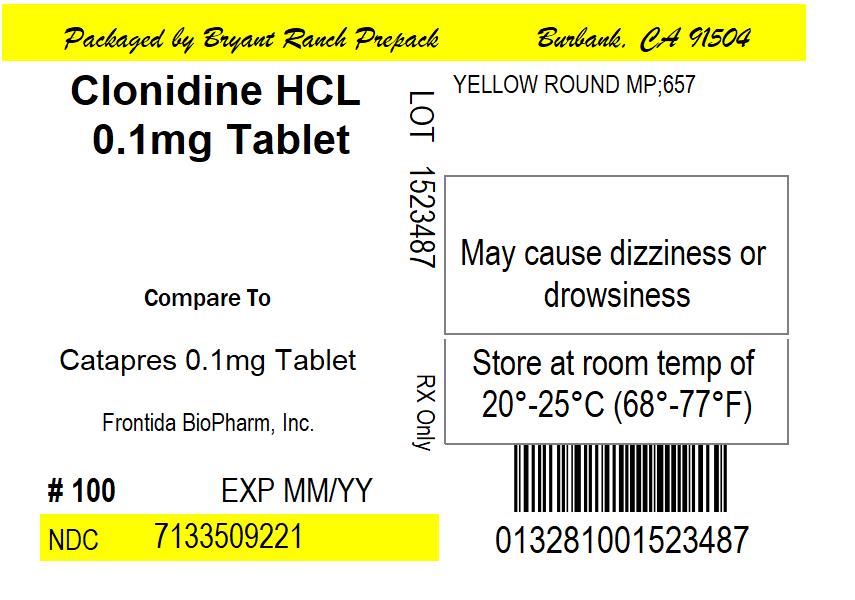
Clonidine hydrochloride .1 mg Tablet, 10-count
🆔 Identity & classification
Where does this data come from?
🏷️ RxNorm drug class
This medicine belongs to the Central alpha-2 Adrenergic Agonist class.
Where does this data come from?
🏭 Manufacturer & labeler
Where does this data come from?
🩺 Clinical
Clonidine is used alone or in combination with other medications to treat high blood pressure. Clonidine is also used alone or in combination with other medications as part of a treatment program to control symptoms of attention deficit hyperactivity disorder (ADHD; more difficulty focusing, controlling actions, and remaining still or quiet than other people who are the same age) in children 6 years of age and older. Clonidine is in a class of medications called centrally acting alpha-agonist hypotensive agents. Clonidine treats high blood pressure by decreasing your heart rate and relaxing th...
Read the full MedlinePlus article ↗- You're right that it's used for several different conditions — that can be confusing. Depending on the product, clonidine is prescribed to lower high blood pressure in adults, to t...
- What exactly is clonidine used for — I've seen it mentioned for totally different things?
- Drowsiness is one of the most common side effects, especially when you first start or when your dose goes up. Many people find it eases a bit over time. Until you know how it affec...
- Will clonidine make me too sleepy to function?
Patient education
Supplement & herbal interactions
Clonidine may be associated with lower levels of 1 nutrient — worth a chat with your pharmacist, not a cause for alarm.
Where does this data come from?
Ask a licensed pharmacist directly — free, answered by our team.
💊 What it looks like
Where does this data come from?
🧪 Inactive Ingredients / Excipients
Inactive ingredients, also called excipients, are components of the drug product other than the active ingredient. They may include fillers, dyes, coatings, preservatives, flavors, or other formulation ingredients.
💡 Tap an ingredient (hover on desktop) to see what it is and why it’s used.
-
UNII 35SW5USQ3G
A synthetic yellow dye used to color medicines. It helps make tablets, capsules, and liquids visually distinct so patients can easily identify their medication.
-
UNII J2B2A4N98G
Lactose is a natural sugar derived from milk. In medications, it serves as a filler and binder to add bulk and help hold tablet or capsule ingredients together during manufacturing.
-
UNII 70097M6I30
Magnesium stearate is a salt made from magnesium and stearic acid, a fatty substance. It's used in tablets and capsules as a lubricant and glidant to help ingredients flow smoothly during manufacturing and prevent sticking.
-
UNII OP1R32D61U
Microcrystalline cellulose is a purified form of cellulose, a natural fiber from plant sources. It acts as a binder and filler in tablets and capsules, helping hold ingredients together and give the medicine its shape and size.
-
UNII 5856J3G2A2
A starch-based powder made from potatoes and processed with sodium. It acts as a disintegrant, helping the tablet or capsule break apart quickly in the stomach so the medicine can be absorbed.
-
UNII O8232NY3SJ
A plant-based carbohydrate derived from corn kernels. It acts as a filler to add bulk, a binder to hold ingredients together, and a disintegrant to help the tablet break apart in your stomach for absorption.
6 inactive ingredients listed in the exact product block matched to this NDC.
Where does this data come from?
ingredient classCode="IACT" elements from the exact product block matched by this NDC. Label-section narrative from DailyMed / the openFDA label index is shown separately when available.Inactive ingredient FAQ
Are inactive ingredients the same for every manufacturer?
Why might an inactive ingredient be missing?
Can inactive ingredients matter?
💲 Pricing
A drug doesn't have one price. Each row is a different public payment system, and none is what you'd pay at the counter — that depends on your insurance. The ⓘ on each row explains what it measures.
| Price system | Per each | Per package |
|---|---|---|
| Retail pharmacies payNADAC · weekly | Not in the retail survey — common for institutional, discontinued, or low-volume packs. | |
| Medicaid paysCMS SDUD · 12 mo | No recent Medicaid claims on file for this NDC — rare and low-volume NDCs are suppressed in the public data. | |
| Medicare drug plans payPart D · Q2 2026 | $0.0688 | $0.69 / 10 tablets |
Where does this data come from?
🔁 Therapeutic equivalents
| Product | Labeler | Pack | NADAC/unit | TE | Status | Price vs. this |
|---|---|---|---|---|---|---|
| Clonidine Hydrochloride .1 mg 59651-0232-01 | Aurobindo | 100 tablets | $0.025 | AB | Availability likely | — |
| Clonidine Hydrochloride .1 mg 43547-0565-10 | Solco | 100 tablets | $0.025 | AB | Availability likely | — |
| Clonidine Hydrochloride .1 mg 00904-7442-61 | Major | 100 tablets | $0.025 | AB | Availability likely | — |
| Clonidine Hydrochloride .1 mg 68001-0237-00 | BluePoint | 100 tablets | $0.025 | AB | Availability likely | — |
| clonidine hydrochloride .1 mg 50268-0192-15 | AvPAK | 50 tablets | $0.025 | AB | Availability likely | — |
| Clonidine Hydrochloride .1 mg 60687-0113-01 | American | 100 tablets | $0.025 | AB | Availability likely | — |
| Clonidine hydrochloride .1 mg 52817-0180-00 | TruPharma, | 1000 tablets | $0.025 | — | Availability likely | — |
| Clonidine Hydrochloride .1 mg 58657-0647-01 | Method | 100 tablets | $0.025 | AB | Availability likely | — |
| clonidine hydrochloride .1 mg 29300-0468-01 | Unichem | 100 tablets | $0.025 | AB | Availability likely | — |
| Clonidine Hydrochloride .1 mg 00228-2127-10 | Actavis | 100 tablets | $0.025 | AB | Availability likely | — |
| clonidine hydrochloride .1 mg 71205-0570-12 | Proficient | 12 tablets | — | AB | FDA listed | — |
| Clonidine hydrochloride .1 mg 71205-0588-12 | Proficient | 12 tablets | — | — | FDA listed | — |
| clonidine hydrochloride .1 mg 76420-0066-01 | Asclemed | 100 tablets | — | AB | FDA listed | — |
| Clonidine hydrochloride .1 mg 76420-0283-01 | Asclemed | 100 tablets | — | — | FDA listed | — |
| clonidine hydrochloride .1 mg 46708-0306-10 | Alembic | 100 tablets | — | AB | FDA listed | — |
| clonidine hydrochloride .1 mg 50090-7009-00 | A-S | 50 tablets | — | AB | FDA listed | — |
| Clonidine Hydrochloride .1 mg 61919-0605-30 | DirectRX | 30 tablets | — | AB | FDA listed | — |
| clonidine hydrochloride .1 mg 71335-2266-00 | Bryant | 24 tablets | — | AB | FDA listed | — |
| clonidine hydrochloride .1 mg 83939-0006-01 | VERITYRX, | 1 tablet | — | AB | FDA listed | — |
| clonidine hydrochloride .1 mg 50090-6946-00 | A-S | 90 tablets | — | AB | FDA listed | — |
| clonidine hydrochloride .1 mg 60760-0992-30 | St. | 30 tablets | — | AB | FDA listed | — |
| clonidine hydrochloride .1 mg 62332-0054-10 | Alembic | 100 tablets | — | AB | FDA listed | — |
| clonidine hydrochloride .1 mg 68788-7145-01 | Preferred | 100 tablets | — | AB | FDA listed | — |
| Clonidine Hydrochloride .1 mg 70518-1962-00 | REMEDYREPACK | 30 tablets | — | AB | Discontinued | — |
| clonidine hydrochloride .1 mg 87063-0181-01 | ASCLEMED | 100 tablets | — | AB | FDA listed | — |
| Clonidine Hydrochloride .1 mg 55154-0189-00 | Cardinal | 10 tablets | — | AB | FDA listed | — |
| clonidine hydrochloride .1 mg 70518-1035-05 | REMEDYREPACK | 90 tablets | — | AB | FDA listed | — |
| clonidine hydrochloride .1 mg 67296-2120-01 | Redpharm | 500 tablets | — | AB | FDA listed | — |
| clonidine hydrochloride .1 mg 68071-2210-06 | NuCare | 60 tablets | — | AB | FDA listed | — |
| clonidine hydrochloride .1 mg 68071-3625-02 | NuCare | 120 tablets | — | AB | FDA listed | — |
| Clonidine Hydrochloride .1 mg 72162-1679-01 | Bryant | 100 tablets | — | AB | FDA listed | — |
| Clonidine Hydrochloride .1 mg 55154-2576-00 | Cardinal | 10 tablets | — | AB | FDA listed | — |
| Clonidine Hydrochloride .1 mg 68071-4661-02 | NuCare | 120 tablets | — | AB | FDA listed | — |
| clonidine hydrochloride .1 mg 83939-0005-01 | VERITYRX, | 1 tablet | — | AB | FDA listed | — |
| Clonidine Hydrochloride .1 mg 50090-6744-00 | A-S | 30 tablets | — | AB | FDA listed | — |
| clonidine hydrochloride .1 mg 50090-7477-00 | A-S | 90 tablets | — | AB | FDA listed | — |
| clonidine hydrochloride .1 mg 67296-2260-01 | Redpharm | 10 tablets | — | AB | FDA listed | — |
| Clonidine Hydrochloride .1 mg 00615-2572-05 | NCS | 15 tablets | — | AB | FDA listed | — |
| Clonidine hydrochloride .1 mg 87441-0023-01 | Unit | 30 tablets | — | — | FDA listed | — |
| clonidine hydrochloride .1 mg 50090-7475-00 | A-S | 30 tablets | — | AB | FDA listed | — |
| Clonidine Hydrochloride .1 mg 51655-0353-52 | Northwind | 30 tablets | — | AB | FDA listed | — |
| Clonidine Hydrochloride .1 mg 63187-0202-30 | Proficient | 30 tablets | — | — | FDA listed | — |
| Clonidine hydrochloride .1 mg 68071-4545-01 | NuCare | 12 tablets | — | — | FDA listed | — |
| Clonidine Hydrochloride .1 mg 71335-2489-00 | Bryant | 24 tablets | — | AB | FDA listed | — |
| clonidine hydrochloride .1 mg 72789-0091-08 | PD-Rx | 8 tablets | — | AB | FDA listed | — |
| clonidine hydrochloride .1 mg 50090-5577-00 | A-S | 30 tablets | — | AB | FDA listed | — |
| clonidine hydrochloride .1 mg 60760-0057-30 | St. | 30 tablets | — | AB | FDA listed | — |
| Clonidine Hydrochloride .1 mg 68071-2699-01 | NuCare | 100 tablets | — | AB | FDA listed | — |
| clonidine hydrochloride .1 mg 70518-3162-00 | REMEDYREPACK | 30 tablets | — | AB | Discontinued | — |
| clonidine hydrochloride .1 mg 71335-0777-00 | Bryant | 24 tablets | — | AB | FDA listed | — |
| Clonidine Hydrochloride .1 mg 63629-2314-01 | Bryant | 500 tablets | — | AB | FDA listed | — |
| Clonidine Hydrochloride .1 mg 63629-2315-01 | Bryant | 100 tablets | — | AB | FDA listed | — |
| Clonidine hydrochloride .1 mg 68071-3987-01 | NuCare | 100 tablets | — | — | FDA listed | — |
| Clonidine hydrochloride .1 mg 51655-0445-18 | Northwind | 180 tablets | — | — | FDA listed | — |
| clonidine hydrochloride .1 mg 68788-8494-01 | Preferred | 100 tablets | — | AB | FDA listed | — |
| Clonidine Hydrochloride .1 mg 70518-4342-00 | REMEDYREPACK | 30 tablets | — | AB | FDA listed | — |
| Clonidine Hydrochloride .1 mg 72162-2609-00 | Bryant | 1000 tablets | — | AB | FDA listed | — |
| Clonidine hydrochloride .1 mgthis 71335-0922-07 | Bryant | 10 tablets | — | — | FDA listed | — |
Where does this data come from?
⏳ Availability & generic status
This product is an FDA-approved generic. Other versions of the same drug are listed under Therapeutic equivalents, least expensive first.
Where does this data come from?
📦 Packaging — all sizes for this product
| Package NDC | Description | Marketing start | Status |
|---|---|---|---|
| 71335-0922-00 | 24 TABLET in 1 BOTTLE (71335-0922-0) | 2021-12-28 | Active |
| 71335-0922-01 | 100 TABLET in 1 BOTTLE (71335-0922-1) | 2021-12-28 | Active |
| 71335-0922-02 | 30 TABLET in 1 BOTTLE (71335-0922-2) | 2018-08-28 | Active |
| 71335-0922-03 | 20 TABLET in 1 BOTTLE (71335-0922-3) | 2021-12-28 | Active |
| 71335-0922-04 | 60 TABLET in 1 BOTTLE (71335-0922-4) | 2020-03-31 | Active |
| 71335-0922-05 | 120 TABLET in 1 BOTTLE (71335-0922-5) | 2020-03-03 | Active |
| 71335-0922-06 | 90 TABLET in 1 BOTTLE (71335-0922-6) | 2018-08-03 | Active |
| 71335-0922-07 You're viewing this | 10 TABLET in 1 BOTTLE (71335-0922-7) | 2018-09-25 | Active |
| 71335-0922-08 | 45 TABLET in 1 BOTTLE (71335-0922-8) | 2021-12-28 | Active |
| 71335-0922-09 | 14 TABLET in 1 BOTTLE (71335-0922-9) | 2020-01-16 | Active |
You're viewing the smallest of 10 pack sizes for this product.
Pack size FAQ
What quantity is in NDC 71335-0922-07?
What is the difference between NDC 71335-0922-07 and NDC 71335-0922-09?
What NDC number is used to bill for this package of Clonidine hydrochloride .1 mg Tablet?
🧭 About this NDC listing & data coverage
What data is (and isn’t) available for this NDC — tap to expand
| NDC identity (package / product / labeler codes) | ✓ Available |
| Labeler | ✓ Available |
| Product & package description | ✓ Available |
| Marketing category & status | ✓ Available |
| Active ingredient / dosage form / route | ✓ Available |
| FDA label (SPL via DailyMed) | ✓ Available |
| Package photos | ✓ Available |
| Inactive ingredients (structured) | ✓ Available |
| NADAC pharmacy acquisition price (CMS) | — Not published for this NDC CMS publishes NADAC only for NDCs reported in its retail-pharmacy survey. |
| Orange Book / therapeutic-equivalence data | — Not published for this NDC Applies only to products approved under an NDA/ANDA; many listings are out of scope. |
| HCPCS J-code billing crosswalk | — Not published for this NDC Most self-administered / retail products have no J-code — that is normal. |
| Medicaid utilization (CMS SDUD) | — Not published for this NDC CMS reports utilization only for NDCs with Medicaid claims above its privacy threshold. |
Questions about this listing
Why is there no price listed?
Is the NDC printed on the package the same as the 11-digit billing NDC?
What do the three segments of this NDC mean?
Is this package still being marketed?
Does this product come in other package sizes?
Who lists this product with the FDA?
Do I need a prescription for this product?
Where does this data come from?
📄 Full prescribing information FDA SPL
🎯 Indications and Usage ▾
INDICATIONS AND USAGE Clonidine hydrochloride tablets USP are indicated in the treatment of hypertension. Clonidine hydrochloride tablets USP may be employed alone or concomitantly with other antihypertensive agents.
⏱️ Dosage and Administration ▾
DOSAGE AND ADMINISTRATION Adults The dose of clonidine hydrochloride tablets USP must be adjusted according to the patient’s individual blood pressure response. The following is a general guide to its administration. Initial Dose 0.1 mg tablet twice daily (morning and bedtime).
Elderly patients may benefit from a lower initial dose. Maintenance Dose Further increments of 0.1 mg per day may be made at weekly intervals if necessary until the desired response is achieved. Taking the larger portion of the oral daily dose at bedtime may minimize transient adjustment effects of dry mouth and drowsiness.
The therapeutic doses most commonly employed have ranged from 0.2 mg to 0.6 mg per day given in divided doses. Studies have indicated that 2.4 mg is the maximum effective daily dose, but doses as high as this have rarely been employed. Renal Impairment Patients with renal impairment may benefit from a lower initial dose.
Patients should be carefully monitored. Since only a minimal amount of clonidine is removed during routine hemodialysis, there is no need to give supplemental clonidine following dialysis.
⛔ Contraindications ▾
CONTRAINDICATIONS Clonidine hydrochloride tablets USP should not be used in patients with known hypersensitivity to clonidine (see PRECAUTIONS ).
⚠️ Warnings ▾
WARNINGS Withdrawal Patients should be instructed not to discontinue therapy without consulting their physician. Sudden cessation of clonidine treatment has, in some cases, resulted in symptoms such as nervousness, agitation, headache, and tremor accompanied or followed by a rapid rise in blood pressure and elevated catecholamine concentrations in the plasma. The likelihood of such reactions to discontinuation of clonidine therapy appears to be greater after administration of higher doses or continuation of concomitant beta-blocker treatment and special caution is therefore advised in these situations.
Rare instances of hypertensive encephalopathy, cerebrovascular accidents and death have been reported after clonidine withdrawal. When discontinuing therapy with clonidine hydrochloride tablets USP, the physician should reduce the dose gradually over 2 to 4 days to avoid withdrawal symptomatology. An excessive rise in blood pressure following discontinuation of clonidine hydrochloride tablets USP therapy can be reversed by administration of oral clonidine hydrochloride or by intravenous phentolamine.
If therapy is to be discontinued in patients receiving a beta-blocker and clonidine concurrently, the beta-blocker should be withdrawn several days before the gradual discontinuation of clonidine hydrochloride tablets USP. Because children commonly have gastrointestinal illnesses that lead to vomiting, they may be particularly susceptible to hypertensive episodes resulting from abrupt inability to take medication.
🤒 Adverse Reactions ▾
ADVERSE REACTIONS Most adverse effects are mild and tend to diminish with continued therapy. The most frequent (which appear to be dose-related) are dry mouth, occurring in about 40 of 100 patients; drowsiness, about 33 in 100; dizziness, about 16 in 100; constipation and sedation, each about 10 in 100. The following less frequent adverse experiences have also been reported in patients receiving clonidine hydrochloride tablets USP, but in many cases patients were receiving concomitant medication and a causal relationship has not been established.
Body as a Whole: Fatigue, fever, headache, pallor, weakness, and withdrawal syndrome. Also reported were a weakly positive Coombs’ test and increased sensitivity to alcohol. Cardiovascular: Bradycardia, congestive heart failure, electrocardiographic abnormalities (i.e., sinus node arrest, junctional bradycardia, high degree AV block and arrhythmias), orthostatic symptoms, palpitations, Raynaud’s phenomenon, syncope, and tachycardia.
Cases of sinus bradycardia and atrioventricular block have been reported, both with and without the use of concomitant digitalis. Central Nervous System: Agitation, anxiety, delirium, delusional perception, hallucinations (including visual and auditory), insomnia, mental depression, nervousness, other behavioral changes, paresthesia, restlessness, sleep disorder, and vivid dreams or nightmares. Dermatological: Alopecia, angioneurotic edema, hives, pruritus, rash, and urticaria.
Gastrointestinal: Abdominal pain, anorexia, constipation, hepatitis, malaise, mild transient abnormalities in liver function tests, nausea, parotitis, pseudo-obstruction (including colonic pseudo-obstruction), salivary gland pain, and vomiting. Genitourinary: Decreased sexual activity, difficulty in micturition, erectile dysfunction, loss of libido, nocturia, and urinary retention. Hematologic: Thrombocytopenia.
Metabolic: Gynecomastia, transient elevation of blood glucose or serum creatine phosphokinase, and weight gain. Musculoskeletal: Leg cramps and muscle or joint pain. Oro-otolaryngeal: Dryness of the nasal mucosa.
Ophthalmological: Accommodation disorder, blurred vision, burning of the eyes, decreased lacrimation, and dryness of eyes.
🔄 Drug Interactions ▾
Drug Interactions Clonidine may potentiate the CNS-depressive effects of alcohol, barbiturates or other sedating drugs. If a patient receiving clonidine hydrochloride is also taking tricyclic antidepressants, the hypotensive effect of clonidine may be reduced, necessitating an increase in the clonidine dose. If a patient receiving clonidine is also taking neuroleptics, orthostatic regulation disturbances (e.g., orthostatic hypotension, dizziness, fatigue) may be induced or exacerbated.
Monitor heart rate in patients receiving clonidine concomitantly with agents known to affect sinus node function or AV nodal conduction, e.g., digitalis, calcium channel blockers and beta-blockers. Sinus bradycardia resulting in hospitalization and pacemaker insertion has been reported in association with the use of clonidine concomitantly with diltiazem or verapamil. Amitriptyline in combination with clonidine enhances the manifestation of corneal lesions in rats (see Toxicology ).
Based on observations in patients in a state of alcoholic delirium it has been suggested that high intravenous doses of clonidine may increase the arrhythmogenic potential (QT-prolongation, ventricular fibrillation) of high intravenous doses of haloperidol. Causal relationship and relevance for clonidine oral tablets have not been established.
🤰 Pregnancy ▾
Pregnancy
🧒 Pediatric Use ▾
Pediatric Use Safety and effectiveness in pediatric patients have not been established in adequate and well-controlled trials (see WARNINGS, Withdrawal ).
🆘 Overdosage ▾
OVERDOSAGE Hypertension may develop early and may be followed by hypotension, bradycardia, respiratory depression, hypothermia, drowsiness, decreased or absent reflexes, weakness, irritability and miosis. The frequency of CNS depression may be higher in children than adults. Large overdoses may result in reversible cardiac conduction defects or dysrhythmias, apnea, coma and seizures.
Signs and symptoms of overdose generally occur within 30 minutes to two hours after exposure. As little as 0.1 mg of clonidine has produced signs of toxicity in children. There is no specific antidote for clonidine overdosage.
Clonidine overdosage may result in the rapid development of CNS depression; therefore, induction of vomiting with ipecac syrup is not recommended. Gastric lavage may be indicated following recent and/or large ingestions. Administration of activated charcoal and/or a cathartic may be beneficial.
Supportive care may include atropine sulfate for bradycardia, intravenous fluids and/or vasopressor agents for hypotension and vasodilators for hypertension. Naloxone may be a useful adjunct for the management of clonidine-induced respiratory depression, hypotension and/or coma; blood pressure should be monitored since the administration of naloxone has occasionally resulted in paradoxical hypertension. Tolazoline administration has yielded inconsistent results and is not recommended as first-line therapy.
Dialysis is not likely to significantly enhance the elimination of clonidine. The largest overdose reported to date involved a 28-year old male who ingested 100 mg of clonidine hydrochloride powder. This patient developed hypertension followed by hypotension, bradycardia, apnea, hallucinations, semicoma, and premature ventricular contractions.
The patient fully recovered after intensive treatment. Plasma clonidine levels were 60 ng/ml after 1 hour, 190 ng/ml after 1.5 hours, 370 ng/ml after 2 hours, and 120 ng/ml after 5.5 and 6.5 hours. In mice and rats, the oral LD 50 of clonidine is 206 and 465 mg/kg, respectively.
🧬 Clinical Pharmacology ▾
CLINICAL PHARMACOLOGY Clonidine stimulates alpha-adrenoreceptors in the brain stem. This action results in reduced sympathetic outflow from the central nervous system and in decreases in peripheral resistance, renal vascular resistance, heart rate, and blood pressure. Clonidine hydrochloride tablets USP act relatively rapidly.
The patient’s blood pressure declines within 30 to 60 minutes after an oral dose, the maximum decrease occurring within 2 to 4 hours. Renal blood flow and glomerular filtration rate remain essentially unchanged. Normal postural reflexes are intact; therefore, orthostatic symptoms are mild and infrequent.
Acute studies with clonidine hydrochloride in humans have demonstrated a moderate reduction (15% to 20%) of cardiac output in the supine position with no change in the peripheral resistance: at a 45° tilt there is a smaller reduction in cardiac output and a decrease of peripheral resistance. During long-term therapy, cardiac output tends to return to control values, while peripheral resistance remains decreased. Slowing of the pulse rate has been observed in most patients given clonidine, but the drug does not alter normal hemodynamic response to exercise.
Tolerance to the antihypertensive effect may develop in some patients, necessitating a reevaluation of therapy. Other studies in patients have provided evidence of a reduction in plasma renin activity and in the excretion of aldosterone and catecholamines. The exact relationship of these pharmacologic actions to the antihypertensive effect of clonidine has not been fully elucidated.
Clonidine acutely stimulates growth hormone release in both children and adults, but does not produce a chronic elevation of growth hormone with long-term use. Pharmacokinetics The pharmacokinetics of clonidine is dose-proportional in the range of 100 to 600 mcg. The absolute bioavailability of clonidine on oral administration is 70% to 80%.
Peak plasma clonidine levels are attained in approximately 1 to 3 hours. Following intravenous administration, clonidine displays biphasic disposition with a distribution half-life of about 20 minutes and an elimination half-life ranging from 12 to 16 hours. The half-life increases up to 41 hours in patients with severe impairment of renal function.
Clonidine crosses the placental barrier. It has been shown to cross the blood-brain barrier in rats. Following oral administration about 40% to 60% of the absorbed dose is recovered in the urine as unchanged drug in 24 hours.
About 50% of the absorbed dose is metabolized in the liver. Neither food nor the race of the patient influences the pharmacokinetics of clonidine. The antihypertensive effect is reached at plasma concentrations between about 0.2 and 2.0 ng/mL in patients with normal excretory function.
A further rise in the plasma levels will not enhance the antihypertensive effect.
📦 How Supplied / Storage and Handling ▾
HOW SUPPLIED Clonidine hydrochloride tablets USP 0.1 mg, yellow, round, debossed MP 657 on one side and plain on the other side. NDC 71335-0922-1: 100 Tablets in a BOTTLE NDC 71335-0922-2: 30 Tablets in a BOTTLE NDC 71335-0922-3: 20 Tablets in a BOTTLE NDC 71335-0922-4: 60 Tablets in a BOTTLE NDC 71335-0922-5: 120 Tablets in a BOTTLE NDC 71335-0922-6: 90 Tablets in a BOTTLE NDC 71335-0922-7: 10 Tablets in a BOTTLE NDC 71335-0922-8: 45 Tablets in a BOTTLE NDC 71335-0922-9: 14 Tablets in a BOTTLE NDC 71335-0922-0: 24 Tablets in a BOTTLE Store at 20° to 25°C (68° to 77°F). [See USP Controlled Room Temperature] DISPENSE IN TIGHT, LIGHT-RESISTANT CONTAINER.
Repackaged/Relabeled by: Bryant Ranch Prepack Burbank, CA 91504
📋 Description ▾
DESCRIPTION Clonidine hydrochloride is a centrally acting alpha-agonist hypotensive agent available as tablets for oral administration in three dosage strengths: 0.1 mg, 0.2 mg and 0.3 mg. The 0.1 mg tablet is equivalent to 0.087 mg of the free base. Clonidine hydrochloride tablets USP contain the following inactive ingredients: lactose, magnesium stearate, microcrystalline cellulose, pregelatinized starch, and sodium starch glycolate.
The 0.1 mg also contains D&C yellow #10 aluminum lake, and the 0.3 mg contains D&C yellow #10 aluminum lake and FD&C blue #1 aluminum lake. Clonidine hydrochloride is an imidazoline derivative and exists as a mesomeric compound. The chemical name is 2-(2,6-dichlorophenylamino)-2-imidazoline hydrochloride.
The following is the structural formula: C 9 H 9 Cl 2 N 3 • HCl Mol. Wt. 266.56 Clonidine hydrochloride is an odorless, bitter, white, crystalline substance soluble in water and alcohol.
💬 Information for Patients ▾
Information for Patients Patients should be cautioned against interruption of clonidine hydrochloride tablets USP therapy without their physician’s advice. Since patients may experience a possible sedative effect, dizziness, or accommodation disorder with use of clonidine, caution patients about engaging in activities such as driving a vehicle or operating appliances or machinery. Also, inform patients that this sedative effect may be increased by concomitant use of alcohol, barbiturates, or other sedating drugs.
Patients who wear contact lenses should be cautioned that treatment with clonidine hydrochloride tablets USP may cause dryness of eyes.