
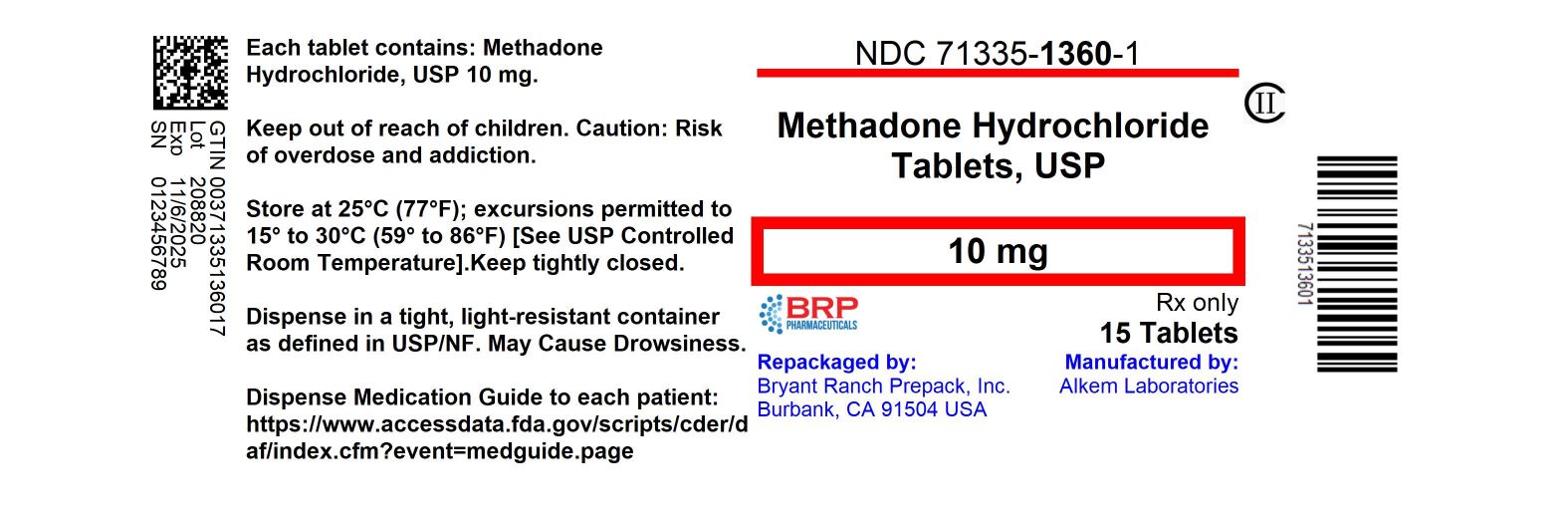
METHADONE HYDROCHLORIDE 10 mg Tablet, 56-count
Other active recalls for Methadone Hydrochloride (different manufacturers) — 1 · tap to view
🆔 Identity & classification
Where does this data come from?
🏷️ RxNorm drug class
This medicine belongs to the Opioid Agonist class.
Where does this data come from?
🏭 Manufacturer & labeler
Where does this data come from?
🩺 Clinical
Methadone is used to relieve severe pain. Methadone also is used to treat opioid addiction (physical and psychological reliance on a chemical found in prescription and street drugs). Methadone is in a class of medications called opiate (narcotic) analgesics. Methadone works to treat pain by changing the way the brain and nervous system respond to pain. It works to treat people who were addicted to opiate drugs by producing similar effects and preventing withdrawal symptoms.
Read the full MedlinePlus article ↗- Methadone is reserved for severe, persistent pain that needs around-the-clock treatment and hasn't responded well to other options. It's a long-acting opioid, which means it works...
- Why is my doctor prescribing methadone instead of a regular painkiller?
- When methadone is used for opioid addiction — not pain — federal law requires it to be dispensed only through certified opioid treatment programs. These clinics follow strict safet...
- Why does methadone need to be dispensed at a special clinic for opioid treatment?
Patient education
Supplement & herbal interactions
Where does this data come from?
Ask a licensed pharmacist directly — free, answered by our team.
💊 What it looks like
Where does this data come from?
🧪 Inactive Ingredients / Excipients
Inactive ingredients, also called excipients, are components of the drug product other than the active ingredient. They may include fillers, dyes, coatings, preservatives, flavors, or other formulation ingredients.
💡 Tap an ingredient (hover on desktop) to see what it is and why it’s used.
-
UNII 70097M6I30
Magnesium stearate is a salt made from magnesium and stearic acid, a fatty substance. It's used in tablets and capsules as a lubricant and glidant to help ingredients flow smoothly during manufacturing and prevent sticking.
-
UNII OP1R32D61U
Microcrystalline cellulose is a purified form of cellulose, a natural fiber from plant sources. It acts as a binder and filler in tablets and capsules, helping hold ingredients together and give the medicine its shape and size.
-
UNII O8232NY3SJ
A plant-based carbohydrate derived from corn kernels. It acts as a filler to add bulk, a binder to hold ingredients together, and a disintegrant to help the tablet break apart in your stomach for absorption.
3 inactive ingredients listed in the exact product block matched to this NDC.
Where does this data come from?
ingredient classCode="IACT" elements from the exact product block matched by this NDC. Label-section narrative from DailyMed / the openFDA label index is shown separately when available.Inactive ingredient FAQ
Are inactive ingredients the same for every manufacturer?
Why might an inactive ingredient be missing?
Can inactive ingredients matter?
💲 Pricing
A drug doesn't have one price. Each row is a different public payment system, and none is what you'd pay at the counter — that depends on your insurance. The ⓘ on each row explains what it measures.
| Price system | Per each | Per package |
|---|---|---|
| Retail pharmacies payNADAC · weekly | Not in the retail survey — common for institutional, discontinued, or low-volume packs. | |
| Medicaid paysCMS SDUD · 12 mo | No recent Medicaid claims on file for this NDC — rare and low-volume NDCs are suppressed in the public data. | |
| Medicare drug plans payPart D · Q2 2026 | $0.2238 | $12.53 / 56 tablets |
Where does this data come from?
🔁 Therapeutic equivalents
| Product | Labeler | Pack | NADAC/unit | TE | Status | Price vs. this |
|---|---|---|---|---|---|---|
| Methadone Hydrochloride 10 mg 42806-0318-01 | Epic | 100 tablets | $0.098 | AA | FDA listed | — |
| Methadone Hydrochloride 10 mg 13107-0089-01 | Aurolife | 100 tablets | $0.158 | AA | FDA listed | — |
| Methadone Hydrochloride 10 mg 00054-0710-20 | Hikma | 100 tablets | $0.175 | AA | Discontinued | — |
| Methadone Hydrochloride 10 mg 00406-5771-01 | SpecGx | 100 tablets | $0.175 | AA | Availability likely | — |
| Methadone Hydrochloride 10 mg 00904-7417-61 | Major | 100 tablets | $0.175 | AA | Availability likely | — |
| Methadone Hydrochloride 10 mg 31722-0947-01 | Camber | 100 tablets | $0.175 | AA | Availability likely | — |
| Methadone Hydrochloride 10 mg 64850-0604-01 | Elite | 100 tablets | $0.175 | AA | Availability likely | — |
| Methadone Hydrochloride 10 mg 66689-0820-10 | VistaPharm, | 100 tablets | $0.175 | — | Availability likely | — |
| Methadone Hydrochloride 10 mg 66689-0836-99 | VistaPharm, | 100 tablets | $0.175 | AA | Availability likely | — |
| Methadone Hydrochloride 10 mg 67877-0660-01 | Ascend | 100 tablets | $0.175 | AA | Discontinued | — |
| Methadone Hydrochloride 10 mgthis 71335-1360-09 | Bryant | 56 tablets | — | AA | FDA listed | — |
| Methadone Hydrochloride 10 mg 72865-0121-01 | XLCare | 100 tablets | — | AA | FDA listed | — |
| Methadone Hydrochloride 10 mg 60687-0910-01 | American | 100 tablets | — | AA | FDA listed | — |
Where does this data come from?
⏳ Availability & generic status
This product is an FDA-approved generic. Other versions of the same drug are listed under Therapeutic equivalents, least expensive first.
Where does this data come from?
📦 Packaging — all sizes for this product
| Package NDC | Description | Marketing start | Status |
|---|---|---|---|
| 71335-1360-00 | 168 TABLET in 1 BOTTLE (71335-1360-0) | 2022-09-28 | Active |
| 71335-1360-01 | 15 TABLET in 1 BOTTLE (71335-1360-1) | 2022-09-28 | Active |
| 71335-1360-02 | 30 TABLET in 1 BOTTLE (71335-1360-2) | 2019-10-01 | Active |
| 71335-1360-03 | 90 TABLET in 1 BOTTLE (71335-1360-3) | 2020-08-14 | Active |
| 71335-1360-04 | 120 TABLET in 1 BOTTLE (71335-1360-4) | 2022-09-28 | Active |
| 71335-1360-05 | 180 TABLET in 1 BOTTLE (71335-1360-5) | 2022-09-28 | Active |
| 71335-1360-06 | 60 TABLET in 1 BOTTLE (71335-1360-6) | 2022-09-28 | Active |
| 71335-1360-07 | 28 TABLET in 1 BOTTLE (71335-1360-7) | 2022-09-28 | Active |
| 71335-1360-08 | 112 TABLET in 1 BOTTLE (71335-1360-8) | 2022-09-28 | Active |
| 71335-1360-09 You're viewing this | 56 TABLET in 1 BOTTLE (71335-1360-9) | 2022-09-28 | Active |
You're viewing one of 10 pack sizes for this product.
Pack size FAQ
What quantity is in NDC 71335-1360-09?
What is the difference between NDC 71335-1360-09 and NDC 71335-1360-01?
What NDC number is used to bill for this package of METHADONE HYDROCHLORIDE 10 mg Tablet?
🧭 About this NDC listing & data coverage
What data is (and isn’t) available for this NDC — tap to expand
| NDC identity (package / product / labeler codes) | ✓ Available |
| Labeler | ✓ Available |
| Product & package description | ✓ Available |
| Marketing category & status | ✓ Available |
| Active ingredient / dosage form / route | ✓ Available |
| FDA label (SPL via DailyMed) | ✓ Available |
| Package photos | ✓ Available |
| Inactive ingredients (structured) | ✓ Available |
| NADAC pharmacy acquisition price (CMS) | — Not published for this NDC CMS publishes NADAC only for NDCs reported in its retail-pharmacy survey. |
| Orange Book / therapeutic-equivalence data | ✓ Available |
| HCPCS J-code billing crosswalk | — Not published for this NDC Most self-administered / retail products have no J-code — that is normal. |
| Medicaid utilization (CMS SDUD) | — Not published for this NDC CMS reports utilization only for NDCs with Medicaid claims above its privacy threshold. |
Questions about this listing
Why is there no price listed?
Is the NDC printed on the package the same as the 11-digit billing NDC?
What do the three segments of this NDC mean?
Is this package still being marketed?
Does this product come in other package sizes?
Who lists this product with the FDA?
Do I need a prescription for this product?
Where does this data come from?
📄 Full prescribing information FDA SPL
🚨 Boxed Warning ▾
WARNING: ADDICTION, ABUSE, AND MISUSE; RISK EVALUATION AND MITIGATION STRATEGY (REMS); LIFE-THREATENING RESPIRATORY DEPRESSION; ACCIDENTAL INGESTION; LIFE-THREATENING QT PROLONGATION; NEONATAL OPIOID WITHDRAWAL SYNDROME; INTERACTIONS WITH DRUGS AFFECTING CYTOCHROME P450 ISOENZYMES; RISKS FROM CONCOMITANT USE WITH BENZODIAZEPINES OR OTHER CNS DEPRESSANTS AND TREATMENT FOR OPIOID ADDICTION Addiction, Abuse, and Misuse Methadone hydrochloride tablets, USP expose patients and other users to the risks of opioid addiction, abuse, and misuse, which can lead to overdose and death.
Assess each patient’s risk prior to prescribing methadone hydrochloride tablets, USP and monitor all patients regularly for the development of these behaviors and conditions [see Warnings and Precautions (5.1)] . Opioid Analgesic Risk Evaluation and Mitigation Strategy (REMS) To ensure that the benefits of opioid analgesics outweigh the risks of addiction, abuse, and misuse, the Food and Drug Administration (FDA) has required a REMS for these products [see Warnings and Precautions ( 5.2 )]. Under the requirements of the REMS, drug companies with approved opioid analgesic products must make REMS-compliant education programs available to healthcare providers.
Healthcare providers are strongly encouraged to • complete a REMS-compliant education program, • counsel patients and/or their caregivers, with every prescription, on safe use, serious risks, storage, and disposal of these products, • emphasize to patients and their caregivers the importance of reading the Medication Guide every time it is provided by their pharmacist, and • consider other tools to improve patient, household, and community safety. Life-Threatening Respiratory Depression Serious, life-threatening, or fatal respiratory depression may occur with use of methadone hydrochloride tablets, USP.
The peak respiratory depressant effect of methadone occurs later, and persists longer than the peak analgesic effect, especially during the initial dosing period. Monitor for respiratory depression, especially during initiation of methadone hydrochloride tablets, USP or following a dose increase [see Warnings and Precautions (5.3)] . Accidental Ingestion Accidental ingestion of even one dose of methadone hydrochloride tablets, especially by children, can result in a fatal overdose of methadone [see Warnings and Precautions (5.3)] .
Life-Threatening QT Prolongation QT interval prolongation and serious arrhythmia (torsades de pointes) have occurred during treatment with methadone. Most cases involve patients being treated for pain with large, multiple daily doses of methadone, although cases have been reported in patients receiving doses commonly used for maintenance treatment of opioid addiction. Closely monitor patients with risk factors for development of prolonged QT interval, a history of cardiac conduction abnormalities, and those taking medications affecting cardiac conduction for changes in cardiac rhythm during initiation and titration of methadone hydrochloride tablets [see Warnings and Precautions (5.4)] .
Neonatal Opioid Withdrawal Syndrome Neonatal opioid withdrawal syndrome (NOWS) is an expected and treatable outcome of use of methadone hydrochloride tablets, during pregnancy. NOWS may be life-threatening if not recognized and treated in the neonate. The balance between the risks of NOWS and the benefits of maternal methadone hydrochloride tablets use may differ based on the risks associated with the mother’s underlying condition, pain, or addiction.
Advise the patient of the risk of NOWS so that appropriate planning for management of the neonate can occur [see Warnings and Precautions (5.5)] . Cytochrome P450 Interaction The concomitant use of methadone hydrochloride tablets, with all cytochrome P450 3A4, 2B6, 2C19, 2C9 or 2D6 inhibitors may result in an increase in methadone plasma concentrations, which could cause potentially fatal respiratory depression. In addition, discontinuation of conc…
🎯 Indications and Usage ▾
1 INDICATIONS AND USAGE Methadone hydrochloride tablets, USP are indicated for the: 1. Management of pain severe enough to require daily, around-the-clock, long-term opioid treatment and for which alternative treatment options are inadequate. Limitations of Use • Because of the risks of addiction, abuse, and misuse with opioids, even at recommended doses, and because of the greater risks of overdose and death with long-acting opioids [see Warnings and Precautions (5.1)] , reserve methadone hydrochloride tablets, USP for use in patients for whom alternative analgesic treatment options (e.g., non-opioid analgesics or immediate-release opioid analgesics) are ineffective, not tolerated, or would be otherwise inadequate to provide sufficient management of pain. • Methadone hydrochloride tablets, USP are not indicated as an as-needed (prn) analgesic.
2. Detoxification treatment of opioid addiction (heroin or other morphine-like drugs). 3.
Maintenance treatment of opioid addiction (heroin or other morphine-like drugs), in conjunction with appropriate social and medical services. Limitations of Use Methadone products used for the treatment of opioid addiction in detoxification or maintenance programs are subject to the conditions for distribution and use required under 42 CFR 8.12 [see Dosage and Administration (2.1)]. Methadone hydrochloride tablets, USP is an opioid agonist indicated for the: 1.
Management of pain severe enough to require daily, around-the-clock, long-term opioid treatment and for which alternative treatment options are inadequate. Limitations of Use • Because of the risks of addiction, abuse, and misuse with opioids, even at recommended doses, and because of the greater risks of overdose and death with long-acting opioids, reserve methadone hydrochloride for use in patients for whom alternative treatment options (e.g., non-opioid analgesics or immediate-release opioids) are ineffective, not tolerated, or would be otherwise inadequate to provide sufficient management of pain. • Methadone hydrochloride tablets, USP are not indicated as an as-needed (prn) analgesic.
2. Detoxification treatment of opioid addiction (heroin or other morphine-like drugs). 3.
Maintenance treatment of opioid addiction (heroin or other morphine-like drugs), in conjunction with appropriate social and medical services. (1) Limitations of Use Methadone products used for the treatment of opioid addiction in detoxification or maintenance programs are subject to the conditions for distribution and use required under 42 CFR 8.12 (2.1).
⏱️ Dosage and Administration ▾
2 DOSAGE AND ADMINISTRATION Management of Pain • To be prescribed only by healthcare providers knowledgeable in use of potent opioids for management of chronic pain. (2.3) • Use the lowest effective dosage for the shortest duration consistent with individual patient treatment goals. (2.3) • Individualize dosing based on the severity of pain, patient response, prior analgesic experience, and risk factors for addiction, abuse, and misuse.
(2.3) • For opioid naïve patients, initiate methadone hydrochloride tablets treatment with 2.5 mg every 8 to 12 hours. (2.3) • To convert to methadone hydrochloride tablets from another opioid, use available conversion factors to obtain estimated dose. (2.3) • Titrate slowly with dose increases no more frequent than every 3 to 5 days.
(2.4) • Do not abruptly discontinue methadone hydrochloride tablets in a physically dependent patient because rapid discontinuation of opioid analgesics has resulted in serious withdrawal symptoms, uncontrolled pain, and suicide. (2.5, 5.15) Initiation of Detoxification and Maintenance Treatmen t • A single dose of 20 to 30 mg may be sufficient to suppress withdrawal syndrome. (2.6)
2.1Conditions for Distribution and Use of Methadone Products for the Treatment of Opioid Addiction Code of Federal Regulations, Title 42, Sec 8: Methadone products when used for the treatment of opioid addiction in detoxification or maintenance programs, shall be dispensed only by opioid treatment programs (and agencies, practitioners or institutions by formal agreement with the program sponsor) certified by the Substance Abuse and Mental Health Services Administration and approved by the designated state authority.
Certified treatment programs shall dispense and use methadone in oral form only and according to the treatment requirements stipulated in the Federal Opioid Treatment Standards (42 CFR 8.12). See below for important regulatory exceptions to the general requirement for certification to provide opioid agonist treatment. Failure to abide by the requirements in these regulations may result in criminal prosecution, seizure of the drug supply, revocation of the program approval, and injunction precluding operation of the program.
Regulatory Exceptions to the General Requirement for Certification to Provide Opioid Agonist Treatment: • During inpatient care, when the patient was admitted for any condition other than concurrent opioid addiction (pursuant to 21CFR 1306.07(c)), to facilitate the treatment of the primary admitting diagnosis). • During an emergency period of no longer than 3 days while definitive care for the addiction is being sought in an appropriately licensed facility (pursuant to 21CFR 1306.07(b)).
2.2Important General Information • The peak respiratory depressant effect of methadone occurs later and persists longer than its peak therapeutic effect. • A high degree of opioid tolerance does not eliminate the possibility of methadone overdose, iatrogenic or otherwise. Deaths have been reported during conversion to methadone from chronic, high-dose treatment with other opioid agonists and during initiation of methadone treatment of addiction in subjects previously abusing high doses of other agonists. • With repeated dosing, methadone is retained in the liver and then slowly released, prolonging the duration of potential toxicity. • Methadone has a narrow therapeutic index, especially when combined with other drugs.
2.3Methadone Tablets for Management of Pain Important Dosage and Administration Information Methadone hydrochloride tablets, USP should be prescribed only by healthcare professionals who are knowledgeable in the use of potent opioids for the management of chronic pain. Consider the following important factors that differentiate methadone from other opioid analgesics: • There is high interpatient variability in absorption, metabolism, and relative analgesic potency of methadone. Population-based equianalgesic conversion ratios between methadone and other…
💊 Dosage Forms and Strengths ▾
3 DOSAGE FORMS AND STRENGTHS Methadone Hydrochloride tablets are available in 10 mg dosage strength. The 10 mg tablets are round, white, and are debossed “ASC 116” on one side and scored on the other side. Tablets: 10 mg
⛔ Contraindications ▾
4 CONTRAINDICATIONS Methadone Hydrochloride tablets, USP are contraindicated in patients with: • Significant respiratory depression [see Warnings and Precautions (5.3)]. • Acute or severe bronchial asthma in an unmonitored setting or in the absence of resuscitative equipment [see Warnings and Precautions (5.8)]. • Known or suspected gastrointestinal obstruction, including paralytic ileus [see Warnings and Precautions (5.13)]. • Hypersensitivity (e.g., anaphylaxis) to methadone [see Adverse Reactions (6)]. • Significant respiratory depression (4) • Acute or severe bronchial asthma in an unmonitored setting or in the absence of resuscitative equipment (4) • Known or suspected gastrointestinal obstruction, including paralytic ileus (4) • Hypersensitivity to methadone (4)
⚠️ Warnings and Cautions ▾
5 WARNINGS AND PRECAUTIONS • Risk of Life-Threatening Respiratory Depression in Patients with Chronic Pulmonary Disease or in Elderly, Cachectic, or Debilitated Patients. Monitor closely, particularly during initiation and titration. (5.8) • Serotonin Syndrome : Potentially life-threatening condition could result from concomitant serotonergic drug administration.
Discontinue methadone hydrochloride tablets if serotonin syndrome is suspected. (5.9) • Adrenal Insufficiency: If diagnosed, treat with physiologic replacement of corticosteroids, and wean patient off of the opioid. (5.10) • Severe Hypotension: Monitor during dose initiation and titration.
Avoid use in patients with circulatory shock. (5.11) • Risks of Use in Patients with Increased Intracranial Pressure, Brain Tumors, Head Injury, or Impaired Consciousness: Monitor for sedation and respiratory depression. Avoid use of methadone hydrochloride tablets in patients with impaired consciousness or coma.
(5.12)
5.1Addiction, Abuse and Misuse Methadone hydrochloride tablets, USP contain methadone, a Schedule II controlled substance. As an opioid, methadone hydrochloride tablets expose users to the risks of addiction, abuse, and misuse. As long-acting opioids such as methadone hydrochloride tablets have pharmacological effects over an extended period of time, there is a greater risk for overdose and death [see Drug Abuse and Dependence (9)].
Although the risk of addiction in any individual is unknown, it can occur in patients appropriately prescribed methadone hydrochloride tablets. Addiction can occur at recommended doses and if the drug is misused or abused. Assess each patient’s risk for opioid addiction, abuse, or misuse prior to prescribing methadone hydrochloride tablets, and monitor all patients receiving methadone hydrochloride tablets for the development of these behaviors and conditions.
Risks are increased in patients with a personal or family history of substance abuse (including drug or alcohol addiction or abuse) or mental illness (e.g., major depression). The potential for these risks should not, however, prevent the prescribing of methadone hydrochloride tablets for the proper management of pain in any given patient. Patients at increased risk may be prescribed opioids such as methadone hydrochloride tablets, but use in such patients necessitates intensive counseling about the risks and proper use of methadone hydrochloride tablets along with the intensive monitoring for signs of addiction, abuse, and misuse.
Abuse or misuse of methadone hydrochloride tablets by crushing, chewing, snorting, or injecting the dissolved product will result in the uncontrolled delivery of the methadone and can result in overdose and death [see Overdosage (10)]. Opioids are sought by drug abusers and people with addiction disorders and are subject to criminal diversion. Consider these risks when prescribing or dispensing methadone hydrochloride tablets.
Strategies to reduce these risks include prescribing the drug in the smallest appropriate quantity and advising the patient on the proper disposal of unused drug [see Patient Counseling Information (17)]. Contact local state professional licensing board or state controlled substances authority for information on how to prevent and detect abuse or diversion of this product.
5.2Opioid Analgesic Risk Evaluation and Mitigation Strategy (REMS) To ensure that the benefits of opioid analgesics outweigh the risks of addiction, abuse, and misuse, the Food and Drug Administration (FDA) has required a Risk Evaluation and Mitigation Strategy (REMS) for these products. Under the requirements of the REMS, drug companies with approved opioid analgesic products must make REMS-compliant education programs available to healthcare providers. Healthcare providers are strongly encouraged to do all of the following: • Complete a REMS-compliant education program offered by an accredited provider of continuing education (CE) or another education program…
🤒 Adverse Reactions ▾
6 ADVERSE REACTIONS The following serious adverse reactions are described, or described in greater detail, in other sections: • Addiction, Abuse, and Misuse [see Warnings and Precautions (5.1)] • Life Threatening Respiratory Depression [see Warnings and Precautions (5.3)] • QT Prolongation [see Warnings and Precautions (5.4)] • Neonatal Opioid Withdrawal Syndrome [see Warnings and Precautions (5.5)] • Interactions with Benzodiazepines and other CNS Depressants [see Warnings and Precautions (5.7)] • Serotonin Syndrome [see Warnings and Precautions (5.9)] • Adrenal Insufficiency [see Warnings and Precautions (5.10)] • Severe Hypotension [see Warnings and Precautions (5.11)] • Gastrointestinal Adverse Reactions [see Warnings and Precautions (5.13)] • Seizures [see Warnings and Precautions (5.14)] • Withdrawal [see Warnings and Precautions (5.15)] The following adverse reactions associated with the use of methadone were identified in clinical studies or postmarketing reports.
Because some of these reactions were reported voluntarily from a population of uncertain size, it is not always possible to reliably estimate their frequency or establish a causal relationship to drug exposure. The major hazards of methadone are respiratory depression and, to a lesser degree, systemic hypotension. Respiratory arrest, shock, cardiac arrest, and death have occurred.
The most frequently observed adverse reactions include lightheadedness, dizziness, sedation, nausea, vomiting, and sweating. These effects seem to be more prominent in ambulatory patients and in those who are not suffering severe pain. In such individuals, lower doses are advisable.
Other adverse reactions include the following: Body as a Whole: asthenia (weakness), edema, headache Cardiovascular: arrhythmias, bigeminal rhythms, bradycardia, cardiomyopathy, ECG abnormalities, extrasystoles, flushing, heart failure, hypotension, palpitations, phlebitis, QT interval prolongation, syncope, T-wave inversion, tachycardia, torsades de pointes, ventricular fibrillation, ventricular tachycardia Central Nervous System: agitation, confusion, disorientation, dysphoria, euphoria, insomnia, hallucinations, seizures, visual disturbances Endocrine: hypogonadism, decreased testosterone Gastrointestinal: abdominal pain, anorexia, biliary tract spasm, constipation, dry mouth, glossitis Hematologic: reversible thrombocytopenia has been described in opioid addicts with chronic hepatitis Metabolic: hypokalemia, hypomagnesemia, weight gain Renal: antidiuretic effect, urinary retention or hesitancy Reproductive: amenorrhea, reduced libido and/or potency, reduced ejaculate volume, reduced seminal vesicle and prostate secretions, decreased sperm motility, abnormalities in sperm morphology Respiratory: pulmonary edema, respiratory depression Skin and Subcutaneous Tissue: pruritus, urticaria, other skin rashes, and rarely, hemorrhagic urticaria Hypersensitivity: Anaphylaxis has been reported with ingredients contained in methadone hydrochloride tablets.
Serotonin Syndrome: Cases of serotonin syndrome, a potentially life-threatening condition, have been reported during concomitant use of opioids with serotonergic drugs. Adrenal Insufficiency: Cases of adrenal insufficiency have been reported with opioid use, more often following greater than one month of use. Androgen Deficiency: Cases of androgen deficiency have occurred with chronic use of opioids [see Clinical Pharmacology (12.2)].
Most common adverse reactions are: lightheadedness, dizziness, sedation, nausea, vomiting, and sweating. (6) To report SUSPECTED ADVERSE REACTIONS, contact Ascend Laboratories, LLC at 1-877-ASC-RX01 (877-272-7901) or FDA at 1-800-FDA-1088 or www.fda.gov/medwatch.
🔄 Drug Interactions ▾
7 DRUG INTERACTIONS Inhibitors of CYP3A4, CYP2B6, CYP2C19, CYP2C9, or CYP2D6 Clinical Impact: Methadone undergoes hepatic N-demethylation by several cytochrome P450 (CYP) isoforms, including CYP3A4, CYP2B6, CYP2C19, CYP2C9, and CYP2D6. The concomitant use of methadone hydrochloride tablets and CYP3A4, CYP2B6, CYP2C19, CYP2C9, or CYP2D6 inhibitors can increase the plasma concentration of methadone, resulting in increased or prolonged opioid effects, and may result in a fatal overdose, particularly when an inhibitor is added after a stable dose of methadone hydrochloride tablets is achieved.
These effects may be more pronounced with concomitant use of drugs that inhibit more than one of the CYP enzymes listed above. After stopping a CYP3A4, CYP2B6, CYP2C19, CYP2C9, or CYP2D6 inhibitor, as the effects of the inhibitor decline, the methadone plasma concentration can decrease [see Clinical Pharmacology (12.3)], resulting in decreased opioid efficacy or withdrawal symptoms in patients physically dependent on methadone. Intervention: If concomitant use is necessary, consider dosage reduction of methadone hydrochloride tablets until stable drug effects are achieved.
Monitor patients for respiratory depression and sedation at frequent intervals. If a CYP3A4, CYP2B6, CYP2C19, CYP2C9, or CYP2D6 inhibitor is discontinued, follow patients for signs of opioid withdrawal and consider increasing the methadone hydrochloride tablets dosage until stable drug effects are achieved. Examples : Macrolide antibiotics (e.g., erythromycin), azole-antifungal agents (e.g. ketoconazole), protease inhibitors (e.g., ritonavir), fluconazole, fluvoxamine, some selective serotonin reuptake inhibitors (SSRIs) (e.g., sertraline, fluvoxamine) Inducers of CYP3A4, CYP2B6, CYP2C19, or CYP2C9 Clinical Impact: The concomitant use of methadone hydrochloride tablets and CYP3A4, CYP2B6, CYP2C19, or CYP2C9 inducers can decrease the plasma concentration of methadone [see Clinical Pharmacology (12.3)], resulting in decreased efficacy or onset of withdrawal symptoms in patients physically dependent on methadone.
These effects could be more pronounced with concomitant use of drugs that can induce multiple CYP enzymes. After stopping a CYP3A4, CYP2B6, CYP2C19, or CYP2C9 inducer, as the effects of the inducer decline, the methadone plasma concentration can increase [see Clinical Pharmacology (12.3)], which could increase or prolong both the therapeutic effects and adverse reactions, and may cause serious respiratory depression, sedation, or death. Intervention: If concomitant use is necessary, consider increasing the methadone hydrochloride tablets dosage until stable drug effects are achieved.
Monitor for signs of opioid withdrawal. If a CYP3A4, CYP2B6, CYP2C19, or CYP2C9 inducer is discontinued, consider methadone hydrochloride tablets dosage reduction and monitor for signs of respiratory depression and sedation. Examples: Rifampin, carbamazepine, phenytoin, St.
John’s Wort, Phenobarbital Benzodiazepines and other Central Nervous System (CNS) Depressants Clinical Impact: Due to additive pharmacologic effect, the concomitant use of benzodiazepines or other CNS depressants including alcohol, increases the risk of respiratory depression, profound sedation, coma, and death. Intervention: For Patients Being Treated for Pain Reserve concomitant prescribing of these drugs for use in patients for whom alternative treatment options are inadequate. Limit dosages and durations to the minimum required.
Follow patients closely for signs of respiratory depression and sedation [see Warnings and Precautions (5.7)] For Patients Being Treated for Opioid Addiction Cessation of benzodiazepines or other CNS depressants is preferred in most cases of concomitant use. In some cases, monitoring in a higher level of care for taper may be appropriate. In others, gradually tapering a patient off of a prescribed benzodiazepine or other CNS depressant or decreasing to the lowest effective dose may be appr…
👥 Use in Specific Populations ▾
8 USE IN SPECIFIC POPULATIONS • Lactation: Methadone has been detected in human milk. Closely monitor infants of nursing women receiving methadone hydrochloride tablets. (8.2)
8.1Pregnancy Risk Summary Neonatal opioid withdrawal syndrome (NOWS) is an expected and treatable outcome of prolonged use of opioids during pregnancy [see Warnings and Precautions (5.5)]. Pregnant women in methadone maintenance programs may have reduced incidence of obstetric and fetal complications and neonatal morbidity and mortality when compared to women using illicit drugs. Untreated opioid addiction in pregnancy is associated with adverse obstetrical outcomes and risk of continued or relapsing illicit opioid use.
These risks should be considered in women treated with methadone hydrochloride tablets for maintenance treatment of opioid addiction. For women treated with methadone hydrochloride tablets for pain severe enough to require daily, around-the-clock, long-term opioid treatment, methadone hydrochloride tablets should be used during pregnancy only if the potential benefit justifies the potential risk to the fetus. There are no adequate and well-controlled studies in pregnant women.
In published animal reproduction studies, methadone administered subcutaneously during the early gestational period produced neural tube defects (i.e., exencephaly and cranioschisis) in the hamster at doses 2 times the human daily oral dose of 120 mg/day on a mg/m2 basis (HDD) and in mice at doses equivalent to the HDD. Administration of methadone to pregnant animals during organogenesis and through lactation resulted decreased litter size, increased pup mortality, decreased pup body weights, developmental delays, and long-term neurochemical changes in the brain of offspring which correlate with altered behavioral responses that persist through adulthood at exposures comparable to and less than the HDD.
Administration of methadone to male rodents prior to mating with untreated females resulted in increased neonatal mortality and significant differences in behavioral tests in the offspring at exposures comparable to and less than the HDD [see Data]. Based on animal data, advise pregnant women of the potential risk to a fetus. The estimated background risk of major birth defects and miscarriage for the indicated population is unknown.
All pregnancies have a background risk of birth defect, loss, or other adverse outcomes. In the U.S. general population, the estimated background risk of major birth defects and miscarriage in clinically recognized pregnancies is 2 to 4% and 15 to 20%, respectively. Clinical Considerations: Disease-associated Maternal and Embryo-fetal Risk: Untreated opioid addiction in pregnancy is associated with adverse obstetrical outcomes such as low birth weight, preterm birth, and fetal death.
In addition, untreated opioid addiction often results in continued or relapsing illicit opioid use. Dosage Adjustment During Pregnancy: The disposition of oral methadone has been studied in approximately 30 pregnant patients in second and third trimesters. Total body clearance of methadone was increased in pregnant patients compared to the same patients postpartum or to non-pregnant opioid-dependent women.
The terminal half-life of methadone is decreased during second and third trimesters. The decrease in plasma half-life and increased clearance of methadone resulting in lower methadone trough levels during pregnancy can lead to withdrawal symptoms in some pregnant patients. The dosage may need to be increased or the dosing interval decreased in pregnant patients receiving methadone to achieve therapeutic effect [see Dosage and Administration (2.11)].
Fetal/Neonatal Adverse Reactions: Neonatal opioid withdrawal syndrome may occur in newborn infants of mothers who are receiving treatment with methadone hydrochloride tablets. Neonatal opioid withdrawal syndrome presents as irritability, hyperactivity and abnormal sleep pattern, high pitched cry, tremor, vomit…
🤰 Pregnancy ▾
8.1Pregnancy Risk Summary Neonatal opioid withdrawal syndrome (NOWS) is an expected and treatable outcome of prolonged use of opioids during pregnancy [see Warnings and Precautions (5.5)]. Pregnant women in methadone maintenance programs may have reduced incidence of obstetric and fetal complications and neonatal morbidity and mortality when compared to women using illicit drugs. Untreated opioid addiction in pregnancy is associated with adverse obstetrical outcomes and risk of continued or relapsing illicit opioid use.
These risks should be considered in women treated with methadone hydrochloride tablets for maintenance treatment of opioid addiction. For women treated with methadone hydrochloride tablets for pain severe enough to require daily, around-the-clock, long-term opioid treatment, methadone hydrochloride tablets should be used during pregnancy only if the potential benefit justifies the potential risk to the fetus. There are no adequate and well-controlled studies in pregnant women.
In published animal reproduction studies, methadone administered subcutaneously during the early gestational period produced neural tube defects (i.e., exencephaly and cranioschisis) in the hamster at doses 2 times the human daily oral dose of 120 mg/day on a mg/m2 basis (HDD) and in mice at doses equivalent to the HDD. Administration of methadone to pregnant animals during organogenesis and through lactation resulted decreased litter size, increased pup mortality, decreased pup body weights, developmental delays, and long-term neurochemical changes in the brain of offspring which correlate with altered behavioral responses that persist through adulthood at exposures comparable to and less than the HDD.
Administration of methadone to male rodents prior to mating with untreated females resulted in increased neonatal mortality and significant differences in behavioral tests in the offspring at exposures comparable to and less than the HDD [see Data]. Based on animal data, advise pregnant women of the potential risk to a fetus. The estimated background risk of major birth defects and miscarriage for the indicated population is unknown.
All pregnancies have a background risk of birth defect, loss, or other adverse outcomes. In the U.S. general population, the estimated background risk of major birth defects and miscarriage in clinically recognized pregnancies is 2 to 4% and 15 to 20%, respectively. Clinical Considerations: Disease-associated Maternal and Embryo-fetal Risk: Untreated opioid addiction in pregnancy is associated with adverse obstetrical outcomes such as low birth weight, preterm birth, and fetal death.
In addition, untreated opioid addiction often results in continued or relapsing illicit opioid use. Dosage Adjustment During Pregnancy: The disposition of oral methadone has been studied in approximately 30 pregnant patients in second and third trimesters. Total body clearance of methadone was increased in pregnant patients compared to the same patients postpartum or to non-pregnant opioid-dependent women.
The terminal half-life of methadone is decreased during second and third trimesters. The decrease in plasma half-life and increased clearance of methadone resulting in lower methadone trough levels during pregnancy can lead to withdrawal symptoms in some pregnant patients. The dosage may need to be increased or the dosing interval decreased in pregnant patients receiving methadone to achieve therapeutic effect [see Dosage and Administration (2.11)].
Fetal/Neonatal Adverse Reactions: Neonatal opioid withdrawal syndrome may occur in newborn infants of mothers who are receiving treatment with methadone hydrochloride tablets. Neonatal opioid withdrawal syndrome presents as irritability, hyperactivity and abnormal sleep pattern, high pitched cry, tremor, vomiting, diarrhea, and/or failure to gain weight. Signs of neonatal withdrawal usually occur in the first days after birth.
The duration and severity of neonatal opioid withdrawal…
🧒 Pediatric Use ▾
8.4Pediatric Use The safety, effectiveness, and pharmacokinetics of methadone in pediatric patients below the age of 18 years have not been established.
🧓 Geriatric Use ▾
8.5Geriatric Use Clinical studies of methadone did not include sufficient numbers of subjects aged 65 and over to determine whether they respond differently compared to younger subjects. Other reported clinical experience has not identified differences in responses between elderly and younger patients. Elderly patients (aged 65 years or older) may have increased sensitivity to methadone.
In general, use caution when selecting a dosage for an elderly patient, usually starting at the low end of the dosing range, reflecting the greater frequency of decreased hepatic, renal, or cardiac function and of concomitant disease or other drug therapy. Respiratory depression is the chief risk for elderly patients treated with opioids, and has occurred after large initial doses were administered to patients who were not opioid-tolerant or when opioids were co-administered with other agents that depress respiration.
Titrate the dosage of methadone hydrochloride tablets slowly in geriatric patients and monitor closely for signs of central nervous system and respiratory depression [see Warnings and Precautions (5.8)]. Methadone is known to be substantially excreted by the kidney, and the risk of adverse reactions to this drug may be greater in patients with impaired renal function. Because elderly patients are more likely to have decreased renal function, care should be taken in dose selection, and it may be useful to monitor renal function.
🆘 Overdosage ▾
10 OVERDOSAGE Clinical Presentation: Acute overdose with methadone can be manifested by respiratory depression, somnolence progressing to stupor or coma, skeletal-muscle flaccidity, cold and clammy skin, constricted pupils, and, in some cases, pulmonary edema, bradycardia, hypotension, partial or complete airway obstruction, atypical snoring, and death. Marked mydriasis rather than miosis may be seen with hypoxia in overdose situations [see Clinical Pharmacology ( 12.2 )] . In severe overdosage, particularly by the intravenous route, apnea, circulatory collapse, cardiac arrest, and death may occur.
Treatment of Overdose: In case of overdose, priorities are the re-establishment of a patent and protected airway and institution of assisted or controlled ventilation, if needed. Employ other supportive measures (including oxygen, vasopressors) in the management of circulatory shock and pulmonary edema as indicated. Cardiac arrest or arrhythmias will require advanced life support techniques.
The opioid antagonists, naloxone and nalmefene, are specific antidotes to respiratory depression resulting from opioid overdose. For clinically significant respiratory or circulatory depression secondary to methadone overdose, administer an opioid antagonist. Opioid antagonists should not be administered in the absence of clinically significant respiratory or circulatory depression secondary to methadone overdose.
Because the duration of reversal would be expected to be less than the duration of action of methadone in methadone hydrochloride tablets, carefully monitor the patient until spontaneous respiration is reliably reestablished. If the response to opioid antagonists is suboptimal or not sustained, administer additional antagonist as directed in the product’s prescribing information. In an individual physically dependent on opioids, administration of the recommended usual dosage of the antagonist will precipitate an acute withdrawal syndrome.
The severity of the withdrawal symptoms experienced will depend on the degree of physical dependence and the dose of the antagonist administered. If a decision is made to treat serious respiratory depression in the physically dependent patient, administration of the antagonist should be begun with care and by titration with smaller than usual doses of the antagonist.
🧬 Clinical Pharmacology ▾
12 CLINICAL PHARMACOLOGY
12.1Mechanism of Action Methadone hydrochloride is a mu-agonist; a synthetic opioid with multiple actions qualitatively similar to those of morphine, the most prominent of which involves the central nervous system and organs composed of smooth muscle. The principal therapeutic uses for methadone are for analgesia and for detoxification or maintenance in opioid addiction. The methadone withdrawal syndrome, although qualitatively similar to that of morphine, differs in that the onset is slower, the course is more prolonged, and the symptoms are less severe.
Some data also indicate that methadone acts as an antagonist at the N-methyl-D-aspartate (NMDA) receptor. The contribution of NMDA receptor antagonism to methadone’s efficacy is unknown.
12.2Pharmacodynamics Effects on the Central Nervous System: Methadone produces respiratory depression by direct action on brain stem respiratory centers. The respiratory depression involves a reduction in the responsiveness of the brain stem respiratory centers to both increases in carbon dioxide tension and electrical stimulation. Methadone causes miosis, even in total darkness.
Pinpoint pupils are a sign of opioid overdose but are not pathognomonic (e.g., pontine lesions of hemorrhagic or ischemic origins may produce similar findings). Marked mydriasis rather than miosis may be seen due to hypoxia in overdose situations. Some NMDA receptor antagonists have been shown to produce neurotoxic effects in animals.
Effects on the Gastrointestinal Tract and Other Smooth Muscle: Methadone causes a reduction in motility associated with an increase in smooth muscle tone in the antrum of the stomach and duodenum. Digestion of food in the small intestine is delayed and propulsive contractions are decreased. Propulsive peristaltic waves in the colon are decreased, while tone is increased to the point of spasm, resulting in constipation.
Other opioid-induced effects may include a reduction in biliary and pancreatic secretions, spasm of sphincter of Oddi, and transient elevations in serum amylase. Effects on the Cardiovascular System: Methadone produces peripheral vasodilation, which may result in orthostatic hypotension or syncope. Manifestations of histamine release and/or peripheral vasodilation may include pruritus, flushing, red eyes, sweating, and/or orthostatic hypotension.
Effects on the Endocrine System: Opioids inhibit the secretion of adrenocorticotropic hormone (ACTH), cortisol, and luteinizing hormone (LH) in humans [see Adverse Reactions (6)]. They also stimulate prolactin, growth hormone (GH) secretion, and pancreatic secretion of insulin and glucagon. Chronic use of opioids may influence the hypothalamic-pituitary-gonadal axis, leading to androgen deficiency that may manifest as low libido, impotence, erectile dysfunction, amenorrhea, or infertility.
The causal role of opioids in the clinical syndrome of hypogonadism is unknown because the various medical, physical, lifestyle, and psychological stressors that may influence gonadal hormone levels have not been adequately controlled for in studies conducted to date [see Adverse Reactions (6)]. Effects on the Immune System: Opioids have been shown to have a variety of effects on components of the immune system in in vitro and animal models. The clinical significance of these findings is unknown.
Overall, the effects of opioids appear to be modestly immunosuppressive. Concentration–Efficacy Relationships: The minimum effective analgesic concentration will vary widely among patients, especially among patients who have been previously treated with potent agonist opioids. The minimum effective analgesic concentration of methadone for any individual patient may increase over time due to an increase in pain, the development of a new pain syndrome, and/or the development of analgesic tolerance [see Dosage and Administration (2.2, 2.4)].
Concentration–Adverse Reaction Relationships: There is a relationship between increasing…
🧬 Mechanism of Action ▾
12.1Mechanism of Action Methadone hydrochloride is a mu-agonist; a synthetic opioid with multiple actions qualitatively similar to those of morphine, the most prominent of which involves the central nervous system and organs composed of smooth muscle. The principal therapeutic uses for methadone are for analgesia and for detoxification or maintenance in opioid addiction. The methadone withdrawal syndrome, although qualitatively similar to that of morphine, differs in that the onset is slower, the course is more prolonged, and the symptoms are less severe.
Some data also indicate that methadone acts as an antagonist at the N-methyl-D-aspartate (NMDA) receptor. The contribution of NMDA receptor antagonism to methadone’s efficacy is unknown.
📦 How Supplied / Storage and Handling ▾
16 HOW SUPPLIED/STORAGE AND HANDLING Methadone Hydrochloride Tablets, USP 10 mg tablets: white, round, biconvex tablet, scored on one side and debossed “ASC 116” on the other side. NDC: 71335-1360-1: 15 Tablets in a BOTTLE NDC: 71335-1360-2: 30 Tablets in a BOTTLE NDC: 71335-1360-3: 90 Tablets in a BOTTLE NDC: 71335-1360-4: 120 Tablets in a BOTTLE NDC: 71335-1360-5: 180 Tablets in a BOTTLE NDC: 71335-1360-6: 60 Tablets in a BOTTLE NDC: 71335-1360-7: 28 Tablets in a BOTTLE NDC: 71335-1360-8: 112 Tablets in a BOTTLE NDC: 71335-1360-9: 56 Tablets in a BOTTLE NDC: 71335-1360-0: 168 Tablets in a BOTTLE Methadone hydrochloride tablets, USP contains methadone which is a controlled substance.
Like fentanyl, morphine, oxycodone, hydromorphone, and oxymorphone, methadone is controlled under Schedule II of the Federal Controlled Substances Act. Methadone hydrochloride tablets, USP may be targeted for theft and diversion by criminals [see Warnings and Precautions (5.1)]. Dispense in a tight, light-resistant container as defined in the USP/NF.
Store at 25°C (77°F); excursions permitted to 15° to 30°C (59° to 86°F) [See USP Controlled Room Temperature]. Repackaged/Relabeled by: Bryant Ranch Prepack, Inc. Burbank, CA 91504
📋 Description ▾
11 DESCRIPTION Methadone hydrochloride is chemically described as 6-(dimethyl amino)-4,4-diphenyl-3-hepatanone hydrochloride. Methadone hydrochloride is a white, crystalline material that is water-soluble. Its molecular formula is C 2 1 H 27 NO•HCl and it has a molecular weight of 345.91.
Methadone hydrochloride has a melting point of 235°C, and a pKa of 8.25 in water at 20°C. Its octanol/water partition coefficient at pH 7.4 is 117. A solution (1:100) in water has a pH between 4.5 and 6.5.
It has the following structural formula: Each methadone hydrochloride tablets contains 10 mg of methadone hydrochloride, USP and the following inactive ingredients: magnesium stearate, microcrystalline cellulose, and pregelatinized starch.
💬 Information for Patients ▾
17 PATIENT COUNSELING INFORMATION Advise the patient to read the FDA-approved patient labeling (Medication Guide) Storage and Disposal: Because of the risks associated with accidental ingestion, misuse, and abuse, advise patients to store Methadone securely, out of sight and reach of children, and in a location not accessible by others, including visitors to the home [see Warnings and Precautions (5.1, 5.3), Drug Abuse and Dependence (9.2)]. Inform patients that leaving Methadone unsecured can pose a deadly risk to others in the home.
Advise patients and caregivers that when medicines are no longer needed, they should be disposed of promptly. Expired, unwanted, or unused Methadone should be disposed of by flushing the unused medication down the toilet if a drug take-back option is not readily available. Inform patients that they can visit www.fda.gov/drugdisposal for a complete list of medicines recommended for disposal by flushing, as well as additional information on disposal of unused medicines.
Addiction, Abuse, and Misuse: Inform patients that the use of methadone hydrochloride tablets, even when taken as recommended, can result in addiction, abuse, and misuse, which can lead to overdose or death [see Warnings and Precautions (5.1)]. Instruct patients not to share methadone hydrochloride tablets with others and to take steps to protect methadone hydrochloride tablets from theft or misuse. Life-Threatening Respiratory Depression: Inform patients of the risk of life-threatening respiratory depression, including information that the risk is greatest when starting methadone hydrochloride tablets or when the dosage is increased, and that it can occur even at recommended dosages [see Warnings and Precautions (5.3)].
Advise patients how to recognize respiratory depression and to seek medical attention if breathing difficulties develop. Accidental Ingestion: Inform patients that accidental ingestion, especially by children, may result in respiratory depression or death [see Warnings and Precautions (5.3)]. Symptoms of Arrhythmia: Instruct patients to seek medical attention immediately if they experience symptoms suggestive of an arrhythmia (such as palpitations, near syncope, or syncope) when taking methadone [see Warnings and Precautions (5.4)].
Interactions with Benzodiazepines and Other CNS Depressants: Inform patients and caregivers that potentially fatal additive effects may occur if methadone hydrochloride tablets are used with benzodiazepines or other CNS depressants, including alcohol, and not to use these concomitantly unless supervised by a health care provider [see Warnings and Precautions (5.7), Drug Interactions (7)]. Serotonin Syndrome: Inform patients that opioids could cause a rare but potentially life-threatening condition resulting from concomitant administration of serotonergic drugs.
Warn patients of the symptoms of serotonin syndrome and to seek medical attention right away if symptoms develop. Instruct patients to inform their physicians if they are taking, or plan to take serotonergic medications [see Warnings and Precautions (5.9), Drug Interactions (7)]. MAOI Interaction: Inform patients to avoid taking methadone hydrochloride tablets while using any drugs that inhibit monoamine oxidase.
Patients should not start MAOIs while taking methadone hydrochloride tablets [see Warnings and Precautions (5.9), Drug Interactions (7)]. Adrenal Insufficiency: Inform patients that opioids could cause adrenal insufficiency, a potentially life-threatening condition. Adrenal insufficiency may present with non-specific symptoms and signs such as nausea, vomiting, anorexia, fatigue, weakness, dizziness, and low blood pressure.
Advise patients to seek medical attention if they experience a constellation of these symptoms [see Warnings and Precautions (5.10)]. Important Administration Instructions: Instruct patients how to properly take methadone hydrochloride tablets including the following: Use methadone hydrochloride tablet…
💬 Medication Guide ▾
MEDICATION GUIDE Medication Guide Methadone Hydrochloride Tablets, CII (METH a done hy.dro.chlo.ride) Methadone hydrochloride tablets are: • A strong prescription pain medicine that contains an opioid (narcotic) that is used to manage pain severe enough to require daily around-the-clock, long-term treatment with an opioid, when other pain treatments such as non-opioid pain medicines or immediate-release opioid medicines do not treat your pain well enough or you cannot tolerate them. • A long-acting opioid pain medicine that can put you at risk for overdose and death.
Even if you take your dose correctly as prescribed you are at risk for opioid addiction, abuse, and misuse than can lead to death. • Not for use to treat pain that is not around-the-clock • Also used to manage drug addiction. Important information about methadone hydrochloride tablets: • Get emergency help right away if you take too much methadone hydrochloride tablets (overdose). When you first start taking methadone hydrochloride tablets, when your dose is changed, or if you take too much (overdose), serious or life-threatening breathing problems that can lead to death may occur. • Taking methadone hydrochloride tablets with other opioid medicines, benzodiazepines, alcohol or other central nervous system depressants (including street drugs) can cause severe drowsiness, decreased awareness, breathing problems, coma, and death. • Never give anyone your methadone hydrochloride tablets.
They could die from taking it. Selling or giving away methadone hydrochloride tablets is against the law. • Store methadone hydrochloride tablets securely, out of sight and reach of children, and in a location not accessible by others, including visitors to the home. Do not take methadone hydrochloride tablets if you have: • Severe asthma, trouble breathing, or other lung problems. • A bowel blockage or have narrowing of the stomach or intestines.
Before taking methadone hydrochloride tablets, tell your healthcare provider if you have a history of: • head injury, seizures • liver, kidney, thyroid problems • problems urinating • heart rhythm problems (Long QT syndrome) • pancreas or gallbladder problems • abuse of street or prescription drugs, alcohol addiction, or mental health problems Tell your healthcare provider if you are: • Pregnant or plan to become pregnant. If you take methadone hydrochloride tablets while pregnant, your baby may have symptoms of opioid withdrawal or respiratory depression at birth.
Talk to your doctor if you are pregnant or plan to become pregnant. • Breastfeeding. Methadone passes into breast milk and may harm your baby. • Taking prescription or over-the-counter medicines, vitamins, or herbal supplements. Taking methadone hydrochloride tablets with certain other medicines may cause serious side effects.
When taking methadone hydrochloride tablets: • Do not change your dose. Take methadone hydrochloride tablets exactly as prescribed by your healthcare provider. Use the lowest dose possible for the shortest time needed. • Do not take more than your prescribed dose in 24 hours.
If you take methadone hydrochloride tablets for pain and miss a dose, take methadone hydrochloride tablets as soon as possible and then take your next dose 8 or 12 hours later as directed by your healthcare provider. If it is almost time for your next dose, skip the missed dose and go back to your regular dosing schedule. • If you take methadone hydrochloride tablets for opioid addiction and miss a dose, take your next dose the following day as scheduled. Do not take extra doses.
Taking more than the prescribed dose may cause you to overdose because methadone builds up in your body over time. • Do not crush, dissolve, snort or inject methadone hydrochloride tablets because this may cause you to overdose and die. • Call your healthcare provider if the dose you are taking does not control your pain. • Do not stop taking methadone hydrochloride tablets without talking to your healthcare p…