
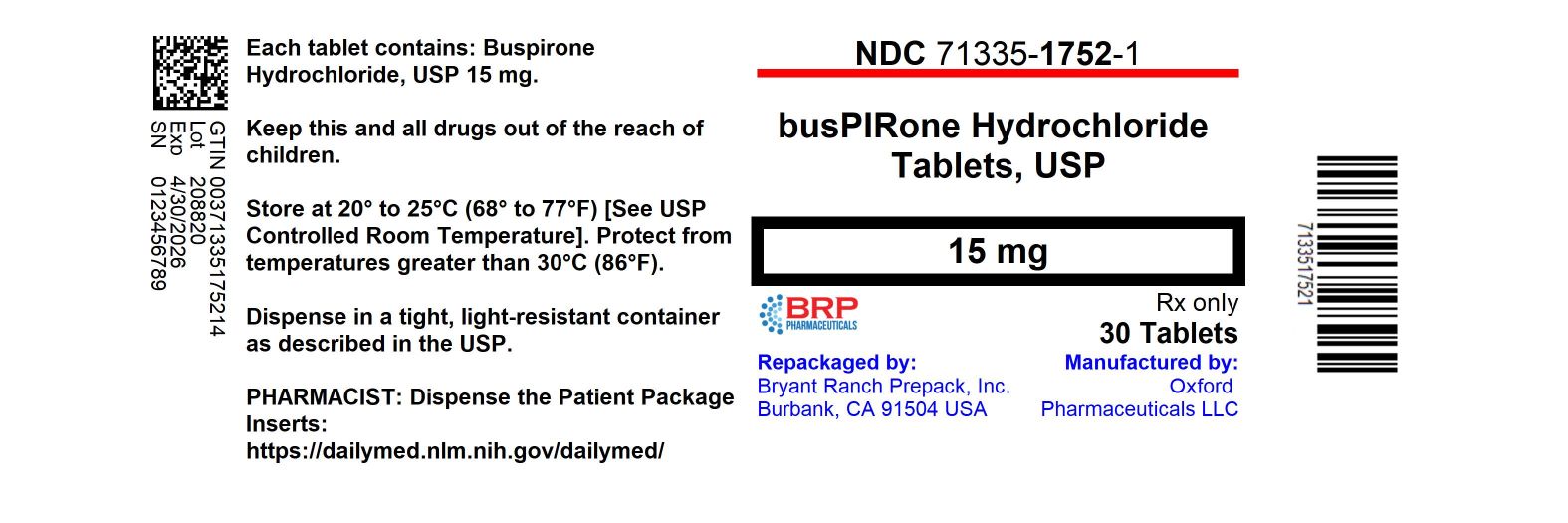
Buspirone Hydrochloride 15 mg Tablet, 120-count
Other active recalls for Buspirone Hydrochloride (different manufacturers) — 2 · tap to view
🆔 Identity & classification
Where does this data come from?
🏷️ RxNorm drug class
This medicine belongs to the Azaspirodecanedione derivatives class.
Where does this data come from?
🏭 Manufacturer & labeler
Where does this data come from?
🩺 Clinical
Buspirone is used to treat anxiety. Buspirone is in a class of medications called anxiolytics. It works by changing the amounts of certain natural substances in the brain.
Read the full MedlinePlus article ↗- Unlike some anti-anxiety medicines that work quickly, buspirone tends to build up its effect gradually. Most people don't feel the full benefit for a few weeks. That can feel frust...
- How long does it take for buspirone to start working?
- Either can work, but the key is to be consistent. Food increases how much buspirone your body absorbs, so if you switch back and forth — sometimes eating before it, sometimes not —...
- Should I take buspirone with food or on an empty stomach?
Patient education
Supplement & herbal interactions
Where does this data come from?
Ask a licensed pharmacist directly — free, answered by our team.
💊 What it looks like
Where does this data come from?
🧪 Inactive Ingredients / Excipients
Inactive ingredients, also called excipients, are components of the drug product other than the active ingredient. They may include fillers, dyes, coatings, preservatives, flavors, or other formulation ingredients.
💡 Tap an ingredient (hover on desktop) to see what it is and why it’s used.
-
UNII 3SY5LH9PMK
Anhydrous lactose is a milk sugar with no water content. It acts as a filler and binder in tablets and capsules, adding bulk and helping ingredients stick together.
-
UNII 70097M6I30
Magnesium stearate is a salt made from magnesium and stearic acid, a fatty substance. It's used in tablets and capsules as a lubricant and glidant to help ingredients flow smoothly during manufacturing and prevent sticking.
-
UNII PNR0YF693Y
A plant-based powder made from purified wood cellulose. It acts as a filler to add bulk, a binder to hold ingredients together, and a disintegrant to help the tablet break apart in the stomach.
-
UNII ETJ7Z6XBU4
Silicon dioxide is a naturally occurring mineral used as a glidant and anti-caking agent. It helps powder ingredients flow smoothly and prevents clumping during manufacturing and storage.
-
UNII 5856J3G2A2
A starch-based powder made from potatoes and processed with sodium. It acts as a disintegrant, helping the tablet or capsule break apart quickly in the stomach so the medicine can be absorbed.
5 inactive ingredients listed in the exact product block matched to this NDC.
Where does this data come from?
ingredient classCode="IACT" elements from the exact product block matched by this NDC. Label-section narrative from DailyMed / the openFDA label index is shown separately when available.Inactive ingredient FAQ
Are inactive ingredients the same for every manufacturer?
Why might an inactive ingredient be missing?
Can inactive ingredients matter?
💲 Pricing
A drug doesn't have one price. Each row is a different public payment system, and none is what you'd pay at the counter — that depends on your insurance. The ⓘ on each row explains what it measures.
| Price system | Per each | Per package |
|---|---|---|
| Retail pharmacies payNADAC · weekly | Not in the retail survey — common for institutional, discontinued, or low-volume packs. | |
| Medicaid paysCMS SDUD · 12 mo | No recent Medicaid claims on file for this NDC — rare and low-volume NDCs are suppressed in the public data. | |
| Medicare drug plans payPart D · Q2 2026 | $0.0755 | $9.06 / 120 tablets |
Where does this data come from?
🔁 Therapeutic equivalents
| Product | Labeler | Pack | NADAC/unit | TE | Status | Price vs. this |
|---|---|---|---|---|---|---|
| Buspirone Hydrochloride 15 mg 00093-1003-01 | Teva | 100 tablets | $0.042 | AB | Availability likely | — |
| Buspirone Hydrochloride 15 mg 00378-1165-05 | Mylan | 500 tablets | $0.042 | AB | Availability likely | — |
| Buspirone hydrochloride 15 mg 00904-6899-61 | Major | 100 tablets | $0.042 | AB | Availability likely | — |
| Buspirone hydrochloride 15 mg 11788-0060-01 | AiPing | 100 tablets | $0.042 | AB | Availability likely | — |
| Buspirone Hydrochloride 15 mg 23155-0025-01 | Heritage | 100 tablets | $0.042 | AB | Availability likely | — |
| Buspirone Hydrochloride 15 mg 24689-0921-01 | APNAR | 100 tablets | $0.042 | BX | Availability likely | — |
| Buspirone Hydrochloride 15 mg 29300-0246-01 | Unichem | 100 tablets | $0.042 | AB | Availability likely | — |
| Buspirone Hydrochloride 15 mg 29300-0477-01 | Unichem | 100 tablets | $0.042 | AB | Availability likely | — |
| Buspirone Hydrochloride 15 mg 42806-0085-01 | Epic | 100 tablets | $0.042 | — | Availability likely | — |
| Buspirone hydrochloride 15 mg 42806-0664-01 | EPIC | 100 tablets | $0.042 | AB | Availability likely | — |
| Buspirone hydrochloride 15 mg 50268-0135-15 | AvPAK | 50 tablets | $0.042 | AB | Availability likely | — |
| Buspirone Hydrochloride 15 mg 51079-0960-20 | Mylan | 100 tablets | $0.042 | AB | Availability likely | — |
| Buspirone Hydrochloride 15 mg 59651-0392-01 | Aurobindo | 100 tablets | $0.042 | AB | Availability likely | — |
| Buspirone hydrochloride 15 mg 60687-0823-01 | American | 100 tablets | $0.042 | AB | Availability likely | — |
| Buspirone Hydrochloride 15 mg 64380-0743-03 | Strides | 60 tablets | $0.042 | AB | Availability likely | — |
| Buspirone hydrochloride 15 mg 68382-0182-01 | Zydus | 100 tablets | $0.042 | AB | Availability likely | — |
| Buspirone Hydrochloride 15 mg 69584-0093-10 | Oxford | 100 tablets | $0.042 | AB | Availability likely | — |
| busPIRone HCl 15 mg 72888-0065-01 | Advagen | 100 tablets | $0.042 | AB | Availability likely | — |
| Buspirone Hydrochloride 15 mg 16729-0203-01 | Accord | 100 tablets | $0.043 | AB | Availability likely | — |
| Buspirone Hydrochloride 15 mg 75834-0269-01 | Nivagen | 100 tablets | $0.050 | BX | FDA listed | — |
| Buspirone Hydrochloride 15 mg 00615-7689-05 | NCS | 15 tablets | — | AB | FDA listed | — |
| Buspirone Hydrochloride 15 mg 42543-0743-03 | Strides | 60 tablets | — | AB | FDA listed | — |
| Buspirone Hydrochloride 15 mg 48433-0013-20 | Safecor | 1 tablet | — | AB | FDA listed | — |
| Buspirone Hydrochloride 15 mg 50090-5886-01 | A-S | 60 tablets | — | AB | FDA listed | — |
| Buspirone Hydrochloride 15 mg 50090-6188-00 | A-S | 180 tablets | — | AB | FDA listed | — |
| Buspirone Hydrochloride 15 mg 50090-6971-01 | A-S | 60 tablets | — | AB | FDA listed | — |
| Buspirone Hydrochloride 15 mg 50090-7161-01 | A-S | 60 tablets | — | AB | FDA listed | — |
| Buspirone Hydrochloride 15 mg 50090-7293-00 | A-S | 180 tablets | — | AB | FDA listed | — |
| Buspirone Hydrochloride 15 mg 51407-0416-05 | Golden | 500 tablets | — | AB | FDA listed | — |
| Buspirone Hydrochloride 15 mg 51655-0015-26 | Northwind | 90 tablets | — | AB | FDA listed | — |
| Buspirone hydrochloride 15 mg 55154-3364-00 | Cardinal | 10 tablets | — | AB | FDA listed | — |
| Buspirone Hydrochloride 15 mg 63187-0402-30 | Proficient | 30 tablets | — | AB | FDA listed | — |
| Buspirone Hydrochloride 15 mg 63629-2412-01 | Bryant | 500 tablets | — | AB | FDA listed | — |
| Buspirone Hydrochloride 15 mg 63629-2413-01 | Bryant | 100 tablets | — | AB | FDA listed | — |
| Buspirone Hydrochloride 15 mg 64980-0653-01 | Rising | 100 tablets | — | AB | FDA listed | — |
| buspirone hydrochloride 15 mg 65841-0783-01 | Zydus | 100 tablets | — | AB | FDA listed | — |
| Buspirone Hydrochloride 15 mg 68071-2987-03 | NuCare | 30 tablets | — | AB | FDA listed | — |
| Buspirone Hydrochloride 15 mg 68071-3834-03 | NuCare | 30 tablets | — | AB | FDA listed | — |
| Buspirone Hydrochloride 15 mg 68788-7968-01 | Preferred | 180 tablets | — | AB | FDA listed | — |
| Buspirone Hydrochloride 15 mg 68788-8681-01 | Preferred | 100 tablets | — | AB | FDA listed | — |
| Buspirone hydrochloride 15 mg 70518-0380-00 | REMEDYREPACK | 30 tablets | — | AB | FDA listed | — |
| Buspirone Hydrochloride 15 mg 70518-2660-00 | REMEDYREPACK | 30 tablets | — | AB | FDA listed | — |
| Buspirone Hydrochloride 15 mg 70518-2987-00 | REMEDYREPACK | 30 tablets | — | AB | FDA listed | — |
| Buspirone Hydrochloride 15 mg 70518-4052-00 | REMEDYREPACK | 30 tablets | — | AB | FDA listed | — |
| BusPIRone Hydrochloride 15 mg 71205-0280-30 | Proficient | 30 tablets | — | BX | FDA listed | — |
| Buspirone Hydrochloride 15 mg 71335-1605-01 | Bryant | 30 tablets | — | AB | FDA listed | — |
| Buspirone Hydrochloride 15 mgthis 71335-1752-05 | Bryant | 120 tablets | — | AB | FDA listed | — |
| Buspirone Hydrochloride 15 mg 71335-2060-01 | Bryant | 30 tablets | — | AB | FDA listed | — |
| Buspirone Hydrochloride 15 mg 71335-2073-01 | Bryant | 30 tablets | — | AB | FDA listed | — |
| Buspirone Hydrochloride 15 mg 71335-2576-01 | Bryant | 30 tablets | — | AB | FDA listed | — |
| Buspirone Hydrochloride 15 mg 71610-0183-60 | Aphena | 90 tablets | — | AB | FDA listed | — |
| Buspirone hydrochloride 15 mg 71610-0206-30 | Aphena | 30 tablets | — | AB | FDA listed | — |
| BusPIRone Hydrochloride 15 mg 71610-0291-60 | Aphena | 90 tablets | — | BX | FDA listed | — |
| Buspirone Hydrochloride 15 mg 71610-0640-30 | Aphena | 30 tablets | — | AB | FDA listed | — |
| Buspirone hydrochloride 15 mg 71610-0975-60 | Aphena | 90 tablets | — | AB | FDA listed | — |
| Buspirone Hydrochloride 15 mg 72162-1926-01 | Bryant | 100 tablets | — | AB | FDA listed | — |
| Buspirone Hcl 15 mg 72189-0235-30 | Direct | 30 tablets | — | AB | FDA listed | — |
| Buspirone HCL 15 mg 72189-0620-30 | Direct_Rx | 30 tablets | — | AB | FDA listed | — |
| Buspirone Hydrochloride 15 mg 72789-0141-01 | PD-Rx | 100 tablets | — | AB | FDA listed | — |
| Buspirone Hydrochloride 15 mg 72789-0332-60 | PD-Rx | 60 tablets | — | AB | FDA listed | — |
| Buspirone Hydrochloride 15 mg 76420-0724-01 | Asclemed | 100 tablets | — | AB | FDA listed | — |
| Buspirone Hydrochloride 15 mg 76420-0809-01 | Asclemed | 100 tablets | — | AB | FDA listed | — |
| Buspirone hydrochloride 15 mg 77771-0237-05 | Radha | 500 tablets | — | AB | FDA listed | — |
| Buspirone Hydrochloride 15 mg 80425-0303-01 | Advanced | 30 tablets | — | AB | FDA listed | — |
| Buspirone Hydrochloride 15 mg 80425-0387-01 | Advanced | 30 tablets | — | AB | FDA listed | — |
| Buspirone Hydrochloride 15 mg 82804-0963-00 | Proficient | 100 tablets | — | AB | FDA listed | — |
| Buspirone Hydrochloride 15 mg 83209-0303-15 | Boswell | 15 tablets | — | AB | FDA listed | — |
| Buspirone hydrochloride 15 mg 87441-0019-01 | Unit | 30 tablets | — | AB | FDA listed | — |
Where does this data come from?
⏳ Availability & generic status
This product is an FDA-approved generic. Other versions of the same drug are listed under Therapeutic equivalents, least expensive first.
Where does this data come from?
🔬 Reported adverse events (FAERS)
Top reported reactions
Reporter sex
Serious outcomes
Where does this data come from?
📦 Packaging — all sizes for this product
| Package NDC | Description | Marketing start | Status |
|---|---|---|---|
| 71335-1752-01 | 30 TABLET in 1 BOTTLE (71335-1752-1) | 2021-04-22 | Active |
| 71335-1752-02 | 100 TABLET in 1 BOTTLE (71335-1752-2) | 2020-12-31 | Active |
| 71335-1752-03 | 60 TABLET in 1 BOTTLE (71335-1752-3) | 2021-02-04 | Active |
| 71335-1752-04 | 90 TABLET in 1 BOTTLE (71335-1752-4) | 2021-04-12 | Active |
| 71335-1752-05 You're viewing this | 120 TABLET in 1 BOTTLE (71335-1752-5) | 2021-12-10 | Active |
| 71335-1752-06 | 28 TABLET in 1 BOTTLE (71335-1752-6) | 2022-05-03 | Active |
| 71335-1752-07 | 180 TABLET in 1 BOTTLE (71335-1752-7) | 2022-03-01 | Active |
You're viewing one of 7 pack sizes for this product.
Pack size FAQ
What quantity is in NDC 71335-1752-05?
What is the difference between NDC 71335-1752-05 and NDC 71335-1752-06?
What NDC number is used to bill for this package of Buspirone Hydrochloride 15 mg Tablet?
🧭 About this NDC listing & data coverage
What data is (and isn’t) available for this NDC — tap to expand
| NDC identity (package / product / labeler codes) | ✓ Available |
| Labeler | ✓ Available |
| Product & package description | ✓ Available |
| Marketing category & status | ✓ Available |
| Active ingredient / dosage form / route | ✓ Available |
| FDA label (SPL via DailyMed) | ✓ Available |
| Package photos | ✓ Available |
| Inactive ingredients (structured) | ✓ Available |
| NADAC pharmacy acquisition price (CMS) | — Not published for this NDC CMS publishes NADAC only for NDCs reported in its retail-pharmacy survey. |
| Orange Book / therapeutic-equivalence data | ✓ Available |
| HCPCS J-code billing crosswalk | — Not published for this NDC Most self-administered / retail products have no J-code — that is normal. |
| Medicaid utilization (CMS SDUD) | — Not published for this NDC CMS reports utilization only for NDCs with Medicaid claims above its privacy threshold. |
Questions about this listing
Why is there no price listed?
Is the NDC printed on the package the same as the 11-digit billing NDC?
What do the three segments of this NDC mean?
Is this package still being marketed?
Does this product come in other package sizes?
Who lists this product with the FDA?
Do I need a prescription for this product?
Where does this data come from?
📄 Full prescribing information FDA SPL
🎯 Indications and Usage ▾
INDICATIONS AND USAGE Buspirone hydrochloride tablets, USP are indicated for the management of anxiety disorders or the short-term relief of the symptoms of anxiety. Anxiety or tension associated with the stress of everyday life usually does not require treatment with an anxiolytic. The efficacy of buspirone hydrochloride tablets, USP has been demonstrated in controlled clinical trials of outpatients whose diagnosis roughly corresponds to Generalized Anxiety Disorder (GAD).
Many of the patients enrolled in these studies also had coexisting depressive symptoms and buspirone hydrochloride tablets, USP relieved anxiety in the presence of these coexisting depressive symptoms. The patients evaluated in these studies had experienced symptoms for periods of 1 month to over 1 year prior to the study, with an average symptom duration of 6 months. Generalized Anxiety Disorder (300.02) is described in the American Psychiatric Association’s Diagnostic and Statistical Manual, III 1 as follows: Generalized, persistent anxiety (of at least 1 month continual duration), manifested by symptoms from three of the four following categories: 1.
Motor tension: shakiness, jitteriness, jumpiness, trembling, tension, muscle aches, fatigability, inability to relax, eyelid twitch, furrowed brow, strained face, fidgeting, restlessness, easy startle. 2. Autonomic hyperactivity: sweating, heart pounding or racing, cold, clammy hands, dry mouth, dizziness, lightheadedness, paresthesias (tingling in hands or feet), upset stomach, hot or cold spells, frequent urination, diarrhea, discomfort in the pit of the stomach, lump in the throat, flushing, pallor, high resting pulse and respiration rate.
3. Apprehensive expectation: anxiety, worry, fear, rumination, and anticipation of misfortune to self or others. 4.
Vigilance and scanning: hyperattentiveness resulting in distractibility, difficulty in concentrating, insomnia, feeling "on edge," irritability, impatience. The above symptoms would not be due to another mental disorder, such as a depressive disorder or schizophrenia. However, mild depressive symptoms are common in GAD.
The effectiveness of buspirone hydrochloride tablets, USP in long-term use, that is, for more than 3 to 4 weeks, has not been demonstrated in controlled trials. There is no body of evidence available that systematically addresses the appropriate duration of treatment for GAD. However, in a study of long-term use, 264 patients were treated with buspirone hydrochloride tablets, USP for 1 year without ill effect.
Therefore, the physician who elects to use buspirone hydrochloride tablets, USP for extended periods should periodically reassess the usefulness of the drug for the individual patient.
⏱️ Dosage and Administration ▾
DOSAGE AND ADMINISTRATION The recommended initial dose is 15 mg daily (7.5 mg b.i.d.). To achieve an optimal therapeutic response, at intervals of 2 to 3 days the dosage may be increased 5 mg per day, as needed. The maximum daily dosage should not exceed 60 mg per day.
In clinical trials allowing dose titration, divided doses of 20 mg to 30 mg per day were commonly employed. The bioavailability of buspirone is increased when given with food as compared to the fasted state (see CLINICAL PHARMACOLOGY ). Consequently, patients should take buspirone in a consistent manner with regard to the timing of dosing; either always with or always without food.
When buspirone is to be given with a potent inhibitor of CYP3A4, the dosage recommendations described in the PRECAUTIONS: Drug Interactions section should be followed. Switching a Patient To or From a Monoamine Oxidase Inhibitor (MAOI) Antidepressant At least 14 days should elapse between discontinuation of an MAOI intended to treat depression and initiation of therapy with buspirone hydrochloride tablets, USP. Conversely, at least 14 days should be allowed after stopping buspirone hydrochloride tablets, USP before starting an MAOI antidepressant (see CONTRAINDICATIONS and DRUG INTERACTIONS ).
Use of buspirone hydrochloride tablets, USP with (Reversible) MAOIs, Such as Linezolid or Methylene Blue Do not start buspirone hydrochloride tablets, USP in a patient who is being treated with a reversible MAOI such as linezolid or intravenous methylene blue because there is an increased risk of serotonin syndrome. In a patient who requires more urgent treatment of a psychiatric condition, non-pharmacological interventions, including hospitalization, should be considered (see CONTRAINDICATIONS and DRUG INTERACTIONS ).
In some cases, a patient already receiving therapy with buspirone hydrochloride tablets, USP may require urgent treatment with linezolid or intravenous methylene blue. If acceptable alternatives to linezolid or intravenous methylene blue treatment are not available and the potential benefits of linezolid or intravenous methylene blue treatment are judged to outweigh the risks of serotonin syndrome in a particular patient, buspirone hydrochloride tablets, USP should be stopped promptly, and linezolid or intravenous methylene blue can be administered.
The patient should be monitored for symptoms of serotonin syndrome for 2 weeks or until 24 hours after the last dose of linezolid or intravenous methylene blue, whichever comes first. Therapy with buspirone hydrochloride tablets, USP may be resumed 24 hours after the last dose of linezolid or intravenous methylene blue (see WARNINGS ). The risk of administering methylene blue by non-intravenous routes (such as oral tablets or by local injection) or in intravenous doses much lower than 1 mg per kg with buspirone hydrochloride tablets, USP is unclear.
The clinician should, nevertheless, be aware of the possibility of emergent symptoms of serotonin syndrome with such use (see CONTRAINDICATIONS , WARNINGS and DRUG INTERACTIONS ).
⛔ Contraindications ▾
CONTRAINDICATIONS Buspirone hydrochloride tablets, USP are contraindicated in patients hypersensitive to buspirone hydrochloride. The use of monoamine oxidase inhibitors (MAOIs) intended to treat depression with buspirone or within 14 days of stopping treatment with buspirone is contraindicated because of an increased risk of serotonin syndrome and/or elevated blood pressure. The use of buspirone within 14 days of stopping an MAOI intended to treat depression is also contraindicated.
Starting buspirone in a patient who is being treated with reversible MAOIs such as linezolid or intravenous methylene blue is also contraindicated because of an increased risk of serotonin syndrome. (see WARNINGS , DOSAGE AND ADMINISTRATION AND DRUG INTERACTIONS ).
⚠️ Warnings ▾
WARNINGS The administration of buspirone hydrochloride tablets, USP to a patient taking a monoamine oxidase inhibitor (MAOI) may pose a hazard. There have been reports of the occurrence of elevated blood pressure when buspirone hydrochloride, USP has been added to a regimen including an MAOI. Therefore, it is recommended that buspirone hydrochloride tablets, USP not be used concomitantly with an MAOI.
Serotonin Syndrome The development of a potentially life-threatening serotonin syndrome has been reported with SNRIs SSRIs, and other serotonergic drugs, including buspirone, alone but particularly with concomitant use of other serotonergic drugs (including triptans), with drugs that impair metabolism of serotonin (in particular, MAOIs, including reversible MAOIs such as linezolid and intravenous methylene blue), or with antipsychotics or other dopamine antagonists. Serotonin syndrome symptoms may include mental status changes (e.g., agitation, hallucinations, delirium, and coma), autonomic instability (e.g., tachycardia, labile blood pressure, dizziness, diaphoresis, flushing, hyperthermia), neuromuscular changes (e.g., tremor, rigidity, myoclonus, hyperreflexia, incoordination), seizures, and/or gastrointestinal symptoms (e.g., nausea, vomiting, diarrhea).
Patients should be monitored for emergence of serotonin syndrome. The concomitant use of buspirone with MAOIs intended to treat depression is contraindicated. Buspirone should also not be started in a patient who is being treated with reversible MAOIs such as linezolid or intravenous methylene blue.
All reports with methylene blue that provided information on the route of administration involved intravenous administration in the dose range of 1 mg/kg to 8 mg/kg. There have been no reports involving the administration of methylene blue by other routes (such as oral tablets or local tissue injection) or at lower doses. There may be circumstances when it is necessary to initiate treatment with a reversible MAOI such as linezolid or intravenous methylene blue in a patient taking buspirone.
Buspirone should be discontinued before initiating treatment with the reversible MAOI [see CONTRAINDICATIONS , DOSAGE AND ADMINISTRATION AND DRUG INTERACTIONS ]. If concomitant use of buspirone with a 5-hydroxytryptmine receptor agonist (triptan) is clinically warranted, careful observation of the patient is advised, particularly during treatment initiation and dose increases. The concomitant use of buspirone with serotonin precursors (such as tryptophan) is not recommended.
Treatment with buspirone and any concomitant serotonergic or antidopaminergic agents, including antipsychotics, should be discontinued immediately if the above events occur and supportive symptomatic treatment should be initiated. Because buspirone hydrochloride tablets, USP have no established antipsychotic activity, it should not be employed in lieu of appropriate antipsychotic treatment.
🤒 Adverse Reactions ▾
ADVERSE REACTIONS (See also PRECAUTIONS ) Commonly Observed The more commonly observed untoward events associated with the use of buspirone hydrochloride tablets, USP not seen at an equivalent incidence among placebo-treated patients include dizziness, nausea, headache, nervousness, lightheadedness, and excitement. Associated with Discontinuation of Treatment One guide to the relative clinical importance of adverse events associated with buspirone hydrochloride tablets, USP is provided by the frequency with which they caused drug discontinuation during clinical testing.
Approximately 10% of the 2200 anxious patients who participated in the buspirone hydrochloride tablets, USP premarketing clinical efficacy trials in anxiety disorders lasting 3 to 4 weeks discontinued treatment due to an adverse event. The more common events causing discontinuation included: central nervous system disturbances (3.4%), primarily dizziness, insomnia, nervousness, drowsiness, and lightheaded feeling; gastrointestinal disturbances (1.2%), primarily nausea; and miscellaneous disturbances (1.1%), primarily headache and fatigue.
In addition, 3.4% of patients had multiple complaints, none of which could be characterized as primary. Incidence in Controlled Clinical Trials The table that follows enumerates adverse events that occurred at a frequency of 1% or more among buspirone hydrochloride, USP patients who participated in 4-week, controlled trials comparing buspirone hydrochloride tablets, USP with placebo. The frequencies were obtained from pooled data for 17 trials.
The prescriber should be aware that these figures cannot be used to predict the incidence of side effects in the course of usual medical practice where patient characteristics and other factors differ from those which prevailed in the clinical trials. Similarly, the cited frequencies cannot be compared with figures obtained from other clinical investigations involving different treatments, uses, and investigators. Comparison of the cited figures, however, does provide the prescribing physician with some basis for estimating the relative contribution of drug and nondrug factors to the side-effect incidence rate in the population studied.
TREATMENT-EMERGENT ADVERSE EXPERIENCE INCIDENCE IN PLACEBO-CONTROLLED CLINICAL TRIALS* (Percent of Patients Reporting) Adverse Experience Buspirone HCL (n=477) Placebo (n=464) Cardiovascular Tachycardia/Palpitations 1 1 CNS Dizziness 12 3 Drowsiness 10 9 Nervousness 5 1 Insomnia 3 3 Lightheadedness 3 - Decreased Concentration 2 2 Excitement 2 - Anger/Hostility 2 - Confusion 2 - Depression 2 2 EENT Blurred Vision 2 - Gastrointestinal Nausea 8 5 Dry Mouth 3 4 Abdominal/Gastric Distress 2 2 Diarrhea 2 - Constipation 1 2 Vomiting 1 2 Musculoskeletal Musculoskeletal Aches/Pains 1 - Neurological Numbness 2 - Paresthesia 1 - Incoordination 1 - Tremor 1 - Skin Skin Rash 1 - Miscellaneous Headache 6 3 Fatigue 4 4 Weakness 2 - Sweating/Clamminess 1 - * Events reported by at least 1% of buspirone hydrochloride tablets patients are included. – Incidence less than 1%.
Other Events Observed During the Entire Premarketing Evaluation of Buspirone Hydrochloride Tablets, USP During its premarketing assessment, buspirone hydrochloride tablets, USP were evaluated in over 3500 subjects. This section reports event frequencies for adverse events occurring in approximately 3000 subjects from this group who took multiple doses of buspirone hydrochloride tablets, USP in the dose range for which buspirone hydrochloride tablets, USP is being recommended (ie, the modal daily dose of buspirone hydrochloride tablets, USP fell between 10 mg and 30 mg for 70% of the patients studied) and for whom safety data were systematically collected.
The conditions and duration of exposure to buspirone hydrochloride tablets, USP varied greatly, involving well-controlled studies as well as experience in open and uncontrolled clinical settings. As part of the total experience gained in clinical studi…
🔄 Drug Interactions ▾
Drug Interactions Psychotropic Agents MAO inhibitors: The use of monoamine oxidase inhibitors (MAOIs) intended to treat depression with buspirone or within 14 days of stopping treatment with buspirone is contraindicated because of an increased risk of serotonin syndrome and/or elevated blood pressure. The use of buspirone within 14 days of stopping an MAOI intended to treat depression is also contraindicated. Starting buspirone in a patient who is being treated with reversible MAOIs such as linezolid or intravenous methylene blue is also contraindicated because of an increased risk of serotonin syndrome.
(see WARNINGS , DOSAGE AND ADMINISTRATION AND CONCOMITANT DRUG) Amitriptyline: After addition of buspirone to the amitriptyline dose regimen, no statistically significant differences in the steady-state pharmacokinetic parameters (Cmax, AUC, and Cmin) of amitriptyline or its metabolite nortriptyline were observed. Diazepam: After addition of buspirone to the diazepam dose regimen, no statistically significant differences in the steady-state pharmacokinetic parameters (Cmax, AUC, and Cmin) were observed for diazepam, but increases of about 15% were seen for nordiazepam, and minor adverse clinical effects (dizziness, headache, and nausea) were observed.
Haloperidol: In a study in normal volunteers, concomitant administration of buspirone and haloperidol resulted in increased serum haloperidol concentrations. The clinical significance of this finding is not clear. Nefazodone: (See Inhibitors and Inducers of Cytochrome P450 3A4 [CYP3A4] ) Trazodone: There is one report suggesting that the concomitant use of Desyrel® (trazodone hydrochloride) and buspirone may have caused 3- to 6-fold elevations on SGPT (ALT) in a few patients.
In a similar study attempting to replicate this finding, no interactive effect on hepatic transaminases was identified. Triazolam/flurazepam: Coadministration of buspirone with either triazolam or flurazepam did not appear to prolong or intensify the sedative effects of either benzodiazepine. Other psychotropics: Because the effects of concomitant administration of buspirone with most other psychotropic drugs have not been studied, the concomitant use of buspirone with other CNS-active drugs should be approached with caution.
Inhibitors and Inducers of Cytochrome P450 3A4 (CYP3A4) Buspirone has been shown in vitro to be metabolized by CYP3A4. This finding is consistent with the in vivo interactions observed between buspirone and the following: Diltiazem and verapamil: In a study of nine healthy volunteers, coadministration of buspirone (10 mg as a single dose) with verapamil (80 mg t.i.d.) or diltiazem (60 mg t.i.d.) increased plasma buspirone concentrations (verapamil increased AUC and Cmax of buspirone 3.4-fold while diltiazem increased AUC and Cmax 5.5-fold and 4-fold, respectively).
Adverse events attributable to buspirone may be more likely during concomitant administration with either diltiazem or verapamil. Subsequent dose adjustment may be necessary and should be based on clinical assessment. Erythromycin: In a study in healthy volunteers, coadministration of buspirone (10 mg as a single dose) with erythromycin (1.5 g/day for 4 days) increased plasma buspirone concentrations (5-fold increase in Cmax and 6-fold increase in AUC).
These pharmacokinetic interactions were accompanied by an increased incidence of side effects attributable to buspirone. If the two drugs are to be used in combination, a low dose of buspirone (e.g., 2.5 mg b.i.d.) is recommended. Subsequent dose adjustment of either drug should be based on clinical assessment.
Grapefruit juice: In a study in healthy volunteers, coadministration of buspirone (10 mg as a single dose) with grapefruit juice (200 mL double-strength t.i.d. for 2 days) increased plasma buspirone concentrations (4.3-fold increase in Cmax; 9.2-fold increase in AUC). Patients receiving buspirone should be advised to avoid drinking such large amounts of grapefruit juice…
🔄 Drug / Laboratory Test Interactions ▾
Drug/Laboratory Test Interactions Buspirone hydrochloride may interfere with the urinary metanephrine/ catecholamine assay. It has been mistakenly read as metanephrine during routine assay testing for pheochromocytoma, resulting in a false positive laboratory result. Buspirone hydrochloride should therefore be discontinued for at least 48 hours prior to undergoing a urine collection for catecholamines.
🤰 Pregnancy ▾
Pregnancy: Teratogenic Effects Pregnancy Category B: No fertility impairment or fetal damage was observed in reproduction studies performed in rats and rabbits at buspirone doses of approximately 30 times the maximum recommended human dose. In humans, however, adequate and well-controlled studies during pregnancy have not been performed. Because animal reproduction studies are not always predictive of human response, this drug should be used during pregnancy only if clearly needed.
🧒 Pediatric Use ▾
Pediatric Use The safety and effectiveness of buspirone were evaluated in two placebo-controlled 6-week trials involving a total of 559 pediatric patients (ranging from 6 to 17 years of age) with GAD. Doses studied were 7.5 mg to 30 mg b.i.d. (15 to 60 mg/day).
There were no significant differences between buspirone and placebo with regard to the symptoms of GAD following doses recommended for the treatment of GAD in adults. Pharmacokinetic studies have shown that, for identical doses, plasma exposure to buspirone and its active metabolite, 1-PP, are equal to or higher in pediatric patients than adults. No unexpected safety findings were associated with buspirone in these trials.
There are no long-term safety or efficacy data in this population.
🧓 Geriatric Use ▾
Geriatric Use In one study of 6632 patients who received buspirone for the treatment of anxiety, 605 patients were ≥ 65 years old and 41 were ≥ 75 years old; the safety and efficacy profiles for these 605 elderly patients (mean age = 70.8 years) were similar to those in the younger population (mean age = 43.3 years). Review of spontaneously reported adverse clinical events has not identified differences between elderly and younger patients, but greater sensitivity of some older patients cannot be ruled out. There were no effects of age on the pharmacokinetics of buspirone (see CLINICAL PHARMACOLOGY: Special Populations ).
🆘 Overdosage ▾
OVERDOSAGE Signs and Symptoms In clinical pharmacology trials, doses as high as 375 mg/day were administered to healthy male volunteers. As this dose was approached, the following symptoms were observed: nausea, vomiting, dizziness, drowsiness, miosis, and gastric distress. A few cases of overdosage have been reported, with complete recovery as the usual outcome.
No deaths have been reported following overdosage with buspirone hydrochloride tablets, USP alone. Rare cases of intentional overdosage with a fatal outcome were invariably associated with ingestion of multiple drugs and/or alcohol, and a causal relationship to buspirone could not be determined. Toxicology studies of buspirone yielded the following LD 50 values: mice, 655 mg/kg; rats, 196 mg/kg; dogs, 586 mg/kg; and monkeys, 356 mg/kg.
These dosages are 160 to 550 times the recommended human daily dose. Recommended Overdose Treatment General symptomatic and supportive measures should be used along with immediate gastric lavage. Respiration, pulse, and blood pressure should be monitored as in all cases of drug overdosage.
No specific antidote is known to buspirone, and dialyzability of buspirone has not been determined.
🧬 Clinical Pharmacology ▾
CLINICAL PHARMACOLOGY The mechanism of action of buspirone is unknown. Buspirone differs from typical benzodiazepine anxiolytics in that it does not exert anticonvulsant or muscle relaxant effects. It also lacks the prominent sedative effect that is associated with more typical anxiolytics.
In vitro preclinical studies have shown that buspirone has a high affinity for serotonin (5-HT 1A ) receptors. Buspirone has no significant affinity for benzodiazepine receptors and does not affect GABA binding in vitro or in vivo when tested in preclinical models. Buspirone has moderate affinity for brain D 2 -dopamine receptors.
Some studies do suggest that buspirone may have indirect effects on other neurotransmitter systems. Buspirone hydrochloride tablets, USP are rapidly absorbed in man and undergo extensive first-pass metabolism. In a radiolabeled study, unchanged buspirone in the plasma accounted for only about 1% of the radioactivity in the plasma.
Following oral administration, plasma concentrations of unchanged buspirone are very low and variable between subjects. Peak plasma levels of 1 ng/mL to 6 ng/mL have been observed 40 to 90 minutes after single oral doses of 20 mg. The single-dose bioavailability of unchanged buspirone when taken as a tablet is on the average about 90% of an equivalent dose of solution, but there is large variability.
The effects of food upon the bioavailability of buspirone hydrochloride tablets, USP have been studied in eight subjects. They were given a 20-mg dose with and without food; the area under the plasma concentration-time curve (AUC) and peak plasma concentration (Cmax) of unchanged buspirone increased by 84% and 116%, respectively, but the total amount of buspirone immunoreactive material did not change. This suggests that food may decrease the extent of presystemic clearance of buspirone (see DOSAGE AND ADMINISTRATION ).
A multiple-dose study conducted in 15 subjects suggests that buspirone has nonlinear pharmacokinetics. Thus, dose increases and repeated dosing may lead to somewhat higher blood levels of unchanged buspirone than would be predicted from results of single-dose studies. An in vitro protein binding study indicated that approximately 86% of buspirone is bound to plasma proteins.
It was also observed that aspirin increased the plasma levels of free buspirone by 23%, while flurazepam decreased the plasma levels of free buspirone by 20%. However, it is not known whether these drugs cause similar effects on plasma levels of free buspirone in vivo , or whether such changes, if they do occur, cause clinically significant differences in treatment outcome. An in vitro study indicated that buspirone did not displace highly protein-bound drugs such as phenytoin, warfarin, and propranolol from plasma protein, and that buspirone may displace digoxin.
Buspirone is metabolized primarily by oxidation, which in vitro has been shown to be mediated by cytochrome P450 3A4 (CYP3A4) (see PRECAUTIONS: Drug Interactions ). Several hydroxylated derivatives and a pharmacologically active metabolite, 1-pyrimidinylpiperazine (1-PP), are produced. In animal models predictive of anxiolytic potential, 1-PP has about one quarter of the activity of buspirone, but is present in up to 20-fold greater amounts.
However, this is probably not important in humans: blood samples from humans chronically exposed to buspirone hydrochloride do not exhibit high levels of 1-PP; mean values are approximately 3 ng/mL and the highest human blood level recorded among 108 chronically dosed patients was 17 ng/mL, less than 1/200th of 1-PP levels found in animals given large doses of buspirone without signs of toxicity. In a single-dose study using 14 C-labeled buspirone, 29% to 63% of the dose was excreted in the urine within 24 hours, primarily as metabolites; fecal excretion accounted for 18% to 38% of the dose.
The average elimination half-life of unchanged buspirone after single doses of 10 to 40 mg is about 2 to 3 hours. Spec…
📦 How Supplied / Storage and Handling ▾
HOW SUPPLIED: Buspirone Hydrochloride Tablets, USP 15 mg are white rectangle, flat faced, beveled edge tablets double-scored and debossed with "0|9|3" on one side and double-scored and debossed "|O|" logo on the other side. NDC 71335-1752-1: 30 Tablets in a BOTTLE NDC 71335-1752-2: 100 Tablets in a BOTTLE NDC 71335-1752-3: 60 Tablets in a BOTTLE NDC 71335-1752-4: 90 Tablets in a BOTTLE NDC 71335-1752-5: 120 Tablets in a BOTTLE NDC 71335-1752-6: 28 Tablets in a BOTTLE NDC 71335-1752-7: 180 Tablets in a BOTTLE Store at 25°C (77°F); excursions permitted between 15°C to 30°C (59°F to 86°F) [see USP controlled room temperature].
Dispense in a tight, light-resistant container (USP). Repackaged/Relabeled by: Bryant Ranch Prepack, Inc. Burbank, CA 91504
📋 Description ▾
DESCRIPTION Buspirone hydrochloride tablets, USP is an antianxiety agent that is not chemically or pharmacologically related to the benzodiazepines, barbiturates, or other sedative/anxiolytic drugs. Buspirone hydrochloride is a white crystalline, water soluble compound with a molecular weight of 422.0. Chemically, buspirone hydrochloride is 8-[4-[4-(2-pyrimidinyl)-1-piperazinyl]butyl]-8-azaspiro[4.5]decane-7,9-dione monohydrochloride.
The empirical formula C 21 H 31 N 5 0 2 • HCl is represented by the following structural formula: Buspirone hydrochloride, USP is supplied as tablets for oral administration containing 5 mg, 10 mg, 15 mg, or 30 mg of buspirone hydrochloride, USP (equivalent to 4.6 mg, 9.1 mg, and 13.7 mg and 27.4 mg of buspirone free base, respectively). The 5-mg and 10-mg tablets are scored so they can be bisected. Thus, the 5-mg tablet can also provide a 2.5-mg dose, and the 10-mg tablet can provide a 5-mg dose.
The 15-mg and 30-mg tablets are provided in the adjustable dosage tablet design. These tablets are scored so they can be either bisected or trisected. Thus, a single 15-mg tablet can provide the following doses: 15 mg (entire tablet), 10 mg (two thirds of a tablet), 7.5 mg (one half of a tablet), or 5 mg (one third of a tablet).
A single 30-mg tablet can provide the following doses: 30 mg (entire tablet), 20 mg (two thirds of a tablet), 15 mg (one half of a tablet), or 10 mg (one third of a tablet). Buspirone hydrochloride, USP tablets contain the following inactive ingredients: colloidal silicon dioxide, lactose anhydrous, magnesium stearate, microcrystalline cellulose, and sodium starch glycolate (Type A).
💬 Information for Patients ▾
Information for Patients To assure safe and effective use of buspirone hydrochloride tablets, USP the following information and instructions should be given to patients: 1. Do not take a monoamine oxidase inhibitor (MAOI). Ask your healthcare provider or pharmacist if you are not sure if you take an MAOI, including the antibiotic linezolid.
2. Do not take an MAOI within 2 weeks of stopping buspirone unless directed to do so by your physician. 3.
Do not start buspirone if you stopped taking an MAOI in the last 2 weeks unless directed to do so by your physician. 4. Inform your physician about any medications, prescription or non-prescription, alcohol, or drugs that you are now taking or plan to take during your treatment with buspirone hydrochloride tablets, USP.
5. Inform your physician if you are pregnant, or if you are planning to become pregnant, or if you become pregnant while you are taking buspirone hydrochloride tablets, USP. 6.
Inform your physician if you are breastfeeding an infant. 7. Until you experience how this medication affects you, do not drive a car or operate potentially dangerous machinery.
8. You should take buspirone hydrochloride tablets, USP consistently, either always with or always without food. 9.
During your treatment with buspirone hydrochloride tablets, USP avoid drinking large amounts of grapefruit juice.