
Glycopyrrolate 1 mg Tablet, 90-count — NDC 71335-9652-4 (Billing 71335-9652-04)
This is a package of 90 tablets of Glycopyrrolate 1 mg Tablet from Bryant Ranch Prepack, marketed since Sep 2018 and currently FDA-listed.
NDC database record
One package, one record: these facts belong to NDC 71335-9652-4 alone.
- Record
- FDA NDC Directory package listing · Human prescription drug
- Code segments
- 71335 labeler · 9652 product · 4 package
- Package marketed since
- Dec 12, 2024
- Sample package
- No — commercial package
- Listing certified through
- Dec 31, 2026
- Barcode (UPC-A, from the NDC)
- 3 7133596524 2
- FDA record last changed
- Jul 24, 2026
Other active recalls for Glycopyrrolate (different manufacturers) — 4 · tap to view
Identity & classification
Regulatory identifiers FDA, NLM and CMS codes for this package
- RxCUI (RxNorm): 197738
Where does this data come from?
- FDA openFDA NDC Directory · synced Oct 8, 2026
- FDA label on DailyMed · label index refreshed Oct 8, 2026
- RxNorm (NLM RxNav) · catalog refreshed Oct 1, 2026
- Medi-Span GPI (licensed)
- First Databank (licensed) · refreshed Oct 8, 2026
RxNorm drug class
This medicine belongs to the Anticholinergic class.
Where does this data come from?
- RxClass (NLM) · catalog refreshed Oct 1, 2026
Clinical
Patient education
Supplement & herbal interactions
Some supplements/herbs that may interact with Glycopyrrolate — tap one for details:
Where does this data come from?
- MedlinePlus (NLM) · refreshed Oct 8, 2026
- FDA label on DailyMed · label index refreshed Oct 8, 2026
Ask a licensed pharmacist directly — free, answered by our team.
Pricing
A drug doesn't have one price. Each row is a different public payment system, and none is what you'd pay at the counter — that depends on your insurance. The ⓘ on each row explains what it measures.
| Price system | Per each | Per package |
|---|---|---|
| Retail pharmacies payNADAC · weekly | Not in the retail survey — common for institutional, discontinued, or low-volume packs. | |
| Medicaid paysCMS SDUD · 12 mo | No recent Medicaid claims on file for this NDC — rare and low-volume NDCs are suppressed in the public data. | |
| Medicare drug plans payPart D · Q2 2026 | $0.1993 | $17.94 / 90 tablets |
Where does this data come from?
- CMS NADAC weekly file
- CMS ASP pricing files · refreshed Sep 20, 2026
- CMS Medicaid State Drug Utilization Data · refreshed Oct 8, 2026
- CMS Part D plan pricing files · refreshed Sep 24, 2026
- VA National Acquisition Center price file
Packaging — all sizes for this product
| Package NDC | Description | Marketing start | Marketing end | Status |
|---|---|---|---|---|
| 71335-9652-01 71335-9652-1 Main listing | 30 TABLET in 1 BOTTLE | 2023-02-21 | — | Active |
| 71335-9652-02 71335-9652-2 | 270 TABLET in 1 BOTTLE | 2023-02-21 | — | Active |
| 71335-9652-03 71335-9652-3 | 28 TABLET in 1 BOTTLE | 2023-02-21 | — | Active |
| 71335-9652-04 You're viewing this | 90 TABLET in 1 BOTTLE | 2023-02-21 | — | Active |
| 71335-9652-05 71335-9652-5 | 100 TABLET in 1 BOTTLE | 2024-04-01 | — | Active |
You're viewing one of 5 pack sizes for this product.
Pack size FAQ
What quantity is in this package?
How does this package differ from NDC 71335-9652-03?
What NDC number is used to bill for this package of Glycopyrrolate 1 mg Tablet?
Therapeutic equivalents
| Product | Labeler | Pack | NADAC/unit | TE | Status | Price vs. this |
|---|---|---|---|---|---|---|
| Glycopyrrolate 1 mg 00904-6709-61 | Major | 100 tablets | $0.100 | AA | Availability likely | — |
| Glycopyrrolate 1 mg 13107-0014-01 | Aurolife | 100 tablets | $0.100 | AA | Availability likely | — |
| Glycopyrrolate 1 mg 23155-0606-01 | Heritage | 100 tablets | $0.100 | AA | Availability likely | — |
| Glycopyrrolate 1 mg 49884-0065-01 | Par | 100 tablets | $0.100 | AA | Availability likely | — |
| Glycopyrrolate 1 mg 50268-0363-15 | AvPAK | 50 tablets | $0.100 | AA | Availability likely | — |
| Glycopyrrolate 1 mg 60687-0458-01 | American | 100 tablets | $0.100 | AA | Availability likely | — |
| Glycopyrrolate 1 mg 62135-0734-60 | Chartwell | 60 tablets | $0.100 | AA | Availability likely | — |
| Glycopyrrolate 1 mg 69076-0475-01 | Quinn | 100 tablets | $0.100 | AA | Availability likely | — |
| Glycopyrrolate 1 mg 69315-0139-01 | Leading | 100 tablets | $0.100 | AA | Availability likely | — |
| Glycopyrrolate 1 mg 70752-0108-10 | QUAGEN | 100 tablets | $0.100 | AA | Availability likely | — |
| Glycopyrrolate 1 mg 00615-8617-39 | NCS | 30 tablets | — | AA | FDA listed | — |
| Glycopyrrolate 1 mg 15955-0305-01 | Alembic | 100 tablets | — | AA | FDA listed | — |
| Glycopyrrolate 1 mg 16571-0743-03 | Rising | 30 tablets | — | AA | FDA listed | — |
| Glycopyrrolate 1 mg 55111-0648-01 | Dr. | 100 tablets | — | AA | FDA listed | — |
| Glycopyrrolate 1 mg 63629-2206-01 | Bryant | 100 tablets | — | AA | FDA listed | — |
| Glycopyrrolate 1 mg 63629-7207-01 | Bryant | 30 tablets | — | AA | FDA listed | — |
| Glycopyrrolate 1 mg 63629-9287-01 | Bryant | 100 tablets | — | AA | FDA listed | — |
| Glycopyrrolate 1 mg 70518-4597-00 | REMEDYREPACK | 100 tablets | — | AA | FDA listed | — |
| Glycopyrrolate 1 mg 71335-2075-01 | Bryant | 30 tablets | — | AA | FDA listed | — |
| Glycopyrrolate 1 mg 71335-3090-01 | Bryant | 30 tablets | — | AA | FDA listed | — |
| Glycopyrrolate 1 mgthis 71335-9652-04 | Bryant | 90 tablets | — | AA | FDA listed | — |
| Glycopyrrolate 1 mg 71921-0110-01 | Florida | 100 tablets | — | AA | FDA listed | — |
| Glycopyrrolate 1 mg 72162-1477-01 | Bryant | 100 tablets | — | AA | FDA listed | — |
| Glycopyrrolate 1 mg 72162-2597-01 | Bryant | 100 tablets | — | AA | FDA listed | — |
| Glycopyrrolate 1 mg 55111-0649-01 | Dr. | 100 tablets | — | AA | FDA listed | — |
Where does this data come from?
- FDA openFDA NDC Directory · synced Oct 8, 2026
- FDA Orange Book · refreshed Oct 3, 2026
- CMS NADAC weekly file
Availability & generic status
This product is an FDA-approved generic. Other versions of the same drug are listed under Therapeutic equivalents, least expensive first.
Where does this data come from?
- FDA Orange Book · refreshed Oct 3, 2026
What it looks like
Where does this data come from?
- FDA label on DailyMed · label index refreshed Oct 8, 2026
Inactive Ingredients / Excipients
Inactive ingredients, also called excipients, are components of the drug product other than the active ingredient. They may include fillers, dyes, coatings, preservatives, flavors, or other formulation ingredients.
💡 Tap an ingredient (hover on desktop) to see what it is and why it’s used.
-
UNII L11K75P92J
A mineral salt made from calcium and phosphate. It acts as a filler and binder in tablets to add bulk and help hold the medicine together in solid form.
-
UNII 3SY5LH9PMK
Anhydrous lactose is a milk sugar with no water content. It acts as a filler and binder in tablets and capsules, adding bulk and helping ingredients stick together.
-
UNII 70097M6I30
Magnesium stearate is a salt made from magnesium and stearic acid, a fatty substance. It's used in tablets and capsules as a lubricant and glidant to help ingredients flow smoothly during manufacturing and prevent sticking.
-
UNII FZ989GH94E
Povidone is a synthetic polymer made from a plastic-like material. It acts as a binder to hold tablet ingredients together and as a disintegrant to help the tablet break apart in your stomach so the medicine can be absorbed.
-
UNII 5856J3G2A2
A starch-based powder made from potatoes and processed with sodium. It acts as a disintegrant, helping the tablet or capsule break apart quickly in the stomach so the medicine can be absorbed.
5 inactive ingredients listed in the exact product block matched to this NDC.
Where does this data come from?
ingredient classCode="IACT" elements from the exact product block matched by this NDC. Label-section narrative from DailyMed / the openFDA label index is shown separately when available.- FDA label on DailyMed · label index refreshed Oct 8, 2026
- FDA openFDA NDC Directory · synced Oct 8, 2026
Inactive ingredient FAQ
Are inactive ingredients the same for every manufacturer?
Why might an inactive ingredient be missing?
Can inactive ingredients matter?
Manufacturer & labeler
More NDCs from Bryant Ranch Prepack labeler code 71335
- Atorvastatin calcium 80 mg Tablet NDC 71335-9646-1
- Hydrochlorothiazide 12.5 mg Tablet NDC 71335-9647-1
- prazosin hydrochloride 1 mg Capsule NDC 71335-9648-1
- Enalapril Maleate 20 mg Tablet NDC 71335-9649-1
- paroxetine hydrochloride 30 mg Tablet, Film Coated NDC 71335-9650-1
- Nifedipine 90 mg Tablet, Extended Release NDC 71335-9651-1
- Ropinirole .5 mg Tablet, Film Coated NDC 71335-9653-1
- Glimepiride 4 mg Tablet NDC 71335-9654-1
- Glimepiride 1 mg Tablet NDC 71335-9655-1
- Ropinirole 1 mg Tablet, Film Coated NDC 71335-9656-1
- Tramadol Hydrochloride 50 mg Tablet, Coated NDC 71335-9658-0
- Eszopiclone 1 mg Tablet, Film Coated NDC 71335-9659-1
Where does this data come from?
- FDA openFDA NDC Directory · synced Oct 8, 2026
- Drugs@FDA
Full prescribing information FDA SPL
🎯 Indications and Usage ▾
1 INDICATIONS AND USAGE Glycopyrrolate Tablets are indicated in adults to reduce symptoms of a peptic ulcer as an adjunct to treatment of peptic ulcer. Limitations of Use Glycopyrrolate Tablets are not indicated as monotherapy for the treatment of peptic ulcer because effectiveness in peptic ulcer healing has not been established. Glycopyrrolate tablets are anticholinergics indicated in adults to reduce symptoms of a peptic ulcer as an adjunct to treatment of peptic ulcer.
(1) Limitations of Use: Not indicated as monotherapy for the treatment of peptic ulcer because effectiveness in peptic ulcer healing has not been established. (1)
⏱️ Dosage and Administration ▾
2 DOSAGE AND ADMINISTRATION Important Dosing Information (2.1) Glycopyrrolate is not recommended for patients initiating treatment or receiving maintenance treatment with glycopyrrolate tablets or another 1 mg dosage strength of oral glycopyrrolate tablets. Recommended Do sage (2.2) The recommended initial dosage of glycopyrrolate tablets is 1 mg three times daily (in the morning, early afternoon, and at bedtime). Some patients may require 2 mg at bedtime to assure overnight control of symptoms.
For maintenance, a dosage of 1 mg twice a day is frequently adequate. The recommended dosage of glycopyrrolate tablets for adults is 2 mg two or three times daily at equally spaced intervals. The maximum recommended daily dosage is 8 mg.
Use the lowest effective dosage of glycopyrrolate to control symptoms. If patients can be titrated to a lower dose, switch from glycopyrrolate tablets or another 1mg oral tablet of glycopyrrolate.
2.1Important Dosing Information Glycopyrrolate tablets is not recommended for patients in whom a lower dosage strength of oral glycopyrrolate (e.g., gylcopyrrolate 2 mg for robinul forte and glycopyrrolate 1 mg for robinul) is appropriate for initial or maintenance treatment because the dosage strength of glycopyrrolate tablets may exceed the recommended initial and maintenance dosage of oral glycopyrrolate tablets.
2.2Recommended Dosage The recommended initial dosage of glycopyrrolate tablets for adults is 1 mg three times daily (in the morning, early afternoon, and at bedtime). Some patients may require 2 mg at bedtime to assure overnight control of symptoms. For maintenance, a dosage of 1 mg twice a day is frequently adequate.
The recommended dosage of glycopyrrolate tablets for adults is 2 mg two or three times daily at equally spaced intervals. The maximum recommended daily dosage of glycopyrrolate is 8 mg. Use the lowest effective dosage of glycopyrrolate to control symptoms.
If patients can be titrated to a lower dose, switch from glycopyrrolate tablets or another 1 mg oral tablet of glycopyrrolate.
2.1Important Dosing Information Glycopyrrolate tablets is not recommended for patients in whom a lower dosage strength of oral glycopyrrolate (e.g., gylcopyrrolate 2 mg for robinul forte and glycopyrrolate 1 mg for robinul) is appropriate for initial or maintenance treatment because the dosage strength of glycopyrrolate tablets may exceed the recommended initial and maintenance dosage of oral glycopyrrolate tablets.
2.2Recommended Dosage The recommended initial dosage of glycopyrrolate tablets for adults is 1 mg three times daily (in the morning, early afternoon, and at bedtime). Some patients may require 2 mg at bedtime to assure overnight control of symptoms. For maintenance, a dosage of 1 mg twice a day is frequently adequate.
The recommended dosage of glycopyrrolate tablets for adults is 2 mg two or three times daily at equally spaced intervals. The maximum recommended daily dosage of glycopyrrolate is 8 mg. Use the lowest effective dosage of glycopyrrolate to control symptoms.
If patients can be titrated to a lower dose, switch from glycopyrrolate tablets or another 1 mg oral tablet of glycopyrrolate.
💊 Dosage Forms and Strengths ▾
3 DOSAGE FORMS AND STRENGTHS Tablets: Glycopyrrolate tablets USP, 1 mg are bisected, compressed white, round tablet debossed “EP” above the bisect and “139” below the bisect on one side of the tablet, and plain on the other side. Glycopyrrolate tablets USP, 2 mg are bisected, compressed white, round tablet debossed “EP” above the bisect and “140” below the bisect on one side and plain on the other side. Glycopyrrolate tablets USP, 1 mg and 2 mg (3)
⛔ Contraindications ▾
4 CONTRAINDICATIONS Glycopyrrolate Tablets are contraindicated in: Patients at risk for anticholinergic toxicity due to an underlying medical condition, including: Glaucoma [see Warnings and Precautions (5.1) ] Obstructive uropathies, including prostatic hypertrophy Mechanical obstructive diseases of the gastrointestinal tract (e.g., pyloroduodenal stenosis, strictures) [see Warnings and Precautions (5.2) ] Gastrointestinal motility disorders (e.g., achalasia, paralytic ileus, intestinal atony) [see Warnings and Precautions (5.3) ] Bleeding gastrointestinal ulcer Active inflammatory or infectious colitis which can lead to toxic megacolon History of or current toxic megacolon Myasthenia gravis Patients with a hypersensitivity to glycopyrrolate or any of the inactive ingredients in glycopyrrolate tablets [see Adverse Reactions (6) and Description (11) ].
Patients at risk for anticholinergic toxicity due to various underlying medical conditions. (4 , 5.1, 5.2, 5.3) Hypersensitivity to glycopyrrolate or the inactive ingredients. (4)
⚠️ Warnings and Cautions ▾
5 WARNINGS AND PRECAUTIONS Precipitation of Acute Glaucoma: May increase intraocular pressure; if symptoms occur, discontinue use and promptly seek medical care. (4, 5.1) Partial or Complete Mechanical Intestinal Obstruction : Diarrhea may be an early symptom, especially in patients with ileostomy or colostomy. If the obstruction is suspected, discontinue use and evaluate the patient for obstruction.
(4, 5.2) GI Adverse Reactions Due to Decreased GI Motility: Delayed gastric emptying, constipation, and intestinal pseudo-obstruction may occur and precipitate or aggravate paralytic ileus and toxic megacolon; not recommended for use with anticholinergics or other medications that decrease GI peristalsis. (4, 5.3, 7.1) Cognitive and Visual Adverse Reactions : May impair mental and/or physical function. Inform patients not to operate motor vehicles or perform other hazardous tasks until reasonably certain they are not adversely affected; discontinue use if signs or symptoms develop.
(5.4, 7.1) Heat Prostration at High Environmental Temperatures : Heat prostration resulting in fever and heatstroke can occur, especially in geriatric patients. Avoid exposure to hot or very warm environmental temperatures. (5.5, 5.7) Other Conditions Exacerbated by Anticholinergic Adverse Reactions : Use is not recommended in patients with autonomic neuropathy, hyperthyroidism, cardiac disease, hiatal hernia, etc.
(5.6, 7.1) Increased Risk of Anticholinergic Adverse Reactions in Geriatric Patients: Complications include urinary retention, bowel obstruction, heat prostration, arrhythmias, delirium, and falls or fractures. Not recommended in geriatric patients and may be contraindicated in some patients with underlying medical conditions. (4, 5.7, 8.5)
5.1Precipitation of Acute Glaucoma Glycopyrrolate may cause increased intraocular pressure in patients with glaucoma and reduce the effects of antiglaucoma agents. Instruct patients to discontinue glycopyrrolate tablets and promptly seek medical care if they experience symptoms of acute angle-closure glaucoma (pain and reddening of the eyes accompanied by dilated pupils) [see Contraindications (4) ] .
5.2Partial or Complete Mechanical Intestinal Obstruction Glycopyrrolate may worsen intestinal mechanical obstruction, and diarrhea may be an early symptom of incomplete intestinal obstruction, especially in patients with ileostomy or colostomy. If partial or complete intestinal obstruction is suspected, discontinue the use of glycopyrrolate and evaluate for potential intestinal obstruction [see Contraindications (4) ] .
5.3Gastrointestinal Adverse Reactions Due to Decreased Gastrointestinal Motility Glycopyrrolate reduces gastrointestinal motility and may result in delayed gastric emptying, constipation, and intestinal pseudo-obstruction and may precipitate or aggravate paralytic ileus and toxic megacolon [see Contraindications (4) ] . The risk of gastrointestinal adverse reactions is further increased with the use of other anticholinergics and other medications that decrease gastrointestinal peristalsis. Monitor patients for symptoms of decreased gastrointestinal motility.
Concomitant use of Glycopyrrolate tablets and other anticholinergics or other medications that decrease GI peristalsis is not recommended [see Drug Interactions (7.2) ] .
5.4Cognitive and Visual Adverse Reactions Glycopyrrolate may produce drowsiness and blurred vision and impair the mental and/or physical abilities required for the performance of hazardous tasks such as driving a motor vehicle, operating machinery, or performing other hazardous work [see Adverse Reactions (6) ] . Concomitant use of other drugs that have anticholinergic properties may increase these effects [see Drug Interactions (7.1) ] . Inform patients not to operate motor vehicles or other dangerous machinery or perform other hazardous tasks until they are reasonably certain that glycopyrrolate tablets does not affect them adversely.
Discontinue Glycopyrrolate tabl… [Excerpted — this section continues on DailyMed.]
🤒 Adverse Reactions ▾
6 ADVERSE REACTIONS The following serious or otherwise important adverse reactions are discussed elsewhere in the labeling: Precipitation of Acute Glaucoma [see Warnings and Precautions (5.1) ] Partial or Complete Mechanical Intestinal Obstruction [see Warnings and Precautions (5.2) ] Gastrointestinal Adverse Reactions due to Decreased Gastrointestinal Motility [see Warnings and Precautions (5.3) ] Cognitive and Visual Adverse Reactions [see Warnings and Precautions (5.4) ] Heat Prostration at High Environmental Temperatures [see Warnings and Precautions (5.5) ] Other Conditions Exacerbated by Anticholinergic Adverse Reactions [see Warnings and Precautions (5.6) ] Increased Risk of Anticholinergic Adverse Reactions in Geriatric Patients [see Warnings and Precautions (5.7) ] The following adverse reactions associated with the use of glycopyrrolate, or other anticholinergic drugs, were identified in clinical studies or post marketing reports.
Because some of these reactions are reported voluntarily from a population of uncertain size, it is not always possible to reliably estimate their frequency or establish a causal relationship to drug exposure. Cardiac Disorders: chest, pain, hypertension, tachycardia Endocrine Disorders: decreased sweating Eye Disorders: blurred vision, cycloplegia, dilatation of the pupil, increased ocular tension Gastrointestinal Disorders: bloated feeling, constipation, dry mouth, dysgeusia, nausea, vomiting Immune System Disorders : anaphylaxis [see Contraindications (4) ] Nervous System Disorders : agitation, dizziness, drowsiness, headache, insomnia, mental confusion, nervousness, weakness Respiratory Disorders: respiratory depression, throat irritation Renal and Urinary Disorders: urinary hesitancy, urinary retention Reproductive System and Breast Disorders: impotence, suppression of lactation Vascular Disorders: flushing Adverse reactions include blurred vision, drowsiness, decreased sweating, flushing, vomiting, constipation, dry mouth, tachycardia, and urinary retention.
(6) To report SUSPECTED ADVERSE REACTIONS, contact Leading Pharma, LLC at 1-844-740-7500 or FDA at 1-800-FDA-1088 or www.fda.gov/medwatch.
🔄 Drug Interactions ▾
7 DRUG INTERACTIONS Other Anticholinergic Drugs: Concomitant use is not recommended. (5.3, 5.4, 5.6, 7.1) Drugs with Altered Absorption due to Decreased GI Motility : Concomitant use is not recommended. (7.2) GI Toxicity with Solid Oral Dosage Forms of Potassium Chloride : Concomitant use is not recommended. (7.3)
7.1Other Anticholinergic Drugs There is potential for an additive interaction between glycopyrrolate and concomitantly used anticholinergic drugs (e.g., tricyclic antidepressants, anti-epileptics, class I antiarrhythmics, anti-spasmodics, amantadine) resulting in increased anticholinergic adverse reactions. Co- administration of antipsychotics with glycopyrrolate may lead to worsening of tardive dyskinesia. Glycopyrrolate tablets are not recommended in patients taking other anticholinergic drugs [see Warnings and Precautions (5.3, 5.4, 5.6) ] .
7.2Drugs with Altered Absorption due to Decreased Gastrointestinal Motility and Increased Transit Time Decreased gastrointestinal motility by glycopyrrolate may impact absorption of other drugs leading to increased or decreased drug exposure. Glycopyrrolate tablets are not recommended in patients taking other drugs that are affected by altered gastrointestinal motility [see Warnings and Precautions (5.3) ] .
7.3Gastrointestinal Toxicity with Solid Oral Dosage Forms of Potassium Chloride Oral glycopyrrolate may worsen gastrointestinal mucosal injury reported with solid oral dosage forms of potassium chloride due to decreased gastric motility and increased transit time, leading to prolonged contact with the gastrointestinal mucosa. Glycopyrrolate tablets are not recommended in patients taking solid oral dosage forms of potassium chloride.
7.1Other Anticholinergic Drugs There is potential for an additive interaction between glycopyrrolate and concomitantly used anticholinergic drugs (e.g., tricyclic antidepressants, anti-epileptics, class I antiarrhythmics, anti-spasmodics, amantadine) resulting in increased anticholinergic adverse reactions. Co- administration of antipsychotics with glycopyrrolate may lead to worsening of tardive dyskinesia. Glycopyrrolate tablets are not recommended in patients taking other anticholinergic drugs [see Warnings and Precautions (5.3, 5.4, 5.6) ] .
7.2Drugs with Altered Absorption due to Decreased Gastrointestinal Motility and Increased Transit Time Decreased gastrointestinal motility by glycopyrrolate may impact absorption of other drugs leading to increased or decreased drug exposure. Glycopyrrolate tablets are not recommended in patients taking other drugs that are affected by altered gastrointestinal motility [see Warnings and Precautions (5.3) ] .
7.3Gastrointestinal Toxicity with Solid Oral Dosage Forms of Potassium Chloride Oral glycopyrrolate may worsen gastrointestinal mucosal injury reported with solid oral dosage forms of potassium chloride due to decreased gastric motility and increased transit time, leading to prolonged contact with the gastrointestinal mucosa. Glycopyrrolate tablets are not recommended in patients taking solid oral dosage forms of potassium chloride.
👥 Use in Specific Populations ▾
8 USE IN SPECIFIC POPULATIONS Renal Impairment: Monitor patients with renal impairment; if anticholinergic adverse reactions occur, discontinue use. (8.6)
8.1Pregnancy Risk Summary Over decades of use, there is an absence of published data on orally administered glycopyrrolate in pregnant women, including an absence of any reports of a drug-associated risk of major birth defects, miscarriage, or other adverse maternal or fetal outcomes. In animal studies, at non-maternally toxic doses of oral glycopyrrolate, there were no adverse developmental effects in rats or rabbits. A pre- and post-natal development study of oral glycopyrrolate in rats showed a decrease in pup mean bodyweight that recovered post nursing, with no other developmental effects observed (see Data) .
The estimated background risk of major birth defects and miscarriage for the indicated population is unknown. All pregnancies have a background risk of birth defect, loss, or other adverse outcomes. In the U.S. general population, the estimated background risk of major birth defects and miscarriage in clinically recognized pregnancies is 2% to 4% and 15% to 20%, respectively.
Data Animal Data At non-maternally toxic doses of oral glycopyrrolate, there were no effects on embryo-fetal development or toxicity in rats or rabbits. A pre- and post-natal development study of oral glycopyrrolate in rats showed a decrease in pup mean bodyweight that recovered post nursing, with no other developmental effects observed. In a published reproductive and developmental study, male and female rats were administered glycopyrrolate in the diet at 0 mg/kg/day, 32.5 mg/kg/day, 63 mg/kg/day, and 130 mg/kg/day for 3 weeks to 5 weeks and through up to three consecutive litters.
There was no indication of abnormalities in the pups of treated dams. There was a decreased rate of conception and in survival rate at weaning for all treated animals in a dose-related manner. Diminished rates of conception may be due to diminished seminal secretion [see Nonclinical Toxicology (13.1) ] .
8.2Lactation Risk Summary There are no data on the presence of glycopyrrolate in either human or animal milk, the effects on the breastfed infant, or the effects on milk production. As with other anticholinergic drugs, glycopyrrolate may cause suppression of lactation. The developmental and health benefits of breastfeeding should be considered along with the mother's clinical need for glycopyrrolate tablets and any potential adverse effects on the breastfed infant from glycopyrrolate tablets.
8.4Pediatric Use Safety and effectiveness in pediatric patients have not been established.
8.5Geriatric Use Geriatric patients 65 years of age and older may be more sensitive to the anticholinergic adverse reactions of glycopyrrolate leading to complications of urinary retention, bowel obstruction, heat prostration, arrhythmias, delirium, and falls or fractures; therefore, glycopyrrolate tablets are not recommended in geriatric patients and may be contraindicated in some geriatric patients with underlying medical conditions [see Contraindications (4) and Warnings and Precautions (5) ].
8.6Renal Impairment Glycopyrrolate is substantially excreted by the kidney [see Clinical Pharmacology (12.3) ] . Monitor patients with renal impairment for anticholinergic adverse reactions [see Adverse Reactions (6) ] . If anticholinergic adverse reactions occur, discontinue glycopyrrolate tablets.
🤰 Pregnancy ▾
8.1Pregnancy Risk Summary Over decades of use, there is an absence of published data on orally administered glycopyrrolate in pregnant women, including an absence of any reports of a drug-associated risk of major birth defects, miscarriage, or other adverse maternal or fetal outcomes. In animal studies, at non-maternally toxic doses of oral glycopyrrolate, there were no adverse developmental effects in rats or rabbits. A pre- and post-natal development study of oral glycopyrrolate in rats showed a decrease in pup mean bodyweight that recovered post nursing, with no other developmental effects observed (see Data) .
The estimated background risk of major birth defects and miscarriage for the indicated population is unknown. All pregnancies have a background risk of birth defect, loss, or other adverse outcomes. In the U.S. general population, the estimated background risk of major birth defects and miscarriage in clinically recognized pregnancies is 2% to 4% and 15% to 20%, respectively.
Data Animal Data At non-maternally toxic doses of oral glycopyrrolate, there were no effects on embryo-fetal development or toxicity in rats or rabbits. A pre- and post-natal development study of oral glycopyrrolate in rats showed a decrease in pup mean bodyweight that recovered post nursing, with no other developmental effects observed. In a published reproductive and developmental study, male and female rats were administered glycopyrrolate in the diet at 0 mg/kg/day, 32.5 mg/kg/day, 63 mg/kg/day, and 130 mg/kg/day for 3 weeks to 5 weeks and through up to three consecutive litters.
There was no indication of abnormalities in the pups of treated dams. There was a decreased rate of conception and in survival rate at weaning for all treated animals in a dose-related manner. Diminished rates of conception may be due to diminished seminal secretion [see Nonclinical Toxicology (13.1) ] .
🧒 Pediatric Use ▾
8.4Pediatric Use Safety and effectiveness in pediatric patients have not been established.
🧓 Geriatric Use ▾
8.5Geriatric Use Geriatric patients 65 years of age and older may be more sensitive to the anticholinergic adverse reactions of glycopyrrolate leading to complications of urinary retention, bowel obstruction, heat prostration, arrhythmias, delirium, and falls or fractures; therefore, glycopyrrolate tablets are not recommended in geriatric patients and may be contraindicated in some geriatric patients with underlying medical conditions [see Contraindications (4) and Warnings and Precautions (5) ].
🆘 Overdosage ▾
10 OVERDOSAGE Signs and symptoms of glycopyrrolate overdosage are related to excessive anti-muscarinic anticholinergic activity and are generally peripheral (e.g., flushing, hyperthermia, tachycardia, ileus, urinary retention, loss of ocular accommodation, and light sensitivity due to mydriasis), but central nervous system toxicity (agitation, seizures, hyperthermia) may also occur. If over-exposure occurs, call the Poison Control Center at 1-800-222-1222 for current information on the management of glycopyrrolate poisoning and overdosage.
Management of glycopyrrolate overdosage is based upon presenting signs and symptoms, including close observation for severe or life-threatening complications which may require respiratory and cardiovascular monitoring and support. Consider administration of activated charcoal and/or use of a reversible anticholinesterase as appropriate or recommended by Poison Control.
🧬 Clinical Pharmacology ▾
12 CLINICAL PHARMACOLOGY
12.1Mechanism of Action Glycopyrrolate, an anticholinergic (antimuscarinic) agent, inhibits the action of acetylcholine on parietal cells in the stomach and decreases the volume and acidity of gastric secretions.
12.2Pharmacodynamics No formal pharmacodynamic studies have been conducted with Glycopyrrolate tablets
12.3Pharmacokinetics Patients with Renal Impairment In the published literature, glycopyrrolate 4 mcg/kg was administered intravenously (Glycopyrrolate tablets are not recommended for intravenous use) in uremic patients undergoing renal transplantation surgery. The mean AUC (10.6 mcg·h/L) and 24-hour urinary excretion (7%) for glycopyrrolate were significantly different from normal healthy adult subjects undergoing general surgery (3.7 mcg·h/L, and 65%, respectively) [see Use in Specific Populations (8.6) ] .
🧬 Mechanism of Action ▾
12.1Mechanism of Action Glycopyrrolate, an anticholinergic (antimuscarinic) agent, inhibits the action of acetylcholine on parietal cells in the stomach and decreases the volume and acidity of gastric secretions.
📦 How Supplied / Storage and Handling ▾
HOW SUPPLIED Glycopyrrolate tablets USP, 1 mg are bisected, compressed white, round tablet debossed “EP” above the bisect and “139” below the bisect on one side of the tablet, and plain on the other side. NDC: 71335-9652-1: 30 TABLETs in a BOTTLE NDC: 71335-9652-2: 270 TABLETs in a BOTTLE NDC: 71335-9652-3: 28 TABLETs in a BOTTLE NDC: 71335-9652-4: 90 TABLETs in a BOTTLE NDC: 71335-9652-5: 100 TABLETs in a BOTTLE Store at 20°C to 25°C (68°F to 77°F) [see USP Controlled Room Temperature] Dispense in a tight, light-resistant container as defined in the USP, using a child- resistant closure.
Repackaged/Relabeled by: Bryant Ranch Prepack, Inc. Burbank, CA 91504
📋 Description ▾
11 DESCRIPTION Glycopyrrolate tablets contain synthetic anticholinergic glycopyrrolate. Glycopyrrolate is a quaternary ammonium compound with the following chemical name: 3-[(cyclopentyl hydroxyphenylacetyl)oxy]-1,1-dimethylpyrrolidinium bromide. The molecular formula for glycopyrrolate is C 19 H 28 BrNO 3 , the molecular weight is 398.3 g/mol, and the structural formula is: Each 1 mg tablet contains Glycopyrrolate USP 1 mg, as the active ingredient.
Each 2 mg tablet contains glycopyrrolate USP 2 mg, as the active ingredient. The inactive ingredients aredibasic calcium phosphate, lactose, magnesium stearate, povidone and sodium starch glycolate.
💬 Information for Patients ▾
17 PATIENT COUNSELING INFORMATION Precipitation of Acute Glaucoma Advise patients to discontinue glycopyrrolate tablets and promptly seek medical care if they experience symptoms of acute angle-closure glaucoma (pain and reddening of the eyes accompanied by dilated pupils) [see Warnings and Precautions (5.1) ] . Partial or Complete Mechanical Intestinal Obstruction Advise patients to contact their healthcare provider if diarrhea occurs, especially in patients with ileostomy or colostomy [see Warnings and Precautions (5.2) ] .
Gastrointestinal Adverse Reactions Due to Decreased Gastrointestinal Motility Inform patients that glycopyrrolate tablets may cause adverse reactions related to decreased gastrointestinal motility and report to their healthcare provider if they experience symptoms such as vomiting, early satiety, abdominal distention, and constipation [see Warnings and Precautions (5.3) ] . Cognitive and Visual Adverse Reactions Inform patients that glycopyrrolate tablets may cause cognitive or visual impairment and not operate motor vehicles or other dangerous machinery or perform other hazardous tasks until they are reasonably certain that glycopyrrolate tablets do not affect them adversely.
Advise patients to discontinue glycopyrrolate tablets immediately and contact their healthcare provider if symptoms develop (e.g., drowsiness or blurred vision) [see Warnings and Precautions (5.4) ] . Heat Prostration at High Environmental Temperatures Inform patients that glycopyrrolate tablets can reduce sweating, leading to the possibility of heat exhaustion or heat stroke. Advise patients to avoid exposure to hot or very warm environmental temperatures [see Warnings and Precautions (5.5) ] .
Manufactured by: Leading Pharma, LLC Fairfield, NJ 07004 USA Rev.07 09/23
🧬 Pharmacokinetics ▾
12.3Pharmacokinetics Patients with Renal Impairment In the published literature, glycopyrrolate 4 mcg/kg was administered intravenously (Glycopyrrolate tablets are not recommended for intravenous use) in uremic patients undergoing renal transplantation surgery. The mean AUC (10.6 mcg·h/L) and 24-hour urinary excretion (7%) for glycopyrrolate were significantly different from normal healthy adult subjects undergoing general surgery (3.7 mcg·h/L, and 65%, respectively) [see Use in Specific Populations (8.6) ] .
🧬 Pharmacodynamics ▾
12.2Pharmacodynamics No formal pharmacodynamic studies have been conducted with Glycopyrrolate tablets
🧪 Nonclinical Toxicology ▾
13 NONCLINICAL TOXICOLOGY
13.1Carcinogenesis, Mutagenesis, Impairment of Fertility Reproduction studies in rats resulted in diminished rates of conception in a dose-related manner. Studies in dogs suggest that diminished rates of conception may be due to diminished seminal secretion, which is evident at high doses of glycopyrrolate.
📄 Carcinogenesis, Mutagenesis, Impairment of Fertility ▾
13.1Carcinogenesis, Mutagenesis, Impairment of Fertility Reproduction studies in rats resulted in diminished rates of conception in a dose-related manner. Studies in dogs suggest that diminished rates of conception may be due to diminished seminal secretion, which is evident at high doses of glycopyrrolate.
📄 Package Label / Principal Display Panel ▾
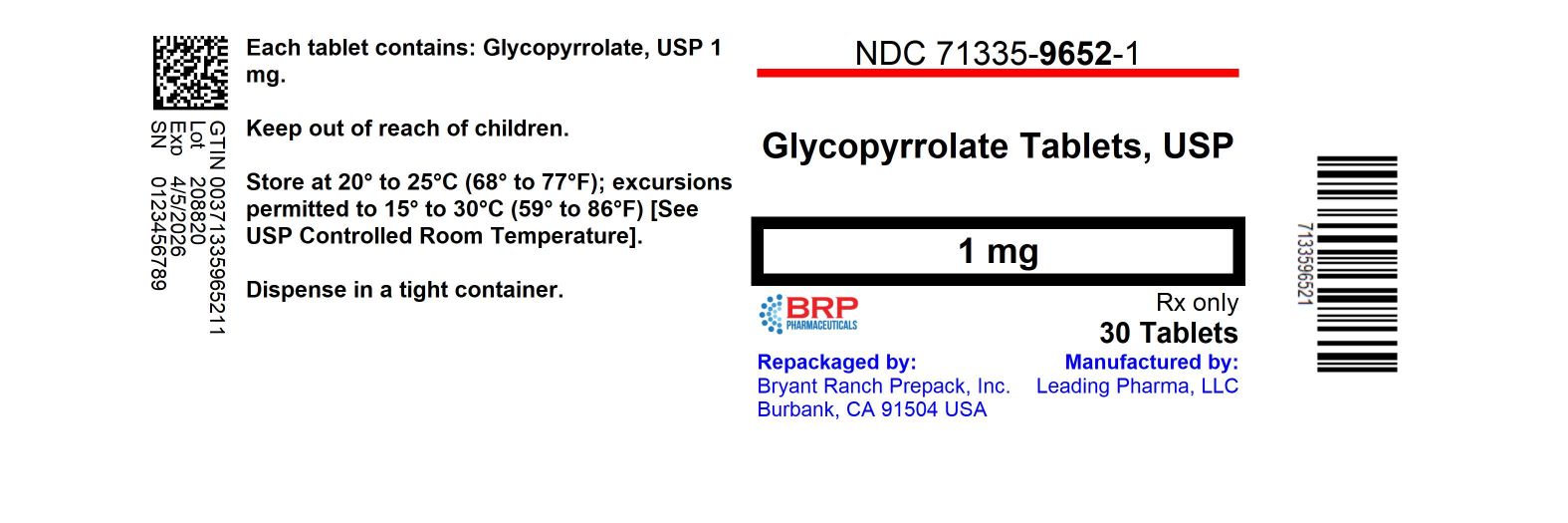
Glycopyrrolate 1 mg Tablets Label
Medicare Part D spend CMS · PART D · 2026 (Q1)
About this NDC listing & data coverage
What data is (and isn’t) available for this NDC — tap to expand
| NDC identity (package / product / labeler codes) | ✓ Available |
| Labeler | ✓ Available |
| Product & package description | ✓ Available |
| Marketing category & status | ✓ Available |
| Active ingredient / dosage form / route | ✓ Available |
| FDA label (SPL via DailyMed) | ✓ Available |
| Package photos | ✓ Available |
| Inactive ingredients (structured) | ✓ Available |
| NADAC pharmacy acquisition price (CMS) | — Not published for this NDC CMS publishes NADAC only for NDCs reported in its retail-pharmacy survey. |
| Orange Book / therapeutic-equivalence data | ✓ Available |
| HCPCS J-code billing crosswalk | — Not published for this NDC Most self-administered / retail products have no J-code — that is normal. |
| Medicaid utilization (CMS SDUD) | — Not published for this NDC CMS reports utilization only for NDCs with Medicaid claims above its privacy threshold. |