
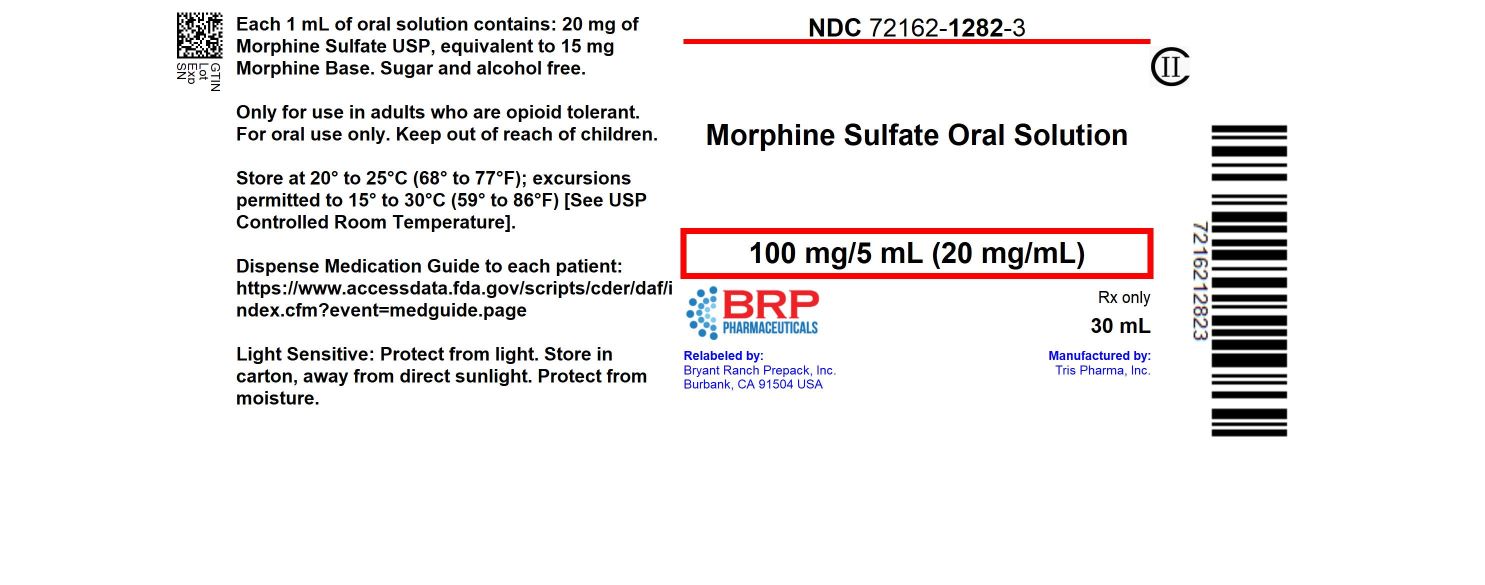
Morphine Sulfate 20 mg/mL Solution — NDC 72162-1282-3 (Billing 72162-1282-03)
This is a package of Morphine Sulfate 20 mg/mL Solution from Bryant Ranch Prepack, marketed since Sep 2015 and currently FDA-listed.
NDC database record
One package, one record: these facts belong to NDC 72162-1282-3 alone.
- Record
- FDA NDC Directory package listing · Human prescription drug
- Code segments
- 72162 labeler · 1282 product · 3 package
- Package marketed since
- Feb 7, 2024
- Sample package
- No — commercial package
- Listing certified through
- Dec 31, 2027
- Barcode (UPC-A, from the NDC)
- 3 7216212823 7
- FDA record last changed
- Jul 24, 2026
Other active recalls for Morphine Sulfate (different manufacturers) — 4 · tap to view
Identity & classification
Regulatory identifiers FDA, NLM and CMS codes for this package
Drug-database identifiers Medi-Span GPI and First Databank GCN / HICL / AHFS classification
- GSN (GCN sequence number): 004090
- GCN: 16063
- HICL (First Databank): 001694
- AHFS class code: 28:08.08.00
- RxCUI (RxNorm): 892625
Where does this data come from?
- FDA openFDA NDC Directory · synced Oct 8, 2026
- FDA label on DailyMed · label index refreshed Oct 8, 2026
- RxNorm (NLM RxNav) · catalog refreshed Oct 1, 2026
- Medi-Span GPI (licensed)
- First Databank (licensed) · refreshed Oct 8, 2026
RxNorm drug class
This medicine belongs to the Opioid Agonist class.
Where does this data come from?
- RxClass (NLM) · catalog refreshed Oct 1, 2026
Clinical
Morphine is used to relieve severe pain. Morphine is in a class of medications called opiate (narcotic) analgesics. It works by changing the way the brain and nervous system respond to pain.
Read the full MedlinePlus article ↗- Morphine treats severe pain when other treatments haven't worked or aren't suitable. Some forms are short-acting, and others are long-acting for around-the-clock pain. Your prescri...
- Follow your label exactly. Extended-release capsules and tablets must be swallowed whole, never crushed or chewed, because that can release a dangerous dose at once. For liquid, us...
- No. Alcohol can raise morphine levels and cause a fatal overdose. Avoid products containing alcohol, and check with me before taking other sedating medicines like sleep aids or anx...
- Constipation, nausea, drowsiness, and dizziness are most common. Call for help right away if you have slow or shallow breathing, extreme sleepiness, fainting, or an allergic reacti...
Patient education
Supplement & herbal interactions
Some supplements/herbs that may interact with Morphine Sulfate — tap one for details:
Where does this data come from?
- MedlinePlus (NLM) · refreshed Oct 8, 2026
- FDA label on DailyMed · label index refreshed Oct 8, 2026
Ask a licensed pharmacist directly — free, answered by our team.
Pricing
A drug doesn't have one price. Each row is a different public payment system, and none is what you'd pay at the counter — that depends on your insurance. The ⓘ on each row explains what it measures.
| Price system | Per mL | Per package |
|---|---|---|
| Retail pharmacies payNADAC · weekly | Not in the retail survey — common for institutional, discontinued, or low-volume packs. | |
| Medicaid paysCMS SDUD · 12 mo | No recent Medicaid claims on file for this NDC — rare and low-volume NDCs are suppressed in the public data. | |
| Medicare drug plans payPart D · Q2 2026 | $0.4490 | $13.47 / 30 ml |
Where does this data come from?
- CMS NADAC weekly file
- CMS ASP pricing files · refreshed Sep 20, 2026
- CMS Medicaid State Drug Utilization Data · refreshed Oct 8, 2026
- CMS Part D plan pricing files · refreshed Sep 24, 2026
- VA National Acquisition Center price file
Packaging — all sizes for this product
| Package NDC | Description | Marketing start | Marketing end | Status |
|---|---|---|---|---|
| 72162-1282-02 72162-1282-2 Main listing | 1 BOTTLE, UNIT-DOSE in 1 CARTON / 120 mL in 1 BOTTLE, UNIT-DOSE | 2024-02-07 | — | Active |
| 72162-1282-03 You're viewing this | 1 BOTTLE, UNIT-DOSE in 1 CARTON / 30 mL in 1 BOTTLE, UNIT-DOSE | 2024-02-07 | — | Active |
Pack size FAQ
What quantity is in this package?
What NDC number is used to bill for this package of Morphine Sulfate 20 mg/mL Solution?
Therapeutic equivalents
| Product | Labeler | Pack | NADAC/unit | TE | Status | Price vs. this |
|---|---|---|---|---|---|---|
| Morphine Sulfate 20 mg/mL 00406-8003-12 | SpecGx | 1 bottle | $0.302 | AA | Availability likely | — |
| Morphine Sulfate 20 mg/mL 27808-0082-01 | Cranbury | 1 bottle | $0.392 | — | Availability likely | — |
| Morphine Sulfate 100 mg/5mL 75826-0131-01 | Winder | 30 ml | $0.392 | AA | Availability likely | — |
| Morphine Sulfate 100 mg/5mL 00054-0517-41 | Hikma | 15 ml | $0.460 | AA | Availability likely | — |
| Morphine Sulfate 20 mg/mL 63629-2301-01 | Bryant | 1 bottle | — | — | FDA listed | — |
| Morphine Sulfate 20 mg/mL 63629-2302-01 | Bryant | 1 bottle | — | — | FDA listed | — |
| Morphine Sulfate 100 mg/5mL 68094-0045-58 | Precision | 1 syringe | — | AA | FDA listed | — |
| Morphine Sulfate 100 mg/5mL 68094-0056-58 | Precision | 1 syringe | — | AA | FDA listed | — |
| Morphine Sulfate 100 mg/5mL 68094-0156-58 | Precision | 1 syringe | — | AA | FDA listed | — |
| Morphine Sulfate 100 mg/5mL 68094-0256-58 | Precision | 1 syringe | — | AA | Discontinued | — |
| Morphine Sulfate 100 mg/5mL 68094-0356-58 | Precision | 1 syringe | — | AA | FDA listed | — |
| Morphine Sulfate 100 mg/5mL 68094-0556-58 | Precision | 1 syringe | — | AA | FDA listed | — |
| Morphine Sulfate 20 mg/mLthis 72162-1282-03 | Bryant | 1 bottle | — | — | FDA listed | — |
| Morphine Sulfate 20 mg/mL 68000-0111-05 | American | 50 syringes | — | — | FDA listed | — |
| Morphine Sulfate 20 mg/mL 68000-0113-03 | American | 30 syringes | — | — | FDA listed | — |
| Morphine Sulfate 20 mg/mL 68000-0112-05 | American | 50 syringes | — | — | FDA listed | — |
| Morphine Sulfate 20 mg/mL 68000-0110-01 | American | 10 syringes | — | — | FDA listed | — |
| Morphine Sulfate 20 mg/mL 68000-0114-03 | American | 30 syringes | — | — | FDA listed | — |
Where does this data come from?
- FDA openFDA NDC Directory · synced Oct 8, 2026
- FDA Orange Book · refreshed Oct 3, 2026
- CMS NADAC weekly file
Availability & generic status
This product is an FDA-approved generic. Other versions of the same drug are listed under Therapeutic equivalents, least expensive first.
Where does this data come from?
- FDA Orange Book · refreshed Oct 3, 2026
Inactive Ingredients / Excipients
Inactive ingredients, also called excipients, are components of the drug product other than the active ingredient. They may include fillers, dyes, coatings, preservatives, flavors, or other formulation ingredients.
🧪 Avoiding an ingredient? See Morphine inactive ingredients by manufacturer: every current product's list side by side, so you can ask your pharmacy for the version that does not list it.
💡 Tap an ingredient (hover on desktop) to see what it is and why it’s used.
-
UNII 2968PHW8QP
A weak organic acid derived from citrus fruits or made through fermentation. It works as a buffer to control pH, a preservative to extend shelf life, and a flavoring agent in medications.
-
UNII 25IH6R4SGF
Edetate calcium disodium is a chelating agent, a chemical that binds to metal ions. It's used in some medications to prevent unwanted metals from interfering with the drug's stability and effectiveness.
-
UNII PDC6A3C0OX
Glycerin is a clear, thick liquid derived from plant oils or fats. It acts as a humectant to retain moisture, a sweetener, and a solvent in medications.
-
UNII OJ245FE5EU
Sodium benzoate is a salt derived from benzoic acid, a preservative. It's added to medicines to prevent growth of bacteria, fungi, and other microorganisms that could spoil the product.
-
UNII 506T60A25R
Sorbitol is a natural sugar alcohol derived from glucose. It serves as a sweetener, humectant, and bulking agent in medications to improve taste and help maintain moisture in the product.
-
UNII 059QF0KO0R
Water is a liquid solvent that dissolves and mixes ingredients together in liquid medicines, syrups, and injections. It helps distribute the active drug evenly throughout the product.
6 inactive ingredients listed in the exact product block matched to this NDC.
Where does this data come from?
ingredient classCode="IACT" elements from the exact product block matched by this NDC. Label-section narrative from DailyMed / the openFDA label index is shown separately when available.- FDA label on DailyMed · label index refreshed Oct 8, 2026
- FDA openFDA NDC Directory · synced Oct 8, 2026
Inactive ingredient FAQ
Are inactive ingredients the same for every manufacturer?
Why might an inactive ingredient be missing?
Can inactive ingredients matter?
Manufacturer & labeler
More NDCs from Bryant Ranch Prepack labeler code 72162
- Donepezil Hydrochloride 23 mg Tablet, Film Coated NDC 72162-1276-3
- Nifedipine 30 mg Tablet, Extended Release NDC 72162-1277-1
- Bupropion Hydrochloride (XL) 300 mg Tablet, Extended Release NDC 72162-1278-9
- Hydrocodone Bitartrate and Acetaminophen 5 mg; 325 mg Tablet NDC 72162-1279-0
- Hydrocodone Bitartrate and Acetaminophen 7.5 mg; 325 mg Tablet NDC 72162-1280-0
- Hydrocodone Bitartrate and Acetaminophen 10 mg; 325 mg Tablet NDC 72162-1281-0
- Hydrocodone Polistirex and Chlorpheniramine Polistirex extended-release 10 mg/5mL; 8 mg/5mL Suspension, Extended Release NDC 72162-1283-2
- Dexmethylphenidate Hydrochloride 2.5 mg Tablet NDC 72162-1284-1
- Dexmethylphenidate Hydrochloride 5 mg Tablet NDC 72162-1285-1
- Dexmethylphenidate Hydrochloride 10 mg Tablet NDC 72162-1286-1
- Hydrocodone Bitartrate and Acetaminophen 5 mg; 300 mg Tablet NDC 72162-1287-1
- Hydrocodone Bitartrate and Acetaminophen 7.5 mg; 300 mg Tablet NDC 72162-1288-1
Where does this data come from?
- FDA openFDA NDC Directory · synced Oct 8, 2026
- Drugs@FDA
Full prescribing information FDA SPL
🚨 Boxed Warning ▾
WARNING: RISK OF MEDICATION ERRORS; ADDICTION, ABUSE, AND MISUSE; RISK EVALUATION AND MITIGATION STRATEGY (REMS); LIFE-THREATENING RESPIRATORY DEPRESSION; ACCIDENTAL INGESTION; NEONATAL OPIOID WITHDRAWAL SYNDROME; and RISKS FROM CONCOMITANT USE WITH BENZODIAZEPINES OR OTHER CNS DEPRESSANTS Risk of Medication Errors Ensure accuracy when prescribing, dispensing, and administering Morphine Sulfate Oral Solution. Dosing errors due to confusion between mg and mL, and other morphine solutions of different concentrations can result in accidental overdose and death [ see Dosage and Administration ( 2.1 ) , Warnings and Precautions ( 5.1 ) ].
Addiction, Abuse, and Misuse Morphine Sulfate Oral Solution exposes patients and other users to the risks of opioid addiction, abuse, and misuse, which can lead to overdose and death. Assess each patient’s risk prior to prescribing Morphine Sulfate Oral Solution, and monitor all patients regularly for the development of these behaviors and conditions [see Warnings and Precautions ( 5.2 ) ]. Opioid Analgesic Risk Evaluation and Mitigation Strategy (REMS) To ensure that the benefits of opioid analgesics outweigh the risks of addiction, abuse, and misuse, the Food and Drug Administration (FDA) has required a REMS for these products [see Warnings and Precautions (5.3) ].
Under the requirements of the REMS, drug companies with approved opioid analgesic products must make REMS-compliant education programs available to healthcare providers. Healthcare providers are strongly encouraged to • complete a REMS-compliant education program, • counsel patients and/or their caregivers, with every prescription, on safe use, serious risks, storage, and disposal of these products, • emphasize to patients and their caregivers the importance of reading the Medication Guide every time it is provided by their pharmacist, and • consider other tools to improve patient, household, and community safety.
Life-Threatening Respiratory Depression Serious, life-threatening, or fatal respiratory depression may occur with use of Morphine Sulfate Oral Solution. Monitor for respiratory depression, especially during initiation of Morphine Sulfate Oral Solution or following a dose increase [ see Warnings and Precautions ( 5.4 ) ]. Accidental Ingestion Accidental ingestion of even one dose of Morphine Sulfate Oral Solution, especially by children, can result in a fatal overdose of morphine [ see Warnings and Precautions ( 5.
4 ) ]. Neonatal Opioid Withdrawal Syndrome Prolonged use of Morphine Sulfate Oral Solution during pregnancy can result in neonatal opioid withdrawal syndrome, which may be life-threatening if not recognized and treated, and requires management according to protocols developed by neonatology experts. If opioid use is required for a prolonged period in a pregnant woman, advise the patient of the risk of neonatal opioid withdrawal syndrome and ensure that appropriate treatment will be available [ see Warnings and Precautions ( 5.5 ) ].
Risks From Concomitant Use With Benzodiazepines Or Other CNS Depressants Concomitant use of opioids with benzodiazepines or other central nervous system (CNS) depressants, including alcohol, may result in profound sedation, respiratory depression, coma, and death [ see Warnings and Precautions ( 5.6 ) , Drug Interactions ( 7 ) ]. Reserve concomitant prescribing of Morphine Sulfate Oral Solution and benzodiazepines or other CNS depressants for use in patients for whom alternative treatment options are inadequate. Limit dosages and durations to the minimum required.
Follow patients for signs and symptoms of respiratory depression and sedation. WARNING: RISK OF MEDICATION ERRORS : ADDICTION, ABUSE, AND MISUSE; RISK EVALUATION AND MITIGATION STRATEGY (REMS); LIFE-THREATENING RESPIRATORY DEPRESSION; ACCIDENTAL INGESTION; NEONATAL OPIOID WITHDRAWAL SYNDROME; and RISKS FROM CONCOMITANT USE WITH BENZODIAZEPINES OR OTHER CNS DEPRESSANTS See full prescribing information for complete boxed warning… [Excerpted — this section continues on DailyMed.]
🎯 Indications and Usage ▾
1 INDICATIONS AND USAGE Morphine Sulfate Oral Solution 2 mg/mL is indicated for the management of: adults with acute and chronic pain severe enough to require an opioid analgesic and for which alternative treatments are inadequate. Morphine Sulfate Oral Solution 20 mg/mL is indicated for the relief of acute and chronic pain in opioid-tolerant adult patients . Limitations of Use Because of the risks of addiction, abuse, and misuse with opioids, even at recommended doses [ see Warnings and Precautions ( 5.2 ) ], reserve Morphine Sulfate Oral Solution for use in patients for whom alternative treatment options [e.g., non-opioid analgesics or opioid combination products]: Have not been tolerated, or are not expected to be tolerated, Have not provided adequate analgesia, or are not expected to provide adequate analgesia.
Pediatric use information is approved for Hikma Pharmaceuticals USA Inc.'s morphine sulfate oral solution. However, due to Hikma Pharmaceuticals USA Inc.'s marketing exclusivity rights, this drug product is not labeled with that informatio n. Morphine Sulfate Oral Solution is an opioid agonist: Morphine Sulfate Oral Solution 2 mg/mL is indicated for the management of: adults with acute and chronic pain severe enough to require an opioid analgesic and for which alternative treatments are inadequate.
( 1 ) Morphine Sulfate Oral Solution 20 mg/mL is indicated for: the relief of acute and chronic pain in opioid-tolerant adult patients . ( 1 ) Limitations of Use ( 1 ): Because of the risks of addiction, abuse, and misuse with opioids, even at recommended doses, reserve Morphine Sulfate Oral Solution for use in patients for whom alternative treatment options [e.g., non-opioid analgesics or opioid combination products]: Have not been tolerated, or are not expected to be tolerated, Have not provided adequate analgesia, or are not expected to provide adequate analgesia.
⏱️ Dosage and Administration ▾
2 DOSAGE AND ADMINISTRATION Morphine Sulfate Oral Solution 20 mg/mL is only for opioid-tolerant adult patients . ( 2.1 ) Use the lowest effective dosage for the shortest duration consistent with individual patient treatment goals. ( 2.1 ) Individualize dosing based on the severity of pain, patient response, prior analgesic experience, and risk factors for addiction, abuse, and misuse.
( 2.1 ) Discuss availability of naloxone with the patient and caregiver and assess each patient’s need for access to naloxone, both when initiating and renewing treatment with Morphine Sulfate Oral Solution. Consider prescribing naloxone based on the patient’s risk factors for overdose. ( 2.2 , 5.2 , 5.4 , 5.6 ).
Adults: Initiate treatment with Morphine Sulfate Oral Solution: 10 mg to 20 mg every 4 hours as needed. ( 2.3 ) Do not abruptly discontinue Morphine Sulfate Oral Solution in a physically dependent patient because rapid discontinuation of opioid analgesics has resulted in serious withdrawal symptoms, uncontrolled pain, and suicide. ( 2.5 )
2.1Dosage and Administration Overview Morphine Sulfate Oral Solution is available in two concentrations: 2 mg/mL and 20 mg/mL [ see Dosage Forms and Strengths (3) ]. Morphine Sulfate Oral Solution 2 mg/mL is indicated for use in adults. Always use an appropriately graduated oral syringe with metric units of measurement (i.e., mL) when administering Morphine Sulfate Oral Solution 2 mg/mL to correctly measure the prescribed amount of medication.
Morphine Sulfate Oral Solution 20 mg/mL is only indicated for use in opioid-tolerant adult patients who have already been receiving opioid therapy. This concentration is to be used only in adult patients who have already been titrated to a stable analgesic regimen using lower concentrations of morphine sulfate and who can benefit from use of a higher concentration (smaller volume) of oral solution. Adult patients considered to be opioid tolerant are those who are receiving, for one week or longer, at least 60 mg oral morphine per day, 25 mcg transdermal fentanyl per hour, 30 mg oral oxycodone per day, 8 mg oral hydromorphone per day, 25 mg oral oxymorphone per day, 60 mg oral hydrocodone per day, or an equianalgesic dose of another opioid.
Always use the enclosed calibrated oral syringe when administering Morphine Sulfate Oral Solution 20 mg/mL to ensure the dose is measured and administered accurately. Ensure accuracy when prescribing, dispensing, and administering Morphine Sulfate Oral Solution to avoid dosing errors due to confusion between mg and mL, and with other morphine solutions of different concentrations, which could result in accidental overdose and death. Ensure the proper dose is communicated and dispensed.
When writing prescriptions, include both the total dose (in mg) and the total dose in volume (mL). Instruct patients on how to accurately measure and take the correct dose of Morphine Sulfate Oral Solution. Instruct patients to never use household teaspoons or tablespoons to measure Morphine Sulfate Oral Solution.
Pediatric use information is approved for Hikma Pharmaceuticals USA Inc.'s morphine sulfate oral solution. However, due to Hikma Pharmaceuticals USA Inc.'s marketing exclusivity rights, this drug product is not labeled with that informatio n.
2.2Important Dosage and Administration Instructions Use the lowest effective dosage for the shortest duration consistent with individual patient treatment goals [ see Warnings and Precautions (5) ]. Initiate the dosing regimen for each patient individually, taking into account the patient's severity of pain, patient response, prior analgesic treatment experience, and risk factors for addiction, abuse, and misuse [ see Warnings and Precautions ( 5.2 ) ]. Monitor patients closely for respiratory depression, especially within the first 24 to 72 hours of initiating therapy and following dosage increases with Morphine Sulfate Oral Solution and adjust the dosage accordingly [ see Warnings and Precaution… [Excerpted — this section continues on DailyMed.]
💊 Dosage Forms and Strengths ▾
3 DOSAGE FORMS AND STRENGTHS Morphine Sulfate Oral Solution: 10 mg per 5 mL (2 mg/mL): Each 1 mL of green, clear Morphine Sulfate Oral Solution contains 2 mg of morphine sulfate, USP (equivalent to 1.5 mg morphine). 100 mg per 5 mL (20 mg/mL) (only for opioid tolerant adults ): Each 1 mL of clear/colorless to very faint yellow Morphine Sulfate Oral Solution contains 20 mg of morphine sulfate, USP (equivalent to 15 mg morphine.) Oral Solution: 10 mg per 5 mL (2 mg/mL) 100 mg per 5 mL (20 mg/mL) ( only for opioid tolerant adults ) ( 3 )
⛔ Contraindications ▾
4 CONTRAINDICATIONS Morphine Sulfate Oral Solution is contraindicated in patients with: Significant respiratory depression [ see Warnings and Precautions ( 5.4 ) ]. Acute or severe bronchial asthma in an unmonitored setting or in the absence of resuscitative equipment [ see Warnings and Precautions ( 5.7 ) ]. Concurrent use of monoamine oxidase inhibitors (MAOIs) or use of MAOIs within the last 14 days [ see Warnings and Precautions ( 5.8 ) and Drug Interactions ( 7 ) ].
Known or suspected gastrointestinal obstruction, including paralytic ileus [ see Warnings and Precautions ( 5.12 ) ] Hypersensitivity to morphine (e.g., anaphylaxis) [ see Adverse Reactions ( 6 ) ]. Significant respiratory depression. ( 4 ) Acute or severe bronchial asthma in an unmonitored setting or in absence of resuscitative equipment.
( 4 ). Concurrent use of monoamine oxidase inhibitors (MAOIs) or use of MAOIs within the last 14 days ( 4 ) Known or suspected gastrointestinal obstruction, including paralytic ileus. ( 4 ) Hypersensitivity to morphine.
( 4 )
⚠️ Warnings and Cautions ▾
5 WARNINGS AND PRECAUTIONS Life-Threatening Respiratory Depression in Patients with Chronic Pulmonary Disease or in Elderly, Cachectic, or Debilitated Patients: Monitor closely, particularly during initiation and titration. ( 5.7 ) Adrenal Insufficiency: If diagnosed, treat with physiologic replacement of corticosteroids, and wean patient off of the opioid. ( 5.9 ) Severe Hypotension: Monitor during dosage initiation and titration.
Avoid use of Morphine Sulfate Oral Solution in patients with circulatory shock. ( 5.10 ) Risks of Use in Patients with Increased Intracranial Pressure, Brain Tumors, Head Injury, or Impaired Consciousness : Monitor for sedation and respiratory depression. Avoid use of Morphine Sulfate Oral Solution in patients with impaired consciousness or coma.
( 5.11 )
5.1Risk of Accidental Overdose and Death due to Medication Errors Dosing errors can result in accidental overdose and death. Avoid dosing errors that may result from confusion between mg and mL and confusion with morphine solutions of different concentrations, when prescribing, dispensing, and administering Morphine Sulfate Oral Solution. Ensure that the dose is communicated clearly and dispensed accurately.
Always use the enclosed calibrated oral syringe or dosing cup when administering Morphine Sulfate Oral Solution to ensure the dose is measured and administered accurately. A household teaspoon or tablespoon is not an adequate measuring device. Given the inexactitude of the household spoon measure and the possibility of using a tablespoon instead of a teaspoon, which could lead to overdosage, it is strongly recommended that caregivers obtain and use a calibrated measuring device.
Health care providers should recommend a calibrated device that can measure and deliver the prescribed dose accurately, and instruct caregivers to use extreme caution in measuring the dosage.
5.2Addiction, Abuse, and Misuse Morphine Sulfate Oral Solution contains morphine, a Schedule II controlled substance. As an opioid, Morphine Sulfate Oral Solution exposes users to the risks of addiction, abuse, and misuse [ see Drug Abuse and Dependence ( 9 ) ]. Although the risk of addiction in any individual is unknown, it can occur in patients appropriately prescribed morphine sulfate.
Addiction can occur at recommended dosages and if the drug is misused or abused. Assess each patient’s risk for opioid addiction, abuse, or misuse prior to prescribing Morphine Sulfate Oral Solution, and monitor all patients receiving Morphine Sulfate Oral Solution for the development of these behaviors and conditions. Risks are increased in patients with a personal or family history of substance abuse (including drug or alcohol abuse or addiction) or mental illness (e.g., major depression).
The potential for these risks should not, however, prevent the proper management of pain in any given patient. Patients at increased risk may be prescribed opioids such as Morphine Sulfate Oral Solution, but use in such patients necessitates intensive counseling about the risks and proper use of Morphine Sulfate Oral Solution along with intensive monitoring for signs of addiction, abuse, and misuse. Consider prescribing naloxone for the emergency treatment of opioid overdose [ see Dosage and Administration (2.3) and Warnings and Precautions (5.4) ].
Opioids are sought by drug abusers and people with addiction disorders and are subject to criminal diversion. Consider these risks when prescribing or dispensing Morphine Sulfate Oral Solution. Strategies to reduce these risks include prescribing the drug in the smallest appropriate quantity and advising the patient on the proper disposal of unused drug.
Contact local state professional licensing board or state controlled substances authority for information on how to prevent and detect abuse or diversion of this product.
5.3Opioid Analgesic Risk Evaluation and Mitigation Strategy (REMS) To ensure that the benefits of opioid analgesics outweigh the risks of addi… [Excerpted — this section continues on DailyMed.]
🤒 Adverse Reactions ▾
6 ADVERSE REACTIONS The following serious adverse reactions are described, or described in greater detail, in other sections: Addiction, Abuse, and Misuse [ see Warnings and Precautions ( 5.2 ) ] Life-Threatening Respiratory Depression [ see Warnings and Precautions ( 5.4 ) ] Neonatal Opioid Withdrawal Syndrome [ see Warnings and Precautions ( 5.5 ) ] Interactions with Benzodiazepine or Other CNS Depressants [ see Warnings and Precautions ( 5.6 ) ] Adrenal Insufficiency [ see Warnings and Precautions ( 5.9 ) ] Severe Hypotension [ see Warnings and Precautions ( 5.10 ) ] Gastrointestinal Adverse Reactions [ see Warnings and Precautions ( 5.12 ) ] Seizures [ see Warnings and Precautions ( 5.13 ) ] Withdrawal [ see Warnings and Precautions ( 5.14 ) ] The following adverse reactions associated with the use of morphine were identified in clinical studies or postmarketing reports.
Because some of these reactions were reported voluntarily from a population of uncertain size, it is not always possible to reliably estimate their frequency or establish a causal relationship to drug exposure. Serious adverse reactions associated with morphine use included: respiratory depression, apnea, and to a lesser degree, circulatory depression, respiratory arrest, shock and cardiac arrest. The common adverse reactions seen on initiation of therapy with morphine in adults were dose-dependent and were typical opioid-relatedadverse reactions.
The most frequent of these included constipation, nausea, and somnolence. Other commonly observed adverse reactions included: lightheadedness, dizziness, sedation, vomiting, and sweating. The frequency of these events depended upon several factors including clinical setting, the patient’s level of opioid tolerance, and host factors specific to the individual.
Other less frequently observed adverse reactions from opioid analgesics, including morphine sulfate included: Body as a Whole: malaise, withdrawal syndrome Cardiovascular System: bradycardia, hypertension, hypotension, palpitations, syncope, tachycardia Digestive System: anorexia, biliary pain, dyspepsia, dysphagia, gastroenteritis, abnormal liver function tests, rectal disorder, thirst Endocrine: hypogonadism Hemic and Lymphatic System: anemia, thrombocytopenia Metabolic and Nutritional Disorders: edema, weight loss Musculoskeletal: skeletal muscle rigidity, decreased bone mineral density Nervous System: abnormal dreams, abnormal gait, agitation, amnesia, anxiety, ataxia, confusion, convulsions, coma, delirium, depression, dry mouth, euphoria, hallucinations, lethargy, nervousness, abnormal thinking, tremor, vasodilation, vertigo, headache Respiratory System: hiccup, hypoventilation, voice alteration Skin and Appendages: dry skin, urticaria, pruritus Special Senses: amblyopia, eye pain, taste perversion Urogenital System: abnormal ejaculation, dysuria, impotence, decreased libido, oliguria, urinary retention or hesitancy, anti-diuretic effect, amenorrhea Serotonin Syndrome: Cases of serotonin syndrome, a potentially life-threatening condition, have been reported during concomitant use of opioids with serotonergic drugs.
Adrenal Insufficiency: Cases of adrenal insufficiency have been reported with opioid use, more often following greater than one month of use. Anaphylaxis: Anaphylaxis has been reported with ingredients contained in Morphine Sulfate Oral Solution. Androgen Deficiency: Cases of androgen deficiency have occurred with chronic use of opioids [ see Clinical Pharmacology ( 12.2 ) ].
Pediatric use information is approved for Hikma Pharmaceuticals USA Inc.'s morphine sulfate oral solution. However, due to Hikma Pharmaceuticals USA Inc.'s marketing exclusivity rights, this drug product is not labeled with that informatio n. Most common adverse reactions on initiation of therapy are: Adults: constipation, nausea, somnolence, lightheadedness, dizziness, sedation, vomiting, and sweating.
( 6 ) To report SUSPECTED ADVERSE REACTIONS, contact Tris Pharma, I… [Excerpted — this section continues on DailyMed.]
🔄 Drug Interactions ▾
7 DRUG INTERACTIONS Table 1 includes clinically significant drug interactions with Morphine Sulfate Oral Solution. Table 1: Clinically Significant Drug Interactions with Morphine Sulfate Oral Solution Benzodiazepines and Other Central Nervous System (CNS) Depressants Clinical Impact: Due to additive pharmacologic effect, the concomitant use of benzodiazepines or other CNS depressants, including alcohol, can increase the risk of hypotension, respiratory depression, profound sedation, coma, and death. Intervention: Reserve concomitant prescribing of these drugs for use in patients for whom alternative treatment options are inadequate.
Limit dosages and durations to the minimum required. Follow patients closely for signs of respiratory depression and sedation. If concomitant use is warranted, consider prescribing naloxone for the emergency treatment of opioid overdose [ see Dosage and Administration (2.3) and Warnings and Precautions (5.2, 5.4, 5.6) ].
Examples: Benzodiazepines and other sedatives/hypnotics, anxiolytics, tranquilizers, muscle relaxants, general anesthetics, antipsychotics, other opioids, alcohol. Serotonergic Drugs Clinical Impact: The concomitant use of opioids with other drugs that affect the serotonergic neurotransmitter system has resulted in serotonin syndrome. Intervention: If concomitant use is warranted, carefully observe the patient, particularly during treatment initiation and dose adjustment.
Discontinue Morphine Sulfate Oral Solution if serotonin syndrome is suspected. Examples: Selective serotonin reuptake inhibitors (SSRIs), serotonin and norepinephrine reuptake inhibitors (SNRIs), tricyclic antidepressants (TCAs), triptans, 5-HT3 receptor antagonists, drugs that affect the serotonin neurotransmitter system (e.g., mirtazapine, trazodone, tramadol), certain muscle relaxants (i.e., cyclobenzaprine, metaxalone), monoamine oxidase (MAO) inhibitors (those intended to treat psychiatric disorders and also others, such as linezolid and intravenous methylene blue).
Monoamine Oxidase Inhibitors (MAOIs) Clinical Impact: MAOI interactions with opioids may manifest as serotonin syndrome or opioid toxicity (e.g., respiratory depression, coma) [ see Warnings and Precautions (5.4 , 5.8) ]. Intervention: Do not use Morphine Sulfate Oral Solution in patients taking MAOIs or within 14 days of stopping such treatment. Examples: Phenelzine, tranylcypromine, linezolid.
Mixed Agonist/Antagonist and Partial Agonist Opioid Analgesics Clinical Impact: May reduce the analgesic effect of Morphine Sulfate Oral Solution and/or precipitate withdrawal symptoms. Intervention: Avoid concomitant use. Examples: Butorphanol, nalbuphine, pentazocine, buprenorphine.
Muscle Relaxants Clinical Impact: Morphine may enhance the neuromuscular blocking action of skeletal muscle relaxants and produce an increased degree of respiratory depression. Intervention: Monitor patients for signs of respiratory depression that may be greater than otherwise expected and decrease the dosage of Morphine Sulfate Oral Solution and/or the muscle relaxant as necessary. Due to the risk of respiratory depression with concomitant use of skeletal muscle relaxants and opioids, consider prescribing naloxone for the emergency treatment of opioid overdose [see Dosage and Administration (2.3) and Warnings and Precautions (5.4 , 5.6 ) ] .
Examples: Cyclobenzaprine, metaxalone. Cimetidine Clinical Impact: The concomitant use of morphine and cimetidine has been reported to precipitate apnea, confusion, and muscle twitching in an isolated report. Intervention: Monitor patients for increased respiratory and CNS depression when Morphine Sulfate Oral Solution is used concomitantly with cimetidine.
Diuretics Clinical Impact: Opioids can reduce the efficacy of diuretics by inducing the release of antidiuretic hormone. Intervention: Monitor patients for signs of diminished diuresis and/or effects on blood pressure and increase the dosage of the diuretic as needed. Anticholinergic… [Excerpted — this section continues on DailyMed.]
👥 Use in Specific Populations ▾
8 USE IN SPECIFIC POPULATIONS Pregnancy: May cause fetal harm. ( 8.1 )
8.1Pregnancy Risk Summary Prolonged use of opioid analgesics during pregnancy can cause neonatal opioid withdrawal syndrome [ see Warnings and Precautions ( 5.5 ) ]. There are no available data with Morphine Sulfate Oral Solution in pregnant women to inform a drug-associated risk for major birth defects and miscarriage. Published studies with morphine use during pregnancy have not reported a clear association with morphine and major birth defects ( see Human Data ) .
In published animal reproduction studies, morphine administered subcutaneously during the early gestational period produced neural tube defects (i.e., exencephaly and cranioschisis) at 5 and 16 times the human daily dose of 60 mg based on body surface area (HDD) in hamsters and mice, respectively, lower fetal body weight and increased incidence of abortion at 0.4 times the HDD in the rabbit, growth retardation at 6 times the HDD in the rat, and axial skeletal fusion and cryptorchidism at 16 times the HDD in the mouse.
Administration of morphine sulfate to pregnant rats during organogenesis and through lactation resulted in cyanosis, hypothermia, decreased brain weights, pup mortality, decreased pup body weights, and adverse effects on reproductive tissues at 3 to 4 times the HDD; and long-term neurochemical changes in the brain of offspring which correlate with altered behavioral responses that persist through adulthood at exposures comparable to and less than the HDD ( see Animal Data ) . Based on animal data, advise pregnant women of the potential risk to a fetus.
The estimated background risk of major birth defects and miscarriage for the indicated population is unknown. All pregnancies have a background risk of birth defect, loss, or other adverse outcomes. In the U.S. general population, the estimated background risk of major birth defects and miscarriage in clinically recognized pregnancies is 2% to 4% and 15% to 20%, respectively.
Clinical Considerations Fetal/Neonatal Adverse Reactions Prolonged use of opioid analgesics during pregnancy for medical or nonmedical purposes can result in physical dependence in the neonate and neonatal opioid withdrawal syndrome shortly after birth. Neonatal opioid withdrawal syndrome presents as irritability, hyperactivity and abnormal sleep pattern, high pitched cry, tremor, vomiting, diarrhea, and failure to gain weight. The onset, duration, and severity of neonatal opioid withdrawal syndrome vary based on the specific opioid used, duration of use, timing and amount of last maternal use, and rate of elimination of the drug by the newborn.
Observe newborns for symptoms of neonatal opioid withdrawal syndrome and manage accordingly [ see Warnings and Precautions ( 5.5 ) ]. Labor or Delivery Opioids cross the placenta and may produce respiratory depression and psycho-physiologic effects in neonates. An opioid antagonist, such as naloxone, must be available for reversal of opioid-induced respiratory depression in the neonate.
Morphine Sulfate Oral Solution is not recommended for use in pregnant women during or immediately prior to labor, when other analgesic techniques are more appropriate. Opioid analgesics, including Morphine Sulfate Oral Solution, can prolong labor through actions which temporarily reduce the strength, duration, and frequency of uterine contractions. However, this effect is not consistent and may be offset by an increased rate of cervical dilation, which tends to shorten labor.
Monitor neonates exposed to opioid analgesics during labor for signs of excess sedation and respiratory depression. Data Human Data The results from a population-based prospective cohort, including 70 women exposed to morphine during the first trimester of pregnancy and 448 women exposed to morphine at any time during pregnancy, indicate no increased risk for congenital malformations. However, these studies cannot definitely establish the absence of any risk becaus… [Excerpted — this section continues on DailyMed.]
🤰 Pregnancy ▾
8.1Pregnancy Risk Summary Prolonged use of opioid analgesics during pregnancy can cause neonatal opioid withdrawal syndrome [ see Warnings and Precautions ( 5.5 ) ]. There are no available data with Morphine Sulfate Oral Solution in pregnant women to inform a drug-associated risk for major birth defects and miscarriage. Published studies with morphine use during pregnancy have not reported a clear association with morphine and major birth defects ( see Human Data ) .
In published animal reproduction studies, morphine administered subcutaneously during the early gestational period produced neural tube defects (i.e., exencephaly and cranioschisis) at 5 and 16 times the human daily dose of 60 mg based on body surface area (HDD) in hamsters and mice, respectively, lower fetal body weight and increased incidence of abortion at 0.4 times the HDD in the rabbit, growth retardation at 6 times the HDD in the rat, and axial skeletal fusion and cryptorchidism at 16 times the HDD in the mouse.
Administration of morphine sulfate to pregnant rats during organogenesis and through lactation resulted in cyanosis, hypothermia, decreased brain weights, pup mortality, decreased pup body weights, and adverse effects on reproductive tissues at 3 to 4 times the HDD; and long-term neurochemical changes in the brain of offspring which correlate with altered behavioral responses that persist through adulthood at exposures comparable to and less than the HDD ( see Animal Data ) . Based on animal data, advise pregnant women of the potential risk to a fetus.
The estimated background risk of major birth defects and miscarriage for the indicated population is unknown. All pregnancies have a background risk of birth defect, loss, or other adverse outcomes. In the U.S. general population, the estimated background risk of major birth defects and miscarriage in clinically recognized pregnancies is 2% to 4% and 15% to 20%, respectively.
Clinical Considerations Fetal/Neonatal Adverse Reactions Prolonged use of opioid analgesics during pregnancy for medical or nonmedical purposes can result in physical dependence in the neonate and neonatal opioid withdrawal syndrome shortly after birth. Neonatal opioid withdrawal syndrome presents as irritability, hyperactivity and abnormal sleep pattern, high pitched cry, tremor, vomiting, diarrhea, and failure to gain weight. The onset, duration, and severity of neonatal opioid withdrawal syndrome vary based on the specific opioid used, duration of use, timing and amount of last maternal use, and rate of elimination of the drug by the newborn.
Observe newborns for symptoms of neonatal opioid withdrawal syndrome and manage accordingly [ see Warnings and Precautions ( 5.5 ) ]. Labor or Delivery Opioids cross the placenta and may produce respiratory depression and psycho-physiologic effects in neonates. An opioid antagonist, such as naloxone, must be available for reversal of opioid-induced respiratory depression in the neonate.
Morphine Sulfate Oral Solution is not recommended for use in pregnant women during or immediately prior to labor, when other analgesic techniques are more appropriate. Opioid analgesics, including Morphine Sulfate Oral Solution, can prolong labor through actions which temporarily reduce the strength, duration, and frequency of uterine contractions. However, this effect is not consistent and may be offset by an increased rate of cervical dilation, which tends to shorten labor.
Monitor neonates exposed to opioid analgesics during labor for signs of excess sedation and respiratory depression. Data Human Data The results from a population-based prospective cohort, including 70 women exposed to morphine during the first trimester of pregnancy and 448 women exposed to morphine at any time during pregnancy, indicate no increased risk for congenital malformations. However, these studies cannot definitely establish the absence of any risk because of methodological limitations, including small sample size and non-ra… [Excerpted — this section continues on DailyMed.]
🧒 Pediatric Use ▾
8.4Pediatric Use The safety and effectiveness of Morphine Sulfate Oral Solution (2 mg/mL) have not been established for the management of pediatric patients 2 to 17 years of age with chronic pain severe enough to require an opioid analgesic when alternative treatments are inadequate. The safety and effectiveness of Morphine Sulfate Oral Solution (2 mg/mL) have not been established in pediatric patients less than 2 years of age. The safety and effectiveness of Morphine Sulfate Oral Solution 20 mg/mL have not been established in pediatric patients.
Pediatric use information is approved for Hikma Pharmaceuticals USA Inc.'s morphine sulfate oral solution. However, due to Hikma Pharmaceuticals USA Inc.'s marketing exclusivity rights, this drug product is not labeled with that informatio n.
🧓 Geriatric Use ▾
8.5Geriatric Use Elderly patients (aged 65 years or older) may have increased sensitivity to morphine. In general, use caution when selecting a dose for an elderly patient, usually starting at the low end of the dosing range, reflecting the greater frequency of decreased hepatic, renal, or cardiac function and of concomitant disease or other drug therapy. Respiratory depression is the chief risk for elderly patients treated with opioids, and has occurred after large initial doses were administered to patients who were not opioid-tolerant or when opioids were co-administered with other agents that depress respiration.
Titrate the dosage of Morphine Sulfate Oral Solution slowly in geriatric patients and monitor closely for signs of central nervous system and respiratory depression [ see Warnings and Precautions ( 5.7 ) ]. Morphine is known to be substantially excreted by the kidney, and the risk of adverse reactions to this drug may be greater in patients with impaired renal function. Because elderly patients are more likely to have decreased renal function, care should be taken in dose selection, and it may be useful to monitor renal function.
🆘 Overdosage ▾
10 OVERDOSAGE Clinical Presentation Acute overdose with Morphine Sulfate Oral Solution can be manifested by respiratory depression, somnolence progressing to stupor or coma, skeletal muscle flaccidity, cold and clammy skin, constricted pupils, and, in some cases, pulmonary edema, bradycardia, hypotension, partial or complete airway obstruction, atypical snoring, and death. Marked mydriasis rather than miosis may be seen with hypoxia in overdose situations [ see Clinical Pharmacology ( 12.2 ) ]. Treatment of Overdose In case of overdose, priorities are the reestablishment of a patent and protected airway and institution of assisted or controlled ventilation, if needed.
Employ other supportive measures (including oxygen and vasopressors) in the management of circulatory shock and pulmonary edema as indicated. Cardiac arrest or arrhythmias will require advanced life-support techniques. Opioid antagonists, such as naloxone, are specific antidotes to respiratory depression resulting from opioid overdose.
For clinically significant respiratory or circulatory depression secondary to opioid overdose, administer an opioid antagonist. Because the duration of opioid reversal is expected to be less than the duration of action of morphine in Morphine Sulfate Oral Solution, carefully monitor the patient until spontaneous respiration is reliably re-established. If the response to an opioid antagonist is suboptimal or only brief in nature, administer additional antagonist as directed by the product’s prescribing information.
In an individual physically dependent on opioids, administration of the recommended usual dosage of the antagonist will precipitate an acute withdrawal syndrome. The severity of the withdrawal symptoms experienced will depend on the degree of physical dependence and the dose of the antagonist administered. If a decision is made to treat serious respiratory depression in the physically dependent patient, administration of the antagonist should be initiated with care and by titration with smaller than usual doses of the antagonist.
🧬 Clinical Pharmacology ▾
12 CLINICAL PHARMACOLOGY
12.1Mechanism of Action Morphine is a full opioid agonist and is relatively selective for the mu-opiod receptor, although it can bind to other opioid receptors at higher doses. The principal therapeutic action of morphine is analgesia. Like all full opioid agonists, there is no ceiling effect for analgesia with morphine.
Clinically, dosage is titrated to provide adequate analgesia and may be limited by adverse reactions, including respiratory and CNS depression. The precise mechanism of the analgesic action is unknown. However, specific CNS opioid receptors for endogenous compounds with opioid-like activity have been identified throughout the brain and spinal cord and are thought to play a role in the analgesic effects of this drug.
12.2Pharmacodynamics Effects on the Central Nervous System Morphine produces respiratory depression by direct action on brain stem respiratory centers. The respiratory depression involves a reduction in the responsiveness of the brain stem respiratory centers to both increases in carbon dioxide tension and electrical stimulation. Morphine causes miosis, even in total darkness.
Pinpoint pupils are a sign of opioid overdose but are not pathognomonic (e.g., pontine lesions of hemorrhagic or ischemic origins may produce similar findings). Marked mydriasis rather than miosis may be seen due to hypoxia in overdose situations. Effects on the Gastrointestinal Tract and Other Smooth Muscle Morphine causes a reduction in motility associated with an increase in smooth muscle tone in the antrum of the stomach and duodenum.
Digestion of food in the small intestine is delayed and propulsive contractions are decreased. Propulsive peristaltic waves in the colon are decreased, while tone may be increased to the point of spasm, resulting in constipation. Other opioid-induced effects may include a reduction in biliary and pancreatic secretions, spasm of sphincter of Oddi, and transient elevations in serum amylase.
Effects on the Cardiovascular System Morphine produces peripheral vasodilation which may result in orthostatic hypotension or syncope. Manifestations of histamine release and/or peripheral vasodilation may include pruritus, flushing, red eyes, sweating and/or orthostatic hypotension. Effects on the Endocrine System Opioids inhibit the secretion of adrenocorticotropic hormone (ACTH), cortisol, and luteinizing hormone (LH) in humans [ see Adverse Reactions ( 6 ) ].
They also stimulate prolactin, growth hormone (GH) secretion, and pancreatic secretion of insulin and glucagon. Chronic use of opioids may influence the hypothalamic-pituitary-gonadal axis, leading to androgen deficiency that may manifest as low libido, impotence, erectile dysfunction, amenorrhea, or infertility. The causal role of opioids in the clinical syndrome of hypogonadism is unknown because the various medical, physical, lifestyle, and psychological stressors that may influence gonadal hormone levels have not been adequately controlled for in studies conducted to date [ see Adverse Reactions ( 6 ) ].
Effects on the Immune System Opioids have been shown to have a variety of effects on components of the immune system in in vitro and animal models. The clinical significance of these findings is unknown. Overall, the effects of opioids appear to be modestly immunosuppressive.
Concentration–Efficacy Relationships The minimum effective analgesic concentration will vary widely among patients, especially among patients who have been previously treated with potent agonist opioids. The minimum effective analgesic concentration of morphine for any individual patient may increase over time due to an increase in pain, the development of a new pain syndrome, and/or the development of analgesic tolerance [ see Dosage and Administration (2.2 , 2.5) ]. Concentration–Adverse Reaction Relationships There is a relationship between increasing morphine plasma concentration and increasing frequency of dose-related opioid adverse reactio… [Excerpted — this section continues on DailyMed.]
🧬 Mechanism of Action ▾
12.1Mechanism of Action Morphine is a full opioid agonist and is relatively selective for the mu-opiod receptor, although it can bind to other opioid receptors at higher doses. The principal therapeutic action of morphine is analgesia. Like all full opioid agonists, there is no ceiling effect for analgesia with morphine.
Clinically, dosage is titrated to provide adequate analgesia and may be limited by adverse reactions, including respiratory and CNS depression. The precise mechanism of the analgesic action is unknown. However, specific CNS opioid receptors for endogenous compounds with opioid-like activity have been identified throughout the brain and spinal cord and are thought to play a role in the analgesic effects of this drug.
📦 How Supplied / Storage and Handling ▾
16 HOW SUPPLIED/STORAGE AND HANDLING Morphine Sulfate Oral Solution: 100 mg per 5 mL (20 mg/mL) Oral Solution (colorless) (only for opioid tolerant adults) is supplied as a clear, colorless to very faint yellow solution. Each 1 mL of clear, colorless to very faint yellow oral solution contains 20 mg of morphine sulfate, USP (equivalent to 15 mg morphine). NDC: 72162-1282-3: 30 mL Solution in a bottle with an oral syringe NDC: 72162-1282-2: 120 mL Solution in a bottle with an oral syringe Storage Dispense in a tight, light-resistant container with a child-resistant closure as defined in the USP.
Light Sensitive: Protect from light. Store in carton, away from direct sunlight. Store at 20° to 25°C (68° to 77°F); excursions permitted to 15° to 30°C (59° to 86°F) [See USP Controlled Room Temperature].
Protect from moisture. Store Morphine Sulfate Oral Solution securely and dispose of properly [see PATIENT COUNSELING INFORMATION (17)]. Repackaged/Relabeled by: Bryant Ranch Prepack, Inc.
Burbank, CA 91504
📋 Description ▾
11 DESCRIPTION Morphine Sulfate Oral Solution is an opioid agonist, available in the following concentrations for oral administration: 10 mg per 5 mL (2 mg/mL) : Each 1 mL of oral solution contains 2 mg of morphine sulfate, USP (equivalent to 1.5 mg morphine). 100 mg per 5 mL (20 mg/mL) : Each 1 mL of oral solution contains 20 mg of morphine sulfate, USP (equivalent to 15 mg morphine). The chemical name is 7,8-didehydro-4,5 alpha-epoxy-17 methyl-morphinan-3,6 alpha-diol sulfate (2:1) (salt) pentahydrate.
The molecular weight is 758.83. Its molecular formula is (C 17 H 19 NO 3 ) 2 •H 2 SO 4 •5H 2 O, and it has the following chemical structure. Morphine sulfate, USP occurs as white, feathery, silky crystals; cubical masses of crystal; or white crystalline powder.
It is soluble in water and slightly soluble in alcohol, but is practically insoluble in chloroform or ether. The octanol: water partition coefficient of morphine is 1.42 at physiologic pH and the pK a is 7.9 for the tertiary nitrogen (the majority is ionized at pH 7.4). For the 10 mg per 5 mL (2 mg/mL) concentration: Each 5 mL of oral solution contains 10 mg of morphine sulfate, USP and the following inactive ingredients: citric acid anhydrous, edetate disodium, FD&C Green No.
3, glycerin, purified water, sodium benzoate, and sorbitol. For the 100 mg per 5 mL (20 mg/mL) concentration (only for opioid tolerant adults) : Each 5 mL of oral solution contains 100 mg of morphine sulfate, USP and the following inactive ingredients: citric acid anhydrous, edetate disodium, glycerin, purified water, sodium benzoate, and sorbitol.
💬 Information for Patients ▾
17 PATIENT COUNSELING INFORMATION Advise the patients or caregivers to read the FDA-approved patient labeling ( Medication Guide and Instruction for Use ). Storage and Disposal Because of the risks associated with accidental ingestion, misuse, and abuse, advise patients to store Morphine Sulfate Oral Solution securely, out of sight and reach of children, and in a location not accessible by others, including visitors to the home [see Warnings and Precautions (5.4 , 5.14 ) and Drug Abuse and Dependence (9.2) ]. Inform patients that leaving Morphine Sulfate Oral Solution unsecured can pose a deadly risk to others in the home.
Advise patients and caregivers that when medicines are no longer needed, they should be disposed of promptly. Expired, unwanted, or unused Morphine Sulfate Oral Solution should be disposed of by flushing the unused medication down the toilet if a drug take-back option is not readily available. Inform patients that they can visit www.fda.gov/drugdisposal for a complete list of medicines recommended for disposal by flushing, as well as additional information on disposal of unused medicines.
Medication Errors Advise patients that Morphine Sulfate Oral Solution is available in two concentrations: 2 mg/mL and 20 mg/mL. Inform patients about which concentration they have been prescribed and provide detailed instruction on how to measure and take the correct dose of Morphine Sulfate Oral Solution. If the prescribed concentration is changed, instruct patients on how to correctly measure the new dose to avoid errors which could result in accidental overdose and death.
Instruct patients to never use household teaspoons or tablespoons to measure Morphine Sulfate Oral Solution [ see Warnings and Precautions (5.1) ]. Addiction, Abuse, and Misuse Inform patients that the use of Morphine Sulfate Oral Solution, even when taken as recommended, can result in addiction, abuse, and misuse, which can lead to overdose and death [ see Warnings and Precautions ( 5.2 ) ]. Instruct patients not to share Morphine Sulfate Oral Solution with others and to take steps to protect Morphine Sulfate Oral Solution from theft or misuse.
Life-Threatening Respiratory Depression Inform patients of the risk of life-threatening respiratory depression, including information that the risk is greatest when starting Morphine Sulfate Oral Solution or when the dosage is increased, and that it can occur even at recommended dosages. Educate patients and caregivers on how to recognize respiratory depression and emphasize the importance of calling 911 or getting emergency medical help right away in the event of a known or suspected overdose [see Warnings and Precautions (5.4) ] .
Patient Access to Naloxone for the Emergency Treatment of Opioid Overdose Discuss with the patient and caregiver the availability of naloxone for the emergency treatment of opioid overdose, both when initiating and renewing treatment with Morphine Sulfate Oral Solution. Inform patients and caregivers about the various ways to obtain naloxone as permitted by individual state naloxone dispensing and prescribing requirements or guidelines (e.g., by prescription, directly from a pharmacist, or as part of a community-based program) [see Dosage and Administration (2.3) and Warnings and Precautions (5.4) ] .
Educate patients and caregivers on how to recognize the signs and symptoms of an overdose. Explain to patients and caregivers that naloxone’s effects are temporary, and that they must call 911 or get emergency medical help right away in all cases of known or suspected opioid overdose, even if naloxone is administered [see Overdosage (10) ] . If naloxone is prescribed, also advise patients and caregivers: How to treat with naloxone in the event of an opioid overdose To tell family and friends about their naloxone and to keep it in a place where family and friends can access it in an emergency To read the Patient Information (or other educational material) that will come with their naloxo… [Excerpted — this section continues on DailyMed.]
💬 Medication Guide ▾
MEDICATION GUIDE MORPHINE SULFATE (mor’feen sul’fate) Oral Solution, CII Morphine Sulfate Oral Solution is: A strong prescription pain medicine that contains an opioid (narcotic) that is used to manage short term (acute) pain in adults and long term (chronic) pain in adults severe enough to require an opioid pain medicine, when other pain treatments such as non-opioid pain medicines do not treat your pain well enough or you cannot tolerate them. An opioid pain medicine that can put you at risk for overdose and death.
Even if you take your dose correctly as prescribed you are at risk for opioid addiction, abuse, and misuse that can lead to death. Important information about Morphine Sulfate Oral Solution: Get emergency help or call 911 right away if you take too much Morphine Sulfate Oral Solution (overdose) . When you first start taking Morphine Sulfate Oral Solution, when your dose is changed, or if you take too much (overdose), serious or life-threatening breathing problems that can lead to death may occur.
Talk to your healthcare provider about naloxone, a medicine for the emergency treatment of an opioid overdose. Taking Morphine Sulfate Oral Solution with other opioid medicines, benzodiazepines, alcohol, or other central nervous system depressants (including street drugs) can cause severe drowsiness, decreased awareness, breathing problems, coma, and death. Never give anyone else your Morphine Sulfate Oral Solution.
They could die from taking it. Selling or giving away Morphine Sulfate Oral Solution is against the law. Store Morphine Sulfate Oral Solution securely, out of sight and reach of children, and in a location not accessible by others, including visitors to the home.
Do not take Morphine Sulfate Oral Solution if you have: severe asthma, trouble breathing, or other lung problems. a bowel blockage or have narrowing of the stomach or intestines. an allergy to morphine. Before taking Morphine Sulfate Oral Solution, tell your healthcare provider if you have a history of: head injury, seizures problems urinating liver, kidney, thyroid problems pancreas or gallbladder problems abuse of street or prescription drugs, alcohol addiction, opioid overdose, or mental health problems. Tell your healthcare provider if you are: pregnant or planning to become pregnant.
Prolonged use of Morphine Sulfate Oral Solution during pregnancy can cause withdrawal symptoms in your newborn baby that could be life-threatening if not recognized and treated. breastfeeding. Morphine Sulfate Oral Solution passes into breast milk and may harm your baby. living in a household where there are small children or someone who has abused street or prescription drugs. taking prescription or over-the-counter medicines, vitamins, or herbal supplements. Taking Morphine Sulfate Oral Solution with certain other medicines can cause serious side effects that could lead to death.
When taking Morphine Sulfate Oral Solution: Do not change your dose. Take Morphine Sulfate Oral Solution exactly as prescribed by your healthcare provider. Use the lowest dose possible for the shortest time needed.
See the detailed Instructions for Use for information about how to take Morphine Sulfate Oral Solution 20 mg/mL in adults who are regularly taking an opioid pain medicine (opioid-tolerant). Always use the enclosed calibrated oral syringe or dosing cup that comes with Morphine Sulfate Oral Solution to correctly measure your dose. Never use a household teaspoon or tablespoon to measure Morphine Sulfate Oral Solution.
Your pharmacist should provide you with an oral syringe for giving Morphine Sulfate Oral Solution 2 mg/mL. Take your prescribed dose every 4 hours as needed for pain. Do not take more than your prescribed dose.
If you miss a dose, take your next dose at your usual time. Call your healthcare provider if the dose you are taking does not control your pain. If you have been taking Morphine Sulfate Oral Solution regularly, do not stop taking Morphine Sulfate Oral Solution… [Excerpted — this section continues on DailyMed.]
🍼 Nursing Mothers ▾
8.3Females and Males of Reproductive Potential Infertility Chronic use of opioids may cause reduced fertility in females and males of reproductive potential. It is not known whether these effects on fertility are reversible [ see Adverse Reactions ( 6 ) and Clinical Pharmacology ( 12.2 ) ]. In published animal studies, morphine administration adversely effected fertility and reproductive endpoints in male rats and prolonged estrus cycle in female rats [s ee Nonclinical Toxicology ( 13 ) ].
🧬 Pharmacokinetics ▾
12.3Pharmacokinetics Absorption Morphine, when administered as morphine sulfate is about two-thirds absorbed from the gastrointestinal tract with the maximum analgesic effect occurring 60 minutes post-administration. The oral bioavailability of morphine sulfate is less than 40% and shows large inter-individual variability due to extensive pre-systemic metabolism. Administration of 30 mg of Morphine Sulfate Oral Solution every six hours for 5 days resulted in a comparable 24-hour exposure (AUC).
The steady-state levels were achieved within 48 hours for both tablets and solution. The mean steady state C max values were about 78 and 58 ng/mL for tablet and solution, respectively. Food Effects Although the presence of a food effect was not assessed with Morphine Sulfate Oral Solution, significant food effect is not expected with a solution formulation.
Distribution Once absorbed, morphine sulfate is distributed to skeletal muscle, kidneys, liver, intestinal tract, lungs, spleen and brain. Although the primary site of action is the CNS, only small quantities cross the blood-brain barrier. Morphine sulfate also crosses the placental membranes and has been found in breast milk.
The volume of distribution of morphine sulfate is approximately 1 to 6 L/kg, and morphine sulfate is 20% to 35% reversibly bound to plasma proteins. Elimination: Metabolism: The major pathway of morphine sulfate detoxification is conjugation, either with D-glucuronic acid to produce glucuronides or with sulfuric acid to produce morphine-3-etheral sulfate. While a small fraction (less than 5%) of morphine sulfate is demethylated, virtually all morphine sulfate is converted by hepatic metabolism to the 3- and 6-glucuronide metabolites (M3G and M6G; about 50% and 15%, respectively).
M6G has been shown to have analgesic activity but crosses the blood-brain barrier poorly, while M3G has no significant analgesic activity. Excretion: Most of a dose of morphine sulfate is excreted in urine as M3G and M6G, with elimination of morphine sulfate occurring primarily as renal excretion of M3G. Approximately 10% of the dose is excreted unchanged in urine.
A small amount of glucuronide conjugates are excreted in bile, with minor enterohepatic recycling. Seven to 10% of administered morphine sulfate is excreted in the feces. The mean adult plasma clearance is approximately 20 to 30 mL/min/kg.
The effective terminal half-life of morphine sulfate after IV administration is reported to be approximately 2 hours. In some studies involving longer periods of plasma sampling, a longer terminal half-life of morphine sulfate of about 15 hours was reported. Specific Populations Race/Ethnicity: There may be some pharmacokinetic differences associated with race.
In one published study, Chinese subjects given intravenous morphine sulfate had a higher clearance when compared to Caucasian subjects (1852 +/- 116 mL/min compared to 1495 +/- 80 mL/min). Sex: While evidence of greater post-operative morphine sulfate consumption in men compared to women is present in the literature, clinically significant differences in analgesic outcomes and pharmacokinetic parameters have not been consistently demonstrated. Some studies have shown an increased sensitivity to the adverse effects of morphine sulfate, including respiratory depression, in women compared to men.
Hepatic Impairment: Morphine pharmacokinetics are altered in patients with cirrhosis. Clearance was found to decrease with a corresponding increase in half-life. The M3G and M6G to morphine AUC ratios also decreased in these subjects, indicating diminished metabolic activity.
Adequate studies of the pharmacokinetics of morphine in patients with severe hepatic impairment have not been conducted. Renal Impairment: Morphine pharmacokinetics are altered in patients with renal failure. Clearance is decreased and the metabolites, M3G and M6G, may accumulate to much higher plasma levels in patients with renal failure as compared to patients with no… [Excerpted — this section continues on DailyMed.]
🧬 Pharmacodynamics ▾
12.2Pharmacodynamics Effects on the Central Nervous System Morphine produces respiratory depression by direct action on brain stem respiratory centers. The respiratory depression involves a reduction in the responsiveness of the brain stem respiratory centers to both increases in carbon dioxide tension and electrical stimulation. Morphine causes miosis, even in total darkness.
Pinpoint pupils are a sign of opioid overdose but are not pathognomonic (e.g., pontine lesions of hemorrhagic or ischemic origins may produce similar findings). Marked mydriasis rather than miosis may be seen due to hypoxia in overdose situations. Effects on the Gastrointestinal Tract and Other Smooth Muscle Morphine causes a reduction in motility associated with an increase in smooth muscle tone in the antrum of the stomach and duodenum.
Digestion of food in the small intestine is delayed and propulsive contractions are decreased. Propulsive peristaltic waves in the colon are decreased, while tone may be increased to the point of spasm, resulting in constipation. Other opioid-induced effects may include a reduction in biliary and pancreatic secretions, spasm of sphincter of Oddi, and transient elevations in serum amylase.
Effects on the Cardiovascular System Morphine produces peripheral vasodilation which may result in orthostatic hypotension or syncope. Manifestations of histamine release and/or peripheral vasodilation may include pruritus, flushing, red eyes, sweating and/or orthostatic hypotension. Effects on the Endocrine System Opioids inhibit the secretion of adrenocorticotropic hormone (ACTH), cortisol, and luteinizing hormone (LH) in humans [ see Adverse Reactions ( 6 ) ].
They also stimulate prolactin, growth hormone (GH) secretion, and pancreatic secretion of insulin and glucagon. Chronic use of opioids may influence the hypothalamic-pituitary-gonadal axis, leading to androgen deficiency that may manifest as low libido, impotence, erectile dysfunction, amenorrhea, or infertility. The causal role of opioids in the clinical syndrome of hypogonadism is unknown because the various medical, physical, lifestyle, and psychological stressors that may influence gonadal hormone levels have not been adequately controlled for in studies conducted to date [ see Adverse Reactions ( 6 ) ].
Effects on the Immune System Opioids have been shown to have a variety of effects on components of the immune system in in vitro and animal models. The clinical significance of these findings is unknown. Overall, the effects of opioids appear to be modestly immunosuppressive.
Concentration–Efficacy Relationships The minimum effective analgesic concentration will vary widely among patients, especially among patients who have been previously treated with potent agonist opioids. The minimum effective analgesic concentration of morphine for any individual patient may increase over time due to an increase in pain, the development of a new pain syndrome, and/or the development of analgesic tolerance [ see Dosage and Administration (2.2 , 2.5) ]. Concentration–Adverse Reaction Relationships There is a relationship between increasing morphine plasma concentration and increasing frequency of dose-related opioid adverse reactions such as nausea, vomiting, CNS effects, and respiratory depression.
In opioid-tolerant patients, the situation may be altered by the development of tolerance to opioid-related adverse reactions [ see Dosage and Administration ( 2. 2 , 2.4 , 2.5 ) ].
🔒 Drug Abuse and Dependence ▾
9 DRUG ABUSE AND DEPENDENCE
9.1Controlled Substance Morphine Sulfate Oral Solution contains morphine, a Schedule II controlled substance.
9.2Abuse Morphine Sulfate Oral Solution contains morphine, a substance with a high potential for abuse similar to other opioids including fentanyl, hydrocodone, hydromorphone, methadone, oxycodone, oxymorphone, and tapentadol. Morphine Sulfate Oral Solution can be abused and is subject to misuse, addiction, and criminal diversion [ see Warnings and Precautions ( 5.2 ) ]. All patients treated with opioids require careful monitoring for signs of abuse and addiction, because use of opioid analgesic products carries the risk of addiction even under appropriate medical use.
Prescription drug abuse is the intentional non-therapeutic use of a prescription drug, even once, for its rewarding psychological or physiological effects. Drug addiction is a cluster of behavioral, cognitive, and physiological phenomena that develop after repeated substance use and includes: a strong desire to take the drug, difficulties in controlling its use, persisting in its use despite harmful consequences, a higher priority given to drug use than to other activities and obligations, increased tolerance, and sometimes a physical withdrawal. “Drug-seeking” behavior is very common in persons with substance use disorders.
Drug-seeking tactics include emergency calls or visits near the end of office hours, refusal to undergo appropriate examination, testing, or referral, repeated “loss” of prescriptions, tampering with prescriptions, and reluctance to provide prior medical records or contact information for other treating healthcare provider(s). “Doctor shopping” (visiting multiple prescribers to obtain additional prescriptions) is common among drug abusers and people suffering from untreated addiction. Preoccupation with achieving adequate pain relief can be appropriate behavior in a patient with poor pain control.
Abuse and addiction are separate and distinct from physical dependence and tolerance. Healthcare providers should be aware that addiction may not be accompanied by concurrent tolerance and symptoms of physical dependence in all addicts. In addition, abuse of opioids can occur in the absence of true addiction.
Morphine Sulfate Oral Solution, like other opioids, can be diverted for non-medical use into illicit channels of distribution. Careful record-keeping of prescribing information, including quantity, frequency, and renewal requests, as required by state and federal law, is strongly advised. Proper assessment of the patient, proper prescribing practices, periodic re-evaluation of therapy, and proper dispensing and storage are appropriate measures that help to limit abuse of opioid drugs.
Risks Specific to Abuse of Morphine Sulfate Oral Solution: Morphine Sulfate Oral Solution is for oral use only. Abuse of Morphine Sulfate Oral Solution poses a risk of overdose and death. The risk is increased with concurrent abuse of Morphine Sulfate Oral Solution with alcohol and other central nervous system depressants.
Parenteral drug abuse is commonly associated with transmission of infectious diseases such as hepatitis and HIV.
9.3Dependence Both tolerance and physical dependence can develop during chronic opioid therapy. Tolerance is the need for increasing doses of opioids to maintain a defined effect such as analgesia (in the absence of disease progression or other external factors). Tolerance may occur to both the desired and undesired effects of drugs, and may develop at different rates for different effects.
Physical dependence results in withdrawal symptoms after abrupt discontinuation or a significant dosage reduction of a drug. Withdrawal also may be precipitated through the administration of drugs with opioid antagonist activity (e.g., naloxone, nalmefene), mixed agonist/antagonist analgesics (e.g., pentazocine, butorphanol, nalbuphine), or partial agonists (e.g., buprenorphine). Physical dependence may not o… [Excerpted — this section continues on DailyMed.]
🧪 Nonclinical Toxicology ▾
13 NONCLINICAL TOXICOLOGY
13.1Carcinogenesis, Mutagenesis, Impairment of Fertility Carcinogenesis Long-term studies in animals to evaluate the carcinogenic potential of morphine have not been conducted. Mutagenesis No formal studies to assess the mutagenic potential of morphine have been conducted. In the published literature, morphine was found to be mutagenic in vitro increasing DNA fragmentation in human T-cells.
Morphine was reported to be mutagenic in the in vivo mouse micronucleus assay and positive for the induction of chromosomal aberrations in mouse spermatids and murine lymphocytes. Mechanistic studies suggest that the in vivo clastogenic effects reported with morphine in mice may be related to increases in glucocorticoid levels produced by morphine in this species. In contrast to the above positive findings, in vitro studies in the literature have also shown that morphine did not induce chromosomal aberrations in human leukocytes or translocations or lethal mutations in Drosophila.
Impairment of Fertility No formal nonclinical studies to assess the potential of morphine to impair fertility have been conducted. Several nonclinical studies from the literature have demonstrated adverse effects on male fertility in the rat from exposure to morphine. One study in which male rats were administered morphine sulfate subcutaneously prior to mating (up to 30 mg/kg twice daily) and during mating (20 mg/kg twice daily) with untreated females, a number of adverse reproductive effects including reduction in total pregnancies and higher incidence of pseudopregnanciesat 20 mg/kg/day (3.2 times the HDD) were reported.
Studies from the literature have also reported changes in hormonal levels in male rats (i.e. testosterone, luteinizing hormone) following treatment with morphine at 10 mg/kg/day or greater (1.6 times the HDD). Female rats that were administered morphine sulfate intraperitoneally prior to mating exhibited prolonged estrous cycles at 10 mg/kg/day (1.6 times the HDD). Exposure of adolescent male rats to morphine has been associated with delayed sexual maturation and following mating to untreated females, smaller litters, increased pup mortality, and/or changes in reproductive endocrine status in adult male offspring have been reported (estimated 5 times the plasma levels at the HDD).
📖 Instructions for Use ▾
INSTRUCTIONS FOR USE MORPHINE SULFATE ORAL SOLUTION, CII 20 mg/mL ORAL SYRINGE Important Information You Need to Know Before Using Morphine Sulfate Oral Solution: The Morphine Sulfate Oral Solution 20 mg/mL should only be used in adults who have received opioids in the past or who are currently receiving opioids. Always use the oral syringe that comes with your Morphine Sulfate Oral Solution to measure your prescribed dose. Ask your healthcare provider or pharmacist to show you how to measure your prescribed dose.
Each Morphine Sulfate Oral Solution carton contains: 1 Morphine Sulfate Oral Solution bottle 1 Oral syringe Step 1: Remove the Morphine Sulfate Oral Solution bottle and oral syringe from the carton. Place all items on a flat surface. Open the bottle by pressing downward firmly on the child-resistant cap and twisting it in the direction of the arrow (counter-clockwise).
See Figure A. Do not throw away the child-resistant cap. Figure A Step 2: Check the dose in milliliters (mL) as prescribed by your healthcare provider.
Find this number on the oral syringe. See Figure B. Figure B Step 3: Push the oral syringe plunger to the bottom of the barrel of the syringe (toward its tip) to remove excess air.
See Figure C. Figure C Step 4: On the flat surface, use one hand to hold the bottle and use your other hand to insert the oral syringe into the bottle opening. See Figure D.
Figure D Step 5: With the oral syringe in the bottle, pull the plunger to withdraw the dose prescribed by your healthcare provider (the amount of oral solution in Step 2). See Figure E. Note: Measure the dose of medicine from the widest part of the plunger.
Do not measure from the narrow tip. If you see air bubbles in the syringe, fully push in the plunger so that the oral solution flows back into the bottle. Then withdraw your prescribed dose of oral solution.
Figure E Step 6: Remove the oral syringe from the bottle. See Figure F. Figure F Step 7: Check that the correct dose was drawn up into the oral syringe.
See Figure G. If the dose is not correct, insert the oral syringe tip into the bottle. Fully push in the plunger so that the oral solution flows back into the bottle.
Repeat Steps 4 through 6. Figure G Step 8: Take the dose of Morphine Sulfate Oral Solution. See Figure H. • Place the tip of the oral syringe in your mouth.
Close your lips around the barrel of the syringe. • Slowly push down the oral syringe plunger until the syringe is empty. Figure H Step 9: Put the child-resistant cap back on the bottle. See Figure I.
Figure I Step 10: Rinse the oral syringe with tap water after each use. See Figure J. • Remove the plunger from the oral syringe barrel. • Rinse the oral syringe barrel and plunger with water and let them air dry. • When the oral syringe barrel and plunger are dry, put the plunger back into the oral syringe barrel for the next use. Do not throw away the oral syringe.
Figure J How should I store Morphine Sulfate Oral Solution? • Store Morphine Sulfate Oral Solution at room temperature 68°F to 77°F (20°C to 25°C). • Protect from moisture. Protect from light. Store in carton, away from direct sunlight. • Keep Morphine Sulfate Oral Solution and all medicines out of the reach of children.
Manufactured by: Tris Pharma, Inc. Monmouth Junction, NJ 08852 www.trispharma.com For more information, please call (732) 940-0358. This Instructions for Use has been approved by the U.S.
Food and Drug Administration. Revised: October 2021 LB8246 (Individual printed Medication Guide and Instructions for Use only) Rev. 07 10/2021
📄 Package Label / Principal Display Panel ▾
Morphine Sulf 100mg/5ml CII Solution, #30 Label
Medicare Part D spend CMS · PART D · 2026 (Q1)
About this NDC listing & data coverage
What data is (and isn’t) available for this NDC — tap to expand
| NDC identity (package / product / labeler codes) | ✓ Available |
| Labeler | ✓ Available |
| Product & package description | ✓ Available |
| Marketing category & status | ✓ Available |
| Active ingredient / dosage form / route | ✓ Available |
| FDA label (SPL via DailyMed) | ✓ Available |
| Package photos | ✓ Available |
| Inactive ingredients (structured) | ✓ Available |
| NADAC pharmacy acquisition price (CMS) | — Not published for this NDC CMS publishes NADAC only for NDCs reported in its retail-pharmacy survey. |
| Orange Book / therapeutic-equivalence data | — Not published for this NDC Applies only to products approved under an NDA/ANDA; many listings are out of scope. |
| HCPCS J-code billing crosswalk | — Not published for this NDC Most self-administered / retail products have no J-code — that is normal. |
| Medicaid utilization (CMS SDUD) | — Not published for this NDC CMS reports utilization only for NDCs with Medicaid claims above its privacy threshold. |