
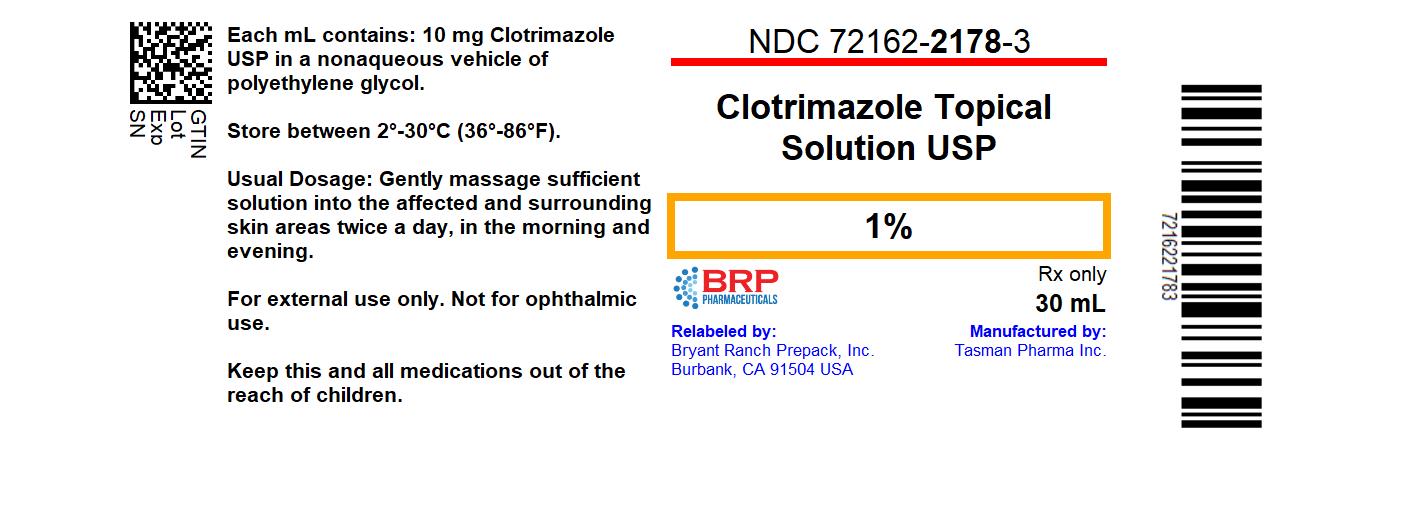
Clotrimazole Topical Solution USP, 1% 10 mg/mL Solution
🆔 Identity & classification
Where does this data come from?
🏷️ RxNorm drug class
This medicine belongs to the Azole Antifungal class.
Where does this data come from?
🏭 Manufacturer & labeler
Where does this data come from?
🩺 Clinical
Topical clotrimazole is used to treat tinea corporis (ringworm; fungal skin infection that causes a red scaly rash on different parts of the body), tinea cruris (jock itch; fungal infection of the skin in the groin or buttocks), and tinea pedis (athlete's foot; fungal infection of the skin on the feet and between the toes). Clotrimazole is in a class of antifungal medications called imidazoles. It works by stopping the growth of fungi that cause infection.
Read the full MedlinePlus article ↗- It depends on which product you have. The topical creams, solutions, and sprays treat common fungal skin infections — athlete's foot, jock itch, and ringworm. The CLOTIC ear drops...
- What kinds of infections does clotrimazole actually treat?
- You may start to notice some relief within a few days, but it's important to finish the full course. For athlete's foot and ringworm, that means using it every day for 4 weeks. For...
- How long do I need to use it before it starts working?
Patient education
Supplement & herbal interactions
Where does this data come from?
Ask a licensed pharmacist directly — free, answered by our team.
🧪 Inactive Ingredients / Excipients
Inactive ingredients, also called excipients, are components of the drug product other than the active ingredient. They may include fillers, dyes, coatings, preservatives, flavors, or other formulation ingredients.
💡 Tap an ingredient (hover on desktop) to see what it is and why it’s used.
-
UNII B697894SGQ
Polyethylene glycol 400 is a clear, thick liquid made from petroleum-derived polymers. It acts as a solvent and humectant in medicines, helping dissolve active ingredients and retain moisture in the formulation.
1 inactive ingredient listed in the exact product block matched to this NDC.
Where does this data come from?
ingredient classCode="IACT" elements from the exact product block matched by this NDC. Label-section narrative from DailyMed / the openFDA label index is shown separately when available.Inactive ingredient FAQ
Are inactive ingredients the same for every manufacturer?
Why might an inactive ingredient be missing?
Can inactive ingredients matter?
💲 Pricing
A drug doesn't have one price. Each row is a different public payment system, and none is what you'd pay at the counter — that depends on your insurance. The ⓘ on each row explains what it measures.
| Price system | Per mL | Per package |
|---|---|---|
| Retail pharmacies payNADAC · weekly | Not in the retail survey — common for institutional, discontinued, or low-volume packs. | |
| Medicaid paysCMS SDUD · 12 mo | No recent Medicaid claims on file for this NDC — rare and low-volume NDCs are suppressed in the public data. | |
| Medicare drug plans payPart D · Q2 2026 | $0.6637 | $19.91 / 30 ml |
Where does this data come from?
🔁 Therapeutic equivalents
| Product | Labeler | Pack | NADAC/unit | TE | Status | Price vs. this |
|---|---|---|---|---|---|---|
| Clotrimazole 10 mg/mL 51672-1260-03 | Sun | 1 bottle | $0.426 | AT | Availability likely | — |
| Clotrimazole Topical Solution USP, 1% 10 mg/mL 52817-0800-30 | TruPharma | 1 bottle | $0.426 | AT | Availability likely | — |
| Clotrimazole 10 mg/mL 70954-0036-20 | Novitium | 1 bottle | $0.426 | AT | Availability likely | — |
| Clotrimazole 1 g/100mL 00536-1443-70 | Rugby | 1 bottle | $2.018 | — | Availability likely | — |
| Clotrimazole 1 g/mL 51672-2158-01 | Sun | 1 bottle | $2.018 | — | Availability likely | — |
| Clotrimazole 1 g/mL 70010-0229-54 | Granules | 10 ml | $2.018 | — | Availability likely | — |
| Clotrimazole (Topical Solution), 1% 10 mg/mL 83474-0003-34 | Puro | 1 bottle | $2.018 | — | Availability likely | — |
| Clotrimazole 1 g/mL 00536-1181-70 | RUGBY | 10 ml | $2.371 | — | FDA listed | — |
| Clotrimazole Topical Solution USP, 1% 10 mg/mL 50228-0502-08 | ScieGen | 1 bottle | $2.742 | AT | Availability likely | — |
| Clotrimazole 1 g/mL 10135-0671-81 | Marlex | 1 bottle | — | — | FDA listed | — |
| Clotrimazole 1 g/mL 50268-0044-30 | AvPAK | 1 bottle | — | — | FDA listed | — |
| Fungicure Intensive 10 mg/mL 52389-0600-60 | Kobayashi | 1 bottle | — | — | FDA listed | — |
| Fortinia OF 1 g/100mL 54633-0017-01 | The | 29.57 ml | — | — | FDA listed | — |
| Clotrimazole 1 g/mL 54633-0018-10 | The | 1 bottle | — | — | FDA listed | — |
| Fortinia Ultra 1 g/100mL 54633-0025-15 | The | 15 ml | — | — | FDA listed | — |
| Fortinia 1 g/100mL 54633-0214-01 | The | 29.57 ml | — | — | FDA listed | — |
| Lasolex Liquid Solution 10 mg/mL 59088-0251-03 | PureTek | 30 ml | — | — | FDA listed | — |
| Clotrimazole 1 g/mL 68788-4080-01 | Preferred | 10 ml | — | — | FDA listed | — |
| Clotrimazole Antifungal 10 g/L 69396-0143-33 | Trifecta | 1 bottle | — | — | FDA listed | — |
| Akin Anti-Fungal 10 mg/mL 69822-0254-05 | Southern | 1 bottle | — | — | FDA listed | — |
| Smooth Gator Fungus Eliminator 10 mg/mL 70673-0747-01 | Smooth | 59 ml | — | — | FDA listed | — |
| Clotrimazole 1 g/mL 70795-8020-01 | GRAXCELL | 10 ml | — | — | FDA listed | — |
| Clotrimazole Topical Solution USP, 1% 10 mg/mL 71297-0030-02 | Allegis | 2 bottles | — | AT | FDA listed | — |
| Clotrimazole 1 g/mL 71399-0500-01 | Akron | 10 ml | — | — | FDA listed | — |
| Clotrimazole Topical Solution USP, 1% 10 mg/mL 71399-0666-03 | Akron | 1 bottle | — | AT | FDA listed | — |
| Clotrimazole Topical Solution USP, 1% 10 mg/mLthis 72162-2178-03 | Bryant | 1 bottle | — | AT | FDA listed | — |
| WELMATE Clotrimazole Topical Solution 10 mg/mL 73581-0449-00 | YYBA | 1 bottle | — | — | FDA listed | — |
| Terramed Just Think Comfort Clotrimazole Antifungal Topical Solution 10 mg/mL 83004-0042-01 | Rida | 3 bottles | — | — | FDA listed | — |
Where does this data come from?
⏳ Availability & generic status
This product is an FDA-approved generic. Other versions of the same drug are listed under Therapeutic equivalents, least expensive first.
Where does this data come from?
🔬 Reported adverse events (FAERS)
Top reported reactions
Age at onset
Reporter sex
Where does this data come from?
📦 Packaging — all sizes for this product
| Package NDC | Description | Marketing start | Status |
|---|---|---|---|
| 72162-2178-03 You're viewing this | 1 BOTTLE in 1 CARTON (72162-2178-3) / 30 mL in 1 BOTTLE | 2023-12-07 | Active |
🧭 About this NDC listing & data coverage
What data is (and isn’t) available for this NDC — tap to expand
| NDC identity (package / product / labeler codes) | ✓ Available |
| Labeler | ✓ Available |
| Product & package description | ✓ Available |
| Marketing category & status | ✓ Available |
| Active ingredient / dosage form / route | ✓ Available |
| FDA label (SPL via DailyMed) | ✓ Available |
| Package photos | ✓ Available |
| Inactive ingredients (structured) | ✓ Available |
| NADAC pharmacy acquisition price (CMS) | — Not published for this NDC CMS publishes NADAC only for NDCs reported in its retail-pharmacy survey. |
| Orange Book / therapeutic-equivalence data | ✓ Available |
| HCPCS J-code billing crosswalk | — Not published for this NDC Most self-administered / retail products have no J-code — that is normal. |
| Medicaid utilization (CMS SDUD) | — Not published for this NDC CMS reports utilization only for NDCs with Medicaid claims above its privacy threshold. |
Questions about this listing
Why is there no price listed?
Is the NDC printed on the package the same as the 11-digit billing NDC?
What do the three segments of this NDC mean?
Is this package still being marketed?
Who lists this product with the FDA?
Do I need a prescription for this product?
Where does this data come from?
📄 Full prescribing information FDA SPL
🎯 Indications and Usage ▾
INDICATIONS AND USAGE Prescription clotrimazole topical solution product is indicated for the topical treatment of candidiasis due to Candida albicans and tinea versicolor due to Malassezia furfur . This formulation is also available as a nonprescription product which is indicated for the topical treatment of the following dermal infections: tinea pedis, tinea cruris, and tinea corporis due to Trichophyton rubrum, Trichophyton mentagrophytes , Epidermophyton fluoccosum , and Microsporum canis .
⏱️ Dosage and Administration ▾
DOSAGE AND ADMINISTRATION Gently massage sufficient clotrimazole topical solution USP, 1% into the affected and surrounding skin areas twice a day, in the morning and evening. Clinical improvement, with relief of pruritus, usually occurs within the first week of treatment with clotrimazole topical solution USP, 1%. If the patient shows no clinical improvement after 4 weeks of treatment with clotrimazole topical solution USP, 1%, the diagnosis should be reviewed.
⛔ Contraindications ▾
CONTRAINDICATIONS Topical antifungal agents are contraindicated in those patients with a history of hypersensitivity to any of the components of the preparation.
⚠️ Warnings ▾
WARNINGS Clotrimazole topical solution is not for ophthalmic use.
🤒 Adverse Reactions ▾
ADVERSE REACTIONS The following adverse reactions have been reported in connection with the use of clotrimazole: erythema, stinging, blistering, peeling, edema, pruritius, urticaria, burning, and general irritation of the skin.
🔄 Drug Interactions ▾
Drug Interactions Synergism or antagonism between clotrimazole and nystatin, or amphotericin B, or flucytosine against strains of C. albicans has not been reported.
🤰 Pregnancy ▾
Usage in Pregnancy The disposition of 14 C-clotrimazole has been studied in humans and animals. Clotrimazole is very poorly absorbed following dermal application or intravaginal administration to humans. (See CLINICAL PHARMACOLOGY .) In clinical trials, use of vaginally applied clotrimazole in pregnant women in their second and third trimesters has not been associated with ill effects.
There are, however, no adequate and well-controlled studies in pregnant women during the first trimester of pregnancy. Studies in pregnant rats with intravaginal doses up to 100 mg/kg have revealed no evidence of harm to the fetus due to clotrimazole. High oral doses of clotrimazole in rats and mice ranging from 50 to 120 mg/kg resulted in embryotoxicity (possibly secondary to maternal toxicity), impairment of mating, decreased litter size and number of viable young and decreased pup survival to weaning.
However, clotrimazole was not teratogenic in mice, rabbits and rats at oral doses up to 200, 180 and 100 mg/kg, respectively. Oral absorption in the rat amounts to approximately 90% of the administered dose. Because animal reproduction studies are not always predictive of human response, this drug should be used only if clearly indicated during the first trimester of pregnancy.
🧒 Pediatric Use ▾
Pediatric Use Safety and effectiveness in pediatric patients have been established for clotrimazole when used as indicated and in the recommended dosage.
🆘 Overdosage ▾
OVERDOSAGE Acute overdosage with topical application of clotrimazole is unlikely and would not be expected to lead to a life-threatening situation.
🧬 Clinical Pharmacology ▾
CLINICAL PHARMACOLOGY Clotrimazole is a broad-spectrum antifungal agent that is used for the treatment of dermal infections caused by various species of pathogenic dermatophytes, yeasts, and Malassezia furfur . The primary action of clotrimazole is against dividing and growing organisms. In vitro , clotrimazole exhibits fungistatic and fungicidal activity against isolates of Trichophyton rubrum, Trichophyton mentagrophytes, Epidermophyton floccosum, Microsporum canis , and Candida species including Candida albicans .
In general, the in vitro activity of clotrimazole corresponds to that of tolnaftate and griseofulvin against the mycelia of dermatophytes ( Trichophyton, Microsporum , and Epidermophyton ), and to that of the polyenes (amphotericin B and nystatin) against budding fungi ( Candida ). Using an in vivo (mouse) and an in vitro (mouse kidney homogenate) testing system, clotrimazole and miconazole were equally effective in preventing the growth of the pseudomycelia and mycelia of Candida albicans . Strains of fungi having a natural resistance to clotrimazole are rare.
Only a single isolate of Candida guilliermondi has been reported to have primary resistance to clotrimazole. No single-step or multiple-step resistance to clotrimazole has developed during successive passages of Candida albicans and Trichophyton mentagrophytes . No appreciable change in sensitivity was detected after successive passages of isolates of C. albicans, C. krusei , or C. pseudotropicalis in liquid or solid media containing clotrimazole.
Also, resistance could not be developed in chemically induced mutant strains of polyene-resistant isolates of C. albicans . Slight, reversible resistance was noted in three isolates of C. albicans tested by one investigator. There is a single report that records the clinical emergence of a C. albicans strain with considerable resistance to flucytosine and miconazole, and with cross-resistance to clotrimazole; the strain remained sensitive to nystatin and amphotericin B.
In studies of the mechanism of action, the minimum fungicidal concentration of clotrimazole caused leakage of intracellular phosphorus compounds into the ambient medium with concomitant breakdown of cellular nucleic acids and accelerated potassium efflux. Both these events began rapidly and extensively after addition of the drug. Clotrimazole appears to be well absorbed in humans following oral administration and is eliminated mainly as inactive metabolites.
Following topical and vaginal administration, however, clotrimazole appears to be minimally absorbed. Six hours after the application of radioactive clotrimazole 1% cream and 1% solution onto intact and acutely inflamed skin, the concentration of clotrimazole varied from 100 mcg/cm 3 , in the stratum corneum to 0.5 to 1 mcg/cm 3 in the stratum reticulare, and 0.1 mcg/cm 3 in the subcutis. No measurable amount of radioactivity (≤0.001 mcg/mL) was found in the serum within 48 hours after application under occlusive dressing of 0.5 mL of the solution or 0.8 g of the cream.
Only 0.5% or less of the applied radioactivity was excreted in the urine. Following intravaginal administration of 100 mg 14 C-clotrimazole vaginal tablets to nine adult females, an average peak serum level, corresponding to only 0.03 µg equivalents/mL of clotrimazole, was reached 1 to 2 days after application. After intravaginal administration of 5 g of 1% 14 C-clotrimazole vaginal cream containing 50 mg active drug, to five subjects (one with candidal colpitis), serum levels corresponding to approximately 0.01 µg equivalents/mL were reached between 8 and 24 hours after application.
📦 How Supplied / Storage and Handling ▾
HOW SUPPLIED Clotrimazole topical solution USP, 1% is supplied in 30 mL plastic bottles NDC: 72162-2178-3: 30 mL in a BOTTLE Store between 2° to 30°C (36° to 86°F). Repackaged/Relabeled by: Bryant Ranch Prepack, Inc. Burbank, CA 91504
📋 Description ▾
DESCRIPTION Clotrimazole topical solution USP, 1% contains 10 mg clotrimazole USP, a synthetic antifungal agent having the chemical name 1-(o-Chloro-α,α-diphenylbenzyl) imidazole with the following strctural formula: MOLECULAR FORMULA C 22 H 17 CIN 2 MOLECULAR WEIGHT 344.85 Clotrimazole is an odorless, white crystalline substance. It is practically insoluble in water, sparingly soluble in ether and very soluble in polyethylene glycol 400, ethanol, and chloroform. Each mL of clotrimazole topical solution USP, 1% contains 10 mg clotrimazole USP in a nonaqueous vehicle of polyethylene glycol 400.
💬 Information for Patients ▾
Information for Patients This information is intended to aid in the safe and effective use of this medication. It is not a disclosure of all possible adverse or intended effects. The patient should be advised to: Use the medication for the full treatment time even though the symptoms may have improved.
Notify the physician if there is no improvement after 4 weeks of treatment. Inform the physician if the area of application shows signs of increased irritation (redness, itching, burning, blistering, swelling, oozing) indicative of possible sensitization. Avoid sources of infection or reinfection.