
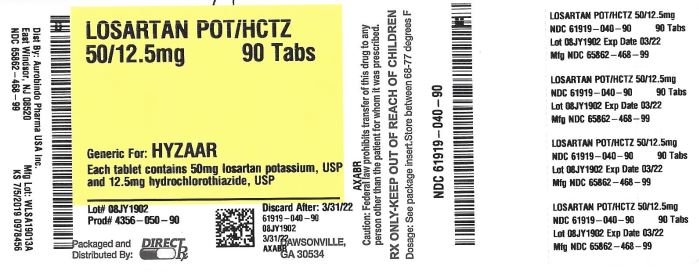
Losartan Potassium and Hydrochlorothiazide 50 mg; 12.5 mg Tablet, Film Coated, 90-count — NDC 72189-012-90 (Billing 72189-0012-90)
This is a package of 90 tablets of Losartan Potassium and Hydrochlorothiazide 50 mg; 12.5 mg Tablet, Film Coated from Direct_Rx, marketed since Jul 2019 and currently FDA-listed. It is this product's only package size.
NDC database record
One package, one record: these facts belong to NDC 72189-012-90 alone.
- Record
- FDA NDC Directory package listing · Human prescription drug
- Code segments
- 72189 labeler · 012 product · 90 package
- Package marketed since
- Jul 17, 2019
- Sample package
- No — commercial package
- Listing certified through
- Dec 31, 2026
- Billing quantity
- 90 EA per package
- Barcode (UPC-A, from the NDC)
- 3 7218901290 8
- FDA record last changed
- Sep 24, 2026
Other active recalls for Losartan Potassium And Hydrochlorothiazide (different manufacturers) — 1 · tap to view
Past resolved recalls for this product (1)
Identity & classification
Regulatory identifiers FDA, NLM and CMS codes for this package
Drug-database identifiers Medi-Span GPI and First Databank GCN / HICL / AHFS classification
- GSN (GCN sequence number): 023465
- GCN: 14852
- GPI-14 (Medi-Span): 36994002450320
- HICL (First Databank): 009863
- AHFS class code: 24:32.08.00
- RxCUI (RxNorm): 979464
Where does this data come from?
- FDA openFDA NDC Directory · synced Oct 8, 2026
- FDA label on DailyMed · label index refreshed Oct 6, 2026
- RxNorm (NLM RxNav) · catalog refreshed Oct 1, 2026
- Medi-Span GPI (licensed)
- First Databank (licensed) · refreshed Oct 8, 2026
RxNorm drug class
This medicine belongs to the Angiotensin 2 Receptor Blocker class.
Where does this data come from?
- RxClass (NLM) · catalog refreshed Oct 1, 2026
Clinical
- It treats high blood pressure and helps lower the risk of heart attack and stroke. It also reduces stroke risk in people with high blood pressure and a thickened heart wall (left v...
- It is a tablet taken by mouth, usually once a day. Your prescriber may adjust the strength after about 3 weeks. Follow your label and keep taking it even if you feel fine.
- Most people tolerate it well. Dizziness, cough, back pain, stomach pain, a cold-like infection, palpitations or a rash can happen. Call your doctor if they bother you.
- Seek emergency help for swelling of your face, lips, tongue or throat, or trouble breathing. Call your doctor promptly for fainting, sudden eye pain or vision changes, severe skin...
Patient education
Supplement & herbal interactions
Where does this data come from?
- MedlinePlus (NLM) · refreshed Oct 1, 2026
- FDA label on DailyMed · label index refreshed Oct 6, 2026
Ask a licensed pharmacist directly — free, answered by our team.
Pricing
A drug doesn't have one price. Each row is a different public payment system, and none is what you'd pay at the counter — that depends on your insurance. The ⓘ on each row explains what it measures.
| Price system | Per each | Per package |
|---|---|---|
| Retail pharmacies payNADAC · weekly | Not in the retail survey — common for institutional, discontinued, or low-volume packs. | |
| Medicaid paysCMS SDUD · 12 mo | No recent Medicaid claims on file for this NDC — rare and low-volume NDCs are suppressed in the public data. | |
| Medicare drug plans payPart D · Q2 2026 | $0.1658 | $14.92 / 90 tablets |
Where does this data come from?
- CMS NADAC weekly file
- CMS ASP pricing files · refreshed Sep 20, 2026
- CMS Medicaid State Drug Utilization Data · refreshed Oct 8, 2026
- CMS Part D plan pricing files · refreshed Sep 24, 2026
- VA National Acquisition Center price file
Packaging — all sizes for this product
| Package NDC | Description | Marketing start | Marketing end | Status |
|---|---|---|---|---|
| 72189-0012-90 You're viewing this Main listing | 90 TABLET, FILM COATED in 1 BOTTLE | 2019-07-17 | — | Active |
Therapeutic equivalents
Where does this data come from?
- FDA openFDA NDC Directory · synced Oct 8, 2026
- FDA Orange Book · refreshed Oct 3, 2026
- CMS NADAC weekly file
Availability & generic status
This product is an FDA-approved generic. Other versions of the same drug are listed under Therapeutic equivalents, least expensive first.
Where does this data come from?
- FDA Orange Book · refreshed Oct 3, 2026
What it looks like
Where does this data come from?
- FDA label on DailyMed · label index refreshed Oct 6, 2026
Inactive Ingredients / Excipients
Inactive ingredients, also called excipients, are components of the drug product other than the active ingredient. They may include fillers, dyes, coatings, preservatives, flavors, or other formulation ingredients.
🧪 Avoiding an ingredient? See Hydrochlorothiazide / Losartan inactive ingredients by manufacturer: every current product's list side by side, so you can ask your pharmacy for the version that does not list it.
💡 Tap an ingredient (hover on desktop) to see what it is and why it’s used.
-
UNII 35SW5USQ3G
A synthetic yellow dye used to color medicines. It helps make tablets, capsules, and liquids visually distinct so patients can easily identify their medication.
-
UNII RFW2ET671P
Hydroxypropyl cellulose is a plant-derived thickening agent made from cellulose. It acts as a binder to hold tablet ingredients together and as a film-former to coat tablets or control how fast the medicine releases.
-
UNII 0WZ8WG20P6
Hypromellose 2910 is a plant-based cellulose derivative that acts as a thickener, binder, and film-coating agent. It helps control how quickly the medicine dissolves and protects the tablet or capsule from moisture and light.
-
UNII EWQ57Q8I5X
Lactose monohydrate is a natural sugar derived from milk. It serves as a filler and binder in tablets and capsules, helping create the proper size, texture, and consistency of the medicine.
-
UNII 70097M6I30
Magnesium stearate is a salt made from magnesium and stearic acid, a fatty substance. It's used in tablets and capsules as a lubricant and glidant to help ingredients flow smoothly during manufacturing and prevent sticking.
-
UNII OP1R32D61U
Microcrystalline cellulose is a purified form of cellulose, a natural fiber from plant sources. It acts as a binder and filler in tablets and capsules, helping hold ingredients together and give the medicine its shape and size.
-
UNII ETJ7Z6XBU4
Silicon dioxide is a naturally occurring mineral used as a glidant and anti-caking agent. It helps powder ingredients flow smoothly and prevents clumping during manufacturing and storage.
-
UNII O8232NY3SJ
A plant-based carbohydrate derived from corn kernels. It acts as a filler to add bulk, a binder to hold ingredients together, and a disintegrant to help the tablet break apart in your stomach for absorption.
-
UNII 15FIX9V2JP
Titanium dioxide is a bright white mineral powder commonly used as a colorant and opacifying agent. It makes pills and tablets white or lighter in color and helps make coatings non-transparent.
9 inactive ingredients listed in the exact product block matched to this NDC.
Where does this data come from?
ingredient classCode="IACT" elements from the exact product block matched by this NDC. Label-section narrative from DailyMed / the openFDA label index is shown separately when available.- FDA label on DailyMed · label index refreshed Oct 6, 2026
- FDA openFDA NDC Directory · synced Oct 8, 2026
Inactive ingredient FAQ
Are inactive ingredients the same for every manufacturer?
Why might an inactive ingredient be missing?
Can inactive ingredients matter?
Manufacturer & labeler
More NDCs from Direct_Rx labeler code 72189
- Fluticasone Propionate 50 ug Spray, Metered NDC 72189-004-01
- Doxycycline 100 mg Capsule NDC 72189-006-20
- Hydroxyzine Pamoate 25 mg Capsule NDC 72189-009-15
- Valproic Acid 250 mg Capsule NDC 72189-010-30
- Azithromycin 500 mg Tablet, Film Coated NDC 72189-015-02
- Pregabalin 50 mg Capsule NDC 72189-019-30
- Pregabalin 75 mg Capsule NDC 72189-021-30
- Potassium Chloride 750 mg Tablet, Extended Release NDC 72189-027-04
- Donepezil Hydrochloride 5 mg Tablet, Film Coated NDC 72189-031-30
- Pregabalin 100 mg Capsule NDC 72189-033-30
Where does this data come from?
- FDA openFDA NDC Directory · synced Oct 8, 2026
- Drugs@FDA
Full prescribing information FDA SPL
🚨 Boxed Warning ▾
WARNING: FETAL TOXICITY When pregnancy is detected, discontinue losartan potassium and hydrochlorothiazide tablets as soon as possible. Drugs that act directly on the renin-angiotensin system can cause injury and death to the developing fetus [see Warnings and Precautions (5.1)].
🎯 Indications and Usage ▾
1.1Hypertension Losartan potassium and hydrochlorothiazide tablets are indicated for the treatment of hypertension, to lower blood pressure. Lowering blood pressure lowers the risk of fatal and non-fatal cardiovascular (CV) events, primarily strokes and myocardial infarction. These benefits have been seen in controlled trials of antihypertensive drugs from a wide variety of pharmacologic classes including losartan and hydrochlorothiazide.
Control of high blood pressure should be part of comprehensive cardiovascular risk management, including, as appropriate, lipid control, diabetes management, antithrombotic therapy, smoking cessation, exercise, and limited sodium intake. Many patients will require more than 1 drug to achieve blood pressure goals. For specific advice on goals and management, see published guidelines, such as those of the National High Blood Pressure Education Program’s Joint National Committee on Prevention, Detection, Evaluation, and Treatment of High Blood Pressure (JNC).
Numerous antihypertensive drugs, from a variety of pharmacologic classes and with different mechanisms of action, have been shown in randomized controlled trials to reduce cardiovascular morbidity and mortality, and it can be concluded that it is blood pressure reduction, and not some other pharmacologic property of the drugs, that is largely responsible for those benefits. The largest and most consistent cardiovascular outcome benefit has been a reduction in the risk of stroke, but reductions in myocardial infarction and cardiovascular mortality also have been seen regularly.
Elevated systolic or diastolic pressure causes increased cardiovascular risk, and the absolute risk increase per mmHg is greater at higher blood pressures, so that even modest reductions of severe hypertension can provide substantial benefit. Relative risk reduction from blood pressure reduction is similar across populations with varying absolute risk, so the absolute benefit is greater in patients who are at higher risk independent of their hypertension (for example, patients with diabetes or hyperlipidemia), and such patients would be expected to benefit from more aggressive treatment to a lower blood pressure goal.
Some antihypertensive drugs have smaller blood pressure effects (as monotherapy) in Black patients, and many antihypertensive drugs have additional approved indications and effects (e.g., on angina, heart failure, or diabetic kidney disease). These considerations may guide selection of therapy. This fixed dose combination is not indicated for initial therapy of hypertension, except when the hypertension is severe enough that the value of achieving prompt blood pressure control exceeds the risk of initiating combination therapy in these patients [see Clinical Studies (14) and Dosage and Administration (2.1)].
Losartan potassium and hydrochlorothiazide tablets may be administered with other antihypertensive agents.
1.2Hypertensive Patients with Left Ventricular Hypertrophy Losartan potassium and hydrochlorothiazide tablets are indicated to reduce the risk of stroke in patients with hypertension and left ventricular hypertrophy, but there is evidence that this benefit does not apply to Black patients [see Use in Specific Populations (8.6), Clinical Pharmacology (12.3), and Dosage and Administration (2.2)].
⏱️ Dosage and Administration ▾
2.1Hypertension The usual starting dose of losartan potassium and hydrochlorothiazide tablets is 50 mg/12.5 mg (losartan 50 mg/hydrochlorothiazide 12.5 mg) once daily. The dosage can be increased after 3 weeks of therapy to a maximum of 100 mg/25 mg (losartan 100 mg/hydrochlorothiazide 25 mg) once daily as needed to control blood pressure [see Clinical Studies (14.2)]. Initiate a patient whose blood pressure is not adequately controlled with losartan 50 mg monotherapy with losartan potassium and hydrochlorothiazide tablets 50 mg/12.5 mg once daily.
If blood pressure remains uncontrolled after about 3 weeks of therapy, the dosage may be increased to two tablets of losartan potassium and hydrochlorothiazide 50 mg/12.5 mg once daily or one tablet of losartan potassium and hydrochlorothiazide 100 mg/25 mg once daily. Initiate a patient whose blood pressure is not adequately controlled with losartan 100 mg monotherapy with losartan potassium and hydrochlorothiazide tablets 100 mg/12.5 mg once daily. If blood pressure remains uncontrolled after about 3 weeks of therapy, increase the dose to two tablets of losartan potassium and hydrochlorothiazide 50 mg/12.5 mg once daily or one tablet of losartan potassium and hydrochlorothiazide 100 mg/25 mg once daily.
Initiate a patient whose blood pressure is inadequately controlled with hydrochlorothiazide 25 mg once daily, or is controlled but who experiences hypokalemia with this regimen, on losartan potassium and hydrochlorothiazide tablets 50 mg/12.5 mg once daily, reducing the dose of hydrochlorothiazide without reducing the overall expected antihypertensive response. Evaluate the clinical response to losartan potassium and hydrochlorothiazide tablets 50 mg/12.5 mg and, if blood pressure remains uncontrolled after about 3 weeks of therapy, increase the dose to two tablets of losartan potassium and hydrochlorothiazide 50 mg/12.5 mg once daily or one tablet of losartan potassium and hydrochlorothiazide 100 mg/25 mg once daily.
2.2Hypertensive Patients with Left Ventricular Hypertrophy In patients whose blood pressure is not adequately controlled on 50 mg losartan potassium, initiate treatment with losartan potassium and hydrochlorothiazide tablets 50 mg/12.5 mg. If additional blood pressure reduction is needed, increase the dose to losartan potassium and hydrochlorothiazide tablets 100 mg/12.5 mg, followed by losartan potassium and hydrochlorothiazide tablets 100 mg/25 mg. For further blood pressure reduction add other antihypertensives [see Clinical Studies (14)].
💊 Dosage Forms and Strengths ▾
Losartan Potassium and Hydrochlorothiazide Tablets USP, 50 mg/12.5 mg are yellow colored, oval shaped, beveled edge, biconvex film-coated tablets debossed with ‘E’ on one side and ‘48’ on the other side. Losartan Potassium and Hydrochlorothiazide Tablets USP, 100 mg/12.5 mg are white, oval shaped, beveled edge, biconvex film-coated tablets debossed with ‘F’ on one side and ‘74’ on the other side. Losartan Potassium and Hydrochlorothiazide Tablets USP, 100 mg/25 mg are yellow colored, oval shaped, beveled edge, biconvex film-coated tablets debossed with ‘E’ on one side and ‘49’ on the other side.
⛔ Contraindications ▾
Losartan potassium and hydrochlorothiazide tablets are contraindicated: • In patients who are hypersensitive to any component of this product. • In patients with anuria • For coadministration with aliskiren in patients with diabetes
⚠️ Warnings and Cautions ▾
5.1Fetal Toxicity Use of drugs that act on the renin-angiotensin system during the second and third trimesters of pregnancy reduces fetal renal function and increases fetal and neonatal morbidity and death. Resulting oligohydramnios can be associated with fetal lung hypoplasia and skeletal deformations. Potential neonatal adverse effects include skull hypoplasia, anuria, hypotension, renal failure, and death.
When pregnancy is detected, discontinue losartan potassium and hydrochlorothiazide as soon as possible. Thiazides cross the placental barrier and appear in cord blood. Adverse reactions include fetal or neonatal jaundice, thrombocytopenia [see Use in Specific Populations (8.1)].
5.2Hypotension in Volume- or Salt-Depleted Patients In patients with an activated renin-angiotensin system, such as volume- or salt-depleted patients (e.g., those being treated with high doses of diuretics), symptomatic hypotension may occur after initiation of treatment with losartan potassium and hydrochlorothiazide. Correct volume or salt depletion prior to administration of losartan potassium and hydrochlorothiazide. Do not use losartan potassium and hydrochlorothiazide as initial therapy in patients with intravascular volume depletion.
5.3Impaired Renal Function Changes in renal function including acute renal failure can be caused by drugs that inhibit the renin-angiotensin system and by diuretics. Patients whose renal function may depend in part on the activity of the renin-angiotensin system (e.g., patients with renal artery stenosis, chronic kidney disease, severe congestive heart failure, or volume depletion) may be at particular risk of developing acute renal failure on losartan potassium and hydrochlorothiazide. Monitor renal function periodically in these patients.
Consider withholding or discontinuing therapy in patients who develop a clinically significant decrease in renal function on losartan potassium and hydrochlorothiazide [see Drug Interactions (7.3) and Use in Specific Populations (8.8)].
5.4Hypersensitivity Hypersensitivity reactions to hydrochlorothiazide may occur in patients with or without a history of allergy or bronchial asthma, but are more likely in patients with such a history.
5.5Electrolyte and Metabolic Effects In double-blind clinical trials of various doses of losartan potassium and hydrochlorothiazide, the incidence of hypertensive patients who developed hypokalemia (serum potassium <3.5 mEq/L) was 6.7% versus 3.5% for placebo; the incidence of hyperkalemia (serum potassium >5.7 mEq/L) was 0.4% versus 0% for placebo. Losartan potassium and hydrochlorothiazide contains hydrochlorothiazide which can cause hypokalemia, hyponatremia and hypomagnesemia. Hypomagnesemia can result in hypokalemia which may be difficult to treat despite potassium repletion.
Losartan potassium and hydrochlorothiazide also contains losartan which can cause hyperkalemia. Monitor serum electrolytes periodically [see Drug Interactions (7.1)]. Concomitant use of other drugs that may increase serum potassium may lead to hyperkalemia [see Drug Interactions (7.1)].
Hydrochlorothiazide may alter glucose tolerance and raise serum levels of cholesterol and triglycerides. Hyperuricemia may occur or frank gout may be precipitated in patients receiving thiazide therapy. Because losartan decreases uric acid, losartan in combination with hydrochlorothiazide attenuates the diuretic-induced hyperuricemia.
Hydrochlorothiazide decreases urinary calcium excretion and may cause elevations of serum calcium. Monitor calcium levels.
5.6Acute Myopia and Secondary Angle-Closure Glaucoma Hydrochlorothiazide, a sulfonamide, can cause an idiosyncratic reaction, resulting in acute transient myopia and acute angle-closure glaucoma. Symptoms include acute onset of decreased visual acuity or ocular pain and typically occur within hours to weeks of drug initiation. Untreated acute angle-closure glaucoma can lead to permanent vision loss.
The primary treatment is to… [Excerpted — this section continues on DailyMed.]
🤒 Adverse Reactions ▾
6.1Clinical Trials Experience Because clinical trials are conducted under widely varying conditions, adverse reaction rates observed in the clinical trials of a drug cannot be directly compared to rates in the clinical trials of another drug and may not reflect the rates observed in practice. Losartan potassium and hydrochlorothiazide has been evaluated for safety in 858 patients treated for essential hypertension and 3889 patients treated for hypertension and left ventricular hypertrophy. Most adverse reactions have been mild and transient in nature and have not required discontinuation of therapy.
In controlled clinical trials, discontinuation of therapy due to clinical adverse events was required in only 2.8% and 2.3% of patients treated with the combination and placebo, respectively. In these double-blind controlled clinical trials, adverse reactions occurring in greater than 2% of subjects treated with losartan and hydrochlorothiazide and at a greater rate than placebo were: back pain (2.1% vs 0.6%), dizziness (5.7% vs 2.9%), and upper respiratory infection (6.1% vs 4.6%). The following additional adverse reactions have been reported in clinical trials with losartan potassium and hydrochlorothiazide and/or the individual components: Blood and the lymphatic system disorders: Anemia, aplastic anemia, hemolytic anemia, leukopenia, agranulocytosis.
Metabolism and nutrition disorders: Anorexia, hyperglycemia, hyperuricemia, electrolyte imbalance including hyponatremia and hypokalemia. Psychiatric disorders: Insomnia, restlessness. Nervous system disorders: Dysgeusia, headache, migraine, paraesthesias.
Eye disorders: Xanthopsia, transient blurred vision. Cardiac disorders: Palpitation, tachycardia. Vascular disorders: Dose-related orthostatic effects, necrotizing angiitis (vasculitis, cutaneous vasculitis).
Respiratory, thoracic and mediastinal disorders: Nasal congestion, pharyngitis, sinus disorder, respiratory distress (including pneumonitis and pulmonary edema). Gastrointestinal disorders: Dyspepsia, abdominal pain, gastric irritation, cramping, diarrhea, constipation, nausea, vomiting, pancreatitis, sialoadenitis. Hepato-biliary disorders: Jaundice (intrahepatic cholestatic jaundice).
Skin and subcutaneous tissue disorders: Rash, pruritus, purpura, toxic epidermal necrolysis, urticaria, photosensitivity, cutaneous lupus erythematosus. Musculoskeletal and connective tissue disorders: Muscle cramps, muscle spasm, myalgia, arthralgia. Renal and urinary disorders: Glycosuria, renal dysfunction, interstitial nephritis, renal failure.
Reproductive system and breast disorders: Erectile dysfunction/impotence. General disorders and administration site conditions: Chest pain, edema/swelling, malaise, fever, weakness. Investigations: Liver function abnormalities.
Cough Persistent dry cough has been associated with ACE-inhibitor use and in practice can be a cause of discontinuation of ACE-inhibitor therapy. Two prospective, parallel-group, double-blind, randomized, controlled trials were conducted to assess the effects of losartan on the incidence of cough in hypertensive patients who had experienced cough while receiving ACE-inhibitor therapy. Patients who had typical ACE-inhibitor cough when challenged with lisinopril, whose cough disappeared on placebo, were randomized to losartan 50 mg, lisinopril 20 mg, or either placebo (one study, n=97) or 25 mg hydrochlorothiazide (n=135).
The double-blind treatment period lasted up to 8 weeks. The incidence of cough is shown in Table 1 below. Table 1: *Demographics = (89% Caucasian, 64% female) † Demographics = (90% Caucasian, 51% female) Study 1* HCTZ Losartan Lisinopril Cough 25% 17% 69% Study2† Placebo Losartan Lisinopril Cough 35% 29% 62% These studies demonstrate that the incidence of cough associated with losartan therapy, in a population that all had cough associated with ACE-inhibitor therapy, is similar to that associated with hydrochlorothiazide or placebo therapy.
Cases of cough,… [Excerpted — this section continues on DailyMed.]
🔄 Drug Interactions ▾
7.1Agents Increasing Serum Potassium Coadministration of losartan with other drugs that raise serum potassium may result in hyperkalemia. Monitor serum potassium in such patients.
7.2Lithium Increases in serum lithium concentrations and lithium toxicity have been reported with concomitant use of angiotensin II receptor antagonists or thiazide diuretics. Monitor lithium levels in patients receiving losartan potassium and hydrochlorothiazide and lithium.
7.3Non-Steroidal Anti-Inflammatory Agents Including Selective Cyclooxygenase-2 Inhibitors Losartan Potassium In patients who are elderly, volume-depleted (including those on diuretic therapy), or with compromised renal function, coadministration of NSAIDs, including selective COX-2 inhibitors, with angiotensin II receptor antagonists (including losartan) may result in deterioration of renal function, including possible acute renal failure. These effects are usually reversible. Monitor renal function periodically in patients receiving losartan and NSAID therapy.
The antihypertensive effect of angiotensin II receptor antagonists, including losartan, may be attenuated by NSAIDs, including selective COX-2 inhibitors. Hydrochlorothiazide The administration of a non-steroidal anti-inflammatory agent including a selective COX-2 inhibitor can reduce the diuretic, natriuretic, and antihypertensive effects of loop, potassium-sparing and thiazide diuretics. Therefore, when losartan potassium and hydrochlorothiazide and non-steroidal anti-inflammatory agents including selective COX-2 inhibitors are used concomitantly, observe closely to determine if the desired effect of the diuretic is obtained.
In patients receiving diuretic therapy, coadministration of NSAIDs with angiotensin receptor blockers, including losartan, may result in deterioration of renal function, including possible acute renal failure. These effects are usually reversible. Monitor renal function periodically in patients receiving hydrochlorothiazide, losartan, and NSAID therapy.
7.4Dual Blockade of the Renin-Angiotensin System (RAS) Dual blockade of the RAS with angiotensin receptor blockers, ACE inhibitors, or aliskiren is associated with increased risks of hypotension, syncope, hyperkalemia, and changes in renal function (including acute renal failure) compared to monotherapy. The Veterans Affairs Nephropathy in Diabetes (VA NEPHRON-D) trial enrolled 1448 patients with type 2 diabetes, elevated urinary-albumin-to-creatinine ratio, and decreased estimated glomerular filtration rate (GFR 30 to 89.9 mL/min), randomized them to lisinopril or placebo on a background of losartan therapy and followed them for a median of 2.2 years.
Patients receiving the combination of losartan and lisinopril did not obtain any additional benefit compared to monotherapy for the combined endpoint of decline in GFR, end-stage renal disease, or death, but experienced an increased incidence of hyperkalemia and acute kidney injury compared with the monotherapy group. Closely monitor blood pressure, renal function, and electrolytes in patients on losartan potassium and hydrochlorothiazide and other agents that affect the RAS. Do not coadminister aliskiren with losartan potassium and hydrochlorothiazide in patients with diabetes.
Avoid use of aliskiren with losartan potassium and hydrochlorothiazide in patients with renal impairment (GFR <60 mL/min).
7.5The Use of Hydrochlorothiazide with Other Drugs When administered concurrently, the following drugs may interact with thiazide diuretics [see Clinical Pharmacology (12.3)]: Antidiabetic drugs (oral agents and insulin) — dosage adjustment of the antidiabetic drug may be required. Cholestyramine and colestipol resins — Absorption of hydrochlorothiazide is impaired in the presence of anionic exchange resins. Single doses of either cholestyramine or colestipol resins bind the hydrochlorothiazide and reduce its absorption from the gastrointestinal tract by up to 85 and 43 percent, respectively.
Stagger… [Excerpted — this section continues on DailyMed.]
👥 Use in Specific Populations ▾
8.1Pregnancy Pregnancy Category D Use of drugs that act on the renin-angiotensin system during the second and third trimesters of pregnancy reduces fetal renal function and increases fetal and neonatal morbidity and death. Resulting oligohydramnios can be associated with fetal lung hypoplasia and skeletal deformations. Potential neonatal adverse effects include skull hypoplasia, anuria, hypotension, renal failure, and death.
When pregnancy is detected, discontinue losartan as soon as possible. These adverse outcomes are usually associated with use of these drugs in the second and third trimester of pregnancy. Most epidemiologic studies examining fetal abnormalities after exposure to antihypertensive use in the first trimester have not distinguished drugs affecting the renin-angiotensin system from other antihypertensive agents.
Appropriate management of maternal hypertension during pregnancy is important to optimize outcomes for both mother and fetus. In the unusual case that there is no appropriate alternative to therapy with drugs affecting the renin-angiotensin system for a particular patient, apprise the mother of the potential risk to the fetus. Perform serial ultrasound examinations to assess the intra-amniotic environment.
If oligohydramnios is observed, discontinue losartan potassium and hydrochlorothiazide, unless it is considered lifesaving for the mother. Fetal testing may be appropriate, based on the week of pregnancy. Patients and physicians should be aware, however, that oligohydramnios may not appear until after the fetus has sustained irreversible injury.
Closely observe infants with histories of in utero exposure to losartan potassium and hydrochlorothiazide for hypotension, oliguria, and hyperkalemia [see Use in Specific Populations (8.4)]. There was no evidence of teratogenicity in rats or rabbits treated with a maximum losartan potassium dose of 10 mg/kg/day in combination with 2.5 mg/kg/day of hydrochlorothiazide. At these dosages, respective exposures (AUCs) of losartan, its active metabolite, and hydrochlorothiazide in rabbits were approximately 5, 1.5, and 1 times those achieved in humans with 100 mg losartan in combination with 25 mg hydrochlorothiazide.
AUC values for losartan, its active metabolite and hydrochlorothiazide, extrapolated from data obtained with losartan administered to rats at a dose of 50 mg/kg/day in combination with 12.5 mg/kg/day of hydrochlorothiazide, were approximately 6, 2, and 2 times greater than those achieved in humans with 100 mg of losartan in combination with 25 mg of hydrochlorothiazide. Fetal toxicity in rats, as evidenced by a slight increase in supernumerary ribs, was observed when females were treated prior to and throughout gestation with 10 mg/kg/day losartan in combination with 2.5 mg/kg/day hydrochlorothiazide.
As also observed in studies with losartan alone, adverse fetal and neonatal effects, including decreased body weight, renal toxicity, and mortality, occurred when pregnant rats were treated during late gestation and/or lactation with 50 mg/kg/day losartan in combination with 12.5 mg/kg/day hydrochlorothiazide. Respective AUCs for losartan, its active metabolite and hydrochlorothiazide at these dosages in rats were approximately 35, 10 and 10 times greater than those achieved in humans with the administration of 100 mg of losartan in combination with 25 mg hydrochlorothiazide.
When hydrochlorothiazide was administered without losartan to pregnant mice and rats during their respective periods of major organogenesis, at doses up to 3000 and 1000 mg/kg/day, respectively, there was no evidence of harm to the fetus. Thiazides cross the placental barrier and appear in cord blood. There is a risk of fetal or neonatal jaundice, thrombocytopenia, and possibly other adverse reactions that have occurred in adults.
8.3Nursing Mothers It is not known whether losartan is excreted in human milk, but significant levels of losartan and its active metabolite were shown t… [Excerpted — this section continues on DailyMed.]
🆘 Overdosage ▾
Losartan Potassium Significant lethality was observed in mice and rats after oral administration of 1000 mg/kg and 2000 mg/kg, respectively, about 44 and 170 times the maximum recommended human dose on a mg/m2 basis. Limited data are available in regard to overdosage in humans. The most likely manifestation of overdosage would be hypotension and tachycardia; bradycardia could occur from parasympathetic (vagal) stimulation.
If symptomatic hypotension should occur, supportive treatment should be instituted. Neither losartan nor its active metabolite can be removed by hemodialysis. Hydrochlorothiazide The oral LD50 of hydrochlorothiazide is greater than 10 g/kg in both mice and rats.
The most common signs and symptoms observed are those caused by electrolyte depletion (hypokalemia, hypochloremia, hyponatremia) and dehydration resulting from excessive diuresis. If digitalis has also been administered, hypokalemia may accentuate cardiac arrhythmias. The degree to which hydrochlorothiazide is removed by hemodialysis has not been established.
🧬 Clinical Pharmacology ▾
12.1Mechanism of Action Losartan Potassium Angiotensin II [formed from angiotensin I in a reaction catalyzed by angiotensin converting enzyme (ACE, kininase II)], is a potent vasoconstrictor, the primary vasoactive hormone of the renin-angiotensin system and an important component in the pathophysiology of hypertension. It also stimulates aldosterone secretion by the adrenal cortex. Losartan and its principal active metabolite block the vasoconstrictor and aldosterone-secreting effects of angiotensin II by selectively blocking the binding of angiotensin II to the AT1 receptor found in many tissues (e.g., vascular smooth muscle, adrenal gland).
There is also an AT2 receptor found in many tissues but it is not known to be associated with cardiovascular homeostasis. Neither losartan nor its principal active metabolite exhibits any partial agonist activity at the AT1 receptor, and both have much greater affinity (about 1000-fold) for the AT1 receptor than for the AT2 receptor. In vitro binding studies indicate that losartan is a reversible, competitive inhibitor of the AT1 receptor.
The active metabolite is 10 to 40 times more potent by weight than losartan and appears to be a reversible, non-competitive inhibitor of the AT1 receptor. Neither losartan nor its active metabolite inhibits ACE (kininase II, the enzyme that converts angiotensin I to angiotensin II and degrades bradykinin), nor do they bind to or block other hormone receptors or ion channels known to be important in cardiovascular regulation. Hydrochlorothiazide Hydrochlorothiazide is a thiazide diuretic.
Thiazides affect the renal tubular mechanisms of electrolyte reabsorption, directly increasing excretion of sodium and chloride in approximately equivalent amounts. Indirectly, the diuretic action of hydrochlorothiazide reduces plasma volume, with consequent increases in plasma renin activity, increases in aldosterone secretion, increases in urinary potassium loss, and decreases in serum potassium. The renin-aldosterone link is mediated by angiotensin II, so coadministration of an angiotensin II receptor antagonist tends to reverse the potassium loss associated with these diuretics.
The mechanism of the antihypertensive effect of thiazides is unknown.
12.2Pharmacodynamics Losartan Potassium Losartan inhibits the pressor effect of angiotensin II (as well as angiotensin I) infusions. A dose of 100 mg inhibits the pressor effect by about 85% at peak with 25 to 40% inhibition persisting for 24 hours. Removal of the negative feedback of angiotensin II causes a doubling to tripling in plasma renin activity and consequent rise in angiotensin II plasma concentration in hypertensive patients.
Losartan does not affect the response to bradykinin, whereas ACE inhibitors increase the response to bradykinin. Aldosterone plasma concentrations fall following losartan administration. In spite of the effect of losartan on aldosterone secretion, very little effect on serum potassium was observed.
The effect of losartan is substantially present within one week but in some studies the maximal effect occurred in 3 to 6 weeks. In long-term follow-up studies (without placebo control) the effect of losartan appeared to be maintained for up to a year. There is no apparent rebound effect after abrupt withdrawal of losartan.
There was essentially no change in average heart rate in losartan-treated patients in controlled trials. Hydrochlorothiazide After oral administration of hydrochlorothiazide, diuresis begins within 2 hours, peaks in about 4 hours, and lasts about 6 to 12 hours. Drug Interactions Hydrochlorothiazide Alcohol, barbiturates, or narcotics — potentiation of orthostatic hypotension may occur.
Other antihypertensive drugs — additive effect or potentiation. Skeletal muscle relaxants, nondepolarizing (e.g., tubocurarine) — possible increased responsiveness to the muscle relaxant. Corticosteroids, ACTH, or glycyrrhizin (found in liquorice) — intensified electrolyte depletion, particul… [Excerpted — this section continues on DailyMed.]
📦 How Supplied / Storage and Handling ▾
Losartan Potassium and Hydrochlorothiazide Tablets USP, 50 mg/12.5 mg are yellow colored, oval shaped, beveled edge, biconvex film-coated tablets Bottles of 30 Bottles of 90 Bottles of 1,000 Bottles of 3,000 Cartons of 100 (10 x 10) Unit-dose Tablets Losartan Potassium and Hydrochlorothiazide Tablets USP, 100 mg/12.5 mg are white, oval shaped, beveled edge, biconvex film-coated tablets Bottles of 30 Bottles of 90 Bottles of 1,000 Bottles of 5,000 Cartons of 100 (10 x 10) Unit-dose Tablets Losartan Potassium and Hydrochlorothiazide Tablets USP, 100 mg/25 mg are yellow colored, oval shaped, beveled edge, biconvex film-coated tablets Bottles of 30 Bottles of 90 Bottles of 1,000 Bottles of 5,000 Cartons of 100 (10 x 10) Unit-dose Tablets Storage Store at 20° to 25°C (68° to 77°F). [See USP Controlled Room Temperature].
Keep container tightly closed. Protect from light.
📋 Description ▾
Losartan potassium and hydrochlorothiazide 50 mg/12.5 mg, losartan potassium and hydrochlorothiazide 100 mg/12.5 mg and losartan potassium and hydrochlorothiazide 100 mg/25 mg tablets combine an angiotensin II receptor blocker acting on the AT1 receptor subtype and a diuretic, hydrochlorothiazide. Losartan potassium, a non-peptide molecule, is chemically described as 2-butyl-4-chloro-1-[p-(o-1H-tetrazol-5-ylphenyl)benzyl]imidazole-5-methanol monopotassium salt. Its molecular formula is C22 H22 ClKN6 O, and its structural formula is: [Losartan Chemical Structure] Losartan potassium USP is a white to off-white powder with a molecular weight of 461.01.
It is freely soluble in water, soluble in alcohols, and slightly soluble in common organic solvents, such as acetonitrile and methyl ethyl ketone. Oxidation of the 5-hydroxymethyl group on the imidazole ring results in the active metabolite of losartan. Hydrochlorothiazide is 6-chloro-3,4-dihydro-2H-1,2,4-benzothiadiazine-7-sulfonamide 1,1-dioxide.
Its molecular formula is C7 H8 ClN3 O4 S2 and its structural formula is: [Hydrochlorothiazide Chemical Structure] Hydrochlorothiazide USP is a white or practically white, practically odorless, crystalline powder with a molecular weight of 297.74, which is slightly soluble in water, but freely soluble in sodium hydroxide solution. Losartan potassium and hydrochlorothiazide is available for oral administration in three tablet combinations of losartan and hydrochlorothiazide. Losartan potassium and hydrochlorothiazide tablets USP, 50 mg/12.5 mg contain 50 mg of losartan potassium USP and 12.5 mg of hydrochlorothiazide USP.
Losartan potassium and hydrochlorothiazide tablets USP, 100 mg/12.5 mg contain 100 mg of losartan potassium USP and 12.5 mg of hydrochlorothiazide USP. Losartan potassium and hydrochlorothiazide tablets USP, 100 mg/25 mg contain 100 mg of losartan potassium USP and 25 mg of hydrochlorothiazide USP. Inactive ingredients are colloidal silicon dioxide, hydroxypropyl cellulose, hypromellose, lactose monohydrate, magnesium stearate, microcrystalline cellulose, pregelatinised starch(maize), and titanium dioxide.
Losartan potassium and hydrochlorothiazide 50 mg/12.5 mg and losartan potassium and hydrochlorothiazide 100 mg/25 mg also contain D&C yellow No. 10 aluminum lake. Losartan potassium and hydrochlorothiazide tablets USP, 50 mg/12.5 mg contains 4.24 mg (0.108 mEq) of potassium, losartan potassium and hydrochlorothiazide tablets USP, 100 mg/12.5 mg contains 8.48 mg (0.217 mEq) of potassium, and losartan potassium and hydrochlorothiazide tablets USP, 100 mg/25 mg contains 8.48 mg (0.217 mEq) of potassium.
Meets USP Dissolution Test 2.
💬 Information for Patients ▾
Losartan Potassium and Hydrochlorothiazide Tablets, USP (loe sar' tan poe tas' ee um and hye'' droe klor'' oh thye' a zide) Rx only Read the Patient Information that comes with losartan potassium and hydrochlorothiazide tablets before you start taking them and each time you get a refill. There may be new information. This leaflet does not take the place of talking with your doctor about your condition and treatment.
What is the most important information I should know about losartan potassium and hydrochlorothiazide tablets? Losartan potassium and hydrochlorothiazide tablets can cause harm or death to an unborn baby. Talk to your doctor about other ways to lower your blood pressure if you plan to become pregnant.
If you get pregnant while taking losartan potassium and hydrochlorothiazide tablets, tell your doctor right away. What are losartan potassium and hydrochlorothiazide tablets? Losartan potassium and hydrochlorothiazide tablets contain 2 prescription medicines, an angiotensin receptor blocker (ARB) and a diuretic (water pill).
It is used to: lower high blood pressure (hypertension). Losartan potassium and hydrochlorothiazide tablets are not usually the first medicine used to treat high blood pressure. lower the chance of stroke in patients with high blood pressure and a heart problem called left ventricular hypertrophy (LVH). Losartan potassium and hydrochlorothiazide tablets may not help Black patients with this problem.
Losartan potassium and hydrochlorothiazide tablets have not been studied in children less than 18 years old. High Blood Pressure (hypertension). Blood pressure is the force in your blood vessels when your heart beats and when your heart rests.
You have high blood pressure when the force is too much. The losartan ingredient in losartan potassium and hydrochlorothiazide tablets can help your blood vessels relax so your blood pressure is lower. The hydrochlorothiazide ingredient in losartan potassium and hydrochlorothiazide tablets work by making your kidneys pass more water and salt.
Left Ventricular Hypertrophy (LVH) is an enlargement of the walls of the left chamber of the heart (the heart’s main pumping chamber). LVH can happen from several things. High blood pressure is the most common cause of LVH.
Who should not take losartan potassium and hydrochlorothiazide tablets? Do not take losartan potassium and hydrochlorothiazide tablets if you: are allergic to any ingredients in losartan potassium and hydrochlorothiazide tablets. See a complete list of ingredients in losartan potassium and hydrochlorothiazide tablets at the end of this leaflet. are not passing urine. have diabetes and are taking a medicine called aliskiren to reduce blood pressure.
What should I tell my doctor before taking losartan potassium and hydrochlorothiazide tablets? Tell your doctor about all your medical conditions including if you: are pregnant or planning to become pregnant. See “What is the most important information I should know about losartan potassium and hydrochlorothiazide tablets?” are breastfeeding or plan to breastfeed.
Losartan potassium and hydrochlorothiazide can pass into your milk and may harm your baby. You and your doctor should decide if you will take losartan potassium and hydrochlorothiazide tablets or breastfeed. You should not do both. have been vomiting (throwing up), having diarrhea, sweating a lot, or not drinking enough fluids.
These could cause you to have low blood pressure. have liver problems have kidney problems have systemic lupus erythematosus (Lupus; SLE) have diabetes have gout have any allergies Tell your doctor about all of the medicines you take, including prescription and non-prescription medicines, vitamins, and herbal supplements. Losartan potassium and hydrochlorothiazide tablets and certain other medicines may interact with each other. Especially tell your doctor if you are taking: potassium supplements salt substitutes containing potassium other medicines that may increase serum pota… [Excerpted — this section continues on DailyMed.]
🔬 Clinical Studies ▾
14.1Losartan Monotherapy Reduction in the Risk of Stroke: The LIFE study was a multinational, double-blind study comparing losartan and atenolol in 9193 hypertensive patients with ECG-documented left ventricular hypertrophy. Patients with myocardial infarction or stroke within six months prior to randomization were excluded. Patients were randomized to receive once daily losartan 50 mg or atenolol 50 mg.
If goal blood pressure (<140/90 mmHg) was not reached, hydrochlorothiazide (12.5 mg) was added first and, if needed, the dose of losartan or atenolol was then increased to 100 mg once daily. If necessary, other antihypertensive treatments (e.g., increase in dose of hydrochlorothiazide therapy to 25 mg or addition of other diuretic therapy, calcium channel blockers, alpha-blockers, or centrally acting agents, but not ACE inhibitors, angiotensin II antagonists, or beta-blockers) were added to the treatment regimen to reach the goal blood pressure.
In efforts to control blood pressure, the patients in both arms of the LIFE study were coadministered hydrochlorothiazide the majority of time they were on study drug (73.9% and 72.4% of days in the losartan and atenolol arms, respectively). Of the randomized patients, 4963 (54%) were female and 533 (6%) were Black. The mean age was 67 with 5704 (62%) age ≥65.
At baseline, 1195 (13%) had diabetes, 1326 (14%) had isolated systolic hypertension, 1469 (16%) had coronary heart disease, and 728 (8%) had cerebrovascular disease. Baseline mean blood pressure was 174/98 mmHg in both treatment groups. The mean length of follow-up was 4.8 years.
At the end of study or at the last visit before a primary endpoint, 77% of the group treated with losartan and 73% of the group treated with atenolol were still taking study medication. Of the patients still taking study medication, the mean doses of losartan and atenolol were both about 80 mg/day, and 15% were taking atenolol or losartan as monotherapy, while 77% were also receiving hydrochlorothiazide (at a mean dose of 20 mg/day in each group). Blood pressure reduction measured at trough was similar for both treatment groups but blood pressure was not measured at any other time of the day.
At the end of study or at the last visit before a primary endpoint, the mean blood pressures were 144.1/81.3 mmHg for the group treated with losartan and 145.4/80.9 mmHg for the group treated with atenolol [the difference in SBP of 1.3 mmHg was significant (p<0.001), while the difference of 0.4 mmHg in DBP was not significant (p=0.098)]. The primary endpoint was the first occurrence of cardiovascular death, nonfatal stroke, or nonfatal myocardial infarction. Patients with nonfatal events remained in the trial, so that there was also an examination of the first event of each type even if it was not the first event (e.g., a stroke following an initial myocardial infarction would be counted in the analysis of stroke).
Treatment with losartan resulted in a 13% reduction (p=0.021) in risk of the primary endpoint compared to the atenolol group; this difference was primarily the result of an effect on fatal and nonfatal stroke. Treatment with losartan reduced the risk of stroke by 25% relative to atenolol (p=0.001).
14.2Losartan Potassium-Hydrochlorothiazide The 3 controlled studies of losartan and hydrochlorothiazide included over 1300 patients assessing the antihypertensive efficacy of various doses of losartan (25 mg, 50 mg and 100 mg) and concomitant hydrochlorothiazide (6.25 mg, 12.5 mg and 25 mg). A factorial study compared the combination of losartan/hydrochlorothiazide 50 mg/12.5 mg with its components and placebo. The combination of losartan/hydrochlorothiazide 50 mg/12.5 mg resulted in an approximately additive placebo-adjusted systolic/diastolic response (15.5/9 mmHg for the combination compared to 8.5/5 mmHg for losartan alone and 7/3 mmHg for hydrochlorothiazide alone).
Another study investigated the dose-response relationship of various doses of hydrochloro… [Excerpted — this section continues on DailyMed.]
🧪 Nonclinical Toxicology ▾
13.1Carcinogenesis, Mutagenesis, Impairment of Fertility Losartan Potassium-Hydrochlorothiazide No carcinogenicity studies have been conducted with the losartan potassium-hydrochlorothiazide combination. Losartan potassium and hydrochlorothiazide when tested at a weight ratio of 4:1, was negative in the Ames microbial mutagenesis assay and the V-79 Chinese hamster lung cell mutagenesis assay. In addition, there was no evidence of direct genotoxicity in the in vitro alkaline elution assay in rat hepatocytes and in vitro chromosomal aberration assay in Chinese hamster ovary cells at noncytotoxic concentrations.
Losartan potassium, coadministered with hydrochlorothiazide, had no effect on the fertility or mating behavior of male rats at dosages up to 135 mg/kg/day of losartan and 33.75 mg/kg/day of hydrochlorothiazide. These dosages have been shown to provide respective systemic exposures (AUCs) for losartan, its active metabolite and hydrochlorothiazide that are approximately 60, 60 and 30 times greater than those achieved in humans with 100 mg of losartan potassium in combination with 25 mg of hydrochlorothiazide. In female rats, however, the coadministration of doses as low as 10 mg/kg/day of losartan and 2.5 mg/kg/day of hydrochlorothiazide was associated with slight but statistically significant decreases in fecundity and fertility indices.
AUC values for losartan, its active metabolite and hydrochlorothiazide, extrapolated from data obtained with losartan administered to rats at a dose of 50 mg/kg/day in combination with 12.5 mg/kg/day of hydrochlorothiazide, were approximately 6, 2, and 2 times greater than those achieved in humans with 100 mg of losartan in combination with 25 mg of hydrochlorothiazide. Losartan Potassium Losartan potassium was not carcinogenic when administered at maximally tolerated dosages to rats and mice for 105 and 92 weeks, respectively.
Female rats given the highest dose (270 mg/kg/day) had a slightly higher incidence of pancreatic acinar adenoma. The maximally tolerated dosages (270 mg/kg/day in rats, 200 mg/kg/day in mice) provided systemic exposures for losartan and its pharmacologically active metabolite that were approximately 160 and 90 times (rats) and 30 and 15 times (mice) the exposure of a 50 kg human given 100 mg per day. Losartan potassium was negative in the microbial mutagenesis and V-79 mammalian cell mutagenesis assays and in the in vitro alkaline elution and in vitro and in vivo chromosomal aberration assays.
In addition, the active metabolite showed no evidence of genotoxicity in the microbial mutagenesis, in vitro alkaline elution, and in vitro chromosomal aberration assays. Fertility and reproductive performance were not affected in studies with male rats given oral doses of losartan potassium up to approximately 150 mg/kg/day. The administration of toxic dosage levels in females (300/200 mg/kg/day) was associated with a significant (p<0.05) decrease in the number of corpora lutea/female, implants/female, and live fetuses/female at C-section.
At 100 mg/kg/day only a decrease in the number of corpora lutea/female was observed. The relationship of these findings to drug-treatment is uncertain since there was no effect at these dosage levels on implants/pregnant female, percent post-implantation loss, or live animals/litter at parturition. In nonpregnant rats dosed at 135 mg/kg/day for 7 days, systemic exposure (AUCs) for losartan and its active metabolite were approximately 66 and 26 times the exposure achieved in man at the maximum recommended human daily dosage (100 mg).
Hydrochlorothiazide Two-year feeding studies in mice and rats conducted under the auspices of the National Toxicology Program (NTP) uncovered no evidence of a carcinogenic potential of hydrochlorothiazide in female mice (at doses of up to approximately 600 mg/kg/day) or in male and female rats (at doses of up to approximately 100 mg/kg/day). The NTP, however, found equivocal evidence for hepatocarcinogenicity… [Excerpted — this section continues on DailyMed.]
📄 Package Label / Principal Display Panel ▾
040-90
98
129
139
90 30
72189-129-30
72189-139-90
About this NDC listing & data coverage
What data is (and isn’t) available for this NDC — tap to expand
| NDC identity (package / product / labeler codes) | ✓ Available |
| Labeler | ✓ Available |
| Product & package description | ✓ Available |
| Marketing category & status | ✓ Available |
| Active ingredient / dosage form / route | ✓ Available |
| FDA label (SPL via DailyMed) | ✓ Available |
| Package photos | ✓ Available |
| Inactive ingredients (structured) | ✓ Available |
| NADAC pharmacy acquisition price (CMS) | — Not published for this NDC CMS publishes NADAC only for NDCs reported in its retail-pharmacy survey. |
| Orange Book / therapeutic-equivalence data | ✓ Available |
| HCPCS J-code billing crosswalk | — Not published for this NDC Most self-administered / retail products have no J-code — that is normal. |
| Medicaid utilization (CMS SDUD) | — Not published for this NDC CMS reports utilization only for NDCs with Medicaid claims above its privacy threshold. |