
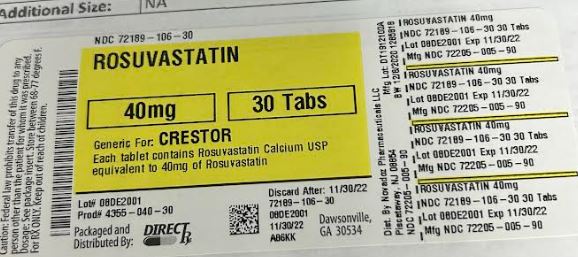
Rosuvastatin Calcium 40 mg Tablet, Film Coated, 90-count — NDC 72189-106-90 (Billing 72189-0106-90)
This is a package of 90 tablets of Rosuvastatin Calcium 40 mg Tablet, Film Coated from DIRECT RX, marketed since Jun 2020 and currently FDA-listed.
NDC database record
One package, one record: these facts belong to NDC 72189-106-90 alone.
- Record
- FDA NDC Directory package listing · Human prescription drug
- Code segments
- 72189 labeler · 106 product · 90 package
- Package marketed since
- Jun 12, 2020
- Sample package
- No — commercial package
- Listing certified through
- Dec 31, 2027
- Billing quantity
- 90 EA per package
- Barcode (UPC-A, from the NDC)
- 3 7218910690 4
- FDA record last changed
- Jul 24, 2026
Other active recalls for Rosuvastatin Calcium (different manufacturers) — 2 · tap to view
Identity & classification
Regulatory identifiers FDA, NLM and CMS codes for this package
Drug-database identifiers Medi-Span GPI and First Databank GCN / HICL / AHFS classification
- GSN (GCN sequence number): 051786
- GCN: 19155
- GPI-14 (Medi-Span): 39400060100340
- HICL (First Databank): 025009
- AHFS class code: 24:06.08.00
- RxCUI (RxNorm): 859419
Where does this data come from?
- FDA openFDA NDC Directory · synced Oct 8, 2026
- FDA label on DailyMed · label index refreshed Oct 8, 2026
- RxNorm (NLM RxNav) · catalog refreshed Oct 1, 2026
- Medi-Span GPI (licensed)
- First Databank (licensed) · refreshed Oct 8, 2026
RxNorm drug class
This medicine belongs to the HMG-CoA Reductase Inhibitor class.
Where does this data come from?
- RxClass (NLM) · catalog refreshed Oct 1, 2026
Clinical
Rosuvastatin is used to reduce the risk of heart attack or stroke decrease the amount of cholesterol (a fat-like substance that can build up and clog blood vessels causing heart attack or stroke or other health conditions) Rosuvastatin is in a class of medications called HMG-CoA reductase inhibitors (statins). It works by slowing how much cholesterol your body makes. This lowers the amount of cholesterol that can build up on the walls of the arteries and block blood flow to the heart, brain, and other parts of the body.
Read the full MedlinePlus article ↗- It lowers cholesterol and triglycerides when diet alone isn’t enough. Some tablet labels also include slowing atherosclerosis and lowering the risk of heart attack and stroke in ad...
- Take one tablet by mouth once a day, at any time, with or without food. Swallow it whole. If you miss a dose, skip it and take your next one as usual, without doubling up.
- The most common are headache, nausea, muscle aches, tiredness, constipation and joint pain. Most people tolerate it well. Call your doctor if muscle pain, tenderness or weakness is...
- Some medicines raise rosuvastatin levels and muscle risk, including cyclosporine, gemfibrozil and many antivirals. Tell me about everything you take. If you use an aluminum and mag...
Patient education
Supplement & herbal interactions
Rosuvastatin may be associated with lower levels of 1 nutrient — worth a chat with your pharmacist, not a cause for alarm.
Where does this data come from?
- MedlinePlus (NLM) · refreshed Oct 8, 2026
- FDA label on DailyMed · label index refreshed Oct 8, 2026
Ask a licensed pharmacist directly — free, answered by our team.
Pricing
A drug doesn't have one price. Each row is a different public payment system, and none is what you'd pay at the counter — that depends on your insurance. The ⓘ on each row explains what it measures.
| Price system | Per each | Per package |
|---|---|---|
| Retail pharmacies payNADAC · weekly | Not in the retail survey — common for institutional, discontinued, or low-volume packs. | |
| Medicaid paysCMS SDUD · 12 mo | No recent Medicaid claims on file for this NDC — rare and low-volume NDCs are suppressed in the public data. | |
| Medicare drug plans payPart D · Q2 2026 | $0.1900 | $17.10 / 90 tablets |
Where does this data come from?
- CMS NADAC weekly file
- CMS ASP pricing files · refreshed Sep 20, 2026
- CMS Medicaid State Drug Utilization Data · refreshed Oct 8, 2026
- CMS Part D plan pricing files · refreshed Sep 24, 2026
- VA National Acquisition Center price file
Packaging — all sizes for this product
| Package NDC | Description | Marketing start | Marketing end | Status |
|---|---|---|---|---|
| 72189-0106-30 72189-106-30 Main listing | 30 TABLET, FILM COATED in 1 BOTTLE | 2020-06-12 | — | Active |
| 72189-0106-90 You're viewing this | 90 TABLET, FILM COATED in 1 BOTTLE | 2020-06-12 | — | Active |
You're viewing the largest of 2 pack sizes for this product.
Pack size FAQ
What quantity is in this package?
How does this package differ from NDC 72189-0106-30?
What NDC number is used to bill for this package of Rosuvastatin Calcium 40 mg Tablet, Film Coated?
Therapeutic equivalents
| Product | Labeler | Pack | NADAC/unit | TE | Status | Price vs. this |
|---|---|---|---|---|---|---|
| Rosuvastatin 40 mg 11788-0133-05 | AiPing | 500 tablets | $0.069 | AB | Availability likely | — |
| Rosuvastatin Calcium 40 mg 13668-0182-05 | Torrent | 500 tablets | $0.069 | AB | Availability likely | — |
| Rosuvastatin Calcium 40 mg 13668-0723-05 | TORRENT | 500 tablets | $0.069 | AB | Availability likely | — |
| Rosuvastatin Calcium 40 mg 16714-0991-01 | NorthStar | 30 tablets | $0.069 | AB | Availability likely | — |
| Rosuvastatin Calcium 40 mg 24658-0264-30 | PURACAP | 30 tablets | $0.069 | AB | Availability likely | — |
| Rosuvastatin Calcium 40 mg 27808-0158-01 | Cranbury | 30 tablets | $0.069 | AB | Availability likely | — |
| Rosuvastatin 40 mg 31722-0885-30 | Camber | 30 tablets | $0.069 | AB | Availability likely | — |
| Rosuvastatin 40 mg 50228-0119-10 | ScieGen | 1000 tablets | $0.069 | AB | Availability likely | — |
| Rosuvastatin 40 mg 50268-0711-15 | AvPAK | 1 tablet | $0.069 | AB | Availability likely | — |
| Rosuvastatin Calcium 40 mg 57237-0171-05 | Rising | 500 tablets | $0.069 | AB | Availability likely | — |
| Rosuvastain Calcium 40 mg 62135-0693-30 | Chartwell | 30 tablets | $0.069 | AB | Availability likely | — |
| Rosuvastatin calcium 40 mg 70377-0009-11 | Biocon | 30 tablets | $0.069 | AB | Availability likely | — |
| Rosuvastatin Calcium 40 mg 72603-0367-01 | NorthStar | 30 tablets | $0.069 | AB | Availability likely | — |
| Rosuvastatin Calcium 40 mg 82009-0020-10 | Quallent | 1000 tablets | $0.069 | AB | Availability likely | — |
| Rosuvastatin 40 mg 16729-0287-10 | Accord | 30 tablets | $0.108 | AB | FDA listed | — |
| Crestor 40 mg 00310-7590-30 | AstraZeneca | 30 tablets | $8.807 | AB | Availability likely | — |
| Rosuvastatin Calcium 40 mg 00615-8535-39 | NCS | 30 tablets | — | AB | FDA listed | — |
| Rosuvastatin 40 mg 33342-0264-07 | Macleods | 30 tablets | — | — | FDA listed | — |
| Rosuvastatin Calcium 40 mg 42677-0304-01 | Shandong | 30 tablets | — | AB | FDA listed | — |
| Rosuvastatin calcium 40 mg 50090-5970-00 | A-S | 30 tablets | — | AB | FDA listed | — |
| Rosuvastatin Calcium 40 mg 50090-6611-00 | A-S | 30 tablets | — | AB | FDA listed | — |
| Rosuvastatin Calcium 40 mg 50090-6612-00 | A-S | 90 tablets | — | AB | FDA listed | — |
| Rosuvastatin Calcium 40 mg 50090-7413-00 | A-S | 30 tablets | — | AB | FDA listed | — |
| Rosuvastatin Calcium 40 mg 50090-7414-00 | A-S | 90 tablets | — | AB | FDA listed | — |
| Rosuvastatin 40 mg 50090-7482-00 | A-S | 30 tablets | — | AB | FDA listed | — |
| Rosuvastatin 40 mg 50090-7483-00 | A-S | 90 tablets | — | AB | FDA listed | — |
| Rosuvastatin Calcium 40 mg 51407-0156-30 | Golden | 30 tablets | — | AB | Discontinued | — |
| Rosuvastatin 40 mg 51407-0851-10 | Golden | 1000 tablets | — | AB | FDA listed | — |
| Rosuvastatin Calcium 40 mg 60290-0046-01 | Umedica | 30 tablets | — | AB | FDA listed | — |
| Rosuvastatin Calcium 40 mg 65862-0296-05 | Aurobindo | 500 tablets | — | AB | FDA listed | — |
| Rosuvastatin Calcium 40 mg 67877-0442-05 | Ascend | 500 tablets | — | AB | FDA listed | — |
| Rosuvastatin calcium 40 mg 68462-0264-01 | Glenmark | 100 tablets | — | AB | FDA listed | — |
| Rosuvastatin 40 mg 68788-8649-02 | Preferred | 20 tablets | — | AB | FDA listed | — |
| Rosuvastatin Calcium 40 mg 69367-0362-01 | Westminster | 100 tablets | — | AB | FDA listed | — |
| Rosuvastatin Calcium 40 mg 69434-0008-01 | Zhejiang | 30 tablets | — | AB | FDA listed | — |
| Rosuvastatin Calcium 40 mg 70518-3651-00 | REMEDYREPACK | 90 tablets | — | AB | FDA listed | — |
| Rosuvastatin calcium 40 mg 70518-4220-00 | REMEDYREPACK | 90 tablets | — | AB | FDA listed | — |
| Rosuvastatin 40 mg 70518-4314-00 | REMEDYREPACK | 100 tablets | — | AB | FDA listed | — |
| rosuvstatin 40 mg 70756-0056-12 | Lifestar | 1000 tablets | — | — | FDA listed | — |
| Rosuvastatin Calcium 40 mg 71205-0078-30 | Proficient | 30 tablets | — | AB | FDA listed | — |
| Rosuvastatin calcium 40 mg 71205-0176-30 | Proficient | 30 tablets | — | AB | FDA listed | — |
| Rosuvastatin Calcium 40 mg 71205-0475-30 | Proficient | 30 tablets | — | AB | FDA listed | — |
| Rosuvastatin Calcium 40 mg 71209-0046-01 | Cadila | 30 tablets | — | AB | FDA listed | — |
| Rosuvastatin Calcium 40 mg 71335-1103-01 | Bryant | 30 tablets | — | AB | Discontinued | — |
| Rosuvastatin calcium 40 mg 71335-1939-01 | Bryant | 30 tablets | — | AB | FDA listed | — |
| Rosuvastatin Calcium 40 mg 71335-2055-01 | Bryant | 30 tablets | — | AB | FDA listed | — |
| Rosuvastatin 40 mg 71335-2498-01 | Bryant | 30 tablets | — | AB | FDA listed | — |
| Rosuvastatin calcium 40 mg 71610-0078-15 | Aphena | 15 tablets | — | AB | FDA listed | — |
| Rosuvastatin calcium 40 mg 71610-0133-15 | Aphena | 15 tablets | — | AB | FDA listed | — |
| Rosuvastatin Calcium 40 mg 71610-0232-15 | Aphena | 15 tablets | — | AB | FDA listed | — |
| Rosuvastatin Calcium 40 mg 71610-0793-15 | Aphena | 15 tablets | — | AB | FDA listed | — |
| Rosuvastatin 40 mg 71610-0798-15 | Aphena | 15 tablets | — | AB | FDA listed | — |
| Rosuvastatin Calcium 40 mgthis 72189-0106-90 | DIRECT | 90 tablets | — | AB | FDA listed | — |
| Rosuvastatin Calcium 40 mg 72205-0005-05 | Novadoz | 500 tablets | — | AB | FDA listed | — |
| Rosuvastatin 40 mg 82009-0191-05 | Quallent | 500 tablets | — | AB | FDA listed | — |
| Rosuvastatin Calcium 40 mg 82804-0176-90 | Proficient | 90 tablets | — | AB | FDA listed | — |
| Rosuvastatin calcium 40 mg 72303-0830-01 | HEC | 30 tablets | — | AB | FDA listed | — |
Where does this data come from?
- FDA openFDA NDC Directory · synced Oct 8, 2026
- FDA Orange Book · refreshed Oct 3, 2026
- CMS NADAC weekly file
Availability & generic status
This product is an FDA-approved generic. Other versions of the same drug are listed under Therapeutic equivalents, least expensive first.
Where does this data come from?
- FDA Orange Book · refreshed Oct 3, 2026
What it looks like
Where does this data come from?
- FDA label on DailyMed · label index refreshed Oct 8, 2026
Inactive Ingredients / Excipients
Inactive ingredients, also called excipients, are components of the drug product other than the active ingredient. They may include fillers, dyes, coatings, preservatives, flavors, or other formulation ingredients.
🧪 Avoiding an ingredient? See Rosuvastatin inactive ingredients by manufacturer: every current product's list side by side, so you can ask your pharmacy for the version that does not list it.
💡 Tap an ingredient (hover on desktop) to see what it is and why it’s used.
-
UNII OP1R32D61U
Microcrystalline cellulose is a purified form of cellulose, a natural fiber from plant sources. It acts as a binder and filler in tablets and capsules, helping hold ingredients together and give the medicine its shape and size.
-
UNII 68401960MK
Crospovidone is a synthetic polymer made from polyvinylpyrrolidone. It acts as a disintegrant, helping tablets break apart quickly in the stomach so the medicine dissolves and absorbs into the body.
-
UNII L06K8R7DQK
A synthetic blue dye approved by the FDA for use in medications and foods. It serves as a colorant to make pills and liquids visually distinct and easier to identify.
-
UNII WZB9127XOA
A synthetic red dye used to color medications and make them easier to identify. It serves as a colorant in tablets, capsules, and liquid formulations.
-
UNII H77VEI93A8
A synthetic yellow dye used to color medications. It helps identify the drug and make it visually distinctive, with no effect on how the medicine works.
-
UNII 3NXW29V3WO
Hypromellose is a plant-based thickener made from cellulose. It's used in medicines as a binder to hold ingredients together, a coating for tablets, and a thickener for liquids.
-
UNII EWQ57Q8I5X
Lactose monohydrate is a natural sugar derived from milk. It serves as a filler and binder in tablets and capsules, helping create the proper size, texture, and consistency of the medicine.
-
UNII 70097M6I30
Magnesium stearate is a salt made from magnesium and stearic acid, a fatty substance. It's used in tablets and capsules as a lubricant and glidant to help ingredients flow smoothly during manufacturing and prevent sticking.
-
UNII 3OWL53L36A
A natural sugar alcohol derived from seaweed or synthesized in the lab. It's used as a filler to add bulk, a sweetener in sugar-free formulas, and a disintegrant to help tablets break apart in the stomach.
-
UNII 6HG8UB2MUY
Meglumine is a sugar-alcohol compound used as a solubilizer and pH buffer in medicines. It helps dissolve drugs that don't mix well in water and maintains stable acidity levels in the formulation.
-
UNII O8232NY3SJ
A plant-based carbohydrate derived from corn kernels. It acts as a filler to add bulk, a binder to hold ingredients together, and a disintegrant to help the tablet break apart in your stomach for absorption.
-
UNII 15FIX9V2JP
Titanium dioxide is a bright white mineral powder commonly used as a colorant and opacifying agent. It makes pills and tablets white or lighter in color and helps make coatings non-transparent.
-
UNII XHX3C3X673
Triacetin is a clear, oily liquid made from glycerin and acetic acid. It works as a plasticizer and solvent in medicines, helping soften coatings and improve how liquids mix together in formulations.
13 inactive ingredients listed in the exact product block matched to this NDC.
Where does this data come from?
ingredient classCode="IACT" elements from the exact product block matched by this NDC. Label-section narrative from DailyMed / the openFDA label index is shown separately when available.- FDA label on DailyMed · label index refreshed Oct 8, 2026
- FDA openFDA NDC Directory · synced Oct 8, 2026
Inactive ingredient FAQ
Are inactive ingredients the same for every manufacturer?
Why might an inactive ingredient be missing?
Can inactive ingredients matter?
Manufacturer & labeler
More NDCs from DIRECT RX labeler code 72189
- Eszopiclone 1 mg Tablet, Film Coated NDC 72189-099-30
- Losartan Potassium 25 mg Tablet, Film Coated NDC 72189-100-90
- Cyclobenzaprine Hydrochloride 15 mg Capsule, Extended Release NDC 72189-101-60
- Torsemide 10 mg Tablet NDC 72189-102-30
- Cefadroxil 500 mg Capsule NDC 72189-103-06
- Pioglitazone 30 mg Tablet NDC 72189-105-90
- Levothyroxine Sodium .075 mg Tablet NDC 72189-107-30
- OFLOXACIN OTIC 3 mg/mL Solution NDC 72189-108-05
- Gabapentin 100 mg Capsule NDC 72189-109-30
- Benazepril Hydrochloride 10 mg Tablet, Coated NDC 72189-110-30
- Ciprofloxacin 500 mg Tablet, Film Coated NDC 72189-111-10
- Pantoprazole Sodium 20 mg Tablet, Delayed Release NDC 72189-112-30
Where does this data come from?
- FDA openFDA NDC Directory · synced Oct 8, 2026
- Drugs@FDA
Full prescribing information FDA SPL
🎯 Indications and Usage ▾
Pediatric use information for patients 7 to 17 years of age is approved for AstraZeneca’s CRESTOR (rosuvastatin calcium) tablets. However, due to AstraZeneca’s marketing exclusivity rights, this drug product is not labeled with that pediatric information.
1.3Hypertriglyceridemia Rosuvastatin tablets are indicated as adjunctive therapy to diet for the treatment of adult patients with hypertriglyceridemia.
1.4Primary Dysbetalipoproteinemia (Type III Hyperlipoproteinemia) Rosuvastatin tablets are indicated as an adjunct to diet for the treatment of adult patients with primary dysbetalipoproteinemia (Type III Hyperlipoproteinemia).
1.5Adult Patients with Homozygous Familial Hypercholesterolemia Rosuvastatin tablets are indicated as adjunctive therapy to other lipid-lowering treatments (e.g., LDL apheresis) or alone if such treatments are unavailable to reduce LDL-C, Total-C, and ApoB in adult patients with homozygous familial hypercholesterolemia.
1.8Limitations of Use Rosuvastatin tablets have not been studied in Fredrickson Type I and V dyslipidemias.
⏱️ Dosage and Administration ▾
2.1General Dosing Information The dose range for rosuvastatin tablets in adults is 5 to 40 mg orally once daily. The usual starting dose is 10 to 20 mg once daily. The usual starting dose in adult patients with homozygous familial hypercholesterolemia is 20 mg once daily.
The maximum rosuvastatin calcium tablets dose of 40 mg should be used only for those patients who have not achieved their LDL-C goal utilizing the 20 mg dose [see WARNINGS AND PRECAUTIONS (5.1)]. Rosuvastatin tablets can be administered as a single dose at any time of day, with or without food. The tablet should be swallowed whole.
When initiating rosuvastatin tablets therapy or switching from another HMG-CoA reductase inhibitor therapy, the appropriate rosuvastatin calcium tablets starting dose should first be utilized, and only then titrated according to the patient’s response and individualized goal of therapy. After initiation or upon titration of rosuvastatin tablets, lipid levels should be analyzed within 2 to 4 weeks and the dosage adjusted accordingly. Pediatric use information for patients 7 to 17 years of age is approved for AstraZeneca’s CRESTOR (rosuvastatin calcium) tablets.
However, due to AstraZeneca’s marketing exclusivity rights, this drug product is not labeled with that pediatric information.
2.3Dosing in Asian Patients In Asian patients, consider initiation of rosuvastatin tablets therapy with 5 mg once daily due to increased rosuvastatin plasma concentrations. The increased systemic exposure should be taken into consideration when treating Asian patients not adequately controlled at doses up to 20 mg/day. [see Use in Specific Populations (8.8) and CLINICALPHARMACOLOGY (12.3)].
2.4Use with Concomitant Therapy Patients taking cyclosporine The dose of rosuvastatin tablets should not exceed 5 mg once daily [SEE WARNINGS AND PRECAUTIONS (5.1), DRUG INTERACTIONS (7.1) ,and CLINICAL PHARMACOLOGY (12.3)]. Patients taking gemfibrozil Avoid concomitant use of rosuvastatin tablets with gemfibrozil. If concomitant use cannot be avoided,initiate rosuvastatin calcium tablets at 5 mg once daily.
The dose of rosuvastatin tablets should not exceed 10 mg oncedaily [see WARNINGS AND PRECAUTIONS (5.1), DRUG INTERACTIONS (7.2) and CLINICAL PHARMACOLOGY(12.3)]. Patients taking atazanavir and ritonavir, lopinavir and ritonavir, or simeprevir Initiate rosuvastatin tablets therapy with 5 mg once daily. The dose of rosuvastatin tablets should not exceed 10 mg once daily [SEE WARNINGS AND PRECAUTIONS (5.1) ,DRUG INTERACTIONS (7.3) ,and CLINICAL PHARMACOLOGY (12.3) ].
2.5Dosing in Patients with Severe Renal Impairment For patients with severe renal impairment (CLcr < 30 mL/min/1.73 m2) not on hemodialysis, dosing of rosuvastatin tablets should be started at 5 mg once daily and not exceed 10 mg once daily [see USE IN SPECIFIC POPULATIONS (8.6) and CLINICAL PHARMACOLOGY (12.3)].
💊 Dosage Forms and Strengths ▾
5 mg: White, round shaped, biconvex, film coated tablets debossed with "R5" on one side and plain on other side. 10 mg: Pink, round shaped, biconvex, film coated tablets debossed with "R10" on one side and plain on other side. 20 mg: Pink, round shaped, biconvex, film coated tablets debossed with "R20" on one side and plain on other side. 40 mg: Pink, oval shaped, biconvex, film coated tablets debossed with "R" on one side and "40" on other side.
⛔ Contraindications ▾
Rosuvastatin calcium is contraindicated in the following conditions: Patients with a known hypersensitivity to any component of this product. Hypersensitivity reactions including rash, pruritus, urticaria, and angioedema have been reported with rosuvastatin calcium[seeADVERSE REACTIONS (6.1)]. Patients with active liver disease, which may include unexplained persistent elevations of hepatic transaminase levels [see WARNINGS AND PRECAUTIONS (5.2)].
Pregnancy [see USE IN SPECIFIC POPULATIONS (8.1, 8.3)]. Lactation. Limited data indicate that rosuvastatin calcium is present in human milk.
Because statins have the potential for serious adverse reactions in nursing infants, women who require rosuvastatin calcium treatment should not breastfeed their infants [see USE IN SPECIFIC POPULATIONS (8.2)].
⚠️ Warnings and Cautions ▾
5.1Skeletal Muscle Effects Cases of myopathy and rhabdomyolysis with acute renal failure secondary to myoglobinuria have been reported with HMG-CoA reductase inhibitors, including rosuvastatin tablets. These risks can occur at any dose level, but are increased at the highest dose (40 mg). Rosuvastatin calcium should be prescribed with caution in patients with predisposing factors for myopathy (e.g., age ≥ 65 years, inadequately treated hypothyroidism, renal impairment).
The risk of myopathy during treatment with rosuvastatin calcium may be increased with concurrent administration of some other lipid-lowering therapies (fibrates or niacin), gemfibrozil, cyclosporine, atazanavir/ritonavir, lopinavir/ritonavir, or simeprevir [see DOSAGE AND ADMINISTRATION (2)and Drug Interactions (7)]. Cases of myopathy, including rhabdomyolysis, have been reported with HMG-CoA reductase inhibitors, including rosuvastatin, coadministered with colchicine, and caution should be exercised when prescribing rosuvastatin calcium with colchicine [see DRUG INTERACTIONS (7.7)].
Rosuvastatin calcium therapy should be discontinued if markedly elevated creatine kinase levels occur or myopathy is diagnosed or suspected. Rosuvastatin calcium therapy should also be temporarily withheld in any patient with an acute, serious condition suggestive of myopathy or predisposing to the development of renal failure secondary to rhabdomyolysis (e.g., sepsis, hypotension, dehydration, major surgery, trauma, severe metabolic, endocrine, and electrolyte disorders, or uncontrolled seizures). There have been rare reports of immune-mediated necrotizing myopathy (IMNM), an autoimmune myopathy, associated with statin use.
IMNM is characterized by: proximal muscle weakness and elevated serum creatine kinase, which persist despite discontinuation of statin treatment; muscle biopsy showing necrotizing myopathy without significant inflammation; improvement with immunosuppressive agents. All patients should be advised to promptly report to their physician unexplained muscle pain, tenderness, or weakness, particularly if accompanied by malaise or fever or if muscle signs and symptoms persist after discontinuing rosuvastatin calcium.
5.2Liver Enzyme Abnormalities It is recommended that liver enzyme tests be performed before the initiation of rosuvastatin calcium, and if signs or symptoms of liver injury occur. Increases in serum transaminases [AST (SGOT) or ALT (SGPT)] have been reported with HMG-CoA reductase inhibitors, including rosuvastatin calcium. In most cases, the elevations were transient and resolved or improved on continued therapy or after a brief interruption in therapy.
There were two cases of jaundice, for which a relationship to rosuvastatin calcium therapy could not be determined, which resolved after discontinuation of therapy. There were no cases of liver failure or irreversible liver disease in these trials. In a pooled analysis of placebo-controlled trials, increases in serum transaminases to > 3 times the upper limit of normal occurred in 1.1% of patients taking rosuvastatin calcium versus 0.5% of patients treated with placebo.
There have been rare postmarketing reports of fatal and non-fatal hepatic failure in patients taking statins, including rosuvastatin. If serious liver injury with clinical symptoms and/or hyperbilirubinemia or jaundice occurs during treatment with rosuvastatin calcium, promptly interrupt therapy. If an alternate etiology is not found, do not restart rosuvastatin calcium.
Rosuvastatin calcium should be used with caution in patients who consume substantial quantities of alcohol and/or have a history of chronic liver disease [see CLINICAL PHARMACOLOGY (12.3)]. Active liver disease, which may include unexplained persistent transaminase elevations, is a contraindication to the use of rosuvastatin calcium [SEECONTRAINDICATIONS (4)].
5.3Concomitant Coumarin Anticoagulants Caution should be exercised when anticoagulants are given in conjunction… [Excerpted — this section continues on DailyMed.]
🤒 Adverse Reactions ▾
The following serious adverse reactions are discussed in greater detail in other sections of the label: Rhabdomyolysis with myoglobinuria and acute renal failure and myopathy (including myositis) [see WARNINGS AND PRECAUTIONS (5.1)] Liver enzyme abnormalities [see WARNINGS AND PRECAUTIONS (5.2)]
6.1Clinical Studies Experience Because clinical studies are conducted under widely varying conditions, adverse reaction rates observed in the clinical studies of a drug cannot be directly compared to rates in the clinical studies of another drug and may not reflect the rates observed in clinical practice. In the rosuvastatin calcium controlled clinical trials database (placebo or active-controlled) of 5394 patients with a mean treatment duration of 15 weeks, 1.4% of patients discontinued due to adverse reactions. The most common adverse reactions that led to treatment discontinuation were: myalgia abdominal pain nausea The most commonly reported adverse reactions (incidence ≥ 2%) in the rosuvastatin calcium controlled clinical trial database of 5394 patients were: headache myalgia abdominal pain asthenia nausea Adverse reactions reported in ≥ 2% of patients in placebo-controlled clinical studies and at a rate greater than placebo are shown in Table 1.
These studies had a treatment duration of up to 12 weeks. Table 1. Adverse Reactions1 Reported in ≥2% of Patients Treated with rosuvastatin calcium and > Placebo in Placebo-Controlled Trials (% of Patients) Adverse Reactions Rosuvastatin calcium 5 mg N=291 Rosuvastatin calcium 10 mg N=283 Rosuvastatin calcium 20 mg N=64 Rosuvastatin calcium 40 mg N=106 Total Rosuvastatin calcium 5 mg to 40 mg N=744 Placebo N=382 Headache 5.5 4.9 3.1 8.5 5.5 5 Nausea 3.8 3.5 6.3 0 3.4
3.1Myalgia 3.1 2.1 6.3 1.9 2.8
1.3Asthenia 2.4 3.2 4.7 0.9 2.7
2.6Constipation 2.1 2.1 4.7 2.8 2.4 2.4 1Adverse reactions by COSTART preferred term Other adverse reactions reported in clinical studies were abdominal pain, dizziness, hypersensitivity (including rash, pruritus, urticaria, and angioedema) and pancreatitis. The following laboratory abnormalities have also been reported: dipstick-positive proteinuria and microscopic hematuria [see WARNINGS AND PRECAUTIONS (5.4)]; elevated creatine phosphokinase, transaminases, glucose, glutamyl transpeptidase, alkaline phosphatase, and bilirubin; and thyroid function abnormalities.
In a clinical trial, involving 981 participants treated with rosuvastatin 40 mg (n=700) or placebo (n=281) with a mean treatment duration of 1.7 years, 5.6% of subjects treated with rosuvastatin calcium versus 2.8% of placebo-treated subjects discontinued due to adverse reactions. The most common adverse reactions that led to treatment discontinuation were: myalgia, hepatic enzyme increased, headache, and nausea. Adverse reactions reported in ≥ 2% of patients and at a rate greater than placebo are shown in Table 2.
Table 2. Adverse Reactions 1 Reported in ≥ 2% of Patients Treated with Rosuvastatin calcium and > Placebo in a Trial (% of Patients) Adverse Reactions Rosuvastatin calcium 40 mg N=700 Placebo N=281 Myalgia 12.7
12.1Arthralgia 10.1
7.1Headache 6.4
5.3Dizziness 4.0
2.8Increased CPK 2.6
0.7Abdominal pain 2.4
1.8ALT > 3x ULN2 2.2 0.7 1Adverse reactions by MedDRA preferred term. 2Frequency recorded as abnormal laboratory value. In a clinical trial, 17,802 participants were treated with rosuvastatin 20 mg (n=8901) or placebo (n=8901) for a mean duration of 2 years.
A higher percentage of rosuvastatin-treated patients versus placebo-treated patients, 6.6% and 6.2%, respectively, discontinued study medication due to an adverse event, irrespective of treatment causality. Myalgia was the most common adverse reaction that led to treatment discontinuation. There was a significantly higher frequency of diabetes mellitus reported in patients taking rosuvastatin (2.8%) versus patients taking placebo (2.3%).
Mean HbA1c was significantly increased by 0.1% in rosuvastatin-treated patients compared to… [Excerpted — this section continues on DailyMed.]
🔄 Drug Interactions ▾
7.1Cyclosporine Cyclosporine increased rosuvastatin exposure and may result in increased risk of myopathy. Therefore, in patients taking cyclosporine, the dose of rosuvastatin calcium should not exceed 5 mg once daily [see DOSAGE AND ADMINISTRATION (2.4),WARNINGS AND PRECAUTIONS (5.1),and CLINICAL PHARMACOLOGY (12.3)].
7.2Gemfibrozil Gemfibrozil significantly increased rosuvastatin exposure. Due to an observed increased risk of myopathy/rhabdomyolysis, combination therapy with rosuvastatin calcium and gemfibrozil should be avoided. If used together, the dose of rosuvastatin calcium should not exceed 10 mg once daily [see CLINICAL PHARMACOLOGY (12.3) ].
7.3Protease Inhibitors Coadministration of rosuvastatin with certain protease inhibitors has differing effects on rosuvastatin exposure and may increase risk of myopathy. Simeprevir, which is a hepatitis C virus (HCV) protease inhibitor, or combinations of atazanavir/ritonavir or lopinavir/ritonavir, which are HIV-1 protease inhibitors, increase rosuvastatin exposure [see Table 4 –CLINICAL PHARMACOLOGY (12.3)].For these protease inhibitors, the dose of rosuvastatin calcium should not exceed 10 mg once daily. The combinations of fosamprenavir/ritonavir or tipranavir/ritonavir, which are HIV-1 protease inhibitors, produce little or no change in rosuvastatin exposure.
Caution should be exercised when rosuvastatin is coadministered with protease inhibitors [see DOSAGE AND ADMINISTRATION (2.4), WARNINGS AND PRECAUTIONS (5.1) and CLINICAL PHARMACOLOGY (12.3)].
7.4Coumarin Anticoagulants Rosuvastatin calcium significantly increased INR in patients receiving coumarin anticoagulants. Therefore, caution should be exercised when coumarin anticoagulants are given in conjunction with rosuvastatin calcium. In patients taking coumarin anticoagulants and rosuvastatin calcium concomitantly, INR should be determined before starting rosuvastatin calcium and frequently enough during early therapy to ensure that no significant alteration of INR occurs [see WARNINGS AND PRECAUTIONS (5.3) and CLINICAL PHARMACOLOGY (12.3)].
7.5Niacin The risk of skeletal muscle effects may be enhanced when rosuvastatin calcium is used in combination with lipid- modifying doses (≥1 g/day) of niacin; caution should be used when prescribing with rosuvastatin calcium [see WARNINGS AND PRECAUTIONS (5.1)].
7.6Fenofibrate When rosuvastatin calcium was coadministered with fenofibrate, no clinically significant increase in the AUC of rosuvastatin or fenofibrate was observed. Because it is known that the risk of myopathy during treatment with HMG-CoA reductase inhibitors is increased with concomitant use of fenofibrates, caution should be used when prescribing fenofibrates with rosuvastatin calcium [see WARNINGS AND PRECAUTIONS (5.1)and CLINICAL PHARMACOLOGY (12.3)].
7.7Colchicine Cases of myopathy, including rhabdomyolysis, have been reported with HMG-CoA reductase inhibitors, including rosuvastatin, coadministered with colchicine, and caution should be exercised when prescribing rosuvastatin calcium with colchicine [see WARNINGS AND PRECAUTIONS (5.1)].
👥 Use in Specific Populations ▾
8.1Pregnancy Risk Summary Rosuvastatin calcium is contraindicated for use in pregnant women since safety in pregnant women has not been established and there is no apparent benefit to therapy with rosuvastatin calcium during pregnancy. Because HMG-CoA reductase inhibitors decrease cholesterol synthesis and possibly the synthesis of other biologically active substances derived from cholesterol, rosuvastatin calcium may cause fetal harm when administered to pregnant women. Rosuvastatin calcium should be discontinued as soon as pregnancy is recognized [see Contraindications (4)].
Limited published data on the use of rosuvastatin are insufficient to determine a drug-associated risk of major congenital malformations or miscarriage. In animal reproduction studies, there were no adverse developmental effects with oral administration of rosuvastatin during organogenesis at systemic exposures equivalent to a maximum recommended human dose (MRHD) of 40 mg/day in rats or rabbits (based on AUC and body surface area, respectively). In rats and rabbits, decreased pup/fetal survival occurred at 12 times and equivalent, respectively, to the MRHD of 40 mg/day [see Data].
The estimated background risk of major birth defects and miscarriage for the indicated population is unknown. In the U.S. general population, the estimated background risk of major birth defects and miscarriage in clinically recognized pregnancies is 2-4% and 15-20%, respectively. Data Human Data Limited published data on rosuvastatin have not shown an increased risk of major congenital malformations or miscarriage.
Rare reports of congenital anomalies have been received following intrauterine exposure to other statins. In a review of approximately 100 prospectively followed pregnancies in women exposed to simvastatin or lovastatin, the incidences of congenital anomalies, spontaneous abortions, and fetal deaths/stillbirths did not exceed what would be expected in the general population. The number of cases is adequate to exclude a ≥3 to 4-fold increase in congenital anomalies over the background incidence.
In 89% of the prospectively followed pregnancies, drug treatment was initiated prior to pregnancy and was discontinued at some point in the first trimester when pregnancy was identified. Animal Data Rosuvastatin crosses the placenta in rats and rabbits and is found in fetal tissue and amniotic fluid at 3% and 20%, respectively, of the maternal plasma concentration following a single 25 mg/kg oral gavage dose on gestation day 16 in rats. A higher fetal tissue distribution (25% maternal plasma concentration) was observed in rabbits after a single oral gavage dose of 1 mg/kg on gestation day 18.
Rosuvastatin administration did not indicate a teratogenic effect in rats at ≤25 mg/kg/day or in rabbits ≤3 mg/kg/day (doses equivalent to the MRHD of 40 mg/day based on AUC and body surface area, respectively). In female rats given 5, 15 and 50 mg/kg/day before mating and continuing through to gestation day 7 resulted in decreased fetal body weight (female pups) and delayed ossification at 50 mg/kg/day (10 times the human exposure at the MRHD dose of 40 mg/day based on AUC). In pregnant rats given 2, 10 and 50 mg/kg/day of rosuvastatin from gestation day 7 through lactation day 21 (weaning), decreased pup survival occurred at 50 mg/kg/day (dose equivalent to 12 times the MRHD of 40 mg/day based body surface area).
In pregnant rabbits given 0.3, 1, and 3 mg/kg/day of rosuvastatin from gestation day 6 to day 18, decreased fetal viability and maternal mortality was observed at 3 mg/kg/day (dose equivalent to the MRHD of 40 mg/day based on body surface area).
8.2Lactation Risk Summary Rosuvastatin use is contraindicated during breastfeeding [see CONTRAINDICATIONS (4)]. Limited data indicate that rosuvastatin is present in human milk. There is no available information on the effects of the drug on the breastfed infant or the effects of the drug on milk production. Because of the potential… [Excerpted — this section continues on DailyMed.]
🆘 Overdosage ▾
There is no specific treatment in the event of overdose. In the event of overdose, the patient should be treated symptomatically and supportive measures instituted as required. Hemodialysis does not significantly enhance clearance of rosuvastatin.
🧬 Clinical Pharmacology ▾
12.1Mechanism of Action Rosuvastatin is a selective and competitive inhibitor of HMG-CoA reductase, the rate-limiting enzyme that converts 3-hydroxy-3-methylglutaryl coenzyme A to mevalonate, a precursor of cholesterol. In vivo studies in animals and in vitro studies in cultured animal and human cells have shown rosuvastatin to have a high uptake into, and selectivity for, action in the liver, the target organ for cholesterol lowering. In in vivo and in vitro studies, rosuvastatin produces its lipid-modifying effects in two ways.
First, it increases the number of hepatic LDL receptors on the cell-surface to enhance uptake and catabolism of LDL. Second, rosuvastatin inhibits hepatic synthesis of VLDL, which reduces the total number of VLDL and LDL particles.
12.2Pharmacodynamics Rosuvastatin dose dependently reduces elevated LDL-cholesterol and reduces total cholesterol and triglycerides and increases HDL-cholesterol [ SEE CLINICAL STUDIES (14)]. A therapeutic response to rosuvastatin calcium is evident within 1 week of commencing therapy and 90% of maximum response is usually achieved in 2 weeks. The maximum response is usually achieved by 4 weeks and is maintained after that.
Individualization of drug dosage should be based on the therapeutic response [ SEE DOSAGE AND ADMINISTRATION (2)].
12.3Pharmacokinetics Absorption In clinical pharmacology studies in man, peak plasma concentrations of rosuvastatin were reached 3 to 5 hours following oral dosing. Both Cmax and AUC increased in approximate proportion to rosuvastatin calcium dose. The absolute bioavailability of rosuvastatin is approximately 20%.
Administration of rosuvastatin calcium with food did not affect the AUC of rosuvastatin. The AUC of rosuvastatin does not differ following evening or morning drug administration. Distribution Mean volume of distribution at steady-state of rosuvastatin is approximately 134 liters.
Rosuvastatin is 88% bound to plasma proteins, mostly albumin. This binding is reversible and independent of plasma concentrations. Elimination Rosuvastatin is primarily eliminated by excretion in the feces.
The elimination half-life of rosuvastatin is approximately 19 hours. Metabolism Rosuvastatin is not extensively metabolized; approximately 10% of a radiolabeled dose is recovered as metabolite. The major metabolite is N-desmethyl rosuvastatin, which is formed principally by cytochrome P450 \ 2C9, and in vitro studies have demonstrated that N-desmethyl rosuvastatin has approximately one-sixth to one-half the HMG-CoA reductase inhibitory activity of the parent compound.
Overall, greater than 90% of active plasma HMG-CoA reductase inhibitory activity is accounted for by the parent compound. Excretion Following oral administration, rosuvastatin and its metabolites are primarily excreted in the feces (90%). After an intravenous dose, approximately 28% of total body clearance was via the renal route, and 72% by the hepatic route.
Specific Populations Racial or Ethnic Groups A population pharmacokinetic analysis revealed no clinically relevant differences in pharmacokinetics among Caucasian, Hispanic, and Black or Afro-Caribbean groups. However, pharmacokinetic studies, including one conducted in the US, have demonstrated an approximate 2-fold elevation in median exposure (AUC and Cmax) in Asian subjects when compared with a Caucasian control group. Male and Female Patients There were no differences in plasma concentrations of rosuvastatin between men and women.
Pediatric use information for patients ages 8 to less than 10 years is approved for AstraZeneca’s CRESTOR (rosuvastatin calcium) tablets. However, due to AstraZeneca’s marketing exclusivity rights, this drug product is not labeled with that pediatric information. Geriatric patients There were no differences in plasma concentrations of rosuvastatin between the nonelderly and elderly populations (age ≥ 65 years).
Patients with Renal Impairment Mild to moderate renal impairment (CLcr ≥ 30 mL/min/1.73 m… [Excerpted — this section continues on DailyMed.]
📦 How Supplied / Storage and Handling ▾
Rosuvastatin tablets are supplied as: Rosuvastatin Tablets,USP 5 mg are available as White, round shaped, biconvex, film coated tablets debossed with "R5" on one side and plain on other side. Rosuvastatin Tablets ,USP 10 mg are available as Pink, round shaped, biconvex, film coated tablets debossed with "R10" on one side and plain on other side. Rosuvastatin Tablets,USP 20 mg are available as Pink, round shaped, biconvex, film coated tablets debossed with "R20" on one side and plain on other side.
Rosuvastatin Tablets, USP 40 mg are available as: Pink, oval shaped, biconvex, film coated tablets debossed with "R" on one side and "40" on other side. Storage Store at controlled room temperature, 20-25ºC (68-77ºF) [see USP Controlled Room Temperature]. Protect from moisture.
📋 Description ▾
Rosuvastatin calcium, USP is a synthetic lipid-lowering agent for oral administration. The chemical name for rosuvastatin calcium is bis [(E)-7-[4-(4-fluorophenyl)-6-isopropyl-2 [methyl (methylsulfonyl) amino] pyrimidin-5-yl] (3R,5S)-3, 5-dihydroxyhept-6-enoic acid] calcium salt with the following structural formula: [structure] The molecular formula for rosuvastatin calcium, USP is (C22H27FN3O6S)2 Ca and the molecular weight is 1001.14. Rosuvastatin calcium is a white amorphous powder that is sparingly soluble in water and ethanol, and slightly soluble in ethanol.
Rosuvastatin calcium is a hydrophilic compound with a partition coefficient (octanol/water) of 0.13 at pH of 7.0. Rosuvastatin tablets, USP for oral administration contain 5, 10, 20, or 40 mg of rosuvastatin and the following inactive ingredients: Each tablet contains: crospovidone, hypromellose, lactose monohydrate magnesium stearate, mannitol, meglumine, microcrystalline cellulose, pregelatinized starch, titanium dioxide and triacetin. Additionally, 10 mg, 20 mg and 40 mg tablets contain FD&C red No.
40/allura red AC aluminum lake, FD&C blue No. 2/indigo carmine aluminum lake and FD&C yellow No.6/sunset yellow FCF aluminum lake. Meets USP Dissolution Test 2.
🔬 Clinical Studies ▾
14.3Hypertriglyceridemia Dose-Response Study: In a double-blind, placebo-controlled dose-response study in patients with baseline TG levels from 273 to 817 mg/dL, rosuvastatin calcium given as a single daily dose (5 to 40 mg) over 6 weeks significantly reduced serum TG levels (Table 9). Table 9. Dose-Response in Patients with Primary Hypertriglyceridemia Over 6 Weeks Dosing Median (Min, Max) Percent Change From Baseline Dose Placebo (n=26) Rosuvastatin calcium 5 mg (n=25) Rosuvastatin calcium 10 mg (n=23) Rosuvastatin calcium 20 mg (n=27) Rosuvastatin calcium 40 mg (n=25) Triglycerides 1 (-40, 72) -21 (-58, 38) -37 (-65, 5) -37 (-72, 11) -43 (-80, -7) nonHDL-C 2 (-13, 19) -29 (-43, -8) -49 (-59, -20) -43 (-74, 12) -51 (-62, -6) VLDL-C 2 (-36, 53) -25 (-62, 49) -48 (-72, 14) -49 (-83, 20) -56 (-83, 10) Total-C 1 (-13, 17) -24 (-40, -4) -40 (-51, -14) -34 (-61, -11) -40 (-51, -4) LDL-C 5 (-30, 52) -28 (-71, 2) -45 (-59, 7) -31 (-66, 34) -43 (-61, -3) HDL-C -3 (-25, 18) 3 (-38, 33) 8 (-8, 24) 22 (-5, 50) 17 (-14, 63)
14.4Primary Dysbetalipoproteinemia (Type III Hyperlipoproteinemia) In a randomized, multicenter, double-blind crossover study, 32 patients (27 with є2/є2 and 4 with apo E mutation [Arg145Cys] with primary dysbetalipoproteinemia (Type III Hyperlipoproteinemia) entered a 6-week dietary lead-in period on the NCEP Therapeutic Lifestyle Change (TLC) diet. Following dietary lead-in, patients were randomized to a sequence of treatments in conjunction with the TLC diet for 6 weeks each: rosuvastatin 10 mg followed by rosuvastatin 20 mg or rosuvastatin 20 mg followed by rosuvastatin 10 mg.
Rosuvastatin calcium reduced non HDL-C (primary end point) and circulating remnant lipoprotein levels. Results are shown in the table below. Table 10.
Lipid-modifying Effects of Rosuvastatin 10 mg and 20 mg in Primary Dysbetalipoproteinemia (Type III hyperlipoproteinemia) after Six weeks by Median Percent Change(95% CI) from Baseline (N=32) Median at Baseline (mg/dL) Median percent change from baseline (95% CI) Rosuvastatin calcium 10 mg Median percent change from baseline (95% CI) Rosuvastatin calcium 20 mg Total-C 342.5 – 43.3 (-46.9, – 37.5) -47.6 (-51.6,-42.8) Triglycerides 503.5 -40.1 (-44.9, -33.6) -43.0 (-52.5, -33.1) NonHDL-C 294.5 - 48.2 (-56.7, -45.6) -56.4 (-61.4, -48.5) VLDL-C + IDL-C 209.5 -46.8 (-53.7, -39.4) -56.2 (-67.7, -43.7) LDL-C 112.5 -54.4 (-59.1, -47.3) -57.3 (-59.4, -52.1) HDL-C 35.5 10.2 (1.9, 12.3) 11.2 (8.3, 20.5) RLP-C 82.0 -56.4 (-67.1, -49.0) -64.9 (-74.0, -56.6) Apo-E 16.0 -42.9 (-46.3, -33.3) -42.5 (-47.1, -35.6)
14.5Homozygous Familial Hypercholesterolemia Dose-Titration Study:In an open-label, forced-titration study, homozygous FH patients (n=40, 8-63 years)were evaluated for their response to rosuvastatin calcium 20 to 40 mg titrated at a 6-week interval. In the overall population, the mean LDL-C reduction from baseline was 22%. About one-third of the patients benefited from increasing their dose from 20 mg to 40 mg with further LDL lowering of greater than 6%.
In the 27 patients with at least a 15% reduction in LDL-C, the mean LDL-C reduction was 30% (median 28% reduction). Among 13 patients with an LDL-C reduction of < 15%, 3 had no change or an increase in LDL-C. Reductions in LDL-C of 15% or greater were observed in 3 of 5 patients with known receptor negative status.
Pediatric use information for patients 7 to 17 years of age is approved for AstraZeneca’s CRESTOR (rosuvastatin calcium) tablets. However, due to AstraZeneca’s marketing exclusivity rights, this drug product is not labeled with that pediatric information.
🧪 Nonclinical Toxicology ▾
13.1Carcinogenesis, Mutagenesis, Impairment of Fertility In a 104-week carcinogenicity study in rats at dose levels of 2, 20, 60, or 80 mg/kg/day by oral gavage, the incidence of uterine stromal polyps was significantly increased in females at 80 mg/kg/day at systemic exposure 20 times the human exposure at 40 mg/day based on AUC. Increased incidence of polyps was not seen at lower doses. In a 107-week carcinogenicity study in mice given 10, 60 or 200 mg/kg/day by oral gavage, an increased incidence of hepatocellular adenoma/carcinoma was observed at 200 mg/kg/day at systemic exposures 20 times the human exposure at 40 mg/day based on AUC.
An increased incidence of hepatocellular tumors was not seen at lower doses. Rosuvastatin was not mutagenic or clastogenic with or without metabolic activation in the Ames test with Salmonella typhimurium and Escherichia coli, the mouse lymphoma assay, and the chromosomal aberration assay in Chinese hamster lung cells. Rosuvastatin was negative in the in vivo mouse micronucleus test.
In rat fertility studies with oral gavage doses of 5, 15, 50 mg/kg/day, males were treated for 9 weeks prior to and throughout mating and females were treated 2 weeks prior to mating and throughout mating until gestation day 7. No adverse effect on fertility was observed at 50 mg/kg/day (systemic exposures up to 10 times the human exposure at 40 mg/day based on AUC). In testicles of dogs treated with rosuvastatin at 30 mg/kg/day for one month, spermatidic giant cells were seen.
Spermatidic giant cells were observed in monkeys after 6-month treatment at 30 mg/kg/day in addition to vacuolation of seminiferous tubular epithelium. Exposures in the dog were 20 times and in the monkey 10 times the human exposure at 40 mg/day based on body surface area. Similar findings have been seen with other drugs in this class.
13.2Animal Toxicology and / or Pharmacology Central Nervous System Toxicity CNS vascular lesions, characterized by perivascular hemorrhages, edema, and mononuclear cell infiltration of perivascular spaces, have been observed in dogs treated with several other members of this drug class. A chemically similar drug in this class produced dose-dependent optic nerve degeneration (Wallerian degeneration of retinogeniculate fibers) in dogs, at a dose that produced plasma drug levels about 30 times higher than the mean drug level in humans taking the highest recommended dose.
Edema, hemorrhage, and partial necrosis in the interstitium of the choroid plexus was observed in a female dog sacrificed moribund at day 24 at 90 mg/kg/day by oral gavage (systemic exposures 100 times the human exposure at 40 mg/day based on AUC). Corneal opacity was seen in dogs treated for 52 weeks at 6 mg/kg/day by oral gavage (systemic exposures 20 times the human exposure at 40 mg/day based on AUC). Cataracts were seen in dogs treated for 12 weeks by oral gavage at 30 mg/kg/day (systemic exposures 60 times the human exposure at 40 mg/day based on AUC).
Retinal dysplasia and retinal loss were seen in dogs treated for 4 weeks by oral gavage at 90 mg/kg/day (systemic exposures 100 times the human exposure at 40 mg/day based on AUC). Doses ≤30 mg/kg/day (systemic exposures ≤ 60 times the human exposure at 40 mg/day based on AUC) did not reveal retinal findings during treatment for up to one year. Juvenile Toxicology Study In a juvenile study, rats were dosed by oral gavage with 10 or 50 mg/kg/day from weaning for 9 weeks prior to pairing, throughout pairing and up to the day before necropsy for males or up to gestation day 7 for females.
No effects on sexual development, testicular and epididymal appearance or fertility were observed at either dose level. Pediatric information is approved for AstraZeneca’s CRESTOR (rosuvastatin calcium) tablets. However, due to AstraZeneca’s marketing exclusivity rights, this drug product is not labeled with that pediatric information.
📄 Package Label / Principal Display Panel ▾
065-30
106
72189-106-30
72189-065-90
Medicare Part D spend CMS · PART D · 2026 (Q1)
About this NDC listing & data coverage
What data is (and isn’t) available for this NDC — tap to expand
| NDC identity (package / product / labeler codes) | ✓ Available |
| Labeler | ✓ Available |
| Product & package description | ✓ Available |
| Marketing category & status | ✓ Available |
| Active ingredient / dosage form / route | ✓ Available |
| FDA label (SPL via DailyMed) | ✓ Available |
| Package photos | ✓ Available |
| Inactive ingredients (structured) | ✓ Available |
| NADAC pharmacy acquisition price (CMS) | — Not published for this NDC CMS publishes NADAC only for NDCs reported in its retail-pharmacy survey. |
| Orange Book / therapeutic-equivalence data | ✓ Available |
| HCPCS J-code billing crosswalk | — Not published for this NDC Most self-administered / retail products have no J-code — that is normal. |
| Medicaid utilization (CMS SDUD) | — Not published for this NDC CMS reports utilization only for NDCs with Medicaid claims above its privacy threshold. |