
lurasidone hydrochloride 20 mg Tablet, Film Coated, 500-count — NDC 72205-207-05 (Billing 72205-0207-05)
This is a package of 500 tablets of lurasidone hydrochloride 20 mg Tablet, Film Coated from Novadoz Pharmaceuticals LLC, marketed since Feb 2023 and currently FDA-listed.
NDC database record
One package, one record: these facts belong to NDC 72205-207-05 alone.
- Record
- FDA NDC Directory package listing · Human prescription drug
- Code segments
- 72205 labeler · 207 product · 05 package
- Package marketed since
- Feb 20, 2023
- Sample package
- No — commercial package
- Listing certified through
- Dec 31, 2026
- Barcode (UPC)
- 0372205208308, 0372205209053, 0372205209909, 0372205210905 +10 more
- FDA record last changed
- Oct 8, 2026
Identity & classification
Regulatory identifiers FDA, NLM and CMS codes for this package
Drug-database identifiers Medi-Span GPI and First Databank GCN / HICL / AHFS classification
- GSN (GCN sequence number): 068448
- GCN: 31226
- GPI-14 (Medi-Span): 59400023100310
- HICL (First Databank): 037321
- AHFS class code: 28:16.08.04
- RxCUI (RxNorm): 1040031
Where does this data come from?
- FDA openFDA NDC Directory · synced Oct 8, 2026
- FDA label on DailyMed · label index refreshed Oct 8, 2026
- RxNorm (NLM RxNav) · catalog refreshed Oct 1, 2026
- Medi-Span GPI (licensed)
- First Databank (licensed) · refreshed Oct 8, 2026
RxNorm drug class
This medicine belongs to the Atypical Antipsychotic class.
Where does this data come from?
- RxClass (NLM) · catalog refreshed Oct 1, 2026
Clinical
Lurasidone is used to treat the symptoms of schizophrenia (a mental illness that affects how a person thinks, feels and behaves) and bipolar disorder (manic depressive disorder; a disease that causes depression, mania, and other abnormal moods). Lurasidone is in a class of medications called atypical antipsychotics. It works by changing the activity of certain natural substances in the brain.
Read the full MedlinePlus article ↗- Yes, food really does matter here. Taking lurasidone with a meal of at least 350 calories more than doubles the amount of medication your body actually absorbs — so if you take it...
- Why do I have to take lurasidone with food? Does it matter what I eat?
- The most common things people notice are sleepiness, nausea, and a restless feeling called akathisia — where you feel like you need to keep moving or can't sit still. These are usu...
- What side effects should I actually expect, and which ones do I need to call my doctor about?
Patient education
Supplement & herbal interactions
Where does this data come from?
- MedlinePlus (NLM) · refreshed Oct 8, 2026
- FDA label on DailyMed · label index refreshed Oct 8, 2026
Ask a licensed pharmacist directly — free, answered by our team.
Pricing
A drug doesn't have one price. Each row is a different public payment system, and none is what you'd pay at the counter — that depends on your insurance. The ⓘ on each row explains what it measures.
| Price system | Per each | Per package |
|---|---|---|
| Retail pharmacies payNADAC · weekly | Not in the retail survey — common for institutional, discontinued, or low-volume packs. | |
| Medicaid paysCMS SDUD · 12 mo | No recent Medicaid claims on file for this NDC — rare and low-volume NDCs are suppressed in the public data. | |
| Medicare drug plans payPart D · Q2 2026 | $0.5403 | $270.15 / 500 tablets |
Where does this data come from?
- CMS NADAC weekly file
- CMS ASP pricing files · refreshed Sep 20, 2026
- CMS Medicaid State Drug Utilization Data · refreshed Oct 8, 2026
- CMS Part D plan pricing files · refreshed Sep 24, 2026
- VA National Acquisition Center price file
Packaging — all sizes for this product
| Package NDC | Description | Per unit | Per pack | Marketing start | Marketing end | Status |
|---|---|---|---|---|---|---|
| 72205-0207-05 You're viewing this | 500 TABLET, FILM COATED in 1 BOTTLE | — | — | 2023-02-20 | — | Active |
| 72205-0207-30 72205-207-30 Main listing | 30 TABLET, FILM COATED in 1 BOTTLE | $0.1417 / ea | $4.25 | 2023-02-20 | — | Active |
| 72205-0207-90 72205-207-90 | 90 TABLET, FILM COATED in 1 BOTTLE | — | — | 2023-02-20 | — | Active |
You're viewing the largest of 3 pack sizes for this product.
This pack shows little to no recent Medicaid volume — the 30 tablets pack carries most fills. See all packs ↓
Pack size FAQ
What quantity is in this package?
How does this package differ from NDC 72205-0207-30?
What NDC number is used to bill for this package of lurasidone hydrochloride 20 mg Tablet, Film Coated?
Prices are the latest CMS NADAC pharmacy acquisition cost per NDC; per-pack figures are per-unit × pack quantity, shown only when the pack is denominated in the same measure NADAC prices.
Therapeutic equivalents
| Product | Labeler | Pack | NADAC/unit | TE | Status | Price vs. this |
|---|---|---|---|---|---|---|
| lurasidone hydrochloride 20 mg 00904-7355-04 | Major | 1 tablet | $0.142 | AB | Availability likely | — |
| lurasidone hydrochloride 20 mg 00904-7421-46 | MAJOR | 30 tablets | $0.142 | AB | Availability likely | — |
| Lurasidone Hydrochloride 20 mg 23155-0887-03 | Heritage | 30 tablets | $0.142 | AB | Availability likely | — |
| lurasidone hydrochloride 20 mg 33342-0419-07 | Macleods | 30 tablets | $0.142 | AB | Availability likely | — |
| Lurasidone Hydrochloride 20 mg 60687-0747-21 | American | 1 tablet | $0.142 | AB | Availability likely | — |
| lurasidone hydrochloride 20 mg 72603-0621-01 | NorthStar | 30 tablets | $0.142 | AB | Availability likely | — |
| Lurasidone Hydrochloride 20 mg 76282-0522-30 | Exelan | 30 tablets | $0.142 | AB | Availability likely | — |
| lurasidone hydrochloride 20 mg 16729-0346-10 | Accord | 30 tablets | $0.229 | AB | FDA listed | — |
| Lurasidone Hydrochloride 20 mg 65162-0879-03 | Amneal | 30 tablets | $0.229 | — | FDA listed | — |
| Lurasidone Hydrochloride 20 mg 13668-0464-05 | Torrent | 500 tablets | — | AB | FDA listed | — |
| Lurasidone Hydrochloride 20 mg 31722-0080-05 | Camber | 500 tablets | — | AB | FDA listed | — |
| Lurasidone hydrochloride 20 mg 43598-0351-05 | Dr. | 500 tablets | — | AB | FDA listed | — |
| Lurasidone Hydrochloride 20 mg 46708-0494-10 | Alembic | 10 tablets | — | AB | FDA listed | — |
| Lurasidone Hydrochloride 20 mg 47335-0578-13 | Sun | 500 tablets | — | AB | FDA listed | — |
| lurasidone hydrochloride 20 mg 50090-6438-00 | A-S | 30 tablets | — | AB | FDA listed | — |
| lurasidone hydrochloride 20 mg 50090-7078-00 | A-S | 30 tablets | — | AB | FDA listed | — |
| lurasidone hydrochloride 20 mg 50090-7170-00 | A-S | 30 tablets | — | AB | FDA listed | — |
| Lurasidone Hydrochloride 20 mg 51407-0836-05 | Golden | 500 tablets | — | AB | FDA listed | — |
| Lurasidone Hydrochloride 20 mg 53746-0879-30 | Amneal | 30 tablets | — | — | FDA listed | — |
| Lurasidone Hydrochloride 20 mg 62332-0494-10 | Alembic | 10 tablets | — | AB | FDA listed | — |
| Latuda 20 mg 63402-0302-04 | Sumitomo | 7 tablets | — | AB | FDA listed | — |
| Lurasidone Hydrochloride 20 mg 65862-0953-05 | Aurobindo | 500 tablets | — | AB | FDA listed | — |
| lurasidone hydrochloride 20 mg 67877-0638-05 | Ascend | 500 tablets | — | AB | FDA listed | — |
| lurasidone hydrochloride 20 mg 68180-0670-02 | Lupin | 500 tablets | — | AB | FDA listed | — |
| Lurasidone hydrochloride 20 mg 68382-0965-01 | Zydus | 100 tablets | — | AB | FDA listed | — |
| Lurasidone Hydrochloride 20 mg 69097-0942-02 | Cipla | 30 tablets | — | AB | FDA listed | — |
| Lurasidone hydrochloride 20 mg 70518-4241-00 | REMEDYREPACK | 30 tablets | — | AB | FDA listed | — |
| lurasidone hydrochloride 20 mg 70518-4260-00 | REMEDYREPACK | 30 tablets | — | AB | FDA listed | — |
| Lurasidone Hydrochloride 20 mg 70518-4563-00 | REMEDYREPACK | 30 tablets | — | AB | FDA listed | — |
| Lurasidone hydrochloride 20 mg 70771-1734-01 | Zydus | 100 tablets | — | AB | FDA listed | — |
| lurasidone hydrochloride 20 mgthis 72205-0207-05 | Novadoz | 500 tablets | — | AB | FDA listed | — |
| Lurasidone Hydrochloride 20 mg 82804-0215-30 | Proficient | 30 tablets | — | AB | FDA listed | — |
Where does this data come from?
- FDA openFDA NDC Directory · synced Oct 8, 2026
- FDA Orange Book · refreshed Oct 3, 2026
- CMS NADAC weekly file
Availability & generic status
This product is an FDA-approved generic. Other versions of the same drug are listed under Therapeutic equivalents, least expensive first.
Where does this data come from?
- FDA Orange Book · refreshed Oct 3, 2026
What it looks like
Where does this data come from?
- FDA label on DailyMed · label index refreshed Oct 8, 2026
Inactive Ingredients / Excipients
Inactive ingredients, also called excipients, are components of the drug product other than the active ingredient. They may include fillers, dyes, coatings, preservatives, flavors, or other formulation ingredients.
🧪 Avoiding an ingredient? See Lurasidone inactive ingredients by manufacturer: every current product's list side by side, so you can ask your pharmacy for the version that does not list it.
💡 Tap an ingredient (hover on desktop) to see what it is and why it’s used.
-
UNII XF417D3PSL
Anhydrous citric acid is a sour, crystalline powder derived from citric acid with water removed. In medicines, it acts as a buffer to control pH, adds tartness to improve taste, and helps tablets disintegrate.
-
UNII R12CBM0EIZ
A natural wax derived from a Brazilian palm tree, used as a coating and polish on tablets and capsules. It creates a smooth, shiny finish that protects the medicine and improves appearance.
-
UNII M28OL1HH48
Croscarmellose sodium is a plant-based substance derived from cellulose. It acts as a disintegrant, helping tablets and capsules break down quickly in the digestive system so the medicine can be absorbed.
-
UNII R75537T0T4
Hypromellose 2910 is a plant-derived thickening agent made from cellulose. It serves as a binder that holds tablet ingredients together, a film-coating for pills, and a viscosity controller in liquids.
-
UNII EWQ57Q8I5X
Lactose monohydrate is a natural sugar derived from milk. It serves as a filler and binder in tablets and capsules, helping create the proper size, texture, and consistency of the medicine.
-
UNII 70097M6I30
Magnesium stearate is a salt made from magnesium and stearic acid, a fatty substance. It's used in tablets and capsules as a lubricant and glidant to help ingredients flow smoothly during manufacturing and prevent sticking.
-
UNII 3OWL53L36A
A natural sugar alcohol derived from seaweed or synthesized in the lab. It's used as a filler to add bulk, a sweetener in sugar-free formulas, and a disintegrant to help tablets break apart in the stomach.
-
UNII 3WJQ0SDW1A
Polyethylene glycol is a synthetic liquid or solid polymer used in medicines as a solvent, lubricant, and humectant. It helps dissolve active ingredients, reduces friction during manufacturing, and retains moisture in the final product.
-
UNII U725QWY32X
Povidone K30 is a synthetic polymer made from petroleum. It acts as a binder to hold tablet ingredients together and as a disintegrant to help the tablet break apart in the stomach so the medicine can be absorbed.
-
UNII O8232NY3SJ
A plant-based carbohydrate derived from corn kernels. It acts as a filler to add bulk, a binder to hold ingredients together, and a disintegrant to help the tablet break apart in your stomach for absorption.
-
UNII 15FIX9V2JP
Titanium dioxide is a bright white mineral powder commonly used as a colorant and opacifying agent. It makes pills and tablets white or lighter in color and helps make coatings non-transparent.
11 inactive ingredients listed in the exact product block matched to this NDC.
Where does this data come from?
ingredient classCode="IACT" elements from the exact product block matched by this NDC. Label-section narrative from DailyMed / the openFDA label index is shown separately when available.- FDA label on DailyMed · label index refreshed Oct 8, 2026
- FDA openFDA NDC Directory · synced Oct 8, 2026
Inactive ingredient FAQ
Are inactive ingredients the same for every manufacturer?
Why might an inactive ingredient be missing?
Can inactive ingredients matter?
Manufacturer & labeler
More NDCs from Novadoz Pharmaceuticals LLC labeler code 72205
- Roflumilast 500 ug Tablet NDC 72205-200-06
- Roflumilast 250 ug Tablet NDC 72205-201-24
- Dabigatran 75 mg Capsule NDC 72205-202-34
- Dabigatran 110 mg Capsule NDC 72205-203-34
- Dabigatran 150 mg Capsule NDC 72205-204-34
- ziprasidone mesylate 20 mg/mL Injection, Powder, Lyophilized, For Solution NDC 72205-205-07
- lurasidone hydrochloride 40 mg Tablet, Film Coated NDC 72205-208-05
- lurasidone hydrochloride 60 mg Tablet, Film Coated NDC 72205-209-05
- lurasidone hydrochloride 80 mg Tablet, Film Coated NDC 72205-210-05
- lurasidone hydrochloride 120 mg Tablet, Film Coated NDC 72205-211-05
- Prucalopride 1 mg Tablet, Film Coated NDC 72205-218-30
- Prucalopride 2 mg Tablet, Film Coated NDC 72205-219-30
Where does this data come from?
- FDA openFDA NDC Directory · synced Oct 8, 2026
- Drugs@FDA
Full prescribing information FDA SPL
🚨 Boxed Warning ▾
WARNING: INCREASED MORTALITY IN ELDERLY PATIENTS WITH DEMENTIA-RELATED PSYCHOSIS; and SUICIDAL THOUGHTS AND BEHAVIORS Increased Mortality in Elderly Patients with Dementia-Related Psychosis Elderly patients with dementia-related psychosis treated with antipsychotic drugs are at an increased risk of death. Lurasidone hydrochloride tablets are not approved for the treatment of patients with dementia-related psychosis [ see Warnings and Precautions (5.1) ]. Suicidal Thoughts and Behaviors Antidepressants increased the risk of suicidal thoughts and behavior in pediatric and young adults in short-term studies.
Closely monitor all antidepressant-treated patients for clinical worsening, and for emergence of suicidal thoughts and behaviors [ see Warnings and Precautions (5.2)]. WARNING: INCREASED MORTALITY IN ELDERLY PATIENTS WITH DEMENTIA-RELATED PSYCHOSIS; and SUICIDAL THOUGHTS AND BEHAVIORS See full prescribing information for complete boxed warning. • Elderly patients with dementia-related psychosis treated with antipsychotic drugs are at an increased risk of death. Lurasidone hydrochloride is not approved for the treatment of patients with dementia-related psychosis ( 5.1 ). • Antidepressants increased the risk of suicidal thoughts and behavior in pediatric and young adult patients.
Closely monitor for clinical worsening and emergence of suicidal thoughts and behaviors (5.2) .
🎯 Indications and Usage ▾
1 INDICATIONS AND USAGE Lurasidone hydrochloride tablets are indicated for: • Treatment of adult and adolescent patients (13 to 17 years) with schizophrenia [ see Clinical Studies (14.1) ]. • Monotherapy treatment of adult and pediatric patients (10 to 17 years) with major depressive episode associated with bipolar I disorder (bipolar depression) [ see Clinical Studies (14.2) ]. • Adjunctive treatment with lithium or valproate in adult patients with major depressive episode associated with bipolar I disorder (bipolar depression) [ see Clinical Studies (14.2) ].
Lurasidone hydrochloride tablets are an atypical antipsychotic indicated for the treatment of: • Schizophrenia in adults and adolescents (13 to 17 years) ( 1 , 14.1 ) • Depressive episode associated with Bipolar I Disorder (bipolar depression) in adults and pediatric patients (10 to 17 years) as monotherapy ( 1 , 14.2 ) • Depressive episode associated with Bipolar I Disorder (bipolar depression) in adults as adjunctive therapy with lithium or valproate ( 1 , 14.2 )
⏱️ Dosage and Administration ▾
2 DOSAGE AND ADMINISTRATION Lurasidone hydrochloride tablets should be taken with food (at least 350 calories). Administration with food substantially increases the absorption of lurasidone hydrochloride tablets ( 2.3 , 12.3 ). Indication Starting Dose Recommended Dose Schizophrenia – adults (2.1) 40 mg per day 40 mg to 160 mg per day Schizophrenia – adolescents (13 to 17 years) (2.1) 40 mg per day 40 mg to 80 mg per day Bipolar Depression - adults (2.2) 20 mg per day 20 mg to 120 mg per day Bipolar Depression – pediatric patients (10 to 17 years) (2.2) 20 mg per day 20 mg to 80 mg per day • Moderate and Severe Renal Impairment: Recommended starting dose is 20 mg per day, and the maximum recommended dose is 80 mg per day ( 2.4 , 8.6 ). • Moderate and Severe Hepatic Impairment: Recommended starting dose is 20 mg per day.
The maximum recommended dose is 80 mg per day in moderate hepatic impairment and 40 mg per day in severe hepatic impairment ( 2.5 , 8.7 ). • Concomitant Use of a Moderate CYP3A4 inhibitor (e.g., diltiazem): Lurasidone hydrochloride tablets dose should be reduced to half of the original dose level. Recommended starting dose is 20 mg per day. Maximum recommended dose is 80 mg per day ( 2.6 , 7.1 ). • Concomitant Use of a Moderate CYP3A4 Inducer: It may be necessary to increase the dose of lurasidone hydrochloride tablets ( 2.6 , 7.1 ).
2.1Schizophrenia Adults The recommended starting dose of lurasidone hydrochloride tablets are 40 mg once daily. Initial dose titration is not required. Lurasidone hydrochloride tablets have been shown to be effective in a dose range of 40 mg per day to 160 mg per day [see Clinical Studies (14.1)] .
The maximum recommended dose is 160 mg per day. Adolescents (13 – 17 years) The recommended starting dose of lurasidone hydrochloride tablets are 40 mg once daily. Initial dose titration is not required.
Lurasidone hydrochloride tablets have been shown to be effective in a dose range of 40 mg per day to 80 mg per day [see Clinical Studies (14.1)]. The maximum recommended dose is 80 mg per day.
2.2Depressive Episodes Associated with Bipolar I Disorder Adults The recommended starting dose of lurasidone hydrochloride tablets is 20 mg given once daily as monotherapy or as adjunctive therapy with lithium or valproate. Initial dose titration is not required. Lurasidone hydrochloride tablets have been shown to be effective in a dose range of 20 mg per day to 120 mg per day as monotherapy or as adjunctive therapy with lithium or valproate [ see Clinical Studies (14.2) ].
The maximum recommended dose, as monotherapy or as adjunctive therapy with lithium or valproate, is 120 mg per day. In the monotherapy study, the higher dose range (80 mg to 120 mg per day) did not provide additional efficacy, on average, compared to the lower dose range (20 to 60 mg per day) [ see Clinical Studies (14.2) ]. Pediatric Patients (10 – 17 years) The recommended starting dose of lurasidone hydrochloride tablets are 20 mg given once daily as monotherapy.
Initial dose titration is not required. The dose may be increased after one week based on clinical response. Lurasidone hydrochloride tablets have been shown to be effective in a dose range of 20 mg per day to 80 mg per day as monotherapy.
At the end of the clinical study, most of the patients (67%) received 20 mg or 40 mg once daily [ see Clinical Studies (14.2) ]. The maximum recommended dose is 80 mg per day. The efficacy of lurasidone hydrochloride tablets in the treatment of mania associated with bipolar disorder has not been established.
2.3Administration Information Lurasidone hydrochloride tablets should be taken with food (at least 350 calories). Administration with food substantially increases the absorption of lurasidone hydrochloride tablets. Administration with food increases the AUC approximately 2-fold and increases the C max approximately 3-fold.
In the clinical studies, lurasidone hydrochloride tablets were administered with food [ see Clinical P… [Excerpted — this section continues on DailyMed.]
💊 Dosage Forms and Strengths ▾
3 DOSAGE FORMS AND STRENGTHS Lurasidone hydrochloride tablets are available as follows: 20 mg tablets are white colored, round shaped, biconvex, film-coated tablets, debossed with “20” on one side and “ML” on other side. 40 mg tablets are white colored, round shaped, biconvex, film-coated tablets, debossed with “40” on one side and “ML” on other side. 60 mg tablets are white colored, oval shaped, biconvex, film-coated tablets, debossed with “60” on one side and “ML” on other side.
80 mg tablets are white colored, oval shaped, biconvex, film-coated tablets, debossed with “80” on one side and “ML” on other side. 120 mg tablets are white colored, oval shaped, biconvex, film-coated tablets, debossed with “120” on one side and “ML” on other side. Tablets: 20 mg, 40 mg, 60 mg, 80 mg and 120 mg ( 3 )
⛔ Contraindications ▾
4 CONTRAINDICATIONS • Known hypersensitivity to lurasidone HCl or any components in the formulation. Angioedema has been observed with lurasidone [ see Adverse Reactions (6.1) ]. • Strong CYP3A4 inhibitors (e.g., ketoconazole, clarithromycin, ritonavir, voriconazole, mibefradil, etc.) [ see Drug Interactions (7.1) ] . • Strong CYP3A4 inducers (e.g., rifampin, avasimibe, St. John's wort, phenytoin, carbamazepine, etc.) [ see Drug Interactions (7.1) ]. • Known hypersensitivity to lurasidone hydrochloride or any components in the formulation ( 4 ). • Concomitant use with a strong CYP3A4 inhibitor (e.g., ketoconazole) ( 2.6 , 4 , 7.1 ). • Concomitant use with a strong CYP3A4 inducer (e.g., rifampin) ( 2.6 , 4 , 7.1 ).
⚠️ Warnings and Cautions ▾
5 WARNINGS AND PRECAUTIONS • Cerebrovascular Adverse Reactions in Elderly Patients with Dementia-Related Psychosis: Increased incidence of cerebrovascular adverse events (e.g., stroke, transient ischemic attack) ( 5.3 ). • Neuroleptic Malignant Syndrome: Manage with immediate discontinuation and close monitoring ( 5.4 ). • Tardive Dyskinesia: Discontinue if clinically appropriate ( 5.5 ). • Metabolic Changes: Monitor for hyperglycemia/diabetes mellitus, dyslipidemia and weight gain ( 5.6 ). • Hyperprolactinemia: Prolactin elevations may occur ( 5.7 ). • Leukopenia, Neutropenia, and Agranulocytosis: Perform complete blood counts (CBC) in patients with a pre-existing low white blood cell count (WBC) or a history of leukopenia or neutropenia.
Consider discontinuing lurasidone hydrochloride if a clinically significant decline in WBC occurs in the absence of other causative factors ( 5.8 ). • O rthostatic Hypotension and Syncope: Monitor heart rate and blood pressure and warn patients with known cardiovascular or cerebrovascular disease, and risk of dehydration or syncope ( 5.9 ).
5.1Increased Mortality in Elderly Patients with Dementia-Related Psychosis Elderly patients with dementia-related psychosis treated with antipsychotic drugs are at an increased risk of death. Analyses of 17 placebo-controlled trials (modal duration of 10 weeks), largely in patients taking atypical antipsychotic drugs, revealed a risk of death in drug-treated patients of between 1.6- to 1.7-times the risk of death in placebo-treated patients. Over the course of a typical 10-week controlled trial, the rate of death in drug-treated patients was about 4.5%, compared to a rate of about 2.6% in the placebo group.
Although the causes of death were varied, most of the deaths appeared to be either cardiovascular (e.g., heart failure, sudden death) or infectious (e.g., pneumonia) in nature. Lurasidone hydrochloride tablets are not approved for the treatment of patients with dementia-related psychosis [ see Boxed Warning, Warnings and Precautions (5.3) ].
5.2Suicidal Thoughts and Behaviors in Pediatric and Young Adult Patients In pooled analyses of placebo-controlled trials of antidepressant drugs (SSRIs and other antidepressant classes) that included approximately 77,000 adult patients, and over 4,400 pediatric patients, the incidence of suicidal thoughts and behaviors in pediatric and young adult patients was greater in antidepressant-treated patients than in placebo-treated patients. The drug-placebo differences in the number of cases of suicidal thoughts and behaviors per 1,000 patients treated are provided in Table 2.
No suicides occurred in any of the pediatric studies. There were suicides in the adult studies, but the number was not sufficient to reach any conclusion about antidepressant drug effect on suicide. Table 2: Risk Differences of the Number of Cases of Suicidal Thoughts or Behaviors in the Pooled Placebo-Controlled Trials of Antidepressants in Pediatric and Adult Patients Age Range Drug-Placebo Difference in Number of Patients of Suicidal Thoughts or Behaviors per 1000 Patients Treated Increases Compared to Placebo <18 14 additional patients 18-24 5 additional patients Decreases Compared to Placebo 25-64 1 fewer patient ≥65 6 fewer patients It is unknown whether the risk of suicidal thoughts and behaviors in pediatric and young adult patients extends to longer-term use, i.e., beyond four months.
However, there is substantial evidence from placebo-controlled maintenance studies in adults with MDD that antidepressants delay the recurrence of depression. Monitor all antidepressant-treated patients for clinical worsening and emergence of suicidal thoughts and behaviors, especially during the initial few months of drug therapy and at times of dosage changes. Counsel family members or caregivers of patients to monitor for changes in behavior and to alert the healthcare provider.
Consider changing the therapeutic regimen, including possibly discontinuing… [Excerpted — this section continues on DailyMed.]
🤒 Adverse Reactions ▾
6 ADVERSE REACTIONS The following adverse reactions are discussed in more detail in other sections of the labeling: • Increased Mortality in Elderly Patients with Dementia-Related Psychosis [ see Boxed Warning and Warnings and Precautions (5.1) ] • Suicidal Thoughts and Behaviors [ see Boxed Warning and Warnings and Precautions (5.2) ] • Cerebrovascular Adverse Reactions, Including Stroke, in Elderly Patients with Dementia-related Psychosis [ see Warnings and Precautions (5.3) ] • Neuroleptic Malignant Syndrome [ see Warnings and Precautions (5.4) ] • Tardive Dyskinesia [ see Warnings and Precautions (5.5) ] • Metabolic Changes [ see Warnings and Precautions (5.6) ] • Hyperprolactinemia [ see Warnings and Precautions (5.7) ] • Leukopenia, Neutropenia, and Agranulocytosis [ see Warnings and Precautions (5.8)] • Orthostatic Hypotension and Syncope [ see Warnings and Precautions (5.9) ] • Falls [ see Warnings and Precautions (5.10) ] • Seizures [ see Warnings and Precautions (5.11) ] • Potential for Cognitive and Motor Impairment [ see Warnings and Precautions (5.12) ] • Body Temperature Dysregulation [ see Warnings and Precautions (5.13) ] • Activation of Mania/Hypomania [ see Warnings and Precautions (5.14)] • Dysphagia [ see Warnings and Precautions (5.15) ] • Neurological Adverse Reactions in Patients with Parkinson's Disease or Dementia with Lewy Bodies [ see Warnings and Precautions (5.16) ] Commonly observed adverse reactions (incidence ≥ 5% and at least twice the rate for placebo) were ( 6.1 ): • Adult patients with schizophrenia: somnolence, akathisia, extrapyramidal symptoms, and nausea • Adolescent patients (13-17 years) with schizophrenia: somnolence, nausea, akathisia, EPS (non-akathisia), rhinitis (80 mg only), and vomiting • Adult patients with bipolar depression: akathisia, extrapyramidal symptoms, and somnolence • Pediatric patients (10-17 years) with bipolar depression: nausea, weight increase, and insomnia.
To report SUSPECTED ADVERSE REACTIONS, contact Novadoz Pharmaceuticals LLC at 1-855-668-2369 or FDA at 1-800-FDA-1088 or www.fda.gov/medwatch.
6.1Clinical Trials Experience Because clinical trials are conducted under widely varying conditions, adverse reaction rates observed in clinical trials of a drug cannot be directly compared to rates in the clinical trials of another drug and may not reflect the rates observed in clinical practice. Adults The information below is derived from an integrated clinical study database for lurasidone hydrochloride consisting of 3,799 adult patients exposed to one or more doses of lurasidone hydrochloride tablets for the treatment of schizophrenia, and bipolar depression in placebo-controlled studies.
This experience corresponds with a total experience of 1250.9 patient-years. A total of 1,106 lurasidone hydrochloride-treated patients had at least 24 weeks and 371 lurasidone hydrochloride-treated patients had at least 52 weeks of exposure. Adverse events during exposure to study treatment were obtained by general inquiry and voluntarily reported adverse experiences, as well as results from physical examinations, vital signs, ECGs, weights and laboratory investigations.
Adverse experiences were recorded by clinical investigators using their own terminology. In order to provide a meaningful estimate of the proportion of individuals experiencing adverse events, events were grouped in standardized categories using MedDRA terminology. Schizophrenia The following findings are based on the short-term, placebo-controlled premarketing adult studies for schizophrenia in which lurasidone hydrochloride was administered at daily doses ranging from 20 to 160 mg (n=1508).
Commonly Observed Adverse Reactions: The most common adverse reactions (incidence ≥ 5% and at least twice the rate of placebo) in patients treated with lurasidone hydrochloride were somnolence, akathisia, extrapyramidal symptoms, and nausea. Adverse Reactions Associated with Discontinuation of Treatment: A total of 9.5% (… [Excerpted — this section continues on DailyMed.]
🔄 Drug Interactions ▾
7 DRUG INTERACTIONS
7.1Drugs Having Clinically Important Interactions with Lurasidone Hydrochloride Table 34: Clinically Important Drug Interactions with Lurasidone Hydrochloride Strong CYP3A4 Inhibitors Clinical Impact: Concomitant use of lurasidone hydrochloride tablets with strong CYP3A4 inhibitors increased the exposure of lurasidone compared to the use of lurasidone hydrochloride tablets alone [ see Clinical Pharmacology (12.3) ]. Intervention: Lurasidone hydrochloride tablets should not be used concomitantly with strong CYP3A4 inhibitors [ see Contraindications (4) ].
Examples: Ketoconazole, clarithromycin, ritonavir, voriconazole, mibefradil Moderate CYP3A4 Inhibitors Clinical Impact: Concomitant use of lurasidone hydrochloride tablets with moderate CYP3A4 inhibitors increased the exposure of lurasidone compared to the use of lurasidone hydrochloride tablets alone [ see Clinical Pharmacology (12.3) ]. Intervention: Lurasidone hydrochloride dose should be reduced to half of the original level when used concomitantly with moderate inhibitors of CYP3A4 [ see Dosage and Administration (2.6) ].
Examples: Diltiazem, atazanavir, erythromycin, fluconazole, verapamil Strong CYP3A4 Inducers Clinical Impact: Concomitant use of lurasidone hydrochloride tablets with strong CYP3A4 inducers decreased the exposure of lurasidone compared to the use of lurasidone hydrochloride tablets alone [ see Clinical Pharmacology (12.3) ]. Intervention: Lurasidone hydrochloride tablets should not be used concomitantly with strong CYP3A4 inducers [ see Contraindications (4) ]. Examples: Rifampin, avasimibe, St.
John’s wort, phenytoin, carbamazepine Moderate CYP3A4 Inducers Clinical Impact: Concomitant use of lurasidone hydrochloride tablets with moderate CYP3A4 inducers decreased the exposure of lurasidone compared to the use of lurasidone hydrochloride tablets alone [ see Clinical Pharmacology (12.3) ]. Intervention: Lurasidone hydrochloride tablets dose should be increased when used concomitantly with moderate inducers of CYP3A4 [ see Dosage and Administration (2.6) ]. Examples: Bosentan, efavirenz, etravirine, modafinil, nafcillin
7.2Drugs Having No Clinically Important Interactions with Lurasidone Hydrochloride Based on pharmacokinetic studies, no dosage adjustment of lurasidone hydrochloride is required when administered concomitantly with lithium, valproate, or substrates of P-gp or CYP3A4 [ see Clinical Pharmacology (12.3) ].
👥 Use in Specific Populations ▾
8 USE IN SPECIFIC POPULATIONS • Pregnancy: May cause extrapyramidal and or/withdrawal symptoms in neonates with third trimester exposure ( 8.1 ).
8.1Pregnancy Pregnancy Exposure Registry There is a pregnancy exposure registry that monitors pregnancy outcomes in women exposed to lurasidone hydrochloride during pregnancy. For more information, contact the National Pregnancy Registry for Atypical Antipsychotics at 1-866-961-2388 or visit http://womensmentalhealth.org/clinical-and-research-programs/pregnancyregistry/. Risk Summary Neonates exposed to antipsychotic drugs during the third trimester of pregnancy are at risk for extrapyramidal and/or withdrawal symptoms following delivery [see Clinical Considerations] .
There are no studies of lurasidone hydrochloride use in pregnant women. The limited available data are not sufficient to inform a drug-associated risk of birth defects or miscarriage. In animal reproduction studies, no teratogenic effects were seen in pregnant rats and rabbits given lurasidone during the period of organogenesis at doses approximately 1.5- and 6-times, the maximum recommended human dose (MRHD) of 160 mg/day, respectively based on mg/m2 body surface area [see Data].
The estimated background risk of major birth defects and miscarriage for the indicated population(s) is unknown. All pregnancies have a background risk of birth defect, loss or other adverse outcomes. In the U.S. general population, the estimated background risk of major birth defects and miscarriage in clinically recognized pregnancies is 2-4% and 15-20%, respectively.
Clinical Considerations Fetal/Neonatal Adverse Reactions Extrapyramidal and/or withdrawal symptoms, including agitation, hypertonia, hypotonia, tremor, somnolence, respiratory distress and feeding disorder have been reported in neonates who were exposed to antipsychotic drugs during the third trimester of pregnancy. These symptoms have varied in severity. Some neonates recovered within hours or days without specific treatment; others required prolonged hospitalization.
Monitor neonates for extrapyramidal and/or withdrawal symptoms and manage symptoms appropriately. Data Animal Data Pregnant rats were treated with oral lurasidone at doses of 3, 10, and 25 mg/kg/day during the period of organogenesis. These doses are 0.2, 0.6, and 1.5 times the MRHD of 160 mg/day based on mg/m 2 body surface area.
No teratogenic or embryo-fetal effects were observed up to 1.5 times the MRHD of 160 mg/day, based on mg/m 2 . Pregnant rabbits were treated with oral lurasidone at doses of 2, 10, and 50 mg/kg/day during the period of organogenesis. These doses are 0.2, 1.2 and 6 times the MRHD of 160 mg/day based on mg/m 2 .
No teratogenic or embryo-fetal effects were observed up to 6 times the MRHD of 160 mg/day based on mg/m 2 . Pregnant rats were treated with oral lurasidone at doses of 0.4, 2, and 10 mg/kg/day during the periods of organogenesis and lactation. These doses are 0.02, 0.1 and 0.6 times the MRHD of 160 mg/day based on mg/m 2 .
No pre- and postnatal developmental effects were observed up to 0.6 times the MRHD of 160 mg/day, based on mg/m 2 .
8.2Lactation Risk Summary Lactation studies have not been conducted to assess the presence of lurasidone in human milk, the effects on the breastfed infant, or the effects on milk production. Lurasidone is present in rat milk. The development and health benefits of breastfeeding should be considered along with the mother’s clinical need for lurasidone hydrochloride and any potential adverse effects on the breastfed infant from lurasidone hydrochloride or from the underlying maternal condition.
8.4Pediatric Use Schizophrenia The safety and effectiveness of lurasidone hydrochloride 40-mg/day and 80-mg/day for the treatment of schizophrenia in adolescents (13 to 17 years) was established in a 6-week, placebo-controlled clinical study in 326 adolescent patients [see Dosage and Administration (2.1) , Adverse Reactions (6.1) , and Clinical Studies (1… [Excerpted — this section continues on DailyMed.]
🤰 Pregnancy ▾
8.1Pregnancy Pregnancy Exposure Registry There is a pregnancy exposure registry that monitors pregnancy outcomes in women exposed to lurasidone hydrochloride during pregnancy. For more information, contact the National Pregnancy Registry for Atypical Antipsychotics at 1-866-961-2388 or visit http://womensmentalhealth.org/clinical-and-research-programs/pregnancyregistry/. Risk Summary Neonates exposed to antipsychotic drugs during the third trimester of pregnancy are at risk for extrapyramidal and/or withdrawal symptoms following delivery [see Clinical Considerations] .
There are no studies of lurasidone hydrochloride use in pregnant women. The limited available data are not sufficient to inform a drug-associated risk of birth defects or miscarriage. In animal reproduction studies, no teratogenic effects were seen in pregnant rats and rabbits given lurasidone during the period of organogenesis at doses approximately 1.5- and 6-times, the maximum recommended human dose (MRHD) of 160 mg/day, respectively based on mg/m2 body surface area [see Data].
The estimated background risk of major birth defects and miscarriage for the indicated population(s) is unknown. All pregnancies have a background risk of birth defect, loss or other adverse outcomes. In the U.S. general population, the estimated background risk of major birth defects and miscarriage in clinically recognized pregnancies is 2-4% and 15-20%, respectively.
Clinical Considerations Fetal/Neonatal Adverse Reactions Extrapyramidal and/or withdrawal symptoms, including agitation, hypertonia, hypotonia, tremor, somnolence, respiratory distress and feeding disorder have been reported in neonates who were exposed to antipsychotic drugs during the third trimester of pregnancy. These symptoms have varied in severity. Some neonates recovered within hours or days without specific treatment; others required prolonged hospitalization.
Monitor neonates for extrapyramidal and/or withdrawal symptoms and manage symptoms appropriately. Data Animal Data Pregnant rats were treated with oral lurasidone at doses of 3, 10, and 25 mg/kg/day during the period of organogenesis. These doses are 0.2, 0.6, and 1.5 times the MRHD of 160 mg/day based on mg/m 2 body surface area.
No teratogenic or embryo-fetal effects were observed up to 1.5 times the MRHD of 160 mg/day, based on mg/m 2 . Pregnant rabbits were treated with oral lurasidone at doses of 2, 10, and 50 mg/kg/day during the period of organogenesis. These doses are 0.2, 1.2 and 6 times the MRHD of 160 mg/day based on mg/m 2 .
No teratogenic or embryo-fetal effects were observed up to 6 times the MRHD of 160 mg/day based on mg/m 2 . Pregnant rats were treated with oral lurasidone at doses of 0.4, 2, and 10 mg/kg/day during the periods of organogenesis and lactation. These doses are 0.02, 0.1 and 0.6 times the MRHD of 160 mg/day based on mg/m 2 .
No pre- and postnatal developmental effects were observed up to 0.6 times the MRHD of 160 mg/day, based on mg/m 2 .
🧒 Pediatric Use ▾
8.4Pediatric Use Schizophrenia The safety and effectiveness of lurasidone hydrochloride 40-mg/day and 80-mg/day for the treatment of schizophrenia in adolescents (13 to 17 years) was established in a 6-week, placebo-controlled clinical study in 326 adolescent patients [see Dosage and Administration (2.1) , Adverse Reactions (6.1) , and Clinical Studies (14.1)]. The safety and effectiveness of lurasidone hydrochloride has not been established in pediatric patients less than 13 years of age with schizophrenia. Bipolar Depression The safety and effectiveness of lurasidone hydrochloride 20 to 80 mg/day for the treatment of bipolar depression in pediatric patients (10 to 17 years) was established in a 6-week, placebo-controlled clinical study in 347 pediatric patients [ see Dosage and Administration (2.2) , Adverse Reactions (6.1) , and Clinical Studies (14.2) ] .
The safety and effectiveness of lurasidone hydrochloride has not been established in pediatric patients less than 10 years of age with bipolar depression. Irritability Associated with Autistic Disorder The effectiveness of lurasidone hydrochloride in pediatric patients for the treatment of irritability associated with autistic disorder has not been established. Efficacy was not demonstrated in a 6-week study evaluating lurasidone hydrochloride 20 mg/day and 60 mg/day for the treatment of pediatric patients 6 to 17 years of age with irritability associated with autistic disorder diagnosed by Diagnostic and Statistical Manual of Mental Disorders, 4th Ed., Text Revision [DSM-IV-TR] criteria.
The primary objective of the study as measured by improvement from Baseline in the irritability subscale of the Aberrant Behavior Checklist (ABC) at Endpoint (Week 6) was not met. A total of 149 patients were randomized to lurasidone hydrochloride or placebo. Vomiting occurred at a higher rate than reported in other lurasidone hydrochloride studies (4/49 or 8% for 20mg, 14/51 or 27% for 60mg, and 2/49 or 4% for placebo), particularly in children ages 6 to 12 (13 out of 18 patients on lurasidone hydrochloride with vomiting).
In a long-term, open-label study that enrolled pediatric patients (age 6 to 17 years) with schizophrenia, bipolar depression, or autistic disorder from three short-term, placebo-controlled trials, 54% (378/701) received lurasidone for 104 weeks. There was one adverse event in this trial that was considered possibly drug-related and has not been reported in adults receiving lurasidone: a 10 year old male experienced a prolonged, painful erection, consistent with priapism, that led to treatment discontinuation. In this trial, the mean increase in height from open-label baseline to Week 104 was 4.94 cm.
To adjust for normal growth, z-scores were derived (measured in standard deviations [SD]), which normalize for the natural growth of children and adolescents by comparisons to age- and sex- matched population standards. A z-score change <0.5 SD is considered not clinically significant. In this trial, the mean change in height z-score from open-label baseline to Week 104 was +0.05 SD, indicating minimal deviation from the normal growth curve.
Juvenile animal studies Adverse effects were seen on growth, physical and neurobehavioral development at doses as low as 0.2 times the MRHD based on mg/m 2 . Lurasidone was orally administered to rats from postnatal days 21 through 91 (this period corresponds to childhood, adolescence, and young adulthood in humans) at doses of 3, 30, and 150 (males) or 300 (females) mg/kg/day which are 0.2 to 10 times (males) and 20 times (females) the maximum recommended adult human dose (MRHD) of 160 mg/day based on mg/m 2 . The adverse effects included dose-dependent decreases in femoral length, bone mineral content, body and brain weights at 2 times the MRHD in both sexes, and motor hyperactivity at 0.2 and 2 times the MRHD in both sexes based on mg/m 2 .
In females, there was a delay in attainment of sexual maturity at 2 times the MRHD, associa… [Excerpted — this section continues on DailyMed.]
🧓 Geriatric Use ▾
8.5Geriatric Use Clinical studies with lurasidone hydrochloride did not include sufficient numbers of patients aged 65 and older to determine whether or not they respond differently from younger patients. In elderly patients with psychosis (65 to 85), lurasidone hydrochloride tablets concentrations (20 mg/day) were similar to those in young subjects. It is unknown whether dose adjustment is necessary on the basis of age alone.
Elderly patients with dementia-related psychosis treated with lurasidone hydrochloride are at an increased risk of death compared to placebo. Lurasidone hydrochloride is not approved for the treatment of patients with dementia-related psychosis [see Boxed Warning, Warnings and Precautions ( 5.1 , 5.3 )].
🆘 Overdosage ▾
10 OVERDOSAGE
10.1Human Experience In premarketing clinical studies, accidental or intentional overdosage of lurasidone hydrochloride was identified in one patient who ingested an estimated 560 mg of lurasidone hydrochloride. This patient recovered without sequelae. This patient resumed lurasidone hydrochloride treatment for an additional two months.
10.2Management of Overdosage No specific antidotes for lurasidone hydrochloride are known. In managing overdose, provide supportive care, including close medical supervision and monitoring, and consider the possibility of multiple drug involvement. If an overdose occurs, consult a Certified Poison Control Center (1-800-222-1222 or www.poison.org).
Cardiovascular monitoring should commence immediately, including continuous electrocardiographic monitoring for possible arrhythmias. If antiarrhythmic therapy is administered, disopyramide, procainamide, and quinidine carry a theoretical hazard of additive QT-prolonging effects when administered in patients with an acute overdose of lurasidone hydrochloride. Similarly, the alpha-blocking properties of bretylium might be additive to those of lurasidone hydrochloride, resulting in problematic hypotension.
Hypotension and circulatory collapse should be treated with appropriate measures. Epinephrine and dopamine should not be used, or other sympathomimetics with beta-agonist activity, since beta stimulation may worsen hypotension in the setting of lurasidone hydrochloride-induced alpha blockade. In case of severe extrapyramidal symptoms, anticholinergic medication should be administered.
Gastric lavage (after intubation if patient is unconscious) and administration of activated charcoal together with a laxative should be considered. The possibility of obtundation, seizures, or dystonic reaction of the head and neck following overdose may create a risk of aspiration with induced emesis.
🧬 Clinical Pharmacology ▾
12 CLINICAL PHARMACOLOGY
12.1Mechanism of Action The mechanism of action of lurasidone in the treatment of schizophrenia and bipolar depression is unclear. However, its efficacy in schizophrenia and bipolar depression could be mediated through a combination of central dopamine D2 and serotonin Type 2 (5HT2A) receptor antagonism.
12.2Pharmacodynamics Lurasidone is an antagonist with high affinity binding at the dopamine D 2 receptors (Ki of 1 nM) and the serotonin 5-HT 2A (Ki of 0.5 nM) and 5-HT 7 (Ki of 0.5 nM) receptors. It also binds with moderate affinity to the human α 2C adrenergic receptors (Ki of 11 nM), is a partial agonist at serotonin 5-HT 1A (Ki of 6.4 nM) receptors, and is an antagonist at the α 2A adrenergic receptors (Ki of 41 nM). Lurasidone exhibits little or no affinity for histamine H 1 and muscarinic M 1 receptors (IC 50 > 1,000 nM).
ECG Changes The effects of lurasidone hydrochloride on the QTc interval were evaluated in a randomized, double-blind, multiple-dose, parallel-dedicated thorough QT study in 43 patients with schizophrenia or schizoaffective disorder, who were treated with lurasidone hydrochloride tablets doses of 120 mg daily, 600 mg daily and completed the study. The maximum mean (upper 1-sided, 95% CI) increase in baseline-adjusted QTc intervals based on individual correction method (QTcI) was 7.5 (11.7) ms and 4.6 (9.5) ms, for the 120 mg and 600 mg dose groups respectively, observed at 2 to 4 hours after dosing.
In this study, there was no apparent dose (exposure)-response relationship. In short-term, placebo-controlled studies in schizophrenia and bipolar depression, no post-baseline QT prolongations exceeding 500 msec were reported in patients treated with lurasidone hydrochloride or placebo.
12.3Pharmacokinetics Adults The activity of lurasidone hydrochloride is primarily due to the parent drug. The pharmacokinetics of lurasidone hydrochloride is dose-proportional within a total daily dose range of 20 mg to 160 mg. Steady-state concentrations of lurasidone hydrochloride tablets are reached within 7 days of starting lurasidone hydrochloride.
Following administration of 40 mg of lurasidone hydrochloride, the mean (%CV) elimination half-life was 18 (7) hours. Absorption and Distribution: Lurasidone hydrochloride is absorbed and reaches peak serum concentrations in approximately 1 to 3 hours. It is estimated that 9 to 19% of an administered dose is absorbed.
Following administration of 40 mg of lurasidone hydrochloride, the mean (%CV) apparent volume of distribution was 6,173 (17.2) L. Lurasidone hydrochloride is highly bound (~99%) to serum proteins. In a food effect study, lurasidone hydrochloride mean C max and AUC were about 3-times and 2-times, respectively, when administered with food compared to the levels observed under fasting conditions.
Lurasidone hydrochloride exposure was not affected as meal size was increased from 350 to 1,000 calories and was independent of meal fat content [ see Dosage and Administration (2.3) ]. In clinical studies, establishing the safety and efficacy of lurasidone hydrochloride, patients were instructed to take their daily dose with food [ see Dosage and Administration (2.3) ]. Metabolism and Elimination: Lurasidone hydrochloride is metabolized mainly via CYP3A4.
The major biotransformation pathways are oxidative N-dealkylation, hydroxylation of norbornane ring, and S-oxidation. Lurasidone hydrochloride is metabolized into two active metabolites (ID-14283 and ID-14326) and two major non-active metabolites (ID-20219 and ID-20220). Based on in vitro studies, lurasidone hydrochloride is not a substrate of CYP1A1, CYP1A2, CYP2A6, CYP4A11, CYP2B6, CYP2C8, CYP2C9, CYP2C19, CYP2D6 or CYP2E1 enzymes.
Because lurasidone hydrochloride is not a substrate for CYP1A2, smoking is not expected to have an effect on the pharmacokinetics of lurasidone hydrochloride. Transporter proteins: In vitro studies suggest lurasidone hydrochloride is not a substrate of OATP1B1 or OA… [Excerpted — this section continues on DailyMed.]
🧬 Mechanism of Action ▾
12.1Mechanism of Action The mechanism of action of lurasidone in the treatment of schizophrenia and bipolar depression is unclear. However, its efficacy in schizophrenia and bipolar depression could be mediated through a combination of central dopamine D2 and serotonin Type 2 (5HT2A) receptor antagonism.
📦 How Supplied / Storage and Handling ▾
16 HOW SUPPLIED/STORAGE AND HANDLING Lurasidone hydrochloride tablets are available as follows: 20 mg tablets are white colored, round shaped, biconvex, film-coated tablets, debossed with “20” on one side and “ML” on other side. NDC 72205-207-30, bottle of 30 tablets NDC 72205-207-90, bottle of 90 tablets NDC 72205-207-05, bottle of 500 tablets 40 mg tablets are white colored, round shaped, biconvex, film-coated tablets, debossed with “40” on one side and “ML” on other side. NDC 72205-208-30, bottle of 30 tablets NDC 72205-208-90, bottle of 90 tablets NDC 72205-208-05, bottle of 500 tablets 60 mg tablets are white colored, oval shaped, biconvex, film-coated tablets, debossed with “60” on one side and “ML” on other side.
NDC 72205-209-30, bottle of 30 tablets NDC 72205-209-90, bottle of 90 tablets NDC 72205-209-05, bottle of 500 tablets 80 mg tablets are white colored, oval shaped, biconvex, film-coated tablets, debossed with “80” on one side and “ML” on other side. NDC 72205-210-30, bottle of 30 tablets NDC 72205-210-90, bottle of 90 tablets NDC 72205-210-05, bottle of 500 tablets 120 mg tablets are white colored, oval shaped, biconvex, film-coated tablets, debossed with “120” on one side and “ML” on other side NDC 72205-211-30, bottle of 30 tablets NDC 72205-211-90, bottle of 90 tablets NDC 72205-211-05, bottle of 500 tablets Storage Store lurasidone hydrochloride tablets at 20° to 25°C (68° to 77°F) [see USP Controlled Room Temperature].
📋 Description ▾
11 DESCRIPTION Lurasidone hydrochloride is an atypical antipsychotic belonging to the chemical class of benzisothiazol derivatives. Its chemical name is (3a R ,4 S ,7 R ,7a S )-2-{(1 R ,2 R )-2-[4-(1,2-benzisothiazol-3-yl)piperazin-1-ylmethyl] cyclohexylmethyl}hexahydro-4,7-methano-2 H -isoindole-1,3-dione hydrochloride. Its molecular formula is C 28 H 36 N 4 O 2 S•HCl and its molecular weight is 529.14.
The chemical structure is: Lurasidone hydrochloride is a white to off-white powder. It is very slightly soluble in water, practically insoluble or insoluble in
0.1N HCl, slightly soluble in ethanol, sparingly soluble in methanol, practically insoluble or insoluble in toluene and very slightly soluble in acetone. Lurasidone hydrochloride tablets are intended for oral administration only. Each tablet contains 20 mg, 40 mg, 60 mg, 80 mg, or 120 mg of lurasidone hydrochloride.
The 20 mg, 40 mg, 60 mg, 80 mg and 120 mg tablets contain the following inactive ingredients: carnauba wax, citric acid anhydrous, croscarmellose sodium, hypromellose, lactose monohydrate, magnesium stearate, mannitol, polyethylene glycol, povidone, pregelatinized starch, and titanium dioxide. lurasidone-structure
💬 Information for Patients ▾
17 PATIENT COUNSELING INFORMATION Advise the patient to read the FDA-approved patient labeling (Medication Guide). Suicidal Thoughts and Behavior Advise patients and caregivers to look for the emergence of suicidality, especially early during treatment and when the dosage is adjusted up or down and instruct them to report such symptoms to the healthcare provider [ see Boxed Warning, Warnings and Precautions (5.2) ]. Neuroleptic Malignant Syndrome Counsel patients about a potentially fatal adverse reaction referred to as Neuroleptic Malignant Syndrome (NMS).
Advise patients, family members, or caregivers to contact the healthcare provider or to report to the emergency room if they experience signs and symptoms of NMS [ see Warnings and Precautions (5.4) ]. Tardive Dyskinesia Counsel patients on the signs and symptoms of tardive dyskinesia and to contact their healthcare provider if these abnormal movements occur [ see Warnings and Precautions (5.5) ]. Metabolic Changes Educate patients about the risk of metabolic changes, how to recognize symptoms of hyperglycemia and diabetes mellitus, and the need for specific monitoring, including blood glucose, lipids, and weight [ see Warnings and Precautions (5.6) ].
Hyperprolactinemia Counsel patients on signs and symptoms of hyperprolactinemia that may be associated with chronic use of lurasidone hydrochloride. Advise them to seek medical attention if they experience any of the following: amenorrhea or galactorrhea in females, erectile dysfunction or gynecomastia in males [ see Warnings and Precautions (5.7) ]. Leukopenia/Neutropenia Advise patients with a pre-existing low WBC or a history of drug-induced leukopenia/neutropenia that they should have their CBC monitored while taking lurasidone hydrochloride [ see Warnings and Precautions (5.8) ].
Orthostatic Hypotension Educate patients about the risk of orthostatic hypotension, particularly at the time of initiating treatment, re-initiating treatment, or increasing the dose [ see Warnings and Precautions (5.9) ]. Interference with Cognitive and Motor Performance Caution patients about performing activities requiring mental alertness, such as operating hazardous machinery or operating a motor vehicle, until they are reasonably certain that lurasidone hydrochloride therapy does not affect them adversely [ see Warnings and Precautions (5.12) ].
Heat Exposure and Dehydration Educate patients regarding appropriate care in avoiding overheating and dehydration [ see Warnings and Precautions (5.13) ]. Activation of Mania or Hypomania Advise patients and their caregivers to observe for signs of activation of mania/hypomania [ see Warnings and Precautions (5.14) ]. Concomitant Medication Advise patients to inform their physicians if they are taking, or plan to take, any prescription or over-the-counter drugs, because there is a potential for drug interactions [ see Drug Interactions (7) ].
Pregnancy Advise patients that lurasidone hydrochloride tablets may cause extrapyramidal and/or withdrawal symptoms in a neonate. Advise patients to notify their healthcare provider with a known or suspected pregnancy [see Use in Specific Populations (8.1)]. Advise patients that there is a pregnancy exposure registry that monitors pregnancy outcomes in women exposed to lurasidone hydrochloride tablets during pregnancy [ see Use in Specific Populations (8.1) ].
Manufactured by: MSN Laboratories Private Limited Telangana – 509 228, INDIA Distributed by: Novadoz Pharmaceuticals LLC Piscataway, NJ 08854-3714 Revised: 08/2025
🧬 Pharmacokinetics ▾
12.3Pharmacokinetics Adults The activity of lurasidone hydrochloride is primarily due to the parent drug. The pharmacokinetics of lurasidone hydrochloride is dose-proportional within a total daily dose range of 20 mg to 160 mg. Steady-state concentrations of lurasidone hydrochloride tablets are reached within 7 days of starting lurasidone hydrochloride.
Following administration of 40 mg of lurasidone hydrochloride, the mean (%CV) elimination half-life was 18 (7) hours. Absorption and Distribution: Lurasidone hydrochloride is absorbed and reaches peak serum concentrations in approximately 1 to 3 hours. It is estimated that 9 to 19% of an administered dose is absorbed.
Following administration of 40 mg of lurasidone hydrochloride, the mean (%CV) apparent volume of distribution was 6,173 (17.2) L. Lurasidone hydrochloride is highly bound (~99%) to serum proteins. In a food effect study, lurasidone hydrochloride mean C max and AUC were about 3-times and 2-times, respectively, when administered with food compared to the levels observed under fasting conditions.
Lurasidone hydrochloride exposure was not affected as meal size was increased from 350 to 1,000 calories and was independent of meal fat content [ see Dosage and Administration (2.3) ]. In clinical studies, establishing the safety and efficacy of lurasidone hydrochloride, patients were instructed to take their daily dose with food [ see Dosage and Administration (2.3) ]. Metabolism and Elimination: Lurasidone hydrochloride is metabolized mainly via CYP3A4.
The major biotransformation pathways are oxidative N-dealkylation, hydroxylation of norbornane ring, and S-oxidation. Lurasidone hydrochloride is metabolized into two active metabolites (ID-14283 and ID-14326) and two major non-active metabolites (ID-20219 and ID-20220). Based on in vitro studies, lurasidone hydrochloride is not a substrate of CYP1A1, CYP1A2, CYP2A6, CYP4A11, CYP2B6, CYP2C8, CYP2C9, CYP2C19, CYP2D6 or CYP2E1 enzymes.
Because lurasidone hydrochloride is not a substrate for CYP1A2, smoking is not expected to have an effect on the pharmacokinetics of lurasidone hydrochloride. Transporter proteins: In vitro studies suggest lurasidone hydrochloride is not a substrate of OATP1B1 or OATP1B3, however, is probably a substrate of P-gp and BCRP. In vitro studies indicate that lurasidone hydrochloride is not expected to inhibit transporters OATP1B1, OATP1B3, OCT1, OCT2, OAT1, OAT3, MATE1, MATE2-K and BSEP at clinically relevant concentrations.
Lurasidone hydrochloride is not a clinically significant inhibitor of P-gp. However, it may inhibit BCRP. Total excretion of radioactivity in urine and feces combined was approximately 89%, with about 80% recovered in feces and 9% recovered in urine, after a single dose of [ 14 C]-labeled lurasidone hydrochloride.
Following administration of 40 mg of lurasidone hydrochloride, the mean (%CV) apparent clearance was 3,902 (18.0) mL/min. Drug Interaction Studies Effects of other drugs on the exposure of lurasidone are summarized in Figure 1. A population PK analyses concluded that coadministration of lithium 300-2400 mg/day or valproate 300-2000 mg/day with lurasidone for up to 6 weeks has minimal effect on lurasidone exposure.
And the effects of lurasidone hydrochloride on the exposures of other drugs are summarized in Figure 2. A population PK analyses concluded that coadministration of lurasidone has minimal effect on lithium and valproate exposure when it is coadministered with lithium 300-2400 mg/day or valproate 300-2000 mg/day. Figure 1: Impact of Other Drugs on Lurasidone Hydrochloride Pharmacokinetics Figure 2: Impact of Lurasidone Hydrochloride on Other Drugs Studies in Specific Populations The effect of intrinsic patient factors on the pharmacokinetics of lurasidone hydrochloride is presented in Figure 3.
Pediatric Patients Lurasidone hydrochloride exposure (i.e., steady-state Cmax and AUC) in children and adolescent patients (10 to 17 years of age) was generally similar… [Excerpted — this section continues on DailyMed.]
🧬 Pharmacodynamics ▾
12.2Pharmacodynamics Lurasidone is an antagonist with high affinity binding at the dopamine D 2 receptors (Ki of 1 nM) and the serotonin 5-HT 2A (Ki of 0.5 nM) and 5-HT 7 (Ki of 0.5 nM) receptors. It also binds with moderate affinity to the human α 2C adrenergic receptors (Ki of 11 nM), is a partial agonist at serotonin 5-HT 1A (Ki of 6.4 nM) receptors, and is an antagonist at the α 2A adrenergic receptors (Ki of 41 nM). Lurasidone exhibits little or no affinity for histamine H 1 and muscarinic M 1 receptors (IC 50 > 1,000 nM).
ECG Changes The effects of lurasidone hydrochloride on the QTc interval were evaluated in a randomized, double-blind, multiple-dose, parallel-dedicated thorough QT study in 43 patients with schizophrenia or schizoaffective disorder, who were treated with lurasidone hydrochloride tablets doses of 120 mg daily, 600 mg daily and completed the study. The maximum mean (upper 1-sided, 95% CI) increase in baseline-adjusted QTc intervals based on individual correction method (QTcI) was 7.5 (11.7) ms and 4.6 (9.5) ms, for the 120 mg and 600 mg dose groups respectively, observed at 2 to 4 hours after dosing.
In this study, there was no apparent dose (exposure)-response relationship. In short-term, placebo-controlled studies in schizophrenia and bipolar depression, no post-baseline QT prolongations exceeding 500 msec were reported in patients treated with lurasidone hydrochloride or placebo.
🔬 Clinical Studies ▾
14 CLINICAL STUDIES
14.1Schizophrenia Adults The efficacy of lurasidone hydrochloride for the treatment of schizophrenia was established in five short-term (6-week), placebo-controlled studies in adult patients (mean age of 38.4 years, range 18-72) who met DSM-IV criteria for schizophrenia. An active-control arm (olanzapine or quetiapine extended-release) was included in two studies to assess assay sensitivity. Several instruments were used for assessing psychiatric signs and symptoms in these studies: 1.
Positive and Negative Syndrome Scale (PANSS), is a multi-item inventory of general psychopathology used to evaluate the effects of drug treatment in schizophrenia. PANSS total scores may range from 30 to 210. 2.
Brief Psychiatric Rating Scale derived (BPRSd), derived from the PANSS, is a multi-item inventory primarily focusing on positive symptoms of schizophrenia, whereas the PANSS includes a wider range of positive, negative and other symptoms of schizophrenia. The BPRSd consists of 18 items rated on a scale of 1 (not present) to 7 (severe). BPRSd scores may range from 18 to 126.
3. The Clinical Global Impression severity scale (CGI-S) is a clinician-rated scale that measures the subject’s current illness state on a 1- to 7-point scale. The endpoint associated with each instrument is change from baseline in the total score to the end of week 6.
These changes are then compared to placebo changes for the drug and control groups. The results of the studies follow: 1. Study 1: In a 6-week, placebo-controlled trial (N=145) involving two fixed doses of lurasidone hydrochloride (40 or 120 mg/day), both doses of lurasidone hydrochloride at Endpoint were superior to placebo on the BPRSd total score, and the CGI-S.
2. Study 2: In a 6-week, placebo-controlled trial (N=180) involving a fixed dose of lurasidone hydrochloride (80 mg/day), lurasidone hydrochloride at Endpoint was superior to placebo on the BPRSd total score, and the CGI-S. 3.
Study 3: In a 6-week, placebo- and active-controlled trial (N=473) involving two fixed doses of lurasidone hydrochloride (40 or 120 mg/day) and an active control (olanzapine), both lurasidone hydrochloride doses and the active control at Endpoint were superior to placebo on the PANSS total score, and the CGI-S. 4. Study 4: In a 6-week, placebo-controlled trial (N=489) involving three fixed doses of lurasidone hydrochloride (40, 80 or 120 mg/day), only the 80 mg/day dose of lurasidone hydrochloride at Endpoint was superior to placebo on the PANSS total score, and the CGI-S.
5. Study 5: In a 6-week, placebo- and active-controlled trial (N=482) involving two fixed doses of lurasidone hydrochloride (80 or 160 mg/day) and an active control (quetiapine extended-release), both lurasidone hydrochloride doses and the active control at Endpoint were superior to placebo on the PANSS total score, and the CGI-S. Thus, the efficacy of lurasidone hydrochloride at doses of 40, 80, 120 and 160 mg/day has been established (Table 35).
Table 35: Primary Efficacy Results for Studies in Adult Patients with Schizophrenia (BPRSd or PANSS Scores) Primary Efficacy Measure: BPRSd Study Treatment Group Mean Baseline Score (SD) LS Mean Change from Baseline (SE) Placebo-subtracted Difference a (95% CI) 1 lurasidone hydrochloride (40 mg/day)* 54.2 (8.8) -9.4 (1.6) -5.6 (-9.8, -1.4) lurasidone hydrochloride (120 mg/day)* 52.7 (7.6) -11.0 (1.6) -6.7 (-11.0, -2.5) Placebo 54.7 (8.1) -3.8 (1.6) -- 2 lurasidone hydrochloride (80 mg/day)* 55.1 (6.0) -8.9 (1.3) -4.7 (-8.3, -1.1) Placebo 56.1 (6.8) -4.2 (1.4) -- Primary Efficacy Measure: PANSS 3 lurasidone hydrochloride (40 mg/day)* 96.6 (10.7) -25.7 (2.0) -9.7 (-15.3, -4.1) lurasidone hydrochloride (120 mg/day)* 97.9 (11.3) -23.6 (2.1) -7.5 (-13.4, -1.7) Olanzapine (15 mg/day)*b 96.3 (12.2) -28.7 (1.9) -12.6 (-18.2, -7.9) Placebo 95.8 (10.8) -16.0 (2.1) -- 4 lurasidone hydrochloride (40 mg/day) 96.5 (11.5) -19.2 (1.7) -2.1 (-7.0, 2.8) lurasidone hydrochloride (80 mg/day)* 96.0 (10.8) -2… [Excerpted — this section continues on DailyMed.]
🔒 Drug Abuse and Dependence ▾
9 DRUG ABUSE AND DEPENDENCE
9.1Controlled Substance Lurasidone hydrochloride is not a controlled substance.
9.2Abuse Lurasidone hydrochloride has not been systematically studied in humans for its potential for abuse or physical dependence or its ability to induce tolerance. While clinical studies with lurasidone hydrochloride did not reveal any tendency for drug-seeking behavior, these observations were not systematic and it is not possible to predict the extent to which a CNS-active drug will be misused, diverted and/or abused once it is marketed. Patients should be evaluated carefully for a history of drug abuse, and such patients should be observed carefully for signs of lurasidone hydrochloride misuse or abuse (e.g., development of tolerance, drug-seeking behavior, increases in dose).
🔒 Controlled Substance ▾
9.1Controlled Substance Lurasidone hydrochloride is not a controlled substance.
🧪 Nonclinical Toxicology ▾
13 NONCLINICAL TOXICOLOGY
13.1Carcinogenesis, Mutagenesis, Impairment of Fertility Carcinogenesis : Lurasidone increased incidences of malignant mammary gland tumors and pituitary gland adenomas in female mice orally dosed with 30, 100, 300, or 650 mg/kg/day. The lowest dose produced plasma levels (AUC) approximately equal to those in humans receiving the MRHD of 160 mg/day. No increases in tumors were seen in male mice up to the highest dose tested, which produced plasma levels (AUC) 14 times those in humans receiving the MRHD.
Lurasidone increased the incidence of mammary gland carcinomas in female rats orally dosed at 12 and 36 mg/kg/day: the lowest dose; 3 mg/kg/day is the no-effect dose which produced plasma levels (AUC) 0.4-times those in humans receiving the MRHD. No increases in tumors were seen in male rats up to the highest dose tested, which produced plasma levels (AUC) 6 times those in humans receiving the MRHD. Proliferative and/or neoplastic changes in the mammary and pituitary glands of rodents have been observed following chronic administration of antipsychotic drugs and are considered to be prolactin-mediated [ see Warnings and Precautions (5.7) ].
Mutagenesis : Lurasidone did not cause mutation or chromosomal aberration when tested in vitro and in vivo test battery. Lurasidone was negative in the Ames gene mutation test, the Chinese Hamster Lung (CHL) cells, and in the in vivo mouse bone marrow micronucleus test up to 2000 mg/kg which is 61 times the MRHD of 160 mg/day based on mg/m 2 body surface area. Impairment of Fertility: Estrus cycle irregularities were seen in rats orally administered lurasidone at 1.5, 15 and 150 mg/kg/day for 15 consecutive days prior to mating, during the mating period, and through gestation day 7.
No effect was seen at the lowest dose of 0.1 mg/kg which is approximately 0.006 times the MRHD of 160 mg/day based on mg/m 2 . Fertility was reduced only at the highest dose, which was reversible after a 14 day drug-free period. The no-effect dose for reduced fertility was approximately equal to the MRHD based on mg/m 2 .
Lurasidone had no effect on fertility in male rats treated orally for 64 consecutive days prior to mating and during the mating period at doses up to 9 times the MRHD based on mg/m 2 .
📄 Carcinogenesis, Mutagenesis, Impairment of Fertility ▾
13.1Carcinogenesis, Mutagenesis, Impairment of Fertility Carcinogenesis : Lurasidone increased incidences of malignant mammary gland tumors and pituitary gland adenomas in female mice orally dosed with 30, 100, 300, or 650 mg/kg/day. The lowest dose produced plasma levels (AUC) approximately equal to those in humans receiving the MRHD of 160 mg/day. No increases in tumors were seen in male mice up to the highest dose tested, which produced plasma levels (AUC) 14 times those in humans receiving the MRHD.
Lurasidone increased the incidence of mammary gland carcinomas in female rats orally dosed at 12 and 36 mg/kg/day: the lowest dose; 3 mg/kg/day is the no-effect dose which produced plasma levels (AUC) 0.4-times those in humans receiving the MRHD. No increases in tumors were seen in male rats up to the highest dose tested, which produced plasma levels (AUC) 6 times those in humans receiving the MRHD. Proliferative and/or neoplastic changes in the mammary and pituitary glands of rodents have been observed following chronic administration of antipsychotic drugs and are considered to be prolactin-mediated [ see Warnings and Precautions (5.7) ].
Mutagenesis : Lurasidone did not cause mutation or chromosomal aberration when tested in vitro and in vivo test battery. Lurasidone was negative in the Ames gene mutation test, the Chinese Hamster Lung (CHL) cells, and in the in vivo mouse bone marrow micronucleus test up to 2000 mg/kg which is 61 times the MRHD of 160 mg/day based on mg/m 2 body surface area. Impairment of Fertility: Estrus cycle irregularities were seen in rats orally administered lurasidone at 1.5, 15 and 150 mg/kg/day for 15 consecutive days prior to mating, during the mating period, and through gestation day 7.
No effect was seen at the lowest dose of 0.1 mg/kg which is approximately 0.006 times the MRHD of 160 mg/day based on mg/m 2 . Fertility was reduced only at the highest dose, which was reversible after a 14 day drug-free period. The no-effect dose for reduced fertility was approximately equal to the MRHD based on mg/m 2 .
Lurasidone had no effect on fertility in male rats treated orally for 64 consecutive days prior to mating and during the mating period at doses up to 9 times the MRHD based on mg/m 2 .
📄 Recent Major Changes ▾
Warnings and Precautions ( 5.7 ) 1/2025
📄 Package Label / Principal Display Panel ▾
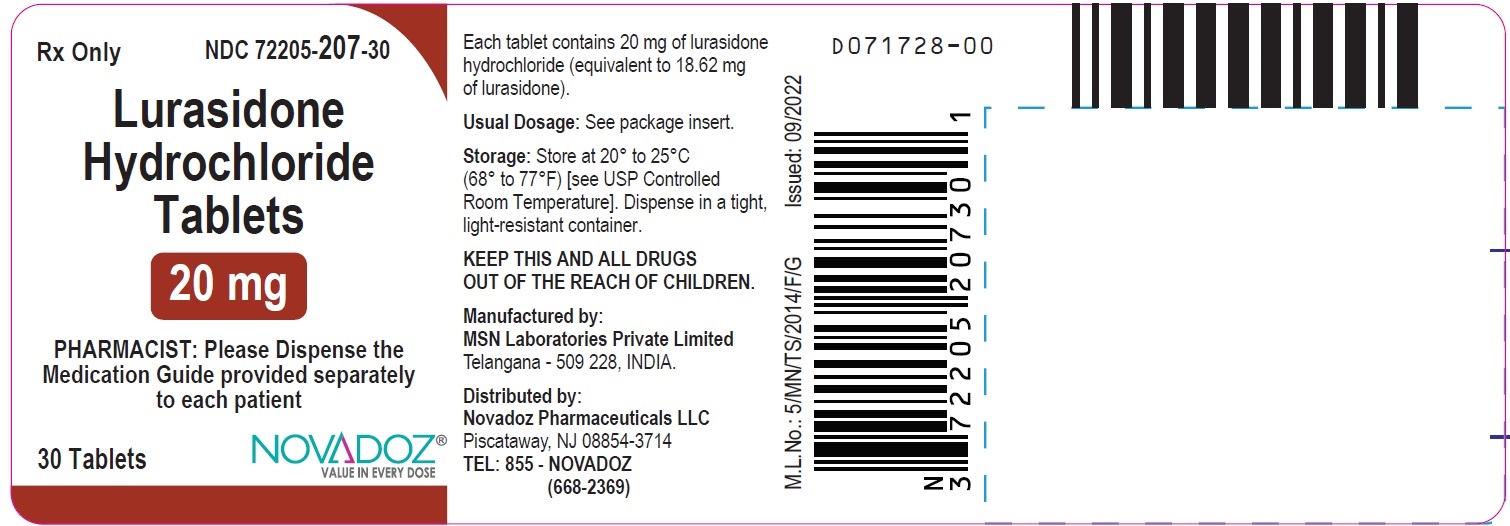
PACKAGE LABEL.PRINCIPAL DISPLAY PANEL Lurasidone Hydrochloride Tablets-20mg-30s-count-container-label Lurasidone Hydrochloride Tablets-20mg-90s-count-container-label Lurasidone Hydrochloride Tablets-20mg-500s-count-container-label Lurasidone Hydrochloride Tablets-40mg-30s-count-container-label Lurasidone Hydrochloride Tablets-40mg-90s-count-container-label Lurasidone Hydrochloride Tablets-40mg-500s-count-container-label Lurasidone Hydrochloride Tablets-60mg-30s-count-container-label Lurasidone Hydrochloride Tablets-60mg-90s-count-container-label Lurasidone Hydrochloride Tablets-60mg-500s-count-container-label Lurasidone Hydrochloride Tablets-80mg-30s-count-container-label Lurasidone Hydrochloride Tablets-80mg-90s-count-container-label Lurasidone Hydrochloride Tablets-80mg-500s-count-container-label Lurasidone Hydrochloride Tablets-120mg-30s-count-container-label Lurasidone Hydrochloride Tablets-120mg-90s-count-container-label Lurasidone Hydrochloride Tablets-120mg-500s-count-container-label lurasidone-20mg-30s-count-label lurasidone-20mg-90s-count-label lurasidone-20mg-500s-count-label lurasidone-40mg-30s-count-label lurasidone-40mg-90s-count-label lurasidone-40mg-500s-count-label lurasidone-60mg-30s-count-label lurasidone-60mg-90s-count-label lurasidone-60mg-500s-count-label lurasidone-80mg-30s-count-label lurasidone-80mg-90s-count-label lurasidone-80mg-500s-count-label lurasidone-120mg-30s-count-label lurasidone-120mg-90s-count-label lurasidone-120mg-500s-count-label
Medicaid utilization by pack size
About this NDC listing & data coverage
What data is (and isn’t) available for this NDC — tap to expand
| NDC identity (package / product / labeler codes) | ✓ Available |
| Labeler | ✓ Available |
| Product & package description | ✓ Available |
| Marketing category & status | ✓ Available |
| Active ingredient / dosage form / route | ✓ Available |
| FDA label (SPL via DailyMed) | ✓ Available |
| Package photos | ✓ Available |
| Inactive ingredients (structured) | ✓ Available |
| NADAC pharmacy acquisition price (CMS) | — Not published for this NDC CMS publishes NADAC only for NDCs reported in its retail-pharmacy survey. |
| Orange Book / therapeutic-equivalence data | ✓ Available |
| HCPCS J-code billing crosswalk | — Not published for this NDC Most self-administered / retail products have no J-code — that is normal. |
| Medicaid utilization (CMS SDUD) | — Not published for this NDC CMS reports utilization only for NDCs with Medicaid claims above its privacy threshold. |