
REPATHA Evolocumab 140 mg/mL Injection, Solution, 1 syringe — NDC 72511-393-01 (Billing 72511-0393-01)
This is a package of 1 syringe of REPATHA Evolocumab 140 mg/mL Injection, Solution from Amgen USA Inc., marketed since Nov 2024 and currently FDA-listed.
NDC database record
One package, one record: these facts belong to NDC 72511-393-01 alone.
- Record
- FDA NDC Directory package listing · Human prescription drug
- Code segments
- 72511 labeler · 393 product · 01 package
- Package marketed since
- Nov 24, 2024
- Sample package
- No — commercial package
- Listing certified through
- Dec 31, 2027
- Barcode (UPC)
- 0372511770018
- FDA record last changed
- Sep 3, 2026
Identity & classification
Regulatory identifiers FDA, NLM and CMS codes for this package
Drug-database identifiers Medi-Span GPI and First Databank GCN / HICL / AHFS classification
- GSN (GCN sequence number): 074564
- GCN: 38178
- HICL (First Databank): 042378
- AHFS class code: 24:06.24.00
- RxCUI (RxNorm): 1665895
Where does this data come from?
- FDA openFDA NDC Directory · synced Oct 8, 2026
- FDA label on DailyMed · label index refreshed Oct 8, 2026
- RxNorm (NLM RxNav) · catalog refreshed Oct 8, 2026
- Medi-Span GPI (licensed)
- First Databank (licensed) · refreshed Oct 8, 2026
RxNorm drug class
This medicine belongs to the PCSK9 Inhibitor class.
Where does this data come from?
- RxClass (NLM) · catalog refreshed Oct 8, 2026
Clinical
Evolocumab injection is used to lower cholesterol (a fat-like substance in the blood) and to lower risk of a stroke or a heart attack in patients with cardiovascular disease (disease of the heart or blood vessels). Evolocumab injection is in a class of medications called proprotein convertase subtilisin kexin type 9 (PCSK9) inhibitor monoclonal antibody. It works by stopping the production of cholesterol. Accumulation of cholesterol along the walls of your arteries (a process known as atherosclerosis) decreases blood flow and, therefore, the oxygen supply to your heart, brain, and other parts...
Read the full MedlinePlus article ↗- Repatha works in two main ways depending on why it was prescribed. If your LDL cholesterol — the 'bad' kind — is too high, Repatha helps bring those numbers down by giving your liv...
- What exactly is Repatha supposed to do for me?
- Repatha comes as a prefilled autoinjector or syringe, so you don't need to draw up any medication. Before you inject, take it out of the fridge and let it sit at room temperature f...
- How do I give myself the injection at home?
Patient education
Supplement & herbal interactions
Where does this data come from?
- MedlinePlus (NLM) · refreshed Oct 8, 2026
- FDA label on DailyMed · label index refreshed Oct 8, 2026
Ask a licensed pharmacist directly — free, answered by our team.
Pricing
A drug doesn't have one price. Each row is a different public payment system, and none is what you'd pay at the counter — that depends on your insurance. The ⓘ on each row explains what it measures.
| Price system | Per mL | Per package |
|---|---|---|
| Retail pharmacies payNADAC · weekly | Not in the retail survey — common for institutional, discontinued, or low-volume packs. | |
| Medicaid paysCMS SDUD · 12 mo | No recent Medicaid claims on file for this NDC — rare and low-volume NDCs are suppressed in the public data. | |
| Medicare drug plans payPart D · Q2 2026 | $282.33 | $282.33 / 1 ml |
Where does this data come from?
- CMS NADAC weekly file
- CMS ASP pricing files · refreshed Sep 20, 2026
- CMS Medicaid State Drug Utilization Data · refreshed Oct 9, 2026
- CMS Part D plan pricing files · refreshed Sep 24, 2026
- VA National Acquisition Center price file
Packaging — all sizes for this product
| Package NDC | Description | Per unit | Per pack | Marketing start | Marketing end | Status |
|---|---|---|---|---|---|---|
| 72511-0393-01 You're viewing this | 1 SYRINGE in 1 CARTON / 1 mL in 1 SYRINGE | — | — | 2024-11-24 | — | Active |
| 72511-0393-02 72511-393-02 Main listing | 2 SYRINGE in 1 CARTON / 1 mL in 1 SYRINGE | $281.96 / mL | $563.92 | 2024-11-24 | — | Active |
| 72511-0393-96 72511-393-96 | 1 SYRINGE in 1 CARTON / 1 mL in 1 SYRINGE Sample | — | — | 2024-11-24 | — | Active |
This pack shows little to no recent Medicaid volume — a different pack size carries most fills. See all packs ↓
Pack size FAQ
What quantity is in this package?
How does this package differ from NDC 72511-0393-96?
What NDC number is used to bill for this package of REPATHA Evolocumab 140 mg/mL Injection, Solution?
Prices are the latest CMS NADAC pharmacy acquisition cost per NDC; per-pack figures are per-unit × pack quantity, shown only when the pack is denominated in the same measure NADAC prices.
Therapeutic equivalents
| Product | Labeler | Pack | NADAC/unit | TE | Status | Price vs. this |
|---|---|---|---|---|---|---|
| Repatha 140 mg/mL 72511-0501-01 | Amgen | 1 syringe | $281.806 | — | Availability likely | — |
| Repatha 140 mg/mL 72511-0750-01 | Amgen | 1 syringe | $281.806 | — | Availability likely | — |
| Repatha 140 mg/mL 72511-0760-02 | Amgen | 2 syringes | $281.961 | — | Availability likely | — |
| Repatha 140 mg/mLthis 72511-0393-01 | Amgen | 1 syringe | — | — | FDA listed | — |
| Repatha 140 mg/mL 72511-0143-01 | Amgen | 1 syringe | — | — | FDA listed | — |
Where does this data come from?
- FDA openFDA NDC Directory · synced Oct 8, 2026
- FDA Purple Book · refreshed Oct 5, 2026
- CMS NADAC weekly file
Availability & biosimilar status
Biologics have no small-molecule generics; biosimilar competition is tracked in the FDA Purple Book.
Why the date isn’t exact: Biosimilar timing can change because patents may be challenged, settled, licensed, added or removed, and litigation can move the real date earlier or later.
🛈 What do these terms mean?
- Biologic patent
- A patent the reference product’s maker has publicly listed. A biosimilar generally can’t launch until these expire — unless they’re invalidated or resolved in a settlement.
- Reference-product exclusivity
- A flat 12 years of FDA market protection from the biologic’s first licensure (the BPCIA). No biosimilar can be licensed before it ends, regardless of patents.
- Interchangeable exclusivity
- The first interchangeable biosimilar can earn a period as the only interchangeable version (pharmacists can substitute it without the prescriber).
- Earliest biosimilar (LOE)
- The latest of all the dates above — the soonest a biosimilar can realistically reach the market. Litigation and settlements can move it earlier.
Biologics have no small-molecule “generics” — competition comes from FDA-licensed biosimilars, tracked in the FDA Purple Book.
| Code | What it grants | Expires |
|---|---|---|
| RefProduct | Reference-product exclusivity (12-year, BPCIA) — no biosimilar can be licensed before this date | Aug 27, 2027 |
Is there a biosimilar for REPATHA 140 MG/ML SURECLICK?
Why do different websites show different biosimilar dates?
Can a biosimilar launch before the last patent expires?
What does “current Purple Book estimate” mean?
What does “FDA listed” mean?
What does a patent or protection date mean here?
Where does this data come from?
- FDA Purple Book · refreshed Oct 5, 2026
Inactive Ingredients / Excipients
Inactive ingredients, also called excipients, are components of the drug product other than the active ingredient. They may include fillers, dyes, coatings, preservatives, flavors, or other formulation ingredients.
🧪 Avoiding an ingredient? See Evolocumab Injection inactive ingredients by manufacturer: every current product's list side by side, so you can ask your pharmacy for the version that does not list it.
💡 Tap an ingredient (hover on desktop) to see what it is and why it’s used.
-
1.2 mg / 1 mL
UNII 569DQM74SC
Acetate ion is a salt form derived from acetic acid. It's commonly used in medicines as a buffer to help maintain the correct pH level and stabilize the product.
-
0.1 mg / 1 mL
UNII 6OZP39ZG8H
Polysorbate 80 is a synthetic emulsifier derived from sorbitol and oleic acid. It helps mix oil and water-based ingredients together in medications and improves how the product disperses in the body.
-
25 mg / 1 mL
UNII 9DLQ4CIU6V
Proline is an amino acid used in pharmaceutical formulations as a bulking agent and stabilizer. It helps maintain product stability and can improve the texture or consistency of medicines, particularly in powders and freeze-dried products.
-
UNII 55X04QC32I
A strong alkaline chemical used to adjust and maintain the pH balance of liquid medicines. It helps keep the medicine stable and ensures it stays effective during storage.
-
UNII 059QF0KO0R
Water is a liquid solvent that dissolves and mixes ingredients together in liquid medicines, syrups, and injections. It helps distribute the active drug evenly throughout the product.
5 inactive ingredients listed in the exact product block matched to this NDC.
Where does this data come from?
ingredient classCode="IACT" elements from the exact product block matched by this NDC. Label-section narrative from DailyMed / the openFDA label index is shown separately when available.- FDA label on DailyMed · label index refreshed Oct 8, 2026
- FDA openFDA NDC Directory · synced Oct 8, 2026
Inactive ingredient FAQ
Are inactive ingredients the same for every manufacturer?
Why might an inactive ingredient be missing?
Can inactive ingredients matter?
Manufacturer & labeler
More NDCs from Amgen USA Inc. labeler code 72511
- REPATHA Evolocumab 140 mg/mL Injection, Solution NDC 72511-143-01
- AMJEVITA adalimumab-atto 20 mg/.2mL Injection NDC 72511-399-01
- AMJEVITA adalimumab-atto 40 mg/.8mL Injection NDC 72511-400-01
- AMJEVITA adalimumab-atto 40 mg/.4mL Injection NDC 72511-479-02
- AMJEVITA adalimumab-atto 80 mg/.8mL Injection NDC 72511-481-02
- AMJEVITA adalimumab-atto 40 mg/.4mL Injection NDC 72511-482-01
- REPATHA Evolocumab 140 mg/mL Injection, Solution NDC 72511-501-01
Where does this data come from?
- FDA openFDA NDC Directory · synced Oct 8, 2026
- Drugs@FDA
Full prescribing information FDA SPL
🎯 Indications and Usage ▾
1 INDICATIONS AND USAGE REPATHA is indicated: To reduce the risk of major adverse cardiovascular (CV) events (CV death, myocardial infarction, stroke, unstable angina requiring hospitalization, or coronary revascularization) in adults at increased risk for these events. As an adjunct to diet and exercise to reduce low-density lipoprotein cholesterol (LDL-C) in: adults with hypercholesterolemia. adults and pediatric patients aged 10 years and older with heterozygous familial hypercholesterolemia (HeFH). adults and pediatric patients aged 10 years and older with homozygous familial hypercholesterolemia (HoFH).
REPATHA is a PCSK9 (proprotein convertase subtilisin kexin type 9) inhibitor indicated: To reduce the risk of major adverse cardiovascular (CV) events (CV death, myocardial infarction, stroke, unstable angina requiring hospitalization, or coronary revascularization) in adults at increased risk for these events. ( 1 ) As an adjunct to diet and exercise to reduce low-density lipoprotein cholesterol (LDL-C) in ( 1 ): adults with hypercholesterolemia. adults and pediatric patients aged 10 years and older with heterozygous familial hypercholesterolemia (HeFH). adults and pediatric patients aged 10 years and older with homozygous familial hypercholesterolemia (HoFH).
⏱️ Dosage and Administration ▾
2 DOSAGE AND ADMINISTRATION In adults at increased risk for CV events or with hypercholesterolemia : The recommended dosage of REPATHA is either 140 mg every 2 weeks OR 420 mg once monthly administered subcutaneously. ( 2.1 ) If switching dosage regimens, administer the first dose of the new regimen on the next scheduled date of the prior regimen. ( 2.1 ) In adults and pediatric patients aged 10 years and older with HeFH : The recommended dosage of REPATHA is either 140 mg every 2 weeks OR 420 mg once monthly administered subcutaneously.
( 2.1 ) If switching dosage regimens, administer the first dose of the new regimen on the next scheduled date of the prior regimen. ( 2.1 ) In adults and pediatric patients aged 10 years and older with HoFH : The initial recommended dosage of REPATHA is 420 mg once monthly administered subcutaneously. ( 2.1 ) The dosage can be increased to 420 mg every 2 weeks if a clinically meaningful response is not achieved in 12 weeks.
( 2.1 ) Patients on lipid apheresis may initiate treatment with 420 mg every 2 weeks to correspond with their apheresis schedule. Administer REPATHA after the apheresis session is complete. ( 2.1 ) Assess LDL-C when clinically appropriate.
The LDL-lowering effect of REPATHA may be measured as early as 4 weeks after initiation. ( 2.1 ) REPATHA is available as prefilled single-dose SureClick ® autoinjectors, and prefilled single-dose syringes that either contain dry natural rubber (a derivative of latex) in the needle cover or are not made with natural rubber latex. Consider prescribing a presentation of REPATHA that does not contain dry natural rubber for individuals that are sensitive to latex.
( 2.3 , 16 ) Administer REPATHA subcutaneously into areas of the abdomen, thigh, or upper arm. Rotate injection sites for each administration. ( 2.3 ) See Full Prescribing Information for important administration instructions.
( 2.3 )
2.1Recommended Dosage In adults at increased risk for CV events or with hypercholesterolemia: The recommended dosage of REPATHA is either 140 mg every 2 weeks OR 420 mg once monthly administered subcutaneously [see Dosage and Administration (2.3) ] . If switching dosage regimens, administer the first dose of the new regimen on the next scheduled date of the prior regimen. In adults and pediatric patients aged 10 years and older with HeFH: The recommended dosage of REPATHA is either 140 mg every 2 weeks OR 420 mg once monthly administered subcutaneously [see Dosage and Administration (2.3) ] .
If switching dosage regimens, administer the first dose of the new regimen on the next scheduled date of the prior regimen. In adults and pediatric patients aged 10 years and older with HoFH: The initial recommended dosage of REPATHA is 420 mg once monthly administered subcutaneously [see Dosage and Administration (2.3) ] . The dosage can be increased to 420 mg every 2 weeks if a clinically meaningful response is not achieved in 12 weeks.
Patients on lipid apheresis may initiate treatment with 420 mg every 2 weeks to correspond with their apheresis schedule. Administer REPATHA after the apheresis session is complete. Assess LDL-C when clinically appropriate.
The LDL-lowering effect of REPATHA may be measured as early as 4 weeks after initiation. When monitoring LDL-C for patients receiving REPATHA 420 mg once monthly, note that LDL-C can vary during the dosing interval in some patients; recommend measuring LDL-C just prior to the next scheduled dose [see Clinical Studies (14) ] .
2.2Missed Doses If a dose is missed: Within 7 days from the missed dose, instruct the patient to administer REPATHA and resume the patient's original schedule. More than 7 days after the missed dose: For an every 2-week dose, instruct the patient to wait until the next dose on the original schedule. For a once-monthly dose, instruct the patient to administer the dose and start a new schedule based on this date.
2.3Important Administration Instructions REPATHA is available as prefilled s… [Excerpted — this section continues on DailyMed.]
💊 Dosage Forms and Strengths ▾
3 DOSAGE FORMS AND STRENGTHS REPATHA injection is a clear to opalescent, colorless to pale yellow solution available as follows: 140 mg/mL solution in a prefilled single-dose pen 140 mg/mL solution in a prefilled single-dose SureClick ® autoinjector 140 mg/mL solution in a prefilled single-dose syringe Injection ( 3 ): 140 mg/mL solution prefilled single-dose pen 140 mg/mL solution prefilled single-dose SureClick ® autoinjector 140 mg/mL solution prefilled single-dose syringe
⛔ Contraindications ▾
4 CONTRAINDICATIONS REPATHA is contraindicated in patients with a history of a serious hypersensitivity reaction to evolocumab or any of the excipients in REPATHA. Serious hypersensitivity reactions including angioedema have occurred in patients treated with REPATHA [see Warnings and Precautions (5.1) ] . Patients with a history of a serious hypersensitivity reaction to evolocumab or any of the excipients in REPATHA. ( 4 )
⚠️ Warnings and Cautions ▾
5 WARNINGS AND PRECAUTIONS Hypersensitivity Reactions : Angioedema has occurred. If signs or symptoms of serious hypersensitivity reactions occur, discontinue treatment with REPATHA, treat according to the standard of care, and monitor until signs and symptoms resolve. ( 5.1 )
5.1Hypersensitivity Reactions Hypersensitivity reactions, including angioedema, have been reported in patients treated with REPATHA. If signs or symptoms of serious hypersensitivity reactions occur, discontinue treatment with REPATHA, treat according to the standard of care, and monitor until signs and symptoms resolve. REPATHA is contraindicated in patients with a history of serious hypersensitivity reactions to evolocumab or any excipient in REPATHA [see Contraindications (4) ] .
The prefilled single-dose SureClick ® autoinjector and prefilled single-dose syringe presentations of REPATHA that contain dry natural rubber (a derivative of latex) in the needle cover may cause an allergic reaction in individuals sensitive to latex. Instruct patients to inform their healthcare provider if they are sensitive to latex. Consider prescribing a presentation of REPATHA that does not contain dry natural rubber for individuals that are sensitive to latex [see How Supplied/Storage and Handling (16) ] .
🤒 Adverse Reactions ▾
6 ADVERSE REACTIONS The following adverse reactions are also discussed in other sections of the label: Hypersensitivity Reactions [see Warnings and Precautions (5.1) ] Common (> 5% of patients treated with REPATHA and more frequently than placebo) adverse reactions in adults with: Primary hypercholesterolemia: nasopharyngitis, upper respiratory tract infection, influenza, back pain, and injection site reactions. ( 6 ) Established CV Disease: diabetes mellitus, nasopharyngitis and upper respiratory tract infection. ( 6 ) To report SUSPECTED ADVERSE REACTIONS, contact Amgen Medical Information at 1-800-77-AMGEN (1-800-772-6436) or FDA at 1-800-FDA-1088 or www.fda.gov/medwatch .
6.1Clinical Trials Experience Because clinical trials are conducted under widely varying conditions, adverse reaction rates observed in the clinical trials of a drug cannot be directly compared to rates in the clinical trials of another drug and may not reflect the rates observed in clinical practice. Adverse Reactions in Adults with Primary Hypercholesterolemia The data described below reflect exposure to REPATHA in 8 placebo-controlled trials that included 2651 patients treated with REPATHA, including 557 exposed for 6 months and 515 exposed for 1 year (median treatment duration of 12 weeks).
The mean age of the population was 57 years, 49% of the population were women, 85% White, 6% Black, 8% Asian, and 2% other races. Adverse Reactions in a 52 - Week Controlled Trial In a 52-week, double-blind, randomized, placebo-controlled trial, 599 patients received 420 mg of REPATHA subcutaneously once monthly [see Clinical Studies (14) ] . The mean age was 56 years (range: 22 to 75 years), 23% were older than 65 years, 52% women, 80% White, 8% Black, 6% Asian; 6% identified as Hispanic ethnicity.
Adverse reactions reported in at least 3% of REPATHA-treated patients, and more frequently than in placebo-treated patients are shown in Table 1. Adverse reactions led to discontinuation of treatment in 2.2% of REPATHA-treated patients and 1% of placebo-treated patients. The most common adverse reaction that led to REPATHA treatment discontinuation and occurred at a rate greater than placebo was myalgia (0.3% versus 0% for REPATHA and placebo, respectively).
Table 1. Adverse Reactions Occurring in ≥ 3% of REPATHA-treated Patients and More Frequently than with Placebo in a 52-Week Trial Placebo (N = 302) % REPATHA (N = 599) % Nasopharyngitis 9.6
10.5Upper respiratory tract infection 6.3
9.3Influenza 6.3
7.5Back pain 5.6
6.2Injection site reactions includes erythema, pain, bruising 5.0
5.7Cough 3.6
4.5Urinary tract infection 3.6
4.5Sinusitis 3.0
4.2Headache 3.6
4.0Myalgia 3.0
4.0Dizziness 2.6
3.7Musculoskeletal pain 3.0
3.3Hypertension 2.3
3.2Diarrhea 2.6
3.0Gastroenteritis 2.0
3.0Adverse Reactions in Seven Pooled 12 - Week Controlled Trials In seven pooled 12-week, double-blind, randomized, placebo-controlled trials, 993 patients received 140 mg of REPATHA subcutaneously every 2 weeks and 1059 patients received 420 mg of REPATHA subcutaneously monthly. The mean age was 57 years (range: 18 to 80 years), 29% were older than 65 years, 49% women, 85% White, 5% Black, 9% Asian; 5% identified as Hispanic ethnicity. Adverse reactions reported in at least 1% of REPATHA-treated patients, and more frequently than in placebo-treated patients, are shown in Table 2.
Table 2. Adverse Reactions Occurring in ≥ 1% of REPATHA-treated Patients and More Frequently than with Placebo in Pooled 12-Week Trials Placebo (N = 1224) % REPATHA 140 mg every 2 weeks and 420 mg once monthly combined (N = 2052) % Nasopharyngitis 3.9
4.0Back pain 2.2
2.3Upper respiratory tract infection 2.0
2.1Arthralgia 1.6
1.8Nausea 1.2
1.8Fatigue 1.0
1.6Muscle spasms 1.2
1.3Urinary tract infection 1.2
1.3Cough 0.7
1.2Influenza 1.1
1.2Contusion 0.5
1.0Adverse Reactions in Eight Pooled Controlled Trials (Seven 12 - Week Trials and One 52 - Week Trial) The adverse reactions described below are… [Excerpted — this section continues on DailyMed.]
👥 Use in Specific Populations ▾
8 USE IN SPECIFIC POPULATIONS
8.1Pregnancy Risk Summary Available data from clinical trials and postmarketing reports on REPATHA use in pregnant women are insufficient to evaluate for a drug-associated risk of major birth defects, miscarriage or other adverse maternal or fetal outcomes. In animal reproduction studies, there were no effects on pregnancy or neonatal/infant development when monkeys were subcutaneously administered evolocumab from organogenesis through parturition at dose exposures up to 12 times the exposure at the maximum recommended human dose of 420 mg every month.
In a similar study with another drug in the PCSK9 inhibitor antibody class, humoral immune suppression was observed in infant monkeys exposed to that drug in utero at all doses. The exposures where immune suppression occurred in infant monkeys were greater than those expected clinically. No assessment for immune suppression was conducted with evolocumab in infant monkeys.
Measurable evolocumab serum concentrations were observed in the infant monkeys at birth at comparable levels to maternal serum, indicating that evolocumab, like other IgG antibodies, crosses the placental barrier. Monoclonal antibodies are transported across the placenta in increasing amounts especially near term; therefore, evolocumab has the potential to be transmitted from the mother to the developing fetus. The estimated background risk of major birth defects and miscarriage for the indicated population(s) is unknown.
In the U.S. general population, the estimated background risk of major birth defects and miscarriage in clinically recognized pregnancies is 2-4% and 15-20%, respectively. There is a pregnancy safety study for REPATHA. If REPATHA is administered during pregnancy, healthcare providers should report REPATHA exposure by contacting Amgen at 1-800-77-AMGEN (1-800-772-6436) or https://wwwext.amgen.com/products/global-patient-safety/adverse-event-reporting.
Data Animal Data In cynomolgus monkeys, no effects on embryo-fetal or postnatal development (up to 6 months of age) were observed when evolocumab was dosed during organogenesis to parturition at 50 mg/kg once every 2 weeks by the subcutaneous route at exposures 30- and 12-fold the recommended human doses of 140 mg every 2 weeks and 420 mg once monthly, respectively, based on plasma AUC. No test of humoral immunity in infant monkeys was conducted with evolocumab.
8.2Lactation Risk Summary There is no information regarding the presence of evolocumab in human milk, the effects on the breastfed infant, or the effects on milk production. Human IgG is present in human milk, but published data suggest that breast milk antibodies do not enter the neonatal and infant circulation in substantial amounts. The development and health benefits of breastfeeding should be considered along with the mother's clinical need for REPATHA and any potential adverse effects on the breastfed infant from REPATHA or from the underlying maternal condition.
8.4Pediatric Use The safety and effectiveness of REPATHA in combination with diet and other LDL-C-lowering therapies for the treatment of HoFH have been established in pediatric patients aged 10 years and older. Use of REPATHA for this indication is supported by evidence from an adequate and well-controlled trial in adults and pediatric patients aged 13 years and older with HoFH (including 7 pediatric patients treated with REPATHA) and from open-label studies which included an additional 19 pediatric patients aged 11 years and older with HoFH not previously treated with REPATHA [see Adverse Reactions (6.1) and Clinical Studies (14) ] .
The safety and effectiveness of REPATHA as an adjunct to diet and other LDL-C-lowering therapies for the treatment of HeFH have been established in pediatric patients aged 10 years and older. Use of REPATHA for this indication is based on data from a 24-week, randomized, placebo-controlled, double-blind trial in pediatric patients with HeFH. In the trial, 104 p… [Excerpted — this section continues on DailyMed.]
🤰 Pregnancy ▾
8.1Pregnancy Risk Summary Available data from clinical trials and postmarketing reports on REPATHA use in pregnant women are insufficient to evaluate for a drug-associated risk of major birth defects, miscarriage or other adverse maternal or fetal outcomes. In animal reproduction studies, there were no effects on pregnancy or neonatal/infant development when monkeys were subcutaneously administered evolocumab from organogenesis through parturition at dose exposures up to 12 times the exposure at the maximum recommended human dose of 420 mg every month.
In a similar study with another drug in the PCSK9 inhibitor antibody class, humoral immune suppression was observed in infant monkeys exposed to that drug in utero at all doses. The exposures where immune suppression occurred in infant monkeys were greater than those expected clinically. No assessment for immune suppression was conducted with evolocumab in infant monkeys.
Measurable evolocumab serum concentrations were observed in the infant monkeys at birth at comparable levels to maternal serum, indicating that evolocumab, like other IgG antibodies, crosses the placental barrier. Monoclonal antibodies are transported across the placenta in increasing amounts especially near term; therefore, evolocumab has the potential to be transmitted from the mother to the developing fetus. The estimated background risk of major birth defects and miscarriage for the indicated population(s) is unknown.
In the U.S. general population, the estimated background risk of major birth defects and miscarriage in clinically recognized pregnancies is 2-4% and 15-20%, respectively. There is a pregnancy safety study for REPATHA. If REPATHA is administered during pregnancy, healthcare providers should report REPATHA exposure by contacting Amgen at 1-800-77-AMGEN (1-800-772-6436) or https://wwwext.amgen.com/products/global-patient-safety/adverse-event-reporting.
Data Animal Data In cynomolgus monkeys, no effects on embryo-fetal or postnatal development (up to 6 months of age) were observed when evolocumab was dosed during organogenesis to parturition at 50 mg/kg once every 2 weeks by the subcutaneous route at exposures 30- and 12-fold the recommended human doses of 140 mg every 2 weeks and 420 mg once monthly, respectively, based on plasma AUC. No test of humoral immunity in infant monkeys was conducted with evolocumab.
🧒 Pediatric Use ▾
8.4Pediatric Use The safety and effectiveness of REPATHA in combination with diet and other LDL-C-lowering therapies for the treatment of HoFH have been established in pediatric patients aged 10 years and older. Use of REPATHA for this indication is supported by evidence from an adequate and well-controlled trial in adults and pediatric patients aged 13 years and older with HoFH (including 7 pediatric patients treated with REPATHA) and from open-label studies which included an additional 19 pediatric patients aged 11 years and older with HoFH not previously treated with REPATHA [see Adverse Reactions (6.1) and Clinical Studies (14) ] .
The safety and effectiveness of REPATHA as an adjunct to diet and other LDL-C-lowering therapies for the treatment of HeFH have been established in pediatric patients aged 10 years and older. Use of REPATHA for this indication is based on data from a 24-week, randomized, placebo-controlled, double-blind trial in pediatric patients with HeFH. In the trial, 104 patients received REPATHA 420 mg subcutaneously once monthly and 53 patients received placebo; 39 patients (25%) were 10 to 11 years of age [see Adverse Reactions (6.1) and Clinical Studies (14) ] .
The safety and effectiveness of REPATHA have not been established in pediatric patients with HeFH or HoFH who are younger than 10 years old or in pediatric patients with other types of hypercholesterolemia.
🧓 Geriatric Use ▾
8.5Geriatric Use In controlled trials, 7656 (41%) patients treated with REPATHA were ≥ 65 years old and 1500 (8%) were ≥ 75 years old. No overall differences in safety or effectiveness were observed between these patients and younger patients, and other reported clinical experience has not identified differences in responses between the elderly and younger patients, but greater sensitivity of some older individuals cannot be ruled out.
🧬 Clinical Pharmacology ▾
12 CLINICAL PHARMACOLOGY
12.1Mechanism of Action Evolocumab is a human monoclonal IgG2 directed against human proprotein convertase subtilisin kexin type 9 (PCSK9). PCSK9 binds to the low-density lipoprotein receptor (LDLR) on the surface of hepatocytes to promote LDLR degradation within the liver. By inhibiting the binding of PCSK9 to LDLR, evolocumab increases the number of LDLRs available to clear LDL from the blood, thereby lowering LDL-C levels.
12.2Pharmacodynamics Following single subcutaneous administration of 140 mg or 420 mg of evolocumab, maximum suppression of circulating unbound PCSK9 occurred by 4 hours. Unbound PCSK9 concentrations returned toward baseline when evolocumab concentrations decreased below the limit of quantitation. Maximum LDL-C reduction occurred by 2 weeks after a single-dose of 140 mg of evolocumab and by 3 weeks after a single-dose of 420 mg of evolocumab.
12.3Pharmacokinetics Evolocumab exhibits non-linear kinetics as a result of binding to PCSK9. Administration of the 140 mg dose in healthy volunteers resulted in a C max mean of 18.6 µg/mL and AUC last mean of 188 day∙µg/mL. Administration of the 420 mg dose in healthy volunteers resulted in a C max mean of 59.0 µg/mL and AUC last mean of 924 day∙µg/mL.
Following a single 420 mg intravenous dose, the mean systemic clearance was estimated to be 12 mL/hr. An approximate 2- to 3-fold accumulation was observed in trough serum concentrations (C min 7.21) following 140 mg doses administered subcutaneously every 2 weeks or following 420 mg doses administered subcutaneously monthly (C min 11.2), and serum trough concentrations approached steady-state by 12 weeks of dosing. Absorption Following a single subcutaneous dose of 140 mg or 420 mg evolocumab administered to healthy adults, median peak serum concentrations were attained in 3 to 4 days, and estimated absolute bioavailability was 72%.
Distribution Following a single 420 mg intravenous dose, the mean steady-state volume of distribution was estimated to be
3.3L. Elimination Two elimination phases were observed for REPATHA. At low concentrations, the elimination is predominately through saturable binding to target (PCSK9), while at higher concentrations the elimination of REPATHA is largely through a non-saturable proteolytic pathway.
REPATHA was estimated to have an effective half-life of 11 to 17 days. Specific Populations The pharmacokinetics of evolocumab were not affected by age, gender, race, or creatinine clearance across all approved populations [see Use in Specific Populations (8.5) ] . The exposure of evolocumab decreased with increasing body weight.
These differences are not clinically meaningful. Pediatric Patients The pharmacokinetics of REPATHA were evaluated in 103 pediatric patients aged 10 to 17 years with HeFH (Study 6) [see Use in Specific Populations (8.4 ) and Clinical Studies (14) ] . Following subcutaneous administration of 420 mg REPATHA once monthly, mean trough serum concentrations were 22.4 mcg/mL and 25.8 mcg/mL over the Week 12 and Week 24 time points, respectively.
The pharmacokinetics of REPATHA were evaluated in 12 pediatric patients aged 11 to 17 years with HoFH (Study 9) [see Use in Specific Populations (8.4 ) and Clinical Studies (14) ] . Following subcutaneous administration of 420 mg REPATHA once monthly, mean serum trough concentrations were 20.3 mcg/mL and 17.6 mcg/mL at Week 12 and Week 80, respectively. Renal Impairment Since monoclonal antibodies are not known to be eliminated via renal pathways, renal function is not expected to impact the pharmacokinetics of evolocumab.
In a clinical trial of 18 patients with either normal renal function (estimated glomerular filtration rate [eGFR] ≥ 90 mL/min/1.73 m 2 , n = 6), severe renal impairment (eGFR < 30 mL/min/1.73 m 2 , n = 6), or end-stage renal disease (ESRD) receiving hemodialysis (n = 6), exposure to evolocumab after a single 140 mg subcutaneous dose was decreased in patients with severe renal impairme… [Excerpted — this section continues on DailyMed.]
🧬 Mechanism of Action ▾
12.1Mechanism of Action Evolocumab is a human monoclonal IgG2 directed against human proprotein convertase subtilisin kexin type 9 (PCSK9). PCSK9 binds to the low-density lipoprotein receptor (LDLR) on the surface of hepatocytes to promote LDLR degradation within the liver. By inhibiting the binding of PCSK9 to LDLR, evolocumab increases the number of LDLRs available to clear LDL from the blood, thereby lowering LDL-C levels.
📦 How Supplied / Storage and Handling ▾
16 HOW SUPPLIED/STORAGE AND HANDLING REPATHA is a clear to opalescent, colorless to pale yellow solution supplied as follows: Not Made with Natural Rubber Latex – Strength Packaging Unit NDC 140 mg/mL prefilled single-dose pen Carton of 2 72511-143-02 140 mg/mL prefilled single-dose pen Carton of 1 72511-143-01 140 mg/mL prefilled single-dose SureClick ® autoinjector Carton of 2 72511-393-02 140 mg/mL prefilled single-dose SureClick ® autoinjector Carton of 1 72511-393-01 140 mg/mL prefilled single-dose syringe Carton of 1 72511-501-01 Contains Dry Natural Rubber – Strength Packaging Unit NDC 140 mg/mL prefilled single-dose SureClick ® autoinjector The needle cover of the glass prefilled single-dose SureClick ® autoinjector and prefilled single-dose syringe contain dry natural rubber (a derivative of latex) that may cause allergic reactions in individuals sensitive to latex [see Warnings and Precautions (5.1) ] .
Carton of 2 72511-760-02 140 mg/mL prefilled single-dose syringe Carton of 1 72511-750-01 Store refrigerated at 2°C to 8°C (36°F to 46°F) in the original carton to protect from light. Do not freeze. Do not shake.
REPATHA prefilled single-dose pen, prefilled single-dose SureClick ® autoinjector, or prefilled single-dose syringe may also be kept at room temperature at 68°F to 77°F (20°C to 25°C) in the original carton for 30 days. If not used within the 30 days, discard REPATHA.
📦 Storage and Handling ▾
Store refrigerated at 2°C to 8°C (36°F to 46°F) in the original carton to protect from light. Do not freeze. Do not shake. REPATHA prefilled single-dose pen, prefilled single-dose SureClick ® autoinjector, or prefilled single-dose syringe may also be kept at room temperature at 68°F to 77°F (20°C to 25°C) in the original carton for 30 days. If not used within the 30 days, discard REPATHA.
📋 Description ▾
11 DESCRIPTION Evolocumab is a human monoclonal immunoglobulin G2 (IgG2) directed against human proprotein convertase subtilisin kexin type 9 (PCSK9). Evolocumab has an approximate molecular weight (MW) of 144 kDa and is produced in genetically engineered mammalian (Chinese hamster ovary) cells. REPATHA is a sterile, preservative-free, clear to opalescent, colorless to pale yellow solution for subcutaneous use.
Each 1 mL prefilled single-dose pen, prefilled single-dose SureClick ® autoinjector and prefilled single-dose syringe contains 140 mg evolocumab, acetate (1.2 mg), polysorbate 80 (0.1 mg), proline (25 mg) in Water for Injection, USP. Sodium hydroxide may be used to adjust to a pH of 5.0.
💬 Information for Patients ▾
17 PATIENT COUNSELING INFORMATION Advise the patient and/or caregiver to read the FDA-Approved Patient Labeling (Patient Information and Instructions for Use). Hypersensitivity Inform patients that serious hypersensitivity reactions (e.g., angioedema) have been reported in patients treated with REPATHA. Advise patients on the symptoms of hypersensitivity reactions and instruct them to discontinue REPATHA and seek medical attention promptly, if such symptoms occur.
Latex-Sensitivity Instruct patients to inform their healthcare provider if they are sensitive to latex. Inform patients that REPATHA is available as prefilled single-dose SureClick ® autoinjectors and prefilled single-dose syringes that either contain dry natural rubber (a derivative of latex) in the needle cover or are not made with natural rubber latex, and the carton and Instructions for Use state if the product contains dry natural rubber. Advise latex-sensitive patients that the needle cover of the glass prefilled single-dose SureClick ® autoinjector and prefilled single-dose syringe that contain dry natural rubber (a derivative of latex) may cause allergic reactions in individuals sensitive to latex [see How Supplied/Storage and Handling (16) ] .
Pregnancy Advise women who are exposed to REPATHA during pregnancy that there is a pregnancy safety study that monitors pregnancy outcomes. Encourage these patients to report their pregnancy to Amgen at 1-800-77-AMGEN (1-800-772-6436) or https://wwwext.amgen.com/products/global-patient-safety/adverse-event-reporting [see Use in Specific Populations (8.1) ] . Administration Provide guidance to patients and caregivers on proper subcutaneous administration technique and how to use the prescribed REPATHA device correctly.
Inform patients that it may take up to 15 seconds to administer REPATHA using the prefilled single-dose pen, prefilled single-dose SureClick ® autoinjector, or prefilled single-dose syringe. The prefilled single-dose pen is not made with natural rubber latex.
🧬 Pharmacokinetics ▾
12.3Pharmacokinetics Evolocumab exhibits non-linear kinetics as a result of binding to PCSK9. Administration of the 140 mg dose in healthy volunteers resulted in a C max mean of 18.6 µg/mL and AUC last mean of 188 day∙µg/mL. Administration of the 420 mg dose in healthy volunteers resulted in a C max mean of 59.0 µg/mL and AUC last mean of 924 day∙µg/mL.
Following a single 420 mg intravenous dose, the mean systemic clearance was estimated to be 12 mL/hr. An approximate 2- to 3-fold accumulation was observed in trough serum concentrations (C min 7.21) following 140 mg doses administered subcutaneously every 2 weeks or following 420 mg doses administered subcutaneously monthly (C min 11.2), and serum trough concentrations approached steady-state by 12 weeks of dosing. Absorption Following a single subcutaneous dose of 140 mg or 420 mg evolocumab administered to healthy adults, median peak serum concentrations were attained in 3 to 4 days, and estimated absolute bioavailability was 72%.
Distribution Following a single 420 mg intravenous dose, the mean steady-state volume of distribution was estimated to be
3.3L. Elimination Two elimination phases were observed for REPATHA. At low concentrations, the elimination is predominately through saturable binding to target (PCSK9), while at higher concentrations the elimination of REPATHA is largely through a non-saturable proteolytic pathway.
REPATHA was estimated to have an effective half-life of 11 to 17 days. Specific Populations The pharmacokinetics of evolocumab were not affected by age, gender, race, or creatinine clearance across all approved populations [see Use in Specific Populations (8.5) ] . The exposure of evolocumab decreased with increasing body weight.
These differences are not clinically meaningful. Pediatric Patients The pharmacokinetics of REPATHA were evaluated in 103 pediatric patients aged 10 to 17 years with HeFH (Study 6) [see Use in Specific Populations (8.4 ) and Clinical Studies (14) ] . Following subcutaneous administration of 420 mg REPATHA once monthly, mean trough serum concentrations were 22.4 mcg/mL and 25.8 mcg/mL over the Week 12 and Week 24 time points, respectively.
The pharmacokinetics of REPATHA were evaluated in 12 pediatric patients aged 11 to 17 years with HoFH (Study 9) [see Use in Specific Populations (8.4 ) and Clinical Studies (14) ] . Following subcutaneous administration of 420 mg REPATHA once monthly, mean serum trough concentrations were 20.3 mcg/mL and 17.6 mcg/mL at Week 12 and Week 80, respectively. Renal Impairment Since monoclonal antibodies are not known to be eliminated via renal pathways, renal function is not expected to impact the pharmacokinetics of evolocumab.
In a clinical trial of 18 patients with either normal renal function (estimated glomerular filtration rate [eGFR] ≥ 90 mL/min/1.73 m 2 , n = 6), severe renal impairment (eGFR < 30 mL/min/1.73 m 2 , n = 6), or end-stage renal disease (ESRD) receiving hemodialysis (n = 6), exposure to evolocumab after a single 140 mg subcutaneous dose was decreased in patients with severe renal impairment or ESRD receiving hemodialysis. Reductions in PCSK9 levels in patients with severe renal impairment or ESRD receiving hemodialysis was similar to those with normal renal function [see Use in Specific Populations (8.6) ] .
Hepatic Impairment Following a single 140 mg subcutaneous dose of evolocumab in patients with mild or moderate hepatic impairment, a 20-30% lower mean C max and 40-50% lower mean AUC were observed as compared to healthy patients [see Use in Specific Populations (8.7) ] . Drug Interaction Studies An approximately 20% decrease in the C max and AUC of evolocumab was observed in adult patients co-administered with a high-intensity statin regimen. This difference is not clinically meaningful.
🧬 Pharmacodynamics ▾
12.2Pharmacodynamics Following single subcutaneous administration of 140 mg or 420 mg of evolocumab, maximum suppression of circulating unbound PCSK9 occurred by 4 hours. Unbound PCSK9 concentrations returned toward baseline when evolocumab concentrations decreased below the limit of quantitation. Maximum LDL-C reduction occurred by 2 weeks after a single-dose of 140 mg of evolocumab and by 3 weeks after a single-dose of 420 mg of evolocumab.
🔬 Clinical Studies ▾
14 CLINICAL STUDIES Adult Patients with Established Cardiovascular Disease Study 1 (FOURIER, NCT01764633) was a double-blind, randomized, placebo-controlled, event-driven trial in 27,564 (13,784 REPATHA, 13,780 placebo) adult patients with established cardiovascular disease (CVD) and with LDL-C ≥ 70 mg/dL and/or non-HDL-C ≥ 100 mg/dL despite high- or moderate-intensity statin therapy. Patients were randomly assigned 1:1 to receive either subcutaneous injections of REPATHA (140 mg every 2 weeks or 420 mg once monthly) or placebo; 86% used the every-2-week regimen throughout the trial.
The median follow-up duration was 26 months. Overall, 99.2% of patients were followed until the end of the trial or death. The mean (SD) age at baseline was 63 (9) years, with 45% being at least 65 years old; 25% were women.
The trial population was 85% White, 2% Black, and 10% Asian; 8% identified as Hispanic ethnicity. Regarding prior diagnoses of CVD, 81% had prior myocardial infarction, 19% prior non-hemorrhagic stroke, and 13% had symptomatic peripheral arterial disease. Selected additional baseline risk factors included hypertension (80%), diabetes mellitus (1% type 1; 36% type 2), current daily cigarette smoking (28%), New York Heart Association class I or II congestive heart failure (23%), and eGFR < 60 mL/min per 1.73 m 2 (6%).
Most patients were on a high- (69%) or moderate-intensity (30%) statin therapy at baseline, and 5% were also taking ezetimibe. Most patients were taking at least one other CV medication including anti-platelet agents (93%), beta blockers (76%), angiotensin converting enzyme (ACE) inhibitors (56%), or angiotensin receptor blockers (23%). On stable background lipid-lowering therapy, the median [Q1, Q3] LDL-C at baseline was 92 [80, 109] mg/dL; the mean (SD) was 98 (28) mg/dL.
REPATHA significantly reduced the risk for the primary composite endpoint (time to first occurrence of CV death, myocardial infarction, stroke, hospitalization for unstable angina, or coronary revascularization; p < 0.0001) and the key secondary composite endpoint (time to first occurrence of cardiovascular death, myocardial infarction, or stroke; p < 0.0001). The Kaplan-Meier estimates of the cumulative incidence of the primary and key secondary composite endpoints over time are shown in Figure 1 and Figure 2 below.
The results of primary and secondary efficacy endpoints are shown in Table 3 below. Table 3. Effect of REPATHA on CV Events in Patients with Established CVD in FOURIER Placebo REPATHA REPATHA vs.
Placebo N = 13780 n (%) Incidence Rate (per 100 patient years) N = 13784 n (%) Incidence Rate (per 100 patient years) Hazard Ratio (95% CI) Primary composite endpoint Time to first occurrence of CV death, myocardial infarction, stroke, coronary revascularization, hospitalization for unstable angina 1563 (11.3) 5.2 1344 (9.8) 4.5 0.85 (0.79, 0.92) Key secondary composite endpoint Time to first occurrence of CV death, myocardial infarction, stroke 1013 (7.4) 3.4 816 (5.9) 2.7 0.80 (0.73, 0.88) Other secondary endpoints Time to CV death 240 (1.7) 0.8 251 (1.8) 0.8 1.05 (0.88, 1.25) Time to death by any cause Time to death by any cause is not a component of either the primary composite endpoint or key secondary composite endpoint.
426 (3.1) 1.4 444 (3.2) 1.5 1.04 (0.91, 1.19) Time to first fatal or non-fatal myocardial infarction 639 (4.6) 2.1 468 (3.4) 1.6 0.73 (0.65, 0.82) Time to first fatal or non-fatal stroke 262 (1.9) 0.9 207 (1.5) 0.7 0.79 (0.66, 0.95) Time to first coronary revascularization 965 (7.0) 3.2 759 (5.5) 2.5 0.78 (0.71, 0.86) Time to first hospitalization for unstable angina Not a prespecified endpoint; an ad hoc analysis was performed to ensure results are provided for each individual component of the primary endpoint. 239 (1.7) 0.8 236 (1.7) 0.8 0.99 (0.82, 1.18) Figure 1.
Estimated Cumulative Incidence of Primary Composite Endpoint Over 3 Years in FOURIER Figure 2. Estimated Cumulative Incidence of Key Secondary Composite… [Excerpted — this section continues on DailyMed.]
🧪 Nonclinical Toxicology ▾
13 NONCLINICAL TOXICOLOGY
13.1Carcinogenesis, Mutagenesis, Impairment of Fertility The carcinogenic potential of evolocumab was evaluated in a lifetime study conducted in the hamster at dose levels of 10, 30, and 100 mg/kg administered every 2 weeks. There were no evolocumab-related tumors at the highest dose at systemic exposures up to 38- and 15-fold the recommended human doses of 140 mg every 2 weeks and 420 mg once monthly, respectively, based on plasma AUC. The mutagenic potential of evolocumab has not been evaluated; however, monoclonal antibodies are not expected to alter DNA or chromosomes.
There were no adverse effects on fertility (including estrous cycling, sperm analysis, mating performance, and embryonic development) at the highest dose in a fertility and early embryonic developmental toxicology study in hamsters when evolocumab was subcutaneously administered at 10, 30, and 100 mg/kg every 2 weeks. The highest dose tested corresponds to systemic exposures up to 30- and 12-fold the recommended human doses of 140 mg every 2 weeks and 420 mg once monthly, respectively, based on plasma AUC. In addition, there were no adverse evolocumab-related effects on surrogate markers of fertility (reproductive organ histopathology, menstrual cycling, or sperm parameters) in a 6-month chronic toxicology study in sexually mature monkeys subcutaneously administered evolocumab at 3, 30, and 300 mg/kg once weekly.
The highest dose tested corresponds to 744- and 300-fold the recommended human doses of 140 mg every 2 weeks and 420 mg once monthly, respectively, based on plasma AUC.
13.2Animal Toxicology and/or Pharmacology During a 3-month toxicology study of 10 and 100 mg/kg once every 2 weeks evolocumab in combination with 5 mg/kg once daily rosuvastatin in adult monkeys, there were no effects of evolocumab on the humoral immune response to keyhole limpet hemocyanin (KLH) after 1 to 2 months exposure. The highest dose tested corresponds to exposures 54- and 21-fold higher than the recommended human doses of 140 mg every 2 weeks and 420 mg once monthly, respectively, based on plasma AUC. Similarly, there were no effects of evolocumab on the humoral immune response to KLH (after 3 to 4 months exposure) in a 6-month study in cynomolgus monkeys at dose levels up to 300 mg/kg once weekly evolocumab corresponding to exposures 744- and 300-fold greater than the recommended human doses of 140 mg every 2 weeks and 420 mg once monthly, respectively, based on plasma AUC.
📄 Carcinogenesis, Mutagenesis, Impairment of Fertility ▾
13.1Carcinogenesis, Mutagenesis, Impairment of Fertility The carcinogenic potential of evolocumab was evaluated in a lifetime study conducted in the hamster at dose levels of 10, 30, and 100 mg/kg administered every 2 weeks. There were no evolocumab-related tumors at the highest dose at systemic exposures up to 38- and 15-fold the recommended human doses of 140 mg every 2 weeks and 420 mg once monthly, respectively, based on plasma AUC. The mutagenic potential of evolocumab has not been evaluated; however, monoclonal antibodies are not expected to alter DNA or chromosomes.
There were no adverse effects on fertility (including estrous cycling, sperm analysis, mating performance, and embryonic development) at the highest dose in a fertility and early embryonic developmental toxicology study in hamsters when evolocumab was subcutaneously administered at 10, 30, and 100 mg/kg every 2 weeks. The highest dose tested corresponds to systemic exposures up to 30- and 12-fold the recommended human doses of 140 mg every 2 weeks and 420 mg once monthly, respectively, based on plasma AUC. In addition, there were no adverse evolocumab-related effects on surrogate markers of fertility (reproductive organ histopathology, menstrual cycling, or sperm parameters) in a 6-month chronic toxicology study in sexually mature monkeys subcutaneously administered evolocumab at 3, 30, and 300 mg/kg once weekly.
The highest dose tested corresponds to 744- and 300-fold the recommended human doses of 140 mg every 2 weeks and 420 mg once monthly, respectively, based on plasma AUC.
📄 Patient Package Insert ▾
Patient Information REPATHA ® (ri-PAth-a) (evolocumab) injection, for subcutaneous use This Patient Information has been approved by the U.S. Food and Drug Administration. v11 Revised: 07/2026 What is REPATHA? REPATHA is an injectable prescription medicine used: to reduce the risk of major adverse cardiovascular (CV) events, such as death from cardiovascular disease, heart attack, stroke, certain types of chest pain conditions (unstable angina) requiring hospitalization, or certain types of heart surgery, in adults at increased risk for these events.
Along with diet and exercise to reduce low-density lipoprotein (LDL) or bad cholesterol in: adults with high blood cholesterol levels called hypercholesterolemia. adults and children aged 10 years and older with a type of high cholesterol called heterozygous familial hypercholesterolemia (HeFH). adults and children aged 10 years and older with a type of high cholesterol called homozygous familial hypercholesterolemia (HoFH). It is not known if REPATHA is safe and effective in children with HeFH or HoFH who are younger than 10 years of age or in children with other types of hypercholesterolemia.
Who should not use REPATHA? Do not use REPATHA if you or your child are allergic to evolocumab or to any of the ingredients in REPATHA. See the end of this leaflet for a complete list of ingredients in REPATHA.
What should I tell my healthcare provider before using REPATHA? Before you or your child start using REPATHA, tell your healthcare provider about all your medical conditions, including if you or your child: are allergic to rubber or latex. REPATHA is available as prefilled single-dose SureClick ® autoinjectors and prefilled single-dose syringes that either contain dry natural rubber (a derivative of latex) in the needle cover or are not made with natural rubber latex.
The carton and Instructions for Use will state if your prefilled single-dose SureClick autoinjector or prefilled single-dose syringe contains dry natural rubber. The prefilled single-dose pen is not made with natural rubber latex. are pregnant or plan to become pregnant. It is not known if REPATHA will harm your unborn baby.
Tell your healthcare provider if you become pregnant while taking REPATHA. are breastfeeding or plan to breastfeed. You and your healthcare provider should decide if you will take REPATHA or breastfeed. If you or your child are pregnant or breastfeed during REPATHA treatment, you are encouraged to call Amgen at 1-800-772-6436 (1-800-77-AMGEN) or visit https://wwwext.amgen.com/products/global-patient-safety/adverse-event-reporting to share information about the health of you and your baby or your child and your child's baby.
Tell your healthcare provider or pharmacist about any prescription and over-the-counter medicines, vitamins, or herbal supplements you or your child take. How should I use REPATHA? See the detailed Instructions for Use that comes with this Patient Information about the right way to prepare and give REPATHA.
Use REPATHA exactly as your healthcare provider tells you or your child to use it. REPATHA is given under the skin (subcutaneously), every 2 weeks or 1 time each month. If you or your child have HoFH, the recommended starting dose is 420 mg one time each month.
After 12 weeks, your healthcare provider may decide to increase the dose to 420 mg every two weeks. If you receive or your child receives lipid apheresis, your healthcare provider may decide to start you or your child on a dose of 420 mg every two weeks to match with the apheresis treatment and you or your child should take the dose after the apheresis treatment. REPATHA is for use in adults and children aged 10 years and older and comes as a: prefilled single-dose (1 time) pen, prefilled single-dose autoinjector (SureClick autoinjector), or prefilled single-dose syringe.
Your healthcare provider will prescribe the type and dose that is best for you or your child. If your healthcare provider prescribes you or your child… [Excerpted — this section continues on DailyMed.]
📖 Instructions for Use ▾
INSTRUCTIONS FOR USE REPATHA ® [ri-PAth-a] (evolocumab) injection, for subcutaneous use 140 mg/mL prefilled single-dose SureClick ® autoinjector (contains dry natural rubber) This Instructions for Use contains information on how to inject REPATHA with a SureClick autoinjector. If your healthcare provider decides that you or a caregiver may be able to give your injections of REPATHA at home, you should receive training on the right way to prepare and inject REPATHA. Do not try to inject yourself until you have been shown the right way to give the injections by your healthcare provider or nurse.
The medicine in the REPATHA autoinjector is for injection under the skin (subcutaneous injection). See the REPATHA Patient Information for information about REPATHA. Getting to know the prefilled autoinjector Important Information You Need to Know Before Injecting REPATHA It is important that you do not try to give the injection until you have fully read and understood this Instructions for Use.
The orange cap on the REPATHA SureClick autoinjector contains a yellow safety guard (located inside the cap) that contains dry natural rubber, which is made from latex. Tell your healthcare provider if you are allergic to latex. Check the autoinjector label and prescription to make sure you have the correct medicine and dose.
Do not use the autoinjector if the carton is damaged or the seal is broken. Do not use the autoinjector after the expiration date on the label. Do not shake the autoinjector.
Do not remove the orange cap from the autoinjector until you are ready to inject. Do not use the autoinjector if it has been frozen. Do not use the autoinjector if it has been dropped on a hard surface.
Part of the autoinjector may be broken even if you cannot see the break. Use a new autoinjector, and call 1-844-REPATHA (1-844-737-2842). Frequently asked questions: For additional information and answers to frequently asked questions, visit www.repatha.com .
Where to get help: If you want more information or help using REPATHA: Contact your healthcare provider, Visit www.repatha.com , or Call 1-844-REPATHA (1-844-737-2842). Storing and Preparing to Inject REPATHA 1 Refrigerate the autoinjector carton until you are ready to use it. Keep the autoinjector in the refrigerator between 36°F to 46°F (2°C to 8°C).
Keep the autoinjector in the original carton to protect it from light or physical damage. Do not freeze the autoinjector. Do not store the autoinjector in extreme heat or cold.
For example, avoid storing in your vehicle's glove box or trunk. Important: Keep the autoinjector and all medicines out of the sight and reach of children. WAIT 2 Wait 30 minutes for the autoinjector to reach room temperature.
Remove the number of autoinjectors you need for your injection and put any unused autoinjectors back into the refrigerator. Let the autoinjector warm up naturally. Do not heat the autoinjector with hot water, a microwave, or direct sunlight.
Do not shake the autoinjector at any time. Using the autoinjector at room temperature makes sure the full dose is delivered and allows for a more comfortable injection. 3 You may keep REPATHA at room temperature for up to 30 days, if needed.
For example, when you are traveling, you may keep REPATHA at room temperature. Keep it at room temperature between 68°F to 77°F (20°C to 25°C). Record the date you removed it from the refrigerator and use it within 30 days.
Important: Place the autoinjector in a sharps disposal container if it has reached room temperature and has not been used within 30 days. 4 Inspect the medicine. It should be clear and colorless to slightly yellow.
It is okay to see air bubbles. Do not use the autoinjector if the medicine is cloudy, discolored, or contains flakes or particles. Important: If the medicine is cloudy, discolored, or contains flakes or particles, or if the autoinjector is damaged or expired, call 1-844-REPATHA (1-844-737-2842).
5 Check the expiration date (Exp.) and inspect the auto… [Excerpted — this section continues on DailyMed.]
📄 Recent Major Changes ▾
Indications and Usage ( 1 ) 08/2025 Dosage and Administration, Important Administration Instructions ( 2.3 ) 07/2026
📄 Package Label / Principal Display Panel ▾
PRINCIPAL DISPLAY PANEL - 2 x 140 mg/mL Autoinjector Carton - NDC 72511-760-02 AMGEN 2 x Prefilled Single-Dose Autoinjectors Repatha ® SureClick ® (evolocumab) Injection repathainjection.com 140 mg/mL Prefilled Autoinjector For Subcutaneous Use Only Sterile Solution – No Preservative Store carton in refrigerator at 2°C to 8°C (36°F to 46°F). Do Not Freeze or Shake. Store in Carton to Protect from Light.
(see side panel for additional storage information) 140 mg/mL CAUTION, See package insert for full prescribing information and Instructions for Use This Product Contains Dry Natural Rubber. Do not re-use Refrigerate until ready to use Keep out of the sight and reach of children. Rx Only U.S.
License No. 1080 No U.S. standard of potency. NDC 72511-760-02 PRINCIPAL DISPLAY PANEL - 2 x 140 mg/mL Autoinjector Carton - NDC 72511-760-02
PRINCIPAL DISPLAY PANEL - 1 x 140 mg/mL Autoinjector Carton - NDC 72511-760-91 AMGEN 1 x Prefilled Single-Dose Autoinjector Repatha ® SureClick ® (evolocumab) Injection Not for Sale repathainjection.com 140 mg/mL Prefilled Autoinjector For Subcutaneous Use Only Sterile Solution – No Preservative Store carton in refrigerator at 2°C to 8°C (36°F to 46°F). Do Not Freeze or Shake. Store in Carton to Protect from Light.
(see side panel for additional storage information) 140 mg/mL CAUTION, See package insert for full prescribing information and Instructions for Use This Product Contains Dry Natural Rubber. Do not re-use Refrigerate until ready to use Keep out of the sight and reach of children. Rx Only U.S.
License No. 1080 No U.S. standard of potency. NDC 72511-760-91 PRINCIPAL DISPLAY PANEL - 1 x 140 mg/mL Autoinjector Carton - NDC 72511-760-91
PRINCIPAL DISPLAY PANEL - 140 mg/mL Syringe Carton 1 x 1 mL Prefilled Syringe NDC 72511-750-01 AMGEN ® Repatha ® (evolocumab) Injection 140 mg/mL Prefilled Syringe For Subcutaneous Use Only Store refigerated at 2°C to 8°C (36°F to 46°F). Do Not Freeze or Shake. Store in Carton to Protect from Light.
(see side panel for additional storage information) Sterile Solution – No Preservative Do not re-use Rx Only CAUTION, See package insert for full prescribing information and Instructions for Use This Product Contains Dry Natural Rubber. Keep out of the sight and reach of children PRINCIPAL DISPLAY PANEL - 140 mg/mL Syringe Carton
PRINCIPAL DISPLAY PANEL - Kit Carton 1 x 3.5 mL Prefilled Cartridge 1 On-Body Infusor NDC 72511-770-01 AMGEN ® Repatha ® Pushtronex ® system (evolocumab) On-Body Infusor and Prefilled Cartridge 420 mg/3.5 mL For Subcutaneous Use Only Single-Dose Only Sterile Solution – No Preservative Store refrigerated at 2°C to 8°C (36°F to 46°F). Do Not Freeze or Shake. Store in Carton to Protect from Light.
(see side panel for additional storage information) Keep out of the sight and reach of children. Refer to Instructions for Use Do Not Use if Package is Damaged On-Body Infusor Sterilized Using Ethylene Oxide 420 mg/ 3.5 mL MR Unsafe Keep Dry Do not re-use Type BF Applied Part Relative Humidity Range is 15% to 85% Rx Only PRINCIPAL DISPLAY PANEL - Kit Carton
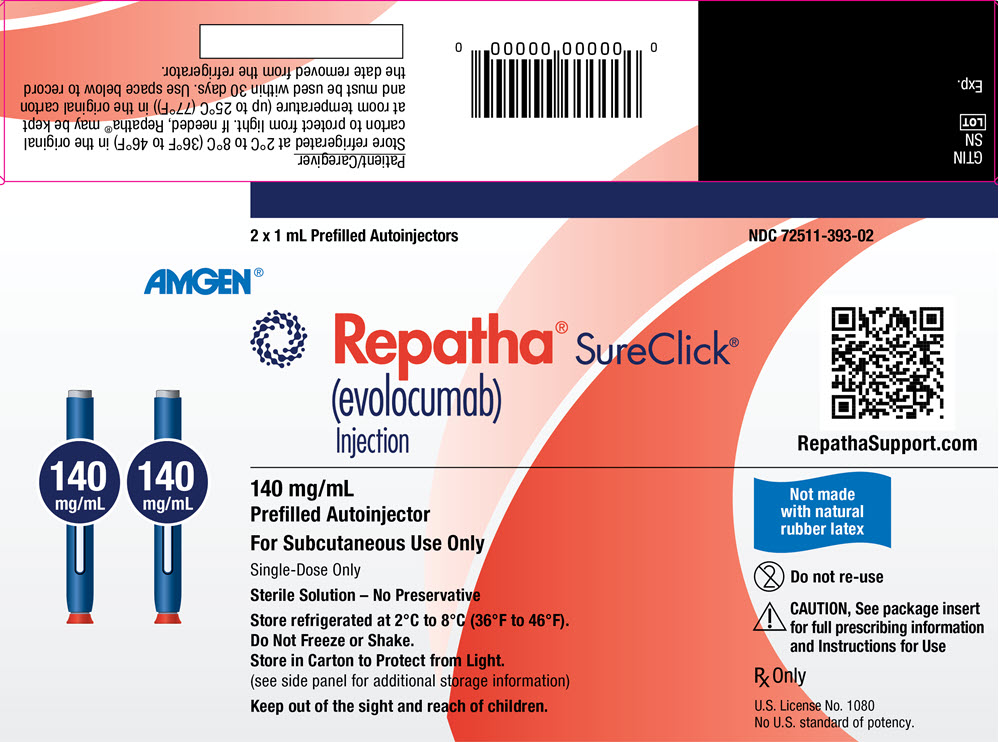
PRINCIPAL DISPLAY PANEL - 1 x 140 mg/mL Autoinjector Carton - NDC 72511-393-01 AMGEN 1 x Prefilled Single-Dose Autoinjector Repatha ® SureClick ® (evolocumab) Injection repathainjection.com 140 mg/mL Prefilled Autoinjector For Subcutaneous Use Only Sterile Solution – No Preservative Store carton in refrigerator at 2°C to 8°C (36°F to 46°F). Do Not Freeze or Shake. Store in Carton to Protect from Light.
(see side panel for additional storage information) 140 mg/mL Not made with natural rubber latex CAUTION, See package insert for full prescribing information and Instructions for Use Do not re-use Refrigerate until ready to use Keep out of the sight and reach of children. Rx Only U.S. License No.
1080 No U.S. standard of potency. NDC 72511-393-01 PRINCIPAL DISPLAY PANEL - 1 x 140 mg/mL Autoinjector Carton - NDC 72511-393-01
PRINCIPAL DISPLAY PANEL - 2 x 140 mg/mL Autoinjector Carton - NDC 72511-39… [Excerpted — this section continues on DailyMed.]
Medicaid utilization by pack size
Medicare Part D spend CMS · PART D · 2026 (Q1)
Reported adverse events (FAERS)
Top reported reactions
Age at onset
Reporter sex
Serious outcomes
Where does this data come from?
About this NDC listing & data coverage
What data is (and isn’t) available for this NDC — tap to expand
| NDC identity (package / product / labeler codes) | ✓ Available |
| Labeler | ✓ Available |
| Product & package description | ✓ Available |
| Marketing category & status | ✓ Available |
| Active ingredient / dosage form / route | ✓ Available |
| FDA label (SPL via DailyMed) | ✓ Available |
| Package photos | ✓ Available |
| Inactive ingredients (structured) | ✓ Available |
| NADAC pharmacy acquisition price (CMS) | — Not published for this NDC CMS publishes NADAC only for NDCs reported in its retail-pharmacy survey. |
| Orange Book / therapeutic-equivalence data | ✓ Available |
| HCPCS J-code billing crosswalk | — Not published for this NDC Most self-administered / retail products have no J-code — that is normal. |
| Medicaid utilization (CMS SDUD) | — Not published for this NDC CMS reports utilization only for NDCs with Medicaid claims above its privacy threshold. |