
Qutenza capsaicin Kit — NDC 72512-928-01 (Billing 72512-0928-01)
This is a package of Qutenza capsaicin Kit from Averitas Pharma Inc, marketed since Oct 2018 and currently FDA-listed. It is this product's only package size.
NDC database record
One package, one record: these facts belong to NDC 72512-928-01 alone.
- Record
- FDA NDC Directory package listing · Human prescription drug
- Code segments
- 72512 labeler · 928 product · 01 package
- Package marketed since
- Oct 30, 2018
- Sample package
- No — commercial package
- Listing certified through
- Dec 31, 2027
- Barcode (UPC-A, from the NDC)
- 3 7251292801 2
- Medicaid fills, this package
- 142 prescriptions in the last four reported quarters
- FDA record last changed
- Jul 24, 2026
Identity & classification
Regulatory identifiers FDA, NLM and CMS codes for this package
Drug-database identifiers Medi-Span GPI and First Databank GCN / HICL / AHFS classification
- GSN (GCN sequence number): 066210
- GCN: 28441
- GPI-14 (Medi-Span): 90850025306420
- HICL (First Databank): 036916
- AHFS class code: 84:92.00.00
- RxCUI (RxNorm): 1039679
Where does this data come from?
- FDA openFDA NDC Directory · synced Oct 8, 2026
- FDA label on DailyMed · label index refreshed Oct 8, 2026
- RxNorm (NLM RxNav) · catalog refreshed Oct 8, 2026
- Medi-Span GPI (licensed)
- First Databank (licensed) · refreshed Oct 8, 2026
RxNorm drug class
This medicine belongs to the Capsaicin and similar agents class.
Where does this data come from?
- RxClass (NLM) · catalog refreshed Oct 8, 2026
Clinical
- Yes, completely normal — and it actually means the medicine is working. Capsaicin activates the same pain-sensing receptors in your skin that respond to heat and spicy food. That b...
- Why does capsaicin burn when I put it on? Is that normal?
- For most OTC creams and ointments, you can apply up to 3 to 4 times a day. For OTC patches, apply to clean, dry skin and remove after no more than 8 hours — again, up to 3 to 4 tim...
- How often should I apply capsaicin cream or use the patch?
Patient education
Supplement & herbal interactions
Some supplements/herbs that may interact with Capsaicin (prescription drug) — tap one for details:
Where does this data come from?
- MedlinePlus (NLM) · refreshed Oct 8, 2026
- FDA label on DailyMed · label index refreshed Oct 8, 2026
Ask a licensed pharmacist directly — free, answered by our team.
Pricing
A drug doesn't have one price. Each row is a different public payment system, and none is what you'd pay at the counter — that depends on your insurance. The ⓘ on each row explains what it measures.
| Price system | Per each | Per package |
|---|---|---|
| Retail pharmacies payNADAC · weekly | Not in the retail survey — common for institutional, discontinued, or low-volume packs. | |
| Medicaid paysCMS SDUD · 12 mo | $1,362.19 | — |
| Medicare drug plans payPart D · quarterly | No Part D plan price is available for this NDC in our data. | |
| Medicare Part B allowsASP · J7336 | $3.509 / J7336 unit | — |
Where does this data come from?
- CMS NADAC weekly file
- CMS ASP pricing files · refreshed Sep 20, 2026
- CMS Medicaid State Drug Utilization Data · through Q4 2025
- CMS Part D plan pricing files · refreshed Sep 24, 2026
- VA National Acquisition Center price file
Billing & reimbursement
Where does this data come from?
- CMS ASP NDC-HCPCS crosswalk · refreshed Sep 22, 2026
- DMEPDAC NDC-HCPCS crosswalk
- openFDA NSDE billing units · refreshed Oct 7, 2026
Packaging — all sizes for this product
| Package NDC | Description | Marketing start | Marketing end | Status |
|---|---|---|---|---|
| 72512-0928-01 You're viewing this Main listing | 1 KIT in 1 CARTON * 1 POUCH in 1 CARTON / 1 PATCH in 1 POUCH / 179 mg in 1 PATCH * 50 g in 1 TUBE | 2018-10-30 | — | Active |
Therapeutic equivalents
| Product | Labeler | Pack | NADAC/unit | TE | Status | Price vs. this |
|---|---|---|---|---|---|---|
| Qutenza 72512-0929-01 | Averitas | 2 patches | — | — | FDA listed | — |
| Qutenza 72512-0930-01 | Averitas | 4 patches | — | — | FDA listed | — |
| Qutenzathis 72512-0928-01 | Averitas | 1 patch | — | — | FDA listed | — |
Where does this data come from?
- FDA openFDA NDC Directory · synced Oct 8, 2026
- FDA Orange Book · refreshed Oct 9, 2026
- CMS NADAC weekly file
Availability & generic status
We did not find an FDA-approved generic match for this exact strength, form and route. Patent/protection dates below may affect future generic timing.
Why the date isn’t exact: Generic timing can change because patents may be challenged, settled, licensed, added, removed, or worked around with a narrower label — and FDA approval does not always mean a pharmacy can get the generic today.
🛈 What do these terms mean?
- Patent
- Legal protection listed in the Orange Book that may delay generic approval or launch. Issued by the U.S. Patent & Trademark Office.
- Substance patent
- Covers the active drug molecule itself — the hardest to design around. A generic generally can’t launch until it expires.
- Formulation (product) patent
- Covers a specific formulation or dosage form. A generic can sometimes work around it with a different formulation.
- Method-of-use patent
- A patent covering one specific approved use of the drug — not necessarily the whole molecule. A generic can sometimes launch with a “skinny label” that carves out the protected use and keeps the others.
- Skinny label
- A generic label that omits a still-patented use when the FDA allows it — letting a generic reach the market for the unprotected uses.
- Exclusivity
- FDA-granted marketing protection, separate from patents — e.g. 5-yr new chemical entity, 7-yr orphan drug, or a +6-month pediatric extension.
- Paragraph IV
- A generic applicant’s formal challenge to a listed patent. It can potentially lead to earlier generic entry, but often involves litigation or a settlement.
- RLD / RS
- Reference Listed Drug — the brand product the FDA uses as the reference for generic applications. Reference Standard — the product the FDA expects generics to compare against in bioequivalence testing.
- TE / AB rating
- FDA therapeutic-equivalence rating. An AB rating generally means the FDA considers a generic therapeutically equivalent to — and substitutable for — the brand.
- LOE (loss of exclusivity)
- The latest patent or exclusivity currently listed — the loss-of-exclusivity / latest-listed-protection date shown on this page. Paragraph-IV challenges and settlements can move the real date earlier; FDA approval and a manufacturer’s decision to market can move it later.
Built from the FDA Orange Book. The bars above are scaled to each protection’s expiry; the red LOE marker is the last one to lapse.
| Patent | Type | Use code | Expires |
|---|---|---|---|
| US 9226903 ↗ | Drug product | — | Dec 15, 2028 |
| US 8821920 ↗ | Drug product | — | Mar 26, 2030 |
Is there a generic version of QUTENZA 8% KIT (1 PATCH)?
The FDA approved a generic — why can’t I get it at my pharmacy yet?
Why do different websites show different generic release dates?
What does “FDA listed” mean?
What does a patent or protection date mean here?
What does “current Orange Book estimate” mean?
Can a generic come out before the last patent expires?
Can a generic come out after the listed dates?
What is the difference between patents and exclusivity?
Why are there multiple patent dates?
Where does this data come from?
- FDA Orange Book · refreshed Oct 9, 2026
Inactive Ingredients / Excipients
Inactive ingredients, also called excipients, are components of the drug product other than the active ingredient. They may include fillers, dyes, coatings, preservatives, flavors, or other formulation ingredients.
🧪 Avoiding an ingredient? See Capsaicin inactive ingredients by manufacturer: every current product's list side by side, so you can ask your pharmacy for the version that does not list it.
Where does this data come from?
IACT rows and label-wide narrative are kept separate; availability and product-level specificity depend on the submitted label.- FDA label on DailyMed · label index refreshed Oct 8, 2026
- FDA openFDA NDC Directory · synced Oct 8, 2026
Inactive ingredient FAQ
Are inactive ingredients the same for every manufacturer?
Why might an inactive ingredient be missing?
Can inactive ingredients matter?
Manufacturer & labeler
More NDCs from Averitas Pharma Inc labeler code 72512
Where does this data come from?
- FDA openFDA NDC Directory · synced Oct 8, 2026
- Drugs@FDA
Full prescribing information FDA SPL
🎯 Indications and Usage ▾
1 INDICATIONS AND USAGE QUTENZA is indicated in adults for the treatment of neuropathic pain associated with postherpetic neuralgia (PHN) and for neuropathic pain associated with diabetic peripheral neuropathy (DPN) of the feet. QUTENZA is a TRPV1 channel agonist indicated for the treatment of neuropathic pain associated with postherpetic neuralgia (PHN) and neuropathic pain associated with diabetic peripheral neuropathy (DPN) of the feet. ( 1 )
⏱️ Dosage and Administration ▾
2 DOSAGE AND ADMINISTRATION Only physicians or health care professionals are to administer QUTENZA. ( 2.1 ) Administer QUTENZA in a well-ventilated treatment area. ( 2.1 ) Wear nitrile (not latex) gloves when handling QUTENZA and when cleaning treatment areas.
( 2.1 ) Use of a face mask and protective glasses is advisable for healthcare professionals. ( 2.1 ) Do not use QUTENZA on broken skin. ( 2.1 ) PHN: Apply up to four topical systems for 60 minutes.
( 2.2 ) DPN: Apply up to four topical systems for 30 minutes on the feet. ( 2.2 ) Repeat every 3 months or as warranted by the return of pain (not more frequently than every three months). ( 2.2 ) See Dosage and Administration, Instructions for Use, for detailed instructions on QUTENZA administration.
( 2.3 )
2.1Important Dosage and Administration Instructions Do not dispense QUTENZA to patients for self-administration or handling. Only physicians or healthcare professionals are to administer and handle QUTENZA. Unintended exposure to capsaicin can cause severe irritation of eyes, mucous membranes, respiratory tract, and skin in healthcare professionals, patients and others [see Warnings and Precautions ( 5.1 )] .
Because unintended exposure to capsaicin can cause severe irritation of eyes, mucous membranes, respiratory tract, and skin, when administering QUTENZA, it is important to follow these procedures: − Administer QUTENZA in a well-ventilated treatment area. − Wear only nitrile gloves when handling QUTENZA or any item that makes contact with QUTENZA, and when cleaning capsaicin residue from the skin. Do not use latex gloves as they do not provide adequate protection. − Use of a face mask and protective glasses is advisable for healthcare professionals. − Keep QUTENZA in the sealed pouch until immediately before use. − Use QUTENZA only on dry, intact (unbroken) skin. − In patients treated for neuropathic pain associated with diabetic peripheral neuropathy, a careful examination of the feet should be undertaken prior to each application of QUTENZA to detect skin lesions related to underlying neuropathy or vascular insufficiency. [see Warnings and Precautions ( 5.4 )] . − During administration, avoid unnecessary contact with any items in the room, including items that the patient may later have contact with, such as horizontal surfaces and bedsheets. − Aerosolization of capsaicin can occur upon rapid removal of QUTENZA.
Therefore, remove QUTENZA gently and slowly by rolling the adhesive side inward [see Warnings and Precautions ( 5.1 )] . − Immediately after use, clean all areas that had contact with QUTENZA and properly dispose of QUTENZA, associated packaging, Cleansing Gel, gloves, and other treatment materials in accordance with local biomedical waste procedures. − If QUTENZA is cut, ensure unused pieces are properly disposed of.
2.2Dosing The recommended dose of QUTENZA for neuropathic pain associated with postherpetic neuralgia is a single, 60-minute application of up to four topical systems. The recommended dose of QUTENZA for neuropathic pain associated with diabetic peripheral neuropathy is a single, 30-minute application on the feet of up to four topical systems. Treatment with QUTENZA may be repeated every three months or as warranted by the return of pain (not more frequently than every three months).
2.3Instructions for Use USE IN NEUROPATHIC PAIN ASSOCIATED WITH POSTHERPETIC NEURALGIA (60-MINUTE APPLICATION TIME) Prepare Administer QUTENZA in a well-ventilated treatment area. Put on nitrile (not latex) gloves. Use of a face mask and protective glasses is advisable for healthcare professionals.
Inspect the pouch. Do not use if the pouch has been torn or damaged. Identify The treatment area (painful area including areas of hypersensitivity and allodynia) must be identified by a physician or healthcare professional and marked on the skin.
If necessary, clip hair (do not shave) in and around the identified treatment area to promote QUTENZA adherence. QUTENZA ca… [Excerpted — this section continues on DailyMed.]
💊 Dosage Forms and Strengths ▾
3 DOSAGE FORMS AND STRENGTHS QUTENZA topical system contains 8% capsaicin (640 mcg per cm 2 ). Each topical system contains a total of 179 mg of capsaicin. Each topical system is 14 cm x 20 cm (280 cm 2 ) and consists of an adhesive side containing the active substance and an outer surface backing layer.
The adhesive side is covered with a removable, clear, unprinted, diagonally cut, release liner. The outer surface of the backing layer is imprinted with “capsaicin 8%”. QUTENZA contains 8% capsaicin (640 mcg per cm 2 ).
Each topical systems contains a total of 179 mg of capsaicin. ( 3 )
⛔ Contraindications ▾
4 CONTRAINDICATIONS None. None
⚠️ Warnings and Cautions ▾
5 WARNINGS AND PRECAUTIONS Severe Irritation with Unintended Capsaicin Exposure: Capsaicin can cause severe irritation of eyes, mucous membranes, respiratory tract, and skin to the healthcare professional, patients, and others. (See Full Prescribing Information for detailed instructions on how to manage this risk. ( 2.1 , 5.1 ) Application-Associated Pain: Patients may experience substantial procedural pain and burning upon application of QUTENZA and following removal of QUTENZA.
Prepare to treat acute pain during and following the application procedure with local cooling and/or appropriate analgesic medication. ( 5.2 ) Increase in Blood Pressure: Transient increases in blood pressure may occur with QUTENZA treatment. Monitor blood pressure during and following the treatment procedure.
( 5.3 ) Sensory Function: Reductions in sensory function, which were generally minor and temporary, have been reported following administration of QUTENZA. Assess for signs of sensory deterioration or loss prior to each application of QUTENZA. If sensory loss occurs, treatment should be reconsidered.
( 5.4 ) Severe Application Site Burns: Full-thickness (third-degree) and deep partial-thickness (second-degree) burns have been reported following administration of QUTENZA. Ensure that dosage and administration recommendations are followed. ( 5.5 )
5.1Severe Irritation with Unintended Capsaicin Exposure Unintended exposure to capsaicin can cause severe irritation of eyes, mucous membranes, respiratory tract, and skin in healthcare professionals, patients, and others. Ensure that the recommended procedures and protective measures are used when administering QUTENZA [see Dosage and Administration ( 2.1 )] . Eye and Mucous Membrane Exposure • For healthcare professionals: ○ Wear nitrile gloves when administering QUTENZA and avoid unnecessary contact with items in the room, including items that the patient may later have contact with, such as horizontal surfaces and bedsheets. ○ Use of a face mask and protective glasses is advisable. • Do not apply QUTENZA to the patient’s face, eyes, mouth, nose, or scalp to avoid risk of exposure to eyes or mucous membranes. • Accidental exposure to the eyes and mucous membranes can occur from touching QUTENZA or items exposed to capsaicin and then touching the eyes and mucous membranes. • If irritation of eyes or mucous membranes occurs, flush eyes and mucous membranes with cool water.
Remove the affected individual (healthcare professional or patient) from the vicinity of QUTENZA. Respiratory Tract Exposure Aerosolization of capsaicin can occur upon rapid removal of QUTENZA. Therefore, remove QUTENZA gently and slowly by rolling the adhesive side inward [see Dosage and Administration ( 2.1 , 2.3 )] .
Inhalation of airborne capsaicin can result in coughing or sneezing. Administer QUTENZA in a well-ventilated treatment area. Provide supportive medical care if shortness of breath develops.
If irritation of airways occurs, remove the affected individual (healthcare professional or patient) from the vicinity of QUTENZA. If respiratory irritation worsens or does not resolve, do not re-expose the affected healthcare professional or patient to QUTENZA [see Adverse Reactions ( 6.2 )] . Skin Exposure If skin not intended to be treated is exposed to QUTENZA, apply Cleansing Gel for one minute and wipe off with dry gauze.
After the Cleansing Gel has been wiped off, wash the area with soap and water. Thoroughly clean all areas that had contact with QUTENZA and properly dispose of QUTENZA, associated packaging, Cleansing Gel, gloves, and other treatment materials in accordance with local biomedical waste procedures [see Dosage and Administration ( 2.1 , 2.3 )] .
5.2Application-Associated Pain Even following use of a local anesthetic prior to administration of QUTENZA, patients may experience substantial procedural pain and burning upon application of QUTENZA and following removal of QUTENZA. Prepare to treat acute pain during… [Excerpted — this section continues on DailyMed.]
🤒 Adverse Reactions ▾
6 ADVERSE REACTIONS The following serious adverse reactions are discussed elsewhere in the labeling: Severe Irritation Due to Accidental Exposure of Eyes, Skin, Respiratory Tract, and Mucous Membranes [see Warning and Precautions ( 5.1 )] Application-Associated Pain [see Warnings and Precautions ( 5.2 )] Increase in Blood Pressure [see Warnings and Precautions ( 5.3 )] Sensory Function Reduction [see Warning and Precautions ( 5.4 )] Severe Application Site Burns [see Warning and Precautions ( 5.5 )] The most common adverse reactions (≥5% and greater than control) in all controlled clinical trials are application site erythema, application site pain, and application site pruritus.
( 6.1 ) To report SUSPECTED ADVERSE REACTIONS, contact Averitas Pharma at 1-877-900-6479 or FDA at 1-800-FDA-1088 or www.fda.gov/medwatch.
6.1Clinical Trials Experience Because clinical trials are conducted under widely varying conditions, adverse reaction rates observed in the clinical trials of a drug cannot be directly compared to rates in the clinical trials of other drugs and may not reflect the rates observed in clinical practice. Across all controlled and uncontrolled clinical trials, 2848 patients have received QUTENZA. A total of 924 patients received more than one treatment application and 732 patients were followed for 48 weeks or longer.
A total of 590 DPN patients and 1112 PHN patients have received QUTENZA across all controlled and uncontrolled clinical trials. Among patients treated with QUTENZA, 1% discontinued prematurely due to an adverse event. Most Common Adverse Reactions in all Controlled Clinical Trials In all controlled clinical trials, adverse reactions occurring in ≥5% of patients in the QUTENZA group and at an incidence at least 1% greater than in the control group were application site erythema, application site pain, and application site pruritus.
The majority of application site reactions were transient and self-limited. Transient increases in pain were commonly observed on the day of treatment in patients treated with QUTENZA. Pain increases occurring during QUTENZA application usually began to resolve after QUTENZA removal.
On average, pain scores returned to baseline by the end of the treatment day and then remained at or below baseline levels. A majority of QUTENZA-treated patients in clinical trials had adverse reactions with a maximum intensity of "mild" or "moderate". Postherpetic Neuralgia (PHN) Table 1 summarizes all adverse reactions, regardless of causality, occurring in >1% of patients with PHN in the QUTENZA group for which the incidence was at least 1% greater than in the control group.
TABLE 1: Adverse Reaction Incidence (%) in Controlled Double-blind Trials in Postherpetic Neuralgia (Events in >1% of QUTENZA-treated Patients and at Least 1% Greater in the QUTENZA Group than in the Control Group) Body System Preferred Term QUTENZA 60 minutes (N=622) % Control 60 minutes (N=495) % General Disorders and Administration Site Conditions Application site erythema 63 54 Application site pain 42 21 Application site pruritus 6 4 Application site papules 6 3 Application site edema 4 1 Application site swelling 2 1 Application site dryness 2 1 Infections and Infestations Nasopharyngitis 4 2 Bronchitis 2 1 Sinusitis 3 1 Gastrointestinal Disorders Nausea 5 2 Vomiting 3 1 Skin and Subcutaneous Tissue Disorder Pruritus 2 < 1 Vascular Disorders Hypertension 2 1 Less common adverse reactions (<1%) with QUTENZA observed during PHN clinical trials included: palpitations, tachycardia, eye pruritus, application site reactions (such as urticaria, paresthesia, dermatitis, hyperesthesia).
Neuropathic Pain Associated with Diabetic Peripheral Neuropathy (DPN) Table 2 summarizes all adverse reactions, regardless of causality, occurring in >1% of patients with DPN in the QUTENZA group for which the incidence was at least 1% greater than in the control group. TABLE 2: Adverse Reaction Incidence (%) in Double-blind Controlled Trials i… [Excerpted — this section continues on DailyMed.]
🔄 Drug Interactions ▾
7 DRUG INTERACTIONS No clinical drug interaction studies have been performed. Data from in vitro cytochrome P450 inhibition and induction studies show that capsaicin does not inhibit or induce liver cytochrome P450 enzymes at concentrations which far exceed those measured in blood samples. Therefore, interactions with systemic medicinal products are unlikely.
👥 Use in Specific Populations ▾
8 USE IN SPECIFIC POPULATIONS
8.1Pregnancy Risk Summary Capsaicin is negligibly absorbed systemically following topical administration of QUTENZA, and maternal use is not expected to result in the fetal exposure to QUTENZA. In animal reproductive studies, no evidence of malformations were observed when capsaicin was administered daily by the topical route to pregnant rats and rabbits during the period of organogenesis at doses of up to 11- and 37-times, respectively, the maximum recommended human dose (MRHD) of QUTENZA at 716 mg capsaicin per day (4 topical systems containing 179 mg/topical system).
In a peri- and postnatal development study, no adverse effects were observed when capsaicin was administered daily by the topical route to rats during implantation to weaning at doses of up to 11-times the MRHD (see Data) . The estimated background risk of major birth defects and miscarriage for the indicated population is unknown. All pregnancies have a background risk of birth defect, loss, or other adverse outcomes.
In the U.S. general population, the estimated background risk of major birth defects and miscarriage in clinically recognized pregnancies is 2% to 4% and 15% to 20%, respectively. Data Animal Data There was no evidence of fetal malformations in embryofetal developmental toxicological studies conducted in pregnant rats and rabbits in which QUTENZA (rats) or capsaicin liquid (rabbits) were applied once daily for a 3-hour duration during the period of fetal organogenesis at doses up to 11-times (rat, 32 mg QUTENZA /day) and 37-times (rabbit, 260 mg capsaicin/day) the MRHD based on a C max exposure comparison.
In a peri- and postnatal reproduction toxicology study, pregnant female rats were treated with QUTENZA at doses up to 32 mg QUTENZA/rat/day applied once daily for a 3-hour duration during gestation and lactation (from Gestation Day 7 through Lactation Day 20). Analyses of milk samples on Day 14 of the lactation period demonstrated measurable levels of capsaicin in the dam's milk at all dose levels. There were no effects on survival, growth, learning and memory tests (passive avoidance and water maze), sexual maturation, mating, pregnancy, and fetal development in the offspring of mothers treated with capsaicin up to 32 mg QUTENZA /rat/day (11-times the MRHD based on C max exposure).
8.2Lactation Risk Summary Capsaicin is negligibly absorbed systemically by the mother following topical administration of QUTENZA, and breastfeeding is not expected to result in exposure of the infant to QUTENZA [see Clinical Pharmacology ( 12.3 )] . There are no data on the effects of capsaicin on milk production. To minimize potential direct exposure of QUTENZA to the breastfed infant, avoid applying QUTENZA directly to the nipple and areola.
The developmental and health benefits of breastfeeding should be considered along with the mother’s clinical need for QUTENZA and any potential adverse effects on the breastfed infant from QUTENZA or from the underlying maternal condition.
8.3Females and Males of Reproductive Potential Infertility In a fertility and reproductive toxicology study, administration of QUTENZA at 13-times the MRHD to male rats for 3 hours/day for 49 days resulted in a statistically significant reduction in the number and percent of motile sperm; however, these reductions did not adversely affect fertility [see Nonclinical Toxicology ( 13.1 )] . As this animal model has a large excess of sperm-generating capacity relative to the threshold necessary for fertilization, the lack of an effect on fertility in this species is of unknown clinical significance for males of reproductive potential treated with the MRHD.
8.4Pediatric Use The safety and effectiveness of QUTENZA in patients younger than 18 years of age have not been studied.
8.5Geriatric Use In controlled clinical trials of QUTENZA in neuropathic pain associated with postherpetic neuralgia, 75% of patients were 65 years and older and 43% of patients were 75 ye… [Excerpted — this section continues on DailyMed.]
🤰 Pregnancy ▾
8.1Pregnancy Risk Summary Capsaicin is negligibly absorbed systemically following topical administration of QUTENZA, and maternal use is not expected to result in the fetal exposure to QUTENZA. In animal reproductive studies, no evidence of malformations were observed when capsaicin was administered daily by the topical route to pregnant rats and rabbits during the period of organogenesis at doses of up to 11- and 37-times, respectively, the maximum recommended human dose (MRHD) of QUTENZA at 716 mg capsaicin per day (4 topical systems containing 179 mg/topical system).
In a peri- and postnatal development study, no adverse effects were observed when capsaicin was administered daily by the topical route to rats during implantation to weaning at doses of up to 11-times the MRHD (see Data) . The estimated background risk of major birth defects and miscarriage for the indicated population is unknown. All pregnancies have a background risk of birth defect, loss, or other adverse outcomes.
In the U.S. general population, the estimated background risk of major birth defects and miscarriage in clinically recognized pregnancies is 2% to 4% and 15% to 20%, respectively. Data Animal Data There was no evidence of fetal malformations in embryofetal developmental toxicological studies conducted in pregnant rats and rabbits in which QUTENZA (rats) or capsaicin liquid (rabbits) were applied once daily for a 3-hour duration during the period of fetal organogenesis at doses up to 11-times (rat, 32 mg QUTENZA /day) and 37-times (rabbit, 260 mg capsaicin/day) the MRHD based on a C max exposure comparison.
In a peri- and postnatal reproduction toxicology study, pregnant female rats were treated with QUTENZA at doses up to 32 mg QUTENZA/rat/day applied once daily for a 3-hour duration during gestation and lactation (from Gestation Day 7 through Lactation Day 20). Analyses of milk samples on Day 14 of the lactation period demonstrated measurable levels of capsaicin in the dam's milk at all dose levels. There were no effects on survival, growth, learning and memory tests (passive avoidance and water maze), sexual maturation, mating, pregnancy, and fetal development in the offspring of mothers treated with capsaicin up to 32 mg QUTENZA /rat/day (11-times the MRHD based on C max exposure).
🧒 Pediatric Use ▾
8.4Pediatric Use The safety and effectiveness of QUTENZA in patients younger than 18 years of age have not been studied.
🧓 Geriatric Use ▾
8.5Geriatric Use In controlled clinical trials of QUTENZA in neuropathic pain associated with postherpetic neuralgia, 75% of patients were 65 years and older and 43% of patients were 75 years and older. The safety and effectiveness were similar in geriatric patients and younger patients. No dose adjustments are required in geriatric patients.
🆘 Overdosage ▾
10 OVERDOSAGE There is no clinical experience with QUTENZA overdose in humans. There is no specific antidote for overdose with capsaicin. In case of suspected overdose, remove QUTENZA gently, apply Cleansing Gel for one minute, wipe off with dry gauze, and gently wash the area with soap and water. Use supportive measures and treat symptoms as clinically warranted.
🧬 Clinical Pharmacology ▾
12 CLINICAL PHARMACOLOGY
12.1Mechanism of Action Capsaicin is an agonist for the transient receptor potential vanilloid 1 receptor (TRPV1), which is an ion channel-receptor complex expressed on nociceptive nerve fibers in the skin. Topical administration of capsaicin causes an initial enhanced stimulation of the TRPV1-expressing cutaneous nociceptors that may be associated with painful sensations. This is followed by pain relief thought to be mediated by a reduction in TRPV1-expressing nociceptive nerve endings [see Clinical Pharmacology ( 12.2 )] .
Over the course of several months, there may be a gradual re-emergence of painful neuropathy thought to be due to TRPV1 nerve fiber reinnervation of the treated area.
12.2Pharmacodynamics Two studies evaluated the pharmacodynamic effects of QUTENZA on sensory function and epidermal nerve fiber (ENF) density in healthy volunteers. Consistent with the known pharmacodynamic effects of capsaicin on TRPV1-expressing nociceptive nerve endings, reduced ENF density and minor changes in cutaneous nociceptive function (heat detection and sharp sensation) were noted one week after exposure to QUTENZA. ENF density reduction and sensory changes were fully reversible.
12.3Pharmacokinetics Pharmacokinetic data in humans showed transient, low (<5 ng/mL) systemic exposure to capsaicin in about one-third of PHN patients following 60-minute applications of QUTENZA. The highest plasma concentration of capsaicin detected was 4.6 ng/mL and occurred immediately after QUTENZA removal. Most quantifiable levels were observed at the time of QUTENZA removal and were below the limit of quantitation 3 to 6 hours after QUTENZA removal.
No detectable levels of metabolites were observed in any subject.
🧬 Mechanism of Action ▾
12.1Mechanism of Action Capsaicin is an agonist for the transient receptor potential vanilloid 1 receptor (TRPV1), which is an ion channel-receptor complex expressed on nociceptive nerve fibers in the skin. Topical administration of capsaicin causes an initial enhanced stimulation of the TRPV1-expressing cutaneous nociceptors that may be associated with painful sensations. This is followed by pain relief thought to be mediated by a reduction in TRPV1-expressing nociceptive nerve endings [see Clinical Pharmacology ( 12.2 )] .
Over the course of several months, there may be a gradual re-emergence of painful neuropathy thought to be due to TRPV1 nerve fiber reinnervation of the treated area.
📦 How Supplied / Storage and Handling ▾
16 HOW SUPPLIED/STORAGE AND HANDLING
16.1How Supplied QUTENZA (capsaicin) 8% topical system is a single-use topical system stored in a sealed pouch (NDC 72512-920-00). QUTENZA is 14 cm x 20 cm (280 cm 2 ) and consists of an adhesive side containing the active substance and an outer surface backing layer. The adhesive side is covered with a removable, clear, unprinted, diagonally cut, release liner.
The outer surface of the backing layer is imprinted with “capsaicin 8%”. Cleansing Gel is provided in a 50 g tube. QUTENZA is available in the following presentations: Carton of one topical system and one 50 g tube of Cleansing Gel (NDC 72512-928-01).
Carton of two topical systems and one 50 g tube of Cleansing Gel (NDC 72512-929-01). Carton of four topical systems and three 50 g tubes of Cleansing Gel (NDC 72512-930-01).
16.2Storage Store carton between 20°C to 25°C (68°F to 77°F). Excursions between 15°C and 30°C (59°F and 86°F) are allowed. Keep QUTENZA in the sealed pouch until immediately before use.
16.3Handling and Disposal Unintended exposure to capsaicin can cause severe irritation of eyes, skin, respiratory tract, and mucous membranes. Wear nitrile (not latex) gloves while administering QUTENZA. Use of a face mask and protective glasses is advisable.
Immediately after use, dispose of used and unused QUTENZA, QUTENZA clippings, associated packaging, Cleansing Gel, and all other potentially contaminated treatment supplies in accordance with local biomedical waste procedures [see Dosage and Administration ( 2 ), Warnings and Precautions ( 5.1 )] .
📋 Description ▾
11 DESCRIPTION QUTENZA (capsaicin) 8% topical system contains capsaicin in a localized dermal delivery system. The capsaicin in QUTENZA is a synthetic equivalent of the naturally occurring compound found in chili peppers. Capsaicin is soluble in alcohol, acetone, and ethyl acetate and very slightly soluble in water.
QUTENZA is a single-use topical system stored in a foil pouch. Each QUTENZA is 14 cm x 20 cm (280 cm 2 ) and consists of a polyester backing film coated with a drug-containing silicone adhesive mixture and covered with a removable polyester release liner. The backing film is imprinted with “capsaicin 8%”.
Each QUTENZA contains a total of 179 mg of capsaicin (8% in adhesive, 80 mg per gram of adhesive) or 640 micrograms (mcg) of capsaicin per square cm of topical system. The empirical formula is C 18 H 27 NO 3 , with a molecular weight of 305.42. The chemical compound capsaicin [(E)-8-methyl-N-vanillyl-6-nonenamide] is an activating ligand for transient receptor potential vanilloid 1 receptor (TRPV1) and it has the following structure: FIGURE 1: Structural Formula of Capsaicin QUTENZA contains the following inactive ingredients: diethylene glycol monoethyl ether, dimethicone, ethyl cellulose, polyester film, silicone adhesive, and white ink.
QUTENZA is supplied with a Cleansing Gel which is used to remove residual capsaicin from the skin after treatment. Cleansing Gel consists of the following ingredients: butylated hydroxyanisole, carbomer copolymer, edetate disodium, polyethylene glycol, purified water, and sodium hydroxide. Structural Formula of Capsaicin
💬 Information for Patients ▾
17 PATIENT COUNSELING INFORMATION Inform patients that accidental exposure to capsaicin from touching QUTENZA or items exposed to capsaicin can cause severe irritation of eyes, mucous membranes, respiratory tract, and skin. Instruct patients not to touch their eyes and other unintended target area and that if irritation of eyes or airways occurs, or if any of the side effects become severe, to notify their doctor immediately. Inform patients that acute pain during and after the QUTENZA application procedure may be treated with local cooling or analgesic medication, as appropriate.
Inform patients of the potential risk for frostbite with excessive use of cooling. It is recommended to use cooling packs from the refrigerator (not from the freezer) and to avoid direct application to the skin. Advise patients to seek medical attention if they experience persistent severe pain or skin lesions such as blisters after the QUTENZA application procedure.
Inform patients that, as a result of treatment-related increases in pain, small transient increases in blood pressure may occur during and shortly after QUTENZA treatment and that blood pressure will be monitored during the treatment procedure. Instruct patients to inform the physician if they have experienced any recent cardiovascular events. Inform patients that the treated area may be sensitive to heat (e.g., hot showers/bath, direct sunlight, vigorous exercise) for a few days following treatment.
🍼 Nursing Mothers ▾
8.2Lactation Risk Summary Capsaicin is negligibly absorbed systemically by the mother following topical administration of QUTENZA, and breastfeeding is not expected to result in exposure of the infant to QUTENZA [see Clinical Pharmacology ( 12.3 )] . There are no data on the effects of capsaicin on milk production. To minimize potential direct exposure of QUTENZA to the breastfed infant, avoid applying QUTENZA directly to the nipple and areola.
The developmental and health benefits of breastfeeding should be considered along with the mother’s clinical need for QUTENZA and any potential adverse effects on the breastfed infant from QUTENZA or from the underlying maternal condition.
🧬 Pharmacokinetics ▾
12.3Pharmacokinetics Pharmacokinetic data in humans showed transient, low (<5 ng/mL) systemic exposure to capsaicin in about one-third of PHN patients following 60-minute applications of QUTENZA. The highest plasma concentration of capsaicin detected was 4.6 ng/mL and occurred immediately after QUTENZA removal. Most quantifiable levels were observed at the time of QUTENZA removal and were below the limit of quantitation 3 to 6 hours after QUTENZA removal.
No detectable levels of metabolites were observed in any subject.
🧬 Pharmacodynamics ▾
12.2Pharmacodynamics Two studies evaluated the pharmacodynamic effects of QUTENZA on sensory function and epidermal nerve fiber (ENF) density in healthy volunteers. Consistent with the known pharmacodynamic effects of capsaicin on TRPV1-expressing nociceptive nerve endings, reduced ENF density and minor changes in cutaneous nociceptive function (heat detection and sharp sensation) were noted one week after exposure to QUTENZA. ENF density reduction and sensory changes were fully reversible.
🔬 Clinical Studies ▾
14 CLINICAL STUDIES
14.1Postherpetic Neuralgia The efficacy of QUTENZA was established in two 12-week, double-blind, randomized, dose-controlled, multicenter clinical trials. These studies enrolled patients with postherpetic neuralgia (PHN) persisting for at least 6 months following healing of herpes zoster rash and a baseline score of 3-9 on an 11-point Numerical Pain Rating Scale (NPRS) ranging from 0 (no pain) to 10 (worst possible pain). QUTENZA and a control topical system were each applied as a single, 60-minute application.
The control used in these studies looked similar to QUTENZA but contained a low concentration of the active ingredient, capsaicin (3.2 mcg/cm 2 , 0.04% w/w), to retain blinding regarding the known application site reactions of capsaicin (such as burning and erythema). The baseline mean pain score across the 2 studies was approximately 6.0. Patients who entered the study on stable doses of pain-control medications were required to keep dosing stable throughout the duration of the study.
Approximately half of the patients were taking concomitant medications, including anticonvulsants, non-SSRI antidepressants, or opioids for their PHN at study entry. Prior to application, a topical anesthetic was applied to the treatment area for 60 minutes. Patients were permitted to use local cooling and additional analgesic medications for treatment-related discomfort as needed through Day 5.
Patients recorded their pain daily in a diary. PHN Study 1: In this 12-week study, the QUTENZA group demonstrated a greater reduction in pain compared to the control group during the primary assessment at Week 8. The percent change in average pain from baseline to Week 8 was -18% (±2%) for the low-dose control and -29% (±2%) for QUTENZA.
For various degrees of improvement in pain from baseline to study endpoint, Figure 2 shows the fraction of patients achieving that degree of improvement. The figure is cumulative, so that patients whose change from baseline is, for example, 50%, are also included at every level of improvement below 50%. Patients who did not complete the study through Week 12 or who showed no improvement at Week 12 were assigned 0% improvement.
Some patients experienced a decrease in pain as early as Week 1, which persisted throughout the study. The proportion of patients experiencing ≥30% reduction in pain intensity from baseline for each week through Week 12 is shown in Figure 3. FIGURE 2: Patients Achieving Various Percentages of Reduction in Pain Intensity at Week 12 – Study 1 FIGURE 3: Weekly Proportion of Patients Achieving ≥30% Pain Intensity Reduction – Study 1* PHN Study 2: In this 12-week study, the QUTENZA group demonstrated a greater reduction in pain compared to the control group during the primary assessment at Week 8.
The percent change in average pain from baseline to Week 8 was -26% (±2%) for the low-dose control and -33% (±2%) for QUTENZA. For various degrees of improvement in pain from baseline to study endpoint, Figure 4 shows the fraction of patients achieving that degree of improvement. The figure is cumulative, so that patients whose change from baseline is, for example, 50%, are also included at every level of improvement below 50%.
Patients who did not complete the study through Week 12 or who showed no improvement at Week 12 were assigned 0% improvement. Some patients experienced a decrease in pain as early as Week 1, which persisted throughout the study. The proportion of patients achieving ≥30% reduction in pain intensity from baseline for each week through Week 12 is shown in Figure 5.
FIGURE 4: Patients Achieving Various Percentages of Reduction in Pain Intensity at Week 12 – Study 2 FIGURE 5: Weekly Proportion of Patients Achieving ≥ 30% Pain Intensity Reduction – Study 2* Figure 2 Figure 3 Figure 4 Figure 5
14.2Neuropathic Pain Associated with Diabetic Peripheral Neuropathy The efficacy of QUTENZA was established in one 12-week, double-blind, randomized, placebo-controlled, mult… [Excerpted — this section continues on DailyMed.]
🧪 Nonclinical Toxicology ▾
13 NONCLINICAL TOXICOLOGY
13.1Carcinogenesis, Mutagenesis, Impairment of Fertility Carcinogenesis Adequate carcinogenicity studies have not been conducted with QUTENZA or capsaicin. Mutagenesis Capsaicin was not mutagenic in the Ames, mouse micronucleus, and chromosomal aberration in human peripheral blood lymphocytes assays. As with other catechol-containing compounds (e.g., dopamine), capsaicin showed a weak mutagenic response in the mouse lymphoma assay.
Impairment of Fertility A fertility and reproductive toxicology study was conducted in rats with exposure to QUTENZA daily for 3 hours/day beginning 28 days before cohabitation, through cohabitation, and continuing through the day before sacrifice (approximately 49 days of treatment). The results revealed a statistically significant reduction in the number and percent of motile sperm. Sperm motility obtained from the vas deferens was reduced in all capsaicin treatment groups (16, 24 and 32 mg QUTENZA/rat/day).
Though a “no effect” level was not determined, dose levels used in the study correspond to a 13- to 28-fold exposure margin over the mean C max associated with the MRHD. Sperm counts were reduced in the vas deferens or cauda epididymis in the 24 and 32 mg QUTENZA/rat/day dose groups (79% and 69%, respectively) compared to the placebo topical system-treated control group; however, these reductions did not adversely affect fertility. As this animal model has a large excess of sperm-generating capacity relative to the threshold necessary for fertilization, the lack of an effect on fertility in this species is of unknown significance for human risk assessment.
📄 Carcinogenesis, Mutagenesis, Impairment of Fertility ▾
13.1Carcinogenesis, Mutagenesis, Impairment of Fertility Carcinogenesis Adequate carcinogenicity studies have not been conducted with QUTENZA or capsaicin. Mutagenesis Capsaicin was not mutagenic in the Ames, mouse micronucleus, and chromosomal aberration in human peripheral blood lymphocytes assays. As with other catechol-containing compounds (e.g., dopamine), capsaicin showed a weak mutagenic response in the mouse lymphoma assay.
Impairment of Fertility A fertility and reproductive toxicology study was conducted in rats with exposure to QUTENZA daily for 3 hours/day beginning 28 days before cohabitation, through cohabitation, and continuing through the day before sacrifice (approximately 49 days of treatment). The results revealed a statistically significant reduction in the number and percent of motile sperm. Sperm motility obtained from the vas deferens was reduced in all capsaicin treatment groups (16, 24 and 32 mg QUTENZA/rat/day).
Though a “no effect” level was not determined, dose levels used in the study correspond to a 13- to 28-fold exposure margin over the mean C max associated with the MRHD. Sperm counts were reduced in the vas deferens or cauda epididymis in the 24 and 32 mg QUTENZA/rat/day dose groups (79% and 69%, respectively) compared to the placebo topical system-treated control group; however, these reductions did not adversely affect fertility. As this animal model has a large excess of sperm-generating capacity relative to the threshold necessary for fertilization, the lack of an effect on fertility in this species is of unknown significance for human risk assessment.
📄 Recent Major Changes ▾
Warnings and Precautions ( 5.2 , 5.5 ) 07/2024
📄 Package Label / Principal Display Panel ▾
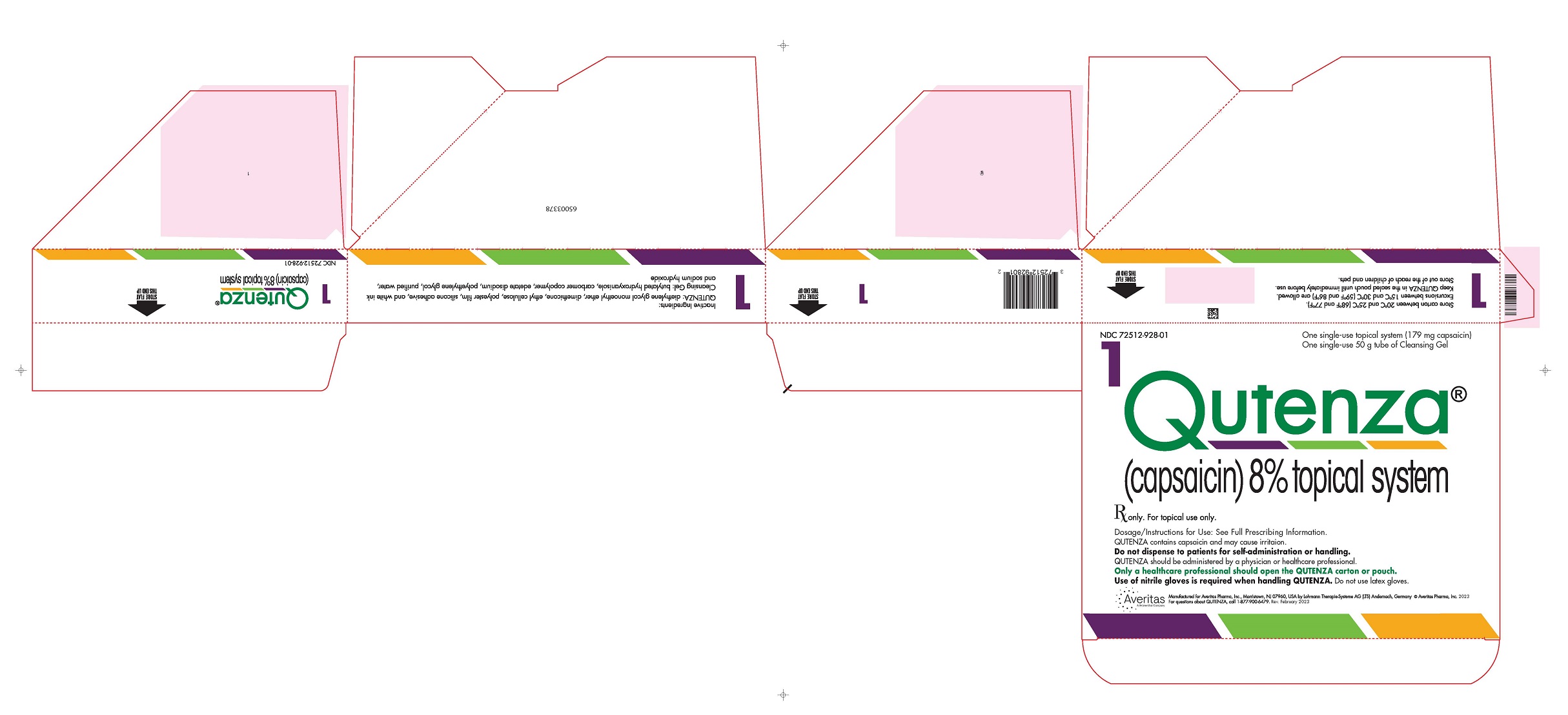
PRINCIPAL DISPLAY PANEL - Carton Label (1 Topical System) NDC 72512-928-01 1 One single-use topical system (179 mg capsaicin) One single-use 50 g tube of Cleansing Gel Qutenza ® (capsaicin) 8% topical system Rx only . For topical use only. Dosage/Instructions for Use: See Full Prescribing Information.
QUTENZA contains capsaicin and may cause irritation. Do not dispense to patients for self-administration or handling. QUTENZA should be administered by a physician or healthcare professional.
Only a healthcare professional should open the QUTENZA carton or pouch. Use of nitrile gloves is required when handling QUTENZA. Do not use latex gloves.
Averitas A Grunenthal Company Manufactured for Averitas Pharma, Inc, Morristown, NJ 07960, USA by Lohmann Therapie-Systeme AG (LTS) Andernach, Germany © Averitas Pharma, Inc. 2023 For questions about QUTENZA call 1-877-900-6479 Rev. December 2024 Store carton between 20°C and 25°C (68°F and 77°F).
Excursions between 15°C and 30°C (59°F and 86°F) are allowed. Keep QUTENZA in the sealed pouch until immediately before use. Store out of the reach of children and pets.
Inactive Ingredients: QUTENZA: diethylene glycol monoethyl ether, dimethicone, ethyl cellulose, polyester film, silicone adhesive, and white ink Cleansing Gel: butylated hydroxyanisole, carbomer copolymer, edetate disodium, polyethylene glycol, purified water, and sodium hydroxide Carton Label (1 Topical System)
PRINCIPAL DISPLAY PANEL - Carton Label (2 Topical Systems) NDC 72512-929-01 2 Two single-use topical systems (179 mg capsaicin) One single-use 50 g tube of Cleansing Gel Qutenza ® (capsaicin) 8% topical system Rx only . For topical use only. Dosage/Instructions for Use: See Full Prescribing Information.
QUTENZA contains capsaicin and may cause irritation. Do not dispense to patients for self-administration or handling. QUTENZA should be administered by a physician or healthcare professional.
Only a healthcare professional should open the QUTENZA carton or pouch. Use of nitrile gloves is required when handling QUTENZA. Do not use latex gloves.
Averitas A Grunenthal Company Manufactured for Averitas Pharma, Inc, Morristown, NJ 07960, USA by Lohmann Therapie-Systeme AG (LTS) Andernach, Germany © Averitas Pharma, Inc. 2023 For questions about QUTENZA call 1-877-900-6479 Rev. December 2024 Store carton between 20°C and 25°C (68°F and 77°F).
Excursions between 15°C and 30°C (59°F and 86°F) are allowed. Keep QUTENZA in the sealed pouch until immediately before use. Store out of the reach of children and pets.
Inactive Ingredients: QUTENZA: diethylene glycol monoethyl ether, dimethicone, ethyl cellulose, polyester film, silicone adhesive, and white ink Cleansing Gel: butylated hydroxyanisole, carbomer copolymer, edetate disodium, polyethylene glycol, purified water, and sodium hydroxide Carton Label (2 Topical Systems)
PRINCIPAL DISPLAY PANEL - Carton Label (4 Topical Systems) NDC 72512-930-01 4 Four-use topical systems (179 mg capsaicin) Three single-use 50 g tube of Cleansing Gel Qutenza ® (capsaicin) 8% topical system Rx only. For topical use only. Dosage/Instructions for Use: See Full Prescribing Information.
QUTENZA contains capsaicin and may cause irritation. Do not dispense to patients for self-administration or handling. QUTENZA should be administered by a physician or healthcare professional.
Only a healthcare professional should open the QUTENZA carton or pouch. Use of nitrile gloves is required when handling QUTENZA. Do not use latex gloves.
Averitas A Grunenthal Company Manufactured for Averitas Pharma, Inc, Morristown, NJ 07960, USA by Lohmann Therapie-Systeme AG (LTS) Andernach, Germany © Averitas Pharma, Inc. 2023 For questions about QUTENZA call 1-877-900-6479 Rev. December 2024 Store carton between 20°C and 25°C (68°F and 77°F).
Excursions between 15°C and 30°C (59°F and 86°F) are allowed. Keep QUTENZA in the sealed pouch until immediately before use. Store out of the reach of children and pets.
Inactive Ingredi… [Excerpted — this section continues on DailyMed.]
Medicaid utilization & spend
Medicare Part D spend CMS · PART D · 2026 (Q1)
Reported adverse events (FAERS)
Top reported reactions
Age at onset
Reporter sex
Serious outcomes
Where does this data come from?
About this NDC listing & data coverage
Kit / multi-component package
This NDC identifies a kit — a package containing more than one component. Structured data (pricing, ingredients, equivalents) is often reported per component rather than for the kit NDC itself, which can make this page look thinner than the components' own pages.
What data is (and isn’t) available for this NDC — tap to expand
| NDC identity (package / product / labeler codes) | ✓ Available |
| Labeler | ✓ Available |
| Product & package description | ✓ Available |
| Marketing category & status | ✓ Available |
| Active ingredient / dosage form / route | ✓ Available |
| FDA label (SPL via DailyMed) | ✓ Available |
| Package photos | ✓ Available |
| Inactive ingredients (structured) | — Not published for this NDC The labeler did not submit a structured excipient list, or no SPL is available. |
| NADAC pharmacy acquisition price (CMS) | — Not published for this NDC CMS publishes NADAC only for NDCs reported in its retail-pharmacy survey. |
| Orange Book / therapeutic-equivalence data | ✓ Available |
| HCPCS J-code billing crosswalk | ✓ Available |
| Medicaid utilization (CMS SDUD) | ✓ Available |