
febuxostat 80 mg Tablet, 1,000-count
Other active recalls for Febuxostat (different manufacturers) — 2 · tap to view
🆔 Identity & classification
Where does this data come from?
🏷️ RxNorm drug class
This medicine belongs to the Xanthine Oxidase Inhibitor class.
Where does this data come from?
🏭 Manufacturer & labeler
Where does this data come from?
🩺 Clinical
- You're right that allopurinol is typically tried first for gout. Febuxostat is specifically approved for people who haven't responded well enough to allopurinol at the highest tole...
- Why am I on febuxostat instead of allopurinol — isn't allopurinol the usual gout medicine?
- This is actually very common and completely expected in the early weeks. When febuxostat starts lowering your uric acid, it stirs up deposits that have built up in your joints, whi...
- My gout attacks are actually getting worse since I started this medicine. Is something wrong?
Patient education
Supplement & herbal interactions
Some supplements/herbs that may interact with Febuxostat — tap one for details:
Where does this data come from?
Ask a licensed pharmacist directly — free, answered by our team.
💊 What it looks like
Where does this data come from?
🧪 Inactive Ingredients / Excipients
Inactive ingredients, also called excipients, are components of the drug product other than the active ingredient. They may include fillers, dyes, coatings, preservatives, flavors, or other formulation ingredients.
💡 Tap an ingredient (hover on desktop) to see what it is and why it’s used.
-
UNII OP1R32D61U
Microcrystalline cellulose is a purified form of cellulose, a natural fiber from plant sources. It acts as a binder and filler in tablets and capsules, helping hold ingredients together and give the medicine its shape and size.
-
UNII M28OL1HH48
Croscarmellose sodium is a plant-based substance derived from cellulose. It acts as a disintegrant, helping tablets and capsules break down quickly in the digestive system so the medicine can be absorbed.
-
UNII 3NXW29V3WO
Hypromellose is a plant-based thickener made from cellulose. It's used in medicines as a binder to hold ingredients together, a coating for tablets, and a thickener for liquids.
-
UNII EWQ57Q8I5X
Lactose monohydrate is a natural sugar derived from milk. It serves as a filler and binder in tablets and capsules, helping create the proper size, texture, and consistency of the medicine.
-
UNII 3WJQ0SDW1A
Polyethylene glycol is a synthetic liquid or solid polymer used in medicines as a solvent, lubricant, and humectant. It helps dissolve active ingredients, reduces friction during manufacturing, and retains moisture in the final product.
-
UNII FZ989GH94E
Povidone is a synthetic polymer made from a plastic-like material. It acts as a binder to hold tablet ingredients together and as a disintegrant to help the tablet break apart in your stomach so the medicine can be absorbed.
-
UNII ETJ7Z6XBU4
Silicon dioxide is a naturally occurring mineral used as a glidant and anti-caking agent. It helps powder ingredients flow smoothly and prevents clumping during manufacturing and storage.
-
UNII 7CV7WJK4UI
Sodium stearyl fumarate is a synthetic compound made from stearyl alcohol and fumaric acid. It acts as a lubricant and glidant in tablets and capsules, helping ingredients flow smoothly during manufacturing and preventing sticking.
-
UNII 7SEV7J4R1U
A powder made from a naturally occurring mineral. In medicines, talc works as a glidant and anti-caking agent, helping tablets and capsules flow smoothly during manufacturing and preventing clumping.
-
UNII 15FIX9V2JP
Titanium dioxide is a bright white mineral powder commonly used as a colorant and opacifying agent. It makes pills and tablets white or lighter in color and helps make coatings non-transparent.
10 inactive ingredients listed in the exact product block matched to this NDC.
Where does this data come from?
ingredient classCode="IACT" elements from the exact product block matched by this NDC. Label-section narrative from DailyMed / the openFDA label index is shown separately when available.Inactive ingredient FAQ
Are inactive ingredients the same for every manufacturer?
Why might an inactive ingredient be missing?
Can inactive ingredients matter?
💲 Pricing
A drug doesn't have one price. Each row is a different public payment system, and none is what you'd pay at the counter — that depends on your insurance. The ⓘ on each row explains what it measures.
| Price system | Per each | Per package |
|---|---|---|
| Retail pharmacies payNADAC · weekly | Not in the retail survey — common for institutional, discontinued, or low-volume packs. | |
| Medicaid paysCMS SDUD · 12 mo | No recent Medicaid claims on file for this NDC — rare and low-volume NDCs are suppressed in the public data. | |
| Medicare drug plans payPart D · Q2 2026 | $0.7479 | $747.90 / 1000 tablets |
Where does this data come from?
🔁 Therapeutic equivalents
| Product | Labeler | Pack | NADAC/unit | TE | Status | Price vs. this |
|---|---|---|---|---|---|---|
| Febuxostat 80 mg 00054-0414-13 | Hikma | 30 tablets | $0.281 | AB | Availability likely | — |
| Febuxostat 80 mg 00527-2248-32 | Lannett | 30 tablets | $0.281 | AB | Availability likely | — |
| Febuxostat 80 mg 00904-7396-46 | MAJOR | 30 tablets | $0.281 | AB | Availability likely | — |
| Febuxostat 80 mg 00904-7485-03 | Major | 30 tablets | $0.281 | AB | Discontinued | — |
| Febuxostat 80 mg 16714-0060-01 | NorthStar | 30 tablets | $0.281 | AB | Availability likely | — |
| Febuxostat 80 mg 27808-0207-01 | Tris | 30 tablets | $0.281 | AB | Availability likely | — |
| Febuxostat 80 mg 33342-0275-07 | Macleods | 30 films | $0.281 | AB | Availability likely | — |
| Febuxostat 80 mg 43547-0296-03 | Solco | 30 tablets | $0.281 | AB | Availability likely | — |
| Febuxostat 80 mg 72205-0029-30 | Novadoz | 30 tablets | $0.281 | AB | Availability likely | — |
| Febuxostat 80 mg 46708-0191-06 | Alembic | 60 tablets | — | AB | FDA listed | — |
| Febuxostat 80 mg 47335-0722-18 | Sun | 1000 tablets | — | AB | FDA listed | — |
| Febuxostat 80 mg 51407-0294-30 | Golden | 30 tablets | — | AB | FDA listed | — |
| Febuxostat 80 mg 55111-0797-01 | DR | 100 tablets | — | AB | FDA listed | — |
| Febuxostat 80 mg 59651-0114-01 | Aurobindo | 100 tablets | — | AB | FDA listed | — |
| Febuxostat 80 mg 62332-0191-06 | Alembic | 60 tablets | — | AB | FDA listed | — |
| Uloric 80 mg 64764-0677-11 | Takeda | 100 tablets | — | AB | FDA listed | — |
| Febuxostat 80 mg 67877-0669-01 | Ascend | 100 tablets | — | AB | FDA listed | — |
| Febuxostat 80 mg 68071-3761-09 | NuCare | 90 tablets | — | AB | FDA listed | — |
| febuxostat 80 mg 70771-1553-00 | Zydus | 1000 tablets | — | AB | FDA listed | — |
| Febuxostat 80 mg 72303-0856-01 | HEC | 30 tablets | — | AB | FDA listed | — |
| febuxostat 80 mgthis 72578-0137-10 | Viona | 1000 tablets | — | AB | FDA listed | — |
Where does this data come from?
⏳ Availability & generic status
This product is an FDA-approved generic. Other versions of the same drug are listed under Therapeutic equivalents, least expensive first.
Where does this data come from?
💊 Medicaid utilization by pack size
📊 Medicare Part D spend CMS · PART D · 2026 (Q1)
🔬 Reported adverse events (FAERS)
Top reported reactions
Age at onset
Reporter sex
Serious outcomes
Where does this data come from?
📦 Packaging — all sizes for this product
| Package NDC | Description | Per unit | Per pack | Marketing start | Status |
|---|---|---|---|---|---|
| 72578-0137-01 | 100 TABLET in 1 BOTTLE (72578-137-01) | — | — | 2023-03-31 | Active |
| 72578-0137-05 | 500 TABLET in 1 BOTTLE (72578-137-05) | — | — | 2023-03-31 | Active |
| 72578-0137-06 | 30 TABLET in 1 BOTTLE (72578-137-06) | $0.2810 / ea | $8.43 | 2023-03-31 | Active |
| 72578-0137-10 You're viewing this | 1000 TABLET in 1 BOTTLE (72578-137-10) | — | — | 2023-03-31 | Active |
| 72578-0137-16 | 90 TABLET in 1 BOTTLE (72578-137-16) | — | — | 2023-03-31 | Active |
| 72578-0137-77 | 10 BLISTER PACK in 1 CARTON (72578-137-77) / 10 TABLET in 1 BLISTER PACK | — | — | 2023-03-31 | Active |
This pack shows little to no recent Medicaid volume — the 30 tablets pack carries most fills. See all packs ↓
Pack size FAQ
What quantity is in NDC 72578-0137-10?
What is the difference between NDC 72578-0137-10 and NDC 72578-0137-06?
What NDC number is used to bill for this package of febuxostat 80 mg Tablet?
Prices are the latest CMS NADAC pharmacy acquisition cost per NDC; per-pack figures are per-unit × pack quantity, shown only when the pack is denominated in the same measure NADAC prices.
🧭 About this NDC listing & data coverage
What data is (and isn’t) available for this NDC — tap to expand
| NDC identity (package / product / labeler codes) | ✓ Available |
| Labeler | ✓ Available |
| Product & package description | ✓ Available |
| Marketing category & status | ✓ Available |
| Active ingredient / dosage form / route | ✓ Available |
| FDA label (SPL via DailyMed) | ✓ Available |
| Package photos | ✓ Available |
| Inactive ingredients (structured) | ✓ Available |
| NADAC pharmacy acquisition price (CMS) | — Not published for this NDC CMS publishes NADAC only for NDCs reported in its retail-pharmacy survey. |
| Orange Book / therapeutic-equivalence data | ✓ Available |
| HCPCS J-code billing crosswalk | — Not published for this NDC Most self-administered / retail products have no J-code — that is normal. |
| Medicaid utilization (CMS SDUD) | — Not published for this NDC CMS reports utilization only for NDCs with Medicaid claims above its privacy threshold. |
Questions about this listing
Why is there no price listed?
Is the NDC printed on the package the same as the 11-digit billing NDC?
What do the three segments of this NDC mean?
Is this package still being marketed?
Does this product come in other package sizes?
Who lists this product with the FDA?
Do I need a prescription for this product?
Where does this data come from?
📄 Full prescribing information FDA SPL
🚨 Boxed Warning ▾
WARNING: CARDIOVASCULAR DEATH Gout patients with established cardiovascular (CV) disease treated with febuxostat had a higher rate of CV death compared to those treated with allopurinol in a CV outcomes study [see Warnings and Precautions ( 5.1 )] . Consider the risks and benefits of febuxostat when deciding to prescribe or continue patients on febuxostat. Febuxostat should only be used in patients who have an inadequate response to a maximally titrated dose of allopurinol, who are intolerant to allopurinol, or for whom treatment with allopurinol is not advisable [see Indications and Usage ( 1 )] .
WARNING: CARDIOVASCULAR DEATH See full prescribing information for complete boxed warning. Gout patients with established cardiovascular (CV) disease treated with febuxostat had a higher rate of CV death compared to those treated with allopurinol in a CV outcomes study. ( 5.1 ) Consider the risks and benefits of febuxostat when deciding to prescribe or continue patients on febuxostat.
Febuxostat should only be used in patients who have an inadequate response to a maximally titrated dose of allopurinol, who are intolerant to allopurinol, or for whom treatment with allopurinol is not advisable. ( 1 )
🎯 Indications and Usage ▾
1 INDICATIONS AND USAGE Febuxostat tablets are xanthine oxidase (XO) inhibitor indicated for the chronic management of hyperuricemia in adult patients with gout who have an inadequate response to a maximally titrated dose of allopurinol, who are intolerant to allopurinol, or for whom treatment with allopurinol is not advisable. ( 1 ) Limitations of Use: Febuxostat tablets are not recommended for the treatment of asymptomatic hyperuricemia. ( 1 ) Febuxostat tablets are xanthine oxidase (XO) inhibitor indicated for the chronic management of hyperuricemia in adult patients with gout who have an inadequate response to a maximally titrated dose of allopurinol, who are intolerant to allopurinol, or for whom treatment with allopurinol is not advisable.
Limitations of Use: Febuxostat tablets are not recommended for the treatment of asymptomatic hyperuricemia.
⏱️ Dosage and Administration ▾
2 DOSAGE AND ADMINISTRATION Recommended dosage is 40 mg or 80 mg once daily. The recommended starting dosage is 40 mg once daily. For patients who do not achieve a serum uric acid (sUA) less than 6 mg/dL after 2 weeks, the recommended dosage is 80 mg once daily.
( 2.1 ) Patients with severe renal impairment: Limit the dosage to 40 mg once daily. ( 2.2 , 8.6 ) Flare prophylaxis is recommended upon initiation of febuxostat. ( 2.4 ) Can be administered without regard to food or antacid use.
( 2.1 )
2.1Recommended Dosage The recommended febuxostat dosage is 40 mg or 80 mg once daily. The recommended starting dosage of febuxostat tablet is 40 mg once daily. For patients who do not achieve a serum uric acid (sUA) less than 6 mg/dL after two weeks, the recommended febuxostat dosage is 80 mg once daily.
Febuxostat tablets can be taken without regard to food or antacid use [see Clinical Pharmacology ( 12.3 )]. Concurrent prophylactic treatment with a non-steroidal anti-inflammatory drug (NSAID) or colchicine is recommended [see Dosage and Administration (2.4) and Warnings and Precautions ( 5.2 )].
2.2Dosage Recommendations in Patients with Renal Impairment and Hepatic Impairment The recommended dosage of febuxostat is limited to 40 mg once daily in patients with severe renal impairment. No dose modification is necessary when administering febuxostat in patients with mild or moderate renal impairment [see Use in Specific Populations ( 8.6 ) and Clinical Pharmacology ( 12.3 )]. No dosage modification is necessary in patients with mild to moderate hepatic impairment [see Use in Specific Populations ( 8.7 ) and Clinical Pharmacology ( 12.3 )] .
2.3Serum Uric Acid Level Monitoring Testing for the target serum uric acid level of less than 6 mg/dL may be performed as early as two weeks after initiating febuxostat therapy.
2.4Recommended Prophylaxis for Gout Flares Gout flares may occur after initiation of febuxostat due to changing serum uric acid levels resulting in mobilization of urate from tissue deposits. Flare prophylaxis with a non-steroidal anti-inflammatory drug (NSAID) or colchicine is recommended upon initiation of febuxostat tablets. Prophylactic therapy may be beneficial for up to six months [see Clinical Studies ( 14.1 )] .
If a gout flare occurs during febuxostat tablets treatment, febuxostat tablets need not be discontinued. The gout flare should be managed concurrently, as appropriate for the individual patient [see Warnings and Precautions ( 5.2 )] .
💊 Dosage Forms and Strengths ▾
3 DOSAGE FORMS AND STRENGTHS Tablet: 40 mg, 80 mg. ( 3 ) 40 mg tablets, white to off-white, beveled-edge, oval-shaped tablets debossed with "401" on one side and plain on the other side. 80 mg tablets, white to off-white, beveled-edge, round-shaped tablets debossed with "402" on one side and plain on the other side.
⛔ Contraindications ▾
4 CONTRAINDICATIONS Febuxostat is contraindicated in patients being treated with azathioprine or mercaptopurine. ( 4 ) Febuxostat is contraindicated in patients being treated with azathioprine or mercaptopurine [see Drug Interactions ( 7 )] .
⚠️ Warnings and Cautions ▾
5 WARNINGS AND PRECAUTIONS Gout Flares: An increase in gout flares is frequently observed after initiation of febuxostat. If a gout flare occurs during treatment, febuxostat need not be discontinued. Prophylactic therapy (i.e., non-steroidal anti-inflammatory drug or colchicine) upon initiation of treatment may be beneficial for up to six months.
( 2.4 , 5.2 ) Hepatic Effects: Cases of hepatic failure, some fatal, have been reported. If liver injury is detected, promptly interrupt febuxostat and treat cause, if possible, to resolution or stabilization. Permanently discontinue febuxostat if liver injury is confirmed, and no alternate etiology can be found.
( 5.3 ) Serious Skin Reactions: Serious skin and hypersensitivity reactions, including Stevens-Johnson Syndrome, drug reaction with eosinophilia and systemic symptoms and toxic epidermal necrolysis have been reported in patients taking febuxostat. Discontinue febuxostat if serious skin reactions are suspected. ( 5.4 )
5.1Cardiovascular Death In a cardiovascular (CV) outcome study, gout patients with established CV disease treated with febuxostat had a higher rate of CV death compared to those treated with allopurinol. Sudden cardiac death was the most common cause of adjudicated CV deaths, 2.7% in the febuxostat group (83 of 3,098) as compared to 1.8% in the allopurinol group (56 of 3,092). Febuxostat was similar to allopurinol for nonfatal myocardial infarction (MI), nonfatal stroke and unstable angina with urgent coronary revascularization [see Clinical Studies ( 14.2 )] .
Because of the increased risk of CV death, febuxostat should only be used in patients who have an inadequate response to a maximally titrated dose of allopurinol, who are intolerant to allopurinol, or for whom treatment with allopurinol is not advisable [see Indications and Usage ( 1 )] . Consider the risks and benefits of febuxostat when deciding to prescribe or continue patients on febuxostat. Consider use of prophylactic low-dose aspirin therapy in patients with a history of CV disease.
Monitor patients for the development of CV events. Inform patients about the symptoms of serious CV events and the steps to take if they occur.
5.2Gout Flares After initiation of febuxostat, an increase in gout flares is frequently observed. This increase is due to reduction in serum uric acid levels, resulting in mobilization of urate from tissue deposits. In order to prevent gout flares when febuxostat is initiated, concurrent prophylactic treatment with an NSAID or colchicine is recommended [see Dosage and Administration ( 2.4 )].
5.3Hepatic Effects Cases of fatal and nonfatal hepatic failure in patients taking febuxostat, have been reported. During randomized controlled studies, transaminase elevations greater than three times the upper limit of normal (ULN) were observed (AST: 2%, 2%, and ALT: 3%, 2% in febuxostat and allopurinol-treated patients, respectively). No dose-effect relationship for these transaminase elevations was noted [see Clinical Pharmacology ( 12.3 )] .
Obtain a liver test panel (serum alanine aminotransferase [ALT], aspartate aminotransferase [AST], alkaline phosphatase, and total bilirubin) as a baseline before initiating febuxostat. Measure liver tests promptly in patients who report symptoms that may indicate liver injury, including fatigue, anorexia, right upper abdominal discomfort, dark urine or jaundice. In this clinical context, if the patient presents abnormal liver tests (ALT or AST greater than three times the upper limit of the reference range), interrupt febuxostat treatment while investigating the probable cause.
Permanently discontinue febuxostat if liver injury is confirmed, and no alternate etiology can be found. Permanently discontinue febuxostat in patients who have serum ALT or AST greater than three times the reference range with serum total bilirubin greater than two times the reference range without alternative etiologies because they are at risk for severe drug-induced…
🤒 Adverse Reactions ▾
6 ADVERSE REACTIONS The following serious adverse reactions are described elsewhere in the prescribing information: Cardiovascular Death [see Warnings and Precautions ( 5.1 )] Hepatic Effects [see Warnings and Precautions ( 5.3 )] Serious Skin Reactions [see Warnings and Precautions ( 5.4 )] Adverse reactions in ≥ 1% of patients treated with febuxostat are liver function abnormalities, nausea, arthralgia, and rash. ( 6.1 ) To report SUSPECTED ADVERSE REACTIONS, contact Viona Pharmaceuticals Inc. at 1-888-304-5011 or FDA at 1-800-FDA-1088 or www.fda.gov/medwatch.
6.1Clinical Trials Experience Because clinical trials are conducted under widely varying conditions, adverse reaction rates observed in the clinical trials of a drug cannot be directly compared to rates in the clinical trials of another drug and may not reflect the rates observed in practice. In Phase 2 and 3 clinical studies, a total of 2,757 patients with hyperuricemia and gout were treated with febuxostat 40 mg or 80 mg daily. For febuxostat 40 mg, 559 patients were treated for ≥ 6 months.
For febuxostat 80 mg, 1,377 patients were treated for ≥ 6 months, 674 patients were treated for ≥ 1 year and 515 patients were treated for ≥ 2 years. In the CARES study, a total of 3098 patients were treated with febuxostat 40 mg or 80 mg daily; of these, 2155 patients were treated for ≥ 1 year and 1539 were treated for ≥ 2 years [see Clinical Studies ( 14.2 )] . Most Common Adverse Reactions In three randomized, controlled clinical studies (Studies 1, 2 and 3), which were 6 to 12 months in duration, the following adverse reactions were reported by the treating physician as related to study drug.
Table 1 summarizes adverse reactions reported at a rate of at least 1% in febuxostat treatment groups and at least 0.5% greater than placebo. Table 1 Adverse Reactions Occurring in ≥ 1% of Patients Treated with Febuxostat and at Least 0.5% Greater than in Patients Receiving Placebo in Controlled Studies * Of the patients who received allopurinol, 10 received 100 mg, 145 received 200 mg, and 1122 received 300 mg, based on level of renal impairment. Adverse Reactions Placebo Febuxostat Allopurinol* (N=134) 40 mg daily (N=757) 80 mg daily (N=1,279) (N=1,277) Liver Function Abnormalities 0.7% 6.6% 4.6% 4.2% Nausea 0.7% 1.1% 1.3% 0.8% Arthralgia 0% 1.1% 0.7% 0.7% Rash 0.7% 0.5% 1.6% 1.6% The most common adverse reaction leading to discontinuation from therapy was liver function abnormalities in 1.8% of febuxostat 40 mg, 1.2% of febuxostat 80 mg, and in 0.9% of patients treated with allopurinol.
In addition to the adverse reactions presented in Table 1, dizziness was reported in more than 1% of patients treated with febuxostat although not at a rate more than 0.5% greater than placebo. In the CARES study, liver function abnormalities and diarrhea were reported in more than 1% of patients treated with febuxostat, although not at a rate more than 0.5% greater than allopurinol. Less Common Adverse Reactions In clinical studies the following adverse reactions occurred in less than 1% of patients and in more than one subject treated with doses ranging from 40 mg to 240 mg of febuxostat.
This list also includes adverse reactions (less than 1% of patients) associated with organ systems from Warnings and Precautions. Blood and Lymphatic System Disorders : anemia, idiopathic thrombocytopenic purpura, leukocytosis/leukopenia, neutropenia, pancytopenia, splenomegaly, thrombocytopenia. Cardiac Disorders : angina pectoris, atrial fibrillation/flutter, cardiac murmur, ECG abnormal, palpitations, sinus bradycardia, tachycardia.
Ear and Labyrinth Disorders : deafness, tinnitus, vertigo. Eye Disorders : vision blurred. Gastrointestinal Disorders : abdominal distention, abdominal pain, constipation, dry mouth, dyspepsia, flatulence, frequent stools, gastritis, gastroesophageal reflux disease, gastrointestinal discomfort, gingival pain, hematemesis, hyperchlorhydria, hematochezia, mouth ulceration, pancreatitis,…
🔄 Drug Interactions ▾
7 DRUG INTERACTIONS Concomitant administration of febuxostat with XO substrate drugs, azathioprine or mercaptopurine could increase plasma concentrations of these drugs resulting in severe toxicity. ( 7 )
7.1Xanthine Oxidase Substrate Drugs Febuxostat is an XO inhibitor. A drug interaction study of febuxostat and azathioprine, also metabolized by XO, showed an increase in exposure of 6-mercaptopurine which may lead to toxicity [see Clinical Pharmacology ( 12.3 )] . Drug interaction studies of febuxostat with other drugs that are metabolized by XO (e.g., mercaptopurine) have not been conducted.
Febuxostat is contraindicated in patients being treated with azathioprine or mercaptopurine [see Contraindications ( 4 )].
7.2Cytotoxic Chemotherapy Drugs Drug interaction studies of febuxostat with cytotoxic chemotherapy have not been conducted. No data are available regarding the safety of febuxostat during cytotoxic chemotherapy.
7.3In Vivo Drug Interaction Studies Based on drug interaction studies in healthy patients, febuxostat does not have clinically significant interactions with colchicine, naproxen, indomethacin, hydrochlorothiazide, warfarin or desipramine [see Clinical Pharmacology ( 12.3 )]. Therefore, febuxostat may be used concomitantly with these medications.
👥 Use in Specific Populations ▾
8 USE IN SPECIFIC POPULATIONS Patients with severe hepatic impairment: No studies have been conducted in this patient population. Caution should be exercised in these patients. ( 8.7 ) Patients with secondary hyperuricemia (including patients being treated for Lesch-Nyhan syndrome or malignant disease, or in organ transplant recipients): febuxostat is not recommended for use as no studies have been conducted in this patient population. ( 8.8 )
8.1Pregnancy Risk Summary Limited available data with febuxostat use in pregnant women are insufficient to inform a drug associated risk of adverse developmental outcomes. No adverse developmental effects were observed in embryo-fetal development studies with oral administration of febuxostat to pregnant rats and rabbits during organogenesis at doses that produced maternal exposures up to 40 and 51 times, respectively, the exposure at the maximum recommended human dose (MRHD). No adverse developmental effects were observed in a pre-and postnatal development study with administration of febuxostat to pregnant rats from organogenesis through lactation at an exposure approximately 11 times the MRHD (see Data).
The estimated background risk of major birth defects and miscarriage for the indicated population is unknown. All pregnancies have a background risk of birth defect, loss, or other adverse outcomes. In the US general population, the estimated background risk of major birth defects and miscarriage in clinically recognized pregnancies is 2 to 4% and 15 to 20%, respectively.
Data Animal Data In an embryo-fetal development study in pregnant rats dosed during the period of organogenesis from gestation Days 7 - 17, febuxostat was not teratogenic and did not affect fetal development or survival at exposures up to approximately 40 times the MRHD (on an AUC basis at maternal oral doses up to 48 mg/kg/day). In an embryo-fetal development study in pregnant rabbits dosed during the period of organogenesis from gestation Days 6 – 18, febuxostat was not teratogenic and did not affect fetal development at exposures up to approximately 51 times the MRHD (on an AUC basis at maternal oral doses up to 48 mg/kg/day).
In a pre-and postnatal development study in pregnant female rats dosed orally from gestation Day 7 through lactation Day 20, febuxostat had no effects on delivery or growth and development of offspring at a dose approximately 11 times the MRHD (on an AUC basis at a maternal oral dose of 12 mg/kg/day). However, increased neonatal mortality and a reduction in neonatal body weight gain were observed in the presence of maternal toxicity at a dose approximately 40 times the MRHD (on an AUC basis at a maternal oral dose of 48 mg/kg/day).
Febuxostat crossed the placental barrier following oral administration to pregnant rats and was detected in fetal tissues.
8.2Lactation Risk Summary There are no data on the presence of febuxostat in human milk, the effects on the breastfed infant, or the effects on milk production. Febuxostat is present in rat milk. The developmental and health benefits of breastfeeding should be considered along with the mother's clinical need for febuxostat and any potential adverse effects on the breastfed child from febuxostat or from the underlying maternal condition.
Data Animal Data Orally administered febuxostat was detected in the milk of lactating rats at up to approximately 7 times the plasma concentration.
8.4Pediatric Use Safety and effectiveness of febuxostat in pediatric patients have not been established.
8.5Geriatric Use No dose adjustment is necessary in elderly patients. Of the total number of patients in Studies 1, 2, and 3 (clinical studies of febuxostat in the treatment of gout) [see Clinical Studies ( 14.1 )] , 16 % were 65 and over, while 4 % were 75 and over. Comparing patients in different age groups, no clinically significant differences in safety or effectiveness were observed but greater sensitivity of some older individuals cannot be ruled out.
T…
🤰 Pregnancy ▾
8.1Pregnancy Risk Summary Limited available data with febuxostat use in pregnant women are insufficient to inform a drug associated risk of adverse developmental outcomes. No adverse developmental effects were observed in embryo-fetal development studies with oral administration of febuxostat to pregnant rats and rabbits during organogenesis at doses that produced maternal exposures up to 40 and 51 times, respectively, the exposure at the maximum recommended human dose (MRHD). No adverse developmental effects were observed in a pre-and postnatal development study with administration of febuxostat to pregnant rats from organogenesis through lactation at an exposure approximately 11 times the MRHD (see Data).
The estimated background risk of major birth defects and miscarriage for the indicated population is unknown. All pregnancies have a background risk of birth defect, loss, or other adverse outcomes. In the US general population, the estimated background risk of major birth defects and miscarriage in clinically recognized pregnancies is 2 to 4% and 15 to 20%, respectively.
Data Animal Data In an embryo-fetal development study in pregnant rats dosed during the period of organogenesis from gestation Days 7 - 17, febuxostat was not teratogenic and did not affect fetal development or survival at exposures up to approximately 40 times the MRHD (on an AUC basis at maternal oral doses up to 48 mg/kg/day). In an embryo-fetal development study in pregnant rabbits dosed during the period of organogenesis from gestation Days 6 – 18, febuxostat was not teratogenic and did not affect fetal development at exposures up to approximately 51 times the MRHD (on an AUC basis at maternal oral doses up to 48 mg/kg/day).
In a pre-and postnatal development study in pregnant female rats dosed orally from gestation Day 7 through lactation Day 20, febuxostat had no effects on delivery or growth and development of offspring at a dose approximately 11 times the MRHD (on an AUC basis at a maternal oral dose of 12 mg/kg/day). However, increased neonatal mortality and a reduction in neonatal body weight gain were observed in the presence of maternal toxicity at a dose approximately 40 times the MRHD (on an AUC basis at a maternal oral dose of 48 mg/kg/day).
Febuxostat crossed the placental barrier following oral administration to pregnant rats and was detected in fetal tissues.
🧒 Pediatric Use ▾
8.4Pediatric Use Safety and effectiveness of febuxostat in pediatric patients have not been established.
🧓 Geriatric Use ▾
8.5Geriatric Use No dose adjustment is necessary in elderly patients. Of the total number of patients in Studies 1, 2, and 3 (clinical studies of febuxostat in the treatment of gout) [see Clinical Studies ( 14.1 )] , 16 % were 65 and over, while 4 % were 75 and over. Comparing patients in different age groups, no clinically significant differences in safety or effectiveness were observed but greater sensitivity of some older individuals cannot be ruled out.
The C max and AUC 24 of febuxostat following multiple oral doses of febuxostat in geriatric patients (≥ 65 years) were similar to those in younger patients (18 to 40 years) [see Clinical Pharmacology ( 12.3 )].
🆘 Overdosage ▾
10 OVERDOSAGE Febuxostat tablets were studied in healthy patients in doses up to 300 mg daily for seven days without evidence of dose-limiting toxicities. No overdose of febuxostat tablet was reported in clinical studies. Patients should be managed by symptomatic and supportive care should there be an overdose.
🧬 Clinical Pharmacology ▾
12 CLINICAL PHARMACOLOGY
12.1Mechanism of Action Febuxostat, a xanthine oxidase inhibitor, achieves its therapeutic effect by decreasing serum uric acid. Febuxostat is not expected to inhibit other enzymes involved in purine and pyrimidine synthesis and metabolism at therapeutic concentrations.
12.2Pharmacodynamics Effect on Uric Acid and Xanthine Concentrations In healthy patients, febuxostat resulted in a dose dependent decrease in 24 hours mean serum uric acid concentrations and an increase in 24 hours mean serum xanthine concentrations. In addition, there was a decrease in the total daily urinary uric acid excretion. Also, there was an increase in total daily urinary xanthine excretion.
Percent reduction in 24 hours mean serum uric acid concentrations was between 40% and 55% at the exposure levels of 40 mg and 80 mg daily doses. Effect on Cardiac Repolarization The effect of febuxostat on cardiac repolarization as assessed by the QTc interval was evaluated in normal healthy patients and in patients with gout. Febuxostat in doses up to 300 mg daily (3.75 times the maximum recommended daily dosage), at steady-state, did not demonstrate an effect on the QTc interval.
12.3Pharmacokinetics In healthy patients, maximum plasma concentrations (C max ) and AUC of febuxostat increased in a dose proportional manner following single and multiple doses of 10 mg (0.25 times the lowest recommended dosage) to 120 mg (1.5 times the maximum recommended dosage). There is no accumulation when therapeutic doses are administered every 24 hours. Febuxostat has an apparent mean terminal elimination half-life (t 1/2 ) of approximately 5 hours to 8 hours.
Febuxostat pharmacokinetic parameters for patients with hyperuricemia and gout estimated by population pharmacokinetic analyses were similar to those estimated in healthy patients. Absorption The absorption of radiolabeled febuxostat following oral dose administration was estimated to be at least 49% (based on total radioactivity recovered in urine). Maximum plasma concentrations of febuxostat occurred between 1 hour and 1.5 hours postdose.
After multiple oral 40 mg and 80 mg once daily doses, C max is approximately 1.6 ± 0.6 mcg/mL (N=30), and 2.6 ± 1.7 mcg/mL (N=227), respectively. Absolute bioavailability of the febuxostat tablet has not been studied. Following multiple 80 mg once daily doses with a high fat meal, there was a 49% decrease in C max and an 18% decrease in AUC, respectively.
However, no clinically significant change in the percent decrease in serum uric acid concentration was observed (58% fed vs. 51% fasting). Thus, febuxostat may be taken without regard to food.
Concomitant ingestion of an antacid containing magnesium hydroxide and aluminum hydroxide with an 80 mg single dose of febuxostat has been shown to delay absorption of febuxostat (approximately one hour) and to cause a 31% decrease in C max and a 15% decrease in AUC ∞ . As AUC rather than C max was related to drug effect, change observed in AUC was not considered clinically significant. Therefore, febuxostat may be taken without regard to antacid use.
Distribution The mean apparent steady-state volume of distribution (V ss /F) of febuxostat was approximately 50 L (CV ~40%). The plasma protein binding of febuxostat is approximately 99.2% (primarily to albumin), and is constant over the concentration range achieved with 40 mg and 80 mg doses. Metabolism Febuxostat is extensively metabolized by both conjugation via uridine diphosphate glucuronosyltransferase (UGT) enzymes including UGT1A1, UGT1A3, UGT1A9, and UGT2B7 and oxidation via cytochrome P450 (CYP) enzymes including CYP1A2, 2C8 and 2C9 and non-P450 enzymes.
The relative contribution of each enzyme isoform in the metabolism of febuxostat is not clear. The oxidation of the isobutyl side chain leads to the formation of four pharmacologically active hydroxy metabolites, all of which occur in plasma of humans at a much lower extent than febuxostat. In urine and feces,…
🧬 Mechanism of Action ▾
12.1Mechanism of Action Febuxostat, a xanthine oxidase inhibitor, achieves its therapeutic effect by decreasing serum uric acid. Febuxostat is not expected to inhibit other enzymes involved in purine and pyrimidine synthesis and metabolism at therapeutic concentrations.
📦 How Supplied / Storage and Handling ▾
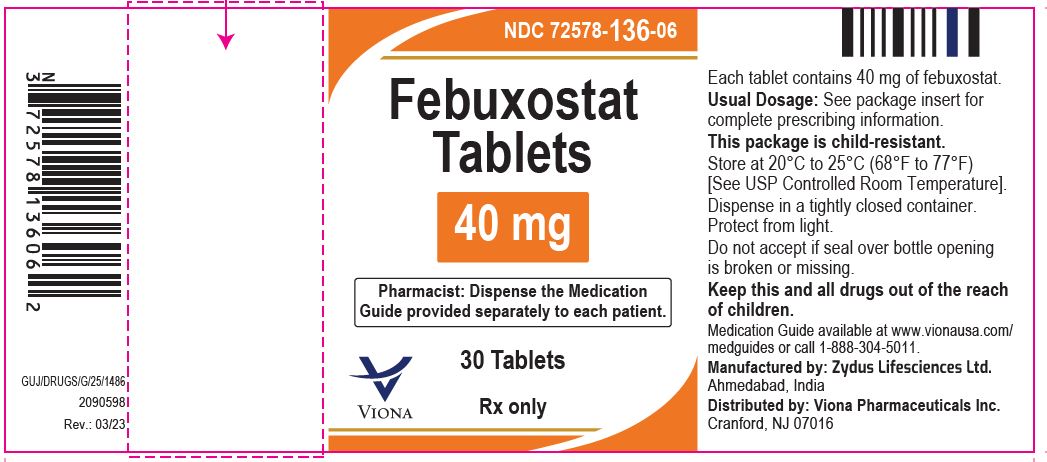
16 HOW SUPPLIED/STORAGE AND HANDLING Febuxostat Tablets, 40 mg are white to off-white, beveled-edge, oval-shaped tablets debossed with "401" on one side and plain on the other side and are supplied as follows: NDC 72578-136-06 in bottle of 30 tablets with child-resistant closure. NDC 72578-136-16 in bottle of 90 tablets with child-resistant closure. NDC 72578-136-01 in bottle of 100 tablets NDC 72578-136-05 in bottle of 500 tablets NDC 72578-136-10 in bottle of 1,000 tablets NDC 72578-136-77 in unit-dose blister cartons of 100 (10 x 10) unit-dose tablets Febuxostat Tablets, 80 mg are white to off-white, beveled-edge, round-shaped tablets debossed with "402" on one side and plain on the other side and are supplied as follows: NDC 72578-137-06 in bottle of 30 tablets with child-resistant closure.
NDC 72578-137-16 in bottle of 90 tablets with child-resistant closure. NDC 72578-137-01 in bottle of 100 tablets NDC 72578-137-05 in bottle of 500 tablets NDC 72578-137-10 in bottle of 1,000 tablets NDC 72578-137-77 in unit-dose blister cartons of 100 (10 x 10) unit-dose tablets Storage Store at 20° to 25°C (68° to 77°F) [See USP Controlled Room Temperature]. Protect from light.
📋 Description ▾
11 DESCRIPTION Febuxostat is a xanthine oxidase inhibitor. The active ingredient in febuxostat tablet is 2-[3-cyano-4-(2-methylpropoxy) phenyl]-4-methylthiazole-5-carboxylic acid, with a molecular weight of 316.37. The molecular formula is C 16 H 16 N 2 O 3 S.
The chemical structure is: Febuxostat is a non-hygroscopic, white to off-white colored powder that is freely soluble in dimethylformamide; soluble in dimethylsulfoxide; sparingly soluble in ethanol; slightly soluble in methanol and acetonitrile; and practically insoluble in water. The melting range is 205°C to 208°C. Each febuxostat tablet intended for oral administration contains 40 mg and 80 mg of febuxostat.
In addition, each tablet contains the following inactive ingredients: colloidal silicon dioxide, croscarmellose sodium, hypromellose, lactose monohydrate, microcrystalline cellulose, polyethylene glycol, povidone, sodium stearyl fumarate, talc and titanium dioxide. Structured product formula for febuxostat
💬 Information for Patients ▾
17 PATIENT COUNSELING INFORMATION Advise the patient to read the FDA-approved patient labeling (Medication Guide). CV Death Inform patients that gout patients with established CV disease treated with febuxostat had a higher rate of CV death compared to those treated with allopurinol in a CV outcomes study. Inform all patients of the higher rate of CV death with febuxostat compared to allopurinol.
Alert all patients (those with and without CV disease) for the development of signs and symptoms of CV events and to seek medical care promptly should they occur [see Warnings and Precautions ( 5.1 )] . Gout Flares Inform patients that after initiation of febuxostat an increase in gout flares can occur and that is not reason to stop taking the medication. Instruct patients that it is recommended to initiate and continue gout prophylaxis therapy for six months while taking febuxostat [see Warnings and Precautions ( 5.2 )] .
Hepatic Effects Inform patients that hepatic effects, including fatal ones, have occurred in patients treated with febuxostat. Instruct them to inform their healthcare provider if they experience liver injury symptoms [see Warnings and Precautions ( 5.3 )] . Serious Skin Reactions Inform patients that serious skin and hypersensitivity reactions have occurred in patients treated with febuxostat.
Instruct patients to discontinue febuxostat if they develop symptoms of these reactions [see Warnings and Precautions ( 5.4 )] . Medication Guide available at www.vionausa.com/medguides or call 1-888-304-5011.
💬 Medication Guide ▾
SPL MEDGUIDE MEDICATION GUIDE Febuxostat (fe buxʹ oh stat) Tablets, for oral use Read the Medication Guide that comes with febuxostat tablets before you start taking it and each time you get a refill. There may be new information. The Medication Guide does not take the place of talking with your doctor about your medical condition or your treatment.
What is the most important information that I should know about Febuxostat Tablets? Febuxostat tablets may cause serious side effects, including: Heart-related deaths. Call your doctor or get emergency medical help right away if you have any of the following symptoms, especially if they are new, worse, or worry you: chest pain numbness or weakness on one side of your body shortness of breath or trouble breathing slurring of speech dizziness, fainting or feeling lightheaded sudden blurry vision or sudden severe headache rapid or irregular heartbeat What are Febuxostat Tablets?
Febuxostat tablet is a prescription medicine called a xanthine oxidase (XO) inhibitor used to lower blood uric acid levels in adult patients with gout when allopurinol has not worked well enough or when allopurinol is not right for you. Febuxostat tablets are not for use in people who do not have symptoms of high blood uric acid levels. It is not known if febuxostat tablets are safe and effective in children.
Who should not take Febuxostat Tablets? Do not take febuxostat tablets if you: take Azathioprine (Azasan ®$ , Imuran ®$ ) take Mercaptopurine (Purinethol ®$ , Purixan ®$ ) What should I tell my doctor before taking Febuxostat Tablets? Before taking febuxostat tablets tell your doctor about all of your medical conditions, including if you: have taken allopurinol and what happened to you while you were taking it. have a history of heart disease or stroke. have liver or kidney problems. are pregnant or plan to become pregnant.
It is not known if febuxostat tablets will harm your unborn baby. Talk with your doctor if you are pregnant or plan to become pregnant. are breastfeeding or plan to breastfeed. It is not known if febuxostat passes into your breast milk.
You and your doctor should decide if you should take febuxostat tablets while breastfeeding. Tell your doctor about all the medicines you take, including prescription and over-the-counter medicines, vitamins, and herbal supplements. Febuxostat tablets may affect the way other medicines work, and other medicines may affect how febuxostat tablets works.
Know the medicines you take. Keep a list of them to show your doctor and pharmacist when you get a new medicine. How should I take Febuxostat Tablets?
Take febuxostat tablets exactly as your doctor tells you to take it. Febuxostat tablets can be taken with or without food. Febuxostat tablets can be taken with antacids.
Your gout may get worse (flare) when you start taking febuxostat tablets. Do not stop taking febuxostat tablets because you have a flare. Your doctor may do certain tests while you take febuxostat tablets.
What are the possible side effects of Febuxostat Tablets? Febuxostat tablets may cause serious side effects, including: Heart problems. See "What is the most important information I should know about Febuxostat Tablets?".
Gout Flares. Gout flares can happen when you start taking febuxostat tablets. Your doctor may give you other medicines to help prevent your gout flares.
Liver problems. Liver problems can happen in people who take febuxostat tablets. Your doctor may do blood tests to check how well your liver is working before and during your treatment with febuxostat tablets.
Tell your doctor if you get any of the following signs or symptoms of liver problems: fatigue dark or "tea-colored" urine loss of appetite for several days or longer your skin or the white part of your eyes turns yellow (jaundice) pain, aching, or tenderness on the right side of your stomach-area Severe skin and allergic reactions. Serious skin and allergic reactions that may affect different parts of the body such…