
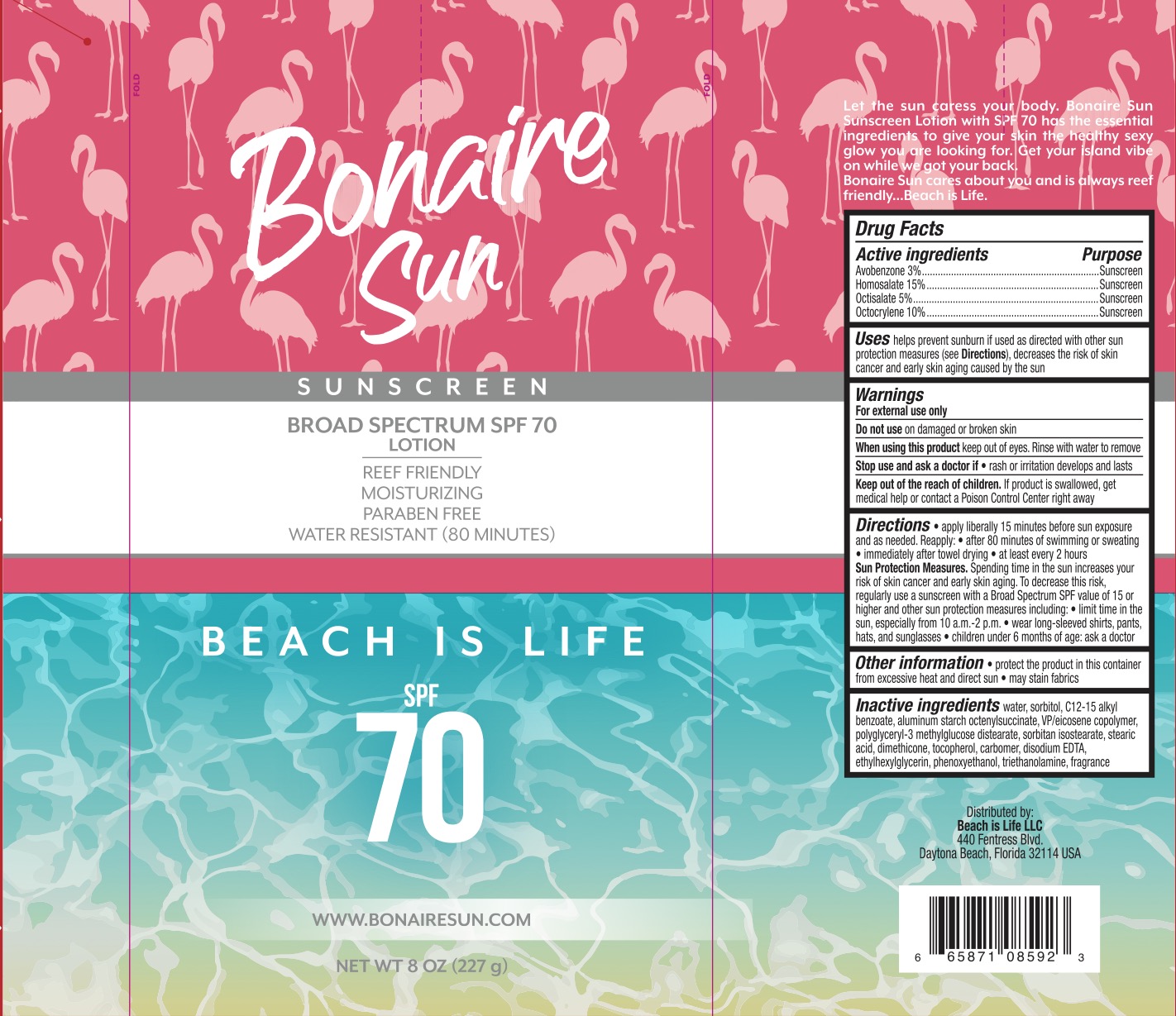
Aruba Sun SPF 70 Sunscreen Avobenzone 3%, Homosalate 15%, Octisalate 5%, Octocrylene 10% 5 g/100g; 3 g/100g; 10 g/100g; 15 g/100g Lotion, 227 g
🆔 Identity & classification
Where does this data come from?
🏭 Manufacturer & labeler
Where does this data come from?
🩺 Clinical
Aruba Sun SPF 70 is a topical lotion sunscreen marketed as an over-the-counter monograph product. It contains four active ingredients that function as ultraviolet (UV) filters: avobenzone, homosalate, octisalate, and octocrylene. These chemical sunscreen agents are typically used to absorb and scatter UV radiation from the sun when applied to exposed skin. This product is formulated to provide broad-spectrum protection at a sun protection factor (SPF) of 70.
Patient education
Supplement & herbal interactions
Where does this data come from?
Ask a licensed pharmacist directly — free, answered by our team.
🧪 Inactive Ingredients / Excipients
Inactive ingredients, also called excipients, are components of the drug product other than the active ingredient. They may include fillers, dyes, coatings, preservatives, flavors, or other formulation ingredients.
💡 Tap an ingredient (hover on desktop) to see what it is and why it’s used.
-
UNII I9PJ0O6294
A modified starch derived from corn or potato starch with aluminum salt and octenylsuccinic acid added. It acts as a binder to hold tablet ingredients together and as a thickening agent in liquid formulations.
-
UNII LKG8494WBH
Benzyl alcohol is a clear liquid used as a preservative and solvent in medicines. It helps prevent bacterial and fungal growth and dissolves other ingredients to create uniform liquid formulations.
-
UNII 4Q93RCW27E
A synthetic polymer made from acrylic acid that's crosslinked for stability. It acts as a thickener and gelling agent in creams and gels, helping the medicine spread evenly and maintain its texture.
-
UNII 2Y53S6ATLU
Dimethicone 350 is a silicone-based oil. It works as a lubricant and anti-foaming agent to help the medicine flow smoothly during manufacturing and reduce unwanted bubbles in the final product.
-
UNII 7FLD91C86K
Edetate disodium is a chemical compound that binds and removes certain metal ions. In medicines, it acts as a preservative and stabilizer by preventing metals like calcium from interfering with the product's shelf life and consistency.
-
UNII XQQ9MKE2BJ
Eicosyl povidone is a synthetic polymer derived from povidone with added long-chain fatty components. It functions as a solubilizer and absorption enhancer to help the medicine dissolve better and be absorbed more effectively by the body.
-
UNII 147D247K3P
Ethylhexylglycerin is a synthetic preservative used to prevent bacteria and mold from growing in medicines and personal care products. It helps keep the product safe and stable throughout its shelf life.
-
UNII HIE492ZZ3T
Phenoxyethanol is a synthetic preservative and antimicrobial agent used to prevent bacterial and fungal growth in medicines and cosmetic products, extending shelf life and maintaining product safety.
-
UNII ZI1LK470XV
A synthetic emulsifier made from glycerin and stearic acid. It helps keep oil and water mixed together in the product and improves texture and stability.
-
UNII 01S2G2C1E4
Sorbitan isostearate is an emulsifier derived from sorbitol and isostearic acid. It helps mix oil and water-based ingredients together and keeps them blended throughout the medicine's shelf life.
-
UNII 506T60A25R
Sorbitol is a natural sugar alcohol derived from glucose. It serves as a sweetener, humectant, and bulking agent in medications to improve taste and help maintain moisture in the product.
-
UNII 4ELV7Z65AP
Stearic acid is a fatty acid derived from plant or animal sources. It acts as a binder and lubricant in tablets and capsules, helping them hold together and flow smoothly during manufacturing.
-
UNII R0ZB2556P8
Tocopherol is a form of vitamin E derived from plant oils. It acts as an antioxidant in medicines to prevent oils and fats from breaking down and spoiling during storage.
-
UNII 9O3K93S3TK
Trolamine is an alkaline compound used as a pH buffer and emulsifier in medicines. It helps neutralize acids, stabilize formulations, and enable mixing of oil and water-based ingredients.
-
UNII 059QF0KO0R
Water is a liquid solvent that dissolves and mixes ingredients together in liquid medicines, syrups, and injections. It helps distribute the active drug evenly throughout the product.
15 inactive ingredients listed in the exact product block matched to this NDC.
Label-section wording can be broader than the structured product block and may mention additional formulation ingredients.
Where does this data come from?
ingredient classCode="IACT" elements from the exact product block matched by this NDC. Label-section narrative from DailyMed / the openFDA label index is shown separately when available.Inactive ingredient FAQ
Are inactive ingredients the same for every manufacturer?
Why might an inactive ingredient be missing?
Can inactive ingredients matter?
💲 Pricing
A drug doesn't have one price. Each row is a different public payment system, and none is what you'd pay at the counter — that depends on your insurance. The ⓘ on each row explains what it measures.
| Price system | Per g | Per package |
|---|---|---|
| Retail pharmacies payNADAC · weekly | Not in the retail survey — common for institutional, discontinued, or low-volume packs. | |
| Medicaid paysCMS SDUD · 12 mo | No recent Medicaid claims on file for this NDC — rare and low-volume NDCs are suppressed in the public data. | |
| Medicare drug plans payPart D · quarterly | No Part D plan price is available for this NDC in our data. | |
Where does this data come from?
🔁 Therapeutic equivalents
| Product | Labeler | Pack | NADAC/unit | TE | Status | Price vs. this |
|---|---|---|---|---|---|---|
| Aruba Sun SPF 70 Sunscreen 5 g/100g; 3 g/100g; 10 g/100g; 15 g/100gthis 72839-0915-08 | Derma | 227 g | — | — | FDA listed | — |
| Aruba Sun SPF 50 Sunscreen 5 g/100g; 3 g/100g; 10 g/100g; 15 g/100g 72839-0083-08 | Derma | 227 g | — | — | FDA listed | — |
Where does this data come from?
⏳ Availability & generic status
We did not find an FDA-approved generic match for this exact strength, form and route.
Where does this data come from?
🔬 Reported adverse events (FAERS)
Top reported reactions
Age at onset
Reporter sex
Serious outcomes
Where does this data come from?
📦 Packaging — all sizes for this product
| Package NDC | Description | Marketing start | Status |
|---|---|---|---|
| 72839-0915-08 You're viewing this | 227 g in 1 BOTTLE, PLASTIC (72839-915-08) | 2023-11-10 | Active |
| 72839-0915-18 | 227 g in 1 BOTTLE, PLASTIC (72839-915-18) | 2022-12-15 | Active |
| 72839-0915-28 | 227 g in 1 BOTTLE, PLASTIC (72839-915-28) | 2022-12-15 | Active |
| 72839-0915-38 | 227 g in 1 BOTTLE, PLASTIC (72839-915-38) | 2022-12-15 | Active |
Pack size FAQ
What quantity is in NDC 72839-0915-08?
What is the difference between NDC 72839-0915-08 and NDC 72839-0915-18?
What NDC number is used to bill for this package of Aruba Sun SPF 70 Sunscreen Avobenzone 3%, Homosalate 15%, Octisalate 5%, Octocrylene 10% 5 g/100g; 3 g/100g; 10 g/100g; 15 g/100g Lotion?
🧭 About this NDC listing & data coverage
What data is (and isn’t) available for this NDC — tap to expand
| NDC identity (package / product / labeler codes) | ✓ Available |
| Labeler | ✓ Available |
| Product & package description | ✓ Available |
| Marketing category & status | ✓ Available |
| Active ingredient / dosage form / route | ✓ Available |
| FDA label (SPL via DailyMed) | ✓ Available |
| Package photos | ✓ Available |
| Inactive ingredients (structured) | ✓ Available |
| NADAC pharmacy acquisition price (CMS) | — Not published for this NDC CMS publishes NADAC only for NDCs reported in its retail-pharmacy survey. |
| Orange Book / therapeutic-equivalence data | — Not published for this NDC Applies only to products approved under an NDA/ANDA; many listings are out of scope. |
| HCPCS J-code billing crosswalk | — Not published for this NDC Most self-administered / retail products have no J-code — that is normal. |
| Medicaid utilization (CMS SDUD) | — Not published for this NDC CMS reports utilization only for NDCs with Medicaid claims above its privacy threshold. |
Questions about this listing
Is this NDC FDA-approved?
Why is there no price listed?
Is the NDC printed on the package the same as the 11-digit billing NDC?
What do the three segments of this NDC mean?
Is this package still being marketed?
Does this product come in other package sizes?
Who lists this product with the FDA?
Do I need a prescription for this product?
Where does this data come from?
📄 FDA label — Drug Facts FDA SPL
🎯 Indications and Usage ▾
Directions Apply liberally 15 minutes before sun exposure. Reapply: after 80 minutes of swimming or sweating immediately after towel drying at least every 2 hours Sun protection measures: spending time n the sun increases your risk of skin cancer and early skin aging. To decrease risk, regularly use a sunscreen with broad spectrum SPF of 15 or higher and other sun protection measure including: limit time in the sun, especially from 10 am to 2 pm wear long-sleeved shirts, pants, hats, and sunglasses.
Children under 6 months: ask a doctor.
⏱️ Dosage and Administration ▾
Uses Helps prevent sunburn. If used as directed with other sun protection measures (see Directions), decreases the risk of skin cancer and early skin aging caused by the sun.
⚠️ Warnings ▾
Warnings For external use only . Do not use on damaged or broken skin. When using this product keep out of eyes. Rinse eyes with water to remove. Stop use and ask a doctor if rash occurs.
🧪 Active Ingredient ▾
Active Ingredients Avobenzone 3%, Homosalate 15%, Octisalate 5%, Octocrylene 10%
🧪 Inactive Ingredients ▾
Inactive Ingredients Aluminum Starch Octenylsuccinate, Benzyl Alcohol, Carbomer, Dimethicone, Disodium EDTA, Ethylhexylglycerin, Fragrance, Phenoxyethanol, Polyglyceryl-3 Distearate, Sorbitan Isostearate, Sorbitol, Stearic Acid, Tocopherol, Triethanolamine, VP/Eicosene Copolymer, Water
🎯 Purpose ▾
Purpose Sunscreen