
Labetalol Hydrochloride 300 mg Tablet, Film Coated, 500-count — NDC 72888-122-05 (Billing 72888-0122-05)
This is a package of 500 tablets of Labetalol Hydrochloride 300 mg Tablet, Film Coated from Advagen Pharma Ltd, marketed since Aug 2021 and currently FDA-listed; retail pharmacies pay about $0.2146 per tablet (NADAC).
Other active recalls for Labetalol Hydrochloride (different manufacturers) — 1 · tap to view
Identity & classification
Regulatory identifiers FDA, NLM and CMS codes for this package
Drug-database identifiers Medi-Span GPI and First Databank GCN / HICL / AHFS classification
- GSN (GCN sequence number): 005100
- GCN: 10340
- GPI-14 (Medi-Span): 33300010100315
- HICL (First Databank): 002095
- AHFS class code: 12:16.04.12
- RxCUI (RxNorm): 896758
Where does this data come from?
- FDA openFDA NDC Directory · synced Oct 1, 2026
- FDA label on DailyMed · label index refreshed Oct 1, 2026
- RxNorm (NLM RxNav) · catalog refreshed Oct 1, 2026
- Medi-Span GPI (licensed)
- First Databank (licensed) · refreshed Oct 1, 2026
RxNorm drug class
This medicine belongs to the beta-Adrenergic Blocker class.
Where does this data come from?
- RxClass (NLM) · catalog refreshed Oct 1, 2026
Clinical
- Labetalol lowers blood pressure. The tablets are used for high blood pressure, and the IV form is used in the hospital for severe high blood pressure. Keeping blood pressure down r...
- Take them by mouth, usually twice a day, as your prescriber directs. Food increases how much of the drug your body absorbs, so try to be consistent about taking it with or without...
- Dizziness, nausea, tiredness and headache are the most common, and they often fade early in treatment. Standing up slowly helps with lightheadedness. Call your doctor if you get it...
- Please don't stop suddenly. Stopping a beta blocker abruptly can worsen chest pain and, in some cases, lead to a heart attack. If you need to stop, your prescriber will lower the d...
Patient education
Supplement & herbal interactions
Labetalol may be associated with lower levels of 1 nutrient — worth a chat with your pharmacist, not a cause for alarm.
Where does this data come from?
- MedlinePlus (NLM) · refreshed Oct 1, 2026
- FDA label on DailyMed · label index refreshed Oct 1, 2026
Ask a licensed pharmacist directly — free, answered by our team.
Pricing
A drug doesn't have one price. Each row is a different public payment system, and none is what you'd pay at the counter — that depends on your insurance. The ⓘ on each row explains what it measures.
| Price system | Per ea | Per package |
|---|---|---|
| Retail pharmacies payNADAC · weekly | $0.215 | $107.30 / 500 tablets |
| Medicaid paysCMS SDUD · 12 mo | $0.3002 | $150.10 / 500 tablets |
| Medicare drug plans payPart D · Q2 2026 | $0.1818 | $90.90 / 500 tablets |
Where does this data come from?
- CMS NADAC weekly file · file of Sep 30, 2026
- CMS ASP pricing files · refreshed Sep 20, 2026
- CMS Medicaid State Drug Utilization Data · through Q1 2026
- CMS Part D plan pricing files · refreshed Sep 24, 2026
- VA National Acquisition Center price file
Packaging — all sizes for this product
| Package NDC | Description | Per unit | Per pack | Marketing start | Marketing end | Status |
|---|---|---|---|---|---|---|
| 72888-0122-01 72888-122-01 Main listing | 100 TABLET, FILM COATED in 1 BOTTLE | $0.2146 / ea | $21.46 | 2021-08-18 | — | Active |
| 72888-0122-05 You're viewing this | 500 TABLET, FILM COATED in 1 BOTTLE | $0.2146 / ea | $107.31 | 2021-08-18 | — | Active |
You're viewing the largest of 2 pack sizes for this product.
This pack effectively ties for the lowest per-ea cost of the 2 priced pack sizes ($0.2146 NADAC).
This pack accounts for about 33% of this product's recent Medicaid fills; most go to the 100 tablets pack. See all packs ↓
Pack size FAQ
What quantity is in this package?
How does this package differ from NDC 72888-0122-01?
What NDC number is used to bill for this package of Labetalol Hydrochloride 300 mg Tablet, Film Coated?
Prices are the latest CMS NADAC pharmacy acquisition cost per NDC; per-pack figures are per-unit × pack quantity, shown only when the pack is denominated in the same measure NADAC prices.
Therapeutic equivalents
| Product | Labeler | Pack | NADAC/unit | TE | Status | Price vs. this |
|---|---|---|---|---|---|---|
| Labetalol Hydrochloride 300 mg 71247-0130-01 | Innogenix, | 100 tablets | $0.204 | AB | FDA listed | save 5% |
| Labetalol Hydrochloride 300 mg 00904-7453-61 | Major | 1 tablet | $0.215 | AB | Availability likely | — |
| Labetalol Hydrochloride 300 mg 23155-0725-01 | Heritage | 100 tablets | $0.215 | AB | Availability likely | — |
| Labetalol Hydrochloride 300 mg 29300-0254-01 | Unichem | 100 tablets | $0.215 | — | Availability likely | — |
| Labetalol Hydrochloride 300 mg 58657-0604-01 | Method | 100 tablets | $0.215 | AB | Availability likely | — |
| Labetalol Hydrochloride 300 mg 58657-0908-01 | Method | 1 tablet | $0.215 | AB | Availability likely | — |
| Labetalol Hydrochloride 300 mg 60687-0461-01 | American | 1 tablet | $0.215 | AB | Availability likely | — |
| Labetalol Hydrochloride 300 mg 62135-0800-60 | Chartwell | 60 tablets | $0.215 | AB | Availability likely | — |
| Labetalol Hydrochloride 300 mg 68001-0383-00 | BluePoint | 100 tablets | $0.215 | AB | Availability likely | — |
| Labetalol Hydrochloride 300 mg 68001-0702-00 | BluePoint | 100 tablets | $0.215 | AB | Availability likely | — |
| Labetalol Hydrochloride 300 mg 68382-0800-01 | Zydus | 100 tablets | $0.215 | AB | Availability likely | — |
| Labetalol Hydrochloride 300 mg 72603-0904-01 | NorthStar | 100 tablets | $0.215 | AB | Availability likely | — |
| Labetalol Hydrochloride 300 mgthis 72888-0122-05 | Advagen | 500 tablets | $0.215 | AB | Availability likely | — |
| Labetalol Hydrochloride 300 mg 72888-0468-01 | Advagen | 500 tablets | $0.215 | AB | Availability likely | — |
| Labetalol Hydrochloride 300 mg 10135-0713-01 | Marlex | 100 tablets | — | AB | FDA listed | — |
| Labetalol Hydrochloride 300 mg 33342-0517-11 | Macleods | 100 tablets | — | AB | FDA listed | — |
| Labetalol Hydrochloride 300 mg 42806-0329-01 | Epic | 100 tablets | — | AB | FDA listed | — |
| Labetalol Hydrochloride 300 mg 50090-6833-01 | A-S | 90 tablets | — | AB | FDA listed | — |
| Labetalol Hydrochloride 300 mg 50090-7666-01 | A-S | 90 tablets | — | AB | FDA listed | — |
| Labetalol Hydrochloride 300 mg 50090-7743-01 | A-S | 90 tablets | — | AB | FDA listed | — |
| Labetalol Hydrochloride 300 mg 51407-0616-01 | Golden | 100 tablets | — | AB | FDA listed | — |
| Labetalol Hydrochloride 300 mg 55154-0184-00 | Cardinal | 1 tablet | — | AB | FDA listed | — |
| Labetalol Hydrochloride 300 mg 63629-1165-01 | Bryant | 100 tablets | — | AB | FDA listed | — |
| Labetalol Hydrochloride 300 mg 63629-1166-01 | Bryant | 500 tablets | — | AB | FDA listed | — |
| Labetalol Hydrochloride 300 mg 67296-2114-02 | RedPharm | 21 tablets | — | AB | FDA listed | — |
| Labetalol Hydrochloride 300 mg 70377-0062-11 | Biocon | 30 tablets | — | AB | FDA listed | — |
| Labetalol Hydrochloride 300 mg 70771-1165-01 | Zydus | 100 tablets | — | AB | FDA listed | — |
| Labetalol Hydrochloride 300 mg 71209-0085-03 | Cadila | 60 tablets | — | AB | FDA listed | — |
| Labetalol HCL 300 mg 71335-1410-01 | Bryant | 30 tablets | — | — | Discontinued | — |
| Labetalol Hydrochloride 300 mg 71335-2434-01 | Bryant | 30 tablets | — | AB | FDA listed | — |
| Labetalol Hydrochloride 300 mg 71335-9690-01 | Bryant | 30 tablets | — | AB | FDA listed | — |
| Labetalol Hydrochloride 300 mg 72162-1677-01 | Bryant | 100 tablets | — | AB | FDA listed | — |
| Labetalol hydrochloride 300 mg 50090-7156-00 | A-S | 100 tablets | — | AB | FDA listed | — |
Where does this data come from?
- FDA openFDA NDC Directory · synced Oct 1, 2026
- FDA Orange Book · refreshed Sep 3, 2026
- CMS NADAC weekly file · file of Sep 30, 2026
Availability & generic status
This product is an FDA-approved generic. Other versions of the same drug are listed under Therapeutic equivalents, least expensive first.
Where does this data come from?
- FDA Orange Book · refreshed Sep 3, 2026
What it looks like
Where does this data come from?
- FDA label on DailyMed · label index refreshed Oct 1, 2026
Inactive Ingredients / Excipients
Inactive ingredients, also called excipients, are components of the drug product other than the active ingredient. They may include fillers, dyes, coatings, preservatives, flavors, or other formulation ingredients.
Where does this data come from?
IACT rows and label-wide narrative are kept separate; availability and product-level specificity depend on the submitted label.- FDA label on DailyMed · label index refreshed Oct 1, 2026
- FDA openFDA NDC Directory · synced Oct 1, 2026
Inactive ingredient FAQ
Are inactive ingredients the same for every manufacturer?
Why might an inactive ingredient be missing?
Can inactive ingredients matter?
Manufacturer & labeler
Where does this data come from?
- FDA openFDA NDC Directory · synced Oct 1, 2026
- Drugs@FDA
Full prescribing information FDA SPL
🎯 Indications and Usage ▾
INDICATIONS AND USAGE Labetalol hydrochloride tablets USP are indicated in the management of hypertension. Labetalol hydrochloride tablets USP may be used alone or in combination with other antihypertensive agents, especially thiazide and loop diuretics.
⏱️ Dosage and Administration ▾
DOSAGE AND ADMINISTRATION DOSAGE MUST BE INDIVIDUALIZED. The recommended initial dosage is 100 mg twice daily whether used alone or added to a diuretic regimen. After 2 or 3 days, using standing blood pressure as an indicator, dosage may be titrated in increments of 100 mg b.i.d. every 2 or 3 days.
The usual maintenance dosage of labetalol hydrochloride tablets is between 200 mg and 400 mg twice daily. Since the full antihypertensive effect of labetalol hydrochloride tablets is usually seen within the first 1 to 3 hours of the initial dose or dose increment, the assurance of a lack of an exaggerated hypotensive response can be clinically established in the office setting. The antihypertensive effects of continued dosing can be measured at subsequent visits, approximately 12 hours after a dose, to determine whether further titration is necessary.
Patients with severe hypertension may require from 1200 mg to 2400 mg per day, with or without thiazide diuretics. Should side effects (principally nausea or dizziness) occur with these doses administered b.i.d. (twice daily), the same total daily dose administered t.i.d.
(three times daily) may improve tolerability and facilitate further titration. Titration increments should not exceed 200 mg b.i.d. (twice daily).
When a diuretic is added, an additive antihypertensive effect can be expected. In some cases this may necessitate a labetalol hydrochloride tablet dosage adjustment. As with most antihypertensive drugs, optimal dosages of labetalol hydrochloride tablets are usually lower in patients also receiving a diuretic.
When transferring patients from other antihypertensive drugs, labetalol hydrochloride tablets should be introduced as recommended and the dosage of the existing therapy progressively decreased. Elderly Patients As in the general patient population, labetalol therapy may be initiated at 100 mg twice daily and titrated upwards in increments of 100 mg b.i.d. as required for control of blood pressure. Since some elderly patients eliminate labetalol more slowly, however, adequate control of blood pressure may be achieved at a lower maintenance dosage compared to the general population.
The majority of elderly patients will require between 100 mg and 200 mg b.i.d.
⛔ Contraindications ▾
CONTRAINDICATIONS Labetalol hydrochloride is contraindicated in bronchial asthma, overt cardiac failure, greater-than-first-degree heart block, cardiogenic shock, severe bradycardia, other conditions associated with severe and prolonged hypotension, and in patients with a history of hypersensitivity to any component of the product [see Warnings ] . Beta-blockers, even those with apparent cardioselectivity, should not be used in patients with a history of obstructive airway disease, including asthma.
⚠️ Warnings ▾
WARNINGS Hepatic Injury Severe hepatocellular injury, confirmed by rechallenge in at least one case, occurs rarely with labetalol therapy. The hepatic injury is usually reversible, but hepatic necrosis and death have been reported. Injury has occurred after both short- and long-term treatment and may be slowly progressive despite minimal symptomatology.
Similar hepatic events have been reported with a related research compound, dilevalol HCl, including two deaths. Dilevalol HCl is one of the four isomers of labetalol hydrochloride. Thus, for patients taking labetalol, periodic determination of suitable hepatic laboratory tests would be appropriate.
Appropriate laboratory testing should be done at the first symptom or sign of liver dysfunction (e.g., pruritus, dark urine, persistent anorexia, jaundice, right upper quadrant tenderness, or unexplained "flu-like" symptoms). If the patient has laboratory evidence of liver injury or jaundice, labetalol should be stopped and not restarted. Cardiac Failure Sympathetic stimulation is a vital component supporting circulatory function in congestive heart failure.
Beta-blockade carries a potential hazard of further depressing myocardial contractility and precipitating more severe failure. Although beta-blockers should be avoided in overt congestive heart failure, if necessary, labetalol hydrochloride can be used with caution in patients with a history of heart failure who are well compensated. Congestive heart failure has been observed in patients receiving labetalol hydrochloride.
Labetalol hydrochloride does not abolish the inotropic action of digitalis on heart muscle. In Patients Without a History of Cardiac Failure In patients with latent cardiac insufficiency, continued depression of the myocardium with beta-blocking agents over a period of time can, in some cases, lead to cardiac failure. At the first sign or symptom of impending cardiac failure, patients should be fully digitalized and/or be given a diuretic, and the response should be observed closely.
If cardiac failure continues, despite adequate digitalization and diuretic, therapy with labetalol hydrochloride should be withdrawn (gradually, if possible). Exacerbation of Ischemic Heart Disease Following Abrupt Withdrawal Angina pectoris has not been reported upon labetalol hydrochloride discontinuation. However, hypersensitivity to catecholamines has been observed in patients withdrawn from beta-blocker therapy; exacerbation of angina and, in some cases, myocardial infarction have occurred after abrupt discontinuation of such therapy.
When discontinuing chronically administered labetalol hydrochloride, particularly in patients with ischemic heart disease, the dosage should be gradually reduced over a period of 1 to 2 weeks and the patient should be carefully monitored. If angina markedly worsens or acute coronary insufficiency develops, therapy with labetalol hydrochloride should be reinstituted promptly, at least temporarily, and other measures appropriate for the management of unstable angina should be taken. Patients should be warned against interruption or discontinuation of therapy without the physician's advice.
Because coronary artery disease is common and may be unrecognized, it may be prudent not to discontinue therapy with labetalol hydrochloride abruptly in patients being treated for hypertension. Nonallergic Bronchospasm (e.g., Chronic Bronchitis and Emphysema) Patients with bronchospastic disease should, in general, not receive beta-blockers. Labetalol hydrochloride may be used with caution, however, in patients who do not respond to, or cannot tolerate, other antihypertensive agents.
It is prudent, if labetalol hydrochloride is used, to use the smallest effective dose, so that inhibition of endogenous or exogenous beta-agonists is minimized. Pheochromocytoma Labetalol hydrochloride has been shown to be effective in lowering blood pressure and relieving symptoms in patients with pheochromocytoma. However, paradoxi… [Excerpted — this section continues on DailyMed.]
🤒 Adverse Reactions ▾
ADVERSE REACTIONS Most adverse effects are mild and transient and occur early in the course of treatment. In controlled clinical trials of 3 to 4 months' duration, discontinuation of labetalol hydrochloride due to one or more adverse effects was required in 7% of all patients. In these same trials, other agents with solely beta-blocking activity used in the control groups led to discontinuation in 8% to 10% of patients, and a centrally acting alpha-agonist led to discontinuation in 30% of patients.
The incidence rates of adverse reactions listed in the following table were derived from multicenter, controlled clinical trials comparing labetalol hydrochloride, placebo, metoprolol, and propranolol over treatment periods of 3 and 4 months. Where the frequency of adverse effects for labetalol hydrochloride and placebo is similar, causal relationship is uncertain. The rates are based on adverse reactions considered probably drug related by the investigator.
If all reports are considered, the rates are somewhat higher (e.g., dizziness, 20%; nausea, 14%; fatigue, 11%), but the overall conclusions are unchanged. Labetalol Hydrochloride (N=227) % Placebo (N=98) % Propranolol (N=84) % Metoprolol (N=49) % Body as a whole Fatigue 5 0 12 12 Asthenia 1 1 1 0 Headache 2 1 1 2 Gastrointestinal Nausea 6 1 1 2 Vomiting <1 0 0 0 Dyspepsia 3 1 1 0 Abdominal pain 0 0 1 2 Diarrhea <1 0 2 0 Taste distortion 1 0 0 0 Central and Peripheral Nervous Systems Dizziness 11 3 4 4 Paresthesia <1 0 0 0 Drowsiness <1 2 2 2 Autonomic Nervous System Nasal stuffiness 3 0 0 0 Ejaculation failure 2 0 0 0 Impotence 1 0 1 3 Increased sweating <1 0 0 0 Cardiovascular Edema 1 0 0 0 Postural hypotension 1 0 0 0 Bradycardia 0 0 5 12 Respiratory Dyspnea 2 0 1 2 Skin Rash 1 0 0 0 Special Senses Vision abnormality 1 0 0 0 Vertigo 2 1 0 0 The adverse effects were reported spontaneously and are representative of the incidence of adverse effects that may be observed in a properly selected hypertensive patient population, i.e., a group excluding patients with bronchospastic disease, overt congestive heart failure, or other contraindications to beta-blocker therapy.
Clinical trials also included studies utilizing daily doses up to 2400 mg in more severely hypertensive patients. Certain of the side effects increased with increasing dose, as shown in the following table that depicts the entire U.S. therapeutic trials data base for adverse reactions that are clearly or possibly dose related. Labetalol Hydrochloride Daily Dose (mg) 200 300 400 600 800 900 1200 1600 2400 Number of Patients 522 181 606 608 503 117 411 242 175 Dizziness (%) 2 3 3 3 5 1 9 13 16 Fatigue 2 1 4 4 5 3 7 6 10 Nausea <1 0 1 2 4 0 7 11 19 Vomiting 0 0 <1 <1 <1 0 1 2 3 Dyspepsia 1 0 2 1 1 0 2 2 4 Paresthesias 2 0 2 2 1 1 2 5 5 Nasal Stuffiness 1 1 2 2 2 2 4 5 6 Ejaculation Failure 0 2 1 2 3 0 4 3 5 Impotence 1 1 1 1 2 4 3 4 3 Edema 1 0 1 1 1 0 1 2 2 In addition, a number of other less common adverse events have been reported: Body as a Whole Fever.
Cardiovascular Hypotension, and rarely, syncope, bradycardia, heart block. Central and Peripheral Nervous Systems Paresthesia, most frequently described as scalp tingling. In most cases, it was mild and transient and usually occurred at the beginning of treatment.
Collagen Disorders Systemic lupus erythematosus, positive antinuclear factor. Eyes Dry eyes. Immunological System Antimitochondrial antibodies.
Liver and Biliary System Hepatic necrosis, hepatitis, cholestatic jaundice, elevated liver function tests. Musculoskeletal System Muscle cramps, toxic myopathy. Respiratory System Bronchospasm.
Skin and Appendages Rashes of various types, such as generalized maculopapular, lichenoid, urticarial, bullous lichen planus, psoriaform, and facial erythema; Peyronie's disease, reversible alopecia. Urinary System Difficulty in micturition, including acute urinary bladder retention. Hypersensitivity Rare reports of hypersensitivity (e.g., rash, urticaria, pruritus, angioedem… [Excerpted — this section continues on DailyMed.]
🆘 Overdosage ▾
OVERDOSAGE Overdosage with labetalol hydrochloride causes excessive hypotension that is posture sensitive and, sometimes, excessive bradycardia. Patients should be placed supine and their legs raised, if necessary, to improve the blood supply to the brain. If overdosage with labetalol hydrochloride follows oral ingestion, gastric lavage or pharmacologically induced emesis (using syrup of ipecac) may be useful for removal of the drug shortly after ingestion.
The following additional measures should be employed if necessary: Excessive bradycardia Administer atropine or epinephrine. Cardiac failure Administer a digitalis glycoside and a diuretic. Dopamine or dobutamine may also be useful.
Hypotension Administer vasopressors, e.g., norepinephrine. There is pharmacologic evidence that norepinephrine may be the drug of choice. Bronchospasm Administer epinephrine and/or an aerosolized beta 2 -agonist.
Seizures Administer diazepam. In severe beta-blocker overdose resulting in hypotension and/or bradycardia, glucagon has been shown to be effective when administered in large doses (5 mg to 10 mg rapidly over 30 seconds, followed by continuous infusion of 5 mg per hour that can be reduced as the patient improves). Neither hemodialysis nor peritoneal dialysis removes a significant amount of labetalol hydrochloride from the general circulation (<1%).
The oral LD 50 value of labetalol hydrochloride in the mouse is approximately 600 mg/kg and in the rat is >2 g/kg. The intravenous LD 50 in these species is 50 mg/kg to 60 mg/kg.
🧬 Clinical Pharmacology ▾
CLINICAL PHARMACOLOGY Labetalol hydrochloride combines both selective, competitive, alpha 1 -adrenergic blocking and nonselective, competitive, beta-adrenergic blocking activity in a single substance. In man, the ratios of alpha- to beta-blockade have been estimated to be approximately 1:3 and 1:7 following oral and intravenous (IV) administration, respectively. Beta 2 -agonist activity has been demonstrated in animals with minimal beta 1 -agonist (ISA) activity detected.
In animals, at doses greater than those required for alpha- or beta-adrenergic blockade, a membrane-stabilizing effect has been demonstrated. Pharmacodynamics The capacity of labetalol hydrochloride to block alpha receptors in man has been demonstrated by attenuation of the pressor effect of phenylephrine and by a significant reduction of the pressor response caused by immersing the hand in ice-cold water ("cold pressor test"). Labetalol hydrochloride's beta 1 -receptor blockade in man was demonstrated by a small decrease in the resting heart rate, attenuation of tachycardia produced by isoproterenol or exercise, and by attenuation of the reflex tachycardia to the hypotension produced by amyl nitrite.
Beta 2 -receptor blockade was demonstrated by inhibition of the isoproterenol-induced fall in diastolic blood pressure. Both the alpha- and beta-blocking actions of orally administered labetalol hydrochloride contribute to a decrease in blood pressure in hypertensive patients. Labetalol hydrochloride consistently, in dose-related fashion, blunted increases in exercise-induced blood pressure and heart rate, and in their double product.
The pulmonary circulation during exercise was not affected by labetalol hydrochloride dosing. Single oral doses of labetalol hydrochloride administered to patients with coronary artery disease had no significant effect on sinus rate, intraventricular conduction, or QRS duration. The atrioventricular (A-V) conduction time was modestly prolonged in two of seven patients.
In another study, intravenous (IV) labetalol hydrochloride slightly prolonged A-V nodal conduction time and atrial effective refractory period with only small changes in heart rate. The effects on A-V nodal refractoriness were inconsistent. Labetalol hydrochloride produces dose-related falls in blood pressure without reflex tachycardia and without significant reduction in heart rate, presumably through a mixture of its alpha-blocking and beta-blocking effects.
Hemodynamic effects are variable with small, nonsignificant changes in cardiac output seen in some studies but not others, and small decreases in total peripheral resistance. Elevated plasma renins are reduced. Doses of labetalol hydrochloride that controlled hypertension did not affect renal function in mildly to severely hypertensive patients with normal renal function.
Due to the alpha 1 -receptor blocking activity of labetalol hydrochloride, blood pressure is lowered more in the standing than in the supine position, and symptoms of postural hypotension (2%), including rare instances of syncope, can occur. Following oral administration, when postural hypotension has occurred, it has been transient and is uncommon when the recommended starting dose and titration increments are closely followed [see Dosage and Administration ] . Symptomatic postural hypotension is most likely to occur 2 to 4 hours after a dose, especially following the use of large initial doses or upon large changes in dose.
The peak effects of single oral doses of labetalol hydrochloride occur within 2 to 4 hours. The duration of effect depends upon dose, lasting at least 8 hours following single oral doses of 100 mg and more than 12 hours following single oral doses of 300 mg. The maximum, steady-state blood pressure response upon oral, twice-a-day dosing occurs within 24 to 72 hours.
The antihypertensive effect of labetalol has a linear correlation with the logarithm of labetalol plasma concentration, and there is also a linear correlation… [Excerpted — this section continues on DailyMed.]
📦 How Supplied / Storage and Handling ▾
HOW SUPPLIED Labetalol Hydrochloride Tablets USP, for oral administration, are available as: 100 mg White, circular, biconvex, film coated tablets debossed with '21' on one side and score-line and 'R' on other side of the tablet. NDC 72888-120-01 bottles of 100 NDC 72888-120-05 bottles of 500 200 mg White, circular, biconvex, film coated tablets debossed with '20' on one side and score-line and 'R' on other side of the tablet. NDC 72888-121-01 bottles of 100 NDC 72888-121-05 bottles of 500 300 mg White, circular, biconvex, film coated tablets debossed with '22' on one side and 'R' on other side of the tablet.
NDC 72888-122-01 bottles of 100 NDC 72888-122-05 bottles of 500 Labetalol Hydrochloride Tablets USP should be stored at 20° to 25°C (68° to 77°F) [See USP Controlled Room Temperature]. Dispense in a tight, light-resistant container as defined in the USP with a child-resistant closure as required. To report SUSPECTED ADVERSE REACTIONS, contact Advagen Pharma Ltd at 866-488-0312 or FDA at 1-800-FDA-1088 or www.fda.gov/medwatch.
Distributed By: Advagen Pharma Ltd, East Windsor, NJ 08520, USA. Manufactured By: Rubicon Research Ltd, Thane 421506, India Rev. 03/2026
📋 Description ▾
DESCRIPTION Labetalol hydrochloride tablets, USP are an adrenergic receptor blocking agent that has both selective alpha 1 -adrenergic and nonselective beta-adrenergic receptor blocking actions in a single substance. Labetalol hydrochloride, USP is a racemate, chemically designated as 2-hydroxy-5-[1-hydroxy-2-[(1-methyl-3-phenylpropyl)amino]ethyl] benzamide monohydrochloride, and it has the following structure: Labetalol hydrochloride, USP has the molecular formula C 19 H 24 N 2 O 3 •HCl and a molecular weight of 364.87.
It has two asymmetric centers and therefore exists as a molecular complex of two diastereoisomeric pairs. Dilevalol, the R,R' stereoisomer, makes up 25% of racemic labetalol. Labetalol hydrochloride, USP is a white or off-white crystalline powder, soluble in water.
Labetalol hydrochloride tablets, USP, for oral administration, contain 100 mg, 200 mg or 300 mg labetalol hydrochloride, USP. In addition, each tablet contains the following inactive ingredients: lactose monohydrate, maize starch, hypromellose (Methocel E5), sodium starch glycolate, magnesium stearate, titanium dioxide, polyethylene glycol, polysorbate 80, hypromellose (3 mPas) and hypromellose (6 mPas) Image
⚠️ Precautions ▾
PRECAUTIONS General Impaired Hepatic Function Labetalol hydrochloride should be used with caution in patients with impaired hepatic function since metabolism of the drug may be diminished. Intraoperative Floppy Iris Syndrome (IFIS) Intraoperative Floppy Iris Syndrome (IFIS) has been observed during cataract surgery in some patients treated with alpha-1 blockers (labetalol is an alpha/beta blocker). This variant of small pupil syndrome is characterized by the combination of a flaccid iris that billows in response to intraoperative irrigation currents, progressive intraoperative miosis despite preoperative dilation with standard mydriatic drugs, and potential prolapse of the iris toward the phacoemulsification incisions.
The patient's ophthalmologist should be prepared for possible modifications to the surgical technique, such as the utilization of iris hooks, iris dilator rings, or viscoelastic substances. There does not appear to be a benefit of stopping alpha-1 blocker therapy prior to cataract surgery. Jaundice or Hepatic Dysfunction [see Warnings ] .
Information for Patients As with all drugs with beta-blocking activity, certain advice to patients being treated with labetalol hydrochloride is warranted. This information is intended to aid in the safe and effective use of this medication. It is not a disclosure of all possible adverse or intended effects.
While no incident of the abrupt withdrawal phenomenon (exacerbation of angina pectoris) has been reported with labetalol hydrochloride, dosing with labetalol hydrochloride should not be interrupted or discontinued without a physician's advice. Patients being treated with labetalol hydrochloride should consult a physician at any signs or symptoms of impending cardiac failure or hepatic dysfunction [see Warnings ] . Also, transient scalp tingling may occur, usually when treatment with labetalol hydrochloride is initiated [see Adverse Reactions ] .
Inform patients or caregivers that there is a risk of hypoglycemia when labetalol hydrochloride tablets are given to patients who are fasting or who are vomiting. Monitor for symptoms of hypoglycemia [see Warnings ] . Laboratory Tests As with any new drug given over prolonged periods, laboratory parameters should be observed over regular intervals.
In patients with concomitant illnesses, such as impaired renal function, appropriate tests should be done to monitor these conditions. Drug Interactions In one survey, 2.3% of patients taking labetalol hydrochloride in combination with tricyclic antidepressants experienced tremor, as compared to 0.7% reported to occur with labetalol hydrochloride alone. The contribution of each of the treatments to this adverse reaction is unknown, but the possibility of a drug interaction cannot be excluded.
Drugs possessing beta-blocking properties can blunt the bronchodilator effect of beta-receptor agonist drugs in patients with bronchospasm; therefore, doses greater than the normal anti-asthmatic dose of beta-agonist bronchodilator drugs may be required. Cimetidine has been shown to increase the bioavailability of labetalol hydrochloride. Since this could be explained either by enhanced absorption or by an alteration of hepatic metabolism of labetalol hydrochloride, special care should be used in establishing the dose required for blood pressure control in such patients.
Synergism has been shown between halothane anesthesia and intravenously administered labetalol hydrochloride. During controlled hypotensive anesthesia using labetalol hydrochloride in association with halothane, high concentrations (3% or above) of halothane should not be used because the degree of hypotension will be increased and because of the possibility of a large reduction in cardiac output and an increase in central venous pressure. The anesthesiologist should be informed when a patient is receiving labetalol hydrochloride.
Labetalol hydrochloride blunts the reflex tachycardia produced by nitroglycerin without preventing its h… [Excerpted — this section continues on DailyMed.]
📄 Package Label / Principal Display Panel ▾
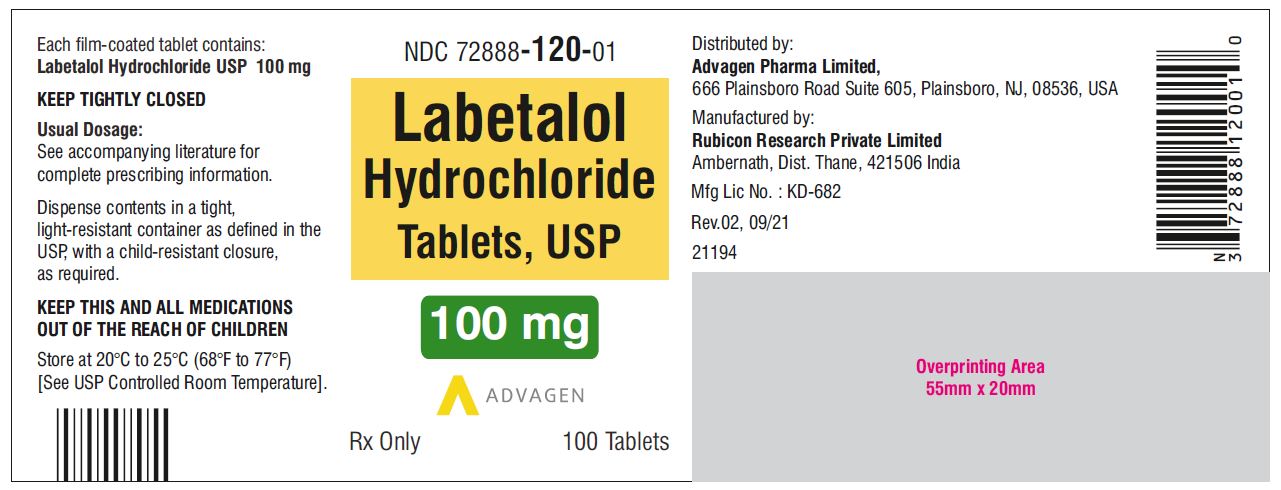
PACKAGE LABEL.PRINCIPAL DISPLAY PANEL Labetalol Hydrochloride Tablets USP 100 mg - 100 Tablets Label Labetalol Hydrochloride Tablets USP 100 mg - 500 Tablets Label Labetalol Hydrochloride Tablets USP 100 mg - 100 Tablets Label Labetalol Hydrochloride Tablets USP 100 mg - 500 Tablets Label
PACKAGE LABEL.PRINCIPAL DISPLAY PANEL Labetalol Hydrochloride Tablets USP 200 mg - 100 Tablets Label Labetalol Hydrochloride Tablets USP 200 mg - 500 Tablets Label Labetalol Hydrochloride Tablets USP 200 mg - 100 Tablets Label Labetalol Hydrochloride Tablets USP 200 mg - 500 Tablets Label
PACKAGE LABEL.PRINCIPAL DISPLAY PANEL Labetalol Hydrochloride Tablets USP 300 mg - 100 Tablets Label Labetalol Hydrochloride Tablets USP 300 mg - 500 Tablets Label Labetalol Hydrochloride Tablets USP 300 mg - 100 Tablets Label Labetalol Hydrochloride Tablets USP 300 mg - 500 Tablets Label