
Monoferric Ferric derisomaltose 500 mg/5mL Injection, Solution — NDC 73594-9305-1 (Billing 73594-9305-01)
This is a package of Monoferric Ferric derisomaltose 500 mg/5mL Injection, Solution from Pharmacosmos Therapeutics Inc., marketed since Jan 2020 and currently FDA-listed. It is this product's only package size.
NDC database record
One package, one record: these facts belong to NDC 73594-9305-1 alone.
- Record
- FDA NDC Directory package listing · Human prescription drug
- Code segments
- 73594 labeler · 9305 product · 1 package
- Package marketed since
- Jan 16, 2020
- Sample package
- No — commercial package
- Listing certified through
- Dec 31, 2026
- Barcode (UPC)
- 0373594931013
- FDA record last changed
- Jul 24, 2026
Identity & classification
Regulatory identifiers FDA, NLM and CMS codes for this package
- RxCUI (RxNorm): 2274398
Where does this data come from?
- FDA openFDA NDC Directory · synced Oct 8, 2026
- FDA label on DailyMed · label index refreshed Oct 6, 2026
- RxNorm (NLM RxNav) · catalog refreshed Oct 1, 2026
- Medi-Span GPI (licensed)
- First Databank (licensed) · refreshed Oct 8, 2026
Clinical
Ferric derisomaltose is used to treat iron-deficiency anemia (a lower than normal number of red blood cells due to not enough iron in the body). Ferric derisomaltose is in a class of medications called iron replacement products. It works by providing iron so that the body can make more red blood cells.
Read the full MedlinePlus article ↗Patient education
Supplement & herbal interactions
Where does this data come from?
- MedlinePlus (NLM) · refreshed Oct 1, 2026
- FDA label on DailyMed · label index refreshed Oct 6, 2026
Ask a licensed pharmacist directly — free, answered by our team.
Pricing
A drug doesn't have one price. Each row is a different public payment system, and none is what you'd pay at the counter — that depends on your insurance. The ⓘ on each row explains what it measures.
| Price system | Per mL | Per package |
|---|---|---|
| Retail pharmacies payNADAC · weekly | Not in the retail survey — common for institutional, discontinued, or low-volume packs. | |
| Medicaid paysCMS SDUD · 12 mo | No recent Medicaid claims on file for this NDC — rare and low-volume NDCs are suppressed in the public data. | |
| Medicare drug plans payPart D · quarterly | No Part D plan price is available for this NDC in our data. | |
Where does this data come from?
- CMS NADAC weekly file
- CMS ASP pricing files · refreshed Sep 20, 2026
- CMS Medicaid State Drug Utilization Data · refreshed Oct 8, 2026
- CMS Part D plan pricing files · refreshed Sep 24, 2026
- VA National Acquisition Center price file
Packaging — all sizes for this product
| Package NDC | Description | Marketing start | Marketing end | Status |
|---|---|---|---|---|
| 73594-9305-01 You're viewing this Main listing | 1 VIAL in 1 BOX / 5 mL in 1 VIAL | 2020-01-16 | — | Active |
Therapeutic equivalents
| Product | Labeler | Pack | NADAC/unit | TE | Status | Price vs. this |
|---|---|---|---|---|---|---|
| Monoferric 500 mg/5mLthis 73594-9305-01 | Pharmacosmos | 1 vial | — | — | FDA listed | — |
Where does this data come from?
- FDA openFDA NDC Directory · synced Oct 8, 2026
- FDA Orange Book · refreshed Oct 3, 2026
- CMS NADAC weekly file
Availability & generic status
We did not find an FDA-approved generic match for this exact strength, form and route. Patent/protection dates below may affect future generic timing.
Why the date isn’t exact: Generic timing can change because patents may be challenged, settled, licensed, added, removed, or worked around with a narrower label — and FDA approval does not always mean a pharmacy can get the generic today.
🛈 What do these terms mean?
- Patent
- Legal protection listed in the Orange Book that may delay generic approval or launch. Issued by the U.S. Patent & Trademark Office.
- Substance patent
- Covers the active drug molecule itself — the hardest to design around. A generic generally can’t launch until it expires.
- Formulation (product) patent
- Covers a specific formulation or dosage form. A generic can sometimes work around it with a different formulation.
- Method-of-use patent
- A patent covering one specific approved use of the drug — not necessarily the whole molecule. A generic can sometimes launch with a “skinny label” that carves out the protected use and keeps the others.
- Skinny label
- A generic label that omits a still-patented use when the FDA allows it — letting a generic reach the market for the unprotected uses.
- Exclusivity
- FDA-granted marketing protection, separate from patents — e.g. 5-yr new chemical entity, 7-yr orphan drug, or a +6-month pediatric extension.
- Paragraph IV
- A generic applicant’s formal challenge to a listed patent. It can potentially lead to earlier generic entry, but often involves litigation or a settlement.
- RLD / RS
- Reference Listed Drug — the brand product the FDA uses as the reference for generic applications. Reference Standard — the product the FDA expects generics to compare against in bioequivalence testing.
- TE / AB rating
- FDA therapeutic-equivalence rating. An AB rating generally means the FDA considers a generic therapeutically equivalent to — and substitutable for — the brand.
- LOE (loss of exclusivity)
- The latest patent or exclusivity currently listed — the loss-of-exclusivity / latest-listed-protection date shown on this page. Paragraph-IV challenges and settlements can move the real date earlier; FDA approval and a manufacturer’s decision to market can move it later.
Built from the FDA Orange Book. The bars above are scaled to each protection’s expiry; the red LOE marker is the last one to lapse.
| Patent | Type | Use code | Expires |
|---|---|---|---|
| US 8815301 ↗ | Drug substance | U-2734 | Aug 14, 2029 |
| US 11633489 ↗ | Method of use | U-3594 | Jun 22, 2036 |
| US 11633489 ↗ | Method of use | U-3594 | Jun 22, 2036 |
| US 11633489 ↗ | Method of use | U-3594 | Jun 22, 2036 |
| US 8815301 ↗ | Drug substance | U-2734 | Aug 14, 2029 |
| US 8815301 ↗ | Drug substance | U-2734 | Aug 14, 2029 |
| US 10414831 ↗ | Drug substance | — | Mar 25, 2029 |
| US 10414831 ↗ | Drug substance | — | Mar 25, 2029 |
| US 12030962 ↗ | Drug substance | — | Mar 25, 2029 |
| US 11851504 ↗ | Drug substance | — | Mar 25, 2029 |
| US 11851504 ↗ | Drug substance | — | Mar 25, 2029 |
| US 12030962 ↗ | Drug substance | — | Mar 25, 2029 |
| US 10414831 ↗ | Drug substance | — | Mar 25, 2029 |
| US 12030962 ↗ | Drug substance | — | Mar 25, 2029 |
| US 11851504 ↗ | Drug substance | — | Mar 25, 2029 |
Is there a generic version of this drug?
The FDA approved a generic — why can’t I get it at my pharmacy yet?
Why do different websites show different generic release dates?
What does “FDA listed” mean?
What does a patent or protection date mean here?
What does “current Orange Book estimate” mean?
Can a generic come out before the last patent expires?
Can a generic come out after the listed dates?
What is the difference between patents and exclusivity?
Why are there multiple patent dates?
Where does this data come from?
- FDA Orange Book · refreshed Oct 3, 2026
What it looks like
Where does this data come from?
- FDA label on DailyMed · label index refreshed Oct 6, 2026
Inactive Ingredients / Excipients
Inactive ingredients, also called excipients, are components of the drug product other than the active ingredient. They may include fillers, dyes, coatings, preservatives, flavors, or other formulation ingredients.
💡 Tap an ingredient (hover on desktop) to see what it is and why it’s used.
-
UNII QTT17582CB
A strong acid used to adjust and maintain the proper pH level in liquid medicines, ensuring stability and preventing breakdown of active ingredients.
-
UNII N762921K75
A colorless, odorless gas that makes up most of the air we breathe. In medicines, it's used as a packaging gas or propellant to protect products from oxidation and maintain freshness.
-
UNII 55X04QC32I
A strong alkaline chemical used to adjust and maintain the pH balance of liquid medicines. It helps keep the medicine stable and ensures it stays effective during storage.
-
UNII 059QF0KO0R
Water is a liquid solvent that dissolves and mixes ingredients together in liquid medicines, syrups, and injections. It helps distribute the active drug evenly throughout the product.
4 inactive ingredients listed in the exact product block matched to this NDC.
Where does this data come from?
ingredient classCode="IACT" elements from the exact product block matched by this NDC. Label-section narrative from DailyMed / the openFDA label index is shown separately when available.- FDA label on DailyMed · label index refreshed Oct 6, 2026
- FDA openFDA NDC Directory · synced Oct 8, 2026
Inactive ingredient FAQ
Are inactive ingredients the same for every manufacturer?
Why might an inactive ingredient be missing?
Can inactive ingredients matter?
Manufacturer & labeler
More NDCs from Pharmacosmos Therapeutics Inc. labeler code 73594
Where does this data come from?
- FDA openFDA NDC Directory · synced Oct 8, 2026
- Drugs@FDA
Full prescribing information FDA SPL
🎯 Indications and Usage ▾
1 INDICATIONS AND USAGE Monoferric is indicated for the treatment of iron deficiency anemia (IDA) in adult patients: who have intolerance to oral iron or have had unsatisfactory response to oral iron who have non-hemodialysis dependent chronic kidney disease (NDD-CKD) MONOFERRIC is an iron replacement product indicated for the treatment of iron deficiency anemia in adult patients: who have intolerance to oral iron or have had unsatisfactory response to oral iron. ( 1 ) who have non-hemodialysis dependent chronic kidney disease.
( 1 )
⏱️ Dosage and Administration ▾
2 DOSAGE AND ADMINISTRATION For patients weighing 50 kg or more: Administer 1,000 mg of Monoferric as an intravenous infusion. For patients weighing less than 50 kg: Administer Monoferric as 20 mg/kg actual body weight as an intravenous infusion. Repeat Monoferric treatment if iron deficiency anemia reoccurs. ( 2 )
2.1Recommended Dosage For patients weighing 50 kg or more: Administer 1,000 mg of Monoferric by intravenous infusion over at least 20 minutes as a single dose. Repeat dose if iron deficiency anemia reoccurs. For patients weighing less than 50 kg: Administer Monoferric as 20 mg/kg actual body weight by intravenous infusion over at least 20 minutes as a single dose.
Repeat dose if iron deficiency anemia reoccurs. The dosage of Monoferric is expressed in mg of elemental iron. Each mL of Monoferric contains 100 mg of elemental iron.
Only administer Monoferric when personnel and therapies are immediately available for the treatment of serious hypersensitivity reactions ( Warnings and Precautions (5.1) ) .
2.2Preparation and Administration Inspect parenteral drug products visually for the absence of particulate matter and discoloration prior to administration. The product contains no preservatives. Each vial of Monoferric is single-dose only.
Discard unused portion. Withdraw the appropriate volume of Monoferric and dilute in 100 mL to 500 mL of 0.9% Sodium Chloride Injection, USP. Final diluted concentration should be more than 1 mg iron/mL.
Compatibility of Monoferric with other drugs has not been established. Monoferric should not be mixed with or physically added to solutions containing other drugs. Administer the prepared solution via intravenous infusion over at least 20 minutes.
Following dilution with 0.9% Sodium Chloride Injection, USP, Monoferric solution may be stored at room temperature for up to 8 hours. Extravasation of Monoferric may cause brown discoloration at the extravasation site which may be long lasting. Monitor for extravasation.
If extravasation occurs, discontinue the Monoferric administration at that site.
💊 Dosage Forms and Strengths ▾
3 DOSAGE FORMS AND STRENGTHS Monoferric is a sterile, dark brown, non-transparent aqueous solution available as: Injection: 1,000 mg iron/10 mL (100 mg/mL) single-dose vial Injection: 500 mg iron/5 mL (100 mg/mL) single-dose vial Injection: 100 mg iron/mL single-dose vial Injection: 1,000 mg iron /10 mL (100 mg/mL) single-dose vial ( 3 ) Injection: 500 mg iron/5 mL (100 mg/mL) single-dose vial ( 3 ) Injection: 100 mg iron/mL single-dose vial ( 3 )
⛔ Contraindications ▾
4 CONTRAINDICATIONS Monoferric is contraindicated in patients with a history of serious hypersensitivity to Monoferric or any of its components (see Warnings and Precautions (5.1) , Description (11) ) . Reactions have included shock, clinically significant hypotension, loss of consciousness, and/or collapse. Serious hypersensitivity to Monoferric or any of its components. ( 4 )
⚠️ Warnings and Cautions ▾
5 WARNINGS AND PRECAUTIONS Hypersensitivity Reactions: Monitor patients for signs and symptoms of hypersensitivity during and after Monoferric administration for at least 30 minutes and until clinically stable following completion of the infusion. ( 5.1 ) Iron Overload: Do not administer Monoferric to patients with iron overload. ( 5.2 )
5.1Hypersensitivity Reactions Serious hypersensitivity reactions, including anaphylactic-type reactions, some of which have been life-threatening and fatal, have been reported in patients receiving Monoferric. Patients may present with shock, clinically significant hypotension, loss of consciousness, and/or collapse. Monitor patients for signs and symptoms of hypersensitivity during and after Monoferric administration for at least 30 minutes and until clinically stable following completion of the infusion.
Only administer Monoferric when personnel and therapies are immediately available for the treatment of serious hypersensitivity reactions. Monoferric is contraindicated in patients with prior serious hypersensitivity reactions to Monoferric or any of its components ( see Contraindications (4) ). In clinical trials in patients with IDA and CKD, serious or severe hypersensitivity were reported in 0.3% (6/2008) of the Monoferric treated subjects.
These included 3 events of hypersensitivity in 3 patients; 2 events of infusion-related reactions in 2 patients and 1 event of asthma in one patient.
5.2Iron Overload Excessive therapy with parenteral iron can lead to excess iron storage and possibly iatrogenic hemosiderosis or hemochromatosis. Monitor the hematologic response (hemoglobin and hematocrit) and iron parameters (serum ferritin and transferrin saturation) during parenteral iron therapy. Do not administer Monoferric to patients with iron overload (see Overdosage (10) ) .
🤒 Adverse Reactions ▾
6 ADVERSE REACTIONS The following clinically significant adverse reactions are discussed in greater detail in other sections of the labeling: Hypersensitivity Reactions (see Warnings and Precautions (5.1) ) . Iron Overload (see Warnings and Precautions (5.2) ) . Most commonly reported adverse reactions (incidence ≥1%) are rash and nausea.
( 6 ) To report SUSPECTED ADVERSE REACTIONS, contact Pharmacosmos at 1-888-828-0655 or FDA at 1-800-FDA-1088 or www.fda.gov/medwatch.
6.1Clinical Trials Experience Because clinical trials are conducted under widely varying conditions, the adverse reaction rates observed cannot be directly compared to rates in other clinical trials and may not reflect the rates observed in clinical practice. The safety of Monoferric was evaluated in 3008 patients with iron deficiency anemia enrolled in two randomized, actively-controlled trials. Trial 1 enrolled adult patients with iron deficiency anemia with intolerance to oral iron or had an unsatisfactory response to oral iron with a clinical need for repletion of iron stores.
Eligible subjects were required to have a baseline hemoglobin of ≤11g/dl, transferrin saturation (TSAT) of less than 20% and serum ferritin level of <100 ng/mL. Trial 2 enrolled adult patients with non-dialysis dependent chronic kidney disease (CKD) with iron deficiency anemia ( see Clinical Studies (14) ). Eligible subjects also had to have serum ferritin ≤100 ng/mL or ≤300 ng/mL if TSAT ≤30%.
Trial 1 and Trial 2 In the two randomized, actively-controlled clinical trials, Trial 1 and Trial 2 (see Clinical Studies (14) ) , patients were randomized in a 2:1 ratio to intravenous Monoferric (n = 2008) or intravenous iron sucrose (n = 1000) respectively. Monoferric was administered as a single intravenous infusion of 1000 mg diluted in 100 mL 0.9 % sodium chloride and given over approximately 20 minutes (approximately 50 mg iron/min). Iron sucrose was administered as 200 mg undiluted intravenous injections over approximately 2-5 minutes and repeated according to standard practice or physician choice up to a maximum of five times (1000 mg) within the first two weeks starting at baseline.
The data described below reflect exposure to Monoferric in 2008 patients exposed to a 1000 mg single intravenous dose of Monoferric. The mean cumulative intravenous Iron exposure was 984 mg. Trial 1 included 1483 patients with iron deficiency anemia in the safety analysis that had intolerance to oral iron or have had unsatisfactory response to oral iron or with a clinical need for rapid repletion of iron stores.
Trial 2 included 1525 patients in the safety analysis who had non-dialysis dependent CKD. The mean (SD) age of the combined study population was 56.4 (18.3) years. The majority of patients were women (75.7%).
Adverse reactions were reported in 8.6% (172/2008) of patients treated with Monoferric. Adverse reactions related to treatment and reported by ≥1% of the treated patients in the combined analysis of Trial 1 and 2 are listed in Table 1. Table 1.
Adverse Reactions (≥1%) in Patients Receiving Monoferric in Clinical Trials 1 and 2 Monoferric (N = 2008) N (%) Iron sucrose (N = 1000) N (%) Adverse Reaction Nausea 24 (1.2) 11 (1.1) Rash 21 (1) 1 (0.1) Adjudicated serious or severe hypersensitivity reactions were reported in 6/2008 (0.3%) patients in the Monoferric group. Hypophosphatemia (serum phosphate <2.0 mg/dL) was reported in 3.5% of Monoferric-treated patients in Trials 1 & 2.
6.2Post-marketing Experience Because these reactions are reported voluntarily from a population of uncertain size, it is not always possible to reliably estimate their frequency or establish a causal relationship to drug exposure. The following adverse reactions have been most commonly reported from the post-marketing spontaneous reports with Monoferric: Cardiac disorders: Tachycardia Gastrointestinal disorders: Abdominal pain, nausea and vomiting, constipation, diarrhea General disorders and administration site condit… [Excerpted — this section continues on DailyMed.]
👥 Use in Specific Populations ▾
8 USE IN SPECIFIC POPULATIONS
8.1Pregnancy Risk Summary There are no available data on Monoferric use in pregnant women to evaluate for a drug-associated risk of major birth defects, miscarriage or adverse maternal or fetal outcomes. Published studies on the use of intravenous iron products in pregnant women have not reported an association with adverse developmental outcomes. However, these studies cannot establish or exclude the absence of any drug-related risk during pregnancy because the studies were not designed to assess for the risk of major birth defects ( see Data ) .
There are risks to the mother and fetus associated with untreated iron deficiency anemia (IDA) in pregnancy as well as risks to the fetus associated with maternal severe hypersensitivity reactions ( see Clinical Considerations ) . Iron complexes have been reported to be teratogenic and embryocidal in non-iron depleted pregnant animals. The findings in animals may be due to iron overload and may not be applicable to patients with iron deficiency.
Animal reproduction studies of ferric derisomaltose administered to rats and rabbits during the period of organogenesis caused adverse developmental outcomes including structural abnormalities and embryo-fetal mortality at doses approximately 0.09 and 0.4 times the maximum recommended human dose (MRHD) of 1000 mg, respectively, based on body surface area ( see Data ) . The estimated background risk of major birth defects and miscarriage for the indicated populations is unknown. Adverse outcomes in pregnancy occur regardless of the health of the mother or the use of medications.
In the U.S. general population, the estimated background risk of major birth defects and miscarriage in clinically recognized pregnancies is 2-4% and 15-20%, respectively. Clinical Considerations Disease-associated maternal and/or embryo/fetal risk Untreated iron deficiency anemia (IDA) in pregnancy is associated with adverse maternal outcomes such as post-partum anemia. Adverse pregnancy outcomes associated with IDA includes increased risk for preterm delivery and low birth weight.
Fetal/Neonatal adverse reactions Severe adverse reactions including circulatory failure (severe hypotension, shock including in the context of anaphylactic reaction) may occur in pregnant women with parenteral iron products (such as Monoferric) which may cause fetal bradycardia, especially during the second and third trimester. Data Animal Data Iron complexes have been reported to be teratogenic and embryocidal in non-anemic pregnant animals at single doses above 125 mg iron/kg body weight. The highest recommended dose in human clinical use is 20 mg iron/kg body weight.
In a combined fertility and embryo-fetal development study in rats, ferric derisomaltose was administered intravenously to female rats 14 days prior to cohabitation and through gestation day (GD) 17 at doses of 3, 11, and 32 mg Fe/kg/day. The doses of 11 and 32 mg Fe/kg/day (approximately 0.1 and 0.3 times the MRHD of 1000 mg, based on body surface area (BSA)) resulted in an increase in the incidence of skeletal developmental delays. Ferric derisomaltose was administered intravenously to pregnant rabbits during organogenesis, from GD7 to GD20, at doses of 11, 25 and 43 mg Fe/kg/day.
The dose of 43 mg Fe/kg/day (approximately 0.8 times the MRHD of 1000 mg, based on BSA) resulted in increased maternal mortality, abortion, and premature delivery, and increased postimplantation loss. Adverse developmental findings at this dose included fetal mortality, reduced fetal weights, and fetal developmental variations and malformations (including domed head, cleft palate, microglossia, hydrocephaly, small brain). Fetal malformations and reduced fetal weights were also noted in the 25 mg Fe/kg/day group (approximately 0.5 times the MRHD based on BSA).
8.2Lactation Risk Summary The available data on the use of Monoferric in lactating women demonstrate that iron is present in breast milk. However, the data do… [Excerpted — this section continues on DailyMed.]
🤰 Pregnancy ▾
8.1Pregnancy Risk Summary There are no available data on Monoferric use in pregnant women to evaluate for a drug-associated risk of major birth defects, miscarriage or adverse maternal or fetal outcomes. Published studies on the use of intravenous iron products in pregnant women have not reported an association with adverse developmental outcomes. However, these studies cannot establish or exclude the absence of any drug-related risk during pregnancy because the studies were not designed to assess for the risk of major birth defects ( see Data ) .
There are risks to the mother and fetus associated with untreated iron deficiency anemia (IDA) in pregnancy as well as risks to the fetus associated with maternal severe hypersensitivity reactions ( see Clinical Considerations ) . Iron complexes have been reported to be teratogenic and embryocidal in non-iron depleted pregnant animals. The findings in animals may be due to iron overload and may not be applicable to patients with iron deficiency.
Animal reproduction studies of ferric derisomaltose administered to rats and rabbits during the period of organogenesis caused adverse developmental outcomes including structural abnormalities and embryo-fetal mortality at doses approximately 0.09 and 0.4 times the maximum recommended human dose (MRHD) of 1000 mg, respectively, based on body surface area ( see Data ) . The estimated background risk of major birth defects and miscarriage for the indicated populations is unknown. Adverse outcomes in pregnancy occur regardless of the health of the mother or the use of medications.
In the U.S. general population, the estimated background risk of major birth defects and miscarriage in clinically recognized pregnancies is 2-4% and 15-20%, respectively. Clinical Considerations Disease-associated maternal and/or embryo/fetal risk Untreated iron deficiency anemia (IDA) in pregnancy is associated with adverse maternal outcomes such as post-partum anemia. Adverse pregnancy outcomes associated with IDA includes increased risk for preterm delivery and low birth weight.
Fetal/Neonatal adverse reactions Severe adverse reactions including circulatory failure (severe hypotension, shock including in the context of anaphylactic reaction) may occur in pregnant women with parenteral iron products (such as Monoferric) which may cause fetal bradycardia, especially during the second and third trimester. Data Animal Data Iron complexes have been reported to be teratogenic and embryocidal in non-anemic pregnant animals at single doses above 125 mg iron/kg body weight. The highest recommended dose in human clinical use is 20 mg iron/kg body weight.
In a combined fertility and embryo-fetal development study in rats, ferric derisomaltose was administered intravenously to female rats 14 days prior to cohabitation and through gestation day (GD) 17 at doses of 3, 11, and 32 mg Fe/kg/day. The doses of 11 and 32 mg Fe/kg/day (approximately 0.1 and 0.3 times the MRHD of 1000 mg, based on body surface area (BSA)) resulted in an increase in the incidence of skeletal developmental delays. Ferric derisomaltose was administered intravenously to pregnant rabbits during organogenesis, from GD7 to GD20, at doses of 11, 25 and 43 mg Fe/kg/day.
The dose of 43 mg Fe/kg/day (approximately 0.8 times the MRHD of 1000 mg, based on BSA) resulted in increased maternal mortality, abortion, and premature delivery, and increased postimplantation loss. Adverse developmental findings at this dose included fetal mortality, reduced fetal weights, and fetal developmental variations and malformations (including domed head, cleft palate, microglossia, hydrocephaly, small brain). Fetal malformations and reduced fetal weights were also noted in the 25 mg Fe/kg/day group (approximately 0.5 times the MRHD based on BSA).
🧒 Pediatric Use ▾
8.4Pediatric Use Safety and effectiveness have not been established in pediatric patients.
🧓 Geriatric Use ▾
8.5Geriatric Use Of the 3934 patients in clinical studies of Monoferric, 29% were 65 years and over, while 13% were 75 years and over. No overall differences in safety or effectiveness were observed between these patients and younger subjects, and other reported clinical experience has not identified differences in responses between the elderly and younger patients, but greater sensitivity of some older individuals cannot be ruled out.
🆘 Overdosage ▾
10 OVERDOSAGE Excessive dosages of Monoferric may lead to accumulation of iron in storage sites potentially leading to hemosiderosis and hemochromatosis. Avoid use of Monoferric in patients with iron overload (see Warnings and Precautions (5.2) ) .
🧬 Clinical Pharmacology ▾
12 CLINICAL PHARMACOLOGY
12.1Mechanism of Action Ferric derisomaltose is a complex of iron (III) hydroxide and derisomaltose, an iron carbohydrate oligosaccharide that releases iron. Iron binds to transferrin for transport to erythroid precursor cells to be incorporated into hemoglobin.
12.2Pharmacodynamics Serum ferritin peaks approximately 7 days after an intravenous dose of Monoferric and slowly returns to stable levels after about 4 weeks. Cardiac Electrophysiology Electrocardiogram (ECG) monitoring for QT prolongation was performed in a sub-study in 35 patients randomized to Monoferric in Trial 1. No large mean increase in QTc (i.e. >20 ms) interval was detected at the 1000 mg single dose of Monoferric.
12.3Pharmacokinetics The pharmacokinetics of total iron (derisomaltose-bound plus transferrin-bound iron) were evaluated in adult patients with IDA. After a single dose of Monoferric, maximum concentration (C max ) and area under the concentration time curve (AUC) of serum total iron increased approximately proportionally over the 100 to 1000 mg dose range. After a 1000 mg single dose, the C max and AUC inf of total iron (geometric mean and CV%) of serum total iron were 408 (10.5) μg/mL and 17730 (22.1) μg.h /mL.
Distribution Circulating iron is removed from the plasma by cells of the reticuloendothelial system. The iron is bound to the available protein moieties to form hemosiderin or ferritin, the physiological storage forms of iron, or to a lesser extent, to the transport molecule transferrin. Elimination After a single 1000 mg Monoferric dose, the mean (CV%) half-life of serum total iron is 27 (13.3%) hr.
Excretion Due to the size of the complex, Monoferric is not excreted via the kidneys. Small quantities of iron are excreted in urine and feces.
🧬 Mechanism of Action ▾
12.1Mechanism of Action Ferric derisomaltose is a complex of iron (III) hydroxide and derisomaltose, an iron carbohydrate oligosaccharide that releases iron. Iron binds to transferrin for transport to erythroid precursor cells to be incorporated into hemoglobin.
📦 How Supplied / Storage and Handling ▾
16 HOW SUPPLIED/STORAGE AND HANDLING
16.1How Supplied Monoferric injection is a sterile, dark brown, non-transparent aqueous solution supplied in cartons as single-dose vials (10 mL, 5 mL or 1 mL) in the following configurations: Vial size Number of vials per carton NDC 1,000 mg/10 mL 1 73594-9310-1 500 mg/5 mL 1 73594-9305-1 100 mg/mL 5 73594-9301-2
16.2Storage and Handling Store at 20° to 25°C (68° to 77°F); excursions permitted to 15° to 30°C (59° to 86°F). See the USP controlled room temperature. Do not freeze. When added to an infusion bag containing 0.9% Sodium Chloride Injection, USP, Monoferric solution may be stored for up to 8 hours at room temperature.
📦 Storage and Handling ▾
16.2Storage and Handling Store at 20° to 25°C (68° to 77°F); excursions permitted to 15° to 30°C (59° to 86°F). See the USP controlled room temperature. Do not freeze. When added to an infusion bag containing 0.9% Sodium Chloride Injection, USP, Monoferric solution may be stored for up to 8 hours at room temperature.
📋 Description ▾
11 DESCRIPTION Monoferric is an iron replacement product containing ferric derisomaltose for intravenous infusion. Ferric derisomaltose is an iron carbohydrate complex with a matrix structure composed of interchanging layers of ferric hydroxide and the carbohydrate derisomaltose. Derisomaltose consists of linear, hydrogenated isomaltooligosaccharides with an average molecular weight of 1000 Da and a narrow molecular weight distribution that is almost devoid of mono- and disaccharides.
Ferric derisomaltose has an average molecular weight of 155,000 Da and has the following empirical formula: {FeO (1-3X) (OH) (1+3X) (C 6 H 5 O 7 3- ) X }, (H 2 0) T , - (C 6 H 10 O 6 ) R (-C 6 H 10 O 5 -) Z (C 6 H 13 O 5 ) R , (NaCl) Y X = 0.0311; T = 0.25; R = 0.14; Z = 0.49; Y =
0.14Iron atoms placed in the electronegative cavities of the 3-D structure between and within the derisomaltose molecules. A schematic representation is presented below Monoferric is a sterile, dark brown, non-transparent aqueous solution with pH 5.0-7.0, containing ferric derisomaltose dissolved in water for injections and filled into Type I glass vials. Each 1 mL of solution contains 100 mg of elemental iron as ferric derisomaltose in water for injection, hydrochloric acid and sodium hydroxide may be used to adjust pH.
Image
💬 Information for Patients ▾
17 PATIENT COUNSELING INFORMATION Advise the patient to read the FDA-approved patient labeling (Patient Information). Prior History of Allergies to Parenteral Iron Products Question patients regarding any prior history of reactions to parenteral iron products (see Warnings and Precautions (5.1) ) . Hypersensitivity Reactions Advise patients to report any signs and symptoms of hypersensitivity that may develop during and following Monoferric administration, such as rash, itching, dizziness, lightheadedness, swelling and breathing problems (see Warnings and Precautions (5.1) ) .
🧬 Pharmacokinetics ▾
12.3Pharmacokinetics The pharmacokinetics of total iron (derisomaltose-bound plus transferrin-bound iron) were evaluated in adult patients with IDA. After a single dose of Monoferric, maximum concentration (C max ) and area under the concentration time curve (AUC) of serum total iron increased approximately proportionally over the 100 to 1000 mg dose range. After a 1000 mg single dose, the C max and AUC inf of total iron (geometric mean and CV%) of serum total iron were 408 (10.5) μg/mL and 17730 (22.1) μg.h /mL.
Distribution Circulating iron is removed from the plasma by cells of the reticuloendothelial system. The iron is bound to the available protein moieties to form hemosiderin or ferritin, the physiological storage forms of iron, or to a lesser extent, to the transport molecule transferrin. Elimination After a single 1000 mg Monoferric dose, the mean (CV%) half-life of serum total iron is 27 (13.3%) hr.
Excretion Due to the size of the complex, Monoferric is not excreted via the kidneys. Small quantities of iron are excreted in urine and feces.
🧬 Pharmacodynamics ▾
12.2Pharmacodynamics Serum ferritin peaks approximately 7 days after an intravenous dose of Monoferric and slowly returns to stable levels after about 4 weeks. Cardiac Electrophysiology Electrocardiogram (ECG) monitoring for QT prolongation was performed in a sub-study in 35 patients randomized to Monoferric in Trial 1. No large mean increase in QTc (i.e. >20 ms) interval was detected at the 1000 mg single dose of Monoferric.
🔬 Clinical Studies ▾
14 CLINICAL STUDIES The safety and efficacy of Monoferric for treatment of iron deficiency anemia (IDA) were evaluated in two randomized, open-label, actively-controlled clinical trials performed in a total of 3050 patients with IDA of different etiology. Trial 1 included patients with IDA who had intolerance to oral iron or who had had unsatisfactory response to oral iron or for whom there was a clinical need for rapid repletion of iron stores. Trial 2 included patients with IDA who had non-dialysis dependent chronic kidney disease (NDD-CKD).
In these two 8-Week trials, patients were randomized 2:1 to treatment with Monoferric or iron sucrose. Monoferric was intravenously administered as a single dose of 1000 mg. Iron Deficiency Anemia in Patients Who Had Intolerance to Oral Iron or Who Had Unsatisfactory Response to Oral Iron In Trial 1 (NCT02940886) 1512 adult patients with IDA caused by different etiologies, who had documented intolerance or lack of response to oral iron or screening hemoglobin (Hb) measurement sufficiently low to require repletion of iron stores were randomized in a 2:1 ratio to treatment with Monoferric or iron sucrose.
Adult patients aged ≥18 years with baseline Hb ≤11 g/dL, TSAT <20 %, and s-ferritin <100 ng/mL were eligible for enrollment. The median age of patients was 44 years (range 18-91) and 89 % were women. The efficacy of Monoferric was established based upon the change in Hb from baseline to week 8.
Non-inferiority was demonstrated for change in Hb from baseline to Week 8 (Table 2). Table 2. Change in Hemoglobin Endpoints in Trial 1 Trial 1 Monoferric N = 1009 Iron sucrose N = 503 Difference Mean change in Hb from Baseline to Week 8 Mean Least square mean (95% CI), g/dL (Primary endpoint) 2.49 (2.41;2.56) 2.49 (2.38;2.59) Estimate The estimate is from a mixed model for repeated measures with treatment, week, treatment-by-week and stratum as fixed effects and baseline Hb and baseline-by-week as covariates. : 0.00 (95% CI -0.13;0.13) Non-inferiority confirmed Iron Deficiency Anemia in Patients with Non-Hemodialysis Dependent Chronic Kidney Disease (NDD-CKD) Trial 2 (NCT02940860) was a randomized controlled trial in 1538 patients with NDD-CKD who were randomized in a 2:1 ratio to treatment with Monoferric or iron sucrose respectively.
Adult patients aged ≥18 years with Hb ≤11 g/dL, s-ferritin ≤100 ng/mL (or ≤300 ng/mL if TSAT ≤30%), chronic renal impairment with eGFR between 15-59 mL/min, and either no ESAs or ESAs at a stable dose (+/-20 %) for 4 weeks before randomization were eligible for enrollment. The median age of patients was 69 years (range 25-97), 63% were female. The efficacy of Monoferric was established based upon the demonstration of non-inferiority for change in hemoglobin from baseline to Week 8 (Table 3).
Table 3. Change in Hemoglobin Endpoints in Trial 2 Trial 2 Monoferric N = 1027 Iron sucrose N = 511 Difference Mean change in Hb from Baseline to Week 8 Mean Least square mean (95% CI), g/dL (Primary endpoint) 1.22 (1.14;1.31) 1.14 (1.03;1.26) Estimate The estimate is from a mixed model for repeated measures with treatment, week, treatment-by-week and stratum as fixed effects and baseline Hb and baseline-by-week as covariates. : 0.08 (95% CI -0.06;0.23) Non-inferiority confirmed
🧪 Nonclinical Toxicology ▾
13 NONCLINICAL TOXICOLOGY
13.1Carcinogenesis, Mutagenesis, Impairment of Fertility Carcinogenicity studies have not been conducted. Iron oligosaccharide, an earlier formulation of ferric derisomaltose, was not genotoxic in an in vitro bacterial reverse mutation assay, an in vitro chromosomal aberrations test and an in vivo mouse micronucleus assay. In a combined fertility and embryo-fetal development study in rats, ferric derisomaltose was administered intravenously to male rats 28 days prior to mating and through cohabitation and to female rats 14 days prior to cohabitation and through GD 17.
Doses administered were 2, 6, or 19 mg Fe/kg/day in males and 3, 11, or 32 mg Fe/kg/day in females. There was no effect on male or female fertility in rats at up to 19 mg Fe/kg/day (approximately 0.2 times the MRHD of 1000 mg, based on BSA) in males and up to 32 mg Fe/kg/day (approximately 0.3 times the MRHD of 1000 mg based on BSA) in females.
📄 Carcinogenesis, Mutagenesis, Impairment of Fertility ▾
13.1Carcinogenesis, Mutagenesis, Impairment of Fertility Carcinogenicity studies have not been conducted. Iron oligosaccharide, an earlier formulation of ferric derisomaltose, was not genotoxic in an in vitro bacterial reverse mutation assay, an in vitro chromosomal aberrations test and an in vivo mouse micronucleus assay. In a combined fertility and embryo-fetal development study in rats, ferric derisomaltose was administered intravenously to male rats 28 days prior to mating and through cohabitation and to female rats 14 days prior to cohabitation and through GD 17.
Doses administered were 2, 6, or 19 mg Fe/kg/day in males and 3, 11, or 32 mg Fe/kg/day in females. There was no effect on male or female fertility in rats at up to 19 mg Fe/kg/day (approximately 0.2 times the MRHD of 1000 mg, based on BSA) in males and up to 32 mg Fe/kg/day (approximately 0.3 times the MRHD of 1000 mg based on BSA) in females.
📄 Patient Package Insert ▾
8This Patient Information has been approved by the U.S. Food and Drug Administration. Issued: 02/2020 Patient Information MONOFERRIC (mon-oh-fer-ik) (ferric derisomaltose) Injection What is MONOFERRIC?
MONOFERRIC is a prescription iron replacement medicine used to treat iron deficiency anemia in adults who have: intolerance to oral iron or who have not responded well to treatment with oral iron non-dialysis dependent chronic kidney disease It is not known if MONOFERRIC is safe and effective for use in children less than 18 years old. Who should not receive MONOFERRIC? Do not receive MONOFERRIC if you are allergic to ferric derisomaltose or any of the ingredients in MONOFERRIC.
See the end of this leaflet for a complete list of ingredients in MONOFERRIC. Before receiving MONOFERRIC, tell your healthcare provider about all of your medical conditions, including if you: have had an allergic reaction to IV iron are pregnant or plan to become pregnant. It is not known if MONOFERRIC will harm your unborn baby. are breastfeeding or plan to breastfeed.
MONOFERRIC passes into your breast milk and may harm your baby. Talk to your healthcare provider about the best way to feed your baby during treatment with MONOFERRIC. Tell your healthcare provider about all the medicines you take , including prescription and over-the-counter medicines, vitamins, and herbal supplements.
Know the medicines you take. Keep a list of them to show to your healthcare provider and pharmacist when you get a new medicine. How will I receive MONOFERRIC?
MONOFERRIC is given into your vein (intravenously) by your healthcare provider over at least 20 minutes. What are the possible side effects of MONOFERRIC? MONOFERRIC may cause serious side effects, including: Allergic (hypersensitivity) reactions.
Serious life-threatening allergic reactions have happened in people who receive MONOFERRIC. Symptoms of an allergic reaction including rash, itching, hives, dizziness, lightheadedness, breathing problems and low blood pressure have also happened during treatment with MONOFERRIC. Tell your healthcare provider right away if you develop any of the above symptoms of a serious allergic reaction or if you have ever had any unusual or allergic reaction to any IV iron in the past.
Too much iron stored in your body (iron overload). Your healthcare provider should check the iron level in your blood before you start and during treatment with MONOFERRIC. The most common side effects of MONOFERRIC include rash and nausea.
These are not all the possible side effects of MONOFERRIC. Call your doctor for medical advice about side effects. You may report side effects to FDA at 1-800-FDA-1088.
General information about MONOFERRIC Medicines are sometimes prescribed for purposes other than those listed in a Patient Information leaflet. You can ask your pharmacist or healthcare provider for information about MONOFERRIC that is written for health professionals. What are the ingredients in MONOFERRIC?
Active ingredient: ferric derisomaltose Inactive ingredients: water for injection Manufactured under license from Pharmacosmos A/S, Denmark Distributed by: Pharmacosmos Therapeutics Inc., Morristown, NJ 07960 For more information go to www.pharmacosmos.com or call 1-888-828-0655 .
📄 Package Label / Principal Display Panel ▾
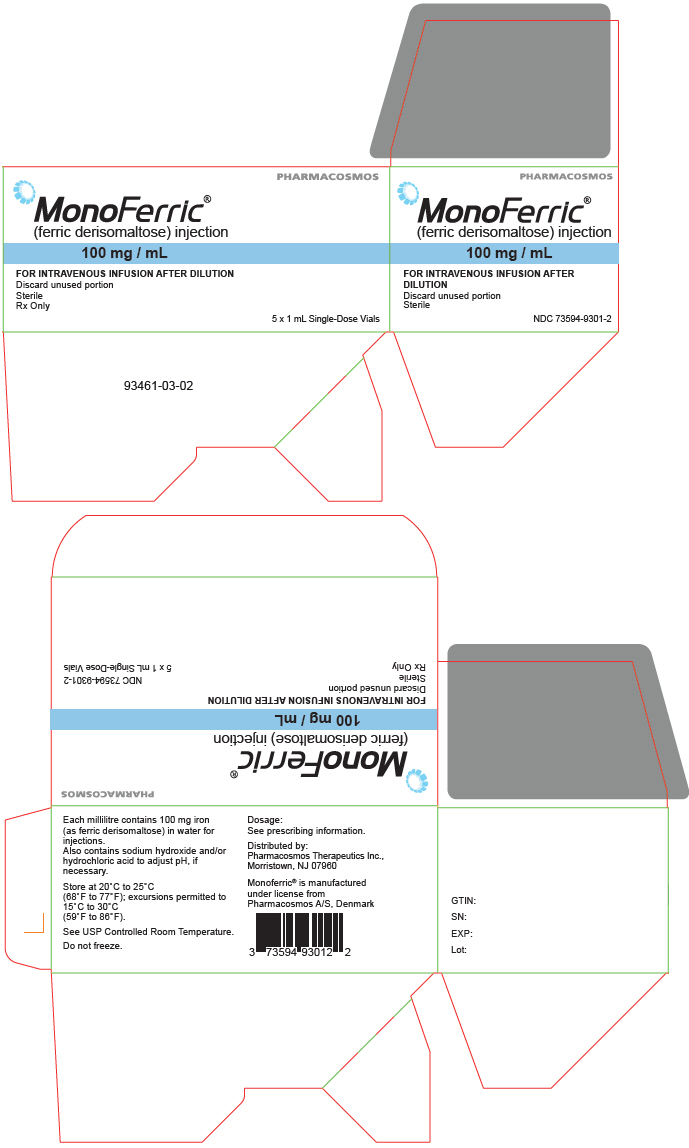
PRINCIPAL DISPLAY PANEL - 100 mg/mL Vial Box PHARMACOSMOS MonoFerric ® (ferric derisomaltose) injection 100 mg / mL FOR INTRAVENOUS INFUSION AFTER DILUTION Discard unused portion Sterile Rx Only 5 x 1 mL Single-Dose Vials PRINCIPAL DISPLAY PANEL - 100 mg/mL Vial Box
PRINCIPAL DISPLAY PANEL - 500 mg/5 mL Vial Box MonoFerric ® (ferric derisomaltose) injection 500 mg / 5 mL (100 mg/mL) FOR INTRAVENOUS INFUSION AFTER DILUTION One single-dose vial Discard unused portion Sterile Rx Only PRINCIPAL DISPLAY PANEL - 500 mg/5 mL Vial Box
PRINCIPAL DISPLAY PANEL - 1000 mg/10 mL Vial Box MonoFerric ® (ferric derisomaltose) injection 1000 mg / 10 mL (100 mg/mL) FOR INTRAVENOUS INFUSION AFTER DILUTION One single-dose vial Discard unused portion Sterile Rx Only PRINCIPAL DISPLAY PANEL - 1000 mg/10 mL Vial Box
PRINCIPAL DISPLAY PANEL- 10 mL Vial Single Dose MonoFerric® (ferric derisomaltose) injection 1000 mg / 10 mL (100 mg/mL) FOR INTRAVENOUS INFUSION AFTER DILUTION One single-dose vial Discard unused portion Sterile Rx Only PRINCIPAL DISPLAY PANEL - 1000 mg/10 mL Vial label
About this NDC listing & data coverage
What data is (and isn’t) available for this NDC — tap to expand
| NDC identity (package / product / labeler codes) | ✓ Available |
| Labeler | ✓ Available |
| Product & package description | ✓ Available |
| Marketing category & status | ✓ Available |
| Active ingredient / dosage form / route | ✓ Available |
| FDA label (SPL via DailyMed) | ✓ Available |
| Package photos | ✓ Available |
| Inactive ingredients (structured) | ✓ Available |
| NADAC pharmacy acquisition price (CMS) | — Not published for this NDC CMS publishes NADAC only for NDCs reported in its retail-pharmacy survey. |
| Orange Book / therapeutic-equivalence data | ✓ Available |
| HCPCS J-code billing crosswalk | — Not published for this NDC Most self-administered / retail products have no J-code — that is normal. |
| Medicaid utilization (CMS SDUD) | — Not published for this NDC CMS reports utilization only for NDCs with Medicaid claims above its privacy threshold. |