
Syfovre Pegcetacoplan 15 mg/.1mL Injection, Solution — NDC 73606-020-11 (Billing 73606-0020-11)
This is a package of Syfovre Pegcetacoplan 15 mg/.1mL Injection, Solution from Apellis Pharmaceuticals, Inc., marketed since Feb 2023 and currently FDA-listed.
NDC database record
One package, one record: these facts belong to NDC 73606-020-11 alone.
- Record
- FDA NDC Directory package listing · Human prescription drug
- Code segments
- 73606 labeler · 020 product · 11 package
- Package marketed since
- Feb 17, 2023
- Sample package
- Yes — professional sample, not for sale
- Listing certified through
- Dec 31, 2026
- Barcode (UPC-A, from the NDC)
- 3 7360602011 7
- FDA record last changed
- Jul 24, 2026
Identity & classification
Regulatory identifiers FDA, NLM and CMS codes for this package
Drug-database identifiers Medi-Span GPI and First Databank GCN / HICL / AHFS classification
- GSN (GCN sequence number): 084435
- GCN: 53739
- GPI-14 (Medi-Span): 86454065002020
- HICL (First Databank): 048722
- AHFS class code: 52:44.00.00
- RxCUI (RxNorm): 2630847
Where does this data come from?
- FDA openFDA NDC Directory · synced Oct 8, 2026
- FDA label on DailyMed · label index refreshed Oct 8, 2026
- RxNorm (NLM RxNav) · catalog refreshed Oct 1, 2026
- Medi-Span GPI (licensed)
- First Databank (licensed) · refreshed Oct 8, 2026
RxNorm drug class
This medicine belongs to the Complement Inhibitor class.
Where does this data come from?
- RxClass (NLM) · catalog refreshed Oct 1, 2026
Clinical
Pegcetacoplan injection is used to treat paroxysmal nocturnal hemoglobinuria (PNH: a type of anemia in which too many red blood cells are broken down in the body, so there are not enough healthy cells to bring oxygen to all parts of the body) and a certain type of kidney disease called complement 3 glomerulopathy (C3G) or primary immune-complex membranoproliferative glomerulonephritis (IC-MPGN). Pegcetacoplan is in a class of medications called monoclonal antibodies. It works by blocking the activity of the part of the immune system that may damage blood cells.
Read the full MedlinePlus article ↗- It depends on the product. Empaveli, given under the skin, treats PNH in adults and C3G or primary IC-MPGN in people 12 and older. Syfovre is a separate product given as an injecti...
- Empaveli raises your risk of serious infections from certain bacteria. Getting vaccinated at least 2 weeks before your first dose helps, though it doesn't remove the risk. If you m...
- Why do I need vaccines before starting Empaveli?
- Injection or infusion site reactions are the most common. You might also notice infections, diarrhea, abdominal pain, fatigue, fever, cough, or nausea. Call your care team right aw...
Patient education
Supplement & herbal interactions
Where does this data come from?
- MedlinePlus (NLM) · refreshed Oct 8, 2026
- FDA label on DailyMed · label index refreshed Oct 8, 2026
Ask a licensed pharmacist directly — free, answered by our team.
Pricing
A drug doesn't have one price. Each row is a different public payment system, and none is what you'd pay at the counter — that depends on your insurance. The ⓘ on each row explains what it measures.
| Price system | Per mL | Per package |
|---|---|---|
| Retail pharmacies payNADAC · weekly | Not in the retail survey — common for institutional, discontinued, or low-volume packs. | |
| Medicaid paysCMS SDUD · 12 mo | No recent Medicaid claims on file for this NDC — rare and low-volume NDCs are suppressed in the public data. | |
| Medicare drug plans payPart D · quarterly | No Part D plan price is available for this NDC in our data. | |
Where does this data come from?
- CMS NADAC weekly file
- CMS ASP pricing files · refreshed Sep 20, 2026
- CMS Medicaid State Drug Utilization Data · refreshed Oct 8, 2026
- CMS Part D plan pricing files · refreshed Sep 24, 2026
- VA National Acquisition Center price file
Packaging — all sizes for this product
| Package NDC | Description | Marketing start | Marketing end | Status |
|---|---|---|---|---|
| 73606-0020-01 73606-020-01 Main listing | 1 VIAL, GLASS in 1 CARTON / 3 mL in 1 VIAL, GLASS | 2023-02-17 | — | Active |
| 73606-0020-02 73606-020-02 | 1 VIAL, GLASS in 1 CARTON / 3 mL in 1 VIAL, GLASS | 2025-11-07 | — | Active |
| 73606-0020-11 You're viewing this | 1 VIAL, GLASS in 1 CARTON / 3 mL in 1 VIAL, GLASS Sample | 2023-02-17 | — | Active |
| 73606-0020-12 73606-020-12 | 1 VIAL, GLASS in 1 CARTON / 3 mL in 1 VIAL, GLASS Sample | 2025-11-07 | — | Active |
This pack shows little to no recent Medicaid volume — a different pack size carries most fills. See all packs ↓
Pack size FAQ
What quantity is in this package?
What NDC number is used to bill for this package of Syfovre Pegcetacoplan 15 mg/.1mL Injection, Solution?
Therapeutic equivalents
| Product | Labeler | Pack | NADAC/unit | TE | Status | Price vs. this |
|---|---|---|---|---|---|---|
| Syfovre 15 mg/.1mLthis 73606-0020-11 | Apellis | 1 vial | — | — | FDA listed | — |
Where does this data come from?
- FDA openFDA NDC Directory · synced Oct 8, 2026
- FDA Orange Book · refreshed Oct 3, 2026
- CMS NADAC weekly file
Availability & generic status
We did not find an FDA-approved generic match for this exact strength, form and route. Patent/protection dates below may affect future generic timing.
Why the date isn’t exact: Generic timing can change because patents may be challenged, settled, licensed, added, removed, or worked around with a narrower label — and FDA approval does not always mean a pharmacy can get the generic today.
🛈 What do these terms mean?
- Patent
- Legal protection listed in the Orange Book that may delay generic approval or launch. Issued by the U.S. Patent & Trademark Office.
- Substance patent
- Covers the active drug molecule itself — the hardest to design around. A generic generally can’t launch until it expires.
- Formulation (product) patent
- Covers a specific formulation or dosage form. A generic can sometimes work around it with a different formulation.
- Method-of-use patent
- A patent covering one specific approved use of the drug — not necessarily the whole molecule. A generic can sometimes launch with a “skinny label” that carves out the protected use and keeps the others.
- Skinny label
- A generic label that omits a still-patented use when the FDA allows it — letting a generic reach the market for the unprotected uses.
- Exclusivity
- FDA-granted marketing protection, separate from patents — e.g. 5-yr new chemical entity, 7-yr orphan drug, or a +6-month pediatric extension.
- Paragraph IV
- A generic applicant’s formal challenge to a listed patent. It can potentially lead to earlier generic entry, but often involves litigation or a settlement.
- RLD / RS
- Reference Listed Drug — the brand product the FDA uses as the reference for generic applications. Reference Standard — the product the FDA expects generics to compare against in bioequivalence testing.
- TE / AB rating
- FDA therapeutic-equivalence rating. An AB rating generally means the FDA considers a generic therapeutically equivalent to — and substitutable for — the brand.
- LOE (loss of exclusivity)
- The latest patent or exclusivity currently listed — the loss-of-exclusivity / latest-listed-protection date shown on this page. Paragraph-IV challenges and settlements can move the real date earlier; FDA approval and a manufacturer’s decision to market can move it later.
Built from the FDA Orange Book. The bars above are scaled to each protection’s expiry; the red LOE marker is the last one to lapse.
| Patent | Type | Use code | Expires |
|---|---|---|---|
| US 12528836 ↗ | Method of use | U-4394 | Oct 7, 2036 |
| US 11292815 ↗ | Drug substance | U-3540 | Nov 15, 2033 |
| US 10875893 ↗ | Drug substance | U-3540 | Nov 15, 2033 |
| US 9169307 ↗ | Drug substance | U-3541 | Nov 18, 2027 |
| US 9056076 ↗ | Method of use | U-3540 | Oct 25, 2026 |
| US 8168584 ↗ | Method of use | U-3540 | Apr 7, 2027 |
| US 8168584 ↗ | Method of use | U-3542 | Apr 7, 2027 |
| US 11903994 ↗ | Method of use | U-3826 | Feb 22, 2037 |
| US 11903994 ↗ | Method of use | U-3827 | Feb 22, 2037 |
| US 11903994 ↗ | Method of use | U-3828 | Feb 22, 2037 |
| US 11661441 ↗ | Drug substance | U-3540 | Jan 13, 2033 |
| US 10035822 ↗ | Drug substance | — | Nov 15, 2033 |
| US 7989589 ↗ | Drug substance | — | Dec 4, 2027 |
| US 7888323 ↗ | Drug substance | — | Dec 4, 2027 |
| US 10125171 ↗ | Drug substance | — | Aug 2, 2033 |
| US 12458695 ↗ | Drug product | — | Dec 14, 2038 |
| Code | What it grants | Expires |
|---|---|---|
| NCE | New Chemical Entity (5-year) | May 14, 2026 |
| NP | New Product | Feb 22, 2026 |
Is there a generic version of SYFOVRE 15 MG/0.1 ML VIAL KIT?
The FDA approved a generic — why can’t I get it at my pharmacy yet?
Why do different websites show different generic release dates?
What does “FDA listed” mean?
What does a patent or protection date mean here?
What does “current Orange Book estimate” mean?
Can a generic come out before the last patent expires?
Can a generic come out after the listed dates?
What is the difference between patents and exclusivity?
Why are there multiple patent dates?
Where does this data come from?
- FDA Orange Book · refreshed Oct 3, 2026
What it looks like
Where does this data come from?
- FDA label on DailyMed · label index refreshed Oct 8, 2026
Inactive Ingredients / Excipients
Inactive ingredients, also called excipients, are components of the drug product other than the active ingredient. They may include fillers, dyes, coatings, preservatives, flavors, or other formulation ingredients.
🧪 Avoiding an ingredient? See Pegcetacoplan Injection inactive ingredients by manufacturer: every current product's list side by side, so you can ask your pharmacy for the version that does not list it.
💡 Tap an ingredient (hover on desktop) to see what it is and why it’s used.
-
UNII Q40Q9N063P
Acetic acid is a weak organic acid commonly used in medicines as a buffer and pH adjuster. It helps maintain the proper acidity level to ensure the drug remains stable and effective in its formulation.
-
UNII 4550K0SC9B
Sodium acetate is a salt derived from acetic acid. It acts as a buffer to help maintain the medicine's pH stability and may serve as a preservative or solubilizer in liquid formulations.
-
UNII 55X04QC32I
A strong alkaline chemical used to adjust and maintain the pH balance of liquid medicines. It helps keep the medicine stable and ensures it stays effective during storage.
-
5.95 mg / 0.1 mL
UNII 7YIN7J07X4
A natural sugar derived from plants and microorganisms. It acts as a filler to give the medication bulk and stability, and helps preserve the active ingredient during storage and manufacturing.
-
UNII 059QF0KO0R
Water is a liquid solvent that dissolves and mixes ingredients together in liquid medicines, syrups, and injections. It helps distribute the active drug evenly throughout the product.
5 inactive ingredients listed in the exact product block matched to this NDC.
Where does this data come from?
ingredient classCode="IACT" elements from the exact product block matched by this NDC. Label-section narrative from DailyMed / the openFDA label index is shown separately when available.- FDA label on DailyMed · label index refreshed Oct 8, 2026
- FDA openFDA NDC Directory · synced Oct 8, 2026
Inactive ingredient FAQ
Are inactive ingredients the same for every manufacturer?
Why might an inactive ingredient be missing?
Can inactive ingredients matter?
Manufacturer & labeler
More NDCs from Apellis Pharmaceuticals, Inc. labeler code 73606
Where does this data come from?
- FDA openFDA NDC Directory · synced Oct 8, 2026
- Drugs@FDA
Full prescribing information FDA SPL
🎯 Indications and Usage ▾
1 INDICATIONS AND USAGE SYFOVRE is indicated for the treatment of geographic atrophy (GA) secondary to age-related macular degeneration (AMD). SYFOVRE is a complement inhibitor indicated for the treatment of geographic atrophy (GA) secondary to age-related macular degeneration (AMD). ( 1 )
⏱️ Dosage and Administration ▾
2 DOSAGE AND ADMINISTRATION The recommended dose for SYFOVRE is 15 mg (0.1 mL of 150 mg/mL solution) administered by intravitreal injection to each affected eye once every 25 to 60 days. ( 2.2 )
2.1General Dosing Information SYFOVRE must be administered by a qualified physician.
2.2Recommended Dosage The recommended dose for SYFOVRE is 15 mg (0.1 mL of 150 mg/mL solution) administered by intravitreal injection to each affected eye once every 25 to 60 days.
2.3Preparation for Administration Store SYFOVRE in the refrigerator between 2°C to 8°C (36°F to 46°F); Keep the vial in the original carton to protect from light. SYFOVRE is available packaged as follows: Vial Only Vial Kit with Injection Components (filter needle, syringe, injection needle) Remove the carton from the refrigerator. Keep the vial in the original carton at room temperature 20°C to 25°C (68°F to 77°F), for at least 15 minutes prior to injection, but no longer than 8 hours.
Fill the syringe immediately prior to the injection. Do not shake the vial. The vial is for use in a single eye.
Inspect the solution. It is a clear, colorless to light yellow aqueous solution. Do not use if: particulates, cloudiness, or discoloration are visible, the vial shows signs of damage or tampering, the expiration date has passed the packaging or components show signs of damage or tampering STEP 1 Gather the supplies needed: One SYFOVRE vial One sterile 5-micron filter needle One sterile 1-mL Luer-lock syringe with a 0.1 mL dose mark One sterile ½ inch: 29-gauge (extra) thin-wall injection needle with Luer-lock hub (included with vial kit) or a 27-gauge needle with Luer-lock hub (not included) Note: Increased injection forces and/or increased injection time could be experienced if a smaller diameter injection needle is used (e.g., 30-gauge) Alcohol swab ( not included ) Use aseptic technique to carry out the following preparation steps: STEP 2 Remove the flip-off cap from the vial (see Figure 1a ) and clean the vial septum with an alcohol swab and wait for the alcohol to dry out (see Figure 1b ).
Figure 1a: Figure 1b: STEP 3 Attach the 5-micron filter needle onto a 1-mL Luer-lock syringe (see Figure 2 ) by twisting it onto the Luer-lock syringe tip. Figure 2: STEP 4 Push the filter needle into the center of the vial septum until the needle is submerged in the drug product to prevent withdrawal of air (see Figure 3a ). To withdraw the entire contents of the vial into the syringe, hold the vial at a slightly inclined position.
Withdraw the drug product slowly to prevent air bubbles. Continue to tilt the vial during withdrawal keeping the bevel of the filter needle submerged in the liquid until all of the fluid is withdrawn from the vial (see Figure 3b ). *Do not tap the syringe to remove air bubbles. While maintaining the filter needle within the vial, invert the syringe and move the plunger down and up until bubbles move to the top (see Figure 3c ).
Figure 3a: Figure 3b: Figure 3c: STEP 5 Using aseptic technique, disconnect the filter needle from the syringe and dispose of it. Do not use the filter needle for injection. STEP 6 Aseptically and firmly attach the injection needle onto the 1-mL Luer-lock syringe (see Figure 4 ).
Figure 4: STEP 7 Check for air bubbles by holding the syringe with the needle pointing up. * Do not tap the syringe to remove air bubbles. If there are any air bubbles, remove the needle cap and with the needle end facing up gently advance the plunger to the 0.1 mL dose mark (see Figure 5 ). Only 0.1 mL (15 mg of SYFOVRE) should be administered to deliver a single dose.
Any excess volume should be disposed. The syringe is ready for injection. Figure 5: Figure Figure Figure Figure Figure 1a Figure 1b Figure 2 Figure 3a Figure 3b Figure 3c Figure 4 Figure 5
2.4Injection Procedure Only 0.1 mL (15 mg of SYFOVRE) should be administered to deliver a single dose. Any excess volume should be disposed. Ensure that the injection is given immediately after the preparatio… [Excerpted — this section continues on DailyMed.]
💊 Dosage Forms and Strengths ▾
3 DOSAGE FORMS AND STRENGTHS Injection: 150 mg/mL, clear, colorless to light yellow aqueous solution in a single-dose vial for administration of a single 0.1 mL dose. Injection: 150 mg/mL in a single-dose vial. ( 3 )
⛔ Contraindications ▾
4 CONTRAINDICATIONS Ocular or Periocular Infections ( 4.1 ) Active Intraocular Inflammation ( 4.2 ) Hypersensitivity ( 4.3 )
4.1Ocular or Periocular Infections SYFOVRE is contraindicated in patients with ocular or periocular infections [see Warnings and Precautions (5.1) ] .
4.2Active Intraocular Inflammation SYFOVRE is contraindicated in patients with active intraocular inflammation.
4.3Hypersensitivity SYFOVRE is contraindicated in patients with hypersensitivity to pegcetacoplan or to any of the excipients in SYFOVRE. Systemic hypersensitivity reactions (e.g., anaphylaxis, rash, urticaria) have occurred in patients treated with SYFOVRE [see Adverse Reactions (6.2) ] .
⚠️ Warnings and Cautions ▾
5 WARNINGS AND PRECAUTIONS Endophthalmitis and Retinal Detachments ( 5.1 ) Retinal Vasculitis and/or Retinal Vascular Occlusion ( 5.2 ) Neovascular AMD ( 5.3 ) Intraocular inflammation ( 5.4 ) Increased Intraocular Pressure ( 5.5 )
5.1Endophthalmitis and Retinal Detachments Intravitreal injections, including those with SYFOVRE, may be associated with endophthalmitis and retinal detachments [see Adverse Reactions (6.1) ] . Proper aseptic injection technique must always be used when administering SYFOVRE in order to minimize the risk of endophthalmitis [see Dosage and Administration (2.4) ] . Patients should be instructed to report any symptoms suggestive of endophthalmitis or retinal detachment without delay and should be managed appropriately.
5.2Retinal Vasculitis and/or Retinal Vascular Occlusion Retinal vasculitis and/or retinal vascular occlusion, typically in the presence of intraocular inflammation, have been reported with the use of SYFOVRE [see Adverse Reactions (6.2) ] . Cases may occur with the first dose of SYFOVRE and may result in severe vision loss. Discontinue treatment with SYFOVRE in patients who develop these events.
Patients should be instructed to report any change in vision without delay.
5.3Neovascular AMD In clinical trials, use of SYFOVRE was associated with increased rates of neovascular (wet) AMD or choroidal neovascularization (12% when administered monthly, 7% when administered every other month and 3% in the control group) by Month 24. Patients receiving SYFOVRE should be monitored for signs of neovascular AMD. In case anti-Vascular Endothelial Growth Factor (anti-VEGF) is required, it should be given separately from SYFOVRE administration.
5.4Intraocular Inflammation In clinical trials, use of SYFOVRE was associated with episodes of intraocular inflammation including: vitritis, vitreal cells, iridocyclitis, uveitis, anterior chamber cells, iritis, and anterior chamber flare. After inflammation resolves patients may resume treatment with SYFOVRE.
5.5Increased Intraocular Pressure Acute increase in IOP may occur within minutes of any intravitreal injection, including with SYFOVRE. Perfusion of the optic nerve head should be monitored following the injection and managed as needed [see Dosage and Administration (2.4) ] .
🤒 Adverse Reactions ▾
6 ADVERSE REACTIONS The following clinically significant adverse reactions are described elsewhere in the labeling: Ocular and periocular infections [see Contraindications (4.1) ] Active intraocular inflammation [see Contraindications (4.2) ] Hypersensitivity [see Contraindications (4.3) ] Endophthalmitis and retinal detachments [see Warnings and Precautions (5.1) ] Retinal Vasculitis and/or Retinal Vascular Occlusion [see Warnings and Precautions (5.2) ] Neovascular AMD [see Warnings and Precautions (5.3) ] Intraocular inflammation [see Warnings and Precautions (5.4) ] Increased intraocular pressure [see Warnings and Precautions (5.5) ] Most common adverse reactions (incidence ≥5%) are ocular discomfort, neovascular age-related macular degeneration, vitreous floaters, and conjunctival hemorrhage.
( 6.1 ) To report SUSPECTED ADVERSE REACTIONS, contact Apellis Pharmaceuticals, Inc. at 1-833-866-3346 or FDA at 1-800-FDA-1088 or www.fda.gov/medwatch.
6.1Clinical Trials Experience Because clinical trials are conducted under widely varying conditions, adverse reaction rates observed in the clinical trials of a drug cannot be directly compared to rates in the clinical trials of another drug and may not reflect the rates observed in practice. A total of 839 patients with GA in two Phase 3 studies (OAKS and DERBY) were treated with intravitreal SYFOVRE, 15 mg (0.1 mL of 150 mg/mL solution). Four hundred nineteen (419) of these patients were treated in the affected eye monthly and 420 were treated in the affected eye every other month.
Four hundred seventeen (417) patients were assigned to sham. The most common adverse reactions (≥5%) reported in patients receiving SYFOVRE were ocular discomfort, neovascular age-related macular degeneration, vitreous floaters, and conjunctival hemorrhage. Table 1: Adverse Reactions in Study Eye Reported in ≥2% of Patients Treated with SYFOVRE Through Month 24 in Studies OAKS and DERBY Adverse Reactions PM (N = 419) % PEOM (N = 420) % Sham Pooled (N = 417) % PM: SYFOVRE monthly; PEOM: SYFOVRE every other month Ocular discomfort The following reported terms were combined: Ocular discomfort included: eye pain, eye irritation, foreign body sensation in eyes, ocular discomfort, abnormal sensation in eye Neovascular age-related macular degeneration included: exudative age-related macular degeneration, choroidal neovascularization Punctate keratitis included: punctate keratitis, keratitis Intraocular inflammation included: vitritis, vitreal cells, iridocyclitis, uveitis, anterior chamber cells, iritis, anterior chamber flare 13 10 11 Neovascular age-related macular degeneration 12 7 3 Vitreous floaters 10 7 1 Conjunctival hemorrhage 8 8 4 Vitreous detachment 4 6 3 Retinal hemorrhage 4 5 3 Punctate keratitis 5 3 <1 Posterior capsule opacification 4 4 3 Intraocular inflammation 4 2 <1 Intraocular pressure increased 2 3 <1 Endophthalmitis, retinal detachment, hyphema and retinal tears were reported in less than 1% of patients.
Optic ischemic neuropathy was reported in 1.7% of patients treated monthly, 0.2% of patients treated every other month and 0.0% of patients assigned to sham. Deaths were reported in 6.7% of patients treated monthly, 3.6% of patients treated every other month and 3.8% of patients assigned to sham. The rates and causes of death were consistent with the elderly study population.
6.2Postmarketing Experience The following adverse reactions have been identified during postapproval use of SYFOVRE. Because these reactions are reported voluntarily from a population of uncertain size, it is not always possible to reliably estimate their frequency or establish a causal relationship to drug exposure. Eye disorders : retinal vasculitis with or without retinal vascular occlusion. Systemic reactions: anaphylaxis, rash, and urticaria.
👥 Use in Specific Populations ▾
8 USE IN SPECIFIC POPULATIONS
8.1Pregnancy Risk Summary There are no adequate and well-controlled studies of SYFOVRE administration in pregnant women to inform a drug-associated risk. The use of SYFOVRE may be considered following an assessment of the risks and benefits. Systemic exposure of SYFOVRE following ocular administration is low [see Clinical Pharmacology (12.3) ] .
Subcutaneous administration of pegcetacoplan to pregnant monkeys from the mid gestation period through birth resulted in increased incidences of abortions and stillbirths at systemic exposures 1040-fold higher than that observed in humans at the maximum recommended human ophthalmic dose (MRHOD) of SYFOVRE (based on the area under the curve (AUC) systemically measured levels). No adverse maternal or fetal effects were observed in monkeys at systemic exposures approximately 470-fold higher than that observed in humans at the MRHOD (see Data ) .
In the U.S. general population, the estimated background risk of major birth defects and miscarriage in clinically recognized pregnancies is 2-4% and 15-20%, respectively. Data Animal Data In embryofetal development studies, subcutaneous administration of pegcetacoplan to pregnant cynomolgus monkeys from the mid gestation period through birth produced increased incidences of abortions and stillbirths at doses of 28 mg/kg/day [approximately 1040-fold higher than the MRHOD based on exposure (AUC)]. Pegcetacoplan was not maternally toxic and did not produce adverse embryofetal effects in the monkey at subcutaneous doses of 7 mg/kg/day.
(approximately 470-fold higher than the MRHOD). No developmental effects were observed in infants up to 6 months postpartum. Minimal systemic exposure to pegcetacoplan (less than 1%, not pharmacologically significant) was detected in fetuses from monkeys treated subcutaneously with 28 mg/kg/day from the period of organogenesis through the second trimester.
8.2Lactation Risk Summary It is not known whether intravitreal administered pegcetacoplan is secreted in human milk or whether there is potential for absorption and harm to the infant. Animal data suggest that the risk of clinically relevant exposure to the infant following maternal intravitreal treatment is minimal (see Data ) . Because many drugs are excreted in human milk, and because the potential for absorption and harm to infant growth and development exists, caution should be exercised when SYFOVRE is administered to a nursing woman.
Data Animal Data Pegcetacoplan was detectable in milk of lactating monkeys after subcutaneous administration at less than 1% concentration of serum levels but was not detectable in the serum of nursing infants.
8.3Females and Males of Reproductive Potential Contraception Females It is recommended that women of childbearing potential use effective contraception methods to prevent pregnancy during treatment with intravitreal pegcetacoplan. Advise female patients of reproductive potential to use effective contraception during treatment with SYFOVRE and for 40 days after the last dose. For women planning to become pregnant, the use of SYFOVRE may be considered following an assessment of the risks and benefits.
8.4Pediatric Use The safety and effectiveness of SYFOVRE in pediatric patients have not been established.
8.5Geriatric Use In clinical studies, approximately 97% (813/839) of patients randomized to treatment with SYFOVRE were ≥ 65 years of age and approximately 72% (607/839) were ≥ 75 years of age. No significant differences in efficacy or safety were seen with increasing age in these studies. No dosage regimen adjustment is recommended based on age.
🤰 Pregnancy ▾
8.1Pregnancy Risk Summary There are no adequate and well-controlled studies of SYFOVRE administration in pregnant women to inform a drug-associated risk. The use of SYFOVRE may be considered following an assessment of the risks and benefits. Systemic exposure of SYFOVRE following ocular administration is low [see Clinical Pharmacology (12.3) ] .
Subcutaneous administration of pegcetacoplan to pregnant monkeys from the mid gestation period through birth resulted in increased incidences of abortions and stillbirths at systemic exposures 1040-fold higher than that observed in humans at the maximum recommended human ophthalmic dose (MRHOD) of SYFOVRE (based on the area under the curve (AUC) systemically measured levels). No adverse maternal or fetal effects were observed in monkeys at systemic exposures approximately 470-fold higher than that observed in humans at the MRHOD (see Data ) .
In the U.S. general population, the estimated background risk of major birth defects and miscarriage in clinically recognized pregnancies is 2-4% and 15-20%, respectively. Data Animal Data In embryofetal development studies, subcutaneous administration of pegcetacoplan to pregnant cynomolgus monkeys from the mid gestation period through birth produced increased incidences of abortions and stillbirths at doses of 28 mg/kg/day [approximately 1040-fold higher than the MRHOD based on exposure (AUC)]. Pegcetacoplan was not maternally toxic and did not produce adverse embryofetal effects in the monkey at subcutaneous doses of 7 mg/kg/day.
(approximately 470-fold higher than the MRHOD). No developmental effects were observed in infants up to 6 months postpartum. Minimal systemic exposure to pegcetacoplan (less than 1%, not pharmacologically significant) was detected in fetuses from monkeys treated subcutaneously with 28 mg/kg/day from the period of organogenesis through the second trimester.
🧒 Pediatric Use ▾
8.4Pediatric Use The safety and effectiveness of SYFOVRE in pediatric patients have not been established.
🧓 Geriatric Use ▾
8.5Geriatric Use In clinical studies, approximately 97% (813/839) of patients randomized to treatment with SYFOVRE were ≥ 65 years of age and approximately 72% (607/839) were ≥ 75 years of age. No significant differences in efficacy or safety were seen with increasing age in these studies. No dosage regimen adjustment is recommended based on age.
🧬 Clinical Pharmacology ▾
12 CLINICAL PHARMACOLOGY
12.1Mechanism of Action Pegcetacoplan binds to complement protein C3 and its activation fragment C3b with high affinity thereby regulating the cleavage of C3 and the generation of downstream effectors of complement activation
12.2Pharmacodynamics Cardiac Electrophysiology Subcutaneous (SC) dosing of pegcetacoplan did not result in QT prolongation. Systemic exposures following intravitreal (IVT) administration are much lower than with SC administration, therefore QT prolongation following IVT pegcetacoplan is not expected.
12.3Pharmacokinetics SYFOVRE is administered directly into the vitreous to exert local effects in the eye. Following repeat intravitreal administration of pegcetacoplan at a dose of 15 mg, geometric mean (%CV) serum C max value at steady state was 2.2 μg/mL (28.7%) and 1.5 μg/mL (58.1%) for GA patients dosed monthly and every other month, respectively. The steady state geometric mean (%CV) serum trough concentrations were 1.0 μg/mL (52.3%) and 0.2 μg/mL (89.6%) for patients treated monthly and every other month, respectively.
Absorption Following intravitreal administration of pegcetacoplan, the systemic median T max of pegcetacoplan is between 7 and 14 days. Following intravitreal treatment, systemic exposure of pegcetacoplan increases approximately proportionally over a dosage range from 4 to 20 mg. Distribution The geometric mean (95%CI) volume of distribution of pegcetacoplan is approximately
1.85L (1.62 - 2.12) in patients with GA following intravitreal administration. Elimination The estimated geometric mean (%CV) of clearance (CL) is 0.284 L/day (21.1%) and geometric mean half-life of elimination (t 1/2 ) is 4.5 days (21.1%) in patients with GA. Metabolism Pegcetacoplan is expected to be metabolized into small peptides and amino acids by catabolic pathways.
Specific Populations There were no clinically significant differences on the pharmacokinetics of pegcetacoplan intravitreal administration based on age (60 to 97 years old), gender, renal impairment, and hepatic function as evaluated by total bilirubin (0.05-1.7 mg/dL), albumin (2.96-5.38 g/dL), aspartate aminotransferase (8.7-101 IU/L), or alanine aminotransferase (5.9-136 IU/L).
12.6Immunogenicity The observed incidence of anti-drug antibodies (ADA) is highly dependent on the sensitivity and specificity of the assay. Difference in assay methods preclude meaningful comparisons of the incidence of ADA in the studies described below with the incidence of ADA in other studies. In the 24-month period in studies OAKS and DERBY, the incidence of anti-pegcetacoplan peptide antibodies in patients treated with pegcetacoplan was 4% (18/415 evaluable patients) and 2.5% (10/404 evaluable patients), respectively.
Because of the low incidence of anti-pegcetacoplan peptide antibodies, the effect of these antibodies on the pharmacokinetics, pharmacodynamics, safety, and/or effectiveness of pegcetacoplan is unknown.
🧬 Mechanism of Action ▾
12.1Mechanism of Action Pegcetacoplan binds to complement protein C3 and its activation fragment C3b with high affinity thereby regulating the cleavage of C3 and the generation of downstream effectors of complement activation
📦 How Supplied / Storage and Handling ▾
16 HOW SUPPLIED/STORAGE AND HANDLING
16.1How Supplied SYFOVRE (pegcetacoplan injection) is supplied as a clear, colorless to light yellow aqueous solution. Each glass vial contains an overfill amount to allow for administration of a single 0.1 mL dose of solution containing 15 mg of SYFOVRE. SYFOVRE packaging options are included in Table 3.
Table 3: Packaging Options NDC Number Carton Type Carton Contents 73606-020-02 Vial Kit with Injection Components One SYFOVRE vial One sterile 5-micron filter needle One sterile 1-mL Luer-lock syringe with a 0.1 mL dose mark One sterile ½ inch: 29-gauge extra thin-wall injection needle with Luer-lock One prescribing information 73606-020-01 Vial Only One SYFOVRE vial One prescribing information
16.2Storage and Handling Refrigerate SYFOVRE between 2°C to 8°C (36°F to 46°F). Store the vial in the original carton to protect from light. Do not use beyond the expiration date on the carton. Do not shake.
📦 Storage and Handling ▾
16.2Storage and Handling Refrigerate SYFOVRE between 2°C to 8°C (36°F to 46°F). Store the vial in the original carton to protect from light. Do not use beyond the expiration date on the carton. Do not shake.
📋 Description ▾
11 DESCRIPTION SYFOVRE contains pegcetacoplan, a complement inhibitor. Pegcetacoplan is a symmetrical molecule composed of two identical pentadecapeptides covalently bound to the ends of a linear 40 kiloDalton (kDa) polyethylene glycol (PEG) molecule. The peptide portions of pegcetacoplan contain 1-methyl-L-tryptophan (Trp(Me)) in position 4 and amino (ethoxyethoxy) acetic acid (AEEA) in position 14.
The molecular weight of pegcetacoplan is approximately 43.5 kDa. The molecular formula is C 1970 H 3848 N 50 O 947 S 4 . The structure of pegcetacoplan is shown below.
SYFOVRE (pegcetacoplan injection) is a sterile, clear, colorless to light yellow aqueous solution in a single-dose vial for intravitreal use. Each vial allows for the delivery of 0.1 mL of solution containing 15 mg pegcetacoplan, trehalose dihydrate (5.95 mg), glacial acetic acid (0.0895 mg), sodium acetate trihydrate (0.0353 mg), and Water for Injection. SYFOVRE may also contain sodium hydroxide and/or additional glacial acetic acid for adjustment to a target pH of 5.0.
SYFOVRE does not contain an anti-microbial preservative. Chemical Formula
💬 Information for Patients ▾
17 PATIENT COUNSELING INFORMATION Advise patients that following SYFOVRE administration, patients are at risk of developing endophthalmitis, retinal detachments, retinal vasculitis with or without retinal vascular occlusion and neovascular AMD. If the eye becomes red, sensitive to light, painful, or if a patient develops any change in vision such as flashing lights, blurred vision or metamorphopsia, instruct the patient to seek immediate care from an ophthalmologist [see Warnings and Precautions (5.1 , 5.2 , 5.3) ] .
Patients may experience temporary visual disturbances associated either with the intravitreal injection with SYFOVRE or the eye examination [see Adverse Reactions (6.1) ] . Advise patients not to drive or use machinery until visual function has recovered sufficiently.
🧬 Pharmacokinetics ▾
12.3Pharmacokinetics SYFOVRE is administered directly into the vitreous to exert local effects in the eye. Following repeat intravitreal administration of pegcetacoplan at a dose of 15 mg, geometric mean (%CV) serum C max value at steady state was 2.2 μg/mL (28.7%) and 1.5 μg/mL (58.1%) for GA patients dosed monthly and every other month, respectively. The steady state geometric mean (%CV) serum trough concentrations were 1.0 μg/mL (52.3%) and 0.2 μg/mL (89.6%) for patients treated monthly and every other month, respectively.
Absorption Following intravitreal administration of pegcetacoplan, the systemic median T max of pegcetacoplan is between 7 and 14 days. Following intravitreal treatment, systemic exposure of pegcetacoplan increases approximately proportionally over a dosage range from 4 to 20 mg. Distribution The geometric mean (95%CI) volume of distribution of pegcetacoplan is approximately
1.85L (1.62 - 2.12) in patients with GA following intravitreal administration. Elimination The estimated geometric mean (%CV) of clearance (CL) is 0.284 L/day (21.1%) and geometric mean half-life of elimination (t 1/2 ) is 4.5 days (21.1%) in patients with GA. Metabolism Pegcetacoplan is expected to be metabolized into small peptides and amino acids by catabolic pathways.
Specific Populations There were no clinically significant differences on the pharmacokinetics of pegcetacoplan intravitreal administration based on age (60 to 97 years old), gender, renal impairment, and hepatic function as evaluated by total bilirubin (0.05-1.7 mg/dL), albumin (2.96-5.38 g/dL), aspartate aminotransferase (8.7-101 IU/L), or alanine aminotransferase (5.9-136 IU/L).
🧬 Pharmacodynamics ▾
12.2Pharmacodynamics Cardiac Electrophysiology Subcutaneous (SC) dosing of pegcetacoplan did not result in QT prolongation. Systemic exposures following intravitreal (IVT) administration are much lower than with SC administration, therefore QT prolongation following IVT pegcetacoplan is not expected.
🔬 Clinical Studies ▾
14 CLINICAL STUDIES The safety and efficacy of SYFOVRE were assessed in two multi-center, randomized, sham-controlled studies in patients with GA (atrophic nonexudative age-related macular degeneration), with or without subfoveal involvement, secondary to AMD in a total of 1258 randomized patients (SYFOVRE 839 patients, sham 419 patients). Studies OAKS (APL2-304; NCT03525613) and DERBY (APL2-303; NCT03525600) were 24 months in duration, in which patients received treatment for the entire length of the study. Patient ages ranged from 60 to 100 years with a mean of 78.7 years.
Mean (standard deviation) total area of GA lesions(s) at baseline in the study eye (in mm 2 ) were 8.23 (3.83) and 8.29 (4.11) for OAKS and DERBY respectively. In each study, patients were randomly assigned in a 2:2:1:1 ratio to 1 of 4 dosing regimens: 1) SYFOVRE administered at 15 mg/0.1 mL monthly; 2) SYFOVRE administered at 15 mg/0.1 mL every other month; 3) sham administered monthly; 4) sham administered every other month. In OAKS, 31% of patients in the monthly group, 21% of patients in the every other month and 25% of the patients assigned to sham discontinued treatment prior to Month 24.
In DERBY, 29% of patients in the monthly group, 22% of patients in the every other month and 21% of the patients assigned to sham discontinued treatment prior to Month 24. There was a reduction in the mean rate of GA lesion growth observed in both studies. Detailed results are shown in Table 2 and Figures 1 and 2.
Table 2: Analysis of Change from Baseline in Study Eye GA Lesion Area Measured by FAF in Studies OAKS and DERBY Time Period Group Rate of GA Lesion Area Growth (mm 2 ) Based on a mixed effects model for repeated measures assuming a piecewise linear trend in time with knots at Month 6, Month 12, and Month 18. The model included effects for treatment, baseline GA lesion area (<7.5 mm 2 or ≥7.5 mm 2 ), time terms, presence of choroidal neovascularization in the fellow eye (yes or no), time terms by treatment interactions, and time terms by baseline GA lesion area (<7.5 mm 2 or ≥7.5 mm 2 ) interactions.
Time terms include a linear effect of time for each 6-month time period. Slope (SE) Difference (95% CI) in Slope from Sham Pooled Percent Difference from Sham Pooled GA: Geographic atrophy; FAF: fundus autofluorescence; PM: SYFOVRE monthly; PEOM: SYFOVRE every other month; SE: standard error; CI: confidence interval OAKS (PM: N=202; PEOM: N=205; Sham Pooled: N=207) Baseline to Month 24 Slope for baseline to Month 24 is an average of slope of baseline to Month 6, Month 6 to Month 12, Month 12 to Month 18, and Month 18 to Month 24.
PM 3.11 (0.148) −0.87 (−1.27 to −0.47) −21.9% PEOM 3.26 (0.134) −0.72 (−1.10 to −0.33) −18.1% Sham Pooled 3.98 (0.143) NA Baseline to Month 6 PM 0.76 (0.046) −0.22 (−0.35 to −0.09) −22.7% PEOM 0.82 (0.043) −0.16 (−0.29 to −0.04) −16.4% Sham Pooled 0.98 (0.047) NA Month 6 to Month 12 PM 0.78 (0.060) −0.19 (−0.34 to −0.03) −19.2% PEOM 0.82 (0.057) −0.15 (−0.30 to −0.00) −15.7% Sham Pooled 0.97 (0.052) NA Month 12 to Month 18 PM 0.80 (0.050) −0.23 (−0.37 to −0.08) −22.1% PEOM 0.87 (0.050) −0.16 (−0.30 to −0.02) −15.4% Sham Pooled 1.03 (0.053) NA Month 18 to Month 24 PM 0.76 (0.067) −0.23 (−0.41 to −0.06) −23.5% PEOM 0.75 (0.044) −0.25 (−0.39 to −0.10) −24.7% Sham Pooled 1.00 (0.058) NA DERBY (PM: N=201; PEOM: N=201; Sham Pooled: N=195) Baseline to Month 24 PM 3.28 (0.125) −0.73 (−1.14 to −0.31) −18.1% PEOM 3.31 (0.129) −0.70 (−1.11 to −0.28) −17.4% Sham Pooled 4.00 (0.169) NA Baseline to Month 6 PM 0.91 (0.048) −0.05 (−0.19 to 0.08) −5.7% PEOM 0.88 (0.047) −0.08 (−0.21 to 0.05) −8.2% Sham Pooled 0.96 (0.050) NA Month 6 to Month 12 PM 0.84 (0.051) −0.17 (−0.33 to −0.02) −17.0% PEOM 0.85 (0.051) −0.17 (−0.32 to −0.01) −16.4% Sham Pooled 1.01 (0.060) NA Month 12 to Month 18 PM 0.90 (0.049) −0.14 (−0.29 to 0.00) −13.8% PEOM 0.88 (0.051) −0.17 (−0.32 to −0.02) −16.0% Sham Pooled 1.05 (0.056) NA Month 18 to Month 24 PM 0.63 (0.068) −0.35 (−0.52… [Excerpted — this section continues on DailyMed.]
🧪 Nonclinical Toxicology ▾
13 NONCLINICAL TOXICOLOGY
13.1Carcinogenesis, Mutagenesis, Impairment of Fertility Carcinogenesis Animal carcinogenicity studies of pegcetacoplan have not been conducted. Mutagenesis Pegcetacoplan was not mutagenic when tested in in vitro bacterial reverse mutation (Ames) assays and was not genotoxic in an in vitro assay in human TK6 cells or in an in vivo micronucleus assay in mice. Impairment of Fertility There are no fertility data in humans or animals.
There were no microscopic abnormalities in male or female reproductive organs in toxicity studies in rabbits and monkeys indicative of an impact of pegcetacoplan on fertility.
📄 Carcinogenesis, Mutagenesis, Impairment of Fertility ▾
13.1Carcinogenesis, Mutagenesis, Impairment of Fertility Carcinogenesis Animal carcinogenicity studies of pegcetacoplan have not been conducted. Mutagenesis Pegcetacoplan was not mutagenic when tested in in vitro bacterial reverse mutation (Ames) assays and was not genotoxic in an in vitro assay in human TK6 cells or in an in vivo micronucleus assay in mice. Impairment of Fertility There are no fertility data in humans or animals.
There were no microscopic abnormalities in male or female reproductive organs in toxicity studies in rabbits and monkeys indicative of an impact of pegcetacoplan on fertility.
📄 Recent Major Changes ▾
Dosage and Administration, Preparation for Administration ( 2.3 ) 7/2025 Contraindications, Hypersensitivity ( 4.3 ) 12/2024
📄 Package Label / Principal Display Panel ▾
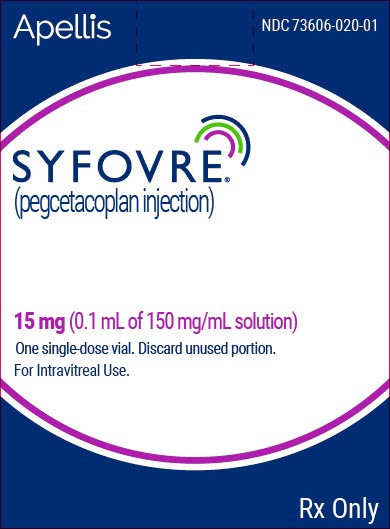
PRINCIPAL DISPLAY PANEL - 15 mg Vial Carton Apellis NDC 73606-020-01 SYFOVRE ® (pegcetacoplan injection) 15 mg (0.1 mL of 150 mg/mL solution) One single-dose vial. Discard unused portion. For Intravitreal Use. Rx Only PRINCIPAL DISPLAY PANEL - 15 mg Vial Carton
PRINCIPAL DISPLAY PANEL - 15 mg Vial Carton - Kit Package Rx Only NDC 73606-020-02 SYFOVRE ® (pegcetacoplan injection) 15 mg (0.1 mL of 150 mg/mL solution) For Intravitreal Use. Discard unused portion. EACH CARTON CONTAINS: One single-dose vial One sterile single-dose syringe One filter needle One needle for injection Prescribing Information Apellis PRINCIPAL DISPLAY PANEL - 15 mg Vial Carton - Kit Package
Medicaid utilization by pack size
Medicare Part D spend CMS · PART D · 2026 (Q1)
About this NDC listing & data coverage
What data is (and isn’t) available for this NDC — tap to expand
| NDC identity (package / product / labeler codes) | ✓ Available |
| Labeler | ✓ Available |
| Product & package description | ✓ Available |
| Marketing category & status | ✓ Available |
| Active ingredient / dosage form / route | ✓ Available |
| FDA label (SPL via DailyMed) | ✓ Available |
| Package photos | ✓ Available |
| Inactive ingredients (structured) | ✓ Available |
| NADAC pharmacy acquisition price (CMS) | — Not published for this NDC CMS publishes NADAC only for NDCs reported in its retail-pharmacy survey. |
| Orange Book / therapeutic-equivalence data | ✓ Available |
| HCPCS J-code billing crosswalk | — Not published for this NDC Most self-administered / retail products have no J-code — that is normal. |
| Medicaid utilization (CMS SDUD) | — Not published for this NDC CMS reports utilization only for NDCs with Medicaid claims above its privacy threshold. |