
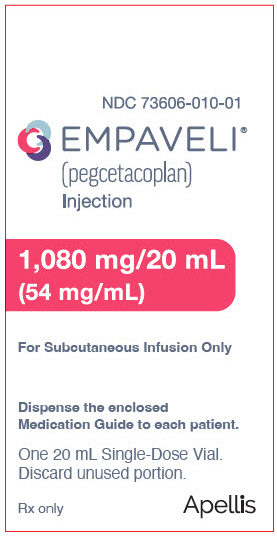
Empaveli Pegcetacoplan 1080 mg/20mL Injection, Solution
🆔 Identity & classification
Where does this data come from?
🏷️ RxNorm drug class
This medicine belongs to the Complement Inhibitor class.
Where does this data come from?
🏭 Manufacturer & labeler
Where does this data come from?
🩺 Clinical
Pegcetacoplan injection is used to treat paroxysmal nocturnal hemoglobinuria (PNH: a type of anemia in which too many red blood cells are broken down in the body, so there are not enough healthy cells to bring oxygen to all parts of the body) and a certain type of kidney disease called complement 3 glomerulopathy (C3G) or primary immune-complex membranoproliferative glomerulonephritis (IC-MPGN). Pegcetacoplan is in a class of medications called monoclonal antibodies. It works by blocking the activity of the part of the immune system that may damage blood cells.
Read the full MedlinePlus article ↗- Empaveli works by calming down part of your immune system — the complement system — which is great for treating your condition, but it also makes it harder for your body to fight o...
- Why do I have to get vaccinations before starting Empaveli? Can't I just start right away?
- Most people notice some redness, mild swelling, bruising, itching, or soreness where the infusion goes in — this is the most commonly reported side effect with Empaveli. The good n...
- What does the injection site reaction feel like, and is it something to worry about?
Patient education
Supplement & herbal interactions
Where does this data come from?
Ask a licensed pharmacist directly — free, answered by our team.
💊 What it looks like
Where does this data come from?
🧪 Inactive Ingredients / Excipients
Inactive ingredients, also called excipients, are components of the drug product other than the active ingredient. They may include fillers, dyes, coatings, preservatives, flavors, or other formulation ingredients.
💡 Tap an ingredient (hover on desktop) to see what it is and why it’s used.
-
UNII Q40Q9N063P
Acetic acid is a weak organic acid commonly used in medicines as a buffer and pH adjuster. It helps maintain the proper acidity level to ensure the drug remains stable and effective in its formulation.
-
UNII 4550K0SC9B
Sodium acetate is a salt derived from acetic acid. It acts as a buffer to help maintain the medicine's pH stability and may serve as a preservative or solubilizer in liquid formulations.
-
UNII 55X04QC32I
A strong alkaline chemical used to adjust and maintain the pH balance of liquid medicines. It helps keep the medicine stable and ensures it stays effective during storage.
-
820 mg / 20 mL
UNII 506T60A25R
Sorbitol is a natural sugar alcohol derived from glucose. It serves as a sweetener, humectant, and bulking agent in medications to improve taste and help maintain moisture in the product.
-
UNII 059QF0KO0R
Water is a liquid solvent that dissolves and mixes ingredients together in liquid medicines, syrups, and injections. It helps distribute the active drug evenly throughout the product.
5 inactive ingredients listed in the exact product block matched to this NDC.
Where does this data come from?
ingredient classCode="IACT" elements from the exact product block matched by this NDC. Label-section narrative from DailyMed / the openFDA label index is shown separately when available.Inactive ingredient FAQ
Are inactive ingredients the same for every manufacturer?
Why might an inactive ingredient be missing?
Can inactive ingredients matter?
💲 Pricing
A drug doesn't have one price. Each row is a different public payment system, and none is what you'd pay at the counter — that depends on your insurance. The ⓘ on each row explains what it measures.
| Price system | Per mL | Per package |
|---|---|---|
| Retail pharmacies payNADAC · weekly | Not in the retail survey — common for institutional, discontinued, or low-volume packs. | |
| Medicaid paysCMS SDUD · 12 mo | $243.48 | $4,869.66 / 20 ml |
| Medicare drug plans payPart D · Q2 2026 | $260.82 | $5,216.46 / 20 ml |
Where does this data come from?
🔁 Therapeutic equivalents
| Product | Labeler | Pack | NADAC/unit | TE | Status | Price vs. this |
|---|---|---|---|---|---|---|
| Empaveli 1080 mg/20mLthis 73606-0010-01 | Apellis | 1 vial | — | — | FDA listed | — |
Where does this data come from?
⏳ Availability & generic status
We did not find an FDA-approved generic match for this exact strength, form and route. Patent/protection dates below may affect future generic timing.
Why the date isn’t exact: Generic timing can change because patents may be challenged, settled, licensed, added, removed, or worked around with a narrower label — and FDA approval does not always mean a pharmacy can get the generic today.
🛈 What do these terms mean?
- Patent
- Legal protection listed in the Orange Book that may delay generic approval or launch. Issued by the U.S. Patent & Trademark Office.
- Substance patent
- Covers the active drug molecule itself — the hardest to design around. A generic generally can’t launch until it expires.
- Formulation (product) patent
- Covers a specific formulation or dosage form. A generic can sometimes work around it with a different formulation.
- Method-of-use patent
- A patent covering one specific approved use of the drug — not necessarily the whole molecule. A generic can sometimes launch with a “skinny label” that carves out the protected use and keeps the others.
- Skinny label
- A generic label that omits a still-patented use when the FDA allows it — letting a generic reach the market for the unprotected uses.
- Exclusivity
- FDA-granted marketing protection, separate from patents — e.g. 5-yr new chemical entity, 7-yr orphan drug, or a +6-month pediatric extension.
- Paragraph IV
- A generic applicant’s formal challenge to a listed patent. It can potentially lead to earlier generic entry, but often involves litigation or a settlement.
- RLD / RS
- Reference Listed Drug — the brand product the FDA uses as the reference for generic applications. Reference Standard — the product the FDA expects generics to compare against in bioequivalence testing.
- TE / AB rating
- FDA therapeutic-equivalence rating. An AB rating generally means the FDA considers a generic therapeutically equivalent to — and substitutable for — the brand.
- LOE (loss of exclusivity)
- The latest patent or exclusivity currently listed — the loss-of-exclusivity / latest-listed-protection date shown on this page. Paragraph-IV challenges and settlements can move the real date earlier; FDA approval and a manufacturer’s decision to market can move it later.
Built from the FDA Orange Book. The bars above are scaled to each protection’s expiry; the red LOE marker is the last one to lapse.
| Patent | Type | Use code | Expires |
|---|---|---|---|
| US 12290566 ↗ | Method of use | U-4174 | Dec 14, 2038 |
| US 12290566 ↗ | Method of use | U-4175 | Dec 14, 2038 |
| US 11040107 ↗ | Method of use | U-3172 | Apr 9, 2038 |
| US 11040107 ↗ | Method of use | U-3174 | Apr 9, 2038 |
| US 11040107 ↗ | Method of use | U-3173 | Apr 9, 2038 |
| US 11292815 ↗ | Drug substance | U-3124 | Nov 15, 2033 |
| US 11292815 ↗ | Drug substance | U-3354 | Nov 15, 2033 |
| US 12290566 ↗ | Method of use | U-4239 | Dec 14, 2038 |
| US 12290566 ↗ | Method of use | U-4238 | Dec 14, 2038 |
| US 12290566 ↗ | Method of use | U-4240 | Dec 14, 2038 |
| US 11844841 ↗ | Method of use | U-4241 | Dec 9, 2038 |
| US 11661441 ↗ | Drug substance | U-4242 | Jan 13, 2033 |
| US 11292815 ↗ | Drug substance | U-4242 | Nov 15, 2033 |
| US 11292815 ↗ | Drug substance | U-4243 | Nov 15, 2033 |
| US 11040107 ↗ | Method of use | U-4241 | Apr 9, 2038 |
| US 10875893 ↗ | Drug substance | U-4242 | Nov 15, 2033 |
| US 9169307 ↗ | Drug substance | U-4244 | Nov 18, 2027 |
| US 11661441 ↗ | Drug substance | U-3124 | Jan 13, 2033 |
| US 10875893 ↗ | Drug substance | U-3124 | Nov 15, 2033 |
| US 9169307 ↗ | Drug substance | U-3123 | Nov 18, 2027 |
| US 11844841 ↗ | Method of use | U-3172 | Dec 9, 2038 |
| US 11844841 ↗ | Method of use | U-3174 | Dec 9, 2038 |
| US 11844841 ↗ | Method of use | U-3173 | Dec 9, 2038 |
| US 10125171 ↗ | Drug substance | — | Aug 2, 2033 |
| US 7989589 ↗ | Drug substance | — | Dec 4, 2027 |
| US 10035822 ↗ | Drug substance | — | Nov 15, 2033 |
| US 7888323 ↗ | Drug substance | — | Dec 4, 2027 |
| Code | What it grants | Expires |
|---|---|---|
| I-972 | New indication (3-year) | Jul 28, 2028 |
| M-288 | New indication / labeling change (3-year) | Feb 8, 2026 |
| NCE | New Chemical Entity (5-year) | May 14, 2026 |
| ODE-351 | Orphan Drug Exclusivity (7-year) | May 14, 2028 |
| ODE-533 | Orphan Drug Exclusivity (7-year) | Jul 28, 2032 |
| ODE-539 | Orphan Drug Exclusivity (7-year) | Jul 28, 2032 |
Is there a generic version of EMPAVELI 1,080 MG/20 ML VIAL?
The FDA approved a generic — why can’t I get it at my pharmacy yet?
Why do different websites show different generic release dates?
What does “FDA listed” mean?
What does a patent or protection date mean here?
What does “current Orange Book estimate” mean?
Can a generic come out before the last patent expires?
Can a generic come out after the listed dates?
What is the difference between patents and exclusivity?
Why are there multiple patent dates?
Where does this data come from?
🗺️ Medicaid utilization & spend
📊 Medicare Part D spend CMS · PART D · 2026 (Q1)
🔬 Reported adverse events (FAERS)
Top reported reactions
Age at onset
Reporter sex
Serious outcomes
Where does this data come from?
📦 Packaging — all sizes for this product
| Package NDC | Description | Marketing start | Status |
|---|---|---|---|
| 73606-0010-01 You're viewing this | 1 VIAL in 1 CARTON (73606-010-01) / 20 mL in 1 VIAL | 2021-05-14 | Active |
🧭 About this NDC listing & data coverage
What data is (and isn’t) available for this NDC — tap to expand
| NDC identity (package / product / labeler codes) | ✓ Available |
| Labeler | ✓ Available |
| Product & package description | ✓ Available |
| Marketing category & status | ✓ Available |
| Active ingredient / dosage form / route | ✓ Available |
| FDA label (SPL via DailyMed) | ✓ Available |
| Package photos | ✓ Available |
| Inactive ingredients (structured) | ✓ Available |
| NADAC pharmacy acquisition price (CMS) | — Not published for this NDC CMS publishes NADAC only for NDCs reported in its retail-pharmacy survey. |
| Orange Book / therapeutic-equivalence data | ✓ Available |
| HCPCS J-code billing crosswalk | — Not published for this NDC Most self-administered / retail products have no J-code — that is normal. |
| Medicaid utilization (CMS SDUD) | ✓ Available |
Questions about this listing
Why is there no price listed?
Is the NDC printed on the package the same as the 11-digit billing NDC?
What do the three segments of this NDC mean?
Is this package still being marketed?
Who lists this product with the FDA?
Do I need a prescription for this product?
Where does this data come from?
📄 Full prescribing information FDA SPL
🚨 Boxed Warning ▾
WARNING: SERIOUS INFECTIONS CAUSED BY ENCAPSULATED BACTERIA EMPAVELI, a complement inhibitor, increases the risk of serious infections, especially those caused by encapsulated bacteria, such as Streptococcus pneumoniae , Neisseria meningitidis , and Haemophilus influenzae type B [see Warnings and Precautions (5.1) ] . Life-threatening and fatal infections with encapsulated bacteria have occurred in patients treated with complement inhibitors. These infections may become rapidly life-threatening or fatal if not recognized and treated early.
Complete or update vaccination for encapsulated bacteria at least 2 weeks prior to the first dose of EMPAVELI, unless the risks of delaying therapy with EMPAVELI outweigh the risk of developing a serious infection. Comply with the most current Advisory Committee on Immunization Practices (ACIP) recommendations for vaccinations against encapsulated bacteria in patients receiving a complement inhibitor. See Warnings and Precautions (5.1) for additional guidance on the management of the risk of serious infections caused by encapsulated bacteria.
Patients receiving EMPAVELI are at increased risk for invasive disease caused by encapsulated bacteria, even if they develop antibodies following vaccination. Monitor patients for early signs and symptoms of serious infections and evaluate immediately if infection is suspected. Because of the risk of serious infections caused by encapsulated bacteria, EMPAVELI is available only through a restricted program under a Risk Evaluation and Mitigation Strategy (REMS) called the EMPAVELI REMS [see Warnings and Precautions (5.2) ] .
WARNING: SERIOUS INFECTIONS CAUSED BY ENCAPSULATED BACTERIA See full prescribing information for complete boxed warning. EMPAVELI increases the risk of serious and life-threatening infections caused by encapsulated bacteria including Streptococcus pneumoniae , Neisseria meningitidis and Haemophilus influenzae type B. Complete or update vaccination for encapsulated bacteria at least 2 weeks prior to the first dose of EMPAVELI, unless the risks of delaying EMPAVELI outweigh the risks of developing a serious infection.
Comply with the most current Advisory Committee on Immunization Practices (ACIP) recommendations for vaccinations against encapsulated bacteria in patients receiving a complement inhibitor. ( 5.1 ) Patients receiving EMPAVELI are at increased risk for invasive disease caused by encapsulated bacteria, even if they develop antibodies following vaccination. Monitor patients for early signs and symptoms of serious infections and evaluate immediately if infection is suspected.
( 5.1 ) EMPAVELI is available only through a restricted program called EMPAVELI REMS.
🎯 Indications and Usage ▾
1 INDICATIONS AND USAGE EMPAVELI is a complement inhibitor indicated: for the treatment of adult patients with paroxysmal nocturnal hemoglobinuria (PNH). ( 1.1 ) for the treatment of adult and pediatric patients aged 12 years and older with C3 glomerulopathy (C3G) or primary immune-complex membranoproliferative glomerulonephritis (IC-MPGN), to reduce proteinuria and the loss of kidney function. ( 1.2 )
1.1Paroxysmal Nocturnal Hemoglobinuria EMPAVELI ® is indicated for the treatment of adult patients with paroxysmal nocturnal hemoglobinuria (PNH).
1.2C3 Glomerulopathy or Primary Immune-Complex Membranoproliferative Glomerulonephritis EMPAVELI ® is indicated for the treatment of adult and pediatric patients aged 12 years and older with C3 glomerulopathy (C3G) or primary immune-complex membranoproliferative glomerulonephritis (IC-MPGN), to reduce proteinuria and the loss of kidney function.
⏱️ Dosage and Administration ▾
2 DOSAGE AND ADMINISTRATION PNH ( 2.2 ) Recommended dosage is 1,080 mg administered subcutaneously twice weekly. C3G or Primary IC-MPGN ( 2.3 ) Recommended dosage for adults is 1,080 mg administered subcutaneously twice weekly. Recommended dosage for pediatric patients is dependent upon patient weight.
See full prescribing information for the recommended dosage in patients with C3G or primary IC-MPGN. EMPAVELI can be administered via a commercially available pump or with EMPAVELI Injector. ( 2.4 ) See Full Prescribing Information for instructions on preparation and administration.
( 2.2 , 2.3 , 2.4 )
2.1Recommended Vaccination and Prophylaxis Vaccinate patients against encapsulated bacteria, including Streptococcus pneumoniae and Neisseria meningitidis (serogroups A, C, W, Y and B), according to current ACIP recommendations at least 2 weeks prior to initiation of EMPAVELI therapy [see Warnings and Precautions (5.1) ] . If urgent EMPAVELI therapy is indicated in a patient who is not up to date with vaccines for Streptococcus pneumoniae and Neisseria meningitidis , according to ACIP recommendations, provide the patient with antibacterial drug prophylaxis and administer these vaccines as soon as possible.
Healthcare professionals who prescribe EMPAVELI must enroll in the REMS for EMPAVELI [see Warnings and Precautions (5.2) ] .
2.2Recommended Dosage - PNH The recommended dose of EMPAVELI is 1,080 mg administered subcutaneously twice weekly [see Dosage and Administration (2.4) ]. Dosage for patients switching to EMPAVELI from C5 inhibitors To reduce the risk of hemolysis with abrupt treatment discontinuation: For patients switching from eculizumab, initiate EMPAVELI while continuing eculizumab at its current dose. After 4 weeks, discontinue eculizumab before continuing on monotherapy with EMPAVELI.
For patients switching from ravulizumab, initiate EMPAVELI no more than 4 weeks after the last dose of ravulizumab. Dose Adjustment For lactate dehydrogenase (LDH) levels greater than 2 × the upper limit of normal (ULN), adjust the dosing regimen to 1,080 mg every three days. In the event of a dose increase, monitor LDH twice weekly for at least 4 weeks.
Missed Dose Administer EMPAVELI as soon as possible after a missed dose. Resume the regular dosing schedule following administration of the missed dose.
2.3Recommended Dosage - C3G or Primary IC-MPGN For adults (18 years and older) The recommended dose of EMPAVELI is 1,080 mg (20 mL) administered subcutaneously twice weekly [see Dosage and Administration (2.4) ] . For pediatric patients (12 years to less than 18 years of age) For pediatric patients 12 years of age and older, administer EMPAVELI dose and volume based upon body weight, according to the schedule in Table 1. Administer the recommended dose of EMPAVELI subcutaneously twice weekly [see Dosage and Administration (2.4) ] .
Table 1: Dosing recommendation in C3G or primary IC-MPGN Patient Body Weight First dose (infusion volume) Second dose (infusion volume) Maintenance dose (infusion volume) 50 kg or higher 1,080 mg (20 mL) 1,080 mg (20 mL) 1,080 mg twice weekly (20 mL) 35 kg to less than 50 kg 648 mg (12 mL) 810 mg (15 mL) 810 mg twice weekly (15 mL) Less than 35 kg 540 mg (10 mL) 540 mg (10 mL) 648 mg twice weekly (12 mL) Missed Dose Administer EMPAVELI as soon as possible after a missed dose. Resume the regular dosing schedule following administration of the missed dose.
2.4Administration EMPAVELI is for subcutaneous administration using: A commercially available infusion pump with a reservoir of at least 20 mL OR EMPAVELI Injector, a single-use, disposable on body injector EMPAVELI is intended for use under the guidance of a healthcare professional. Patients may self-administer or caregivers may administer EMPAVELI after proper training by a healthcare professional on how to prepare and administer EMPAVELI. Follow the steps below and use aseptic technique to prepare and administer EMPAVELI, either by an infusion pump or…
💊 Dosage Forms and Strengths ▾
3 DOSAGE FORMS AND STRENGTHS Injection: 1,080 mg/20 mL (54 mg/mL) clear, colorless to slightly yellowish solution in a single-dose vial. Injection: 1,080 mg/20 mL (54 mg/mL) in a single-dose vial. ( 3 )
⛔ Contraindications ▾
4 CONTRAINDICATIONS EMPAVELI is contraindicated: in patients with hypersensitivity to pegcetacoplan or to any of the excipients [see Warnings and Precautions (5.3) ] . for initiation in patients with unresolved serious infection caused by encapsulated bacteria including Streptococcus pneumoniae , Neisseria meningitidis , and Haemophilus influenzae type B [see Warnings and Precautions (5.1) ] . EMPAVELI is contraindicated: in patients with hypersensitivity to pegcetacoplan or any of the excipients. ( 4 ) for initiation in patients with unresolved serious infection caused by encapsulated bacteria.
( 4 )
⚠️ Warnings and Cautions ▾
5 WARNINGS AND PRECAUTIONS Serious infections caused by encapsulated bacteria. ( 5.1 ) Infusion-Related Reactions: Monitor patients for infusion-related reactions and institute appropriate medical management as needed. ( 5.3 ) Interference with Laboratory Tests: Use of silica reagents in coagulation panels may result in artificially prolonged activated partial thromboplastin time (aPTT). ( 5.5 )
5.1Serious Infections Caused by Encapsulated Bacteria EMPAVELI, a complement inhibitor, increases a patient's susceptibility to serious, life-threatening, or fatal infections caused by encapsulated bacteria including Streptococcus pneumoniae , Neisseria meningitidis (caused by any serogroup, including non-groupable strains), and Haemophilus influenzae type B. Life-threatening and fatal infections with encapsulated bacteria have occurred in both vaccinated and unvaccinated patients treated with complement inhibitors.
The initation of EMPAVELI treatment is contraindicated in patients with unresolved serious infection caused by encapsulated bacteria. Complete or update vaccination against encapsulated bacteria at least 2 weeks prior to administration of the first dose of EMPAVELI, according to the most current ACIP recommendations for patients receiving a complement inhibitor. Revaccinate patients in accordance with ACIP recommendations considering the duration of therapy with EMPAVELI.
Note that, ACIP recommends an administration schedule in patients receiving complement inhibitors that differs from the administration schedule in the vaccine prescribing information. If urgent EMPAVELI therapy is indicated in a patient who is not up to date with vaccines against encapsulated bacteria according to ACIP recommendations, provide the patient with antibacterial drug prophylaxis and administer these vaccines as soon as possible. Various durations and regimens of antibacterial drug prophylaxis have been considered, but the optimal durations and drug regimens for prophylaxis and their efficacy have not been studied in unvaccinated or vaccinated patients receiving complement inhibitors, including EMPAVELI.
The benefits and risks of treatment with EMPAVELI, as well as the benefits and risks of antibacterial drug prophylaxis in unvaccinated or vaccinated patients, must be considered against the known risks for serious infections caused by encapsulated bacteria. Vaccination does not eliminate the risk of serious encapsulated bacterial infections, despite development of antibodies following vaccination. Closely monitor patients for early signs and symptoms of serious infection and evaluate patients immediately if an infection is suspected.
Inform patients of these signs and symptoms and instruct patients to seek immediate medical care if these signs and symptoms occur. Promptly treat known infections. Serious infection may become rapidly life-threatening or fatal if not recognized and treated early.
Consider interruption of EMPAVELI in patients who are undergoing treatment for serious infections. EMPAVELI is available only through a restricted program under a REMS [see Warnings and Precautions (5.2) ].
5.2EMPAVELI REMS EMPAVELI is available only through a restricted program under a REMS called EMPAVELI REMS, because of the risk of serious infections caused by encapsulated bacteria [see Warnings and Precautions (5.1) ] . Notable requirements of the EMPAVELI REMS include the following: Prescribers must enroll in the REMS. Prescribers must counsel patients about the risk of serious infections caused by encapsulated bacteria.
Prescribers must provide the patients with the REMS educational materials. Prescribers must assess patient vaccination status for encapsulated bacteria and vaccinate if needed according to current ACIP recommendations two weeks prior to the first dose of EMPAVELI. Prescribers must provide a prescription for antibacterial drug prophylaxis if treatment must be started urgently, and the patient is not up to date with vaccinations agai…
🤒 Adverse Reactions ▾
6 ADVERSE REACTIONS The following clinically significant adverse reactions are discussed in greater detail in other sections of the labeling: Serious Infections Caused by Encapsulated Bacteria [see Warnings and Precautions (5.1) ] Infusion-Related Reactions [see Warnings and Precautions (5.3) ] The most common adverse reactions in patients with PNH (incidence ≥10%) were injection site reactions, infections, diarrhea, abdominal pain, respiratory tract infection, pain in extremity, hypokalemia, fatigue, viral infection, cough, arthralgia, dizziness, headache, and rash.
( 6.1 ) The most common adverse reactions in patients with C3G or primary IC-MPGN (incidence ≥10%) were infusion site reactions, pyrexia, nasopharyngitis, influenza, cough, and nausea. ( 6.1 ) To report SUSPECTED ADVERSE REACTIONS, contact Apellis Pharmaceuticals, Inc. at 1-833-866-3346 or FDA at 1-800-FDA-1088 or www.fda.gov/medwatch.
6.1Clinical Trials Experience Because clinical trials are conducted under widely varying conditions, adverse reaction rates observed in the clinical trials of a drug cannot be directly compared to rates in the clinical trials of another drug and may not reflect the rates observed in practice. Paroxysmal Nocturnal Hemoglobinuria Study in Complement-Inhibitor Experienced Adult Patients with PNH (Study APL2-302) The data described below reflect the exposure in 80 adult patients with PNH who received EMPAVELI (n=41) or eculizumab (n=39) at the recommended dosing regimens for 16 weeks.
Serious adverse reactions were reported in 7 (17%) patients with PNH receiving EMPAVELI. The most common serious adverse reaction in patients treated with EMPAVELI was infections (5%). The most common adverse reactions (≥10%) with EMPAVELI were injection-site reactions, infections, diarrhea, abdominal pain, respiratory tract infection, viral infection, and fatigue.
Table 2 describes the adverse reactions that occurred in ≥5% of patients treated with EMPAVELI in Study APL2-302. Table 2: Adverse Reactions Reported in ≥5% of Patients Treated with EMPAVELI in Study APL2-302 Adverse Reaction EMPAVELI (N=41) n (%) Eculizumab (N=39) n (%) General disorders and administration site conditions Injection-site reaction Grouped terms Term includes injection-site erythema, injection-site reaction, injection-site swelling, injection-site induration, injection-site bruising, injection-site pain, injection-site pruritus, vaccination site reaction, administration site swelling, injection-site hemorrhage, injection -site edema, injection-site warmth, administration site pain, application site pain, injection-site mass, injection-site rash, vaccination site pain 16 (39) 2 (5) Fatigue 5 (12) 9 (23) Chest pain 3 (7) 1 (3) Infections and infestations Infections 12 (29) 10 (26) Respiratory tract infection 6 (15) 5 (13) Viral Infection 5 (12) 3 (8) Gastrointestinal disorders Diarrhea 9 (22) 1 (3) Abdominal pain 8 (20) 4 (10) Musculoskeletal disorders Back pain 3 (7) 4 (10) Nervous system disorders Headache 3 (7) 9 (23) Vascular disorders Systemic hypertension 3 (7) 1 (3) Clinically relevant adverse reactions in less than 5% of patients include: Intestinal ischemia Biliary sepsis Hypersensitivity pneumonitis After the randomized control period, 77 patients continued the study, and all were treated with EMPAVELI monotherapy at the recommended dosing regimen for up to 48 weeks.
Serious adverse reactions were reported in 18 patients (23%). Additional adverse reactions reported in >5% of patients treated with EMPAVELI during the open-label part of the study compared to the randomized controlled part in Table 1 were cough (12%), arthralgia (8%), oropharyngeal pain (8%), pyrexia (8%), pain in extremity (7%), thrombocytopenia (7%), abdominal distension (5%), acute kidney injury (5%), anxiety (5%), and myalgia (5%). One patient (1%) died due to COVID-19 infection.
Description of Select Adverse Reactions Injection-Site Reactions Injection/infusion-site reactions (e.g., erythema, swelling,…
👥 Use in Specific Populations ▾
8 USE IN SPECIFIC POPULATIONS
8.1Pregnancy Risk Summary There are insufficient data on EMPAVELI use in pregnant women to inform a drug-associated risk of major birth defects, miscarriage, or adverse maternal or fetal outcomes. There are risks to the mother and fetus associated with untreated PNH in pregnancy (see Clinical Considerations ) . The use of EMPAVELI may be considered following an assessment of the risks and benefits.
Treatment of pregnant cynomolgus monkeys with pegcetacoplan at a subcutaneous dose of 28 mg/kg/day (2.9 times human exposure based on AUC) from the gestation period through parturition resulted in a statistically significant increase in abortions or stillbirths compared to controls (see Data ) . The estimated background risk of major birth defects and miscarriage for the indicated population is unknown. All pregnancies have a background risk of major birth defect, loss, or other adverse outcomes.
In the U.S. general population, the estimated background risk of major birth defects and miscarriages in clinically recognized pregnancies is 2% to 4% and 15% to 20%, respectively. Clinical Considerations Disease-associated maternal and/or fetal/neonatal risk PNH in pregnancy is associated with adverse maternal outcomes, including worsening cytopenias, thrombotic events, infections, bleeding, miscarriages and increased maternal mortality, and adverse fetal outcomes, including fetal death and premature delivery. Data Animal Data Animal reproduction studies with pegcetacoplan were conducted in cynomolgus monkeys.
Pegcetacoplan treatment of pregnant cynomolgus monkeys at a subcutaneous dose of 28 mg/kg/day (2.9 times human exposure based on AUC) from the gestation period through parturition resulted in a statistically significant increase in abortions and stillbirths compared to controls. No increase in abortions or stillbirths occurred at a dose of 7 mg/kg/day (1.3 times human exposure based on AUC). No maternal toxicity or teratogenic effects were observed in offspring delivered at term.
No developmental effects were observed in infants up to 6 months postpartum. Systemic exposure to pegcetacoplan of less than 1% of maternal levels was detected in fetuses from monkeys treated with 28 mg/kg/day from the period of organogenesis through the second trimester.
8.2Lactation Risk Summary It is not known whether pegcetacoplan is secreted in human milk or whether there is potential for absorption and harm to the infant. There are no data on the effects of pegcetacoplan on milk production. Pegcetacoplan is present in milk of lactating monkeys (see Animal Data ) .
Since many medicinal products are secreted into human milk, and because of the potential for serious adverse reaction in a breastfeeding child, breastfeeding should be discontinued during treatment and for 40 days after the last dose. Data Animal Data Pegcetacoplan was detectable in milk of lactating monkeys at less than 1% concentration of serum levels but was not detectable in the serum of nursing infants.
8.3Females and Males of Reproductive Potential Contraception Females EMPAVELI may cause embryo-fetal harm when administered to pregnant women [see Use in Specific Populations (8.1) ] . Pregnancy testing is recommended for females of reproductive potential prior to treatment with EMPAVELI. Advise female patients of reproductive potential to use effective contraception during treatment with EMPAVELI and for 40 days after the last dose.
8.4Pediatric Use The safety and effectiveness of EMPAVELI for the treatment of C3G or primary IC-MPGN have been established in pediatric patients aged 12 years and older. Use of EMPAVELI for this indication is supported by evidence from an adequate and well controlled trial that enrolled 55 pediatric patients aged 12 years and older [see Adverse Reactions (6.1) , and Clinical Studies (14.2) ] . The safety and effectiveness of EMPAVELI in pediatric patients less than 12 years of age with C3G or primary IC-MPGN have not been es…
🤰 Pregnancy ▾
8.1Pregnancy Risk Summary There are insufficient data on EMPAVELI use in pregnant women to inform a drug-associated risk of major birth defects, miscarriage, or adverse maternal or fetal outcomes. There are risks to the mother and fetus associated with untreated PNH in pregnancy (see Clinical Considerations ) . The use of EMPAVELI may be considered following an assessment of the risks and benefits.
Treatment of pregnant cynomolgus monkeys with pegcetacoplan at a subcutaneous dose of 28 mg/kg/day (2.9 times human exposure based on AUC) from the gestation period through parturition resulted in a statistically significant increase in abortions or stillbirths compared to controls (see Data ) . The estimated background risk of major birth defects and miscarriage for the indicated population is unknown. All pregnancies have a background risk of major birth defect, loss, or other adverse outcomes.
In the U.S. general population, the estimated background risk of major birth defects and miscarriages in clinically recognized pregnancies is 2% to 4% and 15% to 20%, respectively. Clinical Considerations Disease-associated maternal and/or fetal/neonatal risk PNH in pregnancy is associated with adverse maternal outcomes, including worsening cytopenias, thrombotic events, infections, bleeding, miscarriages and increased maternal mortality, and adverse fetal outcomes, including fetal death and premature delivery. Data Animal Data Animal reproduction studies with pegcetacoplan were conducted in cynomolgus monkeys.
Pegcetacoplan treatment of pregnant cynomolgus monkeys at a subcutaneous dose of 28 mg/kg/day (2.9 times human exposure based on AUC) from the gestation period through parturition resulted in a statistically significant increase in abortions and stillbirths compared to controls. No increase in abortions or stillbirths occurred at a dose of 7 mg/kg/day (1.3 times human exposure based on AUC). No maternal toxicity or teratogenic effects were observed in offspring delivered at term.
No developmental effects were observed in infants up to 6 months postpartum. Systemic exposure to pegcetacoplan of less than 1% of maternal levels was detected in fetuses from monkeys treated with 28 mg/kg/day from the period of organogenesis through the second trimester.
🧒 Pediatric Use ▾
8.4Pediatric Use The safety and effectiveness of EMPAVELI for the treatment of C3G or primary IC-MPGN have been established in pediatric patients aged 12 years and older. Use of EMPAVELI for this indication is supported by evidence from an adequate and well controlled trial that enrolled 55 pediatric patients aged 12 years and older [see Adverse Reactions (6.1) , and Clinical Studies (14.2) ] . The safety and effectiveness of EMPAVELI in pediatric patients less than 12 years of age with C3G or primary IC-MPGN have not been established.
Safety and effectiveness of EMPAVELI in pediatric patients with PNH have not been established.
🧓 Geriatric Use ▾
8.5Geriatric Use Clinical studies of EMPAVELI did not include sufficient numbers of subjects aged 65 and over to determine whether they respond differently from younger subjects. Other reported clinical experience has not identified differences in responses between geriatric and younger patients.
🧬 Clinical Pharmacology ▾
12 CLINICAL PHARMACOLOGY
12.1Mechanism of Action Pegcetacoplan binds to complement protein C3 and its activation fragment C3b, thereby regulating the cleavage of C3 and the generation of downstream effectors of complement activation. In PNH, extravascular hemolysis (EVH) is facilitated by C3b opsonization while intravascular hemolysis (IVH) is mediated by the downstream membrane attack complex (MAC). Pegcetacoplan acts proximally in the complement cascade controlling both C3b-mediated EVH and terminal complement-mediated IVH.
In C3G and primary IC-MPGN, complement dysregulation and overactivation causes deposition of C3 fragments in glomeruli, which contributes to the pathogenesis of C3G and is thought to contribute to the pathogenesis of primary IC-MPGN. Pegcetacoplan binds C3 and its activation fragment C3b, therefore inhibiting C3 activation, decreasing C3 glomerular fragment deposition, and decreasing C5 convertase activity and subsequent assembly of C5b-9.
12.2Pharmacodynamics In patients with PNH administered multiple doses of pegcetacoplan, the mean C3 concentration increased from 94 mg/dL at baseline to 380 mg/dL at Week 16 and sustained through Week 48 (Study APL2-302). In study APL2-308, the mean C3 concentration increased from 95 mg/dL at baseline to 356 mg/dL at Week 26 [see Clinical Studies (14.1) ] . The percentage of PNH Type II + III RBCs increased from 66.2% at baseline to 93.9% at Week 16 and sustained through Week 48 (Study APL2-302).
In Study APL2-308, the mean percentage of PNH Type II + III RBCs increased from 42.4% at baseline to 90% at Week 26. The mean percentage of PNH Type II + III RBCs with C3 deposition decreased from 17.8% at baseline to 0.2% at Week 16 and sustained through Week 48 (Study APL2-302). In Study APL2-308, the mean percentage of PNH Type II + III RBCs with C3 deposition decreased from 2.85% at baseline to 0.09% at Week 26.
In patients with C3G or primary IC-MPGN administered pegcetacoplan SC infusion twice weekly, mean (SD) serum C3 levels increased from 62 (48) mg/dL at baseline to 371 (120) mg/dL at Week 26 compared to no change with placebo. These increases were sustained through Week 52. Mean (SD) plasma soluble C5b-9 levels decreased from 903 (698) ng/mL at baseline to 290 (249) ng/mL at Week 26 with EMPAVELI compared to no change with placebo.
These decreases were sustained through Week 52. Of patients with evaluable kidney biopsies (n=69), 74% of patients on pegcetacoplan had a decrease in C3 complement staining by at least 2 orders of magnitude from baseline to Week 26 compared to 12% on placebo (Study APL2-C3G-310). Cardiac Electrophysiology At the recommended dose of EMPAVELI, no large mean increases in QTc interval (i.e., greater than 20 msec) were observed.
12.3Pharmacokinetics In patients with PNH, the serum pegcetacoplan concentrations achieved steady-state approximately 4 to 6 weeks following the first dose. The exposure of pegcetacoplan increased proportionally over a dose range from 45 to 1,440 mg (0.04 to 1.33 times the approved recommended dose). The mean (CV%) trough serum concentration observed at Week 16 was 706 (15.1%) mcg/mL and sustained through Week 48 (Study APL2-302).
In Study APL2-308, mean (CV%) trough serum concentration was 744 (25.5%) mcg/mL at Week 26. In patients with C3G or primary IC-MPGN, serum pegcetacoplan concentrations reached steady state approximately 4 to 8 weeks following twice weekly SC infusion. The mean (CV%) trough serum concentrations ranged between 716 (31%) and 766 (23%) mcg/mL from Week 4 to Week 26 and were maintained through Week 52 (Study APL2-C3G-310).
Absorption The median T max of pegcetacoplan is between 108 and 144 hours (4.5 to 6 days) after a single dose. Distribution The mean (CV%) volume of distribution of pegcetacoplan is approximately
3.98L (32%) in patients with PNH. The estimated mean (CV%) volume of distribution of pegcetacoplan is approximately
4.79 L (38%) and
4.58 L (29%) in patients with C3G or primary IC-M…
🧬 Mechanism of Action ▾
12.1Mechanism of Action Pegcetacoplan binds to complement protein C3 and its activation fragment C3b, thereby regulating the cleavage of C3 and the generation of downstream effectors of complement activation. In PNH, extravascular hemolysis (EVH) is facilitated by C3b opsonization while intravascular hemolysis (IVH) is mediated by the downstream membrane attack complex (MAC). Pegcetacoplan acts proximally in the complement cascade controlling both C3b-mediated EVH and terminal complement-mediated IVH.
In C3G and primary IC-MPGN, complement dysregulation and overactivation causes deposition of C3 fragments in glomeruli, which contributes to the pathogenesis of C3G and is thought to contribute to the pathogenesis of primary IC-MPGN. Pegcetacoplan binds C3 and its activation fragment C3b, therefore inhibiting C3 activation, decreasing C3 glomerular fragment deposition, and decreasing C5 convertase activity and subsequent assembly of C5b-9.
📦 How Supplied / Storage and Handling ▾
16 HOW SUPPLIED/STORAGE AND HANDLING How Supplied EMPAVELI injection is a clear, colorless to slightly yellowish aqueous solution for subcutaneous infusion supplied as 1,080 mg/20 mL (54 mg/mL) solution in 20-mL single-dose vials. EMPAVELI is available in 20-mL single-dose vials individually packaged in cartons that are supplied in 8-count convenience cartons. NDC 73606-010-01.
Storage and Handling Store vials of EMPAVELI refrigerated at 2°C to 8°C (36°F to 46°F) in the original carton to protect from light. Do not use beyond the expiration date stamped on the carton.
📦 Storage and Handling ▾
Storage and Handling Store vials of EMPAVELI refrigerated at 2°C to 8°C (36°F to 46°F) in the original carton to protect from light. Do not use beyond the expiration date stamped on the carton.
📋 Description ▾
11 DESCRIPTION EMPAVELI contains pegcetacoplan, a complement inhibitor. Pegcetacoplan is a symmetrical molecule comprised of two identical pentadecapeptides covalently bound to the ends of a linear 40-kiloDalton (kDa) PEG molecule. The peptide portions of pegcetacoplan contain 1-methyl-L-tryptophan (Trp(Me)) in position 4 and amino(ethoxyethoxy)acetic acid (AEEA) in position 14.
The molecular weight of pegcetacoplan is approximately 43.5 kDa. The molecular formula is C 1970 H 3848 N 50 O 947 S 4 . The structure of pegcetacoplan is shown below.
EMPAVELI injection is a sterile, clear, colorless to slightly yellowish aqueous solution for subcutaneous use and is supplied in a 20-mL single-dose vial. Each 1 mL of solution contains 54 mg of pegcetacoplan, 41 mg of sorbitol, 0.384 mg of glacial acetic acid, 0.490 mg of sodium acetate trihydrate, and Water for Injection USP. EMPAVELI may also contain sodium hydroxide and/or additional glacial acetic acid for adjustment to a target pH of 5.
Chemical Structure
💬 Information for Patients ▾
17 PATIENT COUNSELING INFORMATION Advise the patient to read the FDA-approved patient labeling (Medication Guide and Instructions for Use). Dosing For weight-based dosing, instruct caregivers and patients on the proper techniques for preparing, storing, measuring, and administering EMPAVELI via EMPAVELI Injector or commercially available infusion pump. Serious Infections Caused by Encapsulated Bacteria Advise patients of the risk of serious infection.
Inform patients of the need to complete or update their vaccinations against encapsulated bacteria at least 2 weeks prior to receiving the first dose of EMPAVELI or receive antibacterial drug prophylaxis if EMPAVELI treatment must be initiated immediately and they have not been previously vaccinated. Inform the patient that they are required to be revaccinated according to current ACIP recommendations for encapsulated bacteria while on EMPAVELI therapy [see Warnings and Precautions (5.1) ] . Inform patients that vaccination may not prevent serious infection and strongly advise patients to seek immediate medical attention if these signs or symptoms occur.
These signs and symptoms include the following: fever with or without shivers or the chills fever with chest pain and cough fever with breathlessness/fast breathing fever with high heart rate headache and a fever headache with a stiff neck or stiff back fever and a rash confusion headache with nausea or vomiting body aches with flu-like symptoms clammy skin eyes sensitive to light Inform patients that they will be given a Patient Safety Card for EMPAVELI that they should carry with them at all times. This card describes symptoms which, if experienced, should prompt the patient to seek immediate medical evaluation.
EMPAVELI REMS EMPAVELI is available only through a restricted program called EMPAVELI REMS [see Warnings and Precautions (5.2) ] . Inform the patient of the following notable requirements: Patients must receive counseling about the risk of serious infections caused by encapsulated bacteria. Patients must receive written educational materials about this risk.
Patients must be instructed to carry the Patient Safety Card with them at all times during and for 2 months following treatment with EMPAVELI. Patients must be instructed to complete or update vaccinations against encapsulated bacteria per ACIP recommendations as directed by the prescriber prior to treatment with EMPAVELI. Patients must receive antibiotics as directed by the prescriber if they are not up to date with vaccinations against encapsulated bacteria and have to start EMPAVELI right away.
Anaphylaxis and infusion-related reactions Advise patients of the risk of anaphylaxis and infusion-related reactions. Inform patients that anaphylaxis is life-threatening and strongly advise patients to seek immediate medical attention if these signs or symptoms occur. These signs and symptoms include the following: difficulty breathing including shortness of breath and wheezing swollen tongue or throat feeling faint rapid heart rate skin reactions, including hives and itching nausea or vomiting confusion and anxiety dizziness or fainting Discontinuation Inform patients with PNH that they may develop hemolysis due to PNH when EMPAVELI is discontinued and that they will be monitored by their healthcare professional for at least 8 weeks following discontinuation of EMPAVELI.
Inform patients who discontinue EMPAVELI to keep the Patient Safety Card with them for 2 months after the last dose of EMPAVELI, because the increased risk of serious infection persists for several weeks following discontinuation of EMPAVELI.
💬 Medication Guide ▾
This Medication Guide has been approved by the U.S. Food and Drug Administration. Revised: 8/2026 MEDICATION GUIDE EMPAVELI ® (em-puh-vel-ee) (pegcetacoplan) injection, for subcutaneous use What is the most important information I should know about EMPAVELI?
EMPAVELI is a medicine that affects your immune system. EMPAVELI may lower the ability of your immune system to fight infections. EMPAVELI increases your chance of getting serious infections caused by encapsulated bacteria, including Streptococcus pneumoniae , Neisseria meningitidis , and Haemophilus influenzae type B.
These serious infections may quickly become life-threatening or cause death if not recognized and treated early. You must complete or be up to date with the vaccines against Streptococcus pneumoniae and Neisseria meningitidis at least 2 weeks before your first dose of EMPAVELI. If you have not completed your vaccines and EMPAVELI must be started right away, you should receive the required vaccines as soon as possible.
If you have not been vaccinated and EMPAVELI must be started right away, you should also receive antibiotics to take for as long as your healthcare provider tells you. If you have been vaccinated against these bacteria in the past, you might need additional vaccines before starting EMPAVELI. Your healthcare provider will decide if you need additional vaccines.
Vaccines do not prevent all infections caused by encapsulated bacteria. Call your healthcare provider or get emergency medical care right away if you get any of these signs and symptoms of a serious infection: fever with or without shivers or the chills fever with chest pain and cough fever with high heart rate headache and fever confusion clammy skin fever and a rash fever with breathlessness or fast breathing headache with nausea or vomiting headache with a stiff neck or stiff back body aches with flu-like symptoms eyes sensitive to light Your healthcare provider will give you a Patient Safety Card about the risk of serious infections.
Carry it with you at all times during treatment and for 2 months after your last dose of EMPAVELI. Your risk of serious infections may continue for several weeks after your last dose of EMPAVELI. It is important to show this card to any healthcare provider who treats you.
This will help them diagnose and treat you quickly. EMPAVELI is only available through a program called the EMPAVELI Risk Evaluation and Mitigation Strategy (REMS). Before you can take EMPAVELI, your healthcare provider must: enroll in the EMPAVELI REMS program counsel you about the risk of serious infections caused by certain bacteria give you information about the symptoms of serious infections make sure that you are vaccinated against serious infections caused by encapsulated bacteria and that you receive antibiotics if you need to start EMPAVELI right away and you are not up to date on your vaccines give you a Patient Safety Card about your risk of serious infections, as discussed above For more information about side effects, see " What are the possible side effects of EMPAVELI ?" What is EMPAVELI?
EMPAVELI is a prescription medicine used to: treat adults with a disease called paroxysmal nocturnal hemoglobinuria (PNH). treat adults and children 12 years of age and older with a kidney disease called complement 3 glomerulopathy (C3G) or primary immune-complex membranoproliferative glomerulonephritis (IC-MPGN), to reduce levels of protein in the urine (proteinuria) and the loss of kidney function. It is not known if EMPAVELI is safe and effective in children with PNH. It is not known if EMPAVELI is safe and effective in children under 12 years of age with C3G or primary IC-MPGN.
Do not take EMPAVELI if you: are allergic to pegcetacoplan or any of the ingredients in EMPAVELI. See the end of this Medication Guide for a complete list of ingredients in EMPAVELI. have a serious infection caused by encapsulated bacteria, including Streptococcus pneumoniae , Neisseria meningitidis , or Haemop…