
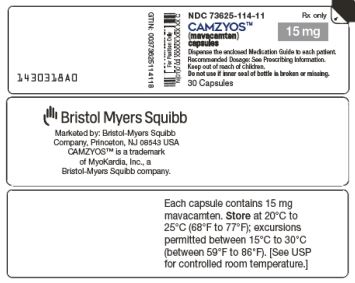
CAMZYOS mavacamten 15 mg Capsule, Gelatin Coated, 30-count
🆔 Identity & classification
Where does this data come from?
🏷️ RxNorm drug class
This medicine belongs to the Cardiac Myosin Inhibitor class.
Where does this data come from?
🏭 Manufacturer & labeler
Where does this data come from?
🩺 Clinical
Mavacamten is used to treat adults with symptomatic obstructive hypertrophic cardiomyopathy. Mavacamten is in a class of medications called cardiac myosin inhibitors. It works by reducing the interaction between actin and myosin (proteins responsible for the contraction of the heart) so that the heart does not squeeze so hard.
Read the full MedlinePlus article ↗- In obstructive HCM, your heart muscle is overactive and creates a blockage that restricts blood flow out of the heart. Camzyos works by calming down the overactive heart muscle pro...
- What exactly is Camzyos supposed to do for my HCM?
- Camzyos works by reducing how forcefully your heart contracts, and that's a delicate balance. If it reduces the pumping strength too much, it can lead to heart failure. An echocard...
- Why do I need so many echocardiograms while I'm on this medication?
Patient education
Supplement & herbal interactions
Some supplements/herbs that may interact with Mavacamten — tap one for details:
Where does this data come from?
Ask a licensed pharmacist directly — free, answered by our team.
💊 What it looks like
Where does this data come from?
🧪 Inactive Ingredients / Excipients
Inactive ingredients, also called excipients, are components of the drug product other than the active ingredient. They may include fillers, dyes, coatings, preservatives, flavors, or other formulation ingredients.
💡 Tap an ingredient (hover on desktop) to see what it is and why it’s used.
-
UNII M28OL1HH48
Croscarmellose sodium is a plant-based substance derived from cellulose. It acts as a disintegrant, helping tablets and capsules break down quickly in the digestive system so the medicine can be absorbed.
-
UNII 1K09F3G675
Ferric oxide red is an inorganic iron compound used as a colorant in medicines. It gives tablets, capsules, or other dosage forms a red or reddish tint for identification and appearance.
-
UNII EX438O2MRT
Ferric oxide yellow is a naturally occurring iron compound used as a colorant in medications. It gives tablets, capsules, and other forms a yellow or golden hue for identification and appearance.
-
UNII XM0M87F357
A dark iron oxide compound that gives medicines their black or dark color. It's used as a colorant in tablets and capsules to help identify the product and make it visually distinctive.
-
UNII 2G86QN327L
Gelatin is a protein derived from animal collagen, commonly used in medicines as a gelling agent and capsule material. It helps create soft or hard capsule shells that hold and release medication, and can also thicken liquid formulations.
-
UNII 3NXW29V3WO
Hypromellose is a plant-based thickener made from cellulose. It's used in medicines as a binder to hold ingredients together, a coating for tablets, and a thickener for liquids.
-
UNII 70097M6I30
Magnesium stearate is a salt made from magnesium and stearic acid, a fatty substance. It's used in tablets and capsules as a lubricant and glidant to help ingredients flow smoothly during manufacturing and prevent sticking.
-
UNII 3OWL53L36A
A natural sugar alcohol derived from seaweed or synthesized in the lab. It's used as a filler to add bulk, a sweetener in sugar-free formulas, and a disintegrant to help tablets break apart in the stomach.
-
UNII ETJ7Z6XBU4
Silicon dioxide is a naturally occurring mineral used as a glidant and anti-caking agent. It helps powder ingredients flow smoothly and prevents clumping during manufacturing and storage.
-
UNII 15FIX9V2JP
Titanium dioxide is a bright white mineral powder commonly used as a colorant and opacifying agent. It makes pills and tablets white or lighter in color and helps make coatings non-transparent.
10 inactive ingredients listed in the exact product block matched to this NDC.
Where does this data come from?
ingredient classCode="IACT" elements from the exact product block matched by this NDC. Label-section narrative from DailyMed / the openFDA label index is shown separately when available.Inactive ingredient FAQ
Are inactive ingredients the same for every manufacturer?
Why might an inactive ingredient be missing?
Can inactive ingredients matter?
💲 Pricing
A drug doesn't have one price. Each row is a different public payment system, and none is what you'd pay at the counter — that depends on your insurance. The ⓘ on each row explains what it measures.
| Price system | Per each | Per package |
|---|---|---|
| Retail pharmacies payNADAC · weekly | Not in the retail survey — common for institutional, discontinued, or low-volume packs. | |
| Medicaid paysCMS SDUD · 12 mo | $286.59 | $8,597.55 / 30 capsules |
| Medicare drug plans payPart D · Q2 2026 | $277.42 | $8,322.58 / 30 capsules |
Where does this data come from?
🔁 Therapeutic equivalents
| Product | Labeler | Pack | NADAC/unit | TE | Status | Price vs. this |
|---|---|---|---|---|---|---|
| Camzyos 15 mgthis 73625-0114-11 | Myokardia, | 30 capsules | — | — | FDA listed | — |
Where does this data come from?
⏳ Availability & generic status
We did not find an FDA-approved generic match for this exact strength, form and route. Patent/protection dates below may affect future generic timing.
Why the date isn’t exact: Generic timing can change because patents may be challenged, settled, licensed, added, removed, or worked around with a narrower label — and FDA approval does not always mean a pharmacy can get the generic today.
🛈 What do these terms mean?
- Patent
- Legal protection listed in the Orange Book that may delay generic approval or launch. Issued by the U.S. Patent & Trademark Office.
- Substance patent
- Covers the active drug molecule itself — the hardest to design around. A generic generally can’t launch until it expires.
- Formulation (product) patent
- Covers a specific formulation or dosage form. A generic can sometimes work around it with a different formulation.
- Method-of-use patent
- A patent covering one specific approved use of the drug — not necessarily the whole molecule. A generic can sometimes launch with a “skinny label” that carves out the protected use and keeps the others.
- Skinny label
- A generic label that omits a still-patented use when the FDA allows it — letting a generic reach the market for the unprotected uses.
- Exclusivity
- FDA-granted marketing protection, separate from patents — e.g. 5-yr new chemical entity, 7-yr orphan drug, or a +6-month pediatric extension.
- Paragraph IV
- A generic applicant’s formal challenge to a listed patent. It can potentially lead to earlier generic entry, but often involves litigation or a settlement.
- RLD / RS
- Reference Listed Drug — the brand product the FDA uses as the reference for generic applications. Reference Standard — the product the FDA expects generics to compare against in bioequivalence testing.
- TE / AB rating
- FDA therapeutic-equivalence rating. An AB rating generally means the FDA considers a generic therapeutically equivalent to — and substitutable for — the brand.
- LOE (loss of exclusivity)
- The latest patent or exclusivity currently listed — the loss-of-exclusivity / latest-listed-protection date shown on this page. Paragraph-IV challenges and settlements can move the real date earlier; FDA approval and a manufacturer’s decision to market can move it later.
Built from the FDA Orange Book. The bars above are scaled to each protection’s expiry; the red LOE marker is the last one to lapse.
| Patent | Type | Use code | Expires |
|---|---|---|---|
| US 9585883 ↗ | Method of use | U-3373 | Jun 19, 2034 |
| US 9585883 ↗ | Method of use | U-3373 | Jun 19, 2034 |
| US 9585883 ↗ | Method of use | U-3373 | Jun 19, 2034 |
| US 9585883 ↗ | Method of use | U-3373 | Jun 19, 2034 |
| US RE50050 ↗ | Drug substance | — | Apr 28, 2036 |
| US RE50050 ↗ | Drug substance | — | Apr 28, 2036 |
| US RE50050 ↗ | Drug substance | — | Apr 28, 2036 |
| US RE50050 ↗ | Drug substance | — | Apr 28, 2036 |
| Code | What it grants | Expires |
|---|---|---|
| M-297 | New indication / labeling change (3-year) | Jun 15, 2026 |
| NCE | New Chemical Entity (5-year) | Apr 28, 2027 |
| ODE-398 | Orphan Drug Exclusivity (7-year) | Apr 28, 2029 |
| M-297 | New indication / labeling change (3-year) | Jun 15, 2026 |
| NCE | New Chemical Entity (5-year) | Apr 28, 2027 |
| ODE-398 | Orphan Drug Exclusivity (7-year) | Apr 28, 2029 |
| M-297 | New indication / labeling change (3-year) | Jun 15, 2026 |
| NCE | New Chemical Entity (5-year) | Apr 28, 2027 |
| ODE-398 | Orphan Drug Exclusivity (7-year) | Apr 28, 2029 |
| M-297 | New indication / labeling change (3-year) | Jun 15, 2026 |
| NCE | New Chemical Entity (5-year) | Apr 28, 2027 |
| ODE-398 | Orphan Drug Exclusivity (7-year) | Apr 28, 2029 |
Is there a generic version of CAMZYOS 15 MG CAPSULE?
The FDA approved a generic — why can’t I get it at my pharmacy yet?
Why do different websites show different generic release dates?
What does “FDA listed” mean?
What does a patent or protection date mean here?
What does “current Orange Book estimate” mean?
Can a generic come out before the last patent expires?
Can a generic come out after the listed dates?
What is the difference between patents and exclusivity?
Why are there multiple patent dates?
Where does this data come from?
🗺️ Medicaid utilization & spend
📊 Medicare Part D spend CMS · PART D · 2026 (Q1)
📦 Packaging — all sizes for this product
| Package NDC | Description | Marketing start | Status |
|---|---|---|---|
| 73625-0114-11 You're viewing this | 30 CAPSULE, GELATIN COATED in 1 BOTTLE, PLASTIC (73625-114-11) | 2022-04-28 | Active |
🧭 About this NDC listing & data coverage
What data is (and isn’t) available for this NDC — tap to expand
| NDC identity (package / product / labeler codes) | ✓ Available |
| Labeler | ✓ Available |
| Product & package description | ✓ Available |
| Marketing category & status | ✓ Available |
| Active ingredient / dosage form / route | ✓ Available |
| FDA label (SPL via DailyMed) | ✓ Available |
| Package photos | ✓ Available |
| Inactive ingredients (structured) | ✓ Available |
| NADAC pharmacy acquisition price (CMS) | — Not published for this NDC CMS publishes NADAC only for NDCs reported in its retail-pharmacy survey. |
| Orange Book / therapeutic-equivalence data | ✓ Available |
| HCPCS J-code billing crosswalk | — Not published for this NDC Most self-administered / retail products have no J-code — that is normal. |
| Medicaid utilization (CMS SDUD) | ✓ Available |
Questions about this listing
Why is there no price listed?
Is the NDC printed on the package the same as the 11-digit billing NDC?
What do the three segments of this NDC mean?
Is this package still being marketed?
Who lists this product with the FDA?
Do I need a prescription for this product?
Where does this data come from?
📄 Full prescribing information FDA SPL
🚨 Boxed Warning ▾
WARNING: RISK OF HEART FAILURE CAMZYOS reduces left ventricular ejection fraction (LVEF) and can cause heart failure due to systolic dysfunction [see Warnings and Precautions (5.1) ] . Echocardiogram assessments of LVEF are required prior to and during treatment with CAMZYOS. Initiation of CAMZYOS in patients with LVEF <55% is not recommended.
Interrupt CAMZYOS if LVEF is <50% at any visit or if the patient experiences heart failure symptoms or worsening clinical status [see Dosage and Administration (2.1) and Warnings and Precautions (5.1) ] . Concomitant use of CAMZYOS with certain cytochrome P450 inhibitors or discontinuation of certain cytochrome P450 inducers may increase the risk of heart failure due to systolic dysfunction; therefore, the use of CAMZYOS is contraindicated with the following [see Contraindications (4) and Warnings and Precautions (5.2) ] : • Strong CYP2C19 inhibitors • Moderate to strong CYP2C19 inducers or moderate to strong CYP3A4 inducers Because of the risk of heart failure due to systolic dysfunction, CAMZYOS is available only through a restricted program under a Risk Evaluation and Mitigation Strategy (REMS) called CAMZYOS REMS PROGRAM [see Warnings and Precautions (5.3) ].
WARNING: RISK OF HEART FAILURE See full prescribing information for complete boxed warning. • CAMZYOS can cause heart failure due to systolic dysfunction. ( 5.1 ) • Echocardiogram assessments of left ventricular ejection fraction (LVEF) required before and during CAMZYOS use. ( 2.1 ) • Initiation in patients with LVEF <55% not recommended.
Interrupt if LVEF <50% or if worsening clinical status. ( 2.1 , 5.1 ) • Certain CYP450 inhibitors and inducers are contraindicated in patients taking CAMZYOS because of an increased risk of heart failure. ( 4 , 5.2 , 7 ) • CAMZYOS is available only through a restricted program called the CAMZYOS REMS Program.
( 5.3 )
🎯 Indications and Usage ▾
1 INDICATIONS AND USAGE CAMZYOS ® is indicated for the treatment of adults with symptomatic New York Heart Association (NYHA) class II-III obstructive hypertrophic cardiomyopathy (HCM) to improve functional capacity and symptoms. CAMZYOS is a cardiac myosin inhibitor indicated for the treatment of adults with symptomatic New York Heart Association (NYHA) class II-III obstructive hypertrophic cardiomyopathy (HCM) to improve functional capacity and symptoms. ( 1 )
⏱️ Dosage and Administration ▾
2 DOSAGE AND ADMINISTRATION Dosage must be individualized based on clinical status and echocardiographic assessment of patient response. Refer to the Full Prescribing Information for instructions. ( 2.1 )
2.1Initiation, Maintenance, and Interruption of Treatment Confirm absence of pregnancy and usage of effective contraception in females of reproductive potential [see Warnings and Precautions (5.4) ] . Initiation or up-titration of CAMZYOS in patients with LVEF <55% is not recommended. The recommended starting dose is 5 mg orally once daily without regard to food; allowable subsequent doses with titration are 2.5 mg, 5 mg, 10 mg, or 15 mg orally once daily.
The maximum recommended dose is 15 mg orally once daily. Patients may develop heart failure while taking CAMZYOS. Regular LVEF and Valsalva left ventricular outflow tract (LVOT) gradient assessment is required for careful titration to achieve an appropriate target Valsalva LVOT gradient, while maintaining LVEF ≥50% and avoiding heart failure symptoms (see Figure 1 and Figure 2).
Daily dosing takes weeks to reach steady-state drug levels and therapeutic effects, and genetic variation in metabolism and drug interactions can cause large differences in exposure [see Boxed Warning , Contraindications (4) , Warnings and Precautions (5.2) , Drug Interactions (7.1) and Clinical Pharmacology (12.3) ] . When initiating or titrating CAMZYOS, first consider LVEF then consider the Valsalva LVOT gradient and patient clinical status to guide appropriate CAMZYOS dosing. Assessment of post-exercise LVOT gradient may be considered in symptomatic patients with normal or near normal Valsalva gradients (approximately 30 mmHg) prior to initiating treatment with CAMZYOS.
Follow the algorithms for Initiation (Figure 1) and Maintenance (Figure 2) for appropriate CAMZYOS dosing and monitoring schedules. If LVEF <50% while taking CAMZYOS, interrupt treatment. Follow the algorithm for Interruption (Figure 3) for guidance on interrupting, restarting, or discontinuing CAMZYOS.
If interrupted at 2.5 mg, either restart at 2.5 mg or discontinue permanently. Figure 1: Initiation Phase Figure 2: Maintenance Phase Figure 3: Treatment Interruption at Any Clinic Visit if LVEF <50% Delay dose increases when there is intercurrent illness (e.g., serious infection) or arrhythmia (e.g., atrial fibrillation or other uncontrolled tachyarrhythmia) that may impair systolic function. Consider interruption of CAMZYOS in patients with intercurrent illness [see Warnings and Precautions (5.1) ] .
Missed or delayed doses If a dose is missed, it should be taken as soon as possible, and the next scheduled dose should be taken at the usual time the following day. Exact timing of dosing during the day is not essential, but two doses should not be taken on the same day. Swallow capsules whole.
Do not break, open, or chew the capsules. initiation phase Maintenance phase Treatment interruption
2.2Concomitant Administration of Weak to Moderate CYP2C19 or Moderate to Strong CYP3A4 Inhibitors Initiate CAMZYOS at the recommended starting dosage of 5 mg orally once daily in patients who are on stable therapy with a weak CYP2C19 inhibitor or a moderate CYP3A4 inhibitor (see Figure 1). In patients who are on stable therapy with a moderate CYP2C19 inhibitor or a strong CYP3A4 inhibitor, initiate CAMZYOS at 2.5 mg orally once daily. Interrupt CAMZYOS treatment if Valsalva LVOT gradient is <20 mm Hg at Week 4 or Week 8.
Treatment may be resumed after 4 weeks at 2.5 mg once daily if LVEF is ≥50%. If treatment is resumed at Week 12, recheck clinical status, Valsalva LVOT gradient and LVEF in 4 weeks, and maintain the current dose for the next 8 weeks unless LVEF is <50%. In patients who initiate a weak to moderate CYP2C19 inhibitor or a moderate to strong CYP3A4 inhibitor, reduce dosage of CAMZYOS to the next lower daily (mg) dose level (i.e., 15 mg to 10 mg; 10 mg to 5 mg; or 5 mg to 2.5 mg).
Schedule clinical and echocardiographic assessmen…
💊 Dosage Forms and Strengths ▾
3 DOSAGE FORMS AND STRENGTHS CAMZYOS is available as capsules imprinted with the strength and “Mava” in the following strengths: • 2.5 mg – light purple cap • 5 mg – yellow cap • 10 mg – pink cap • 15 mg – gray cap Capsules: 2.5 mg, 5 mg, 10 mg, and 15 mg ( 3 )
⛔ Contraindications ▾
4 CONTRAINDICATIONS CAMZYOS is contraindicated with concomitant use of: • Strong CYP2C19 inhibitors [see Warnings and Precautions (5.2) , Drug Interactions (7.1) ] • Moderate to strong CYP2C19 inducers or moderate to strong CYP3A4 inducers [see Warnings and Precautions (5.2) , Drug Interactions (7.1) ] • Strong CYP2C19 inhibitors. ( 4 , 5.2 ) • Moderate to strong CYP2C19 inducers or moderate to strong CYP3A4 inducers. ( 4 , 5.2 )
⚠️ Warnings and Cautions ▾
5 WARNINGS AND PRECAUTIONS • Heart Failure : Consider interruption of CAMZYOS in patients with intercurrent illness. ( 2.1 , 5.1 ) • Drug Interactions Leading to Heart Failure or Loss of Effectiveness : Advise patients of the potential for drug interactions including with over-the-counter medications. ( 4 , 5.2 , 17 ) • Embryo-Fetal Toxicity : May cause fetal harm.
Advise females of reproductive potential to use effective contraception until 4 months after the last dose. Avoid concomitant use with a combined hormonal contraceptive that contains a progestin other than norethindrone. ( 5.4 , 7.2 , 8.1 , 8.3 )
5.1Heart Failure CAMZYOS reduces systolic contraction and can cause heart failure or significantly reduce ventricular function. Patients who experience a serious intercurrent illness (e.g., serious infection) or arrhythmia (e.g., atrial fibrillation or other uncontrolled tachyarrhythmia) are at greater risk of developing systolic dysfunction and heart failure [see Clinical Trial Experience (6.1) ] . Assess the patient’s clinical status and LVEF prior to and regularly during treatment and adjust the CAMZYOS dose accordingly [see Dosage and Administration (2.1) ] .
New or worsening arrhythmia, dyspnea, chest pain, fatigue, palpitations, leg edema, or elevations in N-terminal pro-B-type natriuretic peptide (NT-proBNP) may be signs and symptoms of heart failure and should also prompt an evaluation of cardiac function. Asymptomatic LVEF reduction, intercurrent illnesses, and arrhythmias require additional dosing considerations [see Dosage and Administration (2.1 , 2.2 )] . Initiation of CAMZYOS in patients with LVEF <55% is not recommended.
Avoid concomitant use of CAMZYOS in patients on disopyramide, ranolazine, verapamil with a beta blocker, or diltiazem with a beta blocker as these medications and combinations increase the risk of left ventricular systolic dysfunction and heart failure symptoms and clinical experience is limited [see Drug Interactions (7) ] .
5.2CYP450 Drug Interactions Leading to Heart Failure or Loss of Effectiveness CAMZYOS is primarily metabolized by CYP2C19 and CYP3A4 enzymes. Concomitant use of CAMZYOS and drugs that interact with these enzymes may lead to life-threatening drug interactions such as heart failure or loss of effectiveness [see Contraindications (4) , Warnings and Precautions (5.1) , and Drug Interactions (7.1) ] . Advise patients of the potential for drug interactions, including with over-the-counter medications (such as omeprazole, esomeprazole, or cimetidine).
Advise patients to inform their healthcare provider of all concomitant products prior to and during CAMZYOS treatment [see Drug Interactions (7.1) , Patient Counseling Information (17) ] .
5.3CAMZYOS REMS Program CAMZYOS is only available through a restricted program called the CAMZYOS REMS Program because of the risk of heart failure due to systolic dysfunction [see Warnings and Precautions (5.1 , 5.2 )] . Notable requirements of the CAMZYOS REMS Program include the following: • Prescribers must be certified by enrolling in the CAMZYOS REMS Program. • Patients must enroll in the CAMZYOS REMS Program and comply with ongoing monitoring requirements [see Dosage and Administration (2.1) ] . • Pharmacies must be certified by enrolling in the CAMZYOS REMS Program and must only dispense to patients who are authorized to receive CAMZYOS. • Wholesalers and distributors must only distribute to certified pharmacies.
Further information is available at www.CAMZYOSREMS.com or by telephone at 1-833-628-7367.
5.4Embryo-Fetal Toxicity CAMZYOS may cause fetal toxicity when administered to a pregnant female, based on findings in animal studies. Confirm absence of pregnancy in females of reproductive potential prior to treatment and advise patients to use effective contraception during treatment with CAMZYOS and for 4 months after the last dose. Combined hormonal contraceptives (CHCs) containing a combination of ethinyl estradiol and norethindr…
🤒 Adverse Reactions ▾
6 ADVERSE REACTIONS The following adverse reaction is discussed in other sections of the labeling: • Heart failure [see Warnings and Precautions (5.1) ] Adverse reactions occurring in >5% of patients and more commonly on CAMZYOS than on placebo were dizziness (27%) and syncope (6%). ( 6.1 ) To report SUSPECTED ADVERSE REACTIONS, contact Bristol-Myers Squibb at 1-800-721-5072 or FDA at 1-800-FDA-1088 or www.fda.gov/medwatch.
6.1Clinical Trials Experience Because clinical trials are conducted under widely varying conditions, adverse reaction rates observed in the clinical trials of a drug cannot be directly compared to rates in the clinical trials of another drug and may not reflect the rates observed in practice. The safety of CAMZYOS was evaluated in EXPLORER-HCM, a Phase 3, double-blind, randomized, placebo-controlled trial [see Clinical Studies (14) ] . Of the 251 adults with obstructive HCM, 123 patients were treated with CAMZYOS 2.5-15 mg daily and 128 were treated with placebo.
CAMZYOS-treated patients had a median duration of exposure of 30 weeks (range: 2-40 weeks). Syncope (0.8%) was the only adverse drug reaction leading to discontinuation in patients receiving CAMZYOS. Adverse reactions occurring in >5% of patients and more commonly on CAMZYOS than on placebo were dizziness (27% vs.
18%) and syncope (6% vs. 2%). The safety of CAMZYOS in patients was further evaluated in VALOR-HCM, a Phase 3, double-blind, randomized, placebo-controlled trial [see Clinical Studies (14) ] .
Of the 112 adults with symptomatic obstructive HCM, 56 patients were treated with CAMZYOS 2.5-15 mg daily and 55 were treated with placebo. CAMZYOS-treated patients had a median duration of exposure of 17 weeks (range: 3-19 weeks). There were no new adverse reactions identified in VALOR-HCM.
Effects on Systolic Function In the EXPLORER-HCM trial, mean (SD) resting LVEF was 74% (6) at baseline in both treatment groups. Consistent with the mechanism of action of CAMZYOS, mean (SD) absolute change from baseline in LVEF was -4% (8) in the CAMZYOS group and 0% (7) in the placebo group over the 30-week treatment period. At Week 38, following an 8-week interruption of trial drug, mean LVEF was similar to baseline for both treatment groups.
In the EXPLORER-HCM trial, 7 (6%) patients in the CAMZYOS group and 2 (2%) patients in the placebo group experienced reversible reductions in LVEF to <50% (median 48%: range 35-49%) while on treatment. In 3 of the 7 CAMZYOS patients and 1 of the 2 placebo patients, these reductions were asymptomatic. In all 7 patients treated with CAMZYOS, LVEF recovered following interruption of CAMZYOS [see Warnings and Precautions (5.1) ] .
🔄 Drug Interactions ▾
7 DRUG INTERACTIONS • Weak to moderate CYP2C19 inhibitors and moderate to strong CYP3A4 inhibitors : May increase risk of heart failure. If initiating an inhibitor, CAMZYOS dose reduction and additional monitoring are required. ( 2.2 , 7.1 ) • Negative inotropes : Close medical supervision and LVEF monitoring is recommended if a negative inotrope is initiated, or the dose of a negative inotrope is increased.
Avoid certain combinations of negative inotropes. ( 7.3 )
7.1Potential for Other Drugs to Affect Plasma Concentrations of CAMZYOS Mavacamten is primarily metabolized by CYP2C19 and to a lesser extent by CYP3A4 and CYP2C9. Inducers and inhibitors of CYP2C19 and moderate to strong inhibitors or inducers of CYP3A4 may affect the exposures of mavacamten [see Warnings and Precautions (5.2) and Clinical Pharmacology (12.3) ] . (See Table 1 ) Table 1: Established and Potentially Significant Pharmacokinetic Drug Interactions with CAMZYOS Impact of Other Drugs on CAMZYOS Strong CYP2C19 Inhibitors Clinical Impact Concomitant use with a strong CYP2C19 inhibitor increases mavacamten exposure, which may increase the risk of heart failure due to systolic dysfunction [see Contraindications (4) , Warnings and Precautions (5.2) , Clinical Pharmacology (12.3) ] .
Prevention or Management Concomitant use with a strong CYP2C19 inhibitor is contraindicated. Moderate to Strong CYP2C19 Inducers or Moderate to Strong CYP3A4 Inducers Clinical Impact Concomitant use with a moderate to strong CYP2C19 inducer or a moderate to strong CYP3A4 inducer decreases mavacamten exposure, which may reduce CAMZYOS’ efficacy [see Clinical Pharmacology (12.3) ] . The risk of heart failure due to systolic dysfunction may increase with discontinuation of these inducers as the levels of induced enzyme normalizes [see Contraindications (4) and Warnings and Precautions (5.2) ] .
Prevention or Management Concomitant use of a moderate to strong CYP2C19 inducer or a moderate to strong CYP3A4 inducer is contraindicated. Weak CYP2C19 Inhibitors or Moderate CYP3A4 Inhibitors Clinical Impact Concomitant use with a weak CYP2C19 inhibitor or a moderate CYP3A4 inhibitor increases mavacamten exposure, which may increase the risk of adverse drug reactions [see Warnings and Precautions (5.2) ] . Prevention or Management Initiate CAMZYOS at the recommended starting dosage of 5 mg orally once daily in patients who are on stable therapy with a weak CYP2C19 inhibitor or a moderate CYP3A4 inhibitor.
Reduce dose of CAMZYOS to the next lower daily (mg) dose level (i.e., 15 mg to 10 mg, 10 mg to 5 mg, or 5 mg to 2.5 mg) in patients who are on CAMZYOS treatment and intend to initiate a weak CYP2C19 inhibitor or a moderate CYP3A4 inhibitor. Avoid initiation of concomitant weak CYP2C19 and moderate CYP3A4 inhibitors in patients who are on stable treatment with 2.5 mg of CAMZYOS because a lower dose is not available [see Dosage and Administration (2.2) ] . For short-term use (e.g., 1 week), interrupt CAMZYOS for the duration of treatment with a weak inhibitor of CYP2C19 or a moderate inhibitor of CYP3A4.
CAMZYOS may be reinitiated at the previous dose immediately on discontinuation of concomitant therapy. Moderate CYP2C19 Inhibitors or Strong CYP3A4 Inhibitors Clinical Impact Concomitant use with a moderate CYP2C19 inhibitor or a strong CYP3A4 inhibitor increases mavacamten exposure, which may increase the risk of adverse drug reactions [see Warnings and Precautions (5.2) ] . Discontinuing use of a moderate CYP2C19 inhibitor or strong CYP3A4 inhibitor after long-term concomitant use may decrease mavacamten exposure, which may reduce CAMZYOS’ efficacy [see Clinical Pharmacology (12.3) ] .
Prevention or Management Initiate CAMZYOS at a starting dosage of 2.5 mg orally once daily in patients who are on stable therapy with a moderate CYP2C19 inhibitor or a strong CYP3A4 inhibitor. Reduce dose of CAMZYOS to the next lower daily (mg) dose level (i.e., 15 mg to 10 mg, 10 mg to 5 mg, or 5 mg to 2.5 m…
👥 Use in Specific Populations ▾
8 USE IN SPECIFIC POPULATIONS
8.1Pregnancy Risk Summary Based on animal data, CAMZYOS may cause fetal harm when administered to a pregnant female. There are no human data on the use of CAMZYOS during pregnancy to evaluate for a drug-associated risk of major birth defects, miscarriage, or other adverse maternal or fetal outcomes. The underlying maternal condition during pregnancy poses a risk to the mother and fetus (see Clinical Considerations ) .
Advise pregnant females about the potential risk to the fetus with maternal exposure to CAMZYOS during pregnancy. In animal embryo-fetal development studies, mavacamten-related decreases in mean fetal body weight, reductions in fetal ossification of bones, and increases in post-implantation loss (early and/or late resorptions) were observed in rats and increases in visceral and skeletal malformations were observed in both rabbits and rats at dose exposures similar to that achieved at the maximum recommended human dose (MRHD) (see Data ) .
The estimated background risk of major birth defects and miscarriage for the indicated population is unknown. All pregnancies have a background risk of birth defect, loss, or other adverse outcomes. In the U.S. general population, the estimated background risk of major birth defects and miscarriage in clinically recognized pregnancies is 2% to 4% and 15% to 20%, respectively.
There is a pregnancy safety study for CAMZYOS. If CAMZYOS is administered during pregnancy, or if a patient becomes pregnant while receiving CAMZYOS or within 4 months after the last dose of CAMZYOS, healthcare providers should report CAMZYOS exposure by contacting Bristol-Myers Squibb at 1-800-721-5072 or www.bms.com. Clinical Considerations Disease-Associated Maternal and Embryo-Fetal Risk Obstructive HCM in pregnancy has been associated with increased risk for preterm birth.
Data Animal Data When mavacamten was administered orally to pregnant rats (0.3 to 1.5 mg/kg/day) during the period of organogenesis, increases in post-implantation loss, decreases in mean fetal body weight, reductions in fetal ossification of bones, and fetal malformations (visceral and skeletal) were observed in the high dose group (1.5 mg/kg/day). Visceral malformations (heart malformation in fetuses, including one total situs inversus) and increased incidences of skeletal malformations (mainly fused sternebrae) were observed at a similar exposure as in humans at the MRHD.
Plasma exposure (based on area under the concentration-time curve or AUC) at the no-effect dose for embryo-fetal development in rats is 0.3 times the exposure in humans at the MRHD. When mavacamten was administered orally to pregnant rabbits (0.6 to 2.0 mg/kg/day) during the period of organogenesis, fetal malformations (visceral and skeletal) were increased at doses of 1.2 mg/kg/day and higher, with similar plasma exposure at 1.2 mg/kg/day as in humans at the MRHD. Visceral findings consisted of malformations of the great vessels (dilatation of pulmonary trunk and/or aortic arch).
Skeletal malformations consisted of higher incidences of fused sternebrae at ≥1.2 mg/kg/day. Plasma exposure (AUC) at the no-effect dose for embryo-fetal development in rabbits is 0.4 times the exposure in humans at the MRHD. In a pre/postnatal development study, mavacamten was administered orally to pregnant rats (0.3, to 1.5 mg/kg/day) from gestation Day 6 to lactation/post-partum Day 20.
No adverse effects were observed in the dams or offspring exposed daily from before birth (in utero) through lactation. The no-observed-adverse-effect level (NOAEL) was 1.5 mg/kg/day (the highest dosage level tested), with similar exposure (AUC) as in humans at the MRHD.
8.2Lactation Risk Summary The presence of mavacamten in human or animal milk, the drug’s effects on the breastfed infant, and the effects on milk production are unknown. The developmental and health benefits of breastfeeding should be considered along with the mother’s clinical need for CAMZYOS and any…
🤰 Pregnancy ▾
8.1Pregnancy Risk Summary Based on animal data, CAMZYOS may cause fetal harm when administered to a pregnant female. There are no human data on the use of CAMZYOS during pregnancy to evaluate for a drug-associated risk of major birth defects, miscarriage, or other adverse maternal or fetal outcomes. The underlying maternal condition during pregnancy poses a risk to the mother and fetus (see Clinical Considerations ) .
Advise pregnant females about the potential risk to the fetus with maternal exposure to CAMZYOS during pregnancy. In animal embryo-fetal development studies, mavacamten-related decreases in mean fetal body weight, reductions in fetal ossification of bones, and increases in post-implantation loss (early and/or late resorptions) were observed in rats and increases in visceral and skeletal malformations were observed in both rabbits and rats at dose exposures similar to that achieved at the maximum recommended human dose (MRHD) (see Data ) .
The estimated background risk of major birth defects and miscarriage for the indicated population is unknown. All pregnancies have a background risk of birth defect, loss, or other adverse outcomes. In the U.S. general population, the estimated background risk of major birth defects and miscarriage in clinically recognized pregnancies is 2% to 4% and 15% to 20%, respectively.
There is a pregnancy safety study for CAMZYOS. If CAMZYOS is administered during pregnancy, or if a patient becomes pregnant while receiving CAMZYOS or within 4 months after the last dose of CAMZYOS, healthcare providers should report CAMZYOS exposure by contacting Bristol-Myers Squibb at 1-800-721-5072 or www.bms.com. Clinical Considerations Disease-Associated Maternal and Embryo-Fetal Risk Obstructive HCM in pregnancy has been associated with increased risk for preterm birth.
Data Animal Data When mavacamten was administered orally to pregnant rats (0.3 to 1.5 mg/kg/day) during the period of organogenesis, increases in post-implantation loss, decreases in mean fetal body weight, reductions in fetal ossification of bones, and fetal malformations (visceral and skeletal) were observed in the high dose group (1.5 mg/kg/day). Visceral malformations (heart malformation in fetuses, including one total situs inversus) and increased incidences of skeletal malformations (mainly fused sternebrae) were observed at a similar exposure as in humans at the MRHD.
Plasma exposure (based on area under the concentration-time curve or AUC) at the no-effect dose for embryo-fetal development in rats is 0.3 times the exposure in humans at the MRHD. When mavacamten was administered orally to pregnant rabbits (0.6 to 2.0 mg/kg/day) during the period of organogenesis, fetal malformations (visceral and skeletal) were increased at doses of 1.2 mg/kg/day and higher, with similar plasma exposure at 1.2 mg/kg/day as in humans at the MRHD. Visceral findings consisted of malformations of the great vessels (dilatation of pulmonary trunk and/or aortic arch).
Skeletal malformations consisted of higher incidences of fused sternebrae at ≥1.2 mg/kg/day. Plasma exposure (AUC) at the no-effect dose for embryo-fetal development in rabbits is 0.4 times the exposure in humans at the MRHD. In a pre/postnatal development study, mavacamten was administered orally to pregnant rats (0.3, to 1.5 mg/kg/day) from gestation Day 6 to lactation/post-partum Day 20.
No adverse effects were observed in the dams or offspring exposed daily from before birth (in utero) through lactation. The no-observed-adverse-effect level (NOAEL) was 1.5 mg/kg/day (the highest dosage level tested), with similar exposure (AUC) as in humans at the MRHD.
🧒 Pediatric Use ▾
8.4Pediatric Use The safety and effectiveness of CAMZYOS have not been established in pediatric patients.
🧓 Geriatric Use ▾
8.5Geriatric Use Clinical trials included 319 patients dosed with CAMZYOS, 119 of whom were 65 years of age or older (37.3%), and 25 of whom (7.8%) were age 75 years or older. Safety, effectiveness, and pharmacokinetics were similar between patients ≥65 years and younger patients.
🆘 Overdosage ▾
10 OVERDOSAGE Clinical Experience and Effects • Cardiovascular effects may include reduced LVEF (left ventricular ejection fraction), heart failure, hypotension, and asystole refractory to medical intervention. • Neurological effects may include dizziness and syncope. • An infant death was reported after accidental ingestion of three 15 mg capsules (45 mg). • An adult administered a single dose of 144 mg developed a vasovagal reaction, hypotension, and asystole, but the subject recovered. Management • Discontinue CAMZYOS treatment. • Provide medically supportive measures to maintain hemodynamic stability and monitor left ventricular function. • Consider administering activated charcoal (pediatric dose is 1 g/kg; adult dose is 50 g) within 2 hours of ingestion in addition to other supportive measures.
The benefit of activated charcoal is negligible after 6 hours [see Clinical Pharmacology (12.3) ]. • Consider contacting the Poison Help line (1-800-222-1222) or a medical toxicologist for additional overdose management recommendations.
🧬 Clinical Pharmacology ▾
12 CLINICAL PHARMACOLOGY
12.1Mechanism of Action Mavacamten is an allosteric and reversible inhibitor selective for cardiac myosin. Mavacamten modulates the number of myosin heads that can enter “on actin” (power-generating) states, thus reducing the probability of force-producing (systolic) and residual (diastolic) cross-bridge formation. Excess myosin actin cross-bridge formation and dysregulation of the super-relaxed state are mechanistic hallmarks of HCM.
Mavacamten shifts the overall myosin population towards an energy-sparing, recruitable, super-relaxed state. In HCM patients, myosin inhibition with mavacamten reduces dynamic LVOT obstruction and improves cardiac filling pressures.
12.2Pharmacodynamics Left Ventricular Ejection Fraction and Left Ventricular Outflow Tract Obstruction In the EXPLORER-HCM trial, patients achieved reductions in mean resting and provoked (Valsalva) LVOT gradient by Week 4 which were sustained throughout the 30-week trial. At Week 30, the mean (SD) changes from baseline in resting and Valsalva LVOT gradients were -39 (29) mmHg and -49 (34) mmHg, respectively, for the CAMZYOS group and -6 (28) mmHg and -12 (31) mmHg, respectively, for the placebo group. The reductions in Valsalva LVOT gradient were accompanied by decreases in LVEF, generally within the normal range.
Eight weeks after discontinuation of CAMZYOS, mean LVEF and Valsalva LVOT gradients were similar to baseline. Cardiac Structure In EXPLORER-HCM, echocardiographic measurements of cardiac structure showed a mean (SD) reduction from baseline at Week 30 in left ventricular mass index (LVMI) in the mavacamten group (-7.4 [17.8] g/m 2 ) versus an increase in LVMI in the placebo group (8.9 [15.3] g/m 2 ). There was also a mean (SD) reduction from baseline in left atrial volume index (LAVI) in the mavacamten group (-7.5 [7.8] mL/m 2 ) versus no change in the placebo group (-0.1 [8.7] mL/m 2 ).
The clinical significance of these findings is unknown. Cardiac Biomarkers In the EXPLORER-HCM trial [see Clinical Studies (14) ] , reductions in a biomarker of cardiac wall stress, NT-proBNP, were observed by Week 4 and sustained through the end of treatment. At Week 30 compared with baseline, the reduction in NT-proBNP after mavacamten treatment was 80% greater than for placebo (proportion of geometric mean ratio between the two groups, 0.20 [95% CI: 0.17, 0.24]).
In the VALOR-HCM trial [see Clinical Studies (14) ] , a reduction in NT-proBNP was observed by Week 8 and sustained throughout treatment. At Week 16 compared with baseline, the reduction in NT-proBNP after mavacamten treatment was 67% greater than for placebo (proportion of geometric mean ratio between the two groups, 0.33 [95% CI: 0.27, 0.42]). At Week 16 compared with baseline, a reduction in cardiac troponin I after mavacamten treatment was 47% greater than for placebo (proportion of geometric mean ratio between the two groups, 0.53 [95% CI: 0.41, 0.70]).
The clinical significance of the NT-proBNP and troponin findings is unknown. Cardiac Electrophysiology In healthy volunteers receiving multiple doses of CAMZYOS, a concentration-dependent increase in the QTc interval was observed at doses up to 25 mg once daily. No acute QTc changes have been observed at similar exposures during single-dose studies.
The mechanism of the QT prolongation effect is not known. A meta-analysis across clinical studies in HCM patients does not suggest clinically relevant increases in the QTc interval in the therapeutic exposure range. In HCM, the QT interval may be intrinsically prolonged due to the underlying disease, in association with ventricular pacing, or in association with drugs with potential for QT prolongation commonly used in the HCM population.
The effect of coadministration of CAMZYOS with other QT-prolonging drugs or in patients with potassium channel variants resulting in a long QT interval have not been characterized.
12.3 Pharmacokinetics Mavacamten exposure increases dose proportionally…
🧬 Mechanism of Action ▾
12.1Mechanism of Action Mavacamten is an allosteric and reversible inhibitor selective for cardiac myosin. Mavacamten modulates the number of myosin heads that can enter “on actin” (power-generating) states, thus reducing the probability of force-producing (systolic) and residual (diastolic) cross-bridge formation. Excess myosin actin cross-bridge formation and dysregulation of the super-relaxed state are mechanistic hallmarks of HCM.
Mavacamten shifts the overall myosin population towards an energy-sparing, recruitable, super-relaxed state. In HCM patients, myosin inhibition with mavacamten reduces dynamic LVOT obstruction and improves cardiac filling pressures.
📦 How Supplied / Storage and Handling ▾
16 HOW SUPPLIED/STORAGE AND HANDLING CAMZYOS ® is supplied as immediate release Size 2 hard gelatin capsules containing 2.5 mg, 5 mg, 10 mg, or 15 mg of mavacamten. White opaque capsule bodies are imprinted with “Mava”, and the opaque cap is imprinted with the strength. The capsule contains white to off-white powder.
CAMZYOS capsules are available in bottles of 30 capsules, as listed in the table below: Strength Capsule Cap NDC Number 2.5 mg Light purple 73625-111-11 5 mg Yellow 73625-112-11 10 mg Pink 73625-113-11 15 mg Gray 73625-114-11 Storage Store at 20°C to 25°C (68°F to 77°F), excursions permitted between 15°C and 30°C (between 59°F and 86°F) [see USP Controlled Room Temperature] .
📋 Description ▾
11 DESCRIPTION CAMZYOS capsules for oral use contain mavacamten, a cardiac myosin inhibitor. The chemical name of mavacamten is 3-(1-methylethyl)-6-[[(1S)-1-phenylethyl]amino]-2,4(1 H ,3 H )-pyrimidinedione. The molecular formula is C 15 H 19 N 3 O 2 , and the molecular weight is 273.33 g/mol.
The structural formula of mavacamten is: Mavacamten is a white to off-white powder that is practically insoluble in water and aqueous buffers at pH 2-10, sparingly soluble in methanol and ethanol, and freely soluble in DMSO and NMP. CAMZYOS is supplied as immediate release Size 2 hard gelatin capsules, containing 2.5 mg, 5 mg, 10 mg, or 15 mg of mavacamten per capsule as active ingredient and the following inactive ingredients: croscarmellose sodium, hypromellose, magnesium stearate (non-bovine), mannitol, and silicon dioxide.
The capsule shell contains black edible ink, black iron oxide, gelatin, red iron oxide, titanium dioxide, and yellow iron oxide. Chemical_Structure
💬 Information for Patients ▾
17 PATIENT COUNSELING INFORMATION Advise the patient and/or caregiver to read the FDA-approved patient labeling (Medication Guide). Heart Failure Inform patients that cardiac function monitoring must be performed using echocardiography to monitor for heart failure [see Warnings and Precautions (5.1) ] . Advise patients to report any signs or symptoms of heart failure immediately to their healthcare provider.
Drug Interactions Advise patients to inform their healthcare providers of all concomitant products, including over-the-counter medications (such as omeprazole, esomeprazole, or cimetidine) and supplements, prior to and during CAMZYOS treatment. CAMZYOS REMS Program CAMZYOS is available only through a restricted program called the CAMZYOS REMS Program [see Warnings and Precautions (5.3) ] . Inform the patient of the following notable requirements: • Patients must enroll in the program and comply with ongoing monitoring requirements [see Warnings and Precautions 5.1 and 5.3 ] .
CAMZYOS is only prescribed by certified healthcare providers and only dispensed from certified pharmacies participating in the program. Provide patients with the telephone number and website for information on how to obtain the product [see Warnings and Precautions (5.3) ] . Embryo-Fetal Toxicity Advise pregnant females and females of reproductive potential of the potential risk to a fetus.
Advise females of reproductive potential to inform their healthcare provider of a known or suspected pregnancy [see Warnings and Precautions (5.4) and Use in Specific Populations (8.1 , 8.3) ] . Advise females of reproductive potential to use effective contraception during treatment with CAMZYOS and for 4 months after the last dose. CHCs containing a combination of ethinyl estradiol and norethindrone may be used with mavacamten.
However, CAMZYOS may reduce the effectiveness of certain other combined hormonal contraceptives (CHC). If these CHCs are used, advise patients to add nonhormonal contraception (such as condoms) during concomitant use and for 4 months after the last dose of CAMZYOS [see Drug Interactions (7.2) and Use in Specific Populations (8.3) ] . Advise females who are exposed to CAMZYOS during pregnancy that there is a pregnancy safety study that monitors pregnancy outcomes.
Encourage these patients to report their pregnancies to Bristol-Myers Squibb at 1-800-721-5072 or www.bms.com. Instructions for Taking CAMZYOS CAMZYOS capsules should be swallowed whole. Advise patients that if they miss a dose of CAMZYOS, to take the dose as soon as possible that day and the next scheduled dose should be taken at the usual time the following day.
The patient should not take two doses in the same day. Marketed by: Bristol-Myers Squibb Company Princeton, NJ 08543 USA CAMZYOS ® is a trademark of MyoKardia, Inc., a Bristol Myers Squibb company.
💬 Medication Guide ▾
Medication Guide MEDICATION GUIDE CAMZYOS ® (kam-zai-ōs) (mavacamten) capsules, for oral use What is the most important information I should know about CAMZYOS? CAMZYOS may cause serious side effects, including: • Heart failure, a condition where the heart cannot pump with enough force. Heart failure is a serious condition that can lead to death.
You must have echocardiograms before you take your first dose and during your treatment with CAMZYOS to help your healthcare provider understand how your heart is responding to CAMZYOS. People who develop a serious infection or irregular heartbeat have a greater risk of heart failure during treatment with CAMZYOS. Tell your healthcare provider or get medical help right away if you develop new or worsening: o shortness of breath o swelling in your legs o chest pain o a racing sensation in your heart (palpitations) o fatigue o rapid weight gain • The risk of heart failure is also increased when CAMZYOS is taken with certain other medicines.
Tell your healthcare provider about the medicines you take, both prescribed and obtained over-the-counter, before and during treatment with CAMZYOS. • Because of the serious risk of heart failure, CAMZYOS is only available through a restricted program called the CAMZYOS Risk Evaluation and Mitigation Strategy (REMS) Program. o Your healthcare provider must be enrolled in the CAMZYOS REMS Program in order for you to be prescribed CAMZYOS. o Before you take CAMZYOS, you must enroll in the CAMZYOS REMS Program. Talk to your healthcare provider about how to enroll in the CAMZYOS REMS Program.
You will be given information about the program when you enroll. o Before you take CAMZYOS, your healthcare provider and pharmacist will make sure you understand how to take CAMZYOS safely, which will include returning for echocardiograms when advised by your healthcare provider. CAMZYOS can only be dispensed by a certified pharmacy that participates in the CAMZYOS REMS Program. Your healthcare provider can give you information on how to find a certified pharmacy.
You will not be able to get CAMZYOS at a local pharmacy. o If you have questions about the CAMZYOS REMS Program, ask your healthcare provider, go to www.CAMZYOSREMS.com, or call 1-833-628-7367. See “What are the possible side effects of CAMZYOS?” for information about side effects. What is CAMZYOS?
CAMZYOS is a prescription medicine used to treat adults with symptomatic obstructive hypertrophic cardiomyopathy (HCM). CAMZYOS may improve your symptoms and your ability to be active. It is not known if CAMZYOS is safe and effective in children.
Before taking CAMZYOS, tell your healthcare provider about all of your medical conditions, including if you: • are pregnant or plan to become pregnant. CAMZYOS may harm your unborn baby. Tell your healthcare provider right away if you become pregnant or think you may be pregnant during treatment with CAMZYOS.
You may also report your pregnancy by calling Bristol-Myers Squibb at 1-800-721-5072 or www.bms.com. If you are a female and able to become pregnant: o Your healthcare provider will do a pregnancy test before you start treatment with CAMZYOS. o You should use effective birth control (contraception) during treatment with CAMZYOS and for 4 months after your last dose of CAMZYOS. o CAMZYOS may reduce how well some hormonal birth control works. Talk to your healthcare provider about the use of effective forms of birth control during treatment with CAMZYOS. • are breastfeeding or plan to breastfeed.
It is not known if CAMZYOS passes into your breast milk. Talk to your healthcare provider about the best way to feed your baby during treatment with CAMZYOS. Before and during CAMZYOS treatment, tell your healthcare provider about all the medicines you take, including prescription and over-the-counter medicines, vitamins, and herbal supplements.
Taking CAMZYOS with certain medicines or grapefruit juice may cause heart failure. Do not stop or change the dose of a medicine or…