
Phenazopyridine Hydrochloride 200 mg Tablet, 100-count — NDC 75826-115-10 (Billing 75826-0115-10)
This is a package of 100 tablets of Phenazopyridine Hydrochloride 200 mg Tablet from Winder Laboratories, LLC, marketed since Nov 2015 and currently FDA-listed; retail pharmacies pay about $0.1760 per tablet (NADAC). It is this product's only package size.
Past resolved recalls for this product (1)
Identity & classification
Regulatory identifiers FDA, NLM and CMS codes for this package
Drug-database identifiers Medi-Span GPI and First Databank GCN / HICL / AHFS classification
- GSN (GCN sequence number): 009478
- GCN: 42122
- GPI-14 (Medi-Span): 56300010100310
- HICL (First Databank): 004108
- AHFS class code: 84:08.00.00
- RxCUI (RxNorm): 1094104
Where does this data come from?
- FDA openFDA NDC Directory · synced Oct 1, 2026
- FDA label on DailyMed · label index refreshed Oct 1, 2026
- RxNorm (NLM RxNav) · catalog refreshed Oct 1, 2026
- Medi-Span GPI (licensed)
- First Databank (licensed) · refreshed Oct 1, 2026
RxNorm drug class
This medicine belongs to the Other urologicals class.
Where does this data come from?
- RxClass (NLM) · catalog refreshed Oct 1, 2026
Clinical
Phenazopyridine relieves urinary tract pain, burning, irritation, and discomfort, as well as urgent and frequent urination caused by urinary tract infections, surgery, injury, or examination procedures. However, phenazopyridine is not an antibiotic; it does not cure infections.
Read the full MedlinePlus article ↗- It only helps with the pain — it doesn't kill the bacteria causing the infection. Think of it as taking the edge off while your antibiotic does the real work. If you have a UTI, yo...
- Does phenazopyridine actually treat my UTI, or does it just help with the pain?
- That's completely expected with phenazopyridine — it's one of the most common things people notice. The drug itself has an orange-red dye, and it passes into your urine, which is w...
- Why is my urine turning orange or red? Should I be worried?
Patient education
Supplement & herbal interactions
Where does this data come from?
- MedlinePlus (NLM) · refreshed Oct 1, 2026
- FDA label on DailyMed · label index refreshed Oct 1, 2026
Ask a licensed pharmacist directly — free, answered by our team.
Pricing
A drug doesn't have one price. Each row is a different public payment system, and none is what you'd pay at the counter — that depends on your insurance. The ⓘ on each row explains what it measures.
| Price system | Per ea | Per package |
|---|---|---|
| Retail pharmacies payNADAC · weekly | $0.176 | $17.60 / 100 tablets |
| Medicaid paysCMS SDUD · 12 mo | $0.9954 | $99.54 / 100 tablets |
| Medicare drug plans payPart D · quarterly | No Part D plan price is available for this NDC in our data. | |
Where does this data come from?
- CMS NADAC weekly file · file of Sep 30, 2026
- CMS ASP pricing files · refreshed Sep 20, 2026
- CMS Medicaid State Drug Utilization Data · through Q1 2026
- CMS Part D plan pricing files · refreshed Sep 24, 2026
- VA National Acquisition Center price file
Packaging — all sizes for this product
| Package NDC | Description | Marketing start | Marketing end | Status |
|---|---|---|---|---|
| 75826-0115-10 You're viewing this Main listing | 100 TABLET in 1 BOTTLE, PLASTIC | 2015-11-23 | — | Active |
Therapeutic equivalents
| Product | Labeler | Pack | NADAC/unit | TE | Status | Price vs. this |
|---|---|---|---|---|---|---|
| Phenazopyridine Hydrochloride 200 mg 65162-0682-10 | Amneal | 100 tablets | $0.176 | — | Availability likely | — |
| Phenazopyridine Hydrochloride 200 mg 69367-0612-01 | Westminster | 100 tablets | $0.176 | — | Availability likely | — |
| Phenazopyridine Hydrochloride 200 mgthis 75826-0115-10 | Winder | 100 tablets | $0.176 | — | Availability likely | — |
| Pyridium 200 mg 60846-0502-01 | Amneal | 100 tablets | $5.463 | — | Availability likely | +3005% |
| Phenazopyridine Hydrochloride 200 mg 50090-5876-00 | A-S | 10 tablets | — | — | FDA listed | — |
| Phenazopyridine Hydrochloride 200 mg 50090-5904-00 | A-S | 9 tablets | — | — | FDA listed | — |
| Phenazopyridine Hydrochloride 200 mg 50090-6951-00 | A-S | 9 tablets | — | — | FDA listed | — |
| Phenazopyridine Hydrochloride 200 mg 50090-6952-00 | A-S | 10 tablets | — | — | FDA listed | — |
| Phenazopyridine Hydrochloride 200 mg 51655-0424-27 | Northwind | 12 tablets | — | — | FDA listed | — |
| Phenazopyridine Hydrochloride 200 mg 62135-0404-60 | Chartwell | 60 tablets | — | — | FDA listed | — |
| Phenazopyridine Hydrochloride 200 mg 64950-0551-01 | Genus | 100 tablets | — | — | FDA listed | — |
| Phenazopyridine Hydrochloride 200 mg 68071-2479-01 | NuCare | 10 tablets | — | — | FDA listed | — |
| Phenazopyridine Hydrochloride 200 mg 68788-7902-01 | Preferred | 15 tablets | — | — | FDA listed | — |
| Phenazopyridine Hydrochloride 200 mg 68788-8695-01 | Preferred | 15 tablets | — | — | FDA listed | — |
| Phenazopyridine Hydrochloride 200 mg 70518-3868-00 | REMEDYREPACK | 9 tablets | — | — | Discontinued | — |
| Phenazopyridine Hydrochloride 200 mg 70518-3975-00 | REMEDYREPACK | 30 tablets | — | — | FDA listed | — |
| Phenazopyridine Hydrochloride 200 mg 71205-0813-06 | Proficient | 6 tablets | — | — | FDA listed | — |
| Phenazopyridine Hydrochloride 200 mg 71335-2321-01 | Bryant | 9 tablets | — | — | FDA listed | — |
| Phenazopyridine Hydrochloride 200 mg 71335-2750-01 | Bryant | 9 tablets | — | — | FDA listed | — |
| Phenazopyridine Hydrochloride 200 mg 72162-2540-01 | Bryant | 100 tablets | — | — | FDA listed | — |
| Phenazopyridine HCL 200 mg 72189-0530-06 | Direct | 6 tablets | — | — | FDA listed | — |
| Phenazopyridine Hydrochloride 200 mg 72789-0288-09 | PD-Rx | 9 tablets | — | — | FDA listed | — |
| Phenazopyridine Hydrochloride 200 mg 82804-0125-06 | Proficient | 6 tablets | — | — | FDA listed | — |
| Phenazopyridine Hydrochloride 200 mg 82804-0995-00 | Proficient | 100 tablets | — | — | FDA listed | — |
| Phenazopyridine Hydrochloride 200 mg 83939-0021-01 | VERITYRX, | 1 tablet | — | — | FDA listed | — |
Where does this data come from?
- FDA openFDA NDC Directory · synced Oct 1, 2026
- FDA Orange Book · refreshed Sep 3, 2026
- CMS NADAC weekly file · file of Sep 30, 2026
Availability & generic status
We did not find an FDA-approved generic match for this exact strength, form and route.
Where does this data come from?
- FDA Orange Book · refreshed Sep 3, 2026
What it looks like
Where does this data come from?
- FDA label on DailyMed · label index refreshed Oct 1, 2026
Inactive Ingredients / Excipients
Inactive ingredients, also called excipients, are components of the drug product other than the active ingredient. They may include fillers, dyes, coatings, preservatives, flavors, or other formulation ingredients.
💡 Tap an ingredient (hover on desktop) to see what it is and why it’s used.
-
UNII M28OL1HH48
Croscarmellose sodium is a plant-based substance derived from cellulose. It acts as a disintegrant, helping tablets and capsules break down quickly in the digestive system so the medicine can be absorbed.
-
UNII 36SFW2JZ0W
Hypromellose 2910 is a plant-based thickening agent derived from cellulose. In medicines, it forms a protective coating on tablets or capsules and controls how quickly the drug dissolves and releases into your body.
-
UNII 70097M6I30
Magnesium stearate is a salt made from magnesium and stearic acid, a fatty substance. It's used in tablets and capsules as a lubricant and glidant to help ingredients flow smoothly during manufacturing and prevent sticking.
-
UNII OP1R32D61U
Microcrystalline cellulose is a purified form of cellulose, a natural fiber from plant sources. It acts as a binder and filler in tablets and capsules, helping hold ingredients together and give the medicine its shape and size.
-
UNII B697894SGQ
Polyethylene glycol 400 is a clear, thick liquid made from petroleum-derived polymers. It acts as a solvent and humectant in medicines, helping dissolve active ingredients and retain moisture in the formulation.
-
UNII U725QWY32X
Povidone K30 is a synthetic polymer made from petroleum. It acts as a binder to hold tablet ingredients together and as a disintegrant to help the tablet break apart in the stomach so the medicine can be absorbed.
-
UNII ETJ7Z6XBU4
Silicon dioxide is a naturally occurring mineral used as a glidant and anti-caking agent. It helps powder ingredients flow smoothly and prevents clumping during manufacturing and storage.
-
UNII O8232NY3SJ
A plant-based carbohydrate derived from corn kernels. It acts as a filler to add bulk, a binder to hold ingredients together, and a disintegrant to help the tablet break apart in your stomach for absorption.
8 inactive ingredients listed in the exact product block matched to this NDC.
Where does this data come from?
ingredient classCode="IACT" elements from the exact product block matched by this NDC. Label-section narrative from DailyMed / the openFDA label index is shown separately when available.- FDA label on DailyMed · label index refreshed Oct 1, 2026
- FDA openFDA NDC Directory · synced Oct 1, 2026
Inactive ingredient FAQ
Are inactive ingredients the same for every manufacturer?
Why might an inactive ingredient be missing?
Can inactive ingredients matter?
Manufacturer & labeler
Where does this data come from?
- FDA openFDA NDC Directory · synced Oct 1, 2026
- Drugs@FDA
Full prescribing information FDA SPL
🎯 Indications and Usage ▾
INDICATIONS AND USAGE Phenazopyridine HCl is indicated for the symptomatic relief of pain, burning, urgency, frequency, and other discomforts arising from irritation of the lower urinary tract mucosa caused by infection, trauma, surgery, endoscopic procedures, or the passage of sounds or catheters. The use of Phenazopyridine HCl for relief of symptoms should not delay definitive diagnosis and treatment of causative conditions. Because it provides only symptomatic relief, prompt appropriate treatment of the cause of pain must be instituted and Phenazopyridine HCl should be discontinued when symptoms are controlled.
The analgesic action may reduce or eliminate the need for systemic analgesics or narcotics. It is, however, compatible with antibacterial therapy and can help to relieve pain and discomfort during the interval before antibacterial therapy controls the infection. Treatment of a urinary tract infection with Phenazopyridine HCl should not exceed 2 days because there is a lack of evidence that the combined administration of Phenazopyridine HCl and an antibacterial provides greater benefit than administration of the antibacterial alone after 2 days.
(See DOSAGE AND ADMINISTRATION section.)
⏱️ Dosage and Administration ▾
DOSAGE AND ADMINISTRATION 100 mg Tablets: Average adult dosage is two tablets 3 times a day after meals. 200 mg Tablets: Average adult dosage is one tablet 3 times a day after meals. When used concomitantly with an antibacterial agent for the treatment of a urinary tract infection, the administration of Phenazopyridine HCl should not exceed 2 days.
To report SUSPECTED ADVERSE REACTIONS, contact Winder Laboratories, LLC at 1-770-307-0703, or FDA at 1-800-FDA-1088 or www.fda.gov/medwatch.
⛔ Contraindications ▾
CONTRAINDICATIONS Phenazopyridine HCl should not be used in patients who have previously exhibited hypersensitivity to it. The use of Phenazopyridine HCl is contraindicated in patients with renal insufficiency.
🤒 Adverse Reactions ▾
ADVERSE REACTIONS Headache, rash, pruritus and occasional gastrointestinal disturbance. An anaphylactoid-like reaction has been described. Methemoglobinemia, hemolytic anemia, renal and hepatic toxicity have been reported, usually at overdosage levels (see OVERDOSAGE Section).
🆘 Overdosage ▾
OVERDOSAGE Exceeding the recommended dose in patients with good renal function or administering the usual dose to patients with impaired renal function (common in elderly patients) may lead to increased serum levels and toxic reactions. Methemoglobinemia generally follows a massive, acute overdose. Methylene blue, 1 to 2 mg/kg/body weight intravenously or ascorbic acid 100 to 200 mg given orally should cause prompt reduction of the methemoglobinemia and disappearance of the cyanosis which is an aid in diagnosis.
Oxidative Heinz body hemolytic anemia may also occur, and "bite cells" (degmacytes) may be present in a chronic overdosage situation. Red blood cell G-6-PD deficiency may predispose to hemolysis. Renal and hepatic impairment and occasional failure, usually due to hypersensitivity, may also occur.
🧬 Clinical Pharmacology ▾
CLINICAL PHARMACOLOGY Phenazopyridine HCl is excreted in the urine where it exerts a topical analgesic effect on the mucosa of the urinary tract. This action helps to relieve pain, burning, urgency and frequency. The precise mechanism of action is not known.
The pharmacokinetic properties of Phenazopyridine HCl have not been determined. Phenazopyridine HCl is rapidly excreted by the kidneys, with as much as 66% of an oral dose being excreted unchanged in the urine.
📦 How Supplied / Storage and Handling ▾
HOW SUPPLIED 100 mg Tablets: Supplied in bottles of 100 (NDC 75826-114-10) counts. Appearance: Dark brown to maroon colored, round, film coated tablets debossed "114" on one side and plain on the other side. 200 mg Tablets: Supplied in bottles of 100 (NDC 75826-115-10) counts.
Appearance: Dark brown to maroon colored, round, film coated tablets debossed "115" on one side and plain on the other side. DISPENSE contents with a child-resistant closure (as required) and in a tight container as defined in the USP. STORE at 20° to 25°C (68° to 77°F); excursions permitted to 15° to 30°C (59° to 86°F) [See USP Controlled Room Temperature].
Disclaimer: This is not an Orange Book Product and has not been subjected to FDA therapeutic equivalency or other equivalency testing. Manufactured by: Winder Laboratories, LLC.716 Patrick Industrial Lane Winder, GA 30680 RLS.115.99-2.0 Rev. Dec 2021
📋 Description ▾
DESCRIPTION Phenazopyridine Hydrochloride is dark brown fine granular powder. It has a specific local analgesic effect in the urinary tract, promptly relieving burning and pain. Phenazopyridine HCl tablets contain the following inactive ingredients: hypromellose, polyethylene glycol, croscarmellose sodium, magnesium stearate, microcrystalline cellulose, pregelatinized starch, maize(corn) starch, silicone dioxide, polyvinylpyrrolidone. image description
⚠️ Precautions ▾
PRECAUTIONS General: A yellowish tinge of the skin or sclera may indicate accumulation due to impaired renal excretion and the need to discontinue therapy. The decline in renal function associated with advanced age should be kept in mind. While our product does not contain Sulfur, it has been indicated to exhibit in rare circumstances a sulfur-type reaction.
Use of this product in patients sensitive to sulfur should be done so under the supervision of a Physician. NOTE : Patients should be informed that Phenazopyridine HCl produces a reddish-orange discoloration of the urine and may stain fabric. Staining of contact lenses has been reported.
Laboratory Test Interaction: Due to its properties as an azo dye, Phenazopyridine HCl may interfere with urinalysis based on spectrometry or color reactions. Carcinogenesis, Mutagenesis, Impairment of Fertility: Long-term administration of Phenazopyridine HCl has induced neoplasia in rats (large intestine) and mice (liver). Although no association between Phenazopyridine HCl and human neoplasia has been reported, adequate epidemiological studies along these lines have not been conducted.
Pregnancy Category B: Reproduction studies have been performed in rats at doses up to 50 mg/kg/day and have revealed no evidence of impaired fertility or harm to the fetus due to Phenazopyridine HCl. There are, however, no adequate and well controlled studies in pregnant women. Because animal reproduction studies are not always predictive of human response, this drug should be used during pregnancy only if clearly needed.
Nursing mothers: No information is available on the appearance of Phenazopyridine HCl, or its metabolites in human milk.
📄 Package Label / Principal Display Panel ▾
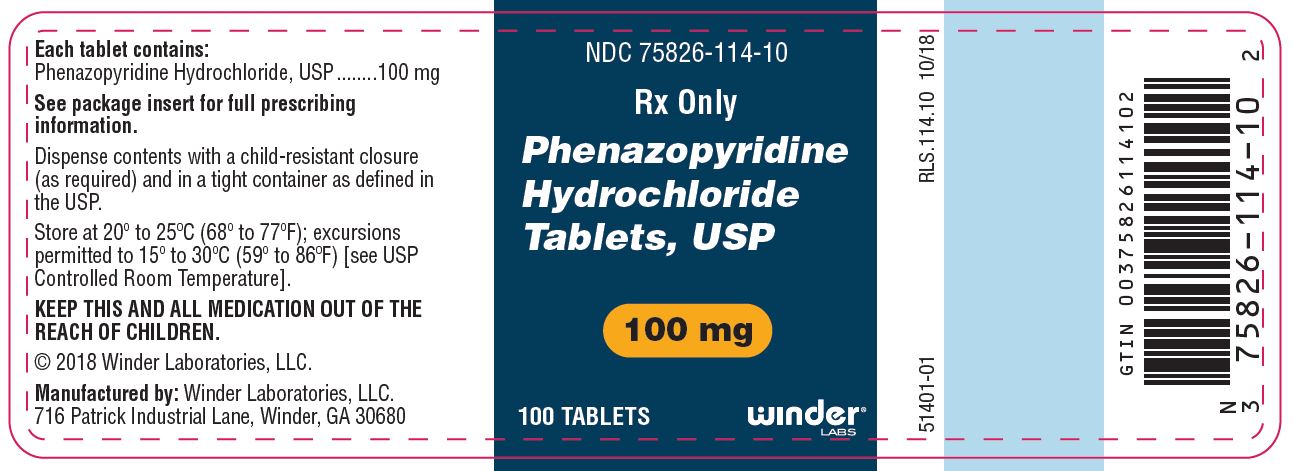
phenazo 100 mg phenazo 200 mg
Medicaid utilization & spend
Reported adverse events (FAERS)
Top reported reactions
Age at onset
Reporter sex
Serious outcomes
Where does this data come from?
About this NDC listing & data coverage
Listed without an FDA application
This product's marketing category indicates it is marketed without an approved FDA application (no NDA, ANDA, or BLA on file). Having an NDC does not by itself establish FDA approval — the NDC Directory is a listing system, not an approval decision. Approval-linked data such as Orange Book therapeutic-equivalence ratings therefore does not apply.
What data is (and isn’t) available for this NDC — tap to expand
| NDC identity (package / product / labeler codes) | ✓ Available |
| Labeler | ✓ Available |
| Product & package description | ✓ Available |
| Marketing category & status | ✓ Available |
| Active ingredient / dosage form / route | ✓ Available |
| FDA label (SPL via DailyMed) | ✓ Available |
| Package photos | ✓ Available |
| Inactive ingredients (structured) | ✓ Available |
| NADAC pharmacy acquisition price (CMS) | ✓ Available |
| Orange Book / therapeutic-equivalence data | — Not published for this NDC Applies only to products approved under an NDA/ANDA; many listings are out of scope. |
| HCPCS J-code billing crosswalk | — Not published for this NDC Most self-administered / retail products have no J-code — that is normal. |
| Medicaid utilization (CMS SDUD) | ✓ Available |