
Daily Dose Hydra-Ceramide Boost Broad Spectrum Sunscreen SPF 40 Avobenzone, Homosalate, Octisalate, Octocrylene 2 g/100mL; 9 g/100mL; 10 g/100mL; 5 g/100mL Oil, 5 mL — NDC 75936-306-02 (Billing 75936-0306-02)
This is a package of 5 mL of Daily Dose Hydra-Ceramide Boost Broad Spectrum Sunscreen SPF 40 Avobenzone, Homosalate, Octisalate, Octocrylene 2 g/100mL; 9 g/100mL; 10 g/100mL; 5 g/100mL Oil from Supergoop, LLC, marketed since Aug 2021 and currently FDA-listed.
NDC database record
One package, one record: these facts belong to NDC 75936-306-02 alone.
- Record
- FDA NDC Directory package listing · Human OTC drug
- Code segments
- 75936 labeler · 306 product · 02 package
- Package marketed since
- Aug 26, 2021
- Sample package
- Yes — professional sample, not for sale
- Listing certified through
- Dec 31, 2027
- Barcode (UPC-A, from the NDC)
- 3 7593630602 2
- FDA record last changed
- Aug 27, 2026
Identity & classification
Regulatory identifiers FDA, NLM and CMS codes for this package
Where does this data come from?
- FDA openFDA NDC Directory · synced Oct 8, 2026
- FDA label on DailyMed · label index refreshed Oct 8, 2026
- RxNorm (NLM RxNav) · catalog refreshed Oct 1, 2026
- Medi-Span GPI (licensed)
- First Databank (licensed) · refreshed Oct 8, 2026
Clinical
Daily Dose Hydra-Ceramide Boost is an oil-based sunscreen applied to the skin. It contains four UV-filtering ingredients (avobenzone, homosalate, octisalate, and octocrylene) that are typically used together to absorb and scatter ultraviolet light from the sun. This is an over-the-counter monograph drug, meaning it follows FDA's established safety and effectiveness rules for sunscreen products rather than being individually reviewed.
Patient education
Supplement & herbal interactions
Where does this data come from?
- MedlinePlus (NLM) · refreshed Oct 8, 2026
- FDA label on DailyMed · label index refreshed Oct 8, 2026
Ask a licensed pharmacist directly — free, answered by our team.
Pricing
A drug doesn't have one price. Each row is a different public payment system, and none is what you'd pay at the counter — that depends on your insurance. The ⓘ on each row explains what it measures.
| Price system | Per each | Per package |
|---|---|---|
| Retail pharmacies payNADAC · weekly | Not in the retail survey — common for institutional, discontinued, or low-volume packs. | |
| Medicaid paysCMS SDUD · 12 mo | No recent Medicaid claims on file for this NDC — rare and low-volume NDCs are suppressed in the public data. | |
| Medicare drug plans payPart D · quarterly | No Part D plan price is available for this NDC in our data. | |
Where does this data come from?
- CMS NADAC weekly file
- CMS ASP pricing files · refreshed Sep 20, 2026
- CMS Medicaid State Drug Utilization Data · refreshed Oct 8, 2026
- CMS Part D plan pricing files · refreshed Sep 24, 2026
- VA National Acquisition Center price file
Packaging — all sizes for this product
| Package NDC | Description | Marketing start | Marketing end | Status |
|---|---|---|---|---|
| 75936-0306-01 75936-306-01 Main listing | 1.5 mL in 1 PACKET Sample | 2021-08-26 | — | Active |
| 75936-0306-02 You're viewing this | 5 mL in 1 BOTTLE Sample | 2021-08-26 | — | Active |
| 75936-0306-03 75936-306-03 | 30 mL in 1 BOTTLE | 2021-08-26 | — | Active |
Pack size FAQ
What quantity is in this package?
How does this package differ from NDC 75936-0306-01?
What NDC number is used to bill for this package of Daily Dose Hydra-Ceramide Boost Broad Spectrum Sunscreen SPF 40 Avobenzone, Homosalate, Octisalate, Octocrylene 2 g/100mL; 9 g/100mL; 10 g/100mL; 5 g/100mL Oil?
Therapeutic equivalents
| Product | Labeler | Pack | NADAC/unit | TE | Status | Price vs. this |
|---|---|---|---|---|---|---|
| Daily Dose Hydra-Ceramide Boost Broad Spectrum Sunscreen SPF 40 2 g/100mL; 9 g/100mL; 10 g/100mL; 5 g/100mLthis 75936-0306-02 | Supergoop, | 5 ml | — | — | FDA listed | — |
Where does this data come from?
- FDA openFDA NDC Directory · synced Oct 8, 2026
- FDA Orange Book · refreshed Oct 3, 2026
- CMS NADAC weekly file
Availability & generic status
We did not find an FDA-approved generic match for this exact strength, form and route.
Where does this data come from?
- FDA Orange Book · refreshed Oct 3, 2026
Inactive Ingredients / Excipients
Inactive ingredients, also called excipients, are components of the drug product other than the active ingredient. They may include fillers, dyes, coatings, preservatives, flavors, or other formulation ingredients.
💡 Tap an ingredient (hover on desktop) to see what it is and why it’s used.
-
UNII A9EJ3J61HQ
A synthetic liquid derived from benzoic acid and long-chain alcohols. It functions as a solvent and penetration enhancer in topical formulations, helping active ingredients dissolve and absorb into the skin.
-
UNII 2EH13UN8D3
A synthetic compound used as a solvent and penetration enhancer in topical formulations. It helps dissolve active ingredients and allows them to penetrate the skin more effectively.
-
UNII D5340Y2I9G
Castor oil is a natural plant-based oil used in medicines as a lubricant, laxative agent, and solvent. It helps medicine ingredients dissolve or flow smoothly and can aid bowel movement in formulations designed for that purpose.
-
UNII 4370DF050B
Ceramide NP is a waxy, lipid-based substance that mimics natural skin oils. It's used in topical formulations as an emollient and skin-conditioning agent to help soften, smooth, and protect the skin barrier.
-
UNII 77JZM5516Z
A liquid oil derived from coconut sources, used as a solvent and emollient to help dissolve active ingredients and improve how the medicine spreads or absorbs in the formulation.
-
UNII KKJ108Y20W
Ethyl olivate is a plant-derived compound made from olive oil. It works as an emulsifier and solvent to help mix oil and water ingredients together in the medicine.
-
UNII 42DG15CHXV
A natural plant wax derived from sunflower seeds. It serves as a lubricant and glidant to help powders flow smoothly during manufacturing and tablet formation.
-
UNII YSE9PPT4TH
Hyaluronate sodium is a natural carbohydrate that holds moisture. It's used in medicines as a lubricant, thickener, and moisture-retaining agent to improve texture and delivery of the active ingredient.
-
UNII 724GKU717M
Jojoba oil is a natural liquid wax extracted from jojoba plant seeds. It's used in medicines as an emollient and lubricant to soften and smooth the product, and sometimes as a carrier or penetration enhancer.
-
UNII C9H2L21V7U
A fat derived from coconut or palm oil containing shorter fatty acid chains. It serves as a solvent and carrier to help dissolve or suspend active ingredients, improving absorption and stability in liquid formulations.
-
UNII 3UVP41R77R
Avena sativa kernel oil is a natural oil extracted from oat seeds. It's used in medicines as an emollient and skin-conditioning agent to help soften and moisturize the product's texture.
-
UNII MJ95C3OH47
A plant extract from olive leaves used in formulations as an antioxidant and preservative. It helps protect the medicine from degradation and extend shelf life.
-
UNII 233VSF903M
A plant-derived oil compound used as an emollient and skin-conditioning agent. It helps soften the product texture and improve how the medicine spreads on or absorbs into the skin.
-
UNII 1NA5AO9GH7
A synthetic polymer derived from petroleum, polybutene is used as a binder and lubricant in solid medications to help hold ingredients together and improve the tablet or capsule's flow during manufacturing.
-
UNII 46P231IQV8
A synthetic emulsifier derived from glycerin and fatty acids. It helps blend oil and water-based ingredients together in cosmetic and pharmaceutical formulations to create stable, uniform products.
-
UNII 7N2B70SFEZ
Rice germ is the nutrient-rich inner layer of the rice grain. It's used in medicines as a filler and bulking agent to add volume and help bind ingredients together in tablets and capsules.
-
UNII MHT97MG5P8
Rosa canina seed oil is a plant-based oil extracted from wild rose seeds. It's used in medicines as an emollient and carrier, helping to soften formulations and distribute active ingredients evenly throughout the product.
-
UNII 241ATL177A
Soybean oil is a natural plant oil derived from soybean seeds. It's used in medicines as a solvent and carrier to help dissolve or suspend active ingredients and improve how the body absorbs them.
-
UNII GW89575KF9
Squalane is a lightweight oil derived from plant sources or synthesized. It acts as an emollient and lubricant in formulations, helping ingredients blend smoothly and improving product texture and spreadability.
-
UNII 7QWM220FJH
Squalene is a natural oil-like substance found in shark liver and some plants. It's used in medicines as an emulsifier to help mix oil and water-based ingredients together.
-
UNII R0ZB2556P8
Tocopherol is a form of vitamin E derived from plant oils. It acts as an antioxidant in medicines to prevent oils and fats from breaking down and spoiling during storage.
21 inactive ingredients listed in the exact product block matched to this NDC.
Label-section wording can be broader than the structured product block and may mention additional formulation ingredients.
Where does this data come from?
ingredient classCode="IACT" elements from the exact product block matched by this NDC. Label-section narrative from DailyMed / the openFDA label index is shown separately when available.- FDA label on DailyMed · label index refreshed Oct 8, 2026
- FDA openFDA NDC Directory · synced Oct 8, 2026
Inactive ingredient FAQ
Are inactive ingredients the same for every manufacturer?
Why might an inactive ingredient be missing?
Can inactive ingredients matter?
Manufacturer & labeler
More NDCs from Supergoop, LLC labeler code 75936
- Glow Screen SPF 40 Avobenzone, Octisalate, Octocylene 3 g/100mL; 5 g/100mL; 10 g/100mL Cream NDC 75936-216-01
- Play Lip Balm with Acai Broad Spectrum SPF 30 Avobenzone, Homosalate, Octisalate, Octocrylene 10 g/100mL; 3 g/100mL; 10 g/100mL; 5 g/100mL Stick NDC 75936-225-01
- Play Lip Balm Broad Spectrum SPF 30 with Mint Avobenzone, Homosalate, Octisalate, 5 g/100mL; 10 g/100mL; 3 g/100mL; 10 g/100mL Stick NDC 75936-226-01
- Play Everyday Sunscreen SPF 50 with Sunflower Extract Avobenzone, Homosalate, Octisalate, Octocrylene 3 g/100mL; 10 g/100mL; 5 g/100mL; 7.5 g/100mL Cream NDC 75936-236-01
- Lip Screen Broad Spectrum SPF 40 Avobenzone, Homosalate, Octisalate, Octocrylene 3 g/100mL; 10 g/100mL; 5 g/100mL; 5 g/100mL Liquid NDC 75936-257-01
- Mineral Sheer Screen Broad Spectrum Sunscreen SPF 30 Zinc Oxide 17.5 g/100mL Lotion NDC 75936-305-01
- Glow Screen Body Broad Spectrum Sunscreen SPF 40 Avobenzone, Homosalate, Octisalate, Octocrylene 7 g/100mL; 5 g/100mL; 10 g/100mL; 3 g/100mL Cream NDC 75936-350-01
- Defense Refresh (Re)Setting Mist SPF 40 Avobenzone, Homosalate , Octisalate, Octocrylene 9.8 g/100mL; 2.9 g/100mL; 4.9 g/100mL; 9.5 g/100mL Liquid NDC 75936-354-01
- (Re)Setting Refreshing Mist SPF 40 Avobenzone, Homosalate, Octisalate, Octocrylene 2.9 g/100mL; 9.8 g/100mL; 9.5 g/100mL; 4.9 g/100mL Spray NDC 75936-361-01
- 100% Mineral Broad Spectrum Sunscreen SPF 50 Titanium Dioxide, Zinc Oxide 2.3 g/100mL; 17.9 g/100mL Lotion NDC 75936-362-01
- 100% Mineral Broad Spectrum Sunscreen SPF 30 Titanium Dioxide, Zinc Oxide 16 g/100mL Lotion NDC 75936-363-01
- Mineral Sunscreen SPF 30 Zinc Oxide 12 g/100mL Spray NDC 75936-510-01
Where does this data come from?
- FDA openFDA NDC Directory · synced Oct 8, 2026
- Drugs@FDA
FDA label — Drug Facts FDA SPL
🎯 Indications and Usage ▾
Stop use and ask a doctor if rash occurs.
⏱️ Dosage and Administration ▾
Directions apply generously and evenly 15 minutes before sun exposure reapply at least every 2 hours Use a water resistant Sunscreen if swimming or sweating Sun Protection Measures Spending time in the sun increases your risk of skin cancer and early skin aging. To decrease this risk, regularly use a sunscreen with a Broad Spectrum SPF value of 15 or higher and other sun protection measures including Limit time in the sun, especially from 10 a.m. - 2 p.m. Wear long-sleeved shirts, pants, hats, and sun glasses Children under 6 months: Ask a doctor
⚠️ Warnings ▾
Warnings For external use only Do not use on damaged or broken skin When using this product keep out of eyes. Rinse with water to remove
🧪 Active Ingredient ▾
Active Ingredients Purpose Avobenzone 2% Sunscreen Homosalate 9% Sunscreen Octisalate 5% Sunscreen Octocrylene 10% Sunscreen
🧪 Inactive Ingredients ▾
Inactive Ingredients Caprylic/Capric Triglyceride, C12-15 Alkyl Benzoate, Dicaprylyl Ether, Butyloctyl Salicylate, Polybutene, Ethyl Olivate, Rosa Canina Seed Oil, Jojoba Oil/ Macadamia Seed Oil Esters, Hydrogenated Polycyclopentadiene, Squalane, Glycine Soja (Soybean) Oil, Simmondsia Chinensis (Jojoba) Seed Oil, Squalene, Polyglyceryl-3 Diisostearate, Tocopherol, Oryza Sativa (Rice) Extract, Oryza Sativa (Rice) Germ Extract, Avena Sativa (Oat) Kernel Oil, Phytosteryl Macadamiate, Ceradmide NP (Ceramide III B), Olea Europaea (Olive) Leaf Extract, Bacillus Ferment, Phytosterols, Ricinus communis (Castor) Seed Oil, Sodium Hyaluronate, Helianthus Annuus (Sunflower) Seed Wax
🎯 Purpose ▾
Uses Helps prevent sunburn If used as directed with other sun protection measures (see Directions ), decreases the risk of skin cancer and early skin aging caused by the sun
📄 Keep Out of Reach of Children ▾
Keep out of reach of children. If product is swallowed, get medical help or contact a Poison Control Center right away.
📄 Package Label / Principal Display Panel ▾
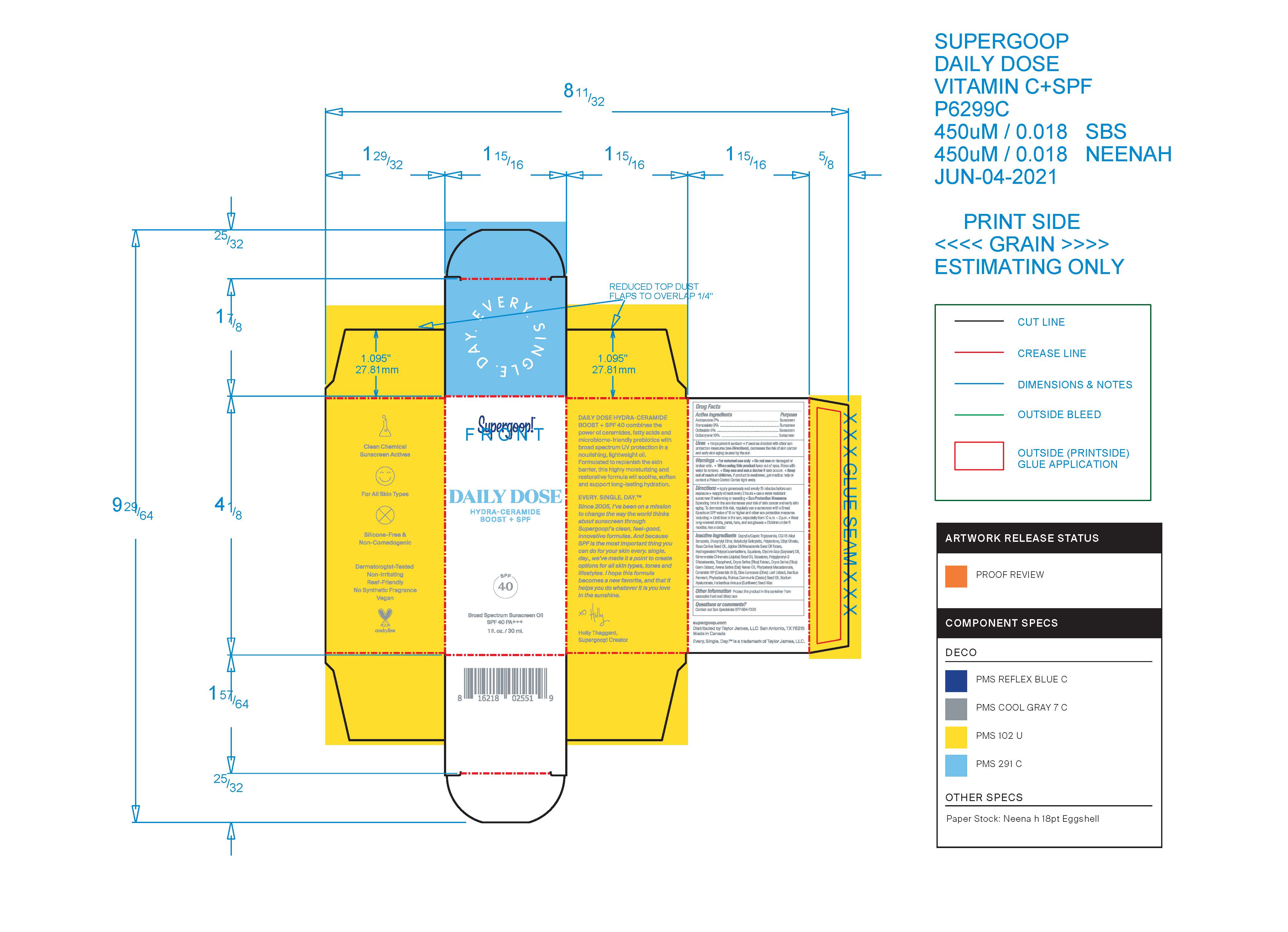
Supergoop DAILY DOSE HYDRA-CERAMIDE BOOST + SPF SPF 40 Broad Spectrum Sunscreen Oil SPF 40 PA+++ 1 fl. oz. / 30 mL OL Carton
About this NDC listing & data coverage
What data is (and isn’t) available for this NDC — tap to expand
| NDC identity (package / product / labeler codes) | ✓ Available |
| Labeler | ✓ Available |
| Product & package description | ✓ Available |
| Marketing category & status | ✓ Available |
| Active ingredient / dosage form / route | ✓ Available |
| FDA label (SPL via DailyMed) | ✓ Available |
| Package photos | ✓ Available |
| Inactive ingredients (structured) | ✓ Available |
| NADAC pharmacy acquisition price (CMS) | — Not published for this NDC CMS publishes NADAC only for NDCs reported in its retail-pharmacy survey. |
| Orange Book / therapeutic-equivalence data | — Not published for this NDC Applies only to products approved under an NDA/ANDA; many listings are out of scope. |
| HCPCS J-code billing crosswalk | — Not published for this NDC Most self-administered / retail products have no J-code — that is normal. |
| Medicaid utilization (CMS SDUD) | — Not published for this NDC CMS reports utilization only for NDCs with Medicaid claims above its privacy threshold. |