
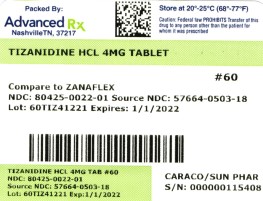
Tizanidine HCL 4 mg Tablet, 60-count — NDC 80425-0022-1 (Billing 80425-0022-01)
This is a package of 60 tablets of Tizanidine HCL 4 mg Tablet from Advanced Rx of Tennessee, LLC, marketed since Dec 2003 and currently FDA-listed. It is the main listing for this product, which comes in 2 package sizes.
Identity & classification
Regulatory identifiers FDA, NLM and CMS codes for this package
- RxCUI (RxNorm): 313413
Where does this data come from?
- FDA openFDA NDC Directory · synced Oct 1, 2026
- FDA label on DailyMed · label index refreshed Oct 1, 2026
- RxNorm (NLM RxNav) · catalog refreshed Oct 1, 2026
- Medi-Span GPI (licensed)
- First Databank (licensed) · refreshed Oct 1, 2026
RxNorm drug class
This medicine belongs to the Central alpha-2 Adrenergic Agonist class.
Where does this data come from?
- RxClass (NLM) · catalog refreshed Oct 1, 2026
Clinical
- It helps manage spasticity, meaning stiff, tight muscles that are hard to control. It wears off quickly, so it is meant for the times and activities when you most need relief.
- Food changes how much tizanidine you absorb, and tablets and capsules react differently. The key is to be consistent, either always with food or always without. Tell me or your pre...
- Dry mouth, sleepiness, tiredness or weakness, and dizziness are the most common. Many people find them mild to moderate. Call your doctor if you faint, see things that are not ther...
- It is best to avoid it. Alcohol raises the amount of tizanidine in your blood and adds to drowsiness and side effects. The same goes for other sedating medicines, so check with me...
Patient education
Supplement & herbal interactions
Where does this data come from?
- MedlinePlus (NLM) · refreshed Oct 1, 2026
- FDA label on DailyMed · label index refreshed Oct 1, 2026
Ask a licensed pharmacist directly — free, answered by our team.
Pricing
A drug doesn't have one price. Each row is a different public payment system, and none is what you'd pay at the counter — that depends on your insurance. The ⓘ on each row explains what it measures.
| Price system | Per each | Per package |
|---|---|---|
| Retail pharmacies payNADAC · weekly | Not in the retail survey — common for institutional, discontinued, or low-volume packs. | |
| Medicaid paysCMS SDUD · 12 mo | No recent Medicaid claims on file for this NDC — rare and low-volume NDCs are suppressed in the public data. | |
| Medicare drug plans payPart D · Q2 2026 | $0.1130 | $6.78 / 60 tablets |
Where does this data come from?
- CMS NADAC weekly file
- CMS ASP pricing files · refreshed Sep 20, 2026
- CMS Medicaid State Drug Utilization Data · refreshed Oct 2, 2026
- CMS Part D plan pricing files · refreshed Sep 24, 2026
- VA National Acquisition Center price file
Packaging — all sizes for this product
| Package NDC | Description | Marketing start | Marketing end | Status |
|---|---|---|---|---|
| 80425-0022-01 You're viewing this Main listing | 60 TABLET in 1 BOTTLE | 2003-12-11 | — | Active |
| 80425-0022-02 80425-0022-2 | 90 TABLET in 1 BOTTLE | 2003-12-11 | — | Active |
You're viewing the smallest of 2 pack sizes for this product.
Pack size FAQ
What quantity is in this package?
How does this package differ from NDC 80425-0022-02?
What NDC number is used to bill for this package of Tizanidine HCL 4 mg Tablet?
Therapeutic equivalents
| Product | Labeler | Pack | NADAC/unit | TE | Status | Price vs. this |
|---|---|---|---|---|---|---|
| tizanidine 4 mg 00904-6418-61 | Major | 100 tablets | $0.033 | AB | Availability likely | — |
| Tizanidine 4 mg 16714-0172-01 | NorthStar | 150 tablets | $0.033 | AB | Availability likely | — |
| Tizanidine 4 mg 29300-0169-03 | Unichem | 300 tablets | $0.033 | AB | Availability likely | — |
| Tizanidine 4 mg 50268-0760-15 | AvPAK | 50 tablets | $0.033 | AB | Availability likely | — |
| Tizanidine 4 mg 57664-0503-18 | Sun | 1000 tablets | $0.033 | AB | Availability likely | — |
| Tizanidine 4 mg 68084-0645-01 | American | 100 tablets | $0.033 | AB | Availability likely | — |
| tizanidine 4 mg 00615-8469-39 | NCS | 30 tablets | — | AB | FDA listed | — |
| Tizanidine 4 mg 43063-0455-15 | PD-Rx | 15 tablets | — | AB | FDA listed | — |
| Tizanidine Hydrochloride 4 mg 49999-0347-01 | Quality | 120 tablets | — | AB | FDA listed | — |
| Tizanidine 4 mg 50090-0840-00 | A-S | 120 tablets | — | AB | FDA listed | — |
| Tizanidine 4 mg 50090-5767-00 | A-S | 120 tablets | — | AB | FDA listed | — |
| Tizanidine 4 mg 50090-6756-00 | A-S | 120 tablets | — | AB | FDA listed | — |
| Tizanidine 4 mg 50090-6757-00 | A-S | 90 tablets | — | AB | FDA listed | — |
| Tizanidine 4 mg 50090-7889-00 | A-S | 90 tablets | — | AB | FDA listed | — |
| Tizanidine 4 mg 51655-0603-20 | Northwind | 20 tablets | — | AB | FDA listed | — |
| Tizanidine 4 mg 51655-0740-26 | Northwind | 90 tablets | — | AB | FDA listed | — |
| Tizanidine 4 mg 55111-0180-03 | Dr. | 300 tablets | — | AB | FDA listed | — |
| tizanidine 4 mg 55154-7287-00 | Cardinal | 10 tablets | — | AB | FDA listed | — |
| tizanidine 4 mg 60505-0252-01 | Apotex | 100 tablets | — | AB | FDA listed | — |
| Tizanidine 4 mg 60760-0505-04 | St. | 4 tablets | — | AB | FDA listed | — |
| Tizanidine Hydrochloride 4 mg 61919-0196-30 | TIZANIDINE | 30 tablets | — | AB | FDA listed | — |
| Tizanidine 4 mg 63187-0009-30 | Proficient | 30 tablets | — | AB | FDA listed | — |
| tizanidine 4 mg 63187-0145-30 | Proficient | 30 tablets | — | AB | FDA listed | — |
| Tizanidine 4 mg 63187-0493-15 | Proficient | 15 tablets | — | AB | FDA listed | — |
| Tizanidine 4 mg 63187-0673-14 | Proficient | 14 tablets | — | AB | FDA listed | — |
| Tizanidine 4 mg 63629-1673-00 | Bryant | 112 tablets | — | AB | FDA listed | — |
| Tizanidine 4 mg 63629-2371-01 | Bryant | 1000 tablets | — | AB | FDA listed | — |
| tizanidine 4 mg 64980-0659-03 | Rising | 30 tablets | — | AB | FDA listed | — |
| tizanidine 4 mg 67046-1444-03 | Coupler | 30 tablets | — | AB | FDA listed | — |
| Tizanidine 4 mg 67296-2263-02 | Redpharm | 15 tablets | — | AB | FDA listed | — |
| Tizanidine 4 mg 67877-0614-05 | Ascend | 500 tablets | — | AB | FDA listed | — |
| tizanidine 4 mg 68071-3719-03 | NuCare | 30 tablets | — | AB | FDA listed | — |
| Tizanidine 4 mg 68071-4463-03 | NuCare | 30 tablets | — | AB | FDA listed | — |
| Tizanidine 4 mg 68071-5268-03 | NuCare | 30 tablets | — | AB | FDA listed | — |
| Tizanidine 4 mg 68788-7781-01 | Preferred | 100 tablets | — | AB | FDA listed | — |
| tizanidine 4 mg 68788-8741-01 | Preferred | 100 tablets | — | AB | FDA listed | — |
| Tizanidine 4 mg 68788-8802-01 | Preferred | 100 tablets | — | AB | FDA listed | — |
| Zanaflex 4 mg 70515-0594-15 | Covis | 150 tablets | — | AB | FDA listed | — |
| Tizanidine 4 mg 70518-0133-00 | REMEDYREPACK | 60 tablets | — | AB | FDA listed | — |
| Tizanidine 4 mg 70518-1598-01 | REMEDYREPACK | 60 tablets | — | AB | FDA listed | — |
| Tizanidine 4 mg 70518-3658-00 | REMEDYREPACK | 30 tablets | — | AB | FDA listed | — |
| tizanidine 4 mg 70518-4181-00 | REMEDYREPACK | 90 tablets | — | AB | FDA listed | — |
| tizanidine 4 mg 70771-1336-00 | Zydus | 1000 tablets | — | AB | FDA listed | — |
| Tizanidine 4 mg 71335-0914-00 | Bryant | 112 tablets | — | AB | FDA listed | — |
| Tizanidine 4 mg 71335-1016-00 | Bryant | 112 tablets | — | AB | FDA listed | — |
| Tizanidine 4 mg 71335-2325-00 | Bryant | 112 tablets | — | AB | FDA listed | — |
| Tizanidine 4 mg 71335-3016-01 | Bryant | 90 tablets | — | AB | FDA listed | — |
| Tizanidine 4 mg 71610-0228-30 | Aphena | 30 tablets | — | AB | FDA listed | — |
| tizanidine 4 mg 71610-0776-16 | Aphena | 6000 tablets | — | AB | FDA listed | — |
| Tizanidine 4 mg 71610-0864-16 | Aphena | 6000 tablets | — | AB | FDA listed | — |
| Tizanidine 4 mg 72162-1642-00 | Bryant | 1000 tablets | — | AB | FDA listed | — |
| Tizanidine 4 mg 72189-0602-30 | Direct_rx | 30 tablets | — | AB | FDA listed | — |
| tizanidine 4 mg 72578-0097-06 | Viona | 30 tablets | — | AB | FDA listed | — |
| Tizanidine 4 mg 72789-0325-30 | PD-Rx | 30 tablets | — | AB | FDA listed | — |
| Tizanidine 4 mg 72789-0327-20 | PD-Rx | 20 tablets | — | AB | FDA listed | — |
| Tizanidine 4 mg 76420-0229-30 | Asclemed | 30 tablets | — | AB | FDA listed | — |
| Tizanidine 4 mg 76420-0339-00 | Asclemed | 1000 tablets | — | AB | FDA listed | — |
| Tizanidine 4 mg 76420-0866-00 | Asclemed | 1000 tablets | — | AB | FDA listed | — |
| tizanidine 4 mg 76420-0886-00 | Asclemed | 1000 tablets | — | AB | FDA listed | — |
| Tizanidine HCL 4 mgthis 80425-0022-01 | Advanced | 60 tablets | — | AB | FDA listed | — |
| Tizanidine HCl 4 mg 80425-0023-01 | Advanced | 60 tablets | — | AB | FDA listed | — |
| Tizanidine HCL 4 mg 80425-0024-01 | Advanced | 60 tablets | — | AB | FDA listed | — |
| Tizanidine 4 mg 80425-0453-01 | Advanced | 30 tablets | — | AB | FDA listed | — |
| tizanidine 4 mg 80425-0454-01 | Advanced | 30 tablets | — | AB | FDA listed | — |
| Tizanidine 4 mg 82461-0721-60 | Medcore | 60 tablets | — | AB | FDA listed | — |
| Zanaflex 4 mg 83107-0004-15 | Legacy | 150 tablets | — | AB | FDA listed | — |
| Tizanidine 4 mg 85509-1180-01 | PHOENIX | 120 tablets | — | AB | FDA listed | — |
Where does this data come from?
- FDA openFDA NDC Directory · synced Oct 1, 2026
- FDA Orange Book · refreshed Sep 3, 2026
- CMS NADAC weekly file
Availability & generic status
This product is an FDA-approved generic. Other versions of the same drug are listed under Therapeutic equivalents, least expensive first.
Where does this data come from?
- FDA Orange Book · refreshed Sep 3, 2026
Inactive Ingredients / Excipients
Inactive ingredients, also called excipients, are components of the drug product other than the active ingredient. They may include fillers, dyes, coatings, preservatives, flavors, or other formulation ingredients.
Where does this data come from?
IACT rows and label-wide narrative are kept separate; availability and product-level specificity depend on the submitted label.- FDA label on DailyMed · label index refreshed Oct 1, 2026
- FDA openFDA NDC Directory · synced Oct 1, 2026
Inactive ingredient FAQ
Are inactive ingredients the same for every manufacturer?
Why might an inactive ingredient be missing?
Can inactive ingredients matter?
Manufacturer & labeler
Where does this data come from?
- FDA openFDA NDC Directory · synced Oct 1, 2026
- Drugs@FDA
Full prescribing information FDA SPL
🎯 Indications and Usage ▾
1. Indications and Usage Section 1 INDICATIONS AND USAGE Tizanidine Tablets, USP is a central alpha-2-adrenergic agonist indicated for the management of spasticity. Because of the short duration of therapeutic effect, treatment with Tizanidine Tablets, USP should be reserved for those daily activities and times when relief of spasticity is most important [see Dosage and Administration(2.1)].
⏱️ Dosage and Administration ▾
2. Dosage and Administration Section
2.1Dosing Information Tizanidine Tablets, USP tablets may be prescribed with or without food. Once the formulation has been selected and the decision to take with or without food has been made, this regimen should not be altered. Food has complex effects on tizanidine pharmacokinetics, which differ with the different formulations.
Tizanidine Capsules and Tizanidine Tablets, USP are bioequivalent to each other under fasting conditions (more than 3 hours after a meal), but not under fed conditions (within 30 minutes of a meal). These pharmacokinetic differences may result in clinically significant differences when switching administration of tablet and capsules and when switching administration between the fed or fasted state. These changes may result in increased adverse events, or delayed or more rapid onset of activity, depending upon the nature of the switch.
For this reason, the prescriber should be thoroughly familiar with the changes in kinetics associated with these different conditions [SEE CLINICAL PHARMACOLOGY (12.3)]. The recommended starting dose is 2 mg. Because the effect of Tizanidine Tablets, USP peaks at approximately 1 to 2 hours post-dose and dissipates between 3 to 6 hours post-dose, treatment can be repeated at 6 to 8 hour intervals, as needed, to a maximum of three doses in 24 hours.
Dosage can be gradually increased by 2 mg to 4 mg at each dose, with 1 to 4 days between dosage increases, until a satisfactory reduction of muscle tone is achieved. The total daily dose should not exceed 36 mg. Single doses greater than 16 mg have not been studied.
2.2Dosing in Patients with Renal Impairment Tizanidine Tablets, USP should be used with caution in patients with renal insufficiency (creatinine clearance < 25 mL/min), as clearance is reduced by more than 50%. In these patients, during titration, the individual doses should be reduced. If higher doses are required, individual doses rather than dosing frequency should be increased [SEE WARNINGS AND PRECAUTIONS (5.7)].
2.3Dosing in Patients with Hepatic Impairment Tizanidine Tablets, USP should be used with caution in patients with any hepatic impairment. In these patients, during titration, the individual doses should be reduced. If higher doses are required, individual doses rather than dosing frequency should be increased.
Monitoring of aminotransferase levels is recommended for baseline and 1 month after maximum dose is achieved, or if hepatic injury is suspected. [SEE USE IN SPECIFIC POPULATIONS (8.7)]
2.4Drug Discontinuation If therapy needs to be discontinued, particularly in patients who have been receiving high doses (20 mg to 36 mg daily) for long periods (9 weeks or more) or who may be on concomitant treatment with narcotics, the dose should be decreased slowly (2 mg to 4 mg per day) to minimize the risk of withdrawal and rebound hypertension, tachycardia, and hypertonia [SEE DRUG ABUSE AND DEPENDENCE (9.3)].
💊 Dosage Forms and Strengths ▾
3. Dosage Forms and Strengths Tizanidine Tablets, USP 2 mg are white to off-white, round, flat beveled, uncoated tablets debossed with product code “502” on one side, and bisecting score on the other. Tizanidine Tablets, USP 4 mg are white to off-white, round, flat beveled, uncoated tablets debossed with product code “503” on one side, and quadrisecting score on the other.
⛔ Contraindications ▾
4. Contraindications Tizanidine Tablets, USP is contraindicated in patientstaking potent inhibitors of CYP1A2, such as fluvoxamine or ciprofloxacin [SEE DRUG INTERACTIONS (7.1 , 7.2 )].
⚠️ Warnings and Cautions ▾
5. Warnings and Precautions
5.1Hypotension Tizanidine is an α2-adrenergic agonist that can produce hypotension. Syncope has been reported in the post marketing setting. The chance of significant hypotension may possibly be minimized by titration of the dose and by focusing attention on signs and symptoms of hypotension prior to dose advancement.
In addition, patients moving from a supine to fixed upright position may be at increased risk for hypotension and orthostatic effects. Monitor for hypotension when Tizanidine Tablets, USP is used in patients receiving concurrent antihypertensive therapy. It is not recommended thatTizanidine Tablets, USP be used with other α2-adrenergic agonists.
Clinically significant hypotension (decreases in both systolic and diastolic pressure) has been reported with concomitant administration of either fluvoxamine or ciprofloxacin and single doses of 4 mg of Tizanidine Tablets, USP. Therefore, concomitant use of Tizanidine Tablets, USP with fluvoxamine or with ciprofloxacin, potent inhibitors of CYP1A2, is contraindicated [SEE CONTRAINDICATIONS (4)andDRUG INTERACTIONS (7.1,7.2)].
5.2Risk of Liver Injury Tizanidine Tablets, USP may cause hepatocellular liver injury. Tizanidine Tablets, USP should be used with caution in patients with any hepatic impairment. Monitoring of aminotransferase levels is recommended for baseline and 1 month after maximum dose is achieved, or if hepatic injury is suspected. [SEE DOSAGE AND ADMINISTRATION (2.3)and USE IN SPECIFIC POPULATIONS (8.7)]
5.3Sedation Tizanidine Tablets, USP can cause sedation, which may interfere with everyday activity. In the multiple dose studies, the prevalence of patients with sedation peaked following the first week of titration and then remained stable for the duration of the maintenance phase of the study. The CNS depressant effects of Tizanidine Tablets, USP with alcohol and other CNS depressants (e.g., benzodiazepines, opioids, tricyclic antidepressants) may be additive.
Monitor patients who take Tizanidine Tablets, USP with another CNS depressant for symptoms of excess sedation. [SEE DRUG INTERACTIONS (7.5, 7.6 )]
5.4Hallucinosis/Psychotic-Like Symptoms Tizanidine Tablets, USP use has been associated with hallucinations. Formed, visual hallucinations or delusions have been reported in 5 of 170 patients (3%) in two North American controlled clinical studies. Most of the patients were aware that the events were unreal.
One patient developed psychosis in association with the hallucinations. One patient among these 5 continued to have problems for at least 2 weeks following discontinuation of tizanidine. Consider discontinuing Tizanidine Tablets, USP in patients who develop hallucinations.
5.5Interaction with CYP1A2 Inhibitors Because of potential drug interactions, Tizanidine Tablets, USP is contraindicated in patients taking potent CYP1A2 inhibitors, such as fluvoxamine or ciprofloxacin. Adverse reactions such as hypotension, bradycardia, or excessive drowsiness can occur when Tizanidine Tablets, USP is taken with other CYP1A2 inhibitors, such as zileuton, fluoroquinolones other than ciprofloxacin (which is contraindicated), antiarrythmics (amiodarone, mexiletine, propafenone), cimetidine, famotidine, oral contraceptives, acyclovir, and ticlopidine).
Concomitant use should be avoided unless the necessity for Tizanidine Tablets, USP therapy is clinically evident. In such a case, use with caution. [SEE DRUG INTERACTIONS (7.3)and CLINICAL PHARMACOLOGY (12.3)]
5.6Hypersensitivity Reactions Tizanidine Tablets, USP can cause anaphylaxis. Signs and symptoms including respiratory compromise, urticaria, and angioedema of the throat and tongue have been reported. Patients should be informed of the signs and symptoms of severe allergic reactions and instructed to discontinue Tizanidine Tablets, USP and seek immediate medical care should these signs and symptoms occur. [SEE CONTRAINDICATIONS (4)]
5.7Increased Risk of Adverse Reactions in Patient… [Excerpted — this section continues on DailyMed.]
🤒 Adverse Reactions ▾
6. Adverse Reactions The following adverse reactions are described elsewhere in other sections of the prescribing information: Hypotension [SEE WARNINGS AND PRECAUTIONS (5.1)] Liver Injury [SEE WARNINGS AND PRECAUTIONS (5.2)] Sedation [SEE WARNINGS AND PRECAUTIONS (5.3)] Hallucinosis/Psychotic-Like Symptoms [SEE WARNINGS AND PRECAUTIONS (5.4)] Hypersensitivity Reactions [SEE WARNINGS AND PRECAUTIONS (5.6)]
6.1Clinical Trials Experience Because clinical studies are conducted under widely varying conditions, adverse reaction rates observed in the clinical studies of a drug cannot be directly compared to rates in the clinical studies of another drug and may not reflect the rates observed in clinical practice. Three double-blind, randomized, placebo controlled -clinical studies were conducted to evaluate the effect of tizanidine on spasticity control. Two studies were conducted in patients with multiple sclerosis and one in patients with spinal cord injury.
Each study had a 13-week active treatment period which included a 3-week titration phase to the maximum tolerated dose up to 36 mg/day in three divided doses, a 9-week plateau phase where the dose of tizanidine was held constant and a 1-week dose tapering. In all, 264 patients received tizanidine and 261 patients received placebo. Across the three studies patient ages ranged from 15–69 years and 51.4 percent were women.
The median dose during the plateau phase ranged from 20–28 mg/day. The most frequent adverse reactions reported in multiple dose, placebo-controlled clinical studies involving 264 patients with spasticity were dry mouth, somnolence/sedation, asthenia (weakness, fatigue and/or tiredness) and dizziness. Three-quarters of the patients rated the events as mild to moderate and one-quarter of the patients rated the events as being severe.
These events appeared to be dose related. Table 1 lists signs and symptoms that were reported in greater than 2% of patients in three multiple dose, placebo-controlled studies who received Tizanidine Tablets, USP where the frequency in the Tizanidine Tablets, USP group was greater than the placebo group. For comparison purposes, the corresponding frequency of the event (per 100 patients) among placebo treated patients is also provided.
Table 1: Multiple Dose, Placebo-Controlled Studies—Frequent (>2%) Adverse Reactions Reported for Which Tizanidine Tablets, USP Incidence is Greater than Placebo Event Placebo N = 261 % Tizanidine Tablets, USP N = 264 % Dry mouth 10 49 Somnolence 10 48 Asthenia* 16 41 Dizziness 4 16 UTI 7 10 Infection 5 6 Constipation 1 4 Liver test abnormality 2 6 Vomiting 0 3 Speech disorder 0 3 Amblyopia (blurred vision) <1 3 Urinary frequency 2 3 Flu syndrome 2 3 Dyskinesia 0 3 Nervousness <1 3 Pharyngitis 1 3 Rhinitis 2 3 * (weakness, fatigue, and/or tiredness) In the single dose, placebo-controlled study involving 142 patients with spasticity due to multiple sclerosis (Study 1) [SEE CLINICAL STUDIES (14)], the patients were specifically asked if they had experienced any of the four most common adverse reactions: dry mouth, somnolence (drowsiness), asthenia (weakness, fatigue and/or tiredness) and dizziness.
In addition, hypotension and bradycardia were observed. The occurrence of these reactions is summarized in Table 2. Other events were, in general, reported at a rate of 2% or less.
Table 2: Single Dose, Placebo-Controlled Study—Common Adverse Reactions Reported Event Placebo N = 48 % Tizanidine Tablets, USP, 8 mg, N = 45 % Tizanidine Tablets, USP, 16 mg, N = 49 % Somnolence 31 78 92 Dry mouth 35 76 88 Asthenia* 40 67 78 Dizziness 4 22 45 Hypotension 0 16 33 Bradycardia 0 2 10 * (weakness, fatigue, and/or tiredness)
6.2Post-Marketing Experience The following adverse reactions have been identified during post approval use of Tizanidine Tablets, USP. Because these reactions are reported voluntarily from a population of uncertain size, it is not always possible to reliably estimate their frequency or establish a… [Excerpted — this section continues on DailyMed.]
🔄 Drug Interactions ▾
7. Drug Interactions
7.1Fluvoxamine Concomitant use of fluvoxamine and Tizanidine Tablets, USP is contraindicated. Changes in pharmacokinetics of tizanidine when administered with fluvoxamine resulted in significantly decreased blood pressure, increased drowsiness, and increased psychomotor impairment. [SEE CONTRAINDICATIONS (4) and CLINICAL PHARMACOLOGY (12.3)]
7.2Ciprofloxacin Concomitant use of ciprofoxacin and Tizanidine Tablets, USP is contraindicated. Changes in pharmacokinetics of tizanidine when administered with ciprofloxacin resulted in significantly decreased blood pressure, increased drowsiness, and increased psychomotor impairment. [SEE CONTRAINDICATIONS (4) and CLINICAL PHARMACOLOGY (12.3)]
7.3CYP1A2 Inhibitors other than Fluvoxamine and Ciprofloxacin Because of potential drug interactions, concomitant use of Tizanidine Tablets, USP with other CYP1A2 inhibitors, such as zileuton, fluoroquinolones other than strong CYP1A2 inhibitors (which are contraindicated), antiarrythmics (amiodarone, mexiletine, propafenone, and verapamil), cimetidine, famotidine, oral contraceptives, acyclovir, and ticlopidine) should be avoided. If their use is clinically necessary, therapy should be initiated with 2 mg dose and increased in 2–4 mg steps daily based on patient response to therapy.
If adverse reactions such as hypotension, bradycardia, or excessive drowsiness occur, reduce or discontinue Tizanidine Tablets, USP therapy. [SEE WARNINGS AND PRECAUTIONS (5.5)and CLINICAL PHARMACOLOGY (12.3)]
7.4Oral Contraceptives Concomitant use of Tizanidine Tablets, USP with oral contraceptives is not recommended. However, if concomitant use is clinically necessary, initiate Tizanidine Tablets, USP with a single 2 mg dose and increase in 2–4 mg steps daily based on patient response to therapy. If adverse reactions such as hypotension, bradycardia, or excessive drowsiness occur, reduce or discontinue Tizanidine Tablets, USP therapy. [SEE CLINICAL PHARMACOLOGY (12.3)]
7.5Alcohol Alcohol increases the overall amount of drug in the bloodstream after a dose of Tizanidine Tablets, USP. This was associated with an increase in adverse reactions of Tizanidine Tablets, USP. The CNS depressant effects of Tizanidine Tablets, USP and alcohol are additive. [SEE CLINICAL PHARMACOLOGY (12.3)]
7.6Other CNS Depressants The sedative effects of Tizanidine Tablets, USP with CNS depressants (e.g., benzodiazepines, opioids, tricyclic antidepressants) may be additive. Monitor patients who take Tizanidine Tablets, USP with another CNS depressant for symptoms of excess sedation. [SEE CLINICAL PHARMACOLOGY (12.3)] 7.7 α2-adrenergic agonists Because hypotensive effects may be cumulative, it is not recommended that Tizanidine Tablets, USP be used with other α2-adrenergic agonists. [SEE WARNINGS AND PRECAUTIONS (5.1)]
👥 Use in Specific Populations ▾
8. Use in Specific Populations
8.1Pregnancy Pregnancy Category C Tizanidine Tablets, USP has not been studied in pregnant women. Tizanidine Tablets, USP should be given to pregnant women only if the benefit outweighs the risk to the unborn fetus. Reproduction studies performed in rats at a dose of 3 mg/kg, equal to the maximum recommended human dose on a mg/m2 basis, and in rabbits at 30 mg/kg, 16 times the maximum recommended human dose on a mg/m2 basis, did not show evidence of teratogenicity.
Tizanidine at doses that are equal to and up to 8 times the maximum recommended human dose on a mg/m2 basis increased gestation duration in rats. Prenatal and postnatal pup loss was increased and developmental retardation occurred. Post-implantation loss was increased in rabbits at doses of 1 mg/kg or greater, equal to or greater than 0.5 times the maximum recommended human dose on a mg/m2 basis.
8.3Nursing Mothers It is not known whether this drug is excreted in human milk. Because many drugs are excreted in human milk, caution should be exercised when Tizanidine Tablets, USP is administered to a nursing woman.
8.4Pediatric Use Safety and effectiveness in pediatric patients have not been established.
8.5Geriatric Use Tizanidine Tablets, USP is known to be substantially excreted by the kidney, and the risk of adverse reactions to this drug may be greater in patients with impaired renal function. Because elderly patients are more likely to have decreased renal function, care should be taken in dose selection, and it may be useful to monitor renal function. Clinical studies of Tizanidine Tablets, USP did not include sufficient numbers of subjects aged 65 and over to determine whether they respond differently than younger subjects.
Cross-study comparison of pharmacokinetic data following single dose administration of 6 mg Tizanidine Tablets, USP showed that younger subjects cleared the drug four times faster than the elderly subjects. In elderly patients with renal insufficiency (creatinine clearance <25 mL/min), tizanidine clearance is reduced by more than 50% compared to healthy elderly subjects; this would be expected to lead to a longer duration of clinical effect. During titration, the individual doses should be reduced.
If higher doses are required, individual doses rather than dosing frequency should be increased. Monitor elderly patients because they may have an increased risk for adverse reactions associated with Tizanidine Tablets, USP.
8.6Impaired Renal Function Tizanidine Tablets, USP is known to be substantially excreted by the kidney, and the risk of adverse reactions to this drug may be greater in patients with impaired renal function. In patients with renal insufficiency (creatinine clearance < 25 mL/min) clearance was reduced by more than 50%. In these patients, during titration, the individual doses should be reduced.
If higher doses are required, individual doses rather than dosing frequency should be increased. These patients should be monitored closely for the onset or increase in severity of the common adverse events (dry mouth, somnolence, asthenia and dizziness) as indicators of potential overdose. [SEE DOSAGE AND ADMINISTRATION (2.2), WARNINGS AND PRECAUTIONS (5.7) and CLINICAL PHARMACOLOGY (12.3)]
8.7Impaired Hepatic Function The influence of hepatic impairment on the pharmacokinetics of tizanidine has not been evaluated. Because tizanidine is extensively metabolized in the liver, hepatic impairment would be expected to have significant effects on pharmacokinetics of tizanidine. [SEE DOSING AND ADMINISTRATION (2.3), WARNINGS AND PRECAUTIONS (5.2), and CLINICAL PHARMACOLOGY (12.3)].
🆘 Overdosage ▾
10. Overdosage A review of the safety surveillance database revealed cases of intentional and accidental Tizanidine Tablets, USP overdose. Some of the cases resulted in fatality and many of the intentional overdoses were with multiple drugs including CNS depressants.
The clinical manifestations of tizanidine overdose were consistent with its known pharmacology. In the majority of cases a decrease in sensorium was observed including lethargy, somnolence, confusion and coma. Depressed cardiac function is also observed including most often bradycardia and hypotension.
Respiratory depression is another common feature of tizanidine overdose. Should overdose occur, basic steps to ensure the adequacy of an airway and the monitoring of cardiovascular and respiratory systems should be undertaken. Tizanidine is a lipid-soluble drug, which is only slightly soluble in water and methanol.
Therefore, dialysis is not likely to be an efficient method of removing drug from the body. In general, symptoms resolve within one to three days following discontinuation of tizanidine and administration of appropriate therapy. Due to the similar mechanism of action, symptoms and management of tizanidine overdose are similar to that following clonidine overdose.
For the most recent information concerning the management of overdose, contact a poison control center.
🧬 Clinical Pharmacology ▾
12. Clinical Pharmacology
12.1Mechanism of Action Tizanidine is a central alpha-2-adrenergic receptor agonist and presumably reduces spasticity by increasing presynaptic inhibition of motor neurons. The effects of tizanidine are greatest on polysynaptic pathways. The effect of these actions is thought to reduce facilitation of spinal motor neurons.
12.3Pharmacokinetics Absorption and Distribution Following oral administration, tizanidine is essentially completely absorbed. The absolute oral bioavailability of tizanidine is approximately 40% (CV = 24%), due to extensive first-pass hepatic metabolism. Tizanidine is extensively distributed throughout the body with a mean steady state volume of distribution of
2.4L/kg (CV = 21%) following intravenous administration in healthy adult volunteers. Tizanidine is approximately 30% bound to plasma proteins. Differences between Tizanidine Capsules and Tizanidine Tablets, USP Tizanidine Capsules and Tizanidine Tablets, USP are bioequivalent to each other under fasting conditions, but not under fed conditions.
A single dose of either two 4 mg tablets or two 4 mg capsules was administered under fed and fasting conditions in an open label, four period, randomized crossover study in 96 human volunteers, of whom 81 were eligible for the statistical analysis. Following oral administration of either the tablet or capsule (in the fasted state), peak plasma concentrations of tizanidine occurred 1.0 hours after dosing with a half-life of approximately 2 hours. When two 4 mg tablets were administered with food, the mean maximal plasma concentration was increased by approximately 30%, and the median time to peak plasma concentration was increased by 25 minutes, to 1 hour and 25 minutes.
In contrast, when two 4 mg capsules were administered with food, the mean maximal plasma concentration was decreased by 20%, the median time to peak plasma concentration was increased 2 to 3 hours. Consequently, the mean Cmax for the capsule when administered with food is approximately 66% the Cmax for the tablet when administered with food. Food also increased the extent of absorption for both the tablets and capsules.
The increase with the tablet (~30%) was significantly greater than with the capsule (~10%). Consequently when each was administered with food, the amount absorbed from the capsule was about 80% of the amount absorbed from the tablet. Administration of the capsule contents sprinkled on applesauce was not bioequivalent to administration of an intact capsule under fasting conditions.
Administration of the capsule contents on applesauce resulted in a 15%–20% increase in Cmax and AUC of tizanidine and a 15 minute decrease in the median lag time and time to peak concentration compared to administration of an intact capsule while fasting. Figure 1: Mean Tizanidine Concentration vs. Time Profiles For Tizanidine Tablets, USP and Capsules (2 × 4 mg) Under Fasted and Fed Conditions Metabolism and Excretion Tizanidine has linear pharmacokinetics over the doses studied in clinical development (1–20 mg).
Tizanidine has a half-life of approximately 2.5 hours (CV=33%). Approximately 95% of an administered dose is metabolized. The primary cytochrome P450 isoenzyme involved in tizanidine metabolism is CYP1A2.
Tizanidine metabolites are not known to be active; their half-lives range from 20 to 40 hours. Following single and multiple oral dosing of 14C-tizanidine, an average of 60% and 20% of total radioactivity was recovered in the urine and feces, respectively. Special Populations Age Effects No specific pharmacokinetic study was conducted to investigate age effects.
Cross study comparison of pharmacokinetic data following single dose administration of 6 mg Tizanidine Tablets, USP showed that younger subjects cleared the drug four times faster than the elderly subjects. Tizanidine Tablets, USP has not been evaluated in children. [see Use in Specific Populations (8.4, 8.5)] Hepatic Impairment The influence of hepatic i… [Excerpted — this section continues on DailyMed.]
📦 How Supplied / Storage and Handling ▾
16. How Supplied/Storage and Handling
16.2Tizanidine Tablets, USP Tizanidine Tablets, USP 4 mg are available as; white to off-white, round, flat beveled, uncoated tablets debossed with product code “503” on one side, and quadrisecting score on the other. Bottles of 60 Tablets NDC: 80425-0022-01 Bottles of 90 Tablets NDC: 80425-0022-02 Store at 25°C (77°F); excursions permitted 15° to 30°C (59° to 86°F) [see USP Controlled Room Temperature]. Dispense in containers with child resistant closure.
📋 Description ▾
11. Description Tizanidine Tablets, USP (tizanidine hydrochloride) is a central alpha2-adrenergic agonist. Tizanidine HCl is a white to off-white, fine crystalline powder, which is odorless or with a faint characteristic odor.
Tizanidine is slightly soluble in water and methanol; solubility in water decreases as the pH increases. Its chemical name is 5-chloro-4-(2-imidazolin-2-ylamino)-2,1,3-benzothiadiazole monohydrochloride. Tizanidine's molecular formula is C9H8ClN5S-HCl, its molecular weight is 290.2 and its structural formula is: Tizanidine Tablets, USP are supplied as 2 mg and 4 mg tablets for oral administration.
Tizanidine Tablets, USP contain the active ingredient, tizanidine hydrochloride (2.288 mg equivalent to 2 mg tizanidine base and 4.576 mg equivalent to 4 mg tizanidine base), and the inactive ingredients, colloidal silicon dioxide, stearic acid, microcrystalline cellulose, lactose monohydrate and anhydrous lactose. Structure
🔬 Clinical Studies ▾
14. Clinical Studies Tizanidine's capacity to reduce increased muscle tone associated with spasticity was demonstrated in two adequate and well controlled studies in patients with multiple sclerosis or spinal cord injury (Studies 1 and 2). Single-Dose Study in Patients with Multiple Sclerosis with Spasticity In Study 1, patients with multiple sclerosis were randomized to receive single oral doses of drug or placebo.
Patients and assessors were blind to treatment assignment and efforts were made to reduce the likelihood that assessors would become aware indirectly of treatment assignment (e.g., they did not provide direct care to patients and were prohibited from asking questions about side effects). In all, 140 patients received placebo, 8 mg or 16 mg of Tizanidine Tablets, USP. Response was assessed by physical examination; muscle tone was rated on a 5 point scale (Ashworth score), with a score of 0 used to describe normal muscle tone.
A score of 1 indicated a slight spastic catch while a score of 2 indicated more marked muscle resistance. A score of 3 was used to describe considerable increase in tone, making passive movement difficult. A muscle immobilized by spasticity was given a score of 4.
Spasm counts were also collected. Assessments were made at 1, 2, 3 and 6 hours after treatment. A statistically significant reduction of the Ashworth score for Tizanidine Tablets, USP compared to placebo was detected at 1, 2 and 3 hours after treatment.
Figure 2 below shows a comparison of the mean change in muscle tone from baseline as measured by the Ashworth scale. The greatest reduction in muscle tone was 1 to 2 hours after treatment. By 6 hours after treatment, muscle tone in the 8 and 16 mg Tizanidine Tablets, USP groups was indistinguishable from muscle tone in placebo treated patients.
Within a given patient, improvement in muscle tone was correlated with plasma concentration. Plasma concentrations were variable from patient to patient at a given dose. Although 16 mg produced a larger effect, adverse events including hypotension were more common and more severe than in the 8 mg group.
There were no differences in the number of spasms occurring in each group. Figure 2: Single Dose Study—Mean Change in Muscle Tone from Baseline as Measured by the Ashworth Scale ± 95% Confidence Interval (A Negative Ashworth Score Signifies an Improvement in Muscle Tone from Baseline) Seven-Week Study in Patients with Spinal Cord Injury with Spasticity In a 7-week study (Study 2), 118 patients with spasticity secondary to spinal cord injury were randomized to either placebo or Tizanidine Tablets, USP. Steps similar to those taken in the first study were employed to ensure the integrity of blinding.
Patients were titrated over 3 weeks up to a maximum tolerated dose or 36 mg daily given in three unequal doses (e.g., 10 mg given in the morning and afternoon and 16 mg given at night). Patients were then maintained on their maximally tolerated dose for 4 additional weeks (i.e., maintenance phase). Throughout the maintenance phase, muscle tone was assessed on the Ashworth scale within a period of 2.5 hours following either the morning or afternoon dose.
The number of daytime spasms was recorded daily by patients. At endpoint (the protocol-specified time of outcome assessment), there was a statistically significant reduction in muscle tone and frequency of spasms in the Tizanidine Tablets, USP treated group compared to placebo. The reduction in muscle tone was not associated with a reduction in muscle strength (a desirable outcome) but also did not lead to any consistent advantage of Tizanidine Tablets, USP treated patients on measures of activities of daily living.
Figure 3 below shows a comparison of the mean change in muscle tone from baseline as measured by the Ashworth scale. Figure 3: Seven Week Study—Mean Change in Muscle Tone 0.5–2.5 Hours After Dosing as Measured by the Ashworth Scale ± 95% Confidence Interval (A Negative Ashworth Score Signifi… [Excerpted — this section continues on DailyMed.]
🔒 Drug Abuse and Dependence ▾
9. Drug Abuse and Dependence
9.2Abuse Abuse potential was not evaluated in human studies. Rats were able to distinguish tizanidine from saline in a standard discrimination paradigm, after training, but failed to generalize the effects of morphine, cocaine, diazepam, or phenobarbital to tizanidine.
9.3Dependence Tizanidine is closely related to clonidine, which is often abused in combination with narcotics and is known to cause symptoms of rebound upon abrupt withdrawal. Three cases of rebound symptoms on sudden withdrawal of tizanidine have been reported. The case reports suggest that these patients were also misusing narcotics.
Withdrawal symptoms included hypertension, tachycardia, hypertonia, tremor, and anxiety. Withdrawal symptoms are more likely to occur in cases where high doses are used, especially for prolonged periods, or with concomitant use of narcotics. If therapy needs to be discontinued, the dose should be decreased slowly to minimize the risk of withdrawal symptoms [SEE DOSAGE AND ADMINISTRATION (2.2)].
Monkeys were shown to self-administer tizanidine in a dose-dependent manner, and abrupt cessation of tizanidine produced transient signs of withdrawal at doses > 35 times the maximum recommended human dose on a mg/m2 basis. These transient withdrawal signs (increased locomotion, body twitching, and aversive behavior toward the observer) were not reversed by naloxone administration.
🧪 Nonclinical Toxicology ▾
13. Non Clinical Toxicology
13.1Carcinogenesis, Mutagenesis, Impairment of Fertility Carcinogenesis Tizanidine was administered to mice for 78 weeks at oral doses up to 16 mg/kg/day, which is 2 times the maximum recommended human dose (MRHD) on a mg/m2 basis. Tizanidine was administered to rats for 104 weeks at oral doses up to 9 mg/kg/day, which is 2.5 times the MRHD on a mg/m2 basis. There was no increase in tumors in either species.
Mutagenesis Tizanidine was negative in in vitro (bacterial reverse mutation [Ames], mammalian gene mutation, and chromosomal aberration test in mammalian cells) and in vivo (bone marrow micronucleus, and cytogenetics) assay. Impairment of fertility Oral administration of tizanidine resulted in reduced fertility in male and female rats following doses of 30 and 10 mg/kg/day, respectively. No effect on fertility was observed at doses of 10 (male) and 3 (female) mg/kg/day, which are approximately 8 and 3 times, respectively, the MRHD on a mg/m2 basis).
📄 Package Label / Principal Display Panel ▾
Principal Display Panel label 1 label 2
Medicare Part D spend CMS · PART D · 2026 (Q1)
About this NDC listing & data coverage
What data is (and isn’t) available for this NDC — tap to expand
| NDC identity (package / product / labeler codes) | ✓ Available |
| Labeler | ✓ Available |
| Product & package description | ✓ Available |
| Marketing category & status | ✓ Available |
| Active ingredient / dosage form / route | ✓ Available |
| FDA label (SPL via DailyMed) | ✓ Available |
| Package photos | ✓ Available |
| Inactive ingredients (structured) | — Not published for this NDC The labeler did not submit a structured excipient list, or no SPL is available. |
| NADAC pharmacy acquisition price (CMS) | — Not published for this NDC CMS publishes NADAC only for NDCs reported in its retail-pharmacy survey. |
| Orange Book / therapeutic-equivalence data | ✓ Available |
| HCPCS J-code billing crosswalk | — Not published for this NDC Most self-administered / retail products have no J-code — that is normal. |
| Medicaid utilization (CMS SDUD) | — Not published for this NDC CMS reports utilization only for NDCs with Medicaid claims above its privacy threshold. |