
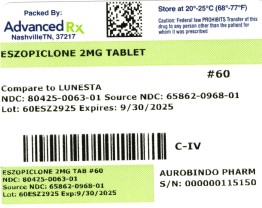
Eszopiclone 2 mg Tablet, Film Coated, 30-count
Other active recalls for Eszopiclone (different manufacturers) — 1 · tap to view
🆔 Identity & classification
Where does this data come from?
🏷️ RxNorm drug class
This medicine belongs to the Benzodiazepine related drugs class.
Where does this data come from?
🏭 Manufacturer & labeler
Where does this data come from?
🩺 Clinical
Eszopiclone is used to treat insomnia (difficulty falling asleep or staying asleep). Eszopiclone is in a class of medications called hypnotics. It works by slowing activity in the brain to allow sleep.
Read the full MedlinePlus article ↗- Eszopiclone helps you fall asleep faster and stay asleep longer, and it's been studied for up to 6 months in adults. It treats the symptoms of insomnia rather than the underlying c...
- What exactly does eszopiclone do — will it just make me sleepy, or does it actually fix my insomnia?
- Eszopiclone is a federally controlled substance (Schedule IV) because it can be habit-forming with long-term use. Your doctor will prescribe the lowest effective dose for the short...
- Is it safe to take eszopiclone every night, or is it habit-forming?
Patient education
Supplement & herbal interactions
Some supplements/herbs that may interact with Eszopiclone — tap one for details:
Where does this data come from?
Ask a licensed pharmacist directly — free, answered by our team.
💊 What it looks like
Where does this data come from?
🧪 Inactive Ingredients / Excipients
Inactive ingredients, also called excipients, are components of the drug product other than the active ingredient. They may include fillers, dyes, coatings, preservatives, flavors, or other formulation ingredients.
Where does this data come from?
IACT rows and label-wide narrative are kept separate; availability and product-level specificity depend on the submitted label.Inactive ingredient FAQ
Are inactive ingredients the same for every manufacturer?
Why might an inactive ingredient be missing?
Can inactive ingredients matter?
💲 Pricing
A drug doesn't have one price. Each row is a different public payment system, and none is what you'd pay at the counter — that depends on your insurance. The ⓘ on each row explains what it measures.
| Price system | Per each | Per package |
|---|---|---|
| Retail pharmacies payNADAC · weekly | Not in the retail survey — common for institutional, discontinued, or low-volume packs. | |
| Medicaid paysCMS SDUD · 12 mo | No recent Medicaid claims on file for this NDC — rare and low-volume NDCs are suppressed in the public data. | |
| Medicare drug plans payPart D · Q2 2026 | $0.1735 | $5.21 / 30 tablets |
Where does this data come from?
🔁 Therapeutic equivalents
| Product | Labeler | Pack | NADAC/unit | TE | Status | Price vs. this |
|---|---|---|---|---|---|---|
| Eszopiclone 2 mg 00093-5538-01 | Teva | 100 tablets | $0.091 | AB | Availability likely | — |
| Eszopiclone 2 mg 00378-5271-01 | Mylan | 100 tablets | $0.091 | AB | Availability likely | — |
| Eszopiclone 2 mg 31722-0856-01 | Camber | 100 tablets | $0.091 | AB | Availability likely | — |
| Eszopiclone 2 mg 33342-0300-11 | Macleods | 100 tablets | $0.091 | AB | Availability likely | — |
| Eszopiclone 2 mg 55111-0619-01 | Dr. | 100 tablets | $0.091 | AB | Availability likely | — |
| Eszopiclone 2 mg 65862-0968-01 | Aurobindo | 100 tablets | $0.091 | — | Availability likely | — |
| Eszopiclone 2 mg 68462-0383-01 | Glenmark | 100 tablets | $0.091 | AB | Availability likely | — |
| Eszopiclone 2 mg 69452-0348-20 | Bionpharma | 100 tablets | $0.091 | AB | Availability likely | — |
| Eszopiclone 2 mg 68180-0323-01 | Lupin | 100 tablets | $0.114 | — | FDA listed | — |
| Eszopiclone 2 mg 47335-0587-08 | Sun | 100 tablets | — | AB | FDA listed | — |
| Eszopiclone 2 mg 50090-7745-00 | A-S | 30 tablets | — | AB | FDA listed | — |
| Eszopiclone 2 mg 55700-0581-30 | Quality | 30 tablets | — | AB | FDA listed | — |
| Eszopiclone 2 mg 60429-0633-01 | Golden | 100 tablets | — | AB | Discontinued | — |
| Eszopiclone 2 mg 60760-0526-30 | St | 30 tablets | — | AB | FDA listed | — |
| Eszopiclone 2 mg 61919-0033-10 | DIRECT | 10 tablets | — | AB | FDA listed | — |
| Eszopiclone 2 mg 63187-0970-30 | Proficient | 30 tablets | — | AB | FDA listed | — |
| Eszopiclone 2 mg 68788-7029-01 | Preferred | 10 tablets | — | AB | FDA listed | — |
| Eszopiclone 2 mg 70518-1310-00 | REMEDYREPACK | 30 tablets | — | AB | FDA listed | — |
| Eszopiclone 2 mg 70518-4361-00 | REMEDYREPACK | 30 tablets | — | AB | FDA listed | — |
| Eszopiclone 2 mg 70518-4398-00 | REMEDYREPACK | 30 tablets | — | AB | FDA listed | — |
| Eszopiclone 2 mg 71205-0513-30 | Proficient | 30 tablets | — | AB | FDA listed | — |
| Eszopiclone 2 mg 71335-0089-01 | Bryant | 30 tablets | — | AB | FDA listed | — |
| Eszopiclone 2 mg 71335-0512-01 | Bryant | 30 tablets | — | AB | FDA listed | — |
| Eszopiclone 2 mg 71335-2698-01 | Bryant | 30 tablets | — | AB | FDA listed | — |
| Eszopiclone 2 mg 76420-0024-01 | Asclemed | 100 tablets | — | AB | FDA listed | — |
| Eszopiclone 2 mg 76420-0353-00 | Asclemed | 1000 tablets | — | AB | FDA listed | — |
| Eszopiclone 2 mg 80425-0062-01 | Advanced | 60 tablets | — | AB | FDA listed | — |
| Eszopiclone 2 mgthis 80425-0063-02 | Advanced | 30 tablets | — | AB | FDA listed | — |
| Eszopiclone 2 mg 80425-0064-01 | Advanced | 60 tablets | — | AB | FDA listed | — |
| Lunesta 2 mg 80725-0011-30 | Waylis | 30 tablets | — | AB | FDA listed | — |
| Eszopiclone 2 mg 82804-0076-30 | Proficient | 30 tablets | — | AB | FDA listed | — |
Where does this data come from?
⏳ Availability & generic status
This product is an FDA-approved generic. Other versions of the same drug are listed under Therapeutic equivalents, least expensive first.
Where does this data come from?
📊 Medicare Part D spend CMS · PART D · 2026 (Q1)
📦 Packaging — all sizes for this product
| Package NDC | Description | Marketing start | Status |
|---|---|---|---|
| 80425-0063-01 | 60 TABLET, FILM COATED in 1 BOTTLE (80425-0063-1) | 2016-09-15 | Active |
| 80425-0063-02 You're viewing this | 30 TABLET, FILM COATED in 1 BOTTLE (80425-0063-2) | 2016-09-15 | Active |
You're viewing the smallest of 2 pack sizes for this product.
Pack size FAQ
What quantity is in NDC 80425-0063-02?
What is the difference between NDC 80425-0063-02 and NDC 80425-0063-01?
What NDC number is used to bill for this package of Eszopiclone 2 mg Tablet, Film Coated?
🧭 About this NDC listing & data coverage
What data is (and isn’t) available for this NDC — tap to expand
| NDC identity (package / product / labeler codes) | ✓ Available |
| Labeler | ✓ Available |
| Product & package description | ✓ Available |
| Marketing category & status | ✓ Available |
| Active ingredient / dosage form / route | ✓ Available |
| FDA label (SPL via DailyMed) | ✓ Available |
| Package photos | ✓ Available |
| Inactive ingredients (structured) | — Not published for this NDC The labeler did not submit a structured excipient list, or no SPL is available. |
| NADAC pharmacy acquisition price (CMS) | — Not published for this NDC CMS publishes NADAC only for NDCs reported in its retail-pharmacy survey. |
| Orange Book / therapeutic-equivalence data | ✓ Available |
| HCPCS J-code billing crosswalk | — Not published for this NDC Most self-administered / retail products have no J-code — that is normal. |
| Medicaid utilization (CMS SDUD) | — Not published for this NDC CMS reports utilization only for NDCs with Medicaid claims above its privacy threshold. |
Questions about this listing
Why is there no price listed?
Is the NDC printed on the package the same as the 11-digit billing NDC?
What do the three segments of this NDC mean?
Is this package still being marketed?
Does this product come in other package sizes?
Who lists this product with the FDA?
Do I need a prescription for this product?
Where does this data come from?
📄 Full prescribing information FDA SPL
🚨 Boxed Warning ▾
Boxed Warning WARNING: COMPLEX SLEEP BEHAVIORS Complex sleep behaviors including sleep-walking, sleep-driving, and engaging in other activities while not fully awake may occur following use of eszopiclone. Some of these events may result in serious injuries, including death. Discontinue eszopiclone immediately if a patient experiences a complex sleep behavior [see CONTRAINDICATIONS (4) and WARNINGS AND PRECAUTIONS (5.1)].
🎯 Indications and Usage ▾
1. Indications and Usage Section 1 INDICATIONS AND USAGE Eszopiclone tablets are indicated for the treatment of insomnia. In controlled outpatient and sleep laboratory studies, eszopiclone tablets administered at bedtime decreased sleep latency and improved sleep maintenance.
The clinical trials performed in support of efficacy were up to 6 months in duration. The final formal assessments of sleep latency and maintenance were performed at 4 weeks in the 6-week study (adults only), at the end of both 2-week studies (elderly only) and at the end of the 6-month study (adults only).
⏱️ Dosage and Administration ▾
2. Dosage and Administration Section 2 DOSAGE AND ADMINISTRATION Use the lowest effective dose for the patient.
2.1Dosage in Adults The recommended starting dose is 1 mg. Dosing can be raised to 2 mg or 3 mg if clinically indicated. In some patients, the higher morning blood levels of eszopiclone tablets following use of the 2 mg or 3 mg dose increase the risk of next day impairment of driving and other activities that require full alertness [see WARNINGS AND PRECAUTIONS (5.1)].
The total dose of eszopiclone tablets should not exceed 3 mg, once daily immediately before bedtime [see WARNINGS AND PRECAUTIONS (5.6)].
2.2Geriatric or Debilitated Patients The total dose of eszopiclone tablets should not exceed 2 mg in elderly or debilitated patients.
2.3Patients with Severe Hepatic Impairment, or Taking Potent CYP3A4 Inhibitors In patients with severe hepatic impairment, or in patients coadministered eszopiclone tablets with potent CYP3A4 inhibitors, the total dose of eszopiclone tablets should not exceed 2 mg [see WARNINGS AND PRECAUTIONS (5.7)].
2.4Use with CNS Depressants Dosage adjustments may be necessary when eszopiclone tablets are combined with other central nervous system (CNS) depressant drugs because of the potentially additive effects [see WARNINGS AND PRECAUTIONS (5.1)].
2.5Administration with Food Taking eszopiclone tablets with or immediately after a heavy, high-fat meal results in slower absorption and would be expected to reduce the effect of eszopiclone tablets on sleep latency [see CLINICAL PHARMACOLOGY (12.3)].
💊 Dosage Forms and Strengths ▾
3. Dosage Forms and Strengths Eszopiclone tablets USP are available in 1 mg, 2 mg and 3 mg strengths for oral administration. Eszopiclone 1 mg tablets are light blue colored, film-coated, round shaped, biconvex tablets with debossed ‘K’ on one side and ‘83’ on other side.
Eszopiclone 2 mg tablets are white to off-white, film-coated, round shaped, biconvex tablets with debossed ‘K’ on one side and ‘84’ on other side. Eszopiclone 3 mg tablets are blue colored, film-coated, round shaped, biconvex tablets with debossed ‘K’ on one side and ‘85’ on other side.
⛔ Contraindications ▾
4. Contraindications Eszopiclone tablets are contraindicated in patients who have experienced complex sleep behaviors after taking Eszopiclone tablets [see Warnings and Precautions (5.1)]. Eszopiclone tablets are contraindicated in patients with known hypersensitivity to eszopiclone. Hypersensitivity reactions include anaphylaxis and angioedema [see Warnings and Precautions (5.3)].
⚠️ Warnings and Cautions ▾
5. Warnings and Precautions
5.1Complex Sleep Behaviors Complex sleep behaviors including sleep-walking, sleep-driving, and engaging in other activities while not fully awake may occur following the first or any subsequent use of eszopiclone. Patients can be seriously injured or injure others during complex sleep behaviors. Such injuries may result in fatal outcomes.
Other complex sleep behaviors (e.g., preparing and eating food, making phone calls, or having sex) have also been reported. Patients usually do not remember these events. Post-marketing reports have shown that complex sleep behaviors may occur with eszopiclone alone at recommended dosages, with or without the concomitant use of alcohol or other CNS depressants [see DRUG INTERACTIONS (7.1)].
Discontinue eszopiclone immediately if a patient experiences a complex sleep behavior.
5.2CNS Depressant Effects and Next-Day Impairment Eszopiclone is a CNS depressant and can impair daytime function in some patients at the higher doses (2 mg or 3 mg), even when used as prescribed. Prescribers should monitor for excess depressant effects, but impairment can occur in the absence of symptoms (or even with subjective improvement), and impairment may not be reliably detected by ordinary clinical exam (i.e., less than formal psychomotor testing). While pharmacodynamic tolerance or adaptation to some adverse depressant effects of eszopiclone may develop, patients using 3 mg eszopiclone should be cautioned against driving or engaging in other hazardous activities or activities requiring complete mental alertness the day after use.
Additive effects occur with concomitant use of other CNS depressants (e.g., benzodiazepines, opioids, tricyclic antidepressants, alcohol), including daytime use. Downward dose adjustment of eszopiclone and concomitant CNS depressants should be considered [see DOSAGE AND ADMINISTRATION (2.4)]. The use of eszopiclone with other sedative-hypnotics at bedtime or the middle of the night is not recommended.
The risk of next-day psychomotor impairment is increased if eszopiclone is taken with less than a full night of sleep remaining (7- to 8 hours); if higher than the recommended dose is taken; if coadministered with other CNS depressants; or coadministered with other drugs that increase the blood levels of eszopiclone [see DOSAGE AND ADMINISTRATION (2.3) and CLINICAL STUDIES (14.3)]. Because eszopiclone can cause drowsiness and a decreased level of consciousness, patients, particularly the elderly, are at higher risk of falls.
5.3Need to Evaluate for Comorbid Diagnoses Because sleep disturbances may be the presenting manifestation of a physical and/or psychiatric disorder, symptomatic treatment of insomnia should be initiated only after a careful evaluation of the patient. The failure of insomnia to remit after 7 to 10 days of treatment may indicate the presence of a primary psychiatric and/or medical illness that should be evaluated. Worsening of insomnia or the emergence of new thinking or behavior abnormalities may be the consequence of an unrecognized psychiatric or physical disorder.
Such findings have emerged during the course of treatment with sedative/hypnotic drugs, including eszopiclone. Because some of the important adverse effects of eszopiclone appear to be dose related, it is important to use the lowest possible effective dose, especially in the elderly [see DOSAGE AND ADMINISTRATION (2.1)].
5.4Severe Anaphylactic and Anaphylactoid Reactions Rare cases of angioedema involving the tongue, glottis or larynx have been reported in patients after taking the first or subsequent doses of sedative-hypnotics, including eszopiclone. Some patients have had additional symptoms such as dyspnea, throat closing, or nausea and vomiting that suggest anaphylaxis. Some patients have required medical therapy in the emergency department.
If angioedema involves the tongue, glottis or larynx, airway obstruction may occur and be fatal. Patients who develop angioedema a…
🤒 Adverse Reactions ▾
6. Adverse Reactions The following are described in more detail in the Warnings and Precautions section of the label: Complex Sleep Behaviors [see BOXED WARNING and WARNINGS AND PRECAUTIONS (5.1)] CNS Depressant Effects and Next-Day Impairment [see WARNINGS AND PRECAUTIONS (5.2)] Need to Evaluate for Comorbid Diagnoses [see WARNINGS AND PRECAUTIONS (5.3)] Severe Anaphylactic and Anaphylactoid Reactions [see WARNINGS AND PRECAUTIONS (5.4)] Abnormal Thinking and Behavioral Changes [see WARNINGS AND PRECAUTIONS (5.5)] Withdrawal Effects [see WARNINGS AND PRECAUTIONS (5.6)] Timing of Drug Administration [see WARNINGS AND PRECAUTIONS (5.7)] Special Populations [see WARNINGS AND PRECAUTIONS (5.8)]3 Because clinical trials are conducted under widely varying conditions, adverse reaction rates observed in the clinical trials of a drug cannot be directly compared to rates in the clinical trials of another drug and may not reflect the rates observed in clinical practice.
The premarketing development program for eszopiclone tablets included eszopiclone exposures in patients and/or normal subjects from two different groups of studies: approximately 400 normal subjects in clinical pharmacology/pharmacokinetic studies, and approximately 1550 patients in placebo-controlled clinical effectiveness studies, corresponding to approximately 263 patient-exposure years. The conditions and duration of treatment with eszopiclone varied greatly and included (in overlapping categories) open-label and double-blind phases of studies, inpatients and outpatients, and short-term and longer-term exposure.
Adverse reactions were assessed by collecting adverse events, results of physical examinations, vital signs, weights, laboratory analyses, and ECGs. The stated frequencies of adverse reactions represent the proportion of individuals who experienced, at least once, adverse reaction of the type listed. A reaction was considered treatment-emergent if it occurred for the first time or worsened while the patient was receiving therapy following baseline evaluation.
6.1Clinical Trials Experience Adverse Reactions Resulting in Discontinuation of Treatment In placebo-controlled, parallel-group clinical trials in the elderly, 3.8% of 208 patients who received placebo, 2.3% of 215 patients who received 2 mg eszopiclone, and 1.4% of 72 patients who received 1 mg eszopiclone discontinued treatment due to an adverse reaction. In the 6-week parallel-group study in adults, no patients in the 3 mg arm discontinued because of an adverse reaction. In the long-term 6-month study in adult insomnia patients, 7.2% of 195 patients who received placebo and 12.8% of 593 patients who received 3 mg eszopiclone discontinued due to an adverse reaction.
No reaction that resulted in discontinuation occurred at a rate of greater than 2%. Adverse Reactions Observed at an Incidence of ≥2% in Controlled Trials Table 1 shows the incidence of adverse reactions from a Phase 3 placebo-controlled study of eszopiclone at doses of 2 or 3 mg in nonelderly adults. Treatment duration in this trial was 44 days.
The table includes only reactions that occurred in 2% or more of patients treated with eszopiclone 2 mg or 3 mg in which the incidence in patients treated with eszopiclone was greater than the incidence in placebo-treated patients. Table 1: Incidence (%) of Adverse Reactions in a 6-Week Placebo-Controlled Study in Nonelderly Adults with Eszopiclone1 Adverse Reaction Placebo (n=99) Eszopiclone 2 mg (n=104) Eszopiclone 3 mg (n=105) Body as a Whole Headache 13 21 17 Viral Infection 1 3 3 Digestive System Dry Mouth 3 5 7 Dyspepsia 4 4 5 Nausea 4 5 4 Vomiting 1 3 0 Nervous System Anxiety 0 3 1 Confusion 0 0 3 Depression 0 4 1 Dizziness 4 5 7 Hallucinations 0 1 3 Libido Decreased 0 0 3 Nervousness 3 5 0 Somnolence 3 10 8 Respiratory System Infection 3 5 10 Skin and Appendages Rash 1 3 4 Special Senses Unpleasant Taste 3 17 34 Urogenital System Dysmenorrhea * 0 3 0 Gynecomastia ** 0 3 0 Reactions for whi…
🔄 Drug Interactions ▾
7. Drug Interactions
7.1CNS Active Drugs Ethanol: An additive effect on psychomotor performance was seen with coadministration of eszopiclone and ethanol [see WARNINGS AND PRECAUTIONS (5.1, 5.2)]. Olanzapine: Coadministration of eszopiclone and olanzapine produced a decrease in DSST scores. The interaction was pharmacodynamic; there was no alteration in the pharmacokinetics of either drug.
7.2Drugs that Inhibit or Induce CYP3A4 Drugs that Inhibit CYP3A4 (Ketoconazole) CYP3A4 is a major metabolic pathway for elimination of eszopiclone. The exposure of eszopiclone was increased by coadministration of ketoconazole, a potent inhibitor of CYP3A4. Other strong inhibitors of CYP3A4 (e.g., itraconazole, clarithromycin, nefazodone, troleandomycin, ritonavir, nelfinavir) would be expected to behave similarly.
Dose reduction of eszopiclone is needed for patient co-administered eszopiclone with potent CYP3A4 inhibitors [see DOSAGE AND ADMINISTRATION (2.3)]. Drugs that Induce CYP3A4 (Rifampicin) Racemic zopiclone exposure was decreased 80% by concomitant use of rifampicin, a potent inducer of CYP3A4. A similar effect would be expected with eszopiclone.
Combination use with CYP3A4 inducer may decrease the exposure and effects of eszopiclone.
👥 Use in Specific Populations ▾
8. Use in Specific Populations
8.1Pregnancy Risk Summary Available pharmacovigilance data with eszopiclone use in pregnant women are insufficient to identify a drug-associated risk of major birth defects, miscarriage, or adverse maternal or fetal outcomes. In animal reproduction studies conducted in pregnant rats and rabbits throughout organogenesis, there was no evidence of teratogenicity. Administration of eszopiclone to rats throughout pregnancy and lactation resulted in offspring toxicities at all doses tested; the lowest dose was approximately 200 times the maximum recommended human dose (MRHD) of 3 mg/day based on mg/m2 body surface area (See Data).
The estimated background risk of major birth defects and miscarriage for the indicated population is unknown. All pregnancies have a background risk of birth defect, loss, or other adverse outcomes. In the U.S. general population, the estimated background risk of major birth defects and miscarriage in clinically recognized pregnancies is 2 to 4% and 15 to 20%, respectively.
Data Animal Data Oral administration of eszopiclone to pregnant rats (62.5, 125, or 250 mg/kg/day) and rabbits (4, 8, or 16 mg/kg/day) throughout organogenesis showed no evidence of teratogenicity up to the highest doses tested. In rats, reduced fetal weight and increased incidences of skeletal variations and/or delayed ossification were observed at the mid and high doses. The no-observed-effect dose for adverse effects on embryofetal development is 200 times the MRHD of 3 mg/day on a mg/m2 basis.
No effects on embryofetal development were observed in rabbits; the highest dose tested is approximately 100 times the MRHD on a mg/m2 basis. Oral administration of eszopiclone (60, 120, or 180 mg/kg/day) to pregnant rats throughout the pregnancy and lactation resulted in increased post-implantation loss, decreased postnatal pup weights and survival, and increased pup startle response at all doses. The lowest dose tested is approximately 200 times the MRHD on a mg/m2 basis.
Eszopiclone had no effects on other developmental measures or reproductive function in the offspring.
8.2Lactation Risk Summary There are no data on the presence of eszopiclone in either human or animal milk, the effects on the breastfed infant, or the effects on milk production. The developmental and health benefits of breastfeeding should be considered along with the mother’s clinical need for eszopiclone and any potential adverse effects on the breastfed infant from eszopiclone or from the underlying maternal condition.
8.4Pediatric Use Safety and effectiveness of eszopiclone have not been established in pediatric patients. Eszopiclone failed to demonstrate efficacy in controlled clinical studies of pediatric patients with Attention-Deficit/Hyperactivity (ADHD) associated insomnia. In a 12-week controlled study, 483 pediatric patients (aged 6 to 17 years) with insomnia associated with ADHD (with 65% of the patients using concomitant ADHD treatments) were treated with oral tablets of eszopiclone (1, 2 or 3 mg tablets, n=323), or placebo (n=160).
Eszopiclone did not significantly decrease latency to persistent sleep, compared to placebo, as measured by polysomnography after 12 weeks of treatment. Psychiatric and nervous system disorders comprised the most frequent treatment-emergent adverse reactions observed with eszopiclone versus placebo and included dysgeusia (9% vs. 1%), dizziness (6% vs.
2%), hallucinations (2% vs. 0%) and suicidal ideation (0.3% vs. 0%).
Nine patients on eszopiclone (3%) discontinued treatment due to an adverse reaction compared to 3 patients on placebo (2%). In studies in which eszopiclone (2 to 300 mg/kg/day) was orally administered to young rats from weaning through sexual maturity, neurobehavioral impairment (altered auditory startle response) and reproductive toxicity (adverse effects on male reproductive organ weights and histopathology) were observed at doses ≥5 mg/kg/day. Delayed sexual maturation was noted…
🆘 Overdosage ▾
10. Overdosage In clinical trials with eszopiclone, one case of overdose with up to 36 mg of eszopiclone was reported in which the subject fully recovered. Since commercial marketing began, spontaneous cases of eszopiclone overdoses up to 270 mg (90 times the maximum recommended dose of eszopiclone) have been reported, in which patients have recovered.
Fatalities related to eszopiclone overdoses were reported only in combination with other CNS drugs or alcohol.
10.1Signs and Symptoms Signs and symptoms of overdose effects of CNS depressants can be expected to present as exaggerations of the pharmacological effects noted in preclinical testing. Impairment of consciousness ranging from somnolence to coma has been described. Rare individual instances of fatal outcomes following overdose with racemic zopiclone have been reported in European postmarketing reports, most often associated with overdose with other CNS-depressant agents.
Methemoglobinemia in association with overdoses of racemic zopiclone has been reported.
10.2Recommended Treatment General symptomatic and supportive measures should be used along with immediate gastric lavage where appropriate. Intravenous fluids should be administered as needed. Flumazenil may be useful.
As in all cases of drug overdose, respiration, pulse, blood pressure, and other appropriate signs should be monitored and general supportive measures employed. Hypotension and CNS depression should be monitored and treated by appropriate medical intervention. Consider monitoring methemoglobin in the setting of high-dose overdosage.
The value of dialysis in the treatment of overdosage has not been determined. As with the management of all overdosage, the possibility of multiple drug ingestion should be considered. The physician may wish to consider contacting a poison control center for up-to-date information on the management of hypnotic drug product overdosage.
🧬 Clinical Pharmacology ▾
12. Clinical Pharmacology
12.1Mechanism of Action The mechanism of action of eszopiclone as a hypnotic is unclear; however, its effect could be related to its interaction with GABA-receptor complexes at binding domains located close to or allosterically coupled to benzodiazepine receptors.
12.3Pharmacokinetics The pharmacokinetics of eszopiclone have been investigated in healthy subjects (adult and elderly) and in patients with hepatic disease or renal disease. In healthy subjects, the pharmacokinetic profile was examined after single doses of up to 7.5 mg and after once-daily administration of 1, 3, and 6 mg for 7 days. Eszopiclone is rapidly absorbed, with a time to peak concentration (tmax) of approximately 1 hour and a terminal-phase elimination half-life (t1/2) of approximately 6 hours.
In healthy adults, eszopiclone does not accumulate with once-daily administration, and its exposure is dose-proportional over the range of 1 to 6 mg. Absorption and Distribution Eszopiclone is rapidly absorbed following oral administration. Peak plasma concentrations are achieved within approximately 1 hour after oral administration.
Eszopiclone is weakly bound to plasma protein (52 to 59%). The large free fraction suggests that eszopiclone disposition should not be affected by drug-drug interactions caused by protein binding. The blood-to-plasma ratio for eszopiclone is less than one, indicating no selective uptake by red blood cells.
Metabolism Following oral administration, eszopiclone is extensively metabolized by oxidation and demethylation. The primary plasma metabolites are (S)-zopiclone-N-oxide and (S)-N-desmethyl zopiclone; the latter compound binds to GABA receptors with substantially lower potency than eszopiclone, and the former compound shows no significant binding to this receptor. In vitro studies have shown that CYP3A4 and CYP2E1 enzymes are involved in the metabolism of eszopiclone.
Eszopiclone did not show any inhibitory potential on CYP450 1A2, 2A6, 2C9, 2C19, 2D6, 2E1, and 3A4 in cryopreserved human hepatocytes. Elimination After oral administration, eszopiclone is eliminated with a mean t1/2 of approximately 6 hours. Up to 75% of an oral dose of racemic zopiclone is excreted in the urine, primarily as metabolites.
A similar excretion profile would be expected for eszopiclone, the S-isomer of racemic zopiclone. Less than 10% of the orally administered eszopiclone dose is excreted in the urine as parent drug. Effect of Food In healthy adults, administration of a 3 mg dose of eszopiclone after a high-fat meal resulted in no change in AUC, a reduction in mean Cmax of 21%, and delayed tmax by approximately 1 hour.
The half-life remained unchanged, approximately 6 hours. The effects of eszopiclone on sleep onset may be reduced if it is taken with or immediately after a high-fat/heavy meal. Specific Populations Age Compared with nonelderly adults, subjects 65 years and older had an increase of 41% in total exposure (AUC) and a slightly prolonged elimination of eszopiclone (t1/2 approximately 9 hours).
Cmax was unchanged. Therefore, in elderly patients the dose should not exceed 2 mg. Gender The pharmacokinetics of eszopiclone in men and women are similar.
Race In an analysis of data on all subjects participating in Phase 1 studies of eszopiclone, the pharmacokinetics for all races studied appeared similar. Hepatic Impairment Pharmacokinetics of a 2 mg eszopiclone dose were assessed in 16 healthy volunteers and in 8 subjects with mild, moderate, and severe liver disease. Exposure was increased 2-fold in severely impaired patients compared with the healthy volunteers.
Cmax and tmax were unchanged. No dose adjustment is necessary for patients with mild-to-moderate hepatic impairment. Dose reduction is recommended for patients with severe hepatic impairment.
Eszopiclone should be used with caution in patients with hepatic impairment [see DOSAGE AND ADMINISTRATION (2.3)]. Renal Impairment The pharmacokinetics of eszopiclone were…
📦 How Supplied / Storage and Handling ▾
16. How Supplied/Storage and Handling Eszopiclone Tablets USP 2 mg are white to off-white, film-coated, round shaped, biconvex tablets with debossed ‘K’ on one side and ‘84’ on other side. Bottles of 30: NDC 80425-0063-02 Bottles of 60: NDC 80425-0063-01 Store at 20° to 25°C (68° to 77°F) [see USP Controlled Room Temperature].
📋 Description ▾
11. Description Eszopiclone is a nonbenzodiazepine hypnotic agent that is a pyrrolopyrazine derivative of the cyclopyrrolone class. The chemical name of eszopiclone is (+)-(5S)-6-(5-chloropyridin-2-yl)-7-oxo-6,7-dihydro-5H-pyrrolo[3,4-b] pyrazin-5-yl 4-methylpiperazine-1-carboxylate.
Its molecular weight is 388.81, and its molecular formula is C17H17ClN6O3. Eszopiclone has a single chiral center with an (S)-configuration. It has the following chemical structure: Eszopiclone USP is a white to light yellow powder.
Eszopiclone is very slightly soluble in ethanol. Eszopiclone is formulated as film-coated tablets for oral administration. Eszopiclone tablets contain 1 mg, 2 mg, or 3 mg eszopiclone USP and the following inactive ingredients: croscarmellose sodium, hypromellose, lactose monohydrate, magnesium stearate, microcelac 100 (lactose monohydrate and cellulose, microcrystalline), polyethylene glycol, titanium dioxide, and triacetin.
In addition, both the 1 mg and 3 mg tablets contain FD&C Blue #2. Meets USP Dissolution Test 2 Structure
💬 Medication Guide ▾
Medication Guide Section MEDICATION GUIDE Eszopiclone Tablets USP CIV (es-zoe’-pi-klone) Read the Medication Guide that comes with eszopiclone tablets before you start taking them and each time you get a refill. There may be new information. This Medication Guide does not take the place of talking to your doctor about your medical condition or treatment.
What is the most important information I should know about eszopiclone tablets? Do not take more eszopiclone tablets than prescribed. Do not take eszopiclone tablets unless you are able to stay in bed a full night (7 to 8 hours) before you must be active again.
Take eszopiclone tablets right before you get in bed, not sooner. Eszopiclone tablets may cause serious side effects, including: Complex sleep behaviors that have caused serious injury and death. After taking eszopiclone tablets, you may get up out of bed while not being fully awake and do an activity that you do not know you are doing (complex sleep behaviors).
The next morning, you may not remember that you did anything during the night. These activities may occur with eszopiclone tablets whether or not you drink alcohol or take other medicines that make you sleepy. Reported activities and behaviors include: doing activities when you are asleep like: making and eating food talking on the phone having sex driving a car (“sleep-driving”) sleep walking Stop taking eszopiclone tablets and call your healthcare provider right away if you find out that you have done any of the above activities after taking eszopiclone tablets.
The morning after you take eszopiclone tablets your ability to drive safely and think clearly may be decreased. You also may experience sleepiness during the day. Do not take eszopiclone tablets if you: have ever experienced a complex sleep behavior (such as driving a car, making and eating food, talking on the phone or having sex while not fully awake) after taking eszopiclone tablets. drank alcohol that evening or before bed take other medicines that can make you sleepy.
Talk to your doctor about all of your medicines. Your doctor will tell you if you can take eszopiclone tablets with your other medicines. cannot get a full night’s sleep What are eszopiclone tablets? Eszopiclone tablets are sedative-hypnotic (sleep) medicine.
Eszopiclone tablets are used in adults for the treatment of a sleep problem called insomnia. Symptoms of insomnia include: trouble falling asleep waking up often during the night Eszopiclone tablets are not for children. Eszopiclone tablets are federally controlled substance (C-IV) because they can be abused or lead to dependence.
Keep eszopiclone tablets in a safe place to prevent misuse and abuse. Selling or giving away eszopiclone tablets may harm others, and is against the law. Tell your doctor if you have ever abused or been dependent on alcohol, prescription medicines or street drugs.
Who should not take eszopiclone tablets? Do not take eszopiclone tablets if you have ever had a complex sleep behavior happen after taking eszopiclone tablets. Do not take eszopiclone tablets if you are allergic to anything in it.
See the end of this Medication Guide for a complete list of ingredients in eszopiclone tablets. Eszopiclone tablets may not be right for you. Before starting eszopiclone tablets, tell your doctor about all of your health conditions, including if you: have a history of depression, mental illness, or suicidal thoughts have a history of drug or alcohol abuse or addiction have liver disease are pregnant, planning to become pregnant, or breastfeeding Tell your doctor about all of the medicines you take including prescription and nonprescription medicines, vitamins and herbal supplements.
Medicines can interact with each other, sometimes causing serious side effects. Do not take eszopiclone tablets with other medicines that can make you sleepy. Know the medicines you take.
Keep a list of your medicines with you to show your doctor and pharmacist each time you get a new me…