
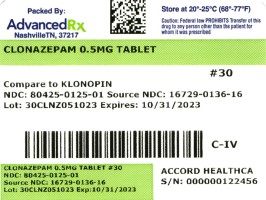
NDC 80425-0125-03: Clonazepam .5 mg Tablet, Bottle of 90
This is a package of 90 tablets of Clonazepam .5 mg Tablet from Advanced Rx Pharmacy of Tennessee, LLC, first listed with the FDA Jun 2011 and currently FDA-listed.
NDC database record
One package, one record: these facts belong to NDC 80425-0125-3 alone.
- Record
- FDA NDC Directory package listing · Human prescription drug
- Code segments
- 80425 labeler · 0125 product · 3 package
- Package marketed since
- Jun 3, 2011
- Sample package
- No — commercial package
- Listing certified through
- Dec 31, 2026
- Billing quantity
- 90 EA per package
- Barcode (UPC-A, from the NDC)
- 3 8042501253 7
- FDA record last changed
- Jul 24, 2026
Other active recalls for Clonazepam (different manufacturers) — 4 · tap to view
Identity & classification
Regulatory identifiers FDA, NLM and CMS codes for this package
- RxCUI (RxNorm): 197527
Where does this data come from?
- FDA openFDA NDC Directory · synced Nov 19, 2026
- FDA label on DailyMed · label index refreshed Nov 21, 2026
- RxNorm (NLM RxNav) · catalog refreshed Nov 19, 2026
- Medi-Span GPI (licensed)
- First Databank (licensed) · refreshed Nov 19, 2026
RxNorm drug class
This medicine belongs to the Benzodiazepine class.
Where does this data come from?
- RxClass (NLM) · catalog refreshed Nov 19, 2026
Clinical
- Clonazepam treats certain seizure disorders, including Lennox-Gastaut syndrome and akinetic and myoclonic seizures, and it can help with absence seizures when other medicines have...
- No. Stopping suddenly or cutting back too fast can cause withdrawal reactions that can be life-threatening, including seizures. Your prescriber will lower the dose gradually with a...
- Avoid alcohol, because it adds to drowsiness. Opioids are especially risky. Together they can cause extreme sleepiness, slowed breathing, coma and death. Tell your pharmacist and p...
- Can I drink alcohol or take opioids with clonazepam?
Patient education
Drug interactions
Supplement & herbal interactions
Some supplements/herbs that may interact with Clonazepam — tap one for details:
Clonazepam may be associated with lower levels of 1 nutrient — worth a chat with your pharmacist, not a cause for alarm.
Where does this data come from?
- MedlinePlus (NLM) · refreshed Nov 19, 2026
- FDA label on DailyMed · label index refreshed Nov 21, 2026
Ask a licensed pharmacist directly — free, answered by our team.
Pricing
A drug doesn't have one price. Each row is a different public payment system, and none is what you'd pay at the counter — that depends on your insurance. The ⓘ on each row explains what it measures.
| Price system | Per each | Per package |
|---|---|---|
| Retail pharmacies payNADAC · weekly | Not in the retail survey — common for institutional, discontinued, or low-volume packs. | |
| Medicaid paysCMS SDUD · 12 mo | No recent Medicaid claims on file for this NDC — rare and low-volume NDCs are suppressed in the public data. | |
| Medicare drug plans payPart D · Q2 2026 | $0.0628 | $5.65 / 90 tablets |
Where does this data come from?
- CMS NADAC weekly file
- CMS ASP pricing files · refreshed Nov 20, 2026
- CMS Medicaid State Drug Utilization Data · refreshed Nov 19, 2026
- CMS Part D plan pricing files · refreshed Oct 24, 2026
- VA National Acquisition Center price file
Packaging — all sizes for this product
| Package NDC | Description | Marketing start | Marketing end | Status |
|---|---|---|---|---|
| 80425-0125-01 80425-0125-1 Main listing | 30 TABLET in 1 BOTTLE | 2011-06-03 | — | Active |
| 80425-0125-02 80425-0125-2 | 60 TABLET in 1 BOTTLE | 2011-06-03 | — | Active |
| 80425-0125-03 You're viewing this | 90 TABLET in 1 BOTTLE | 2011-06-03 | — | Active |
You're viewing the largest of 3 pack sizes for this product.
Pack size FAQ
What quantity is in this package?
How does this package differ from NDC 80425-0125-01?
What NDC number is used to bill for this package of Clonazepam .5 mg Tablet?
Therapeutic equivalents
| Product | Labeler | Pack | NADAC/unit | TE | Status | Price vs. this |
|---|---|---|---|---|---|---|
| Clonazepam .5 mg 00093-0832-01 | Teva | 100 tablets | $0.020 | AB | Availability likely | — |
| Clonazepam .5 mg 00904-7227-61 | Major | 100 tablets | $0.020 | AB | Availability likely | — |
| Clonazepam .5 mg 16729-0136-00 | Accord | 100 tablets | $0.020 | AB | Availability likely | — |
| Clonazepam .5 mg 43547-0406-10 | Solco | 100 tablets | $0.020 | AB | Availability likely | — |
| Clonazepam .5 mg 50268-0173-15 | AvPAK | 50 tablets | $0.020 | AB | Availability likely | — |
| Clonazepam .5 mg 59651-0722-01 | Aurobindo | 100 tablets | $0.020 | — | Availability likely | — |
| Clonazepam .5 mg 60687-0861-01 | American | 100 tablets | $0.020 | AB | Availability likely | — |
| Clonazepam .5 mg 62135-0769-90 | Chartwell | 90 tablets | $0.020 | AB | Availability likely | — |
| Clonazepam .5 mg 72603-0307-01 | Northstar | 100 tablets | $0.020 | — | Availability likely | — |
| Clonazepam .5 mg 72888-0152-00 | Advagen | 1000 tablets | $0.020 | — | Availability likely | — |
| Klonopin .5 mg 61269-0605-10 | H2-Pharma, | 100 tablets | $2.684 | AB | Availability likely | — |
| Clonazepam .5 mg 43063-0797-30 | PD-Rx | 30 tablets | — | AB | FDA listed | — |
| Clonazepam .5 mg 50090-2088-00 | A-S | 30 tablets | — | AB | FDA listed | — |
| Clonazepam .5 mg 50090-4841-02 | A-S | 90 tablets | — | AB | FDA listed | — |
| Clonazepam .5 mg 55154-4318-00 | Cardinal | 10 tablets | — | AB | FDA listed | — |
| Clonazepam .5 mg 58118-0152-08 | Clinical | 30 tablets | — | — | FDA listed | — |
| Clonazepam .5 mg 58118-0832-08 | Clinical | 30 tablets | — | AB | FDA listed | — |
| Clonazepam .5 mg 63187-0226-30 | Proficient | 30 tablets | — | AB | FDA listed | — |
| Clonazepam .5 mg 63187-0603-30 | Proficient | 30 tablets | — | AB | FDA listed | — |
| Clonazepam .5 mg 63629-1201-01 | Bryant | 500 tablets | — | AB | FDA listed | — |
| Clonazepam .5 mg 63629-1202-01 | Bryant | 100 tablets | — | AB | FDA listed | — |
| Clonazepam .5 mg 63629-1203-01 | Bryant | 1000 tablets | — | AB | FDA listed | — |
| Clonazepam .5 mg 67046-1521-03 | Coupler | 30 tablets | — | — | FDA listed | — |
| Clonazepam .5 mg 67544-0529-15 | Aphena | 15 tablets | — | AB | FDA listed | — |
| Clonazepam .5 mg 68071-4021-03 | NuCare | 30 tablets | — | AB | FDA listed | — |
| Clonazepam .5 mg 68788-8420-02 | Preferred | 20 tablets | — | AB | FDA listed | — |
| Clonazepam .5 mg 70518-1297-01 | REMEDYREPACK | 100 tablets | — | AB | FDA listed | — |
| Clonazepam .5 mg 70518-1801-00 | REMEDYREPACK | 100 tablets | — | AB | FDA listed | — |
| Clonazepam .5 mg 70518-2507-00 | REMEDYREPACK | 100 tablets | — | AB | FDA listed | — |
| Clonazepam .5 mg 70518-3891-00 | REMEDYREPACK | 30 tablets | — | — | FDA listed | — |
| Clonazepam .5 mg 70518-3960-00 | REMEDYREPACK | 100 tablets | — | AB | FDA listed | — |
| Clonazepam .5 mg 71205-0827-30 | Proficient | 30 tablets | — | AB | FDA listed | — |
| Clonazepam .5 mg 71335-0113-01 | Bryant | 20 tablets | — | AB | Discontinued | — |
| Clonazepam .5 mg 71335-1810-01 | Bryant | 20 tablets | — | AB | FDA listed | — |
| Clonazepam .5 mg 71335-2509-01 | Bryant | 20 tablets | — | — | FDA listed | — |
| Clonazepam .5 mg 71610-0039-45 | Aphena | 45 tablets | — | AB | FDA listed | — |
| Clonazepam .5 mg 71610-0368-10 | Aphena | 10 tablets | — | AB | FDA listed | — |
| Clonazepam .5 mg 71610-0790-10 | Aphena | 10 tablets | — | — | FDA listed | — |
| Clonazepam .5 mg 71610-0855-10 | Aphena | 10 tablets | — | AB | FDA listed | — |
| Clonazepam .5 mg 71610-0863-10 | Aphena | 10 tablets | — | AB | FDA listed | — |
| Clonazepam .5 mg 72162-1364-01 | Bryant | 100 tablets | — | AB | FDA listed | — |
| Clonazepam .5 mg 72189-0081-30 | DIRECT | 30 tablets | — | AB | FDA listed | — |
| Clonazepam .5 mg 72789-0307-30 | PD-Rx | 30 tablets | — | AB | FDA listed | — |
| Clonazepam .5 mgthis 80425-0125-03 | Advanced | 90 tablets | — | AB | FDA listed | — |
| Clonazepam .5 mg 80425-0358-01 | Advanced | 30 tablets | — | AB | FDA listed | — |
| Clonazepam .5 mg 80425-0402-01 | Advanced | 30 tablets | — | AB | FDA listed | — |
| Clonazepam .5 mg 87441-0021-01 | Unit | 30 tablets | — | — | FDA listed | — |
| Clonazepam .5 mg 87441-0090-01 | Unit | 30 tablets | — | AB | FDA listed | — |
Where does this data come from?
- FDA openFDA NDC Directory · synced Nov 19, 2026
- FDA Orange Book · refreshed Nov 6, 2026
- CMS NADAC weekly file
Availability & generic status
This product is an FDA-approved generic. Other versions of the same drug are listed under Therapeutic equivalents, least expensive first.
Where does this data come from?
- FDA Orange Book · refreshed Nov 6, 2026
What it looks like
Where does this data come from?
- FDA label on DailyMed · label index refreshed Nov 21, 2026
Inactive Ingredients / Excipients
Inactive ingredients, also called excipients, are components of the drug product other than the active ingredient. They may include fillers, dyes, coatings, preservatives, flavors, or other formulation ingredients.
🧪 Avoiding an ingredient? See Clonazepam inactive ingredients by manufacturer: every current product's list side by side, so you can ask your pharmacy for the version that does not list it.
Where does this data come from?
IACT rows and label-wide narrative are kept separate; availability and product-level specificity depend on the submitted label.- FDA label on DailyMed · label index refreshed Nov 21, 2026
- FDA openFDA NDC Directory · synced Nov 19, 2026
Inactive ingredient FAQ
Are inactive ingredients the same for every manufacturer?
Why might an inactive ingredient be missing?
Can inactive ingredients matter?
Manufacturer & labeler
More NDCs from Advanced Rx Pharmacy of Tennessee, LLC labeler code 80425
- Duloxetine DR 60 mg Capsule, Delayed Release NDC 80425-0119-1
- Diazepam 10 mg Tablet NDC 80425-0120-2
- Cephalexin 500 mg Capsule NDC 80425-0121-1
- Metaxalone 800 mg Tablet NDC 80425-0122-1
- Pregabalin 100 mg Capsule NDC 80425-0123-3
- Pregabalin 150 mg Capsule NDC 80425-0124-3
- Etodolac ER 600 mg Tablet, Extended Release NDC 80425-0126-1
- Tramadol HCL ER 200 mg Tablet, Extended Release NDC 80425-0127-1
- Gabapentin 100 mg Capsule NDC 80425-0128-2
- Pregabalin 300 mg Capsule NDC 80425-0129-3
- Ergocalciferol (Vitamin D2) 1.25 mg Capsule NDC 80425-0130-3
- Metaxalone 800 mg Tablet NDC 80425-0131-2
Where does this data come from?
- FDA openFDA NDC Directory · synced Nov 19, 2026
- Drugs@FDA
Full prescribing information FDA SPL
🚨 Boxed Warning ▾
Boxed Warning WARNING: RISKS FROM CONCOMITANT USE WITH OPIOIDS; ABUSE, MISUSE, AND ADDICTION; AND DEPENDENCE AND WITHDRAWAL REACTIONS Concomitant use of benzodiazepines and opioids may result in profound sedation, respiratory depression, coma, and death. Reserve concomitant prescribing of these drugs for patients for whom alternative treatment options are inadequate. Limit dosages and durations to the minimum required.
Follow patients for signs and symptoms of respiratory depression and sedation (see WARNINGS and PRECAUTIONS). The use of benzodiazepines, including clonazepam, exposes users to risks of abuse, misuse, and addiction, which can lead to overdose or death. Abuse and misuse of benzodiazepines commonly involve concomitant use of other medications, alcohol, and/or illicit substances, which is associated with an increased frequency of serious adverse outcomes.
Before prescribing clonazepam and throughout treatment, assess each patient’s risk for abuse, misuse, and addiction (see WARNINGS) The continued use of benzodiazepines, including clonazepam, may lead to clinically significant physical dependence. The risks of dependence and withdrawal increase with longer treatment duration and higher daily dose. Abrupt discontinuation or rapid dosage reduction of clonazepam after continued use may precipitate acute withdrawal reactions, which can be life-threatening.
To reduce the risk of withdrawal reactions, use a gradual taper to discontinue clonazepam or reduce the dosage DOSAGE AND ADMINISTRATION)
🎯 Indications and Usage ▾
Indications and Usage Section INDICATIONS AND USAGE Seizure Disorders: Clonazepam is useful alone or as an adjunct in the treatment of the Lennox-Gastaut syndrome (petit mal variant), akinetic, and myoclonic seizures. In patients with absence seizures (petit mal) who have failed to respond to succinimides, clonazepam may be useful. Some loss of effect may occur during the course of clonazepam treatment (see PRECAUTIONS : Loss of Effect).
Panic Disorder: Clonazepam is indicated for the treatment of panic disorder, with or without agoraphobia, as defined in DSM-V. Panic disorder is characterized by the occurrence of unexpected panic attacks and associated concern about having additional attacks, worry about the implications or consequences of the attacks, and/or a significant change in behavior related to the attacks. The efficacy of clonazepam was established in two 6- to 9-week trials in panic disorder patients whose diagnoses corresponded to the DSM-IIIR category of panic disorder (see CLINICAL PHARMACOLOGY: CLINICAL TRIALS).
Panic disorder (DSM-V) is characterized by recurrent unexpected panic attacks, i.e., a discrete period of intense fear or discomfort in which four (or more) of the following symptoms develop abruptly and reach a peak within 10 minutes: (1) palpitations, pounding heart or accelerated heart rate; (2) sweating; (3) trembling or shaking; (4) sensations of shortness of breath or smothering; (5) feeling of choking; (6) chest pain or discomfort; (7) nausea or abdominal distress; (8) feeling dizzy, unsteady, lightheaded or faint; (9) derealization (feelings of unreality) or depersonalization (being detached from oneself); (10) fear of losing control; (11) fear of dying; (12) paresthesias (numbness or tingling sensations); (13) chills or hot flushes.
The effectiveness of clonazepam in long-term use, that is, for more than 9 weeks, has not been systematically studied in controlled clinical trials. The physician who elects to use clonazepam for extended periods should periodically reevaluate the long-term usefulness of the drug for the individual patient (see DOSAGE AND ADMINISTRATION).
⏱️ Dosage and Administration ▾
Dosage and Administration Section DOSAGE AND ADMINISTRATION Clonazepam is available as a tablet. The tablets should be administered with water by swallowing the tablet whole. Seizure Disorders: The use of multiple anticonvulsants may result in an increase of CNS depressant adverse effects.
This should be considered before adding clonazepam to an existing anticonvulsant regimen. Adults: The initial dose for adults with seizure disorders should not exceed 1.5 mg/day divided into three doses. Dosage may be increased in increments of 0.5 mg to 1 mg every 3 days until seizures are adequately controlled or until side effects preclude any further increase.
Maintenance dosage must be individualized for each patient depending upon response. Maximum recommended daily dose is 20 mg. Pediatric Patients: Clonazepam is administered orally.
In order to minimize drowsiness, the initial dose for infants and children (up to 10 years of age or 30 kg of body weight) should be between 0.01 and 0.03 mg/kg/day but not to exceed 0.05 mg/kg/day given in two or three divided doses. Dosage should be increased by no more than 0.25 mg to 0.5 mg every third day until a daily maintenance dose of 0.1 to 0.2 mg/kg of body weight has been reached, unless seizures are controlled or side effects preclude further increase. Whenever possible, the daily dose should be divided into three equal doses.
If doses are not equally divided, the largest dose should be given before retiring. Geriatric Patients: There is no clinical trial experience with clonazepam in seizure disorder patients 65 years of age and older. In general, elderly patients should be started on low doses of clonazepam and observed closely (see PRECAUTIONS: GERIATRIC USE).
Panic Disorder: Adults: The initial dose for adults with panic disorder is 0.25 mg bid. An increase to the target dose for most patients of 1 mg/day may be made after 3 days. The recommended dose of 1 mg/day is based on the results from a fixed dose study in which the optimal effect was seen at 1 mg/day.
Higher doses of 2, 3 and 4 mg/day in that study were less effective than the 1 mg/day dose and were associated with more adverse effects. Nevertheless, it is possible that some individual patients may benefit from doses of up to a maximum dose of 4 mg/day, and in those instances, the dose may be increased in increments of 0.125 mg to 0.25 mg bid every 3 days until panic disorder is controlled or until side effects make further increases undesired. To reduce the inconvenience of somnolence, administration of one dose at bedtime may be desirable.
Treatment should be discontinued gradually, with a decrease of 0.125 mg bid every 3 days, until the drug is completely withdrawn. There is no body of evidence available to answer the question of how long the patient treated with clonazepam should remain on it. Therefore, the physician who elects to use clonazepam for extended periods should periodically reevaluate the long-term usefulness of the drug for the individual patient.
Pediatric Patients: There is no clinical trial experience with clonazepam in panic disorder patients under 18 years of age. Geriatric Patients: There is no clinical trial experience with clonazepam in panic disorder patients 65 years of age and older. In general, elderly patients should be started on low doses of clonazepam and observed closely (see PRECAUTIONS: GERIATRIC USE).
⛔ Contraindications ▾
Contraindications Clonazepam is contraindicated in patients with the following conditions: History of sensitivity to benzodiazepines Clinical or biochemical evidence of significant liver disease Acute narrow angle glaucoma (it may be used in patients with open angle glaucoma who are receiving appropriate therapy).
⚠️ Warnings ▾
Warnings Risks from Concomitant Use with Opioids: Concomitant use of benzodiazepines, including clonazepam, and opioids may result in profound sedation, respiratory depression, coma, and death. Because of these risks, reserve concomitant prescribing of benzodiazepines and opioids for use in patients for whom alternative treatment options are inadequate. Observational studies have demonstrated that concomitant use of opioid analgesics and benzodiazepines increases the risk of drug-related mortality compared to use of opioids alone.
If a decision is made to prescribe clonazepam concomitantly with opioids, prescribe the lowest effective dosages and minimum durations of concomitant use, and follow patients closely for signs and symptoms of respiratory depression and sedation. Advise both patients and caregivers about the risks of respiratory depression and sedation when clonazepam is used with opioids (see PRECAUTIONS : INFORMATION FOR PATIENTS and PRECAUTIONS : DRUG INTERACTIONS). Abuse, Misuse, and Addiction: The use of benzodiazepines, including clonazepam, exposes users to the risks of abuse, misuse, and addiction, which can lead to overdose or death.
Abuse and misuse of benzodiazepines often (but not always) involve the use of doses greater than the maximum recommended dosage and commonly involve concomitant use of other medications, alcohol, and/or illicit substances, which is associated with an increased frequency of serious adverse outcomes, including respiratory depression, overdose, or death (see DRUG ABUSE AND DEPENDENCE: ABUSE). Before prescribing clonazepam and throughout treatment, assess each patient’s risk for abuse, misuse, and addiction (e.g., using a standardized screening tool).
Use of clonazepam, particularly in patients at elevated risk, necessitates counseling about the risks and proper use of clonazepam along with monitoring for signs and symptoms of abuse, misuse, and addiction. Prescribe the lowest effective dosage; avoid or minimize concomitant use of CNS depressants and other substances associated with abuse, misuse, and addiction (e.g., opioid analgesics, stimulants); and advise patients on the proper disposal of unused drug. If a substance use disorder is suspected, evaluate the patient and institute (or refer them for) early treatment, as appropriate.
Dependence and Withdrawal Reactions: To reduce the risk of withdrawal reactions, use a gradual taper to discontinue clonazepam or reduce the dosage (a patient-specific plan should be used to taper the dose) (see DOSAGE AND ADMINISTRATION: Discontinuation or Dosage Reduction of clonazepam). Patients at an increased risk of withdrawal adverse reactions after benzodiazepine discontinuation or rapid dosage reduction include those who take higher dosages, and those who have had longer durations of use. Acute Withdrawal Reactions The continued use of benzodiazepines, including clonazepam, may lead to clinically significant physical dependence.
Abrupt discontinuation or rapid dosage reduction of clonazepam after continued use, or administration of flumazenil (a benzodiazepine antagonist) may precipitate acute withdrawal reactions, which can be life-threatening (e.g., seizures) (see DRUG ABUSE AND DEPENDENCE: DEPENDENCE.) Protracted Withdrawal Syndrome In some cases, benzodiazepine users have developed a protracted withdrawal syndrome with withdrawal symptoms lasting weeks to more than 12 months (see DRUG ABUSE AND DEPENDENCE: DEPENDENCE). Interference with Cognitive and Motor Performance: Since clonazepam produces CNS depression, patients receiving this drug should be cautioned against engaging in hazardous occupations requiring mental alertness, such as operating machinery or driving a motor vehicle.
They should also be warned about the concomitant use of alcohol or other CNS-depressant drugs during clonazepam therapy (see PRECAUTIONS: DRUG INTERACTIONS and INFORMATION FOR PATIENTS). Suicidal Behavior and Ideation: Antiepileptic drugs (AEDs), including clonaz… [Excerpted — this section continues on DailyMed.]
🤒 Adverse Reactions ▾
Adverse Reactions The adverse experiences for clonazepam are provided separately for patients with seizure disorders and with panic disorder. Seizure Disorders: The most frequently occurring side effects of clonazepam are referable to CNS depression. Experience in treatment of seizures has shown that drowsiness has occurred in approximately 50% of patients and ataxia in approximately 30%.
In some cases, these may diminish with time; behavior problems have been noted in approximately 25% of patients. Others, listed by system, including those identified during postapproval use of clonazepam are: Cardiovascular: Palpitations Dermatologic: Hair loss, hirsutism, skin rash, ankle and facial edema Gastrointestinal: Anorexia, coated tongue, constipation, diarrhea, dry mouth, encopresis, gastritis, increased appetite, nausea, sore gums Genitourinary: Dysuria, enuresis, nocturia, urinary retention Hematopoietic: Anemia, leukopenia, thrombocytopenia, eosinophilia Hepatic: Hepatomegaly, transient elevations of serum transaminases and alkaline phosphatase Musculoskeletal: Muscle weakness, pains Miscellaneous: Dehydration, general deterioration, fever, lymphadenopathy, weight loss or gain Neurologic: Abnormal eye movements, aphonia, choreiform movements, coma, diplopia, dysarthria, dysdiadochokinesis, “glassy-eyed” appearance, headache, hemiparesis, hypotonia, nystagmus, respiratory depression, slurred speech, tremor, vertigo Psychiatric: Confusion, depression, amnesia, hallucinations, hysteria, increased libido, insomnia, psychosis (the behavior effects are more likely to occur in patients with a history of psychiatric disturbances).
The following paradoxical reactions have been observed: irritability, aggression, agitation, nervousness, hostility, anxiety, sleep disturbances, nightmares, abnormal dreams, hallucinations. Respiratory: Chest congestion, rhinorrhea, shortness of breath, hypersecretion in upper respiratory passages Panic Disorder: Adverse events during exposure to clonazepam were obtained by spontaneous report and recorded by clinical investigators using terminology of their own choosing. Consequently, it is not possible to provide a meaningful estimate of the proportion of individuals experiencing adverse events without first grouping similar types of events into a smaller number of standardized event categories.
In the tables and tabulations that follow, CIGY dictionary terminology has been used to classify reported adverse events, except in certain cases in which redundant terms were collapsed into more meaningful terms, as noted below. The stated frequencies of adverse events represent the proportion of individuals who experienced, at least once, a treatment-emergent adverse event of the type listed. An event was considered treatment-emergent if it occurred for the first time or worsened while receiving therapy following baseline evaluation.
Adverse Findings Observed in Short-Term, Placebo-Controlled Trials: Adverse Events Associated with Discontinuation of Treatment: Overall, the incidence of discontinuation due to adverse events was 17% in clonazepam compared to 9% for placebo in the combined data of two 6- to 9-week trials. The most common events (≥ 1%) associated with discontinuation and a dropout rate twice or greater for clonazepam than that of placebo included the following: Table 2 Most Common Adverse Events (≥ 1%) Associated with Discontinuation of Treatment Adverse Event Clonazepam (N = 574) Placebo (N = 294) Somnolence 7% 1% Depression 4% 1% Dizziness 1% < 1% Nervousness 1% 0% Ataxia 1% 0% Intellectual Ability Reduced 1% 0% Adverse Events Occurring at an Incidence of 1% or More among Clonazepam-Treated Patients: Table 3 enumerates the incidence, rounded to the nearest percent, of treatment-emergent adverse events that occurred during acute therapy of panic disorder from a pool of two 6- to 9-week trials.
Events reported in 1% or more of patients treated with clonazepam (doses ranging from 0.5 to 4 mg/day) and fo… [Excerpted — this section continues on DailyMed.]
🆘 Overdosage ▾
Overdosage Human Experience: Symptoms of clonazepam overdosage, like those produced by other CNS depressants, include somnolence, confusion, coma, and diminished reflexes. Overdose Management: Treatment includes monitoring of respiration, pulse and blood pressure, general supportive measures and immediate gastric lavage. Intravenous fluids should be administered and an adequate airway maintained.
Hypotension may be combated by the use of levarterenol or metaraminol. Dialysis is of no known value. Flumazenil, a specific benzodiazepine-receptor antagonist, is indicated for the complete or partial reversal of the sedative effects of benzodiazepines and may be used in situations when an overdose with a benzodiazepine is known or suspected.
Prior to the administration of flumazenil, necessary measures should be instituted to secure airway, ventilation and intravenous access. Flumazenil is intended as an adjunct to, not as a substitute for, proper management of benzodiazepine overdose. Patients treated with flumazenil should be monitored for resedation, respiratory depression and other residual benzodiazepine effects for an appropriate period after treatment.
The prescriber should be aware of a risk of seizure in association with flumazenil treatment, particularly in long-term benzodiazepine users and in cyclic antidepressant overdose. The complete flumazenil package insert, including CONTRAINDICATIONS, WARNINGS and PRECAUTIONS, should be consulted prior to use. Flumazenil is not indicated in patients with epilepsy who have been treated with benzodiazepines.
Antagonism of the benzodiazepine effect in such patients may provoke seizures. Serious sequelae are rare unless other drugs or alcohol have been taken concomitantly.
🧬 Clinical Pharmacology ▾
Clinical Pharmacology Pharmacodynamics: The precise mechanism by which clonazepam exerts its antiseizure and antipanic effects is unknown, although it is believed to be related to its ability to enhance the activity of gamma aminobutyric acid (GABA), the major inhibitory neurotransmitter in the central nervous system. Pharmacokinetics: Clonazepam is rapidly and completely absorbed after oral administration. The absolute bioavailability of clonazepam is about 90%.
Maximum plasma concentrations of clonazepam are reached within 1 to 4 hours after oral administration. Clonazepam is approximately 85% bound to plasma proteins. Clonazepam is highly metabolized, with less than 2% unchanged clonazepam being excreted in the urine.
Biotransformation occurs mainly by reduction of the 7-nitro group to the 4-amino derivative. This derivative can be acetylated, hydroxylated and glucuronidated. Cytochrome P-450 including CYP3A, may play an important role in clonazepam reduction and oxidation.
The elimination half-life of clonazepam is typically 30 to 40 hours. Clonazepam pharmacokinetics are dose-independent throughout the dosing range. There is no evidence that clonazepam induces its own metabolism or that of other drugs in humans.
Pharmacokinetics in Demographic Subpopulations and in Disease States: Controlled studies examining the influence of gender and age on clonazepam pharmacokinetics have not been conducted, nor have the effects of renal or liver disease on clonazepam pharmacokinetics been studied. Because clonazepam undergoes hepatic metabolism, it is possible that liver disease will impair clonazepam elimination. Thus, caution should be exercised when administering clonazepam to these patients.
(see CONTRAINDICATIONS). In children, clearance values of 0.42 ± 0.32 mL/min/kg (ages 2 – 18 years) and 0.88 ± 0.4 mL/min/kg (ages 7 – 12 years) were reported; these values decreased with increasing body weight. Ketogenic diet in children does not affect clonazepam concentrations.
Clinical Trials: Panic Disorder: The effectiveness of clonazepam in the treatment of panic disorder was demonstrated in two double-blind, placebo-controlled studies of adult outpatients who had a primary diagnosis of panic disorder (DSM-IIIR) with or without agoraphobia. In these studies, clonazepam was shown to be significantly more effective than placebo in treating panic disorder on change from baseline in panic attack frequency, the Clinician’s Global Impression Severity of Illness Score and the Clinician’s Global Impression Improvement Score.
Study 1 was a 9-week, fixed-dose study involving clonazepam doses of 0.5, 1, 2, 3 or 4 mg/day or placebo. This study was conducted in four phases: a 1-week placebo lead-in, a 3-week upward titration, a 6-week fixed dose and a 7-week discontinuance phase. A significant difference from placebo was observed consistently only for the 1 mg/day group.
The difference between the 1 mg dose group and placebo in reduction from baseline in the number of full panic attacks was approximately 1 panic attack per week. At endpoint, 74% of patients receiving clonazepam 1 mg/day were free of full panic attacks, compared to 56% of placebo-treated patients. Study 2 was a 6-week, flexible-dose study involving clonazepam in a dose range of 0.5 to 4 mg/day or placebo.
This study was conducted in three phases: a 1-week placebo lead-in, a 6-week optimal-dose and a 6-week discontinuance phase. The mean clonazepam dose during the optimal dosing period was 2.3 mg/day. The difference between clonazepam and placebo in reduction from baseline in the number of full panic attacks was approximately 1 panic attack per week.
At endpoint, 62% of patients receiving clonazepam were free of full panic attacks, compared to 37% of placebo-treated patients. Subgroup analyses did not indicate that there were any differences in treatment outcomes as a function of race or gender.
📦 How Supplied / Storage and Handling ▾
How Supplied/Storage and Handling Clonazepam tablets USP 0.5 mg are orange, round, flat faced, beveled edge, scored, debossed with “1” and “2” on one side and plain on other. They are supplied as follows: Bottles of 30: NDC 80425-0125-01 Store at 25°C (77°F); excursions permitted to 15° to 30°C (59° to 86°F). [See USP Controlled Room Temperature]. Manufactured For: Accord Healthcare, Inc., 1009 Slater Road, Suite 210-B, Durham, NC 27703, USA.
Manufactured By: Intas Pharmaceuticals Limited, Ahmedabad -380 054, India. 10 0533 3 6007149 Issued February 2021
📋 Description ▾
Description Clonazepam, a benzodiazepine, is available as scored tablets debossed with “1” and “2” containing 0.5 mg of clonazepam and unscored tablets debossed with “C 1” on 1 mg tablets and “C 2” on 2 mg tablets containing 1 mg or 2 mg of clonazepam. Each tablet contains anhydrous lactose, lactose monohydrate, magnesium stearate, microcrystalline cellulose and starch (corn), with the following colorants: 0.5 mg-FD&C Yellow No. 6 Lake and 1 mg- FD&C Blue No.2 Lake.
Chemically, clonazepam is 5-(2-chlorophenyl)-1,3-dihydro-7-nitro-2 H-1,4-benzodiazepin-2-one. It is a light yellow crystalline powder. It has a molecular weight of 315.72 and the following structural formula: Structure
💬 Medication Guide ▾
Medication Guide Section MEDICATION GUIDE Medication Guide Clonazepam Tablets, USP (kloe-NA-za-pam) CIV What is the most important information I should know about clonazepam tablets? • Clonazepam tablets is a benzodiazepine medicine. Benzodiazepines can cause severe drowsiness, breathing problems (respiratory depression), coma, and death when taken with opioid medicines. •Clonazepam tablets can make you sleepy or dizzy and can slow your thinking and motor skills. This may get better over time.
Do not drive, operate heavy machinery, or do other dangerous activities until you know how clonazepam tablets affects you. Clonazepam tablets may cause problems with your coordination, especially when you are walking or picking things up. •Do not drink alcohol or take other drugs that may make you sleepy or dizzy while taking clonazepam tablets until you talk to your healthcare provider. When taken with alcohol or drugs that cause sleepiness or dizziness, clonazepam may make your sleepiness or dizziness worse.
Like other antiepileptic drugs, clonazepam tablets may cause suicidal thoughts or actions in a very small number of people, about 1 in 500. Call your healthcare provider right away if you have any of these symptoms, especially if they are new, worse, or worry you: thoughts about suicide or dying attempt to commit suicide new or worse depression new or worse anxiety trouble sleeping (insomnia) new or worse irritability acting aggressive, being angry, or violent acting on dangerous impulses an extreme increase in activity and talking (mania) other unusual changes in behavior or mood How can I watch for early symptoms of suicidal thoughts and actions?
Pay attention to any changes, especially sudden changes, in mood, behaviors, thoughts, or feelings. Keep all follow-up visits with your healthcare provider as scheduled. Call your healthcare provider between visits as needed, especially if you are worried about symptoms.
Suicidal thoughts or actions can be caused by things other than medicines. If you have suicidal thoughts or actions, your healthcare provider may check for other causes. •Do not stop clonazepam tablets without first talking to a healthcare provider. Stopping clonazepam tablets suddenly can cause serious problems.
Stopping clonazepam tablets suddenly can cause seizures that will not stop (status epilepticus). •Clonazepam tablets can cause abuse and dependence. Do not stop taking clonazepam all of a sudden. Stopping clonazepam tablets suddenly can cause seizures that do not stop, hearing or seeing things that are not there (hallucinations), shaking, and stomach and muscle cramps.
Talk to your healthcare provider about slowly stopping clonazepam tablets to avoid withdrawal symptoms. Physical dependence is not the same as drug addiction. Your healthcare provider can tell you more about the differences between physical dependence and drug addiction.
Clonazepam tablets is a federal controlled substance (C-IV) because it can be abused or lead to dependence. Keep clonazepam tablets in a safe place to prevent misuse and abuse. Selling or giving away clonazepam tablets may harm others, and is against the law.
Tell your healthcare provider if you have ever abused or been dependent on alcohol, prescription medicines or street drugs. What is Clonazepam tablets? Clonazepam tablets is a prescription medicine used alone or with other medicines to treat: certain types of seizure disorders (epilepsy) in adults and children panic disorder with or without fear of open spaces (agoraphobia) in adults It is not known if clonazepam tablets is safe or effective in treating panic disorder in children younger than 18 years old.
Who should not take Clonazepam tablets? Do not take clonazepam tablets if you: are allergic to benzodiazepines have significant liver disease have an eye disease called acute narrow angle glaucoma Ask your healthcare provider if you are not sure if you have any of the problems listed above. Before you take clonazepam tablet… [Excerpted — this section continues on DailyMed.]
⚠️ Precautions ▾
Precautions General: Worsening of Seizures: When used in patients in whom several different types of seizure disorders coexist, clonazepam may increase the incidence or precipitate the onset of generalized tonic-clonic seizures (grand mal). This may require the addition of appropriate anticonvulsants or an increase in their dosages. The concomitant use of valproic acid and clonazepam may produce absence status.
Loss of Effect: In some studies, up to 30% of patients who initially responded have shown a loss of anticonvulsant activity, often within 3 months of administration. In some cases, dosage adjustment may reestablish efficacy. Laboratory Testing During Long-Term Therapy: Periodic blood counts and liver function tests are advisable during long-term therapy with clonazepam.
Psychiatric and Paradoxical Reactions: Paradoxical reactions, such as agitation, irritability, aggression, anxiety, anger, nightmares, hallucinations, and psychoses are known to occur when using benzodiazepines (see ADVERSE REACTIONS: PSYCHIATRIC). Should this occur, the use of the drug should be discontinued gradually (see WARNINGS: DEPENDENCE AND WITHDRAWAL REACTIONS and DRUG ABUSE AND DEPENDENCE: DEPENDENCE). Paradoxical reactions are more likely to occur in children and in the elderly.
Caution in Renally Impaired Patients: Metabolites of clonazepam are excreted by the kidneys; to avoid their excess accumulation, caution should be exercised in the administration of the drug to patients with impaired renal function. Hypersalivation: Clonazepam may produce an increase in salivation. This should be considered before giving the drug to patients who have difficulty handling secretions.
Respiratory Depression: Clonazepam may cause respiratory depression and should be used with caution in patients with compromised respiratory function (e.g., chronic obstructive pulmonary disease, sleep apnea). Porphyria: Clonazepam may have a porphyrogenic effect and should be used with care in patients with porphyria. Information for Patients: A Clonazepam Medication Guide must be given to the patient each time clonazepam is dispensed, as required by law.
Patients should be instructed to take clonazepam only as prescribed. Physicians are advised to discuss the following issues with patients for whom they prescribe clonazepam: Risks from Concomitant Use with Opioids: Inform patients and caregivers that potentially fatal additive effects may occur if clonazepam is used with opioids and not to use such drugs concomitantly unless supervised by a health care provider (see WARNINGS: RISKS FROM CONCOMITANT USE WITH OPIOIDS and PRECAUTIONS: DRUG INTERACTIONS). Abuse, Misuse, and Addiction:Inform patients that the use of clonazepam, even at recommended dosages, exposes users to risks of abuse, misuse, and addiction, which can lead to overdose and death, especially when used in combination with other medications (e.g., opioid analgesics), alcohol, and/or illicit substances.
Inform patients about the signs and symptoms of benzodiazepine abuse, misuse, and addiction; to seek medical help if they develop these signs and/or symptoms; and on the proper disposal of unused drug (see WARNINGS: ABUSE, MISUSE, AND ADDICTION and DRUG ABUSE AND DEPENDENCE: DEPENDENCE) Withdrawal Reactions:Inform patients that the continued use of clonazepam may lead to clinically significant physical dependence and that abrupt discontinuation or rapid dosage reduction of clonazepam may precipitate acute withdrawal reactions, which can be life-threatening.
Inform patients that in some cases, patients taking benzodiazepines have developed a protracted withdrawal syndrome with withdrawal symptoms lasting weeks to more than 12 months. Instruct patients that discontinuation or dosage reduction of clonazepam may require a slow taper (see WARNINGS: DEPENDENCE AND WITHDRAWAL REACTIONS and DRUG ABUSE AND DEPENDENCE) Interference With Cognitive and Motor Performance: Because benzodiazepines have the potential to impair ju… [Excerpted — this section continues on DailyMed.]
🔒 Drug Abuse and Dependence ▾
Drug Abuse and Dependence Controlled Substance:Clonazepam tablets contains clonazepam, a Schedule IV controlled substance. Abuse:Clonazepam is a benzodiazepine and a CNS depressant with a potential for abuse and addiction. Abuse is the intentional, non-therapeutic use of a drug, even once, for its desirable psychological or physiological effects.
Misuse is the intentional use, for therapeutic purposes, of a drug by an individual in a way other than prescribed by a health care provider or for whom it was not prescribed. Drug addiction is a cluster of behavioral, cognitive, and physiological phenomena that may include a strong desire to take the drug, difficulties in controlling drug use (e.g., continuing drug use despite harmful consequences, giving a higher priority to drug use than other activities and obligations), and possible tolerance or physical dependence.
Even taking benzodiazepines as prescribed may put patients at risk for abuse and misuse of their medication. Abuse and misuse of benzodiazepines may lead to addiction. Abuse and misuse of benzodiazepines often (but not always) involve the use of doses greater than the maximum recommended dosage and commonly involve concomitant use of other medications, alcohol, and/or illicit substances, which is associated with an increased frequency of serious adverse outcomes, including respiratory depression, overdose, or death.
Benzodiazepines are often sought by individuals who abuse drugs and other substances, and by individuals with addictive disorders (see WARNINGS: ABUSE, MISUSE, AND ADDICTION). The following adverse reactions have occurred with benzodiazepine abuse and/or misuse: abdominal pain, amnesia, anorexia, anxiety, aggression, ataxia, blurred vision, confusion, depression, disinhibition, disorientation, dizziness, euphoria, impaired concentration and memory, indigestion, irritability, muscle pain, slurred speech, tremors, and vertigo.
The following severe adverse reactions have occurred with benzodiazepine abuse and/or misuse: delirium, paranoia, suicidal ideation and behavior, seizures, coma, breathing difficulty, and death. Death is more often associated with polysubstance use (especially benzodiazepines with other CNS depressants such as opioids and alcohol). Dependence: Physical Dependence: Clonazepam may produce physical dependence from continued therapy.
Physical dependence is a state that develops as a result of physiological adaptation in response to repeated drug use, manifested by withdrawal signs and symptoms after abrupt discontinuation or a significant dose reduction of a drug. Abrupt discontinuation or rapid dosage reduction of benzodiazepines or administration of flumazenil, a benzodiazepine antagonist, may precipitate acute withdrawal reactions, including seizures, which can be life-threatening. Patients at an increased risk of withdrawal adverse reactions after benzodiazepine discontinuation or rapid dosage reduction include those who take higher dosages (i.e., higher and/or more frequent doses) and those who have had longer durations of use (see WARNINGS: DEPENDENCE AND WITHDRAWAL REACTIONS).
To reduce the risk of withdrawal reactions, use a gradual taper to discontinue clonazepam or reduce the dosage (see DOSAGE AND ADMINISTRATION: DISCONTINUATION OR DOSAGE REDUCTION OF CLONAZEPAM and WARNINGS: DEPENDENCE AND WITHDRAWAL REACTIONS). Acute Withdrawal Signs and Symptoms Acute withdrawal signs and symptoms associated with benzodiazepines have included abnormal involuntary movements, anxiety, blurred vision, depersonalization, depression, derealization, dizziness, fatigue, gastrointestinal adverse reactions (e.g., nausea, vomiting, diarrhea, weight loss, decreased appetite), headache, hyperacusis, hypertension, irritability, insomnia, memory impairment, muscle pain and stiffness, panic attacks, photophobia, restlessness, tachycardia, and tremor.
More severe acute withdrawal signs and symptoms, including life-threatening reactions, have included cataton… [Excerpted — this section continues on DailyMed.]
📄 Package Label / Principal Display Panel ▾
Principal Display Panel lab 1 label 2 lab 3
Medicare Part D spend CMS · PART D · 2026 (Q1)
Reported adverse events (FAERS)
Top reported reactions
Age at onset
Reporter sex
Serious outcomes
Where does this data come from?
About this NDC listing & data coverage
What data is (and isn’t) available for this NDC — tap to expand
| NDC identity (package / product / labeler codes) | ✓ Available |
| Labeler | ✓ Available |
| Product & package description | ✓ Available |
| Marketing category & status | ✓ Available |
| Active ingredient / dosage form / route | ✓ Available |
| FDA label (SPL via DailyMed) | ✓ Available |
| Package photos | ✓ Available |
| Inactive ingredients (structured) | — Not published for this NDC The labeler did not submit a structured excipient list, or no SPL is available. |
| NADAC pharmacy acquisition price (CMS) | — Not published for this NDC CMS publishes NADAC only for NDCs reported in its retail-pharmacy survey. |
| Orange Book / therapeutic-equivalence data | ✓ Available |
| HCPCS J-code billing crosswalk | — Not published for this NDC Most self-administered / retail products have no J-code — that is normal. |
| Medicaid utilization (CMS SDUD) | — Not published for this NDC CMS reports utilization only for NDCs with Medicaid claims above its privacy threshold. |