
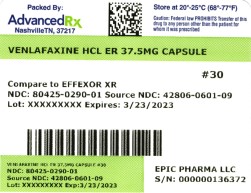
Venlafaxine Hydrochloride ER 37.5 mg Capsule, Extended Release, 60-count
🆔 Identity & classification
Where does this data come from?
🏷️ RxNorm drug class
This medicine belongs to the Serotonin and Norepinephrine Reuptake Inhibitor class.
Where does this data come from?
🏭 Manufacturer & labeler
Where does this data come from?
🩺 Clinical
Venlafaxine is used to treat depression, generalized anxiety disorder (GAD; excessive worrying that is difficult to control), social anxiety disorder (extreme fear of interacting with others or performing in front of others that interferes with normal life), and panic disorder (sudden, unexpected attacks of extreme fear and worry about these attacks). Venlafaxine is in a class of medications called selective serotonin and norepinephrine reuptake inhibitors (SNRIs). It works by increasing the amounts of serotonin and norepinephrine, natural substances in the brain that help maintain mental bala...
Read the full MedlinePlus article ↗- Venlafaxine treats major depressive disorder in all its forms. Depending on which formulation you're prescribed, it can also treat generalized anxiety disorder, social anxiety diso...
- Most people don't feel a full benefit right away — it typically takes several weeks before you notice a meaningful improvement in mood or anxiety. Blood levels stabilize within abo...
- How long does it take for venlafaxine to start working?
- The most common side effects are nausea, dry mouth, sweating, drowsiness or insomnia, dizziness, and decreased appetite — and many of these tend to improve after the first couple o...
Patient education
Supplement & herbal interactions
Venlafaxine may be associated with lower levels of 1 nutrient — worth a chat with your pharmacist, not a cause for alarm.
Where does this data come from?
Ask a licensed pharmacist directly — free, answered by our team.
💊 What it looks like
Where does this data come from?
🧪 Inactive Ingredients / Excipients
Inactive ingredients, also called excipients, are components of the drug product other than the active ingredient. They may include fillers, dyes, coatings, preservatives, flavors, or other formulation ingredients.
Where does this data come from?
IACT rows and label-wide narrative are kept separate; availability and product-level specificity depend on the submitted label.Inactive ingredient FAQ
Are inactive ingredients the same for every manufacturer?
Why might an inactive ingredient be missing?
Can inactive ingredients matter?
💲 Pricing
A drug doesn't have one price. Each row is a different public payment system, and none is what you'd pay at the counter — that depends on your insurance. The ⓘ on each row explains what it measures.
| Price system | Per each | Per package |
|---|---|---|
| Retail pharmacies payNADAC · weekly | Not in the retail survey — common for institutional, discontinued, or low-volume packs. | |
| Medicaid paysCMS SDUD · 12 mo | No recent Medicaid claims on file for this NDC — rare and low-volume NDCs are suppressed in the public data. | |
| Medicare drug plans payPart D · Q2 2026 | $0.2146 | $12.88 / 60 capsules |
Where does this data come from?
🔁 Therapeutic equivalents
| Product | Labeler | Pack | NADAC/unit | TE | Status | Price vs. this |
|---|---|---|---|---|---|---|
| Venlafaxine Hydrochloride 37.5 mg 00093-7384-05 | Teva | 500 capsules | $0.079 | AB | Availability likely | — |
| Venlafaxine Hydrochloride 37.5 mg 00904-7487-61 | Major | 1 capsule | $0.079 | AB | Availability likely | — |
| Venlafaxine Hydrochloride 37.5 mg 42806-0601-09 | Epic | 90 capsules | $0.079 | AB | Availability likely | — |
| venlafaxine hydrochloride 37.5 mg 43598-0999-10 | Dr.Reddys | 1000 capsules | $0.079 | AB | Availability likely | — |
| Venlafaxine Hydrochloride 37.5 mg 50268-0873-15 | AvPAK | 1 capsule | $0.079 | AB | Availability likely | — |
| Venlafaxine Hydrochloride 37.5 mg 65862-0527-01 | Aurobindo | 100 capsules | $0.079 | — | Availability likely | — |
| Venlafaxine Hydrochloride 37.5 mg 68084-0698-01 | American | 1 capsule | $0.079 | AB | Availability likely | — |
| Venlafaxine Hydrochloride 37.5 mg 70010-0184-03 | Granules | 30 capsules | $0.079 | AB | Availability likely | — |
| Venlafaxine Hydrochloride 37.5 mg 70710-1698-00 | Zydus | 1000 capsules | $0.079 | AB | Availability likely | — |
| Venlafaxine Hydrochloride 37.5 mg 82009-0056-10 | QUALLENT | 1000 capsules | $0.079 | AB | Availability likely | — |
| Venlafaxine hydrochloride 37.5 mg 33342-0194-07 | Macleods | 30 capsules | $0.100 | AB | FDA listed | — |
| Effexor XR 37.5 mg 58151-0125-77 | Viatris | 90 capsules | $17.704 | AB | Availability likely | — |
| Venlafaxine Hydrochloride 37.5 mg 10135-0825-10 | Marlex | 1000 capsules | — | AB | FDA listed | — |
| Venlafaxine Hydrochloride 37.5 mg 31722-0002-01 | Camber | 10 capsules | — | AB | FDA listed | — |
| Venlafaxine Hydrochloride 37.5 mg 42291-0897-30 | AvKARE | 30 capsules | — | AB | FDA listed | — |
| Venlafaxine Hydrochloride 37.5 mg 46708-0792-30 | Alembic | 30 capsules | — | AB | FDA listed | — |
| Venlafaxine Hydrochloride 37.5 mg 50090-2281-00 | A-S | 30 capsules | — | AB | FDA listed | — |
| Venlafaxine Hydrochloride 37.5 mg 50090-5942-00 | A-S | 30 capsules | — | AB | FDA listed | — |
| venlafaxine hydrochloride 37.5 mg 50090-6301-00 | A-S | 1 capsule | — | AB | FDA listed | — |
| Venlafaxine Hydrochloride 37.5 mg 50090-6834-00 | A-S | 30 capsules | — | AB | FDA listed | — |
| Venlafaxine Hydrochloride 37.5 mg 50090-7940-00 | A-S | 30 capsules | — | AB | FDA listed | — |
| venlafaxine hydrochloride 37.5 mg 55111-0453-01 | Dr.Reddy's | 100 capsules | — | AB | FDA listed | — |
| Venlafaxine Hydrochloride 37.5 mg 60760-0836-30 | ST. | 30 capsules | — | AB | FDA listed | — |
| Venlafaxine Hydrochloride 37.5 mg 62332-0792-30 | Alembic | 30 capsules | — | AB | FDA listed | — |
| Venlafaxine Hydrochloride 37.5 mg 63187-0481-30 | Proficient | 30 capsules | — | AB | FDA listed | — |
| venlafaxine hydrochloride 37.5 mg 65841-0751-06 | Zydus | 30 capsules | — | AB | FDA listed | — |
| Venlafaxine Hydrochloride 37.5 mg 67046-0527-03 | Coupler | 30 capsules | — | AB | FDA listed | — |
| Venlafaxine Hydrochloride 37.5 mg 68071-2393-03 | NuCare | 30 capsules | — | AB | FDA listed | — |
| Venlafaxine Hydrochloride 37.5 mg 68071-3638-03 | NuCare | 30 capsules | — | AB | FDA listed | — |
| Venlafaxine Hydrochloride 37.5 mg 68071-5160-03 | NuCare | 30 capsules | — | AB | FDA listed | — |
| venlafaxine hydrochloride 37.5 mg 68382-0034-06 | Zydus | 30 capsules | — | AB | FDA listed | — |
| Venlafaxine Hydrochloride 37.5 mg 68788-7891-03 | Preferred | 30 capsules | — | AB | FDA listed | — |
| Venlafaxine Hydrochloride 37.5 mg 68788-7919-03 | Preferred | 30 capsules | — | AB | FDA listed | — |
| Venlafaxine Hydrochloride 37.5 mg 68788-8682-01 | Preferred | 100 capsules | — | AB | FDA listed | — |
| Venlafaxine Hydrochloride 37.5 mg 70518-2532-00 | REMEDYREPACK | 30 capsules | — | AB | FDA listed | — |
| Venlafaxine Hydrochloride 37.5 mg 70518-3971-00 | REMEDYREPACK | 30 capsules | — | AB | FDA listed | — |
| Venlafaxine Hydrochloride 37.5 mg 70771-1836-00 | Zydus | 1000 capsules | — | AB | FDA listed | — |
| Venlafaxine Hydrochloride 37.5 mg 71205-0408-30 | Proficient | 30 capsules | — | AB | FDA listed | — |
| Venlafaxine Hydrochloride 37.5 mg 71205-0812-30 | Proficient | 30 capsules | — | AB | FDA listed | — |
| Venlafaxine Hydrochloride 37.5 mg 71335-1864-01 | Bryant | 30 capsules | — | AB | FDA listed | — |
| Venlafaxine Hydrochloride 37.5 mg 71335-2779-01 | Bryant | 30 capsules | — | AB | FDA listed | — |
| Venlafaxine Hydrochloride 37.5 mg 71335-9605-01 | Bryant | 30 capsules | — | AB | FDA listed | — |
| Venlafaxine Hydrochloride 37.5 mg 71335-9705-01 | Bryant | 30 capsules | — | AB | FDA listed | — |
| Venlafaxine Hydrochloride 37.5 mg 71785-1006-00 | Annora | 30 capsules | — | AB | FDA listed | — |
| Venlafaxine HCL ER 37.5 mg 72189-0363-30 | Direct_Rx | 30 capsules | — | AB | FDA listed | — |
| Venlafaxine Hydrochloride 37.5 mg 72603-0747-01 | NorthStar | 90 capsules | — | AB | FDA listed | — |
| Venlafaxine Hydrochloride 37.5 mg 72888-0179-30 | Advagen | 30 capsules | — | AB | FDA listed | — |
| Venlafaxine Hydrochloride 37.5 mg 76420-0630-01 | Asclemed | 100 capsules | — | AB | FDA listed | — |
| Venlafaxine Hydrochloride ER 37.5 mgthis 80425-0290-02 | Advanced | 60 capsules | — | AB | FDA listed | — |
| Venlafaxine Hydrochloride 37.5 mg 80425-0476-01 | Advanced | 30 capsules | — | AB | FDA listed | — |
| Venlafaxine Hydrochloride 37.5 mg 80425-0581-01 | Advanced | 30 capsules | — | AB | FDA listed | — |
| Venlafaxine Hydrochloride 37.5 mg 24658-0125-10 | PURACAP | 1000 capsules | — | AB | FDA listed | — |
Where does this data come from?
⏳ Availability & generic status
This product is an FDA-approved generic. Other versions of the same drug are listed under Therapeutic equivalents, least expensive first.
Where does this data come from?
📦 Packaging — all sizes for this product
| Package NDC | Description | Marketing start | Status |
|---|---|---|---|
| 80425-0290-01 | 30 CAPSULE, EXTENDED RELEASE in 1 BOTTLE (80425-0290-1) | 2023-03-24 | Active |
| 80425-0290-02 You're viewing this | 60 CAPSULE, EXTENDED RELEASE in 1 BOTTLE (80425-0290-2) | 2023-03-24 | Active |
| 80425-0290-03 | 90 CAPSULE, EXTENDED RELEASE in 1 BOTTLE (80425-0290-3) | 2023-03-24 | Active |
You're viewing one of 3 pack sizes for this product.
Pack size FAQ
What quantity is in NDC 80425-0290-02?
What is the difference between NDC 80425-0290-02 and NDC 80425-0290-01?
What NDC number is used to bill for this package of Venlafaxine Hydrochloride ER 37.5 mg Capsule, Extended Release?
🧭 About this NDC listing & data coverage
What data is (and isn’t) available for this NDC — tap to expand
| NDC identity (package / product / labeler codes) | ✓ Available |
| Labeler | ✓ Available |
| Product & package description | ✓ Available |
| Marketing category & status | ✓ Available |
| Active ingredient / dosage form / route | ✓ Available |
| FDA label (SPL via DailyMed) | ✓ Available |
| Package photos | ✓ Available |
| Inactive ingredients (structured) | — Not published for this NDC The labeler did not submit a structured excipient list, or no SPL is available. |
| NADAC pharmacy acquisition price (CMS) | — Not published for this NDC CMS publishes NADAC only for NDCs reported in its retail-pharmacy survey. |
| Orange Book / therapeutic-equivalence data | ✓ Available |
| HCPCS J-code billing crosswalk | — Not published for this NDC Most self-administered / retail products have no J-code — that is normal. |
| Medicaid utilization (CMS SDUD) | — Not published for this NDC CMS reports utilization only for NDCs with Medicaid claims above its privacy threshold. |
Questions about this listing
Why is there no price listed?
Is the NDC printed on the package the same as the 11-digit billing NDC?
What do the three segments of this NDC mean?
Is this package still being marketed?
Does this product come in other package sizes?
Who lists this product with the FDA?
Do I need a prescription for this product?
Where does this data come from?
📄 Full prescribing information FDA SPL
🚨 Boxed Warning ▾
WARNING: SUICIDAL THOUGHTS AND BEHAVIORS Antidepressants increased the risk of suicidal thoughts and behavior in children, adolescents, and young adults in short-term studies. These studies did not show an increase in the risk of suicidal thoughts and behavior with antidepressant use in patients over age 24; there was a reduction in risk with antidepressant use in patients aged 65 and older [see Warnings and Precautions ( 5.1) ]. In patients of all ages who are started on antidepressant therapy monitor closely for clinical worsening and emergence of suicidal thoughts and behaviors.
Advise families and caregivers of the need for close observation and communication with the prescriber [see Warnings and Precautions ( 5.1) and Patient Counseling Information ( 17) ]. Venlafaxine hydrochloride extended-release capsules are not approved for use in pediatric patients [see Use in Specific Populations ( 8.4)].
🎯 Indications and Usage ▾
1. Indications and Usage
1.1Major Depressive Disorder Venlafaxine Hydrochloride Extended-Release Capsules are indicated for the treatment of major depressive disorder (MDD). Efficacy was established in three short-term (4, 8, and 12 weeks) and two long-term, maintenance trials.
1.2Generalized Anxiety Disorder Venlafaxine Hydrochloride Extended-Release Capsules are indicated for the treatment of Generalized Anxiety Disorder (GAD). Efficacy was established in two 8-week and two 26-week placebo-controlled trials.
1.3Social Anxiety Disorder Venlafaxine Hydrochloride Extended-Release Capsules are indicated for the treatment of Social Anxiety Disorder (SAD), also known as social phobia. Efficacy was established in four 12-week and one 26-week, placebo-controlled trials.
1.4Panic Disorder Venlafaxine Hydrochloride Extended-Release Capsules are indicated for the treatment of Panic Disorder (PD), with or without agoraphobia. Efficacy was established in two 12-week placebo-controlled trials.
⏱️ Dosage and Administration ▾
2. Dosage and Administration Venlafaxine hydrochloride extended-release capsules should be administered in a single dose with food, either in the morning or in the evening at approximately the same time each day [see Clinical Pharmacology ( 12.3) ]. Each capsule should be swallowed whole with fluid and not divided, crushed, chewed, or placed in water or it may be administered by carefully opening the capsule and sprinkling the entire contents on a spoonful of applesauce.
This drug/food mixture should be swallowed immediately without chewing and followed with a glass of water to ensure complete swallowing of the pellets (spheroids).
2.1Major Depressive Disorder For most patients, the recommended starting dose for venlafaxine hydrochloride extended-release capsules is 75 mg per day, administered in a single dose. For some patients, it may be desirable to start at 37.5 mg per day for 4 to 7 days to allow new patients to adjust to the medication before increasing to 75 mg per day. Patients not responding to the initial 75 mg per day dose may benefit from dose increases to a maximum of 225 mg per day.
Dose increases should be in increments of up to 75 mg per day, as needed, and should be made at intervals of not less than 4 days, since steady-state plasma levels of venlafaxine and its major metabolites are achieved in most patients by day 4 [see Clinical Pharmacology ( 12.3)]. In the clinical studies establishing efficacy, upward titration was permitted at intervals of 2 weeks or more. It should be noted that, while the maximum recommended dose for moderately depressed outpatients is also 225 mg per day for venlafaxine hydrochloride tablets (immediate-release), more severely depressed inpatients in one study of the development program for that product responded to a mean dose of 350 mg per day (range of 150 to 375 mg per day).
Whether or not higher doses of venlafaxine hydrochloride extended-release capsules are needed for more severely depressed patients is unknown; however, the experience with venlafaxine hydrochloride extended-release capsules doses higher than 225 mg per day is very limited.
2.2Generalized Anxiety Disorder For most patients, the recommended starting dose for venlafaxine hydrochloride extended-release capsules is 75 mg per day, administered in a single dose. For some patients, it may be desirable to start at 37.5 mg per day for 4 to 7 days to allow new patients to adjust to the medication before increasing to 75 mg per day. Patients not responding to the initial 75 mg per day dose may benefit from dose increases to a maximum of 225 mg per day.
Dose increases should be in increments of up to 75 mg per day, as needed, and should be made at intervals of not less than 4 days, since steady-state plasma levels of venlafaxine and its major metabolites are achieved in most patients by day 4 [see Clinical Pharmacology ( 12.3) ].
2.3Social Anxiety Disorder (Social Phobia) The recommended dose is 75 mg per day, administered in a single dose. There was no evidence that higher doses confer any additional benefit.
2.4Panic Disorder The recommended starting dose is 37.5 mg per day of venlafaxine hydrochloride extended-release capsules for 7 days. Patients not responding to 75 mg per day may benefit from dose increases to a maximum of approximately 225 mg per day. Dose increases should be in increments of up to 75 mg per day, as needed, and should be made at intervals of not less than 7 days.
2.5Switching Patients from Venlafaxine Hydrochloride Tablets Depressed patients who are currently being treated at a therapeutic dose with venlafaxine hydrochloride tablets (immediate release) may be switched to venlafaxine hydrochloride extended-release capsules at the nearest equivalent dose (mg per day), e.g., 37.5 mg venlafaxine twice a day to 75 mg venlafaxine hydrochloride extended-release capsules once daily. However, individual dosage adjustments may be necessary.
2.6 Specific Populations Patients with Hepatic Impairment The t…
💊 Dosage Forms and Strengths ▾
3. Dosage Forms and Strengths Venlafaxine Hydrochloride Extended-Release Capsules, USP are available in the following strengths: 37.5 mg capsules, opaque flesh cap and opaque flesh body, imprinted with "YH" on cap and "130" on body in black ink. 75 mg capsules, opaque light grey cap and opaque flesh body, imprinted with "YH" on cap and "129" on body in black ink.
150 mg capsules, opaque caramel cap and body, imprinted with "YH" on cap and "128" on body in black ink.
⛔ Contraindications ▾
4. Contraindications
4.1Hypersensitivity Hypersensitivity to venlafaxine hydrochloride, desvenlafaxine succinate or to any excipients in the formulation.
4.2Concomitant Use with Monoamine Oxidase Inhibitors (MAOIs) The use of MAOIs (intended to treat psychiatric disorders) concomitantly with Venlafaxine Hydrochloride Extended-Release Capsules or within 7 days of discontinuing treatment with Venlafaxine Hydrochloride Extended-Release Capsules is contraindicated because of an increased risk of serotonin syndrome. The use of Venlafaxine Hydrochloride Extended-Release Capsules within 14 days of discontinuing treatment with an MAOI (intended to treat psychiatric disorders) is also contraindicated [see Dosage and Administration ( 2.9), Warnings and Precautions ( 5.2), and Drug Interactions ( 7.2) ].
Starting Venlafaxine Hydrochloride Extended-Release Capsules in a patient who is being treated with an MAOI such as linezolid or intravenous methylene blue is also contraindicated, because of an increased risk of serotonin syndrome [see Dosage and Administration ( 2.9), Warnings and Precautions ( 5.2), and Drug Interactions ( 7.3) ].
⚠️ Warnings and Cautions ▾
5. Warnings and Precautions
5.1Suicidal Thoughts and Behaviors in Children, Adolescents, and Young Adults Patients with major depressive disorder (MDD), both adult and pediatric, may experience worsening of their depression and/or the emergence of suicidal ideation and behavior (suicidality) or unusual changes in behavior, whether or not they are taking antidepressant medications, and this risk may persist until significant remission occurs. Suicide is a known risk of depression and certain other psychiatric disorders, and these disorders themselves are the strongest predictors of suicide.
There has been a long-standing concern, however, that antidepressants may have a role in inducing worsening of depression and the emergence of suicidality in certain patients during the early phases of treatment. Pooled analyses of short-term placebo-controlled studies of antidepressant drugs (SSRIs and others) showed that these drugs increase the risk of suicidal thinking and behavior (suicidality) in children, adolescents, and young adults (ages 18 to 24) with MDD and other psychiatric disorders. Short-term studies did not show an increase in the risk of suicidality with antidepressants compared to placebo in adults beyond age 24; there was a reduction with antidepressants compared to placebo in adults aged 65 and older.
The pooled analyses of placebo-controlled studies in children and adolescents with MDD, Obsessive Compulsive Disorder (OCD), or other psychiatric disorders included a total of 24 short-term studies of 9 antidepressant drugs in over 4,400 patients. The pooled analyses of placebo-controlled studies in adults with MDD or other psychiatric disorders included a total of 295 short-term studies (median duration of 2 months) of 11 antidepressant drugs in over 77,000 patients. There was considerable variation in risk of suicidality among drugs, but a tendency toward an increase in the younger patients for almost all drugs studied.
There were differences in absolute risk of suicidality across the different indications, with the highest incidence in MDD. The risk differences (drug versus placebo), however, were relatively stable within age strata and across indications. These risk differences (drug-placebo difference in the number of cases of suicidality per 1,000 patients treated) are provided in Table 1.
Table 1: Difference in the Number of Cases of Suicidality per 1,000 Patients Treated versus Placebo Age Range Increases Compared to Placebo <18 14 additional cases 18 to 24 5 additional cases Decreases Compared to Placebo 25 to 64 1 fewer case ≥65 6 fewer cases No suicides occurred in any of the pediatric studies. There were suicides in the adult studies, but the number was not sufficient to reach any conclusion about drug effect on suicide. It is unknown whether the suicidality risk extends to longer term use, i.e., beyond several months.
However, there is substantial evidence from placebo-controlled maintenance studies in adults with depression that the use of antidepressants can delay the recurrence of depression. All patients being treated with antidepressants for any indication should be monitored appropriately and observed closely for clinical worsening, suicidality, and unusual changes in behavior, especially during the initial few months of a course of drug therapy, or at times of dose changes, either increases or decreases. The following symptoms, anxiety, agitation, panic attacks, insomnia, irritability, hostility, aggressiveness, impulsivity, akathisia (psychomotor restlessness), hypomania, and mania, have been reported in adult and pediatric patients being treated with antidepressants for MDD, as well as for other indications, both psychiatric and nonpsychiatric.
Although a causal link between the emergence of such symptoms and either the worsening of depression and/or the emergence of suicidal impulses has not been established, there is concern that such symptoms may represent precursors to emerging suicidality. Consi…
🤒 Adverse Reactions ▾
6. Adverse Reactions The following adverse reactions are discussed in greater detail in other sections of the label: Hypersensitivity [see Contraindications ( 4.1) ] Suicidal Thoughts and Behaviors in Children, Adolescents, and Adults [see Warnings and Precautions ( 5.1) ] Serotonin Syndrome [see Warnings and Precautions ( 5.2) ] Elevations in Blood Pressure [see Warnings and Precautions ( 5.3) ] Abnormal Bleeding [see Warnings and Precautions ( 5.4) ] Angle Closure Glaucoma [see Warnings and Precautions ( 5.5) ] Activation of Mania/Hypomania [see Warnings and Precautions ( 5.6) ] Discontinuation Syndrome [see Warnings and Precautions ( 5.7) ] Seizure [see Warnings and Precautions ( 5.8) ] Hyponatremia [see Warnings and Precautions ( 5.9) ] Weight and Height changes in Pediatric Patients [see Warnings and Precautions ( 5.10) ] Appetite Changes in Pediatric Patients [see Warnings and Precautions ( 5.11) ] Interstitial Lung Disease and Eosinophilic Pneumonia [see Warnings and Precautions ( 5.12) ] Sexual Dysfunction [see Warnings and Precautions ( 5.13)]
6.1Clinical Studies Experience Because clinical studies are conducted under widely varying conditions, adverse reaction rates observed in the clinical studies of a drug cannot be directly compared to rates in the clinical studies of another drug and may not reflect the rates observed in practice. Most Common Adverse Reactions The most commonly observed adverse reactions in the clinical study database in venlafaxine hydrochloride extended-release capsules treated patients in MDD, GAD, SAD, and PD (incidence ≥5% and at least twice the rate of placebo) were: nausea (30.0%), somnolence (15.3%), dry mouth (14.8%), sweating (11.4%), abnormal ejaculation (9.9%), anorexia (9.8%), constipation (9.3%), impotence (5.3%) and decreased libido (5.1%).
Adverse Reactions Reported as Reasons for Discontinuation of Treatment Combined across short-term, placebo-controlled premarketing studies for all indications, 12% of the 3,558 patients who received venlafaxine hydrochloride extended-release capsules (37.5 to 225 mg) discontinued treatment due to an adverse experience, compared with 4% of the 2,197 placebo-treated patients in those studies. The most common adverse reactions leading to discontinuation in ≥1% of the venlafaxine hydrochloride extended-release capsules treated patients in the short-term studies (up to 12 weeks) across indications are shown in Table 7.
Table 7: Incidence (%) of Patients Reporting Adverse Reactions Leading to Discontinuation in Placebo-controlled Clinical Studies (up to 12 Weeks Duration) Body System Adverse Reaction Venlafaxine Hydrochloride Extended-Release Capsules n=3,558 Placebo n=2,197 Body as a whole Asthenia 1.7
0.5Headache 1.5
0.8Digestive system Nausea 4.3
0.4Nervous system Dizziness 2.2
0.8Insomnia 2.1
0.6Somnolence 1.7
0.3Skin and appendages 1.5
0.6Sweating 1.0
0.2Common Adverse Reactions in Placebo-controlled Studies The number of patients receiving multiple doses of venlafaxine hydrochloride extended-release capsules during the premarketing assessment for each approved indication is shown in Table 8. The conditions and duration of exposure to venlafaxine in all development programs varied greatly, and included (in overlapping categories) open and double-blind studies, uncontrolled and controlled studies, inpatient (venlafaxine hydrochloride tablets only) and outpatient studies, fixed-dose, and titration studies.
Table 8: Patients Receiving Venlafaxine Hydrochloride Extended-Release Capsules in Premarketing Clinical Studies Indication Venlafaxine Hydrochloride Extended-Release Capsules MDD 705 a GAD 1,381 SAD 819 PD 1,314 a In addition, in the premarketing assessment of venlafaxine hydrochloride tablets, multiple doses were administered to 2,897 patients in studies for MDD. The incidences of common adverse reactions (those that occurred in ≥2% of venlafaxine hydrochloride extended-release capsules treated patients [357 MDD patients, 1,381 GAD pat…
🔄 Drug Interactions ▾
7. Drug Interactions
7.1Central Nervous System (CNS)-Active Drugs The risk of using venlafaxine in combination with other CNS-active drugs has not been systematically evaluated. Consequently, caution is advised when venlafaxine hydrochloride extended-release capsules are taken in combination with other CNS-active drugs.
7.2Monoamine Oxidase Inhibitors Adverse reactions, some of which were serious, have been reported in patients who have recently been discontinued from an MAOI and started on antidepressants with pharmacological properties similar to venlafaxine hydrochloride extended-release capsules (SNRIs or SSRIs), or who have recently had SNRI or SSRI therapy discontinued prior to initiation of an MAOI [see Dosage and Administration ( 2.9), Contraindications ( 4.2), and Warnings and Precautions ( 5.2) ].
7.3Serotonergic Drugs Based on the mechanism of action of venlafaxine hydrochloride extended-release capsules and the potential for serotonin syndrome, caution is advised when venlafaxine hydrochloride extended-release capsules are coadministered with other drugs that may affect the serotonergic neurotransmitter systems, such as triptans, SSRIs, other SNRIs, linezolid (an antibiotic which is a reversible non-selective MAOI), lithium, tramadol, or St. John’s wort. If concomitant treatment with venlafaxine hydrochloride extended-release capsules and these drugs is clinically warranted, careful observation of the patient is advised, particularly during treatment initiation and dose increases.
The concomitant use of venlafaxine hydrochloride extended-release capsules with tryptophan supplements is not recommended [see Dosage and Administration ( 2.9), Contraindications ( 4.2), and Warnings and Precautions ( 5.2) ].
7.4Drugs that Interfere with Hemostasis (e.g., NSAIDs, Aspirin, and Warfarin) Serotonin release by platelets plays an important role in hemostasis. The use of psychotropic drugs that interfere with serotonin reuptake is associated with the occurrence of upper gastrointestinal bleeding and concurrent use of an NSAID or aspirin may potentiate this risk of bleeding [see Warnings and Precautions ( 5.4) ]. Altered anticoagulant effects, including increased bleeding, have been reported when SSRIs and SNRIs are coadministered with warfarin.
Patients receiving warfarin therapy should be carefully monitored when venlafaxine hydrochloride extended-release capsules are initiated or discontinued.
7.5Weight Loss Agents The safety and efficacy of venlafaxine therapy in combination with weight loss agents, including phentermine, have not been established. Coadministration of venlafaxine hydrochloride extended-release capsules and weight loss agents is not recommended. Venlafaxine hydrochloride extended-release capsules are not indicated for weight loss alone or in combination with other products.
7.6Effects of Other Drugs on Venlafaxine Hydrochloride Extended-Release Capsules Figure 1: Effect of interacting drugs on the pharmacokinetics of venlafaxine and active metabolite O-desmethylvenlafaxine (ODV). Abbreviations: ODV, O-desmethylvenlafaxine; AUC, area under the curve; C max, peak plasma concentrations; EM’s, extensive metabolizers; PM’s, poor metabolizers * No dose adjustment on co-administration with CYP2D6 inhibitors (Fig 3 and Metabolism Section 12.3)
7.7Effects of Venlafaxine Hydrochloride Extended-Release Capsules on Other Drugs Figure 2: Effect of venlafaxine on the pharmacokinetics interacting drugs and their active metabolites. Abbreviations: AUC, area under the curve; C max, peak plasma concentrations; OH, hydroxyl * Data for 2-OH desipramine were not plotted to enhance clarity; the fold change and 90% CI for C max and AUC of 2-OH desipramine were 6.6 (5.5, 7.9) and 4.4 (3.8, 5.0), respectively. Note: *: Administration of venlafaxine in a stable regimen did not exaggerate the psychomotor and psychometric effects induced by ethanol in these same subjects when they were not receiving venlafaxine.
7.8 Drug-Laborato…
👥 Use in Specific Populations ▾
8. Use in Specific Populations
8.1Pregnancy Teratogenic Effects – Pregnancy Category C Venlafaxine did not cause malformations in offspring of rats or rabbits given doses up to 2.5 times (rat) or 4 times (rabbit) the maximum recommended human daily dose on a mg/m 2 basis. However, in rats, there was a decrease in pup weight, an increase in stillborn pups, and an increase in pup deaths during the first 5 days of lactation, when dosing began during pregnancy and continued until weaning. The cause of these deaths is not known.
These effects occurred at 2.5 times (mg/m 2) the maximum human daily dose. The no effect dose for rat pup mortality was 0.25 times the human dose on a mg/m 2 basis. In reproductive developmental studies in rats and rabbits with O-desmethylvenlafaxine (ODV), the major human metabolite of venlafaxine, evidence of teratogenicity was not observed at exposure margins of 13 in rats and 0.3 in rabbits.
There are no adequate and well-controlled studies in pregnant women. Venlafaxine hydrochloride extended-release capsules should be used during pregnancy only if the potential benefit justifies the potential risk to the fetus. Because animal reproduction studies are not always predictive of human response, this drug should be used during pregnancy only if clearly needed.
Non-teratogenic Effects Neonates exposed to venlafaxine hydrochloride extended-release capsules, other SNRIs, or SSRIs, late in the third trimester have developed complications requiring prolonged hospitalization, respiratory support, and tube feeding. Such complications can arise immediately upon delivery. Reported clinical findings have included respiratory distress, cyanosis, apnea, seizures, temperature instability, feeding difficulty, vomiting, hypoglycemia, hypotonia, hypertonia, hyperreflexia, tremor, jitteriness, irritability, and constant crying.
These features are consistent with either a direct toxic effect of SSRIs and SNRIs, or possibly a drug discontinuation syndrome. It should be noted, that in some cases the clinical picture is consistent with serotonin syndrome [see Warnings and Precautions ( 5.2) and Drug Interactions ( 7.3) ]. When treating a pregnant woman with venlafaxine hydrochloride extended-release capsules during the third trimester, the physician should carefully consider the potential risks and benefits of treatment.
8.2Labor and Delivery The effect of venlafaxine on labor and delivery in humans is unknown.
8.3Nursing Mothers Venlafaxine and ODV have been reported to be excreted in human milk. Because of the potential for serious adverse reactions in nursing infants from venlafaxine hydrochloride extended-release capsules, a decision should be made whether to discontinue nursing or to discontinue the drug, taking into account the importance of the drug to the mother.
8.4Pediatric Use Two placebo-controlled trials in 766 pediatric patients with MDD and two placebo-controlled trials in 793 pediatric patients with GAD have been conducted with venlafaxine hydrochloride extended-release capsules, and the data were not sufficient to support a claim for use in pediatric patients. Anyone considering the use of venlafaxine hydrochloride extended-release capsules in a child or adolescent must balance the potential risks with the clinical need [see Boxed Warning, Warnings and Precautions ( 5.1, 5.10, 5.11) and Adverse Reactions ( 6.4) ].
Although no studies have been designed to primarily assess venlafaxine hydrochloride extended-release capsules’ impact on the growth, development, and maturation of children and adolescents, the studies that have been done suggest that venlafaxine hydrochloride extended-release capsules may adversely affect weight and height [see Warnings and Precautions ( 5.10) ]. Should the decision be made to treat a pediatric patient with venlafaxine hydrochloride extended-release capsules, regular monitoring of weight and height is recommended during treatment, particularly if treatment is to be continued lo…
🆘 Overdosage ▾
10. Overdosage
10.1Human Experience During the premarketing evaluations of venlafaxine hydrochloride extended-release capsules (for MDD, GAD, SAD, and PD) and venlafaxine hydrochloride tablets (for MDD), there were twenty reports of acute overdosage with venlafaxine hydrochloride tablets (6 and 14 reports in venlafaxine hydrochloride extended-release capsules and venlafaxine hydrochloride tablets patients, respectively), either alone or in combination with other drugs and/or alcohol. Somnolence was the most commonly reported symptom.
Among the other reported symptoms were paresthesia of all four limbs, moderate dizziness, nausea, numb hands and feet, and hot-cold spells 5 days after the overdose. In most cases, no signs or symptoms were associated with overdose. The majority of the reports involved ingestion in which the total dose of venlafaxine taken was estimated to be no more than several-fold higher than the usual therapeutic dose.
One patient who ingested 2.75 g of venlafaxine was observed to have two generalized convulsions and a prolongation of QTc to 500 msec, compared with 405 msec at baseline. Mild sinus tachycardia was reported in two of the other patients. Actions taken to treat the overdose included no treatment, hospitalization and symptomatic treatment, and hospitalization plus treatment with activated charcoal.
All patients recovered. In postmarketing experience, overdose with venlafaxine has occurred predominantly in combination with alcohol and/or other drugs. The most commonly reported events in overdosage include tachycardia, changes in level of consciousness (ranging from somnolence to coma), mydriasis, seizures, and vomiting.
Electrocardiogram changes (e.g., prolongation of QT interval, bundle branch block, QRS prolongation), ventricular tachycardia, bradycardia, hypotension, rhabdomyolysis, vertigo, liver necrosis, serotonin syndrome, and death have been reported. Published retrospective studies report that venlafaxine overdosage may be associated with an increased risk of fatal outcomes compared to that observed with SSRI antidepressant products, but lower than that for tricyclic antidepressants. Epidemiological studies have shown that venlafaxine-treated patients have a higher preexisting burden of suicide risk factors than SSRI-treated patients.
The extent to which the finding of an increased risk of fatal outcomes can be attributed to the toxicity of venlafaxine in overdosage, as opposed to some characteristic(s) of venlafaxine-treated patients, is not clear. Prescriptions for venlafaxine hydrochloride extended-release capsules should be written for the smallest quantity of capsules consistent with good patient management, in order to reduce the risk of overdose.
10.2Management of Overdosage Consult a Certified Poison Control Center for up-to-date guidance and advice (1-800-222-1222 or www.poison.org). In case of an overdose, provide supportive care, including close medical supervision and monitoring. Treatment should consist of those general measures employed in the management of overdosage with any drug.
Consider the possibility of multiple drug overdose. Ensure an adequate airway, oxygenation, and ventilation. Monitor cardiac rhythm and vital signs.
Provide supportive and symptomatic measures.
🧬 Clinical Pharmacology ▾
12. Clinical Pharmacology
12.1Mechanism of Action The exact mechanism of the antidepressant action of venlafaxine in humans is unknown, but is thought to be related to the potentiation of serotonin and norepinephrine in the central nervous system, through inhibition of their reuptake. Non-clinical studies have demonstrated that venlafaxine and its active metabolite, ODV, are potent and selective inhibitors of neuronal serotonin and norepinephrine reuptake and weak inhibitors of dopamine reuptake.
12.2Pharmacodynamics Venlafaxine and ODV have no significant affinity for muscarinic-cholinergic, H 1-histaminergic, or α 1-adrenergic receptors in vitro. Pharmacologic activity at these receptors is hypothesized to be associated with the various anticholinergic, sedative, and cardiovascular effects seen with other psychotropic drugs. Venlafaxine and ODV do not possess monoamine oxidase (MAO) inhibitory activity.
Cardiac Electrophysiology The effect of venlafaxine on the QT interval was evaluated in a randomized, double-blind, placebo- and positive-controlled three-period crossover thorough QT study in 54 healthy adult subjects. No significant QT prolongation effect of venlafaxine 450 mg was detected.
12.3Pharmacokinetics Steady-state concentrations of venlafaxine and ODV in plasma are attained within 3 days of oral multiple-dose therapy. Venlafaxine and ODV exhibited linear kinetics over the dose range of 75 to 450 mg per day. Mean±SD steady-state plasma clearance of venlafaxine and ODV is 1.3±0.6 and 0.4±0.2 L/h/kg, respectively; apparent elimination half-life is 5±2 and 11±2 hours, respectively; and apparent (steady-state) volume of distribution is 7.5±3.7 and 5.7±1.8 L/kg, respectively.
Venlafaxine and ODV are minimally bound at therapeutic concentrations to plasma proteins (27% and 30%, respectively). Absorption and Distribution Venlafaxine is well absorbed and extensively metabolized in the liver. ODV is the major active metabolite.
On the basis of mass balance studies, at least 92% of a single oral dose of venlafaxine is absorbed. The absolute bioavailability of venlafaxine is approximately 45%. Administration of venlafaxine hydrochloride extended-release capsules (150 mg once daily) generally resulted in lower C max and later T max values than for venlafaxine hydrochloride tablets (immediate release) administered twice daily (Table 16).
When equal daily doses of venlafaxine were administered as either an immediate-release tablet or the extended-release capsule, the exposure to both venlafaxine and ODV was similar for the two treatments, and the fluctuation in plasma concentrations was slightly lower with the venlafaxine hydrochloride extended-release capsules. Therefore, venlafaxine hydrochloride extended-release capsules provide a slower rate of absorption, but the same extent of absorption compared with the immediate-release tablet. Table 16: Comparison of C max and T max Values for Venlafaxine and ODV Following Oral Administration of Venlafaxine Hydrochloride Extended-Release Capsules and Venlafaxine Hydrochloride Tablets (Immediate Release) Venlafaxine ODV C max (ng/mL) T max (h) C max (ng/mL) T max (h) Venlafaxine Hydrochloride Extended-Release Capsules (150 mg once daily) 150 5.5 260 9 Venlafaxine Hydrochloride Tablets (75 mg twice daily) 225 2 290 3 Food did not affect the bioavailability of venlafaxine or its active metabolite, ODV.
Time of administration (AM versus PM) did not affect the pharmacokinetics of venlafaxine and ODV from the 75 mg venlafaxine hydrochloride extended-release capsules. Venlafaxine is not highly bound to plasma proteins; therefore, administration of venlafaxine hydrochloride extended-release capsules to a patient taking another drug that is highly protein-bound should not cause increased free concentrations of the other drug. Metabolism and Elimination Following absorption, venlafaxine undergoes extensive presystemic metabolism in the liver, primarily to ODV, but also to N-desmethylvenlafaxi…
📦 How Supplied / Storage and Handling ▾
16. How Supplied/Storage and Handling Venlafaxine Hydrochloride Extended-Release Capsules, USP are available as follows: 37.5 mg capsules, opaque flesh cap and opaque flesh body, imprinted with "YH" on cap and "130" on body in black ink. Bottles of 30 Capsules NDC: 80425-0290-01 Bottles of 60 Capsules NDC: 80425-0290-02 Bottles of 90 Capsules NDC: 80425-0290-03 Store at 20° to 25°C (68° to 77°F); excursions permitted to 15° to 30°C (59° to 86°F) [See USP Controlled Room Temperature].
Keep out of the reach of children.
📋 Description ▾
11. Description Venlafaxine Hydrochloride Extended-Release Capsules, USP are an extended-release capsule for once-a-day oral administration that contains venlafaxine hydrochloride, a SNRI. Venlafaxine is designated (R/S)-1-[2-(dimethylamino)-1-(4-methoxyphenyl)ethyl] cyclohexanol hydrochloride or (±)-1-[α- [(dimethylamino)methyl]-p-methoxybenzyl] cyclohexanol hydrochloride and has the empirical formula of C 17H 27NO 2 HCl.
Its molecular weight is 313.86. The structural formula is shown as follows: Venlafaxine hydrochloride is a white to off-white crystalline solid, with a solubility of 572 mg/mL in water (adjusted to ionic strength of
0.2M with sodium chloride). Its octanol:water (0.2 M sodium chloride) partition coefficient is 0.43. Drug release is controlled by diffusion through the coating membrane on the spheroids and is not pH-dependent.
Capsules contain venlafaxine hydrochloride equivalent to 37.5 mg, 75 mg, or 150 mg venlafaxine. Inactive ingredients consist of empty hard gelatin capsules, ethylcellulose, hypromellose, povidone, sugar spheres (composed of corn starch and sucrose) and talc. TThe 37.5 mg capsule shell contains red iron oxide, gelatin, and titanium dioxide.
The 75 mg capsule shell contains black iron oxide, red iron oxide, gelatin, and titanium dioxide. The 150 mg capsule shell contains FD&C blue 1, FD&C red 3, FD&C yellow 6, gelatin, and titanium dioxide. The imprinting ink contains black iron oxide, potassium hydroxide and shellac.
FDA approved dissolution test specifications differ from USP. Description
💬 Medication Guide ▾
Medication Guide Medication Guide Dispense with Medication Guide available at: www.epic-pharma.com/medguide/Venlafaxine-Hydrochloride-ER-Capsule.pdf Venlafaxine Hydrochloride (ven'' la fax' een hye'' droe klor' ide) Extended-Release Capsules Read the Medication Guide that comes with venlafaxine hydrochloride extended-release capsules before you start taking it and each time you get a refill. There may be new information. This Medication Guide does not take the place of talking to your healthcare provider about your medical condition or treatment.
Talk with your healthcare provider if there is something you do not understand or want to learn more about. What is the most important information I should know about venlafaxine hydrochloride extended-release capsules? Venlafaxine hydrochloride extended-release capsules and other antidepressant medicines may cause serious side effects, including: Suicidal thoughts or actions: Venlafaxine hydrochloride extended-release capsules and other antidepressant medicines may increase suicidal thoughts or actions in some children, teenagers, or young adults within the first few months of treatment or when the dose is changed.
Depression or other serious mental illnesses are the most important causes of suicidal thoughts or actions. Watch for these changes and call your healthcare provider right away if you notice: • New or sudden changes in mood, behavior, actions, thoughts, or feelings, especially if severe. • Pay particular attention to such changes when venlafaxine hydrochloride extended-release capsules are started or when the dose is changed. Keep all follow-up visits with your healthcare provider and call between visits if you are worried about symptoms.
Call your healthcare provider right away if you have any of the following symptoms, or call 911 if an emergency, especially if they are new, worse, or worry you: attempts to commit suicide acting on dangerous impulses acting aggressive or violent thoughts about suicide or dying new or worse depression new or worse anxiety or panic attacks feeling agitated, restless, angry or irritable trouble sleeping an increase in activity or talking more than what is normal for you other unusual changes in behavior or mood Visual problems • eye pain • changes in vision • swelling or redness in or around the eye Only some people are at risk for these problems.
You may want to undergo an eye examination to see if you are at risk and receive preventative treatment if you are. Call your healthcare provider right away if you have any of the following symptoms, or call 911 if an emergency. Venlafaxine hydrochloride extended-release capsules may be associated with these serious side effects: 2.
Serotonin Syndrome This condition can be life-threatening and may include: agitation, hallucinations, coma or other changes in mental status coordination problems or muscle twitching (overactive reflexes) racing heartbeat, high or low blood pressure sweating or fever nausea, vomiting, or diarrhea muscle rigidity 3. Changes in blood pressure. Venlafaxine hydrochloride extended-release capsules may: increase your blood pressure.
Control high blood pressure before starting treatment and monitor blood pressure regularly 4. Enlarged pupils (mydriasis). 5.
Anxiety and insomnia. 6. Changes in appetite or weight.
7. Manic/hypomanic episodes: greatly increased energy severe trouble sleeping racing thoughts reckless behavior unusually grand ideas excessive happiness or irritability talking more or faster than usual 8. Low salt (sodium) levels in the blood.
Elderly people may be at greater risk for this. Symptoms may include: headache weakness or feeling unsteady confusion, problems concentrating or thinking or memory problems 9. Seizures or convulsions.
10. Abnormal bleeding: Venlafaxine hydrochloride extended-release capsules and other antidepressant medicines may increase your risk of bleeding or bruising, especially if you take the blood thinner warfarin (Coumadin ®, Jantoven…