
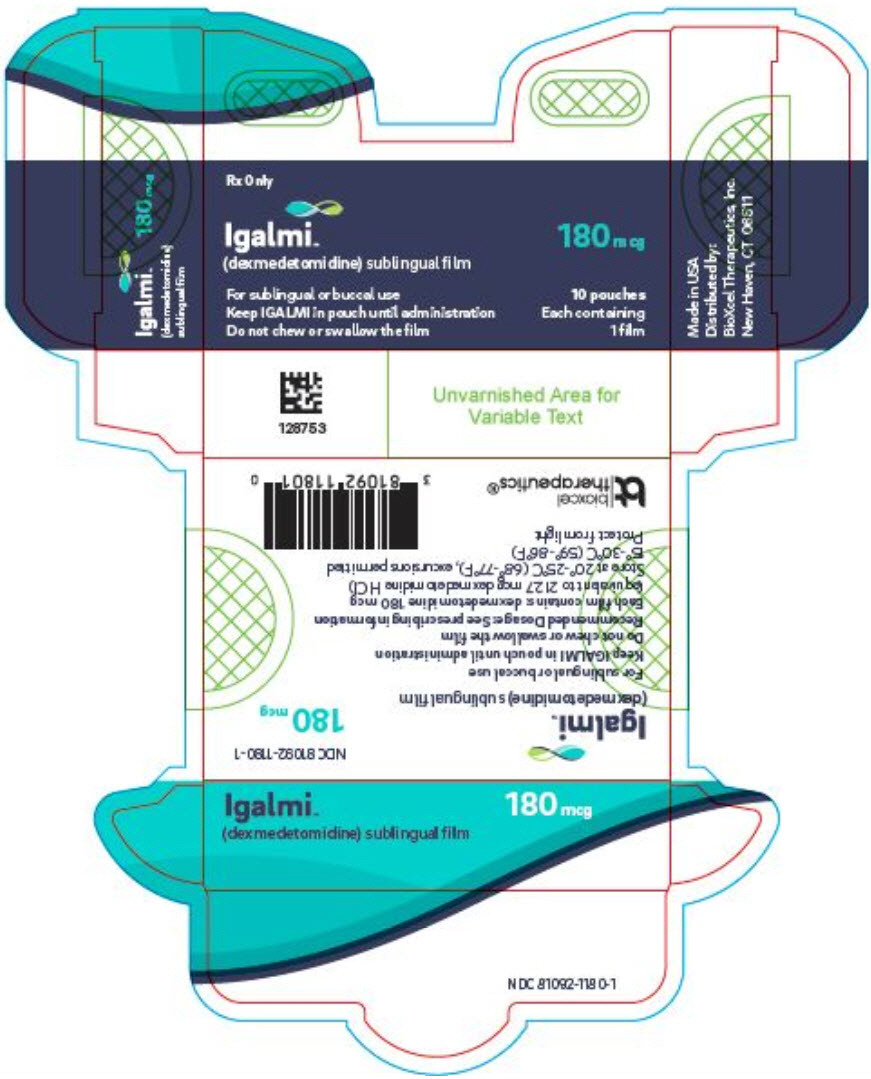
IGALMI DEXMEDETOMIDINE 180 ug Film, 30-count
🆔 Identity & classification
Where does this data come from?
🏭 Manufacturer & labeler
Where does this data come from?
🩺 Clinical
- Dexmedetomidine is used to keep patients calm and comfortable when they need a breathing machine or are going through a stressful procedure in a hospital setting. It helps reduce a...
- Why is my loved one getting dexmedetomidine in the ICU?
- Yes — low blood pressure and a slow heart rate are the most common serious risks with this medication. Your care team knows this and will continuously monitor your heart rate, bloo...
- Can dexmedetomidine cause my heart rate or blood pressure to drop dangerously low?
Patient education
Supplement & herbal interactions
Some supplements/herbs that may interact with Dexmedetomidine — tap one for details:
Where does this data come from?
Ask a licensed pharmacist directly — free, answered by our team.
💊 What it looks like
Where does this data come from?
🧪 Inactive Ingredients / Excipients
Inactive ingredients, also called excipients, are components of the drug product other than the active ingredient. They may include fillers, dyes, coatings, preservatives, flavors, or other formulation ingredients.
💡 Tap an ingredient (hover on desktop) to see what it is and why it’s used.
-
UNII H3R47K3TBD
FD&C Blue No. 1 is a synthetic blue dye approved for use in foods and medicines. It serves as a colorant to give the medication its distinctive appearance and help with product identification.
-
UNII 0A7M0N7SPE
Hydroxypropyl cellulose is a plant-derived thickener made by chemically modifying cellulose. It acts as a binder to hold tablet ingredients together, a film-former for coatings, and a thickener in liquid formulations.
-
UNII VQ8ZWO78F6
Hydroxypropyl cellulose is a plant-derived cellulose that has been chemically modified. It serves as a binder to hold tablet ingredients together, a thickener in liquids, and a film-former for coatings.
-
UNII 9XZ8H6N6OH
A plant-based cellulose derivative used as a binder to hold tablet ingredients together, a thickener in liquids, and a coating agent to control how fast the medicine dissolves.
-
UNII AV092KU4JH
A natural oil extracted from peppermint plants. It's used as a flavoring agent to mask bitter tastes and add a refreshing mint flavor to medicines, making them easier to take.
-
UNII 3WJQ0SDW1A
Polyethylene glycol is a synthetic liquid or solid polymer used in medicines as a solvent, lubricant, and humectant. It helps dissolve active ingredients, reduces friction during manufacturing, and retains moisture in the final product.
-
UNII 96K6UQ3ZD4
Sucralose is a synthetic sweetener made from sugar. It's added to medicines to improve taste without adding calories, helping make bitter or unpleasant-tasting drugs easier to take.
7 inactive ingredients listed in the exact product block matched to this NDC.
Where does this data come from?
ingredient classCode="IACT" elements from the exact product block matched by this NDC. Label-section narrative from DailyMed / the openFDA label index is shown separately when available.Inactive ingredient FAQ
Are inactive ingredients the same for every manufacturer?
Why might an inactive ingredient be missing?
Can inactive ingredients matter?
💲 Pricing
A drug doesn't have one price. Each row is a different public payment system, and none is what you'd pay at the counter — that depends on your insurance. The ⓘ on each row explains what it measures.
| Price system | Per each | Per package |
|---|---|---|
| Retail pharmacies payNADAC · weekly | Not in the retail survey — common for institutional, discontinued, or low-volume packs. | |
| Medicaid paysCMS SDUD · 12 mo | No recent Medicaid claims on file for this NDC — rare and low-volume NDCs are suppressed in the public data. | |
| Medicare drug plans payPart D · quarterly | No Part D plan price is available for this NDC in our data. | |
Where does this data come from?
🔁 Therapeutic equivalents
| Product | Labeler | Pack | NADAC/unit | TE | Status | Price vs. this |
|---|---|---|---|---|---|---|
| Igalmi 180 ugthis 81092-1180-03 | BioXcel | 30 films | — | — | FDA listed | — |
Where does this data come from?
⏳ Availability & generic status
We did not find an FDA-approved generic match for this exact strength, form and route. Patent/protection dates below may affect future generic timing.
Why the date isn’t exact: Generic timing can change because patents may be challenged, settled, licensed, added, removed, or worked around with a narrower label — and FDA approval does not always mean a pharmacy can get the generic today.
🛈 What do these terms mean?
- Patent
- Legal protection listed in the Orange Book that may delay generic approval or launch. Issued by the U.S. Patent & Trademark Office.
- Substance patent
- Covers the active drug molecule itself — the hardest to design around. A generic generally can’t launch until it expires.
- Formulation (product) patent
- Covers a specific formulation or dosage form. A generic can sometimes work around it with a different formulation.
- Method-of-use patent
- A patent covering one specific approved use of the drug — not necessarily the whole molecule. A generic can sometimes launch with a “skinny label” that carves out the protected use and keeps the others.
- Skinny label
- A generic label that omits a still-patented use when the FDA allows it — letting a generic reach the market for the unprotected uses.
- Exclusivity
- FDA-granted marketing protection, separate from patents — e.g. 5-yr new chemical entity, 7-yr orphan drug, or a +6-month pediatric extension.
- Paragraph IV
- A generic applicant’s formal challenge to a listed patent. It can potentially lead to earlier generic entry, but often involves litigation or a settlement.
- RLD / RS
- Reference Listed Drug — the brand product the FDA uses as the reference for generic applications. Reference Standard — the product the FDA expects generics to compare against in bioequivalence testing.
- TE / AB rating
- FDA therapeutic-equivalence rating. An AB rating generally means the FDA considers a generic therapeutically equivalent to — and substitutable for — the brand.
- LOE (loss of exclusivity)
- The latest patent or exclusivity currently listed — the loss-of-exclusivity / latest-listed-protection date shown on this page. Paragraph-IV challenges and settlements can move the real date earlier; FDA approval and a manufacturer’s decision to market can move it later.
Built from the FDA Orange Book. The bars above are scaled to each protection’s expiry; the red LOE marker is the last one to lapse.
| Patent | Type | Use code | Expires |
|---|---|---|---|
| US 11998529 ↗ | Method of use | U-3935 | Jul 17, 2040 |
| US 11998529 ↗ | Method of use | U-3935 | Jul 17, 2040 |
| US 12109196 ↗ | Method of use | U-3935 | Jul 17, 2040 |
| US 12109196 ↗ | Method of use | U-3935 | Jul 17, 2040 |
| US 12364683 ↗ | Method of use | U-4029 | Jan 12, 2043 |
| US 12364683 ↗ | Method of use | U-4029 | Jan 12, 2043 |
| US 11998528 ↗ | Method of use | U-3935 | Jan 12, 2043 |
| US 11998528 ↗ | Method of use | U-3935 | Jan 12, 2043 |
| US 11890272 ↗ | Method of use | U-3935 | Jul 17, 2040 |
| US 11890272 ↗ | Method of use | U-3935 | Jul 17, 2040 |
| US 11786508 ↗ | Method of use | U-3698 | Dec 29, 2037 |
| US 11786508 ↗ | Method of use | U-3698 | Dec 29, 2037 |
| US 10792246 ↗ | Method of use | U-3350 | Jun 26, 2039 |
| US 10792246 ↗ | Method of use | U-3350 | Jun 26, 2039 |
| US 11806334 ↗ | Method of use | U-3725 | Jan 12, 2043 |
| US 11806334 ↗ | Method of use | U-3725 | Jan 12, 2043 |
| US 11517524 ↗ | Method of use | U-3645 | Jun 26, 2039 |
| US 11517524 ↗ | Method of use | U-3645 | Jun 26, 2039 |
| US 11497711 ↗ | Method of use | U-3645 | Jun 26, 2039 |
| US 11497711 ↗ | Method of use | U-3645 | Jun 26, 2039 |
| US 11839604 ↗ | Method of use | U-3756 | Dec 29, 2037 |
| US 11839604 ↗ | Method of use | U-3756 | Dec 29, 2037 |
| US 11890272 ↗ | Method of use | U-3756 | Jul 17, 2040 |
| US 11890272 ↗ | Method of use | U-3756 | Jul 17, 2040 |
| US 12090140 ↗ | Method of use | U-3986 | Jan 12, 2043 |
| US 12090140 ↗ | Method of use | U-3986 | Jan 12, 2043 |
| US 12138247 ↗ | Method of use | U-4029 | Jan 12, 2043 |
| US 12138247 ↗ | Method of use | U-4029 | Jan 12, 2043 |
| US 11478422 ↗ | Drug product | — | Jun 26, 2039 |
| US 11478422 ↗ | Drug product | — | Jun 26, 2039 |
| Code | What it grants | Expires |
|---|---|---|
| M-82 | New indication / labeling change (3-year) | Nov 19, 2028 |
| M-82 | New indication / labeling change (3-year) | Nov 19, 2028 |
Is there a generic version of IGALMI 180 MCG SL FILM?
The FDA approved a generic — why can’t I get it at my pharmacy yet?
Why do different websites show different generic release dates?
What does “FDA listed” mean?
What does a patent or protection date mean here?
What does “current Orange Book estimate” mean?
Can a generic come out before the last patent expires?
Can a generic come out after the listed dates?
What is the difference between patents and exclusivity?
Why are there multiple patent dates?
Where does this data come from?
💊 Medicaid utilization by pack size
📊 Medicare Part D spend CMS · PART D · 2025 (Q1-Q4)
🔬 Reported adverse events (FAERS)
Top reported reactions
Age at onset
Reporter sex
Serious outcomes
Where does this data come from?
📦 Packaging — all sizes for this product
| Package NDC | Description | Marketing start | Status |
|---|---|---|---|
| 81092-1180-01 | 10 POUCH in 1 CARTON (81092-1180-1) / 1 FILM in 1 POUCH (81092-1180-0) | 2022-07-01 | Active |
| 81092-1180-03 You're viewing this | 30 POUCH in 1 CARTON (81092-1180-3) / 1 FILM in 1 POUCH (81092-1180-0) | 2024-07-01 | Active |
Pack size FAQ
What quantity is in NDC 81092-1180-03?
What is the difference between NDC 81092-1180-03 and NDC 81092-1180-01?
What NDC number is used to bill for this package of IGALMI DEXMEDETOMIDINE 180 ug Film?
🧭 About this NDC listing & data coverage
What data is (and isn’t) available for this NDC — tap to expand
| NDC identity (package / product / labeler codes) | ✓ Available |
| Labeler | ✓ Available |
| Product & package description | ✓ Available |
| Marketing category & status | ✓ Available |
| Active ingredient / dosage form / route | ✓ Available |
| FDA label (SPL via DailyMed) | ✓ Available |
| Package photos | ✓ Available |
| Inactive ingredients (structured) | ✓ Available |
| NADAC pharmacy acquisition price (CMS) | — Not published for this NDC CMS publishes NADAC only for NDCs reported in its retail-pharmacy survey. |
| Orange Book / therapeutic-equivalence data | ✓ Available |
| HCPCS J-code billing crosswalk | — Not published for this NDC Most self-administered / retail products have no J-code — that is normal. |
| Medicaid utilization (CMS SDUD) | — Not published for this NDC CMS reports utilization only for NDCs with Medicaid claims above its privacy threshold. |
Questions about this listing
Why is there no price listed?
Is the NDC printed on the package the same as the 11-digit billing NDC?
What do the three segments of this NDC mean?
Is this package still being marketed?
Does this product come in other package sizes?
Who lists this product with the FDA?
Do I need a prescription for this product?
Where does this data come from?
📄 Full prescribing information FDA SPL
🎯 Indications and Usage ▾
1 INDICATIONS AND USAGE IGALMI is indicated for the acute treatment of agitation associated with schizophrenia or bipolar I or II disorder in adults. IGALMI is an alpha-2 adrenergic receptor agonist indicated in adults for the acute treatment of agitation associated with schizophrenia or bipolar I or II disorder. ( 1 ) Limitations of Use : The safety and effectiveness of IGALMI has not been established beyond 24 hours from the first dose.
( 1 , 5.4 , 5.5 ) Limitations of Use The safety and effectiveness of IGALMI have not been established beyond 24 hours from the first dose [see Warnings and Precautions (5.4 , 5.5) ] .
⏱️ Dosage and Administration ▾
2 DOSAGE AND ADMINISTRATION IGALMI should be administered under the supervision of a healthcare provider. A healthcare provider should monitor vital signs and alertness after IGALMI administration to prevent falls and syncope. ( 2.1 ) Administer sublingually or buccally.
Do not chew or swallow. ( 2.1 ) Recommended dosage ( 2.2 ): Patient Population Agitation Severity Initial Dose See Full Prescribing Information for recommendations on administering up to two additional doses and maximum recommended dosages. Adults Mild or Moderate 120 mcg Severe 180 mcg Mild or Moderate Hepatic Impairment Mild or Moderate 90 mcg Severe 120 mcg Severe Hepatic Impairment Mild or Moderate 60 mcg Severe 90 mcg Geriatric Patients (≥ 65 years old) Mild, Moderate, or Severe 120 mcg IGALMI 120 mcg and 180 mcg dosage strengths may be cut in half to obtain the 60 mcg and 90 mcg doses, respectively.
See Full Prescribing Information for preparation and administration instructions. ( 2.3 )
2.1Important Recommendations Prior to Initiating IGALMI and During Therapy IGALMI should be administered under the supervision of a healthcare provider. A healthcare provider should monitor vital signs and alertness after IGALMI administration to prevent falls and syncope [see Warnings and Precautions (5.5) ] . IGALMI is for sublingual or buccal administration.
Do not chew or swallow IGALMI. Do not eat or drink for at least 15 minutes after sublingual administration, or at least one hour after buccal administration.
2.2Recommended Dosage Table 1 includes dosage recommendations for IGALMI based on agitation severity for adults, patients with hepatic impairment, and geriatric patients. Lower dosages are recommended for patients with hepatic impairment and geriatric patients [see Warnings and Precautions (5.1) and Use in Specific Populations (8.5 , 8.6) ]. If agitation persists after the initial dose, up to two additional doses may be administered at least two hours apart.
The dosage recommendations for additional doses vary depending upon the patient population and agitation severity (see Table 1 ). Assess vital signs including orthostatic measurements prior to the administration of any subsequent doses. Due to risk of hypotension, additional half-doses are not recommended in patients with systolic blood pressure (SBP) less than 90 mmHg, diastolic blood pressure (DBP) less than 60 mmHg, heart rate (HR) less than 60 beats per minute, or postural decrease in SBP ≥ 20 mmHg or in DBP ≥ 10 mmHg.
Table 1: Dosage Recommendations for IGALMI in Adults, Adult Patients with Hepatic Impairment, and Geriatric Patients with Agitation Associated with Schizophrenia or Bipolar I or II Disorder Patient Population Agitation Severity Initial Dose IGALMI 120 mcg and 180 mcg dosage strengths may be cut in half to obtain the 60 mcg and 90 mcg doses, respectively [see Dosage and Administration (2.3) ] . Optional 2 nd /3 rd Doses Maximum Recommended Total Daily Dosage Adults Mild or Moderate 120 mcg 60 mcg 240 mcg Severe 180 mcg 90 mcg 360 mcg Patients with Mild or Moderate Hepatic Impairment Hepatic impairment: Mild (Child-Pugh Class A); Moderate (Child-Pugh Class B); Severe (Child-Pugh Class C) Mild or Moderate 90 mcg 60 mcg 210 mcg Severe 120 mcg 60 mcg 240 mcg Patients with Severe Hepatic Impairment Mild or Moderate 60 mcg 60 mcg 180 mcg Severe 90 mcg 60 mcg 210 mcg Geriatric Patients (≥ 65 years old) Mild, Moderate, or Severe 120 mcg 60 mcg 240 mcg
2.3Preparation and Administration Instructions Keep IGALMI in the foil pouch until ready to administer. IGALMI should be immediately administered once the pouch is opened and the dose prepared. Prepare and administer IGALMI under the supervision of a healthcare provider as follows: Healthcare Professional: Prepare IGALMI Dose for Patient 1 Open the sealed foil pouch by tearing straight across at the notch.
Perform Steps 2a, 2b, 2c and 2d only if a 60 mcg or 90 mcg dose (half of a film) is needed, then proceed to Step 3. If administering a full d…
💊 Dosage Forms and Strengths ▾
3 DOSAGE FORMS AND STRENGTHS IGALMI is a blue rectangular sublingual film containing on its surface two darker blue spots in dose strengths of 120 mcg and 180 mcg. Sublingual film: 120 mcg and 180 mcg ( 3 )
⛔ Contraindications ▾
4 CONTRAINDICATIONS None. None. ( 4 )
⚠️ Warnings and Cautions ▾
5 WARNINGS AND PRECAUTIONS Hypotension, Orthostatic Hypotension, and Bradycardia: Avoid use of IGALMI in patients with hypotension, orthostatic hypotension, advanced heart block, severe ventricular dysfunction, or history of syncope. Ensure that patients are alert and not experiencing orthostatic or symptomatic hypotension prior to resuming ambulation. ( 5.1 ) QT Interval Prolongation: IGALMI prolongs the QT interval; avoid use in patients with risk factors for prolonged QT interval.
( 5.2 ) Somnolence: Patients should not perform activities requiring mental alertness, such as operating a motor vehicle or operating hazardous machinery for at least eight hours after taking IGALMI. ( 5.3 )
5.1Hypotension, Orthostatic Hypotension, and Bradycardia IGALMI causes dose-dependent hypotension, orthostatic hypotension, and bradycardia . In clinical studies, 18%, 16%, and 9% of patients treated with 180 mcg of IGALMI, 120 mcg of IGALMI, and placebo, respectively, experienced orthostatic hypotension (defined as SBP decrease ≥ 20 mmHg or DBP decrease ≥ 10 mmHg after 1, 3, or 5 minutes of standing) at 2 hours post-dose. In those studies, 7%, 6%, and 1% of patients treated with 180 mcg of IGALMI, 120 mcg of IGALMI, and placebo, respectively, experienced HR ≤ 50 beats per minute within 2 hours of dosing [see Adverse Reactions (6.1) ].
In clinical studies with IGALMI, patients were excluded if they had treatment with alpha-1 noradrenergic blockers, benzodiazepines, other hypnotics or antipsychotic drugs four hours prior to study drug administration; had a history of syncope or syncopal attacks; SBP < 110 mmHg; DBP < 70 mmHg; HR < 55 beats per minute; or had evidence of hypovolemia or orthostatic hypotension. Reports of hypotension and bradycardia, including some resulting in fatalities, have been associated with the use of another dexmedetomidine product given intravenously (IGALMI is for sublingual or buccal use and is not approved for intravenous use).
Clinically significant episodes of bradycardia and sinus arrest have been reported after administration of this other dexmedetomidine product to young, healthy adult volunteers with high vagal tone and when this product was given by rapid intravenous or bolus administration. Because IGALMI decreases sympathetic nervous system activity, hypotension and/or bradycardia may be more pronounced in patients with hypovolemia, diabetes mellitus, or chronic hypertension, and in geriatric patients [see Dosage and Administration (2.2) and Use in Specific Populations (8.5) ].
Avoid use of IGALMI in patients with hypotension, orthostatic hypotension, advanced heart block, severe ventricular dysfunction, or history of syncope. After IGALMI administration, patients should be adequately hydrated and should sit or lie down until vital signs are within normal range. If a patient is unable to remain seated or lying down, precautions should be taken to reduce the risk of falls.
Ensure that a patient is alert and not experiencing orthostatic hypotension or symptomatic hypotension prior to allowing them to resume ambulation [see Dosage and Administration (2.1) ].
5.2QT Interval Prolongation IGALMI prolongs the QT interval. Avoid use of IGALMI in patients at risk of torsades de pointes or sudden death including those with known QT prolongation, a history of other arrhythmias, symptomatic bradycardia, hypokalemia or hypomagnesemia, and in patients receiving other drugs known to prolong the QT interval [see Drug Interactions (7.1) and Clinical Pharmacology (12.2) ].
5.3Somnolence IGALMI can cause somnolence. In placebo-controlled clinical studies in adults with agitation associated with schizophrenia or bipolar I or II disorder, somnolence (including fatigue and sluggishness) was reported in 23% and 22% of patients treated with IGALMI 180 mcg and 120 mcg, respectively, compared to 6% of placebo-treated patients. Patients should not perform activities requiring mental alertness, such as operating a motor vehicle or o…
🤒 Adverse Reactions ▾
6 ADVERSE REACTIONS The following adverse reactions are discussed in detail in other sections of the labeling: Hypotension, Orthostatic Hypotension, and Bradycardia [see Warnings and Precautions (5.1) ] QT Interval Prolongation [see Warnings and Precautions (5.2) ] Somnolence [see Warnings and Precautions (5.3) ] Risk of Withdrawal Reactions [see Warnings and Precautions (5.4) ] Tolerance and Tachyphylaxis [see Warnings and Precautions (5.5) ] The most common adverse reactions (incidence ≥5% and at least twice the rate of placebo) are somnolence, oral paresthesia or oral hypoesthesia, dizziness, dry mouth, hypotension, and orthostatic hypotension.
( 6.1 ) To report SUSPECTED ADVERSE REACTIONS, contact BioXcel Therapeutics, Inc. at 1-833-201-1088 or FDA at 1-800-FDA-1088 or www.fda.gov/medwatch.
6.1Clinical Studies Experience Because clinical trials are conducted under widely varying conditions, adverse reactions rates observed in the clinical trials of a drug cannot be directly compared to rates in clinical trials of another drug and may not reflect the rates observed in practice. The safety of IGALMI was evaluated in 507 adult patients with agitation associated with schizophrenia (N=255) or bipolar I or II disorder (N=252) in two randomized, placebo-controlled studies (Studies 1 and 2) [see Clinical Studies (14) ] .
In both studies, patients were admitted to a clinical research unit or a hospital and remained under medical supervision for at least 24 hours following treatment. Patients were 18 to 71 years of age (mean age was 46 years old); 45% were female and 55% were male; 66% were Black, 31% were White, 2% were multiracial, and 1% were other. In these studies, patients received an initial dose of IGALMI 180 mcg (N=252), IGALMI 120 mcg (N=255), or placebo (N=252).
Patients who were hemodynamically stable (i.e., those with systolic blood pressure (SBP) > 90 mmHg, diastolic blood pressure (DBP) > 60 mmHg, and heart rate (HR) > 60 beats per minute) and without orthostatic hypotension (i.e., reduction in SBP < 20 mmHg or DBP < 10 mmHg upon standing) were eligible for an additional dose after 2 hours. An additional half dose (90 mcg, 60 mcg, or placebo) was given to 7.1% (18/252), 22.7% (58/255) and 44.0% (111/252) of patients in the IGALMI 180 mcg, IGALMI 120 mcg or placebo arms, respectively.
After at least an additional 2 hours, an additional second half dose (total IGALMI dose of 360 mcg, total IGALMI dose of 240 mcg, or placebo, respectively) was given to 3.2% (8/252), 9.4% (24/255), and 21.0% (53/252) of patients in the IGALMI 180 mcg, IGALMI 120 mcg or placebo arms, respectively. In these studies, one patient discontinued treatment due to an adverse reaction of oropharyngeal pain. The most common adverse reactions (incidence ≥ 5% and at least twice the rate of placebo) were: somnolence, oral paresthesia or oral hypoesthesia, dizziness, dry mouth, hypotension, and orthostatic hypotension.
Table 2 presents the adverse reactions that occurred in IGALMI-treated patients at a rate of at least 2% and at a higher rate than in placebo-treated patients in Studies 1 and 2. Table 2: Adverse Reactions Reported in ≥2% of IGALMI-Treated Patients and Greater than Placebo in Two Placebo-Controlled Studies of Agitated Adult Patients with Schizophrenia or Bipolar I or II Disorder (Studies 1 and 2) Adverse Reaction IGALMI 180 mcg N=252 % IGALMI 120 mcg N=255 % Placebo N=252 % Somnolence Somnolence includes the terms fatigue and sluggishness 23 22 6 Paresthesia oral or hypoesthesia oral 7 6 1 Dizziness 6 4 1 Hypotension 5 5 0 Orthostatic hypotension 5 3 <1 Dry mouth 4 7 1 Nausea 3 2 2 Bradycardia 2 2 0 Abdominal discomfort Abdominal discomfort includes dyspepsia, gastroesophageal reflux disease 2 0 1 Hypotension, Orthostatic Hypotension, and Bradycardia in Two Placebo-Controlled Studies In clinical studies, patients were excluded if they were treated with alpha-1 noradrenergic blockers, benzodiazepines, antipsychotic drugs, or other hypnoti…
🔄 Drug Interactions ▾
7 DRUG INTERACTIONS Drugs that Prolong the QT interval: Avoid use. ( 7.1 ) Anesthetics, Sedatives, Hypnotics, Opioids: Concomitant use may cause enhanced CNS depressant effects. Reduction in dosage of IGALMI or the concomitant medication may be required. ( 7.2 )
7.1Drugs that Prolong the QT Interval Concomitant use of drugs that prolong the QT interval may add to the QT-prolonging effects of IGALMI and increase the risk of cardiac arrhythmia. Avoid the use of IGALMI in combination with other drugs known to prolong the QT interval [see Warnings and Precautions (5.2) ] .
7.2Anesthetics, Sedatives, Hypnotics, and Opioids Concomitant use of IGALMI with anesthetics, sedatives, hypnotics, or opioids is likely to lead to enhanced CNS depressant effects. Specific studies with another dexmedetomidine product given intravenously have confirmed these effects with sevoflurane, isoflurane, propofol, alfentanil, and midazolam. Due to possible enhanced CNS effects when given concomitantly with IGALMI, consider a reduction in dosage of IGALMI or the concomitant anesthetic, sedative, hypnotic, or opioid.
👥 Use in Specific Populations ▾
8 USE IN SPECIFIC POPULATIONS
8.1Pregnancy Risk Summary There are no available data on IGALMI use in pregnant women to evaluate for a drug-associated risk of major birth defects, miscarriage or other adverse maternal or fetal effects. Available data from published randomized controlled trials and case reports over several decades of use with intravenously administered dexmedetomidine during pregnancy have not identified a drug-associated risk of major birth defects or miscarriage; however, the reported exposures occurred after the first trimester.
Most of the available data are based on studies with exposures that occurred at the time of cesarean-section delivery, and these studies have not identified an adverse effect on maternal outcomes or infant Apgar scores. Available data indicate that dexmedetomidine crosses the placenta. In animal reproductive studies fetal toxicity occurred in the presence of maternal toxicity with subcutaneous administration of dexmedetomidine to pregnant rats during organogenesis at doses 5 times the maximum recommended human dose [MRHD] of 360 mcg/day based on mg/m 2 body surface area.
Adverse developmental effects, including early implantation loss and decreased viability of second generation offspring, occurred when pregnant rats were subcutaneously administered doses less than or equal to the MRHD based on mg/m 2 from late pregnancy through lactation and weaning (see Data ) . The estimated background risk of major birth defects and miscarriage for the indicated population is unknown. All pregnancies have a background risk of birth defect, loss, or other adverse outcomes.
In the U.S. general population, the estimated background risk of major birth defects and miscarriage in clinically recognized pregnancies is 2 to 4% and 15 to 20%, respectively. Data Animal Data Increased post-implantation losses and reduced live pups in the presence of maternal toxicity (decreased body weight) occurred in a rat embryo-fetal development study in which pregnant dams were administered subcutaneous doses of dexmedetomidine of 200 mcg/kg/day (equivalent to 5 times the MRHD of 360 mcg/day based on mg/m 2 ) during the period of organogenesis (Gestation Day (GD) 5 to 16).
No embryo-fetal toxicity was observed at 20 mcg/kg/day (less than the MRHD of 360 mcg/day based on mg/m 2 ). No malformations were reported at any dose level. No malformation or embryo-fetal toxicity were observed in a rabbit embryo-fetal developmental study in which pregnant dams were administered dexmedetomidine intravenously at doses up to 96 mcg/kg/day (equivalent to 5 times the MRHD of 360 mcg/day based on mg/m 2 ) during the period of organogenesis (GD 6 to 18).
Reduced pup and adult offspring weights and grip strength were reported in a rat developmental toxicology study in which pregnant females were administered dexmedetomidine subcutaneously at 8 mcg/kg/day (less than the MRHD of 360 mcg/day based on mg/m 2 ) during late pregnancy through lactation and weaning (GD 16 to postnatal day [PND] 25). Decreased viability of second generation offspring and an increase in early implantation loss along with delayed motor development occurred at 32 mcg/kg/day (equivalent to the MRHD of 360 mcg/day based on mg/m 2 ) when first generation offspring were mated.
This study limited dosing to hard palate closure (GD 15-18) through weaning instead of standard dosing from implantation (GD 6-7) to weaning (PND 21).
8.2Lactation Risk Summary Available published literature report the presence of dexmedetomidine in human milk following intravenous administration. There is no information regarding the effects of dexmedetomidine on the breastfed child or the effects on milk production. Advise women to monitor the breastfed infant for irritability.
The developmental and health benefits of breastfeeding should be considered along with the mother's clinical need for IGALMI and any potential adverse effects on the breastfed child from IGALMI or from the underlying mat…
🤰 Pregnancy ▾
8.1Pregnancy Risk Summary There are no available data on IGALMI use in pregnant women to evaluate for a drug-associated risk of major birth defects, miscarriage or other adverse maternal or fetal effects. Available data from published randomized controlled trials and case reports over several decades of use with intravenously administered dexmedetomidine during pregnancy have not identified a drug-associated risk of major birth defects or miscarriage; however, the reported exposures occurred after the first trimester.
Most of the available data are based on studies with exposures that occurred at the time of cesarean-section delivery, and these studies have not identified an adverse effect on maternal outcomes or infant Apgar scores. Available data indicate that dexmedetomidine crosses the placenta. In animal reproductive studies fetal toxicity occurred in the presence of maternal toxicity with subcutaneous administration of dexmedetomidine to pregnant rats during organogenesis at doses 5 times the maximum recommended human dose [MRHD] of 360 mcg/day based on mg/m 2 body surface area.
Adverse developmental effects, including early implantation loss and decreased viability of second generation offspring, occurred when pregnant rats were subcutaneously administered doses less than or equal to the MRHD based on mg/m 2 from late pregnancy through lactation and weaning (see Data ) . The estimated background risk of major birth defects and miscarriage for the indicated population is unknown. All pregnancies have a background risk of birth defect, loss, or other adverse outcomes.
In the U.S. general population, the estimated background risk of major birth defects and miscarriage in clinically recognized pregnancies is 2 to 4% and 15 to 20%, respectively. Data Animal Data Increased post-implantation losses and reduced live pups in the presence of maternal toxicity (decreased body weight) occurred in a rat embryo-fetal development study in which pregnant dams were administered subcutaneous doses of dexmedetomidine of 200 mcg/kg/day (equivalent to 5 times the MRHD of 360 mcg/day based on mg/m 2 ) during the period of organogenesis (Gestation Day (GD) 5 to 16).
No embryo-fetal toxicity was observed at 20 mcg/kg/day (less than the MRHD of 360 mcg/day based on mg/m 2 ). No malformations were reported at any dose level. No malformation or embryo-fetal toxicity were observed in a rabbit embryo-fetal developmental study in which pregnant dams were administered dexmedetomidine intravenously at doses up to 96 mcg/kg/day (equivalent to 5 times the MRHD of 360 mcg/day based on mg/m 2 ) during the period of organogenesis (GD 6 to 18).
Reduced pup and adult offspring weights and grip strength were reported in a rat developmental toxicology study in which pregnant females were administered dexmedetomidine subcutaneously at 8 mcg/kg/day (less than the MRHD of 360 mcg/day based on mg/m 2 ) during late pregnancy through lactation and weaning (GD 16 to postnatal day [PND] 25). Decreased viability of second generation offspring and an increase in early implantation loss along with delayed motor development occurred at 32 mcg/kg/day (equivalent to the MRHD of 360 mcg/day based on mg/m 2 ) when first generation offspring were mated.
This study limited dosing to hard palate closure (GD 15-18) through weaning instead of standard dosing from implantation (GD 6-7) to weaning (PND 21).
🧒 Pediatric Use ▾
8.4Pediatric Use The safety and effectiveness of IGALMI have not been established in pediatric patients.
🧓 Geriatric Use ▾
8.5Geriatric Use Fifteen geriatric patients (≥ 65 years of age) were enrolled (no patients were 75 years of age and older) in the clinical studies for acute treatment of agitation associated with schizophrenia or bipolar I or II disorder. Of the total number of IGALMI-treated patients in these clinical studies, 11/507 (2.2%) were 65 years of age and older [see Clinical Studies (14) ] . Dosage reduction of IGALMI is recommended in geriatric patients [see Dosage and Administration (2.2) ] .
A higher incidence of bradycardia and hypotension was observed in geriatric patients compared to younger adult patients after intravenous administration of another dexmedetomidine product [see Warnings and Precautions (5.1) ] . The pharmacokinetic profile of intravenous dexmedetomidine was not altered in geriatric subjects [see Clinical Pharmacology (12.3) ] . Clinical studies of IGALMI did not include sufficient numbers of patients 65 years of age and older to determine whether there were differences in the effectiveness of IGALMI in the acute treatment of agitation associated with schizophrenia or bipolar I or II disorder compared to younger adult patients.
🆘 Overdosage ▾
10 OVERDOSAGE In a tolerability study of intravenous dexmedetomidine in which healthy adult subjects were administered doses at and above the recommended dose of 0.2 to 0.7 mcg/kg/hour, the maximum blood concentration was approximately 13 times the upper boundary of the therapeutic range for the intravenous dexmedetomidine (IGALMI is not approved for intravenous use). The most notable effects observed in two subjects who achieved the highest doses were first degree atrioventricular block and second-degree heart block.
Five adult patients received an overdose of intravenous dexmedetomidine in intensive care unit sedation studies. Two patients who received a 2 mcg/kg loading dose (twice the recommended loading dose) over 10 minutes, experienced bradycardia and/or hypotension. One patient who received a loading intravenous bolus dose of undiluted dexmedetomidine (19.4 mcg/kg), had cardiac arrest from which he was successfully resuscitated.
Consider contacting a Poison Center (1-800-222-1222) or a medical toxicologist for overdosage management recommendations for IGALMI.
🧬 Clinical Pharmacology ▾
12 CLINICAL PHARMACOLOGY
12.1Mechanism of Action Dexmedetomidine is an alpha-2 adrenergic receptor agonist. The mechanism of action of IGALMI in the acute treatment of agitation associated with schizophrenia or bipolar I or II disorder is thought to be due to activation of presynaptic alpha-2 adrenergic receptors.
12.2Pharmacodynamics Dexmedetomidine acts as an agonist at alpha-2 adrenergic receptors with binding affinities (Ki values) of 4 to 6 nM at the alpha-2 adrenergic receptor subtypes. Cardiac Electrophysiology IGALMI exhibits a concentration dependent QT prolongation. Table 4 shows the mean (upper 90% confidence interval) QTcF increase from baseline for respective dosing regimens [see Warnings and Precautions (5.2) ].
Table 4: QTcF Increase from Baseline by Dosage of IGALMI IGALMI Dosage Mean QTcF Increase from Baseline (upper 90% confidence interval) 120 mcg single use 6 (7) msec 120 mcg + 2 additional doses of 60 mcg 2 hours apart (total 3 doses) 8 (9) msec 180 mcg single use 8 (11) msec 180 mcg + 2 additional doses of 90 mcg 2 hours apart (total 3 doses) 11 (14) msec
12.3Pharmacokinetics Dexmedetomidine exposure (C max and AUC) increased in a dose proportional manner in the dose range of 20 mcg (0.17 times the lowest recommended initial dose of 120 mcg) to 180 mcg after single sublingual administration of IGALMI. The mean time for film to dissolve in the mouth was about 6 to 8 minutes and 18 minutes following sublingual and buccal administration, respectively. Dexmedetomidine was quantifiable in plasma generally after 5 to 20 minutes post dosing.
Absorption The absolute bioavailability of dexmedetomidine was about 72% and 82% following sublingual and buccal administration of IGALMI, respectively. When water was taken at two hours post dose, comparable exposures of dexmedetomidine were observed when IGALMI was administered by both routes. Mean maximal plasma concentrations of dexmedetomidine were reached approximately two hours after sublingual or buccal administration of IGALMI.
Following sublingual administration of 40 mcg of IGALMI (0.33 times the lowest recommended initial dose) with water drinking at two hours post dose and 20 mcg dexmedetomidine intravenous infusion for 90 minutes in healthy volunteers: The mean peak plasma concentration (C max ) of dexmedetomidine was 143 ng/L and 144 ng/L, respectively. The mean area under concentration curve (AUC) of dexmedetomidine was 851 hour*ng/L and 584 hour*ng/L, respectively. Effect of Drinking Water on Absorption Compared to drinking water at two hours post sublingual administration of IGALMI, early water intake (as early as 15 minutes post dose) had minimal effects on the rate or extent of absorption of dexmedetomidine.
Effects of early water intake (i.e., before two hours post dose) on the absorption of dexmedetomidine has not been evaluated following buccal administration. Distribution The steady-state volume of distribution (Vss) of dexmedetomidine following intravenous administration was approximately 118 liters. Dexmedetomidine protein binding was assessed in the plasma of healthy male and female subjects.
The average protein binding was 94% and was constant across the different plasma concentrations tested. Protein binding was similar in males and females. The fraction of dexmedetomidine that was bound to plasma proteins was significantly decreased in subjects with hepatic impairment compared to healthy subjects.
The potential for protein binding displacement of dexmedetomidine by fentanyl, ketorolac, theophylline, digoxin and lidocaine was explored in vitro, and negligible changes in the plasma protein binding of dexmedetomidine IV were observed. The potential for protein binding displacement of phenytoin, warfarin, ibuprofen, propranolol, theophylline and digoxin by dexmedetomidine hydrochloride injection was explored in vitro and none of these compounds appeared to be significantly displaced by intravenous dexmedetomidine.
Elimination Metabolism Dexmedet…
🧬 Mechanism of Action ▾
12.1Mechanism of Action Dexmedetomidine is an alpha-2 adrenergic receptor agonist. The mechanism of action of IGALMI in the acute treatment of agitation associated with schizophrenia or bipolar I or II disorder is thought to be due to activation of presynaptic alpha-2 adrenergic receptors.
📦 How Supplied / Storage and Handling ▾
16 HOW SUPPLIED/STORAGE AND HANDLING How Supplied IGALMI (dexmedetomidine) sublingual film is supplied as a blue rectangular sublingual film, containing on its surface two darker blue spots in dose strengths of 120 mcg and 180 mcg and is packaged as individual films in heat-sealed foil pouches in 10-count and 30-count films per carton. The NDC number for each packaging configuration is: 120 mcg 10-count NDC # 81092-1120-1 120 mcg 30-count NDC # 81092-1120-3 180 mcg 10-count NDC # 81092-1180-1 180 mcg 30-count NDC # 81092-1180-3 Storage and Handling Store at controlled room temperature, 20°C to 25°C (68°F to 77°F).
Excursions permitted from 15°C to 30°C (59°F to 86°F). See USP Controlled Room Temperature. Keep IGALMI in the foil pouch until ready to administer.
📦 Storage and Handling ▾
Storage and Handling Store at controlled room temperature, 20°C to 25°C (68°F to 77°F). Excursions permitted from 15°C to 30°C (59°F to 86°F). See USP Controlled Room Temperature. Keep IGALMI in the foil pouch until ready to administer.
📋 Description ▾
11 DESCRIPTION IGALMI contains dexmedetomidine, an alpha-2 adrenergic receptor agonist, present as dexmedetomidine hydrochloride, the S-enantiomer of medetomidine chemically described as 4-[(1S)-1- (2, 3-dimethylphenyl) ethyl]-1H-imidazole hydrochloride. The empirical formula is C 13 H 16 N 2 ∙HCl with a molecular weight of 236.7 g/mol. The structural formula of dexmedetomidine hydrochloride is: Dexmedetomidine hydrochloride is a white or almost white powder that is freely soluble in water and has a pKa of 7.1.
Its partition coefficient in octanol/water at pH 7.4 is 2.89. IGALMI is for sublingual or buccal use. Each IGALMI sublingual film contains 120 mcg or 180 mcg of dexmedetomidine equivalent to 141.8 mcg and 212.7 mcg of dexmedetomidine hydrochloride, respectively.
IGALMI contains the following inactive ingredients: FD&C Blue #1 colorant, hydroxypropyl cellulose, peppermint oil, polyethylene oxide, and sucralose. Chemical Structure
💬 Information for Patients ▾
17 PATIENT COUNSELING INFORMATION Administration Information Advise patients to place IGALMI under the tongue, close to the base of the tongue, on the left or right side (sublingual) or behind the lower lip (buccal). Advise patients not to chew or swallow IGALMI. Also, advise patients not to eat or drink for at least 15 minutes after sublingual administration, or at least 1 hour after buccal administration [see Dosage and Administration (2.3) ] .
Hypotension, Orthostatic Hypotension, and Bradycardia Advise patients that IGALMI can cause dose-dependent hypotension, orthostatic hypotension, and bradycardia. Inform patients to remain sitting or lying down after receiving IGALMI and to inform the healthcare provider if they have any symptoms of hypotension or bradycardia [see Warnings and Precautions (5.1) ] . QT Interval Prolongation Inform patients to consult their physician immediately if they feel faint or have heart palpitations [see Warnings and Precautions (5.2) ] .
Somnolence Advise patients that IGALMI can cause somnolence and may impair the ability to perform tasks that require complex motor and mental skills. Advise patients that they should avoid doing activities that require them to be alert, such as driving a car or operating machinery for at least eight hours after receiving IGALMI [see Warnings and Precautions (5.3) ] . Lactation Advise patients exposed to IGALMI to monitor breastfed infants for irritability [see Use in Specific Populations (8.2) ].