
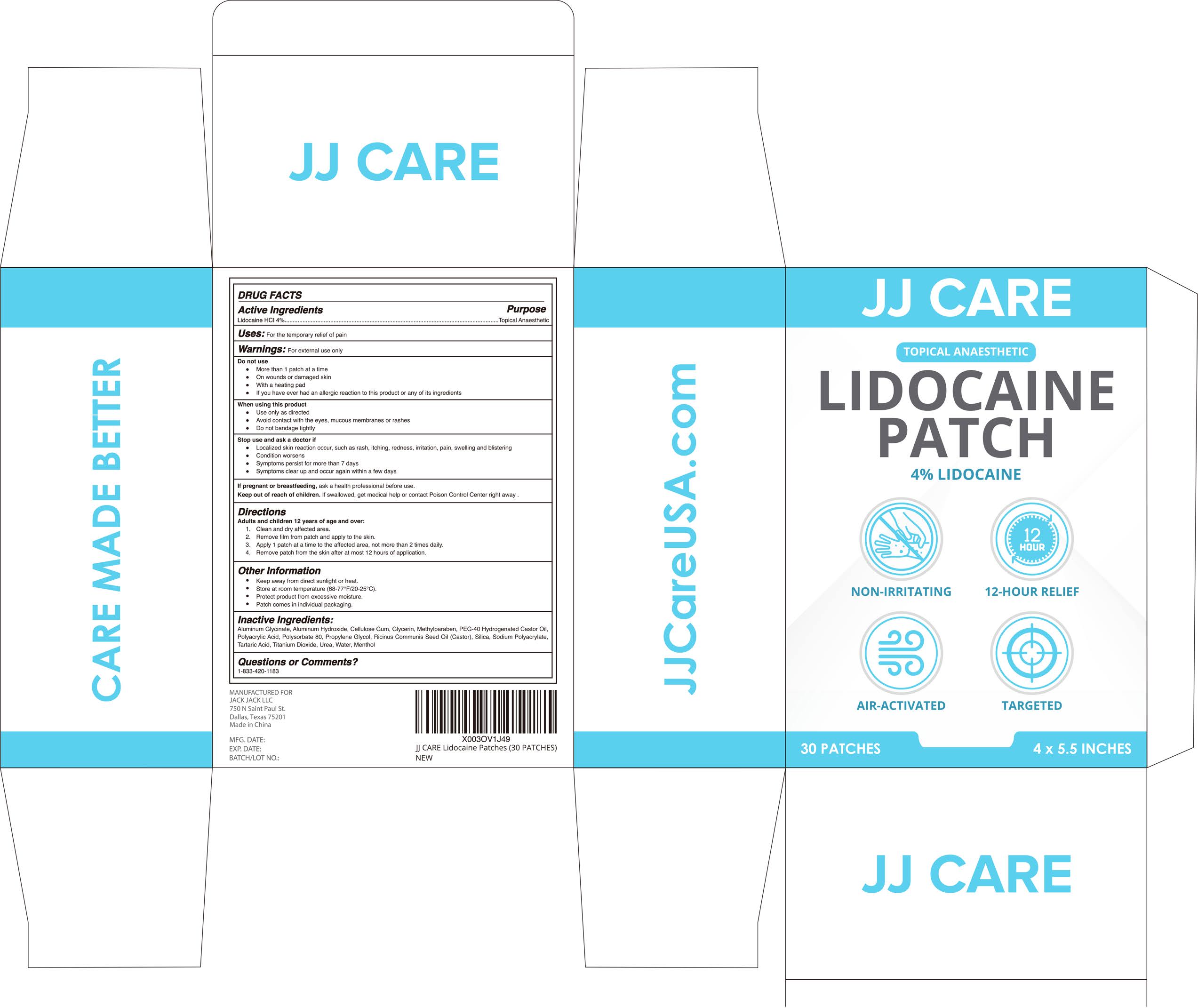
Lidocaine Patch Lidocaine HCI 4% 0.4 g Patch, 30 patches
🆔 Identity & classification
Where does this data come from?
🏭 Manufacturer & labeler
Where does this data come from?
🩺 Clinical
- It's best to avoid using two lidocaine products at the same time unless your doctor says it's okay. When you use multiple products containing a local anesthetic, the total amount a...
- Can I use a lidocaine patch and a lidocaine cream at the same time?
- No — please don't do this. Heat significantly increases how much lidocaine is absorbed through your skin, which can push drug levels in your blood higher than they should be. Stick...
- Can I put a heating pad on the area where I applied a lidocaine patch?
Patient education
Supplement & herbal interactions
Where does this data come from?
Ask a licensed pharmacist directly — free, answered by our team.
🧪 Inactive Ingredients / Excipients
Inactive ingredients, also called excipients, are components of the drug product other than the active ingredient. They may include fillers, dyes, coatings, preservatives, flavors, or other formulation ingredients.
💡 Tap an ingredient (hover on desktop) to see what it is and why it’s used.
-
UNII 5QB0T2IUN0
Aluminum hydroxide is a white powder mineral compound used as an antacid ingredient in some formulations. It works as a buffer and pH regulator to help neutralize stomach acid in the medicine.
-
UNII 0891BL4S3D
Carboxymethylcellulose sodium is a plant-derived thickener made from cellulose. It's used in medicines as a binder to hold ingredients together, a thickener to adjust texture, and a stabilizer to keep the product uniform.
-
UNII D5340Y2I9G
Castor oil is a natural plant-based oil used in medicines as a lubricant, laxative agent, and solvent. It helps medicine ingredients dissolve or flow smoothly and can aid bowel movement in formulations designed for that purpose.
-
UNII 1K713C615K
A mineral compound of aluminum that acts as an antacid and absorbent in formulations. It helps neutralize stomach acid and is used as a filler or binding agent in solid dosage forms.
-
UNII PDC6A3C0OX
Glycerin is a clear, thick liquid derived from plant oils or fats. It acts as a humectant to retain moisture, a sweetener, and a solvent in medications.
-
UNII A2I8C7HI9T
Methylparaben is a preservative derived from benzoic acid that prevents growth of bacteria, fungi, and mold in medicines. It extends the product's shelf life and maintains safety during storage.
-
UNII 9G2MAD7J6W
Polyacrylic acid is a synthetic polymer used as a binder and thickening agent in medicines. It helps hold tablet ingredients together and can increase the viscosity of liquid or semi-solid formulations.
-
UNII 7YC686GQ8F
A synthetic oily substance made from castor oil. It works as a solubilizer and emulsifier to help mix oily and water-based ingredients together in the medicine.
-
UNII 6OZP39ZG8H
Polysorbate 80 is a synthetic emulsifier derived from sorbitol and oleic acid. It helps mix oil and water-based ingredients together in medications and improves how the product disperses in the body.
-
UNII 6DC9Q167V3
Propylene glycol is a clear liquid derived from petroleum or vegetable sources. It acts as a solvent, humectant, and preservative in medicines, helping dissolve active ingredients and maintain product stability.
-
UNII YS08XHA860
Racementhol is a cooling compound made from mint plant oils or synthesized in the lab. It's used in medicines as a flavoring and cooling agent to mask bitter tastes and soothe the mouth and throat.
-
UNII ETJ7Z6XBU4
Silicon dioxide is a naturally occurring mineral used as a glidant and anti-caking agent. It helps powder ingredients flow smoothly and prevents clumping during manufacturing and storage.
-
UNII 05I15JNI2J
A synthetic polymer that absorbs and holds moisture. Used in tablets and capsules as a super-disintegrant to help the medicine break apart quickly when swallowed, allowing faster drug release.
-
UNII W4888I119H
Tartaric acid is a natural organic acid found in grapes and tamarinds. In medicines, it works as a buffer to control acidity, an antioxidant to prevent spoilage, and sometimes a flavoring or binding agent.
-
UNII 15FIX9V2JP
Titanium dioxide is a bright white mineral powder commonly used as a colorant and opacifying agent. It makes pills and tablets white or lighter in color and helps make coatings non-transparent.
-
UNII 8W8T17847W
A nitrogen-containing chemical compound used in pharmaceuticals as a humectant to retain moisture, and sometimes as a keratolytic agent in topical formulations to help soften and remove dead skin cells.
-
UNII 059QF0KO0R
Water is a liquid solvent that dissolves and mixes ingredients together in liquid medicines, syrups, and injections. It helps distribute the active drug evenly throughout the product.
17 inactive ingredients listed in the exact product block matched to this NDC.
Label-section wording can be broader than the structured product block and may mention additional formulation ingredients.
Where does this data come from?
ingredient classCode="IACT" elements from the exact product block matched by this NDC. Label-section narrative from DailyMed / the openFDA label index is shown separately when available.Inactive ingredient FAQ
Are inactive ingredients the same for every manufacturer?
Why might an inactive ingredient be missing?
Can inactive ingredients matter?
💲 Pricing
A drug doesn't have one price. Each row is a different public payment system, and none is what you'd pay at the counter — that depends on your insurance. The ⓘ on each row explains what it measures.
| Price system | Per each | Per package |
|---|---|---|
| Retail pharmacies payNADAC · weekly | Not in the retail survey — common for institutional, discontinued, or low-volume packs. | |
| Medicaid paysCMS SDUD · 12 mo | No recent Medicaid claims on file for this NDC — rare and low-volume NDCs are suppressed in the public data. | |
| Medicare drug plans payPart D · quarterly | No Part D plan price is available for this NDC in our data. | |
Where does this data come from?
🔁 Therapeutic equivalents
| Product | Labeler | Pack | NADAC/unit | TE | Status | Price vs. this |
|---|---|---|---|---|---|---|
| Lidocaine Patch 0.4 gthis 81484-0501-02 | Anhui | 30 patches | — | — | Discontinued | — |
Where does this data come from?
⏳ Availability & generic status
We did not find an FDA-approved generic match for this exact strength, form and route.
Where does this data come from?
🔬 Reported adverse events (FAERS)
Top reported reactions
Age at onset
Reporter sex
Serious outcomes
Where does this data come from?
📦 Packaging — all sizes for this product
| Package NDC | Description | Marketing start | Status |
|---|---|---|---|
| 81484-0501-02 You're viewing this | 30 BAG in 1 BOX (81484-501-02) / 1 PATCH in 1 BAG (81484-501-01) | 2023-03-14 | Inactivated by FDA |
🧭 About this NDC listing & data coverage
What data is (and isn’t) available for this NDC — tap to expand
| NDC identity (package / product / labeler codes) | ✓ Available |
| Labeler | ✓ Available |
| Product & package description | ✓ Available |
| Marketing category & status | ✓ Available |
| Active ingredient / dosage form / route | ✓ Available |
| FDA label (SPL via DailyMed) | ✓ Available |
| Package photos | ✓ Available |
| Inactive ingredients (structured) | ✓ Available |
| NADAC pharmacy acquisition price (CMS) | — Not published for this NDC CMS publishes NADAC only for NDCs reported in its retail-pharmacy survey. |
| Orange Book / therapeutic-equivalence data | — Not published for this NDC Applies only to products approved under an NDA/ANDA; many listings are out of scope. |
| HCPCS J-code billing crosswalk | — Not published for this NDC Most self-administered / retail products have no J-code — that is normal. |
| Medicaid utilization (CMS SDUD) | — Not published for this NDC CMS reports utilization only for NDCs with Medicaid claims above its privacy threshold. |
Questions about this listing
Is this NDC FDA-approved?
Why is there no price listed?
What does the discontinued status mean for this NDC?
Is the NDC printed on the package the same as the 11-digit billing NDC?
What do the three segments of this NDC mean?
Who lists this product with the FDA?
Do I need a prescription for this product?
Where does this data come from?
📄 FDA label — Drug Facts FDA SPL
🎯 Indications and Usage ▾
LIDOCAINE PATCH to help Temporarily relteves minor pain
⏱️ Dosage and Administration ▾
Adults and children over 12 years: ·Wash and dry the affected areaRemove backing from patch by firmty grasping both ends and gently pulling until backing separates in the middle · Carefully remove smaller portion of back,ng from patch and apply exposed portion of patch to aected areaOnce exposed portion of · patch is pooned.carefully remove remaining backing tocomplelely apply patch to afected areaCarefully remove smaller portion of · backing from patch and apply exposed portion of patch to affected area · Use only 1 patch for a maximum of 24 hours
⚠️ Warnings ▾
For external use only. Flammable.
📦 Storage and Handling ▾
· Keep away from direc sunlight or heat · Store at room temperature (68-77F/20-25°C) · Protect product from excessive moisture · Patch comes in individual packaging
🧪 Active Ingredient ▾
Lidocaine HCI 4% Purpose:Topical Analgesic
🧪 Inactive Ingredients ▾
Aluminum Glycinate,Aluminum Hydroxide, Cellulose Gum, Glycerin, Methylparaben, PEG-40 Hydrogenated Castor Oil,Polyacrylic Acid,Polysorbate 80,Propylene Glycol, Ricinus Communis Seed Oil (Castor), Silica, Sodium Polyacrylate,Tartaric Acid,Titanium Dioxide,Urea,Water, Menthol
🎯 Purpose ▾
For the temporary relief of pain,LIDOCAINE PATCH