
neffy epinephrine 1 mg/100uL Spray — NDC 82580-010-02 (Billing 82580-0010-02)
This is a package of neffy epinephrine 1 mg/100uL Spray from ARS Pharmaceuticals Operations, Inc., marketed since Mar 2025 and currently FDA-listed; retail pharmacies pay about $360.14 per unit (NADAC). It is this product's only package size.
NDC database record
One package, one record: these facts belong to NDC 82580-010-02 alone.
- Record
- FDA NDC Directory package listing · Human prescription drug
- Code segments
- 82580 labeler · 010 product · 02 package
- Package marketed since
- Mar 5, 2025
- Sample package
- No — commercial package
- Listing certified through
- Dec 31, 2027
- Barcode (UPC-A, from the NDC)
- 3 8258001002 1
- Medicaid fills, this package
- 1,664 prescriptions in the last four reported quarters
- FDA record last changed
- Jul 24, 2026
Other active recalls for Epinephrine (different manufacturers) — 2 · tap to view
Identity & classification
Regulatory identifiers FDA, NLM and CMS codes for this package
Drug-database identifiers Medi-Span GPI and First Databank GCN / HICL / AHFS classification
- GSN (GCN sequence number): 087428
- GCN: 57335
- GPI-14 (Medi-Span): 38900040002040
- HICL (First Databank): 002050
- AHFS class code: 12:12.12.00
- RxCUI (RxNorm): 2693442
Where does this data come from?
- FDA openFDA NDC Directory · synced Oct 8, 2026
- FDA label on DailyMed · label index refreshed Oct 6, 2026
- RxNorm (NLM RxNav) · catalog refreshed Oct 1, 2026
- Medi-Span GPI (licensed)
- First Databank (licensed) · refreshed Oct 8, 2026
RxNorm drug class
This medicine belongs to the alpha-Adrenergic Agonist class.
Where does this data come from?
- RxClass (NLM) · catalog refreshed Oct 1, 2026
Clinical
Epinephrine nasal spray is used to treat symptoms of an anaphylacticreaction (severe, life-threatening allergic reaction where symptoms can include face or mouth or throat swelling, rash or hives and difficulty breathing) in adults and some children. Epinephrine nasal spray is in a class of medications called alpha- and beta-adrenergic agonists (sympathomimetic agents). It works by relaxing the muscles in the airways and tightening the blood vessels.
Read the full MedlinePlus article ↗- Its main use is emergency treatment of severe allergic reactions, including anaphylaxis from stings, foods or drugs. Some injections are also used for low blood pressure in septic...
- Yes. Epinephrine is emergency first aid, not a replacement for medical care. Call for help right after using it so you can be monitored and treated further if needed.
- Do I still need to go to the hospital after using it?
- Into the outer middle part of the thigh, through clothing if needed. Never inject into a vein, the buttock, or fingers, hands or feet. For young children, hold the leg firmly so th...
Patient education
Supplement & herbal interactions
Some supplements/herbs that may interact with Epinephrine — tap one for details:
Where does this data come from?
- MedlinePlus (NLM) · refreshed Oct 1, 2026
- FDA label on DailyMed · label index refreshed Oct 6, 2026
Ask a licensed pharmacist directly — free, answered by our team.
Pricing
A drug doesn't have one price. Each row is a different public payment system, and none is what you'd pay at the counter — that depends on your insurance. The ⓘ on each row explains what it measures.
| Price system | Per ea | Per package |
|---|---|---|
| Retail pharmacies payNADAC · weekly | $360.138 | $72,027.60 / 200 uls |
| Medicaid paysCMS SDUD · 12 mo | $360.53 | $72,105.44 / 200 uls |
| Medicare drug plans payPart D · Q2 2026 | $384.00 | $76,800.06 / 200 uls |
Where does this data come from?
- CMS NADAC weekly file · file of Sep 30, 2026
- CMS ASP pricing files · refreshed Sep 20, 2026
- CMS Medicaid State Drug Utilization Data · through Q1 2026
- CMS Part D plan pricing files · refreshed Sep 24, 2026
- VA National Acquisition Center price file
Packaging — all sizes for this product
| Package NDC | Description | Marketing start | Marketing end | Status |
|---|---|---|---|---|
| 82580-0010-02 You're viewing this Main listing | 2 BLISTER PACK in 1 CARTON / 1 VIAL, SINGLE-DOSE in 1 BLISTER PACK / 100 uL in 1 VIAL, SINGLE-DOSE | 2025-03-05 | — | Active |
Therapeutic equivalents
| Product | Labeler | Pack | NADAC/unit | TE | Status | Price vs. this |
|---|---|---|---|---|---|---|
| neffy 1 mg/100uLthis 82580-0010-02 | ARS | 1 vial | $360.138 | — | Availability likely | — |
| neffy 1 mg/100uL 85766-0129-02 | Sportpharm | 1 vial | — | — | FDA listed | — |
Where does this data come from?
- FDA openFDA NDC Directory · synced Oct 8, 2026
- FDA Orange Book · refreshed Oct 3, 2026
- CMS NADAC weekly file · file of Sep 30, 2026
Availability & generic status
We did not find an FDA-approved generic match for this exact strength, form and route. Patent/protection dates below may affect future generic timing.
Why the date isn’t exact: Generic timing can change because patents may be challenged, settled, licensed, added, removed, or worked around with a narrower label — and FDA approval does not always mean a pharmacy can get the generic today.
🛈 What do these terms mean?
- Patent
- Legal protection listed in the Orange Book that may delay generic approval or launch. Issued by the U.S. Patent & Trademark Office.
- Substance patent
- Covers the active drug molecule itself — the hardest to design around. A generic generally can’t launch until it expires.
- Formulation (product) patent
- Covers a specific formulation or dosage form. A generic can sometimes work around it with a different formulation.
- Method-of-use patent
- A patent covering one specific approved use of the drug — not necessarily the whole molecule. A generic can sometimes launch with a “skinny label” that carves out the protected use and keeps the others.
- Skinny label
- A generic label that omits a still-patented use when the FDA allows it — letting a generic reach the market for the unprotected uses.
- Exclusivity
- FDA-granted marketing protection, separate from patents — e.g. 5-yr new chemical entity, 7-yr orphan drug, or a +6-month pediatric extension.
- Paragraph IV
- A generic applicant’s formal challenge to a listed patent. It can potentially lead to earlier generic entry, but often involves litigation or a settlement.
- RLD / RS
- Reference Listed Drug — the brand product the FDA uses as the reference for generic applications. Reference Standard — the product the FDA expects generics to compare against in bioequivalence testing.
- TE / AB rating
- FDA therapeutic-equivalence rating. An AB rating generally means the FDA considers a generic therapeutically equivalent to — and substitutable for — the brand.
- LOE (loss of exclusivity)
- The latest patent or exclusivity currently listed — the loss-of-exclusivity / latest-listed-protection date shown on this page. Paragraph-IV challenges and settlements can move the real date earlier; FDA approval and a manufacturer’s decision to market can move it later.
Built from the FDA Orange Book. The bars above are scaled to each protection’s expiry; the red LOE marker is the last one to lapse.
| Patent | Type | Use code | Expires |
|---|---|---|---|
| US 11918655 ↗ | Method of use | U-3979 | Feb 6, 2039 |
| US 11744895 ↗ | Method of use | U-3979 | Feb 6, 2039 |
| US 11717571 ↗ | Method of use | U-3979 | Feb 6, 2039 |
| US 11191838 ↗ | Method of use | U-3979 | Feb 6, 2039 |
| US 11173209 ↗ | Method of use | U-3979 | Feb 6, 2038 |
| US 10682414 ↗ | Method of use | U-3979 | Feb 6, 2039 |
| US 11918655 ↗ | Method of use | U-3979 | Feb 6, 2039 |
| US 11744895 ↗ | Method of use | U-3979 | Feb 6, 2039 |
| US 11717571 ↗ | Method of use | U-3979 | Feb 6, 2039 |
| US 11191838 ↗ | Method of use | U-3979 | Feb 6, 2039 |
| US 11173209 ↗ | Method of use | U-3979 | Feb 6, 2038 |
| US 10682414 ↗ | Method of use | U-3979 | Feb 6, 2039 |
| US 12324838 ↗ | Drug product | — | Feb 6, 2039 |
| US 10576156 ↗ | Drug product | — | Feb 6, 2038 |
| US 12324838 ↗ | Drug product | — | Feb 6, 2039 |
| US 10576156 ↗ | Drug product | — | Feb 6, 2038 |
Is there a generic version of NEFFY 1 MG/0.1 ML NASAL SPRAY?
The FDA approved a generic — why can’t I get it at my pharmacy yet?
Why do different websites show different generic release dates?
What does “FDA listed” mean?
What does a patent or protection date mean here?
What does “current Orange Book estimate” mean?
Can a generic come out before the last patent expires?
Can a generic come out after the listed dates?
What is the difference between patents and exclusivity?
Why are there multiple patent dates?
Where does this data come from?
- FDA Orange Book · refreshed Oct 3, 2026
Inactive Ingredients / Excipients
Inactive ingredients, also called excipients, are components of the drug product other than the active ingredient. They may include fillers, dyes, coatings, preservatives, flavors, or other formulation ingredients.
🧪 Avoiding an ingredient? See Epinephrine inactive ingredients by manufacturer: every current product's list side by side, so you can ask your pharmacy for the version that does not list it.
💡 Tap an ingredient (hover on desktop) to see what it is and why it’s used.
-
UNII F5UM2KM3W7
Benzalkonium chloride is a chemical compound that works as a preservative and antimicrobial agent in medications. It prevents bacterial and fungal growth in liquid formulations to keep the product safe during storage and use.
-
UNII MP1J8420LU
A salt derived from edetic acid that binds to trace metals in medicines. It serves as a chelating agent and preservative to prevent metal-catalyzed breakdown of the drug and extend shelf life.
-
UNII QTT17582CB
A strong acid used to adjust and maintain the proper pH level in liquid medicines, ensuring stability and preventing breakdown of active ingredients.
-
0.275 mg / 100 uL
UNII DI107E57B4
A synthetic sugar-based detergent derived from maltose and dodecyl alcohol. It helps dissolve, stabilize, or solubilize other ingredients in liquid formulations, particularly in eye drops or topical products.
-
UNII 451W47IQ8X
Sodium chloride is common table salt. It's used in medicines as a buffer to maintain proper pH, as a filler to add bulk, or to adjust the osmotic balance in liquid formulations.
-
UNII 55X04QC32I
A strong alkaline chemical used to adjust and maintain the pH balance of liquid medicines. It helps keep the medicine stable and ensures it stays effective during storage.
-
UNII 4VON5FNS3C
Sodium metabisulfite is a preservative derived from sulfur compounds. It prevents microbial growth and oxidation in medicines, helping extend shelf life and maintain product stability.
-
UNII 059QF0KO0R
Water is a liquid solvent that dissolves and mixes ingredients together in liquid medicines, syrups, and injections. It helps distribute the active drug evenly throughout the product.
8 inactive ingredients listed in the exact product block matched to this NDC.
Where does this data come from?
ingredient classCode="IACT" elements from the exact product block matched by this NDC. Label-section narrative from DailyMed / the openFDA label index is shown separately when available.- FDA label on DailyMed · label index refreshed Oct 6, 2026
- FDA openFDA NDC Directory · synced Oct 8, 2026
Inactive ingredient FAQ
Are inactive ingredients the same for every manufacturer?
Why might an inactive ingredient be missing?
Can inactive ingredients matter?
Manufacturer & labeler
More NDCs from ARS Pharmaceuticals Operations, Inc. labeler code 82580
Where does this data come from?
- FDA openFDA NDC Directory · synced Oct 8, 2026
- Drugs@FDA
Full prescribing information FDA SPL
🎯 Indications and Usage ▾
1 INDICATIONS AND USAGE Neffy is indicated for emergency treatment of type I allergic reactions, including anaphylaxis, in adult and pediatric patients who weigh 15 kg or greater. Neffy is an alpha and beta-adrenergic receptor agonist indicated for emergency treatment of type I allergic reactions, including anaphylaxis, in adult and pediatric patients who weigh 15 kg or greater. ( 1 )
⏱️ Dosage and Administration ▾
2 DOSAGE AND ADMINISTRATION The recommended dosage for patients who weigh 15 kg or greater is based on weight. Neffy is for nasal administration. ( 2.1 ) Recommended Dosage Patient's Weight Dosage 30 kg or Greater One spray of neffy 2 mg 15 kg to less than 30 kg One spray of neffy 1 mg In absence of clinical improvement or if symptoms worsen after initial treatment, administer a second dose of neffy in the same nostril with a new nasal spray starting 5 minutes after the first dose.
( 2.1 ) Advise patients when to seek emergency medical assistance for close monitoring of the anaphylactic episode and in the event further treatment is required. ( 2.1 ) It is recommended that patients are prescribed and have immediate access to two neffy nasal sprays at all times. See full prescribing information for administration instructions.
( 2.2 )
2.1Recommended Dosage The recommended dosage for patients who weigh 15 kg or greater is based on weight and the dosage is provided in Table 1. For nasal administration [see Dosage and Administration (2.2) ] . Table 1: Recommended Dosage of Neffy Based on Patient's Weight Patients Weight Dosage 30 kg or Greater One spray of neffy 2 mg 15 kg to less than 30 kg One spray of neffy 1 mg In the absence of clinical improvement or if symptoms worsen after the initial treatment, a second dose of neffy may be administered in the same nostril with a second nasal spray starting 5 minutes after the first dose.
Advise patients when to seek emergency medical assistance for close monitoring of the anaphylactic episode and in the event further treatment is required. It is recommended that patients are prescribed and have immediate access to two neffy nasal sprays at all times.
2.2Administration Instructions Neffy is for nasal use only. Each neffy nasal spray is for single use and delivers the entire dose upon activation. Do not prime or attempt to reuse neffy for more than one administration.
Administer neffy by inserting the nozzle of the nasal spray fully into one nostril until fingers touch the nose (see Figure 1 ). Hold the nasal spray straight into the nose - do not angle the nasal spray to the inside septum or outer wall of the nose as some medication may be lost. Press the plunger firmly to activate.
Refrain from sniffing during and after administration due to potential decrease in the absorption of neffy. Monitor clinically to assess if a second dose is needed. If a second dose of neffy is needed, administer a new nasal spray into the same nostril starting 5 minutes after the first dose (see Figure 1 ).
More than two sequential doses of epinephrine should be administered under direct medical supervision. Refer patients and caregivers to the Instructions for Use for detailed administration instructions. Figure 1: Administration of Neffy If neffy is frozen and is needed in an emergency, do not wait to thaw, seek emergency medical care immediately [see How Supplied/Storage and Handling (16) ].
Figure 1
💊 Dosage Forms and Strengths ▾
3 DOSAGE FORMS AND STRENGTHS Nasal spray: 1 mg/0.1 mL of epinephrine per spray ( 3 ) 2 mg/0.1 mL of epinephrine per spray ( 3 ) Nasal spray: 1 mg/0.1 mL of epinephrine per spray in a single-dose nasal spray 2 mg/0.1 mL of epinephrine per spray in a single-dose nasal spray
⛔ Contraindications ▾
4 CONTRAINDICATIONS None. None ( 4 )
⚠️ Warnings and Cautions ▾
5 WARNINGS AND PRECAUTIONS Absorption of neffy may be affected by underlying structural and anatomical nasal conditions. ( 5.1 ) Administer with caution in patients with heart disease; may aggravate angina pectoris or produce ventricular arrhythmias. ( 5.2 ) May aggravate certain coexisting conditions. ( 5.2 ) The presence of a sulfite in this product should not deter use. ( 5.3 )
5.1Potential Altered Absorption of Neffy in Patients with Underlying Structural or Anatomical Nasal Conditions Clinical pharmacology studies with neffy included subjects with history of allergic rhinitis, but did not include subjects with underlying structural and anatomical nasal conditions (e.g., polyps, history of nasal fractures or injuries, or history of nasal surgery). Absorption of neffy may be affected by underlying structural and anatomical nasal conditions. Consider use of other epinephrine products given by other routes of administration for patients with underlying structural or anatomical nasal conditions.
5.2Risks Associated with Use of Epinephrine in Certain Coexisting Conditions Some patients may be at greater risk for developing adverse reactions after epinephrine administration. Despite these concerns, it should be recognized that the presence of these conditions is not a contraindication to epinephrine administration in an acute, life-threatening situation. Therefore, patients with these conditions, and/or any other person who might be in a position to administer neffy to a patient experiencing anaphylaxis should be carefully instructed in regard to the circumstances under which epinephrine should be used.
Epinephrine should be administered with caution to patients who have heart disease, including patients with cardiac arrhythmias, coronary artery disease, or hypertension. In such patients, or in patients who are on drugs that may sensitize the heart to arrhythmias, epinephrine may precipitate or aggravate angina pectoris, as well as produce ventricular arrhythmias [see Drug Interactions (7) and Adverse Reactions (6) ] . Epinephrine can temporarily exacerbate the underlying condition or increase symptoms in patients with the following: hyperthyroidism, Parkinson's disease, diabetes, renal impairment.
Epinephrine should be administered with caution in patients with these conditions, including elderly patients and pregnant women.
5.3Allergic Reactions Associated with Sulfite Epinephrine is the preferred treatment for serious allergic or other emergency situations even though neffy contains sodium metabisulfite, a sulfite that may in other products cause allergic-type reactions including anaphylactic symptoms or life-threatening or less severe asthmatic episodes in certain susceptible persons. The alternatives to using epinephrine in a life-threatening situation may not be satisfactory. The presence of a sulfite(s) in neffy should not deter administration of the drug for treatment of serious allergic or other emergency situations.
🤒 Adverse Reactions ▾
6 ADVERSE REACTIONS The following clinically significant adverse reactions are described elsewhere in the labeling: Risks Associated with Use of Epinephrine in Certain Coexisting Conditions [see Warnings and Precautions (5.2) ] Allergic Reactions Associated with Sulfite [see Warnings and Precautions (5.3) ] Because clinical trials are conducted under widely varying conditions, adverse reaction rates observed in the clinical trials of a drug cannot be directly compared to rates in the clinical trials of another drug and may not reflect the rates observed in practice.
Most common adverse reactions are: Adults (incidence ≥ 2%): nasal discomfort, headache, rhinorrhea, dizziness, nausea, vomiting, and throat irritation. ( 6 ) Pediatric patients who weigh 15 kg or greater (incidence ≥10%): nasal discomfort, nasal congestion, paresthesia, rhinorrhea, sneezing, upper respiratory tract congestion, epistaxis, rhinalgia, nasal dryness, dry throat, fatigue, and feeling jittery. ( 6 ) To report SUSPECTED ADVERSE REACTIONS, contact ARS Pharmaceuticals Operations, Inc. at 1-877-MY-NEFFY (877-696-3339) or FDA at 1-800-FDA-1088 or www.fda.gov/medwatch.
Adverse Reactions with Neffy in Adult Subjects The safety of neffy 2 mg is based on four clinical pharmacology studies in 175 healthy adults and adults with type I allergy without anaphylaxis, who did not have structural or anatomical nasal conditions [see Clinical Pharmacology (12.2 , 12.3) ] . The four clinical pharmacology studies were designed to compare the pharmacokinetic (PK) and pharmacodynamic (PD) profiles of one dose of neffy 2 mg sprayed into one nostril or two doses of neffy 2 mg sprayed into either the same or opposite nostril, administered 10 minutes apart, with PK and PD profiles of one or two dose(s) of epinephrine injection administered intramuscularly.
The common adverse reactions that occurred with neffy 2 mg after one and two dose(s) are listed in Table 2. Table 2: Adverse Reactions with One or Two Dose(s) of Neffy with Incidence Greater than or Equal to 2% in Adults [Studies 1, 2, 3, and 4] Adverse Reaction Data include subjects with nasal allergen challenge induced rhinitis Neffy 2 mg One Dose Neffy 2 mg Two Doses Two nasal doses of neffy 2 mg were administered 10 minutes apart N = 134 The trials used a crossover design and therefore the total number of subjects do not match the number of unique subjects (n = 175) N = 85 Nasal discomfort 13 (10%) 11 (13%) Headache 8 (6%) 15 (18%) Rhinorrhea 4 (3%) 6 (7%) Dizziness 4 (3%) 2 (2%) Nausea 4 (3%) 2 (2%) Vomiting 3 (2%) 2 (2%) Throat irritation 2 (2%) 16 (19%) Feeling jittery 1 (1%) 9 (11%) Abdominal pain 1 (1%) 3 (4%) Tremor 0 (0%) 7 (8%) Nasal pruritus 0 (0%) 3 (4%) Sneezing 0 (0%) 3 (4%) Gingival pain 0 (0%) 3 (4%) Hypoesthesia oral 0 (0%) 3 (4%) Nasal Congestion 0 (0%) 2 (2%) Adverse Reactions with Neffy in Pediatric Subjects Aged 4 Years and Older Who Weigh 15 kg or Greater A single-arm clinical pharmacology study (Study 5) in pediatric subjects 4 to 17 years of age who weigh 15 kg or greater with type I allergy without anaphylaxis was conducted to assess the pharmacokinetic/pharmacodynamic (PK/PD) of neffy 1 mg and 2 mg [see Clinical Pharmacology (12.2 , 12.3) ] .
Pediatric subjects (n=21) who weigh 30 kg or greater received one nasal dose of neffy 2 mg and common adverse reactions reported in these subjects included nasal discomfort (19%), intranasal paresthesia (19%), rhinorrhea (19%), sneezing (14%), epistaxis (10%), rhinalgia (10%), paresthesia (10%), fatigue (10%), and feeling jittery (10%). Pediatric subjects (n=21) who weigh 15 to less than 30 kg received one nasal dose of neffy 1 mg and common adverse reactions reported in these subjects included nasal congestion (19%), upper respiratory tract congestion (14%), dry throat (10%), nasal dryness (10%), and paresthesia (10%).
Adverse Reactions from Postapproval Use of Epinephrine Products The following adverse reactions have been identified during postapproval use of e… [Excerpted — this section continues on DailyMed.]
🔄 Drug Interactions ▾
7 DRUG INTERACTIONS Neffy may alter nasal mucosa for up to 2 weeks after administration and increase systemic absorption of nasal products, including neffy. ( 7.1 ) Cardiac glycosides, diuretics or anti-arrhythmics: observe for development of cardiac arrhythmias. ( 7.2 ) Tricyclic antidepressants, monoamine oxidase inhibitors, levothyroxine sodium, certain antihistamines, and catechol-O-methyl transferase inhibitors may potentiate effects of epinephrine.
( 7.3 ) Beta-adrenergic blocking drugs antagonize cardiostimulating and bronchodilating effects of epinephrine. ( 7.4 ) Alpha-adrenergic blocking drugs antagonize vasoconstricting and hypertensive effects of epinephrine. ( 7.4 ) Ergot alkaloids may reverse the pressor effects of epinephrine.
( 7.4 )
7.1Potential Increased Exposure of Nasal Spray Drugs Neffy may alter nasal mucosa for up to 2 weeks after administration, and thus may increase systemic absorption of nasal products, including neffy, potentially increasing the risk of adverse reactions associated with these products.
7.2Drugs Increasing Risk of Cardiac Arrhythmias Patients who receive epinephrine while concomitantly taking cardiac glycosides, diuretics, or anti-arrhythmics should be observed carefully for the development of cardiac arrhythmias [see Warnings and Precautions (5.2) and Adverse Reactions (6) ] .
7.3Drugs Potentiating Effects of Epinephrine The effects of epinephrine may be potentiated by tricyclic antidepressants, monoamine oxidase inhibitors, levothyroxine sodium, certain antihistamines, notably chlorpheniramine, tripelennamine, and diphenhydramine, and catechol-O-methyl transferase (COMT) inhibitors such as entacapone.
7.4Drugs Antagonizing Effects of Epinephrine The cardiostimulating and bronchodilating effects of epinephrine are antagonized by beta- adrenergic blocking drugs, such as propranolol. The vasoconstricting and hypertensive effects of epinephrine are antagonized by alpha- adrenergic blocking drugs, such as phentolamine. Ergot alkaloids may also reverse the pressor effects of epinephrine.
👥 Use in Specific Populations ▾
8 USE IN SPECIFIC POPULATIONS Elderly patients may be at greater risk of developing adverse reactions. ( 8.5 )
8.1Pregnancy Risk Summary Prolonged experience with epinephrine use in pregnant women over several decades, based on published literature, have not identified a drug associated risk of major birth defects, miscarriage or adverse maternal or fetal outcomes. There are risks to the mother and fetus associated with anaphylaxis, and treatment with epinephrine should not be delayed (see Clinical Considerations ). In animal reproduction studies, epinephrine administered by the subcutaneous route to pregnant rabbits, mice, and hamsters, during the period of organogenesis, resulted in adverse developmental effects (including gastroschisis, and embryonic lethality, and delayed skeletal ossification) at doses approximately 2 times the maximum recommended daily intramuscular, subcutaneous, or intravenous dose (see Data ).
The background risk of major birth defects and miscarriage for the indicated population is unknown. All pregnancies have a background risk of birth defect, loss, or other adverse outcomes. In the United States general population, the estimated background risk of major birth defects and miscarriage in clinically recognized pregnancies is 2% to 4% and 15% to 20%, respectively.
Clinical Considerations Disease-Associated Maternal and Embryo/Fetal Risk During pregnancy, anaphylaxis can be catastrophic and can lead to hypoxic-ischemic encephalopathy and permanent central nervous system damage or death in the mother and, more commonly, in the fetus or neonate. Treatment of anaphylaxis during pregnancy should not be delayed. Data Animal Data In an embryofetal development study with pregnant rabbits dosed during the period of organogenesis (on days 3 to 5, 6 to 7 or 7 to 9 of gestation), epinephrine caused teratogenic effects (including gastroschisis) at doses approximately 15 times the maximum recommended intramuscular, subcutaneous, or intravenous dose (on a mg/m 2 basis at a maternal subcutaneous dose of 1.2 mg/kg/day for two to three days).
Animals treated on days 6 to 7 had decreased number of implantations. In an embryofetal development study, pregnant mice were administered epinephrine (0.1 to 10 mg/kg/day) on Gestation Days 6 to 15. Teratogenic effects, embryonic lethality, and delays in skeletal ossification were observed at approximately 3 times the maximum recommended intramuscular, subcutaneous, or intravenous dose (on a mg/m 2 basis at maternal subcutaneous dose of 1 mg/kg/day for 10 days).
These effects were not seen in mice at approximately 2 times the maximum recommended daily intramuscular or subcutaneous dose (on a mg/m 2 basis at a subcutaneous maternal dose of 0.5 mg/kg/day for 10 days). In an embryofetal development study with pregnant hamsters dosed during the period of organogenesis from gestation days 7 to 10, epinephrine produced reductions in litter size and delayed skeletal ossification at doses approximately 2 times the maximum recommended intramuscular, subcutaneous, or intravenous dose (on a mg/m 2 basis at a maternal subcutaneous dose of 0.5 mg/kg/day).
8.2Lactation Risk Summary There are no data on the presence of epinephrine or its metabolite in human milk, the effects on the breastfed infant, or the effects on human milk production. However, due to its poor oral bioavailability and short half-life, transfer of epinephrine into breastmilk is expected to be low. Treatment for anaphylaxis in breastfeeding patients should not be delayed.
8.4Pediatric Use The safety and effectiveness of neffy for emergency treatment of type I allergic reactions, including anaphylaxis, have been established in pediatric patients who weigh 15 kg or greater. Use of neffy for this indication is supported by extrapolation from the clinical pharmacology studies (these studies compared the PK/PD profile of neffy to epinephrine injection products with established safety and effectiveness for this indication) in ad… [Excerpted — this section continues on DailyMed.]
🤰 Pregnancy ▾
8.1Pregnancy Risk Summary Prolonged experience with epinephrine use in pregnant women over several decades, based on published literature, have not identified a drug associated risk of major birth defects, miscarriage or adverse maternal or fetal outcomes. There are risks to the mother and fetus associated with anaphylaxis, and treatment with epinephrine should not be delayed (see Clinical Considerations ). In animal reproduction studies, epinephrine administered by the subcutaneous route to pregnant rabbits, mice, and hamsters, during the period of organogenesis, resulted in adverse developmental effects (including gastroschisis, and embryonic lethality, and delayed skeletal ossification) at doses approximately 2 times the maximum recommended daily intramuscular, subcutaneous, or intravenous dose (see Data ).
The background risk of major birth defects and miscarriage for the indicated population is unknown. All pregnancies have a background risk of birth defect, loss, or other adverse outcomes. In the United States general population, the estimated background risk of major birth defects and miscarriage in clinically recognized pregnancies is 2% to 4% and 15% to 20%, respectively.
Clinical Considerations Disease-Associated Maternal and Embryo/Fetal Risk During pregnancy, anaphylaxis can be catastrophic and can lead to hypoxic-ischemic encephalopathy and permanent central nervous system damage or death in the mother and, more commonly, in the fetus or neonate. Treatment of anaphylaxis during pregnancy should not be delayed. Data Animal Data In an embryofetal development study with pregnant rabbits dosed during the period of organogenesis (on days 3 to 5, 6 to 7 or 7 to 9 of gestation), epinephrine caused teratogenic effects (including gastroschisis) at doses approximately 15 times the maximum recommended intramuscular, subcutaneous, or intravenous dose (on a mg/m 2 basis at a maternal subcutaneous dose of 1.2 mg/kg/day for two to three days).
Animals treated on days 6 to 7 had decreased number of implantations. In an embryofetal development study, pregnant mice were administered epinephrine (0.1 to 10 mg/kg/day) on Gestation Days 6 to 15. Teratogenic effects, embryonic lethality, and delays in skeletal ossification were observed at approximately 3 times the maximum recommended intramuscular, subcutaneous, or intravenous dose (on a mg/m 2 basis at maternal subcutaneous dose of 1 mg/kg/day for 10 days).
These effects were not seen in mice at approximately 2 times the maximum recommended daily intramuscular or subcutaneous dose (on a mg/m 2 basis at a subcutaneous maternal dose of 0.5 mg/kg/day for 10 days). In an embryofetal development study with pregnant hamsters dosed during the period of organogenesis from gestation days 7 to 10, epinephrine produced reductions in litter size and delayed skeletal ossification at doses approximately 2 times the maximum recommended intramuscular, subcutaneous, or intravenous dose (on a mg/m 2 basis at a maternal subcutaneous dose of 0.5 mg/kg/day).
🧒 Pediatric Use ▾
8.4Pediatric Use The safety and effectiveness of neffy for emergency treatment of type I allergic reactions, including anaphylaxis, have been established in pediatric patients who weigh 15 kg or greater. Use of neffy for this indication is supported by extrapolation from the clinical pharmacology studies (these studies compared the PK/PD profile of neffy to epinephrine injection products with established safety and effectiveness for this indication) in adults and pediatric patients aged 4 years and older who weighed 15 kg or greater (Study 5). [see Adverse Reactions (6) and Clinical Pharmacology (12.2 , 12.3) ].
The safety and effectiveness of neffy have not been established in pediatric patients who weigh less than 15 kg.
🧓 Geriatric Use ▾
8.5Geriatric Use Clinical pharmacology studies of neffy for the emergency treatment of type I allergic reactions, including anaphylaxis, did not include a sufficient number of subjects aged 65 and over to determine whether they respond differently from younger adult subjects. However, other reported clinical experience with use of epinephrine for the treatment of anaphylaxis has identified that geriatric patients may be particularly sensitive to the effects of epinephrine. Neffy should be administered with caution in elderly patients who are at greater risk for developing adverse reactions after epinephrine administration.
🆘 Overdosage ▾
10 OVERDOSAGE Overdosage of epinephrine has been reported to produce extremely elevated arterial pressure, which may result in cerebrovascular hemorrhage, particularly in elderly patients. Overdosage may also result in pulmonary edema because of peripheral vascular constriction together with cardiac stimulation. Epinephrine overdosage can also cause transient bradycardia followed by tachycardia which may be accompanied by fatal cardiac arrhythmias; premature ventricular contractions followed by multifocal ventricular tachycardia; atrial tachycardia and occasionally by atrioventricular block; extreme pallor and coldness of the skin; metabolic acidosis; kidney failure.
Epinephrine is rapidly inactivated in the body and treatment following overdosage with epinephrine is primarily supportive. Treatment of epinephrine associated pulmonary edema consists of a rapidly acting alpha-adrenergic blocking drug (such as phentolamine mesylate) and respiratory support. Treatment of epinephrine associated arrhythmias consists of administration of a beta-adrenergic blocking drug (such as propranolol).
If necessary, pressor effects may be counteracted by rapidly acting vasodilators or α-adrenergic blocking drugs. If prolonged hypotension follows such measures, it may be necessary to administer another pressor drug. Consider contacting the Poison Help line (1-800-222-1222) or a medical toxicologist for additional overdosage management recommendations.
🧬 Clinical Pharmacology ▾
12 CLINICAL PHARMACOLOGY
12.1Mechanism of Action Epinephrine acts on both alpha and beta-adrenergic receptors. Through its action on alpha-adrenergic receptors, epinephrine lessens the vasodilation and increased vascular permeability that occurs during anaphylaxis, which can lead to loss of intravascular fluid volume and hypotension. Through its action on beta-adrenergic receptors, epinephrine causes bronchial smooth muscle relaxation and helps alleviate bronchospasm, wheezing and dyspnea that may occur during anaphylaxis.
Epinephrine alleviates pruritus, urticaria, and angioedema. It may also relieve gastrointestinal and genitourinary symptoms associated with anaphylaxis because of its relaxer effects on the smooth muscle of the stomach, intestine, uterus, and urinary bladder.
12.2Pharmacodynamics Four clinical pharmacology studies of neffy in adults and one clinical pharmacology study in pediatric subjects who weigh 30 kg or greater are described below. All doses were administered by study staff unless otherwise stated. Systolic Blood Pressure and Pulse Rate in Healthy Adult Subjects (Study 1) Study 1 was conducted in healthy adult subjects (N=42) that compared the pharmacokinetics (PK) [see Clinical Pharmacology (12.3) ] and pharmacodynamics (PD) (i.e., pulse rate (PR) and systolic blood pressure (SBP)) of epinephrine following: One nasal dose of neffy 2 mg to one intramuscular dose of epinephrine injection 0.3 mg (using a needle-syringe product and an auto-injector product).
Two nasal doses of neffy 2 mg, administered 10 minutes apart, into either same naris or opposite nares to two intramuscular doses of epinephrine injection 0.3 mg (using an auto-injector) administered 10 minutes apart. In Study 1, SBP and PR responses were assessed as change from baseline over 60 minutes. Results following one dose of all epinephrine products demonstrated an increase from baseline SBP and PR as shown in Figure 2.
The median/mean increase in SBP and PR for neffy were within the range of both epinephrine injection treatments during the first 10 minutes post-dose. Thereafter, the median/mean SBP and PR responses for neffy were higher than both epinephrine injection treatments through 60 minutes post-dose. Figure 2: Median Pulse Rate (PR) and Systolic Blood Pressure (SBP) Change from Baseline Following One Dose of Epinephrine in Healthy Subjects [Study 1] Results following two nasal doses of neffy (in the same naris or opposite nares) in comparison to two intramuscular doses of epinephrine injection (using an auto-injector) showed a similar trend in median/mean SBP and PR responses.
The clinical meaning of SBP and PR responses observed in healthy subjects is unclear in the context of treating anaphylaxis. Figure 2 Figure 2 Systolic Blood Pressure and Pulse Rate in Adult Patients with Type I Allergy without Anaphylaxis (Study 2) Study 2 was conducted in adult patients with type I allergy without anaphylaxis (N=42) that compared the PK and PD of epinephrine following self-administered one nasal dose of neffy 2 mg to staff-administered one intramuscular dose of epinephrine injection 0.3 mg (using a needle-syringe product).
In Study 2, SBP and PR responses were assessed as a change from baseline over 60 minutes. The SBP and PR responses results in Study 2 were similar to Study 1. Systolic Blood Pressure and Pulse Rate in Adult Patients with Nasal Allergen Challenge Induced Rhinitis (Study 3 and 4) Study 3 and Study 4 were conducted in adult subjects with seasonal allergic rhinitis outside of allergy season (neffy is not approved for the treatment of allergic rhinitis).
Subjects were required to have seasonal allergic rhinitis which was confirmed with a nasal allergen challenge (NAC) during screening and did not have any allergy symptoms prior to treatment. Allergic rhinitis symptoms were induced by spraying the known allergen into the subject's nostrils in which a minimum Total Nasal Symptom Score (TNSS) of ≥ 5 out of 12, with a congestion co… [Excerpted — this section continues on DailyMed.]
🧬 Mechanism of Action ▾
12.1Mechanism of Action Epinephrine acts on both alpha and beta-adrenergic receptors. Through its action on alpha-adrenergic receptors, epinephrine lessens the vasodilation and increased vascular permeability that occurs during anaphylaxis, which can lead to loss of intravascular fluid volume and hypotension. Through its action on beta-adrenergic receptors, epinephrine causes bronchial smooth muscle relaxation and helps alleviate bronchospasm, wheezing and dyspnea that may occur during anaphylaxis.
Epinephrine alleviates pruritus, urticaria, and angioedema. It may also relieve gastrointestinal and genitourinary symptoms associated with anaphylaxis because of its relaxer effects on the smooth muscle of the stomach, intestine, uterus, and urinary bladder.
📦 How Supplied / Storage and Handling ▾
16 HOW SUPPLIED/STORAGE AND HANDLING How Supplied Neffy (epinephrine nasal spray) is available in 1 mg and 2 mg strengths as described in Table 4. Table 4: Neffy Strengths and Package Configurations Strength Package Configuration NDC 1 mg/0.1 mL Carton containing two (2) blister packages each with a single-dose nasal spray for 1 time use NDC 82580-010-02 2 mg/0.1 mL Carton containing two (2) blister packages each with a single-dose nasal spray for 1 time use NDC 82580-020-02 Storage and Handling Store neffy nasal spray in the blister pack or neffy carry case until ready to use.
Neffy carry case is included in the carton. Store at 68°F to 77°F (20°C to 25°C). Excursions permitted up to 122°F (50°C).
Do not freeze. Neffy freezes below 5°F (-15°C). If neffy is frozen, it will not deliver epinephrine.
Neffy may be used if it has been thawed after being previously frozen.
📦 Storage and Handling ▾
Storage and Handling Store neffy nasal spray in the blister pack or neffy carry case until ready to use. Neffy carry case is included in the carton. Store at 68°F to 77°F (20°C to 25°C). Excursions permitted up to 122°F (50°C). Do not freeze. Neffy freezes below 5°F (-15°C). If neffy is frozen, it will not deliver epinephrine. Neffy may be used if it has been thawed after being previously frozen.
📋 Description ▾
11 DESCRIPTION Neffy contains epinephrine, a sympathomimetic catecholamine. Chemically, epinephrine is (-)-3,4-dihydroxy-α-[(methylamino)methyl] benzyl alcohol with molecular weight of 183.21 g/mol and the following structure: Neffy (epinephrine nasal spray) is supplied as single-dose nasal sprays containing 1 mg or 2 mg of epinephrine in 0.1 mL solution for nasal administration. Inactive ingredients include benzalkonium chloride, disodium edetate, n-dodecyl beta-D-maltoside, sodium chloride, sodium metabisulfite, and hydrochloric acid or sodium hydroxide to adjust pH, in water for injection.
The pH range is approximately 3 to 5.5. Chemical Structure
💬 Information for Patients ▾
17 PATIENT COUNSELING INFORMATION Advise the patient to read the FDA-approved patient labeling (Patient Information and Instructions for Use). Administration Instructions Advise patients and/or caregivers to store neffy nasal spray in the blister pack or neffy carry case until ready to use. Neffy nasal spray is for single use and delivers the entire dose upon activation.
Advise patients when to seek emergency medical assistance for close monitoring of the anaphylactic episode and in the event further treatment is required. Instruct patients and/or caregivers in the appropriate use of neffy. Administer neffy into one nostril pointing straight into the naris, press the plunger firmly to activate [see Dosage and Administration (2.2) and Instructions for Use] .
If a second dose of neffy is needed, administer a new neffy nasal spray into the same nostril (ipsilateral side) starting 5 minutes after the first dose. Advise patients that improper dosing in the nose may result in some drug dripping out of the nose and not being available for absorption. If symptoms do not improve or worsen, patients and/or caregivers should administer a second dose of neffy in the same nostril starting 5 minutes after the first dose.
Risks Associated with Certain Coexisting Conditions Advise patients with coexisting conditions (cardiac arrhythmia, coronary artery disease, hypertension, pulmonary edema, hyperthyroidism, renal impairment, Parkinson's disease, diabetes), for increased risks that may be associated with use of epinephrine [see Warnings and Precautions (5.2) ] .
🧬 Pharmacokinetics ▾
12.3Pharmacokinetics Pharmacokinetics assessments were performed in the clinical pharmacology studies described in the Pharmacodynamics subsection [see Clinical Pharmacology (12.2) ] . Pharmacokinetics in Healthy Adult Subjects (Study 1) See Pharmacodynamics (12.2) for a description for Study 1. Following one nasal dose of neffy 2 mg in Study 1, the geometric mean plasma epinephrine concentration-time profile was overall within the range of that following one intramuscular dose of epinephrine injection 0.3 mg (using a needle-syringe product and an auto-injector product) 60 minutes post-dose.
The epinephrine plasma concentration versus time profiles are shown in Figure 4. The pharmacokinetic parameters of epinephrine are summarized in Table 3. Figure 4: Epinephrine Geometric Mean (90% Confidence Interval) Plasma Concentration-Time Profiles Following One Dose of Epinephrine in Healthy Subjects [Study 1] Table 3: Geometric Mean (CV%) Plasma PK Parameters Following One Dose of Epinephrine in Healthy Subjects [Study 1] Product Pharmacokinetic Parameters [%CV] GeoMean Cmax (pg/mL) Median Tmax (min) GeoMean AUC 0-10min (min*pg/mL) Note: Based on within-study comparison results from Studies 1, 2, and 3, the epinephrine exposures in the first 10 minutes following neffy administration were generally within the range observed following epinephrine injection 0.3 mg (needle-syringe) GeoMean AUC 0-20min (min*pg/mL) GeoMean AUC 0-45min (min*pg/mL) GeoMean AUC 0-60min (min*pg/mL) Epinephrine 0.3 mg (Needle-Syringe) (N=42) 283 [62] 45 879 [120] 2032 [89] 6172 [67] 9217 [59] Neffy 2 mg (N=42) 341 [114] 30 704 [92] 2548 [102] 8156 [115] 10916 [116] Epinephrine 0.3 mg (Auto-Injector) (N=42) 604 [79] 8 2771 [115] 5818 [83] 12227 [60] 14762 [57] Following two nasal doses of neffy 2 mg, administered 10 minutes apart, either into the same naris or opposite nares under normal nasal conditions, the C max and AUC 0-60 min increased approximately dose proportionally compared to one nasal dose of neffy 2 mg in healthy adults.
The systemic exposures of two doses of neffy 2 mg administered into the same naris or the opposite nares under normal nasal conditions were generally similar and comparable to that of two intramuscular injections of epinephrine 0.3 mg (using an auto-injector product), administered 10 minutes apart, after 20 to 30 minutes post-dose. Figure 4 Pharmacokinetics in Adult Patients with Type I Allergy without Anaphylaxis (Study 2) See the Pharmacodynamics (12.2) for a description for Study 2. The geometric mean plasma epinephrine concentration time profile following one self-administered nasal dose of neffy 2 mg was numerically higher than that of one staff-administered intramuscular dose of epinephrine injection 0.3 mg (using a needle-syringe product) during the first 60 minutes post-dose (Study 2).
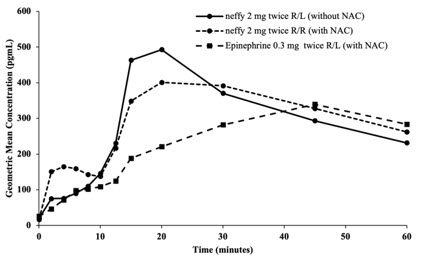
The systemic exposure of epinephrine following one self-administered dose of neffy 2 mg in adult patients with type I allergy without anaphylaxis was similar to that following one staff-administered dose of neffy 2 mg in healthy adult subjects from Study 1. Pharmacokinetics in Adult Patients with Nasal Allergen Challenge Induced Rhinitis (Studies 3 and 4) See the Pharmacodynamics (12.2) for a description of Studies 3 and 4. In Study 3, the geometric mean plasma epinephrine concentrations in patients who received one nasal dose of neffy 2 mg after NAC initially increased more rapidly during the first 5 minutes compared to those that received one nasal dose of neffy 2 mg without NAC and one intramuscular dose of epinephrine injection (0.3 mg or 0.5 mg) without NAC.
The geometric mean plasma epinephrine concentrations of patients who received neffy 2 mg with NAC declined after approximately 10 minutes post-dose and became numerically lower than both the neffy 2 mg without NAC and epinephrine injection (0.3 mg or 0.5 mg) after 20 minutes post-dose (Figure 5a). In Study 4, the geometric mean of plasma epinephrine concentrations in patients who rece… [Excerpted — this section continues on DailyMed.]
🧬 Pharmacodynamics ▾
12.2Pharmacodynamics Four clinical pharmacology studies of neffy in adults and one clinical pharmacology study in pediatric subjects who weigh 30 kg or greater are described below. All doses were administered by study staff unless otherwise stated. Systolic Blood Pressure and Pulse Rate in Healthy Adult Subjects (Study 1) Study 1 was conducted in healthy adult subjects (N=42) that compared the pharmacokinetics (PK) [see Clinical Pharmacology (12.3) ] and pharmacodynamics (PD) (i.e., pulse rate (PR) and systolic blood pressure (SBP)) of epinephrine following: One nasal dose of neffy 2 mg to one intramuscular dose of epinephrine injection 0.3 mg (using a needle-syringe product and an auto-injector product).
Two nasal doses of neffy 2 mg, administered 10 minutes apart, into either same naris or opposite nares to two intramuscular doses of epinephrine injection 0.3 mg (using an auto-injector) administered 10 minutes apart. In Study 1, SBP and PR responses were assessed as change from baseline over 60 minutes. Results following one dose of all epinephrine products demonstrated an increase from baseline SBP and PR as shown in Figure 2.
The median/mean increase in SBP and PR for neffy were within the range of both epinephrine injection treatments during the first 10 minutes post-dose. Thereafter, the median/mean SBP and PR responses for neffy were higher than both epinephrine injection treatments through 60 minutes post-dose. Figure 2: Median Pulse Rate (PR) and Systolic Blood Pressure (SBP) Change from Baseline Following One Dose of Epinephrine in Healthy Subjects [Study 1] Results following two nasal doses of neffy (in the same naris or opposite nares) in comparison to two intramuscular doses of epinephrine injection (using an auto-injector) showed a similar trend in median/mean SBP and PR responses.
The clinical meaning of SBP and PR responses observed in healthy subjects is unclear in the context of treating anaphylaxis. Figure 2 Figure 2 Systolic Blood Pressure and Pulse Rate in Adult Patients with Type I Allergy without Anaphylaxis (Study 2) Study 2 was conducted in adult patients with type I allergy without anaphylaxis (N=42) that compared the PK and PD of epinephrine following self-administered one nasal dose of neffy 2 mg to staff-administered one intramuscular dose of epinephrine injection 0.3 mg (using a needle-syringe product).
In Study 2, SBP and PR responses were assessed as a change from baseline over 60 minutes. The SBP and PR responses results in Study 2 were similar to Study 1. Systolic Blood Pressure and Pulse Rate in Adult Patients with Nasal Allergen Challenge Induced Rhinitis (Study 3 and 4) Study 3 and Study 4 were conducted in adult subjects with seasonal allergic rhinitis outside of allergy season (neffy is not approved for the treatment of allergic rhinitis).
Subjects were required to have seasonal allergic rhinitis which was confirmed with a nasal allergen challenge (NAC) during screening and did not have any allergy symptoms prior to treatment. Allergic rhinitis symptoms were induced by spraying the known allergen into the subject's nostrils in which a minimum Total Nasal Symptom Score (TNSS) of ≥ 5 out of 12, with a congestion component of ≥ 2 out of 3 had to be reached. Study 3 enrolled 36 subjects.
In this cross-over study, subjects received epinephrine as each of the following: One nasal dose of neffy 2 mg without nasal allergen challenge (NAC). One nasal dose of neffy 2 mg after undergoing NAC to induce rhinitis/nasal congestion. One intramuscular dose of epinephrine injection 0.3 mg (using a needle syringe) without NAC.
One intramuscular dose of epinephrine injection 0.5 mg (using a needle syringe) without NAC. In Study 3, SBP and PR responses were assessed as a change from baseline over 60 minutes. Results showed the following: Median SBP and PR for neffy with NAC initially increased from baseline, but the median responses were lower than the use of neffy without NAC after 5 to 15 minutes post-dose… [Excerpted — this section continues on DailyMed.]
🧪 Nonclinical Toxicology ▾
13 NONCLINICAL TOXICOLOGY
13.1Carcinogenesis, Mutagenesis, Impairment of Fertility Long-term studies to evaluate the carcinogenic potential of epinephrine have not been conducted. Epinephrine and other catecholamines have been shown to have mutagenic potential in vitro . Epinephrine was positive in the Salmonella bacterial reverse mutation assay, positive in the mouse lymphoma assay, and negative in the in vivo micronucleus assay.
Epinephrine is an oxidative mutagen based on the E. coli WP2 Mutoxitest bacterial reverse mutation assay. This should not prevent the use of epinephrine where indicated [see Indications and Usage (1) ] . The potential for epinephrine to impair reproductive performance has not been evaluated, but epinephrine has been shown to decrease implantation in female rabbits dosed subcutaneously with 1.2 mg/kg/day (15-fold the highest human intramuscular or subcutaneous daily dose) during gestation days 3 to 9.
13.2Animal Toxicology and/or Pharmacology In a single-dose nasal toxicity study, treatment of neffy in rats induced epinephrine-related histopathological changes in the nose, such as minimal ulceration of the exposed mucosa (at ≥2.3-fold the recommended clinical dose of neffy 2 mg based on local surface area), and nasal passages, such as minimal to mild necrosis in the nasal turbinate and parietal wall in the rostral-most level (at ≥1.2-fold the recommended clinical dose of neffy 2 mg based on local surface area) on day 2.
These findings were often associated with minimal to mild neutrophilic inflammation and were reversible after 14 days post-dose.
📄 Carcinogenesis, Mutagenesis, Impairment of Fertility ▾
13.1Carcinogenesis, Mutagenesis, Impairment of Fertility Long-term studies to evaluate the carcinogenic potential of epinephrine have not been conducted. Epinephrine and other catecholamines have been shown to have mutagenic potential in vitro . Epinephrine was positive in the Salmonella bacterial reverse mutation assay, positive in the mouse lymphoma assay, and negative in the in vivo micronucleus assay.
Epinephrine is an oxidative mutagen based on the E. coli WP2 Mutoxitest bacterial reverse mutation assay. This should not prevent the use of epinephrine where indicated [see Indications and Usage (1) ] . The potential for epinephrine to impair reproductive performance has not been evaluated, but epinephrine has been shown to decrease implantation in female rabbits dosed subcutaneously with 1.2 mg/kg/day (15-fold the highest human intramuscular or subcutaneous daily dose) during gestation days 3 to 9.
📄 Patient Package Insert ▾
PATIENT INFORMATION NEFFY ® (ne'fee) (epinephrine nasal spray) For allergic emergencies (anaphylaxis) This Patient Information has been approved by the U.S. Food and Drug Administration Revised: March 2026 Read this Patient Information leaflet carefully before you start using neffy and each time you get a refill. There may be new information.
You, your caregiver, or others who may be in a position to administer neffy should know how to use it before you have an allergic emergency. This information does not take the place of talking with your healthcare provider about your medical condition or your treatment. 1.
What is the most important information I should know about neffy? Neffy contains epinephrine, a medicine used to treat allergic emergencies (anaphylaxis). Anaphylaxis can be life-threatening, can happen in minutes, and can be caused by stinging and biting insects, allergy injections, foods, medicines, exercise, or other unknown causes.
Symptoms of anaphylaxis may include: trouble breathing wheezing hoarseness (changes in the way your voice sounds) hives (raised reddened rash that may itch) severe itching swelling of your face, lips, mouth, or tongue skin rash, redness, or swelling fast heartbeat weak pulse feeling very anxious confusion stomach pain losing control of urine or bowel movements (incontinence) diarrhea or stomach cramps dizziness, fainting, or "passing out" (unconsciousness) 2. Always carry neffy with you because you may not know when anaphylaxis may happen .
It is recommended that you carry 2 neffy devices because you may need a second dose of neffy if symptoms continue or come back. Talk to your healthcare provider if you need additional devices to keep at work, school, or other locations. Tell your family members, caregivers, and others where you keep your neffy device and how to use it before you need it.
You may be unable to speak in an allergic emergency. 3. When you have an allergic emergency (anaphylaxis) Use neffy right away .
Get emergency medical help for further treatment of the allergic emergency (anaphylaxis), if needed after using neffy . Before you receive neffy, your healthcare provider should talk to you about when to get emergency help. What is neffy?
Neffy is a nasal spray used to treat life-threatening, allergic emergencies including anaphylaxis in adults and children who weigh 33 pounds or more (15 kilograms or more), who are at risk for or have a history of serious allergic emergencies. Each neffy contains a single dose of epinephrine. Neffy is for immediate self (or caregiver) administration in an allergic emergency.
Neffy is for people who have been prescribed this medicine by their healthcare provider. It is not known if neffy is safe and effective in children who weigh less than 33 pounds (15 kilograms). Before using neffy, tell your healthcare provider about all your medical conditions, especially if you : have nasal problems including nasal polyps, history of injury such as a broken nose, or any past nasal surgery. have heart problems. have kidney problems. have low potassium levels in your blood. have Parkinson's disease. have thyroid problems. have high blood pressure. have diabetes. are pregnant or plan to become pregnant.
It is not known if epinephrine will harm your unborn baby. are breastfeeding or plan to breastfeed. It is not known if epinephrine passes into your breastmilk. Tell your healthcare provider about all the medicines you take , including prescription and over-the-counter medicines, vitamins and herbal supplements.
Tell your healthcare provider of all known allergies. Especially tell your healthcare provider if you take or use : other nasal sprays water pills (diuretics) medicines to treat depression such as tricyclic antidepressants or monoamine oxidase inhibitors (MAO inhibitors) medicines to treat abnormal heart beats (arrhythmias) such as cardiac glycosides medicines to treat Parkinson's disease such as catechol-O-methyl-transferase inhibitors (COMT inhibit… [Excerpted — this section continues on DailyMed.]
📄 Recent Major Changes ▾
Indications ( 1 ) 03/2026 Dosage and Administration ( 2.1 , 2.2 ) 03/2026
📄 Package Label / Principal Display Panel ▾
PRINCIPAL DISPLAY PANEL - 2 mg Spray Device Blister Pack Carton Dispense in this sealed carton NDC 82580-020-02 Rx Only neffy ® (epinephrine nasal spray) 2 mg For Use in the Nose Only (Single-dose) Read the Instructions for Use for complete information on how to use neffy. Two (2) single-dose nasal spray devices PRINCIPAL DISPLAY PANEL - 2 mg Spray Device Blister Pack Carton
PRINCIPAL DISPLAY PANEL - 1 mg Spray Device Blister Pack Carton Dispense in this sealed carton NDC 82580-010-02 Rx Only neffy ® (epinephrine nasal spray) 1 mg For Use in the Nose Only (Single-dose) Read the Instructions for Use for complete information on how to use neffy. Two (2) single-dose nasal spray devices PRINCIPAL DISPLAY PANEL - 1 mg Spray Device Blister Pack Carton