
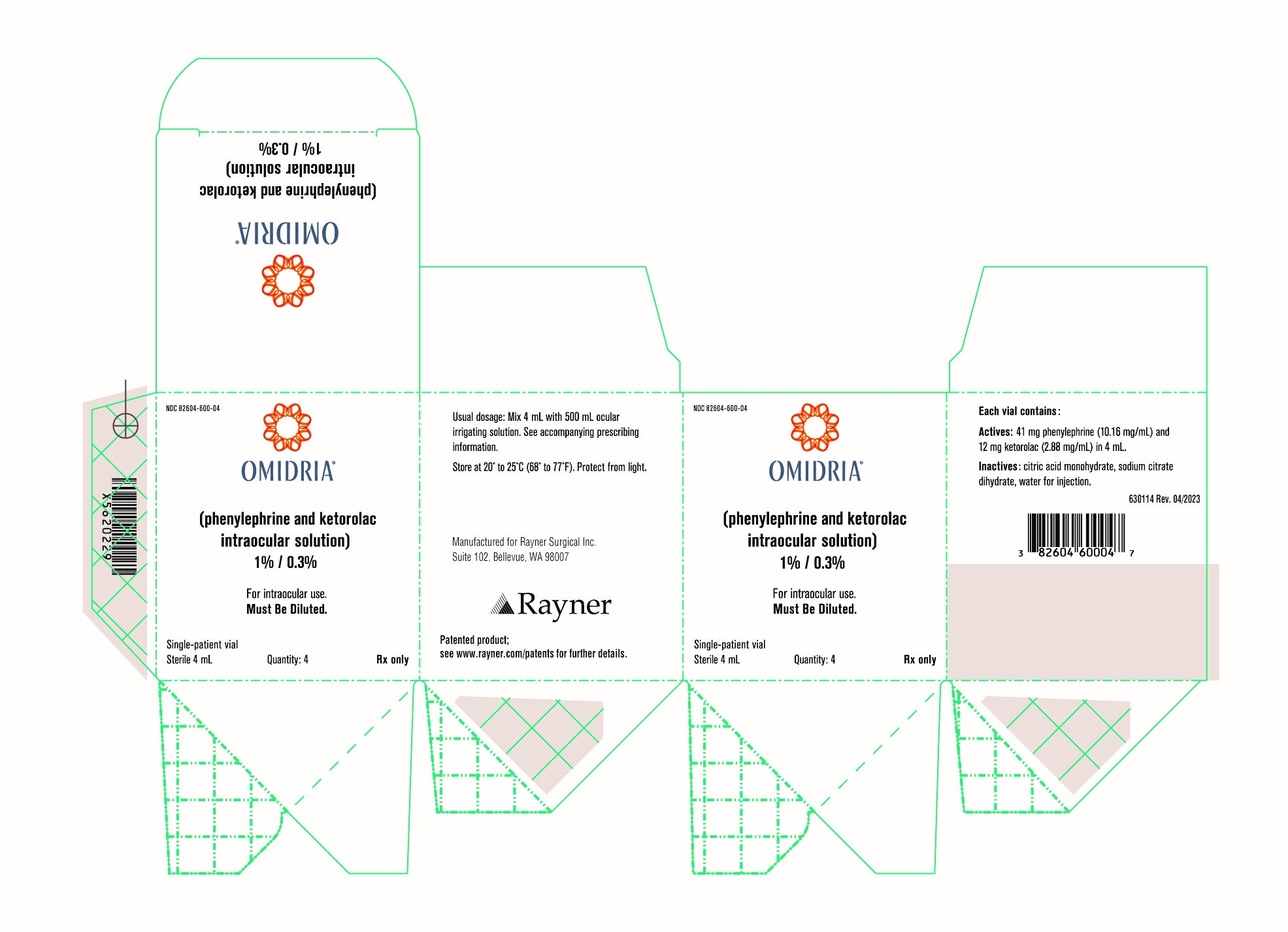
Omidria phenylephrine and ketorolac 10.16 mg/mL; 2.88 mg/mL Injection, Solution, Concentrate
🆔 Identity & classification
Where does this data come from?
🏷️ RxNorm drug class
This medicine belongs to the Nonsteroidal Anti-inflammatory Drug class.
Where does this data come from?
🏭 Manufacturer & labeler
Where does this data come from?
🩺 Clinical
- Omidria is a combination of two medicines — ketorolac and phenylephrine — that your surgical team adds directly to the fluid used to rinse your eye during cataract surgery or lens...
- What exactly is Omidria and why would I get it during eye surgery?
- No. Omidria is mixed into the irrigation fluid your surgical team uses throughout the procedure, so it works quietly in the background. You'll be focused on the surgery itself, and...
- Will I feel Omidria being given during surgery?
Patient education
Supplement & herbal interactions
Where does this data come from?
Ask a licensed pharmacist directly — free, answered by our team.
🧪 Inactive Ingredients / Excipients
Inactive ingredients, also called excipients, are components of the drug product other than the active ingredient. They may include fillers, dyes, coatings, preservatives, flavors, or other formulation ingredients.
💡 Tap an ingredient (hover on desktop) to see what it is and why it’s used.
-
UNII 2968PHW8QP
A weak organic acid derived from citrus fruits or made through fermentation. It works as a buffer to control pH, a preservative to extend shelf life, and a flavoring agent in medications.
-
UNII B22547B95K
A salt derived from citric acid that helps maintain the proper acid-base balance in the medicine. It's used as a buffer to keep the product stable and at the right pH level.
-
UNII 059QF0KO0R
Water is a liquid solvent that dissolves and mixes ingredients together in liquid medicines, syrups, and injections. It helps distribute the active drug evenly throughout the product.
3 inactive ingredients listed in the exact product block matched to this NDC.
Where does this data come from?
ingredient classCode="IACT" elements from the exact product block matched by this NDC. Label-section narrative from DailyMed / the openFDA label index is shown separately when available.Inactive ingredient FAQ
Are inactive ingredients the same for every manufacturer?
Why might an inactive ingredient be missing?
Can inactive ingredients matter?
💲 Pricing
A drug doesn't have one price. Each row is a different public payment system, and none is what you'd pay at the counter — that depends on your insurance. The ⓘ on each row explains what it measures.
| Price system | Per mL | Per package |
|---|---|---|
| Retail pharmacies payNADAC · weekly | Not in the retail survey — common for institutional, discontinued, or low-volume packs. | |
| Medicaid paysCMS SDUD · 12 mo | $54.57 | $873.06 / 16 ml |
| Medicare drug plans payPart D · quarterly | No Part D plan price is available for this NDC in our data. | |
Where does this data come from?
🔁 Therapeutic equivalents
| Product | Labeler | Pack | NADAC/unit | TE | Status | Price vs. this |
|---|---|---|---|---|---|---|
| Omidria 10.16 mg/mL; 2.88 mg/mLthis 82604-0600-04 | Rayner | 4 vials | — | AT | FDA listed | — |
| Omidria 10.16 mg/mL; 2.88 mg/mL 62225-0600-00 | Omeros | 1 vial | — | AT | Discontinued | — |
Where does this data come from?
⏳ Availability & generic status
The FDA lists approved generic versions of this medicine, but that does not always mean a pharmacy can get one today. Patent rules, launch agreements, supply and pricing can affect when generics actually arrive.
Why the date isn’t exact: Generic timing can change because patents may be challenged, settled, licensed, added, removed, or worked around with a narrower label — and FDA approval does not always mean a pharmacy can get the generic today.
🛈 What do these terms mean?
- Patent
- Legal protection listed in the Orange Book that may delay generic approval or launch. Issued by the U.S. Patent & Trademark Office.
- Substance patent
- Covers the active drug molecule itself — the hardest to design around. A generic generally can’t launch until it expires.
- Formulation (product) patent
- Covers a specific formulation or dosage form. A generic can sometimes work around it with a different formulation.
- Method-of-use patent
- A patent covering one specific approved use of the drug — not necessarily the whole molecule. A generic can sometimes launch with a “skinny label” that carves out the protected use and keeps the others.
- Skinny label
- A generic label that omits a still-patented use when the FDA allows it — letting a generic reach the market for the unprotected uses.
- Exclusivity
- FDA-granted marketing protection, separate from patents — e.g. 5-yr new chemical entity, 7-yr orphan drug, or a +6-month pediatric extension.
- Paragraph IV
- A generic applicant’s formal challenge to a listed patent. It can potentially lead to earlier generic entry, but often involves litigation or a settlement.
- RLD / RS
- Reference Listed Drug — the brand product the FDA uses as the reference for generic applications. Reference Standard — the product the FDA expects generics to compare against in bioequivalence testing.
- TE / AB rating
- FDA therapeutic-equivalence rating. An AB rating generally means the FDA considers a generic therapeutically equivalent to — and substitutable for — the brand.
- LOE (loss of exclusivity)
- The latest patent or exclusivity currently listed — the loss-of-exclusivity / latest-listed-protection date shown on this page. Paragraph-IV challenges and settlements can move the real date earlier; FDA approval and a manufacturer’s decision to market can move it later.
Built from the FDA Orange Book. The bars above are scaled to each protection’s expiry; the red LOE marker is the last one to lapse.
| Patent | Type | Use code | Expires |
|---|---|---|---|
| US 9486406 ↗ | Drug product | — | Oct 23, 2033 |
| US 9066856 ↗ | Drug product | — | Oct 23, 2033 |
| US 9855246 ↗ | Drug product | — | Oct 23, 2033 |
| US 9066856*PED ↗ | Drug product | — | Apr 23, 2034 |
| US 9486406*PED ↗ | Drug product | — | Apr 23, 2034 |
Is there a generic version of OMIDRIA 1-0.3% VIAL?
The FDA approved a generic — why can’t I get it at my pharmacy yet?
Why do different websites show different generic release dates?
What does “FDA listed” mean?
What does a patent or protection date mean here?
What does “current Orange Book estimate” mean?
Can a generic come out before the last patent expires?
Can a generic come out after the listed dates?
What is the difference between patents and exclusivity?
Why are there multiple patent dates?
Where does this data come from?
🗺️ Medicaid utilization & spend
💊 Medicaid utilization by pack size
📦 Packaging — all sizes for this product
| Package NDC | Description | Marketing start | Status |
|---|---|---|---|
| 82604-0600-00 | 1 VIAL in 1 CARTON (82604-600-00) / 4 mL in 1 VIAL | 2023-07-01 | Active |
| 82604-0600-04 You're viewing this | 4 VIAL in 1 CARTON (82604-600-04) / 4 mL in 1 VIAL | 2023-07-01 | Active |
| 82604-0600-99 | 4 VIAL in 1 CARTON (82604-600-99) / 4 mL in 1 VIAL | 2023-07-01 | Active |
In Medicaid, this is the most-dispensed pack of this product — about 97% of fills over the last four reported quarters. See all packs ↓
Pack size FAQ
What quantity is in NDC 82604-0600-04?
What NDC number is used to bill for this package of Omidria phenylephrine and ketorolac 10.16 mg/mL; 2.88 mg/mL Injection, Solution, Concentrate?
🧭 About this NDC listing & data coverage
What data is (and isn’t) available for this NDC — tap to expand
| NDC identity (package / product / labeler codes) | ✓ Available |
| Labeler | ✓ Available |
| Product & package description | ✓ Available |
| Marketing category & status | ✓ Available |
| Active ingredient / dosage form / route | ✓ Available |
| FDA label (SPL via DailyMed) | ✓ Available |
| Package photos | ✓ Available |
| Inactive ingredients (structured) | ✓ Available |
| NADAC pharmacy acquisition price (CMS) | — Not published for this NDC CMS publishes NADAC only for NDCs reported in its retail-pharmacy survey. |
| Orange Book / therapeutic-equivalence data | ✓ Available |
| HCPCS J-code billing crosswalk | — Not published for this NDC Most self-administered / retail products have no J-code — that is normal. |
| Medicaid utilization (CMS SDUD) | ✓ Available |
Questions about this listing
Why is there no price listed?
Is the NDC printed on the package the same as the 11-digit billing NDC?
What do the three segments of this NDC mean?
Is this package still being marketed?
Does this product come in other package sizes?
Who lists this product with the FDA?
Do I need a prescription for this product?
Where does this data come from?
📄 Full prescribing information FDA SPL
🎯 Indications and Usage ▾
1 INDICATIONS AND USAGE Omidria ® is added to an ocular irrigating solution used during cataract surgery or intraocular lens replacement and is indicated for maintaining pupil size by preventing intraoperative miosis and reducing postoperative ocular pain. OMIDRIA is an alpha 1-adrenergic receptor agonist and nonselective cyclooxygenase inhibitor indicated for: Maintaining pupil size by preventing intraoperative miosis ( 1 ) Reducing postoperative pain ( 1 ) OMIDRIA is added to an ocular irrigating solution used during cataract surgery or intraocular lens replacement.
⏱️ Dosage and Administration ▾
2 DOSAGE AND ADMINISTRATION Omidria must be diluted prior to intraocular use. For administration to patients undergoing cataract surgery or intraocular lens replacement, 4 mL of Omidria is diluted in 500 mL of ocular irrigating solution. Irrigation solution is to be used as needed for the surgical procedure for a single patient.
The storage period for the diluted product is not more than 4 hours at room temperature or 24 hours under refrigerated conditions. Do not use if the solution is cloudy or if it contains particulate matter. Each vial of OMIDRIA must be diluted prior to use for administration to a single patient undergoing cataract surgery or intraocular lens replacement.
Dilute 4 mL of OMIDRIA in 500 mL of ocular irrigating solution. Irrigation solution is to be used as needed for the surgical procedure. ( 2 )
💊 Dosage Forms and Strengths ▾
3 DOSAGE FORMS AND STRENGTHS Omidria is an intraocular solution containing 10.16 mg/mL (1% w/v) of phenylephrine and 2.88 mg/mL (0.3% w/v) of ketorolac for use in a single patient. Intraocular solution containing phenylephrine 10.16 mg/mL (1%) and ketorolac 2.88 mg/mL (0.3%) for use in a single patient. ( 3 )
⛔ Contraindications ▾
4 CONTRAINDICATIONS Omidria is contraindicated in patients with a known hypersensitivity to any of its ingredients. Hypersensitivity to any component of this product ( 4 )
⚠️ Warnings and Cautions ▾
5 WARNINGS AND PRECAUTIONS Systemic exposure to phenylephrine can cause elevations in blood pressure ( 5.1 ).
5.1Elevated Blood Pressure Systemic exposure to phenylephrine can cause elevations in blood pressure.
5.2Cross-Sensitivity or Hypersensitivity There is the potential for cross-sensitivity to acetylsalicylic acid, phenylacetic acid derivatives, and other non-steroidal anti- inflammatory drugs (NSAIDs). There have been reports of bronchospasm or exacerbation of asthma associated with the use of ketorolac in patien ts who either have a known hypersensitivity to aspirin/NSAIDs or a past medical history of asthma. Therefore, use Omidria with caution in individuals who have previously exhibited sensitivities to these drugs.
🤒 Adverse Reactions ▾
6 ADVERSE REACTIONS The most common reported adverse reactions (≥2%) are eye irritation, posterior capsule opacification, increased intraocular pressure, and anterior chamber inflammation. ( 6.1 ) To report SUSPECTED ADVERSE REACTIONS, contact Rayner Surgical Inc. at 1-877-0MIDRIA or FDA at 1-800-FDA-1088 or www.fda.gov/medwatch.
6.1Clinical Studies Experience Because clinical studies are conducted under widely varying conditions, adverse reaction rates observed in the clinical studies of a drug cannot be directly compared to the rates in the clinical studies of another drug and may not reflect the rates observed in practice. Table 1 shows frequently reported ocular adverse reactions with an incidence of ≥ 2% of adult patients as seen in the combined clinical trial results from three randomized, placebo-controlled studies [see Clinical Studies ( 14 )] .
Table 1: Ocular Adverse Reactions Reported by ≥ 2% of Adult Patients MedDRA Preferred Term Placebo (N=462) Omidria (N=459) n (%) n (%) Ocular Events Anterior Chamber Inflammation 102 (22%) 111 (24%) Intraocular Pressure Increased 15 (3%) 20 (4%) Posterior Capsule Opacification 16 (4%) 18 (4%) Eye Irritation 6 (1%) 9 (2%) Foreign Body Sensation in Eyes 11 (2%) 8 (2%) In a safety study that enrolled 72 pediatric patients up to 3 years old, no overall difference in safety was observed between pediatric and adult patients.
👥 Use in Specific Populations ▾
8 USE IN SPECIFIC POPULATIONS
8.1Pregnancy Risk Summary There are no available data on Omidria use in pregnant women or animals to inform any drug-associated risks. Oral administration of ketorolac to rats during late gestation produced dystocia and increased pup mortality at a dose 740-times the plasma exposure at the recommended human ophthalmic dose (RHOD). Since human systemic exposure to Omidria following a lens replacement procedure is low (see Clinical Pharmacology (12.3)], the applicability of animal findings to the risk of Omidria in humans during pregnancy is unclear.
Omidria should be used during pregnancy only if the potential benefit justifies the potential risk to the fetus. Clinical Considerations Fetal/Neonatal Adverse Reactions Premature closure of the ductus arteriosus in the fetus has occurred with third trimester use of oral and injectable NSAIDs. Ketorolac plasma concentrations are detectable following ocular Omidria administration [see Clinical Pharmacology (12.3)].
The use of Omidria during late pregnancy should be avoided. .Q.a1a Animal Data No well-controlled animal reproduction studies have been conducted with Omidria or phenylephrine. Ketorolac, administered during organogenesis, did not cause embryofetal abnormalities or mortalities in rabbits or rats at oral doses of 3.6 mg/kg/day and 10 mg/kg/day, respectively. These doses produced systemic exposure that is 1150 times and 4960 times the plasma exposure (based on Cma,c) at the RHOD, respectively.
When administered to rats during late gestation (after Day 17 of gestation) at oral doses up to 1.5 mg/kg/day (740 times the plasma exposure at the RHOD), ketorolac produced dystocia and increased pup mortality. Risk Summary There are no available data on Omidria use in pregnant women or animals to inform any drug-associated risks. Oral administration of ketorolac to rats during late gestation produced dystocia and increased pup mortality at a dose 740-times the plasma exposure at the recommended human ophthalmic dose (RHOD).
Since human systemic exposure to Omidria following a lens replacement procedure is low [ see Clinical Pharmacology ( 12.3 ) ], the applicability of animal findings to the risk of Omidria in humans during pregnancy is unclear. Omidria should be used during pregnancy only if the potential benefit justifies the potential risk to the fetus. Clinical Considerations Fetal/Neonatal Adverse Reactions Premature closure of the ductus arteriosus in the fetus has occurred with third trimester use of oral and injectable NSAIDs.
Ketorolac plasma concentrations are detectable following ocular Omidria administration [see Clinical Pharmacology ( 12.3 )] . The use of Omidria during late pregnancy should be avoided. Data Animal Data No well-controlled animal reproduction studies have been conducted with Omidria or phenylephrine.
Ketorolac, administered during organogenesis, did not cause embryofetal abnormalities or mortalities in rabbits or rats at oral doses of 3.6 mg/kg/day and 10 mg/kg/day, respectively. These doses produced systemic exposure that is 1150 times and 4960 times the plasma exposure (based on C max ) at the RHOD, respectively. When administered to rats during late gestation (after Day 17 of gestation) at oral doses up to 1.5 mg/kg/day (740 times the plasma exposure at the RHOD) , ketorolac produced dystocia and increased pup mortality.
8.2Lactation Risk Summary There are no data on the presence of Omidria in human milk, the effects on the breastfed infant, or the effects on milk production. Howerver, systemic exposure to Omidria, following a lens replacement procedure is low [see Clinical Pharmacology ( 12.3 )] . The developmental and health benefits of breastfeeding should be considered along with the mother's clinical need for Omidria and any potential adverse effects on the breastfed child from Omidria.
8.4Pediatric Use The safety and effectiveness of Omidria have been established in the pediatric population from neonates to adole…
🤰 Pregnancy ▾
8.1Pregnancy Risk Summary There are no available data on Omidria use in pregnant women or animals to inform any drug-associated risks. Oral administration of ketorolac to rats during late gestation produced dystocia and increased pup mortality at a dose 740-times the plasma exposure at the recommended human ophthalmic dose (RHOD). Since human systemic exposure to Omidria following a lens replacement procedure is low (see Clinical Pharmacology (12.3)], the applicability of animal findings to the risk of Omidria in humans during pregnancy is unclear.
Omidria should be used during pregnancy only if the potential benefit justifies the potential risk to the fetus. Clinical Considerations Fetal/Neonatal Adverse Reactions Premature closure of the ductus arteriosus in the fetus has occurred with third trimester use of oral and injectable NSAIDs. Ketorolac plasma concentrations are detectable following ocular Omidria administration [see Clinical Pharmacology (12.3)].
The use of Omidria during late pregnancy should be avoided. .Q.a1a Animal Data No well-controlled animal reproduction studies have been conducted with Omidria or phenylephrine. Ketorolac, administered during organogenesis, did not cause embryofetal abnormalities or mortalities in rabbits or rats at oral doses of 3.6 mg/kg/day and 10 mg/kg/day, respectively. These doses produced systemic exposure that is 1150 times and 4960 times the plasma exposure (based on Cma,c) at the RHOD, respectively.
When administered to rats during late gestation (after Day 17 of gestation) at oral doses up to 1.5 mg/kg/day (740 times the plasma exposure at the RHOD), ketorolac produced dystocia and increased pup mortality. Risk Summary There are no available data on Omidria use in pregnant women or animals to inform any drug-associated risks. Oral administration of ketorolac to rats during late gestation produced dystocia and increased pup mortality at a dose 740-times the plasma exposure at the recommended human ophthalmic dose (RHOD).
Since human systemic exposure to Omidria following a lens replacement procedure is low [ see Clinical Pharmacology ( 12.3 ) ], the applicability of animal findings to the risk of Omidria in humans during pregnancy is unclear. Omidria should be used during pregnancy only if the potential benefit justifies the potential risk to the fetus. Clinical Considerations Fetal/Neonatal Adverse Reactions Premature closure of the ductus arteriosus in the fetus has occurred with third trimester use of oral and injectable NSAIDs.
Ketorolac plasma concentrations are detectable following ocular Omidria administration [see Clinical Pharmacology ( 12.3 )] . The use of Omidria during late pregnancy should be avoided. Data Animal Data No well-controlled animal reproduction studies have been conducted with Omidria or phenylephrine.
Ketorolac, administered during organogenesis, did not cause embryofetal abnormalities or mortalities in rabbits or rats at oral doses of 3.6 mg/kg/day and 10 mg/kg/day, respectively. These doses produced systemic exposure that is 1150 times and 4960 times the plasma exposure (based on C max ) at the RHOD, respectively. When administered to rats during late gestation (after Day 17 of gestation) at oral doses up to 1.5 mg/kg/day (740 times the plasma exposure at the RHOD) , ketorolac produced dystocia and increased pup mortality.
🧒 Pediatric Use ▾
8.4Pediatric Use The safety and effectiveness of Omidria have been established in the pediatric population from neonates to adolescents (birth to younger than 17 years). Use of Omidria in this population is supported by evidence from adequate and well-controlled studies of Omidria in adults with additional data from a single active-controlled safety study in pediatric patients up to 3 years old [see Clinical Studies ( 14 )] . No overall differences in safety were observed between pediatric and adult patients.
🧓 Geriatric Use ▾
8.5Geriatric Use No overall differences in safety or effectiveness have been observed between elderly and adult patients.
🆘 Overdosage ▾
10 OVERDOSAGE Systemic overdosage of phenylephrine may cause a rise in blood pressure. It may also cause headache, anxiety, nausea, vomiting, and ventricular arrhythmias. Supportive care is recommended.
🧬 Clinical Pharmacology ▾
12 CLINICAL PHARMACOLOGY
12.1Mechanism of Action The two active pharmaceutical ingredients (API) in Omidria, phenylephrine and ketorolac, act to maintain pupil size by preventing intraoperative miosis, and reducing postoperative pain. Phenylephrine is an α 1 -adrenergic receptor agonist and, in the eye, acts as a mydriatic agent by contracting the radial muscle of the iris. Ketorolac is a nonsteroidal anti-inflammatory that inhibits both cyclooxygenase enzymes (COX-1 and COX-2), resulting in a decrease in tissue concentrations of prostaglandins to reduce pain due to surgical trauma.
Ketorolac, by inhibiting prostaglandin synthesis secondary to ocular surgical insult or direct mechanical stimulation of the iris, also prevents surgically induced miosis.
12.3Pharmacokinetics In a pharmacokinetic study evaluating Omidria, systemic exposure to both phenylephrine and ketorolac was low or undetectable. A single-dose of Omidria as part of the irrigation solution was administered in 14 patients during lens replacement surgery. The volume of irrigation solution used during surgery ranged between 150 mL to 300 mL (median 212.5 mL).
Detectable phenylephrine plasma concentrations were observed in one of 14 patients (range 1.2 to 1.4 ng/mL) during the first 2 hours after the initiation of Omidria administration. The observed phenylephrine plasma concentrations could not be distinguished from the preoperative administration of phenylephrine 2.5% ophthalmic solution prior to exposure to Omidria. Ketorolac plasma concentrations were detected in 10 of 14 patients (range 1.0 to 4.2 ng/mL) during the first 8 hours after the initiation of Omidria administration.
The maximum ketorolac concentration was 15 ng/mL at 24 hours after the initiation of Omidria administration, which may have been due to application of postoperative ketorolac ophthalmic solution.
🧬 Mechanism of Action ▾
12.1Mechanism of Action The two active pharmaceutical ingredients (API) in Omidria, phenylephrine and ketorolac, act to maintain pupil size by preventing intraoperative miosis, and reducing postoperative pain. Phenylephrine is an α 1 -adrenergic receptor agonist and, in the eye, acts as a mydriatic agent by contracting the radial muscle of the iris. Ketorolac is a nonsteroidal anti-inflammatory that inhibits both cyclooxygenase enzymes (COX-1 and COX-2), resulting in a decrease in tissue concentrations of prostaglandins to reduce pain due to surgical trauma.
Ketorolac, by inhibiting prostaglandin synthesis secondary to ocular surgical insult or direct mechanical stimulation of the iris, also prevents surgically induced miosis.
📦 How Supplied / Storage and Handling ▾
16 HOW SUPPLIED/STORAGE AND HANDLING Omidria (phenylephrine and ketorolac intraocular solution) 1%/0.3% is supplied in a clear, 5-mL glass, single-patient-use vial containing 4 mL of sterile solution, for addition to ocular irrigating solution. Omidria is supplied in a multi-pack containing: 4 vials : NDC 82604-600-04 or 1 vials: NDC 82604-600-00 Storage: Store at 20˚ to 25˚C (68˚ to 77˚F). Protect from light.
📦 Storage and Handling ▾
Storage: Store at 20˚ to 25˚C (68˚ to 77˚F). Protect from light.
📋 Description ▾
11 DESCRIPTION Omidria is a sterile aqueous solution, containing the α 1 -adrenergic receptor agonist phenylephrine HCl and the nonsteroidal anti-inflammatory ketorolac tromethamine, for addition to ocular irrigating solution. The descriptions and structural formulae are: Phenylephrine Hydrochloride Drug Substance: Common Name: phenylephrine hydrochloride Chemical Name: (-)- m -Hydroxy-α-[(methylamino)methyl]benzyl alcohol hydrochloride Molecular Formula: C 9 H 13 NO 2 · HCl Molecular Weight: 203.67 g/mole Figure 1: Chemical Structure for Phenylephrine HCl Ketorolac Tromethamine Drug Substance: Common Name: ketorolac tromethamine Chemical Name: (±)-5-Benzoyl-2,3-dihydro-1H-pyrrolizine-1-carboxylic acid : 2-amino-2-(hydroxymethyl)-1,3-propanediol (1:1) Molecular Formula: C 15 H 13 NO 3 · C 4 H 11 NO 3 Molecular Weight: 376.40 g/mole Figure 2: Chemical Structure for Ketorolac Tromethamine Omidria is a clear, colorless to slightly yellow, sterile solution concentrate with a pH of approximately 6.3.
Each vial of Omidria contains: Actives: phenylephrine hydrochloride 12.4 mg/mL equivalent to 10.16 mg/mL of phenylephrine and ketorolac tromethamine 4.24 mg/mL equivalent to 2.88 mg/mL of ketorolac. Inactives: citric acid monohydrate; sodium citrate dihydrate; water for injection; may include sodium hydroxide and/or hydrochloric acid for pH adjustment. Figure 1 Figure 2
💬 Information for Patients ▾
17 PATIENT COUNSELING INFORMATION Inform patients that they may experience sensitivity to light. Rayner Surgical Inc. Suite 102, 14335 NE 24 Street Bellevue, WA 98007 © Rayner 2023 Patented product; see www.rayner.com/patents for further details. OMIDRIA®and the OMIDRIA® Logo are registered trademarks of Rayner Surgical Inc. 640069