
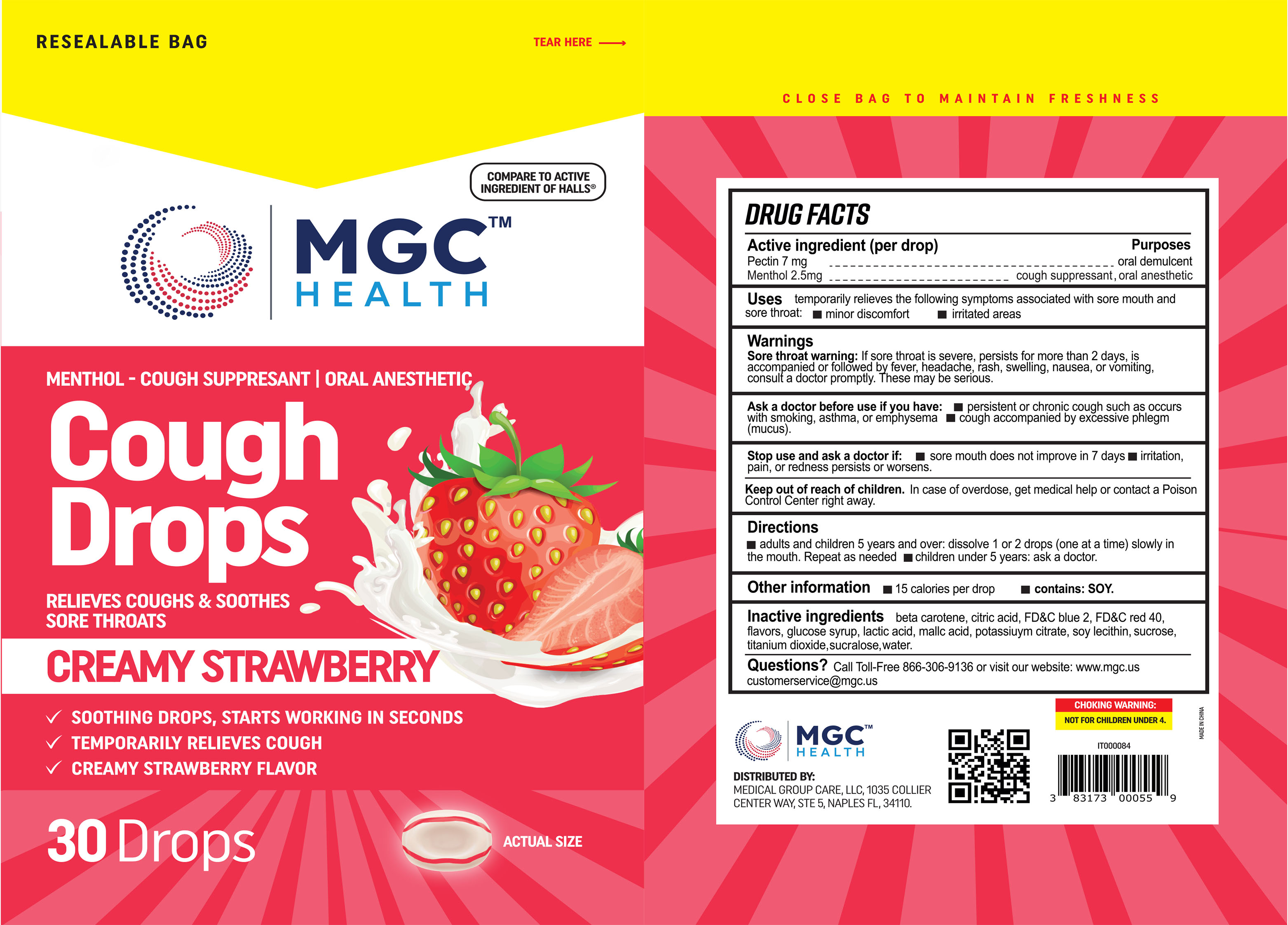
MGC Health Cough Drops Creamy Strawberry 2.5 mg; 7 mg Lozenge, 30-count
Other active recalls for Cough Drops Creamy Strawberry (different manufacturers) — 1 · tap to view
🆔 Identity & classification
Where does this data come from?
🏷️ RxNorm drug class
This medicine belongs to the Other intestinal adsorbents class.
Where does this data come from?
🏭 Manufacturer & labeler
Where does this data come from?
🩺 Clinical
This is an over-the-counter lozenge product marketed under FDA's OTC monograph rules for cough drops. It contains menthol, which is typically used to soothe throat irritation and provide a cooling sensation, and pectin, which commonly functions as a demulcent to help coat and protect the throat. Lozenges of this type are intended to be dissolved slowly in the mouth and are commonly used by people seeking temporary relief from cough and minor sore throat discomfort.
Patient education
Supplement & herbal interactions
Where does this data come from?
Ask a licensed pharmacist directly — free, answered by our team.
💊 What it looks like
Where does this data come from?
🧪 Inactive Ingredients / Excipients
Inactive ingredients, also called excipients, are components of the drug product other than the active ingredient. They may include fillers, dyes, coatings, preservatives, flavors, or other formulation ingredients.
💡 Tap an ingredient (hover on desktop) to see what it is and why it’s used.
-
UNII 01YAE03M7J
Beta carotene is a naturally occurring orange pigment found in plants. In medicines, it serves as a colorant to make tablets or capsules appear orange or yellow.
-
UNII 2968PHW8QP
A weak organic acid derived from citrus fruits or made through fermentation. It works as a buffer to control pH, a preservative to extend shelf life, and a flavoring agent in medications.
-
UNII 9G5L16BK6N
A thick, sweet liquid made from corn starch. It acts as a sweetener, thickener, and binder in medicines, helping create the right texture and taste while holding ingredients together.
-
UNII L06K8R7DQK
A synthetic blue dye approved by the FDA for use in medications and foods. It serves as a colorant to make pills and liquids visually distinct and easier to identify.
-
UNII WZB9127XOA
A synthetic red dye used to color medications and make them easier to identify. It serves as a colorant in tablets, capsules, and liquid formulations.
-
UNII 33X04XA5AT
Lactic acid is a naturally occurring organic acid derived from milk or plant sources. It lowers and maintains pH in formulations, helps preserve the product, and can enhance ingredient stability and absorption.
-
UNII 1DI56QDM62
A natural fatty substance from soybeans that helps mix oil and water-based ingredients together. It acts as an emulsifier and lubricant in medicines to improve texture and help the product break down properly in your body.
-
UNII 817L1N4CKP
Malic acid is a naturally occurring organic acid found in fruits. It works as a buffer and flavor agent to maintain the medicine's pH balance and add tartness to the product.
-
UNII EE90ONI6FF
Potassium citrate is a salt derived from citric acid and potassium. In medicines, it acts as a buffer to adjust and maintain the pH balance of the product, helping keep it stable and palatable.
-
UNII 451W47IQ8X
Sodium chloride is common table salt. It's used in medicines as a buffer to maintain proper pH, as a filler to add bulk, or to adjust the osmotic balance in liquid formulations.
-
UNII 96K6UQ3ZD4
Sucralose is a synthetic sweetener made from sugar. It's added to medicines to improve taste without adding calories, helping make bitter or unpleasant-tasting drugs easier to take.
-
UNII C151H8M554
A natural sugar derived from sugar cane or sugar beets. It's used as a sweetener, filler, and binder to improve taste, add bulk, and help hold tablet or capsule ingredients together.
-
UNII 15FIX9V2JP
Titanium dioxide is a bright white mineral powder commonly used as a colorant and opacifying agent. It makes pills and tablets white or lighter in color and helps make coatings non-transparent.
-
UNII 059QF0KO0R
Water is a liquid solvent that dissolves and mixes ingredients together in liquid medicines, syrups, and injections. It helps distribute the active drug evenly throughout the product.
14 inactive ingredients listed in the exact product block matched to this NDC.
Label-section wording can be broader than the structured product block and may mention additional formulation ingredients.
Where does this data come from?
ingredient classCode="IACT" elements from the exact product block matched by this NDC. Label-section narrative from DailyMed / the openFDA label index is shown separately when available.Inactive ingredient FAQ
Are inactive ingredients the same for every manufacturer?
Why might an inactive ingredient be missing?
Can inactive ingredients matter?
💲 Pricing
A drug doesn't have one price. Each row is a different public payment system, and none is what you'd pay at the counter — that depends on your insurance. The ⓘ on each row explains what it measures.
| Price system | Per each | Per package |
|---|---|---|
| Retail pharmacies payNADAC · weekly | Not in the retail survey — common for institutional, discontinued, or low-volume packs. | |
| Medicaid paysCMS SDUD · 12 mo | No recent Medicaid claims on file for this NDC — rare and low-volume NDCs are suppressed in the public data. | |
| Medicare drug plans payPart D · quarterly | No Part D plan price is available for this NDC in our data. | |
Where does this data come from?
🔁 Therapeutic equivalents
| Product | Labeler | Pack | NADAC/unit | TE | Status | Price vs. this |
|---|---|---|---|---|---|---|
| Menthol Cough Drops Creamy Strawberry Flavor 2.5 mg/1; 7 mg 10202-0012-09 | 7-ELEVEN | 9 lozenges | — | — | FDA listed | — |
| MGC Health 2.5 mg/1; 7 mgthis 83173-0129-30 | Medical | 30 lozenges | — | — | FDA listed | — |
| QUALITY CHOICE Cough Drops Creamy Strawberry 7 mg/1; 2.5 mg 83324-0298-30 | Chain | 30 lozenges | — | — | FDA listed | — |
| Menthol Cough Drops Creamy Strawberry Flavor 2.5 mg/1; 7 mg 83698-0012-09 | Xiamen | 9 lozenges | — | — | FDA listed | — |
| MGC Health 2.5 mg/1; 7 mg 83698-0129-30 | Xiamen | 30 lozenges | — | — | FDA listed | — |
| Creamy Strawberry Flavor Cough Drop 2.5 mg/1; 7 mg 83698-0221-30 | Xiamen | 30 lozenges | — | — | FDA listed | — |
| QUALITY CHOICE Cough Drops Creamy Strawberry 7 mg/1; 2.5 mg 83698-0625-30 | Xiamen | 30 lozenges | — | — | FDA listed | — |
Where does this data come from?
⏳ Availability & generic status
We did not find an FDA-approved generic match for this exact strength, form and route.
Where does this data come from?
📦 Packaging — all sizes for this product
| Package NDC | Description | Marketing start | Status |
|---|---|---|---|
| 83173-0129-30 You're viewing this | 30 LOZENGE in 1 BAG (83173-129-30) | 2023-09-01 | Active |
🧭 About this NDC listing & data coverage
What data is (and isn’t) available for this NDC — tap to expand
| NDC identity (package / product / labeler codes) | ✓ Available |
| Labeler | ✓ Available |
| Product & package description | ✓ Available |
| Marketing category & status | ✓ Available |
| Active ingredient / dosage form / route | ✓ Available |
| FDA label (SPL via DailyMed) | ✓ Available |
| Package photos | ✓ Available |
| Inactive ingredients (structured) | ✓ Available |
| NADAC pharmacy acquisition price (CMS) | — Not published for this NDC CMS publishes NADAC only for NDCs reported in its retail-pharmacy survey. |
| Orange Book / therapeutic-equivalence data | — Not published for this NDC Applies only to products approved under an NDA/ANDA; many listings are out of scope. |
| HCPCS J-code billing crosswalk | — Not published for this NDC Most self-administered / retail products have no J-code — that is normal. |
| Medicaid utilization (CMS SDUD) | — Not published for this NDC CMS reports utilization only for NDCs with Medicaid claims above its privacy threshold. |
Questions about this listing
Is this NDC FDA-approved?
Why is there no price listed?
Is the NDC printed on the package the same as the 11-digit billing NDC?
What do the three segments of this NDC mean?
Is this package still being marketed?
Who lists this product with the FDA?
Do I need a prescription for this product?
Where does this data come from?
📄 FDA label — Drug Facts FDA SPL
🎯 Indications and Usage ▾
Use temporarily relieves the following symptoms associated with sore mouth and sore throat: minor discomfort irritated areas
⏱️ Dosage and Administration ▾
Directions adults and children 5 ears and over: dissolve 1 or 2 drops (one at a time) slowly in the mouth. Repeat as needed children under 5 years: ask a doctor.
⚠️ Warnings ▾
Warnings Sore throat warning: If sore throat is severe, persists for more than 2 days, is accompanied or follow headache, rash, swelling, nausea, or vomiting, consult a doctor promptly. These may be serious.
📦 Storage and Handling ▾
Other information ■ 15 calories per drop ■ contains: SOY.
🧪 Active Ingredient ▾
Active Ingredient(s) Menthol 2.5 mg Pactin 7 mg
🧪 Inactive Ingredients ▾
Inactive ingredients beta carotene, citric acid, FD&C blue 2, FD&C red 40, flavors, glucose syrup, lactic acid, malle acid, potassium citrate, soy lecithin, sucrose, titanium dioxide,sucralose, water.
🎯 Purpose ▾
Purpose Pectin: oral demulcent Menthol: cough suppressant, oral anesthetic