
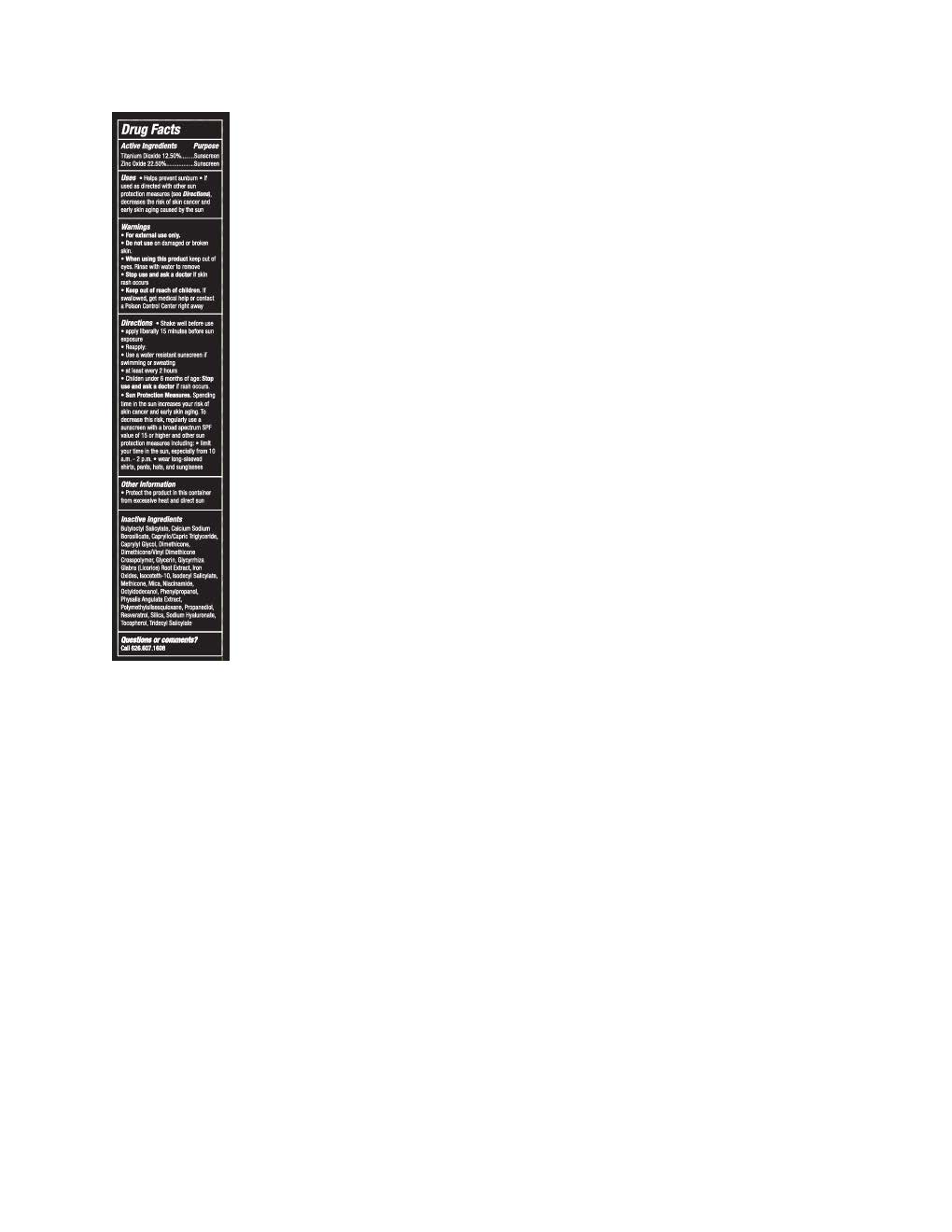
DRMTLGY Radiance Powder Titanium dioxide, Zinc Oxide .125 g/g; .225 g/g Powder, 1 bottle
Other active recalls for Titanium Dioxide, Zinc Oxide (different manufacturers) — 1 · tap to view
🆔 Identity & classification
Where does this data come from?
🏭 Manufacturer & labeler
Where does this data come from?
🩺 Clinical
This is an over-the-counter topical powder marketed under FDA's monograph rules for cosmetic and skincare products. It contains titanium dioxide and zinc oxide, which are commonly used as physical barrier ingredients in powders applied to the skin. These mineral compounds are typically included in products meant to provide coverage and sun protection on the face and body.
Patient education
Supplement & herbal interactions
Where does this data come from?
Ask a licensed pharmacist directly — free, answered by our team.
💊 What it looks like
Where does this data come from?
🧪 Inactive Ingredients / Excipients
Inactive ingredients, also called excipients, are components of the drug product other than the active ingredient. They may include fillers, dyes, coatings, preservatives, flavors, or other formulation ingredients.
💡 Tap an ingredient (hover on desktop) to see what it is and why it’s used.
-
UNII 2EH13UN8D3
A synthetic compound used as a solvent and penetration enhancer in topical formulations. It helps dissolve active ingredients and allows them to penetrate the skin more effectively.
-
UNII 00YIU5438U
Caprylyl glycol is a clear liquid derived from coconut oil. In medicines, it acts as a humectant to retain moisture, a preservative booster to prevent microbial growth, and a solvent to help dissolve or mix other ingredients.
-
UNII 92RU3N3Y1O
Dimethicone is a silicone-based oil that acts as an anti-foaming agent and lubricant in medicines. It reduces gas bubbles in liquid formulations and helps coat and protect the stomach lining when ingested.
-
UNII 9E4CO0W6C5
A silicone-based polymer that forms soft, spongy particles. Used as a texture modifier and suspending agent to improve how the product feels and flows, and to help keep ingredients evenly distributed throughout the formulation.
-
UNII 1K09F3G675
Ferric oxide red is an inorganic iron compound used as a colorant in medicines. It gives tablets, capsules, or other dosage forms a red or reddish tint for identification and appearance.
-
UNII EX438O2MRT
Ferric oxide yellow is a naturally occurring iron compound used as a colorant in medications. It gives tablets, capsules, and other forms a yellow or golden hue for identification and appearance.
-
UNII XM0M87F357
A dark iron oxide compound that gives medicines their black or dark color. It's used as a colorant in tablets and capsules to help identify the product and make it visually distinctive.
-
UNII PDC6A3C0OX
Glycerin is a clear, thick liquid derived from plant oils or fats. It acts as a humectant to retain moisture, a sweetener, and a solvent in medications.
-
UNII 2788Z9758H
A plant extract from licorice root used as a sweetener, flavoring agent, and natural emulsifier in medicines. It helps improve taste and may aid in keeping ingredients evenly mixed throughout the product.
-
UNII 1K92T9919H
A synthetic surfactant derived from cetyl alcohol and ethylene oxide. It helps dissolve and mix oils with water in formulations, acting as an emulsifier and solubilizer to create uniform medicines.
-
UNII S7097PFP4C
Isodecyl salicylate is an oily compound derived from salicylic acid. It functions as a penetration enhancer and solvent in topical formulations, helping active ingredients absorb through the skin more effectively.
-
UNII 6777U11MKT
A silicone-based lubricant and anti-foaming agent used to reduce surface tension and prevent foam formation during manufacturing and storage of the medication.
-
UNII V8A1AW0880
Mica is a naturally occurring mineral that's ground into fine powder. It's used in medicines as a colorant and anti-caking agent to improve appearance and prevent clumping in tablets or powders.
-
UNII 25X51I8RD4
Niacinamide is a form of vitamin B3, a water-soluble nutrient. In medicines, it may be added as a nutritional supplement or to support skin health, though its primary role here is as an active ingredient rather than a traditional inactive filler.
-
UNII 461N1O614Y
A synthetic oily liquid used as an emollient and solvent in medications. It helps dissolve active ingredients and improves how the medicine spreads or absorbs through the skin.
-
UNII 0F897O3O4M
A naturally occurring alcohol derived from plants or synthesized chemically. It functions as a preservative and flavoring agent in medicines, helping prevent microbial growth and add pleasant taste to oral products.
-
UNII W4TKW9D5GG
Physalis angulata is a plant extract used as a natural flavoring or coloring agent in some medicines. It may also serve as a botanical ingredient to support the product's formulation.
-
UNII Z570VEV8XK
A synthetic silicone polymer used as a glidant and anti-caking agent. It reduces friction between particles so the medicine flows smoothly during manufacturing and remains free-flowing in the bottle.
-
UNII 5965N8W85T
Propanediol is a clear liquid organic compound derived from vegetable sources or synthesized chemically. It acts as a humectant to retain moisture, a solvent to dissolve active ingredients, and a preservative booster in liquid medications and supplements.
-
UNII Q369O8926L
Resveratrol is a plant-derived compound sometimes added to supplements and fortified products. It may serve as an active nutritional ingredient rather than a traditional inactive filler, though its exact formulation role varies by product.
-
UNII ETJ7Z6XBU4
Silicon dioxide is a naturally occurring mineral used as a glidant and anti-caking agent. It helps powder ingredients flow smoothly and prevents clumping during manufacturing and storage.
-
UNII R0ZB2556P8
Tocopherol is a form of vitamin E derived from plant oils. It acts as an antioxidant in medicines to prevent oils and fats from breaking down and spoiling during storage.
-
UNII AZQ08K38Z1
A synthetic oily liquid derived from salicylic acid. It works as an emollient and penetration enhancer in topical formulations, helping active ingredients absorb into skin while conditioning and softening the application area.
23 inactive ingredients listed in the exact product block matched to this NDC.
Where does this data come from?
ingredient classCode="IACT" elements from the exact product block matched by this NDC. Label-section narrative from DailyMed / the openFDA label index is shown separately when available.Inactive ingredient FAQ
Are inactive ingredients the same for every manufacturer?
Why might an inactive ingredient be missing?
Can inactive ingredients matter?
💲 Pricing
A drug doesn't have one price. Each row is a different public payment system, and none is what you'd pay at the counter — that depends on your insurance. The ⓘ on each row explains what it measures.
| Price system | Per g | Per package |
|---|---|---|
| Retail pharmacies payNADAC · weekly | Not in the retail survey — common for institutional, discontinued, or low-volume packs. | |
| Medicaid paysCMS SDUD · 12 mo | No recent Medicaid claims on file for this NDC — rare and low-volume NDCs are suppressed in the public data. | |
| Medicare drug plans payPart D · quarterly | No Part D plan price is available for this NDC in our data. | |
Where does this data come from?
🔁 Therapeutic equivalents
| Product | Labeler | Pack | NADAC/unit | TE | Status | Price vs. this |
|---|---|---|---|---|---|---|
| Ciele Filter and Protect .125 g/g; .225 g/g 83103-1910-02 | Ciele | 1 jar | — | — | FDA listed | — |
| DRMTLGY Radiance Powder .125 g/g; .225 g/gthis 83286-0191-02 | DRMTLGY | 1 bottle | — | — | FDA listed | — |
Where does this data come from?
⏳ Availability & generic status
We did not find an FDA-approved generic match for this exact strength, form and route.
Where does this data come from?
🔬 Reported adverse events (FAERS)
Top reported reactions
Reporter sex
Where does this data come from?
📦 Packaging — all sizes for this product
| Package NDC | Description | Marketing start | Status |
|---|---|---|---|
| 83286-0191-02 You're viewing this | 1 BOTTLE, WITH APPLICATOR in 1 CARTON (83286-191-02) / 6.5 g in 1 BOTTLE, WITH APPLICATOR (83286-191-01) | 2024-03-18 | Active |
🧭 About this NDC listing & data coverage
What data is (and isn’t) available for this NDC — tap to expand
| NDC identity (package / product / labeler codes) | ✓ Available |
| Labeler | ✓ Available |
| Product & package description | ✓ Available |
| Marketing category & status | ✓ Available |
| Active ingredient / dosage form / route | ✓ Available |
| FDA label (SPL via DailyMed) | ✓ Available |
| Package photos | ✓ Available |
| Inactive ingredients (structured) | ✓ Available |
| NADAC pharmacy acquisition price (CMS) | — Not published for this NDC CMS publishes NADAC only for NDCs reported in its retail-pharmacy survey. |
| Orange Book / therapeutic-equivalence data | — Not published for this NDC Applies only to products approved under an NDA/ANDA; many listings are out of scope. |
| HCPCS J-code billing crosswalk | — Not published for this NDC Most self-administered / retail products have no J-code — that is normal. |
| Medicaid utilization (CMS SDUD) | — Not published for this NDC CMS reports utilization only for NDCs with Medicaid claims above its privacy threshold. |
Questions about this listing
Is this NDC FDA-approved?
Why is there no price listed?
Is the NDC printed on the package the same as the 11-digit billing NDC?
What do the three segments of this NDC mean?
Is this package still being marketed?
Who lists this product with the FDA?
Do I need a prescription for this product?
Where does this data come from?
📄 FDA label — Drug Facts FDA SPL
🎯 Indications and Usage ▾
DRMTLGY Radiance Powder Indication and Usage
⏱️ Dosage and Administration ▾
DRMTLGY Radiance Powder Dosage and Administration
⚠️ Warnings ▾
DRMTLGY Radiance Powder Warning Label
🧪 Active Ingredient ▾
DRMTLGY Radiance Powder Active Ingredients
🧪 Inactive Ingredients ▾
DRMTLGY Radiance Powder Inactive ingredients
🎯 Purpose ▾
DRMTLGY Radiance Powder purpose