
Avocado + Lurbinectedin
Lurbinectedin brand name: Zepzelca.
We found no known interaction between Avocado and Lurbinectedin in our sources. Absence of a documented interaction is not the same as proven safety, and does not guarantee one does not exist. Do not start, stop, or change a medication or supplement based on this page; confirm with your pharmacist or doctor first. Additionally, although there is no interaction, the two are separately associated with some of the same side effects, which would make a new symptom harder to attribute to one or the other.
Avocado and Lurbinectedin
We checked these two against our interaction database. Here is what we found.
No Known Interaction Found
We did not find a documented interaction between Lurbinectedin and Avocado in our sources. This does not guarantee that the combination is completely free of risk — there is often limited research on supplements and herbal products, especially around drug interactions.
If you decide to take both, the practical routine is simple: add one new thing at a time and note the date you started it. If the combination is going to disagree with you, it usually shows in the first days to a couple of weeks — and a start date turns “I’ve been feeling off” into something a pharmacist can actually work with. Do not stop a prescribed medicine on your own.
Always talk with your pharmacist or doctor before making changes to your medications or supplements, particularly if you take several medications or have an ongoing health condition.
Avocado safety at a glance
Safety guidance is general; always confirm with your pharmacist or doctor for your situation.
Why No Interaction Is Listed for Lurbinectedin
Interactions in our licensed database are recorded against drug classes, not just single drug names. Lurbinectedin is filed under 3 classifications — alkylating agents, hepatotoxic drugs, cytochrome p450 3a4 (cyp3a4) substrates. Avocado has documented interactions with 1 drug class — the most serious being warfarin (coumadin) (moderate) — and none of Lurbinectedin’s classifications are among them.
Classification data comes from our licensed Natural Medicines dataset. A medication can belong to classes beyond those recorded there, so this describes how the check was run — it is not a safety guarantee.
Avocado Does Interact With Other Medications
Avocado has 2 moderate known drug interactions in our database — Lurbinectedin isn’t one of them. If you take anything else, check it against the full list below.
Check Another of Your Medications Against Avocado
We haven’t checked that one against Avocado yet — ask our pharmacists directly.
Covers the 2,830 medications we’ve checked against Avocado. Pick one to open its full report.
See Every Supplement That Interacts With Lurbinectedin
This page covers Avocado only. If you take other supplements — a multivitamin, a sleep aid, something for joints — the Lurbinectedin page lists 156 supplements it has a documented interaction with, worst first, each one explained.
The most serious there right now: Beer (major), Grapefruit (major), Siberian Cocklebur (major), St. John's Wort (major) and Wine (major).
By severity: 5 major · 122 moderate · 29 minor.
From our pharmacist’s overview on the Lurbinectedin page
“Lurbinectedin (Zepzelca) is chemotherapy for small cell lung cancer, and with a drug this potent the 156 supplement interactions on file warrant real attention. Five carry a major rating, and those are the ones to understand first.”
Reviewed by 2 · Jul 18, 2026
Taking Avocado as Part of a Dietary Supplement Product? Check It for Interactions
We hold 68 real supplement products containing Avocado, each one broken down to its full ingredient list — and combination products often carry several ingredients besides Avocado. Even though Avocado itself has no known interaction with Lurbinectedin, another ingredient on your label might. Find your product and we’ll check every ingredient on its label:
Where Avocado and Lurbinectedin Sit Against Everything Else
Out of every supplement and medication people look up on HelloPharmacist, here is where these two land this week — and which way each has been moving.
#606 of 1,452 supplements looked up here in the last 7 days
#2,561 of 2,830 medications looked up here in the last 7 days
Position among everything looked up on this site, not a measure of how commonly either one is used or how important it is. A supplement can climb this list because of a news story. It counts every request to the page, automated ones included, and nothing here identifies anyone.
Where does our data come from?
- Source: the Natural Medicines (TRC Healthcare) clinical database — the evidence-graded professional reference for herb & supplement interactions.
- Citation library: 103,510 references behind our interaction content, 65,311 of them resolved to verified PubMed/DOI sources. See every Avocado reference on this page ↓
- Freshness: we automatically re-check this combination every week — this pair was last verified September 20, 2026. The Avocado and Lurbinectedin records this page draws on were last updated July 10, 2026.
- What “no known interaction” means: no documented interaction in the sources above — not a guarantee of safety. Supplements are studied far less than prescription drugs, so we say exactly what the evidence supports, and nothing more.
About Avocado
What is Avocado?
- Heart and cholesterol health
- Osteoarthritis (as ASU)
- General nutrition and healthy fats
- Skin and hair care
- Blood sugar support
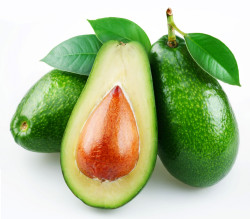
Avocado is a nutritious fruit rich in healthy monounsaturated fats, fiber, and potassium, and eating it as part of a balanced diet may support heart health. A specific extract called avocado/soybean unsaponifiables (ASU) has been studied for osteoarthritis, but evidence is mixed. As a food it is very safe for most people; talk to your pharmacist or doctor before using concentrated supplements.
Persea americana · Lauraceae · Fruit pulp, oil, seed, and leaves · Whole fruit, avocado oil, capsules (avocado/soybean unsaponifiables or ASU), powders
An interaction check asks whether these two react with each other — it does not ask whether Avocado is a good idea for someone in your situation. Here is what our Avocado record says about it on its own.
Avocado: dosing
There is no official standardized dose of avocado, since it is mainly eaten as a food. A common serving is part of a whole fruit, eaten as part of a balanced diet.For supplements such as ASU, the right amount depends on the specific product, so it is best to follow the directions on the label.
From our Avocado monograph — the full record covers uses, side effects and every documented interaction.
About Lurbinectedin Injection
What Is Lurbinectedin Injection Used For?
Brand name: Zepzelca
Zepzelca (lurbinectedin) injection is approved for adults with small cell lung cancer (SCLC) in two settings. First, Zepzelca is used in combination with atezolizumab (or atezolizumab and hyaluronidase-tqjs) as maintenance treatment for extensive-stage small cell lung cancer (ES-SCLC) in patients whose disease did not progress after initial treatment with those same immunotherapy drugs plus carboplatin and etoposide.
Second, Zepzelca is approved as a single agent for adults with metastatic small cell lung cancer whose cancer has worsened during or after platinum-based chemotherapy. This second use was granted accelerated approval based on tumor response rates, and continued approval depends on results from confirmatory clinical trials.
Other Drugs & Avocado
Browse every other medication we’ve checked against Avocado — both the ones with a known interaction and the ones without. Select any drug for the full detail.
No drugs match “”.
2 interactions
No interaction 2,827 drugs checked — show the list
We also checked Avocado against these medications and found no known interaction in our sources. Open any page to confirm.
- Apixaban ›
- Levothyroxine ›
- Amlodipine ›
- Methylphenidate ›
- Sertraline ›
- Testosterone ›
- Losartan Potassium ›
- Ivermectin ›
- Abemaciclib ›
- Aspirin ›
- Acetaminophen ›
- Metoprolol ›
- Rosuvastatin ›
- Rivaroxaban ›
- Escitalopram ›
- Clopidogrel ›
- Atorvastatin ›
- Tadalafil ›
- Docusate ›
- Tirzepatide ›
- Ibuprofen ›
- Methamphetamine ›
- Hydroxyurea ›
- Valacyclovir ›
- Sumatriptan ›
- Semaglutide ›
- Prednisone ›
- Lisdexamfetamine ›
- Propranolol ›
- Metformin ›
- Amitriptyline ›
- Amoxicillin ›
- Lisinopril ›
- Isotretinoin ›
- Amlodipine Besylate ›
- Methotrexate ›
- Bendamustine ›
- Bupropion ›
- Amphetamine ›
- Doxycycline ›
- Fluoxetine ›
- Azithromycin ›
- Acyclovir ›
- Lamotrigine ›
- Pregabalin ›
- Dextroamphetamine ›
- Gabapentin ›
- Acetaminophen, Codeine ›
- Quetiapine ›
- Clonazepam ›
- Levothyroxine, Liothyronine ›
- Naproxen ›
- Omeprazole ›
- Letrozole ›
- Methylene Blue ›
- Duloxetine ›
- Buspirone ›
- Citalopram ›
- Ciprofloxacin ›
- Bisoprolol ›
Showing the 60 most looked-up of 2,827 medications checked with no known interaction — see the full Avocado list.
Avocado References
The 10 references that drive our Avocado monograph and interaction data, from the evidence-graded Natural Medicines (TRC Healthcare) database. Citations with a link open the study on PubMed or the publisher’s site.
- Blickstein D, Shaklai M, Inbal A. Warfarin antagonism by avocado. Lancet 1991;337:914-5. PubMed
- Blanco C, Diaz-Perales A, Collada C, et al. Class I chitinases as potential panallergens involved in the latex-fruit syndrome. J Allergy Clin Immunol 1999;103(3 Pt 1):507-13. PubMed
- Diaz-Perales A, Collada C, Blanco C, et al. Cross-reactions in the latex-fruit syndrome: A relevant role of chitinases but not of complex asparagine-linked glycans. J Allergy Clin Immunol 1999;104:681-7. PubMed
- Stucker M, Memmel U, Hoffmann M, et al. Vitamin B(12) cream containing avocado oil in the therapy of plaque psoriasis. Dermatology 2001;203:141-7.
- Ahlroth, M., Alenius, H., Turjanmaa, K., Makinen-Kiljunen, S., Reunala, T., and Palosuo, T. Cross-reacting allergens in natural rubber latex and avocado. J.Allergy Clin.Immunol. 1995;96(2):167-173. PubMed
- de Groot, A. C., van der Meeren, H. L., and Weyland, J. W. Contact allergy to avocado oil in a sunscreen. Contact Dermatitis 1987;16(2):108-109. PubMed
- Blanco, C., Carrillo, T., Castillo, R., Quiralte, J., and Cuevas, M. Avocado hypersensitivity. Allergy 1994;49(6):454-459. PubMed
- Crisi, G. and Belsito, D. V. Contact urticaria from latex in a patient with immediate hypersensitivity to banana, avocado and peach. Contact Dermatitis 1993;28(4):247-248.
- Cherian S, Neupert K, Varshney P. Avocado as an emerging trigger for food protein-induced enterocolitis syndrome. Ann Allergy Asthma Immunol. 2018;121(3):369-71. PubMed
- Lichtenstein AH, Kris-Etherton PM, Petersen KS, et al. Effect of Incorporating 1 Avocado Per Day Versus Habitual Diet on Visceral Adiposity: A Randomized Trial. J Am Heart Assoc 2022;11(14):e025657.
Medication overviews come from MedlinePlus (NIH); supplement label data from the NIH Dietary Supplement Label Database. Content is written and reviewed by licensed HelloPharmacist pharmacists — see our data sources and editorial standards.
Lurbinectedin Is Linked to Lower Levels of One Nutrient
Natural Medicines records Lurbinectedin as a medicine that can lower these. This is not an interaction with Avocado — it is a separate effect of the medicine, and it is a reason some people are advised to supplement rather than to avoid one:
Read the full Lurbinectedin nutrient depletion report ›
Depletion records come from the licensed Natural Medicines database. Do not start a supplement on the strength of this page — ask your pharmacist or doctor whether it applies to you.
Taking Avocado and Lurbinectedin Together: Common Questions
Is it safe to take Avocado with Lurbinectedin?
Do Avocado and Lurbinectedin have any of the same side effects?
How was the Avocado and Lurbinectedin combination checked?
Does Avocado interact with any other medications?
Does Lurbinectedin interact with any supplements?
Written and reviewed by the HelloPharmacist editorial staff. Our editorial policy
Keep Exploring
Still Have a Question About Lurbinectedin and Avocado?
Our pharmacists answer your medication & supplement questions — free.
This information is for education only and is not a substitute for professional medical advice. Always check with your pharmacist or doctor before starting, stopping, or combining supplements and medications.