
Advanced Leg & Veins Solution Ingredients & Drug Interactions
What is this page for?
First and foremost: checking Advanced Leg & Veins Solution against your medications. The heart of this page is the interaction checker and the full interaction report — how this product’s ingredients may interact with prescription and over-the-counter medicines you may be taking.
Around that, we add a pharmacist’s high-level view of the product as a whole — what’s inside, the evidence for its stated use, how transparent the label is, and what safety data exists — so you can see the full picture in one place. It’s educational information from our licensed clinical databases and the clinical staff at HelloPharmacist — not medical advice — and we don’t sell or endorse products. Our editorial policy
Advanced Leg & Veins Solution is a dietary supplement by Totally Products with 6 active ingredients. Its ingredients are commonly taken for bone health and osteoporosis prevention, dietary calcium deficiency, heartburn relief (calcium carbonate antacids).Based on those ingredients, 1,043 medications have a known interaction with it, the most serious rated major. The ingredients most likely to interact are Gotu Kola, Rose Hip, Horsetail. Use the checker below to test your specific medication, or read the full HelloPharmacist Interaction Report.
Check Your Meds Against Advanced Leg & Veins Solution by Totally Products
Ask about any prescription or over-the-counter medication and we check it for interactions with Advanced Leg & Veins Solution by Totally Products — and tell you which ingredient is responsible.
AI summaries are generated from our interaction database for education only — always confirm with your pharmacist. How we use AI
Ask the Pharmacist
A licensed pharmacist will answer your question by email — free, usually within 24 hours.
Got it — thank you!
A licensed pharmacist will answer within 24 hours. Keep an eye on your email (worth checking spam, just in case).
HelloPharmacist Scorecard of Advanced Leg & Veins Solution by Totally Products
Our pharmacy team’s full take, with four database checks built into the cards below — a summary of what is known, not a grade of the product itself.
What’s inside
Full disclosure
Advanced Leg & Veins Solution contains six active ingredients designed to support leg and vein health. Calcium is the foundational mineral, present in a coral-derived form and also listed as a general component.
The product also includes Rose Hip (rich in vitamin C), Horse Chestnut (traditionally used for venous support), Horsetail (a plant source of silica), Gotu Kola (an herb used in traditional medicine), and Butcher's Broom (another botanical for circulation). The capsules also contain two inactive ingredients: gelatin and rice powder, which serve as fillers and binders.
Does it work?
Moderate evidence
Evidence for effectiveness varies by ingredient and intended use. Calcium is rated Effective for kidney failure, dyspepsia (indigestion), low blood calcium (hypocalcemia), high potassium (hyperkalemia), and Likely Effective for osteoporosis.
Rose hip is rated Possibly Effective for pain after surgery and osteoarthritis, though evidence for lowering cholesterol (hyperlipidemia) is insufficient. Horse chestnut is Possibly Effective for chronic venous insufficiency (a condition affecting blood flow in the veins), though evidence for hemorrhoids and other uses is insufficient.
The evidence for horsetail, gotu kola, and butcher's broom is not established in the data we hold—either the conditions tested had insufficient evidence, or effectiveness ratings were not included for those ingredients.
How safe is it?
Well-documented data
Calcium is generally well tolerated at recommended doses, though high amounts can cause problems. Common side effects from oral calcium are belching, constipation, diarrhea, gas, and stomach upset.
Rare serious concerns include kidney stones and a condition called calciphylaxis. There is also some concern that very high daily calcium intake—over 1,500 to 2,000 mg—might be associated with an increased risk of prostate cancer and heart disease, though research on this is mixed and ongoing.
Rose hip is generally well tolerated as food but safety with concentrated supplements is less studied; common effects include gas and loose stools, and rarely vertigo or headache. Horse chestnut seed extract (properly processed) is usually well tolerated but can cause dizziness, stomach upset, headache, and itching; raw plant parts are toxic.
Horsetail may cause stomach bloating, increased bowel movements, and nausea; crude forms contain a compound that can cause thiamine (vitamin B1) deficiency with prolonged use. Gotu kola is generally well tolerated short-term but carries rare concerns about liver toxicity; common effects are stomach irritation and nausea.
Butcher's broom commonly causes diarrhea, indigestion, heartburn, nausea, and vomiting, and can rarely cause contact dermatitis if applied to skin.
Meds to double-check
Major interaction found
Before taking this product, check with your pharmacist if you use any of these: HIV integrase inhibitors or reverse transcriptase inhibitors (Major concern with calcium), the antibiotic ceftriaxone given intravenously, thyroid hormone levothyroxine (Synthroid), the heart drugs sotalol or diltiazem, blood thinners or antiplatelet drugs like warfarin or aspirin, blood-pressure medications (especially alpha-adrenergic drugs), diuretics or potassium-lowering drugs, lithium, diabetes medications, efavirenz (Sustiva) for HIV, or any sedating medications. The calcium alone accounts for most of these interactions—separating doses by several hours may help, but your doctor needs to know you're taking this product.
The bottom line
Scorecard at a glanceFully disclosed formula with some supporting evidence for its stated purpose. Major medication interactions have been identified, and safety information is well characterized.
This product brings together ingredients traditionally used for leg and vein health, with solid evidence for calcium's role in bone health and some support for rose hip and horse chestnut in joint and circulation concerns. However, the calcium content makes this unsuitable for anyone taking HIV medications like dolutegravir or elvitegravir, the antibiotic ceftriaxone, or thyroid hormone—and interactions with blood thinners, blood-pressure drugs, lithium, and diabetes medications require careful timing or medical review.
Talk to your pharmacist or doctor before starting, especially if you take any prescription medications.
Educational only — not medical advice; always confirm with your pharmacist. Our editorial policy · How we use AI
Assessment coverage: 6 of 6 active ingredients matched to our full ingredient reviews (monographs). Based on the product label dated Jul 18, 2023.
This Scorecard evaluates available label information, ingredient evidence, and known medication-safety considerations. It does not independently verify product identity, purity, potency, contamination, or manufacturing quality. How these ratings are computed
General information
Key facts about Advanced Leg & Veins Solution, straight from the product label.
| Brand | Totally Products |
|---|---|
| Net contents | 90 Capsule(s) |
| Market status | On market |
| Date entered into DSLD | Jul 18, 2023 |
| DSLD ID | 294250 |
| Product type | Botanical With Nutrients |
| Supplement form | Capsule |
| Dietary claims / uses | All Other, Structure/Function |
| Intended target group(s) | Adult (18 - 50 Years), Gluten Free, Dairy Free, Sugar Free |
Everything in this section is reproduced from the manufacturer’s own product label — it’s the label speaking, not HelloPharmacist. We show it so you can see exactly what the maker states; we don’t verify or endorse those statements.
Supplement Facts
The label details for Advanced Leg & Veins Solution by Totally Products, sourced from the NIH Dietary Supplement Label Database.
Supplement Facts
| Ingredient | Amount | % DV |
|---|---|---|
| Calcium | 185 mg | 19% |
| Coral Calcium | 500 mg | -- |
| Rose Hip | 160 mg | -- |
| Horse Chestnut | 230 mg | -- |
| Horsetail | 325 mg | -- |
| Gotu Kola | 300 mg | -- |
| Butcher's Broom | 150 mg | -- |
Other ingredients: Gelatin, Rice, Powder
Tap any ingredient to jump to its full detail below.
These statements are the manufacturer’s wording, reproduced from the product label — the label is saying it, not HelloPharmacist. We don’t verify or endorse them.
Suggested/Recommended/Usage/Directions
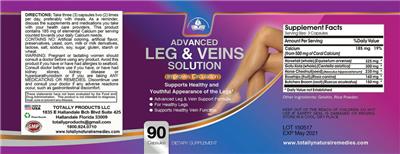
Directions: Take three (3) capsules two (2) times per day, preferably with meals. As a reminder, discuss the supplements and medications you take with your health care providers.
Formula
This product contains 185 mg of elemental Calcium per serving counted towards your daily Calcium needs.
Formulation
Contains no: Artificial coloring, artificial flavor, preservatives, yeast, corn, milk or milk derivatives, lactose, salt, sodium, soy, sugar, gluten, starch or wheat.
Improves circulation Supports healthy and youthful appearance of the legs Advanced leg & vein support formula For healthy legs Supports healthy vein function
Precautions
Warning: Pregnant or lactating women should consult a doctor before using any product.
Avoid this product if you have or have had allergies to seafood.
Consult doctor before use if you have, or have had kidney stones, kidney disease or hyperthyroidism or if you are taking any medications or remedies.
Discontinue use and consult your doctor if any adverse reactions occur, such as gastrointestinal discomfort.
Keep out of the reach of children.
Do not use if safety seal is damaged or missing.
FDA Disclaimer Statement
These statements have not been evaluated by the Food and Drug Administration. This product is not intended to diagnose, treat, cure or prevent any disease.
Seals/Symbols
Made in USA GMP Good Manufacturing Practices Consistent Quality
General Statements
Please recycle.
FDA Statement of Identity
Dietary Supplement
Storage
Store in a cool, dry place.
Is this label outdated? Report a formula or label change and our pharmacy team will review it.
Advanced Leg & Veins Solution by Totally Products label
The label scan from the NIH Dietary Supplement Label Database. Tap to enlarge.
Label images are published by the NIH Dietary Supplement Label Database for the version of this product on file. Always read your actual product label.
View the full label (PDF)The Ingredients in Advanced Leg & Veins Solution by Totally Products
These are the 6 active ingredients this product is made of. Select any to open its full monograph.
Serving size3 Capsule(s) Dosage formCapsule Servings per container30 Amounts shown are per serving.
Most supplement products combine several ingredients, and a medication can interact with the product through any one of them. Each ingredient below shows whether it has known drug interactions.
Calcium
Interacts with168 drugs
Calcium is an essential mineral your body needs for strong bones, nerve signaling, and muscle function, and supplements can help fill gaps when diet f...
Calcium monograph & interactionsRose Hip
Interacts with213 drugs
Rose hip is the vitamin C–rich fruit of the wild rose, used traditionally for colds and joint pain. A standardized rose hip powder has some research s...
Rose Hip monograph & interactionsHorse Chestnut
Interacts with122 drugs
Horse chestnut seed extract is most often used for chronic venous insufficiency, where standardized products may help reduce leg swelling, pain, and h...
Horse Chestnut monograph & interactionsHorsetail
Interacts with188 drugs
Horsetail is a traditional herb most often used as a mild diuretic and for hair, nail, and bone support, but high-quality human evidence is limited. I...
Horsetail monograph & interactionsGotu Kola
Interacts with579 drugs
Gotu kola is a traditional Ayurvedic and Asian herb that people use for wound healing, circulation, skin problems, and as a calming or memory-supporti...
Gotu Kola monograph & interactionsButcher's Broom
Interacts with158 drugs
Butcher's broom is a plant extract most often used for circulation problems in the legs, such as chronic venous insufficiency, where some evidence sug...
Butcher's Broom monograph & interactionsOther (inactive) ingredients: Gelatin, Rice, Powder. These complete the product’s ingredient list but are not active constituents.
Advanced Leg & Veins Solution by Totally Products Drug Interactions
HelloPharmacist Interaction Report
Advanced Leg & Veins Solution by Totally Products contains six active ingredients, and several of them interact with medications.
The most serious interaction is with calcium and the HIV integrase inhibitors dolutegravir (Tivicay) and elvitegravir (Vitekta)—both are Major severity interactions. Calcium can reduce blood levels of these drugs by up to 40%, potentially compromising their effectiveness.
The product also contains calcium and ceftriaxone (Rocephin), an antibiotic: when given intravenously together, they can form a dangerous salt that deposits in the lungs and kidneys. This is also a Major severity interaction.
Read the full breakdown — every affected drug type, severity by severity
Calcium interacts with several other medication types at Moderate severity, including the HIV drug raltegravir (Isentress), the thyroid hormone levothyroxine (Synthroid), the heart drug sotalol (Betapace), the vitamin D medication calcipotriene (Dovonex), and the calcium channel blocker diltiazem (Cardizem). Rose hip, another ingredient, may interact with estrogens (including oral contraceptives and hormone replacement therapy), blood thinners and antiplatelet drugs, lithium, certain chemotherapy drugs, and aspirin or warfarin—all at Moderate or Minor severity.
Horse chestnut may increase bleeding risk with anticoagulants or antiplatelet medications. Horsetail may interact with blood-sugar drugs, diuretics, lithium, and HIV medications including efavirenz (Sustiva).
Gotu kola may add to the sedative effects of nervous-system depressants and theoretically increase risk with liver-toxic drugs. Butcher's broom may interfere with blood-pressure medications that work through alpha-adrenergic pathways.
Altogether, these interactions span 1,026 individual medications. We could not check one ingredient—Coral Calcium is listed as a blend component of the calcium group, so its specific interactions are covered under the linked Calcium monograph above.
Use the interaction checker below to search your exact medications before starting this product.
Check your own medications below · Editorial policy · How we use AI
Want to check YOUR meds against Advanced Leg & Veins Solution?
Ask about interactions with your drugs in plain English — “Can I take it with lisinopril?” — and we find you the answer in seconds, ingredient by ingredient.
Go to the checkerIngredients driving the most interactions
Individual Drug Interactions
The ingredients in Advanced Leg & Veins Solution interact with 1,043 drugs. Click any drug to see the details.
6 of the 6 ingredients in Advanced Leg & Veins Solution interact with drugs. Each result below shows which ingredient is responsible. Gotu Kola Rose Hip Horsetail Calcium Butcher's Broom Horse Chestnut
AmlodipineNorliqva
How Amlodipine interacts with Advanced Leg & Veins Solution — through 1 ingredient. Tap an ingredient for the detail:
Coral CalciumCalcium Channel Blockers Minor
Interaction Summary
Intravenous calcium may decrease the effects of calcium channel blockers; oral calcium is unlikely to have this effect.
Read the full Coral Calcium + Amlodipine interactionAmlodipine BenzoateKaterzia
How Amlodipine Benzoate interacts with Advanced Leg & Veins Solution — through 1 ingredient. Tap an ingredient for the detail:
Coral CalciumCalcium Channel Blockers Minor
Interaction Summary
Intravenous calcium may decrease the effects of calcium channel blockers; oral calcium is unlikely to have this effect.
Read the full Coral Calcium + Amlodipine Benzoate interactionAmlodipine BesilateIstin
How Amlodipine Besilate interacts with Advanced Leg & Veins Solution — through 1 ingredient. Tap an ingredient for the detail:
Coral CalciumCalcium Channel Blockers Minor
Interaction Summary
Intravenous calcium may decrease the effects of calcium channel blockers; oral calcium is unlikely to have this effect.
Read the full Coral Calcium + Amlodipine Besilate interactionAmlodipine BesylateNorvasc
How Amlodipine Besylate interacts with Advanced Leg & Veins Solution — through 1 ingredient. Tap an ingredient for the detail:
Coral CalciumCalcium Channel Blockers Minor
Interaction Summary
Intravenous calcium may decrease the effects of calcium channel blockers; oral calcium is unlikely to have this effect.
Read the full Coral Calcium + Amlodipine Besylate interactionAmlodipine Besylate, BenazeprilLotrel
How Amlodipine Besylate, Benazepril interacts with Advanced Leg & Veins Solution — through 1 ingredient. Tap an ingredient for the detail:
Coral CalciumCalcium Channel Blockers Minor
Interaction Summary
Intravenous calcium may decrease the effects of calcium channel blockers; oral calcium is unlikely to have this effect.
Read the full Coral Calcium + Amlodipine Besylate, Benazepril interactionAmlodipine, CelecoxibConsensi
How Amlodipine, Celecoxib interacts with Advanced Leg & Veins Solution — through 1 ingredient. Tap an ingredient for the detail:
Coral CalciumCalcium Channel Blockers Minor
Interaction Summary
Intravenous calcium may decrease the effects of calcium channel blockers; oral calcium is unlikely to have this effect.
Read the full Coral Calcium + Amlodipine, Celecoxib interactionBepridilVascor
How Bepridil interacts with Advanced Leg & Veins Solution — through 1 ingredient. Tap an ingredient for the detail:
Coral CalciumCalcium Channel Blockers Minor
Interaction Summary
Intravenous calcium may decrease the effects of calcium channel blockers; oral calcium is unlikely to have this effect.
Read the full Coral Calcium + Bepridil interactionEnalapril Maleate, FelodipineLexxel
How Enalapril Maleate, Felodipine interacts with Advanced Leg & Veins Solution — through 1 ingredient. Tap an ingredient for the detail:
Coral CalciumCalcium Channel Blockers Minor
Interaction Summary
Intravenous calcium may decrease the effects of calcium channel blockers; oral calcium is unlikely to have this effect.
Read the full Coral Calcium + Enalapril Maleate, Felodipine interactionFelodipinePlendil, Renedil
How Felodipine interacts with Advanced Leg & Veins Solution — through 1 ingredient. Tap an ingredient for the detail:
Coral CalciumCalcium Channel Blockers Minor
Interaction Summary
Intravenous calcium may decrease the effects of calcium channel blockers; oral calcium is unlikely to have this effect.
Read the full Coral Calcium + Felodipine interactionIsradipineDynacirc CR
How Isradipine interacts with Advanced Leg & Veins Solution — through 1 ingredient. Tap an ingredient for the detail:
Coral CalciumCalcium Channel Blockers Minor
Interaction Summary
Intravenous calcium may decrease the effects of calcium channel blockers; oral calcium is unlikely to have this effect.
Read the full Coral Calcium + Isradipine interactionLercanidipine HydrochlorideZanidip
How Lercanidipine Hydrochloride interacts with Advanced Leg & Veins Solution — through 1 ingredient. Tap an ingredient for the detail:
Coral CalciumCalcium Channel Blockers Minor
Interaction Summary
Intravenous calcium may decrease the effects of calcium channel blockers; oral calcium is unlikely to have this effect.
Read the full Coral Calcium + Lercanidipine Hydrochloride interactionLevamlodipineConjupri
How Levamlodipine interacts with Advanced Leg & Veins Solution — through 1 ingredient. Tap an ingredient for the detail:
Coral CalciumCalcium Channel Blockers Minor
Interaction Summary
Intravenous calcium may decrease the effects of calcium channel blockers; oral calcium is unlikely to have this effect.
Read the full Coral Calcium + Levamlodipine interactionNicardipineCardene, Cardene IV, Cardene SR
How Nicardipine interacts with Advanced Leg & Veins Solution — through 1 ingredient. Tap an ingredient for the detail:
Coral CalciumCalcium Channel Blockers Minor
Interaction Summary
Intravenous calcium may decrease the effects of calcium channel blockers; oral calcium is unlikely to have this effect.
Read the full Coral Calcium + Nicardipine interactionNisoldipineSular
How Nisoldipine interacts with Advanced Leg & Veins Solution — through 1 ingredient. Tap an ingredient for the detail:
Coral CalciumCalcium Channel Blockers Minor
Interaction Summary
Intravenous calcium may decrease the effects of calcium channel blockers; oral calcium is unlikely to have this effect.
Read the full Coral Calcium + Nisoldipine interactionNitrendipineCardif
How Nitrendipine interacts with Advanced Leg & Veins Solution — through 1 ingredient. Tap an ingredient for the detail:
Coral CalciumCalcium Channel Blockers Minor
Interaction Summary
Intravenous calcium may decrease the effects of calcium channel blockers; oral calcium is unlikely to have this effect.
Read the full Coral Calcium + Nitrendipine interactionPerindopril Arginine, AmlodipinePrestalia
How Perindopril Arginine, Amlodipine interacts with Advanced Leg & Veins Solution — through 1 ingredient. Tap an ingredient for the detail:
Coral CalciumCalcium Channel Blockers Minor
Interaction Summary
Intravenous calcium may decrease the effects of calcium channel blockers; oral calcium is unlikely to have this effect.
Read the full Coral Calcium + Perindopril Arginine, Amlodipine interactionTelmisartan, AmlodipineTwynsta
How Telmisartan, Amlodipine interacts with Advanced Leg & Veins Solution — through 1 ingredient. Tap an ingredient for the detail:
Coral CalciumCalcium Channel Blockers Minor
Interaction Summary
Intravenous calcium may decrease the effects of calcium channel blockers; oral calcium is unlikely to have this effect.
Read the full Coral Calcium + Telmisartan, Amlodipine interactionEach ingredient & the kinds of drugs it affects
For each ingredient in Advanced Leg & Veins Solution with known interactions, here are the types of medications they can affect. Open any type for the detail — or search your exact drug in the checker above.
Gotu Kola
Cns Depressants
Theoretically, taking gotu kola might increase the sedative effects of CNS depressants.
In vitro research suggests that gotu kola may have sedative effects via binding of GABA receptors.
Hepatotoxic Drugs
Theoretically, taking gotu kola with hepatotoxic drugs might have additive adverse effects.
There are at least four case reports of hepatotoxicity associated with the use of gotu kola. However, more information is needed to determine if gotu kola was the causative factor in these cases.
Rose Hip
Alkylating Agents
Theoretically, the antioxidant effects of rose hip might reduce the effectiveness of alkylating agents but might also reduce the oxidative damage caused by certain alkylating agents.
Rose hip contains vitamin C. The use of antioxidants like vitamin C during chemotherapy is controversial. There is concern that antioxidants could reduce the activity of chemotherapy drugs that generate free radicals, such as cyclophosphamide, chlorambucil, carmustine, busulfan, and thiotepa. In contrast, some researchers theorize that antioxidants might make chemotherapy more effective by reducing oxidative stress that could interfere with apoptosis (cell death) of cancer cells. Further, some animal research suggests that the antioxidant effects of rose hip might attenuate cyclophosphamide-induced testicular toxicity. More evidence is needed to determine what effect, if any, antioxidants found in rose hip, such as vitamin C, have on the effectiveness and adverse effects of chemotherapy.
Aluminum
Theoretically, rose hip might increase the amount of aluminum absorbed from aluminum compounds.
Rose hip contains vitamin C. Theoretically, vitamin C increases the absorption of aluminum. Concomitant use might increase aluminum absorption, but the clinical significance of this is unknown. Administer rose hip two hours before or four hours after antacids.
Anticoagulant/Antiplatelet Drugs
Theoretically, rose hip might reduce the effectiveness of anticoagulant or antiplatelet drugs.
In vitro and animal research suggests that a constituent of rose hip, rugosin E, can induce platelet aggregation. This has not been shown in humans. Theoretically, concomitant use of rose hip might reduce the effectiveness of antiplatelet or anticoagulant drugs.
Antitumor Antibiotics
Theoretically, the antioxidant effects of rose hip might reduce the effectiveness of antitumor antibiotics.
Rose hip contains the antioxidant vitamin C. There is concern that antioxidants might reduce the activity of chemotherapy drugs that generate free radicals, such as antitumor antibiotics. In contrast, other researchers theorize that antioxidants might make antitumor antibiotic chemotherapy more effective by reducing oxidative stress that could interfere with apoptosis (cell death) of cancer cells. More evidence is needed to determine what effects, if any, antioxidants such as vitamin C have on antitumor antibiotic chemotherapy.
Estrogens
Theoretically, rose hip might increase blood levels of estrogens.
Rose hip contains vitamin C. Increases in plasma estrogen levels of up to 55% have occured under some circumstances when vitamin C is taken concurrently with oral contraceptives or hormone replacement therapy, including topical products. It is suggested that vitamin C prevents oxidation of estrogen in the tissues, regenerates oxidized estrogen, and reduces sulfate conjugation of estrogen in the gut wall. When tissue levels of vitamin C are high, these processes are already maximized and supplemental vitamin C does not have any effect on estrogen levels. However, increases in plasma estrogen levels may occur when women who are deficient in vitamin C take supplements.
Lithium
Theoretically, rose hip might increase blood levels of lithium.
Rose hip is thought to have diuretic properties. Theoretically, due to these potential diuretic effects, rose hip might reduce excretion and increase levels of lithium. The dose of lithium might need to be decreased.
Aspirin
Theoretically, rose hip might reduce the clearance of aspirin; however, its vitamin C content is likely too low to produce clinically significant effects.
Rose hip contains vitamin C. It has been suggested that acidification of the urine by vitamin C can decrease the urinary excretion of salicylates, increasing plasma salicylate levels. However, short-term use of up to 6 grams daily of vitamin C does not seem to affect urinary pH or salicylate excretion. The vitamin C content of rose hip is typically about 500 mg per 100 grams. Thus, a clinically significant interaction between rose hip and aspirin is unlikely.
Warfarin (Coumadin)
Theoretically, rose hip might reduce the effectiveness of warfarin; however, its vitamin C content is likely too low to produce clinically significant effects.
Rose hip contains vitamin C. High doses of vitamin C may reduce the response to warfarin, possibly by causing diarrhea and reducing warfarin absorption. This occurred in two people who took up to 16 grams daily of vitamin C, and resulted in decreased prothrombin time. Lower doses of 5-10 grams daily of vitamin C can also reduce warfarin absorption, but this does not seem to be clinically significant. The vitamin C content of rose hip is typically about 500 mg per 100 grams. Thus, a clinically significant interaction between rose hip and warfarin is unlikely.
Horsetail
Antidiabetes Drugs
Theoretically, taking horsetail with antidiabetes drugs might increase the risk of hypoglycemia.
Equisetum myriochaetum has demonstrated hypoglycemic activity in clinical research. In an animal diabetic model, Equisetum giganteum had hypoglycemic effects. It is unclear whether other horsetail species have hypoglycemic effects.
Diuretic Drugs
Theoretically, taking horsetail with diuretic drugs might increase potassium loss and the risk of hypokalemia.
Laboratory research shows that various species of horsetail have diuretic properties. Due to its diuretic effects, there has been concern that taking horsetail along with potassium-depleting diuretics might increase the risk for hypokalemia. However, pharmacokinetic research in humans shows that taking horsetail 900 mg daily for 4 days does not affect urinary excretion of electrolytes, including potassium and sodium, despite having a diuretic effect similar to taking hydrochlorothiazide 25 mg daily. It is unclear if taking horsetail for a longer duration would affect electrolyte levels. Until more is known, use with caution.
Efavirenz (Sustiva)
Theoretically, horsetail might decrease the levels and clinical effects of efavirenz.
In two case reports, patients were found to have detectable viral loads when taking horsetail-containing supplements along with an antiretroviral regimen that included efavirenz. In one case, the antiretroviral regimen included zidovudine, lamivudine, and efavirenz; in the other case, the regimen consisted of emtricitabine, tenofovir disoproxil fumarate, and efavirenz. One month after discontinuing horsetail, the viral loads became undetectable in both cases. The exact mechanism of this interaction is unknown. It is also unclear if this interaction is specific to efavirenz or if it is related to various components of antiretroviral therapy.
Lithium
Theoretically, horsetail might increase the levels and adverse effects of lithium.
Animal research suggests that horsetail has diuretic properties. Theoretically, due to these potential diuretic effects, horsetail might reduce excretion and increase levels of lithium. The dose of lithium might need to be decreased.
Nucleoside Reverse Transcriptase Inhibitors (Nrtis)
Theoretically, horsetail might decrease the levels and clinical effects of NRTIs.
In two case reports, patients were found to have detectable viral loads when taking horsetail-containing supplements along with an antiretroviral therapy. In one case, the antiretroviral regimen included zidovudine, lamivudine, and efavirenz; in the other case, the regimen consisted of emtricitabine, tenofovir disoproxil fumarate, and efavirenz. One month after discontinuing the supplement, the viral loads became undetectable in both cases. The exact mechanism of these interactions is unknown. It is also unclear if these interactions are specific to NRTIs or if they are related to various components of antiretroviral therapy.
Calcium
Ceftriaxone (Rocephin)
Co-administration of intravenous calcium and ceftriaxone can result in precipitation of a ceftriaxone-calcium salt in the lungs and kidneys.
Avoid administering intravenous calcium in any form, such as parenteral nutrition or Lactated Ringers, within 48 hours of intravenous ceftriaxone. Case reports in neonates show that administering intravenous ceftriaxone and calcium can result in precipitation of a ceftriaxone-calcium salt in the lungs and kidneys. In several cases, neonates have died as a result of this interaction. So far there are no reports in adults; however, there is still concern that this interaction might occur in adults.
Dolutegravir (Tivicay)
Calcium seems to reduce levels of dolutegravir.
Advise patients to take dolutegravir either 2 hours before or 6 hours after taking calcium supplements. Pharmacokinetic research suggests that taking calcium carbonate 1200 mg concomitantly with dolutegravir 50 mg reduces plasma levels of dolutegravir by almost 40%. Calcium appears to decrease levels of dolutegravir through chelation.
Elvitegravir (Vitekta)
Calcium seems to reduce levels of elvitegravir.
Advise patients to take elvitegravir either 2 hours before or 2 hours after taking calcium supplements. Pharmacokinetic research suggests that taking calcium along with elvitegravir can reduce blood levels of elvitegravir through chelation.
Aluminum
Calcium citrate might increase aluminum absorption and toxicity. Other types of calcium do not increase aluminum absorption.
Calcium citrate can increase the absorption of aluminum when taken with aluminum hydroxide. The increase in aluminum levels may become toxic, particularly in individuals with kidney disease. However, the effect of calcium citrate on aluminum absorption is due to the citrate anion rather than calcium cation. Calcium acetate does not appear to increase aluminum absorption.
Bictegravir/Emtricitabine/Tenofovir Alafenamide (Biktarvy)
Calcium might decrease levels of bictegravir/emtricitabine/tenofovir alafenamide by reducing its absorption when taken in a fasting state.
Advise patients that bictegravir/emtricitabine/tenofovir alafenamide and calcium can be taken together if taken with food. However, if taken on an empty stomach, bictegravir/emtricitabine/tenofovir alafenamide should not be taken with, or 2 hours after, calcium containing products.
Bisphosphonates
Calcium reduces the absorption of bisphosphonates.
Advise patients to take bisphosphonates at least 30 minutes before calcium, but preferably at a different time of day. Calcium supplements decrease absorption of bisphosphonates.
Calcipotriene (Dovonex)
Taking calcipotriene with calcium might increase the risk for hypercalcemia.
Calcipotriene is a vitamin D analog used topically for psoriasis. It can be absorbed in sufficient amounts to cause systemic effects, including hypercalcemia. Theoretically, combining calcipotriene with calcium supplements might increase the risk of hypercalcemia.
Digoxin (Lanoxin)
Using intravenous calcium with digoxin might increase the risk of fatal cardiac arrhythmias.
Hypercalcemia increases the risk of fatal cardiac arrhythmias with digoxin. However, one retrospective analysis of clinical data suggests that intravenous calcium does not increase the risk of dysrhythmias or mortality in patients receiving digoxin.
Diltiazem (Cardizem, Others)
Theoretically, calcium may reduce the therapeutic effects of diltiazem.
Hypercalcemia can reduce the effectiveness of verapamil in atrial fibrillation. Theoretically, calcium might increase this risk of hypercalcemia and reduce the effectiveness of diltiazem.
Levothyroxine (Synthroid, Others)
Calcium seems to reduce the absorption and effectiveness of levothyroxine.
Advise patients to take levothyroxine and calcium supplements at least 4 hours apart. Calcium reduces levothyroxine absorption, probably by forming insoluble complexes. Calcium carbonate supplements reduce effectiveness of levothyroxine in patients with hypothyroidism.
Lithium
Theoretically, concomitant use of calcium and lithium may increase this risk of hypercalcemia.
Clinical research suggests that long-term use of lithium may cause hypercalcemia in 10% to 60% of patients. Theoretically, concomitant use of lithium and calcium supplements may further increase this risk.
Quinolone Antibiotics
Calcium seems to reduce the absorption of quinolone antibiotics.
Advise patients to take oral quinolones at least 2 hours before or 4-6 hours after calcium supplements or calcium-fortified foods. Taking calcium at the same time as oral quinolones can reduce quinolone absorption. Calcium binds to quinolones in the gut.
Raltegravir (Isentress)
Calcium may reduce levels of raltegravir.
Pharmacokinetic research shows that taking a single dose of calcium carbonate 3000 mg along with raltegravir 400 mg twice daily modestly decreases the mean area under the curve of raltegravir, but the decrease does not necessitate a dose adjustment of raltegravir. However, a case of elevated HIV-1 RNA levels and documented resistance to raltegravir has been reported for a patient taking calcium carbonate 1 gram three times daily plus vitamin D3 (cholecalciferol) 400 IU three times daily in combination with raltegravir 400 mg twice daily for 11 months. It is thought that calcium reduced raltegravir levels by chelation, leading to treatment failure.
Sotalol (Betapace)
Calcium seems to reduce the absorption of sotalol.
Advise patients to separate doses by at least 2 hours before or 4-6 hours after calcium. Calcium appears to reduce the absorption of sotalol, probably by forming insoluble complexes.
Tetracycline Antibiotics
Calcium seems to reduce the absorption of tetracycline antibiotics.
Advise patients to take oral tetracyclines at least 2 hours before, or 4-6 hours after calcium supplements. Taking calcium at the same time as oral tetracyclines can reduce tetracycline absorption. Calcium binds to tetracyclines in the gut.
Thiazide Diuretics
Taking calcium along with thiazides might increase the risk of hypercalcemia and renal failure.
Thiazides reduce calcium excretion by the kidneys. Using thiazides along with moderately large amounts of calcium carbonate increases the risk of milk-alkali syndrome (hypercalcemia, metabolic alkalosis, renal failure). Patients may need to have their serum calcium levels and/or parathyroid function monitored regularly.
Verapamil (Calan, Others)
Theoretically, calcium may reduce the therapeutic effects of verapamil.
Hypercalcemia can reduce the effectiveness of verapamil in atrial fibrillation. Theoretically, use of calcium supplements may increase this risk of hypercalcemia and reduce the effectiveness of verapamil.
Calcium Channel Blockers
Intravenous calcium may decrease the effects of calcium channel blockers; oral calcium is unlikely to have this effect.
Intravenous calcium is used to decrease the effects of calcium channel blockers in the management of overdose. Intravenous calcium gluconate has been used before intravenous verapamil (Isoptin) to prevent or reduce the hypotensive effects without affecting the antiarrhythmic effects. But there is no evidence that dietary or supplemental calcium when taken orally interacts with calcium channel blockers.
Butcher's Broom
Alpha-Adrenergic Agonists
Theoretically, butcher's broom might increase the effects and adverse effects of alpha-adrenergic agonists.
Animal and in vitro studies show that butcher's broom has alpha-adrenergic agonist effects.
Alpha-Adrenergic Antagonists
Theoretically, butcher's broom might reduce the effects of alpha-adrenergic antagonists.
Animal and in vitro studies show that butcher's broom has alpha-adrenergic agonist effects.
Horse Chestnut
Anticoagulant/Antiplatelet Drugs
Horse chestnut may have antiplatelet effects and may increase the risk of bleeding if used with anticoagulant or antiplatelet drugs.
Horse chestnut contains the constituent esculin which has been shown to have antithrombotic effects. Therefore, horse chestnut might have antiplatelet effects. This has not been shown in humans.
Brand information
Manufacturer and brand details for Advanced Leg & Veins Solution, from the product label.
Totally Products
See all Totally Products products- Name
- Totally Products LLC
- Street Address
- 1835 E Hallandale Beach Blvd Suite 425
- City
- Hallandale
- State
- FL
- ZipCode
- 33009
- Phone Number
- 1800-924-0710
- Web Address
- www.totallynaturalremedies.com
Advanced Leg & Veins Solution by Totally Products: Common Questions
Does Advanced Leg & Veins Solution by Totally Products interact with any medications?
How can one product interact with so many drugs?
Where does this information come from?
Is this safe to take if I'm pregnant or breastfeeding?
Will this help my leg swelling or varicose veins?
What are the most common side effects?
How far apart should I space this from my thyroid medication?
Does this have any fillers or other inactive ingredients?
Can I take this with my blood thinner?
Written and reviewed by the HelloPharmacist editorial staff. Our editorial policy
Not sure if Advanced Leg & Veins Solution is safe with your meds?
Our pharmacists answer your medication & supplement questions — free.
Label information is sourced from the NIH Dietary Supplement Label Database and reflects the product version on file; always read your actual product label. This page is for education only and is not a substitute for professional medical advice. Confirm with your pharmacist or doctor before combining supplements and medications.
The Full Monographs Behind Advanced Leg & Veins Solution’s Ingredients
Every ingredient we hold a full HelloPharmacist monograph for — uses, evidence, safety, and the complete interaction list.
Calcium
Interacts with 168 drugsCalcium is an essential mineral your body needs for strong bones, nerve signaling, and muscle function, and supplements can help fill gaps when diet falls short. Most people do best getting...
Read the full Calcium monograph → Herb & supplement monographRose Hip
Interacts with 213 drugsRose hip is the vitamin C–rich fruit of the wild rose, used traditionally for colds and joint pain. A standardized rose hip powder has some research support for easing osteoarthritis symptom...
Read the full Rose Hip monograph → Herb & supplement monographHorse Chestnut
Interacts with 122 drugsHorse chestnut seed extract is most often used for chronic venous insufficiency, where standardized products may help reduce leg swelling, pain, and heaviness. Raw, unprocessed horse chestnu...
Read the full Horse Chestnut monograph → Herb & supplement monographHorsetail
Interacts with 188 drugsHorsetail is a traditional herb most often used as a mild diuretic and for hair, nail, and bone support, but high-quality human evidence is limited. It can cause thiamine (vitamin B1) loss w...
Read the full Horsetail monograph → Herb & supplement monographGotu Kola
Interacts with 579 drugsGotu kola is a traditional Ayurvedic and Asian herb that people use for wound healing, circulation, skin problems, and as a calming or memory-supporting herb. Some early studies suggest poss...
Read the full Gotu Kola monograph → Herb & supplement monographButcher's Broom
Interacts with 158 drugsButcher's broom is a plant extract most often used for circulation problems in the legs, such as chronic venous insufficiency, where some evidence suggests it may help reduce swelling and di...
Read the full Butcher's Broom monograph →Sources & How We Checked
Advanced Leg & Veins Solution's label data comes from the NIH Dietary Supplement Label Database; the ingredient interaction data is from the Natural Medicines database, reviewed by our pharmacists.
- NIH Dietary Supplement Label Database (DSLD) — The official product label on file for this supplement.
- Natural Medicines (Therapeutic Research Center) — Evidence-graded clinical reference behind the ingredient interaction data.
Content is written and reviewed by licensed HelloPharmacist pharmacists. See our data sources and editorial standards for how this information is built and checked.
The 147 references behind this product’s interaction data
Every citation that drives the interaction findings for this product’s ingredients, from the evidence-graded Natural Medicines (TRC Healthcare) database. Open an ingredient to browse its citations — links open the study on PubMed or the publisher’s site.
Calcium 62 references
- Shils M, Olson A, Shike M. Modern Nutrition in Health and Disease. 8th ed. Philadelphia, PA: Lea and Febiger, 1994.
- Hernandez-Avila M, Gonzalez-Cossio T, Hernandez-Avila JE, et al. Dietary calcium supplements to lower blood lead levels in lactating women: a randomized placebo-controlled trial. Epidemiology 2003;14:206-12.. PubMed
- Thys-Jacobs S, Ceccarelli S, Bierman A, et al. Calcium supplementation in premenstrual syndrome: a randomized crossover trial. J Gen Intern Med 1989;4:183-9. PubMed
- Maton PN, Burton ME. Antacids revisited: a review of their clinical pharmacology and recommended therapeutic use. Drugs 1999;57:855-70.
- Clemens JD, Feinstein AR. Calcium carbonate and constipation: a historical review of medical mythopoeia. Gastroenterology 1977;72:957-61. DOI
- Saunders D, Sillery J, Chapman R. Effect of calcium carbonate and aluminum hydroxide on human intestinal function. Dig Dis Sci 1988;33:409-13. PubMed
- Friedman PA, Bushinsky DA. Diuretic effects on calcium metabolism. Semin Nephrol 1999;19:551-6.
- Koo WK, Walters JC, Esterlitz J, et al. Maternal calcium supplementation and fetal bone mineralization. Obstet Gynecol 1999;94:577-82. DOI
- Raman L, Rajalakshmi K, Krishnamachari KAVR, et al. Effect of calcium supplementation to undernourished mothers during pregnancy on the bone density of the neonates. Am J Clin Nutr 1978; 31:466-9. DOI
- Murry JJ, Healy MD. Drug-mineral interactions: a new responsibility for the hospital dietician. J Am Diet Assoc 1991;91:66-73.
- Chan JM, Giovannucci E, Andersson SO, et al. Dairy products, calcium, phosphorous, vitamin D, and risk of prostate cancer. Cancer Causes Control 1998;9:559-66.
- Butner LE, Fulco PP, Feldman G, et al. Calcium carbonate-induced hypothyroidism. Ann Intern Med 2000:132:595. PubMed
- Schneyer CR. Calcium carbonate and reduction of levothyroxine efficacy. JAMA 1998;279:750. PubMed
- Moser LR, Smythe MA, Tisdale JE. The use of calcium salts in the prevention and management of verapamil-induced hypotension. Ann Pharmacother 2000;34:622-9. PubMed
- Singh N, Singh PN, Hershman JM. Effect of calcium carbonate on the absorption of levothyroxine. JAMA 2000;283:2822-5. PubMed
- Kahela P, Anttila M, Tikkanen R, Sundquist H. Effect of food, food constituents and fluid volume on the bioavailability of sotalol. Acta Pharmacol Toxicol (Copenh) 1979;44:7-12.. PubMed
- Pletz MW, Petzold P, Allen A, et al. Effect of calcium carbonate on bioavailability of orally administered gemifloxacin. Antimicrob Agents Chemother 2003;47:2158-60.. PubMed
- Bar-Or D, Yoel G. Calcium and calciferol antagonize effect of verapamil in atrial fibrillation. Br Med J 1981;282:1585-6.
- Decktor DL, Robinson M, Maton PN, et al. Effects of aluminum/magnesium hydroxide and calcium carbonate on esophageal and gastric pH in subjects with heartburn. Am J Ther 1995;2:546-52. PubMed
- Simoneau G. Absence of rebound effect with calcium carbonate. Eur J Drug Metab Pharmacokinet 1996;21:351-7. PubMed
- Peters ML, Leonard M, Licata AA. Role of alendronate and risedronate in preventing and treating osteoporosis. Cleve Clin J Med 2001;68:945-51. PubMed
- Bourke JF, Mumford R, Whittaker P, et al. The effects of topical calcipotriol on systemic calcium homeostasis in patients with chronic plaque psoriasis. J Am Acad Dermatol 1997;37:929-34.
- Gueguen L, Pointillart A. The bioavailability of dietary calcium. J Am Coll Nutr 2000;19:119s-136s. PubMed
- Vella A, Gerber TC, Hayes DL, Reeder GS. Digoxin, hypercalcaemia, and cardiac conduction. Postgrad Med J 1999;75:554-6. PubMed
- Bania TC, Blaufeux B, Hughes S, et al. Calcium and digoxin vs. calcium alone for severe verapamil toxicity. Acad Emerg Med 2000;7:1089-96. PubMed
- Tseng M, Breslow RA, Graubard BI, Ziegler RG. Dairy, calcium, and vitamin D intakes and prostate cancer risk in the National Health and Nutrition Examination Epidemiologic Follow-up Study cohort. Am J Clin Nutr 2005;81:1147-54. PubMed
- Weingarten MA, Zalmanovici A, Yaphe J. Dietary calcium supplementation for preventing colorectal cancer and adenomatous polyps. Cochrane Database Syst Rev 2004;(1):CD003548. PubMed
- Tavani A, Bertuccio P, Bosetti C, et al. Dietary intake of calcium, vitamin D, phosphorus and the risk of prostate cancer. Eur Urol 2005;48:27-33. PubMed
- Giovannucci E, Liu Y, Stampfer MJ, Willett WC. A prospective study of calcium intake and incident and fatal prostate cancer. Cancer Epidemiol Biomarkers Prev 2006;15:203-10. PubMed
- Rocephin (ceftriaxone) and calcium interaction. Pharmacist's Letter / Prescriber's Letter 2007;23(10):231005.
- Bolland MJ, Barber PA, Doughty RN, et al. Vascular events in healthy older women receiving calcium supplementation: randomised control trial. BMJ 2008;336:262-6.
- Bolland MJ, Avenell A, Baron JA, et al. Effect of calcium supplements on risk of myocardial infarction and cardiovascular events: meta-analysis. BMJ 2010;341:c3691. PubMed
- Calcium supplementation and vascular events. Pharmacist's Letter / Prescriber's Letter 2008;24(3):240306.
- Dietary reference intakes for calcium and vitamin D. Institute of Medicine, November 30, 2010. Available at: http://www.iom.edu/~/media/Files/Report%20Files/2010/Dietary-Reference-Intakes-for-Calcium-and-Vitamin-D/Vitamin%20D%20and%20Calcium%202010%20Repo
- Coburn JW, Mischel MG, Goodman WG, et al. Calcium citrate markedly enhances aluminum absorption from aluminum hydroxide. Am J Kidney Dis. 1991;17(6):708-11. PubMed
- Bradley JS, Wassel RT, Lee L, et al. Intravenous ceftriaxone and calcium in the neonate: assessing the risk for cardiopulmonary adverse events. Pediatrics. 2009;123(4):e609-13. PubMed
- Kays MB, Overholser BR, Mueller BA, et al. Effects of sevelamer hydrochloride and calcium acetate on the oral bioavailability of ciprofloxacin. Am J Kidney Dis. 2003;42(6):1253-9. PubMed
- Neuhofel, A. L., Wilton, J. H., Victory, J. M., Hejmanowsk, L. G., and Amsden, G. W. Lack of bioequivalence of ciprofloxacin when administered with calcium-fortified orange juice: a new twist on an old interaction. J Clin Pharmacol. 2002;42(4):461-466. DOI
- Dickinson, H. O., Nicolson, D. J., Cook, J. V., Campbell, F., Beyer, F. R., Ford, G. A., and Mason, J. Calcium supplementation for the management of primary hypertension in adults. Cochrane.Database.Syst.Rev. 2006;(2):CD004639. PubMed
- Jones, B. J. and Twomey, P. J. Requesting patterns for serum calcium concentration in patients on long-term lithium therapy. Int J Clin Pract. 2009;63(1):170-172. PubMed
- Levine, M., Nikkanen, H., and Pallin, D. J. The effects of intravenous calcium in patients with digoxin toxicity. J Emerg.Med. 2011;40(1):41-46. PubMed
- Castelo-Branco, C., Ciria-Recasens, M., Cancelo-Hidalgo, M. J., Palacios, S., Haya-Palazuelos, J., Carbonell-Abello, J., Blanch-Rubio, J., Martinez-Zapata, M. J., Manasanch, J., and Perez-Edo, L. Efficacy of ossein-hydroxyapatite complex compared with ca
- Li K, Kaaks R, Linseisen J, Rohrmann S. Associations of dietary calcium intake and calcium supplementation with myocardial infarction and stroke risk and overall cardiovascular mortality in the Heidelberg cohort of the European Prospective Investigation i
- Chung M, Tang AM, Fu Z. Calcium Intake and Cardiovascular Disease Risk: An Updated Systematic Review and Meta-analysis. Ann Intern Med. 2016 Oct 25. PubMed
- Nolan CR, Califano JR, Butzin CA. Influence of calcium acetate or calcium citrate on intestinal aluminum absorption. Kidney Int. 1990;38(5):937-41. PubMed
- Lewis JR, Radavelli-Bagatini S, Rejnmark L, et al. The effects of calcium supplementation on verified coronary heart disease hospitalization and death in postmenopausal women: a collaborative meta-analysis of randomized controlled trials. J Bone Miner Res PubMed
- Jalloh MA, Gregory PJ, Hein D, et al. Dietary supplement interactions with antiretrovirals: a systematic review. Int J STD AIDS. 2017 Jan;28(1):4-15. PubMed
- Lappe J, Watson P, Travers-Gustafson D, Recker R, Garland C, Gorham E, Baggerly K, McDonnell SL. Effect of Vitamin D and Calcium Supplementation on Cancer Incidence in Older Women: A Randomized Clinical Trial. JAMA. 2017 Mar 28;317(12):1234-1243. PubMed
- Grove ML, Cook D. Calcium and heart attacks. Doesn't apply to most calcium prescriptions. BMJ. 2010;341:c5003. PubMed
- Insentress [package insert]. Whitehouse Station, NJ: Merck Sharp & Dohme Corp.; 2014.
- Roberts JL, Kiser JJ, Hindman JT, Meditz AL. Virologic failure with a raltegravir-containing antiretroviral regimen and concomitant calcium administration. Pharmacotherapy 2011;31(10):298e-302e. DOI
- Vitekta [package insert]. Foster City, CA: Gilead Sciences, Inc.; 2014.
- Storan ER, O'Gorman SM, Murphy A, Laing M. Case Report of Calciphylaxis Secondary to Calcium and Vitamin D<sub>3</sub> Supplementation. J Cutan Med Surg. 2017;21(2):162-163. DOI
- Jenkins DJA, Spence JD, Giovannucci EL, et al. Supplemental vitamins and minerals for CVD prevention and treatment. J Am Coll Cardiol 2018;71(22):2570-84. PubMed
- Borkenhagen JF, Connor EL, Stafstrom CE. Neonatal hypocalcemic seizures due to excessive maternal calcium ingestion. Pediatr Neurol 2013;48(6):469-71. PubMed
- WHO recommendations on antenatal care for a positive pregnancy experience. Geneva: World Health Organization; 2016 (http://www.who.int/reproductivehealth/publications/maternal_perinatal_health/ anc-positive-pregnancy-experience/en/).
- Aune D, Navarro Rosenblatt DA, Chan DS, et al. Dairy products, calcium, and prostate cancer risk: a systematic review and meta-analysis of cohort studies. Am J Clin Nutr. 2015;101(1):87-117. PubMed
- Lan T, Park Y, Colditz GA, et al. Adolescent dairy product and calcium intake in relation to later prostate cancer risk and mortality in the NIH-AARP Diet and Health Study. Cancer Causes Control. 2020;31(10):891-904. PubMed
- Zhang Y, Li Y, Liu J, et al. Association of Vitamin D or Calcium Supplementation with Cardiovascular Outcomes and Mortality: A Meta-Analysis with Trial Sequential Analysis. J Nutr Health Aging 2021;25(2):263-270. PubMed
- Myung SK, Kim HB, Lee YJ, Choi YJ, Oh SW. Calcium Supplements and Risk of Cardiovascular Disease: A Meta-Analysis of Clinical Trials. Nutrients 2021;13(2):368. PubMed
- Hetaimish B. Neonatal Calcinosis Cutis After Treatment of Hypocalcemia with Calcium Gluconate: A Report of 2 Cases. Am J Case Rep 2024;25:e943397. PubMed
- US Food and Drug Administration (FDA). Biktarvy Prescribing Information. October 2024. Available at: https://www.accessdata.fda.gov/drugsatfda_docs/label/2024/210251Orig1s020lbl.pdf. Accessed July 16, 2025.
Rose Hip 24 references
- Foster S, Tyler VE. Tyler's Honest Herbal: A Sensible Guide to the Use of Herbs and Related Remedies. 3rd ed., Binghamton, NY: Haworth Herbal Press, 1993.
- McEvoy GK, ed. AHFS Drug Information. Bethesda, MD: American Society of Health-System Pharmacists, 1998.
- Gruenwald J, Brendler T, Jaenicke C. PDR for Herbal Medicines. 1st ed. Montvale, NJ: Medical Economics Company, Inc., 1998.
- Back DJ, Breckenridge AM, MacIver M, et al. Interaction of ethinyloestradiol with ascorbic acid in man. Br Med J (Clin Res Ed) 1981;282:1516.
- Morris JC, Beeley L, Ballantine N. Interaction of ethinyloestradiol with ascorbic acid in man [letter]. Br Med J (Clin Res Ed) 1981;283:503.
- Labriola D, Livingston R. Possible interactions between dietary antioxidants and chemotherapy. Oncology 1999;13:1003-8.
- Hansten PD, Horn JR. Drug Interactions Analysis and Management. Vancouver, WA: Applied Therapeutics Inc., 1997 and updates.
- Food and Nutrition Board, Institute of Medicine. Dietary Reference Intakes for Vitamin C, Vitamin E, Selenium, and Carotenoids. Washington, DC: National Academy Press, 2000. Available at: http://www.nap.edu/books/0309069351/html/.
- Rosenthal G. Interaction of ascorbic acid and warfarin. JAMA 1971;215:1671. DOI
- Hume R, Johnstone JM, Weyers E. Interaction of ascorbic acid and warfarin. JAMA 1972;219:1479. DOI
- Smith EC, Skalski RJ, Johnson GC, Rossi GV. Interaction of ascorbic acid and warfarin. JAMA 1972;221:1166. DOI
- Mc Leod DC, Nahata MC. Inefficacy of ascorbic acid as a urinary acidifier (letter). N Engl J Med 1977;296:1413. DOI
- Hansten PD, Hayton WL. Effect of antacid and ascorbic acid on serum salicylate concentration. J Clin Pharmacol 1980;20:326-31. PubMed
- Vihtamaki T, Parantainen J, Koivisto AM, et al. Oral ascorbic acid increases plasma oestradiol during postmenopausal hormone replacement therapy. Maturitas 2002;42:129-35. PubMed
- Feetam CL, Leach RH, Meynell MJ. Lack of a clinically important interaction between warfarin and ascorbic acid. Toxicol Appl Pharmacol 1975;31:544-7. PubMed
- Weintraub M, Griner PF. Warfarin and ascorbic acid: lack of evidence for a drug interaction. Toxicol Appl Pharmacol 1974;28:53-6. PubMed
- Prasad KN. Rationale for using high-dose multiple dietary antioxidants as an adjunct to radiation therapy and chemotherapy. J Nutr 2004;134:3182S-3S. PubMed
- Conklin KA. Cancer chemotherapy and antioxidants. J Nutr 2004;134:3201S-3204S. PubMed
- Andersson U, Berger K, Hogberg A, et al. Effects of rose hip intake on risk markers of type 2 diabetes and cardiovascular disease: a randomized, double-blind, cross-over investigation in obese persons. Eur J Clin Nutr 2012;66:585-90. PubMed
- Rein, E., Kharazmi, A., and Winther, K. A herbal remedy, Hyben Vital (stand. powder of a subspecies of Rosa canina fruits), reduces pain and improves general wellbeing in patients with osteoarthritis--a double-blind, placebo-controlled, randomised trial. PubMed
- Winther, K., Apel, K., and Thamsborg, G. A powder made from seeds and shells of a rose-hip subspecies (Rosa canina) reduces symptoms of knee and hip osteoarthritis: a randomized, double-blind, placebo-controlled clinical trial. Scand J Rheumatol. 2005;34
- Teng, C. M., Kang, Y. F., Chang, Y. L., Ko, F. N., Yang, S. C., and Hsu, F. L. ADP-mimicking platelet aggregation caused by rugosin E, an ellagitannin isolated from Rosa rugosa Thunb. Thromb.Haemost. 1997;77(3):555-561. DOI
- Seifi M, Abbasalizadeh S, Mohammad-Alizadeh-Charandabi S, Khodaie L, Mirghafourvand M. The effect of Rosa (L. Rosa canina) on the incidence of urinary tract infection in the puerperium: a randomized placebo-controlled trial. Phytother Res 2018;32(1):76-83
- Parandin R, Ghowsi M, Dadbod A. Protective effects of hydroalcoholic extract of Rosa canina L. fruit on cyclophosphamide-induced testicular toxicity in mice. Avicenna J Phytomed 2023;13(1):7-17.
Horse Chestnut 21 references
- Blumenthal M, ed. The Complete German Commission E Monographs: Therapeutic Guide to Herbal Medicines. Trans. S. Klein. Boston, MA: American Botanical Council, 1998.
- Ellenhorn MJ, et al. Ellenhorn's Medical Toxicology: Diagnoses and Treatment of Human Poisoning. 2nd ed. Baltimore, MD: Williams & Wilkins, 1997.
- Gruenwald J, Brendler T, Jaenicke C. PDR for Herbal Medicines. 1st ed. Montvale, NJ: Medical Economics Company, Inc., 1998.
- Brinker F. Herb Contraindications and Drug Interactions. 2nd ed. Sandy, OR: Eclectic Medical Publications, 1998.
- Greeske K, Pohlmann BK. Horse chestnut seed extract-an effective therapy principle in general practice. Drug therapy of chronic venous insufficiency. Fortschr Med 1996;114:196-200.
- Robbers JE, Tyler VE. Tyler's Herbs of Choice: The Therapeutic Use of Phytomedicinals. New York, NY: The Haworth Herbal Press, 1999.
- Takegoshi K, Tohyama T, Okuda K, et al. A case of Venoplant-induced hepatic injury. Gastroenterol Jpn 1986;21:62-5.
- Jaspersen-Schib R, Theus L, Guirguis-Oeschger M, et al. [Serious plant poisonings in Switzerland 1966-1994. Case analysis from the Swiss Toxicology Information Center]. Schweiz Med Wochenschr 1996;126:1085-98.
- Popp W, Horak F, Jager S, et al. Horse chestnut (Aesculus hippocastanum) pollen: a frequent cause of allergic sensitization in urban children. Allergy 1992;47:380-3.
- Diaz-Perales A, Collada C, Blanco C, et al. Cross-reactions in the latex-fruit syndrome: A relevant role of chitinases but not of complex asparagine-linked glycans. J Allergy Clin Immunol 1999;104:681-7. PubMed
- Blanco C, Diaz-Perales A, Collada C, et al. Class I chitinases as potential panallergens involved in the latex-fruit syndrome. J Allergy Clin Immunol 1999;103:507-13. PubMed
- Comaish JS, Kersey PJ. Contact dermatitis to extract of horse chestnut (esculin). Contact Dermatitis 1980;6:150-1. PubMed
- Pittler MH, Ernst E. Horse chestnut seed extract for chronic venous insufficiency (Cochrane Review). In: The Cochrane Library, Issue 3, 2004. Chichester, UK: John Wiley & Sons, Ltd. PubMed
- Ottillinger, B. and Greeske, K. Rational therapy of chronic venous insufficiency--chances and limits of the therapeutic use of horse-chestnut seeds extract. BMC.Cardiovasc.Disord. 2001;1(1):5. PubMed
- Pittler, M. H. and Ernst, E. Horse chestnut seed extract for chronic venous insufficiency. Cochrane.Database.Syst.Rev. 2004;(2):CD003230. PubMed
- Fang, Y., Zhao, L., Yan, F., Xia, X., Xu, D., and Cui, X. Escin improves sperm quality in male patients with varicocele-associated infertility. Phytomedicine. 2010;17(3-4):192-196. PubMed
- De Smet, P. A., Van den Eertwegh, A. J., Lesterhuis, W., and Stricker, B. H. Hepatotoxicity associated with herbal tablets. BMJ 7-13-1996;313(7049):92.
- Rehn, D., Unkauf, M., Klein, P., Jost, V., and Lucker, P. W. Comparative clinical efficacy and tolerability of oxerutins and horse chestnut extract in patients with chronic venous insufficiency. Arzneimittelforschung 1996;46(5):483-487.
- Edem E, Kahyaoglu B, Çakar MA. Acute Effusive Pericarditis due to Horse Chestnut Consumption. Am J Case Rep. 2016;17:305-8. PubMed
- Costa Santos D, Lérias G, Madruga I. Drug-induced Liver Injury Due to a Horse Chestnut Dietary Supplement. Eur J Case Rep Intern Med 2021;8(3):002389. PubMed
- Yi HY, Lee JY. Poisoning due to consumption of horse chestnut seed. Clin Exp Emerg Med 2021;8(4):333-335. PubMed
Horsetail 14 references
- Sudan BJ. Seborrhoeic dermatitis induced by nicotine of horsetails (Equisetum arvense L.). Contact Dermatitis 1985;13:201-2.
- Perez Gutierrez RM, Laguna GY, Walkowski A. Diuretic activity of Mexican equisetum. J Ethnopharmacol 1985;14:269-72. PubMed
- Lemus I, Garcia R, Erazo S, et al. Diuretic activity of an Equisetum bogotense tea (Platero herb): evaluation in healthy volunteers. J Ethnopharmacol 1996;54:55-8. PubMed
- Revilla MC, Andrade-Cetto A, Islas S, Wiedenfeld H. Hypoglycemic effect of Equisetum myriochaetum aerial parts on type 2 diabetic patients. J Ethnopharmacol 2002;81:117-20. PubMed
- Tiktinskii, O. L. and Bablumian, I. A. [Therapeutic action of Java tea and field horsetail in uric acid diathesis]. Urol.Nefrol.(Mosk) 1983;3(1):47-50.
- Henderson JA, Evans EV, and McIntosh RA. The antithiamine action of Equisetum. J Amer Vet Med Assoc 1952;120:375-378.
- Carneiro DM, Freire RC, Honório TC, Zoghaib I, Cardoso FF, Tresvenzol LM, de Paula JR, Sousa AL, Jardim PC, da Cunha LC. Randomized, Double-Blind Clinical Trial to Assess the Acute Diuretic Effect of Equisetum arvense (Field Horsetail) in Healthy Voluntee
- Klnçalp S, Ekiz F, Basar Ö, Coban S, Yüksel O. Equisetum arvense (Field Horsetail)-induced liver injury. Eur J Gastroenterol Hepatol. 2012 Feb;24(2):213-4. PubMed
- Ortega García JA, Angulo MG, Sobrino-Najul EJ, Soldin OP, Mira AP, Martínez-Salcedo E, Claudio L. Prenatal exposure of a girl with autism spectrum disorder to 'horsetail' (Equisetum arvense) herbal remedy and alcohol: a case report. J Med Case Rep. 2011 M PubMed
- Cordova E, Morganti L, Rodriguez C. Possible Drug-Herb Interaction between Herbal Supplement Containing Horsetail (Equisetum arvense) and Antiretroviral Drugs. J Int Assoc Provid AIDS Care. 2017;16(1):11-13.
- García Gavilán MD, Moreno García AM, Rosales Zabal JM, Navarro Jarabo JM, Sánchez Cantos A. Case of drug-induced acute pancreatitis produced by horsetail infusions. Rev Esp Enferm Dig. 2017 Apr;109(4):301-304. PubMed
- Vieira GT, de Oliveira TT, Carneiro MAA, et al. Antidiabetic effect of Equisetum giganteum L. extract on alloxan-diabetic rabbit. J Ethnopharmacol. 2020;260:112898. PubMed
- Health Canada. Organism-Equisetum arvense. Available at: http://webprod.hc-sc.gc.ca/nhpid-bdipsn/ingredReq.do?id=6117&lang=eng. Accessed 21-July 2021.
- Bates D, Duong TB, Kheyson S, Moore K. Hyponatremia Secondary to Decreased Oral Intake and SIADH and Possibly Exacerbated by Horsetail (Equisetum arvense). Can J Hosp Pharm 2021;74(4):386-389. PubMed
Gotu Kola 18 references
- Newall CA, Anderson LA, Philpson JD. Herbal Medicine: A Guide for Healthcare Professionals. London, UK: The Pharmaceutical Press, 1996.
- Pointel JP, Boccalon H, Cloarec M, et al. Titrated extract of Centella asiatica (TECA) in the treatment of venous insufficiency of the lower limbs. Angiol 1987;38:46-50. PubMed
- Brinkhaus B, Lindner M, Schuppan D, Hahn EG. Chemical, pharmacological and clinical profile of the east Asian medical plant Centella asiatica. Phytomedicine 2000;7:427-48.
- Eun HC, Lee AY. Contact dermatitis due to madecassol. Contact Dermatitis 1985;13:310-3.. PubMed
- Hausen BM. Centella asiatica (Indian pennywort), an effective therapeutic but a weak sensitizer. Contact Dermatitis 1993;29:175-9..
- Bilbao I, Aguirre A, Zabala R, et al. Allergic contact dermatitis from butoxyethyl nicotinic acid and Centella asiatica extract. Contact Dermatitis 1995;33:435-6.
- Cesarone MR, Incandela L, De Sanctis MT, et al. Evaluation of treatment of diabetic microangiopathy with total triterpenic fraction of Centella asiatica: a clinical prospective randomized trial with a microcirculatory model. Angiology 2001;52 Suppl 2 DOI
- Bradwejn J, Zhou Y, Koszycki D, Shlik J. A double-blind, placebo-controlled study on the effects of Gotu Kola (Centella asiatica) on acoustic startle response in healthy subjects. J Clin Psychopharmacol 2000;20:680-4. PubMed
- Young GL, Jewell D. Creams for preventing stretch marks in pregnancy. Cochrane Database Syst Rev 2000;(2):CD000066. PubMed
- Jorge OA, Jorge AD. Hepatotoxicity associated with the ingestion of Centella asiatica. Rev Esp Enferm Dig 2005;97:115-24. PubMed
- Mallol J, Belda MA, Costa D, et al. Prophylaxis of striae gravidarum with a topical formulation. A double blind trial. Int J Cosmet Sci 1991;3:51-7.
- Izu, R., Aguirre, A., Gil, N., and Diaz-Perez, J. L. Allergic contact dermatitis from a cream containing Centella asiatica extract. Contact Dermatitis 1992;26(3):192-193.
- Santucci, B., Picardo, M., and Cristaudo, A. Contact dermatitis due to Centelase. Contact Dermatitis 1985;13(1):39. PubMed
- Vena, G. A. and Angelini, G. Contact allergy to Centelase. Contact Dermatitis 1986;15(2):108-109. PubMed
- Marastoni, F., Baldo, A., Redaelli, G., and Ghiringhelli, L. [Centella asiatica extract in venous pathology of the lower limbs and its evaluation as compared with tribenoside]. Minerva Cardioangiol. 1982;30(4):201-207.
- Danese, P., Carnevali, C., and Bertazzoni, M. G. Allergic contact dermatitis due to Centella asiatica extract. Contact Dermatitis 1994;31(3):201.
- Bilbao, I., Aguirre, A., Zabala, R., Gonzalez, R., Raton, J., and Diaz Perez, J. L. Allergic contact dermatitis from butoxyethyl nicotinic acid and Centella asiatica extract. Contact Dermatitis 1995;33(6):435-436.
- Dantuluri S, North-lewis P, Karthik SV. Gotu Kola induced hepatotoxicity in a child - need for caution with alternative remedies. Dig Liver Dis. 2011;43(6):500. PubMed
Butcher's Broom 8 references
- Beltramino R, Penenory A, Buceta AM. An open-label, randomized multicenter study comparing the efficacy and safety of Cyclo 3 Fort versus hydroxyethyl rutoside in chronic venous lymphatic insufficiency. Angiology 2000;51:535-44.. PubMed
- Redman DA. Ruscus aculeatus (butcher's broom) as a potential treatment for orthostatic hypotension, with a case report. J Altern Complement Med 2000;6:539-49..
- Landa, N., Aguirre, A., Goday, J., Raton, J. A., and Diaz-Perez, J. L. Allergic contact dermatitis from a vasoconstrictor cream. Contact Dermatitis 1990;22(5):290-291. PubMed
- Cluzan, R. V., Alliot, F., Ghabboun, S., and Pascot, M. Treatment of secondary lymphedema of the upper limb with CYCLO 3 FORT. Lymphology 1996;29(1):29-35.
- Parrado F, Buzzi A. A study of the efficacy and tolerability of a preparation containing Ruscus aculeatus in the treatment of chronic venous insufficiency of the lower limbs. Clin Drug Invest 1999;18(4):255-61. DOI
- Sadarmin PP, Timperley J. An unusual case of Butcher's Broom precipitating diabetic ketoacidosis. J Emerg Med 2013;45(3):e63-e65. PubMed
- Ramirez-Hernandez M, Garcia-Selles J, Merida-Fernandez C, Martinez-Escribano JA. Allergic contact dermatitis to ruscogenins. Contact Dermatitis 2006;54(1):60. PubMed
- European Medicines Agency. Assessment report on Ruscus Aculeatus L rhizome. EMEA/HMPC/261939/2007. London, September 4, 2008. Available at: http://www.ema.europa.eu/docs/en_GB/document_library/Herbal_-_HMPC_assessment_report/2009/12/WC500018288.pdf. Acces
Parts of this content are provided by the Therapeutic Research Center, LLC.
DISCLAIMER: Currently this does not check for drug-drug interactions. This is not an all-inclusive comprehensive list of potential interactions and is for informational purposes only. Not all interactions are known or well-reported in the scientific literature, and new interactions are continually being reported. Input is needed from a qualified healthcare provider including a pharmacist before starting any therapy. Application of clinical judgment is necessary.
© 2021 Therapeutic Research Center, LLC