
Aggrobolic Ingredients & Drug Interactions
What is this page for?
First and foremost: checking Aggrobolic against your medications. The heart of this page is the interaction checker and the full interaction report — how this product’s ingredients may interact with prescription and over-the-counter medicines you may be taking.
Around that, we add a pharmacist’s high-level view of the product as a whole — what’s inside, the evidence for its stated use, how transparent the label is, and what safety data exists — so you can see the full picture in one place. It’s educational information from our licensed clinical databases and the clinical staff at HelloPharmacist — not medical advice — and we don’t sell or endorse products. Our editorial policy
Aggrobolic is a dietary supplement by Aggressive Labz with 8 active ingredients. Its ingredients are commonly taken for anti-aging and low dhea levels, mood and depression, vaginal dryness and sexual health.Based on those ingredients, 1,338 medications have a known interaction with it, the most serious rated moderate. The ingredients most likely to interact are Piperine, Black Ginger Extract, Dehydroepiandrosterone. Use the checker below to test your specific medication, or read the full HelloPharmacist Interaction Report.
Check Your Meds Against Aggrobolic by Aggressive Labz
Ask about any prescription or over-the-counter medication and we check it for interactions with Aggrobolic by Aggressive Labz — and tell you which ingredient is responsible.
AI summaries are generated from our interaction database for education only — always confirm with your pharmacist. How we use AI
Ask the Pharmacist
A licensed pharmacist will answer your question by email — free, usually within 24 hours.
Got it — thank you!
A licensed pharmacist will answer within 24 hours. Keep an eye on your email (worth checking spam, just in case).
HelloPharmacist Scorecard of Aggrobolic by Aggressive Labz
Our pharmacy team’s full take, with four database checks built into the cards below — a summary of what is known, not a grade of the product itself.
What’s inside
Low disclosure
Aggrobolic contains 8 ingredients, of which we can identify the active ones: DHEA (dehydroepiandrosterone), alpha-lipoic acid, Cissus quadrangularis, European mistletoe, and several others including a blend called the Aggrobolic Anabolic Multi Plexx Matrix. These are formulated into capsules alongside inactive ingredients — maltodextrin, magnesium stearate, creatine monohydrate, gelatin, and food colorings (FD&C Red #40 and FD&C Blue #1) — which serve as fillers and binders.
Does it work?
Leans against
Evidence for this product's benefits is mixed and often limited. DHEA is rated likely effective for vaginal atrophy and possibly effective for infertility, aging skin, and depression.
Alpha-lipoic acid is possibly effective for diabetic nerve pain and high cholesterol, and possibly effective for weight and cholesterol management. Cissus quadrangularis is possibly effective for obesity but has insufficient evidence for high cholesterol, bone loss, cancer, and epilepsy.
European mistletoe is rated possibly ineffective for melanoma and head-and-neck cancer, with insufficient evidence for breast cancer, stomach cancer, and chemotherapy-related diarrhea. For ingredients we couldn't check — arachidonic acid, epicatechin, black ginger extract, and piperine — the evidence on file here doesn't establish their effectiveness.
How safe is it?
Well-documented data
Most of these ingredients are generally well tolerated at typical doses in the short term, but several carry important cautions. DHEA, as a hormone, requires medical guidance and can cause acne, headache, insomnia, mood changes, and nausea; in women it may trigger masculinization (voice deepening, facial hair, irregular periods); mood changes including mania and anxiety have been reported.
Alpha-lipoic acid commonly causes headache, heartburn, nausea, and vomiting, and may lower blood sugar. Cissus quadrangularis has caused headache and insomnia in studies, though at rates similar to placebo.
European mistletoe can trigger diarrhea, intestinal cramps, and vomiting at high doses, and parenterally may cause fever, chills, and flu-like symptoms; raw mistletoe is toxic if swallowed. Long-term safety of DHEA and Cissus quadrangularis is not well studied, and there is concern that long-term DHEA use may increase cancer risk.
Meds to double-check
Moderate interaction found
Check with your pharmacist before starting if you take antidepressants (risk of mood changes or mania with DHEA), blood thinners or antiplatelet drugs (Moderate bleeding risk from DHEA and alpha-lipoic acid), diabetes medications (Moderate hypoglycemia risk from alpha-lipoic acid and Cissus quadrangularis), hormone-related cancer treatments like aromatase inhibitors or tamoxifen (DHEA may weaken them), thyroid hormone replacement (alpha-lipoic acid may reduce its effect), or blood pressure medications (European mistletoe may lower pressure further). These are the main medication types in our data — if you take any, verify your exact drugs with the checker below.
The bottom line
Scorecard at a glanceFormula with limited ingredient disclosure with graded evidence leaning against its stated purpose. Moderate medication interactions have been identified, and safety information is well characterized.
This product is not for everyone. If you take antidepressants, blood thinners, diabetes medications, thyroid hormone, or cancer drugs, talk to your pharmacist before starting — interactions are documented.
DHEA requires medical oversight and isn't appropriate during pregnancy or breastfeeding. Even if you're not on medications, the hormonal effects and long-term safety questions mean a conversation with your pharmacist or doctor is wise.
Educational only — not medical advice; always confirm with your pharmacist. Our editorial policy · How we use AI
Assessment coverage: 6 of 8 active ingredients matched to our full ingredient reviews (monographs). Based on the product label dated Jun 16, 2022.
This Scorecard evaluates available label information, ingredient evidence, and known medication-safety considerations. It does not independently verify product identity, purity, potency, contamination, or manufacturing quality. How these ratings are computed
General information
Key facts about Aggrobolic, straight from the product label.
| Brand | Aggressive Labz |
|---|---|
| Barcode (UPC) | 654690058263 |
| Net contents | 90 Capsule(s) |
| Market status | On market |
| Date entered into DSLD | Jun 16, 2022 |
| DSLD ID | 267779 |
| Product type | Other Combinations |
| Supplement form | Capsule |
| Dietary claims / uses | All Other, Structure/Function |
| Intended target group(s) | Adult (18 - 50 Years) |
Everything in this section is reproduced from the manufacturer’s own product label — it’s the label speaking, not HelloPharmacist. We show it so you can see exactly what the maker states; we don’t verify or endorse those statements.
Supplement Facts
The label details for Aggrobolic by Aggressive Labz, sourced from the NIH Dietary Supplement Label Database.
Supplement Facts
| Ingredient | Amount | % DV |
|---|---|---|
| Arachidonic Acid | 1500 mg | -- |
| Dehydroepiandrosterone | 0 NP | -- |
| Aggrobolic Anabolic Multi Plexx Matrix | 2300 mg | -- |
| (-) Epicatechin | 0 NP | -- |
| 1,2-Dithiolane-3-Pentanoic Acid | 0 NP | -- |
| Cissus quadrangularis | 0 NP | -- |
| Viscum album | 0 NP | -- |
| Black Ginger Extract | 0 NP | -- |
| Piperine | 0 NP | -- |
Other ingredients: Maltodextrin, Magnesium Stearate, Creatine Monohydrate, Gelatin, FD&C Red #40, FD&C Blue #1
Tap any ingredient to jump to its full detail below.
These statements are the manufacturer’s wording, reproduced from the product label — the label is saying it, not HelloPharmacist. We don’t verify or endorse them.
Formulation
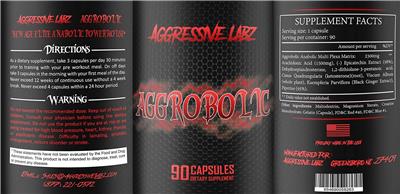
New age elite anabolic powerhouse
Proudly made in the USA
Suggested/Recommended/Usage/Directions
Directions As a dietary supplement, take 3 capsules per day 30 minutes prior to training with your pre workout meal. On off days take 3 capsules in the morning with your first meal of the day. Never exceed 12 weeks of continuous use without a 4 week break. Never exceed 4 capsules within a 24 hour period.
Precautions
Never exceed 12 weeks of continuous use without a 4 week break. Never exceed 4 capsules within a 24 hour period.
Warning Do not exceed the recommended dose.
Keep out of reach of children.
Consult your physician before using the dietary supplement. Do not use the product if you are at risk or are being treated for high blood pressure, heart, kidney, thyroid, or psychiatric disease. Difficulty in lainating, prostate, enlargement, seizure disorder or stroke.
FDA Disclaimer Statement
These statements have not been evaluated by the Food and Drug Administration. This product is not intended to diagnose, treat, cure or prevent any disease.
General Statements
Email: [email protected] (877) 221-0372
FDA Statement of Identity
Dietary Supplement
Is this label outdated? Report a formula or label change and our pharmacy team will review it.
Aggrobolic by Aggressive Labz label
The label scan from the NIH Dietary Supplement Label Database. Tap to enlarge.
Label images are published by the NIH Dietary Supplement Label Database for the version of this product on file. Always read your actual product label.
View the full label (PDF)The Ingredients in Aggrobolic by Aggressive Labz
These are the 8 active ingredients this product is made of. Select any to open its full monograph.
Serving size3 Capsule(s) Dosage formCapsule Servings per container90 Amounts shown are per serving.
Most supplement products combine several ingredients, and a medication can interact with the product through any one of them. Each ingredient below shows whether it has known drug interactions.
Aggrobolic Anabolic Multi Plexx Matrix
- › Arachidonic Acid
- › Dehydroepiandrosterone
- › (-) Epicatechin
- › 1,2-Dithiolane-3-Pentanoic Acid
- › Cissus quadrangularis
- › Viscum album
- › Black Ginger Extract
- › Piperine
Other (inactive) ingredients: Maltodextrin, Magnesium Stearate, Creatine Monohydrate, Gelatin, FD&C Red #40, FD&C Blue #1. These complete the product’s ingredient list but are not active constituents.
Aggrobolic by Aggressive Labz Drug Interactions
HelloPharmacist Interaction Report
Aggrobolic by Aggressive Labz contains several ingredients that interact with medications.
DHEA (dehydroepiandrosterone), one of the active components, carries Moderate interactions with antidepressants — in one case report, an SSRI combined with DHEA triggered a manic episode, and the risk may be higher in younger people.
Read the full breakdown — every affected drug type, severity by severity
DHEA also interacts Moderately with blood thinners and antiplatelet drugs (warfarin, aspirin, clopidogrel), raising bleeding risk; with CYP3A4 substrates, a large class of drugs whose blood levels DHEA may raise; with the sleep aid triazolam specifically, which DHEA can concentrate in the blood; and with hormone-related cancer drugs including aromatase inhibitors, tamoxifen, and fulvestrant, potentially weakening their anti-estrogen effects. DHEA may also reduce effectiveness of the tuberculosis vaccine.
Alpha-lipoic acid (1,2-dithiolane-3-pentanoic acid) carries Moderate interactions with blood thinners and antiplatelet drugs, chemotherapy drugs (alkylating agents and antitumor antibiotics), and thyroid hormone replacement, and a Minor interaction with diabetes medications that could raise the risk of low blood sugar (hypoglycemia). Cissus quadrangularis interacts Moderately with diabetes drugs, also raising hypoglycemia risk.
European mistletoe (Viscum album) interacts Moderately with blood pressure medications and immunosuppressants.
We could not check arachidonic acid, epicatechin, black ginger extract, or piperine — no interaction data is on file for them. Altogether, these interactions span 1,116 individual medications.
Run your exact prescriptions through the interaction checker on this page before you start.
Check your own medications below · Editorial policy · How we use AI
Want to check YOUR meds against Aggrobolic?
Ask about interactions with your drugs in plain English — “Can I take it with lisinopril?” — and we find you the answer in seconds, ingredient by ingredient.
Go to the checkerIngredients driving the most interactions
Individual Drug Interactions
The ingredients in Aggrobolic interact with 1,338 drugs. Click any drug to see the details.
6 of the 8 ingredients in Aggrobolic interact with drugs. Each result below shows which ingredient is responsible. Piperine Black Ginger Extract Dehydroepiandrosterone Viscum album 1,2-Dithiolane-3-Pentanoic Acid Cissus quadrangularis
Acetaminophen, Chlorpheniramine, PhenylephrineAlka-Seltzer PLUS, Histex SR, Protid
How Acetaminophen, Chlorpheniramine, Phenylephrine interacts with Aggrobolic — through 3 ingredients. Tap an ingredient for the detail:
DehydroepiandrosteroneCytochrome P450 3a4 (cyp3a4) Substrates Moderate
Interaction Summary
Theoretically, DHEA might increase the levels of drugs metabolized by CYP3A4.
Read the full Dehydroepiandrosterone + Acetaminophen, Chlorpheniramine, Phenylephrine interactionBlack Ginger ExtractCytochrome P450 1a2 (cyp1a2) Substrates, Cytochrome P450 3a4 (cyp3a4) Substrates Moderate
Interaction Summary
Theoretically, ginger might increase the levels of CYP1A2 substrates.
Read the full Black Ginger Extract + Acetaminophen, Chlorpheniramine, Phenylephrine interactionPiperineCytochrome P450 3a4 (cyp3a4) Substrates, Cytochrome P450 1a2 (cyp1a2) Substrates Moderate
Interaction Summary
Theoretically, black pepper might increase levels of drugs metabolized by CYP3A4.
Read the full Piperine + Acetaminophen, Chlorpheniramine, Phenylephrine interactionAcetaminophen, Chlorpheniramine, Phenylephrine, SalicylamideRhinogesic, Rhinogesic JR
How Acetaminophen, Chlorpheniramine, Phenylephrine, Salicylamide interacts with Aggrobolic — through 3 ingredients. Tap an ingredient for the detail:
PiperineCytochrome P450 3a4 (cyp3a4) Substrates, Cytochrome P450 1a2 (cyp1a2) Substrates Moderate
Interaction Summary
Theoretically, black pepper might increase levels of drugs metabolized by CYP3A4.
Read the full Piperine + Acetaminophen, Chlorpheniramine, Phenylephrine, Salicylamide interactionDehydroepiandrosteroneCytochrome P450 3a4 (cyp3a4) Substrates Moderate
Interaction Summary
Theoretically, DHEA might increase the levels of drugs metabolized by CYP3A4.
Read the full Dehydroepiandrosterone + Acetaminophen, Chlorpheniramine, Phenylephrine, Salicylamide interactionBlack Ginger ExtractCytochrome P450 3a4 (cyp3a4) Substrates, Cytochrome P450 1a2 (cyp1a2) Substrates Moderate
Interaction Summary
Ginger might increase or decrease the levels of CYP3A4 substrates.
Read the full Black Ginger Extract + Acetaminophen, Chlorpheniramine, Phenylephrine, Salicylamide interactionAcetaminophen, Chlorpheniramine, PhenylpropanolamineAlumadrine, Conex, Sinadrin Max Strength, Sinulin
How Acetaminophen, Chlorpheniramine, Phenylpropanolamine interacts with Aggrobolic — through 3 ingredients. Tap an ingredient for the detail:
Black Ginger ExtractCytochrome P450 1a2 (cyp1a2) Substrates, Cytochrome P450 3a4 (cyp3a4) Substrates Moderate
Interaction Summary
Theoretically, ginger might increase the levels of CYP1A2 substrates.
Read the full Black Ginger Extract + Acetaminophen, Chlorpheniramine, Phenylpropanolamine interactionPiperineCytochrome P450 1a2 (cyp1a2) Substrates, Cytochrome P450 3a4 (cyp3a4) Substrates Moderate
Interaction Summary
Theoretically, black pepper might decrease levels and clinical effects of drugs metabolized by CYP1A2.
Read the full Piperine + Acetaminophen, Chlorpheniramine, Phenylpropanolamine interactionDehydroepiandrosteroneCytochrome P450 3a4 (cyp3a4) Substrates Moderate
Interaction Summary
Theoretically, DHEA might increase the levels of drugs metabolized by CYP3A4.
Read the full Dehydroepiandrosterone + Acetaminophen, Chlorpheniramine, Phenylpropanolamine interactionAcetaminophen, Chlorpheniramine, Phenylpropanolamine, OpiumHista-Derfule
How Acetaminophen, Chlorpheniramine, Phenylpropanolamine, Opium interacts with Aggrobolic — through 3 ingredients. Tap an ingredient for the detail:
DehydroepiandrosteroneCytochrome P450 3a4 (cyp3a4) Substrates Moderate
Interaction Summary
Theoretically, DHEA might increase the levels of drugs metabolized by CYP3A4.
Read the full Dehydroepiandrosterone + Acetaminophen, Chlorpheniramine, Phenylpropanolamine, Opium interactionBlack Ginger ExtractCytochrome P450 3a4 (cyp3a4) Substrates, Cytochrome P450 1a2 (cyp1a2) Substrates Moderate
Interaction Summary
Ginger might increase or decrease the levels of CYP3A4 substrates.
Read the full Black Ginger Extract + Acetaminophen, Chlorpheniramine, Phenylpropanolamine, Opium interactionPiperineCytochrome P450 1a2 (cyp1a2) Substrates, Cytochrome P450 3a4 (cyp3a4) Substrates Moderate
Interaction Summary
Theoretically, black pepper might decrease levels and clinical effects of drugs metabolized by CYP1A2.
Read the full Piperine + Acetaminophen, Chlorpheniramine, Phenylpropanolamine, Opium interactionAcetaminophen, Chlorpheniramine, Phenylpropanolamine, PhenyltoloxamineNorel Plus
How Acetaminophen, Chlorpheniramine, Phenylpropanolamine, Phenyltoloxamine interacts with Aggrobolic — through 3 ingredients. Tap an ingredient for the detail:
PiperineCytochrome P450 1a2 (cyp1a2) Substrates, Cytochrome P450 3a4 (cyp3a4) Substrates Moderate
Interaction Summary
Theoretically, black pepper might decrease levels and clinical effects of drugs metabolized by CYP1A2.
Read the full Piperine + Acetaminophen, Chlorpheniramine, Phenylpropanolamine, Phenyltoloxamine interactionDehydroepiandrosteroneCytochrome P450 3a4 (cyp3a4) Substrates Moderate
Interaction Summary
Theoretically, DHEA might increase the levels of drugs metabolized by CYP3A4.
Read the full Dehydroepiandrosterone + Acetaminophen, Chlorpheniramine, Phenylpropanolamine, Phenyltoloxamine interactionBlack Ginger ExtractCytochrome P450 1a2 (cyp1a2) Substrates, Cytochrome P450 3a4 (cyp3a4) Substrates Moderate
Interaction Summary
Theoretically, ginger might increase the levels of CYP1A2 substrates.
Read the full Black Ginger Extract + Acetaminophen, Chlorpheniramine, Phenylpropanolamine, Phenyltoloxamine interactionAcetaminophen, Chlorpheniramine, PseudoephedrineAlka-Seltzer PLUS Liquid Gels, Children's Tylenol Cold, Codimal, Comtrex, Extra Strength Tylenol Allergy Sinus, Lorsin +3 more
How Acetaminophen, Chlorpheniramine, Pseudoephedrine interacts with Aggrobolic — through 3 ingredients. Tap an ingredient for the detail:
Black Ginger ExtractCytochrome P450 3a4 (cyp3a4) Substrates, Cytochrome P450 1a2 (cyp1a2) Substrates Moderate
Interaction Summary
Ginger might increase or decrease the levels of CYP3A4 substrates.
Read the full Black Ginger Extract + Acetaminophen, Chlorpheniramine, Pseudoephedrine interactionPiperineCytochrome P450 1a2 (cyp1a2) Substrates, Cytochrome P450 3a4 (cyp3a4) Substrates Moderate
Interaction Summary
Theoretically, black pepper might decrease levels and clinical effects of drugs metabolized by CYP1A2.
Read the full Piperine + Acetaminophen, Chlorpheniramine, Pseudoephedrine interactionDehydroepiandrosteroneCytochrome P450 3a4 (cyp3a4) Substrates Moderate
Interaction Summary
Theoretically, DHEA might increase the levels of drugs metabolized by CYP3A4.
Read the full Dehydroepiandrosterone + Acetaminophen, Chlorpheniramine, Pseudoephedrine interactionAcetaminophen, Chlorzoxazone, CodeineAcetazone Forte C8, Parafon Forte C8
How Acetaminophen, Chlorzoxazone, Codeine interacts with Aggrobolic — through 2 ingredients. Tap an ingredient for the detail:
PiperineCytochrome P450 1a2 (cyp1a2) Substrates, Cytochrome P450 2d6 (cyp2d6) Substrates Moderate
Interaction Summary
Theoretically, black pepper might decrease levels and clinical effects of drugs metabolized by CYP1A2.
Read the full Piperine + Acetaminophen, Chlorzoxazone, Codeine interactionBlack Ginger ExtractCytochrome P450 1a2 (cyp1a2) Substrates Minor
Interaction Summary
Theoretically, ginger might increase the levels of CYP1A2 substrates.
Read the full Black Ginger Extract + Acetaminophen, Chlorzoxazone, Codeine interactionAcetaminophen, CodeineTylenol No.3, Tylenol w/ Codeine
How Acetaminophen, Codeine interacts with Aggrobolic — through 2 ingredients. Tap an ingredient for the detail:
PiperineCytochrome P450 1a2 (cyp1a2) Substrates, Cytochrome P450 2d6 (cyp2d6) Substrates Moderate
Interaction Summary
Theoretically, black pepper might decrease levels and clinical effects of drugs metabolized by CYP1A2.
Read the full Piperine + Acetaminophen, Codeine interactionBlack Ginger ExtractCytochrome P450 1a2 (cyp1a2) Substrates Minor
Interaction Summary
Theoretically, ginger might increase the levels of CYP1A2 substrates.
Read the full Black Ginger Extract + Acetaminophen, Codeine interactionAcetaminophen, Codeine, DoxylamineMersyndol
How Acetaminophen, Codeine, Doxylamine interacts with Aggrobolic — through 2 ingredients. Tap an ingredient for the detail:
PiperineCytochrome P450 2d6 (cyp2d6) Substrates, Cytochrome P450 1a2 (cyp1a2) Substrates Moderate
Interaction Summary
Theoretically, black pepper might increase levels of drugs metabolized by CYP2D6.
Read the full Piperine + Acetaminophen, Codeine, Doxylamine interactionBlack Ginger ExtractCytochrome P450 1a2 (cyp1a2) Substrates Minor
Interaction Summary
Theoretically, ginger might increase the levels of CYP1A2 substrates.
Read the full Black Ginger Extract + Acetaminophen, Codeine, Doxylamine interactionAcetaminophen, Codeine, MethocarbamolAcetaminophen, Codeine, Methocarbamol, Robaxacet 8
How Acetaminophen, Codeine, Methocarbamol interacts with Aggrobolic — through 2 ingredients. Tap an ingredient for the detail:
PiperineCytochrome P450 1a2 (cyp1a2) Substrates, Cytochrome P450 2d6 (cyp2d6) Substrates Moderate
Interaction Summary
Theoretically, black pepper might decrease levels and clinical effects of drugs metabolized by CYP1A2.
Read the full Piperine + Acetaminophen, Codeine, Methocarbamol interactionBlack Ginger ExtractCytochrome P450 1a2 (cyp1a2) Substrates Minor
Interaction Summary
Theoretically, ginger might increase the levels of CYP1A2 substrates.
Read the full Black Ginger Extract + Acetaminophen, Codeine, Methocarbamol interactionAcetaminophen, DextromethorphanTylenol Cough Ex Strength
How Acetaminophen, Dextromethorphan interacts with Aggrobolic — through 3 ingredients. Tap an ingredient for the detail:
PiperineCytochrome P450 1a2 (cyp1a2) Substrates, Cytochrome P450 3a4 (cyp3a4) Substrates +1 Moderate
Interaction Summary
Theoretically, black pepper might decrease levels and clinical effects of drugs metabolized by CYP1A2.
Read the full Piperine + Acetaminophen, Dextromethorphan interactionBlack Ginger ExtractCytochrome P450 1a2 (cyp1a2) Substrates, Cytochrome P450 3a4 (cyp3a4) Substrates Moderate
Interaction Summary
Theoretically, ginger might increase the levels of CYP1A2 substrates.
Read the full Black Ginger Extract + Acetaminophen, Dextromethorphan interactionDehydroepiandrosteroneCytochrome P450 3a4 (cyp3a4) Substrates Moderate
Interaction Summary
Theoretically, DHEA might increase the levels of drugs metabolized by CYP3A4.
Read the full Dehydroepiandrosterone + Acetaminophen, Dextromethorphan interactionAcetaminophen, Dextromethorphan, Doxylamine, PseudoephedrineVicks NyQuil
How Acetaminophen, Dextromethorphan, Doxylamine, Pseudoephedrine interacts with Aggrobolic — through 3 ingredients. Tap an ingredient for the detail:
DehydroepiandrosteroneCytochrome P450 3a4 (cyp3a4) Substrates Moderate
Interaction Summary
Theoretically, DHEA might increase the levels of drugs metabolized by CYP3A4.
Read the full Dehydroepiandrosterone + Acetaminophen, Dextromethorphan, Doxylamine, Pseudoephedrine interactionPiperineCytochrome P450 2d6 (cyp2d6) Substrates, Cytochrome P450 3a4 (cyp3a4) Substrates +1 Moderate
Interaction Summary
Theoretically, black pepper might increase levels of drugs metabolized by CYP2D6.
Read the full Piperine + Acetaminophen, Dextromethorphan, Doxylamine, Pseudoephedrine interactionBlack Ginger ExtractCytochrome P450 1a2 (cyp1a2) Substrates, Cytochrome P450 3a4 (cyp3a4) Substrates Moderate
Interaction Summary
Theoretically, ginger might increase the levels of CYP1A2 substrates.
Read the full Black Ginger Extract + Acetaminophen, Dextromethorphan, Doxylamine, Pseudoephedrine interactionAcetaminophen, Dextromethorphan, Guaifenesin, PhenylephrineConar-A
How Acetaminophen, Dextromethorphan, Guaifenesin, Phenylephrine interacts with Aggrobolic — through 3 ingredients. Tap an ingredient for the detail:
Black Ginger ExtractCytochrome P450 3a4 (cyp3a4) Substrates, Cytochrome P450 1a2 (cyp1a2) Substrates Moderate
Interaction Summary
Ginger might increase or decrease the levels of CYP3A4 substrates.
Read the full Black Ginger Extract + Acetaminophen, Dextromethorphan, Guaifenesin, Phenylephrine interactionPiperineCytochrome P450 2d6 (cyp2d6) Substrates, Cytochrome P450 1a2 (cyp1a2) Substrates +1 Moderate
Interaction Summary
Theoretically, black pepper might increase levels of drugs metabolized by CYP2D6.
Read the full Piperine + Acetaminophen, Dextromethorphan, Guaifenesin, Phenylephrine interactionDehydroepiandrosteroneCytochrome P450 3a4 (cyp3a4) Substrates Moderate
Interaction Summary
Theoretically, DHEA might increase the levels of drugs metabolized by CYP3A4.
Read the full Dehydroepiandrosterone + Acetaminophen, Dextromethorphan, Guaifenesin, Phenylephrine interactionAcetaminophen, Dextromethorphan, Guaifenesin, PhenylpropanolamineAnatuss
How Acetaminophen, Dextromethorphan, Guaifenesin, Phenylpropanolamine interacts with Aggrobolic — through 3 ingredients. Tap an ingredient for the detail:
PiperineCytochrome P450 1a2 (cyp1a2) Substrates, Cytochrome P450 2d6 (cyp2d6) Substrates +1 Moderate
Interaction Summary
Theoretically, black pepper might decrease levels and clinical effects of drugs metabolized by CYP1A2.
Read the full Piperine + Acetaminophen, Dextromethorphan, Guaifenesin, Phenylpropanolamine interactionBlack Ginger ExtractCytochrome P450 1a2 (cyp1a2) Substrates, Cytochrome P450 3a4 (cyp3a4) Substrates Moderate
Interaction Summary
Theoretically, ginger might increase the levels of CYP1A2 substrates.
Read the full Black Ginger Extract + Acetaminophen, Dextromethorphan, Guaifenesin, Phenylpropanolamine interactionDehydroepiandrosteroneCytochrome P450 3a4 (cyp3a4) Substrates Moderate
Interaction Summary
Theoretically, DHEA might increase the levels of drugs metabolized by CYP3A4.
Read the full Dehydroepiandrosterone + Acetaminophen, Dextromethorphan, Guaifenesin, Phenylpropanolamine interactionAcetaminophen, Dextromethorphan, Guaifenesin, PseudoephedrineRobitussin Cold, Severe Cold, Suphedrine Cold/Cough
How Acetaminophen, Dextromethorphan, Guaifenesin, Pseudoephedrine interacts with Aggrobolic — through 3 ingredients. Tap an ingredient for the detail:
PiperineCytochrome P450 2d6 (cyp2d6) Substrates, Cytochrome P450 3a4 (cyp3a4) Substrates +1 Moderate
Interaction Summary
Theoretically, black pepper might increase levels of drugs metabolized by CYP2D6.
Read the full Piperine + Acetaminophen, Dextromethorphan, Guaifenesin, Pseudoephedrine interactionDehydroepiandrosteroneCytochrome P450 3a4 (cyp3a4) Substrates Moderate
Interaction Summary
Theoretically, DHEA might increase the levels of drugs metabolized by CYP3A4.
Read the full Dehydroepiandrosterone + Acetaminophen, Dextromethorphan, Guaifenesin, Pseudoephedrine interactionBlack Ginger ExtractCytochrome P450 3a4 (cyp3a4) Substrates, Cytochrome P450 1a2 (cyp1a2) Substrates Moderate
Interaction Summary
Ginger might increase or decrease the levels of CYP3A4 substrates.
Read the full Black Ginger Extract + Acetaminophen, Dextromethorphan, Guaifenesin, Pseudoephedrine interactionAcetaminophen, Dextromethorphan, Phenylpropanolamine, PyrilamineTheracaps
How Acetaminophen, Dextromethorphan, Phenylpropanolamine, Pyrilamine interacts with Aggrobolic — through 3 ingredients. Tap an ingredient for the detail:
Black Ginger ExtractCytochrome P450 1a2 (cyp1a2) Substrates, Cytochrome P450 3a4 (cyp3a4) Substrates Moderate
Interaction Summary
Theoretically, ginger might increase the levels of CYP1A2 substrates.
Read the full Black Ginger Extract + Acetaminophen, Dextromethorphan, Phenylpropanolamine, Pyrilamine interactionDehydroepiandrosteroneCytochrome P450 3a4 (cyp3a4) Substrates Moderate
Interaction Summary
Theoretically, DHEA might increase the levels of drugs metabolized by CYP3A4.
Read the full Dehydroepiandrosterone + Acetaminophen, Dextromethorphan, Phenylpropanolamine, Pyrilamine interactionPiperineCytochrome P450 2d6 (cyp2d6) Substrates, Cytochrome P450 3a4 (cyp3a4) Substrates +1 Moderate
Interaction Summary
Theoretically, black pepper might increase levels of drugs metabolized by CYP2D6.
Read the full Piperine + Acetaminophen, Dextromethorphan, Phenylpropanolamine, Pyrilamine interactionAcetaminophen, Dextromethorphan, PseudoephedrineAlka-Seltzer PLUS Flu Liquid Gels, Non Aspirin Cold Caps, Tylenol Cold, Tylenol Flu Daytime Ex Strength, Tylenol Flu Ex Strength
How Acetaminophen, Dextromethorphan, Pseudoephedrine interacts with Aggrobolic — through 3 ingredients. Tap an ingredient for the detail:
PiperineCytochrome P450 1a2 (cyp1a2) Substrates, Cytochrome P450 3a4 (cyp3a4) Substrates +1 Moderate
Interaction Summary
Theoretically, black pepper might decrease levels and clinical effects of drugs metabolized by CYP1A2.
Read the full Piperine + Acetaminophen, Dextromethorphan, Pseudoephedrine interactionBlack Ginger ExtractCytochrome P450 3a4 (cyp3a4) Substrates, Cytochrome P450 1a2 (cyp1a2) Substrates Moderate
Interaction Summary
Ginger might increase or decrease the levels of CYP3A4 substrates.
Read the full Black Ginger Extract + Acetaminophen, Dextromethorphan, Pseudoephedrine interactionDehydroepiandrosteroneCytochrome P450 3a4 (cyp3a4) Substrates Moderate
Interaction Summary
Theoretically, DHEA might increase the levels of drugs metabolized by CYP3A4.
Read the full Dehydroepiandrosterone + Acetaminophen, Dextromethorphan, Pseudoephedrine interactionAcetaminophen, HydrocodoneAnexsia, Anodynos DHC, Azdone, Co-Gesic, Doucet, Lorcet +9 more
How Acetaminophen, Hydrocodone interacts with Aggrobolic — through 3 ingredients. Tap an ingredient for the detail:
PiperineCytochrome P450 1a2 (cyp1a2) Substrates, Cytochrome P450 2d6 (cyp2d6) Substrates +1 Moderate
Interaction Summary
Theoretically, black pepper might decrease levels and clinical effects of drugs metabolized by CYP1A2.
Read the full Piperine + Acetaminophen, Hydrocodone interactionBlack Ginger ExtractCytochrome P450 1a2 (cyp1a2) Substrates, Cytochrome P450 3a4 (cyp3a4) Substrates Moderate
Interaction Summary
Theoretically, ginger might increase the levels of CYP1A2 substrates.
Read the full Black Ginger Extract + Acetaminophen, Hydrocodone interactionDehydroepiandrosteroneCytochrome P450 3a4 (cyp3a4) Substrates Moderate
Interaction Summary
Theoretically, DHEA might increase the levels of drugs metabolized by CYP3A4.
Read the full Dehydroepiandrosterone + Acetaminophen, Hydrocodone interactionAcetaminophen, IbuprofenCombogesic
How Acetaminophen, Ibuprofen interacts with Aggrobolic — through 4 ingredients. Tap an ingredient for the detail:
Black Ginger ExtractCytochrome P450 2c9 (cyp2c9) Substrates, Cytochrome P450 1a2 (cyp1a2) Substrates +1 Moderate
Interaction Summary
Theoretically, ginger might increase the levels of CYP2C9 substrates.
Read the full Black Ginger Extract + Acetaminophen, Ibuprofen interactionPiperineCytochrome P450 1a2 (cyp1a2) Substrates, Anticoagulant/antiplatelet Drugs Moderate
Interaction Summary
Theoretically, black pepper might decrease levels and clinical effects of drugs metabolized by CYP1A2.
Read the full Piperine + Acetaminophen, Ibuprofen interactionDehydroepiandrosteroneAnticoagulant/antiplatelet Drugs Moderate
Interaction Summary
Theoretically, DHEA might increase the risk of bleeding if used with anticoagulant or antiplatelet drugs.
Read the full Dehydroepiandrosterone + Acetaminophen, Ibuprofen interaction1,2-dithiolane-3-pentanoic AcidAnticoagulant/antiplatelet Drugs Moderate
Interaction Summary
Theoretically, alpha-lipoic acid may have antiplatelet effects and may increase the risk of bleeding if used with anticoagulant or antiplatelet drugs.
Read the full 1,2-dithiolane-3-pentanoic Acid + Acetaminophen, Ibuprofen interactionAcetaminophen, MeperidineDemerol APAP
How Acetaminophen, Meperidine interacts with Aggrobolic — through 2 ingredients. Tap an ingredient for the detail:
PiperineCytochrome P450 2d6 (cyp2d6) Substrates, Cytochrome P450 1a2 (cyp1a2) Substrates Moderate
Interaction Summary
Theoretically, black pepper might increase levels of drugs metabolized by CYP2D6.
Read the full Piperine + Acetaminophen, Meperidine interactionBlack Ginger ExtractCytochrome P450 1a2 (cyp1a2) Substrates Minor
Interaction Summary
Theoretically, ginger might increase the levels of CYP1A2 substrates.
Read the full Black Ginger Extract + Acetaminophen, Meperidine interactionAcetaminophen, OxycodonePercocet, Roxicet, Tylox, Xartemis XR
How Acetaminophen, Oxycodone interacts with Aggrobolic — through 2 ingredients. Tap an ingredient for the detail:
PiperineCytochrome P450 1a2 (cyp1a2) Substrates, Cytochrome P450 2d6 (cyp2d6) Substrates Moderate
Interaction Summary
Theoretically, black pepper might decrease levels and clinical effects of drugs metabolized by CYP1A2.
Read the full Piperine + Acetaminophen, Oxycodone interactionBlack Ginger ExtractCytochrome P450 1a2 (cyp1a2) Substrates Minor
Interaction Summary
Theoretically, ginger might increase the levels of CYP1A2 substrates.
Read the full Black Ginger Extract + Acetaminophen, Oxycodone interactionAcetaminophen, Phenylephrine, ChlorpheniramineSuper Cold Tabs
How Acetaminophen, Phenylephrine, Chlorpheniramine interacts with Aggrobolic — through 3 ingredients. Tap an ingredient for the detail:
Black Ginger ExtractCytochrome P450 1a2 (cyp1a2) Substrates, Cytochrome P450 3a4 (cyp3a4) Substrates Moderate
Interaction Summary
Theoretically, ginger might increase the levels of CYP1A2 substrates.
Read the full Black Ginger Extract + Acetaminophen, Phenylephrine, Chlorpheniramine interactionPiperineCytochrome P450 1a2 (cyp1a2) Substrates, Cytochrome P450 3a4 (cyp3a4) Substrates Moderate
Interaction Summary
Theoretically, black pepper might decrease levels and clinical effects of drugs metabolized by CYP1A2.
Read the full Piperine + Acetaminophen, Phenylephrine, Chlorpheniramine interactionDehydroepiandrosteroneCytochrome P450 3a4 (cyp3a4) Substrates Moderate
Interaction Summary
Theoretically, DHEA might increase the levels of drugs metabolized by CYP3A4.
Read the full Dehydroepiandrosterone + Acetaminophen, Phenylephrine, Chlorpheniramine interactionAcetaminophen, PropoxypheneDarvocet-N 100, Darvocet-N 50, E-Lor, Wygesic
How Acetaminophen, Propoxyphene interacts with Aggrobolic — through 2 ingredients. Tap an ingredient for the detail:
PiperineCytochrome P450 2d6 (cyp2d6) Substrates, Cytochrome P450 1a2 (cyp1a2) Substrates Moderate
Interaction Summary
Theoretically, black pepper might increase levels of drugs metabolized by CYP2D6.
Read the full Piperine + Acetaminophen, Propoxyphene interactionBlack Ginger ExtractCytochrome P450 1a2 (cyp1a2) Substrates Minor
Interaction Summary
Theoretically, ginger might increase the levels of CYP1A2 substrates.
Read the full Black Ginger Extract + Acetaminophen, Propoxyphene interactionAcetazolamideAk-Zol, Diamox
How Acetazolamide interacts with Aggrobolic — through 1 ingredient. Tap an ingredient for the detail:
Viscum AlbumAntihypertensive Drugs Moderate
Interaction Summary
Theoretically, European mistletoe might increase the risk of hypotension when taken with antihypertensive drugs.
Read the full Viscum Album + Acetazolamide interactionAcetohexamideDymelor
How Acetohexamide interacts with Aggrobolic — through 4 ingredients. Tap an ingredient for the detail:
Black Ginger ExtractAntidiabetes Drugs Moderate
Interaction Summary
Theoretically, taking ginger with antidiabetes drugs might increase the risk of hypoglycemia.
Read the full Black Ginger Extract + Acetohexamide interactionPiperineAntidiabetes Drugs Moderate
Interaction Summary
Theoretically, black pepper might increase the risk of hypoglycemia when taken with antidiabetes drugs.
Read the full Piperine + Acetohexamide interactionCissus QuadrangularisAntidiabetes Drugs Moderate
Interaction Summary
Theoretically, Cissus quadrangularis might increase the risk of hypoglycemia when taken with antidiabetes drugs.
Read the full Cissus Quadrangularis + Acetohexamide interaction1,2-dithiolane-3-pentanoic AcidAntidiabetes Drugs Minor
Interaction Summary
Theoretically, taking alpha-lipoic acid with antidiabetes drugs might increase the risk of hypoglycemia.
Read the full 1,2-dithiolane-3-pentanoic Acid + Acetohexamide interactionAcetylsalicylic AcidEntrophen
How Acetylsalicylic Acid interacts with Aggrobolic — through 4 ingredients. Tap an ingredient for the detail:
DehydroepiandrosteroneAnticoagulant/antiplatelet Drugs Moderate
Interaction Summary
Theoretically, DHEA might increase the risk of bleeding if used with anticoagulant or antiplatelet drugs.
Read the full Dehydroepiandrosterone + Acetylsalicylic Acid interaction1,2-dithiolane-3-pentanoic AcidAnticoagulant/antiplatelet Drugs Moderate
Interaction Summary
Theoretically, alpha-lipoic acid may have antiplatelet effects and may increase the risk of bleeding if used with anticoagulant or antiplatelet drugs.
Read the full 1,2-dithiolane-3-pentanoic Acid + Acetylsalicylic Acid interactionBlack Ginger ExtractAnticoagulant/antiplatelet Drugs Moderate
Interaction Summary
Ginger may have antiplatelet effects and may increase the risk of bleeding if used with anticoagulant or antiplatelet drugs.
Read the full Black Ginger Extract + Acetylsalicylic Acid interactionPiperineAnticoagulant/antiplatelet Drugs Moderate
Interaction Summary
Theoretically, black pepper might increase the risk of bleeding when taken with antiplatelet or anticoagulant drugs.
Read the full Piperine + Acetylsalicylic Acid interactionAdagrasibKrazati
How Adagrasib interacts with Aggrobolic — through 3 ingredients. Tap an ingredient for the detail:
PiperineCytochrome P450 3a4 (cyp3a4) Substrates Moderate
Interaction Summary
Theoretically, black pepper might increase levels of drugs metabolized by CYP3A4.
Read the full Piperine + Adagrasib interactionDehydroepiandrosteroneCytochrome P450 3a4 (cyp3a4) Substrates Moderate
Interaction Summary
Theoretically, DHEA might increase the levels of drugs metabolized by CYP3A4.
Read the full Dehydroepiandrosterone + Adagrasib interactionBlack Ginger ExtractCytochrome P450 3a4 (cyp3a4) Substrates Moderate
Interaction Summary
Ginger might increase or decrease the levels of CYP3A4 substrates.
Read the full Black Ginger Extract + Adagrasib interactionAdalimumabHumira
How Adalimumab interacts with Aggrobolic — through 1 ingredient. Tap an ingredient for the detail:
Viscum AlbumImmunosuppressants Moderate
Interaction Summary
Theoretically, European mistletoe might decrease the effectiveness of immunosuppressants.
Read the full Viscum Album + Adalimumab interactionAdalimumab-adazHyrimoz
How Adalimumab-adaz interacts with Aggrobolic — through 1 ingredient. Tap an ingredient for the detail:
Viscum AlbumImmunosuppressants Moderate
Interaction Summary
Theoretically, European mistletoe might decrease the effectiveness of immunosuppressants.
Read the full Viscum Album + Adalimumab-adaz interactionAdalimumab-adbmCyltezo
How Adalimumab-adbm interacts with Aggrobolic — through 1 ingredient. Tap an ingredient for the detail:
Viscum AlbumImmunosuppressants Moderate
Interaction Summary
Theoretically, European mistletoe might decrease the effectiveness of immunosuppressants.
Read the full Viscum Album + Adalimumab-adbm interactionEach ingredient & the kinds of drugs it affects
For each ingredient in Aggrobolic with known interactions, here are the types of medications they can affect. Open any type for the detail — or search your exact drug in the checker above.
Piperine
Anticoagulant/Antiplatelet Drugs
Theoretically, black pepper might increase the risk of bleeding when taken with antiplatelet or anticoagulant drugs.
In vitro research shows that piperine, a constituent of black pepper, seems to inhibit platelet aggregation. This has not been reported in humans.
Antidiabetes Drugs
Theoretically, black pepper might increase the risk of hypoglycemia when taken with antidiabetes drugs.
Animal research shows that piperine, a constituent of black pepper, can reduce blood glucose levels. Monitor blood glucose levels closely. Dose adjustments might be necessary.
Atorvastatin (Lipitor)
Theoretically, black pepper might increase blood levels of atorvastatin.
Animal research shows that taking piperine, a constituent of black pepper, 35 mg/kg can increase the maximum serum concentration of atorvastatin three-fold. This has not been reported in humans.
Cyclosporine (Neoral, Sandimmune)
Theoretically, black pepper might increase the effects and side effects of cyclosporine.
In vitro research shows that piperine, a constituent of black pepper, increases the bioavailability of cyclosporine. This has not been reported in humans.
Cytochrome P450 2D6 (Cyp2D6) Substrates
Theoretically, black pepper might increase levels of drugs metabolized by CYP2D6.
In vitro research suggests that some constituents of black pepper inhibit CYP2D6. This has not been reported in humans.
Cytochrome P450 3A4 (Cyp3A4) Substrates
Theoretically, black pepper might increase levels of drugs metabolized by CYP3A4.
In vitro research and pharmacokinetic simulation data suggest that piperine, a constituent of black pepper, as well as the pepper fruit seem to inhibit CYP3A4. This has not been reported in humans.
Lithium
Theoretically, black pepper might increase blood levels of lithium due to its diuretic effects. The dose of lithium might need to be reduced.
Black pepper is thought to have diuretic properties.
Nevirapine (Viramune)
Black pepper might increase blood levels of nevirapine.
Clinical research shows that piperine, a constituent of black pepper, increases the plasma concentration of nevirapine. However, no adverse effects were observed in this study.
P-Glycoprotein Substrates
Theoretically, black pepper might increase levels of P-glycoprotein substrates.
In vitro research shows that piperine, a constituent of black pepper, seems to inhibit P-glycoprotein.
Pentobarbital (Nembutal)
Theoretically, black pepper might increase the sedative effects of pentobarbital.
Animal research shows that piperine, a constituent of black pepper, increases pentobarbital-induced sleeping time.
Phenytoin (Dilantin)
Black pepper might increase blood levels of phenytoin.
Clinical research shows that piperine, a constituent of black pepper, seems to increase absorption, slow elimination, and increase levels of phenytoin. Taking a single dose of black pepper 1 gram along with phenytoin seems to double the serum concentration of phenytoin. Consuming a soup with black pepper providing piperine 44 mg/200 mL of soup along with phenytoin also seems to increase phenytoin levels when compared with consuming the same soup without black pepper.
Propranolol (Inderal)
Black pepper might increase blood levels of propranolol.
Clinical research shows that piperine, a constituent of black pepper, seems to increase absorption and slow elimination of propranolol.
Rifampin (Rifadin)
Black pepper might increase blood levels of rifampin.
Clinical research shows that piperine, a constituent of black pepper, seems to increase absorption and serum levels of rifampin.
Theophylline
Black pepper might increase blood levels of theophylline.
Clinical research shows that piperine, a constituent of black pepper, seems to increase absorption and slow elimination of theophylline.
Amoxicillin (Amoxil, Trimox)
Theoretically, black pepper might increase the effects and side effects of amoxicillin.
Animal research shows that taking piperine, a constituent of black pepper, with amoxicillin increases plasma levels of amoxicillin. This has not been reported in humans.
Carbamazepine (Tegretol)
Theoretically, black pepper might increase blood levels of carbamazepine, potentially increasing the effects and side effects of carbamazepine.
One clinical study in patients taking carbamazepine 300 mg or 500 mg twice daily shows that taking a single 20 mg dose of purified piperine, a constituent of black pepper, increases carbamazepine levels. Piperine may increase carbamazepine absorption by increasing blood flow to the GI tract, increasing the surface area of the small intestine, or inhibiting cytochrome P450 3A4 (CYP3A4) in the gut wall. Absorption was significantly increased by 7-10 mcg/mL/hour. The time to eliminate carbamazepine was also increased by 4-8 hours. Although carbamazepine levels were increased, this did not appear to increase side effects. In vitro research also shows that piperine can increase carbamazepine levels by 11% in a time-dependent manner.
Cytochrome P450 1A2 (Cyp1A2) Substrates
Theoretically, black pepper might decrease levels and clinical effects of drugs metabolized by CYP1A2.
In vitro research suggests that black pepper induces CYP1A2. This has not been reported in humans.
Black Ginger Extract
Anticoagulant/Antiplatelet Drugs
Ginger may have antiplatelet effects and may increase the risk of bleeding if used with anticoagulant or antiplatelet drugs. However, research is conflicting.
Laboratory research suggests that ginger inhibits thromboxane synthetase and decreases platelet aggregation. However, this has not been demonstrated unequivocally in humans, with mixed results from clinical trials. Theoretically, excessive amounts of ginger might increase the risk of bleeding when used with anticoagulant/antiplatelet drugs.
Antidiabetes Drugs
Theoretically, taking ginger with antidiabetes drugs might increase the risk of hypoglycemia.
Animal and human research suggests that ginger might increase insulin levels and/or decrease blood glucose levels.
Cytochrome P450 3A4 (Cyp3A4) Substrates
Ginger might increase or decrease the levels of CYP3A4 substrates.
In vitro research and some case reports suggest that ginger inhibits CYP3A4 activity. Three case reports from the World Health Organization (WHO) adverse drug reaction database describe increased toxicity in patients taking ginger and cancer medications that are CYP3A4 substrates (imatinib, dabrafenib, and crizotinib). However, the causality of this interaction is unclear due to the presence of multiple interacting drugs and routes of administration.
Conversely, other in vitro research suggests that ginger induces CYP3A4 activity, leading to reduced levels of CYP3A4 substrates. However, this interaction has not been reported in humans.
Losartan (Cozaar)
Theoretically, ginger might increase levels of losartan and the risk of hypotension.
In animal research, ginger increased the levels and hypotensive effects of a single dose of losartan. It is not clear if ginger alters the concentration or effects of losartan when taken continuously. Additionally, this interaction has not been shown in humans.
Nifedipine (Procardia)
Ginger may have antiplatelet effects and increase the risk of bleeding if used with nifedipine.
Clinical research shows that combined treatment with ginger 1 gram plus nifedipine 10 mg significantly inhibits platelet aggregation when compared to nifedipine or ginger alone.
P-Glycoprotein Substrates
Ginger might increase the absorption and blood levels of P-glycoprotein (P-gp) substrates.
In vitro research and case reports suggest that ginger inhibits drug efflux by P-gp, potentially increasing absorption and serum levels of P-gp substrates. Two case reports from the World Health Organization (WHO) adverse drug reaction database describe increased toxicity in patients taking ginger and cancer medications that are P-gp substrates (trametinib, crizotinib). However, the causality of this interaction is unclear due to the presence of multiple interacting drugs and routes of administration.
Phenprocoumon (Marcoumar, Others)
Ginger might increase the risk of bleeding with phenprocoumon.
Phenprocoumon, a warfarin-related anticoagulant, might increase the international normalized ratio (INR) when taken with ginger. There is one case report of a 76-year-old woman with a stable INR on phenprocoumon that increased to greater than 10 when she began consuming dried ginger and ginger tea.
Warfarin (Coumadin)
Ginger might increase the risk of bleeding with warfarin.
Laboratory research suggests that ginger might inhibit thromboxane synthetase and decrease platelet aggregation. In one case report, ginger increased the INR when taken with phenprocoumon, which has similar pharmacological effects as warfarin. In another case report, ginger increased the INR when taken with a combination of warfarin, hydrochlorothiazide, and acetaminophen. A longitudinal analysis suggests that taking ginger increases the risk of bleeding in patients taking warfarin for at least 4 months. However, research in healthy people suggests that ginger has no effect on INR, or the pharmacokinetics or pharmacodynamics of warfarin. Until more is known, monitor INRs closely in patients taking large amounts of ginger.
Calcium Channel Blockers
Theoretically, taking ginger with calcium channel blockers might increase the risk of hypotension.
Some animal and in vitro research suggests that ginger has hypotensive and calcium channel-blocking effects. Another animal study shows that concomitant administration of ginger and the calcium channel blocker amlodipine leads to greater reductions in blood pressure when compared with amlodipine alone.
Cyclosporine (Neoral, Sandimmune)
Theoretically, when taken prior to cyclosporine, ginger might decrease cyclosporine levels.
In an animal model, ginger juice taken 2 hours prior to cyclosporine administration reduced the maximum concentration and area under the curve of cyclosporine by 51% and 40%, respectively. This effect was not observed when ginger juice and cyclosporine were administered at the same time.
Cytochrome P450 1A2 (Cyp1A2) Substrates
Theoretically, ginger might increase the levels of CYP1A2 substrates.
In vitro research shows that ginger inhibits CYP1A2 activity. However, this interaction has not been reported in humans.
Cytochrome P450 2B6 (Cyp2B6) Substrates
Theoretically, ginger might increase the levels of CYP2B6 substrates.
In vitro research shows that ginger inhibits CYP2B6 activity. However, this interaction has not been reported in humans.
Cytochrome P450 2C9 (Cyp2C9) Substrates
Theoretically, ginger might increase the levels of CYP2C9 substrates.
In vitro research shows that ginger inhibits CYP2C9 activity. However, this interaction has not been reported in humans.
Metronidazole (Flagyl)
Theoretically, ginger might increase levels of metronidazole.
In an animal model, ginger increased the absorption and plasma half-life of metronidazole. In addition, the elimination rate and clearance of metronidazole was significantly reduced.
Dehydroepiandrosterone
Anticoagulant/Antiplatelet Drugs
Theoretically, DHEA might increase the risk of bleeding if used with anticoagulant or antiplatelet drugs.
Human and laboratory research show that DHEA and DHEA-S can inhibit platelet aggregation.
Antidepressant Drugs
Theoretically, DHEA might increase the risk of psychiatric adverse events when used with antidepressants.
In a human case report, the use of a selective serotonin reuptake inhibitor (SSRI) with DHEA caused a manic episode. Concern for this interaction may be greater in younger individuals with higher baseline DHEA levels.
Aromatase Inhibitors
Theoretically, DHEA might interfere with the clinical effects of aromatase inhibitors.
DHEA is a potent estrogen agonist, which may antagonize the anti-estrogen activity of aromatase inhibitors.
Cytochrome P450 3A4 (Cyp3A4) Substrates
Theoretically, DHEA might increase the levels of drugs metabolized by CYP3A4.
Some preliminary evidence shows that DHEA may inhibit CYP3A4; however, the clinical significance of this potential interaction is not known.
Fulvestrant (Faslodex)
Theoretically, DHEA might interfere with the anti-estrogen effects of fulvestrant.
DHEA is a potent estrogen agonist. Some research shows that it can overcome the estrogen receptor antagonist action of fulvestrant in estrogen-receptor positive cancer cells.
Tamoxifen (Nolvadex)
Theoretically, DHEA might interfere with the anti-estrogen effects of tamoxifen.
DHEA is a potent estrogen agonist. Some research shows that it can overcome the estrogen receptor antagonist activity of tamoxifen in estrogen-receptor positive cancer cells.
Triazolam (Halcion)
DHEA can increase blood levels of triazolam.
Administration of DHEA 200 mg daily for two weeks was shown to inhibit the cytochrome P450 3A4 (CYP3A4) metabolism of triazolam. This inhibition appears to be due to DHEA-S, rather than DHEA.
Tuberculosis Vaccine
DHEA might reduce the effectiveness of the tuberculosis vaccine.
Animal research shows that high doses of DHEA can reduce the efficacy of the Bacillus Calmette-Guérin (BCG) tuberculosis vaccine.
Estrogens
Theoretically, DHEA might increase the effects and adverse effects of estrogen therapy.
DHEA is a precursor to estrogen and androgen and is metabolized into those substances. In clinical research, DHEA supplements increase the levels of these hormones. Also, in clinical research, estrogen-progestin oral contraceptives and conjugated estrogens reduce blood levels of DHEA and DHEA-S. The clinical significance of these findings is unclear.
Testosterone
Theoretically, DHEA might increase the effects and side effects of testosterone therapy.
DHEA is a precursor to estrogen and androgen and is metabolized into those substances. In clinical research, DHEA supplements increase the levels of these hormones. The clinical significance of these findings is unclear.
Viscum album
Antihypertensive Drugs
Theoretically, European mistletoe might increase the risk of hypotension when taken with antihypertensive drugs.
Animal research suggests that European mistletoe extracts have hypotensive effects.
Immunosuppressants
Theoretically, European mistletoe might decrease the effectiveness of immunosuppressants.
Clinical and in vitro studies suggest that European mistletoe might have immunostimulant effects.
1,2-Dithiolane-3-Pentanoic Acid
Alkylating Agents
Theoretically, the antioxidant effects of alpha-lipoic acid might alter the effectiveness of alkylating agents.
The use of antioxidants like alpha-lipoic acid during chemotherapy is controversial. There are concerns that antioxidants could reduce the activity of chemotherapy drugs that generate free radicals. However, some researchers theorize that antioxidants might make chemotherapy more effective by reducing oxidative stress that might interfere with apoptosis (cell death) of cancer cells. More evidence is needed to determine what effect, if any, antioxidants such as alpha-lipoic acid have on chemotherapy. Advise patients to consult their oncologist before using alpha-lipoic acid.
Anticoagulant/Antiplatelet Drugs
Theoretically, alpha-lipoic acid may have antiplatelet effects and may increase the risk of bleeding if used with anticoagulant or antiplatelet drugs.
In vitro, alpha-lipoic acid inhibits platelet aggregation.
Antitumor Antibiotics
Theoretically, the antioxidant effects of alpha-lipoic acid might alter the effectiveness of antitumor antibiotics.
The use of antioxidants like alpha-lipoic acid during chemotherapy is controversial. There are concerns that antioxidants could reduce the activity of antitumor antibiotic drugs, which work by generating free radicals. However, some researchers theorize that antioxidants might make chemotherapy more effective by reducing oxidative stress that might interfere with apoptosis (cell death) of cancer cells. More evidence is needed to determine what effect, if any, antioxidants such as alpha-lipoic acid have on chemotherapy involving antitumor antibiotics. Advise patients to consult their oncologist before using alpha-lipoic acid.
Thyroid Hormone
Theoretically, alpha-lipoic acid might decrease the effects of thyroid hormone drugs.
Animal research suggests that co-administration of thyroxine with alpha-lipoic acid reduces conversion into the active T3 form.
Antidiabetes Drugs
Theoretically, taking alpha-lipoic acid with antidiabetes drugs might increase the risk of hypoglycemia.
Although some small clinical studies have suggested that alpha-lipoic acid can lower blood glucose levels, larger clinical studies in patients with diabetes have shown no clinically meaningful effect. Additionally, co-administration of single doses of alpha-lipoic acid and glyburide or acarbose did not cause detectable drug interactions in healthy volunteers.
Cissus quadrangularis
Antidiabetes Drugs
Theoretically, Cissus quadrangularis might increase the risk of hypoglycemia when taken with antidiabetes drugs.
Small clinical studies suggest that Cissus quadrangularis might reduce fasting blood glucose in individuals with overweight or obesity.
Brand information
Manufacturer and brand details for Aggrobolic, from the product label.
Aggressive Labz
See all Aggressive Labz products- Name
- Aggressive Labz
- City
- Greensboro
- State
- NC
- ZipCode
- 24709
- Phone Number
- (877) 221-0372
- Web Address
- AggressiveLabz.com
Aggrobolic by Aggressive Labz: Common Questions
Does Aggrobolic by Aggressive Labz interact with any medications?
How can one product interact with so many drugs?
Where does this information come from?
Is DHEA in this product safe during pregnancy?
Can I take this if I'm breastfeeding?
What's DHEA actually for in this product?
Will this lower my blood sugar?
What are the most common side effects?
Is this product safe to use long-term?
Written and reviewed by the HelloPharmacist editorial staff. Our editorial policy
Not sure if Aggrobolic is safe with your meds?
Our pharmacists answer your medication & supplement questions — free.
Label information is sourced from the NIH Dietary Supplement Label Database and reflects the product version on file; always read your actual product label. This page is for education only and is not a substitute for professional medical advice. Confirm with your pharmacist or doctor before combining supplements and medications.
The Full Monographs Behind Aggrobolic’s Ingredients
Every ingredient we hold a full HelloPharmacist monograph for — uses, evidence, safety, and the complete interaction list.
Dhea
Interacts with 776 drugsDHEA is a natural hormone that the body makes and that declines with age, and it is sold as a supplement claiming many benefits. The evidence is mixed and limited for most uses, and because...
Read the full Dhea monograph → Herb & supplement monographAlpha-lipoic Acid
Interacts with 263 drugsAlpha-lipoic acid (ALA) is an antioxidant made naturally by the body and found in small amounts in foods. It is most studied for diabetic nerve pain, where some evidence suggests it may help...
Read the full Alpha-lipoic Acid monograph → Herb & supplement monographCissus Quadrangularis
Interacts with 86 drugsCissus quadrangularis is a traditional vine used mainly for bone health, joint pain, and weight management. Most of the supporting evidence comes from animal studies and a small number of hu...
Read the full Cissus Quadrangularis monograph → Herb & supplement monographEuropean Mistletoe
Interacts with 293 drugsEuropean mistletoe is a parasitic plant most studied as an injectable extract used alongside conventional cancer care in some European countries, mainly to improve quality of life rather tha...
Read the full European Mistletoe monograph → Herb & supplement monographGinger
Interacts with 1,007 drugsGinger is a widely used culinary spice with a long history in traditional medicine, and it has the strongest evidence for helping with nausea and vomiting, including from motion sickness, pr...
Read the full Ginger monograph → Herb & supplement monographBlack Pepper
Interacts with 1,019 drugsBlack pepper is a common kitchen spice that is generally safe in the amounts used in food. Its extract, piperine, is mostly added to supplements to help the body absorb other ingredients (li...
Read the full Black Pepper monograph →Sources & How We Checked
Aggrobolic's label data comes from the NIH Dietary Supplement Label Database; the ingredient interaction data is from the Natural Medicines database, reviewed by our pharmacists.
- NIH Dietary Supplement Label Database (DSLD) — The official product label on file for this supplement.
- Natural Medicines (Therapeutic Research Center) — Evidence-graded clinical reference behind the ingredient interaction data.
Content is written and reviewed by licensed HelloPharmacist pharmacists. See our data sources and editorial standards for how this information is built and checked.
The 279 references behind this product’s interaction data
Every citation that drives the interaction findings for this product’s ingredients, from the evidence-graded Natural Medicines (TRC Healthcare) database. Open an ingredient to browse its citations — links open the study on PubMed or the publisher’s site.
Dhea 98 references
- Frye RF, Kroboth PD, Folan MM, et al. Effect of DHEA on CYP3A-mediated metabolism of triazolam. Clin Pharmacol Ther 2000;67:109 (abstract PI-82).
- Kuritzky L. DHEA: Science or wishful thinking? Hosp Pract 1998;33:85-6. PubMed
- Van Vollenhoven RF, Morabito LM, Engleman EG, et al. Treatment of systemic lupus erythematosus with dehydroepiandrosterone: 50 patients treated up to 12 months. J Rheumatol 1998;25:285-9.
- Van Vollenhoven RF, Engleman EG, McGurie JL. Dehydroepiandrosterone in Systemic Lupus Erythematosus. Arth Rheum 1995;38:1826-31. DOI
- Ebeling P, Koivisto VA. Physiological importance of dehydroepiandrosterone. Lancet 1994;343:1479-81. PubMed
- Yen SS, Morales AJ, Khorram O. Replacement of DHEA in aging men and women. Potential remedial effects. Ann N Y Acad Sci 1995;774:128-42. PubMed
- Labrie F, Diamond P, Cusan L, et al. Effect of 12 month dehydroepiandrosterone replacement therapy on bone, vagina, and endometrium in postmenopausal women. J Clin Endocrinol Metab 1997;82:3498-505. PubMed
- Casson PR, Faquin LC, Stentz FB. Replacement of dehydroepiandrosterone enhances T-lymphocyte insulin binding in postmenopausal women. (abstract) Fertil Steril 1995;63:1027-31. DOI
- Morales AJ, Haubrich RH, Hwang JY, et al. The effect of six months treatment with a 100 mg daily dose of dehydroepiandrosterone (DHEA) on circulating sex steroids, body composition and muscle strength in age-advanced men and women. Clin Endocrinol (Oxf)1 PubMed
- Arlt W, Justl H, Callies F, et al. Oral dehydroepiandrosterone for adrenal androgen replacement: pharmacokinetics and peripheral conversion to androgens and estrogens in young healthy females after dexamethasone suppression. [Abstract] J Clin Endocrinol PubMed
- Kline MD, Jaggers ED. Mania onset while using dehydroepiandrosterone (letter). Am J Psychiatry 1999;156:971. PubMed
- Callies F, Arlt W, Siekmann L, et al. Influence of oral dehydroepiandrosterone (DHEA) on urinary steroid metabolites in males and females. Steroids 2000;65:98-102. PubMed
- Markowitz JS, Carson WH, Jackson CW. Possible dihydroepiandrosterone-induced mania. Biol Psychiatry 1999;45:241-2. PubMed
- Stoll BA. Dietary supplements of dehydroepiandrosterone in relation to breast cancer risk. Eur J Clin Nutr 1999;53:771-5. PubMed
- Dean CE. Prasterone (DHEA) and mania. Ann Pharmacother 2000;34:1419-22. PubMed
- Himmel PB, Seligman TM. A Pilot Study Employing Dehydroepiandrosterone (DHEA) in the Treatment of Chronic Fatigue Syndrome. [Abstract]. J Clin Rheumatol 1999:5:56-9. PubMed
- Hunt PJ, Gurnell EM, Huppert FA, et al. Improvement in mood and fatigue after dehydroepiandrosterone replacement in Addison's disease in a randomized, double blind trial. J Clin Endocrinol Metab 2000;85:4650-6.. PubMed
- Johannsson G, Burman P, Wiren L, et al. Low dose dehydroepiandrosterone affects behavior in hypopituitary androgen-deficient women: a placebo-controlled trial. J Clin Endocrinol Metab 2002;87:2046-52. PubMed
- Calhoun KE, Pommier RF, Muller P, et al. Dehydroepiandrosterone sulfate causes proliferation of estrogen receptor-positive breast cancer cells despite treatment with fulvestrant. Arch Surg 2003;138:879-83.. PubMed
- Morris KT, Toth-Fejel S, Schmidt J, et al. High dehydroepiandrosterone-sulfate predicts breast cancer progression during new aromatase inhibitor therapy and stimulates breast cancer cell growth in tissue culture: a renewed role for adrenalectomy. Surgery PubMed
- Calhoun K, Pommier R, Cheek J, et al. The effect of high dehydroepiandrosterone sulfate levels on tamoxifen blockade and breast cancer progression. Am J Surg 2003;185:411-5.. PubMed
- Stomati M, Monteleone P, Casarosa E, et al. Six-month oral dehydroepiandrosterone supplementation in early and late postmenopause. Gynecol Endocrinol 2000;14:342-63.. PubMed
- Petri MA, Mease PJ, Merrill JT, et al. Effects of prasterone on disease activity and symptoms in women with active systemic lupus erythematosus. Arthritis Rheum 2004;50:2858-68. PubMed
- Villareal DT, Holloszy JO, Kohrt WM. Effects of DHEA replacement on bone mineral density and body composition in elderly women and men. Clin Endocrinol (Oxf) 2000;53:561-8. PubMed
- Acacio BD, Stanczyk FZ, Mullin P, et al. Pharmacokinetics of dehydroepiandrosterone and its metabolites after long-term daily oral administration to healthy young men. Fertil Steril 2004;81:595-604. PubMed
- Petri MA, Lahita RG, Van Vollenhoven RF, et al. Effects of prasterone on corticosteroid requirements of women with systemic lupus erythematosus: a double-blind, randomized, placebo-controlled trial. Arthritis Rheum 2002;46:1820-9. PubMed
- Pino JA, Marbot R. Volatile flavor constituents of acerola (Malpighia emarginata DC.) fruit. J Agric Food Chem 2001;49:5880-2.
- Nair KS, Rizza RA, O'Brien P, et al. DHEA in elderly women and DHEA or testosterone in elderly men. N Engl J Med 2006;355:1647-59. PubMed
- Alkatib AA, Cosma M, Elamin MB, et al. A systematic review and meta-analysis of randomized placebo-controlled trials of DHEA treatment effects on quality of life in women with adrenal insufficiency. J Clin Endocrinol Metab 2009;94:3676-81. PubMed
- Jesse, R. L., Loesser, K., Eich, D. M., Qian, Y. Z., Hess, M. L., Nestler, J. E. Dehydroepiandrosterone inhibits human platelet aggregation in vitro and in vivo. Ann N.Y.Acad Sci 1995;774:281-90.
- Bertoni, A., Rastoldo, A., Sarasso, C., Di Vito C., Sampietro, S., Nalin, M., Bagarotti, A., Sinigaglia, F. Dehydroepiandrosterone-sulfate inhibits thrombin-induced platelet aggregation. Steroids 2012;77(3):260-8. PubMed
- Cui, Y., Choi, I. S., Koh, Y. A., Lin, X. H., Cho, Y. B., Won, Y. H. Effects of combined BCG and DHEA treatment in preventing the development of asthma. Immunol Invest 2008;37(3):191-202. PubMed
- Aisaka, K., Mori, H., Ogawa, T., Kigawa, T. Effects of dehydroepiandrosterone-sulphate (DHEA-S) administration on puerperal lactation and maternal prolactin and estradiol levels. Nippon Sanka Fujinka Gakkai Zasshi 1984;36(10):1935-42.
- Lauritzen, C. [Therapeutic attempts with dehydroepiandrosterone sulfate in threatened pregnancies]. Arch Gynakol 1971;211(1):247-9.
- Mortola, J. F. Yen, S. S. The effects of oral dehydroepiandrosterone on endocrine-metabolic parameters in postmenopausal women. J Clin Endocrinol Metab 1990;71(3):696-704. PubMed
- Rabijewski, M., Zgliczynski, W. [Positive effects of DHEA therapy on insulin resistance and lipids in men with angiographically verified coronary heart disease--preliminary study]. Endokrynol Pol 2005;56(6):904-10.
- Weiss, E. P., Shah, K., Fontana, L., Lambert, C. P., Holloszy, J. O., Villareal, D. T. Dehydroepiandrosterone replacement therapy in older adults: 1- and 2-y effects on bone. Am J Clin Nutr 2009;89(5):1459-67. PubMed
- Jankowski, C. M., Gozansky, W. S., Kittelson, J. M., Van Pelt, R. E., Schwartz, R. S., Kohrt, W. M. Increases in bone mineral density in response to oral dehydroepiandrosterone replacement in older adults appear to be mediated by serum estrogens. J Clin E PubMed
- Poretsky, L., Song, L., Brillon, D. J., Ferrando, S., Chiu, J., McElhiney, M., Ferenczi, A., Sison, C., Haller, I., Rabkin, J. Metabolic and hormonal effects of oral DHEA in premenopausal women with HIV infection: a randomized, prospective, placebo-contro
- Libe, R., Barbetta, L., Dall'Asta, C., Salvaggio, F., Gala, C., Beck-Peccoz, P., Ambrosi, B. Effects of dehydroepiandrosterone (DHEA) supplementation on hormonal, metabolic and behavioral status in patients with hypoadrenalism. J Endocrinol Invest 2004;27 PubMed
- Genazzani, A. R., Inglese, S., Lombardi, I., Pieri, M., Bernardi, F., Genazzani, A. D., Rovati, L., Luisi, M. Long-term low-dose dehydroepiandrosterone replacement therapy in aging males with partial androgen deficiency. Aging Male 2004;7(2):133-43. PubMed
- von Muhlen D., Laughlin, G. A., Kritz-Silverstein, D., Bergstrom, J., Bettencourt, R. Effect of dehydroepiandrosterone supplementation on bone mineral density, bone markers, and body composition in older adults: the DAWN trial. Osteoporos Int 2008;19(5):
- Kritz-Silverstein, D., von, Muhlen D., Laughlin, G. A., Bettencourt, R. Effects of dehydroepiandrosterone supplementation on cognitive function and quality of life: the DHEA and Well-Ness (DAWN) Trial. J Am Geriatr Soc 2008;56(7):1292-8. PubMed
- Penisson-Besnier, I., Devillers, M., Porcher, R., Orlikowski, D., Doppler, V., Desnuelle, C., Ferrer, X., Bes, M. C., Bouhour, F., Tranchant, C., Lagrange, E., Vershueren, A., Uzenot, D., Cintas, P., Sole, G., Hogrel, J. Y., Laforet, P., Vial, C., Vila, A
- Casson, P. R., Santoro, N., Elkind-Hirsch, K., Carson, S. A., Hornsby, P. J., Abraham, G., Buster, J. E. Postmenopausal dehydroepiandrosterone administration increases free insulin-like growth factor-I and decreases high-density lipoprotein: a six-month t
- Araneo, B. Daynes, R. Dehydroepiandrosterone functions as more than an antiglucocorticoid in preserving immunocompetence after thermal injury. Endocrinology 1995;136(2):393-401. PubMed
- Nordmark, G., Bengtsson, C., Larsson, A., Karlsson, F. A., Sturfelt, G., Ronnblom, L. Effects of dehydroepiandrosterone supplement on health-related quality of life in glucocorticoid treated female patients with systemic lupus erythematosus. Autoimmunity PubMed
- Srinivasan, M., Irving, B. A., Frye, R. L., O'Brien, P., Hartman, S. J., McConnell, J. P., Nair, K. S. Effects on lipoprotein particles of long-term dehydroepiandrosterone in elderly men and women and testosterone in elderly men. J Clin Endocrinol Metab 2 PubMed
- Srinivasan, M., Irving, B. A., Dhatariya, K., Klaus, K. A., Hartman, S. J., McConnell, J. P., Nair, K. S. Effect of dehydroepiandrosterone replacement on lipoprotein profile in hypoadrenal women. J Clin Endocrinol Metab 2009;94(3):761-4. PubMed
- Jankowski, C. M., Gozansky, W. S., Van Pelt, R. E., Wolfe, P., Schwartz, R. S., Kohrt, W. M. Oral dehydroepiandrosterone replacement in older adults: effects on central adiposity, glucose metabolism and blood lipids. Clin Endocrinol (Oxf) 2011;75(4):456-6 PubMed
- McHenry, C. M., Bell, P. M., Hunter, S. J., Thompson, C. J., Courtney, C. H., Ennis, C. N., Sheridan, B., McCance, D. R., Mullan, K. R., Atkinson, A. B. Effects of dehydroepiandrosterone sulphate (DHEAS) replacement on insulin action and quality of life i
- Jankowski, C. M., Gozansky, W. S., Schwartz, R. S., Dahl, D. J., Kittelson, J. M., Scott, S. M., Van Pelt, R. E., Kohrt, W. M. Effects of dehydroepiandrosterone replacement therapy on bone mineral density in older adults: a randomized, controlled trial. J PubMed
- Forsblad-d'Elia, H., Carlsten, H., Labrie, F., Konttinen, Y. T., Ohlsson, C. Low serum levels of sex steroids are associated with disease characteristics in primary Sjogren's syndrome; supplementation with dehydroepiandrosterone restores the concentration
- Finckh, A., Berner, I. C., Aubry-Rozier, B., So, A. K. A randomized controlled trial of dehydroepiandrosterone in postmenopausal women with fibromyalgia. J Rheumatol 2005;32(7):1336-40.
- Gebre-Medhin, G., Husebye, E. S., Mallmin, H., Helstrom, L., Berne, C., Karlsson, F. A., Kampe, O. Oral dehydroepiandrosterone (DHEA) replacement therapy in women with Addison's disease. Clin Endocrinol (Oxf) 2000;52(6):775-80. PubMed
- Lovas, K., Gebre-Medhin, G., Trovik, T. S., Fougner, K. J., Uhlving, S., Nedrebo, B. G., Myking, O. L., Kampe, O., Husebye, E. S. Replacement of dehydroepiandrosterone in adrenal failure: no benefit for subjective health status and sexuality in a 9-month,
- Pillemer, S. R., Brennan, M. T., Sankar, V., Leakan, R. A., Smith, J. A., Grisius, M., Ligier, S., Radfar, L., Kok, M. R., Kingman, A., Fox, P. C. Pilot clinical trial of dehydroepiandrosterone (DHEA) versus placebo for Sjogren's syndrome. Arthritis Rheum
- Christiansen, J. J., Andersen, N. H., Sorensen, K. E., Pedersen, E. M., Bennett, P., Andersen, M., Christiansen, J. S., Jorgensen, J. O., Gravholt, C. H. Dehydroepiandrosterone substitution in female adrenal failure: no impact on endothelial function and
- Panjari, M., Bell, R. J., Jane, F., Wolfe, R., Adams, J., Morrow, C., Davis, S. R. A randomized trial of oral DHEA treatment for sexual function, well-being, and menopausal symptoms in postmenopausal women with low libido. J Sex Med 2009;6(9):2579-90. PubMed
- Mamas, L., Mamas, E. Dehydroepiandrosterone supplementation in assisted reproduction: rationale and results. Curr Opin Obstet Gynecol 2009;21(4):306-8. PubMed
- Hartkamp, A., Geenen, R., Godaert, G. L., Bootsma, H., Kruize, A. A., Bijlsma, J. W., Derksen, R. H. Effect of dehydroepiandrosterone administration on fatigue, well-being, and functioning in women with primary Sjogren syndrome: a randomised controlled tr
- Yeung, T. W., Li, R. H., Lee, V. C., Ho, P. C., Ng, E. H. A randomized double-blinded placebo-controlled trial on the effect of dehydroepiandrosterone for 16 weeks on ovarian response markers in women with primary ovarian insufficiency. J Clin Endocrinol PubMed
- Virkki, L. M., Porola, P., Forsblad-d'Elia, H., Valtysdottir, S., Solovieva, S. A., Konttinen, Y. T. Dehydroepiandrosterone (DHEA) substitution treatment for severe fatigue in DHEA-deficient patients with primary Sjogren's syndrome. Arthritis Care Res (Ho
- Binder, G., Weber, S., Ehrismann, M., Zaiser, N., Meisner, C., Ranke, M. B., Maier, L., Wudy, S. A., Hartmann, M. F., Heinrich, U., Bettendorf, M., Doerr, H. G., Pfaeffle, R. W., Keller, E. Effects of dehydroepiandrosterone therapy on pubic hair growth an
- Klove, K. L., Roy, S., Lobo, R. A. The effect of different contraceptive treatments on the serum concentration of dehydroepiandrosterone sulfate. Contraception 1984;29(4):319-24. PubMed
- Cibula, D., Fanta, M., Vrbikova, J., Stanicka, S., Dvorakova, K., Hill, M., Skrha, J., Zivny, J., Skrenkova, J. The effect of combination therapy with metformin and combined oral contraceptives (COC) versus COC alone on insulin sensitivity, hyperandrogena
- White, T., Jain, J. K., Stanczyk, F. Z. Effect of oral versus transdermal steroidal contraceptives on androgenic markers. Am J Obstet Gynecol 2005;192(6):2055-9. PubMed
- Vacheron-Trystram, M. N., Cheref, S., Gauillard, J., Plas, J. [A case report of mania precipitated by use of DHEA]. Encephale 2002;28(6 Pt 1):563-6.
- Gurnell, E. M., Hunt, P. J., Curran, S. E., Conway, C. L., Pullenayegum, E. M., Huppert, F. A., Compston, J. E., Herbert, J., Chatterjee, V. K. Long-term DHEA replacement in primary adrenal insufficiency: a randomized, controlled trial. J Clin Endocrinol PubMed
- Christiansen, J. J., Bruun, J. M., Christiansen, J. S., Jorgensen, J. O., Gravholt, C. H. Long-term DHEA substitution in female adrenocortical failure, body composition, muscle function, and bone metabolism: a randomized trial. Eur J Endocrinol 2011;165(2 PubMed
- Bloch, M., Ish-Shalom, S., Greenman, Y., Klein, E., Latzer, Y. Dehydroepiandrosterone treatment effects on weight, bone density, bone metabolism and mood in women suffering from anorexia nervosa-a pilot study. Psychiatry Res 2012;200(2-3):544-9. PubMed
- Merritt, P., Stangl, B., Hirshman, E., Verbalis, J. Administration of dehydroepiandrosterone (DHEA) increases serum levels of androgens and estrogens but does not enhance short-term memory in post-menopausal women. Brain Res 11-5-2012;1483:54-62. PubMed
- Stangl, B., Hirshman, E., and Verbalis, J. Administration of dehydroepiandrosterone (DHEA) enhances visual-spatial performance in postmenopausal women. Behav Neurosci 2011;125(5):742-52. PubMed
- Artini, P. G., Simi, G., Ruggiero, M., Pinelli, S., Di Berardino, O. M., Papini, F., Papini, S., Monteleone, P., Cela, V. DHEA supplementation improves follicular microenviroment in poor responder patients. Gynecol Endocrinol 2012;28(9):669-73. PubMed
- Genazzani, A. R., Stomati, M., Valentino, V., Pluchino, N., Pot, E., Casarosa, E., Merlini, S., Giannini, A., Luisi, M. Effect of 1-year, low-dose DHEA therapy on climacteric symptoms and female sexuality. Climacteric 2011;14(6):661-8. PubMed
- Dayal, M., Sammel, M. D., Zhao, J., Hummel, A. C., Vandenbourne, K., Barnhart, K. T. Supplementation with DHEA: effect on muscle size, strength, quality of life, and lipids. J Womens Health (Larchmt) 2005;14(5):391-400. PubMed
- Vogiatzi, M. G., Boeck, M. A., Vlachopapadopoulou, E., el-Rashid, R., New, M. I. Dehydroepiandrosterone in morbidly obese adolescents: effects on weight, body composition, lipids, and insulin resistance. Metabolism 1996;45(8):1011-5. PubMed
- Bernardi, F., Pieri, M., Stomati, M., Luisi, S., Palumbo, M., Pluchino, N., Ceccarelli, C., Genazzani, A. R. Effect of different hormonal replacement therapies on circulating allopregnanolone and dehydroepiandrosterone levels in postmenopausal women. Gyne DOI
- Schlegel, W., Petersdorf, L. I., Junker, R., Schulte, H., Ebert, C., Von Eckardstein, A. The effects of six months of treatment with a low-dose of conjugated oestrogens in menopausal women. Clin Endocrinol (Oxf) 1999;51(5):643-51. PubMed
- Rao, M. S., Subbarao, V., Yeldandi, A. V., and Reddy, J. K. Hepatocarcinogenicity of dehydroepiandrosterone in the rat. Cancer Res. 5-15-1992;52(10):2977-2979.
- Tagliaferro, A. R., Roebuck, B. D., Ronan, A. M., and Meeker, L. D. Enhancement of pancreatic carcinogenesis by dehydroepiandrosterone. Adv.Exp.Med Biol. 1992;322:119-129. PubMed
- Buster, J. E., Casson, P. R., Straughn, A. B., Dale, D., Umstot, E. S., Chiamori, N., and Abraham, G. E. Postmenopausal steroid replacement with micronized dehydroepiandrosterone: preliminary oral bioavailability and dose proportionality studies. Am J Ob
- Kocis, P. Prasterone. Am J Health Syst.Pharm. 11-15-2006;63(22):2201-2210.
- Karp, G., Bentov, Y., Masalha, R., and Ifergane, G. Onset of late posttraumatic seizure after dehydroepiandrosterone treatment. Fertil.Steril. 2009;91(3):931-932. PubMed
- Stanczyk, F. Z., Slater, C. C., Ramos, D. E., Azen, C., Cherala, G., Hakala, C., Abraham, G., and Roy, S. Pharmacokinetics of dehydroepiandrosterone and its metabolites after long-term oral dehydroepiandrosterone treatment in postmenopausal women. Menopa PubMed
- Rice, S. P., Agarwal, N., Bolusani, H., Newcombe, R., Scanlon, M. F., Ludgate, M., and Rees, D. A. Effects of dehydroepiandrosterone replacement on vascular function in primary and secondary adrenal insufficiency: a randomized crossover trial. J Clin End PubMed
- Mizokami, A., Koh, E., Izumi, K., Narimoto, K., Takeda, M., Honma, S., Dai, J., Keller, E. T., and Namiki, M. Prostate cancer stromal cells and LNCaP cells coordinately activate the androgen receptor through synthesis of testosterone and dihydrotestoster
- Liu, X., Arnold, J. T., and Blackman, M. R. Dehydroepiandrosterone administration or G{alpha}q overexpression induces {beta}-catenin/T-Cell factor signaling and growth via increasing association of estrogen receptor-{beta}/Dishevelled2 in androgen-indepe
- El-Alfy, M., Deloche, C., Azzi, L., Bernard, B. A., Bernerd, F., Coutet, J., Chaussade, V., Martel, C., Leclaire, J., and Labrie, F. Skin responses to topical dehydroepiandrosterone: implications in antiageing treatment? Br.J Dermatol. 2010;163(5):968-97 PubMed
- Chen, M. J., Chen, C. D., Yang, J. H., Chen, C. L., Ho, H. N., Yang, W. S., and Yang, Y. S. High serum dehydroepiandrosterone sulfate is associated with phenotypic acne and a reduced risk of abdominal obesity in women with polycystic ovary syndrome. Hum. PubMed
- Goldberg, M. Dehydroepiandrosterone, insulin-like growth factor-I, and prostate cancer. Ann Intern Med 10-1-1998;129(7):587-588. PubMed
- Sahelian, R. and Borken, S. Dehydroepiandrosterone and cardiac arrhythmia. Ann Intern.Med 10-1-1998;129(7):588. PubMed
- Liao YH, Liao KF, Kao CL, et al. Effect of dehydroepiandrosterone administration on recovery from mix-type exercise training-induced muscle damage. Eur J Appl Physiol 2013;113(1):99-107. PubMed
- Yeung TW, Chai J, Li RH, et al. A randomized, controlled, pilot trial on the effect of dehydroepiandrosterone on ovarian response markers, ovarian response, and in vitro fertilization outcomes in poor responders. Fertil Steril 2014;102(1):108-115.e1. PubMed
- Buisson C, Frelat C, Privat K, Martinat N, Audran M, Collomp K. Metabolic and isotopic signature of short-term DHEA administration in women: Comparison with findings in men. Drug Test Anal. 2018;10(11-12):1744-1754. PubMed
- Gravisse N, Vibarel-Rebot N, Labsy Z, et al. Short-term dehydroepiandrosterone intake and supramaximal exercise in young recreationally-trained women. Int J Sports Med. 2018;39(9):712-719. PubMed
- Chen SN, Tsui KH, Wang PH, Chern CU, Wen ZH, Lin LT. Dehydroepiandrosterone supplementation improves the outcomes of in vitro fertilization cycles in older patients with diminished ovarian reserve. Front Endocrinol (Lausanne). 2019;10:800. PubMed
- Li Y, Ren J, Li N, et al. A dose-response and meta-analysis of dehydroepiandrosterone (DHEA) supplementation on testosterone levels: perinatal prediction of randomized clinical trials. Exp Gerontol 2020;141:111110. Online ahead of print. PubMed
Alpha-lipoic Acid 48 references
- Labriola D, Livingston R. Possible interactions between dietary antioxidants and chemotherapy. Oncology 1999;13:1003-8.
- Anon. Alpha-lipoic acid. Altern Med Rev 1998;3:308-10.
- Konrad T, Vicini P, Kusterer K, et al. Alpha-lipoic acid treatment decreases serum lactate and pyruvate concentrations and improves glucose effectiveness in lean and obese patients with Type 2 diabetes. Diabetes Care 1999;22:280-7. PubMed
- Ziegler D, Hanefeld M, Ruhnau KJ, et al. Treatment of symptomatic diabetic peripheral neuropathy with the antioxidant alpha-lipoic acid: A 3-week, multicentre randomized controlled trial (ALADIN Study). Diabetologia 1995;38:1425-33.
- Gleiter CH, Schreeb KH, Freudenthaler S, et al. Lack of interaction between thioctic acid, glibenclamide and acarbose. Br J Clin Pharmacol 1999;48:819-25. PubMed
- Jacob S, Henriksen EJ, Tritschler HJ, et al. Improvement of insulin-stimulated glucose-disposal in type 2 diabetes after repeated parenteral administration of thioctic acid. Exp Clin Endocrinol Diabet 1996;104:284-8. PubMed
- Jacob S, Henriksen EJ, Schiemann AL, et al. Enhancement of glucose disposal in patients with type 2 diabetes by alpha-lipoic acid. Arzneimittelforschung 1995;45:872-4.
- Jacob S, Ruus P, Hermann R, et al. Oral administration of RAC-alpha-lipoic acid modulates insulin sensitivity in patients with type-2 diabetes mellitus: a placebo-controlled, pilot trial. Free Rad Biol Med 1999;27:309-14.
- Segermann J, Hotze A, Ulrich H, Rao GS. Effect of alpha-lipoic acid on the peripheral conversion of thyroxine to triiodothyronine and on serum lipid-, protein- and glucose levels. Arzneimittelforschung 1991;41:1294-8.
- Beitner H. Randomized, placebo controlled, double-blind study on the clinical efficacy of a cream containing 5% alpha-lipoic acid related to photoaging of facial skin. Br J Dermatol 2003;149:841-9.
- Ziegler D, Nowak H, Kempler P, et al. Treatment of symptomatic diabetic polyneuropathy with the antioxidant alpha-lipoic acid: A meta-analysis. Diabet Med 2004;21:114-21.
- Prasad KN. Rationale for using high-dose multiple dietary antioxidants as an adjunct to radiation therapy and chemotherapy. J Nutr 2004;134:3182S-3S. PubMed
- Conklin KA. Cancer chemotherapy and antioxidants. J Nutr 2004;134:3201S-3204S. PubMed
- Vincent HK, Bourguignon CM, Vincent KR, Taylor AG. Effects of alpha-lipoic acid supplementation in peripheral arterial disease: a pilot study. J Alt Complement Med 2007;13:577-84. PubMed
- Furukawa N, Miyamura N, Nishida K, et al. Possible relevance of alpha lipoic acid contained in a health supplement in a case of insulin autoimmune syndrome. Diabetes Res Clin Pract 2007;75:366-7. PubMed
- Ziegler D., Ametov A., Barinov A., Dyck P. J., Gurieva I., Low P. A., Munzel U., Yakhno N., Raz I., Novosadova M., Maus J., Samigullin, R. Oral treatment with alpha-lipoic acid improves symptomatic diabetic polyneuropathy: the SYDNEY 2 trial. Diabetes Car
- Gu X. M., Zhang S. S., Wu J. C., Tang Z. Y., Lu Z. Q., Li H., Liu C., Chen L., Ning, G. [Efficacy and safety of high-dose a-lipoic acid in the treatment of diabetic polyneuropathy]. Zhonghua Yi Xue Za Zhi 2010;90(35):2473-2476.
- Porasuphatana S., Suddee S., Nartnampong A., Konsil J., Harnwong B., Santaweesuk A. Glycemic and oxidative status of patients with type 2 diabetes mellitus following oral administration of alpha-lipoic acid: a randomized double-blinded placebo-controlled
- Ansar H., Mazloom Z., Kazemi F., Hejazi N. Effect of alpha-lipoic acid on blood glucose, insulin resistance and glutathione peroxidase of type 2 diabetic patients. Saudi Med J 2011;32(6):584-588. DOI
- de Oliveira A. M., Rondó P. H., Luzia L. A., D'Abronzo F. H., Illison V. K. The effects of lipoic acid and a-tocopherol supplementation on the lipid profile and insulin sensitivity of patients with type 2 diabetes mellitus: a randomized, double-blind, pla
- Mazloom Z., Ansar H. The Effect of Alpha-Lipoic Acid on Blood Pressure in Type 2 Diabetics. Iranian Journal of Endocrinology and Metabolism 2009;11(3):245-250.
- Volchegorskii I. A., Rassokhina L. M., Koliadich M. I., Alekseev M. I. [Comparative study of alpha-lipoic acid and mexidol effects on affective status, cognitive functions and quality of life in diabetes mellitus patients]. Eksp Klin Farmakol 2011;74(11):
- Cavalcanti D. R., da Silveira F. R. Alpha lipoic acid in burning mouth syndrome--a randomized double-blind placebo-controlled trial. J Oral Pathol Med 2009;38(3):254-261. PubMed
- Koh E. H., Lee W. J., Lee S. A., Kim E. H., Cho E. H., Jeong E., Kim D. W., Kim M. S., Park J. Y., Park K. G., Lee H. J., Lee I. K., Lim S., Jang H. C., Lee K. H., Lee K. U. Effects of alpha-lipoic Acid on body weight in obese subjects. Am J Med 2011;124( PubMed
- Bergqvist-Karlsson, A., Thelin, I., and Bergendorff, O. Contact dermatitis to alpha-lipoic acid in an anti-wrinkle cream. Contact Dermatitis 2006;55(1):56-57.
- Tang, J., Wingerchuk, D. M., Crum, B. A., Rubin, D. I., and Demaerschalk, B. M. Alpha-lipoic acid may improve symptomatic diabetic polyneuropathy. Neurologist. 2007;13(3):164-167. PubMed
- Hegazy SK, Tolba OA, Mostafa TM, Eid MA, El-Afify DR. Alpha-lipoic acid improves subclinical left ventricular dysfunction in asymptomatic patients with type 1 diabetes. Rev Diabet Stud 2013;10(1):58-67. PubMed
- Huang Z, Wan X, Liu J, et al. Short-term continuous subcutaneous insulin infusion combined with insulin sensitizers rosiglitazone, metformin, or antioxidant a-lipoic acid in patients with newly diagnosed type 2 diabetes mellitus. Diabetes Technol Ther 201
- Sarezky D, Raquib AR, Dunaief JL, Kim BJ. Tolerability in the elderly population of high-dose alpha lipoic acid: a potential antioxidant therapy for the eye. Clin Ophthalmol. 2016 Sep 29;10:1899-1903. PubMed
- Boriani F, Granchi D, Roatti G, Merlini L, Sabattini T, Baldini N. Alpha-lipoic acid after median nerve decompression at the carpal tunnel: a randomized controlled trial. J Hand Surg Am. 2017 Apr;42(4):236-42. PubMed
- Karkabounas S, Papadopoulos N, Anastasiadou C, et al. Effects of a-lipoic Acid, carnosine, and thiamine supplementation in obese patients with type 2 diabetes mellitus: A randomized, double-blind study. J Med Food. 2018;21(12):1197-1203.
- Murray GL, Colombo J. (r)Alpha lipoic acid is a safe, effective pharmacologic therapy of chronic orthostatic hypotension associated with low sympathetic tone. Int J Angiol. 2019;28(3):188-193. PubMed
- Bobe G, Michels AJ, Zhang WJ, et al. A randomized controlled trial of long-term (R)-α-lipoic acid supplementation promotes weight loss in overweight or obese adults without altering baseline elevated plasma triglyceride concentrations. J Nutr. 2020:
- Passiatore M, Perna A, De-Vitis R, Taccardo G. The use of alfa-lipoic acid-R (ALA-R) in patients with mild-moderate carpal tunnel syndrome: A randomised controlled open label prospective study. Malays Orthop J. 2020;14(1):1-6. PubMed
- El-Nahas MR, Elkannishy G, Abdelhafez H, Elkhamisy ET, El-Sehrawy AA. Oral alpha lipoic acid treatment for symptomatic diabetic peripheral neuropathy: A randomized double-blinded placebo-controlled study. Endocr Metab Immune Disord Drug Targets. 2020. PubMed
- Kim BJ, Hunter A, Brucker AJ, et al. Orally administered alpha lipoic acid as a treatment for geographic atrophy: A randomized clinical trial. Ophthalmol Retina. 2020;4(9):889-898. PubMed
- Derosa G, D'Angelo A, Preti P, Maffioli P. Safety and efficacy of alpha lipoic acid during 4 years of observation: A retrospective, clinical trial in healthy subjects in primary prevention. Drug Des Devel Ther. 2020;14:5367-5374.
- Sun Y, Guan X, Wang H, et al. Randomized clinical trial of combined therapy with oral a-lipoic acid and NB-UVB for nonsegmental stable vitiligo. Dermatol Ther. 2021;34(1):e14610.
- Gilron I, Robb S, Tu D, et al. Double-blind, randomized, placebo-controlled crossover trial of alpha-lipoic acid for the treatment of fibromyalgia pain: the IMPALA trial. Pain. 2021;162(2):561-568. PubMed
- Gullo D, Evans JL, Sortino G, Goldfine ID, Vigneri R. Insulin autoimmune syndrome (Hirata Disease) in European Caucasians taking a-lipoic acid. Clin Endocrinol (Oxf). 2014;81(2):204-9.
- Yukina M, Nuralieva N, Solovyev M, Troshina E, Vasilyev E. Insulin autoimmune syndrome. Endocrinol Diabetes Metab Case Rep. 2020;2020:19-0159. PubMed
- Moffa S, Improta I, Rocchetti S, Mezza T, Giaccari A. Potential cause-effect relationship between insulin autoimmune syndrome and alpha lipoic acid: Two case reports. Nutrition. 2019;57:1-4. PubMed
- Izzo V, Greco C, Corradini D, et al. Insulin autoimmune syndrome in an Argentine woman taking a-lipoic acid: A case report and review of the literature. SAGE Open Med Case Rep. 2018;6:2050313X18819601.
- EFSA Panel on Nutrition, Novel Foods and Food Allergens (NDA), Turck D, et al. Scientific opinion on the relationship between intake of alpha-lipoic acid (thioctic acid) and the risk of insulin autoimmune syndrome. EFSA J 2021;19(6):e06577. PubMed
- Jibril AT, Jayedi A, Shab-Bidar S. Efficacy and safety of oral alpha-lipoic acid supplementation for type 2 diabetes management: a systematic review and dose-response meta-analysis of randomized trials. Endocr Connect 2022;11(10):e220322. PubMed
- Corazza M, Arlotti E, Schettini N, Pacetti L, Bianchi A, Borghi A. Allergic contact dermatitis due to a-lipoic acid in a topical over-the-counter product: A case report. Contact Dermatitis 2023.
- Velasco-Amador JP, Prados-Carmona Á, Navarro-Triviño FJ. Contact urticaria syndrome caused by alpha-lipoic acid in a master formula for vulvar lichen sclerosus. Contact Dermatitis 2023;89(2):136-137. PubMed
- Sehgal T, Ohri U, Mittal N, Attri P, Dishant F. A Case of Insulin Autoimmune Syndrome in an Indian Male Taking Alpha-Lipoic Acid. Cureus 2023;15(8):e43743. PubMed
Cissus Quadrangularis 5 references
- Oben J, Kuate D, Agbor G, et al. The use of a Cissus quadrangularis formulation in the management of weight loss and metabolic syndrome. Lipids Health Dis 2006, 5:24.
- Oben JE, Ngondi JL, Momo CN, et al. The use of Cissus quadrangularis/Irvingia gabonensis combination in the management of weight loss: a double-blind placebo-controlled study. Lipids Health Dis 2008;7:12.
- Panpimanmas, S., Sithipongsri, S., Sukdanon, C., and Manmee, C. Experimental comparative study of the efficacy and side effects of Cissus quadrangularis L. (Vitaceae) to Daflon (Servier) and placebo in the treatment of acute hemorrhoids. J Med Assoc.Thai
- Nash R, Azantsa B, Kuate D, Singh H, Oben J. The use of a stem and leaf aqueous extract of Cissus quadrangularis (CQR-300) to reduce body fat and other components of metabolic syndrome in overweight participants. J Altern Complement Med. 2019;25(1):98-106
- Benjawan S, Nimitphong H, Tragulpiankit P, Musigavong O, Prathanturarug S, Pathomwichaiwat T. The effect of Cissus quadrangularis L. on delaying bone loss in postmenopausal women with osteopenia: A randomized placebo-controlled trial. Phytomedicine 2022;1 PubMed
See these in context on the Cissus Quadrangularis monograph →
European Mistletoe 35 references
- Wichtl MW. Herbal Drugs and Phytopharmaceuticals. Ed. N.M. Bisset. Stuttgart: Medpharm GmbH Scientific Publishers, 1994.
- Gruenwald J, Brendler T, Jaenicke C. PDR for Herbal Medicines. 1st ed. Montvale, NJ: Medical Economics Company, Inc., 1998.
- Brinker F. Herb Contraindications and Drug Interactions. 2nd ed. Sandy, OR: Eclectic Medical Publications, 1998.
- Harvey J, Colin-Jones DG. Mistletoe hepatitis. Br Med J (Clin Res Ed) 1981;282:186-7.
- Natl Cancer Inst. Mistletoe (PDQ). CancerNet. www.cancernet.nci.nih.gov/cam/mistletoe.htm#7 (Accessed 30 March 2001).
- Kaegi E. Unconventional therapies for cancer: 3. Iscador. Task Force on Alternative Therapies of the Canadian Breast Cancer Research Initiative. CMAJ 1998;158:1157-9.
- Grossarth-Matichek R, Kiene H, Baumgartner SM, Ziegler R. Use of Iscador, an extract of European mistletoe (Viscum album), in cancer treatment: prospective nonrandomized and randomized matched-pair studies nested within a cohort study. Altern Ther Health
- Huber R, Barth H, Schmitt-Graff A, Klein R. Hypereosinophilia induced by high-dose intratumoral and peritumoral mistletoe application to a patient with pancreatic carcinoma. J Altern Complement Med 2000;6:305-10. PubMed
- Timoshenko AV, Cherenkevich SN, Gabius HJ. Viscum album agglutinin-induced aggregation of blood cells and the lectin effects on neutrophil function. Biomed Pharmacother 1995;49:153-8.. PubMed
- Bussing A, Regnery A, Schweizer K. Effects of Viscum album L. on cyclophosphamide-treated peripheral blood mononuclear cells in vitro: sister chromatid exchanges and activation/proliferation marker expression. Cancer Lett 1995;94:199-205.. PubMed
- Deliorman D, Calis I, Ergun F. A new acyclic monoterpene glucoside from Viscum album ssp. album. Fitoterapia 2001;72:101-5. PubMed
- Finall AI, McIntosh SA, Thompson WD. Subcutaneous inflammation mimicking metastatic malignancy induced by injection of mistletoe extract. BMJ 2006;333:1293-4. PubMed
- Bauer C, Oppel T, Rueff F, Przybilla B. Anaphylaxis to viscotoxins of mistletoe (Viscum album) extracts. Ann Allergy Asthma Immunol 2005;94:86-9. PubMed
- Schoffski P, Breidenbach I, Krauter J, et al. Weekly 24 h infusion of aviscumine (rViscumin): A phase I study in patients with solid tumours. Eur J Cancer 2005;41:1431-8.
- Chernyshov VP, Omelchenko LI, Heusser P, and et al. Immunomodulatory actions of Viscum album (Iscador) in children with recurrent respiratory disease as a result of the Chernobyl nuclear accident. Complementary Therapies in Medicine 1997;5(3):141-146. DOI
- Chernyshov, V. P., Heusser, P., Omelchenko, L. I., Chernyshova, L. I., Vodyanik, M. A., Vykhovanets, E. V., Galazyuk, L. V., Pochinok, T. V., Gaiday, N. V., Gumenyuk, M. E., Zelinsky, G. M., Schaefermeyer, H., and Schaefermeyer, G. Immunomodulatory and cl
- Kim HJ, Kim H, Ahn JH, Suk JH. Liver injury induced by herbal extracts containing mistletoe and kudzu. J Altern Complement Med 2015;21(3):180-5. PubMed
- Kienle GS, Grugel R, Kiene H. Safety of higher dosages of Viscum album L. in animals and humans--systematic review of immune changes and safety parameters. BMC Complement Altern Med. 2011 Aug 28;11:72. PubMed
- Schad F, Atxner J, Buchwald D, Happe A, Popp S, Kröz M, Matthes H. Intratumoral Mistletoe (Viscum album L) Therapy in Patients With Unresectable Pancreas Carcinoma: A Retrospective Analysis. Integr Cancer Ther. 2014 Jul;13(4):332-40.
- Steele ML, Axtner J, Happe A, Kröz M, Matthes H, Schad F. Adverse Drug Reactions and Expected Effects to Therapy with Subcutaneous Mistletoe Extracts (Viscum album L.) in Cancer Patients. Evid Based Complement Alternat Med. 2014;2014:724258.
- Steele ML, Axtner J, Happe A, Kröz M, Matthes H, Schad F. Safety of Intravenous Application of Mistletoe (Viscum album L.) Preparations in Oncology: An Observational Study. Evid Based Complement Alternat Med. 2014;2014:236310.
- von Schoen-Angerer T, Wilkens J, Kienle GS, Kiene H, Vagedes J. High-Dose Viscum album Extract Treatment in the Prevention of Recurrent Bladder Cancer: A Retrospective Case Series. Perm J. 2015 Fall;19(4):76-83.
- Nazaruk J, Orlikowski P. Phytochemical profile and therapeutic potential of Viscum album L. Nat Prod Res. 2016;30(4):373-85.
- Bussing A, Stumpf C, Troger W, Schietzel M. Course of mitogen-stimulated T lymphocytes in cancer patients treated with Viscum album extracts. Anticancer Res. 2007 Jul-Aug;27(4C):2903-10.
- Noh D, Park JS, Lee DY. Acute respiratory distress syndrome after Viscum album pleurodesis for primary spontaneous pneumothorax. Koren J THorac Cariodvasc Surg. 2017 Feb;50(1):64-67.
- Schad F, Axtner J, Kroz M, Matthes H, Steele ML. Safety of combined treatment with monoclonal antibodies and Viscum album L preparations. Integr Cancer Ther. 2018 Mar;17(1):41-51.
- Thronicke A, Steele ML, Grah C, Matthes B, Schad F. Clinical safety of combined therapy of immune checkpoint inhibitors and Viscum album L. therapy in patients with advanced or metastatic cancer. BMC Complement Altern Med. 2017 Dec 13;17(1):534. PubMed
- Khan T, Ali S, Qayyum R, Hussain I, Wahid F, Shah AJ. Intestinal and vascular smooth muscle relaxant effect of Viscum album explains its medicinal use in hyperactive gut disorders and hypertension. BMC Complement Altern Med. 2016 Jul 27;16:251. PubMed
- Cho SJ, Kim SW, Chang JW. Acute pneumonitis consequent on pleurodesis with Viscum album extract: severe chest images but benign clinical course. Multidiscip Respir Med. 2014 Nov 27;9(1):61. PubMed
- Steele ML, Axtner J, Happe A, Kroz M, Matthes H, Schad F. Use and safety of intratumoral application of European mistletoe (Visum album L) preparations in oncology. Integr Cancer Ther. 2015 Mar;14(2):140-8.
- Zuzak TJ, Wasmuth A, Bernitzki S, Schwermer M, Längler A. Safety of high-dose intravenous mistletoe therapy in pediatric cancer patients: A case series. Complement Ther Med. 2018;40:198-202. PubMed
- Kim JD, Choi JW, Park HO, et al. Chemical pleurodesis with Viscum album L. extract for secondary spontaneous pneumothorax in elderly patients. J Thorac Dis 2020;12(10):5440-5445. PubMed
- Baek JH, Jeon Y, Han KW, Jung DH, Kim KO. Effect of mistletoe extract on tumor response in neoadjuvant chemoradiotherapy for rectal cancer: a cohort study. World J Surg Oncol 2021;19(1):178. PubMed
- Casetti F, Rafei-Shamsabadi D, Müller S. Grade II-anaphylaxis after subcutaneous injection of mistletoe extract. Contact Dermatitis 2021;85(4):462-5.
- Cogo E, Elsayed M, Bhardwaj S, et al. Mistletoe Extracts during the Oncological Perioperative Period: A Systematic Review and Meta-Analysis of Human Randomized Controlled Trials. Curr Oncol 2023;30(9):8196-8219. PubMed
Ginger 64 references
- Fischer-Rasmussen W, Kjaer SK, Dahl C, Asping U. Ginger treatment of hyperemesis gravidarum. Eur J Obstet Gynecol Reprod Biol 1991;38:19-24. PubMed
- Jewell D, Young G. Interventions for nausea and vomiting in early pregnancy. Cochrane Database Syst Rev 2000;(2):CD000145. PubMed
- Vutyavanich T, Kraisarin T, Ruangsri R. Ginger for nausea and vomiting in pregnancy: randomized, double-masked, placebo-controlled trial. Obstet Gynecol 2001;97:577-82. DOI
- Backon J. Ginger in preventing nausea and vomiting of pregnancy; a caveat due to its thromboxane synthetase activity and effect on testosterone binding. Eur J Obstet Gynecol Reprod Biol 1991;42:163-4. PubMed
- Srivastava KC. Effect of onion and ginger consumption on platelet thromboxane production in humans. Prostaglandins Leukot Essent Fatty Acids 1989;35:183-5. PubMed
- Stewart JJ, Wood MJ, Wood CD, Mims ME. Effects of ginger on motion sickness susceptibility and gastric function. Pharmacology 1991;42:111-20. PubMed
- Smith C, Crowther C, Willson K, et al. A randomized controlled trial of ginger to treat nausea and vomiting in pregnancy. Obstet Gynecol 2004;103:639-45. PubMed
- Portnoi G, Chng LA, Karimi-Tabesh L, et al. Prospective comparative study of the safety and effectiveness of ginger for the treatment of nausea and vomiting in pregnancy. Am J Obstet Gynecol 2003;189:1374-7.. PubMed
- Wigler I, Grotto I, Caspi D, Yaron M. The effects of Zintona EC (a ginger extract) on symptomatic gonarthritis. Osteoarthritis Cartilage 2003;11:783-9. PubMed
- Ghayur MN, Gilani AH. Ginger lowers blood pressure through blockade of voltage-dependent calcium channels. J Cardiovasc Pharmacol 2005;45:74-80. PubMed
- Thomson M, Al-Qattan KK, Al-Sawan SM, et al. The use of ginger (Zingiber officinale Rosc.) as a potential anti-inflammatory and antithrombotic agent. Prostaglandins Leukot Essent Fatty Acids 2002;67:475-8. PubMed
- Kanerva L, Estlander T, Jolanki R. Occupational allergic contact dermatitis from spices. Contact Dermatitis 1996;35:157-62. PubMed
- Akhani SP, Vishwakarma SL, Goyal RK. Anti-diabetic activity of Zingiber officinale in streptozotocin-induced type I diabetic rats. J Pharm Pharmacol 2004;56:101-5.
- Kruth P, Brosi E, Fux R, et al. Ginger-associated overanticoagulation by phenprocoumon. Ann Pharmacother 2004;38:257-60. PubMed
- Jiang X, Williams KM, Liauw WS, et al. Effect of ginkgo and ginger on the pharmacokinetics and pharmacodynamics of warfarin in healthy subjects. Br J Clin Pharmacol 2005;59:425-32. PubMed
- Borrelli F, Capasso R, Aviello G, et al. Effectiveness and safety of ginger in the treatment of pregnancy-induced nausea and vomiting. Obstet Gynecol 2005;105:849-56. PubMed
- Smith C, Crowther C, Wilson K et al. A randomized controlled trial of ginger to treat nausea and vomiting in pregnancy. Obstet Gynecol 2004;103:639-45. PubMed
- Jiang X, Blair EY, McLachlan AJ. Investigation of the effects of herbal medicines on warfarin response in healthy subjects: a population pharmacokinetic-pharmacodynamic modeling approach. J Clin Pharmacol 2006;46:1370-8. PubMed
- Chittumma P, Kaewkiattikun K, Wiriyasiriwach B. Comparison of the effectiveness of ginger and vitamin B6 for treatment of nausea and vomiting in early pregnancy: a randomized double-blind controlled trial. J Med Assoc Thai 2007;90:15-20.
- Ozgoli G, Goli M, Moattar F. Comparison of effects of ginger, mefenamic acid, and ibuprofen on pain in women with primary dysmenorrhea. J Altern Complement Med 2009;15:129-32. PubMed
- Black CD, Herring MP, Hurley DJ, O'Connor PJ. Ginger (Zingiber officinale) reduces muscle pain caused by eccentric exercise. J Pain 2010;11:894-903. PubMed
- Heitmann K, Nordeng H, Holst L. Safety of ginger use in pregnancy: results from a large population-based cohort study. Eur J Clin Pharmacol 2012 Jun 17. PubMed
- Ryan JL, Heckler CE, Roscoe JA, et al. Ginger (Zingiber officinale) reduces acute chemotherapy-induced nausea: a URCC CCOP study of 576 patients. Support Care Cancer. 2012;20:1479-89. PubMed
- Backon J. Ginger as an antiemetic: possible side effects due to its thromboxane synthetase activity. Anaesthesia. 1991;46(8):705-6.. PubMed
- Abebe W. Herbal medication: potential for adverse interactions with analgesic drugs. J Clin Pharm Ther. 2002;27:391-401. PubMed
- Argento A, Tiraferri E, Marzaloni M. [Oral anticoagulants and medicinal plants. An emerging interaction]. Ann Ital Med Int. 2000;15:139-43.
- Young HY, Liao JC, Chang YS, et al. Synergistic effect of ginger and nifedipine on human platelet aggregation: a study in hypertensive patients and normal volunteers. Am J Chin Med. 2006;34:545-51. PubMed
- Greenway FL, Liu Z, Martin CK, et al. Safety and efficacy of NT, an herbal supplement, in treating human obesity. Int J Obes (Lond). 2006;30:1737-41. PubMed
- Shalansky S, Lynd L, Richardson K, et al. Risk of warfarin-related bleeding events and supratherapeutic international normalized ratios associated with complementary and alternative medicine: a longitudinal analysis. Pharmacotherapy. 2007;27:1237-47. PubMed
- Lesho EP, Saullo L, Udvari-Nagy S. A 76-year-old woman with erratic anticoagulation. Cleve Clin J Med. 2004;71:651-6. PubMed
- Okonta JM, Uboh M, Obonga WO. Herb-Drug Interaction: A Case Study of Effect of Ginger on the Pharmacokinetic of Metronidazole in Rabbit. Indian Journal of Pharmaceutical Sciences (India) 2008;70(230):232. PubMed
- Chiang HM, Chao PD, Hsiu SL, et al. Ginger significantly decreased the oral bioavailability of cyclosporine in rats. Am J Chin Med. 2006;34:845-55. PubMed
- Bhandari U, Kanojia R, Pillai KK. Effect of ethanolic extract of Zingiber officinale on dyslipidaemia in diabetic rats. J Ethnopharmacol. 2005;97:227-30. PubMed
- Ojewole JA. Analgesic, antiinflammatory and hypoglycaemic effects of ethanol extract of Zingiber officinale (Roscoe) rhizomes (Zingiberaceae) in mice and rats. Phytother Res. 2006;20:764-72.
- Al-Amin ZM, Thomson M, Al-Qattan KK, et al. Anti-diabetic and hypolipidaemic properties of ginger (Zingiber officinale) in streptozotocin-induced diabetic rats. Br J Nutr. 2006;96:660-6.
- Islam MS, Choi H. Comparative effects of dietary ginger (Zingiber officinale) and garlic (Allium sativum) investigated in a type 2 diabetes model of rats. J Med Food. 2008;11:152-9.
- Cady RK, Goldstein J, Nett R, et al. A double-blind placebo-controlled pilot study of sublingual feverfew and ginger (LipiGesic M) in the treatment of migraine. Headache 2011;51:1078-86.
- Futrell, J. M. and Rietschel, R. L. Spice allergy evaluated by results of patch tests. Cutis 1993;52(5):288-290.
- Sripramote, M. and Lekhyananda, N. A randomized comparison of ginger and vitamin B6 in the treatment of nausea and vomiting of pregnancy. J Med Assoc.Thai. 2003;86(9):846-853.
- Lohsiriwat, S., Rukkiat, M., Chaikomin, R., and Leelakusolvong, S. Effect of ginger on lower esophageal sphincter pressure. J.Med.Assoc.Thai. 2010;93(3):366-372.
- Liu, P. H. and Ho, H. L. Ginger and drug bezoar induced small bowel obstruction. J R.Coll.Surg.Edinb. 1983;28(6):397-398.
- Maghbooli M, Golipour F, Moghimi Esfandabadi A, Yousefi M. Comparison between the efficacy of ginger and sumatriptan in the ablative treatment of the common migraine. Phytother Res 2014;28(3):412-5. PubMed
- Mahluji S, Attari VE, Mobasseri M, Payahoo L, Ostadrahimi A, Golzari SE. Effects of ginger (Zingiber officinale) on plasma glucose level, HbA1c and insulin sensitivity in type 2 diabetic patients. Int J Food Sci Nutr 2013;64(6):682-6.
- Mozaffari-Khosravi H, Talaei B, Jalali BA, Najarzadeh A, Mozayan MR. The effect of ginger powder supplementation on insulin resistance and glycemic indices in patients with type 2 diabetes: a randomized, double-blind, placebo-controlled trial. Complement PubMed
- Paramdeep G. Efficacy and tolerability of ginger (Zingiber officinale) in patients of osteoarthritis of knee. Indian J Physiol Pharmacol 2013;57(2):177-83.
- Rahnama P, Montazeri A, Huseini HF, Kianbakht S, Naseri M. Effect of Zingiber officinale R. rhizomes (ginger) on pain relief in primary dysmenorrhea: a placebo randomized trial. BMC Complement Altern Med 2012;12:92. PubMed
- Viljoen E, Visser J, Koen N, Musekiwa A. A systematic review and meta-analysis of the effect and safety of ginger in the treatment of pregnancy-associated nausea and vomiting. Nutr J 2014;13:20. PubMed
- Bartels EM, Folmer VN, Bliddal H, et al. Efficacy and safety of ginger in osteoarthritis patients: a meta-analysis of randomized placebo-controlled trials. Osteoarthritis Cartilage. 2015;23(1):13-21. PubMed
- Choi JS, Han JY, Ahn HK, et al. Assessment of fetal and neonatal outcomes in the offspring of women who had been treated with dried ginger (Zingiberis rhizoma siccus) for a variety of illnesses during pregnancy. J Obstet Gynaecol. 2015;35(2):125-30.
- Marx W, McKavanagh D, McCarthy AL, Bird R, Ried K, Chan A, Isenring L. The effect of ginger (Zingiber officinale) on platelet aggregation: A systematic literature review. PLoS One. 2015;10(10):e0141119. PubMed
- Crichton M, Marshall S, Marx W, McCarthy AL, Isenring E. Efficacy of ginger (Zingiber officinale) in ameliorating chemotherapy-induced nausea and vomiting and chemotherapy-related outcomes: A systematic review update and meta-analysis. J Acad Nutr Diet. 2 PubMed
- Martins LB, Rodrigues AMDS, Monteze NM, et al. Double-blind placebo-controlled randomized clinical trial of ginger (Zingiber officinale Rosc.) in the prophylactic treatment of migraine. Cephalalgia. 2020;40(1):88-95.
- Martins LB, Rodrigues AMDS, Rodrigues DF, Dos Santos LC, Teixeira AL, Ferreira AVM. Double-blind placebo-controlled randomized clinical trial of ginger (Zingiber officinale Rosc.) addition in migraine acute treatment. Cephalalgia. 2019;39(1):68-76.
- Ahad A, Raish M, Bin Jardan YA, Alam MA, Al-Mohizea AM, Al-Jenoobi FI. Effect of Hibiscus sabdariffa and Zingiber officinale on the antihypertensive activity and pharmacokinetic of losartan in hypertensive rats. Xenobiotica. 2020:1-11.
- Okuhira H, Nakatani Y, Furukawa F, Kanazawa N. Anaphylaxis to ginger induced by herbal medicine. Allergol Int. 2020;69(1):159-160. PubMed
- Yamprasert R, Chanvimalueng W, Mukkasombut N, Itharat A. Ginger extract versus Loratadine in the treatment of allergic rhinitis: a randomized controlled trial. BMC Complement Med Ther. 2020;20(1):116. PubMed
- Ebrahimzadeh A, Ebrahimzadeh A, Mirghazanfari SM, Hazrati E, Hadi S, Milajerdi A. The effect of ginger supplementation on metabolic profiles in patients with type 2 diabetes mellitus: a systematic review and meta-analysis of randomized controlled trials. PubMed
- Alam MA, Bin Jardan YA, Alzenaidy B, et al. Effect of Hibiscus sabdariffa and Zingiber officinale on pharmacokinetics and pharmacodynamics of amlodipine. J Pharm Pharmacol 2021;73(9):1151-60.
- Akbarzadeh E, Heydari M, Atarzadeh F, Jaladat AM. Chronic dysuria following ginger (Zingiber officinale) use: a case report. Galen Med J 2018;7:e1086. DOI
- Haron MH, Dale O, Martin K, et al. Evaluation of the Herb-Drug Interaction Potential of Commonly Used Botanicals on the US Market with Regard to PXR- and AhR-Mediated Influences on CYP3A4 and CYP1A2. J Diet Suppl 2022. PubMed
- Rostamkhani H, Veisi P, Niknafs B, Jafarabadi MA, Ghoreishi Z. The effect of zingiber officinale on prooxidant-antioxidant balance and glycemic control in diabetic patients with ESRD undergoing hemodialysis: a double-blind randomized control trial. BMC Co PubMed
- Husain I, Dale OR, Idrisi M, et al. Evaluation of the Herb-Drug Interaction (HDI) Potential of Zingiber officinale and Its Major Phytoconstituents. J Agric Food Chem. 2023;71(19):7521-7534.
- Committee on Practice Bulletins-Obstetrics. ACOG Practice Bulletin No. 189: Nausea And Vomiting Of Pregnancy. Obstet Gynecol. 2018;131(1):e15-e30. PubMed
- Pochet S, Lechon AS, Lescrainier C, et al. Herb-anticancer drug interactions in real life based on VigiBase, the WHO global database. Sci Rep 2022;12(1):14178. PubMed
Black Pepper 29 references
- Leung AY, Foster S. Encyclopedia of Common Natural Ingredients Used in Food, Drugs and Cosmetics. 2nd ed. New York, NY: John Wiley & Sons, 1996.
- Brinker F. Herb Contraindications and Drug Interactions. 2nd ed. Sandy, OR: Eclectic Medical Publications, 1998.
- Bano G, Amla V, Raina RK, et al. The effect of piperine on pharmacokinetics of phenytoin in healthy volunteers. Planta Med 1987;53:568-9. PubMed
- Bano G, et al. Effect of piperine on bioavailability and pharmacokinetics of propranolol and theophylline in healthy volunteers. Eur J Clin Pharmacol 1991;41;615-7. PubMed
- Cohle SD, Trestrail JD III, Graham MA, et al. Fatal pepper aspiration. Am J Dis Child 1988;142:633-6. PubMed
- Bhardwaj RK, Glaeser H, Becquemont L, et al. Piperine, a major constituent of black pepper, inhibits human P-glycoprotein and CYP3A4. J Pharmacol Exp Ther 2002;302:645-50. PubMed
- Velpandian T, Jasuja R, Bhardwaj RK, et al. Piperine in food: interference in the pharmacokinetics of phenytoin. Eur J Drug Metab Pharmacokinet 2001;26:241-7. PubMed
- Pattanaik S, Hota D, Prabhakar S, et al. Pharmacokinetic interaction of a single dose of piperine with steady-state carbamazepine in epilepsy patients. Phytother Res 2009;23:1281-6.
- Munakata, M., Kobayashi, K., Niisato-Nezu, J., Tanaka, S., Kakisaka, Y., Ebihara, T., Ebihara, S., Haginoya, K., Tsuchiya, S., and Onuma, A. Olfactory stimulation using black pepper oil facilitates oral feeding in pediatric patients receiving long-term en
- Myers, B. M., Smith, J. L., and Graham, D. Y. Effect of red pepper and black pepper on the stomach. Am J Gastroenterol 1987;82(3):211-214.
- Raghavendra, R. H. and Naidu, K. A. Spice active principles as the inhibitors of human platelet aggregation and thromboxane biosynthesis. Prostaglandins Leukot.Essent.Fatty Acids 2009;81(1):73-78. PubMed
- Subehan, Usia, T., Kadota, S., and Tezuka, Y. Mechanism-based inhibition of human liver microsomal cytochrome P450 2D6 (CYP2D6) by alkamides of Piper nigrum. Planta Med 2006;72(6):527-532.
- Kasibhatta, R. and Naidu, M. U. Influence of piperine on the pharmacokinetics of nevirapine under fasting conditions: a randomised, crossover, placebo-controlled study. Drugs R.D. 2007;8(6):383-391. PubMed
- Usia, T., Iwata, H., Hiratsuka, A., Watabe, T., Kadota, S., and Tezuka, Y. CYP3A4 and CYP2D6 inhibitory activities of Indonesian medicinal plants. Phytomedicine. 2006;13(1-2):67-73. PubMed
- Mujumdar, A. M., Dhuley, J. N., Deshmukh, V. K., Raman, P. H., Thorat, S. L., and Naik, S. R. Effect of piperine on pentobarbitone induced hypnosis in rats. Indian J Exp.Biol. 1990;28(5):486-487.
- Panda, S. and Kar, A. Piperine lowers the serum concentrations of thyroid hormones, glucose and hepatic 5'D activity in adult male mice. Horm.Metab Res. 2003;35(9):523-526. PubMed
- Lawless, H. and Stevens, D. A. Effects of oral chemical irritation on taste. Physiol Behav. 1984;32(6):995-998. PubMed
- Hiwale, A. R., Dhuley, J. N., and Naik, S. R. Effect of co-administration of piperine on pharmacokinetics of beta-lactam antibiotics in rats. Indian J Exp.Biol. 2002;40(3):277-281.
- Han, Y., Chin Tan, T. M., and Lim, L. Y. In vitro and in vivo evaluation of the effects of piperine on P-gp function and expression. Toxicol.Appl.Pharmacol. 8-1-2008;230(3):283-289. PubMed
- Sharma, P., Varma, M. V., Chawla, H. P., and Panchagnula, R. In situ and in vivo efficacy of peroral absorption enhancers in rats and correlation to in vitro mechanistic studies. Farmaco 2005;60(11-12):874-883. PubMed
- Aher, S., Biradar, S., Gopu, C. L., and Paradkar, A. Novel pepper extract for enhanced P-glycoprotein inhibition. J Pharm.Pharmacol. 2009;61(9):1179-1186. PubMed
- Zutshi, R. K., Singh, R., Zutshi, U., Johri, R. K., and Atal, C. K. Influence of piperine on rifampicin blood levels in patients of pulmonary tuberculosis. J Assoc.Physicians India 1985;33(3):223-224.
- Marotta, R. B. and Floch, M. H. Diet and nutrition in ulcer disease. Med Clin North Am 1991;75(4):967-979. PubMed
- Subehan, Usia, T., Iwata, H., Kadota, S., and Tezuka, Y. Mechanism-based inhibition of CYP3A4 and CYP2D6 by Indonesian medicinal plants. J Ethnopharmacol. 5-24-2006;105(3):449-455. PubMed
- Gimenez L, Zacharisen M. Severe pepper allergy in a young child. WMJ. 2011 Jun;110(3):138-9.
- Ren T, Yang M, Xiao M, Zhu J, Xie W, Zuo Z. Time-dependent inhibition of carbamazepine metabolism by piperine in anti-epileptic treatment. Life Sci. 2019;218:314-323. PubMed
- Thomas AB, Choudhary DC, Raje A, Nagrik SS. Pharmacokinetics and pharmacodynamic herb-drug interaction of piperine with atorvastatin in rats. J Chromatogr Sci 2021;59(4):371-80. PubMed
- Haron MH, Dale O, Martin K, et al. Evaluation of the Herb-Drug Interaction Potential of Commonly Used Botanicals on the US Market with Regard to PXR- and AhR-Mediated Influences on CYP3A4 and CYP1A2. J Diet Suppl 2022. PubMed
- Lin F, Hu Y, Zhang Y, Zhao L, Zhong D, Liu J. Predicting Food-Drug Interactions between Piperine and CYP3A4 Substrate Drugs Using PBPK Modeling. Int J Mol Sci 2024;25(20):10955. PubMed
Parts of this content are provided by the Therapeutic Research Center, LLC.
DISCLAIMER: Currently this does not check for drug-drug interactions. This is not an all-inclusive comprehensive list of potential interactions and is for informational purposes only. Not all interactions are known or well-reported in the scientific literature, and new interactions are continually being reported. Input is needed from a qualified healthcare provider including a pharmacist before starting any therapy. Application of clinical judgment is necessary.
© 2021 Therapeutic Research Center, LLC