
Breath+Plus Ingredients & Drug Interactions
by ProCaps
What is this page for?
First and foremost: checking Breath+Plus against your medications. The heart of this page is the interaction checker and the full interaction report — how this product’s ingredients may interact with prescription and over-the-counter medicines you may be taking.
Around that, we add a pharmacist’s high-level view of the product as a whole — what’s inside, the evidence for its stated use, how transparent the label is, and what safety data exists — so you can see the full picture in one place. It’s educational information from our licensed clinical databases and the clinical staff at HelloPharmacist — not medical advice — and we don’t sell or endorse products. Our editorial policy
Breath+Plus is a dietary supplement by ProCaps with 4 active ingredients. Its ingredients are commonly taken for irritable bowel syndrome (ibs), indigestion and gas, nausea.Based on those ingredients, 1,322 medications have a known interaction with it, the most serious rated moderate. The ingredients most likely to interact are Peppermint Oil, Spearmint Oil, Parsley Seed Oil. Use the checker below to test your specific medication, or read the full HelloPharmacist Interaction Report.
Check Your Meds Against Breath+Plus by ProCaps
Ask about any prescription or over-the-counter medication and we check it for interactions with Breath+Plus by ProCaps — and tell you which ingredient is responsible.
AI summaries are generated from our interaction database for education only — always confirm with your pharmacist. How we use AI
Ask the Pharmacist
A licensed pharmacist will answer your question by email — free, usually within 24 hours.
Got it — thank you!
A licensed pharmacist will answer within 24 hours. Keep an eye on your email (worth checking spam, just in case).
HelloPharmacist Scorecard of Breath+Plus by ProCaps
Our pharmacy team’s full take, with four database checks built into the cards below — a summary of what is known, not a grade of the product itself.
What’s inside
Full disclosure
Breath+Plus contains five active ingredients. Three are oils—peppermint, spearmint, and parsley seed—traditionally used to support digestion and oral freshness.
The other two, Alpha-Linolenic Acid and Stearidonic Acid, are omega-3 fatty acids. The capsule also contains inactive ingredients: gelatin, purified water, and glycerin, which serve as the capsule material and binders.
Does it work?
Strong evidence
Peppermint oil is likely effective for irritable bowel syndrome (IBS) and possibly effective for indigestion (dyspepsia), nausea from chemotherapy or medical procedures, and muscle spasm during barium enemas and endoscopies. Spearmint oil and parsley seed oil lack established evidence for any condition we hold data for—the studies either aren't there or don't reach reliable conclusions yet.
The effectiveness ratings for Alpha-Linolenic Acid and Stearidonic Acid aren't on file.
How safe is it?
Well-documented data
Peppermint oil is generally well tolerated orally, though concentrated supplements should be used carefully and only with provider approval. Common oral side effects include abdominal pain, anal burning, belching, diarrhea, dry mouth, heartburn, nausea, and vomiting.
Rare allergic reactions including anaphylaxis have been reported. Spearmint is well tolerated when eaten as food, but concentrated supplements need caution and should be discussed with your doctor first; one trial participant reported anxiety with spearmint extract, though causality wasn't certain.
Parsley is safe in normal food amounts but unsafe in large medicinal doses—very high amounts can cause serious effects like hemolytic anemia (destruction of red blood cells), liver and kidney damage, and paralysis. Parsley is likely unsafe in pregnancy because it may stimulate the uterus; avoid medicinal amounts during pregnancy and stick to food amounts only.
Parsley is likely safe during lactation in food amounts. Pregnancy and lactation data for peppermint and spearmint are mixed; spearmint is possibly unsafe in pregnancy despite one rating of likely safe, so talk to your doctor.
Meds to double-check
Moderate interaction found
Before taking this product, double-check the following medication types with your pharmacist: any drug broken down by your liver's CYP3A4, CYP2C9, or CYP2C19 enzymes (including heart, cholesterol, and many other drugs); blood thinners or antiplatelet drugs (aspirin, warfarin, clopidogrel); diabetes medications; diuretics (water pills); sedatives or nervous system depressants; immunosuppressants like cyclosporine or sirolimus; and any drug that can damage the liver. Parsley seed oil also theoretically affects how your body handles vitamin K, so warfarin users especially need to check.
The bottom line
Scorecard at a glanceFully disclosed formula with clinical evidence supporting its stated purpose. Moderate medication interactions have been identified, and safety information is well characterized.
Breath+Plus is best suited for people looking to support digestion with peppermint, since that ingredient has solid evidence for IBS and indigestion. If you take any prescription medications—especially blood thinners, diabetes drugs, heart medications, sedatives, immunosuppressants, or diuretics—check your exact medication list with the tool on this page before starting.
Pregnant or breastfeeding? Talk to your pharmacist or doctor first; parsley in particular carries pregnancy concerns.
Educational only — not medical advice; always confirm with your pharmacist. Our editorial policy · How we use AI
Assessment coverage: 3 of 5 active ingredients matched to our full ingredient reviews (monographs). Based on the product label dated Jun 25, 2025.
This Scorecard evaluates available label information, ingredient evidence, and known medication-safety considerations. It does not independently verify product identity, purity, potency, contamination, or manufacturing quality. How these ratings are computed
General information
Key facts about Breath+Plus, straight from the product label.
| Brand | ProCaps |
|---|---|
| Barcode (UPC) | 777307 |
| Net contents | 720 Easy-To-Swallow Capsule(s) |
| Market status | On market |
| Date entered into DSLD | Jun 25, 2025 |
| DSLD ID | 331520 |
| Product type | Botanical With Nutrients |
| Supplement form | Capsule |
| Dietary claims / uses | All Other, Structure/Function |
| Intended target group(s) | Adult (18 - 50 Years), No Allergies, Gluten Free, Dairy Free, Sugar Free |
Everything in this section is reproduced from the manufacturer’s own product label — it’s the label speaking, not HelloPharmacist. We show it so you can see exactly what the maker states; we don’t verify or endorse those statements.
Supplement Facts
The label details for Breath+Plus by ProCaps, sourced from the NIH Dietary Supplement Label Database.
Supplement Facts
| Ingredient | Amount | % DV |
|---|---|---|
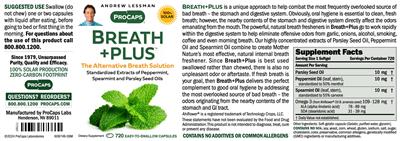
| Alpha-Linolenic Acid | 89 mg | -- |
| Stearidonic Acid | 39 mg | -- |
| Peppermint Oil | 10 mg | -- |
| Spearmint Oil | 10 mg | -- |
| Parsley Seed Oil | 10 mg | -- |
| Omega-3 Fatty Acids | 128 mg | -- |
Other ingredients: Gelatin, Water, Purified, Glycerin
Tap any ingredient to jump to its full detail below.
These statements are the manufacturer’s wording, reproduced from the product label — the label is saying it, not HelloPharmacist. We don’t verify or endorse them.
Suggested/Recommended/Usage/Directions
Suggested use Swallow (do not chew) one or two capsules with liquid after eating, before going to bed or first thing in the morning.
General Statements
For questions about the use of this product call 800.800.1200. Question? Reorders? 800.800.1200 PROCAPS.COM Andrew Lessman
Formulation
Since 1979, Unsurpassed Purity, Quality and Efficacy. 100% Solar Production Zero-Carbon Footprint 100% Solar
The Alternative Breath Solution
BREATH+PLUS is a unique approach to help combat the most frequently overlooked source of bad breath - the stomach and digestive system. Obviously, oral hygiene is essential to clean, fresh breath; however, the nearby contents of the stomach and digestive system directly affect the odors emanating from the mouth. The powerful, natural breath fresheners in Breath+Plus go to work rapidly within the digestive system to help eliminate offensive odors from garlic, onions, alcohol, smoking, coffee and even morning breath. Our highly concentrated extracts of Parsley Seed Oil, Peppermint Oil and Spearmint Oil combine to create Mother Nature's most effective, natural internal breath freshener. Since Breath+Plus is best used swallowed rather than chewed, there is also no unpleasant odor or aftertaste. If fresh breath is your goal, then Breath+Plus delivers the perfect complement to good oral hygiene by addressing the most overlooked source of bad breath - the odors originating from the nearby contents of the stomach and Gl tract.
Contains no additives or common allergens Contains No Milk, soy, yeast, corn, wheat, gluten, sodium, salt, sugar, cholesterol, color, preservative, common allergens, genetically modified(GMO) ingredients or manufacturing additives.
Brand IP Statement(s)
Copyright 2024 ProCaps Laboratories
Ahiflower® is a registered trademark of Technology Crops, LLC.
Formula
Standardized Extracts of Peppermint, Spearmint and Parsley Seed Oils
FDA Statement of Identity
Dietary Supplement
FDA Disclaimer Statement
These statements have not been evaluated by the Food and Drug Administration. This product is not intended to diagnose, treat, cure or prevent any disease.
Is this label outdated? Report a formula or label change and our pharmacy team will review it.
Breath+Plus by ProCaps label
The label scan from the NIH Dietary Supplement Label Database. Tap to enlarge.
Label images are published by the NIH Dietary Supplement Label Database for the version of this product on file. Always read your actual product label.
View the full label (PDF)The Ingredients in Breath+Plus by ProCaps
These are the 4 active ingredients this product is made of. Select any to open its full monograph.
Serving size1 Softgel(s) Dosage formCapsule Servings per container720 Amounts shown are per serving.
Most supplement products combine several ingredients, and a medication can interact with the product through any one of them. Each ingredient below shows whether it has known drug interactions.
Peppermint Oil
Interacts with796 drugs
Peppermint is a popular herb with the best evidence supporting enteric-coated peppermint oil for easing IBS symptoms. It is generally well tolerated f...
Peppermint Oil monograph & interactionsSpearmint Oil
Interacts with579 drugs
Spearmint is a common culinary mint that is generally safe in food and tea amounts. Early research suggests possible benefits for digestion, mild horm...
Spearmint Oil monograph & interactionsParsley Seed Oil
Interacts with443 drugs
Parsley is a popular culinary herb that is safe to eat in normal food amounts and is a good source of vitamins K and C. It is traditionally used as a...
Parsley Seed Oil monograph & interactionsOmega-3 Fatty Acids
Interacts with375 drugs
DHA is an omega-3 fatty acid found in fatty fish and algae that is a building block for the brain, nervous system, and eyes. It is widely used and gen...
Omega-3 Fatty Acids monograph & interactions- › Alpha-Linolenic Acid
- › Stearidonic Acid
Other (inactive) ingredients: Gelatin, Water, Purified, Glycerin. These complete the product’s ingredient list but are not active constituents.
Breath+Plus by ProCaps Drug Interactions
HelloPharmacist Interaction Report
Breath+Plus by ProCaps contains five ingredients, and we can document interactions for three of them.
Peppermint oil carries the most serious concern: it theoretically inhibits liver enzymes (CYP2C19, CYP2C9, and CYP3A4) that break down many medications, potentially raising their levels. The most studied of these is CYP3A4, where clinical research in healthy volunteers showed a single 600 mg dose of peppermint oil increased blood levels of felodipine (a heart medication).
Peppermint also theoretically raises cyclosporine (an immunosuppressant) levels through the same mechanism, though human cases haven't been reported.
Read the full breakdown — every affected drug type, severity by severity
Spearmint oil carries two Moderate interactions: it may alter the effects of sedatives or nervous system depressants (animal data suggests sedative properties, though human chewing gum studies show the opposite), and high doses theoretically raise the risk of liver injury when combined with hepatotoxic drugs.
Parsley seed oil presents the widest interaction profile. It theoretically inhibits CYP1A2 enzymes (affecting caffeine and certain other drugs), increases bleeding risk with blood thinners (anticoagulants) and antiplatelet drugs, raises the risk of low blood sugar (hypoglycemia) with diabetes medications, alters diuretic (water pill) effects, may reduce warfarin (a blood thinner) effectiveness due to its vitamin K content, prolongs sedative effects, raises immunosuppressant levels, and may worsen allergic reactions to parsley in aspirin users.
We could not check Alpha-Linolenic Acid or Stearidonic Acid. Altogether, these interactions span 1,243 individual medications.
Check your exact medications with the search tool on this page before starting.
Check your own medications below · Editorial policy · How we use AI
Want to check YOUR meds against Breath+Plus?
Ask about interactions with your drugs in plain English — “Can I take it with lisinopril?” — and we find you the answer in seconds, ingredient by ingredient.
Go to the checkerIngredients driving the most interactions
Individual Drug Interactions
The ingredients in Breath+Plus interact with 1,322 drugs. Click any drug to see the details.
4 of the 4 ingredients in Breath+Plus interact with drugs. Each result below shows which ingredient is responsible. Peppermint Oil Spearmint Oil Parsley Seed Oil Omega-3 Fatty Acids
Bisoprolol, HydrochlorothiazideZiac
How Bisoprolol, Hydrochlorothiazide interacts with Breath+Plus — through 2 ingredients. Tap an ingredient for the detail:
Omega-3 Fatty AcidsAntihypertensive Drugs Moderate
Interaction Summary
Theoretically, taking DHA with antihypertensive drugs might increase the risk of hypotension.
Read the full Omega-3 Fatty Acids + Bisoprolol, Hydrochlorothiazide interactionParsley Seed OilDiuretic Drugs Moderate
Interaction Summary
Theoretically, parsley might enhance or interfere with the effects of diuretic drugs.
Read the full Parsley Seed Oil + Bisoprolol, Hydrochlorothiazide interactionBivalirudinAngiomax, Angiomax Rtu, Angiox
How Bivalirudin interacts with Breath+Plus — through 2 ingredients. Tap an ingredient for the detail:
Omega-3 Fatty AcidsAnticoagulant/antiplatelet Drugs Moderate
Interaction Summary
Theoretically, DHA may increase the risk of bleeding if used with anticoagulant or antiplatelet drugs.
Read the full Omega-3 Fatty Acids + Bivalirudin interactionParsley Seed OilAnticoagulant/antiplatelet Drugs Moderate
Interaction Summary
Theoretically, parsley might increase the risk of bleeding when taken with anticoagulant or antiplatelet drugs.
Read the full Parsley Seed Oil + Bivalirudin interactionBoceprevirVictrelis
How Boceprevir interacts with Breath+Plus — through 1 ingredient. Tap an ingredient for the detail:
Peppermint OilCytochrome P450 3a4 (cyp3a4) Substrates Moderate
Interaction Summary
Theoretically, peppermint might increase the levels of CYP3A4 substrates.
Read the full Peppermint Oil + Boceprevir interactionBortezomibVelcade
How Bortezomib interacts with Breath+Plus — through 1 ingredient. Tap an ingredient for the detail:
Spearmint OilHepatotoxic Drugs Moderate
Interaction Summary
Theoretically, high doses of spearmint might increase the risk of liver damage when taken with hepatotoxic drugs.
Read the full Spearmint Oil + Bortezomib interactionBosentanTracleer
How Bosentan interacts with Breath+Plus — through 3 ingredients. Tap an ingredient for the detail:
Spearmint OilHepatotoxic Drugs Moderate
Interaction Summary
Theoretically, high doses of spearmint might increase the risk of liver damage when taken with hepatotoxic drugs.
Read the full Spearmint Oil + Bosentan interactionOmega-3 Fatty AcidsAntihypertensive Drugs Moderate
Interaction Summary
Theoretically, taking DHA with antihypertensive drugs might increase the risk of hypotension.
Read the full Omega-3 Fatty Acids + Bosentan interactionPeppermint OilCytochrome P450 2c9 (cyp2c9) Substrates, Cytochrome P450 3a4 (cyp3a4) Substrates Moderate
Interaction Summary
Theoretically, peppermint might increase the levels of CYP2C9 substrates.
Read the full Peppermint Oil + Bosentan interactionBosutinibBosulif
How Bosutinib interacts with Breath+Plus — through 2 ingredients. Tap an ingredient for the detail:
Spearmint OilHepatotoxic Drugs Moderate
Interaction Summary
Theoretically, high doses of spearmint might increase the risk of liver damage when taken with hepatotoxic drugs.
Read the full Spearmint Oil + Bosutinib interactionPeppermint OilCytochrome P450 3a4 (cyp3a4) Substrates Moderate
Interaction Summary
Theoretically, peppermint might increase the levels of CYP3A4 substrates.
Read the full Peppermint Oil + Bosutinib interactionBrentuximab VedotinAdcetris
How Brentuximab Vedotin interacts with Breath+Plus — through 1 ingredient. Tap an ingredient for the detail:
Peppermint OilCytochrome P450 3a4 (cyp3a4) Substrates Moderate
Interaction Summary
Theoretically, peppermint might increase the levels of CYP3A4 substrates.
Read the full Peppermint Oil + Brentuximab Vedotin interactionBrexanoloneZulresso
How Brexanolone interacts with Breath+Plus — through 1 ingredient. Tap an ingredient for the detail:
Spearmint OilCns Depressants Moderate
Interaction Summary
Theoretically, spearmint might alter the sedative effects of CNS depressants.
Read the full Spearmint Oil + Brexanolone interactionBrexpiprazoleRexulti
How Brexpiprazole interacts with Breath+Plus — through 1 ingredient. Tap an ingredient for the detail:
Peppermint OilCytochrome P450 3a4 (cyp3a4) Substrates Moderate
Interaction Summary
Theoretically, peppermint might increase the levels of CYP3A4 substrates.
Read the full Peppermint Oil + Brexpiprazole interactionBrigatinibAlunbrig
How Brigatinib interacts with Breath+Plus — through 1 ingredient. Tap an ingredient for the detail:
Peppermint OilCytochrome P450 3a4 (cyp3a4) Substrates Moderate
Interaction Summary
Theoretically, peppermint might increase the levels of CYP3A4 substrates.
Read the full Peppermint Oil + Brigatinib interactionBrivaracetamBriviact
How Brivaracetam interacts with Breath+Plus — through 1 ingredient. Tap an ingredient for the detail:
Peppermint OilCytochrome P450 2c19 (cyp2c19) Substrates Moderate
Interaction Summary
Theoretically, peppermint might increase the levels of CYP2C19 substrates.
Read the full Peppermint Oil + Brivaracetam interactionBromazepamLectopam
How Bromazepam interacts with Breath+Plus — through 1 ingredient. Tap an ingredient for the detail:
Spearmint OilCns Depressants Moderate
Interaction Summary
Theoretically, spearmint might alter the sedative effects of CNS depressants.
Read the full Spearmint Oil + Bromazepam interactionBromfenac SodiumBromsite, Prolensa
How Bromfenac Sodium interacts with Breath+Plus — through 2 ingredients. Tap an ingredient for the detail:
Parsley Seed OilAnticoagulant/antiplatelet Drugs Moderate
Interaction Summary
Theoretically, parsley might increase the risk of bleeding when taken with anticoagulant or antiplatelet drugs.
Read the full Parsley Seed Oil + Bromfenac Sodium interactionOmega-3 Fatty AcidsAnticoagulant/antiplatelet Drugs Moderate
Interaction Summary
Theoretically, DHA may increase the risk of bleeding if used with anticoagulant or antiplatelet drugs.
Read the full Omega-3 Fatty Acids + Bromfenac Sodium interactionBromocriptineParlodel
How Bromocriptine interacts with Breath+Plus — through 1 ingredient. Tap an ingredient for the detail:
Peppermint OilCytochrome P450 3a4 (cyp3a4) Substrates Moderate
Interaction Summary
Theoretically, peppermint might increase the levels of CYP3A4 substrates.
Read the full Peppermint Oil + Bromocriptine interactionBudenosidePulmicort Flexhaler, Pulmicort Turbuhaler
How Budenoside interacts with Breath+Plus — through 1 ingredient. Tap an ingredient for the detail:
Peppermint OilCytochrome P450 3a4 (cyp3a4) Substrates Moderate
Interaction Summary
Theoretically, peppermint might increase the levels of CYP3A4 substrates.
Read the full Peppermint Oil + Budenoside interactionBudesonideEntocort EC, Eohilia, Pulmicort, Tarpeyo, Uceris
How Budesonide interacts with Breath+Plus — through 1 ingredient. Tap an ingredient for the detail:
Peppermint OilCytochrome P450 3a4 (cyp3a4) Substrates Moderate
Interaction Summary
Theoretically, peppermint might increase the levels of CYP3A4 substrates.
Read the full Peppermint Oil + Budesonide interactionBudesonide, FormoterolSymbicort
How Budesonide, Formoterol interacts with Breath+Plus — through 1 ingredient. Tap an ingredient for the detail:
Peppermint OilCytochrome P450 2c9 (cyp2c9) Substrates, Cytochrome P450 2c19 (cyp2c19) Substrates Moderate
Interaction Summary
Theoretically, peppermint might increase the levels of CYP2C9 substrates.
Read the full Peppermint Oil + Budesonide, Formoterol interactionBumetanideBurinex
How Bumetanide interacts with Breath+Plus — through 2 ingredients. Tap an ingredient for the detail:
Omega-3 Fatty AcidsAntihypertensive Drugs Moderate
Interaction Summary
Theoretically, taking DHA with antihypertensive drugs might increase the risk of hypotension.
Read the full Omega-3 Fatty Acids + Bumetanide interactionParsley Seed OilDiuretic Drugs Moderate
Interaction Summary
Theoretically, parsley might enhance or interfere with the effects of diuretic drugs.
Read the full Parsley Seed Oil + Bumetanide interactionBumetanide (iv)Bumex
How Bumetanide (iv) interacts with Breath+Plus — through 1 ingredient. Tap an ingredient for the detail:
Omega-3 Fatty AcidsAntihypertensive Drugs Moderate
Interaction Summary
Theoretically, taking DHA with antihypertensive drugs might increase the risk of hypotension.
Read the full Omega-3 Fatty Acids + Bumetanide (iv) interactionBumetanide (oral)Bumex
How Bumetanide (oral) interacts with Breath+Plus — through 1 ingredient. Tap an ingredient for the detail:
Omega-3 Fatty AcidsAntihypertensive Drugs Moderate
Interaction Summary
Theoretically, taking DHA with antihypertensive drugs might increase the risk of hypotension.
Read the full Omega-3 Fatty Acids + Bumetanide (oral) interactionBumetanide, PotassiumBurinex K
How Bumetanide, Potassium interacts with Breath+Plus — through 1 ingredient. Tap an ingredient for the detail:
Parsley Seed OilDiuretic Drugs Moderate
Interaction Summary
Theoretically, parsley might enhance or interfere with the effects of diuretic drugs.
Read the full Parsley Seed Oil + Bumetanide, Potassium interactionBupivacaine, MeloxicamZynrelef Kit
How Bupivacaine, Meloxicam interacts with Breath+Plus — through 1 ingredient. Tap an ingredient for the detail:
Peppermint OilCytochrome P450 2c9 (cyp2c9) Substrates Moderate
Interaction Summary
Theoretically, peppermint might increase the levels of CYP2C9 substrates.
Read the full Peppermint Oil + Bupivacaine, Meloxicam interactionBuprenorphineBrixadi, Butrans, Sublocade, Subutex
How Buprenorphine interacts with Breath+Plus — through 2 ingredients. Tap an ingredient for the detail:
Spearmint OilCns Depressants Moderate
Interaction Summary
Theoretically, spearmint might alter the sedative effects of CNS depressants.
Read the full Spearmint Oil + Buprenorphine interactionPeppermint OilCytochrome P450 3a4 (cyp3a4) Substrates Moderate
Interaction Summary
Theoretically, peppermint might increase the levels of CYP3A4 substrates.
Read the full Peppermint Oil + Buprenorphine interactionBuprenorphine HydrochlorideBelbuca, Probuphine
How Buprenorphine Hydrochloride interacts with Breath+Plus — through 2 ingredients. Tap an ingredient for the detail:
Spearmint OilCns Depressants Moderate
Interaction Summary
Theoretically, spearmint might alter the sedative effects of CNS depressants.
Read the full Spearmint Oil + Buprenorphine Hydrochloride interactionPeppermint OilCytochrome P450 3a4 (cyp3a4) Substrates Moderate
Interaction Summary
Theoretically, peppermint might increase the levels of CYP3A4 substrates.
Read the full Peppermint Oil + Buprenorphine Hydrochloride interactionBuprenorphine Hydrochloride, Naloxone HydrochlorideBunavail
How Buprenorphine Hydrochloride, Naloxone Hydrochloride interacts with Breath+Plus — through 2 ingredients. Tap an ingredient for the detail:
Peppermint OilCytochrome P450 3a4 (cyp3a4) Substrates Moderate
Interaction Summary
Theoretically, peppermint might increase the levels of CYP3A4 substrates.
Read the full Peppermint Oil + Buprenorphine Hydrochloride, Naloxone Hydrochloride interactionSpearmint OilCns Depressants Moderate
Interaction Summary
Theoretically, spearmint might alter the sedative effects of CNS depressants.
Read the full Spearmint Oil + Buprenorphine Hydrochloride, Naloxone Hydrochloride interactionBuprenorphine, NaloxoneCassipa, Zubsolv
How Buprenorphine, Naloxone interacts with Breath+Plus — through 2 ingredients. Tap an ingredient for the detail:
Spearmint OilCns Depressants Moderate
Interaction Summary
Theoretically, spearmint might alter the sedative effects of CNS depressants.
Read the full Spearmint Oil + Buprenorphine, Naloxone interactionPeppermint OilCytochrome P450 3a4 (cyp3a4) Substrates Moderate
Interaction Summary
Theoretically, peppermint might increase the levels of CYP3A4 substrates.
Read the full Peppermint Oil + Buprenorphine, Naloxone interactionBuprenorphine/naloxoneSuboxone
How Buprenorphine/naloxone interacts with Breath+Plus — through 2 ingredients. Tap an ingredient for the detail:
Spearmint OilCns Depressants Moderate
Interaction Summary
Theoretically, spearmint might alter the sedative effects of CNS depressants.
Read the full Spearmint Oil + Buprenorphine/naloxone interactionPeppermint OilCytochrome P450 3a4 (cyp3a4) Substrates Moderate
Interaction Summary
Theoretically, peppermint might increase the levels of CYP3A4 substrates.
Read the full Peppermint Oil + Buprenorphine/naloxone interactionBuproprion, DextromethorphanAuvelity
How Buproprion, Dextromethorphan interacts with Breath+Plus — through 1 ingredient. Tap an ingredient for the detail:
Peppermint OilCytochrome P450 3a4 (cyp3a4) Substrates Moderate
Interaction Summary
Theoretically, peppermint might increase the levels of CYP3A4 substrates.
Read the full Peppermint Oil + Buproprion, Dextromethorphan interactionBuspironeBuSpar
How Buspirone interacts with Breath+Plus — through 1 ingredient. Tap an ingredient for the detail:
Peppermint OilCytochrome P450 3a4 (cyp3a4) Substrates Moderate
Interaction Summary
Theoretically, peppermint might increase the levels of CYP3A4 substrates.
Read the full Peppermint Oil + Buspirone interactionBusulfanBusulfex, Myleran
How Busulfan interacts with Breath+Plus — through 1 ingredient. Tap an ingredient for the detail:
Peppermint OilCytochrome P450 3a4 (cyp3a4) Substrates Moderate
Interaction Summary
Theoretically, peppermint might increase the levels of CYP3A4 substrates.
Read the full Peppermint Oil + Busulfan interactionEach ingredient & the kinds of drugs it affects
For each ingredient in Breath+Plus with known interactions, here are the types of medications they can affect. Open any type for the detail — or search your exact drug in the checker above.
Peppermint Oil
Cyclosporine (Neoral, Sandimmune)
Theoretically, peppermint oil might increase the levels and adverse effects of cyclosporine.
In animal research, peppermint oil inhibits cyclosporine metabolism and increases cyclosporine levels. Inhibition of cytochrome P450 3A4 (CYP3A4) may be partially responsible for this interaction. An interaction between peppermint oil and cyclosporine has not been reported in humans.
Cytochrome P450 2C19 (Cyp2C19) Substrates
Theoretically, peppermint might increase the levels of CYP2C19 substrates.
In vitro research shows that peppermint oil inhibits CYP2C19. So far, this interaction has not been reported in humans.
Cytochrome P450 2C9 (Cyp2C9) Substrates
Theoretically, peppermint might increase the levels of CYP2C9 substrates.
In vitro research shows that peppermint oil inhibits CYP2C9. So far, this interaction has not been reported in humans.
Cytochrome P450 3A4 (Cyp3A4) Substrates
Theoretically, peppermint might increase the levels of CYP3A4 substrates.
Clinical research in healthy volunteers shows that a single dose of peppermint oil 600 mg inhibits CYP3A4 enzymes and increases the AUC of felodipine, a CYP3A4 substrate. However, in vitro research suggests that peppermint oil only inhibits CYP3A4 at very high concentrations.
Cytochrome P450 1A2 (Cyp1A2) Substrates
Theoretically, peppermint might increase the levels of CYP1A2 substrates.
In vitro and animal research shows that peppermint oil and peppermint leaf inhibit CYP1A2. However, in clinical research, peppermint tea did not significantly affect the metabolism of caffeine, a CYP1A2 substrate. It is possible that the 6-day duration of treatment may have been too short to identify a difference.
Spearmint Oil
Cns Depressants
Theoretically, spearmint might alter the sedative effects of CNS depressants.
Animal research suggests that (-)-carvone, a major constituent of spearmint, has sedative effects. However, in humans, chewing spearmint-flavored gum induced arousal effects.
Hepatotoxic Drugs
Theoretically, high doses of spearmint might increase the risk of liver damage when taken with hepatotoxic drugs.
Animal research suggests that drinking spearmint tea for 30 days can increase markers of liver damage, including aspartate aminotransferase (AST) and alanine aminotransferase (ALT), and cause liver degeneration and necrosis, in a dose-dependent manner. This effect has not been reported in humans.
Parsley Seed Oil
Anticoagulant/Antiplatelet Drugs
Theoretically, parsley might increase the risk of bleeding when taken with anticoagulant or antiplatelet drugs.
Animal research suggests that parsley has antiplatelet effects.
Antidiabetes Drugs
Theoretically, parsley might increase the risk of hypoglycemia when taken with antidiabetes drugs.
Animal research suggests that parsley might decrease blood glucose. Monitor blood glucose levels closely. Dose adjustments might be necessary.
Cytochrome P450 1A2 (Cyp1A2) Substrates
Theoretically, parsley might increase serum levels of CYP1A2 substrates.
Laboratory research suggests that parsley can inhibit CYP1A2.
Diuretic Drugs
Theoretically, parsley might enhance or interfere with the effects of diuretic drugs.
Animal research suggests that parsley seed extract increases urine elimination. Parsley leaf and root might also interfere with diuretic therapy due their purported aquaretic effects.
Pentobarbital (Nembutal)
Theoretically, parsley might increase the duration of pentobarbital effects.
Animal research suggests that parsley juice prolongs the action of pentobarbital, perhaps by decreasing cytochrome P450 levels. It is not known if this occurs in humans or if this applies to other barbiturates or sedatives.
Sirolimus (Rapamune)
Theoretically, large quantities of parsley might increase sirolimus levels.
In one case report, an adult female with a history of kidney transplant presented with elevated blood sirolimus levels, approximately 4-7 times greater than previous measures, after daily consumption of a juice containing approximately 30 grams of parsley for 7 days. Sirolimus levels returned to normal a week after the parsley juice was discontinued.
Warfarin (Coumadin)
Theoretically, large amounts of parsley leaf and root might decrease the effects of warfarin.
Parlsey contains vitamin K.
Aspirin
Theoretically, aspirin might increase the severity of allergic reactions to parsley.
In one case, severe urticaria and swelling were reported after taking aspirin with parsley in an individual with a known mild parsley allergy.
Omega-3 Fatty Acids
Anticoagulant/Antiplatelet Drugs
Theoretically, DHA may increase the risk of bleeding if used with anticoagulant or antiplatelet drugs.
Although some clinical evidence suggests that DHA might reduce collagen-stimulated platelet aggregation and thromboxane release, most clinical evidence suggests that DHA alone does not affect blood clotting. However, theoretically, when given in combination with EPA as fish oil, concomitant use with anticoagulant or antiplatelet drugs (including aspirin) might increase risk of bleeding.
Antidiabetes Drugs
Theoretically, taking DHA with antidiabetes drugs might reduce the effects of these medications.
In people with type 2 diabetes, including those taking oral hypoglycemic medications, DHA seems to increase fasting blood glucose levels.
Antihypertensive Drugs
Theoretically, taking DHA with antihypertensive drugs might increase the risk of hypotension.
Fish oils containing DHA can lower blood pressure and might have additive effects in patients treated with antihypertensives; use with caution.
Brand information
Manufacturer and brand details for Breath+Plus, from the product label.
ProCaps
See all ProCaps products- Name
- ProCaps Labs
- City
- Henderson
- State
- NV
- ZipCode
- 89011
- Phone Number
- 800.800.1200
- Web Address
- ProCaps.com
Breath+Plus by ProCaps: Common Questions
Does Breath+Plus by ProCaps interact with any medications?
How can one product interact with so many drugs?
Where does this information come from?
Does peppermint oil in this product actually help with IBS or heartburn?
What are the most common side effects I might notice when taking this?
Is it safe to take this if I'm pregnant?
Can I take this while breastfeeding?
Why do I need to check my medications before taking this?
Written and reviewed by the HelloPharmacist editorial staff. Our editorial policy
Not sure if Breath+Plus is safe with your meds?
Our pharmacists answer your medication & supplement questions — free.
Label information is sourced from the NIH Dietary Supplement Label Database and reflects the product version on file; always read your actual product label. This page is for education only and is not a substitute for professional medical advice. Confirm with your pharmacist or doctor before combining supplements and medications.
The Full Monographs Behind Breath+Plus’s Ingredients
Every ingredient we hold a full HelloPharmacist monograph for — uses, evidence, safety, and the complete interaction list.
Peppermint
Interacts with 796 drugsPeppermint is a popular herb with the best evidence supporting enteric-coated peppermint oil for easing IBS symptoms. It is generally well tolerated for most adults, but it can cause heartbu...
Read the full Peppermint monograph → Herb & supplement monographSpearmint
Interacts with 579 drugsSpearmint is a common culinary mint that is generally safe in food and tea amounts. Early research suggests possible benefits for digestion, mild hormone-related issues (such as excess facia...
Read the full Spearmint monograph → Herb & supplement monographParsley
Interacts with 443 drugsParsley is a popular culinary herb that is safe to eat in normal food amounts and is a good source of vitamins K and C. It is traditionally used as a diuretic and for digestion, but solid hu...
Read the full Parsley monograph → Herb & supplement monographDocosahexaenoic Acid (dha)
Interacts with 375 drugsDHA is an omega-3 fatty acid found in fatty fish and algae that is a building block for the brain, nervous system, and eyes. It is widely used and generally well tolerated, with the stronges...
Read the full Docosahexaenoic Acid (dha) monograph →Sources & How We Checked
Breath+Plus's label data comes from the NIH Dietary Supplement Label Database; the ingredient interaction data is from the Natural Medicines database, reviewed by our pharmacists.
- NIH Dietary Supplement Label Database (DSLD) — The official product label on file for this supplement.
- Natural Medicines (Therapeutic Research Center) — Evidence-graded clinical reference behind the ingredient interaction data.
Content is written and reviewed by licensed HelloPharmacist pharmacists. See our data sources and editorial standards for how this information is built and checked.
The 131 references behind this product’s interaction data
Every citation that drives the interaction findings for this product’s ingredients, from the evidence-graded Natural Medicines (TRC Healthcare) database. Open an ingredient to browse its citations — links open the study on PubMed or the publisher’s site.
Peppermint 41 references
- Liu JH, Chen GH, Yeh HZ, et al. Enteric-coated peppermint-oil capsules in the treatment of irritable bowel syndrome: a prospective, randomized trial. J Gastroenterol 1997;32:765-8. PubMed
- Pittler MH, Ernst E. Peppermint oil for irritable bowel syndrome: a critical review and metaanalysis. Am J Gastroenterol 1998;93:1131-5. PubMed
- Kline RM, Kline JJ, Di Palma J, Barbero GJ. Enteric-coated, pH-dependent peppermint oil capsules for the treatment of irritable bowel syndrome in children. J Pediatr 2001;138:125-8. PubMed
- Madisch A, Heydenreich CJ, Wieland V, et al. Treatment of functional dyspepsia with a fixed peppermint oil and caraway oil combination preparation as compared to cisapride. A multicenter, reference-controlled, double-blind equivalence study. Arzneimittel
- May B, Kuntz HD, Kieser M, Kohler S. Efficacy of a fixed peppermint oil/caraway oil combination in non-ulcer dyspepsia. Arzneimittelforschung 1996;46:1149-53.
- Micklefield GH, Greving I, May B. Effects of peppermint oil and caraway oil on gastroduodenal motility. Phytother Res 2000;14:20-3. DOI
- Morton CA, Garioch J, Todd P, et al. Contact sensitivity to menthol and peppermint in patients with intra-oral symptoms. Contact Dermatitis 1995;32:281-4. PubMed
- May B, Kohler S, Schneider B. Efficacy and tolerability of a fixed combination of peppermint oil and caraway oil in patients suffering from functional dyspepsia. Aliment Pharmacol Ther 2000;14:1671-7. PubMed
- Nash P, Gould SR, Bernardo DE. Peppermint oil does not relieve the pain of irritable bowel syndrome. Br J Clin Pract 1986;40:292-3. DOI
- Rees WD, Evans BK, Rhodes J. Treating irritable bowel syndrome with peppermint oil. Br Med J 1979;2:835-6. PubMed
- Davies SJ, Harding LM, Baranowski AP. A novel treatment of postherpetic neuralgia using peppermint oil. Clin J Pain 2002;18:200-2. PubMed
- Weston CF. Anal burning and peppermint oil. Postgrad Med J 1987;63:717. PubMed
- Dresser GK, Wacher V, Wong S, et al. Evaluation of peppermint oil and ascorbyl palmitate as inhibitors of cytochrome P4503A4 activity in vitro and in vivo. Clin Pharmacol Ther 2002;72:247-55. PubMed
- Wacher VJ, Wong S, Wong HT. Peppermint oil enhances cyclosporine oral bioavailability in rats: comparison with D-alpha-tocopheryl poly(ethylene glycol 1000) succinate (TPGS) and ketoconazole. J Pharm Sci 2002;91:77-90.
- Lawson MJ, Knight RE, Tran K, et al. Failure of enteric-coated peppermint oil in the irritable bowel syndrome: a randomized double-blind crossover study. J Gastroenterol Hepatol 1988;3:235-8. DOI
- Unger M, Frank A. Simultaneous determination of the inhibitory potency of herbal extracts on the activity of six major cytochrome P450 enzymes using liquid chromatography/mass spectrometry and automated online extraction. Rapid Commun Mass Spectrom 2004;1 PubMed
- Maliakal PP, Wanwimolruk S. Effect of herbal teas on hepatic drug metabolizing enzymes in rats. J Pharm Pharmacol 2001;53:1323-9. PubMed
- Rogers SN, Pahor AL. A form of stomatitis induced by excessive peppermint consumption. Dent Update 1995;22:36-7.
- Cappello G, Spezzaferro M, Grossi L, et al. Peppermint oil (Mintoil) in the treatment of irritable bowel syndrome: a prospective double blind placebo-controlled randomized trial. Dig Liver Dis 2007;39:530-6. PubMed
- Moghadam BK, Gier R, and Thurlow T. Extensive oral mucosal ulcerations caused by misuse of a commercial mouthwash. Cutis 1999;64:131-134.
- Andersen, K. E. Contact allergy to toothpaste flavors. Contact Dermatitis 1978;4(4):195-198. PubMed
- Barnard, D. R. Repellency of essential oils to mosquitoes (Diptera: Culicidae). J Med Entomol. 1999;36(5):625-629. PubMed
- Tamir, S., Davidovich, Z., Attal, P., and Eliashar, R. Peppermint oil chemical burn. Otolaryngol.Head Neck Surg. 2005;133(5):801-802. PubMed
- Kalavala, M., Hughes, T. M., Goodwin, R. G., Anstey, A. V., and Stone, N. M. Allergic contact dermatitis to peppermint foot spray. Contact Dermatitis 2007;57(1):57-58. PubMed
- Vermaat, H., van Meurs, T., Rustemeyer, T., Bruynzeel, D. P., and Kirtschig, G. Vulval allergic contact dermatitis due to peppermint oil in herbal tea. Contact Dermatitis 2008;58(6):364-365. PubMed
- Merat, S., Khalili, S., Mostajabi, P., Ghorbani, A., Ansari, R., and Malekzadeh, R. The effect of enteric-coated, delayed-release peppermint oil on irritable bowel syndrome. Dig.Dis.Sci. 2010;55(5):1385-1390. PubMed
- Tran, A., Pratt, M., and DeKoven, J. Acute allergic contact dermatitis of the lips from peppermint oil in a lip balm. Dermatitis 2010;21(2):111-115. DOI
- Hitz, Lindenmuller, I and Lambrecht, J. T. Oral care. Curr Probl.Dermatol 2011;40:107-115.
- Shavakhi, A., Ardestani, S. K., Taki, M., Goli, M., and Keshteli, A. H. Premedication with peppermint oil capsules in colonoscopy: a double blind placebo-controlled randomized trial study. Acta Gastroenterol Belg 2012;75(3):349-353.
- Lech, Y., Olesen, K. M., Hey, H., Rask-Pedersen, E., Vilien, M., and Ostergaard, O. [Treatment of irritable bowel syndrome with peppermint oil. A double- blind study with a placebo]. Ugeskr.Laeger 10-3-1988;150(40):2388-2389.
- Parys, B. T. Chemical burns resulting from contact with peppermint oil mar: a case report. Burns Incl.Therm.Inj. 1983;9(5):374-375. PubMed
- Bayat R, Borici-Mazi R. A case of anaphylaxis to peppermint. Allergy Asthma Clin Immunol. 2014;10(1):6. PubMed
- Rich G, Shah A, Koloski N, et al. A randomized placebo-controlled trial on the effects of Menthacarin, a proprietary peppermint- and caraway-oil-preparation, on symptoms and quality of life in patients with functional dyspepsia. Neurogastroenterol Motil 2 PubMed
- Douros A, Bronder E, Andersohn F, et al. Herb-Induced Liver Injury in the Berlin Case-Control Surveillance Study. Int J Mol Sci 2016;17(1). PubMed
- Begas E, Tsioutsiouliti A, Kouvaras E, et al. Effects of peppermint tea consumption on the activities of CYP1A2, CYP2A6, Xanthine Oxidase, N-acetyltranferase-2 and UDP-glucuronosyltransferases-1A1/1A6 in healthy volunteers. Food Chem Toxicol 2017;100:80-9 PubMed
- Cash BD, Epstein MS, Shah SM. A Novel Delivery System of Peppermint Oil Is an Effective Therapy for Irritable Bowel Syndrome Symptoms. Dig Dis Sci 2016;61(2):560-71. PubMed
- Elsaie LT, El Mohsen AM, Ibrahim IM, Mohey-Eddin MH, Elsaie ML. Effectiveness of topical peppermint oil on symptomatic treatment of chronic pruritus. Clin Cosmet Investig Dermatol 2016;9:333-8. PubMed
- Wu J, Xu R, Zhan R, et al. Effective symptomatic treatment for severe and intractable pruritus associated with severe burn-induced hypertrophic scars: A prospective, multicenter, controlled trial. Burns 2016;42(5):1059-66. PubMed
- Weerts ZZRM, Masclee AAM, Witteman BJM, et al. Efficacy and safety of peppermint oil in a randomized, double-blind trial of patients with irritable bowel syndrome. Gastroenterology. 2020;158(1):123-136. PubMed
- Nee J, Ballou S, Kelley JM, et al. Peppermint Oil Treatment for Irritable Bowel Syndrome: A Randomized Placebo-Controlled Trial. Am J Gastroenterol 2021;116(11):2279-2285. PubMed
- Ingrosso MR, Ianiro G, Nee J, et al. Systematic review and meta-analysis: efficacy of peppermint oil in irritable bowel syndrome. Aliment Pharmacol Ther 2022;56(6):932-41. PubMed
Spearmint 20 references
- Electronic Code of Federal Regulations. Title 21. Part 182 -- Substances Generally Recognized As Safe. Available at: https://www.accessdata.fda.gov/scripts/cdrh/cfdocs/cfcfr/CFRSearch.cfm?CFRPart=182
- Akdogan M, Ozguner M, Aydin G, Gokalp O. Investigation of biochemical and histopathological effects of Mentha piperita Labiatae and Mentha spicata Labiatae on liver tissue in rats. Hum Exp Toxicol 2004;23:21-8.
- Poon, T. S. and Freeman, S. Cheilitis caused by contact allergy to anethole in spearmint flavoured toothpaste. Australas.J Dermatol. 2006;47(4):300-301. PubMed
- Andersen, K. E. Contact allergy to toothpaste flavors. Contact Dermatitis 1978;4(4):195-198. PubMed
- de Sousa, D. P., Farias Nobrega, F. F., and de Almeida, R. N. Influence of the chirality of (R)-(-)- and (S)-(+)-carvone in the central nervous system: a comparative study. Chirality 5-5-2007;19(4):264-268.
- Larsen, W., Nakayama, H., Fischer, T., Elsner, P., Frosch, P., Burrows, D., Jordan, W., Shaw, S., Wilkinson, J., Marks, J., Jr., Sugawara, M., Nethercott, M., and Nethercott, J. Fragrance contact dermatitis: a worldwide multicenter investigation (Part II PubMed
- Guney, M., Oral, B., Karahanli, N., Mungan, T., and Akdogan, M. The effect of Mentha spicata Labiatae on uterine tissue in rats. Toxicol.Ind.Health 2006;22(8):343-348.
- Masumoto, Y., Morinushi, T., Kawasaki, H., Ogura, T., and Takigawa, M. Effects of three principal constituents in chewing gum on electroencephalographic activity. Psychiatry Clin.Neurosci. 1999;53(1):17-23. PubMed
- Bulat, R., Fachnie, E., Chauhan, U., Chen, Y., and Tougas, G. Lack of effect of spearmint on lower oesophageal sphincter function and acid reflux in healthy volunteers. Aliment.Pharmacol Ther. 1999;13(6):805-812. PubMed
- Francalanci, S., Sertoli, A., Giorgini, S., Pigatto, P., Santucci, B., and Valsecchi, R. Multicentre study of allergic contact cheilitis from toothpastes. Contact Dermatitis 2000;43(4):216-222. PubMed
- Bonamonte, D., Mundo, L., Daddabbo, M., and Foti, C. Allergic contact dermatitis from Mentha spicata (spearmint). Contact Dermatitis 2001;45(5):298.
- Tomson, N., Murdoch, S., and Finch, T. M. The dangers of making mint sauce. Contact Dermatitis 2004;51(2):92-93. PubMed
- Clayton, R. and Orton, D. Contact allergy to spearmint oil in a patient with oral lichen planus. Contact Dermatitis 2004;51(5-6):314-315. PubMed
- Dal Sacco, D., Gibelli, D., and Gallo, R. Contact allergy in the burning mouth syndrome: a retrospective study on 38 patients. Acta Derm.Venereol. 2005;85(1):63-64. PubMed
- Goncalves, J. C., Oliveira, Fde S., Benedito, R. B., de Sousa, D. P., de Almeida, R. N., and de Araujo, D. A. Antinociceptive activity of (-)-carvone: evidence of association with decreased peripheral nerve excitability. Biol Pharm Bull. 2008;31(5):1017- PubMed
- Ormerod, A. D. and Main, R. A. Sensitisation to "sensitive teeth" toothpaste. Contact Dermatitis 1985;13(3):192-193. PubMed
- Skrebova, N., Brocks, K., and Karlsmark, T. Allergic contact cheilitis from spearmint oil. Contact Dermatitis 1998;39(1):35. PubMed
- Damiani E, Aloia AM, Priore MG, et al. Allergy to mint (Mentha spicata). J Investig Allergol Clin Immunol 2012;22:309-10.
- Connelly AE, Tucker AJ, Tulk H, et al. High-rosmarinic acid spearmint tea in the management of knee osteoarthritis symptoms. J Med Food 2014;17:1361-7. PubMed
- Lasrado JA, Nieman KM, Fonseca BA, et al. Safety and tolerability of a dried aqueous spearmint extract. Regul Toxicol Pharmacol 2017;86:167-176. PubMed
Parsley 21 references
- Newall CA, Anderson LA, Philpson JD. Herbal Medicine: A Guide for Healthcare Professionals. London, UK: The Pharmaceutical Press, 1996.
- Leung AY, Foster S. Encyclopedia of Common Natural Ingredients Used in Food, Drugs and Cosmetics. 2nd ed. New York, NY: John Wiley & Sons, 1996.
- McGuffin M, Hobbs C, Upton R, Goldberg A, eds. American Herbal Products Association's Botanical Safety Handbook. Boca Raton, FL: CRC Press, LLC 1997.
- Brinker F. Herb Contraindications and Drug Interactions. 2nd ed. Sandy, OR: Eclectic Medical Publications, 1998.
- Robbers JE, Tyler VE. Tyler's Herbs of Choice: The Therapeutic Use of Phytomedicinals. New York, NY: The Haworth Herbal Press, 1999.
- Foster S, Tyler VE. Tyler's Honest Herbal, 4th ed., Binghamton, NY: Haworth Herbal Press, 1999. DOI
- Eberhard P, Gall HM, Muller I, Moller R. Dramatic augmentation of a food allergy by acetylsalicylic acid. J Allergy Clin Immunol 2000;105:844 PubMed
- Tunali T, Yarat A, Yanardag R, et al. Effect of parsley (Petroselinum crispum) on the skin of STZ induced diabetic rats. Phytother Res 1999;13:138-41.. DOI
- Chuang CH, Doyle P, Wang JD, et al. Herbal medicines used during the first trimester and major congenital malformations: an analysis of data from a pregnancy cohort study. Drug Saf 2006;29:537-48. PubMed
- Ciganda C, and Laborde A. Herbal infusions used for induced abortion. J Toxicol.Clin Toxicol. 2003;41:235-239. PubMed
- Jakovljevic, V., Raskovic, A., Popovic, M., and Sabo, J. The effect of celery and parsley juices on pharmacodynamic activity of drugs involving cytochrome P450 in their metabolism. Eur.J Drug Metab Pharmacokinet. 2002;27(3):153-156. PubMed
- Kreydiyyeh, S. I. and Usta, J. Diuretic effect and mechanism of action of parsley. J Ethnopharmacol 2002;79(3):353-357. PubMed
- Yanardag, R., Bolkent, S., Tabakoglu-Oguz, A., and Ozsoy-Sacan, O. Effects of Petroselinum crispum extract on pancreatic B cells and blood glucose of streptozotocin-induced diabetic rats. Biol Pharm Bull. 2003;26(8):1206-1210. PubMed
- Bolkent, S., Yanardag, R., Ozsoy-Sacan, O., and Karabulut-Bulan, O. Effects of parsley (Petroselinum crispum) on the liver of diabetic rats: a morphological and biochemical study. Phytother.Res 2004;18(12):996-999.
- Ozsoy-Sacan, O., Yanardag, R., Orak, H., Ozgey, Y., Yarat, A., and Tunali, T. Effects of parsley (Petroselinum crispum) extract versus glibornuride on the liver of streptozotocin-induced diabetic rats. J Ethnopharmacol 3-8-2006;104(1-2):175-181. PubMed
- Peterson, S., Lampe, J. W., Bammler, T. K., Gross-Steinmeyer, K., and Eaton, D. L. Apiaceous vegetable constituents inhibit human cytochrome P-450 1A2 (hCYP1A2) activity and hCYP1A2-mediated mutagenicity of aflatoxin B1. Food Chem.Toxicol. 2006;44(9):147 PubMed
- Gadi, D., Bnouham, M., Aziz, M., Ziyyat, A., Legssyer, A., Legrand, C., Lafeve, F. F., and Mekhfi, H. Parsley extract inhibits in vitro and ex vivo platelet aggregation and prolongs bleeding time in rats. J Ethnopharmacol 8-17-2009;125(1):170-174. PubMed
- Arslan S, Ucar R, Caliskaner AZ. A Cases of Near-fatal Anaphylaxis: Parsley "Over-use" as an Herbal Remedy. Med Arch. 2014;68(6):426-7.
- Foti C, Cassano N, Mistrello G, Amato S, Romita P, Vena GA. Contact urticaria to raw arugula and parsley. Ann Allergy Asthma Immunol. 2011 May;106(5):447-8. PubMed
- Farzaei MH, Abbasabadi Z, Ardekani MR, Rahimi R, Farzaei F. Parsley: a review of ethnopharmacology, phytochemistry and biological activities. J Tradit Chin Med. 2013;33(6):815-26. PubMed
- Kurtaran M, Koc NS, Aksun MS, Yildirim T, Yilmaz SR, Erdem Y. Petroselinum crispum, a commonly consumed food, affects sirolimus level in a renal transplant recipient: a case report. Ther Adv Drug Saf 2021;12:20420986211009358.
Docosahexaenoic Acid (dha) 49 references
- Akedo I, Ishikawa H, Nakamura T, et al. Three cases with familial adenomatous polyposis diagnosed as having malignant lesions in the course of a long-term trial using docosahexanoic acid (DHA)-concentrated fish oil capsules (abstract). Jpn J Clin Oncol PubMed
- Prisco D, Paniccia R, Bandinelli B, et al. Effect of medium-term supplementation with a moderate dose of n-3 polyunsaturated fatty acids on blood pressure in mild hypertensive patients. Thromb Res 1998;1:105-12.
- Grimsgaard S, Bonaa KH, Hansen JB, Nordoy A. Highly purified eicosapentaenoic acid and docosahexaenoic acid in humans have similar triacylglycerol-lowering effects but divergent effects on serum fatty acids. Am J Clin Nutr 1997;66:649-59.
- Toft I, Bonaa KH, Ingebretsen OC, et al. Effects of n-3 polyunsaturated fatty acids on glucose homeostasis and blood pressure in essential hypertension. A randomized, controlled trial. Ann Intern Med 1995;123:911-8.
- Sacks FM, Hebert P, Appel LJ, et al. Short report: the effect of fish oil on blood pressure and high-density lipoprotein-cholesterol levels in phase I of the trials of hypertension prevention. J Hypertens 1994;12:209-13.
- Vandongen R, Mori TA, Burke V, et al. Effects on blood pressure of omega 3 fats in subjects at increased risk of cardiovascular disease. Hypertension 1993;22:371-9. PubMed
- FDA. Center for Food Safety and Applied Nutrition. Letter regarding dietary supplement health claim for omega-3 fatty acids and coronary heart disease. Available at: http://www.fda.gov/ohrms/dockets/dockets/95s0316/95s-0316-Rpt0272-38-Appendix-D-Reference
- Pedersen HS, Mulvad G, Seidelin KN, et al. N-3 fatty acids as a risk factor for haemorrhagic stroke. Lancet 1999;353:812-3. PubMed
- Ito Y, Suzuki K, Imai H, et al. Effects of polyunsaturated fatty acids on atrophic gastritis in a Japanese population. Cancer Lett 2001;163:171-8. PubMed
- Kris-Ehterton PM, Harris WS, Appel LJ, et al. Fish consumption, fish oil, omega-3 fatty acids, and cardiovascular disease. Circulation 2002;106:2747-57. PubMed
- Woodman RJ, Mori TA, Burke V, et al. Effects of purified eicosapentaenoic and docosahexaenoic acids on glycemic control, blood pressure, and serum lipids in type 2 diabetic patients with treated hypertension. Am J Clin Nutr 2002;76:1007-15.. PubMed
- Marangell LB, Martinez JM, Zboyan HA, et al. A double-blind, placebo-controlled study of the omega-3 fatty acid docosahexaenoic acid in the treatment of major depression. Am J Psychiatry 2003;160:996-8.. PubMed
- Leng GC, Smith FB, Fowkes FG, et al. Relationship between plasma essential fatty acids and smoking, serum lipids, blood pressure and haemostatic and rheological factors. Prostaglandins Leukot Essent Fatty Acids 1994;51:101-8. PubMed
- Nelson GJ, Schmidt PS, Bartolini GL, et al. The effect of dietary docosahexaenoic acid on platelet function, platelet fatty acid composition, and blood coagulation in humans. Lipids 1997;32:1129-36. PubMed
- Wheaton DH, Hoffman DR, Locke KG, et al. Biological safety assessment of docosahexaenoic acid supplementation in a randomized clinical trial for X-linked retinitis pigmentosa. Arch Ophthalmol 2003;121:1269-78. PubMed
- Malcolm CA, McCulloch DL, Montgomery C, et al. Maternal docosahexaenoic acid supplementation during pregnancy and visual evoked potential development in term infants: a double blind, prospective, randomised trial. Arch Dis Child Fetal Neonatal Ed 2003;88: DOI
- Sanjurjo P, Ruiz-Sanz JI, Jimeno P, et al. Supplementation with docosahexaenoic acid in the last trimester of pregnancy: maternal-fetal biochemical findings. J Perinat Med 2004;32:132-6.
- Montgomery C, Speake BK, Cameron A, et al. Maternal docosahexaenoic acid supplementation and fetal accretion. Br J Nutr 2003;90:135-45. DOI
- Lauritzen L, Hoppe C, Straarup EM, Michaelsen KF. Maternal fish oil supplementation in lactation and growth during the first 2.5 years of life. Pediatr Res 2005;58:235-42. PubMed
- Hawkes JS, Bryan DL, Makrides M, et al. A randomized trial of supplementation with docosahexaenoic acid-rich tuna oil and its effects on the human milk cytokines interleukin 1 beta, interleukin 6, and tumor necrosis factor alpha. Am J Clin Nutr 2002;75:75
- Uauy R, Hoffman DR, Mena P, et al. Term infant studies of DHA and ARA supplementation on neurodevelopment: Results of randomized controlled trials. J Pediatr 2003;143:S17-25. PubMed
- Decsi, T., Campoy, C., and Koletzko, B. Effect of N-3 polyunsaturated fatty acid supplementation in pregnancy: the Nuheal trial. Adv.Exp Med Biol 2005;569:109-113. PubMed
- Mori, T. A., Bao, D. Q., Burke, V., Puddey, I. B., and Beilin, L. J. Docosahexaenoic acid but not eicosapentaenoic acid lowers ambulatory blood pressure and heart rate in humans. Hypertension 1999;34(2):253-260. PubMed
- Otto, S. J., van Houwelingen, A. C., and Hornstra, G. The effect of supplementation with docosahexaenoic and arachidonic acid derived from single cell oils on plasma and erythrocyte fatty acids of pregnant women in the second trimester. Prostaglandins Le PubMed
- Helland, I. B., Saugstad, O. D., Smith, L., Saarem, K., Solvoll, K., Ganes, T., and Drevon, C. A. Similar effects on infants of n-3 and n-6 fatty acids supplementation to pregnant and lactating women. Pediatrics 2001;108(5):E82. PubMed
- Nestel, P., Shige, H., Pomeroy, S., Cehun, M., Abbey, M., and Raederstorff, D. The n-3 fatty acids eicosapentaenoic acid and docosahexaenoic acid increase systemic arterial compliance in humans. Am.J.Clin.Nutr. 2002;76(2):326-330. PubMed
- Woodman, R. J., Mori, T. A., Burke, V., Puddey, I. B., Barden, A., Watts, G. F., and Beilin, L. J. Effects of purified eicosapentaenoic acid and docosahexaenoic acid on platelet, fibrinolytic and vascular function in hypertensive type 2 diabetic patients PubMed
- Jensen, C. L., Voigt, R. G., Prager, T. C., Zou, Y. L., Fraley, J. K., Rozelle, J. C., Turcich, M. R., Llorente, A. M., Anderson, R. E., and Heird, W. C. Effects of maternal docosahexaenoic acid intake on visual function and neurodevelopment in breastfed
- Theobald, H. E., Goodall, A. H., Sattar, N., Talbot, D. C., Chowienczyk, P. J., and Sanders, T. A. Low-dose docosahexaenoic acid lowers diastolic blood pressure in middle-aged men and women. J Nutr 2007;137(4):973-978.
- Mischoulon D, Best-Popescu C, Laposata M, et al. A double-blind dose-finding pilot study of docosahexaenoic acid (DHA) for major depressive disorder. Eur Neuropsychopharmacol. 2008;18(9):639-645. PubMed
- Birch EE, Carlson SE, Hoffman DR, et al. The DIAMOND (DHA Intake And Measurement Of Neural Development) Study: a double-masked, randomized controlled clinical trial of the maturation of infant visual acuity as a function of the dietary level of docosahexa
- Carlson SE, Colombo J, Gajewski BJ, Gustafson KM, Mundy D, Yeast J, Georgieff MK, Markley LA, Kerling EH, Shaddy DJ. DHA supplementation and pregnancy outcomes. Am J Clin Nutr. 2013 Apr;97(4):808-15. PubMed
- Escamilla-Nuñez MC, Barraza-Villarreal A, Hernández-Cadena L, Navarro-Olivos E, Sly PD, Romieu I. Omega-3 fatty acid supplementation during pregnancy and respiratory symptoms in children. Chest. 2014 Aug;146(2):373-82. PubMed
- Fu YQ, Zheng JS, Yang B, Li D. Effect of individual omega-3 fatty acids on the risk of prostate cancer: a systematic review and dose-response meta-analysis of prospective cohort studies. J Epidemiol. 2015;25(4):261-74. PubMed
- Imhoff-Kunsch B, Stein AD, Villalpando S, Martorell R, Ramakrishnan U. Docosahexaenoic acid supplementation from mid-pregnancy to parturition influenced breast milk fatty acid concentrations at 1 month postpartum in Mexican women. J Nutr. 2011 Feb;141(2): PubMed
- Judge MP, Cong X, Harel O, Courville AB, Lammi-Keefe CJ. Maternal consumption of a DHA-containing functional food benefits infant sleep patterning: an early neurodevelopmental measure. Early Hum Dev. 2012 Jul;88(7):531-7. PubMed
- Mulder KA, King DJ, Innis SM. Omega-3 fatty acid deficiency in infants before birth identified using a randomized trial of maternal DHA supplementation in pregnancy. PLoS One. 2014 Jan 10;9(1):e83764. PubMed
- Richardson AJ, Burton JR, Sewell RP, Spreckelsen TF, Montgomery P. Docosahexaenoic acid for reading, cognition and behavior in children aged 7-9 years: a randomized, controlled trial (the DOLAB Study). PLoS One. 2012;7(9):e43909. PubMed
- Drugs in Pregnancy and Lactation 2012;25(4);3-4
- FDA announces qualified health claims for omega-3 fatty acids. Available at: https://www.fda.gov/Food/LabelingNutrition/ucm072756.htm. Accessed April 15 2019.
- Breastfeeding and the use of human milk. Section on Breastfeeding. Pediatrics. 2012;129(3):e827-41. PubMed
- Zhang Z, Fulgoni VL, Kris-Etherton PM, Mitmesser SH. Dietary Intakes of EPA and DHA Omega-3 Fatty Acids among US Childbearing-Age and Pregnant Women: An Analysis of NHANES 2001-2014. Nutrients. 2018;10(4). PubMed
- Montgomery P, Spreckelsen TF, Burton A, Burton JR, Richardson AJ. Docosahexaenoic acid for reading, working memory and behavior in UK children aged 7-9: A randomized controlled trial for replication (the DOLAB II study). PLoS One. 2018;13(2):e0192909. PubMed
- Marc I, Piedboeuf B, Lacaze-Masmonteil T, et al. Effect of maternal docosahexaenoic acid supplementation on bronchopulmonary dysplasia-free survival in breastfed preterm infants: A randomized clinical trial. JAMA. 2020;324(2):157-167. PubMed
- Fougère H, Bilodeau JF, Lavoie PM, et al. Docosahexaenoic acid-rich algae oil supplementation on breast milk fatty acid profile of mothers who delivered prematurely: a randomized clinical trial. Sci Rep 2021;11(1):21492. PubMed
- Garmendia ML, Casanello P, Flores M, Kusanovic JP, Uauy R. The effects of a combined intervention (docosahexaenoic acid supplementation and home-based dietary counseling) on metabolic control in obese and overweight pregnant women: the MIGHT study. Am J O PubMed
- Christifano DN, Gustafson KM, Carlson SE, et al. Maternal docosahexaenoic acid exposure needed to achieve maternal-newborn EQ. Nutrients 2022;14(16):3300. PubMed
- Vizzari G, Morniroli D, Alessandretti F, et al. Comparative analysis of docosahexaenoic acid (DHA) content in mother's milk of term and preterm mothers. Nutrients 2022;14(21):4595. PubMed
- Yang Y, Li G, Li F, et al. Impact of DHA from algal oil on the breast milk DHA levels of lactating women: A randomized controlled trial in China. Nutrients 2022;14(16):3410. PubMed
See these in context on the Docosahexaenoic Acid (dha) monograph →
Parts of this content are provided by the Therapeutic Research Center, LLC.
DISCLAIMER: Currently this does not check for drug-drug interactions. This is not an all-inclusive comprehensive list of potential interactions and is for informational purposes only. Not all interactions are known or well-reported in the scientific literature, and new interactions are continually being reported. Input is needed from a qualified healthcare provider including a pharmacist before starting any therapy. Application of clinical judgment is necessary.
© 2021 Therapeutic Research Center, LLC