
D3+K2 Daylight Concentrate Ingredients & Drug Interactions
by SurThrival
What is this page for?
First and foremost: checking D3+K2 Daylight Concentrate against your medications. The heart of this page is the interaction checker and the full interaction report — how this product’s ingredients may interact with prescription and over-the-counter medicines you may be taking.
Around that, we add a pharmacist’s high-level view of the product as a whole — what’s inside, the evidence for its stated use, how transparent the label is, and what safety data exists — so you can see the full picture in one place. It’s educational information from our licensed clinical databases and the clinical staff at HelloPharmacist — not medical advice — and we don’t sell or endorse products. Our editorial policy
D3+K2 Daylight Concentrate is a dietary supplement by SurThrival with 5 active ingredients. Its ingredients are commonly taken for general antioxidant support, eye health, immune support.Based on those ingredients, 1,140 medications have a known interaction with it, the most serious rated major. The ingredients most likely to interact are Goji fruit extract, Vitamin D, Aloe vera. Use the checker below to test your specific medication, or read the full HelloPharmacist Interaction Report.
Check Your Meds Against D3+K2 Daylight Concentrate by SurThrival
Ask about any prescription or over-the-counter medication and we check it for interactions with D3+K2 Daylight Concentrate by SurThrival — and tell you which ingredient is responsible.
AI summaries are generated from our interaction database for education only — always confirm with your pharmacist. How we use AI
Ask the Pharmacist
A licensed pharmacist will answer your question by email — free, usually within 24 hours.
Got it — thank you!
A licensed pharmacist will answer within 24 hours. Keep an eye on your email (worth checking spam, just in case).
HelloPharmacist Scorecard of D3+K2 Daylight Concentrate by SurThrival
Our pharmacy team’s full take, with four database checks built into the cards below — a summary of what is known, not a grade of the product itself.
What’s inside
Low disclosure
This liquid concentrate contains 5 active ingredients. Vitamin K2 and Vitamin D are the primary nutrients, each with established roles in bone and cardiovascular health.
Goji fruit extract, Aloe vera, and Shilajit round out the formula. The product also contains Olive Oil and Peppermint Oil as inactive ingredients to support absorption and flavor.
Does it work?
Strong evidence
The evidence for each ingredient varies. Vitamin K2 shows effectiveness for clotting factor deficiencies and possibly effective for osteoporosis.
Vitamin D is effective for rickets, osteomalacia, and related mineral metabolism disorders. Goji fruit extract, Aloe vera, and Shilajit all show insufficient evidence for their marketed uses in our data—meaning clinical proof hasn't been established yet for most of their claimed benefits, though Aloe shows possible effectiveness for acne, diabetes, and constipation.
How safe is it?
Well-documented data
Vitamin K2 is generally well tolerated orally; the main side effects are mild gastrointestinal upset (nausea, diarrhea, stomach upset). Vitamin D is well tolerated at recommended doses, though excessive intake can lead to toxicity.
Goji fruit is generally safe as a food but carries limited safety data in concentrated supplement form and shouldn't be used during pregnancy. Aloe vera gel is well tolerated topically, but oral Aloe latex can cause cramping, diarrhea, and electrolyte imbalances, especially with long-term use.
Shilajit carries contamination risk if unpurified and has rare reports of allergic reactions. None of these ingredients have adequate safety data for pregnancy or breastfeeding—avoid them or consult your doctor.
Meds to double-check
Major interaction found
Before using this product, double-check if you take warfarin or any blood thinner—both Vitamin K2 and Goji can reduce or reverse their effects (Major). At Moderate severity, check heart medications (verapamil, diltiazem, digoxin), blood pressure drugs, cholesterol medications (especially atorvastatin), diabetes drugs, diuretics, antiplatelet drugs, and any medications processed by your liver's CYP enzymes (CYP2D6, CYP2C9, CYP2C19, CYP3A4).
Use the search tool on this page with your exact medication names.
The bottom line
Scorecard at a glanceFormula with limited ingredient disclosure with clinical evidence supporting its stated purpose. Major medication interactions have been identified, and safety information is well characterized.
This product is most appropriate for people not on warfarin, heart medications, blood thinners, or diabetes drugs. If you take any prescription medication—especially for blood clotting, heart rhythm, blood pressure, cholesterol, or blood sugar—you'll need to check your specific drugs against our tool before starting.
Talk to your pharmacist to be sure.
Educational only — not medical advice; always confirm with your pharmacist. Our editorial policy · How we use AI
Assessment coverage: 5 of 5 active ingredients matched to our full ingredient reviews (monographs). Based on the product label dated Mar 25, 2025.
This Scorecard evaluates available label information, ingredient evidence, and known medication-safety considerations. It does not independently verify product identity, purity, potency, contamination, or manufacturing quality. How these ratings are computed
General information
Key facts about D3+K2 Daylight Concentrate, straight from the product label.
| Brand | SurThrival |
|---|---|
| Net contents | 0.5 Fluid Ounce(s); 15 Milliliter(s) |
| Market status | On market |
| Date entered into DSLD | Mar 25, 2025 |
| DSLD ID | 323411 |
| Product type | Other Combinations |
| Supplement form | Liquid |
| Dietary claims / uses | Nutrient, All Other, Structure/Function |
| Intended target group(s) | Adult (18 - 50 Years) |
Everything in this section is reproduced from the manufacturer’s own product label — it’s the label speaking, not HelloPharmacist. We show it so you can see exactly what the maker states; we don’t verify or endorse those statements.
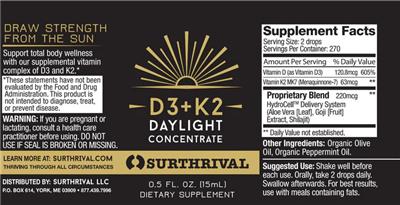
Supplement Facts
The label details for D3+K2 Daylight Concentrate by SurThrival, sourced from the NIH Dietary Supplement Label Database.
Supplement Facts
| Ingredient | Amount | % DV |
|---|---|---|
| Proprietary Blend | 220 mcg | -- |
| Vitamin K2 | 63 mcg | -- |
| Vitamin D | 120.8 mcg | 605% |
| Goji fruit extract | 0 NP | -- |
| Aloe vera | 0 NP | -- |
| Shilajit | 0 NP | -- |
Other ingredients: Olive Oil, Peppermint Oil
Tap any ingredient to jump to its full detail below.
These statements are the manufacturer’s wording, reproduced from the product label — the label is saying it, not HelloPharmacist. We don’t verify or endorse them.
General Statements
Draw strength from the sun
Learn more at: Sunthrival.com Thriving through all circumstances
Formula
Support total body wellness with our supplemental vitamin complex of D3 and K2.
FDA Disclaimer Statement
These statements have not been evaluated by the Food and Drug Administration. This product is not intended to diagnose, treat, or prevent disease.
Precautions
Warning: If you are pregnant or lactating, consult a health care practitioner before using.
Do not use if seal is broken or missing.
Formulation
Daylight concentrate
Suggested/Recommended/Usage/Directions
Suggested use: Shake well before each use. Orally, take 2 drops daily. Swallow afterwards. For best results, use with meals containing fats.
FDA Statement of Identity
Dietary Supplement
Is this label outdated? Report a formula or label change and our pharmacy team will review it.
D3+K2 Daylight Concentrate by SurThrival label
The label scan from the NIH Dietary Supplement Label Database. Tap to enlarge.
Label images are published by the NIH Dietary Supplement Label Database for the version of this product on file. Always read your actual product label.
View the full label (PDF)The Ingredients in D3+K2 Daylight Concentrate by SurThrival
These are the 5 active ingredients this product is made of. Select any to open its full monograph.
Serving size2 Drop(s) Dosage formLiquid Servings per container270 Amounts shown are per serving.
Most supplement products combine several ingredients, and a medication can interact with the product through any one of them. Each ingredient below shows whether it has known drug interactions.
Proprietary Blend
Vitamin K2
Interacts with2 drugs
Vitamin K is an essential nutrient your body needs for normal blood clotting and to support healthy bones. Most people get enough from food, but suppl...
Vitamin K2 monograph & interactionsVitamin D
Interacts with715 drugs
Vitamin D is a fat-soluble vitamin that helps your body absorb calcium and is important for healthy bones, muscles, and immune function. Many people,...
Vitamin D monograph & interactionsOther (inactive) ingredients: Olive Oil, Peppermint Oil. These complete the product’s ingredient list but are not active constituents.
D3+K2 Daylight Concentrate by SurThrival Drug Interactions
HelloPharmacist Interaction Report
D3+K2 Daylight Concentrate by SurThrival contains five active ingredients, and together they interact with a substantial number of medications.
The most serious concern is a Major interaction: both Vitamin K2 and Goji fruit extract can antagonize warfarin (a blood thinner) and increase bleeding risk, and Aloe vera can do the same. If you take warfarin, you'll need to check with your doctor or pharmacist before using this product.
Read the full breakdown — every affected drug type, severity by severity
Vitamin D interacts with several medication types at Moderate severity: thiazide diuretics (water pills), heart rhythm drugs like verapamil and diltiazem, the statin atorvastatin, digoxin (a heart medication), calcipotriene (a psoriasis treatment), and aluminum-containing products. Goji fruit extract also has Moderate interactions with antihypertensive drugs (blood pressure medications), several enzyme substrates (CYP2D6, CYP2C19, CYP2C9, and CYP3A4 substrates—medications whose breakdown your liver controls), and flecainide (an arrhythmia drug).
Additionally, Aloe vera carries Moderate interactions with anticoagulant or antiplatelet drugs, antidiabetes medications, diuretics, stimulant laxatives, and enzyme substrates. Goji and Aloe also have Minor interactions with CYP3A4 and CYP1A2 substrates respectively.
Altogetherr, these interactions span 1,128 individual medications. We couldn't check Proprietary Blend directly since it's a container for the listed ingredients.
Use the medication checker below to verify your exact prescriptions before starting.
Check your own medications below · Editorial policy · How we use AI
Want to check YOUR meds against D3+K2 Daylight Concentrate?
Ask about interactions with your drugs in plain English — “Can I take it with lisinopril?” — and we find you the answer in seconds, ingredient by ingredient.
Go to the checkerIngredients driving the most interactions
Individual Drug Interactions
The ingredients in D3+K2 Daylight Concentrate interact with 1,140 drugs. Click any drug to see the details.
5 of the 5 ingredients in D3+K2 Daylight Concentrate interact with drugs. Each result below shows which ingredient is responsible. Goji fruit extract Vitamin D Aloe vera Shilajit Vitamin K2
AcetaminophenChildren's Tylenol, Children's Tylenol Meltaways, Tylenol, Tylenol Ex Strength
How Acetaminophen interacts with D3+K2 Daylight Concentrate — through 1 ingredient. Tap an ingredient for the detail:
Aloe VeraCytochrome P450 1a2 (cyp1a2) Substrates Minor
Interaction Summary
Theoretically, aloe might decrease the levels and clinical effects of CYP1A2 substrates.
Read the full Aloe Vera + Acetaminophen interactionAcetaminophen, Brompheniramine, PhenylpropanolamineDimetapp Cold and Flu
How Acetaminophen, Brompheniramine, Phenylpropanolamine interacts with D3+K2 Daylight Concentrate — through 1 ingredient. Tap an ingredient for the detail:
Aloe VeraCytochrome P450 1a2 (cyp1a2) Substrates Minor
Interaction Summary
Theoretically, aloe might decrease the levels and clinical effects of CYP1A2 substrates.
Read the full Aloe Vera + Acetaminophen, Brompheniramine, Phenylpropanolamine interactionAcetaminophen, ButalbitalAxocet, Bancap, Bucet, Butex Forte, Esgic CF, Orbivan CF +5 more
How Acetaminophen, Butalbital interacts with D3+K2 Daylight Concentrate — through 1 ingredient. Tap an ingredient for the detail:
Aloe VeraCytochrome P450 1a2 (cyp1a2) Substrates Minor
Interaction Summary
Theoretically, aloe might decrease the levels and clinical effects of CYP1A2 substrates.
Read the full Aloe Vera + Acetaminophen, Butalbital interactionAcetaminophen, ChlorzoxazoneAcetazone Forte, Extra Strength Tylenol Aches & Strains, Parafon Forte
How Acetaminophen, Chlorzoxazone interacts with D3+K2 Daylight Concentrate — through 1 ingredient. Tap an ingredient for the detail:
Aloe VeraCytochrome P450 1a2 (cyp1a2) Substrates Minor
Interaction Summary
Theoretically, aloe might decrease the levels and clinical effects of CYP1A2 substrates.
Read the full Aloe Vera + Acetaminophen, Chlorzoxazone interactionAcetaminophen, Dexbrompheniramine, PseudoephedrineSinadrin Plus
How Acetaminophen, Dexbrompheniramine, Pseudoephedrine interacts with D3+K2 Daylight Concentrate — through 1 ingredient. Tap an ingredient for the detail:
Aloe VeraCytochrome P450 1a2 (cyp1a2) Substrates Minor
Interaction Summary
Theoretically, aloe might decrease the levels and clinical effects of CYP1A2 substrates.
Read the full Aloe Vera + Acetaminophen, Dexbrompheniramine, Pseudoephedrine interactionAcetaminophen, Dichloralantipyrine, IsomethepteneAmidrine, Midchlor, Migquin, Migratine
How Acetaminophen, Dichloralantipyrine, Isometheptene interacts with D3+K2 Daylight Concentrate — through 1 ingredient. Tap an ingredient for the detail:
Aloe VeraCytochrome P450 1a2 (cyp1a2) Substrates Minor
Interaction Summary
Theoretically, aloe might decrease the levels and clinical effects of CYP1A2 substrates.
Read the full Aloe Vera + Acetaminophen, Dichloralantipyrine, Isometheptene interactionAcetaminophen, Dichloralphenazone, IsomethepteneMidrin
How Acetaminophen, Dichloralphenazone, Isometheptene interacts with D3+K2 Daylight Concentrate — through 1 ingredient. Tap an ingredient for the detail:
Aloe VeraCytochrome P450 1a2 (cyp1a2) Substrates Minor
Interaction Summary
Theoretically, aloe might decrease the levels and clinical effects of CYP1A2 substrates.
Read the full Aloe Vera + Acetaminophen, Dichloralphenazone, Isometheptene interactionAcetaminophen, Dichlorophenazone, IsometheptaneIsocom
How Acetaminophen, Dichlorophenazone, Isometheptane interacts with D3+K2 Daylight Concentrate — through 1 ingredient. Tap an ingredient for the detail:
Aloe VeraCytochrome P450 1a2 (cyp1a2) Substrates Minor
Interaction Summary
Theoretically, aloe might decrease the levels and clinical effects of CYP1A2 substrates.
Read the full Aloe Vera + Acetaminophen, Dichlorophenazone, Isometheptane interactionAcetaminophen, DiphenhydramineTylenol PM, Tylenol PM Ex Strength
How Acetaminophen, Diphenhydramine interacts with D3+K2 Daylight Concentrate — through 1 ingredient. Tap an ingredient for the detail:
Aloe VeraCytochrome P450 1a2 (cyp1a2) Substrates Minor
Interaction Summary
Theoretically, aloe might decrease the levels and clinical effects of CYP1A2 substrates.
Read the full Aloe Vera + Acetaminophen, Diphenhydramine interactionAcetaminophen, Diphenhydramine, PseudoephedrineChildren's Tylenol Allergy, Cold Control, Contac Night Allergy Relief
How Acetaminophen, Diphenhydramine, Pseudoephedrine interacts with D3+K2 Daylight Concentrate — through 1 ingredient. Tap an ingredient for the detail:
Aloe VeraCytochrome P450 1a2 (cyp1a2) Substrates Minor
Interaction Summary
Theoretically, aloe might decrease the levels and clinical effects of CYP1A2 substrates.
Read the full Aloe Vera + Acetaminophen, Diphenhydramine, Pseudoephedrine interactionAcetaminophen, Doxylamine, PseudoephedrineEx Strength Tylenol Sinus Nighttime
How Acetaminophen, Doxylamine, Pseudoephedrine interacts with D3+K2 Daylight Concentrate — through 1 ingredient. Tap an ingredient for the detail:
Aloe VeraCytochrome P450 1a2 (cyp1a2) Substrates Minor
Interaction Summary
Theoretically, aloe might decrease the levels and clinical effects of CYP1A2 substrates.
Read the full Aloe Vera + Acetaminophen, Doxylamine, Pseudoephedrine interactionAcetaminophen, MethocarbamolRobaxacet
How Acetaminophen, Methocarbamol interacts with D3+K2 Daylight Concentrate — through 1 ingredient. Tap an ingredient for the detail:
Aloe VeraCytochrome P450 1a2 (cyp1a2) Substrates Minor
Interaction Summary
Theoretically, aloe might decrease the levels and clinical effects of CYP1A2 substrates.
Read the full Aloe Vera + Acetaminophen, Methocarbamol interactionAcetaminophen, OrphenadrineOrfenagesic
How Acetaminophen, Orphenadrine interacts with D3+K2 Daylight Concentrate — through 1 ingredient. Tap an ingredient for the detail:
Aloe VeraCytochrome P450 1a2 (cyp1a2) Substrates Minor
Interaction Summary
Theoretically, aloe might decrease the levels and clinical effects of CYP1A2 substrates.
Read the full Aloe Vera + Acetaminophen, Orphenadrine interactionAcetaminophen, PentazocineTalacen
How Acetaminophen, Pentazocine interacts with D3+K2 Daylight Concentrate — through 1 ingredient. Tap an ingredient for the detail:
Aloe VeraCytochrome P450 1a2 (cyp1a2) Substrates Minor
Interaction Summary
Theoretically, aloe might decrease the levels and clinical effects of CYP1A2 substrates.
Read the full Aloe Vera + Acetaminophen, Pentazocine interactionAcetaminophen, PhenylpropanolamineTetra Caps
How Acetaminophen, Phenylpropanolamine interacts with D3+K2 Daylight Concentrate — through 1 ingredient. Tap an ingredient for the detail:
Aloe VeraCytochrome P450 1a2 (cyp1a2) Substrates Minor
Interaction Summary
Theoretically, aloe might decrease the levels and clinical effects of CYP1A2 substrates.
Read the full Aloe Vera + Acetaminophen, Phenylpropanolamine interactionAcetaminophen, Phenylpropanolamine, PhenyltoloxamineSinubid
How Acetaminophen, Phenylpropanolamine, Phenyltoloxamine interacts with D3+K2 Daylight Concentrate — through 1 ingredient. Tap an ingredient for the detail:
Aloe VeraCytochrome P450 1a2 (cyp1a2) Substrates Minor
Interaction Summary
Theoretically, aloe might decrease the levels and clinical effects of CYP1A2 substrates.
Read the full Aloe Vera + Acetaminophen, Phenylpropanolamine, Phenyltoloxamine interactionAcetaminophen, PhenyltoloxaminePercogesic, Relagesic
How Acetaminophen, Phenyltoloxamine interacts with D3+K2 Daylight Concentrate — through 1 ingredient. Tap an ingredient for the detail:
Aloe VeraCytochrome P450 1a2 (cyp1a2) Substrates Minor
Interaction Summary
Theoretically, aloe might decrease the levels and clinical effects of CYP1A2 substrates.
Read the full Aloe Vera + Acetaminophen, Phenyltoloxamine interactionAcetaminophen, Phenyltoloxamine, SalicylamideLobac
How Acetaminophen, Phenyltoloxamine, Salicylamide interacts with D3+K2 Daylight Concentrate — through 1 ingredient. Tap an ingredient for the detail:
Aloe VeraCytochrome P450 1a2 (cyp1a2) Substrates Minor
Interaction Summary
Theoretically, aloe might decrease the levels and clinical effects of CYP1A2 substrates.
Read the full Aloe Vera + Acetaminophen, Phenyltoloxamine, Salicylamide interactionAcetaminophen, PseudoephedrineChildren's Tylenol Sinus, Dristan N.D., Non-Aspirin Sinus, Ornex, Ornex-Max, Sinutab +5 more
How Acetaminophen, Pseudoephedrine interacts with D3+K2 Daylight Concentrate — through 1 ingredient. Tap an ingredient for the detail:
Aloe VeraCytochrome P450 1a2 (cyp1a2) Substrates Minor
Interaction Summary
Theoretically, aloe might decrease the levels and clinical effects of CYP1A2 substrates.
Read the full Aloe Vera + Acetaminophen, Pseudoephedrine interactionAcetaminophen, Pseudoephedrine, TriprolidineActifed Plus ES
How Acetaminophen, Pseudoephedrine, Triprolidine interacts with D3+K2 Daylight Concentrate — through 1 ingredient. Tap an ingredient for the detail:
Aloe VeraCytochrome P450 1a2 (cyp1a2) Substrates Minor
Interaction Summary
Theoretically, aloe might decrease the levels and clinical effects of CYP1A2 substrates.
Read the full Aloe Vera + Acetaminophen, Pseudoephedrine, Triprolidine interactionAsenapineSaphris, Secuado
How Asenapine interacts with D3+K2 Daylight Concentrate — through 1 ingredient. Tap an ingredient for the detail:
Aloe VeraCytochrome P450 1a2 (cyp1a2) Substrates Minor
Interaction Summary
Theoretically, aloe might decrease the levels and clinical effects of CYP1A2 substrates.
Read the full Aloe Vera + Asenapine interactionBendamustineBelrapzo, Treanda, Vivimusta
How Bendamustine interacts with D3+K2 Daylight Concentrate — through 1 ingredient. Tap an ingredient for the detail:
Aloe VeraCytochrome P450 1a2 (cyp1a2) Substrates Minor
Interaction Summary
Theoretically, aloe might decrease the levels and clinical effects of CYP1A2 substrates.
Read the full Aloe Vera + Bendamustine interactionBendamustine HydrochlorideBendeka
How Bendamustine Hydrochloride interacts with D3+K2 Daylight Concentrate — through 1 ingredient. Tap an ingredient for the detail:
Aloe VeraCytochrome P450 1a2 (cyp1a2) Substrates Minor
Interaction Summary
Theoretically, aloe might decrease the levels and clinical effects of CYP1A2 substrates.
Read the full Aloe Vera + Bendamustine Hydrochloride interactionChlordiazepoxideLibrium
How Chlordiazepoxide interacts with D3+K2 Daylight Concentrate — through 1 ingredient. Tap an ingredient for the detail:
Aloe VeraCytochrome P450 1a2 (cyp1a2) Substrates Minor
Interaction Summary
Theoretically, aloe might decrease the levels and clinical effects of CYP1A2 substrates.
Read the full Aloe Vera + Chlordiazepoxide interactionChlordiazepoxide, Clidinium BromideLibrax
How Chlordiazepoxide, Clidinium Bromide interacts with D3+K2 Daylight Concentrate — through 1 ingredient. Tap an ingredient for the detail:
Aloe VeraCytochrome P450 1a2 (cyp1a2) Substrates Minor
Interaction Summary
Theoretically, aloe might decrease the levels and clinical effects of CYP1A2 substrates.
Read the full Aloe Vera + Chlordiazepoxide, Clidinium Bromide interactionEphedrine Sulfate, Hydroxyzine, TheophyllineHydroxy Compound
How Ephedrine Sulfate, Hydroxyzine, Theophylline interacts with D3+K2 Daylight Concentrate — through 1 ingredient. Tap an ingredient for the detail:
Aloe VeraCytochrome P450 1a2 (cyp1a2) Substrates Minor
Interaction Summary
Theoretically, aloe might decrease the levels and clinical effects of CYP1A2 substrates.
Read the full Aloe Vera + Ephedrine Sulfate, Hydroxyzine, Theophylline interactionEphedrine, Guaifenesin, Phenobarbital, TheophyllineMudrane GG
How Ephedrine, Guaifenesin, Phenobarbital, Theophylline interacts with D3+K2 Daylight Concentrate — through 1 ingredient. Tap an ingredient for the detail:
Aloe VeraCytochrome P450 1a2 (cyp1a2) Substrates Minor
Interaction Summary
Theoretically, aloe might decrease the levels and clinical effects of CYP1A2 substrates.
Read the full Aloe Vera + Ephedrine, Guaifenesin, Phenobarbital, Theophylline interactionEphedrine, Hydroxyzine, TheophyllineAmi Rax, Marax
How Ephedrine, Hydroxyzine, Theophylline interacts with D3+K2 Daylight Concentrate — through 1 ingredient. Tap an ingredient for the detail:
Aloe VeraCytochrome P450 1a2 (cyp1a2) Substrates Minor
Interaction Summary
Theoretically, aloe might decrease the levels and clinical effects of CYP1A2 substrates.
Read the full Aloe Vera + Ephedrine, Hydroxyzine, Theophylline interactionEstradiol, NorgestimateOrtho-Prefest
How Estradiol, Norgestimate interacts with D3+K2 Daylight Concentrate — through 1 ingredient. Tap an ingredient for the detail:
Aloe VeraCytochrome P450 1a2 (cyp1a2) Substrates Minor
Interaction Summary
Theoretically, aloe might decrease the levels and clinical effects of CYP1A2 substrates.
Read the full Aloe Vera + Estradiol, Norgestimate interactionFenfluamineFintepla
How Fenfluamine interacts with D3+K2 Daylight Concentrate — through 1 ingredient. Tap an ingredient for the detail:
Aloe VeraCytochrome P450 1a2 (cyp1a2) Substrates Minor
Interaction Summary
Theoretically, aloe might decrease the levels and clinical effects of CYP1A2 substrates.
Read the full Aloe Vera + Fenfluamine interactionEach ingredient & the kinds of drugs it affects
For each ingredient in D3+K2 Daylight Concentrate with known interactions, here are the types of medications they can affect. Open any type for the detail — or search your exact drug in the checker above.
Goji fruit extract
Warfarin (Coumadin)
Goji can increase the effects of warfarin and possibly increase the risk of bleeding.
There are at least 5 case reports of increased international normalized ratio (INR) in patients stabilized on warfarin who began drinking goji juice, concentrated goji tea, or goji wine. Goji may inhibit the metabolism of warfarin by cytochrome P450 2C9 (CYP2C9).
Antihypertensive Drugs
Theoretically, concomitant use of goji root bark, but not goji fruit, with antihypertensive drugs might have additive effects.
Animal and in vitro research suggest that goji root bark has hypotensive effects. However, goji fruit juice does not appear to reduce systolic or diastolic blood pressure in humans.
Cytochrome P450 2C19 (Cyp2C19) Substrates
Theoretically, goji berry might inhibit CYP2C19 and reduce metabolism of CYP2C19 substrates.
In vitro research shows that goji berry tincture and juice inhibit CYP2C19 enzymes. Concomitant use with goji may decrease metabolism and increase levels of CYP2C19 substrates. However, this has not been reported in humans.
Cytochrome P450 2C9 (Cyp2C9) Substrates
Theoretically, goji berry might inhibit CYP2C9 and reduce metabolism of CYP2C9 substrates.
In vitro research shows that goji berry tincture and juice inhibit CYP2C9 enzymes. Additionally, multiple case reports suggest that goji berry concentrated tea and juice inhibit the metabolism of warfarin, a CYP2C9 substrate. Concomitant use with goji may decrease metabolism and increase levels of CYP2C9 substrates.
Cytochrome P450 2D6 (Cyp2D6) Substrates
Theoretically, goji berry might inhibit CYP2D6 and reduce metabolism of CYP2D6 substrates.
In vitro research shows that goji berry juice inhibits CYP2D6 enzymes. Concomitant use with goji may decrease metabolism and increase levels of CYP2D6 substrates. However, this has not been reported in humans.
Cytochrome P450 3A4 (Cyp3A4) Substrates
Theoretically, goji berry might inhibit CYP3A4 and reduce metabolism of CYP3A4 substrates.
In vitro research shows that goji berry juice inhibits CYP3A4 enzymes. Concomitant use with goji may decrease metabolism and increase levels of CYP3A4 substrates. However, this has not been reported in humans.
Flecainide (Tambocor)
Theoretically, goji berry might increase the levels and clinical effects of flecainide.
In one case report, a 75-year-old patient stable on flecainide and warfarin presented to the emergency room with fainting and pleomorphic arrhythmia caused by flecainide toxicity. Flecainide toxicity was attributed to drinking 1-2 glasses of concentrated goji tea daily for 2 weeks. Theoretically, goji may have inhibited the cytochrome P450 2D6 (CYP2D6) metabolism of flecainide.
Antidiabetes Drugs
Theoretically, concomitant use of goji fruit polysaccharides or goji root bark with antidiabetes drugs might have additive effects.
Animal and in vitro research show that goji root bark and fruit polysaccharides might have hypoglycemic effects. However, clinical research has only shown that taking goji fruit polysaccharides with or without antidiabetes drugs modestly reduces postprandial glucose when compared with control, with no reports of hypoglycemia.
Vitamin D
Aluminum
Vitamin D might increase aluminum absorption and toxicity, but this has only been reported in people with renal failure.
The protein that transports calcium across the intestinal wall can also bind and transport aluminum. This protein is stimulated by vitamin D, which may therefore increase aluminum absorption. This mechanism may contribute to increased aluminum levels and toxicity in people with renal failure, when they take vitamin D and aluminum-containing phosphate binders chronically.
Atorvastatin (Lipitor)
Vitamin D might reduce absorption of atorvastatin.
A small, low-quality clinical study shows that taking vitamin D reduces levels of atorvastatin and its active metabolites by up to 55%. However, while atorvastatin levels decreased, total cholesterol, low-density lipoprotein (LDL) cholesterol, and high-density lipoprotein (HDL) cholesterol levels did not substantially change. Atorvastatin is metabolized in the gut by CYP3A4 enzymes, and researchers theorized that vitamin D might induce CYP3A4, causing reduced levels of atorvastatin. However, this proposed mechanism was not specifically studied.
Calcipotriene (Dovonex)
Taking calcipotriene with vitamin D increases the risk for hypercalcemia.
Calcipotriene is a vitamin D analog used topically for psoriasis. It can be absorbed in sufficient amounts to cause systemic effects, including hypercalcemia. Theoretically, combining calcipotriene with vitamin D supplements might increase the risk of hypercalcemia.
Digoxin (Lanoxin)
Theoretically, hypercalcemia induced by high-dose vitamin D can increase the risk of arrhythmia from digoxin.
High doses of vitamin D can cause hypercalcemia. Hypercalcemia increases the risk of fatal cardiac arrhythmias with digoxin. Avoid vitamin D doses above the tolerable upper intake level (4000 IU daily for adults) and monitor serum calcium levels in people taking vitamin D and digoxin concurrently.
Diltiazem (Cardizem, Others)
Theoretically, hypercalcemia induced by high-dose vitamin D can reduce the therapeutic effects of diltiazem for arrhythmia.
High doses of vitamin D can cause hypercalcemia. Hypercalcemia can reduce the effectiveness of verapamil in atrial fibrillation. Theoretically this could also occur with diltiazem. Avoid vitamin D doses above the tolerable upper intake level (4000 IU daily for adults) and monitor serum calcium levels in people taking vitamin D and diltiazem concurrently.
Thiazide Diuretics
Theoretically, taking thiazide diuretics and high-dose vitamin D can increase the risk of hypercalcemia.
Thiazide diuretics decrease urinary calcium excretion, which could lead to hypercalcemia if vitamin D supplements are taken concurrently. This has been reported in people being treated with vitamin D for hypoparathyroidism, and also in elderly people with normal parathyroid function who were taking a thiazide, vitamin D, and calcium-containing antacids daily.
Verapamil (Calan, Others)
Hypercalcemia induced by high-dose vitamin D can reduce the therapeutic effects of verapamil for arrhythmia.
Hypercalcemia due to high doses of vitamin D can reduce the effectiveness of verapamil in atrial fibrillation. Avoid vitamin D doses above the tolerable upper intake level (4000 IU daily for adults) and monitor serum calcium levels in people taking vitamin D and verapamil concurrently.
Cytochrome P450 3A4 (Cyp3A4) Substrates
Vitamin D might induce CYP3A4 enzymes and reduce the bioavailability of CYP3A4 substrates.
There is some concern that vitamin D might induce CYP3A4. In vitro research suggests that vitamin D induces CYP3A4 transcription. Additionally, observational research has found that increased UV light exposure and serum vitamin D levels are associated with decreased serum levels of CYP3A4 substrates such as tacrolimus and sirolimus, while no association between UV light exposure or vitamin D levels and levels of mycophenolic acid, a non-CYP3A4 substrate, was found. A small, low-quality clinical study shows that taking vitamin D reduces levels of the CYP3A4 substrate atorvastatin and its active metabolites by up to 55%; however, the clinical effects of atorvastatin were not reduced. While researchers theorized that vitamin D might induce CYP3A4, this proposed mechanism was not specifically studied.
Aloe vera
Digoxin (Lanoxin)
Theoretically, aloe latex might increase the risk of adverse effects when taken with cardiac glycosides.
Overuse of aloe latex can increase the risk of adverse effects from cardiac glycoside drugs, such as digoxin, due to potassium depletion. Overuse of aloe, along with cardiac glycoside drugs, can increase the risk of toxicity.
Anticoagulant/Antiplatelet Drugs
Theoretically, aloe gel might increase the risk of bleeding when taken with anticoagulant or antiplatelet drugs.
In vitro research shows that aloe gel can inhibit platelet aggregation. This inhibition was greater than that seen with celecoxib, but less than that seen with aspirin.
Antidiabetes Drugs
Aloe might increase the risk of hypoglycemia when taken with antidiabetes drugs.
Preliminary clinical research suggests aloe gel might lower blood glucose levels and have additive effects when used with antidiabetes drugs. Monitor blood glucose levels closely.
Diuretic Drugs
Theoretically, aloe latex might increase the risk of hypokalemia when taken with diuretic drugs.
Overuse of aloe latex might compound diuretic-induced potassium loss, increasing the risk of hypokalemia.
Stimulant Laxatives
Theoretically, aloe latex might increase the risk for fluid and electrolyte loss when taken with stimulant laxatives.
Due to cathartic laxative effects of aloe latex, concomitant use with other stimulant laxatives might compound fluid and electrolyte loss.
Warfarin (Coumadin)
Theoretically, aloe latex might increase the risk of bleeding when taken with warfarin.
Aloe latex has stimulant laxative effects. In some people aloe latex can cause diarrhea. Diarrhea can increase the effects of warfarin, increase international normalized ratio (INR), and increase the risk of bleeding. Advise patients who take warfarin not to take excessive amounts of aloe vera.
Cytochrome P450 1A2 (Cyp1A2) Substrates
Theoretically, aloe might decrease the levels and clinical effects of CYP1A2 substrates.
In vitro research shows that aloe extract induces CYP1A2 enzymes.
Shilajit
Antidiabetes Drugs
Taking shilajit with antidiabetes drugs might increase the risk of hypoglycemia.
Most human and animal research shows that shilajit can decrease fasting plasma glucose levels. In an animal model, shilajit 100 mg per kg daily enhanced the glucose-lowering ability of both glibenclamide and metformin when given in combination over a 4 week period. Monitor blood glucose levels closely. Dose adjustments might be necessary.
Vitamin K2
Warfarin (Coumadin)
Vitamin K can antagonize and reverse the therapeutic effects of warfarin.
Vitamin K antagonizes the effects of warfarin. Excessive vitamin K intake, either from supplements or from changes in the diet, can reduce the anticoagulant effect of warfarin.
Brand information
Manufacturer and brand details for D3+K2 Daylight Concentrate, from the product label.
SurThrival
See all SurThrival products- Name
- SurThrival LLC
- Street Address
- P.O. Box 614
- City
- York
- State
- ME
- ZipCode
- 03909
- Phone Number
- 877.439.7996
- Web Address
- surthrival.com
D3+K2 Daylight Concentrate by SurThrival: Common Questions
Does D3+K2 Daylight Concentrate by SurThrival interact with any medications?
How can one product interact with so many drugs?
Where does this information come from?
Can I take this if I'm on warfarin?
Does this product have any side effects?
Is this safe during pregnancy?
Can I take this while breastfeeding?
Does Vitamin D in this product interact with my heart medications?
What is Shilajit in this product for?
Written and reviewed by the HelloPharmacist editorial staff. Our editorial policy
Not sure if D3+K2 Daylight Concentrate is safe with your meds?
Our pharmacists answer your medication & supplement questions — free.
Label information is sourced from the NIH Dietary Supplement Label Database and reflects the product version on file; always read your actual product label. This page is for education only and is not a substitute for professional medical advice. Confirm with your pharmacist or doctor before combining supplements and medications.
The Full Monographs Behind D3+K2 Daylight Concentrate’s Ingredients
Every ingredient we hold a full HelloPharmacist monograph for — uses, evidence, safety, and the complete interaction list.
Goji
Interacts with 1,000 drugsGoji berries are a nutritious fruit rich in antioxidants, vitamins, and plant polysaccharides, and they are safe for most people as a food. While they are popular for eye health, immune supp...
Read the full Goji monograph → Herb & supplement monographAloe
Interacts with 461 drugsAloe vera gel is widely used on the skin for minor burns and irritation, and some research suggests it may help. Aloe latex (the yellow part) is a strong laxative that can cause cramping and...
Read the full Aloe monograph → Herb & supplement monographShilajit
Interacts with 86 drugsShilajit is a sticky, tar-like substance found in rocks of mountain ranges like the Himalayas, used in traditional Ayurvedic medicine for energy and vitality. Human evidence is limited and m...
Read the full Shilajit monograph → Herb & supplement monographVitamin K
Interacts with 2 drugsVitamin K is an essential nutrient your body needs for normal blood clotting and to support healthy bones. Most people get enough from food, but supplements are sometimes used for deficiency...
Read the full Vitamin K monograph → Herb & supplement monographVitamin D
Interacts with 715 drugsVitamin D is a fat-soluble vitamin that helps your body absorb calcium and is important for healthy bones, muscles, and immune function. Many people, especially those with low sun exposure,...
Read the full Vitamin D monograph →Sources & How We Checked
D3+K2 Daylight Concentrate's label data comes from the NIH Dietary Supplement Label Database; the ingredient interaction data is from the Natural Medicines database, reviewed by our pharmacists.
- NIH Dietary Supplement Label Database (DSLD) — The official product label on file for this supplement.
- Natural Medicines (Therapeutic Research Center) — Evidence-graded clinical reference behind the ingredient interaction data.
Content is written and reviewed by licensed HelloPharmacist pharmacists. See our data sources and editorial standards for how this information is built and checked.
The 100 references behind this product’s interaction data
Every citation that drives the interaction findings for this product’s ingredients, from the evidence-graded Natural Medicines (TRC Healthcare) database. Open an ingredient to browse its citations — links open the study on PubMed or the publisher’s site.
Vitamin K 11 references
- McEvoy GK, ed. AHFS Drug Information. Bethesda, MD: American Society of Health-System Pharmacists, 1998.
- Food and Nutrition Board, Institute of Medicine. Dietary Reference Intakes for Vitamin A, Vitamin K, Arsenic, Boron, Chromium, Copper, Iodine, Iron, Manganese, Molybdenum, Nickel, Silicon, Vanadium, and Zinc. Washington, DC: National Academy Press, 2002.
- Crowther MA, Ageno W, Garcia D, et al. Oral vitamin K versus placebo to correct excessive anticoagulation in patients receiving warfarin: a randomized trial. Ann Intern Med. 2009;150(5):293-300. PubMed
- Dietary vitamin K guidance: an effective strategy for stable control of oral anticoagulation? Nutr Rev. 2010;68(3):178-81. PubMed
- Kim JS, Nafziger AN, Gaedigk A, et al. Effects of oral vitamin K on S- and R-warfarin pharmacokinetics and pharmacodynamics: enhanced safety of warfarin as a CYP2C9 probe. J Clin Pharmacol. 2001 Jul;41(7):715-22. PubMed
- Riegert-Johnson, D. L. and Volcheck, G. W. The incidence of anaphylaxis following intravenous phytonadione (vitamin K1): a 5-year retrospective review. Ann.Allergy Asthma Immunol. 2002;89(4):400-406. PubMed
- Dezee, K. J., Shimeall, W. T., Douglas, K. M., Shumway, N. M., and O'malley, P. G. Treatment of excessive anticoagulation with phytonadione (vitamin K): a meta-analysis. Arch.Intern.Med. 2-27-2006;166(4):391-397. DOI
- Dentali, F., Ageno, W., and Crowther, M. Treatment of coumarin-associated coagulopathy: a systematic review and proposed treatment algorithms. J.Thromb.Haemost. 2006;4(9):1853-1863. PubMed
- Caluwé R, Vandecasteele S, Van Vlem B, Vermeer C, De Vriese AS. Vitamin K2 supplementation in haemodialysis patients: a randomized dose-finding study. Nephrol Dial Transplant. 2014;29(7):1385-90.
- Huang ZB, Wan SL, Lu YJ, Ning L, Liu C, Fan SW. Does vitamin K2 play a role in the prevention and treatment of osteoporosis for postmenopausal women: a meta-analysis of randomized controlled trials. Osteoporos Int. 2015;26(3):1175-86. PubMed
- Hunnali CR, Devi U, Kitchanan S, Sethuraman G. Three Different Regimens for Vitamin K Birth Prophylaxis in Infants Born Preterm: A Randomized Clinical Trial. J Pediatr 2023;255:98-104. PubMed
Vitamin D 26 references
- McEvoy GK, ed. AHFS Drug Information. Bethesda, MD: American Society of Health-System Pharmacists, 1998.
- Tatro DS, ed. Drug Interactions Facts. Facts and Comparisons Inc., St. Louis, MO. 1999.
- Koutkia P, Chen TC, Holick MF. Vitamin D intoxication associated with an over-the-counter supplement. N Engl J Med 2001;345:66-7. PubMed
- Bar-Or D, Yoel G. Calcium and calciferol antagonize effect of verapamil in atrial fibrillation. Br Med J 1981;282:1585-6.
- Demontis R, Leflon A, Fournier A, et al. 1 alpha(OH) vitamin D3 increases plasma aluminum in hemodialyzed patients taking AI(OH)3. Clin Nephrol 1986;26:146-9.
- Crowe M, Wollner L, Griffiths RA. Hypercalcemia following vitamin D and thiazide therapy in the elderly. Practitioner 1984;228:312-3.
- Parfitt AM. Thiazide-induced hypercalcemia in vitamin D-treated hypoparathyroidism. Ann Intern Med 1972;77:557-63. PubMed
- Thiazide diuretics and the risk of osteoporosis. Pharmacist's Letter/Prescriber's Letter 2003;19(11):191105.
- Moon J. The role of vitamin D in toxic metal absorption. J Am Coll Nutr 1994;13:559-64.
- Demontis R, Reissi D, Noel C, et al. Indirect clinical evidence that 1alphaOH vitamin D<SUB>3</SUB> increases the intestinal absorption of aluminum. Clin Nephrol 1989;31:123-7.
- Adler AJ, Berlyne GM. Duodenal aluminum absorption in the rat: effect of vitamin D. Am J Physiol 1985;249:G209-13. PubMed
- Schwartz JB. Effects of vitamin D supplementation in atorvastatin-treated patients: A new drug interaction with an unexpected consequence. Clin Pharmacol Ther 2009;85:198-203. PubMed
- Dietary reference intakes for calcium and vitamin D. Institute of Medicine, November 30, 2010. Available at: http://www.iom.edu/~/media/Files/Report%20Files/2010/Dietary-Reference-Intakes-for-Calcium-and-Vitamin-D/Vitamin%20D%20and%20Calcium%202010%20Repo
- Cox KA, Dunn MA. Aluminum toxicity alters the regulation of calbindin-D28k protein and mRNA expression in chick intestine. J Nutr 2001;131:2007-13. PubMed
- Escribano, J., Balaguer, A., Pagone, F., Feliu, A., and Roque, I. Figuls. Pharmacological interventions for preventing complications in idiopathic hypercalciuria. Cochrane.Database.Syst.Rev. 2009;(1):CD004754. PubMed
- Carlton, S., Clopton, D., and Cappuzzo, K. A. Vitamin D deficiency: appropriate replenishment therapies and the effects of vitamin D toxicity. Consult Pharm 2010;25(3):171-177. PubMed
- Wang, H., Xia, N., Yang, Y., and Peng, D. Q. Influence of vitamin D supplementation on plasma lipid profiles: a meta-analysis of randomized controlled trials. Lipids Health Dis. 2012;11:42. PubMed
- Turner AN, Carr Reese P, Fields KS, Anderson J, Ervin M, Davis JA, Fichorova RN, Roberts MW, Klebanoff MA, Jackson RD. A blinded, randomized controlled trial of high-dose vitamin D supplementation to reduce recurrence of bacterial vaginosis. Am J Obstet G PubMed
- Weiner M, Epstein FH. Signs and symptoms of electrolyte disorders. Yale J Biol Med. 1970;43(2):76-109.
- Lappe J, Watson P, Travers-Gustafson D, Recker R, Garland C, Gorham E, Baggerly K, McDonnell SL. Effect of Vitamin D and Calcium Supplementation on Cancer Incidence in Older Women: A Randomized Clinical Trial. JAMA. 2017 Mar 28;317(12):1234-1243. PubMed
- Roth DE, Leung M, Mesfin E, Qamar H, Watterworth J, Papp E. Vitamin D supplementation during pregnancy: state of the evidence from a systematic review of randomised trials. BMJ. 2017;359:j5237. PubMed
- Murai IH, Fernandes AL, Sales LP, et al. Effect of a single high dose of vitamin D3 on hospital length of stay in patients with moderate to severe COVID-19: A randomized clinical trial. JAMA. 2021.
- Wang Z, Schuetz EG, Xu Y, Thummel KE. Interplay between vitamin D and the drug metabolizing enzyme CYP3A4. J Steroid Biochem Mol Biol 2013;136:54-8. PubMed
- Doyle D, Browne U, Brickley A, Murphy D. Vitamin D-induced hypercalcaemia and acute kidney injury in sarcoidosis. BMJ Case Rep 2023;16(1):e250580. PubMed
- Williamson A, Martineau AR, Sheikh A, Jolliffe D, Griffiths CJ. Vitamin D for the management of asthma. Cochrane Database Syst Rev 2023;2(2):CD011511. PubMed
- Kinesya E, Santoso D, Gde Arya N, et al. Vitamin D as adjuvant therapy for diabetic foot ulcers: Systematic review and meta-analysis approach. Clin Nutr ESPEN 2023;54:137-143. PubMed
Goji 14 references
- Huang KC. The Pharmacology of Chinese Herbs. 2nd ed. Boca Raton, FL: CRC Press, LLC 1999.
- Lam AY, Elmer GW, Mohutsky MA. Possible interaction between warfarin and Lycium Barbarum. Ann Pharmacother 2001;35:1199-201.
- Leung H, Hung A, Hui AC, Chan TY. Warfarin overdose due to the possible effects of Lycium barbarum L. Food Chem Toxicol 2008;46:1860-2. PubMed
- Amagase H, Nance DM. A randomized, double-blind, placebo-controlled, clinical study of the general effects of a standardized Lycium barbarum (goji) juice, GoChi. J Altern Complement Med 2008;14:403-12.
- Rivera, C. A., Ferro, C. L., Bursua, A. J., and Gerber, B. S. Probable interaction between Lycium barbarum (goji) and warfarin. Pharmacotherapy 2012;32(3):e50-e53.
- Monzon, Ballarin S., Lopez-Matas, M. A., Saenz, Abad D., Perez-Cinto, N., and Carnes, J. Anaphylaxis associated with the ingestion of Goji berries (Lycium barbarum). J.Investig.Allergol.Clin.Immunol. 2011;21(7):567-570.
- Franco, M., Monmany, J., Domingo, P., and Turbau, M. [Autoimmune hepatitis triggered by consumption of Goji berries]. Med.Clin.(Barc.) 9-22-2012;139(7):320-321.
- Jiménez-Encarnación E, Ríos G, Muñoz-Mirabal A, Vilá LM. Euforia-induced acute hepatitis in a patient with scleroderma. BMJ Case Rep 2012;2012. PubMed
- Larramendi CH, García-Abujeta JL, Vicario S, García-Endrino A, López-Matas MA, García-Sedeño MD, et al. Goji berries (Lycium barbarum): Risk of allergic reactions in individuals with food allergy. J Investig Allergol Clin Immunol. 2012;22(5):345-50.
- Cai H, Liu F, Zuo P, Huang G, Song Z, Wang T, et al. Practical application of antidiabetic efficacy of Lycium barbarum polysaccharide in patients with type 2 diabetes. Med Chem. 2015;11(4):383-90.
- Potterat O. Goji (Lycium barbarum and L. chinense): Phytochemistry, pharmacology and safety in the perspective of traditional uses and recent popularity. Planta Med 2010;76(1):7-19.
- Guzmán CE, Guzmán-Moreno CG, Assad-Morell JL, Edgar Francisco Carrizales-Sepúlveda EF. Flecainide toxicity associated with the use of goji berries: a case report. Eur Heart J Case Rep. 2021;5(6):ytab204. PubMed
- Liu R, Tam TW, Mao J, et al. In vitro activity of Lycium barbarum (Goji) against major human phase I metabolism enzymes. Complement Integr Med. 2016;13(3):257-265.
- Zhang J, Tian L, Xie B. Bleeding due to a probable interaction between warfarin and Gouqizi (Lycium Barbarum L.). Toxicol Rep. 2015;2:1209-1212. PubMed
Aloe 41 references
- Newall CA, Anderson LA, Philpson JD. Herbal Medicine: A Guide for Healthcare Professionals. London, UK: The Pharmaceutical Press, 1996.
- Wichtl MW. Herbal Drugs and Phytopharmaceuticals. Ed. N.M. Bisset. Stuttgart: Medpharm GmbH Scientific Publishers, 1994.
- Brinker F. Herb Contraindications and Drug Interactions. 2nd ed. Sandy, OR: Eclectic Medical Publications, 1998.
- Nusko G, Schneider B, Schneider I, et al. Anthranoid laxative use is not a risk factor for colorectal neoplasia: results of a prospective case control study. Gut 2000;46:651-5. PubMed
- Luyckx VA, Ballantine R, Claeys M, et al. Herbal remedy-associated acute renal failure secondary to Cape aloes. Am J Kidney Dis 2002;39:E13. PubMed
- Rajasekaran S, Sivagnanam K, Ravi K, Subramanian S. Hypoglycemic effect of Aloe vera gel on streptozotocin-induced diabetes in experimental rats. J Med Food 2004;7:61-6.
- Williams MS, Burk M, Loprinzi CL, et al. Phase III double-blind evaluation of an aloe vera gel as a prophylactic agent for radiation-induced skin toxicity. Int J Radiat Oncol Biol Phys 1996;36:345-9. PubMed
- Vogler BK, Ernst E. Aloe vera: a systematic review of its clinical effectiveness. Br J Gen Pract 1999;49:823-8.
- Bottenberg MM, Wall GC, Harvey RL, Habib S. Oral aloe vera-induced hepatitis. Ann Pharmacother 2007;41:1740-3. PubMed
- Rabe C, Musch A, Schirmacher P, et al. Acute hepatitis induced by an Aloe vera preparation: a case report. World J Gastroenterol 2005;11:303-4. PubMed
- Kanat O, Ozet A, Ataergin S. Aloe vera-induced acute toxic hepatitis in a healthy young man. Eur J Int Med 2006;17:589. PubMed
- Mueller SO, Stopper H. Characterization of the genotoxicity of anthraquinones in mammalian cells. Biochim Biophys Acta 1999;1428:406-14. PubMed
- Schorkhuber M, Richter M, Dutter A, et al. Effect of anthraquinone laxatives on the proliferation and urokinase secretion of normal, premalignant and malignant colonic epithelial cells. Eur J Cancer 1998;34:1091-8. PubMed
- Yang HN, Kim DJ, Kim YM, et al. Aloe-induced toxic hepatitis. J Korean Med Sci 2010;25:492-5. PubMed
- Choonhakarn C, Busaracome P, Sripanidkulchai B, et al. A prospective, randomized clinical trial comparing topical aloe vera with 0.1% triamcinolone acetonide in mild to moderate plaque psoriasis. J.Eur.Acad.Dermatol.Venereol. 2010;24:168-72. PubMed
- Ishii Y, Tanizawa H, Takino Y. Studies of aloe. IV. Mechanism of cathartic effect. (3). Biol Pharm Bull. 1994;17:495-7. PubMed
- Ishii Y, Tanizawa H, Takino Y. Studies of aloe. V. Mechanism of cathartic effect. (4). Biol Pharm Bull. 1994;17:651-3. PubMed
- Nelemans FA. Clinical and toxicological aspects of anthraquinone laxatives. Pharmacology. 1976;14 Suppl 1:73-7. PubMed
- Paulsen E, Korsholm L, Brandrup F. A double-blind, placebo-controlled study of a commercial Aloe vera gel in the treatment of slight to moderate psoriasis vulgaris. J Eur Acad Dermatol Venereol. 2005;19:326-31.
- Huseini HF, Kianbakht S, Hajiaghaee R, et al. Anti-hyperglycemic and anti-hypercholesterolemic effects of Aloe vera leaf gel in hyperlipidemic type 2 diabetic patients: a randomized double-blind placebo-controlled clinical trial. Planta Med. 2012;78:311-6
- Ferreira, M., Teixeira, M., Silva, E., and Selores, M. Allergic contact dermatitis to Aloe vera. Contact Dermatitis 2007;57(4):278-279.
- Choonhakarn, C., Busaracome, P., Sripanidkulchai, B., and Sarakarn, P. The efficacy of aloe vera gel in the treatment of oral lichen planus: a randomized controlled trial. Br J Dermatol 2008;158(3):573-577. PubMed
- Baretta, Z., Ghiotto, C., Marino, D., and Jirillo, A. Aloe-induced hypokalemia in a patient with breast cancer during chemotherapy. Ann.Oncol. 2009;20(8):1445-1446. PubMed
- Hunter, D. and Frumkin, A. Adverse reactions to vitamin E and aloe vera preparations after dermabrasion and chemical peel. Cutis 1991;47(3):193-196.
- Alvarez-Perea, A., Garcia, A. P., Hernandez, A. L., de, Barrio M., and Baeza, M. L. Urticaria due to aloe vera: a new sensitizer? Ann.Allergy Asthma Immunol. 2010;105(5):404-405. PubMed
- Hogan, D. J. Widespread dermatitis after topical treatment of chronic leg ulcers and stasis dermatitis. CMAJ. 2-15-1988;138(4):336-338.
- Savchak VI. Acute bullous allergic dermatitis due to local application of aloe leaves. Vestnik Dermatologii i Venerologii 1977;12:44-45.
- Nakamura, T. and Kotajima, S. Contact dermatitis from aloe arborescens. Contact Dermatitis 1984;11(1):51. PubMed
- Shoji, A. Contact dermatitis to Aloe arborescens. Contact Dermatitis 1982;8(3):164-167. PubMed
- Morrow, D. M., Rapaport, M. J., and Strick, R. A. Hypersensitivity to aloe. Arch Dermatol. 1980;116(9):1064-1065. DOI
- Cosmetic Ingredient Review Expert Panel. Final report on the safety assessment of AloeAndongensis Extract, Aloe Andongensis Leaf Juice,aloe Arborescens Leaf Extract, Aloe Arborescens Leaf Juice, Aloe Arborescens Leaf Protoplasts, Aloe Barbadensis Flower E
- Bhalang K, Thunyakitpisal P, Rungsirisatean N. Acemannan, a polysaccharide extracted from Aloe vera, is effective in the treatment of oral aphthous ulceration. J Altern Complement Med 2013;19(5):429-34.
- Hajheydari Z, Saeedi M, Morteza-Semnani K, Soltani A. Effect of Aloe vera topical gel combined with tretinoin in treatment of mild and moderate acne vulgaris: a randomized, double-blind, prospective trial. J Dermatolog Treat 2014;25(2):123-9.
- Jiménez-Encarnación E, Ríos G, Muñoz-Mirabal A, Vilá LM. Euforia-induced acute hepatitis in a patient with scleroderma. BMJ Case Rep 2012;2012. PubMed
- Lee J, Lee MS, Nam KW. Acute toxic hepatitis caused by an aloe vera preparation in a young patient: a case report with a literature review. Korean J Gastroenterol 2014;64(1):54-8. PubMed
- Guo X, Mei N. Aloe Vera - A Review of Toxicity and Adverse Clinical Effects. J Environ Sci Health C Environ Carcinog Ecotoxicol Rev 2016;34(2):77-96.
- Hoogenboom TCH, Patel N, Cook NA, Williams R, Taylor-Robinson SD, Lim AKP. The effect of Aloe vera juice on liver enzymes and hepatic structure in a healthy population. Integr Med (Encinitas) 2020;19(3):30-4.
- Mushtaq S, Mushtaq Z, Sarfraz J, et al. Comparison of effect of aloe vera gel with aspirin and celecoxib on platelet aggregation. Professional Med J. 2020; 27(5):973-978. DOI
- Haron MH, Dale O, Martin K, et al. Evaluation of the Herb-Drug Interaction Potential of Commonly Used Botanicals on the US Market with Regard to PXR- and AhR-Mediated Influences on CYP3A4 and CYP1A2. J Diet Suppl 2022. PubMed
- Sabbaghzadegan S, Soltani MH, Kamalinejad M, Bahrami M, Kabir A, Dadmehr M. The effect of a standardized capsule of Aloe vera gel on the quality of life in patients with systolic heart failure: A randomized double-blind placebo-controlled clinical trial.
- Lewis ED, Crowley DC, Guthrie N, Evans M. Healthy adults supplemented with a nutraceutical formulation containing Aloe vera gel, rosemary and Poria cocos enhances the effect of influenza vaccination in a randomized, triple-blind, placebo-controlled trial. PubMed
Shilajit 8 references
- Sadeghi SMH, Hosseini Khameneh SM, Khodadoost M, et al. Efficacy of momiai in tibia fracture repair: A randomized double-blinded placebo-controlled clinical trial. J Altern Complement Med 2020;26(6):521-528.
- Losa F, Deidda M, Firinu D, Martino MLD, Barca MP, Giacco SD. Exercise-induced anaphylaxis with an Ayurvedic drug as cofactor: A case report. World J Clin Cases 2019;7(5):623-627. PubMed
- Biswas TK, Pandit S, Mondal S, et al. Clinical evaluation of spermatogenic activity of processed Shilajit in oligospermia. Andrologia 2010;42(1):48-56. PubMed
- Stavropoulos K, Sotiriadis A, Patoulias D, et al. Pseudohyperaldosteronism due to mumijo consumption during pregnancy: a licorice-like syndrome. Gynecol Endocrinol 2018;34(12):1019-1021. PubMed
- Ghezelbash B, Shahrokhi N, Khaksari M, Ghaderi-Pakdel F, Asadikaram G. Hepatoprotective effects of shilajit on high fat-diet induced non-alcoholic fatty liver disease (NAFLD) in rats. Horm Mol Biol Clin Investig 2020;41(1):/j/hmbci. PubMed
- Ghezelbash B, Shahrokhi N, Khaksari M, Asadikaram G, Shahrokhi M, Shirazpour S. Protective roles of shilajit in modulating resistin, adiponectin, and cytokines in rats with non-alcoholic fatty liver disease. Chin J Integr Med 2022;28(6):531-537. PubMed
- Jafari M, Forootanfar H, Ameri A, et al. Antioxidant, cytotoxic and hyperalgesia-suppressing activity of a native Shilajit obtained from Bahr Aseman mountains. Pak J Pharm Sci 2019;32(5):2167-2173. DOI
- Trivedi NA, Mazumdar B, Bhatt JD, Hemavathi KG. Effect of shilajit on blood glucose and lipid profile in alloxan-induced diabetic rats. Ind. J. Pharmacol. 2004; 36(6):373-376.
Parts of this content are provided by the Therapeutic Research Center, LLC.
DISCLAIMER: Currently this does not check for drug-drug interactions. This is not an all-inclusive comprehensive list of potential interactions and is for informational purposes only. Not all interactions are known or well-reported in the scientific literature, and new interactions are continually being reported. Input is needed from a qualified healthcare provider including a pharmacist before starting any therapy. Application of clinical judgment is necessary.
© 2021 Therapeutic Research Center, LLC