
Energizing Iron with Eleuthero Ingredients & Drug Interactions
by Nature's Way
What is this page for?
First and foremost: checking Energizing Iron with Eleuthero against your medications. The heart of this page is the interaction checker and the full interaction report — how this product’s ingredients may interact with prescription and over-the-counter medicines you may be taking.
Around that, we add a pharmacist’s high-level view of the product as a whole — what’s inside, the evidence for its stated use, how transparent the label is, and what safety data exists — so you can see the full picture in one place. It’s educational information from our licensed clinical databases and the clinical staff at HelloPharmacist — not medical advice — and we don’t sell or endorse products. Our editorial policy
Energizing Iron with Eleuthero is a dietary supplement by Nature's Way with 4 active ingredients. Its ingredients are commonly taken for treating or preventing b12 deficiency, pernicious anemia, low energy and fatigue.Based on those ingredients, 1,179 medications have a known interaction with it, the most serious rated moderate. The ingredients most likely to interact are Eleuthero (root) extract, Iron, Vitamin B12. Use the checker below to test your specific medication, or read the full HelloPharmacist Interaction Report.
Check Your Meds Against Energizing Iron with Eleuthero by Nature's Way
Ask about any prescription or over-the-counter medication and we check it for interactions with Energizing Iron with Eleuthero by Nature's Way — and tell you which ingredient is responsible.
AI summaries are generated from our interaction database for education only — always confirm with your pharmacist. How we use AI
Ask the Pharmacist
A licensed pharmacist will answer your question by email — free, usually within 24 hours.
Got it — thank you!
A licensed pharmacist will answer within 24 hours. Keep an eye on your email (worth checking spam, just in case).
HelloPharmacist Scorecard of Energizing Iron with Eleuthero by Nature's Way
Our pharmacy team’s full take, with four database checks built into the cards below — a summary of what is known, not a grade of the product itself.
What’s inside
Full disclosure
This product contains four active ingredients. Vitamin B12 is essential for nerve function and red blood cell formation.
Iron supports oxygen transport in the blood. Liquid liver fractions are derived from animal liver and are used as a nutritional extract.
Eleuthero (root) extract, also called Siberian ginseng, is a traditional herbal adaptogen. The product is formulated as a softgel capsule with soybean oil, gelatin, glycerin, beeswax, purified water, soy lecithin, and caramel color as inactive ingredients.
Does it work?
Strong evidence
Vitamin B12 is effective for treating B12 deficiency and related conditions like Imerslund-Grasbeck disease, and is likely effective for cyanide poisoning. It is possibly effective for canker sores and nerve pain after shingles (postherpetic neuralgia).
Iron is effective for iron deficiency anemia and anemia of chronic disease, and for iron deficiency in pregnancy. It is possibly effective for certain heart failure symptoms.
Evidence for liquid liver fractions shows it is possibly ineffective for chronic fatigue syndrome; evidence for hepatitis C is insufficient to rate. Eleuthero is possibly effective for genital herpes but shows insufficient evidence for familial Mediterranean fever, bipolar disorder, osteoporosis, or chronic fatigue syndrome.
How safe is it?
Well-documented data
Vitamin B12 is generally very well tolerated with no established upper limit; excess is removed in the urine. It is considered safe during pregnancy and breastfeeding at normal recommended amounts.
Iron is generally well tolerated at recommended doses, but excess can be toxic and should only be used when there is a genuine need. Common side effects include constipation, diarrhea, nausea, and abdominal pain.
Iron is often recommended in pregnancy but dosing should be guided by your prenatal care provider. It is generally considered acceptable while breastfeeding at appropriate doses.
Liquid liver fractions are low risk for healthy adults at food amounts but can deliver high levels of vitamin A and iron and carry source-quality concerns; avoid in pregnancy unless advised by your doctor due to high vitamin A content, which may harm a developing baby. Eleuthero is generally well tolerated for short-term use, but long-term safety evidence is limited.
Avoid during pregnancy and breastfeeding due to insufficient safety data. Common side effects include diarrhea, indigestion, headache, nausea, and hives.
Nervousness was reported in about 7% of study participants; anxiety, irritability, and low mood may occur, especially at higher doses. Increased blood pressure and rapid heart rate have been reported in some patients.
Meds to double-check
Moderate interaction found
Before taking this product, double-check your medications against the list below with your doctor or pharmacist. Most serious: digoxin (a heart medication)—eleuthero may increase its levels and cause toxicity.
Moderate-severity interactions apply to levodopa, all antibiotics (quinolones and tetracyclines), bisphosphonates, methyldopa (blood pressure drug), levothyroxine (thyroid hormone), mycophenolate mofetil (immunosuppressant), penicillamine (for Wilson's disease), anticoagulants or antiplatelet drugs (blood thinners), immunosuppressants, antidiabetes medications, and any drugs processed by liver enzymes (CYP1A2, CYP2C9, CYP2D6) or the P-glycoprotein transporter. Minor interactions: metformin (diabetes drug) and warfarin (blood thinner, via liver fractions).
Iron requires spacing from most of these by 2 to 6 hours.
The bottom line
Scorecard at a glanceFully disclosed formula with clinical evidence supporting its stated purpose. Moderate medication interactions have been identified, and safety information is well characterized.
This combination may help if you have iron deficiency anemia, low B12, or need nutritional support—but it comes with a significant interaction burden, especially around heart medications, antibiotics, thyroid drugs, and blood thinners. If you take any prescription medication, check it against the interaction tool on this page before starting.
Talk it over with your doctor or pharmacist, particularly if you're pregnant, breastfeeding, or taking digoxin or a blood thinner.
Educational only — not medical advice; always confirm with your pharmacist. Our editorial policy · How we use AI
Assessment coverage: 4 of 4 active ingredients matched to our full ingredient reviews (monographs). Based on the product label dated Dec 22, 2019.
This Scorecard evaluates available label information, ingredient evidence, and known medication-safety considerations. It does not independently verify product identity, purity, potency, contamination, or manufacturing quality. How these ratings are computed
General information
Key facts about Energizing Iron with Eleuthero, straight from the product label.
| Brand | Nature's Way |
|---|---|
| Barcode (UPC) | 763948052097 |
| Net contents | 90 Softgel(s) |
| Market status | On market |
| Date entered into DSLD | Dec 22, 2019 |
| DSLD ID | 212633 |
| Product type | Other Combinations |
| Supplement form | Softgel Capsule |
| Dietary claims / uses | All Other, Structure/Function |
| Intended target group(s) | Adult (18 - 50 Years), Gluten Free, Dairy Free |
Everything in this section is reproduced from the manufacturer’s own product label — it’s the label speaking, not HelloPharmacist. We show it so you can see exactly what the maker states; we don’t verify or endorse those statements.
Supplement Facts
The label details for Energizing Iron with Eleuthero by Nature's Way, sourced from the NIH Dietary Supplement Label Database.
Supplement Facts
| Ingredient | Amount | % DV |
|---|---|---|
| Calories | 15 Calorie(s) | -- |
| Vitamin B12 | 200 mcg | 8333% |
| Total Fat | 1 Gram(s) | 1% |
| Iron | 8 mg | 44% |
| Liquid Liver Fractions | 200 mg | -- |
| Eleuthero (root) extract | 50 mg | -- |
Other ingredients: Soybean Oil, Gelatin, Glycerin, Beeswax, purified Water, Soy Lecithin, Caramel color
Tap any ingredient to jump to its full detail below.
These statements are the manufacturer’s wording, reproduced from the product label — the label is saying it, not HelloPharmacist. We don’t verify or endorse them.
Formulation
Red blood cell support blend
4-part blend
Gluten free. No yeast-derived ingredients, wheat, dairy products, or artificial flavors, or preservatives.
Formula
Energizing Iron is an iron formula with the adaptogen Eleuthero. It includes Ferrochel non-heme iron with liquid liver fractions. Ferrochel iron reduces gastric upset, nausea and constipation associated with iron supplementation.
Contains soy.
FDA Disclaimer Statement
These statements have not been evaluated by the Food and Drug Administration. This product is not intended to diagnose, treat, cure, or prevent any disease.
General Statements
Nature’s Way Since 1969
Bottles made from 97% post-consumer recycled plastic
Adaptogenic
FDA Statement of Identity
Dietary supplement
Suggested/Recommended/Usage/Directions
Recommendation: Adults take 2 softgels once or twice daily, or as recommended by a healthcare professional.
Precautions
If you are pregnant, nursing, or taking any medications, consult a healthcare professional before use.
Contains soy.
Warning: Accidental overdose of iron-containing products is a leading cause of fatal poisoning in children under 6. Keep this product out of the reach of children. In case of accidental overdose, call your physician or a Poison Control Center immediately.
Keep out of reach of children.
Safety sealed with printed inner seal. Do not use if seal is broken or missing.
Gluten free. No yeast-derived ingredients, wheat, dairy products, or artificial flavors, or preservatives.
Brand IP Statement(s)
Ferrochel is a registered trademark of Albion Laboratories, Inc. U.S. Patent 7,838,042. 2019 Nature’s Way Brands, LLC
Seals/Symbols
Quality Global Sourcing Bottled & Tested in the USA
Is this label outdated? Report a formula or label change and our pharmacy team will review it.
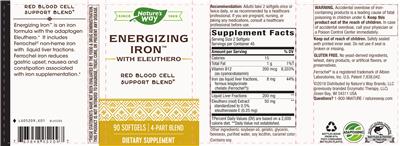
Energizing Iron with Eleuthero by Nature's Way label
The label scan from the NIH Dietary Supplement Label Database. Tap to enlarge.
Label images are published by the NIH Dietary Supplement Label Database for the version of this product on file. Always read your actual product label.
View the full label (PDF)The Ingredients in Energizing Iron with Eleuthero by Nature's Way
These are the 4 active ingredients this product is made of. Select any to open its full monograph.
Serving size2 Softgel(s) Dosage formSoftgel Capsule Servings per container45 Amounts shown are per serving.
Most supplement products combine several ingredients, and a medication can interact with the product through any one of them. Each ingredient below shows whether it has known drug interactions.
Vitamin B12
Interacts with20 drugs
Vitamin B12 (cobalamin) is an essential nutrient your body needs to make red blood cells, keep nerves healthy, and support DNA. Supplements are very h...
Vitamin B12 monograph & interactionsIron
Interacts with80 drugs
Iron is an essential mineral your body needs to make hemoglobin and carry oxygen in the blood. Supplements are mainly useful for treating or preventin...
Iron monograph & interactionsLiquid Liver Fractions
Interacts with3 drugs
Liver extract is a dried or concentrated form of animal liver that is naturally rich in iron, vitamin B12, vitamin A, and other nutrients. It was once...
Liquid Liver Fractions monograph & interactionsEleuthero (root) extract
Interacts with1,140 drugs
Eleuthero is an herb traditionally used as an 'adaptogen' to fight fatigue, boost energy, and help the body handle stress. The scientific evidence beh...
Eleuthero (root) extract monograph & interactionsOther (inactive) ingredients: Soybean Oil, Gelatin, Glycerin, Beeswax, Purified Water, Soy Lecithin, Caramel color. These complete the product’s ingredient list but are not active constituents.
Energizing Iron with Eleuthero by Nature's Way Drug Interactions
HelloPharmacist Interaction Report
Energizing Iron with Eleuthero by Nature's Way has documented interactions through its iron, vitamin B12, liquid liver fractions, and eleuthero content.
The most serious interaction is eleuthero's potential to increase digoxin (Lanoxin) levels, a heart medication where even small increases can cause toxicity.
Read the full breakdown — every affected drug type, severity by severity
Iron interacts with multiple medication types by reducing their absorption in the digestive tract. These include levodopa (used for Parkinson's disease), quinolone and tetracycline antibiotics, bisphosphonates (osteoporosis drugs), methyldopa (blood pressure medication), levothyroxine (thyroid hormone), mycophenolate mofetil (an immunosuppressant), and penicillamine (used for Wilson's disease and rheumatoid arthritis).
All are rated Moderate severity and require spacing iron doses away from these medications by 2 to 6 hours depending on the drug.
Elementhero may theoretically increase levels of drugs metabolized by liver enzymes (CYP1A2, CYP2C9, and CYP2D6 substrates) and by the P-glycoprotein transporter—these interactions have not been confirmed in humans. It may also interfere with anticoagulant or antiplatelet drugs (blood thinners), immunosuppressants, and diabetes medications, and may add to the blood-sugar-lowering effect of antidiabetes drugs.
Vitamin B12 has a Minor interaction with metformin (a diabetes medication) that can lower B12 levels with prolonged use. Liquid liver fractions contain variable amounts of vitamin K and heme iron; theoretically, changes in liver extract use could affect warfarin (an anticoagulant) and increase total iron load.
Altogether, these interactions span 1,180 individual medications. Use the medication checker below to confirm whether your exact prescriptions interact with this product before starting.
Check your own medications below · Editorial policy · How we use AI
Want to check YOUR meds against Energizing Iron with Eleuthero?
Ask about interactions with your drugs in plain English — “Can I take it with lisinopril?” — and we find you the answer in seconds, ingredient by ingredient.
Go to the checkerIngredients driving the most interactions
Individual Drug Interactions
The ingredients in Energizing Iron with Eleuthero interact with 1,179 drugs. Click any drug to see the details.
4 of the 4 ingredients in Energizing Iron with Eleuthero interact with drugs. Each result below shows which ingredient is responsible. Eleuthero (root) extract Iron Vitamin B12 Liquid Liver Fractions
6-mercaptopurinePurinethol
How 6-mercaptopurine interacts with Energizing Iron with Eleuthero — through 1 ingredient. Tap an ingredient for the detail:
Eleuthero (root) ExtractImmunosuppressants Moderate
Interaction Summary
Theoretically, eleuthero might interfere with immunosuppressive drugs because of its immunostimulant activity.
Read the full Eleuthero (root) Extract + 6-mercaptopurine interactionAbciximabReoPro
How Abciximab interacts with Energizing Iron with Eleuthero — through 1 ingredient. Tap an ingredient for the detail:
Eleuthero (root) ExtractAnticoagulant/antiplatelet Drugs Moderate
Interaction Summary
Theoretically, eleuthero may have antiplatelet effects and may increase the risk of bleeding if used with anticoagulant or antiplatelet drugs.
Read the full Eleuthero (root) Extract + Abciximab interactionAbrocitinibCibinqo
How Abrocitinib interacts with Energizing Iron with Eleuthero — through 1 ingredient. Tap an ingredient for the detail:
Eleuthero (root) ExtractImmunosuppressants, Anticoagulant/antiplatelet Drugs +1 Moderate
Interaction Summary
Theoretically, eleuthero might interfere with immunosuppressive drugs because of its immunostimulant activity.
Read the full Eleuthero (root) Extract + Abrocitinib interactionAcalabrutinibCalquence
How Acalabrutinib interacts with Energizing Iron with Eleuthero — through 1 ingredient. Tap an ingredient for the detail:
Eleuthero (root) ExtractCytochrome P450 3a4 (cyp3a4) Substrates, P-glycoprotein Substrates Moderate
Interaction Summary
Theoretically, eleuthero might increase levels of drugs metabolized by CYP3A4.
Read the full Eleuthero (root) Extract + Acalabrutinib interactionAcarboseGlucobay, Prandase, Precose
How Acarbose interacts with Energizing Iron with Eleuthero — through 1 ingredient. Tap an ingredient for the detail:
Eleuthero (root) ExtractAntidiabetes Drugs Moderate
Interaction Summary
Theoretically, eleuthero might have additive effects when used with antidiabetes drugs.
Read the full Eleuthero (root) Extract + Acarbose interactionAcenocoumarolSintrom
How Acenocoumarol interacts with Energizing Iron with Eleuthero — through 1 ingredient. Tap an ingredient for the detail:
Eleuthero (root) ExtractAnticoagulant/antiplatelet Drugs Moderate
Interaction Summary
Theoretically, eleuthero may have antiplatelet effects and may increase the risk of bleeding if used with anticoagulant or antiplatelet drugs.
Read the full Eleuthero (root) Extract + Acenocoumarol interactionAcetaminophenChildren's Tylenol, Children's Tylenol Meltaways, Tylenol, Tylenol Ex Strength
How Acetaminophen interacts with Energizing Iron with Eleuthero — through 1 ingredient. Tap an ingredient for the detail:
Eleuthero (root) ExtractCytochrome P450 1a2 (cyp1a2) Substrates Moderate
Interaction Summary
Theoretically, eleuthero might increase levels of drugs metabolized by CYP1A2.
Read the full Eleuthero (root) Extract + Acetaminophen interactionAcetaminophen, AspirinGemnisyn
How Acetaminophen, Aspirin interacts with Energizing Iron with Eleuthero — through 1 ingredient. Tap an ingredient for the detail:
Eleuthero (root) ExtractCytochrome P450 1a2 (cyp1a2) Substrates, Anticoagulant/antiplatelet Drugs Moderate
Interaction Summary
Theoretically, eleuthero might increase levels of drugs metabolized by CYP1A2.
Read the full Eleuthero (root) Extract + Acetaminophen, Aspirin interactionAcetaminophen, Aspirin, CaffeineExcedrin, Excedrin Extra Strength, Excedrin Migraine
How Acetaminophen, Aspirin, Caffeine interacts with Energizing Iron with Eleuthero — through 1 ingredient. Tap an ingredient for the detail:
Eleuthero (root) ExtractAnticoagulant/antiplatelet Drugs, Cytochrome P450 1a2 (cyp1a2) Substrates +1 Moderate
Interaction Summary
Theoretically, eleuthero may have antiplatelet effects and may increase the risk of bleeding if used with anticoagulant or antiplatelet drugs.
Read the full Eleuthero (root) Extract + Acetaminophen, Aspirin, Caffeine interactionAcetaminophen, Brompheniramine, PhenylpropanolamineDimetapp Cold and Flu
How Acetaminophen, Brompheniramine, Phenylpropanolamine interacts with Energizing Iron with Eleuthero — through 1 ingredient. Tap an ingredient for the detail:
Eleuthero (root) ExtractCytochrome P450 1a2 (cyp1a2) Substrates Moderate
Interaction Summary
Theoretically, eleuthero might increase levels of drugs metabolized by CYP1A2.
Read the full Eleuthero (root) Extract + Acetaminophen, Brompheniramine, Phenylpropanolamine interactionAcetaminophen, ButalbitalAxocet, Bancap, Bucet, Butex Forte, Esgic CF, Orbivan CF +5 more
How Acetaminophen, Butalbital interacts with Energizing Iron with Eleuthero — through 1 ingredient. Tap an ingredient for the detail:
Eleuthero (root) ExtractCytochrome P450 1a2 (cyp1a2) Substrates Moderate
Interaction Summary
Theoretically, eleuthero might increase levels of drugs metabolized by CYP1A2.
Read the full Eleuthero (root) Extract + Acetaminophen, Butalbital interactionAcetaminophen, Butalbital, CaffeineEsgic, Esgic Plus, Fiogesic, Fioricet, Repan, Tecnal +1 more
How Acetaminophen, Butalbital, Caffeine interacts with Energizing Iron with Eleuthero — through 1 ingredient. Tap an ingredient for the detail:
Eleuthero (root) ExtractCytochrome P450 1a2 (cyp1a2) Substrates, Cytochrome P450 3a4 (cyp3a4) Substrates Moderate
Interaction Summary
Theoretically, eleuthero might increase levels of drugs metabolized by CYP1A2.
Read the full Eleuthero (root) Extract + Acetaminophen, Butalbital, Caffeine interactionAcetaminophen, Butalbital, Caffeine, CodeineEsgic with Codeine, Fioricet w/ Codeine
How Acetaminophen, Butalbital, Caffeine, Codeine interacts with Energizing Iron with Eleuthero — through 1 ingredient. Tap an ingredient for the detail:
Eleuthero (root) ExtractCytochrome P450 3a4 (cyp3a4) Substrates, Cytochrome P450 2d6 (cyp2d6) Substrates +1 Moderate
Interaction Summary
Theoretically, eleuthero might increase levels of drugs metabolized by CYP3A4.
Read the full Eleuthero (root) Extract + Acetaminophen, Butalbital, Caffeine, Codeine interactionAcetaminophen, Butalbital, CodeineBancap w/ Codeine
How Acetaminophen, Butalbital, Codeine interacts with Energizing Iron with Eleuthero — through 1 ingredient. Tap an ingredient for the detail:
Eleuthero (root) ExtractCytochrome P450 1a2 (cyp1a2) Substrates, Cytochrome P450 2d6 (cyp2d6) Substrates Moderate
Interaction Summary
Theoretically, eleuthero might increase levels of drugs metabolized by CYP1A2.
Read the full Eleuthero (root) Extract + Acetaminophen, Butalbital, Codeine interactionAcetaminophen, Butalbital, Codeine PhosphatePhrenilin #3
How Acetaminophen, Butalbital, Codeine Phosphate interacts with Energizing Iron with Eleuthero — through 1 ingredient. Tap an ingredient for the detail:
Eleuthero (root) ExtractCytochrome P450 2d6 (cyp2d6) Substrates, Cytochrome P450 1a2 (cyp1a2) Substrates Moderate
Interaction Summary
Theoretically, eleuthero might increase levels of drugs metabolized by CYP2D6.
Read the full Eleuthero (root) Extract + Acetaminophen, Butalbital, Codeine Phosphate interactionAcetaminophen, Caffeine, Chlorpheniramine, Hydrocodone, PhenylephrineHycomine Compound
How Acetaminophen, Caffeine, Chlorpheniramine, Hydrocodone, Phenylephrine interacts with Energizing Iron with Eleuthero — through 1 ingredient. Tap an ingredient for the detail:
Eleuthero (root) ExtractCytochrome P450 1a2 (cyp1a2) Substrates, Cytochrome P450 3a4 (cyp3a4) Substrates +1 Moderate
Interaction Summary
Theoretically, eleuthero might increase levels of drugs metabolized by CYP1A2.
Read the full Eleuthero (root) Extract + Acetaminophen, Caffeine, Chlorpheniramine, Hydrocodone, Phenylephrine interactionAcetaminophen, Caffeine, CodeineGesic C15, Gesic C30, Gesic C8, Lenoltec 1, Lenoltec 2, Lenoltec 3 +1 more
How Acetaminophen, Caffeine, Codeine interacts with Energizing Iron with Eleuthero — through 1 ingredient. Tap an ingredient for the detail:
Eleuthero (root) ExtractCytochrome P450 2d6 (cyp2d6) Substrates, Cytochrome P450 1a2 (cyp1a2) Substrates +1 Moderate
Interaction Summary
Theoretically, eleuthero might increase levels of drugs metabolized by CYP2D6.
Read the full Eleuthero (root) Extract + Acetaminophen, Caffeine, Codeine interactionAcetaminophen, Caffeine, Codeine, SalicylamideCodalan No.1, Codalan No.2, Codalan No.3
How Acetaminophen, Caffeine, Codeine, Salicylamide interacts with Energizing Iron with Eleuthero — through 1 ingredient. Tap an ingredient for the detail:
Eleuthero (root) ExtractCytochrome P450 2d6 (cyp2d6) Substrates, Cytochrome P450 3a4 (cyp3a4) Substrates +1 Moderate
Interaction Summary
Theoretically, eleuthero might increase levels of drugs metabolized by CYP2D6.
Read the full Eleuthero (root) Extract + Acetaminophen, Caffeine, Codeine, Salicylamide interactionAcetaminophen, Caffeine, DihydrocodeineDHC Plus, Panlor DC, Panlor SS
How Acetaminophen, Caffeine, Dihydrocodeine interacts with Energizing Iron with Eleuthero — through 1 ingredient. Tap an ingredient for the detail:
Eleuthero (root) ExtractCytochrome P450 1a2 (cyp1a2) Substrates, Cytochrome P450 2d6 (cyp2d6) Substrates +1 Moderate
Interaction Summary
Theoretically, eleuthero might increase levels of drugs metabolized by CYP1A2.
Read the full Eleuthero (root) Extract + Acetaminophen, Caffeine, Dihydrocodeine interactionAcetaminophen, Caffeine, IsomethepteneMigralam
How Acetaminophen, Caffeine, Isometheptene interacts with Energizing Iron with Eleuthero — through 1 ingredient. Tap an ingredient for the detail:
Eleuthero (root) ExtractCytochrome P450 3a4 (cyp3a4) Substrates, Cytochrome P450 1a2 (cyp1a2) Substrates Moderate
Interaction Summary
Theoretically, eleuthero might increase levels of drugs metabolized by CYP3A4.
Read the full Eleuthero (root) Extract + Acetaminophen, Caffeine, Isometheptene interactionAcetaminophen, Caffeine, PyrilamineMidol Max Strength Menstrual
How Acetaminophen, Caffeine, Pyrilamine interacts with Energizing Iron with Eleuthero — through 1 ingredient. Tap an ingredient for the detail:
Eleuthero (root) ExtractCytochrome P450 1a2 (cyp1a2) Substrates, Cytochrome P450 3a4 (cyp3a4) Substrates Moderate
Interaction Summary
Theoretically, eleuthero might increase levels of drugs metabolized by CYP1A2.
Read the full Eleuthero (root) Extract + Acetaminophen, Caffeine, Pyrilamine interactionAcetaminophen, Chlorpheniramine Maleate, Dextromethorphan HbrVicks Formula 44M Cough, Cold & Flu Relief
How Acetaminophen, Chlorpheniramine Maleate, Dextromethorphan Hbr interacts with Energizing Iron with Eleuthero — through 1 ingredient. Tap an ingredient for the detail:
Eleuthero (root) ExtractCytochrome P450 1a2 (cyp1a2) Substrates, Cytochrome P450 2d6 (cyp2d6) Substrates +1 Moderate
Interaction Summary
Theoretically, eleuthero might increase levels of drugs metabolized by CYP1A2.
Read the full Eleuthero (root) Extract + Acetaminophen, Chlorpheniramine Maleate, Dextromethorphan Hbr interactionAcetaminophen, Chlorpheniramine, Codeine, PhenylephrineColrex
How Acetaminophen, Chlorpheniramine, Codeine, Phenylephrine interacts with Energizing Iron with Eleuthero — through 1 ingredient. Tap an ingredient for the detail:
Eleuthero (root) ExtractCytochrome P450 3a4 (cyp3a4) Substrates, Cytochrome P450 1a2 (cyp1a2) Substrates +1 Moderate
Interaction Summary
Theoretically, eleuthero might increase levels of drugs metabolized by CYP3A4.
Read the full Eleuthero (root) Extract + Acetaminophen, Chlorpheniramine, Codeine, Phenylephrine interactionAcetaminophen, Chlorpheniramine, DextromethorphanCoricidin II Extra Strength Cold and Flu
How Acetaminophen, Chlorpheniramine, Dextromethorphan interacts with Energizing Iron with Eleuthero — through 1 ingredient. Tap an ingredient for the detail:
Eleuthero (root) ExtractCytochrome P450 1a2 (cyp1a2) Substrates, Cytochrome P450 2d6 (cyp2d6) Substrates +1 Moderate
Interaction Summary
Theoretically, eleuthero might increase levels of drugs metabolized by CYP1A2.
Read the full Eleuthero (root) Extract + Acetaminophen, Chlorpheniramine, Dextromethorphan interactionAcetaminophen, Chlorpheniramine, Dextromethorphan HydrobromideCoricidin HBP Maximum Strength Flu
How Acetaminophen, Chlorpheniramine, Dextromethorphan Hydrobromide interacts with Energizing Iron with Eleuthero — through 1 ingredient. Tap an ingredient for the detail:
Eleuthero (root) ExtractCytochrome P450 3a4 (cyp3a4) Substrates, Cytochrome P450 1a2 (cyp1a2) Substrates +1 Moderate
Interaction Summary
Theoretically, eleuthero might increase levels of drugs metabolized by CYP3A4.
Read the full Eleuthero (root) Extract + Acetaminophen, Chlorpheniramine, Dextromethorphan Hydrobromide interactionAcetaminophen, Chlorpheniramine, Dextromethorphan, PhenylpropanolamineMulti Symptom Cold Relief
How Acetaminophen, Chlorpheniramine, Dextromethorphan, Phenylpropanolamine interacts with Energizing Iron with Eleuthero — through 1 ingredient. Tap an ingredient for the detail:
Eleuthero (root) ExtractCytochrome P450 2d6 (cyp2d6) Substrates, Cytochrome P450 3a4 (cyp3a4) Substrates +1 Moderate
Interaction Summary
Theoretically, eleuthero might increase levels of drugs metabolized by CYP2D6.
Read the full Eleuthero (root) Extract + Acetaminophen, Chlorpheniramine, Dextromethorphan, Phenylpropanolamine interactionAcetaminophen, Chlorpheniramine, Dextromethorphan, PseudoephedrineChildren's Tylenol Cold Plus Cough, Tylenol Cold Ex Strength
How Acetaminophen, Chlorpheniramine, Dextromethorphan, Pseudoephedrine interacts with Energizing Iron with Eleuthero — through 1 ingredient. Tap an ingredient for the detail:
Eleuthero (root) ExtractCytochrome P450 1a2 (cyp1a2) Substrates, Cytochrome P450 2d6 (cyp2d6) Substrates +1 Moderate
Interaction Summary
Theoretically, eleuthero might increase levels of drugs metabolized by CYP1A2.
Read the full Eleuthero (root) Extract + Acetaminophen, Chlorpheniramine, Dextromethorphan, Pseudoephedrine interactionAcetaminophen, Chlorpheniramine, Guaifenesin, Phenylephrine, SalicylamideRhinogesic GG
How Acetaminophen, Chlorpheniramine, Guaifenesin, Phenylephrine, Salicylamide interacts with Energizing Iron with Eleuthero — through 1 ingredient. Tap an ingredient for the detail:
Eleuthero (root) ExtractCytochrome P450 1a2 (cyp1a2) Substrates, Cytochrome P450 3a4 (cyp3a4) Substrates Moderate
Interaction Summary
Theoretically, eleuthero might increase levels of drugs metabolized by CYP1A2.
Read the full Eleuthero (root) Extract + Acetaminophen, Chlorpheniramine, Guaifenesin, Phenylephrine, Salicylamide interactionAcetaminophen, Chlorpheniramine, PhenylephrineAlka-Seltzer PLUS, Histex SR, Protid
How Acetaminophen, Chlorpheniramine, Phenylephrine interacts with Energizing Iron with Eleuthero — through 1 ingredient. Tap an ingredient for the detail:
Eleuthero (root) ExtractCytochrome P450 1a2 (cyp1a2) Substrates, Cytochrome P450 3a4 (cyp3a4) Substrates Moderate
Interaction Summary
Theoretically, eleuthero might increase levels of drugs metabolized by CYP1A2.
Read the full Eleuthero (root) Extract + Acetaminophen, Chlorpheniramine, Phenylephrine interactionAcetaminophen, Chlorpheniramine, Phenylephrine, SalicylamideRhinogesic, Rhinogesic JR
How Acetaminophen, Chlorpheniramine, Phenylephrine, Salicylamide interacts with Energizing Iron with Eleuthero — through 1 ingredient. Tap an ingredient for the detail:
Eleuthero (root) ExtractCytochrome P450 1a2 (cyp1a2) Substrates, Cytochrome P450 3a4 (cyp3a4) Substrates Moderate
Interaction Summary
Theoretically, eleuthero might increase levels of drugs metabolized by CYP1A2.
Read the full Eleuthero (root) Extract + Acetaminophen, Chlorpheniramine, Phenylephrine, Salicylamide interactionEach ingredient & the kinds of drugs it affects
For each ingredient in Energizing Iron with Eleuthero with known interactions, here are the types of medications they can affect. Open any type for the detail — or search your exact drug in the checker above.
Eleuthero (root) extract
Anticoagulant/Antiplatelet Drugs
Theoretically, eleuthero may have antiplatelet effects and may increase the risk of bleeding if used with anticoagulant or antiplatelet drugs.
In vitro and animal research shows that a constituent of eleuthero, dihydroxybenzoic acid, appears to inhibit platelet aggregation. Concomitant use with anticoagulant or antiplatelet drugs might increase the risk of bleeding. This effect has not been reported in humans.
Antidiabetes Drugs
Theoretically, eleuthero might have additive effects when used with antidiabetes drugs.
Animal research suggests that certain constituents of eleuthero have hypoglycemic activity in both healthy and diabetic animals. A small study in adults with type 2 diabetes also shows that taking eleuthero for 3 months can lower blood glucose levels. However, one very small study in healthy individuals shows that taking powdered eleuthero 3 grams, 40 minutes prior to a 75-gram oral glucose tolerance test, significantly increases postprandial blood glucose levels when compared with placebo. These contradictory findings might be due to patient-specific variability and variability in active ingredient ratios.
Cytochrome P450 1A2 (Cyp1A2) Substrates
Theoretically, eleuthero might increase levels of drugs metabolized by CYP1A2.
In vitro and animal research suggest that standardized extracts of eleuthero inhibit CYP1A2. This effect has not been reported in humans.
Cytochrome P450 2C9 (Cyp2C9) Substrates
Theoretically, eleuthero might increase levels of drugs metabolized by CYP2C9.
In vitro and animal research suggest that standardized extracts of eleuthero might inhibit CYP2C9. This effect has not been reported in humans.
Digoxin (Lanoxin)
Eleuthero might increase serum digoxin levels and increase the risk of side effects.
In one case report, a 74-year-old male who was stabilized on digoxin presented with an elevated serum digoxin level after starting an eleuthero supplement, without symptoms of toxicity. After stopping the supplement, serum digoxin levels returned to normal. It is not clear whether this was due to a pharmacokinetic interaction or to interference with the digoxin assay. Although the product was found to be free of digoxin and digitoxin, it was not tested for other contaminants.
Immunosuppressants
Theoretically, eleuthero might interfere with immunosuppressive drugs because of its immunostimulant activity.
Animal and in vitro research shows that eleuthero extracts have immunomodulatory effects, including increasing cellular and humoral activity.
P-Glycoprotein Substrates
Theoretically, eleuthero might increase levels of P-glycoprotein substrates.
In vitro research suggests that eleuthero can inhibit the multi-drug transporter protein, P-glycoprotein. However, it is too soon to tell if this is clinically important. This interaction has not been reported in humans.
Cytochrome P450 2D6 (Cyp2D6) Substrates
Theoretically, eleuthero might increase levels of drugs metabolized by CYP2D6.
In vitro and animal research suggest that standardized extracts of eleuthero might inhibit CYP2D6. However, research in healthy human volunteers has found that taking eleuthero 485 mg twice daily for 14 days does not inhibit CYP2D6 drug metabolism.
Cytochrome P450 3A4 (Cyp3A4) Substrates
Theoretically, eleuthero might increase levels of drugs metabolized by CYP3A4.
In vitro and animal research suggest that standardized extracts of eleuthero might inhibit CYP3A4. However, research in healthy human volunteers has found that taking eleuthero 485 mg twice daily for 14 days does not inhibit CYP3A4 drug metabolism.
Organic Anion-Transporting Polypeptide Substrates (Oatp)
Theoretically, eleuthero might decrease levels of drugs metabolized by OATP.
In vitro research suggests that eleuthero inhibits OATP2B1, which might reduce the bioavailability of oral drugs that are substrates of OATP2B1. Due to the weak inhibitory effect identified in this study, this interaction is not likely to be clinically significant.
Iron
Bictegravir/Emtricitabine/Tenofovir Alafenamide (Biktarvy)
Iron might decrease levels of bictegravir/emtricitabine/tenofovir alafenamide by reducing its absorption when taken in a fasting state.
Advise patients that bictegravir/emtricitabine/tenofovir alafenamide and iron can be taken together if taken with food. However, if taken on an empty stomach, bictegravir/emtricitabine/tenofovir alafenamide should not be taken with, or 2 hours after, iron containing products.
Bisphosphonates
Iron reduces the absorption of bisphosphonates.
Advise patients that doses of bisphosphonates should be separated by at least two hours from doses of all other medications, including supplements such as iron. Divalent cations, including iron, can decrease absorption of bisphosphonates by forming insoluble complexes in the gastrointestinal tract.
Denosumab (Prolia, Others)
Administration of intravenous iron within one month of denosumab administration might increase the risk of severe hypophosphatemia and hypocalcemia.
A case of severe hypocalcemia (albumin corrected calcium 6.88 mg/dL, ionized calcium 3.68 mg/dL) and hypophosphatemia (<0.5 mg/dL) with respiratory acidosis, QT interval prolongation, and nonsustained ventricular tachycardia was reported in a 76-year-old male who had received an iron polymaltose infusion within 2 weeks of a subcutaneous injection of denosumab. Serum parathyroid hormone was also elevated (348 pg/mL). Subsequent iron infusions with iron polymaltose and ferric carboxymaltose were followed by transient hypophosphatemia, but without hypocalcemia. Additionally, a literature review describes 6 additional cases of hypophosphatemia and hypocalcemia in patients 52-92 years of age who had been administered intravenous iron as either ferric carboxymaltose or iron polymaltose and subcutaneous denosumab within 1-4 weeks of each other.
Dolutegravir (Tivicay)
Iron might decrease dolutegravir levels by reducing its absorption.
Advise patients to take dolutegravir at least 2 hours before or 6 hours after taking iron. Pharmacokinetic research shows that iron can decrease the absorption of dolutegravir from the gastrointestinal tract through chelation. When taken under fasting conditions, a single dose of ferrous fumarate 324 mg orally along with dolutegravir 50 mg reduces overall exposure to dolutegravir by 54%.
Integrase Inhibitors
Theoretically, taking iron along with integrase inhibitors might decrease the levels and clinical effects of these drugs.
Iron is a divalent cation. There is concern that iron may decrease the absorption of integrase inhibitors from the gastrointestinal tract through chelation. One pharmacokinetic study shows that iron can decrease blood levels of the specific integrase inhibitor dolutegravir through chelation. Also, other pharmacokinetic research shows that other divalent cations such as calcium can decrease the absorption and levels of some integrase inhibitors through chelation.
Levodopa
Iron might decrease levodopa levels by reducing its absorption.
Advise patients to separate doses of levodopa and iron as much as possible. There is some evidence in healthy people that iron forms chelates with levodopa, reducing the amount of levodopa absorbed by around 50%. The clinical significance of this hasn't been determined.
Levothyroxine (Synthroid, Others)
Iron might decrease levothyroxine levels by reducing its absorption.
Advise patients to separate levothyroxine and iron doses by at least 2 hours. Iron can decrease the absorption and efficacy of levothyroxine by forming insoluble complexes in the gastrointestinal tract.
Methyldopa (Aldomet)
Iron might decrease methyldopa levels by reducing its absorption.
Advise patients to separate methyldopa and iron doses by at least 2 hours. Iron can decrease the absorption of methyldopa from the gastrointestinal tract through chelation, resulting in increases in blood pressure.
Mycophenolate Mofetil (Cellcept)
Theoretically, iron might decrease mycophenolate mofetil levels by reducing its absorption.
Advise patients to take iron 4-6 hours before, or 2 hours after, mycophenolate mofetil. It has been suggested that a decrease of absorption is possible, probably by forming nonabsorbable chelates. However, mycophenolate pharmacokinetics are not affected by iron supplementation in available clinical research.
Penicillamine (Cuprimine, Depen)
Iron might decrease penicillamine levels by reducing its absorption.
Advise patients to separate penicillamine and iron doses by at least 2 hours. Oral iron supplements can reduce absorption of penicillamine by 30% to 70%, probably due to chelate formation. In people with Wilson's disease, this interaction has led to reduced efficacy of penicillamine.
Quinolone Antibiotics
Iron might decrease levels of quinolone antibiotics by reducing their absorption.
Advise patients to separate quinolone antibiotics and iron doses by at least 2 hours. Iron decreases the absorption of quinolones due to formation of insoluble complexes in the gastrointestinal tract.
Tetracycline Antibiotics
Iron might decrease levels of tetracycline antibiotics by reducing their absorption.
Advise patients to take iron at least 2 hours before or 4 hours after tetracycline antibiotics. Concomitant use can decrease absorption of tetracycline antibiotics from the gastrointestinal tract by 50% to 90%.
Chloramphenicol
Theoretically, taking chloramphenicol with iron might reduce the response to iron therapy in iron deficiency anemia.
Chloramphenicol interferes with erythrocyte maturation. However, since chloramphenicol isn't usually taken for prolonged periods, this isn't likely to be clinically significant.
Vitamin B12
Metformin (Glucophage)
Metformin, a common medication used to manage type 2 diabetes, has been associated with lower vitamin B12 levels in some individuals. Prolonged use of metformin can interfere with the absorption of B12 in the digestive system, potentially leading to a deficiency in this essential vitamin.
Liquid Liver Fractions
Iron
Liver extract can contain heme iron. Taking liver extract with iron-containing medications or supplements may increase total iron intake and could increase the risk of gastrointestinal adverse effects or excessive iron accumulation. The risk is greater with high doses, prolonged use, or in individuals with hemochromatosis or another iron-overload disorder. Review the iron content of the liver extract and the total elemental iron dose. Avoid unnecessary duplicate iron supplementation and consider monitoring ferritin and transferrin saturation when clinically appropriate.
Warfarin (Coumadin)
Liver extract products may contain small and variable amounts of vitamin K. Theoretically, starting, stopping, or substantially changing the amount of liver extract used could reduce the anticoagulant effect of warfarin and lower the INR. However, this interaction has not been directly studied or reported in humans, and the vitamin K content of liver extract products is generally not standardized. Consider monitoring the INR after a meaningful change in liver extract use.
Brand information
Manufacturer and brand details for Energizing Iron with Eleuthero, from the product label.
Nature's Way
See all Nature's Way products- Name
- Nature's Way Brands, LLC (previously branded Enzymatic Therapy, LLC)
- City
- Green Bay
- State
- WI
- ZipCode
- 54311
- Phone Number
- 1-800-962-8873
- Web Address
- naturesway.com
Energizing Iron with Eleuthero by Nature's Way: Common Questions
Does Energizing Iron with Eleuthero by Nature's Way interact with any medications?
How can one product interact with so many drugs?
Where does this information come from?
Is this safe to take if I'm pregnant or breastfeeding?
What are the most common side effects?
Can this product help with energy and fatigue?
Why does this product have so many drug interactions?
Do I need to space this out from my other medications?
Is vitamin A in the liver fractions a concern?
Written and reviewed by the HelloPharmacist editorial staff. Our editorial policy
Not sure if Energizing Iron with Eleuthero is safe with your meds?
Our pharmacists answer your medication & supplement questions — free.
Label information is sourced from the NIH Dietary Supplement Label Database and reflects the product version on file; always read your actual product label. This page is for education only and is not a substitute for professional medical advice. Confirm with your pharmacist or doctor before combining supplements and medications.
The Full Monographs Behind Energizing Iron with Eleuthero’s Ingredients
Every ingredient we hold a full HelloPharmacist monograph for — uses, evidence, safety, and the complete interaction list.
Vitamin B12
Interacts with 20 drugsVitamin B12 (cobalamin) is an essential nutrient your body needs to make red blood cells, keep nerves healthy, and support DNA. Supplements are very helpful for people who are deficient — su...
Read the full Vitamin B12 monograph → Herb & supplement monographIron
Interacts with 80 drugsIron is an essential mineral your body needs to make hemoglobin and carry oxygen in the blood. Supplements are mainly useful for treating or preventing iron deficiency and iron-deficiency an...
Read the full Iron monograph → Herb & supplement monographLiver Extract
Interacts with 3 drugsLiver extract is a dried or concentrated form of animal liver that is naturally rich in iron, vitamin B12, vitamin A, and other nutrients. It was once used to treat certain anemias before pu...
Read the full Liver Extract monograph → Herb & supplement monographEleuthero
Interacts with 1,140 drugsEleuthero is an herb traditionally used as an 'adaptogen' to fight fatigue, boost energy, and help the body handle stress. The scientific evidence behind these uses is limited and mixed, so...
Read the full Eleuthero monograph →Sources & How We Checked
Energizing Iron with Eleuthero's label data comes from the NIH Dietary Supplement Label Database; the ingredient interaction data is from the Natural Medicines database, reviewed by our pharmacists.
- NIH Dietary Supplement Label Database (DSLD) — The official product label on file for this supplement.
- Natural Medicines (Therapeutic Research Center) — Evidence-graded clinical reference behind the ingredient interaction data.
Content is written and reviewed by licensed HelloPharmacist pharmacists. See our data sources and editorial standards for how this information is built and checked.
The 130 references behind this product’s interaction data
Every citation that drives the interaction findings for this product’s ingredients, from the evidence-graded Natural Medicines (TRC Healthcare) database. Open an ingredient to browse its citations — links open the study on PubMed or the publisher’s site.
Vitamin B12 30 references
- Food and Nutrition Board, Institute of Medicine. Dietary Reference Intakes for Thiamin, Riboflavin, Niacin, Vitamin B6, Folate, Vitamin B12, Pantothenic Acid, Biotin, and Choline (2000). Washington, DC: National Academy Press, 2000. Available at: http://b
- Hartman TJ, Woodson K, Stolzenberg-Solomon R, et al. Association of the B-vitamins pyridoxal 5'-phosphate (B6), B12, and folate with lung cancer risk in older men. Am J Epidemiol 2001;153:688-94.. DOI
- Jansen T, Romiti R, Kreuter A, Altmeyer P. Rosacea fulminans triggered by high-dose vitamins B6 and B12. J Eur Acad Dermatol Venereol 2001;15:484-5..
- Lange H, Suryapranata H, De Luca G, et al. Folate therapy and in-stent restenosis after coronary stenting. N Engl J Med 2004;350:2673-81. PubMed
- Collin, S. M., Metcalfe, C., Refsum, H., Lewis, S. J., Zuccolo, L., Smith, G. D., Chen, L., Harris, R., Davis, M., Marsden, G., Johnston, C., Lane, J. A., Ebbing, M., Bonaa, K. H., Nygard, O., Ueland, P. M., Grau, M. V., Baron, J. A., Donovan, J. L., Nea
- Geissbuhler, P., Mermillod, B., and Rapin, C. H. Elevated serum vitamin B12 levels associated with CRP as a predictive factor of mortality in palliative care cancer patients: a prospective study over five years. J.Pain Symptom.Manage. 2000;20(2):93-103. PubMed
- Salles, N., Herrmann, F., Sakbani, K., Rapin, C. H., and Sieber, C. High vitamin B12 level: a strong predictor of mortality in elderly inpatients. J Am Geriatr.Soc 2005;53(5):917-918.
- Looker, H. C., Fagot-Campagna, A., Gunter, E. W., Pfeiffer, C. M., Sievers, M. L., Bennett, P. H., Nelson, R. G., Hanson, R. L., and Knowler, W. C. Homocysteine and vitamin B(12) concentrations and mortality rates in type 2 diabetes. Diabetes Metab Res R
- Uhl, W., Nolting, A., Golor, G., Rost, K. L., and Kovar, A. Safety of hydroxocobalamin in healthy volunteers in a randomized, placebo-controlled study. Clin Toxicol (Phila) 2006;44 Suppl 1:17-28. PubMed
- Borron, S. W., Baud, F. J., Barriot, P., Imbert, M., and Bismuth, C. Prospective study of hydroxocobalamin for acute cyanide poisoning in smoke inhalation. Ann Emerg.Med 2007;49(6):794-801, 801. PubMed
- Borron, S. W., Baud, F. J., Megarbane, B., and Bismuth, C. Hydroxocobalamin for severe acute cyanide poisoning by ingestion or inhalation. Am J Emerg.Med 2007;25(5):551-558. PubMed
- Lewis, J. G. Gout, Steatorrhoea, and Megaloblastic Anaemia. Ann Rheum.Dis 1962;21(3):284-286. PubMed
- Tal, S., Shavit, Y., Stern, F., and Malnick, S. Association between vitamin B12 levels and mortality in hospitalized older adults. J Am Geriatr.Soc 2010;58(3):523-526. PubMed
- Baztan, J. J., Gavidia, J. J., Gomez-Pavon, J., Esteve, A., and Ruiperez, I. High vitamin B12 levels and in-hospital mortality. J Am Geriatr.Soc 2010;58(11):2237-2238. PubMed
- Omboni, E., Checchini, M., and Longoni, F. [Hypopotassemia and megaloblastic anemia. Presentation of a case]. Minerva Med 8-31-1987;78(16):1255-1257.
- Aalfs As, Scholvinck LH, Horvath B. Acneiform eruption in a 5-year old due to vitamin B12 supplementation. Eur J Dermatol 2013;23(5):726-7. PubMed
- Balta I, Ozuguz P. Vitamin B12-induced acneiform eruption. Cutan Ocul Toxicol 2014;33(2):94-5. PubMed
- Carman KB, Belgemen T, Yis U. Involuntary movements misdiagnosed as seizure during vitamin B12 treatment. Pediatr Emerg Care 2013;29(11):1223-4. PubMed
- Djuric V, Bogic M, Popadic AP, et al. Anaphylactic reaction to hydroxycobalamin with tolerance to cyanocobalamin. Ann Allergy Asthma Immunol 2012;108(3):207-8. PubMed
- Kartel O, Gulec M, Demirel F, et al. Vitamin B12 allergy and successful desensitization with cyanocobalamin: A case report. Allergol Immunopath (Madr) 2012;40(5):324-5.
- Patiroglu T, Unal E, Yildirim S. Infantile tremor syndrome associated with cobalamin therapy: A case report. Clin Neurol Neurosurg 2013;115(9):1903-5. PubMed
- Schulte S, Barkema LW, Kardaun SH. Long-lasting atypical acneiform eruption with prominent comedones induced by hydroxocobalamin (vitamin B12). J Dtsch Dermatol Ges 2014;12(6):502-3.
- Zanus C, Alberini E, Costa P, et al. Involuntary movements after correction of vitamin B12 deficiency: A video-case report. Epileptic Disord 2012;14(2):174-80. PubMed
- Fanidi A, Carreras-Torres R, Larose TL, et al. Is high vitamin B12 status a cause of lung cancer? Int J Cancer. 2019 Sep 15;145(6):1499-1503. PubMed
- Fujita Y, Mizukami T, Maya Y, et al. Vitamin B12 allergy manifesting as lymphomatoid contact dermatitis. Eur J Dermatol. 2020;30(3):304-305. PubMed
- Dépret F, Hoffmann C, Daoud L, et al. Association between hydroxocobalamin administration and acute kidney injury after smoke inhalation: a multicenter retrospective study. Crit Care. 2019;23(1):421. PubMed
- Khairan P, Sobue T, Eshak ES, et al. Association of dietary intakes of vitamin B12, vitamin B6, folate, and methionine with the risk of esophageal cancer: the Japan Public Health Center-based (JPHC) prospective study. BMC Cancer 2021;21(1):982. PubMed
- Evans J, Pandya A, Ding Y, Qunibi WY. Hydroxocobalamin-Induced Oxalate Nephropathy in a Patient With Smoke Inhalation. Kidney Int Rep 2021;6(8):2228-2231. PubMed
- Lacombe V, Chabrun F, Lacout C, et al. Persistent elevation of plasma vitamin B12 is strongly associated with solid cancer. Sci Rep 2021;11(1):13361. PubMed
- Pegalajar-García MD, Cebolla-Verdugo M, Prados-Carmona Á, Llamas-Segura C, Navarro-Triviño FJ. Systemic allergic dermatitis to cobalt present in cyanocobalamin supplementation. Contact Dermatitis 2023;89(3):203-205. PubMed
Iron 72 references
- McEvoy GK, ed. AHFS Drug Information. Bethesda, MD: American Society of Health-System Pharmacists, 1998.
- Bruner AB, Joffe A, Duggan AK, et al. Randomized study of cognitive effects of iron supplementation in non- anaemic iron-deficient adolescent girls. Lancet 1996;348:992-6.
- Ullen H, Augustsson K, Gustavsson C, Steineck G. Supplementary iron intake and risk of cancer: reversed causality? Cancer Lett 1997;114:215-6.
- Reunanen A, Takkunen H, Knekt P, et al. Body iron stores, dietary iron intake and coronary heart disease mortality. J Intern Med 1995;238:223-30. PubMed
- Lund EK, Wharf SG, Fairweather-Tait SJ, Johnson IT. Oral ferrous sulfate supplements increase the free radical-generating capacity of feces from healthy volunteers. Am J Clin Nutr 1999;69:250-5.
- Rehman A, Collis CS, Yang M, et al. The effects of iron and vitamin C co-supplementation on oxidative damage to DNA in healthy volunteers. Biochem Biophys Res Comm 1998;246:293-8. PubMed
- Klipstein-Grobusch K, Grobbee DE, den Breeijen JH, et al. Dietary iron and risk of myocardial infarction in the Rotterdam Study. Am J Epidemiol 1999;149:421-8. PubMed
- Hansten PD, Horn JR. Drug Interactions Analysis and Management. Vancouver, WA: Applied Therapeutics Inc., 1997 and updates.
- Tatro DS, ed. Drug Interactions Facts. Facts and Comparisons Inc., St. Louis, MO. 1999.
- Food and Nutrition Board, Institute of Medicine. Dietary Reference Intakes for Vitamin A, Vitamin K, Arsenic, Boron, Chromium, Copper, Iodine, Iron, Manganese, Molybdenum, Nickel, Silicon, Vanadium, and Zinc. Washington, DC: National Academy Press, 2002.
- Campbell N, Paddock V, Sundaram R. Alteration of methyldopa absorption, metabolism, and blood pressure control by ferrous sulfate and ferrous gluconate. Clin Pharmacol Ther 1988;43:381-6..
- Schumann K, Borch-Iohnsen B, Hentze MW, Marx JJ. Tolerable upper intakes for dietary iron set by the US Food and Nutrition Board (commentary). Am J Clin Nutr 2002;76:499-500. PubMed
- Tuomainen TP, Punnonen K, Nyyssonen K, Salonen JT. Association between body iron stores and the risk of acute myocardial infarction in men. Circulation 1998;97:1461-6.. PubMed
- Salonen JT, Nyyssonen K, Korpela H, et al. High stored iron levels are associated with excess risk of myocardial infarction in Eastern Finnish men. Circulation 1992;86:803-11.. PubMed
- Campbell NRC, Hasinoff B. Ferrous sulfate reduces levodopa bioavailability: Chelation as a possible mechanism. Clin Pharmacol Ther 1989;45:220-5.. PubMed
- Campbell NRC, Hasinoff BB, Stalts H, et al. Ferrous sulfate reduces thyroxine efficacy in patients with hypothyroidism. Ann Int Med 1992;117:1010-3.. PubMed
- Kiechl S, Willeit J, Egger G, et al. Body iron stores and the risk of carotid atherosclerosis: prospective results from the Bruneck study. Circulation 1997;96:3300-07. PubMed
- Comparison of oral iron supplements. Pharmacist's Letter / Prescriber's Letter 2008;24(8):240811.
- Tran T., Wax J. R., Philput C., Steinfeld J. D., Ingardia C. J. Intentional iron overdose in pregnancy--management and outcome. J Emerg Med 2000;18(2):225-228. PubMed
- Toblli J. E., Brignoli, R. Iron(III)-hydroxide polymaltose complex in iron deficiency anemia / review and meta-analysis. Arzneimittelforschung 2007;57(6A):431-438. PubMed
- Köpcke W., Sauerland M. C. Meta-analysis of efficacy and tolerability data on iron proteinsuccinylate in patients with iron deficiency anemia of different severity. Arzneimittelforschung 1995;45(11):1211-1216.
- Campbell N. R., Campbell R. R., Hasinoff B. B. Ferrous sulfate reduces methyldopa absorption: methyldopa: iron complex formation as a likely mechanism. Clin Invest Med 1990;13(6):329-332.
- Morii M., Ueno K., Ogawa A., Kato R., Yoshimura H., Wada K., Hashimoto H., Takada M., Tanaka K., Nakatani T., Shibakawa M. Impairment of mycophenolate mofetil absorption by iron ion. Clin Pharmacol Ther 2000;68(6):613-616. PubMed
- Gelone D. K., Park J. M., Lake K. D. Lack of an effect of oral iron administration on mycophenolic acid pharmacokinetics in stable renal transplant recipients. Pharmacotherapy 2007;27(9):1272-1278. PubMed
- Ducray P. S., Banken L., Gerber M., Boutouyrie B., Zandt H. Absence of an interaction between iron and mycophenolate mofetil absorption. Br J Clin Pharmacol 2006;62(4):492-495. PubMed
- Lorenz M., Wolzt M., Weigel G., Puttinger H., Hörl W. H., Födinger M., Speiser W., Sunder-Plassmann G. Ferrous sulfate does not affect mycophenolic acid pharmacokinetics in kidney transplant patients. Am J Kidney Dis 2004;43(6):1098-1103. PubMed
- Osman M. A., Patel R. B., Schuna A., Sundstrom W. R., Welling P. G. Reduction in oral penicillamine absorption by food, antacid, and ferrous sulfate. Clin Pharmacol Ther 1983;33(4):465-470. PubMed
- Michael, B., Coyne, D. W., Fishbane, S., Folkert, V., Lynn, R., Nissenson, A. R., Agarwal, R., Eschbach, J. W., Fadem, S. Z., Trout, J. R., Strobos, J., and Warnock, D. G. Sodium ferric gluconate complex in hemodialysis patients: adverse reactions compar
- Zhang, X., Ouyang, J., Wieczorek, R., and DeSoto, F. Iron medication-induced gastric mucosal injury. Pathol.Res Pract 2009;205(8):579-581. PubMed
- Barbieri, P. G. [To-day exposure to occupational carcinogens and their effects. The experience of the rubber industry, iron metallurgy, asphalt work and aviculture]. Epidemiol.Prev 2009;33(4-5 Suppl 2):94-105.
- Macedo, A. and Cardoso, S. [Routine iron supplementation in pregnancy]. Acta Med Port. 2010;23(5):785-792.
- Bastide, N. M., Pierre, F. H., and Corpet, D. E. Heme iron from meat and risk of colorectal cancer: a meta-analysis and a review of the mechanisms involved. Cancer Prev Res (Phila) 2011;4(2):177-184. PubMed
- Stevens, R. G. Iron and the risk of cancer. Med Oncol Tumor Pharmacother. 1990;7(2-3):177-181. PubMed
- van den, Hombergh J., Dalderop, E., and Smit, Y. Does iron therapy benefit children with severe malaria-associated anaemia? A clinical trial with 12 weeks supplementation of oral iron in young children from the Turiani Division, Tanzania. J.Trop.Pediatr. PubMed
- Liabeuf S, Gras V, Moragny J, et al. Ulceration of the oral mucosa following direct contact with ferrous sulfate in elderly patients: a case report and a review of the French National Pharmacovigilance Database. Clin Interv Aging. 2014 Apr 25;9:737-40. PubMed
- Qiao L, Feng Y. Intakes of heme iron and zinc and colorectal cancer incidence: a meta-analysis of prospective studies. Cancer Causes Control. 2013 Jun;24(6):1175-83. PubMed
- Jalloh MA, Gregory PJ, Hein D, et al. Dietary supplement interactions with antiretrovirals: a systematic review. Int J STD AIDS. 2017 Jan;28(1):4-15. PubMed
- Guidelines for the Use of Antiretroviral Agents in HIV-1-Infected Adults and Adolescents: Drug Interactions between Integrase Inhibitors and Other Drugs. AIDSinfo. July 14, 2016. Available at: https://aidsinfo.nih.gov/guidelines/html/1/adult-and-adolescen
- Song I, Borland J, Arya N, Wynne B, Piscitelli S. Pharmacokinetics of dolutegravir when administered with mineral supplements in healthy adult subjects. J Clin Pharmacol. 2015;55(5):490-6. PubMed
- Esan MO, Boele van Hensbroek M, Nkhoma E, et al. Iron supplementation in HIV infected Malawian children with anemia: a double-blind, randomized, controlled trial. Clin Inf Dis 2013;57(11):1626-34.doi:10.1093/cid/cit528. PubMed
- Zlotkin S, Newton S, Aimone AM, et al. Effect of iron fortification on malaria incidence in infants and young children in Ghana: a randomized trial. JAMA 2013;310(9):938-47. PubMed
- Khambalia AZ, Aimone A, Nagubandi P, et al. High maternal iron status, dietary iron intake and iron supplement use in pregnancy and risk of gestational diabetes mellitus: a prospective study and systematic review. Diabet Med. 2016;33(9):1211-21. PubMed
- Kinnunen TI, Luoto R, Helin A, Hemminki E. Supplemental iron intake and the risk of glucose intolerance in pregnancy: re-analysis of a randomised controlled trial in Finland. Matern Child Nutr. 2016;12(1):74-84.
- Low MS, Speedy J, Styles CE, De-Regil LM, Pasricha SR. Daily iron supplementation for improving anaemia, iron status and health in menstruating women. Cochrane Database Syst Rev. 2016;4:CD009747. PubMed
- Melit LE, Marginean CO, Mocanu S, Marginean MO. A rare case of iron-pill induced gastritis in a female teenager: A case report and a review of the literature. Medicine (Baltimore). 2017;96(30):e7550. PubMed
- Neuberger A, Okebe J, Yahav D, Paul M. Oral iron supplements for children in malaria-endemic areas. Cochrane Database Syst Rev. 2016;2:CD006589. PubMed
- Peña-Rosas JP, De-Regil LM, Gomez Malave H, Flores-Urrutia MC, Dowswell T. Intermittent oral iron supplementation during pregnancy. Cochrane Database Syst Rev. 2015;(10):CD009997. PubMed
- Brabin B, Gies S, Roberts SA, et al. Excess risk of preterm birth with periconceptional iron supplementation in a malaria endemic area: analysis of secondary data on birth outcomes in a double blind randomized controlled safety trial in Burkina Faso. Mala PubMed
- Kaundal R, Bhatia P, Jain A, et al. Randomized controlled trial of twice-daily versus alternate-day oral iron therapy in the treatment of iron-deficiency anemia. Ann Hematol 2020;99(1):57-63. PubMed
- Li N, Zhao G, Wu W, et al. The efficacy and safety of vitamin C for iron supplementation in adult patients with iron deficiency anemia: A randomized clinical trial. JAMA Netw Open. 2020;3(11):e2023644.<br> PubMed
- Houston BL, Hurrie D, Graham J, et al. Efficacy of iron supplementation on fatigue and physical capacity in non-anaemic iron-deficient adults: a systematic review of randomised controlled trials. BMJ Open. 2018;8(4):e019240. PubMed
- Koch RM, Tchernodrinski S, Principe DR. Case report: Rapid onset, ischemic-type gastritis after initiating oral iron supplementation. Front Med (Lausanne) 2022;9:1010897. PubMed
- Milman NT. Iron supplementation in pregnant Danish women revisited: Effects on prepartum and postpartum iron deficiency, anemia, serum erythropoietin; including iron status, erythropoietin and anthropometrics in newborns. A randomized, placebo-controlled
- Rogozinska E, Daru J, Nicolaides M, et al. Iron preparations for women of reproductive age with iron deficiency anaemia in pregnancy (FRIDA): a systematic review and network meta-analysis. Lancet Haematol 2021;8(7):e503-e512. PubMed
- Shah AA, Donovan K, Seeley C, et al. Risk of infection associated with administration of intravenous iron: A systematic review and meta-analysis. JAMA Netw Open 2021;4(11):e2133935. PubMed
- Gamad N, Saha PK, Sharma P, Suri V, Chakrabarti A, Saha L. A randomized controlled trial comparing the efficacy, tolerability, and cost of oral iron preparations in iron-deficiency anemia in pregnancy. J Obstet Gynaecol Res 2021;47(11):3828-3841. PubMed
- El-Hawy MA, Abd Al-Salam SA, Bahbah WA. Comparing oral iron bisglycinate chelate, lactoferrin, lactoferrin with iron and iron polymaltose complex in the treatment of children with iron deficiency anemia. Clin Nutr ESPEN 2021;46:367-371. PubMed
- Adams A, Scheckel B, Habsaoui A, et al. Intravenous iron versus oral iron versus no iron with or without erythropoiesis- stimulating agents (ESA) for cancer patients with anaemia: a systematic review and network meta-analysis. Cochrane Database Syst Rev 2 PubMed
- Kancherla K, Constantin H, Kanawati A, Graham E. Iron-induced Hypophosphatemic Osteomalacia-An Atypical Case of Bilateral Femoral Stress Fractures. J Am Acad Orthop Surg Glob Res Rev 2023;7(5):e22. PubMed
- Shi R, Marin JG, Beaulieu M. Skin staining following intravenous iron extravasation in a patient with chronic kidney disease: A case report. Can J Kidney Health Dis 2023;10:20543581231165705. PubMed
- Varandas C, Vieira J, Correia CJ, et al. Hypersensitivity reactions to iron products: 10-year experience in a Portuguese tertiary Centre. Eur Ann Allergy Clin Immunol 2023.
- Jara Vidal M, López García MC, Quílez Toboso RP. Kounis syndrome after intravenous iron administration. Med Clin (Barc) 2023. DOI
- Jara Vidal M, Ruiz de Assín Valverde A, Aznar Rodríguez S. Severe hypophospathemia secondary to intravenous iron. Med Clin (Barc) 2023. DOI
- Samões B, Silva B, Martins A, et al. Hypophosphatemic osteomalacia induced by intravenous iron therapy: a case report. Joint Bone Spine 2023;90(5):105586. PubMed
- Seng NW, Barco JB, Wong MH, et al. Hypophosphatemia related to intravenous iron therapy with ferric carboxymaltose: A case series. Transfus Med 2023. PubMed
- Fernandez-Flores A, Fernandez-Parrado M, Alzoghby-Abi Chaker J, Angulo AG. Axillary cutaneous hemosiderosis in a patient with hyperhidrosis, after intravenous iron infusion. Am J Dermatopathol 2023;45(7):463-465. PubMed
- Ye S, Grill V, Luo J, Nguyen HH. Concurrent Denosumab and Parenteral Iron Therapy Precipitating Severe Hypocalcemia and Hypophosphatemia. JCEM Case Rep 2024;2(2):luae005. PubMed
- Yerigeri K. Hemochromatosis in an Adult Female With Previous Iron Deficiency Anemia on Iron Supplementation. Cureus 2023;15(12):e50166. PubMed
- Meyers M, Salmon M, Libert I, Klášterský J. A meta-analysis on the risk of infection associated with intravenous iron therapy in cancer-associated anaemia: a double-edged sword?. Curr Opin Oncol 2024;36(4):223-232. PubMed
- Short V, Allen R, Earley CJ, et al. A randomized double-blind pilot study to evaluate the efficacy, safety, and tolerability of intravenous iron versus oral iron for the treatment of restless legs syndrome in patients with iron deficiency anemia. Am J Hem PubMed
- Bellos I, Frountzas M, Pergialiotis V. Comparative Risk of Hypophosphatemia Following the Administration of Intravenous Iron Formulations: A Network Meta-Analysis. Transfus Med Rev 2020;34(3):188-194. PubMed
- US Food and Drug Administration (FDA). Biktarvy Prescribing Information. October 2024. Available at: https://www.accessdata.fda.gov/drugsatfda_docs/label/2024/210251Orig1s020lbl.pdf. Accessed July 16, 2025.
Liver Extract 4 references
- Lewis CJ. Letter to reiterate certain public health and safety concerns to firms manufacturing or importing dietary supplements that contain specific bovine tissues. FDA. Available at: www.cfsan.fda.gov/~dms/dspltr05.html.
- Kaslow JE, Rucker L, Onishi R. Liver extract-folic acid-cyanocobalamin vs placebo for chronic fatigue syndrome. Arch Intern Med 1989;149:2501-3. DOI
- Ebinuma, H., Saito, H., Tada, S., Masuda, T., Kamiya, T., Nishida, J., Yoshioka, M., and Ishii, H. Additive therapeutic effects of the liver extract preparation mixture adelavin-9 on interferon-beta treatment for chronic hepatitis C. Hepatogastroenterolog
- Saito, H., Ebinuma, H., Tada, S., Tsunematsu, S., Atsukawa, K., Masuda, T., Tsuchiya, M., and Ishii, H. Enhancing effect of the liver extract and flavin adenin dinucleotide mixture on anti-viral efficacy of interferon in patients with chronic hepatitis C. PubMed
Eleuthero 24 references
- McGuffin M, Hobbs C, Upton R, Goldberg A, eds. American Herbal Products Association's Botanical Safety Handbook. Boca Raton, FL: CRC Press, LLC 1997.
- McRae S. Elevated serum digoxin levels in a patient taking digoxin and Siberian ginseng. CMAJ 1996;155:293-5.
- Awang DVC. Siberian ginseng toxicity may be case of mistaken identity (letter). CMAJ 1996;155:1237.
- Mills S, Bone K. Principles and Practice of Phytotherapy. London: Churchill Livingstone, 2000.
- Harkey MR, Henderson GL, Zhou L, et al. Effects of Siberian ginseng (Eleutherococcus senticosus) on c-DNA-expressed P450 drug metabolizing enzymes. Alt Ther 2001;7:S14.
- Hikino H, Takahashi M, Otake K, Konno C. Isolation and hypoglycemic activity of eleutherans A, B, C, D, E, F, and G: glycans of Eleutherococcus senticosus roots. J Nat Prod 1986;49:293-7. PubMed
- Yun-Choi HS, Kim JH, Lee JR. Potential inhibitors of platelet aggregation from plant sources, III. J Nat Prod 1987;50:1059-64. PubMed
- Donovan JL, DeVane CL, Chavin KD, et al. Siberian Ginseng (Eleutheroccus senticosus) Effects on CYP2D6 and CYP3A4 Activity in Normal Volunteers. Drug Metab Dispos 2003;31:519-22.. PubMed
- Hartz AJ, Bentler S, Noyes R et al. Randomized controlled trial of Siberian ginseng for chronic fatigue. Psychol Med 2004;34:51-61. PubMed
- Sievenpiper JL, Arnason JT, Leiter LA, Vuksan V. Decreasing, null and increasing effects of eight popular types of ginseng on acute postprandial glycemic indices in healthy humans: the role of ginsenosides. J Am Coll Nutr 2004;23:248-58. PubMed
- Dasgupta A, Wu S, Actor J, et al. Effect of Asian and Siberian ginseng on serum digoxin measurement by five digoxin immunoassays. Significant variation in digoxin-like immunoreactivity among commercial ginsengs. Am J Clin Pathol 2003;119:298-303. DOI
- Takahashi T, Kaku T, Sato T, et al. Effects of Acanthopanax senticosus HARMS extract on drug transport in human intestinal cell line Caco-2. J Nat Med. 2010;64(1):55-62. PubMed
- Fuchikami H, Satoh H, Tsujimoto M, Ohdo S, Ohtani H, Sawada Y. Effects of herbal extracts on the function of human organic anion-transporting polypeptide OATP-B. Drug Metab Dispos 2006;34:577-82. PubMed
- Friedman, J. A., Taylor, S. A., McDermott, W., and Alikhani, P. Multifocal and recurrent subarachnoid hemorrhage due to an herbal supplement containing natural coumarins. Neurocrit.Care 2007;7(1):76-80. PubMed
- Molokovskii, D. S., Davydov, V. V., and Tiulenev, V. V. [The action of adaptogenic plant preparations in experimental alloxan diabetes]. Probl.Endokrinol.(Mosk) 1989;35(6):82-87.
- Schmolz, M. W., Sacher, F., and Aicher, B. The synthesis of Rantes, G-CSF, IL-4, IL-5, IL-6, IL-12 and IL-13 in human whole-blood cultures is modulated by an extract from Eleutherococcus senticosus L. roots. Phytother.Res 2001;15(3):268-270.
- Huang, D. B., Ran, R. Z., and Yu, Z. F. [Effect of Acanthopanax senticosus injection on the activities of human tumor necrosis factor and natural killer cell in blood in the patients with lung cancer]. Zhongguo Zhong.Yao Za Zhi. 2005;30(8):621-624.
- Niu, H. S., Hsu, F. L., Liu, I. M., and Cheng, J. T. Increase of beta-endorphin secretion by syringin, an active principle of Eleutherococcus senticosus, to produce antihyperglycemic action in type 1-like diabetic rats. Horm.Metab Res 2007;39(12):894-898
- Watanabe, K., Kamata, K., Sato, J., and Takahashi, T. Fundamental studies on the inhibitory action of Acanthopanax senticosus Harms on glucose absorption. J Ethnopharmacol. 10-28-2010;132(1):193-199. PubMed
- Bazaz'ian, G. G., Liapina, L. A., Pastorova, V. E., and Zvereva, E. G. [Effect of Eleutherococcus on the functional status of the anticoagulation system in older animals]. Fiziol.Zh.SSSR Im I.M.Sechenova 1987;73(10):1390-1395.
- Kaloeva, Z. D. [Effect of the glycosides of Eleutherococcus senticosus on the hemodynamic indices of children with hypotensive states]. Farmakol.Toksikol. 1986;49(5):73.
- Martinez, B. and Staba, E. J. The physiological effects of Aralia, Panax and Eleutherococcus on exercised rats. Jpn J Pharmacol 1984;35(2):79-85. DOI
- Medon, P. J., Thompson, E. B., and Farnsworth, N. R. Hypoglycemic effect and toxicity of Eleutherococcus senticosus following acute and chronic administration in mice. Zhongguo Yao Li Xue.Bao. 1981;2(4):281-285.
- Freye E, GLeske J. Siberian ginseng results in beneficial effects on glucose metabolism in diabetes type 2 patients: a double blind placebo-controlled study in comparison to panax ginseng. Int J Clin Nutr. 2013;1(1):11-17.
Parts of this content are provided by the Therapeutic Research Center, LLC.
DISCLAIMER: Currently this does not check for drug-drug interactions. This is not an all-inclusive comprehensive list of potential interactions and is for informational purposes only. Not all interactions are known or well-reported in the scientific literature, and new interactions are continually being reported. Input is needed from a qualified healthcare provider including a pharmacist before starting any therapy. Application of clinical judgment is necessary.
© 2021 Therapeutic Research Center, LLC