
GB - Plus Ingredients & Drug Interactions
by Nutri-West
What is this page for?
First and foremost: checking GB - Plus against your medications. The heart of this page is the interaction checker and the full interaction report — how this product’s ingredients may interact with prescription and over-the-counter medicines you may be taking.
Around that, we add a pharmacist’s high-level view of the product as a whole — what’s inside, the evidence for its stated use, how transparent the label is, and what safety data exists — so you can see the full picture in one place. It’s educational information from our licensed clinical databases and the clinical staff at HelloPharmacist — not medical advice — and we don’t sell or endorse products. Our editorial policy
GB - Plus is a dietary supplement by Nutri-West with 12 active ingredients. Its ingredients are commonly taken for sleep quality and insomnia, relaxation, cognitive function.Based on those ingredients, 1,034 medications have a known interaction with it, the most serious rated moderate. The ingredients most likely to interact are Red Beet, Niacinamide, concentrated Russian Black Radish. Use the checker below to test your specific medication, or read the full HelloPharmacist Interaction Report.
Check Your Meds Against GB - Plus by Nutri-West
Ask about any prescription or over-the-counter medication and we check it for interactions with GB - Plus by Nutri-West — and tell you which ingredient is responsible.
AI summaries are generated from our interaction database for education only — always confirm with your pharmacist. How we use AI
Ask the Pharmacist
A licensed pharmacist will answer your question by email — free, usually within 24 hours.
Got it — thank you!
A licensed pharmacist will answer within 24 hours. Keep an eye on your email (worth checking spam, just in case).
HelloPharmacist Scorecard of GB - Plus by Nutri-West
Our pharmacy team’s full take, with four database checks built into the cards below — a summary of what is known, not a grade of the product itself.
What’s inside
Full disclosure
GB - Plus contains 12 ingredients, of which several are active: glycine (an amino acid), niacinamide (a form of vitamin B3), vitamin B2 (riboflavin), vitamin B1, pepsin (a digestive enzyme), red beet, liver extract, pancreas extract, collinsonia (stone root), ox bile concentrate, and concentrated Russian black radish. The inactive ingredient list is empty, so there are no fillers or binders listed.
Does it work?
Strong evidence
Glycine is possibly effective for schizophrenia, though evidence for other uses—like ADHD, benign prostatic hyperplasia, and cystic fibrosis—is insufficient. Niacinamide is likely effective for pellagra and possibly effective for acne, high phosphate levels, osteoarthritis, and diabetes.
Red beet is possibly effective for athletic performance and exercise-related muscle soreness. Vitamin B2 (riboflavin) data on effectiveness isn't on file.
Liver extract, pepsin, collinsonia, and radish effectiveness data aren't available or rated in our data. Since this is a multi-ingredient product without a single stated purpose, effectiveness depends on why you're taking it—talk with your doctor or pharmacist about whether it fits your health goals.
How safe is it?
Well-documented data
Glycine is generally well tolerated at typical doses, though long-term safety data are limited; rare side effects include mild sedation, gastrointestinal upset, and symptoms like irritability or headache. Niacinamide is usually well tolerated at recommended doses; high doses can cause dizziness, drowsiness, nausea, itching, and rash.
Vitamin B2 (riboflavin) is considered very safe and excess is simply removed in urine; most common effects are dose-related nausea and bright yellow urine. Red beet is generally well tolerated as food; concentrated supplements have limited safety data and may cause red or black stools and, rarely, low calcium or kidney damage in large amounts.
Liver extract carries concerns about high vitamin A and iron content and possible contamination from raw animal sources; no adverse reactions have been directly reported. Pepsin is generally well tolerated but may rarely cause allergic reactions or digestive upset.
Collinsonia has little safety data and large amounts can cause intestinal irritation, dizziness, and nausea. Concentrated radish is likely safe in food amounts but may cause throat tightness, hives, or mild indigestion at higher doses.
Meds to double-check
Moderate interaction found
Before taking GB - Plus, double-check with your doctor or pharmacist if you're on clozapine (antipsychotic), blood thinners or antiplatelet drugs like warfarin or aspirin, seizure medications (carbamazepine or primidone), tetracycline antibiotics, diabetes medications, or medications processed through CYP3A4 or CYP1A2 enzymes. The most serious concern is clozapine; several others are Moderate-severity.
No interactions are documented for vitamin B1, duodenum, pancreas, ox bile concentrate, or collinsonia because we hold no data for these ingredients.
The bottom line
Scorecard at a glanceFully disclosed formula with strong clinical evidence behind its ingredients' uses. Moderate medication interactions have been identified, and safety information is well characterized.
GB - Plus is a multi-ingredient supplement with active compounds that may help certain conditions—but it carries Moderate interactions with several drug types, most notably with clozapine and blood thinners, seizure medications, and diabetes drugs. If you take any prescription or over-the-counter medication, check your specific list with the tool on this page before starting.
Talk with your doctor or pharmacist about whether this product makes sense for you and how to take it safely alongside anything else you're on.
Educational only — not medical advice; always confirm with your pharmacist. Our editorial policy · How we use AI
Assessment coverage: 8 of 12 active ingredients matched to our full ingredient reviews (monographs). Based on the product label dated Nov 25, 2013.
This Scorecard evaluates available label information, ingredient evidence, and known medication-safety considerations. It does not independently verify product identity, purity, potency, contamination, or manufacturing quality. How these ratings are computed
General information
Key facts about GB - Plus, straight from the product label.
| Brand | Nutri-West |
|---|---|
| Net contents | 90 Tablet(s) |
| Market status | On market |
| Date entered into DSLD | Nov 25, 2013 |
| DSLD ID | 27761 |
| Product type | Other Combinations |
| Supplement form | Tablet Or Pill |
| Dietary claims / uses | All Other |
| Intended target group(s) | Adult (18 - 50 Years), Dairy Free, Sugar Free |
Everything in this section is reproduced from the manufacturer’s own product label — it’s the label speaking, not HelloPharmacist. We show it so you can see exactly what the maker states; we don’t verify or endorse those statements.
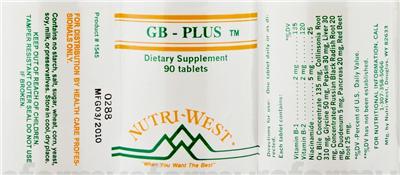
Supplement Facts
The label details for GB - Plus by Nutri-West, sourced from the NIH Dietary Supplement Label Database.
Supplement Facts
| Ingredient | Amount | % DV |
|---|---|---|
| Glycine | 50 mg | -- |
| Niacinamide | 5 mg | 25% |
| Vitamin B2 | 2 mg | 120% |
| Vitamin B1 | 2 mg | 135% |
| Pepsin | 30 mg | -- |
| Duodenum | 5 mg | -- |
| Red Beet | 25 mg | -- |
| Liver | 30 mg | -- |
| Pancreas | 20 mg | -- |
| Collinsonia | 310 mg | -- |
| Ox Bile Concentrate | 135 mg | -- |
| concentrated Russian Black Radish | 20 mg | -- |
Tap any ingredient to jump to its full detail below.
These statements are the manufacturer’s wording, reproduced from the product label — the label is saying it, not HelloPharmacist. We don’t verify or endorse them.
Precautions
TAMPER RESISTANT OUTER SEAL DO NOT USE IF BROKEN.
KEEP OUT OF REACH OF CHILDREN.
FDA Statement of Identity
Dietary Supplement
General Statements
"When You Want The Best"
0288 MFG03/2010
FOR DISTRIBUTION BY HEALTH CARE PROFESSIONALS ONLY.
Formulation
Contains no starch, salt, sugar, wheat, corn, yeast, soy, milk, or preservatives.
Storage
Store in cool, dry place.
Suggested/Recommended/Usage/Directions
Directions for use: One tablet daily or as directed.
General
Product # 1545
Is this label outdated? Report a formula or label change and our pharmacy team will review it.
GB - Plus by Nutri-West label
The label scan from the NIH Dietary Supplement Label Database. Tap to enlarge.
Label images are published by the NIH Dietary Supplement Label Database for the version of this product on file. Always read your actual product label.
View the full label (PDF)The Ingredients in GB - Plus by Nutri-West
These are the 12 active ingredients this product is made of. Select any to open its full monograph.
Serving size1 Tablet(s) Dosage formTablet Or Pill Amounts shown are per serving.
Most supplement products combine several ingredients, and a medication can interact with the product through any one of them. Each ingredient below shows whether it has known drug interactions.
Glycine
Interacts with1 drug
Glycine is a non-essential amino acid your body makes on its own and that also appears in protein-rich foods. It is most studied for improving sleep q...
Glycine monograph & interactionsNiacinamide
Interacts with124 drugs
Niacinamide (also called nicotinamide) is a form of vitamin B3 used in supplements and skin-care products. It is well established for preventing and t...
Niacinamide monograph & interactionsVitamin B2
Interacts with20 drugs
Riboflavin (vitamin B2) is an essential nutrient your body needs to turn food into energy and to keep skin, eyes, and nerves healthy. It is generally...
Vitamin B2 monograph & interactionsVitamin B1
Pepsin
No knowninteractions
Proteolytic enzymes are proteins that help break down other proteins, and common examples include bromelain (from pineapple), papain (from papaya), tr...
Pepsin monograph & interactionsDuodenum
Red Beet
Interacts with861 drugs
Beet, especially beetroot juice, is a nitrate-rich food that may modestly lower blood pressure and slightly improve exercise performance in some peopl...
Red Beet monograph & interactionsLiver
Interacts with3 drugs
Liver extract is a dried or concentrated form of animal liver that is naturally rich in iron, vitamin B12, vitamin A, and other nutrients. It was once...
Liver monograph & interactionsPancreas
Collinsonia
No knowninteractions
Stone root is a North American herb traditionally used for hemorrhoids, urinary complaints, and digestive issues. There is very little modern scientif...
Collinsonia monograph & interactionsOx Bile Concentrate
Concentrated Russian Black Radish
Interacts with86 drugs
Radish is a common edible root vegetable that is nutritious and generally safe to eat as food. Some people use radish (especially black radish) and it...
Concentrated Russian Black Radish monograph & interactionsGB - Plus by Nutri-West Drug Interactions
HelloPharmacist Interaction Report
GB - Plus by Nutri-West contains several ingredients with documented interactions: glycine, niacinamide, vitamin B2 (riboflavin), red beet, liver extract, and concentrated Russian black radish.
The most serious interaction is a Moderate one between glycine and clozapine (Clozaril), an antipsychotic medication—adding glycine may worsen schizophrenia symptoms when used alongside clozapine.
Read the full breakdown — every affected drug type, severity by severity
Niacinamide interacts with blood thinners and antiplatelet drugs (theoretically additive effects, especially concerning for dialysis patients), the seizure medications carbamazepine and primidone (may increase their blood levels and side effects), and warfarin (may raise its anticoagulant effect). Vitamin B2 (riboflavin) may theoretically reduce the potency of tetracycline antibiotics, though this hasn't been confirmed in humans.
Red beet contains compounds that may affect how your body processes certain medications via enzyme interactions (CYP3A4 and CYP1A2 substrates), and nitrates in beet may lower blood pressure, though study results on this are mixed. Liver extract may slightly reduce warfarin's effectiveness and could increase total iron intake if you're also taking iron supplements or medications.
Concentrated Russian black radish may increase the risk of low blood sugar (hypoglycemia) if combined with diabetes medications.
We could not check interaction data for vitamin B1, duodenum, pancreas, ox bile concentrate, or collinsonia (stone root). Altogether, these interactions span 1,035 individual medications.
Run your specific medications through the checker below before starting this product.
Check your own medications below · Editorial policy · How we use AI
Want to check YOUR meds against GB - Plus?
Ask about interactions with your drugs in plain English — “Can I take it with lisinopril?” — and we find you the answer in seconds, ingredient by ingredient.
Go to the checkerIngredients driving the most interactions
Individual Drug Interactions
The ingredients in GB - Plus interact with 1,034 drugs. Click any drug to see the details.
6 of the 12 ingredients in GB - Plus interact with drugs. Each result below shows which ingredient is responsible. Red Beet Niacinamide concentrated Russian Black Radish Vitamin B2 Liver Glycine
Ado-trastuzumab EmtansineKadcyla
How Ado-trastuzumab Emtansine interacts with GB - Plus — through 1 ingredient. Tap an ingredient for the detail:
Red BeetCytochrome P450 3a4 (cyp3a4) Substrates Moderate
Interaction Summary
Theoretically, beet might increase the levels of CYP3A4 substrates.
Read the full Red Beet + Ado-trastuzumab Emtansine interactionAbciximabReoPro
How Abciximab interacts with GB - Plus — through 1 ingredient. Tap an ingredient for the detail:
NiacinamideAnticoagulant/antiplatelet Drugs Moderate
Interaction Summary
Theoretically, niacinamide may have additive effects when used with anticoagulant or antiplatelet drugs, especially in patients on hemodialysis.
Read the full Niacinamide + Abciximab interactionAbemaciclibVerzenio
How Abemaciclib interacts with GB - Plus — through 1 ingredient. Tap an ingredient for the detail:
Red BeetCytochrome P450 3a4 (cyp3a4) Substrates Moderate
Interaction Summary
Theoretically, beet might increase the levels of CYP3A4 substrates.
Read the full Red Beet + Abemaciclib interactionAbiraterone
How Abiraterone interacts with GB - Plus — through 1 ingredient. Tap an ingredient for the detail:
Red BeetCytochrome P450 3a4 (cyp3a4) Substrates Moderate
Interaction Summary
Theoretically, beet might increase the levels of CYP3A4 substrates.
Read the full Red Beet + Abiraterone interactionAbiraterone AcetateYonsa, Zytiga
How Abiraterone Acetate interacts with GB - Plus — through 1 ingredient. Tap an ingredient for the detail:
Red BeetCytochrome P450 3a4 (cyp3a4) Substrates Moderate
Interaction Summary
Theoretically, beet might increase the levels of CYP3A4 substrates.
Read the full Red Beet + Abiraterone Acetate interactionAbrocitinibCibinqo
How Abrocitinib interacts with GB - Plus — through 1 ingredient. Tap an ingredient for the detail:
NiacinamideAnticoagulant/antiplatelet Drugs Moderate
Interaction Summary
Theoretically, niacinamide may have additive effects when used with anticoagulant or antiplatelet drugs, especially in patients on hemodialysis.
Read the full Niacinamide + Abrocitinib interactionAcalabrutinibCalquence
How Acalabrutinib interacts with GB - Plus — through 1 ingredient. Tap an ingredient for the detail:
Red BeetCytochrome P450 3a4 (cyp3a4) Substrates Moderate
Interaction Summary
Theoretically, beet might increase the levels of CYP3A4 substrates.
Read the full Red Beet + Acalabrutinib interactionAcarboseGlucobay, Prandase, Precose
How Acarbose interacts with GB - Plus — through 1 ingredient. Tap an ingredient for the detail:
Concentrated Russian Black RadishAntidiabetes Drugs Moderate
Interaction Summary
Theoretically, radish might increase the risk of hypoglycemia when taken with antidiabetes drugs.
Read the full Concentrated Russian Black Radish + Acarbose interactionAcenocoumarolSintrom
How Acenocoumarol interacts with GB - Plus — through 1 ingredient. Tap an ingredient for the detail:
NiacinamideAnticoagulant/antiplatelet Drugs Moderate
Interaction Summary
Theoretically, niacinamide may have additive effects when used with anticoagulant or antiplatelet drugs, especially in patients on hemodialysis.
Read the full Niacinamide + Acenocoumarol interactionAcetaminophen, AspirinGemnisyn
How Acetaminophen, Aspirin interacts with GB - Plus — through 2 ingredients. Tap an ingredient for the detail:
NiacinamideAnticoagulant/antiplatelet Drugs Moderate
Interaction Summary
Theoretically, niacinamide may have additive effects when used with anticoagulant or antiplatelet drugs, especially in patients on hemodialysis.
Read the full Niacinamide + Acetaminophen, Aspirin interactionRed BeetCytochrome P450 1a2 (cyp1a2) Substrates Minor
Interaction Summary
Theoretically, beet might decrease the levels and clinical effects of CYP1A2 substrates.
Read the full Red Beet + Acetaminophen, Aspirin interactionAcetaminophen, Aspirin, CaffeineExcedrin, Excedrin Extra Strength, Excedrin Migraine
How Acetaminophen, Aspirin, Caffeine interacts with GB - Plus — through 2 ingredients. Tap an ingredient for the detail:
Red BeetCytochrome P450 3a4 (cyp3a4) Substrates, Cytochrome P450 1a2 (cyp1a2) Substrates Moderate
Interaction Summary
Theoretically, beet might increase the levels of CYP3A4 substrates.
Read the full Red Beet + Acetaminophen, Aspirin, Caffeine interactionNiacinamideAnticoagulant/antiplatelet Drugs Moderate
Interaction Summary
Theoretically, niacinamide may have additive effects when used with anticoagulant or antiplatelet drugs, especially in patients on hemodialysis.
Read the full Niacinamide + Acetaminophen, Aspirin, Caffeine interactionAcetaminophen, Butalbital, CaffeineEsgic, Esgic Plus, Fiogesic, Fioricet, Repan, Tecnal +1 more
How Acetaminophen, Butalbital, Caffeine interacts with GB - Plus — through 1 ingredient. Tap an ingredient for the detail:
Red BeetCytochrome P450 1a2 (cyp1a2) Substrates, Cytochrome P450 3a4 (cyp3a4) Substrates Moderate
Interaction Summary
Theoretically, beet might decrease the levels and clinical effects of CYP1A2 substrates.
Read the full Red Beet + Acetaminophen, Butalbital, Caffeine interactionAcetaminophen, Butalbital, Caffeine, CodeineEsgic with Codeine, Fioricet w/ Codeine
How Acetaminophen, Butalbital, Caffeine, Codeine interacts with GB - Plus — through 1 ingredient. Tap an ingredient for the detail:
Red BeetCytochrome P450 1a2 (cyp1a2) Substrates, Cytochrome P450 3a4 (cyp3a4) Substrates Moderate
Interaction Summary
Theoretically, beet might decrease the levels and clinical effects of CYP1A2 substrates.
Read the full Red Beet + Acetaminophen, Butalbital, Caffeine, Codeine interactionAcetaminophen, Caffeine, Chlorpheniramine, Hydrocodone, PhenylephrineHycomine Compound
How Acetaminophen, Caffeine, Chlorpheniramine, Hydrocodone, Phenylephrine interacts with GB - Plus — through 1 ingredient. Tap an ingredient for the detail:
Red BeetCytochrome P450 3a4 (cyp3a4) Substrates, Cytochrome P450 1a2 (cyp1a2) Substrates Moderate
Interaction Summary
Theoretically, beet might increase the levels of CYP3A4 substrates.
Read the full Red Beet + Acetaminophen, Caffeine, Chlorpheniramine, Hydrocodone, Phenylephrine interactionAcetaminophen, Caffeine, CodeineGesic C15, Gesic C30, Gesic C8, Lenoltec 1, Lenoltec 2, Lenoltec 3 +1 more
How Acetaminophen, Caffeine, Codeine interacts with GB - Plus — through 1 ingredient. Tap an ingredient for the detail:
Red BeetCytochrome P450 1a2 (cyp1a2) Substrates, Cytochrome P450 3a4 (cyp3a4) Substrates Moderate
Interaction Summary
Theoretically, beet might decrease the levels and clinical effects of CYP1A2 substrates.
Read the full Red Beet + Acetaminophen, Caffeine, Codeine interactionAcetaminophen, Caffeine, Codeine, SalicylamideCodalan No.1, Codalan No.2, Codalan No.3
How Acetaminophen, Caffeine, Codeine, Salicylamide interacts with GB - Plus — through 1 ingredient. Tap an ingredient for the detail:
Red BeetCytochrome P450 1a2 (cyp1a2) Substrates, Cytochrome P450 3a4 (cyp3a4) Substrates Moderate
Interaction Summary
Theoretically, beet might decrease the levels and clinical effects of CYP1A2 substrates.
Read the full Red Beet + Acetaminophen, Caffeine, Codeine, Salicylamide interactionAcetaminophen, Caffeine, DihydrocodeineDHC Plus, Panlor DC, Panlor SS
How Acetaminophen, Caffeine, Dihydrocodeine interacts with GB - Plus — through 1 ingredient. Tap an ingredient for the detail:
Red BeetCytochrome P450 1a2 (cyp1a2) Substrates, Cytochrome P450 3a4 (cyp3a4) Substrates Moderate
Interaction Summary
Theoretically, beet might decrease the levels and clinical effects of CYP1A2 substrates.
Read the full Red Beet + Acetaminophen, Caffeine, Dihydrocodeine interactionAcetaminophen, Caffeine, IsomethepteneMigralam
How Acetaminophen, Caffeine, Isometheptene interacts with GB - Plus — through 1 ingredient. Tap an ingredient for the detail:
Red BeetCytochrome P450 3a4 (cyp3a4) Substrates, Cytochrome P450 1a2 (cyp1a2) Substrates Moderate
Interaction Summary
Theoretically, beet might increase the levels of CYP3A4 substrates.
Read the full Red Beet + Acetaminophen, Caffeine, Isometheptene interactionAcetaminophen, Caffeine, PyrilamineMidol Max Strength Menstrual
How Acetaminophen, Caffeine, Pyrilamine interacts with GB - Plus — through 1 ingredient. Tap an ingredient for the detail:
Red BeetCytochrome P450 1a2 (cyp1a2) Substrates, Cytochrome P450 3a4 (cyp3a4) Substrates Moderate
Interaction Summary
Theoretically, beet might decrease the levels and clinical effects of CYP1A2 substrates.
Read the full Red Beet + Acetaminophen, Caffeine, Pyrilamine interactionAcetaminophen, Chlorpheniramine Maleate, Dextromethorphan HbrVicks Formula 44M Cough, Cold & Flu Relief
How Acetaminophen, Chlorpheniramine Maleate, Dextromethorphan Hbr interacts with GB - Plus — through 1 ingredient. Tap an ingredient for the detail:
Red BeetCytochrome P450 1a2 (cyp1a2) Substrates, Cytochrome P450 3a4 (cyp3a4) Substrates Moderate
Interaction Summary
Theoretically, beet might decrease the levels and clinical effects of CYP1A2 substrates.
Read the full Red Beet + Acetaminophen, Chlorpheniramine Maleate, Dextromethorphan Hbr interactionAcetaminophen, Chlorpheniramine, Codeine, PhenylephrineColrex
How Acetaminophen, Chlorpheniramine, Codeine, Phenylephrine interacts with GB - Plus — through 1 ingredient. Tap an ingredient for the detail:
Red BeetCytochrome P450 3a4 (cyp3a4) Substrates, Cytochrome P450 1a2 (cyp1a2) Substrates Moderate
Interaction Summary
Theoretically, beet might increase the levels of CYP3A4 substrates.
Read the full Red Beet + Acetaminophen, Chlorpheniramine, Codeine, Phenylephrine interactionAcetaminophen, Chlorpheniramine, DextromethorphanCoricidin II Extra Strength Cold and Flu
How Acetaminophen, Chlorpheniramine, Dextromethorphan interacts with GB - Plus — through 1 ingredient. Tap an ingredient for the detail:
Red BeetCytochrome P450 3a4 (cyp3a4) Substrates, Cytochrome P450 1a2 (cyp1a2) Substrates Moderate
Interaction Summary
Theoretically, beet might increase the levels of CYP3A4 substrates.
Read the full Red Beet + Acetaminophen, Chlorpheniramine, Dextromethorphan interactionAcetaminophen, Chlorpheniramine, Dextromethorphan HydrobromideCoricidin HBP Maximum Strength Flu
How Acetaminophen, Chlorpheniramine, Dextromethorphan Hydrobromide interacts with GB - Plus — through 1 ingredient. Tap an ingredient for the detail:
Red BeetCytochrome P450 1a2 (cyp1a2) Substrates, Cytochrome P450 3a4 (cyp3a4) Substrates Moderate
Interaction Summary
Theoretically, beet might decrease the levels and clinical effects of CYP1A2 substrates.
Read the full Red Beet + Acetaminophen, Chlorpheniramine, Dextromethorphan Hydrobromide interactionAcetaminophen, Chlorpheniramine, Dextromethorphan, PhenylpropanolamineMulti Symptom Cold Relief
How Acetaminophen, Chlorpheniramine, Dextromethorphan, Phenylpropanolamine interacts with GB - Plus — through 1 ingredient. Tap an ingredient for the detail:
Red BeetCytochrome P450 1a2 (cyp1a2) Substrates, Cytochrome P450 3a4 (cyp3a4) Substrates Moderate
Interaction Summary
Theoretically, beet might decrease the levels and clinical effects of CYP1A2 substrates.
Read the full Red Beet + Acetaminophen, Chlorpheniramine, Dextromethorphan, Phenylpropanolamine interactionAcetaminophen, Chlorpheniramine, Dextromethorphan, PseudoephedrineChildren's Tylenol Cold Plus Cough, Tylenol Cold Ex Strength
How Acetaminophen, Chlorpheniramine, Dextromethorphan, Pseudoephedrine interacts with GB - Plus — through 1 ingredient. Tap an ingredient for the detail:
Red BeetCytochrome P450 3a4 (cyp3a4) Substrates, Cytochrome P450 1a2 (cyp1a2) Substrates Moderate
Interaction Summary
Theoretically, beet might increase the levels of CYP3A4 substrates.
Read the full Red Beet + Acetaminophen, Chlorpheniramine, Dextromethorphan, Pseudoephedrine interactionAcetaminophen, Chlorpheniramine, Guaifenesin, Phenylephrine, SalicylamideRhinogesic GG
How Acetaminophen, Chlorpheniramine, Guaifenesin, Phenylephrine, Salicylamide interacts with GB - Plus — through 1 ingredient. Tap an ingredient for the detail:
Red BeetCytochrome P450 3a4 (cyp3a4) Substrates, Cytochrome P450 1a2 (cyp1a2) Substrates Moderate
Interaction Summary
Theoretically, beet might increase the levels of CYP3A4 substrates.
Read the full Red Beet + Acetaminophen, Chlorpheniramine, Guaifenesin, Phenylephrine, Salicylamide interactionAcetaminophen, Chlorpheniramine, PhenylephrineAlka-Seltzer PLUS, Histex SR, Protid
How Acetaminophen, Chlorpheniramine, Phenylephrine interacts with GB - Plus — through 1 ingredient. Tap an ingredient for the detail:
Red BeetCytochrome P450 3a4 (cyp3a4) Substrates, Cytochrome P450 1a2 (cyp1a2) Substrates Moderate
Interaction Summary
Theoretically, beet might increase the levels of CYP3A4 substrates.
Read the full Red Beet + Acetaminophen, Chlorpheniramine, Phenylephrine interactionAcetaminophen, Chlorpheniramine, Phenylephrine, SalicylamideRhinogesic, Rhinogesic JR
How Acetaminophen, Chlorpheniramine, Phenylephrine, Salicylamide interacts with GB - Plus — through 1 ingredient. Tap an ingredient for the detail:
Red BeetCytochrome P450 1a2 (cyp1a2) Substrates, Cytochrome P450 3a4 (cyp3a4) Substrates Moderate
Interaction Summary
Theoretically, beet might decrease the levels and clinical effects of CYP1A2 substrates.
Read the full Red Beet + Acetaminophen, Chlorpheniramine, Phenylephrine, Salicylamide interactionAcetaminophen, Chlorpheniramine, PhenylpropanolamineAlumadrine, Conex, Sinadrin Max Strength, Sinulin
How Acetaminophen, Chlorpheniramine, Phenylpropanolamine interacts with GB - Plus — through 1 ingredient. Tap an ingredient for the detail:
Red BeetCytochrome P450 1a2 (cyp1a2) Substrates, Cytochrome P450 3a4 (cyp3a4) Substrates Moderate
Interaction Summary
Theoretically, beet might decrease the levels and clinical effects of CYP1A2 substrates.
Read the full Red Beet + Acetaminophen, Chlorpheniramine, Phenylpropanolamine interactionAcetaminophen, Chlorpheniramine, Phenylpropanolamine, OpiumHista-Derfule
How Acetaminophen, Chlorpheniramine, Phenylpropanolamine, Opium interacts with GB - Plus — through 1 ingredient. Tap an ingredient for the detail:
Red BeetCytochrome P450 1a2 (cyp1a2) Substrates, Cytochrome P450 3a4 (cyp3a4) Substrates Moderate
Interaction Summary
Theoretically, beet might decrease the levels and clinical effects of CYP1A2 substrates.
Read the full Red Beet + Acetaminophen, Chlorpheniramine, Phenylpropanolamine, Opium interactionEach ingredient & the kinds of drugs it affects
For each ingredient in GB - Plus with known interactions, here are the types of medications they can affect. Open any type for the detail — or search your exact drug in the checker above.
Red Beet
Cytochrome P450 3A4 (Cyp3A4) Substrates
Theoretically, beet might increase the levels of CYP3A4 substrates.
In vitro research suggests that betanin, the major pigment in beet, competitively inhibits CYP3A4 in a dose-dependent manner similarly to strong CYP3A4 inhibitor ketoconazole.
Antihypertensive Drugs
Beet and beetroot contain nitrates, which can cause vasodilation, potentially leading to lower blood pressure. However, a study published in the European Journal of Clinical Nutrition using concentrated beetroot juice found no significant impact on blood pressure or heart rate in different age groups. Other small clinical studies suggest that while beet consumption might transiently lower blood pressure due to vessel dilation, there's no consistent evidence of a lasting effect. Overall, the theoretical risk of reduced blood pressure due to beet's nitrate content exists, but studies generally indicate a low and temporary impact rather than a sustained decrease.
Cytochrome P450 1A2 (Cyp1A2) Substrates
Theoretically, beet might decrease the levels and clinical effects of CYP1A2 substrates.
In vitro research suggests that beet induces CYP1A2 enzymes.
Niacinamide
Anticoagulant/Antiplatelet Drugs
Theoretically, niacinamide may have additive effects when used with anticoagulant or antiplatelet drugs, especially in patients on hemodialysis.
Several cases of thrombocytopenia have been reported for hemodialysis patients treated with niacinamide 1 gram daily. Hemodialysis patients receiving niacinamide had almost a three-fold higher risk of developing thrombocytopenia when compared with those receiving placebo.
Carbamazepine (Tegretol)
Niacinamide might increase the levels and adverse effects of carbamazepine.
Plasma levels of carbamazepine were increased in two children given high-dose niacinamide, 60-80 mg/kg/day. This might be due to inhibition of the cytochrome P450 enzymes involved in carbamazepine metabolism. There is not enough data to determine the clinical significance of this interaction.
Primidone (Mysoline)
Niacinamide might increase the levels and adverse effects of primidone.
Case reports in children suggest niacinamide 60-100 mg/kg/day reduces hepatic metabolism of primidone to phenobarbital, and reduces the overall clearance rate of primidone; however, there is not enough data to determine the clinical significance of this potential interaction.
Warfarin (Coumadin)
There is limited evidence that niacinamide may increase the anticoagulant effects of warfarin.
In a case report, a patient on warfarin developed an elevated international normalized ratio (INR) of 8.4 after taking niacinamide 500 mg twice daily for 10 days. The patient's INR was previously stable, ranging between 2 and 3, with no other changes to current medications or diet reported. The elevated INR returned to the therapeutic range after receiving vitamin K and discontinuing niacinamide.
concentrated Russian Black Radish
Antidiabetes Drugs
Theoretically, radish might increase the risk of hypoglycemia when taken with antidiabetes drugs.
Animal research shows that radish extract, juice, and sprouts can reduce glucose levels. Animal research also shows that radish root juice 300 mg/kg reduces fasting and postprandial blood glucose in a rat model of diabetes, with effects similar to glibenclamide.
Vitamin B2
Tetracycline Antibiotics
Theoretically, taking riboflavin with tetracycline antibiotics may decrease the potency of these antibiotics.
In vitro research suggests that riboflavin may inhibit the potency of tetracycline antibiotics. It is not clear if this effect is clinically significant, as this interaction has not been reported in humans.
Liver
Iron
Liver extract can contain heme iron. Taking liver extract with iron-containing medications or supplements may increase total iron intake and could increase the risk of gastrointestinal adverse effects or excessive iron accumulation. The risk is greater with high doses, prolonged use, or in individuals with hemochromatosis or another iron-overload disorder. Review the iron content of the liver extract and the total elemental iron dose. Avoid unnecessary duplicate iron supplementation and consider monitoring ferritin and transferrin saturation when clinically appropriate.
Warfarin (Coumadin)
Liver extract products may contain small and variable amounts of vitamin K. Theoretically, starting, stopping, or substantially changing the amount of liver extract used could reduce the anticoagulant effect of warfarin and lower the INR. However, this interaction has not been directly studied or reported in humans, and the vitamin K content of liver extract products is generally not standardized. Consider monitoring the INR after a meaningful change in liver extract use.
Glycine
Clozapine (Clozaril)
Theoretically, glycine might decrease the effectiveness of clozapine.
One small clinical study in patients with schizophrenia shows that adding glycine to clozapine therapy worsens symptoms of schizophrenia when compared with clozapine alone. The mechanism of this interaction is unclear.
Brand information
Manufacturer and brand details for GB - Plus, from the product label.
GB - Plus by Nutri-West: Common Questions
Does GB - Plus by Nutri-West interact with any medications?
How can one product interact with so many drugs?
Where does this information come from?
Can I take this if I'm pregnant or breastfeeding?
What are the most common side effects?
Does this work for [specific condition]?
What's in this product and why?
Is this safe for long-term use?
What if I'm taking iron supplements or medications?
Written and reviewed by the HelloPharmacist editorial staff. Our editorial policy
Not sure if GB - Plus is safe with your meds?
Our pharmacists answer your medication & supplement questions — free.
Label information is sourced from the NIH Dietary Supplement Label Database and reflects the product version on file; always read your actual product label. This page is for education only and is not a substitute for professional medical advice. Confirm with your pharmacist or doctor before combining supplements and medications.
The Full Monographs Behind GB - Plus’s Ingredients
Every ingredient we hold a full HelloPharmacist monograph for — uses, evidence, safety, and the complete interaction list.
Glycine
Interacts with 1 drugGlycine is a non-essential amino acid your body makes on its own and that also appears in protein-rich foods. It is most studied for improving sleep quality, where early research is promisin...
Read the full Glycine monograph → Herb & supplement monographNiacinamide
Interacts with 124 drugsNiacinamide (also called nicotinamide) is a form of vitamin B3 used in supplements and skin-care products. It is well established for preventing and treating vitamin B3 deficiency, and there...
Read the full Niacinamide monograph → Herb & supplement monographRiboflavin
Interacts with 20 drugsRiboflavin (vitamin B2) is an essential nutrient your body needs to turn food into energy and to keep skin, eyes, and nerves healthy. It is generally very safe at typical doses, and the stro...
Read the full Riboflavin monograph → Herb & supplement monographProteolytic Enzymes (proteases)
Proteolytic enzymes are proteins that help break down other proteins, and common examples include bromelain (from pineapple), papain (from papaya), trypsin, chymotrypsin, and pancreatin. Peo...
Read the full Proteolytic Enzymes (proteases) monograph → Herb & supplement monographBeet
Interacts with 861 drugsBeet, especially beetroot juice, is a nitrate-rich food that may modestly lower blood pressure and slightly improve exercise performance in some people. It is generally safe as a food, but s...
Read the full Beet monograph → Herb & supplement monographLiver Extract
Interacts with 3 drugsLiver extract is a dried or concentrated form of animal liver that is naturally rich in iron, vitamin B12, vitamin A, and other nutrients. It was once used to treat certain anemias before pu...
Read the full Liver Extract monograph → Herb & supplement monographStone Root
Stone root is a North American herb traditionally used for hemorrhoids, urinary complaints, and digestive issues. There is very little modern scientific evidence to confirm it works for any...
Read the full Stone Root monograph → Herb & supplement monographRadish
Interacts with 86 drugsRadish is a common edible root vegetable that is nutritious and generally safe to eat as food. Some people use radish (especially black radish) and its extracts for digestion and liver suppo...
Read the full Radish monograph →Sources & How We Checked
GB - Plus's label data comes from the NIH Dietary Supplement Label Database; the ingredient interaction data is from the Natural Medicines database, reviewed by our pharmacists.
- NIH Dietary Supplement Label Database (DSLD) — The official product label on file for this supplement.
- Natural Medicines (Therapeutic Research Center) — Evidence-graded clinical reference behind the ingredient interaction data.
Content is written and reviewed by licensed HelloPharmacist pharmacists. See our data sources and editorial standards for how this information is built and checked.
The 59 references behind this product’s interaction data
Every citation that drives the interaction findings for this product’s ingredients, from the evidence-graded Natural Medicines (TRC Healthcare) database. Open an ingredient to browse its citations — links open the study on PubMed or the publisher’s site.
Glycine 5 references
- Heresco-Levy U, Javitt DC, Ermilov M, et al. Efficacy of high-dose glycine in the treatment of enduring negative symptoms of schizophrenia. Arch Gen Psychiatry 1999;56:29-36.. PubMed
- Potkin SG, Jin Y, Bunney BG, Costa J, Gulasekaram B. Effect of clozapine and adjunctive high-dose glycine in treatment-resistant schizophrenia. Am J Psychiatry 1999;156:145-7.. PubMed
- Gusev EI, Skvortsova VI, Dambinova SA, et al. Neuroprotective effects of glycine for therapy of acute ischaemic stroke. Cerebrovasc Dis 2000;10:49-60. PubMed
- Inagawa K, Kawai N, Ono K, Sukegawa E, Tsubuku S, Takahashi M. Assessment of acute adverse effects of glycine ingestion at a high dose in human volunteers. Seikatsu Eisei. 2006; 50:27-32.
- Woods SW, Walsh BC, Hawkins KA, Miller TJ, Saksa JR, D'Souza DC, Pearlson GD, Javitt DC, McGlashan TH, Krystal JH. Glycine treatment of the risk syndrome for psychosis: report of two pilot studies. Eur Neuropsychopharmacol. 2013 Aug;23(8):931-40. PubMed
Niacinamide 22 references
- Pozzilli P, Browne PD, Kolb H. Meta-analysis of nicotinamide treatment in patients with recent-onset IDDM. The Nicotinamide Trialists. Diabetes Care 1996;19:1357-63. PubMed
- Greenbaum CJ, Kahn SE, Palmer JP. Nicotinamide's effects on glucose metabolism in subjects at risk for IDDM. Diabetes 1996;45:1631-4. DOI
- Food and Nutrition Board, Institute of Medicine. Dietary Reference Intakes for Thiamin, Riboflavin, Niacin, Vitamin B6, Folate, Vitamin B12, Pantothenic Acid, Biotin, and Choline (2000). Washington, DC: National Academy Press, 2000. Available at: http://b
- Anon. Niacinamide Monograph. Alt Med Rev 2002;7:525-9.
- Miralbell R, Mornex F, Greiner R, et al. Accelerated radiotherapy, carbogen, and nicotinamide in glioblastoma multiforme: report of European Organization for Research and Treatment of Cancer trial 22933. J Clin Oncol 1999;17:3143-9. PubMed
- Fatigante L, Ducci F, Cartei F, et al. Carbogen and nicotinamide combined with unconventional radiotherapy in glioblastoma multiforme: a new modality treatment. Int J Radiat Oncol Biol Phys 1997;37:499-504. PubMed
- Hoskin PJ, Stratford MR, Saunders MI, et al. Administration of nicotinamide during chart: pharmacokinetics, dose escalation, and clinical toxicity. Int J Radiat Oncol Biol Phys 1995;32:1111-9. PubMed
- Papa CM. Niacinamide and acanthosis nigricans (letter). Arch Dermatol 1984;120:1281. DOI
- Bourgeois BF, Dodson WE, Ferrendelli JA. Interactions between primidone, carbamazepine, and nicotinamide. Neurology 1982;32:1122-6.
- Visalli N, Cavallo MG, Signore A, et al. A multi-centre randomized trial of two different doses of nicotinamide in patients with recent-onset type 1 diabetes (the IMDIAB VI). Diabetes Metab Res Rev 1999;15:181-5. DOI
- Rottembourg JB, Launay-Vacher V, Massard J. Thrombocytopenia induced by nicotinamide in hemodialysis patients. Kidney Int. 2005;68(6):2911-2. PubMed
- Fabbrocini G, Cantelli M, Monfrecola G. Topical nicotinamide for seborrheic dermatitis: an open randomized study. J Dermatolog Treat. 2014 Jun;25(3):241-5. PubMed
- Khodaeiani E, Fouladi RF, Amirnia M, Saeidi M, Karimi ER. Topical 4% nicotinamide vs. 1% clindamycin in moderate inflammatory acne vulgaris. Int J Dermatol. 2013 Aug;52(8):999-1004. PubMed
- Zhang Y, Ma T, Zhang P. Efficacy and safety of nicotinamide on phosphorus metabolism in hemodialysis patients: A systematic review and meta-analysis. Medicine (Baltimore). 2018;97(41):e12731. PubMed
- Ketteler M, Wiecek A, Rosenkranz AR, et al. Efficacy and Safety of a Novel Nicotinamide Modified-Release Formulation in the Treatment of Refractory Hyperphosphatemia in Patients Receiving Hemodialysis-A Randomized Clinical Trial. Kidney Int Rep 2020;6(3): PubMed
- Mainville L, Smilga AS, Fortin PR. Effect of Nicotinamide in Skin Cancer and Actinic Keratoses Chemoprophylaxis, and Adverse Effects Related to Nicotinamide: A Systematic Review and Meta-Analysis. J Cutan Med Surg 2022;26(3):297-308. PubMed
- Nouh AH, Elshahid AR, Kadah AS, Zeyada YA. Topical niacinamide (Nicotinamide) treatment for discoid lupus erythematosus (DLE): A prospective pilot study. J Cosmet Dermatol 2023.
- El-Khalawany M, Nouh AH, Kadah AS, Elsheikh M, Said M. Evaluation of safety and efficacy of topical 4% nicotinamide in treatment of psoriasis; among a representative sample of Egyptians (an analytical observational study). Dermatol Ther 2022;35(9):e15734. PubMed
- Zhang H, George-Washburn EA, Hashemi KB, et al. Oral Nicotinamide for Actinic Keratosis Prevention in Kidney Transplant Recipients: A Pilot Double-Blind, Randomized, Placebo-Controlled Trial. Transplant Proc 2023;55(9):2079-2084. PubMed
- Oh HJ, Bae SC, Oh IJ, et al. Nicotinamide in Combination with EGFR-TKIs for the Treatment of Stage IV Lung Adenocarcinoma with EGFR Mutations: A Randomized Double-Blind (Phase IIb) Trial. Clin Cancer Res 2024;30(8):1478-1487. PubMed
- Schepers L, Jans I, Pot GK, Smilde AJ, Hofstra JM, de Roos NM. The Effect of Niacinamide Supplementation on Phosphate Concentrations in Dutch Dialysis Patients: A Randomized Crossover Trial. J Ren Nutr 2024;34(5):454-462. PubMed
- Markham DJ, Barbosa NS, Degesys CA. Elevated International Normalized Ratio After Initiation of Niacin and Niacinamide Chemoprophylaxis for Patients on Warfarin. Dermatol Surg 2024;50(7):690-692. PubMed
Riboflavin 5 references
- Schoenen J, Jacquy J, Lenaerts M. Effectiveness of high-dose riboflavin in migraine prophylaxis. A randomized controlled trial. Neurology 1998;50:466-70. PubMed
- Yates AA, Schlicker SA, Suitor CW. Dietary reference intakes: The new basis for recommendations for calcium and related nutrients, B vitamins, and choline. J Am Diet Assoc 1998;98:699-706. PubMed
- Leeson LJ, Weidenheimer JF. Stability of tetracycline and riboflavin. J Pharm Sci. 1969;58(3):355-7. PubMed
- MacLennan, S. C., Wade, F. M., Forrest, K. M., Ratanayake, P. D., Fagan, E., and Antony, J. High-dose riboflavin for migraine prophylaxis in children: a double-blind, randomized, placebo-controlled trial. J Child Neurol. 2008;23(11):1300-1304.
- Dietary reference intakes (DRIs): estimated average requirements. Food and Nutrition Board, Institute of Medicine, National Academics. https://www.nal.usda.gov/sites/default/files/fnic_uploads//recommended_intakes_individuals.pdf Accessed July 24, 2017.
Proteolytic Enzymes (proteases) 3 references
- Weeks JA, Harper RA, Simon RA, Burdick JD. Assessment of sensitization risk of a laundry pre-spotter containing protease. Cutan Ocul Toxicol. 2011;30(4):272-9. PubMed
- Marquès LI, Lara S, Abós T, Bartolomé B. Occupational rhinitis due to pepsin. J Investig Allergol Clin Immunol. 2006;16(2):136-7. DOI
- Cartier A, Malo JL, Pineau L, Dolovich J. Occupational asthma due to pepsin. J Allergy Clin Immunol. 1984;73(5 Pt 1):574-7. PubMed
See these in context on the Proteolytic Enzymes (proteases) monograph →
Beet 14 references
- Gruenwald J, Brendler T, Jaenicke C. PDR for Herbal Medicines. 1st ed. Montvale, NJ: Medical Economics Company, Inc., 1998.
- Clifford T, Berntzen B, Davison GW, et al. Effects of beetroot juice on recovery of muscle function and performance between bouts of repeated sprint exercise. Nutrients 2016;8. pii: E506. PubMed
- Siervo M, Lara J, Ogbonmwan I, Mathers JC. Inorganic nitrate and beetroot juice supplementation reduces blood pressure in adults: a systematic review and meta-analysis. J Nutr 2013;143:818-26. PubMed
- Clifford T, Howatson G, West DJ, Stevenson EJ. Beetroot juice is more beneficial than sodium nitrate for attenuating muscle pain after strenuous eccentric-bias exercise. Appl Physiol Nutr Metab. 2017;42(11):1185-1191. PubMed
- Clifford T, Bell O, West DJ, Howatson G, Stevenson EJ. The effects of beetroot juice supplementation on indices of muscle damage following eccentric exercise. Eur J Appl Physiol. 2016;116(2):353-62. PubMed
- Wylie LJ, Kelly J, Bailey SJ, et al. Beetroot juice and exercise: pharmacodynamic and dose-response relationships. J Appl Physiol (1985). 2013;115(3):325-36. PubMed
- Garnacho-Castaño MV, Palau-Salvà G, Cuenca E, et al. Effects of a single dose of beetroot juice on cycling time trial performance at ventilatory thresholds intensity in male triathletes. J Int Soc Sports Nutr. 2018;15(1):49. PubMed
- Rasica L, Porcelli S, Marzorati M, et al. Ergogenic effects of beetroot juice supplementation during severe-intensity exercise in obese adolescents. Am J Physiol Regul Integr Comp Physiol. 2018;315(3):R453-R460. PubMed
- Henrohn D, Björkstrand K, Lundberg JO, et al. Effects of oral supplementation with nitrate-rich beetroot juice in patients with pulmonary arterial hypertension-results from BEET-PAH, an exploratory randomized, double-blind, placebo-controlled, crosso
- Serra-Payá N, Garnacho-Castaño MV, Sánchez-Nuño S, et al. The relationship between resistance exercise performance and ventilatory efficiency after beetroot juice intake in well-trained athletes. Nutrients 2021;13(4):1094. PubMed
- Haron MH, Dale O, Martin K, et al. Evaluation of the Herb-Drug Interaction Potential of Commonly Used Botanicals on the US Market with Regard to PXR- and AhR-Mediated Influences on CYP3A4 and CYP1A2. J Diet Suppl 2022. PubMed
- Hemmatinafar M, Zaremoayedi L, Koushkie Jahromi M, et al. Effect of Beetroot Juice Supplementation on Muscle Soreness and Performance Recovery after Exercise-Induced Muscle Damage in Female Volleyball Players. Nutrients 2023;15(17):3763. PubMed
- Lim SH, Bae S, Lee HS, Han HK, Choi CI. Effect of Betanin, the Major Pigment of Red Beetroot (Beta vulgaris L.), on the Activity of Recombinant Human Cytochrome P450 Enzymes. Pharmaceuticals (Basel) 2023;16(9):1224. PubMed
- Oscherwitz M, Tamayo RM, Heudebert A, Centor R. A Case of Pseudo-Hematochezia from Beet Supplement Ingestion. Am J Med 2023;136(9):e177-e178. PubMed
Liver Extract 4 references
- Lewis CJ. Letter to reiterate certain public health and safety concerns to firms manufacturing or importing dietary supplements that contain specific bovine tissues. FDA. Available at: www.cfsan.fda.gov/~dms/dspltr05.html.
- Kaslow JE, Rucker L, Onishi R. Liver extract-folic acid-cyanocobalamin vs placebo for chronic fatigue syndrome. Arch Intern Med 1989;149:2501-3. DOI
- Ebinuma, H., Saito, H., Tada, S., Masuda, T., Kamiya, T., Nishida, J., Yoshioka, M., and Ishii, H. Additive therapeutic effects of the liver extract preparation mixture adelavin-9 on interferon-beta treatment for chronic hepatitis C. Hepatogastroenterolog
- Saito, H., Ebinuma, H., Tada, S., Tsunematsu, S., Atsukawa, K., Masuda, T., Tsuchiya, M., and Ishii, H. Enhancing effect of the liver extract and flavin adenin dinucleotide mixture on anti-viral efficacy of interferon in patients with chronic hepatitis C. PubMed
Stone Root 1 reference
- Gruenwald J, Brendler T, Jaenicke C. PDR for Herbal Medicines. 1st ed. Montvale, NJ: Medical Economics Company, Inc., 1998.
Radish 5 references
- Gruenwald J, Brendler T, Jaenicke C. PDR for Herbal Medicines. 1st ed. Montvale, NJ: Medical Economics Company, Inc., 1998.
- Damiani E, Aloia AM, Priore MG, Nardulli S, Ferrannini A. Generalized urticaria after ingestion of Raphanus sativus. Ann Allergy Asthma Immunol. 2011 Feb;106(2):168. PubMed
- Evans M, Paterson E, Barnes DM. An open label pilot study to evaluate the efficacy of Spanish black radish on the induction of phase I and phase II enzymes in healthy male subjects. BMC Complement Altern Med. 2014 Dec 9;14:475. PubMed
- Banihani SA. Radish (Raphanus sativus) and diabetes. Nutrients. 2017;9(9). pii: E1014. PubMed
- Shukla S, Chatterji S, Mehta S, Rai PK, Singh RK, Yadav DK, Watal G. Antidiabetic effect of Raphanus sativus root juice. Pharm Biol. 2011 Jan;49(1):32-7.
Parts of this content are provided by the Therapeutic Research Center, LLC.
DISCLAIMER: Currently this does not check for drug-drug interactions. This is not an all-inclusive comprehensive list of potential interactions and is for informational purposes only. Not all interactions are known or well-reported in the scientific literature, and new interactions are continually being reported. Input is needed from a qualified healthcare provider including a pharmacist before starting any therapy. Application of clinical judgment is necessary.
© 2021 Therapeutic Research Center, LLC