
Healthy Blend Ingredients & Drug Interactions
What is this page for?
First and foremost: checking Healthy Blend against your medications. The heart of this page is the interaction checker and the full interaction report — how this product’s ingredients may interact with prescription and over-the-counter medicines you may be taking.
Around that, we add a pharmacist’s high-level view of the product as a whole — what’s inside, the evidence for its stated use, how transparent the label is, and what safety data exists — so you can see the full picture in one place. It’s educational information from our licensed clinical databases and the clinical staff at HelloPharmacist — not medical advice — and we don’t sell or endorse products. Our editorial policy
Healthy Blend is a dietary supplement by Dynamic Health with 7 active ingredients. Its ingredients are commonly taken for preventing or treating low potassium (hypokalemia), supporting healthy blood pressure, muscle cramps.Based on those ingredients, 814 medications have a known interaction with it, the most serious rated major. The ingredients most likely to interact are Noni, Puree, Aloe vera Juice, Mangosteen, Puree. Use the checker below to test your specific medication, or read the full HelloPharmacist Interaction Report.
Check Your Meds Against Healthy Blend by Dynamic Health
Ask about any prescription or over-the-counter medication and we check it for interactions with Healthy Blend by Dynamic Health — and tell you which ingredient is responsible.
AI summaries are generated from our interaction database for education only — always confirm with your pharmacist. How we use AI
Ask the Pharmacist
A licensed pharmacist will answer your question by email — free, usually within 24 hours.
Got it — thank you!
A licensed pharmacist will answer within 24 hours. Keep an eye on your email (worth checking spam, just in case).
HelloPharmacist Scorecard of Healthy Blend by Dynamic Health
Our pharmacy team’s full take, with four database checks built into the cards below — a summary of what is known, not a grade of the product itself.
What’s inside
Low disclosure
Healthy Blend contains 7 active ingredients: potassium, acai puree, aloe vera juice, noni puree, mangosteen puree, maqui powder, and nopal powder. These are mixed into a liquid base with water, apple juice concentrate, citric acid, natural flavors, guar gum, potassium sorbate, pectin, and corn syrup solids as inactive ingredients.
Potassium is an essential mineral that helps your heart, muscles, and nerves work properly. The other six ingredients are tropical fruit extracts and powders, each traditionally used for various health purposes—though the evidence for most is still being studied.
Does it work?
Couldn't assess
The evidence on most of these ingredients is still limited. Aloe vera shows possibly effective evidence for acne, psoriasis, burns, constipation, diabetes, and obesity.
Nopal (prickly pear cactus) is possibly effective for diabetes. For the others—acai, noni, mangosteen, and maqui—the data we hold shows insufficient reliable evidence to rate their effectiveness for the conditions they're marketed for, including aging skin, athletic performance, erectile dysfunction, cholesterol, dry eye, cognitive decline, and others.
How safe is it?
Well-documented data
Potassium from food is safe, but this supplement form requires caution—it can cause dangerously high blood levels in people with kidney disease or certain health conditions. Common mild side effects from potassium include abdominal pain, nausea, diarrhea, and gas.
Rare serious effects include heart rhythm problems, low blood pressure, and confusion. Aloe vera juice in oral form is generally well tolerated at typical doses, but high doses or long-term use can cause abdominal pain, cramps, and severe diarrhea.
Noni is generally tolerated in moderate amounts but carries rare concerns about liver injury. Mangosteen, maqui, and acai as concentrated supplements haven't been well studied for long-term safety.
Nopal is generally well tolerated, though mild diarrhea, nausea, and abdominal discomfort are possible. For pregnancy: potassium supplements should only be used under medical guidance; aloe is best avoided by mouth during pregnancy; noni was traditionally used to cause abortion and should not be used in pregnancy; acai, mangosteen, maqui, and nopal supplements have insufficient safety data in pregnancy—talk with your doctor or pharmacist before use.
Meds to double-check
Major interaction found
Before taking Healthy Blend, check with your pharmacist if you take digoxin (a heart medication—Major severity), or any of these drug types: potassium-sparing diuretics, ACE inhibitors, ARBs, blood thinners (anticoagulants or antiplatelet drugs), diabetes medications, regular diuretics, warfarin, seizure medications like phenytoin, stimulant laxatives, ranitidine, donepezil, or any drugs that stress your liver. Use the medication checker on this page with your exact prescription list.
The bottom line
Scorecard at a glanceFormula with limited ingredient disclosure with no assessable stated purpose. Major medication interactions have been identified, and safety information is well characterized.
This blend is a concentrated mix of potassium and tropical fruits, so it's not a casual supplement if you take any blood pressure, heart, diabetes, or seizure medications. The potassium content alone makes it important to check with your pharmacist first, especially if you have kidney disease or take ACE inhibitors, ARBs, or potassium-sparing diuretics.
If you're pregnant or breastfeeding, discuss it with your doctor before starting.
Educational only — not medical advice; always confirm with your pharmacist. Our editorial policy · How we use AI
Assessment coverage: 7 of 7 active ingredients matched to our full ingredient reviews (monographs). Based on the product label dated Feb 23, 2025.
This Scorecard evaluates available label information, ingredient evidence, and known medication-safety considerations. It does not independently verify product identity, purity, potency, contamination, or manufacturing quality. How these ratings are computed
General information
Key facts about Healthy Blend, straight from the product label.
| Brand | Dynamic Health |
|---|---|
| Barcode (UPC) | 790223100686 |
| Net contents | 32 Fluid Ounce(s); 946 mL |
| Market status | On market |
| Date entered into DSLD | Feb 23, 2025 |
| DSLD ID | 321447 |
| Product type | Botanical |
| Supplement form | Liquid |
| Dietary claims / uses | Nutrient, All Other, Structure/Function |
| Intended target group(s) | Adult (18 - 50 Years), Kosher, Gluten Free |
Everything in this section is reproduced from the manufacturer’s own product label — it’s the label speaking, not HelloPharmacist. We show it so you can see exactly what the maker states; we don’t verify or endorse those statements.
Supplement Facts
The label details for Healthy Blend by Dynamic Health, sourced from the NIH Dietary Supplement Label Database.
Supplement Facts
| Ingredient | Amount | % DV |
|---|---|---|
| Total Carbohydrates | 3 Gram(s) | 4% |
| Potassium | 7 mg | 3% |
| Proprietary Blend | 9.8 Gram(s) | -- |
| Sugars | 2 Gram(s) | -- |
| Calories | 15 Calorie(s) | -- |
| Acai, Puree | 0 NP | -- |
| Aloe vera Juice | 0 NP | -- |
| Noni, Puree | 0 NP | -- |
| Mangosteen, Puree | 0 NP | -- |
| Maqui, Powder | 0 NP | -- |
| Nopal, Powder | 0 NP | -- |
Other ingredients: Water, Filtered, Apple juice concentrate, Citric Acid, Natural Flavors, Guar Gum, Potassium Sorbate, Pectin, Corn Syrup, Solids
Tap any ingredient to jump to its full detail below.
These statements are the manufacturer’s wording, reproduced from the product label — the label is saying it, not HelloPharmacist. We don’t verify or endorse them.
Formula
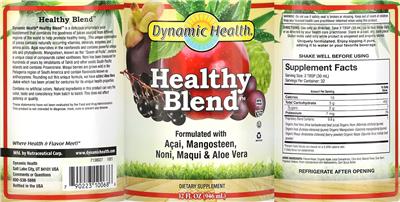
Dynamic Health Healthy Blend is a delicious proprietary juice supplement that combines the goodness of juices sourced from different regions of the world to help promote healthy living. This unique combination of juices contains naturally occurring vitamins, minerals, enzymes, and amino acids. Açai nourishes in the rainforests and contains powerful omega oils and phytosterols. Mangosteen, known as the "Queen of Fruits", contains a unique class of compounds called xanthones. Noni has been treasured for hundreds of years by inhabitants of Tahiti and other exotic South Pacific islands and contains Proxeronine. Maqui berries are grown wild in the Patagonia region of South America and contain flavonoids known as anthocyanins. Rounding out this unique formula, we have added Aloe Vera Juice which has been prized for centuries for its unique health properties.
OU (Kosher)
Formulated with Açai, Mangosteen, Noni, Maqui & Aloe Vera
Formulation
Contains no artificial colors.
Natural ingredients in this product can vary the color, taste and consistency from batch to batch. This does not affect potency or quality.
BPA Free Gluten free
Bottled in the USA
FDA Disclaimer Statement
These statements have not been evaluated by the Food and Drug Administration. This product is not intended to diagnose, treat, cure or prevent any disease.
Brand IP Statement(s)
Dynamic Health Where Health & Flavor Meet!
Seals/Symbols
OU (Kosher)
General Statements
Recycle
FDA Statement of Identity
Dietary Supplement
Precautions
Warning: Do not use if safety seal is broken or missing. Keep your licensed health care practitioner informed when using product.
Keep out of reach of children.
Suggested/Recommended/Usage/Directions
Directions: Use only as directed. Take 2 TBSP (30 mL) up to four times daily or as directed by your health care practitioner.
Uniquely formulated. Enjoy sipping it pure, adding it to water or your favorite beverage. Shake well before using.
Storage
Store in a cool, dry, dark place. Stated levels valid only while product is unopened and properly stored.
Refrigerate after opening
Is this label outdated? Report a formula or label change and our pharmacy team will review it.
Healthy Blend by Dynamic Health label
The label scan from the NIH Dietary Supplement Label Database. Tap to enlarge.
Label images are published by the NIH Dietary Supplement Label Database for the version of this product on file. Always read your actual product label.
View the full label (PDF)The Ingredients in Healthy Blend by Dynamic Health
These are the 7 active ingredients this product is made of. Select any to open its full monograph.
Serving size30 mL Dosage formLiquid Servings per container31 Amounts shown are per serving.
Most supplement products combine several ingredients, and a medication can interact with the product through any one of them. Each ingredient below shows whether it has known drug interactions.
Potassium
Interacts with62 drugs
Potassium is an essential mineral your body needs for nerve signals, muscle function, and a steady heartbeat, and most people get enough from a balanc...
Potassium monograph & interactionsProprietary Blend
Other (inactive) ingredients: Water, Filtered, Apple juice concentrate, Citric Acid, Natural Flavors, Guar Gum, Potassium Sorbate, Pectin, Corn Syrup, Solids. These complete the product’s ingredient list but are not active constituents.
Healthy Blend by Dynamic Health Drug Interactions
HelloPharmacist Interaction Report
Dynamic Health's Healthy Blend is a liquid supplement with seven ingredients, and it does interact with several medication types.
The most serious concern is with digoxin (Lanoxin), a heart medication—the aloe vera juice in this blend theoretically increases the risk of digoxin toxicity, especially if the aloe causes potassium loss. This is a Major severity interaction.
Read the full breakdown — every affected drug type, severity by severity
Moderate interactions span multiple drug categories. Potassium in the blend raises the risk of dangerously high potassium levels (hyperkalemia) when combined with potassium-sparing diuretics, ACE inhibitors, or angiotensin receptor blockers (ARBs)—all blood pressure or heart medications.
Aloe vera juice also interacts with blood thinners (anticoagulants and antiplatelet drugs), diabetes medications, regular diuretics, stimulant laxatives, and warfarin, each with its own mechanism and concern. Noni puree contributes additional Moderate interactions with blood pressure drugs, drugs that stress the liver, potassium-sparing diuretics, ACE inhibitors, ARBs, warfarin, seizure medication (phenytoin), and heartburn medication (ranitidine).
Mangosteen puree theoretically increases bleeding risk with anticoagulants and antiplatelet drugs. Acai and nopal powder interact with diabetes medications—nopal at Moderate severity, acai at Moderate.
Maqui powder has a Minor interaction with diabetes drugs. Aloe vera also carries a Minor interaction with drugs metabolized by the CYP1A2 liver enzyme, and mangosteen has a Minor interaction with donepezil (Aricept), an Alzheimer's medication.
Altogether, these interactions span 796 individual medications. Because this product contains both potassium and noni (also high in potassium), the hyperkalemia risk is a serious concern if you take any blood pressure or heart medication.
Use the medication checker below with your exact prescriptions before starting.
Check your own medications below · Editorial policy · How we use AI
Want to check YOUR meds against Healthy Blend?
Ask about interactions with your drugs in plain English — “Can I take it with lisinopril?” — and we find you the answer in seconds, ingredient by ingredient.
Go to the checkerIngredients driving the most interactions
Individual Drug Interactions
The ingredients in Healthy Blend interact with 814 drugs. Click any drug to see the details.
7 of the 7 ingredients in Healthy Blend interact with drugs. Each result below shows which ingredient is responsible. Noni, Puree Aloe vera Juice Mangosteen, Puree Acai, Puree Maqui, Powder Nopal, Powder Potassium
DigoxinDigitek, Lanoxicaps, Lanoxin
How Digoxin interacts with Healthy Blend — through 1 ingredient. Tap an ingredient for the detail:
Aloe Vera JuiceDigoxin (lanoxin) Major
Interaction Summary
Theoretically, aloe latex might increase the risk of adverse effects when taken with cardiac glycosides.
Read the full Aloe Vera Juice + Digoxin interaction6-mercaptopurinePurinethol
How 6-mercaptopurine interacts with Healthy Blend — through 1 ingredient. Tap an ingredient for the detail:
Noni, PureeHepatotoxic Drugs Moderate
Interaction Summary
Theoretically, taking noni with hepatotoxic drugs might increase the risk of liver damage.
Read the full Noni, Puree + 6-mercaptopurine interactionAbacavir Sulfate, Dolutegravir, LamivudineTriumeq
How Abacavir Sulfate, Dolutegravir, Lamivudine interacts with Healthy Blend — through 1 ingredient. Tap an ingredient for the detail:
Noni, PureeHepatotoxic Drugs Moderate
Interaction Summary
Theoretically, taking noni with hepatotoxic drugs might increase the risk of liver damage.
Read the full Noni, Puree + Abacavir Sulfate, Dolutegravir, Lamivudine interactionAbacavir, LamivudineEpzicom
How Abacavir, Lamivudine interacts with Healthy Blend — through 1 ingredient. Tap an ingredient for the detail:
Noni, PureeHepatotoxic Drugs Moderate
Interaction Summary
Theoretically, taking noni with hepatotoxic drugs might increase the risk of liver damage.
Read the full Noni, Puree + Abacavir, Lamivudine interactionAbciximabReoPro
How Abciximab interacts with Healthy Blend — through 2 ingredients. Tap an ingredient for the detail:
Aloe Vera JuiceAnticoagulant/antiplatelet Drugs Moderate
Interaction Summary
Theoretically, aloe gel might increase the risk of bleeding when taken with anticoagulant or antiplatelet drugs.
Read the full Aloe Vera Juice + Abciximab interactionMangosteen, PureeAnticoagulant/antiplatelet Drugs Moderate
Interaction Summary
Theoretically, concomitant use of mangosteen with anticoagulant or antiplatelet drugs may increase the risk of bleeding.
Read the full Mangosteen, Puree + Abciximab interactionAbiraterone
How Abiraterone interacts with Healthy Blend — through 1 ingredient. Tap an ingredient for the detail:
Noni, PureeHepatotoxic Drugs Moderate
Interaction Summary
Theoretically, taking noni with hepatotoxic drugs might increase the risk of liver damage.
Read the full Noni, Puree + Abiraterone interactionAbiraterone AcetateYonsa, Zytiga
How Abiraterone Acetate interacts with Healthy Blend — through 1 ingredient. Tap an ingredient for the detail:
Noni, PureeHepatotoxic Drugs Moderate
Interaction Summary
Theoretically, taking noni with hepatotoxic drugs might increase the risk of liver damage.
Read the full Noni, Puree + Abiraterone Acetate interactionAbrocitinibCibinqo
How Abrocitinib interacts with Healthy Blend — through 2 ingredients. Tap an ingredient for the detail:
Aloe Vera JuiceAnticoagulant/antiplatelet Drugs Moderate
Interaction Summary
Theoretically, aloe gel might increase the risk of bleeding when taken with anticoagulant or antiplatelet drugs.
Read the full Aloe Vera Juice + Abrocitinib interactionMangosteen, PureeAnticoagulant/antiplatelet Drugs Moderate
Interaction Summary
Theoretically, concomitant use of mangosteen with anticoagulant or antiplatelet drugs may increase the risk of bleeding.
Read the full Mangosteen, Puree + Abrocitinib interactionAcarboseGlucobay, Prandase, Precose
How Acarbose interacts with Healthy Blend — through 5 ingredients. Tap an ingredient for the detail:
Acai, PureeAntidiabetes Drugs Moderate
Interaction Summary
Theoretically, taking acai with antidiabetes drugs might interfere with glycemic control.
Read the full Acai, Puree + Acarbose interactionNopal, PowderAntidiabetes Drugs Moderate
Interaction Summary
Combining prickly pear cactus with antidiabetes drugs might increase the risk of hypoglycemia.
Read the full Nopal, Powder + Acarbose interactionNoni, PureeHepatotoxic Drugs Moderate
Interaction Summary
Theoretically, taking noni with hepatotoxic drugs might increase the risk of liver damage.
Read the full Noni, Puree + Acarbose interactionAloe Vera JuiceAntidiabetes Drugs Moderate
Interaction Summary
Aloe might increase the risk of hypoglycemia when taken with antidiabetes drugs.
Read the full Aloe Vera Juice + Acarbose interactionMaqui, PowderAntidiabetes Drugs Minor
Interaction Summary
Theoretically, maqui fruit extract may increase the risk of hypoglycemia when used with antidiabetes drugs.
Read the full Maqui, Powder + Acarbose interactionAcebutololRhotral, Sectral
How Acebutolol interacts with Healthy Blend — through 1 ingredient. Tap an ingredient for the detail:
Noni, PureeAntihypertensive Drugs, Hepatotoxic Drugs Moderate
Interaction Summary
Theoretically, noni may increase the risk of hypotension when used in combination with antihypertensive drugs.
Read the full Noni, Puree + Acebutolol interactionAcenocoumarolSintrom
How Acenocoumarol interacts with Healthy Blend — through 2 ingredients. Tap an ingredient for the detail:
Mangosteen, PureeAnticoagulant/antiplatelet Drugs Moderate
Interaction Summary
Theoretically, concomitant use of mangosteen with anticoagulant or antiplatelet drugs may increase the risk of bleeding.
Read the full Mangosteen, Puree + Acenocoumarol interactionAloe Vera JuiceAnticoagulant/antiplatelet Drugs Moderate
Interaction Summary
Theoretically, aloe gel might increase the risk of bleeding when taken with anticoagulant or antiplatelet drugs.
Read the full Aloe Vera Juice + Acenocoumarol interactionAcetaminophenChildren's Tylenol, Children's Tylenol Meltaways, Tylenol, Tylenol Ex Strength
How Acetaminophen interacts with Healthy Blend — through 2 ingredients. Tap an ingredient for the detail:
Noni, PureeHepatotoxic Drugs Moderate
Interaction Summary
Theoretically, taking noni with hepatotoxic drugs might increase the risk of liver damage.
Read the full Noni, Puree + Acetaminophen interactionAloe Vera JuiceCytochrome P450 1a2 (cyp1a2) Substrates Minor
Interaction Summary
Theoretically, aloe might decrease the levels and clinical effects of CYP1A2 substrates.
Read the full Aloe Vera Juice + Acetaminophen interactionAcetaminophen, AspirinGemnisyn
How Acetaminophen, Aspirin interacts with Healthy Blend — through 3 ingredients. Tap an ingredient for the detail:
Aloe Vera JuiceCytochrome P450 1a2 (cyp1a2) Substrates, Anticoagulant/antiplatelet Drugs Moderate
Interaction Summary
Theoretically, aloe might decrease the levels and clinical effects of CYP1A2 substrates.
Read the full Aloe Vera Juice + Acetaminophen, Aspirin interactionMangosteen, PureeAnticoagulant/antiplatelet Drugs Moderate
Interaction Summary
Theoretically, concomitant use of mangosteen with anticoagulant or antiplatelet drugs may increase the risk of bleeding.
Read the full Mangosteen, Puree + Acetaminophen, Aspirin interactionNoni, PureeHepatotoxic Drugs Moderate
Interaction Summary
Theoretically, taking noni with hepatotoxic drugs might increase the risk of liver damage.
Read the full Noni, Puree + Acetaminophen, Aspirin interactionAcetaminophen, Aspirin, CaffeineExcedrin, Excedrin Extra Strength, Excedrin Migraine
How Acetaminophen, Aspirin, Caffeine interacts with Healthy Blend — through 3 ingredients. Tap an ingredient for the detail:
Noni, PureeHepatotoxic Drugs Moderate
Interaction Summary
Theoretically, taking noni with hepatotoxic drugs might increase the risk of liver damage.
Read the full Noni, Puree + Acetaminophen, Aspirin, Caffeine interactionAloe Vera JuiceCytochrome P450 1a2 (cyp1a2) Substrates, Anticoagulant/antiplatelet Drugs Moderate
Interaction Summary
Theoretically, aloe might decrease the levels and clinical effects of CYP1A2 substrates.
Read the full Aloe Vera Juice + Acetaminophen, Aspirin, Caffeine interactionMangosteen, PureeAnticoagulant/antiplatelet Drugs Moderate
Interaction Summary
Theoretically, concomitant use of mangosteen with anticoagulant or antiplatelet drugs may increase the risk of bleeding.
Read the full Mangosteen, Puree + Acetaminophen, Aspirin, Caffeine interactionAcetaminophen, Brompheniramine, PhenylpropanolamineDimetapp Cold and Flu
How Acetaminophen, Brompheniramine, Phenylpropanolamine interacts with Healthy Blend — through 2 ingredients. Tap an ingredient for the detail:
Noni, PureeHepatotoxic Drugs Moderate
Interaction Summary
Theoretically, taking noni with hepatotoxic drugs might increase the risk of liver damage.
Read the full Noni, Puree + Acetaminophen, Brompheniramine, Phenylpropanolamine interactionAloe Vera JuiceCytochrome P450 1a2 (cyp1a2) Substrates Minor
Interaction Summary
Theoretically, aloe might decrease the levels and clinical effects of CYP1A2 substrates.
Read the full Aloe Vera Juice + Acetaminophen, Brompheniramine, Phenylpropanolamine interactionAcetaminophen, ButalbitalAxocet, Bancap, Bucet, Butex Forte, Esgic CF, Orbivan CF +5 more
How Acetaminophen, Butalbital interacts with Healthy Blend — through 2 ingredients. Tap an ingredient for the detail:
Noni, PureeHepatotoxic Drugs Moderate
Interaction Summary
Theoretically, taking noni with hepatotoxic drugs might increase the risk of liver damage.
Read the full Noni, Puree + Acetaminophen, Butalbital interactionAloe Vera JuiceCytochrome P450 1a2 (cyp1a2) Substrates Minor
Interaction Summary
Theoretically, aloe might decrease the levels and clinical effects of CYP1A2 substrates.
Read the full Aloe Vera Juice + Acetaminophen, Butalbital interactionAcetaminophen, Butalbital, CaffeineEsgic, Esgic Plus, Fiogesic, Fioricet, Repan, Tecnal +1 more
How Acetaminophen, Butalbital, Caffeine interacts with Healthy Blend — through 2 ingredients. Tap an ingredient for the detail:
Noni, PureeHepatotoxic Drugs Moderate
Interaction Summary
Theoretically, taking noni with hepatotoxic drugs might increase the risk of liver damage.
Read the full Noni, Puree + Acetaminophen, Butalbital, Caffeine interactionAloe Vera JuiceCytochrome P450 1a2 (cyp1a2) Substrates Minor
Interaction Summary
Theoretically, aloe might decrease the levels and clinical effects of CYP1A2 substrates.
Read the full Aloe Vera Juice + Acetaminophen, Butalbital, Caffeine interactionAcetaminophen, Butalbital, Caffeine, CodeineEsgic with Codeine, Fioricet w/ Codeine
How Acetaminophen, Butalbital, Caffeine, Codeine interacts with Healthy Blend — through 2 ingredients. Tap an ingredient for the detail:
Noni, PureeHepatotoxic Drugs Moderate
Interaction Summary
Theoretically, taking noni with hepatotoxic drugs might increase the risk of liver damage.
Read the full Noni, Puree + Acetaminophen, Butalbital, Caffeine, Codeine interactionAloe Vera JuiceCytochrome P450 1a2 (cyp1a2) Substrates Minor
Interaction Summary
Theoretically, aloe might decrease the levels and clinical effects of CYP1A2 substrates.
Read the full Aloe Vera Juice + Acetaminophen, Butalbital, Caffeine, Codeine interactionAcetaminophen, Butalbital, CodeineBancap w/ Codeine
How Acetaminophen, Butalbital, Codeine interacts with Healthy Blend — through 2 ingredients. Tap an ingredient for the detail:
Noni, PureeHepatotoxic Drugs Moderate
Interaction Summary
Theoretically, taking noni with hepatotoxic drugs might increase the risk of liver damage.
Read the full Noni, Puree + Acetaminophen, Butalbital, Codeine interactionAloe Vera JuiceCytochrome P450 1a2 (cyp1a2) Substrates Minor
Interaction Summary
Theoretically, aloe might decrease the levels and clinical effects of CYP1A2 substrates.
Read the full Aloe Vera Juice + Acetaminophen, Butalbital, Codeine interactionAcetaminophen, Butalbital, Codeine PhosphatePhrenilin #3
How Acetaminophen, Butalbital, Codeine Phosphate interacts with Healthy Blend — through 2 ingredients. Tap an ingredient for the detail:
Noni, PureeHepatotoxic Drugs Moderate
Interaction Summary
Theoretically, taking noni with hepatotoxic drugs might increase the risk of liver damage.
Read the full Noni, Puree + Acetaminophen, Butalbital, Codeine Phosphate interactionAloe Vera JuiceCytochrome P450 1a2 (cyp1a2) Substrates Minor
Interaction Summary
Theoretically, aloe might decrease the levels and clinical effects of CYP1A2 substrates.
Read the full Aloe Vera Juice + Acetaminophen, Butalbital, Codeine Phosphate interactionAcetaminophen, Caffeine, Chlorpheniramine, Hydrocodone, PhenylephrineHycomine Compound
How Acetaminophen, Caffeine, Chlorpheniramine, Hydrocodone, Phenylephrine interacts with Healthy Blend — through 2 ingredients. Tap an ingredient for the detail:
Noni, PureeHepatotoxic Drugs Moderate
Interaction Summary
Theoretically, taking noni with hepatotoxic drugs might increase the risk of liver damage.
Read the full Noni, Puree + Acetaminophen, Caffeine, Chlorpheniramine, Hydrocodone, Phenylephrine interactionAloe Vera JuiceCytochrome P450 1a2 (cyp1a2) Substrates Minor
Interaction Summary
Theoretically, aloe might decrease the levels and clinical effects of CYP1A2 substrates.
Read the full Aloe Vera Juice + Acetaminophen, Caffeine, Chlorpheniramine, Hydrocodone, Phenylephrine interactionAcetaminophen, Caffeine, CodeineGesic C15, Gesic C30, Gesic C8, Lenoltec 1, Lenoltec 2, Lenoltec 3 +1 more
How Acetaminophen, Caffeine, Codeine interacts with Healthy Blend — through 2 ingredients. Tap an ingredient for the detail:
Noni, PureeHepatotoxic Drugs Moderate
Interaction Summary
Theoretically, taking noni with hepatotoxic drugs might increase the risk of liver damage.
Read the full Noni, Puree + Acetaminophen, Caffeine, Codeine interactionAloe Vera JuiceCytochrome P450 1a2 (cyp1a2) Substrates Minor
Interaction Summary
Theoretically, aloe might decrease the levels and clinical effects of CYP1A2 substrates.
Read the full Aloe Vera Juice + Acetaminophen, Caffeine, Codeine interactionAcetaminophen, Caffeine, Codeine, SalicylamideCodalan No.1, Codalan No.2, Codalan No.3
How Acetaminophen, Caffeine, Codeine, Salicylamide interacts with Healthy Blend — through 2 ingredients. Tap an ingredient for the detail:
Noni, PureeHepatotoxic Drugs Moderate
Interaction Summary
Theoretically, taking noni with hepatotoxic drugs might increase the risk of liver damage.
Read the full Noni, Puree + Acetaminophen, Caffeine, Codeine, Salicylamide interactionAloe Vera JuiceCytochrome P450 1a2 (cyp1a2) Substrates Minor
Interaction Summary
Theoretically, aloe might decrease the levels and clinical effects of CYP1A2 substrates.
Read the full Aloe Vera Juice + Acetaminophen, Caffeine, Codeine, Salicylamide interactionAcetaminophen, Caffeine, DihydrocodeineDHC Plus, Panlor DC, Panlor SS
How Acetaminophen, Caffeine, Dihydrocodeine interacts with Healthy Blend — through 2 ingredients. Tap an ingredient for the detail:
Noni, PureeHepatotoxic Drugs Moderate
Interaction Summary
Theoretically, taking noni with hepatotoxic drugs might increase the risk of liver damage.
Read the full Noni, Puree + Acetaminophen, Caffeine, Dihydrocodeine interactionAloe Vera JuiceCytochrome P450 1a2 (cyp1a2) Substrates Minor
Interaction Summary
Theoretically, aloe might decrease the levels and clinical effects of CYP1A2 substrates.
Read the full Aloe Vera Juice + Acetaminophen, Caffeine, Dihydrocodeine interactionAcetaminophen, Caffeine, IsomethepteneMigralam
How Acetaminophen, Caffeine, Isometheptene interacts with Healthy Blend — through 2 ingredients. Tap an ingredient for the detail:
Noni, PureeHepatotoxic Drugs Moderate
Interaction Summary
Theoretically, taking noni with hepatotoxic drugs might increase the risk of liver damage.
Read the full Noni, Puree + Acetaminophen, Caffeine, Isometheptene interactionAloe Vera JuiceCytochrome P450 1a2 (cyp1a2) Substrates Minor
Interaction Summary
Theoretically, aloe might decrease the levels and clinical effects of CYP1A2 substrates.
Read the full Aloe Vera Juice + Acetaminophen, Caffeine, Isometheptene interactionAcetaminophen, Caffeine, PyrilamineMidol Max Strength Menstrual
How Acetaminophen, Caffeine, Pyrilamine interacts with Healthy Blend — through 2 ingredients. Tap an ingredient for the detail:
Noni, PureeHepatotoxic Drugs Moderate
Interaction Summary
Theoretically, taking noni with hepatotoxic drugs might increase the risk of liver damage.
Read the full Noni, Puree + Acetaminophen, Caffeine, Pyrilamine interactionAloe Vera JuiceDiuretic Drugs, Cytochrome P450 1a2 (cyp1a2) Substrates Moderate
Interaction Summary
Theoretically, aloe latex might increase the risk of hypokalemia when taken with diuretic drugs.
Read the full Aloe Vera Juice + Acetaminophen, Caffeine, Pyrilamine interactionAcetaminophen, Chlorpheniramine Maleate, Dextromethorphan HbrVicks Formula 44M Cough, Cold & Flu Relief
How Acetaminophen, Chlorpheniramine Maleate, Dextromethorphan Hbr interacts with Healthy Blend — through 2 ingredients. Tap an ingredient for the detail:
Noni, PureeHepatotoxic Drugs Moderate
Interaction Summary
Theoretically, taking noni with hepatotoxic drugs might increase the risk of liver damage.
Read the full Noni, Puree + Acetaminophen, Chlorpheniramine Maleate, Dextromethorphan Hbr interactionAloe Vera JuiceCytochrome P450 1a2 (cyp1a2) Substrates Minor
Interaction Summary
Theoretically, aloe might decrease the levels and clinical effects of CYP1A2 substrates.
Read the full Aloe Vera Juice + Acetaminophen, Chlorpheniramine Maleate, Dextromethorphan Hbr interactionAcetaminophen, Chlorpheniramine, Codeine, PhenylephrineColrex
How Acetaminophen, Chlorpheniramine, Codeine, Phenylephrine interacts with Healthy Blend — through 2 ingredients. Tap an ingredient for the detail:
Noni, PureeHepatotoxic Drugs Moderate
Interaction Summary
Theoretically, taking noni with hepatotoxic drugs might increase the risk of liver damage.
Read the full Noni, Puree + Acetaminophen, Chlorpheniramine, Codeine, Phenylephrine interactionAloe Vera JuiceCytochrome P450 1a2 (cyp1a2) Substrates Minor
Interaction Summary
Theoretically, aloe might decrease the levels and clinical effects of CYP1A2 substrates.
Read the full Aloe Vera Juice + Acetaminophen, Chlorpheniramine, Codeine, Phenylephrine interactionAcetaminophen, Chlorpheniramine, DextromethorphanCoricidin II Extra Strength Cold and Flu
How Acetaminophen, Chlorpheniramine, Dextromethorphan interacts with Healthy Blend — through 2 ingredients. Tap an ingredient for the detail:
Noni, PureeHepatotoxic Drugs Moderate
Interaction Summary
Theoretically, taking noni with hepatotoxic drugs might increase the risk of liver damage.
Read the full Noni, Puree + Acetaminophen, Chlorpheniramine, Dextromethorphan interactionAloe Vera JuiceCytochrome P450 1a2 (cyp1a2) Substrates Minor
Interaction Summary
Theoretically, aloe might decrease the levels and clinical effects of CYP1A2 substrates.
Read the full Aloe Vera Juice + Acetaminophen, Chlorpheniramine, Dextromethorphan interactionAcetaminophen, Chlorpheniramine, Dextromethorphan HydrobromideCoricidin HBP Maximum Strength Flu
How Acetaminophen, Chlorpheniramine, Dextromethorphan Hydrobromide interacts with Healthy Blend — through 2 ingredients. Tap an ingredient for the detail:
Noni, PureeHepatotoxic Drugs Moderate
Interaction Summary
Theoretically, taking noni with hepatotoxic drugs might increase the risk of liver damage.
Read the full Noni, Puree + Acetaminophen, Chlorpheniramine, Dextromethorphan Hydrobromide interactionAloe Vera JuiceCytochrome P450 1a2 (cyp1a2) Substrates Minor
Interaction Summary
Theoretically, aloe might decrease the levels and clinical effects of CYP1A2 substrates.
Read the full Aloe Vera Juice + Acetaminophen, Chlorpheniramine, Dextromethorphan Hydrobromide interactionEach ingredient & the kinds of drugs it affects
For each ingredient in Healthy Blend with known interactions, here are the types of medications they can affect. Open any type for the detail — or search your exact drug in the checker above.
Noni, Puree
Ace Inhibitors (Aceis)
Theoretically, combining noni and ACE inhibitors might increase the risk of hyperkalemia.
Noni juice contains significant amounts of potassium, about 6 mEq/100 mL juice. This may increase the risk for hyperkalemia when used in conjunction with ACE inhibitors, which can also increase potassium levels.
Angiotensin Receptor Blockers (Arbs)
Theoretically, combining noni and ARBs might increase the risk of hyperkalemia.
Noni juice contains significant amounts of potassium, about 6 mEq/100 mL juice. This may increase the risk for hyperkalemia when used in conjunction with ARBs, which can also increase potassium levels.
Antihypertensive Drugs
Theoretically, noni may increase the risk of hypotension when used in combination with antihypertensive drugs.
Preliminary clinical research suggests that drinking noni juice can reduce blood pressure in individuals with hypertension.
Hepatotoxic Drugs
Theoretically, taking noni with hepatotoxic drugs might increase the risk of liver damage.
There is concern that noni might cause hepatotoxicity in some patients. Advise patients against combining noni with potentially hepatotoxic drugs.
Phenytoin (Dilantin)
Theoretically, taking noni fruit juice concomitantly with phenytoin may lower phenytoin levels and increase the risk of seizures.
In one case report, an adult taking phenytoin for partial seizures experienced low serum phenytoin levels while taking noni juice 90-200 mL daily. Serum phenytoin levels increased after decreasing noni juice consumption; similarly, serum phenytoin levels decreased after increasing noni juice consumption. Some researchers believe noni juice may induce cytochrome P450 2C9 enzymes, which would decrease phenytoin levels, but this has not been well studied. Patients may need additional monitoring when starting or stopping noni juice supplementation.
Potassium-Sparing Diuretics
Theoretically, combing noni and a potassium-sparing diuretic might increase the risk of hyperkalemia.
Noni juice contains significant amounts of potassium, about 6 mEq/100 mL juice. This may increase the risk for hyperkalemia when used in conjunction with potassium-sparing diuretics, which can also increase potassium levels.
Warfarin (Coumadin)
Theoretically, taking noni juice concomitantly with warfarin might decrease the effectiveness of warfarin.
In one case, a 41-year-old patient stabilized on warfarin had a decreased international normalized ratio (INR) following consumption of a specific commercial noni juice product (Noni juice 4 Everything). While the patient was still taking noni juice, an increase in warfarin dose did not produce an increase in INR. However, it should be noted that this particular product contained extracts and derivatives from more than 115 components, many of which contained vitamin K. Furthermore, vitamin K was listed as a separate ingredient of the product, suggesting that the product was possibly fortified with vitamin K. It has not been verified that noni fruit alone contains a significant amount of vitamin K or interacts with warfarin.
Ranitidine (Zantac)
Taking noni fruit with ranitidine might increase the levels and clinical effects of ranitidine.
Clinical evidence shows that taking an aqueous extract of noni fruit 30 minutes prior to taking a single oral dose of ranitidine can increase the rate of absorption and plasma concentration of ranitidine.
Aloe vera Juice
Digoxin (Lanoxin)
Theoretically, aloe latex might increase the risk of adverse effects when taken with cardiac glycosides.
Overuse of aloe latex can increase the risk of adverse effects from cardiac glycoside drugs, such as digoxin, due to potassium depletion. Overuse of aloe, along with cardiac glycoside drugs, can increase the risk of toxicity.
Anticoagulant/Antiplatelet Drugs
Theoretically, aloe gel might increase the risk of bleeding when taken with anticoagulant or antiplatelet drugs.
In vitro research shows that aloe gel can inhibit platelet aggregation. This inhibition was greater than that seen with celecoxib, but less than that seen with aspirin.
Antidiabetes Drugs
Aloe might increase the risk of hypoglycemia when taken with antidiabetes drugs.
Preliminary clinical research suggests aloe gel might lower blood glucose levels and have additive effects when used with antidiabetes drugs. Monitor blood glucose levels closely.
Diuretic Drugs
Theoretically, aloe latex might increase the risk of hypokalemia when taken with diuretic drugs.
Overuse of aloe latex might compound diuretic-induced potassium loss, increasing the risk of hypokalemia.
Stimulant Laxatives
Theoretically, aloe latex might increase the risk for fluid and electrolyte loss when taken with stimulant laxatives.
Due to cathartic laxative effects of aloe latex, concomitant use with other stimulant laxatives might compound fluid and electrolyte loss.
Warfarin (Coumadin)
Theoretically, aloe latex might increase the risk of bleeding when taken with warfarin.
Aloe latex has stimulant laxative effects. In some people aloe latex can cause diarrhea. Diarrhea can increase the effects of warfarin, increase international normalized ratio (INR), and increase the risk of bleeding. Advise patients who take warfarin not to take excessive amounts of aloe vera.
Cytochrome P450 1A2 (Cyp1A2) Substrates
Theoretically, aloe might decrease the levels and clinical effects of CYP1A2 substrates.
In vitro research shows that aloe extract induces CYP1A2 enzymes.
Mangosteen, Puree
Anticoagulant/Antiplatelet Drugs
Theoretically, concomitant use of mangosteen with anticoagulant or antiplatelet drugs may increase the risk of bleeding.
In vitro and animal research shows that gamma-mangostin, a constituent of mangosteen, is a potent and competitive antagonist of the serotonin 2A (5-HT2A) receptor. Antagonism of the 5-HT2A receptor is believed to reduce platelet aggregation.
Donepezil (Aricept)
Theoretically, concomitant use of mangosteen with donepezil might increase the effects of donepezil.
Animal research shows that concomitant use of an aqueous extract of mangosteen pericarp with donepezil increases brain concentrations of donepezil at 4 hours by 64% without associated effects on systemic exposure.
Acai, Puree
Antidiabetes Drugs
Theoretically, taking acai with antidiabetes drugs might interfere with glycemic control.
Preliminary clinical research in healthy adults has shown that taking acai may increase or decrease levels of fasting blood glucose.
Maqui, Powder
Antidiabetes Drugs
Theoretically, maqui fruit extract may increase the risk of hypoglycemia when used with antidiabetes drugs.
Animal research shows that maqui berry reduces fasting blood glucose. However, maqui berry extract taken orally, either as a single dose or daily for 3 months, does not decrease fasting blood glucose in prediabetic patients. It is unknown whether it might reduce blood glucose levels in patients with diabetes.
Nopal, Powder
Antidiabetes Drugs
Combining prickly pear cactus with antidiabetes drugs might increase the risk of hypoglycemia.
Case reports show that combining prickly pear cactus with antidiabetes drugs such as chlorpropamide, glyburide, glipizide, and metformin can increase the risk of hypoglycemia in patients with type 2 diabetes. Advise patients to monitor glucose levels closely. Dose adjustments may be necessary.
Potassium
Ace Inhibitors (Aceis)
Using ACEIs with high doses of potassium increases the risk of hyperkalemia.
ACEIs block the actions of the renin-angiotensin-aldosterone system and reduce potassium excretion. Concomitant use of these drugs with potassium supplements increases the risk of hyperkalemia. However, concomitant use of these drugs with moderate dietary potassium intake (about 3775-5200 mg daily) does not increase serum potassium levels.
Angiotensin Receptor Blockers (Arbs)
Using ARBs with high doses of potassium increases the risk of hyperkalemia.
ARBs block the actions of the renin-angiotensin-aldosterone system and reduce potassium excretion. Concomitant use of these drugs with potassium supplements increases the risk of hyperkalemia. However, concomitant use of these drugs with moderate dietary potassium intake (about 3775-5200 mg daily) does not increase serum potassium levels.
Potassium-Sparing Diuretics
Concomitant use increases the risk of hyperkalemia.
Using potassium-sparing diuretics with potassium supplements increases the risk of hyperkalemia.
Brand information
Manufacturer and brand details for Healthy Blend, from the product label.
Healthy Blend by Dynamic Health: Common Questions
Does Healthy Blend by Dynamic Health interact with any medications?
How can one product interact with so many drugs?
Where does this information come from?
Does this have potassium in it?
Can I take this if I'm pregnant?
Is aloe vera juice safe in this product?
What does nopal do?
Do acai and noni really work?
What are the most common side effects?
Written and reviewed by the HelloPharmacist editorial staff. Our editorial policy
Not sure if Healthy Blend is safe with your meds?
Our pharmacists answer your medication & supplement questions — free.
Label information is sourced from the NIH Dietary Supplement Label Database and reflects the product version on file; always read your actual product label. This page is for education only and is not a substitute for professional medical advice. Confirm with your pharmacist or doctor before combining supplements and medications.
The Full Monographs Behind Healthy Blend’s Ingredients
Every ingredient we hold a full HelloPharmacist monograph for — uses, evidence, safety, and the complete interaction list.
Potassium
Interacts with 62 drugsPotassium is an essential mineral your body needs for nerve signals, muscle function, and a steady heartbeat, and most people get enough from a balanced diet rich in fruits and vegetables. P...
Read the full Potassium monograph → Herb & supplement monographAcai
Interacts with 86 drugsAcai is a nutritious Amazonian berry rich in antioxidants and healthy fats, and it is fine to enjoy as a food. However, strong human evidence is lacking for the bold health claims often atta...
Read the full Acai monograph → Herb & supplement monographAloe
Interacts with 461 drugsAloe vera gel is widely used on the skin for minor burns and irritation, and some research suggests it may help. Aloe latex (the yellow part) is a strong laxative that can cause cramping and...
Read the full Aloe monograph → Herb & supplement monographNoni
Interacts with 544 drugsNoni is a tropical fruit used widely in folk medicine and sold mostly as a juice or supplement, but solid human evidence for its many claimed benefits is limited. While moderate juice intake...
Read the full Noni monograph → Herb & supplement monographMangosteen
Interacts with 125 drugsMangosteen is a tropical fruit whose rind is rich in plant compounds called xanthones that act as antioxidants. While it is popular in juices and supplements for inflammation, immune support...
Read the full Mangosteen monograph → Herb & supplement monographMaqui
Interacts with 86 drugsMaqui is a dark purple berry from Chile that is very rich in antioxidant plant pigments called anthocyanins. Early research suggests it may help with things like blood sugar, dry eye, and in...
Read the full Maqui monograph → Herb & supplement monographPrickly Pear Cactus
Interacts with 86 drugsPrickly pear cactus is a desert plant whose pads and fruit are eaten as food and taken as a supplement, mainly for blood sugar, cholesterol, and hangover symptoms. Some small studies suggest...
Read the full Prickly Pear Cactus monograph →Sources & How We Checked
Healthy Blend's label data comes from the NIH Dietary Supplement Label Database; the ingredient interaction data is from the Natural Medicines database, reviewed by our pharmacists.
- NIH Dietary Supplement Label Database (DSLD) — The official product label on file for this supplement.
- Natural Medicines (Therapeutic Research Center) — Evidence-graded clinical reference behind the ingredient interaction data.
Content is written and reviewed by licensed HelloPharmacist pharmacists. See our data sources and editorial standards for how this information is built and checked.
The 89 references behind this product’s interaction data
Every citation that drives the interaction findings for this product’s ingredients, from the evidence-graded Natural Medicines (TRC Healthcare) database. Open an ingredient to browse its citations — links open the study on PubMed or the publisher’s site.
Potassium 12 references
- McEvoy GK, ed. AHFS Drug Information. Bethesda, MD: American Society of Health-System Pharmacists, 1998.
- Gennaro A. Remington: The Science and Practice of Pharmacy. 19th ed. Lippincott: Williams & Wilkins, 1996.
- Whelton PK, He J, Cutler JA, et al. Effects of oral potassium on blood pressure. Meta-analysis of randomized controlled clinical trials. JAMA 1997;277:1624-32. PubMed
- Phillips, C. O., Kashani, A., Ko, D. K., Francis, G., and Krumholz, H. M. Adverse effects of combination angiotensin II receptor blockers plus angiotensin-converting enzyme inhibitors for left ventricular dysfunction: a quantitative review of data from ra DOI
- Altieri, P. I., Herrero, C., Suero, R., and Ortiz, A. Bleeding duodenal ulcer in a patient taking slow-releasing potassium tablets. Bol.Asoc.Med P.R. 1977;69(8):276.
- Raf, L. E. Enteric-coated potassium chloride tablets and ulcer of the small intestine. Acta Chir Scand Suppl 1967;(374):1-87.
- Potassium chloride oral solution [package insert]. Allentown, PA: Lehigh Valley Technologies, Inc.; 2014.
- Potassium chloride injection [package insert]. Lake Forest, IL: Hospira Inc.; 2009.
- Patel RB, Tannenbaum S, Viana-Tejedor A, et al. Serum potassium levels, cardiac arrhythmias, and mortality following non-ST-elevation myocardial infarction or unstable angina: insights from MERLIN-TIMI 36. Eur Heart J Acute Cardiovasc Care 2017 Feb;6(1):1 PubMed
- Malta D, Arcand J, Ravindran A, Floras V, Allard JP, Newton GE. Adequate intake of potassium does not cause hyperkalemia in hypertensive individuals taking medications that antagonize the renin angiotensin aldosterone system. Am J Clin Nutr 2016 Oct;104(4 PubMed
- Keskin M, Kaya A, Tatlisu MA, et al. The effect of serum potassium level on in-hospital and long-term mortality in ST elevation myocardial infarction. Int J cardiol. 2016 Oct 15;221:505-10.
- Stallings VA, Harrison M, Oria M; Committee to Review the Dietary Reference Intakes for Sodium and Potassium, Food and Nutrition Board, Health and Medicine Division, National Academies of Sciences, Engineering, and Medicine. Washington (DC): National Acad
Acai 2 references
- Udani JK, Singh BB, Singh VJ, Barrett ML. Effects of acai (Euterpe oleracea Mart.) berry preparation on metabolic parameters in a healthy overweight population: a pilot study. Nutr J 2011;10:45.
- de Liz S, Cardoso AL, Copetti CLK, et al. Açaí (Euterpe oleracea Mart.) and juçara (Euterpe edulis Mart.) juices improved HDL-c levels and antioxidant defense of healthy adults in a 4-week randomized cross-over study. Clin Nutr. 2020;39(12):3629-3636. PubMed
Aloe 41 references
- Newall CA, Anderson LA, Philpson JD. Herbal Medicine: A Guide for Healthcare Professionals. London, UK: The Pharmaceutical Press, 1996.
- Wichtl MW. Herbal Drugs and Phytopharmaceuticals. Ed. N.M. Bisset. Stuttgart: Medpharm GmbH Scientific Publishers, 1994.
- Brinker F. Herb Contraindications and Drug Interactions. 2nd ed. Sandy, OR: Eclectic Medical Publications, 1998.
- Nusko G, Schneider B, Schneider I, et al. Anthranoid laxative use is not a risk factor for colorectal neoplasia: results of a prospective case control study. Gut 2000;46:651-5. PubMed
- Luyckx VA, Ballantine R, Claeys M, et al. Herbal remedy-associated acute renal failure secondary to Cape aloes. Am J Kidney Dis 2002;39:E13. PubMed
- Rajasekaran S, Sivagnanam K, Ravi K, Subramanian S. Hypoglycemic effect of Aloe vera gel on streptozotocin-induced diabetes in experimental rats. J Med Food 2004;7:61-6.
- Williams MS, Burk M, Loprinzi CL, et al. Phase III double-blind evaluation of an aloe vera gel as a prophylactic agent for radiation-induced skin toxicity. Int J Radiat Oncol Biol Phys 1996;36:345-9. PubMed
- Vogler BK, Ernst E. Aloe vera: a systematic review of its clinical effectiveness. Br J Gen Pract 1999;49:823-8.
- Bottenberg MM, Wall GC, Harvey RL, Habib S. Oral aloe vera-induced hepatitis. Ann Pharmacother 2007;41:1740-3. PubMed
- Rabe C, Musch A, Schirmacher P, et al. Acute hepatitis induced by an Aloe vera preparation: a case report. World J Gastroenterol 2005;11:303-4. PubMed
- Kanat O, Ozet A, Ataergin S. Aloe vera-induced acute toxic hepatitis in a healthy young man. Eur J Int Med 2006;17:589. PubMed
- Mueller SO, Stopper H. Characterization of the genotoxicity of anthraquinones in mammalian cells. Biochim Biophys Acta 1999;1428:406-14. PubMed
- Schorkhuber M, Richter M, Dutter A, et al. Effect of anthraquinone laxatives on the proliferation and urokinase secretion of normal, premalignant and malignant colonic epithelial cells. Eur J Cancer 1998;34:1091-8. PubMed
- Yang HN, Kim DJ, Kim YM, et al. Aloe-induced toxic hepatitis. J Korean Med Sci 2010;25:492-5. PubMed
- Choonhakarn C, Busaracome P, Sripanidkulchai B, et al. A prospective, randomized clinical trial comparing topical aloe vera with 0.1% triamcinolone acetonide in mild to moderate plaque psoriasis. J.Eur.Acad.Dermatol.Venereol. 2010;24:168-72. PubMed
- Ishii Y, Tanizawa H, Takino Y. Studies of aloe. IV. Mechanism of cathartic effect. (3). Biol Pharm Bull. 1994;17:495-7. PubMed
- Ishii Y, Tanizawa H, Takino Y. Studies of aloe. V. Mechanism of cathartic effect. (4). Biol Pharm Bull. 1994;17:651-3. PubMed
- Nelemans FA. Clinical and toxicological aspects of anthraquinone laxatives. Pharmacology. 1976;14 Suppl 1:73-7. PubMed
- Paulsen E, Korsholm L, Brandrup F. A double-blind, placebo-controlled study of a commercial Aloe vera gel in the treatment of slight to moderate psoriasis vulgaris. J Eur Acad Dermatol Venereol. 2005;19:326-31.
- Huseini HF, Kianbakht S, Hajiaghaee R, et al. Anti-hyperglycemic and anti-hypercholesterolemic effects of Aloe vera leaf gel in hyperlipidemic type 2 diabetic patients: a randomized double-blind placebo-controlled clinical trial. Planta Med. 2012;78:311-6
- Ferreira, M., Teixeira, M., Silva, E., and Selores, M. Allergic contact dermatitis to Aloe vera. Contact Dermatitis 2007;57(4):278-279.
- Choonhakarn, C., Busaracome, P., Sripanidkulchai, B., and Sarakarn, P. The efficacy of aloe vera gel in the treatment of oral lichen planus: a randomized controlled trial. Br J Dermatol 2008;158(3):573-577. PubMed
- Baretta, Z., Ghiotto, C., Marino, D., and Jirillo, A. Aloe-induced hypokalemia in a patient with breast cancer during chemotherapy. Ann.Oncol. 2009;20(8):1445-1446. PubMed
- Hunter, D. and Frumkin, A. Adverse reactions to vitamin E and aloe vera preparations after dermabrasion and chemical peel. Cutis 1991;47(3):193-196.
- Alvarez-Perea, A., Garcia, A. P., Hernandez, A. L., de, Barrio M., and Baeza, M. L. Urticaria due to aloe vera: a new sensitizer? Ann.Allergy Asthma Immunol. 2010;105(5):404-405. PubMed
- Hogan, D. J. Widespread dermatitis after topical treatment of chronic leg ulcers and stasis dermatitis. CMAJ. 2-15-1988;138(4):336-338.
- Savchak VI. Acute bullous allergic dermatitis due to local application of aloe leaves. Vestnik Dermatologii i Venerologii 1977;12:44-45.
- Nakamura, T. and Kotajima, S. Contact dermatitis from aloe arborescens. Contact Dermatitis 1984;11(1):51. PubMed
- Shoji, A. Contact dermatitis to Aloe arborescens. Contact Dermatitis 1982;8(3):164-167. PubMed
- Morrow, D. M., Rapaport, M. J., and Strick, R. A. Hypersensitivity to aloe. Arch Dermatol. 1980;116(9):1064-1065. DOI
- Cosmetic Ingredient Review Expert Panel. Final report on the safety assessment of AloeAndongensis Extract, Aloe Andongensis Leaf Juice,aloe Arborescens Leaf Extract, Aloe Arborescens Leaf Juice, Aloe Arborescens Leaf Protoplasts, Aloe Barbadensis Flower E
- Bhalang K, Thunyakitpisal P, Rungsirisatean N. Acemannan, a polysaccharide extracted from Aloe vera, is effective in the treatment of oral aphthous ulceration. J Altern Complement Med 2013;19(5):429-34.
- Hajheydari Z, Saeedi M, Morteza-Semnani K, Soltani A. Effect of Aloe vera topical gel combined with tretinoin in treatment of mild and moderate acne vulgaris: a randomized, double-blind, prospective trial. J Dermatolog Treat 2014;25(2):123-9.
- Jiménez-Encarnación E, Ríos G, Muñoz-Mirabal A, Vilá LM. Euforia-induced acute hepatitis in a patient with scleroderma. BMJ Case Rep 2012;2012. PubMed
- Lee J, Lee MS, Nam KW. Acute toxic hepatitis caused by an aloe vera preparation in a young patient: a case report with a literature review. Korean J Gastroenterol 2014;64(1):54-8. PubMed
- Guo X, Mei N. Aloe Vera - A Review of Toxicity and Adverse Clinical Effects. J Environ Sci Health C Environ Carcinog Ecotoxicol Rev 2016;34(2):77-96.
- Hoogenboom TCH, Patel N, Cook NA, Williams R, Taylor-Robinson SD, Lim AKP. The effect of Aloe vera juice on liver enzymes and hepatic structure in a healthy population. Integr Med (Encinitas) 2020;19(3):30-4.
- Mushtaq S, Mushtaq Z, Sarfraz J, et al. Comparison of effect of aloe vera gel with aspirin and celecoxib on platelet aggregation. Professional Med J. 2020; 27(5):973-978. DOI
- Haron MH, Dale O, Martin K, et al. Evaluation of the Herb-Drug Interaction Potential of Commonly Used Botanicals on the US Market with Regard to PXR- and AhR-Mediated Influences on CYP3A4 and CYP1A2. J Diet Suppl 2022. PubMed
- Sabbaghzadegan S, Soltani MH, Kamalinejad M, Bahrami M, Kabir A, Dadmehr M. The effect of a standardized capsule of Aloe vera gel on the quality of life in patients with systolic heart failure: A randomized double-blind placebo-controlled clinical trial.
- Lewis ED, Crowley DC, Guthrie N, Evans M. Healthy adults supplemented with a nutraceutical formulation containing Aloe vera gel, rosemary and Poria cocos enhances the effect of influenza vaccination in a randomized, triple-blind, placebo-controlled trial. PubMed
Noni 16 references
- Mueller BA, Scott MK, Sowinski KM, Prag KA. Noni juice (Morinda citrifolia): hidden potential for hyperkalemia? Am J Kidney Dis 2000;35:310-2. PubMed
- Millonig G, Stadlmann S, Vogel W. Herbal hepatotoxicity: acute hepatitis caused by a Noni preparation (Morinda citrifolia). Eur J Gastroenterol Hepatol 2005;17:445-7. PubMed
- Stadlbauer V, Fickert P, Lackner C, et al. Hepatotoxicity of NONI juice: report of two cases. World J Gastroenterol 2005;11:4758-60. PubMed
- Carr ME, Klotz J, Bergeron M. Coumadin resistance and the vitamin supplement "Noni". Am J Hematol 2004;77:103. PubMed
- Jensen CJ, Westendorf J, Wang MY, Wadsworth DP. Noni juice protects the liver. Eur J Gastroenterol Hepatol 2006;18:575-7. PubMed
- Yuce B, Gulberg V, Diebold J, Gerbes AL. Hepatitis induced by noni juice from morinda citrifolia: a rare cause of hepatotoxicity or the tip of the iceberg? Digestion 2006;73:167-70.
- Koch E, Biber A. Treatment of rats with the Pelargonium sidoides extract EPs 7630 has no effect on blood coagulation parameters or on the pharmacokinetics of warfarin. Phytomedicine 2007;14 Suppl 6:40-5. PubMed
- Yu EL, Sivagnanam M, Ellis L, Huang JS. Acute hepatotoxicity after ingestion of Morinda citrifolia (noni berry) juice in a 14-year-old boy. J Pediatr Gastroenterol Nutr 2011;52:222-4.
- Stadlbauer V, Weiss S, Payer F, Stauber RE. Herbal does not at all mean innocuous: the sixth case of hepatotoxicity associated with morinda citrifolia (noni). Am J Gastroenterol 2008;103:2406-7. PubMed
- López-Cepero Andrada JM, Lerma Castilla S, Fernández Olvera MD, Amaya Vidal A. [Hepatotoxicity caused by a noni (Morinda citrifolia) preparation]. [Article in Spanish] Rev Esp Enferm Dig 2007;99:179-81.
- Nima S, Kasiwong S, Ridtitid W, et al. Gastrokinetic activity of Morinda citrifolia aqueous fruit extract and its possible mechanism of action in human and rat models. J Ethnopharmacol. 2012;142(2):354-61. PubMed
- Issell, B. F., Gotay, C. C., Pagano, I., and Franke, A. A. Using quality of life measures in a Phase I clinical trial of noni in patients with advanced cancer to select a Phase II dose. J.Diet.Suppl 2009;6(4):347-359. PubMed
- Palu AK, Santiago RA West B Kaluhiokalani N Jensen J. The Effects of Morillda citrifolia L. Noni on High Blood Pressure: A Mechanistic Investigation and Case Study. ACS SYMPOSIUM SERIES 993 2008;
- Jiménez-Encarnación E, Ríos G, Muñoz-Mirabal A, Vilá LM. Euforia-induced acute hepatitis in a patient with scleroderma. BMJ Case Rep 2012;2012. PubMed
- Bussmann RW, Hennig L, Giannis A, Ortwein J, Kutchan TM, Feng X. Anthraquinone Content in Noni (Morinda citrifolia L.). Evid Based Complement Alternat Med. 2013;2013:208378.
- Yu-Chan Kang, Ming-Hong Chen, Shung-Lon Lai. Potentially Unsafe Herb-drug Interactions Between a Commercial Product of Noni Juice and Phenytoin- A Case Report. Acta Neurol Taiwan. 2015 Jun;24(2):43-6.
Mangosteen 6 references
- Chairungsrilerd N, Furukawa K, Ohta T, et al. Histaminergic and serotonergic receptor blocking substances from the medicinal plant Garcinia mangostana. Planta Med 1996;62:471-2.
- Wong LP, Klemmer PJ. Severe lactic acidosis associated with juice of the mangosteen fruit Garcinia mangostana. Am J Kidney Dis 2008;51:829-33. PubMed
- Furukawa, K., Chairungsrilerd, N., Ohta, T., Nozoe, S., and Ohizumi, Y. [Novel types of receptor antagonists from the medicinal plant Garcinia mangostana]. Nippon Yakurigaku Zasshi 1997;110 Suppl 1:153P-158P. PubMed
- Chairungsrilerd, N., Furukawa, K., Tadano, T., Kisara, K., and Ohizumi, Y. Effect of gamma-mangostin through the inhibition of 5-hydroxy-tryptamine2A receptors in 5-fluoro-alpha-methyltryptamine-induced head-twitch responses of mice. Br J Pharmacol. 1998
- Suthammarak W, Numpraphrut P, Charoensakdi R, et al. Antioxidant-enhancing property of the polar fraction of mangosteen pericarp extract and evaluation of its safety in humans. Oxid Med Cell Longev 2016;2016:1293036. PubMed
- Bae M, Han SY, Kim ES, et al. Effect of Water Extract of Mangosteen Pericarp on Donepezil Pharmacokinetics in Mice. Molecules 2021;26(17):5246. PubMed
Maqui 3 references
- Alvarado JL, Leschot A, Olivera-Nappa Á, et al. Delphinidin-rich maqui berry extract (Delphinol®) lowers fasting and postprandial glycemia and insulinemia in prediabetic individuals during oral glucose tolerance tests. Biomed Res Int. 2016;2016:9070537. PubMed
- Alvarado J, Schoenlau F, Leschot A, Salgad AM, Vigil Portales P. Delphinol® standardized maqui berry extract significantly lowers blood glucose and improves blood lipid profile in prediabetic individuals in three-month clinical trial. Panminerva Med. 2016
- Hidalgo J, Flores C, Hidalgo MA, et al. Delphinol® standardized maqui berry extract reduces postprandial blood glucose increase in individuals with impaired glucose regulation by novel mechanism of sodium glucose cotransporter inhibition. Panminerva Med.
Prickly Pear Cactus 9 references
- Meckes-Lozyoa M, Roman-Ramos R. Opuntia streptacantha; a coadjutor in the treatment of diabetes mellitus. Am J Chin Med 1986;14:116-8.
- Rayburn K, Martinez R, Escobedo M, et al. Glycemic effects of various species of nopal (Opuntia sp.) in type 2 diabetes mellitus. Texas J Rural Health 1998;26:68-76.
- Bush TM, Rayburn KS, Holloway SW, et al. Adverse interactions between herbal and dietary substances and prescription medications: a clinical survey. Altern Ther Health Med 2007;13:30-5.
- Sobieraj DM, Freyer CW. Probable hypoglycemic adverse drug reaction associated with prickly pear cactus, glipizide, and metformin in a patient with type 2 diabetes mellitus. Ann Pharmacother 2010;44:1334-7. PubMed
- Kleiner, O., Cohen, Z., and Mares, A. J. Low colonic obstruction due to Opuntia ficus indica seeds: the aftermath of enjoying delicious cactus fruits. Acta Paediatr. 2002;91(5):606-607.
- Steinberg, J. M. and Eitan, A. Prickly pear fruit bezoar presenting as rectal perforation in an elderly patient. Int J Colorectal Dis. 2003;18(4):365-367. PubMed
- Meckes-Lozyoa, M. and Roman-Ramos, R. Opuntia streptacantha: a coadjutor in the treatment of diabetes mellitus. Am J Chin Med 1986;14(3-4):116-118.
- Onakpoya IJ, O'Sullivan J, Heneghan CJ. The effect of cactus pear (Opuntia ficus-indica) on body weight and cardiovascular risk factors: a systematic review and meta-analysis of randomized clinical trials. Nutrition. 2015;31(5):640-6. PubMed
- Han EH, Lim MK, Lee S, et al. Efficacy of Ethanolic Extract of Opuntia ficus-indica var. saboten Stems for Improving Cognitive Function in Elderly Subjects 55-85 Years of Age: A Randomized, Double-Blind, Placebo-Controlled Study. J Med Food 2020;23(11):11
Parts of this content are provided by the Therapeutic Research Center, LLC.
DISCLAIMER: Currently this does not check for drug-drug interactions. This is not an all-inclusive comprehensive list of potential interactions and is for informational purposes only. Not all interactions are known or well-reported in the scientific literature, and new interactions are continually being reported. Input is needed from a qualified healthcare provider including a pharmacist before starting any therapy. Application of clinical judgment is necessary.
© 2021 Therapeutic Research Center, LLC