
Iron Care Alcohol Free Ingredients & Drug Interactions
by Herbal Terra
What is this page for?
First and foremost: checking Iron Care Alcohol Free against your medications. The heart of this page is the interaction checker and the full interaction report — how this product’s ingredients may interact with prescription and over-the-counter medicines you may be taking.
Around that, we add a pharmacist’s high-level view of the product as a whole — what’s inside, the evidence for its stated use, how transparent the label is, and what safety data exists — so you can see the full picture in one place. It’s educational information from our licensed clinical databases and the clinical staff at HelloPharmacist — not medical advice — and we don’t sell or endorse products. Our editorial policy
Iron Care Alcohol Free is a dietary supplement by Herbal Terra with 4 active ingredients. Its ingredients are commonly taken for water retention (diuretic), digestive upset, liver and gallbladder support.Based on those ingredients, 837 medications have a known interaction with it, the most serious rated major. The ingredients most likely to interact are Alfalfa Leaf Extract, Dry, Dandelion Leaf Extract, Dry, Stinging Nettle Leaf Extract, Dry. Use the checker below to test your specific medication, or read the full HelloPharmacist Interaction Report.
Check Your Meds Against Iron Care Alcohol Free by Herbal Terra
Ask about any prescription or over-the-counter medication and we check it for interactions with Iron Care Alcohol Free by Herbal Terra — and tell you which ingredient is responsible.
AI summaries are generated from our interaction database for education only — always confirm with your pharmacist. How we use AI
Ask the Pharmacist
A licensed pharmacist will answer your question by email — free, usually within 24 hours.
Got it — thank you!
A licensed pharmacist will answer within 24 hours. Keep an eye on your email (worth checking spam, just in case).
HelloPharmacist Scorecard of Iron Care Alcohol Free by Herbal Terra
Our pharmacy team’s full take, with four database checks built into the cards below — a summary of what is known, not a grade of the product itself.
What’s inside
Low disclosure
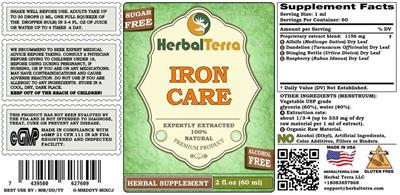
Iron Care Alcohol Free has 4 active ingredients. Dandelion leaf extract, raspberry leaf extract, alfalfa leaf extract, and stinging nettle leaf extract make up a proprietary blend — a mix designed to work together.
The inactive ingredients are glycerin and water, which help deliver the liquid form.
Does it work?
Moderate evidence
The evidence we hold for these ingredients doesn't yet support their use for specific purposes. Dandelion leaf has insufficient reliable evidence for joint pain, tonsillitis, or postoperative swelling and pain.
Alfalfa has insufficient evidence for diabetes, indigestion, or high cholesterol. Stinging nettle shows possibly effective evidence for diabetes, but insufficient evidence for hay fever, anemia, asthma, enlarged prostate, or gum inflammation.
We have no effectiveness data on file for raspberry leaf extract.
How safe is it?
Well-documented data
Dandelion leaf is generally well tolerated but can cause diarrhea, heartburn, and stomach discomfort in some people. Allergic reactions — including a serious one called anaphylaxis — are rare but possible, especially in people sensitive to ragweed, chrysanthemums, daisies, and related plants.
Alfalfa seems well tolerated in oral form, though a very rare lupus-like syndrome has been reported after long-term use; common effects include belly discomfort, diarrhea, and gas. Stinging nettle is generally well tolerated but may cause constipation or diarrhea; a rare case of liver injury has been reported.
During pregnancy, alfalfa is rated possibly unsafe due to its estrogen-like activity, and stinging nettle is rated likely unsafe — the safety data advises against both. For breastfeeding, there isn't enough data on any of these ingredients to know either way; talk with your doctor or pharmacist for personalized advice before use.
Meds to double-check
Major interaction found
Check with your pharmacist before using this product if you take warfarin or other blood thinners — alfalfa leaf can reduce their effect (Major severity). Also important: diabetes medications, lithium, diuretics, potassium-sparing diuretics, antibiotics like ciprofloxacin, birth control pills, hormone therapy, or immunosuppressants — all have documented Moderate-severity interactions with one or more ingredients here.
The bottom line
Scorecard at a glanceFormula with limited ingredient disclosure with some supporting evidence behind its ingredients' uses. Major medication interactions have been identified, and safety information is well characterized.
This product combines four herbal extracts and should be discussed with your pharmacist before you start, especially if you take blood thinners, diabetes drugs, lithium, diuretics, or birth control. Pregnant people should avoid it.
If you're nursing or managing a chronic condition, get personalized advice before adding it to your routine.
Educational only — not medical advice; always confirm with your pharmacist. Our editorial policy · How we use AI
Assessment coverage: 3 of 4 active ingredients matched to our full ingredient reviews (monographs). Based on the product label dated Feb 23, 2025.
This Scorecard evaluates available label information, ingredient evidence, and known medication-safety considerations. It does not independently verify product identity, purity, potency, contamination, or manufacturing quality. How these ratings are computed
General information
Key facts about Iron Care Alcohol Free, straight from the product label.
| Brand | Herbal Terra |
|---|---|
| Barcode (UPC) | 7439500627609 |
| Net contents | 2 Fluid Ounce(s); 60 mL |
| Market status | On market |
| Date entered into DSLD | Feb 23, 2025 |
| DSLD ID | 324278 |
| Product type | Botanical |
| Supplement form | Liquid |
| Dietary claims / uses | All Other, Structure/Function |
| Intended target group(s) | Adult (18 - 50 Years), Gluten Free, Sugar Free |
Everything in this section is reproduced from the manufacturer’s own product label — it’s the label speaking, not HelloPharmacist. We show it so you can see exactly what the maker states; we don’t verify or endorse those statements.
Supplement Facts
The label details for Iron Care Alcohol Free by Herbal Terra, sourced from the NIH Dietary Supplement Label Database.
Supplement Facts
| Ingredient | Amount | % DV |
|---|---|---|
| Proprietary Extract Blend | 1156 mg | -- |
| Dandelion Leaf Extract, Dry | 0 NP | -- |
| Raspberry Leaf Extract, Dry | 0 NP | -- |
| Alfalfa Leaf Extract, Dry | 0 NP | -- |
| Stinging Nettle Leaf Extract, Dry | 0 NP | -- |
Other ingredients: Glycerin, Water
Tap any ingredient to jump to its full detail below.
These statements are the manufacturer’s wording, reproduced from the product label — the label is saying it, not HelloPharmacist. We don’t verify or endorse them.
Suggested/Recommended/Usage/Directions
Shake well before use. Adults take up to 30 drops (1 mL, one full squeeze of the dropper bulb) in 3-4 fl. oz. of juice or water up to 4 times a day.
Precautions
We recommend to seek expert medical advice before taking. May have contraindications and cause adverse reaction.
Consult a physician before giving to children under 18, before using during pregnancy, if nursing, or if you are on any medications.
Consult a physician before giving to children under 18, before using during pregnancy, if nursing, or if you are on any medications. Keep out of the reach of children!
Do not use if you are allergic to any ingredients.
Storage
Store in a cool, dry, dark place.
FDA Disclaimer Statement
This product has not been evaluated by the FDA and is not intended to diagnose, treat, cure or prevent any disease.
Formulation
cGMP Made in compliance with cGMP 21 CFR 111 in an FDA registered and inspected facility.
Sugar free
Expertly extracted 100% natural Premium product
No alcohol (ethyl), artificial ingredients, color additives, fillers or binders.
Natural Gluten free
FDA Statement of Identity
Herbal Supplement
Seals/Symbols
Made in USA
General Statements
Extraction rate: about 1/3-4 (up to 333 mg of dry raw material per 1 ml of extract).
Is this label outdated? Report a formula or label change and our pharmacy team will review it.
Iron Care Alcohol Free by Herbal Terra label
The label scan from the NIH Dietary Supplement Label Database. Tap to enlarge.
Label images are published by the NIH Dietary Supplement Label Database for the version of this product on file. Always read your actual product label.
View the full label (PDF)The Ingredients in Iron Care Alcohol Free by Herbal Terra
These are the 4 active ingredients this product is made of. Select any to open its full monograph.
Serving size1 mL Dosage formLiquid Servings per container60 Amounts shown are per serving.
Most supplement products combine several ingredients, and a medication can interact with the product through any one of them. Each ingredient below shows whether it has known drug interactions.
Proprietary Extract Blend
- › Dandelion Leaf Extract, Dry
- › Raspberry Leaf Extract, Dry
- › Alfalfa Leaf Extract, Dry
- › Stinging Nettle Leaf Extract, Dry
Other (inactive) ingredients: Glycerin, Water. These complete the product’s ingredient list but are not active constituents.
Iron Care Alcohol Free by Herbal Terra Drug Interactions
HelloPharmacist Interaction Report
Iron Care Alcohol Free by Herbal Terra contains four ingredients, two of which we have interaction data for.
The most serious interaction we've identified is between alfalfa leaf extract and warfarin (Coumadin), a blood thinner. Alfalfa is rich in vitamin K, which can reduce warfarin's ability to prevent clots — a Major-severity concern that demands close monitoring if you take both.
Read the full breakdown — every affected drug type, severity by severity
Dandelion leaf extract carries Moderate-severity interactions with several drug types: CYP1A2 substrates (a group of medications your liver breaks down in a particular way), potassium-sparing diuretics (water pills that preserve potassium), blood thinners and antiplatelet drugs, diabetes medications, lithium, quinolone antibiotics (like ciprofloxacin), and glucuronidated drugs (those processed through a specific liver pathway). Alfalfa also interacts with photosensitizing drugs, birth control pills, hormone therapy, immunosuppressants, and diabetes medications — all Moderate-severity.
Stinging nettle leaf extract has Moderate interactions with diabetes drugs, diuretics, lithium, and warfarin.
Raspberry leaf extract — we could not check this ingredient, as we hold no interaction data for it. Altogether, these interactions span 837 individual medications.
Before you start this product, use the medication checker below to see if any of your prescriptions are affected.
Check your own medications below · Editorial policy · How we use AI
Want to check YOUR meds against Iron Care Alcohol Free?
Ask about interactions with your drugs in plain English — “Can I take it with lisinopril?” — and we find you the answer in seconds, ingredient by ingredient.
Go to the checkerIngredients driving the most interactions
Individual Drug Interactions
The ingredients in Iron Care Alcohol Free interact with 837 drugs. Click any drug to see the details.
3 of the 4 ingredients in Iron Care Alcohol Free interact with drugs. Each result below shows which ingredient is responsible. Alfalfa Leaf Extract, Dry Dandelion Leaf Extract, Dry Stinging Nettle Leaf Extract, Dry
WarfarinWarfarin
How Warfarin interacts with Iron Care Alcohol Free — through 3 ingredients. Tap an ingredient for the detail:
Alfalfa Leaf Extract, DryWarfarin (coumadin) Major
Interaction Summary
Theoretically, alfalfa might reduce the anticoagulant activity of warfarin.
Read the full Alfalfa Leaf Extract, Dry + Warfarin interactionStinging Nettle Leaf Extract, DryWarfarin (coumadin) Moderate
Interaction Summary
There is some concern that stinging nettle might decrease the effects of anticoagulant drugs such as warfarin.
Read the full Stinging Nettle Leaf Extract, Dry + Warfarin interactionDandelion Leaf Extract, DryCytochrome P450 1a2 (cyp1a2) Substrates, Anticoagulant/antiplatelet Drugs Moderate
Interaction Summary
Theoretically, dandelion might increase levels of drugs metabolized by CYP1A2.
Read the full Dandelion Leaf Extract, Dry + Warfarin interactionWarfarin SodiumCoumadin, Panwarfin, Sofarin
How Warfarin Sodium interacts with Iron Care Alcohol Free — through 3 ingredients. Tap an ingredient for the detail:
Alfalfa Leaf Extract, DryWarfarin (coumadin) Major
Interaction Summary
Theoretically, alfalfa might reduce the anticoagulant activity of warfarin.
Read the full Alfalfa Leaf Extract, Dry + Warfarin Sodium interactionDandelion Leaf Extract, DryAnticoagulant/antiplatelet Drugs, Cytochrome P450 1a2 (cyp1a2) Substrates Moderate
Interaction Summary
Theoretically, taking dandelion root along with anticoagulant or antiplatelet drugs might increase the risk of bruising and bleeding.
Read the full Dandelion Leaf Extract, Dry + Warfarin Sodium interactionStinging Nettle Leaf Extract, DryWarfarin (coumadin) Moderate
Interaction Summary
There is some concern that stinging nettle might decrease the effects of anticoagulant drugs such as warfarin.
Read the full Stinging Nettle Leaf Extract, Dry + Warfarin Sodium interaction6-mercaptopurinePurinethol
How 6-mercaptopurine interacts with Iron Care Alcohol Free — through 1 ingredient. Tap an ingredient for the detail:
Alfalfa Leaf Extract, DryImmunosuppressants Moderate
Interaction Summary
Theoretically, alfalfa might decrease the efficacy of immunosuppressive therapy.
Read the full Alfalfa Leaf Extract, Dry + 6-mercaptopurine interactionAbciximabReoPro
How Abciximab interacts with Iron Care Alcohol Free — through 1 ingredient. Tap an ingredient for the detail:
Dandelion Leaf Extract, DryAnticoagulant/antiplatelet Drugs Moderate
Interaction Summary
Theoretically, taking dandelion root along with anticoagulant or antiplatelet drugs might increase the risk of bruising and bleeding.
Read the full Dandelion Leaf Extract, Dry + Abciximab interactionAbrocitinibCibinqo
How Abrocitinib interacts with Iron Care Alcohol Free — through 2 ingredients. Tap an ingredient for the detail:
Dandelion Leaf Extract, DryAnticoagulant/antiplatelet Drugs Moderate
Interaction Summary
Theoretically, taking dandelion root along with anticoagulant or antiplatelet drugs might increase the risk of bruising and bleeding.
Read the full Dandelion Leaf Extract, Dry + Abrocitinib interactionAlfalfa Leaf Extract, DryImmunosuppressants Moderate
Interaction Summary
Theoretically, alfalfa might decrease the efficacy of immunosuppressive therapy.
Read the full Alfalfa Leaf Extract, Dry + Abrocitinib interactionAcarboseGlucobay, Prandase, Precose
How Acarbose interacts with Iron Care Alcohol Free — through 3 ingredients. Tap an ingredient for the detail:
Alfalfa Leaf Extract, DryAntidiabetes Drugs Moderate
Interaction Summary
Theoretically, alfalfa might increase the risk of hypoglycemia when taken with antidiabetes drugs.
Read the full Alfalfa Leaf Extract, Dry + Acarbose interactionStinging Nettle Leaf Extract, DryAntidiabetes Drugs Moderate
Interaction Summary
Theoretically, stinging nettle might have additive effects with antidiabetes drugs.
Read the full Stinging Nettle Leaf Extract, Dry + Acarbose interactionDandelion Leaf Extract, DryAntidiabetes Drugs Moderate
Interaction Summary
Theoretically, dandelion might increase the risk for hypoglycemia when used with antidiabetes drugs.
Read the full Dandelion Leaf Extract, Dry + Acarbose interactionAcenocoumarolSintrom
How Acenocoumarol interacts with Iron Care Alcohol Free — through 1 ingredient. Tap an ingredient for the detail:
Dandelion Leaf Extract, DryAnticoagulant/antiplatelet Drugs Moderate
Interaction Summary
Theoretically, taking dandelion root along with anticoagulant or antiplatelet drugs might increase the risk of bruising and bleeding.
Read the full Dandelion Leaf Extract, Dry + Acenocoumarol interactionAcepromazineAtravet
How Acepromazine interacts with Iron Care Alcohol Free — through 1 ingredient. Tap an ingredient for the detail:
Alfalfa Leaf Extract, DryPhotosensitizing Drugs Moderate
Interaction Summary
Theoretically, concomitant use of alfalfa with photosensitizing drugs might have additive effects.
Read the full Alfalfa Leaf Extract, Dry + Acepromazine interactionAcetaminophenChildren's Tylenol, Children's Tylenol Meltaways, Tylenol, Tylenol Ex Strength
How Acetaminophen interacts with Iron Care Alcohol Free — through 1 ingredient. Tap an ingredient for the detail:
Dandelion Leaf Extract, DryCytochrome P450 1a2 (cyp1a2) Substrates, Glucuronidated Drugs Moderate
Interaction Summary
Theoretically, dandelion might increase levels of drugs metabolized by CYP1A2.
Read the full Dandelion Leaf Extract, Dry + Acetaminophen interactionAcetaminophen, AspirinGemnisyn
How Acetaminophen, Aspirin interacts with Iron Care Alcohol Free — through 1 ingredient. Tap an ingredient for the detail:
Dandelion Leaf Extract, DryGlucuronidated Drugs, Anticoagulant/antiplatelet Drugs +1 Moderate
Interaction Summary
Theoretically, dandelion might increase the clearance of drugs that are UDP-glucuronosyltransferase substrates.
Read the full Dandelion Leaf Extract, Dry + Acetaminophen, Aspirin interactionAcetaminophen, Aspirin, CaffeineExcedrin, Excedrin Extra Strength, Excedrin Migraine
How Acetaminophen, Aspirin, Caffeine interacts with Iron Care Alcohol Free — through 1 ingredient. Tap an ingredient for the detail:
Dandelion Leaf Extract, DryCytochrome P450 1a2 (cyp1a2) Substrates, Glucuronidated Drugs +1 Moderate
Interaction Summary
Theoretically, dandelion might increase levels of drugs metabolized by CYP1A2.
Read the full Dandelion Leaf Extract, Dry + Acetaminophen, Aspirin, Caffeine interactionAcetaminophen, Brompheniramine, PhenylpropanolamineDimetapp Cold and Flu
How Acetaminophen, Brompheniramine, Phenylpropanolamine interacts with Iron Care Alcohol Free — through 2 ingredients. Tap an ingredient for the detail:
Dandelion Leaf Extract, DryCytochrome P450 1a2 (cyp1a2) Substrates, Glucuronidated Drugs Moderate
Interaction Summary
Theoretically, dandelion might increase levels of drugs metabolized by CYP1A2.
Read the full Dandelion Leaf Extract, Dry + Acetaminophen, Brompheniramine, Phenylpropanolamine interactionAlfalfa Leaf Extract, DryPhotosensitizing Drugs Moderate
Interaction Summary
Theoretically, concomitant use of alfalfa with photosensitizing drugs might have additive effects.
Read the full Alfalfa Leaf Extract, Dry + Acetaminophen, Brompheniramine, Phenylpropanolamine interactionAcetaminophen, ButalbitalAxocet, Bancap, Bucet, Butex Forte, Esgic CF, Orbivan CF +5 more
How Acetaminophen, Butalbital interacts with Iron Care Alcohol Free — through 1 ingredient. Tap an ingredient for the detail:
Dandelion Leaf Extract, DryGlucuronidated Drugs, Cytochrome P450 1a2 (cyp1a2) Substrates Moderate
Interaction Summary
Theoretically, dandelion might increase the clearance of drugs that are UDP-glucuronosyltransferase substrates.
Read the full Dandelion Leaf Extract, Dry + Acetaminophen, Butalbital interactionAcetaminophen, Butalbital, CaffeineEsgic, Esgic Plus, Fiogesic, Fioricet, Repan, Tecnal +1 more
How Acetaminophen, Butalbital, Caffeine interacts with Iron Care Alcohol Free — through 1 ingredient. Tap an ingredient for the detail:
Dandelion Leaf Extract, DryCytochrome P450 1a2 (cyp1a2) Substrates, Glucuronidated Drugs Moderate
Interaction Summary
Theoretically, dandelion might increase levels of drugs metabolized by CYP1A2.
Read the full Dandelion Leaf Extract, Dry + Acetaminophen, Butalbital, Caffeine interactionAcetaminophen, Butalbital, Caffeine, CodeineEsgic with Codeine, Fioricet w/ Codeine
How Acetaminophen, Butalbital, Caffeine, Codeine interacts with Iron Care Alcohol Free — through 1 ingredient. Tap an ingredient for the detail:
Dandelion Leaf Extract, DryGlucuronidated Drugs, Cytochrome P450 1a2 (cyp1a2) Substrates Moderate
Interaction Summary
Theoretically, dandelion might increase the clearance of drugs that are UDP-glucuronosyltransferase substrates.
Read the full Dandelion Leaf Extract, Dry + Acetaminophen, Butalbital, Caffeine, Codeine interactionAcetaminophen, Butalbital, CodeineBancap w/ Codeine
How Acetaminophen, Butalbital, Codeine interacts with Iron Care Alcohol Free — through 1 ingredient. Tap an ingredient for the detail:
Dandelion Leaf Extract, DryCytochrome P450 1a2 (cyp1a2) Substrates, Glucuronidated Drugs Moderate
Interaction Summary
Theoretically, dandelion might increase levels of drugs metabolized by CYP1A2.
Read the full Dandelion Leaf Extract, Dry + Acetaminophen, Butalbital, Codeine interactionAcetaminophen, Butalbital, Codeine PhosphatePhrenilin #3
How Acetaminophen, Butalbital, Codeine Phosphate interacts with Iron Care Alcohol Free — through 1 ingredient. Tap an ingredient for the detail:
Dandelion Leaf Extract, DryGlucuronidated Drugs, Cytochrome P450 1a2 (cyp1a2) Substrates Moderate
Interaction Summary
Theoretically, dandelion might increase the clearance of drugs that are UDP-glucuronosyltransferase substrates.
Read the full Dandelion Leaf Extract, Dry + Acetaminophen, Butalbital, Codeine Phosphate interactionAcetaminophen, Caffeine, Chlorpheniramine, Hydrocodone, PhenylephrineHycomine Compound
How Acetaminophen, Caffeine, Chlorpheniramine, Hydrocodone, Phenylephrine interacts with Iron Care Alcohol Free — through 2 ingredients. Tap an ingredient for the detail:
Dandelion Leaf Extract, DryCytochrome P450 1a2 (cyp1a2) Substrates, Glucuronidated Drugs Moderate
Interaction Summary
Theoretically, dandelion might increase levels of drugs metabolized by CYP1A2.
Read the full Dandelion Leaf Extract, Dry + Acetaminophen, Caffeine, Chlorpheniramine, Hydrocodone, Phenylephrine interactionAlfalfa Leaf Extract, DryPhotosensitizing Drugs Moderate
Interaction Summary
Theoretically, concomitant use of alfalfa with photosensitizing drugs might have additive effects.
Read the full Alfalfa Leaf Extract, Dry + Acetaminophen, Caffeine, Chlorpheniramine, Hydrocodone, Phenylephrine interactionAcetaminophen, Caffeine, CodeineGesic C15, Gesic C30, Gesic C8, Lenoltec 1, Lenoltec 2, Lenoltec 3 +1 more
How Acetaminophen, Caffeine, Codeine interacts with Iron Care Alcohol Free — through 1 ingredient. Tap an ingredient for the detail:
Dandelion Leaf Extract, DryCytochrome P450 1a2 (cyp1a2) Substrates, Glucuronidated Drugs Moderate
Interaction Summary
Theoretically, dandelion might increase levels of drugs metabolized by CYP1A2.
Read the full Dandelion Leaf Extract, Dry + Acetaminophen, Caffeine, Codeine interactionAcetaminophen, Caffeine, Codeine, SalicylamideCodalan No.1, Codalan No.2, Codalan No.3
How Acetaminophen, Caffeine, Codeine, Salicylamide interacts with Iron Care Alcohol Free — through 1 ingredient. Tap an ingredient for the detail:
Dandelion Leaf Extract, DryGlucuronidated Drugs, Cytochrome P450 1a2 (cyp1a2) Substrates Moderate
Interaction Summary
Theoretically, dandelion might increase the clearance of drugs that are UDP-glucuronosyltransferase substrates.
Read the full Dandelion Leaf Extract, Dry + Acetaminophen, Caffeine, Codeine, Salicylamide interactionAcetaminophen, Caffeine, DihydrocodeineDHC Plus, Panlor DC, Panlor SS
How Acetaminophen, Caffeine, Dihydrocodeine interacts with Iron Care Alcohol Free — through 1 ingredient. Tap an ingredient for the detail:
Dandelion Leaf Extract, DryCytochrome P450 1a2 (cyp1a2) Substrates, Glucuronidated Drugs Moderate
Interaction Summary
Theoretically, dandelion might increase levels of drugs metabolized by CYP1A2.
Read the full Dandelion Leaf Extract, Dry + Acetaminophen, Caffeine, Dihydrocodeine interactionAcetaminophen, Caffeine, IsomethepteneMigralam
How Acetaminophen, Caffeine, Isometheptene interacts with Iron Care Alcohol Free — through 1 ingredient. Tap an ingredient for the detail:
Dandelion Leaf Extract, DryGlucuronidated Drugs, Cytochrome P450 1a2 (cyp1a2) Substrates Moderate
Interaction Summary
Theoretically, dandelion might increase the clearance of drugs that are UDP-glucuronosyltransferase substrates.
Read the full Dandelion Leaf Extract, Dry + Acetaminophen, Caffeine, Isometheptene interactionAcetaminophen, Caffeine, PyrilamineMidol Max Strength Menstrual
How Acetaminophen, Caffeine, Pyrilamine interacts with Iron Care Alcohol Free — through 2 ingredients. Tap an ingredient for the detail:
Stinging Nettle Leaf Extract, DryDiuretic Drugs Moderate
Interaction Summary
Theoretically, combining stinging nettle with diuretic drugs may have additive effects.
Read the full Stinging Nettle Leaf Extract, Dry + Acetaminophen, Caffeine, Pyrilamine interactionDandelion Leaf Extract, DryCytochrome P450 1a2 (cyp1a2) Substrates, Glucuronidated Drugs Moderate
Interaction Summary
Theoretically, dandelion might increase levels of drugs metabolized by CYP1A2.
Read the full Dandelion Leaf Extract, Dry + Acetaminophen, Caffeine, Pyrilamine interactionAcetaminophen, Chlorpheniramine Maleate, Dextromethorphan HbrVicks Formula 44M Cough, Cold & Flu Relief
How Acetaminophen, Chlorpheniramine Maleate, Dextromethorphan Hbr interacts with Iron Care Alcohol Free — through 2 ingredients. Tap an ingredient for the detail:
Dandelion Leaf Extract, DryGlucuronidated Drugs, Cytochrome P450 1a2 (cyp1a2) Substrates Moderate
Interaction Summary
Theoretically, dandelion might increase the clearance of drugs that are UDP-glucuronosyltransferase substrates.
Read the full Dandelion Leaf Extract, Dry + Acetaminophen, Chlorpheniramine Maleate, Dextromethorphan Hbr interactionAlfalfa Leaf Extract, DryPhotosensitizing Drugs Moderate
Interaction Summary
Theoretically, concomitant use of alfalfa with photosensitizing drugs might have additive effects.
Read the full Alfalfa Leaf Extract, Dry + Acetaminophen, Chlorpheniramine Maleate, Dextromethorphan Hbr interactionAcetaminophen, Chlorpheniramine, Codeine, PhenylephrineColrex
How Acetaminophen, Chlorpheniramine, Codeine, Phenylephrine interacts with Iron Care Alcohol Free — through 2 ingredients. Tap an ingredient for the detail:
Alfalfa Leaf Extract, DryPhotosensitizing Drugs Moderate
Interaction Summary
Theoretically, concomitant use of alfalfa with photosensitizing drugs might have additive effects.
Read the full Alfalfa Leaf Extract, Dry + Acetaminophen, Chlorpheniramine, Codeine, Phenylephrine interactionDandelion Leaf Extract, DryGlucuronidated Drugs, Cytochrome P450 1a2 (cyp1a2) Substrates Moderate
Interaction Summary
Theoretically, dandelion might increase the clearance of drugs that are UDP-glucuronosyltransferase substrates.
Read the full Dandelion Leaf Extract, Dry + Acetaminophen, Chlorpheniramine, Codeine, Phenylephrine interactionAcetaminophen, Chlorpheniramine, DextromethorphanCoricidin II Extra Strength Cold and Flu
How Acetaminophen, Chlorpheniramine, Dextromethorphan interacts with Iron Care Alcohol Free — through 2 ingredients. Tap an ingredient for the detail:
Dandelion Leaf Extract, DryCytochrome P450 1a2 (cyp1a2) Substrates, Glucuronidated Drugs Moderate
Interaction Summary
Theoretically, dandelion might increase levels of drugs metabolized by CYP1A2.
Read the full Dandelion Leaf Extract, Dry + Acetaminophen, Chlorpheniramine, Dextromethorphan interactionAlfalfa Leaf Extract, DryPhotosensitizing Drugs Moderate
Interaction Summary
Theoretically, concomitant use of alfalfa with photosensitizing drugs might have additive effects.
Read the full Alfalfa Leaf Extract, Dry + Acetaminophen, Chlorpheniramine, Dextromethorphan interactionAcetaminophen, Chlorpheniramine, Dextromethorphan HydrobromideCoricidin HBP Maximum Strength Flu
How Acetaminophen, Chlorpheniramine, Dextromethorphan Hydrobromide interacts with Iron Care Alcohol Free — through 2 ingredients. Tap an ingredient for the detail:
Dandelion Leaf Extract, DryGlucuronidated Drugs, Cytochrome P450 1a2 (cyp1a2) Substrates Moderate
Interaction Summary
Theoretically, dandelion might increase the clearance of drugs that are UDP-glucuronosyltransferase substrates.
Read the full Dandelion Leaf Extract, Dry + Acetaminophen, Chlorpheniramine, Dextromethorphan Hydrobromide interactionAlfalfa Leaf Extract, DryPhotosensitizing Drugs Moderate
Interaction Summary
Theoretically, concomitant use of alfalfa with photosensitizing drugs might have additive effects.
Read the full Alfalfa Leaf Extract, Dry + Acetaminophen, Chlorpheniramine, Dextromethorphan Hydrobromide interactionAcetaminophen, Chlorpheniramine, Dextromethorphan, PhenylpropanolamineMulti Symptom Cold Relief
How Acetaminophen, Chlorpheniramine, Dextromethorphan, Phenylpropanolamine interacts with Iron Care Alcohol Free — through 2 ingredients. Tap an ingredient for the detail:
Dandelion Leaf Extract, DryGlucuronidated Drugs, Cytochrome P450 1a2 (cyp1a2) Substrates Moderate
Interaction Summary
Theoretically, dandelion might increase the clearance of drugs that are UDP-glucuronosyltransferase substrates.
Read the full Dandelion Leaf Extract, Dry + Acetaminophen, Chlorpheniramine, Dextromethorphan, Phenylpropanolamine interactionAlfalfa Leaf Extract, DryPhotosensitizing Drugs Moderate
Interaction Summary
Theoretically, concomitant use of alfalfa with photosensitizing drugs might have additive effects.
Read the full Alfalfa Leaf Extract, Dry + Acetaminophen, Chlorpheniramine, Dextromethorphan, Phenylpropanolamine interactionAcetaminophen, Chlorpheniramine, Dextromethorphan, PseudoephedrineChildren's Tylenol Cold Plus Cough, Tylenol Cold Ex Strength
How Acetaminophen, Chlorpheniramine, Dextromethorphan, Pseudoephedrine interacts with Iron Care Alcohol Free — through 2 ingredients. Tap an ingredient for the detail:
Dandelion Leaf Extract, DryCytochrome P450 1a2 (cyp1a2) Substrates, Glucuronidated Drugs Moderate
Interaction Summary
Theoretically, dandelion might increase levels of drugs metabolized by CYP1A2.
Read the full Dandelion Leaf Extract, Dry + Acetaminophen, Chlorpheniramine, Dextromethorphan, Pseudoephedrine interactionAlfalfa Leaf Extract, DryPhotosensitizing Drugs Moderate
Interaction Summary
Theoretically, concomitant use of alfalfa with photosensitizing drugs might have additive effects.
Read the full Alfalfa Leaf Extract, Dry + Acetaminophen, Chlorpheniramine, Dextromethorphan, Pseudoephedrine interactionAcetaminophen, Chlorpheniramine, Guaifenesin, Phenylephrine, SalicylamideRhinogesic GG
How Acetaminophen, Chlorpheniramine, Guaifenesin, Phenylephrine, Salicylamide interacts with Iron Care Alcohol Free — through 2 ingredients. Tap an ingredient for the detail:
Dandelion Leaf Extract, DryGlucuronidated Drugs, Cytochrome P450 1a2 (cyp1a2) Substrates Moderate
Interaction Summary
Theoretically, dandelion might increase the clearance of drugs that are UDP-glucuronosyltransferase substrates.
Read the full Dandelion Leaf Extract, Dry + Acetaminophen, Chlorpheniramine, Guaifenesin, Phenylephrine, Salicylamide interactionAlfalfa Leaf Extract, DryPhotosensitizing Drugs Moderate
Interaction Summary
Theoretically, concomitant use of alfalfa with photosensitizing drugs might have additive effects.
Read the full Alfalfa Leaf Extract, Dry + Acetaminophen, Chlorpheniramine, Guaifenesin, Phenylephrine, Salicylamide interactionEach ingredient & the kinds of drugs it affects
For each ingredient in Iron Care Alcohol Free with known interactions, here are the types of medications they can affect. Open any type for the detail — or search your exact drug in the checker above.
Alfalfa Leaf Extract, Dry
Warfarin (Coumadin)
Theoretically, alfalfa might reduce the anticoagulant activity of warfarin.
Alfalfa contains a large amount of vitamin K. This could theoretically interfere with the activity of warfarin.
Antidiabetes Drugs
Theoretically, alfalfa might increase the risk of hypoglycemia when taken with antidiabetes drugs.
Animal research suggests that alfalfa decreases blood sugar in diabetic mice. Also, in one case report, a diabetic patient experienced hypoglycemia after consuming alfalfa extract. Monitor blood glucose levels closely. Dose adjustments might be necessary.
Contraceptive Drugs
Theoretically, alfalfa might interfere with the activity of contraceptive drugs.
Alfalfa contains coumestrol, a phytoestrogen, and isoflavonoids, which have estrogenic effects.
Estrogens
Theoretically, alfalfa might interfere with hormone therapy.
Alfalfa contains coumestrol, a phytoestrogen, and isoflavonoids, which have estrogenic effects.
Immunosuppressants
Theoretically, alfalfa might decrease the efficacy of immunosuppressive therapy.
In vitro research and human case reports suggest that alfalfa may have immunostimulant effects.
Photosensitizing Drugs
Theoretically, concomitant use of alfalfa with photosensitizing drugs might have additive effects.
Animal research suggests that excessive doses of alfalfa may increase photosensitivity, possibly due to its chlorophyll content. It is unclear if this effect would be clinically relevant in humans.
Dandelion Leaf Extract, Dry
Anticoagulant/Antiplatelet Drugs
Theoretically, taking dandelion root along with anticoagulant or antiplatelet drugs might increase the risk of bruising and bleeding.
In vitro research suggests that dandelion root inhibits platelet aggregation.
Antidiabetes Drugs
Theoretically, dandelion might increase the risk for hypoglycemia when used with antidiabetes drugs.
Laboratory research suggests that dandelion extract may have moderate alpha-glucosidase inhibitor activity and might also increase insulin secretion. Also, in a case report, a 58-year-old woman with type 2 diabetes who was being treated with insulin developed hypoglycemia 2 weeks after beginning to eat salads containing dandelion.
Cytochrome P450 1A2 (Cyp1A2) Substrates
Theoretically, dandelion might increase levels of drugs metabolized by CYP1A2.
Laboratory research suggests that dandelion might inhibit CYP1A2. So far, this interaction has not been reported in humans. However, until more is known, watch for an increase in the levels of drugs metabolized by CYP1A2 in patients taking dandelion.
Glucuronidated Drugs
Theoretically, dandelion might increase the clearance of drugs that are UDP-glucuronosyltransferase substrates.
There is some preliminary evidence that dandelion might induce UDP-glucuronosyltransferase, a phase II enzyme.
Lithium
Theoretically, through diuretic effects, dandelion might reduce excretion and increase levels of lithium.
Animal research suggests that dandelion has diuretic properties. As diuretics can increase serum lithium levels, the dose of lithium might need to be decreased when taken with dandelion.
Potassium-Sparing Diuretics
Theoretically, dandelion might increase the risk of hyperkalemia when taken with potassium-sparing diuretics.
Dandelion contains significant amounts of potassium.
Quinolone Antibiotics
Theoretically, dandelion might lower fluoroquinolone levels.
Animal research shows that dandelion reduces absorption of ciprofloxacin and can lower levels by 73%. However, this effect has not been reported in humans.
Stinging Nettle Leaf Extract, Dry
Antidiabetes Drugs
Theoretically, stinging nettle might have additive effects with antidiabetes drugs.
Clinical research shows that stinging nettle might decrease blood glucose levels in patients with diabetes.
Diuretic Drugs
Theoretically, combining stinging nettle with diuretic drugs may have additive effects.
Animal research suggests that the above ground parts and roots of stinging nettle may have a diuretic effect.
Lithium
Theoretically, stinging nettle might reduce excretion and increase levels of lithium.
Animal research suggests that stinging nettle has diuretic and natriuretic properties, which could alter the excretion of lithium. The dose of lithium might need to be decreased.
Warfarin (Coumadin)
There is some concern that stinging nettle might decrease the effects of anticoagulant drugs such as warfarin.
Stinging nettle contains a significant amount of vitamin K. When taken in large quantities, this might interfere with the activity of warfarin.
Brand information
Manufacturer and brand details for Iron Care Alcohol Free, from the product label.
Herbal Terra
See all Herbal Terra products- Name
- Herbal Terra LLC
- Phone Number
- +18083857868
- Web Address
- herbalterra.com
Iron Care Alcohol Free by Herbal Terra: Common Questions
Does Iron Care Alcohol Free by Herbal Terra interact with any medications?
How can one product interact with so many drugs?
Where does this information come from?
Can I take this if I'm pregnant?
Is it safe to breastfeed while taking this product?
What side effects might I experience?
Does this product actually work for anything?
Why does the label say 'alcohol free'?
What does the proprietary blend mean?
Written and reviewed by the HelloPharmacist editorial staff. Our editorial policy
Not sure if Iron Care Alcohol Free is safe with your meds?
Our pharmacists answer your medication & supplement questions — free.
Label information is sourced from the NIH Dietary Supplement Label Database and reflects the product version on file; always read your actual product label. This page is for education only and is not a substitute for professional medical advice. Confirm with your pharmacist or doctor before combining supplements and medications.
The Full Monographs Behind Iron Care Alcohol Free’s Ingredients
Every ingredient we hold a full HelloPharmacist monograph for — uses, evidence, safety, and the complete interaction list.
Dandelion
Interacts with 457 drugsDandelion is a common plant used in food and traditional medicine, often promoted as a natural 'water pill' and digestive aid. Human evidence for these uses is very limited, so its benefits...
Read the full Dandelion monograph → Herb & supplement monographAlfalfa
Interacts with 583 drugsAlfalfa is a nutrient-rich legume that people use for high cholesterol, menopause symptoms, and general wellness, but solid human evidence for most of these uses is limited. It is best avoid...
Read the full Alfalfa monograph → Herb & supplement monographStinging Nettle
Interacts with 164 drugsStinging nettle is a common plant used as food and in traditional medicine, most often for prostate symptoms, allergies, and joint pain. The evidence is mixed and mostly preliminary, so it i...
Read the full Stinging Nettle monograph →Sources & How We Checked
Iron Care Alcohol Free's label data comes from the NIH Dietary Supplement Label Database; the ingredient interaction data is from the Natural Medicines database, reviewed by our pharmacists.
- NIH Dietary Supplement Label Database (DSLD) — The official product label on file for this supplement.
- Natural Medicines (Therapeutic Research Center) — Evidence-graded clinical reference behind the ingredient interaction data.
Content is written and reviewed by licensed HelloPharmacist pharmacists. See our data sources and editorial standards for how this information is built and checked.
The 82 references behind this product’s interaction data
Every citation that drives the interaction findings for this product’s ingredients, from the evidence-graded Natural Medicines (TRC Healthcare) database. Open an ingredient to browse its citations — links open the study on PubMed or the publisher’s site.
Dandelion 27 references
- Maliakal PP, Wanwimolruk S. Effect of herbal teas on hepatic drug metabolizing enzymes in rats. J Pharm Pharmacol 2001;53:1323-9. PubMed
- Williams CA, Goldstone F, Greenham J. Flavonoids, cinnamic acids and coumarins from the different tissues and medicinal preparations of Taraxacum officinale. Phytochemistry 1996;42:121-7. PubMed
- Hussain Z, Waheed A, Qureshi RA, et al. The effect of medicinal plants of Islamabad and Murree region of Pakistan on insulin secretion from INS-1 cells. Phytother Res 2004;18:73-7. PubMed
- Racz-Kotilla E, Racz G, Solomon A. The action of Taraxacum officinale extracts on the body weight and diuresis of laboratory animals. Planta Med 1974;26:212-7. PubMed
- Zhu M, Wong PY, Li RC. Effects of taraxacum mongolicum on the bioavailability and disposition of ciprofloxacin in rats. J Pharm Sci 1999;88:632-4. PubMed
- Jovanovic M, Mimica-Dukic N, Poljacki M, Boza P. Erythema multiforme due to contact with weeds: a recurrence after patch testing. Contact Dermatitis 2003;48:17-25. PubMed
- Chivato T, Juan F, Montoro A, Laguna R. Anaphylaxis induced by ingestion of a pollen compound. J Investig Allergol Clin Immunol 1996;6:208-9.
- Cohen SH, Yunginger JW, Rosenberg N, Fink JN. Acute allergic reaction after composite pollen ingestion. J Allergy Clin Immunol 1979;64:270-4. PubMed
- Lovell CR, Rowan M. Dandelion dermatitis. Contact Dermatitis 1991;25:185-8. PubMed
- Agarwal SC, Crook JR, Pepper CB. Herbal remedies -- how safe are they? A case report of polymorphic ventricular tachycardia/ventricular fibrillation induced by herbal medication used for obesity. Int J Cardiol 2006;106:260-1. PubMed
- Martín-Muñoz MF, Bartolome B, Caminoa M, et al. Bee pollen: a dangerous food for allergic children. Identification of responsible allergens. Allergol Immunopathol (Madr) 2010;38:263-5. PubMed
- Neef H, Cilli F, Declerck PJ, et al. Platelet anti-aggregating activity of Taraxacum officinale Weber. Phytotherapy Research 1996;10:s138-s140.
- Cuzzolin L, Zaffani S, and Benoni G. Safety implications regarding use of phytomedicines. Eur.J Clin Pharmacol. 2006;62:37-42. PubMed
- Posadzki, P., Watson, L. K., and Ernst, E. Adverse effects of herbal medicines: an overview of systematic reviews. Clin Med 2013;13(1):7-12. PubMed
- Wakelin, S. H., Marren, P., Young, E., and Shaw, S. Compositae sensitivity and chronic hand dermatitis in a seven-year-old boy. Br J Dermatol 1997;137(2):289-291. PubMed
- Ingber, A. Seasonal allergic contact dermatitis from Taraxacum officinale (dandelion) in an Israeli florist. Contact Dermatitis 2000;43(1):49.
- Rodriguez, B., Rodriguez, A., de Barrio, M., Tornero, P., and Baeza, M. L. Asthma induced by canary food mix. Allergy Asthma Proc. 2003;24(4):265-268.
- Syhaieva, I. A. [Efficiency of specific immunotherapy in treatment of patients with seasonal allergic rhinitis]. Lik.Sprava. 2006;(1-2):51-53.
- Catania, M. A., Oteri, A., Caiello, P., Russo, A., Salvo, F., Giustini, E. S., Caputi, A. P., and Polimeni, G. Hemorrhagic cystitis induced by an herbal mixture. South.Med.J. 2010;103(1):90-92. PubMed
- Goksu, E., Eken, C., Karadeniz, O., and Kucukyilmaz, O. First report of hypoglycemia secondary to dandelion (Taraxacum officinale) ingestion. Am J Emerg.Med 2010;28(1):111-112. PubMed
- Fernandez-Gonzalez, D., Gonzalez-Parrado, Z., Vega-Maray, A. M., Valencia-Barrera, R. M., Camazon-Izquierdo, B., De, Nuntiis P., and Mandrioli, P. Platanus pollen allergen, Pla a 1: quantification in the atmosphere and influence on a sensitizing populati
- Liang, K. L., Su, M. C., Shiao, J. Y., Wu, S. H., Li, Y. H., and Jiang, R. S. Role of pollen allergy in Taiwanese patients with allergic rhinitis. J Formos.Med Assoc. 2010;109(12):879-885. PubMed
- Yang, Y., Zhao, Y., Wang, C. S., Wang, X. D., and Zhang, L. [Prevalence of sensitization to aeroallergens in 10 030 patients with allergic rhinitis]. Zhonghua Er.Bi Yan.Hou Tou.Jing.Wai Ke Za Zhi 2011;46(11):914-920.
- Davies, M. G. and Kersey, P. J. Contact allergy to yarrow and dandelion. Contact Dermatitis 1986;14(4):256-257. PubMed
- Collins JM and Miller DR. Dandelion green bezoar following antrectomy and vagotomy - case report. J Kansas Med Soc 1966;67(6):303-304.
- Moriarty B, Pinney JH, Owen-Casey MP, Rustin MH, Deroide F, Laing C, Davenport A. Digital necrosis from dandelion tea. Br J Dermatol. 2013 Jul;169(1):227-30. PubMed
- Onal S, Timur S, Okutucu B, Zihnioglu F. Inhibition of alphaglucosidase by aqueous extracts of some potent antidiabetic medicinal herbs. Prep Biochem Biotechnol 2005;35:29-36.
Alfalfa 32 references
- Newall CA, Anderson LA, Philpson JD. Herbal Medicine: A Guide for Healthcare Professionals. London, UK: The Pharmaceutical Press, 1996.
- The Review of Natural Products by Facts and Comparisons. St. Louis, MO: Wolters Kluwer Co., 1999.
- Leung AY, Foster S. Encyclopedia of Common Natural Ingredients Used in Food, Drugs and Cosmetics. 2nd ed. New York, NY: John Wiley & Sons, 1996.
- Kurzer MS, Xu X. Dietary phytoestrogens. Annu Rev Nutr 1997;17:353-81. PubMed
- Farber JM, Carter AO, Varughese PV, et al. Listeriosis traced to the consumption of alfalfa tablets and soft cheese [Letter to the Editor]. N Engl J Med 1990;322:338. PubMed
- Molgaard J, von Schenck H, Olsson AG. Alfalfa seeds lower low density lipoprotein cholesterol and apolipoprotein B concentrations in patients with type II hyperlipoproteinemia. Atherosclerosis 1987;65:173-9. PubMed
- Light TD, Light JA. Acute renal transplant rejection possibly related to herbal medications. Am J Transplant 2003;3:1608-9. PubMed
- Prete PE. The mechanism of action of L-canavanine in inducing autoimmune phenomena. Arthritis Rheum 1985;28:1198-200. PubMed
- Alcocer-Varela J, Iglesias A, Llorente L, Alarcon-Segovia D. Effects of L-canavanine on T cells may explain the induction of systemic lupus erythematosus by alfalfa. Arthritis Rheum 1985;28:52-7. PubMed
- Roberts JL, Hayashi JA. Exacerbation of SLE associated with alfalfa ingestion. N Engl J Med 1983;308:1361. DOI
- Feingold, R. M. Should we fear "health foods"? Arch Intern Med 7-12-1999;159(13):1502. PubMed
- Taormina, P. J., Beuchat, L. R., and Slutsker, L. Infections associated with eating seed sprouts: an international concern. Emerg.Infect.Dis 1999;5(5):626-634. PubMed
- Backer, H. D., Mohle-Boetani, J. C., Werner, S. B., Abbott, S. L., Farrar, J., and Vugia, D. J. High incidence of extra-intestinal infections in a Salmonella Havana outbreak associated with alfalfa sprouts. Public Health Rep. 2000;115(4):339-345. PubMed
- Mohle-Boetani J, Werner B, Polumbo M, and et al. From the Centers for Disease Control and Prevention. Alfalfa sprouts-- Arizona, California, Colorado, and New Mexico, February-April, 2001. JAMA 2-6-2002;287(5):581-582.
- Howard, M. B. and Hutcheson, S. W. Growth dynamics of Salmonella enterica strains on alfalfa sprouts and in waste seed irrigation water. Appl.Environ.Microbiol. 2003;69(1):548-553.
- Winthrop, K. L., Palumbo, M. S., Farrar, J. A., Mohle-Boetani, J. C., Abbott, S., Beatty, M. E., Inami, G., and Werner, S. B. Alfalfa sprouts and Salmonella Kottbus infection: a multistate outbreak following inadequate seed disinfection with heat and chl
- Strapp, C. M., Shearer, A. E., and Joerger, R. D. Survey of retail alfalfa sprouts and mushrooms for the presence of Escherichia coil O157:H7, Salmonella, and Listeria with BAX, and evaluation of this polymerase chain reaction-based system with experimen
- Akaogi, J., Barker, T., Kuroda, Y., Nacionales, D. C., Yamasaki, Y., Stevens, B. R., Reeves, W. H., and Satoh, M. Role of non-protein amino acid L-canavanine in autoimmunity. Autoimmun.Rev 2006;5(6):429-435. PubMed
- Burden and causes of foodborne disease in Australia: Annual report of the OzFoodNet network, 2005. Commun.Dis Intell. 2006;30(3):278-300.
- Shemesh, M., Lindner, H. R., and Ayalon, N. Affinity of rabbit uterine oestradiol receptor for phyto-oestrogens and its use in a competitive protein-binding radioassay for plasma coumestrol. J Reprod.Fertil. 1972;29(1):1-9. PubMed
- Elakovich, S. D. and Hampton, J. M. Analysis of coumestrol, a phytoestrogen, in alfalfa tablets sold for human consumption. J Agric.Food Chem. 1984;32(1):173-175. PubMed
- Malinow, M. R., Bardana, E. J., Jr., Pirofsky, B., Craig, S., and McLaughlin, P. Systemic lupus erythematosus-like syndrome in monkeys fed alfalfa sprouts: role of a nonprotein amino acid. Science 4-23-1982;216(4544):415-417. PubMed
- Malinow, M. R., McLaughlin, P., and Stafford, C. Alfalfa seeds: effects on cholesterol metabolism. Experientia 5-15-1980;36(5):562-564. PubMed
- Farnsworth, N. R. Alfalfa pills and autoimmune diseases. Am J Clin Nutr. 1995;62(5):1026-1028. DOI
- Herbert, V. and Kasdan, T. S. Alfalfa, vitamin E, and autoimmune disorders. Am J Clin Nutr 1994;60(4):639-640.
- Mahon, B. E., Ponka, A., Hall, W. N., Komatsu, K., Dietrich, S. E., Siitonen, A., Cage, G., Hayes, P. S., Lambert-Fair, M. A., Bean, N. H., Griffin, P. M., and Slutsker, L. An international outbreak of Salmonella infections caused by alfalfa sprouts grow
- Gray, A. M. and Flatt, P. R. Pancreatic and extra-pancreatic effects of the traditional anti- diabetic plant, Medicago sativa (lucerne). Br J Nutr. 1997;78(2):325-334.
- Van Beneden, C. A., Keene, W. E., Strang, R. A., Werker, D. H., King, A. S., Mahon, B., Hedberg, K., Bell, A., Kelly, M. T., Balan, V. K., Mac Kenzie, W. R., and Fleming, D. Multinational outbreak of Salmonella enterica serotype Newport infections due to
- Rubenstein AH, Levin NW, and Elliott GA. Manganese-induced hypoglycemia. Lancet 1962;1348-1351.
- Kaufman W. Alfalfa seed dermatitis. JAMA 1954;155(12):1058-1059. PubMed
- Ponka A, Andersson Y, Siitonen A, and et al. Salmonella in alfalfa sprouts. Lancet 1995;345:462-463. PubMed
- Puschner B, Chen X, Read D, Affolter VK. Alfalfa hay induced primary photosensitization in horses. Vet J. 2016 May;211:32-8. PubMed
Stinging Nettle 23 references
- Monographs on the medicinal uses of plant drugs. Exeter, UK: European Scientific Co-op Phytother, 1997.
- Newall CA, Anderson LA, Philpson JD. Herbal Medicine: A Guide for Healthcare Professionals. London, UK: The Pharmaceutical Press, 1996.
- The Review of Natural Products by Facts and Comparisons. St. Louis, MO: Wolters Kluwer Co., 1999.
- Schulz V, Hansel R, Tyler VE. Rational Phytotherapy: A Physician's Guide to Herbal Medicine. Terry C. Telger, transl. 3rd ed. Berlin, GER: Springer, 1998.
- Leung AY, Foster S. Encyclopedia of Common Natural Ingredients Used in Food, Drugs and Cosmetics. 2nd ed. New York, NY: John Wiley & Sons, 1996.
- Brinker F. Herb Contraindications and Drug Interactions. 2nd ed. Sandy, OR: Eclectic Medical Publications, 1998.
- Mittman P. Randomized, double-blind study of freeze-dried Urtica dioica in the treatment of allergic rhinitis. Planta Med 1990;56:44-7.
- Vontobel HP, Herzog R, Rutishauser G, Kres H. [Results of a double-blind study on the effectiveness of ERU (extractum radicis Urticae) capsules in conservative treatment of benign prostatic hyperplasia]. (Abstract). Urologe A 1985;24:49-51.
- Randall C, Randall H, Dobbs F, et al. Randomized controlled trial of nettle sting for treatment of base-of-thumb pain. J R Soc Med 2000;93:305-9. PubMed
- Caliskaner Z, Karaayvaz M, Ozturk S. Misuse of a herb: stinging nettle (Urtica urens) induced severe tongue oedema. Complement Ther Med 2004;12:57-8. PubMed
- Krzeski, T., Kazon, M., Borkowski, A., Witeska, A., and Kuczera, J. Combined extracts of Urtica dioica and Pygeum africanum in the treatment of benign prostatic hyperplasia: double-blind comparison of two doses. Clin Ther 1993;15(6):1011-1020.
- Randall, C., Meethan, K., Randall, H., and Dobbs, F. Nettle sting of Urtica dioica for joint pain--an exploratory study of this complementary therapy. Complement Ther Med 1999;7(3):126-131. PubMed
- Tahri, A., Yamani, S., Legssyer, A., Aziz, M., Mekhfi, H., Bnouham, M., and Ziyyat, A. Acute diuretic, natriuretic and hypotensive effects of a continuous perfusion of aqueous extract of Urtica dioica in the rat. J Ethnopharmacol 2000;73(1-2):95-100. PubMed
- Sahin, M., Yilmaz, H., Gursoy, A., Demirel, A. N., Tutuncu, N. B., and Guvener, N. D. Gynaecomastia in a man and hyperoestrogenism in a woman due to ingestion of nettle (Urtica dioica). N.Z.Med.J. 2007;120(1265):U2803.
- Randall, C., Dickens, A., White, A., Sanders, H., Fox, M., and Campbell, J. Nettle sting for chronic knee pain: a randomised controlled pilot study. Complement Ther.Med. 2008;16(2):66-72. PubMed
- Rayburn, K., Fleischbein, E., Song, J., Allen, B., Kundert, M., Leiter, C., and Bush, T. Stinging nettle cream for osteoarthritis. Altern.Ther.Health Med. 2009;15(4):60-61.
- Oliver, F., Amon, E. U., Breathnach, A., Francis, D. M., Sarathchandra, P., Black, A. K., and Greaves, M. W. Contact urticaria due to the common stinging nettle (Urtica dioica)-- histological, ultrastructural and pharmacological studies. Clin Exp Dermato PubMed
- Kulze, A. and Greaves, M. Contact urticaria caused by stinging nettles. Br.J Dermatol. 1988;119(2):269-270. PubMed
- Patten G. Medicinal plant review: Urtica. Aust J Med Herbalism 1993;5(1):5-13.
- Maor D, Little M. Skin contact with a stinging tree requiring intensive care unit admission. Contact Dermatitis. 2017 Nov;77(5):335-37. PubMed
- Easton L, Vaid S, Nagel AK, Venci JV, Fortuna RJ. Stinging Nettle (Urtica dioica): An Unusual Case of Galactorrhea. Am J Case Rep 2021;22:e933999. PubMed
- Niazi B, Ahmed K, Ahmed M, Ali S, Song K, Elias S. Drug-Induced Liver Injury from Herbal Liver Detoxification Tea. Case Rep Gastroenterol 2022;16(3):612-617. PubMed
- Nnamani I, Tolu-Akinnawo O, Dufera RR, Akintunde A, Maliakkal B. Tinospora cordifolia (Guduchi/Giloy)-Induced Liver Injury: A Case Review. Cureus 2023;15(5):e39793. PubMed
Parts of this content are provided by the Therapeutic Research Center, LLC.
DISCLAIMER: Currently this does not check for drug-drug interactions. This is not an all-inclusive comprehensive list of potential interactions and is for informational purposes only. Not all interactions are known or well-reported in the scientific literature, and new interactions are continually being reported. Input is needed from a qualified healthcare provider including a pharmacist before starting any therapy. Application of clinical judgment is necessary.
© 2021 Therapeutic Research Center, LLC